All posts by Let's Encrypt

Scaling Our Rate Limits to Prepare for a Billion Active Certificates

Post Syndicated from Let's Encrypt original https://letsencrypt.org/2025/01/30/scaling-rate-limits/

Let’s Encrypt protects a vast portion of the Web by providing TLS certificates to over 550 million websites—a figure that has grown by 42% in the last year alone. We currently issue over 64,000 certificates per hour. To manage this immense traffic and maintain responsiveness under high demand, our infrastructure relies on rate limiting. In 2015, we introduced our first rate limiting system, built on MariaDB. It evolved alongside our rapidly growing service but eventually revealed its limits: straining database servers, forcing long reset times on subscribers, and slowing down every request.

We needed a solution built for the future—one that could scale with demand, reduce the load on MariaDB, and adapt to real-world subscriber request patterns. The result was a new rate limiting system powered by Redis and a proven virtual scheduling algorithm from the mid-90s. Efficient and scalable, and capable of handling over a billion active certificates.

Rate Limiting a Free Service is Hard

In 2015, Let’s Encrypt was in early preview, and we faced a unique challenge. We were poised to become incredibly popular, offering certificates freely and without requiring contact information or email verification. Ensuring fair usage and preventing abuse without traditional safeguards demanded an atypical approach to rate limiting.

We decided to limit the number of certificates issued—per week—for each registered domain. Registered domains are a limited resource with real costs, making them a natural and effective basis for rate limiting—one that mirrors the structure of the Web itself. Specifically, this approach targets the effective Top-Level Domain (eTLD), as defined by the Public Suffix List (PSL), plus one additional label to the left. For example, in new.blog.example.co.uk, the eTLD is .co.uk, making example.co.uk the eTLD+1.

Counting Events Was Easy

For each successfully issued certificate, we logged an entry in a table that recorded the registered domain, the issuance date, and other relevant details. To enforce rate limits, the system scanned this table, counted the rows matching a given registered domain within a specific time window, and compared the total to a configured threshold. This simple design formed the basis for all future rate limits.

Counting a Lot of Events Got Expensive

By 2019, we had added six new rate limits to protect our infrastructure as demand for certificates surged. Enforcing these limits required frequent scans of database tables to count recent matching events. These operations, especially on our heavily-used authorizations table, caused significant overhead, with reads outpacing all other tables—often by an order of magnitude.

Rate limit calculations were performed early in request processing and often. Counting rows in MariaDB, particularly for accounts with rate limit overrides, was inherently expensive and quickly became a scaling bottleneck.

Adding new limits required careful trade-offs. Decisions about whether to reuse existing schema, optimize indexes, or design purpose-built tables helped balance performance, complexity, and long-term maintainability.

Buying Runway — Offloading Reads

In late 2021, we updated our control plane and Boulder—our in-house CA software—to route most API reads, including rate limit checks, to database replicas. This reduced the load on the primary database and improved its overall health. At the same time, however, latency of rate limit checks during peak hours continued to rise, highlighting the limitations of scaling reads alone.

Sliding Windows Got Frustrating

Subscribers were frequently hitting rate limits unexpectedly, leaving them unable to request certificates for days. This issue stemmed from our use of relatively large rate limiting windows—most spanning a week. Subscribers could deplete their entire limit in just a few moments by repeating the same request, and find themselves locked out for the remainder of the week. This approach was inflexible and disruptive, causing unnecessary frustration and delays.

In early 2022, we patched the Duplicate Certificate limit to address this rigidity. Using a naive token-bucket approach, we allowed users to “earn back” requests incrementally, cutting the wait time—once rate limited—to about 1.4 days. The patch worked by fetching recent issuance timestamps and calculating the time between them to grant requests based on the time waited. This change also allowed us to include a Retry-After timestamp in rate limited responses. While this improved the user experience for this one limit, we understood it to be a temporary fix for a system in need of a larger overhaul.

When a Problem Grows Large Enough, It Finds the Time for You

Setting aside time for a complete overhaul of our rate-limiting system wasn’t easy. Our development team, composed of just three permanent engineers, typically juggles several competing priorities. Yet by 2023, our flagging rate limits code had begun to endanger the reliability of our MariaDB databases.

Our authorizations table was now regularly read an order of magnitude more than any other. Individually identifying and deleting unnecessary rows—or specific values—had proved unworkable due to poor MariaDB delete performance. Storage engines like InnoDB must maintain indexes, foreign key constraints, and transaction logs for every deletion, which significantly increases overhead for concurrent transactions and leads to gruelingly slow deletes.

Our SRE team automated the cleanup of old rows for many tables using the PARTITION command, which worked well for bookkeeping and compliance data. Unfortunately, we couldn’t apply it to most of our purpose-built rate limit tables. These tables depend on ON DUPLICATE KEY UPDATE, a mechanism that requires the targeted column to be a unique index or primary key, while partitioning demands that the primary key be included in the partitioning key.

Indexes on these tables—such as those tracking requested hostnames—often grew larger than the tables themselves and, in some cases, exceeded the memory of our smaller staging environment databases, eventually forcing us to periodically wipe them entirely.

By late 2023, this cascading confluence of complexities required a reckoning. We set out to design a rate limiting system built for the future.

The Solution: Redis + GCRA

We designed a system from the ground up that combines Redis for storage and the Generic Cell Rate Algorithm (GCRA) for managing request flow.

Why Redis?

Our engineers were already familiar with Redis, having recently deployed it to cache and serve OCSP responses. Its high throughput and low latency made it a candidate for tracking rate limit state as well.

By moving this data from MariaDB to Redis, we could eliminate the need for ever-expanding, purpose-built tables and indexes, significantly reducing read and write pressure. Redis’s feature set made it a perfect fit for the task. Most rate limit data is ephemeral—after a few days, or sometimes just minutes, it becomes irrelevant unless the subscriber calls us again. Redis’s per-key Time-To-Live would allow us to expire this data the moment it was no longer needed.

Redis also supports atomic integer operations, enabling fast, reliable counter updates, even when increments occur concurrently. Its “set if not exist” functionality ensures efficient initialization of keys, while pipeline support allows us to get and set multiple keys in bulk. This combination of familiarity, speed, simplicity, and flexibility made Redis the natural choice.

Why GCRA?

The Generic Cell Rate Algorithm (GCRA) is a virtual scheduling algorithm originally designed for telecommunication networks to regulate traffic and prevent congestion. Unlike traditional sliding window approaches that work in fixed time blocks, GCRA enforces rate limits continuously, making it well-suited to our goals.

A rate limit in GCRA is defined by two parameters: the emission interval and the burst tolerance. The emission interval specifies the minimum time that must pass between consecutive requests to maintain a steady rate. For example, an emission interval of one second allows one request per second on average. The burst tolerance determines how much unused capacity can be drawn on to allow short bursts of requests beyond the steady rate.

When a request is received, GCRA compares the current time to the Theoretical Arrival Time (TAT), which indicates when the next request is allowed under the steady rate. If the current time is greater than or equal to the TAT, the request is permitted, and the TAT is updated by adding the emission interval. If the current time plus the burst tolerance is greater than or equal to the TAT, the request is also permitted. In this case, the TAT is updated by adding the emission interval, reducing the remaining burst capacity.

However, if the current time plus the burst tolerance is less than the TAT, the request exceeds the rate limit and is denied. Conveniently, the difference between the TAT and the current time can then be returned to the subscriber in a Retry-After header, informing their client exactly how long to wait before trying again.

To illustrate, consider a rate limit of one request per second (emission interval = 1s) with a burst tolerance of three requests. Up to three requests can arrive back-to-back, but subsequent requests will be delayed until “now” catches up to the TAT, ensuring that the average rate over time remains one request per second.

What sets GCRA apart is its ability to automatically refill capacity gradually and continuously. Unlike sliding windows, where users must wait for an entire time block to reset, GCRA allows users to retry as soon as enough time has passed to maintain the steady rate. This dynamic pacing reduces frustration and provides a smoother, more predictable experience for subscribers.

GCRA is also storage and computationally efficient. It requires tracking only the TAT—stored as a single Unix timestamp—and performing simple arithmetic to enforce limits. This lightweight design allows it to scale to handle billions of requests, with minimal computational and memory overhead.

The Results: Faster, Smoother, and More Scalable

The transition to Redis and GCRA brought immediate, measurable improvements. We cut database load, improved response times, and delivered consistent performance even during periods of peak traffic. Subscribers now experience smoother, more predictable behavior, while the system’s increased permissiveness allows for certificates that the previous approach would have delayed—all achieved without sacrificing scalability or fairness.

Rate Limit Check Latency

Check latency is the extra time added to each request while verifying rate limit compliance. Under the old MariaDB-based system, these checks slowed noticeably during peak traffic, when database contention caused significant delays. Our new Redis-based system dramatically reduced this overhead. The high-traffic “new-order” endpoint saw the greatest improvement, while the “new-account” endpoint—though considerably lighter in traffic—also benefited, especially callers with IPv6 addresses. These results show that our subscribers now experience consistent response times, even under peak load.
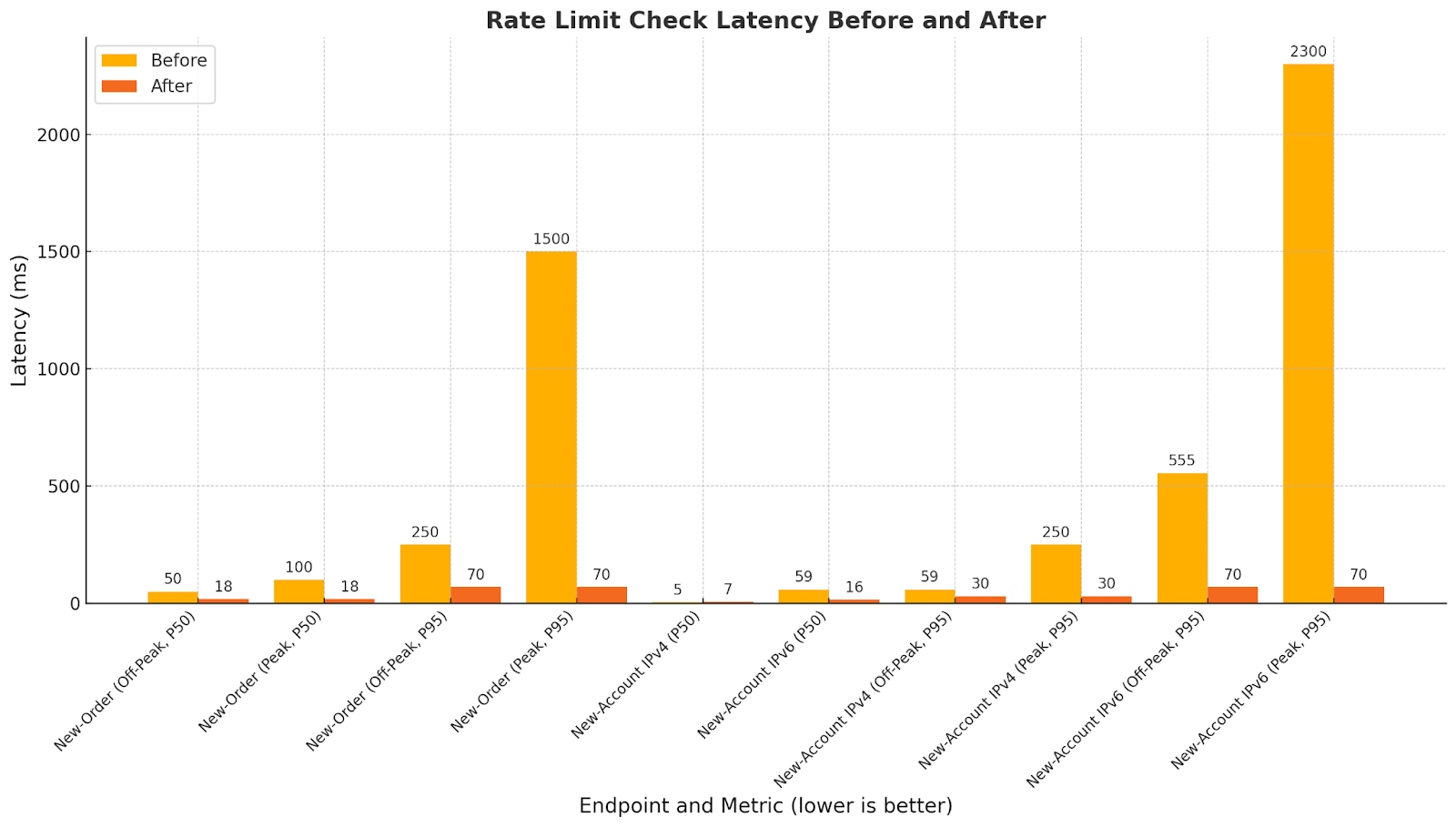
Rate Limit Check Latency Before and After chart

Database Health

Our once strained database servers are now operating with ample headroom. In total, MariaDB operations have dropped by 80%, improving responsiveness, reducing contention, and freeing up resources for mission-critical issuance workflows.

Chart showing reduction in InnoDB Row Operations

Buffer pool requests have decreased by more than 50%, improving caching efficiency and reducing overall memory pressure.

Chart showing reduction in InnoDB Buffer Pool Requests

Reads of the authorizations table—a notorious bottleneck—have dropped by over 99%. Previously, this table outpaced all others by more than two orders of magnitude; now it ranks second (the green line below), just narrowly surpassing our third most-read table.
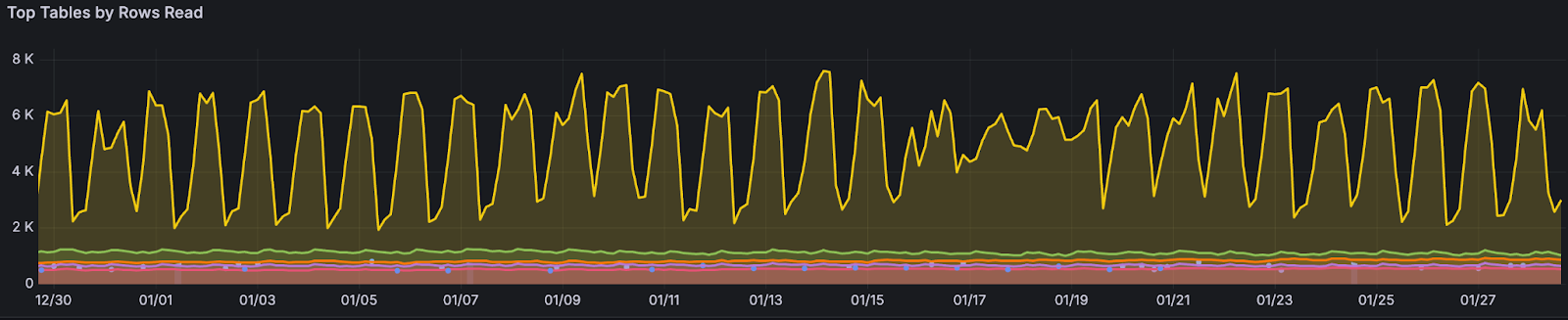
Chart showing Top Tables by Rows Read

Tracking Zombie Clients

In late 2024, we turned our new rate limiting system toward a longstanding challenge: “zombie clients.” These requesters repeatedly attempt to issue certificates but fail, often because of expired domains or misconfigured DNS records. Together, they generate nearly half of all order attempts yet almost never succeed. We were able to build on this new infrastructure to record consecutive ACME challenge failures by account/domain pair and automatically “pause” this problematic issuance. The result has been a considerable reduction in resource consumption, freeing database and network capacity without disrupting legitimate traffic.

Scalability on Redis

Before deploying the limits to track zombie clients, we maintained just over 12.6 million unique TATs across several Redis databases. Within 24 hours, that number more than doubled to 26 million, and by the end of the week, it peaked at over 30 million. Yet, even with this sharp increase, there was no noticeable impact on rate limit responsiveness. That’s all we’ll share for now about zombie clients—there’s plenty more to unpack, but we’ll save those insights and figures for a future blog post.

What’s Next?

Scaling our rate limits to keep pace with the growth of the Web is a huge achievement, but there’s still more to do. In the near term, many of our other ACME endpoints rely on load balancers to enforce per-IP limits, which works but gives us little control over the feedback provided to subscribers. We’re looking to deploy this new infrastructure across those endpoints as well. Looking further ahead, we’re exploring how we might redefine our rate limits now that we’re no longer constrained by a system that simply counts events between two points in time.

By adopting Redis and GCRA, we’ve built a flexible, efficient rate limit system that promotes fair usage and enables our infrastructure to handle ever-growing demand. We’ll keep adapting to the ever-evolving Web while honoring our primary goal: giving people the certificates they need, for free, in the most user-friendly way we can.

Ending Support for Expiration Notification Emails

Post Syndicated from Let's Encrypt original https://letsencrypt.org/2025/01/22/ending-expiration-emails.html

Since its inception, Let’s Encrypt has been sending expiration notification emails to subscribers that have provided an email address to us. We will be ending this service on June 4, 2025. The decision to end this service is the result of the following factors:

  1. Over the past 10 years more and more of our subscribers have been able to put reliable automation into place for certificate renewal.

  2. Providing expiration notification emails means that we have to retain millions of email addresses connected to issuance records. As an organization that values privacy, removing this requirement is important to us.

  3. Providing expiration notifications costs Let’s Encrypt tens of thousands of dollars per year, money that we believe can be better spent on other aspects of our infrastructure.

  4. Providing expiration notifications adds complexity to our infrastructure, which takes time and attention to manage and increases the likelihood of mistakes being made. Over the long term, particularly as we add support for new service components, we need to manage overall complexity by phasing out system components that can no longer be justified.

For those who would like to continue receiving expiration notifications, we recommend using a third party service such as Red Sift Certificates Lite (formerly Hardenize). Red Sift’s monitoring service providing expiration emails is free of charge for up to 250 certificates. More monitoring options can be found here.

While we will be minimizing the email addresses we retain connected to issuance data, you can opt in to receive other emails. We’ll keep you informed about technical updates, and other news about Let’s Encrypt and our parent nonprofit, ISRG, based on the preferences you choose. You can sign up for our email lists below:

Ending Support for Expiration Notification Emails

Post Syndicated from Let's Encrypt original https://letsencrypt.org/2025/01/22/ending-expiration-emails/

Since its inception, Let’s Encrypt has been sending expiration notification emails to subscribers that have provided an email address to us. We will be ending this service on June 4, 2025. The decision to end this service is the result of the following factors:

  1. Over the past 10 years more and more of our subscribers have been able to put reliable automation into place for certificate renewal.

  2. Providing expiration notification emails means that we have to retain millions of email addresses connected to issuance records. As an organization that values privacy, removing this requirement is important to us.

  3. Providing expiration notifications costs Let’s Encrypt tens of thousands of dollars per year, money that we believe can be better spent on other aspects of our infrastructure.

  4. Providing expiration notifications adds complexity to our infrastructure, which takes time and attention to manage and increases the likelihood of mistakes being made. Over the long term, particularly as we add support for new service components, we need to manage overall complexity by phasing out system components that can no longer be justified.

For those who would like to continue receiving expiration notifications, we recommend using a third party service such as Red Sift Certificates Lite (formerly Hardenize). Red Sift’s monitoring service providing expiration emails is free of charge for up to 250 certificates. More monitoring options can be found here.

While we will be minimizing the email addresses we retain connected to issuance data, you can opt in to receive other emails. We’ll keep you informed about technical updates, and other news about Let’s Encrypt and our parent nonprofit, ISRG, based on the preferences you choose. You can sign up for our email lists below:

Announcing Six Day and IP Address Certificate Options in 2025

Post Syndicated from Let's Encrypt original https://letsencrypt.org/2025/01/16/6-day-and-ip-certs.html

This year we will continue to pursue our commitment to improving the security of the Web PKI by introducing the option to get certificates with six-day lifetimes (“short-lived certificates”). We will also add support for IP addresses in addition to domain names. Our longer-lived certificates, which currently have a lifetime of 90 days, will continue to be available alongside our six-day offering. Subscribers will be able to opt in to short-lived certificates via a certificate profile mechanism being added to our ACME API.

Shorter Certificate Lifetimes Are Good for Security

When the private key associated with a certificate is compromised, the recommendation has always been to have the certificate revoked so that people will know not to use it. Unfortunately, certificate revocation doesn’t work very well. This means that certificates with compromised keys (or other issues) may continue to be used until they expire. The longer the lifetime of the certificate, the longer the potential for use of a problematic certificate.

The primary advantage of short-lived certificates is that they greatly reduce the potential compromise window because they expire relatively quickly. This reduces the need for certificate revocation, which has historically been unreliable. Our six-day certificates will not include OCSP or CRL URLs. Additionally, short-lived certificates practically require automation, and we believe that automating certificate issuance is important for security.

IP Address Support For Securing Additional Use Cases

We will support including IP addresses as Subject Alternative Names in our six-day certificates. This will enable secure TLS connections, with publicly trusted certificates, to services made available via IP address, without the need for a domain name.

Validation for IP addresses will work much the same as validation for domain names, though validation will be restricted to the http-01 and tls-alpn-01 challenge types. The dns-01 challenge type will not be available because the DNS is not involved in validating IP addresses. Additionally, there is no mechanism to check CAA records for IP addresses.

Timeline

We expect to issue the first valid short-lived certificates to ourselves in February of this year. Around April we will enable short-lived certificates for a small set of early adopting subscribers. We hope to make short-lived certificates generally available by the end of 2025.

The earliest short-lived certificates we issue may not support IP addresses, but we intend to enable IP address support by the time short-lived certificates reach general availability.

How To Get Six-Day and IP Address Certificates

Once short-lived certificates are an option for you, you’ll need to use an ACME client that supports ACME certificate profiles and select the short-lived certificate profile (the name of which will be published at a later date).

Once IP address support is an option for you, requesting an IP address in a certificate will automatically select a short-lived certificate profile.

Looking Ahead

The best way to prepare to take advantage of short-lived certificates is to make sure your ACME client is reliably renewing certificates in an automated fashion. If that’s working well then there should be no costs to switching to short-lived certificates.

If you have questions or comments about our plans, feel free to let us know on our community forums.

Announcing Six Day and IP Address Certificate Options in 2025

Post Syndicated from Let's Encrypt original https://letsencrypt.org/2025/01/16/6-day-and-ip-certs/

This year we will continue to pursue our commitment to improving the security of the Web PKI by introducing the option to get certificates with six-day lifetimes (“short-lived certificates”). We will also add support for IP addresses in addition to domain names. Our longer-lived certificates, which currently have a lifetime of 90 days, will continue to be available alongside our six-day offering. Subscribers will be able to opt in to short-lived certificates via a certificate profile mechanism being added to our ACME API.

Shorter Certificate Lifetimes Are Good for Security

When the private key associated with a certificate is compromised, the recommendation has always been to have the certificate revoked so that people will know not to use it. Unfortunately, certificate revocation doesn’t work very well. This means that certificates with compromised keys (or other issues) may continue to be used until they expire. The longer the lifetime of the certificate, the longer the potential for use of a problematic certificate.

The primary advantage of short-lived certificates is that they greatly reduce the potential compromise window because they expire relatively quickly. This reduces the need for certificate revocation, which has historically been unreliable. Our six-day certificates will not include OCSP or CRL URLs. Additionally, short-lived certificates practically require automation, and we believe that automating certificate issuance is important for security.

IP Address Support For Securing Additional Use Cases

We will support including IP addresses as Subject Alternative Names in our six-day certificates. This will enable secure TLS connections, with publicly trusted certificates, to services made available via IP address, without the need for a domain name.

Validation for IP addresses will work much the same as validation for domain names, though validation will be restricted to the http-01 and tls-alpn-01 challenge types. The dns-01 challenge type will not be available because the DNS is not involved in validating IP addresses. Additionally, there is no mechanism to check CAA records for IP addresses.

Timeline

We expect to issue the first valid short-lived certificates to ourselves in February of this year. Around April we will enable short-lived certificates for a small set of early adopting subscribers. We hope to make short-lived certificates generally available by the end of 2025.

The earliest short-lived certificates we issue may not support IP addresses, but we intend to enable IP address support by the time short-lived certificates reach general availability.

How To Get Six-Day and IP Address Certificates

Once short-lived certificates are an option for you, you’ll need to use an ACME client that supports ACME certificate profiles and select the short-lived certificate profile (the name of which will be published at a later date).

Once IP address support is an option for you, requesting an IP address in a certificate will automatically select a short-lived certificate profile.

Looking Ahead

The best way to prepare to take advantage of short-lived certificates is to make sure your ACME client is reliably renewing certificates in an automated fashion. If that’s working well then there should be no costs to switching to short-lived certificates.

If you have questions or comments about our plans, feel free to let us know on our community forums.

Announcing Certificate Profile Selection

Post Syndicated from Let's Encrypt original https://letsencrypt.org/2025/01/09/acme-profiles/

We are excited to announce a new extension to Let’s Encrypt’s implementation of the ACME protocol that we are calling “profile selection.” This new feature will allow site operators and ACME clients to opt in to the next evolution of Let’s Encrypt.

As of today, the staging environment is advertising a new field in its directory resource:

GET /directory HTTP/1.1
HTTP/1.1 200 OK
Content-Type: application/json

{
    ...
    "meta": {
        "profiles": {
            "classic": "The same profile you're accustomed to",
            "tlsserver": "https://letsencrypt.org/2024/12/20/acme-profiles/"
        }
    }
}

Here, the keys are the names of new “profiles”, and the values are human-readable descriptions of those profiles. A profile describes a collection of attributes about the certificate that will be issued, such as what extensions it will contain, how long it will be valid for, and more.

For example, the “classic” profile is exactly what it sounds like: certificates issued under the classic profile will look exactly the same as those that we have always issued, valid for 90 days.

But certificates issued under the “tlsserver” profile will have a number of differences tailored specifically towards TLS server usage:

  • No Common Name field (including a CN has been NOT RECOMMENDED by the Baseline Requirements for several years now)
  • No Subject Key Identifier (including a SKID is NOT RECOMMENDED by the Baseline Requirements)
  • No TLS Client Auth Extended Key Usage (root programs are moving towards requiring “single-purpose” issuance hierarchies, where every certificate has only a single EKU)
  • No Key Encipherment Key Usage for certificates with RSA public keys (this KU was used by older RSA-based TLS cipher suites, but is fully unnecessary in TLS 1.3)

Additionally, in the near future we will offer a “shortlived” profile which will be identical to the “tlsserver” profile but with a validity period of only 6 days. This profile isn’t available in Staging just yet, so keep an eye out for further announcements regarding short-lived certificates and why we think they’re exciting.

An ACME client can supply a desired profile name in a new-order request:

POST /acme/new-order HTTP/1.1
Host: example.com
Content-Type: application/jose+json

{
    "protected": base64url(...),
    "payload": base64url({
        "profile": "tlsserver",
        "identifiers": [
            { "type": "dns", "value": "www.example.org" },
            { "type": "dns", "value": "example.org" }
        ],
    }),
    "signature": "H6ZXtGjTZyUnPeKn...wEA4TklBdh3e454g"
}

If the new-order request is accepted, then the selected profile name will be reflected in the Order object when it is returned, and the resulting certificate after finalization will be issued with the selected profile. If the new-order request does not specify a profile, then the server will select one for it.

Guidance for ACME clients and users

If you are an ACME client author, we encourage you to introduce support for this new field in your client. Start by taking a look at the draft specification in the IETF ACME Working Group. A simple implementation might allow the user to configure a static profile name and include that name in all new-order requests. For a better user experience, check the configured name against the list of profiles advertised in the directory, to ensure that changes to the available profiles don’t result in invalid new-order requests. For clients with a user interface, such as a control panel or interactive command line interface, an implementation could fetch the list of profiles and their descriptions to prompt the user to select one on first run. It could also use a notification mechanism to inform the user of changes to the list of available profiles. We’d also love to hear from you about your experience implementing and deploying this new extension.

If you are a site operator or ACME client user, we encourage you to keep an eye on your ACME client of choice to see when they adopt this new feature, and update your client when they do. We also encourage you to try out the modern “tlsserver” profile in Staging, and let us know what you think of the changes we’ve made to the certificates issued under that profile.

What’s next?

Obviously there is more work to be done here. The draft standard will go through multiple rounds of review and tweaks before becoming an IETF RFC, and our implementation will evolve along with it if necessary. Over the coming weeks and months we will also be providing more information about when we enable profile selection in our production environment, and what our production profile options will be.

Thank you for coming along with us on this journey into the future of the Web PKI. We look forward to your testing and feedback!

Announcing Certificate Profile Selection

Post Syndicated from Let's Encrypt original https://letsencrypt.org/2025/01/09/acme-profiles.html

We are excited to announce a new extension to Let’s Encrypt’s implementation of the ACME protocol that we are calling “profile selection.” This new feature will allow site operators and ACME clients to opt in to the next evolution of Let’s Encrypt.

As of today, the staging environment is advertising a new field in its directory resource:

GET /directory HTTP/1.1
HTTP/1.1 200 OK
Content-Type: application/json

{
    ...
    "meta": {
        "profiles": {
            "classic": "The same profile you're accustomed to",
            "tlsserver": "https://letsencrypt.org/2025/01/09/acme-profiles/"
        }
    }
}

Here, the keys are the names of new “profiles”, and the values are human-readable descriptions of those profiles. A profile describes a collection of attributes about the certificate that will be issued, such as what extensions it will contain, how long it will be valid for, and more.

For example, the “classic” profile is exactly what it sounds like: certificates issued under the classic profile will look exactly the same as those that we have always issued, valid for 90 days.

But certificates issued under the “tlsserver” profile will have a number of differences tailored specifically towards TLS server usage:

  • No Common Name field (including a CN has been NOT RECOMMENDED by the Baseline Requirements for several years now)
  • No Subject Key Identifier (including a SKID is NOT RECOMMENDED by the Baseline Requirements)
  • No TLS Client Auth Extended Key Usage (root programs are moving towards requiring “single-purpose” issuance hierarchies, where every certificate has only a single EKU)
  • No Key Encipherment Key Usage for certificates with RSA public keys (this KU was used by older RSA-based TLS cipher suites, but is fully unnecessary in TLS 1.3)

Additionally, in the near future we will offer a “shortlived” profile which will be identical to the “tlsserver” profile but with a validity period of only 6 days. This profile isn’t available in Staging just yet, so keep an eye out for further announcements regarding short-lived certificates and why we think they’re exciting.

An ACME client can supply a desired profile name in a new-order request:

POST /acme/new-order HTTP/1.1
Host: example.com
Content-Type: application/jose+json

{
    "protected": base64url(...),
    "payload": base64url({
        "profile": "tlsserver",
        "identifiers": [
            { "type": "dns", "value": "www.example.org" },
            { "type": "dns", "value": "example.org" }
        ],
    }),
    "signature": "H6ZXtGjTZyUnPeKn...wEA4TklBdh3e454g"
}

If the new-order request is accepted, then the selected profile name will be reflected in the Order object when it is returned, and the resulting certificate after finalization will be issued with the selected profile. If the new-order request does not specify a profile, then the server will select one for it.

Guidance for ACME clients and users

If you are an ACME client author, we encourage you to introduce support for this new field in your client. Start by taking a look at the draft specification in the IETF ACME Working Group. A simple implementation might allow the user to configure a static profile name and include that name in all new-order requests. For a better user experience, check the configured name against the list of profiles advertised in the directory, to ensure that changes to the available profiles don’t result in invalid new-order requests. For clients with a user interface, such as a control panel or interactive command line interface, an implementation could fetch the list of profiles and their descriptions to prompt the user to select one on first run. It could also use a notification mechanism to inform the user of changes to the list of available profiles. We’d also love to hear from you about your experience implementing and deploying this new extension.

If you are a site operator or ACME client user, we encourage you to keep an eye on your ACME client of choice to see when they adopt this new feature, and update your client when they do. We also encourage you to try out the modern “tlsserver” profile in Staging, and let us know what you think of the changes we’ve made to the certificates issued under that profile.

What’s next?

Obviously there is more work to be done here. The draft standard will go through multiple rounds of review and tweaks before becoming an IETF RFC, and our implementation will evolve along with it if necessary. Over the coming weeks and months we will also be providing more information about when we enable profile selection in our production environment, and what our production profile options will be.

Thank you for coming along with us on this journey into the future of the Web PKI. We look forward to your testing and feedback!

A Note from our Executive Director

Post Syndicated from Let's Encrypt original https://letsencrypt.org/2024/12/11/eoy-letter-2024.html

Josh Aas

This letter was originally published in our 2024 Annual Report.

The past year at ISRG has been a great one and I couldn’t be more proud of our staff,
community, funders, and other partners that made it happen. Let’s Encrypt continues to
thrive, serving more websites around the world than ever before with excellent security
and stability. Our understanding of what it will take to make more privacy-preserving
metrics more mainstream via our Divvi Up project is evolving in important ways.

Prossimo has made important investments in making software critical infrastructure safer, from TLS and DNS to the Linux kernel.

Next year is the 10th anniversary of the launch of Let’s Encrypt. Internally things have changed dramatically from what they looked like ten years ago, but outwardly our service hasn’t changed much since launch. That’s because the vision we had for how best to do our job remains as powerful today as it ever was: free 90-day TLS certificates via an automated API. Pretty much as many as you need. More than 500,000,000 websites benefit from this offering today, and the vast majority of the web is encrypted.

Our longstanding offering won’t fundamentally change next year, but we are going to introduce a new offering that’s a big shift from anything we’ve done before – short-lived certificates. Specifically, certificates with a lifetime of six days. This is a big upgrade for the security of the TLS ecosystem because it minimizes exposure time during a key compromise event.

Because we’ve done so much to encourage automation over the past decade, most of our subscribers aren’t going to have to do much in order to switch to shorter lived certificates. We, on the other hand, are going to have to think about the possibility that we will need to issue 20x as many certificates as we do now. It’s not inconceivable that at some point in our next decade we may need to be prepared to issue 100,000,000 certificates per day.

That sounds sort of nuts to me today, but issuing 5,000,000 certificates per day
would have sounded crazy to me ten years ago. Here’s the thing though, and this is
what I love about the combination of our staff, partners, and funders – whatever it
is we need to do to doggedly pursue our mission, we’re going to get it done. It was
hard to build Let’s Encrypt. It was difficult to scale it to serve half a billion websites. Getting our Divvi Up service up and running from scratch in three months to service exposure notification applications was not easy. Our Prossimo project was a primary contributor to the creation of a TLS library that provides memory safety while outperforming its peers – a heavy lift.

Charitable contributions from people like you and organizations around the world
make this stuff possible. Since 2015, tens of thousands of people have donated.
They’ve made a case for corporate sponsorship, given through their DAFs, or set up
recurring donations, sometimes to give $3 a month. That’s all added up to millions
of dollars that we’ve used to change the Internet for nearly everyone using it. I hope
you’ll join these people and help lay the foundation for another great decade.

Josh Aas

Executive Director

A Note from our Executive Director

Post Syndicated from Let's Encrypt original https://letsencrypt.org/2024/12/11/eoy-letter-2024/

Josh Aas

This letter was originally published in our 2024 Annual Report.

The past year at ISRG has been a great one and I couldn’t be more proud of our staff,
community, funders, and other partners that made it happen. Let’s Encrypt continues to
thrive, serving more websites around the world than ever before with excellent security
and stability. Our understanding of what it will take to make more privacy-preserving
metrics more mainstream via our Divvi Up project is evolving in important ways.

Prossimo has made important investments in making software critical infrastructure safer, from TLS and DNS to the Linux kernel.

Next year is the 10th anniversary of the launch of Let’s Encrypt. Internally things have changed dramatically from what they looked like ten years ago, but outwardly our service hasn’t changed much since launch. That’s because the vision we had for how best to do our job remains as powerful today as it ever was: free 90-day TLS certificates via an automated API. Pretty much as many as you need. More than 500,000,000 websites benefit from this offering today, and the vast majority of the web is encrypted.

Our longstanding offering won’t fundamentally change next year, but we are going to introduce a new offering that’s a big shift from anything we’ve done before – short-lived certificates. Specifically, certificates with a lifetime of six days. This is a big upgrade for the security of the TLS ecosystem because it minimizes exposure time during a key compromise event.

Because we’ve done so much to encourage automation over the past decade, most of our subscribers aren’t going to have to do much in order to switch to shorter lived certificates. We, on the other hand, are going to have to think about the possibility that we will need to issue 20x as many certificates as we do now. It’s not inconceivable that at some point in our next decade we may need to be prepared to issue 100,000,000 certificates per day.

That sounds sort of nuts to me today, but issuing 5,000,000 certificates per day
would have sounded crazy to me ten years ago. Here’s the thing though, and this is
what I love about the combination of our staff, partners, and funders – whatever it
is we need to do to doggedly pursue our mission, we’re going to get it done. It was
hard to build Let’s Encrypt. It was difficult to scale it to serve half a billion websites. Getting our Divvi Up service up and running from scratch in three months to service exposure notification applications was not easy. Our Prossimo project was a primary contributor to the creation of a TLS library that provides memory safety while outperforming its peers – a heavy lift.

Charitable contributions from people like you and organizations around the world
make this stuff possible. Since 2015, tens of thousands of people have donated.
They’ve made a case for corporate sponsorship, given through their DAFs, or set up
recurring donations, sometimes to give $3 a month. That’s all added up to millions
of dollars that we’ve used to change the Internet for nearly everyone using it. I hope
you’ll join these people and help lay the foundation for another great decade.

Josh Aas

Executive Director

Ending OCSP Support in 2025

Post Syndicated from Let's Encrypt original https://letsencrypt.org/2024/12/05/ending-ocsp.html

Earlier this year we announced our intent to provide certificate revocation information exclusively via Certificate Revocation Lists (CRLs), ending support for providing certificate revocation information via the Online Certificate Status Protocol (OCSP). Today we are providing a timeline for ending OCSP services:

  • January 30, 2025
    • OCSP Must-Staple requests will fail, unless the requesting account has previously issued a certificate containing the OCSP Must Staple extension
  • May 7, 2025
    • Prior to this date we will have added CRL URLs to certificates
    • On this date we will drop OCSP URLs from certificates
    • On this date all requests including the OCSP Must Staple extension will fail
  • August 6, 2025
    • On this date we will turn off our OCSP responders

Additionally, a very small percentage of our subscribers request certificates with the OCSP Must Staple Extension. If you have manually configured your ACME client to request that extension, action is required before May 7. See “Must Staple” below for details.

OCSP and CRLs are both mechanisms by which CAs can communicate certificate revocation information, but CRLs have significant advantages over OCSP. Let’s Encrypt has been providing an OCSP responder since our launch nearly ten years ago. We added support for CRLs in 2022.

Websites and people who visit them will not be affected by this change, but some non-browser software might be.

We plan to end support for OCSP primarily because it represents a considerable risk to privacy on the Internet. When someone visits a website using a browser or other software that checks for certificate revocation via OCSP, the Certificate Authority (CA) operating the OCSP responder immediately becomes aware of which website is being visited from that visitor’s particular IP address. Even when a CA intentionally does not retain this information, as is the case with Let’s Encrypt, CAs could be legally compelled to collect it. CRLs do not have this issue.

We are also taking this step because keeping our CA infrastructure as simple as possible is critical for the continuity of compliance, reliability, and efficiency at Let’s Encrypt. For every year that we have existed, operating OCSP services has taken up considerable resources that can soon be better spent on other aspects of our operations. Now that we support CRLs, our OCSP service has become unnecessary.

We recommend that anyone relying on OCSP services today start the process of ending that reliance as soon as possible. If you use Let’s Encrypt certificates to secure non-browser communications such as a VPN, you should ensure that your software operates correctly if certificates contain no OCSP URL.

Must Staple

Because of the privacy issues with OCSP, browsers and servers implement a feature called “OCSP Stapling”, where the web server sends a copy of the appropriate OCSP response during the TLS handshake, and the browser skips making a request to the CA, thus better preserving privacy.

In addition to OCSP Stapling (a TLS feature negotiated at handshake time), there’s an extension that can be added to certificates at issuance time, colloquially called “OCSP Must Staple.” This tells browsers that, if they see that extension in a certificate, they should never contact the CA about it and should instead expect to see a stapled copy in the handshake. Failing that, browsers should refuse to connect. This was designed to solve some security problems with revocation.

Let’s Encrypt has supported OCSP Must Staple for a long time, because of the potential to improve both privacy and security. However, Must Staple has failed to get wide browser support after many years. And popular web servers still implement OCSP Stapling in ways that create serious risks of downtime.

As part of removing OCSP, we’ll also be removing support for OCSP Must Staple. CRLs have wide browser support and can provide privacy benefits to all sites, without requiring special web server configuration. Thanks to all our subscribers who have helped with the OCSP Must Staple experiment.

If you are not certain whether you are using OCSP Must Staple, you can check this list of hostnames and certificate serials (11.1 MB, .zip).

As of January 30, 2025, issuance requests that include the OCSP Must Staple extension will fail, unless the requesting account has previously issued a certificate containing the OCSP Must Staple extension.

As of May 7, all issuance requests that include the OCSP Must Staple extension will fail, including renewals. Please change your ACME client configuration to not request the extension.

Ending OCSP Support in 2025

Post Syndicated from Let's Encrypt original https://letsencrypt.org/2024/12/05/ending-ocsp/

Earlier this year we announced our intent to provide certificate revocation information exclusively via Certificate Revocation Lists (CRLs), ending support for providing certificate revocation information via the Online Certificate Status Protocol (OCSP). Today we are providing a timeline for ending OCSP services:

  • January 30, 2025
    • OCSP Must-Staple requests will fail, unless the requesting account has previously issued a certificate containing the OCSP Must Staple extension
  • May 7, 2025
    • Prior to this date we will have added CRL URLs to certificates
    • On this date we will drop OCSP URLs from certificates
    • On this date all requests including the OCSP Must Staple extension will fail
  • August 6, 2025
    • On this date we will turn off our OCSP responders

Additionally, a very small percentage of our subscribers request certificates with the OCSP Must Staple Extension. If you have manually configured your ACME client to request that extension, action is required before May 7. See “Must Staple” below for details.

OCSP and CRLs are both mechanisms by which CAs can communicate certificate revocation information, but CRLs have significant advantages over OCSP. Let’s Encrypt has been providing an OCSP responder since our launch nearly ten years ago. We added support for CRLs in 2022.

Websites and people who visit them will not be affected by this change, but some non-browser software might be.

We plan to end support for OCSP primarily because it represents a considerable risk to privacy on the Internet. When someone visits a website using a browser or other software that checks for certificate revocation via OCSP, the Certificate Authority (CA) operating the OCSP responder immediately becomes aware of which website is being visited from that visitor’s particular IP address. Even when a CA intentionally does not retain this information, as is the case with Let’s Encrypt, CAs could be legally compelled to collect it. CRLs do not have this issue.

We are also taking this step because keeping our CA infrastructure as simple as possible is critical for the continuity of compliance, reliability, and efficiency at Let’s Encrypt. For every year that we have existed, operating OCSP services has taken up considerable resources that can soon be better spent on other aspects of our operations. Now that we support CRLs, our OCSP service has become unnecessary.

We recommend that anyone relying on OCSP services today start the process of ending that reliance as soon as possible. If you use Let’s Encrypt certificates to secure non-browser communications such as a VPN, you should ensure that your software operates correctly if certificates contain no OCSP URL.

Must Staple

Because of the privacy issues with OCSP, browsers and servers implement a feature called “OCSP Stapling”, where the web server sends a copy of the appropriate OCSP response during the TLS handshake, and the browser skips making a request to the CA, thus better preserving privacy.

In addition to OCSP Stapling (a TLS feature negotiated at handshake time), there’s an extension that can be added to certificates at issuance time, colloquially called “OCSP Must Staple.” This tells browsers that, if they see that extension in a certificate, they should never contact the CA about it and should instead expect to see a stapled copy in the handshake. Failing that, browsers should refuse to connect. This was designed to solve some security problems with revocation.

Let’s Encrypt has supported OCSP Must Staple for a long time, because of the potential to improve both privacy and security. However, Must Staple has failed to get wide browser support after many years. And popular web servers still implement OCSP Stapling in ways that create serious risks of downtime.

As part of removing OCSP, we’ll also be removing support for OCSP Must Staple. CRLs have wide browser support and can provide privacy benefits to all sites, without requiring special web server configuration. Thanks to all our subscribers who have helped with the OCSP Must Staple experiment.

If you are not certain whether you are using OCSP Must Staple, you can check this list of hostnames and certificate serials (11.1 MB, .zip).

As of January 30, 2025, issuance requests that include the OCSP Must Staple extension will fail, unless the requesting account has previously issued a certificate containing the OCSP Must Staple extension.

As of May 7, all issuance requests that include the OCSP Must Staple extension will fail, including renewals. Please change your ACME client configuration to not request the extension.

Intent to End OCSP Service

Post Syndicated from Let's Encrypt original https://letsencrypt.org/2024/07/23/replacing-ocsp-with-crls/

Today we are announcing our intent to end Online Certificate Status Protocol (OCSP) support in favor of Certificate Revocation Lists (CRLs) as soon as possible. OCSP and CRLs are both mechanisms by which CAs can communicate certificate revocation information, but CRLs have significant advantages over OCSP. Let’s Encrypt has been providing an OCSP responder since our launch nearly ten years ago. We added support for CRLs in 2022.

Websites and people who visit them will not be affected by this change, but some non-browser software might be.

We plan to end support for OCSP primarily because it represents a considerable risk to privacy on the Internet. When someone visits a website using a browser or other software that checks for certificate revocation via OCSP, the Certificate Authority (CA) operating the OCSP responder immediately becomes aware of which website is being visited from that visitor’s particular IP address. Even when a CA intentionally does not retain this information, as is the case with Let’s Encrypt, CAs could be legally compelled to collect it. CRLs do not have this issue.

We are also taking this step because keeping our CA infrastructure as simple as possible is critical for the continuity of compliance, reliability, and efficiency at Let’s Encrypt. For every year that we have existed, operating OCSP services has taken up considerable resources that can soon be better spent on other aspects of our operations. Now that we support CRLs, our OCSP service has become unnecessary.

In August of 2023 the CA/Browser Forum passed a ballot to make providing OCSP services optional for publicly trusted CAs like Let’s Encrypt. With one exception, Microsoft, the root programs themselves no longer require OCSP. As soon as the Microsoft Root Program also makes OCSP optional, which we are optimistic will happen within the next six to twelve months, Let’s Encrypt intends to announce a specific and rapid timeline for shutting down our OCSP services. We hope to serve our last OCSP response between three and six months after that announcement. The best way to stay apprised of updates on these plans is to subscribe to our API Announcements category on Discourse.

We recommend that anyone relying on OCSP services today start the process of ending that reliance as soon as possible. If you use Let’s Encrypt certificates to secure non-browser communications such as a VPN, you should ensure that your software operates correctly if certificates contain no OCSP URL. Fortunately, most OCSP implementations “fail open” which means that an inability to fetch an OCSP response will not break the system.

Internet Security Research Group (ISRG) is the parent organization of Let’s Encrypt, Prossimo, and Divvi Up. ISRG is a 501(c)(3) nonprofit. If you’d like to support our work, please consider getting involved, donating, or encouraging your company to become a sponsor.

Moving to a more privacy-respecting and efficient method of checking certificate revocation

Post Syndicated from Let's Encrypt original https://letsencrypt.org/2024/07/23/replacing-ocsp-with-crls.html

Today we are announcing our intent to end Online Certificate Status Protocol (OCSP) support in favor of Certificate Revocation Lists (CRLs) as soon as possible. OCSP and CRLs are both mechanisms by which CAs can communicate certificate revocation information, but CRLs have significant advantages over OCSP. Let’s Encrypt has been providing an OCSP responder since our launch nearly ten years ago. We added support for CRLs in 2022.

Websites and people who visit them will not be affected by this change, but some non-browser software might be.

We plan to end support for OCSP primarily because it represents a considerable risk to privacy on the Internet. When someone visits a website using a browser or other software that checks for certificate revocation via OCSP, the Certificate Authority (CA) operating the OCSP responder immediately becomes aware of which website is being visited from that visitor’s particular IP address. Even when a CA intentionally does not retain this information, as is the case with Let’s Encrypt, CAs could be legally compelled to collect it. CRLs do not have this issue.

We are also taking this step because keeping our CA infrastructure as simple as possible is critical for the continuity of compliance, reliability, and efficiency at Let’s Encrypt. For every year that we have existed, operating OCSP services has taken up considerable resources that can soon be better spent on other aspects of our operations. Now that we support CRLs, our OCSP service has become unnecessary.

In August of 2023 the CA/Browser Forum passed a ballot to make providing OCSP services optional for publicly trusted CAs like Let’s Encrypt. With one exception, Microsoft, the root programs themselves no longer require OCSP. As soon as the Microsoft Root Program also makes OCSP optional, which we are optimistic will happen within the next six to twelve months, Let’s Encrypt intends to announce a specific and rapid timeline for shutting down our OCSP services. We hope to serve our last OCSP response between three and six months after that announcement. The best way to stay apprised of updates on these plans is to subscribe to our API Announcements category on Discourse.

We recommend that anyone relying on OCSP services today start the process of ending that reliance as soon as possible. If you use Let’s Encrypt certificates to secure non-browser communications such as a VPN, you should ensure that your software operates correctly if certificates contain no OCSP URL. Fortunately, most OCSP implementations “fail open” which means that an inability to fetch an OCSP response will not break the system.

Internet Security Research Group (ISRG) is the parent organization of Let’s Encrypt, Prossimo, and Divvi Up. ISRG is a 501(c)(3) nonprofit. If you’d like to support our work, please consider getting involved, donating, or encouraging your company to become a sponsor.

More Memory Safety for Let’s Encrypt: Deploying ntpd-rs

Post Syndicated from Let's Encrypt original https://letsencrypt.org/2024/06/24/ntpd-rs-deployment/

When we look at the general security posture of Let’s Encrypt, one of the things that worries us most is how much of the operating system and network infrastructure is written in unsafe languages like C and C++. The CA software itself is written in memory safe Golang, but from our server operating systems to our network equipment, lack of memory safety routinely leads to vulnerabilities that need patching.

Partially for the sake of Let’s Encrypt, and partially for the sake of the wider Internet, we started a new project called Prossimo in 2020. Prossimo’s goal is to make some of the most critical software infrastructure for the Internet memory safe. Since then we’ve invested in a range of software components including the Rustls TLS library, Hickory DNS, River reverse proxy, sudo-rs, Rust support for the Linux kernel, and ntpd-rs.

Let’s Encrypt has now taken a step that was a long time in the making: we’ve deployed ntpd-rs, the first piece of memory safe software from Prossimo that has made it into the Let’s Encrypt infrastructure.

Most operating systems use the Network Time Protocol (NTP) to accurately determine what time it is. Keeping track of time is a critical task for an operating system, and since it involves interacting with the Internet it’s important to make sure NTP implementations are secure.

In April of 2022, Prossimo started work on a memory safe and generally more secure NTP implementation called ntpd-rs. Since then, the implementation has matured and is now maintained by Project Pendulum. In April of 2024 ntpd-rs was deployed to the Let’s Encrypt staging environment, and as of now it’s in production.

Over the next few years we plan to continue replacing C or C++ software with memory safe alternatives in the Let’s Encrypt infrastructure: OpenSSL and its derivatives with Rustls, our DNS software with Hickory, Nginx with River, and sudo with sudo-rs. Memory safety is just part of the overall security equation, but it’s an important part and we’re glad to be able to make these improvements.

We depend on contributions from our community of users and supporters in order to provide our services. If your company or organization would like to sponsor Let’s Encrypt please email us at [email protected]. We ask that you make an individual contribution if it is within your means.

More Memory Safety for Let’s Encrypt: Deploying ntpd-rs

Post Syndicated from Let's Encrypt original https://letsencrypt.org/2024/06/24/ntpd-rs-deployment.html

When we look at the general security posture of Let’s Encrypt, one of the things that worries us most is how much of the operating system and network infrastructure is written in unsafe languages like C and C++. The CA software itself is written in memory safe Golang, but from our server operating systems to our network equipment, lack of memory safety routinely leads to vulnerabilities that need patching.

Partially for the sake of Let’s Encrypt, and partially for the sake of the wider Internet, we started a new project called Prossimo in 2020. Prossimo’s goal is to make some of the most critical software infrastructure for the Internet memory safe. Since then we’ve invested in a range of software components including the Rustls TLS library, Hickory DNS, River reverse proxy, sudo-rs, Rust support for the Linux kernel, and ntpd-rs.

Let’s Encrypt has now taken a step that was a long time in the making: we’ve deployed ntpd-rs, the first piece of memory safe software from Prossimo that has made it into the Let’s Encrypt infrastructure.

Most operating systems use the Network Time Protocol (NTP) to accurately determine what time it is. Keeping track of time is a critical task for an operating system, and since it involves interacting with the Internet it’s important to make sure NTP implementations are secure.

In April of 2022, Prossimo started work on a memory safe and generally more secure NTP implementation called ntpd-rs. Since then, the implementation has matured and is now maintained by Project Pendulum. In April of 2024 ntpd-rs was deployed to the Let’s Encrypt staging environment, and as of now it’s in production.

Over the next few years we plan to continue replacing C or C++ software with memory safe alternatives in the Let’s Encrypt infrastructure: OpenSSL and its derivatives with Rustls, our DNS software with Hickory, Nginx with River, and sudo with sudo-rs. Memory safety is just part of the overall security equation, but it’s an important part and we’re glad to be able to make these improvements.

We depend on contributions from our community of users and supporters in order to provide our services. If your company or organization would like to sponsor Let’s Encrypt please email us at [email protected]. We ask that you make an individual contribution if it is within your means.

Let’s Encrypt Continues Partnership with Princeton to Bolster Internet Security

Post Syndicated from Let's Encrypt original https://letsencrypt.org/2024/05/30/princeton-partnership.html

Let’s Encrypt is proud to have been partnering with the Center for Information Technology Policy team at Princeton University since 2018 to bolster defenses against Border Gateway Protocol (BGP) attacks. We’re thrilled to continue this partnership thanks to renewed funding from the Open Technology Fund.

“Let’s Encrypt has played a pivotal role in driving our research around protecting against BGP attacks and preventing the disruption such attacks can cause. We’re grateful for the partnership with Let’s Encrypt, as the largest Certificate Authority, in this critical work.” – Jennifer Rexford, Provost, Princeton University

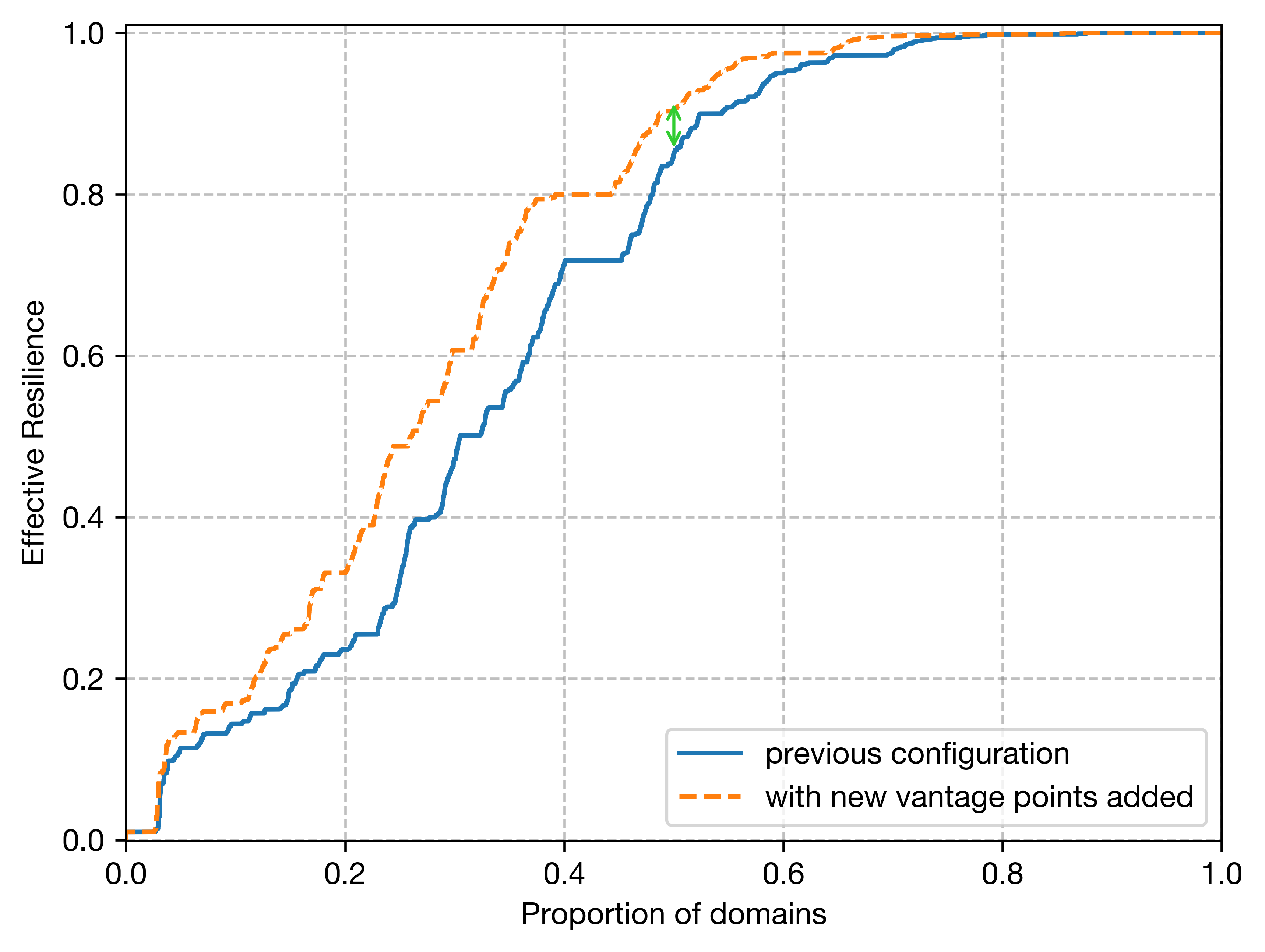
To date, our work with Princeton has focused on defending against BGP attacks on domain control validation via Multi-Perspective Issuance Corroboration (MPIC). This year, Let’s Encrypt is adding two new remote perspectives for domain validation. This means we will make five total validation requests, one from the primary datacenter and four from remote perspectives (previously two). Increased perspectives provide more domain validation security, thus improving visibility and protection against BGP attacks.

Additional global vantage points increase resilience of Let’s Encrypt issuance. Source: Princeton Center for Information Technology Policy

Additionally, we will be facilitating the adoption of ACME Renewal Information (ARI) in order to enable certificate authorities (CAs) to maintain continuity of service in a mass revocation/replacement event. If a BGP attack does occur, ARI will allow CAs to quickly and automatically revoke and replace certificates associated with the victim domain. Learn more about how to integrate ARI into an existing ACME client.

Our team will be working with the research groups of Professor Prateek Mittal to provide secure data related to increased perspectives and ARI, and contributing to research analysis and discoveries.

We’d like to thank Princeton University for their partnership on this important work, and Open Technology Fund for making it possible.

Internet Security Research Group (ISRG) is the parent organization of Let’s Encrypt, Prossimo, and Divvi Up. ISRG is a 501(c)(3) nonprofit. If you’d like to support our work, please consider getting involved, donating, or encouraging your company to become a sponsor.

Let’s Encrypt Continues Partnership with Princeton to Bolster Internet Security

Post Syndicated from Let's Encrypt original https://letsencrypt.org/2024/05/30/princeton-partnership/

Let’s Encrypt is proud to have been partnering with the Center for Information Technology Policy team at Princeton University since 2018 to bolster defenses against Border Gateway Protocol (BGP) attacks. We’re thrilled to continue this partnership thanks to renewed funding from the Open Technology Fund.

“Let’s Encrypt has played a pivotal role in driving our research around protecting against BGP attacks and preventing the disruption such attacks can cause. We’re grateful for the partnership with Let’s Encrypt, as the largest Certificate Authority, in this critical work.” – Jennifer Rexford, Provost, Princeton University

To date, our work with Princeton has focused on defending against BGP attacks on domain control validation via Multi-Perspective Issuance Corroboration (MPIC). This year, Let’s Encrypt is adding two new remote perspectives for domain validation. This means we will make five total validation requests, one from the primary datacenter and four from remote perspectives (previously two). Increased perspectives provide more domain validation security, thus improving visibility and protection against BGP attacks.

Additional global vantage points increase resilience of Let’s Encrypt issuance. Source: Princeton Center for Information Technology Policy

Additionally, we will be facilitating the adoption of ACME Renewal Information (ARI) in order to enable certificate authorities (CAs) to maintain continuity of service in a mass revocation/replacement event. If a BGP attack does occur, ARI will allow CAs to quickly and automatically revoke and replace certificates associated with the victim domain. Learn more about how to integrate ARI into an existing ACME client.

Our team will be working with the research groups of Professor Prateek Mittal to provide secure data related to increased perspectives and ARI, and contributing to research analysis and discoveries.

We’d like to thank Princeton University for their partnership on this important work, and Open Technology Fund for making it possible.

Internet Security Research Group (ISRG) is the parent organization of Let’s Encrypt, Prossimo, and Divvi Up. ISRG is a 501(c)(3) nonprofit. If you’d like to support our work, please consider getting involved, donating, or encouraging your company to become a sponsor.

Takeaways from Tailscale’s Adoption of ARI

Post Syndicated from Let's Encrypt original https://letsencrypt.org/2024/05/01/ari-in-tailscale.html

Since March 2023, Let’s Encrypt has been improving our resiliency and reliability via ACME Renewal Information (ARI). ARI makes it possible for our Subscribers to handle certificate revocation and renewal easily and automatically. A primary benefit of ARI is that it sets Subscribers up for success in terms of ideal renewal times in the event that Let’s Encrypt offers certificates with even shorter lifetimes than 90 days. We recently published a guide for engineers on how to integrate ARI into existing ACME Clients.

In this blog post, we’ll explore Let’s Encrypt Subscriber Tailscale’s experience adopting ARI.

In total, it took just two Tailscale engineers less than two days to implement ARI. Prior to ARI, the Tailscale team had made other iterations of cert renewal logic, including hardcoding renewal 14 days before expiry and hardcoding 1/3rd of remaining time until expiry. An issue with these approaches was that assumptions were made about the validity period of certificates issued by Let’s Encrypt, which will change in the future. In contrast, ARI allows Tailscale to offload the renewal decision to Let’s Encrypt without making any assumptions.

Tailscale noted that ARI was especially useful to add before certificates’ validity period starts shortening, as their client software in charge of requesting and renewing certificates is running on user machines. This makes it so they cannot easily update the whole fleet overnight if any issues come up. Thanks to ARI, they’ve reduced the risk of not rotating certificates for client machines in time, or causing excessive load on Let’s Encrypt’s infrastructure with overly-eager rotation logic.

One consideration the Tailscale team factored in deciding to adopt ARI was wanting to avoid adding a hard dependency on the Let’s Encrypt infrastructure for renewal. To remedy this, Tailscale certificate renewal logic falls back to local time-based check if the ARI endpoint cannot be reached for any reason.

Tailscale’s roadmap for getting ARI in production:

  • Updated their fork of golang.org/x/crypto to support ARI

  • Updated the renewal code in the Tailscale client

  • Tested it locally by requesting certificates for a dev domain

  • Tested renewal by stubbing out ARI response with hardcoded data

  • Tested fallback by blocking ARI requests

  • Shipped it!

The team reported running into one snag during the process. Because the RFC is not finalized, the upstream Go package for ACME doesn’t support ARI yet. As a solution, they added support in their fork of that Go package. Tailscale’s main piece of advice for Subscribers adopting ARI: don’t forget to put a timeout on your ARI request!

We’re grateful to the Tailscale team for taking the time to share with us their experience adopting ARI and advice for fellow Subscribers. In addition to being an ARI adopter, Tailscale is a Let’s Encrypt Sponsor! We appreciate their support of our work to build a more secure Web.

We’re also grateful to be partnering with Princeton University on our ACME Renewal Information work, thanks to generous support from the Open Technology Fund.

Internet Security Research Group (ISRG) is the parent organization of Let’s Encrypt, Prossimo, and Divvi Up. ISRG is a 501(c)(3) nonprofit. If you’d like to support our work, please consider getting involved, donating, or encouraging your company to become a sponsor.

Takeaways from Tailscale’s Adoption of ARI

Post Syndicated from Let's Encrypt original https://letsencrypt.org/2024/05/01/ari-in-tailscale/

Since March 2023, Let’s Encrypt has been improving our resiliency and reliability via ACME Renewal Information (ARI). ARI makes it possible for our Subscribers to handle certificate revocation and renewal easily and automatically. A primary benefit of ARI is that it sets Subscribers up for success in terms of ideal renewal times in the event that Let’s Encrypt offers certificates with even shorter lifetimes than 90 days. We recently published a guide for engineers on how to integrate ARI into existing ACME Clients.

In this blog post, we’ll explore Let’s Encrypt Subscriber Tailscale’s experience adopting ARI.

In total, it took just two Tailscale engineers less than two days to implement ARI. Prior to ARI, the Tailscale team had made other iterations of cert renewal logic, including hardcoding renewal 14 days before expiry and hardcoding 1/3rd of remaining time until expiry. An issue with these approaches was that assumptions were made about the validity period of certificates issued by Let’s Encrypt, which will change in the future. In contrast, ARI allows Tailscale to offload the renewal decision to Let’s Encrypt without making any assumptions.

Tailscale noted that ARI was especially useful to add before certificates’ validity period starts shortening, as their client software in charge of requesting and renewing certificates is running on user machines. This makes it so they cannot easily update the whole fleet overnight if any issues come up. Thanks to ARI, they’ve reduced the risk of not rotating certificates for client machines in time, or causing excessive load on Let’s Encrypt’s infrastructure with overly-eager rotation logic.

One consideration the Tailscale team factored in deciding to adopt ARI was wanting to avoid adding a hard dependency on the Let’s Encrypt infrastructure for renewal. To remedy this, Tailscale certificate renewal logic falls back to local time-based check if the ARI endpoint cannot be reached for any reason.

Tailscale’s roadmap for getting ARI in production:

  • Updated their fork of golang.org/x/crypto to support ARI

  • Updated the renewal code in the Tailscale client

  • Tested it locally by requesting certificates for a dev domain

  • Tested renewal by stubbing out ARI response with hardcoded data

  • Tested fallback by blocking ARI requests

  • Shipped it!

The team reported running into one snag during the process. Because the RFC is not finalized, the upstream Go package for ACME doesn’t support ARI yet. As a solution, they added support in their fork of that Go package. Tailscale’s main piece of advice for Subscribers adopting ARI: don’t forget to put a timeout on your ARI request!

We’re grateful to the Tailscale team for taking the time to share with us their experience adopting ARI and advice for fellow Subscribers. In addition to being an ARI adopter, Tailscale is a Let’s Encrypt Sponsor! We appreciate their support of our work to build a more secure Web.

We’re also grateful to be partnering with Princeton University on our ACME Renewal Information work, thanks to generous support from the Open Technology Fund.

Internet Security Research Group (ISRG) is the parent organization of Let’s Encrypt, Prossimo, and Divvi Up. ISRG is a 501(c)(3) nonprofit. If you’d like to support our work, please consider getting involved, donating, or encouraging your company to become a sponsor.

An Engineer’s Guide to Integrating ARI into Existing ACME Clients

Post Syndicated from Let's Encrypt original https://letsencrypt.org/2024/04/25/guide-to-integrating-ari-into-existing-acme-clients.html

Following our previous post on the foundational benefits of ACME Renewal Information (ARI), this one offers a detailed technical guide for incorporating ARI into existing ACME clients.

Since its introduction in March 2023, ARI has significantly enhanced the resiliency and reliability of certificate revocation and renewal for a growing number of Subscribers. To extend these benefits to an even broader audience, incorporating ARI into more ACME clients is essential.

To foster wider adoption, we’re excited to announce a new compelling incentive: certificate renewals that utilize ARI will now be exempt from all rate limits. To capitalize on this benefit, renewals must occur within the ARI-suggested renewal window, and the request must clearly indicate which existing certificate is being replaced. To learn how to request a suggested renewal window, select an optimal renewal time, and specify certificate replacement, continue reading!

Integrating ARI Into an Existing ACME Client

In May 2023, we contributed a pull request to the Lego ACME client, adding support for draft-ietf-acme-ari-01. In December 2023 and February 2024, we contributed two follow-up pull requests (2066, 2114) adding support for changes made in draft-ietf-acme-ari-02 and 03. These experiences provided valuable insight into the process of integrating ARI into an existing ACME client. We’ve distilled these insights into six steps, which we hope will be useful for other ACME client developers.

Note: the code snippets in this post are written in Golang. We’ve structured and contextualized them for clarity, so that they might be easily adapted to other programming languages as well.

Step 1: Detecting support for ARI

While Let’s Encrypt first enabled ARI in Staging and Production environments in March 2023, many ACME clients are used with a variety of CAs, so it’s crucial to ascertain if a CA supports ARI. This can be easily determined: if a ‘renewalInfo’ endpoint is included in the CA’s directory object, then the CA supports ARI.

In most any client you’ll find a function or method that is responsible for parsing the JSON of the ACME directory object. If this code is deserializing the JSON into a defined type, it will be necessary to modify this type to include the new ‘renewalInfo’ endpoint.

In Lego, we added a ‘renewalInfo’ field to the Directory struct, which is accessed by the GetDirectory method:

type Directory struct {
    NewNonceURL    string `json:"newNonce"`
    NewAccountURL  string `json:"newAccount"`
    NewOrderURL    string `json:"newOrder"`
    NewAuthzURL    string `json:"newAuthz"`
    RevokeCertURL  string `json:"revokeCert"`
    KeyChangeURL   string `json:"keyChange"`
    Meta           Meta   `json:"meta"`
    RenewalInfo    string `json:"renewalInfo"`
}

As we discussed above, not all ACME CAs currently implement ARI, so before we attempt to make use of the ‘renewalInfo’ endpoint we should ensure that this endpoint is actually populated before calling it:

func (c *CertificateService) GetRenewalInfo(certID string) (*http.Response, error) {
  if c.core.GetDirectory().RenewalInfo == "" {
    return nil, ErrNoARI
  }
}

Step 2: Determining where ARI fits into the renewal lifecycle of your client

The next step involves selecting the optimal place in the client’s workflow to integrate ARI support. ACME clients can either run persistently or be executed on-demand. ARI is particularly beneficial for clients that operate persistently or for on-demand clients that are scheduled to run at least daily.

In the case of Lego, it falls into the latter category. Its renew command is executed on-demand, typically through a job scheduler like cron. Therefore, incorporating ARI support into the renew command was the logical choice. Like many ACME clients, Lego already has a mechanism to decide when to renew certificates, based on the certificate’s remaining validity period and the user’s configured renewal timeframe. Introducing calls to ARI should take precedence over this mechanism, leading to a modification of the renew command to consult ARI before resorting to the built-in logic.

Step 3: Constructing the ARI CertID

The composition of the ARI CertID is a crucial part of the ARI specification. This identifier, unique to each certificate, is derived by combining the base64url encoded bytes of the certificate’s Authority Key Identifier (AKI) extension and its Serial Number, separated by a period. The approach of combining AKI and serial number is strategic: the AKI is specific to an issuing intermediate certificate, and a CA may have multiple intermediates. A certificate’s serial number is required to be unique per issuing intermediate, but serials can be reused between intermediates. Thus the combination of AKI and serial uniquely identifies a certificate. With this covered, let’s move on to constructing an ARI CertID using only the contents of the certificate being replaced.

Suppose the ‘keyIdentifier’ field of the certificate’s Authority Key Identifier (AKI) extension has the hexadecimal bytes 69:88:5B:6B:87:46:40:41:E1:B3:7B:84:7B:A0:AE:2C:DE:01:C8:D4 as its ASN.1 Octet String value. The base64url encoding of these bytes is aYhba4dGQEHhs3uEe6CuLN4ByNQ=. Additionally, the certificate’s Serial Number, when represented in its DER encoding (excluding the tag and length bytes), has the hexadecimal bytes 00:87:65:43:21. This includes a leading zero byte to ensure that the serial number is interpreted as a positive integer, as necessitated by the leading 1 bit in 0x87. The base64url encoding of these bytes is AIdlQyE=. After stripping the trailing padding characters ("=") from each encoded part and concatenating them with a period as a separator, the ARI CertID for this certificate is aYhba4dGQEHhs3uEe6CuLN4ByNQ.AIdlQyE.

In the case of Lego, we implemented the above logic in the following function:

// MakeARICertID constructs a certificate identifier as described in
// draft-ietf-acme-ari-03, section 4.1.

func MakeARICertID(leaf *x509.Certificate) (string, error) {
  if leaf == nil {
    return "", errors.New("leaf certificate is nil")
  }

  // Marshal the Serial Number into DER.
  der, err := asn1.Marshal(leaf.SerialNumber)
  if err != nil {
    return "", err
  }

  // Check if the DER encoded bytes are sufficient (at least 3 bytes: tag,
  // length, and value).
  if len(der) < 3 {
    return "", errors.New("invalid DER encoding of serial number")
  }

  // Extract only the integer bytes from the DER encoded Serial Number
  // Skipping the first 2 bytes (tag and length). The result is base64url
  // encoded without padding.
  serial := base64.RawURLEncoding.EncodeToString(der[2:])

  // Convert the Authority Key Identifier to base64url encoding without
  // padding.
  aki := base64.RawURLEncoding.EncodeToString(leaf.AuthorityKeyId)

  // Construct the final identifier by concatenating AKI and Serial Number.
  return fmt.Sprintf("%s.%s", aki, serial), nil
}

Note: In the provided code, we utilize the RawURLEncoding, which is the unpadded base64 encoding as defined in RFC 4648. This encoding is similar to URLEncoding but excludes padding characters, such as “=”. Should your programming language’s base64 package only support URLEncoding, it will be necessary to remove any trailing padding characters from the encoded strings before combining them.

Step 4: Requesting a suggested renewal window

With the ARI CertID in hand, we can now request renewal information from the CA. This is done by sending a GET request to the ‘renewalInfo’ endpoint, including the ARI CertID in the URL path.

GET https://example.com/acme/renewal-info/aYhba4dGQEHhs3uEe6CuLN4ByNQ.AIdlQyE

The ARI response is a JSON object that includes a ‘suggestedWindow’, with ‘start’ and ‘end’ timestamps indicating the recommended renewal period, and optionally, an ‘explanationURL’ providing additional context about the renewal suggestion.

{
  "suggestedWindow": {
    "start": "2021-01-03T00:00:00Z",
    "end": "2021-01-07T00:00:00Z"
  },
  "explanationURL": "https://example.com/docs/ari"
}

The ‘explanationURL’ is optional. However, if it’s provided, it’s recommended to display it to the user or log it. For instance, in cases where ARI suggests an immediate renewal due to an incident that necessitates revocation, the ‘explanationURL’ might link to a page explaining the incident.

Next, we’ll cover how to use the ‘suggestedWindow’ to determine the best time to renew the certificate.

Step 5: Selecting a specific renewal time

draft-ietf-acme-ari provides a suggested algorithm for determining when to renew a certificate. This algorithm is not mandatory, but it is recommended.

  1. Select a uniform random time within the suggested window.

  2. If the selected time is in the past, attempt renewal immediately.

  3. Otherwise, if the client can schedule itself to attempt renewal at exactly the selected time, do so.

  4. Otherwise, if the selected time is before the next time that the client would wake up normally, attempt renewal immediately.

  5. Otherwise, sleep until the next normal wake time, re-check ARI, and return to “1.”

For Lego, we implemented the above logic in the following function:

func (r *RenewalInfoResponse) ShouldRenewAt(now time.Time, willingToSleep time.Duration) *time.Time {

  // Explicitly convert all times to UTC.
  now = now.UTC()
  start := r.SuggestedWindow.Start.UTC()
  end := r.SuggestedWindow.End.UTC()

  // Select a uniform random time within the suggested window.
  window := end.Sub(start)
  randomDuration := time.Duration(rand.Int63n(int64(window)))
  rt := start.Add(randomDuration)

  // If the selected time is in the past, attempt renewal immediately.
  if rt.Before(now) {
    return &now
  }

  // Otherwise, if the client can schedule itself to attempt renewal at exactly the selected time, do so.
  willingToSleepUntil := now.Add(willingToSleep)
  if willingToSleepUntil.After(rt) || willingToSleepUntil.Equal(rt) {
    return &rt
  }

  // TODO: Otherwise, if the selected time is before the next time that the client would wake up normally, attempt renewal immediately.

  // Otherwise, sleep until the next normal wake time.

  return nil

}

Step 6: Indicating which certificate is replaced by this new order

To signal that a renewal was suggested by ARI, a new ‘replaces’ field has been added to the ACME Order object. The ACME client should populate this field when creating a new order, as shown in the following example:

{
  "protected": base64url({
    "alg": "ES256",
    "kid": "https://example.com/acme/acct/evOfKhNU60wg",
    "nonce": "5XJ1L3lEkMG7tR6pA00clA",
    "url": "https://example.com/acme/new-order"
  }),
  "payload": base64url({
    "identifiers": [
      { "type": "dns", "value": "example.com" }
    ],
    "replaces": "aYhba4dGQEHhs3uEe6CuLN4ByNQ.AIdlQyE"
  }),
  "signature": "H6ZXtGjTZyUnPeKn...wEA4TklBdh3e454g"
}

Many clients will have an object that the client deserializes into the JSON used for the order request. In the Lego client, this is the Order struct. It now includes a ‘replaces’ field, accessed by the NewWithOptions method:

// Order the ACME order Object.
// - https://www.rfc-editor.org/rfc/rfc8555.html#section-7.1.3

type Order struct {
  ...
  // replaces (optional, string):
  // a string uniquely identifying a previously-issued
  // certificate which this order is intended to replace.
  // - https://datatracker.ietf.org/doc/html/draft-ietf-acme-ari-03#section-5
  Replaces string `json:"replaces,omitempty"`
}

...

// NewWithOptions Creates a new order.
func (o *OrderService) NewWithOptions(domains []string, opts *OrderOptions) (acme.ExtendedOrder, error) {
  ...
  if o.core.GetDirectory().RenewalInfo != "" {
    orderReq.Replaces = opts.ReplacesCertID
  }
}

When Let’s Encrypt processes a new order request featuring a ‘replaces’ field, several important checks are conducted. First, it’s verified that the certificate indicated in this field has not been replaced previously. Next, we ensure that the certificate is linked to the same ACME account that’s making the current request. Additionally, there must be at least one domain name shared between the existing certificate and the one being requested. If these criteria are met and the new order request is submitted within the ARI-suggested renewal window, the request qualifies for exemption from all rate limits. Congratulations!

Moving Forward

The integration of ARI into more ACME clients isn’t just a technical upgrade, it’s the next step in the evolution of the ACME protocol; one where CAs and clients work together to optimize the renewal process, ensuring lapses in certificate validity are a thing of the past. The result is a more secure and privacy-respecting Internet for everyone, everywhere.

As always, we’re excited to engage with our community on this journey. Your insights, experiences, and feedback are invaluable as we continue to push the boundaries of what’s possible with ACME.

We’re grateful to be partnering with Princeton University on our ACME Renewal Information work, thanks to generous support from the Open Technology Fund.

Internet Security Research Group (ISRG) is the parent organization of Let’s Encrypt, Prossimo, and Divvi Up. ISRG is a 501(c)(3) nonprofit. If you’d like to support our work, please consider getting involved, donating, or encouraging your company to become a sponsor.