Post Syndicated from Oglaf! -- Comics. Often dirty. original https://www.oglaf.com/freshhorses/


Post Syndicated from Oglaf! -- Comics. Often dirty. original https://www.oglaf.com/freshhorses/
Post Syndicated from Lennart Poettering original https://0pointer.net/blog/projects/pthread-key-create.html
If you use pthread_key_create() with a non-NULL destructor
parameter (or an equivalent TLS construct) in a library/shared object then you
MUST link your library wth -z nodelete (or an equivalent
construct).
If you don’t, then you’ll have a lot of fun (like I just had) debugging
segfaults in the TLS destruction logic where functions are called that might
not even exist anymore in memory.
Now don’t tell me I hadn’t told you.
(Oh, and I hope I don’t need to mention that all GObject-based libraries should
link with -z nodelete anyway, for making sure the type system doesn’t
break.)
Post Syndicated from Lennart Poettering original https://0pointer.net/blog/photos/canaries-360.html
Ever wanted to know what’s the view like being the highest person in all of Spain? — No? Hmm, can’t help you then. — Otherwise:
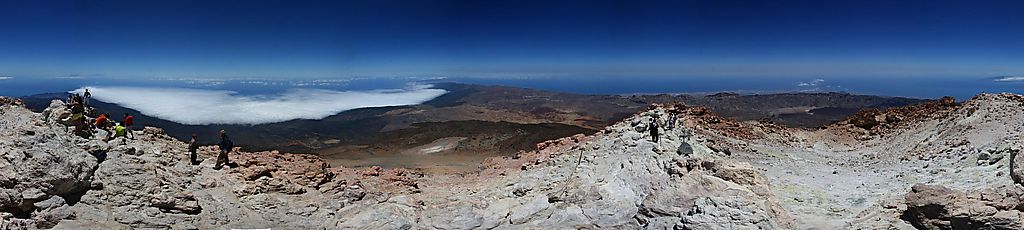
That’s on the summit of Pico del Teide at 3718m, on Tenerife island. Unless you leave solid ground this is as high as you can get in Spain. 163m lower it’s a bit more obvious that the Teide is a volcano:

And coming down to the surrounding caldera it’s even more obvious:
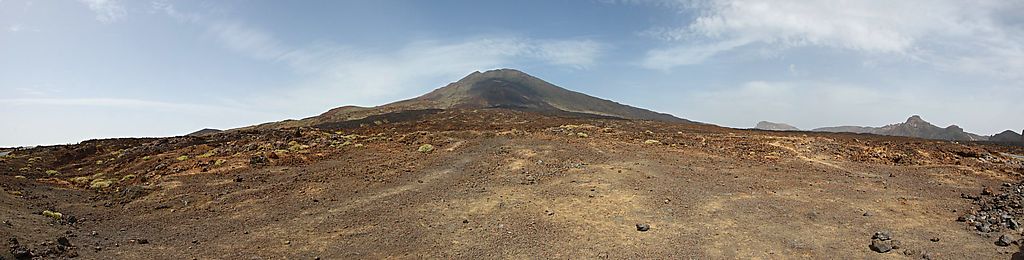
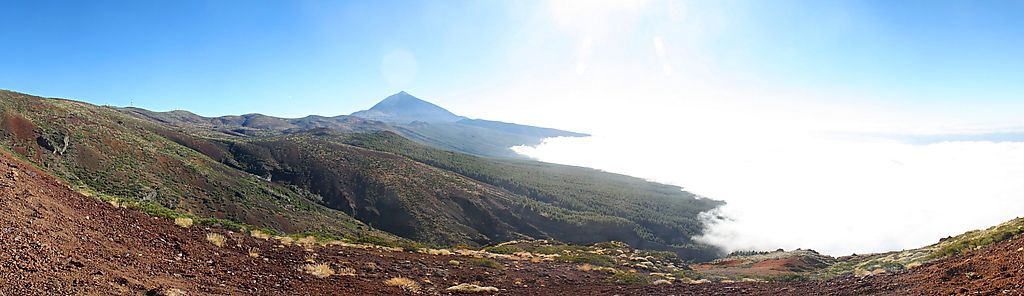
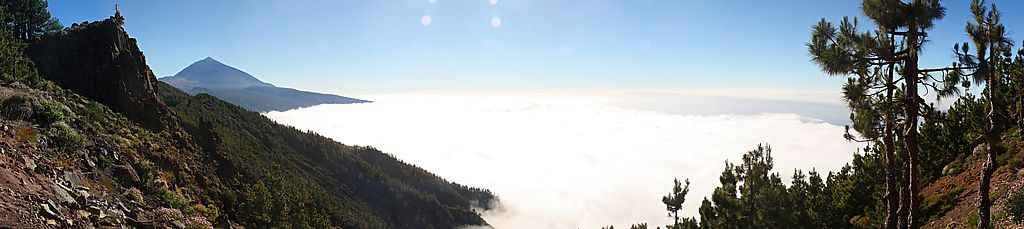
On a ridge next to the caldera you find the Teide Observatory:

The caldera is covered in old lava flows:
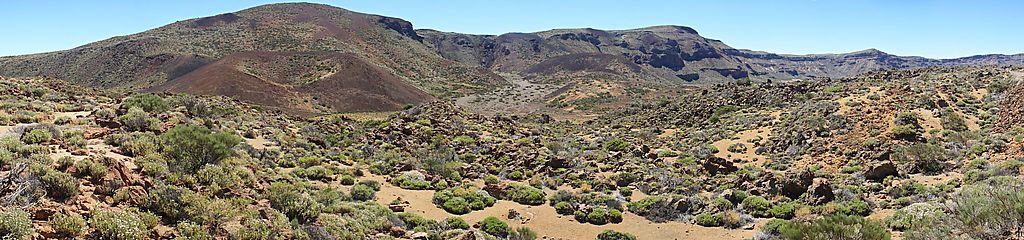
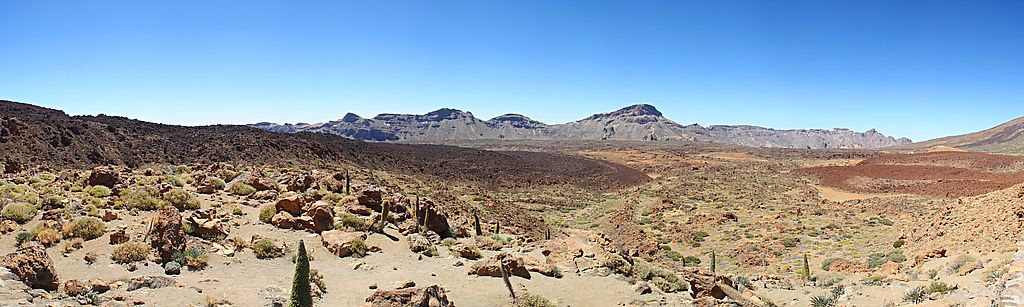
Vulcanism has created various interesting rock formations in the caldera:


Tenerife is not just about the Teide and its dusty caldera. In the north of the island you find the Anaga mountain range:

Neighboring Gran Canaria was where our little trip started and ended, right after the Gran Canaria Desktop Summit. Gran Canaria has no Teide but a very impressive landscape nonetheless:
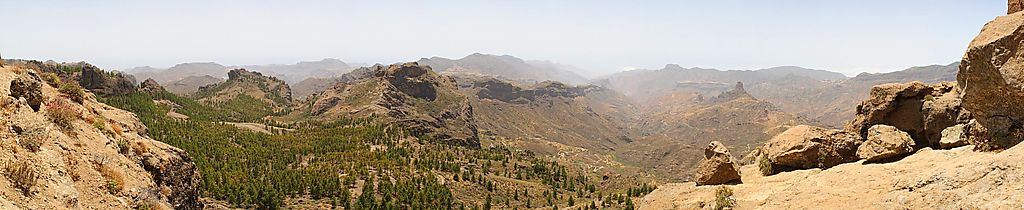
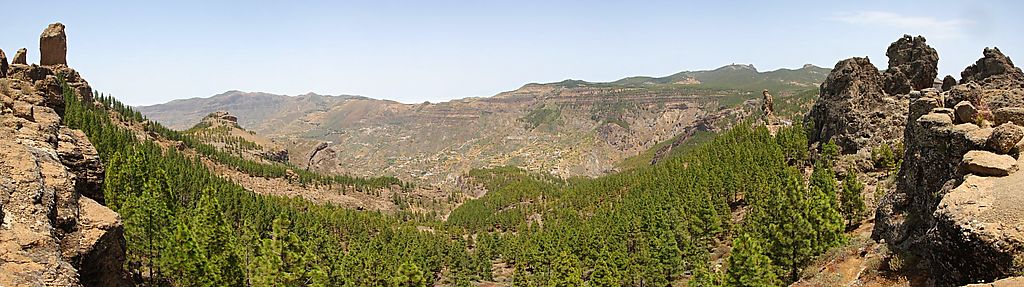
That’s the view from the Roque Nublo, the island’s most famous landmark. The rock itself is visible here (on the left):
Post Syndicated from Oglaf! -- Comics. Often dirty. original https://www.oglaf.com/cockbats/


Post Syndicated from Lennart Poettering original https://0pointer.net/blog/projects/oh-nine-sixteen.html
#nocomments y
As a followup to Oh Nine
Fifteen here’s a little overview of the changes coming with PulseAudio 0.9.16 which will be part of
Fedora 12 (already in Rawhide; I think Ubuntu Karmic (?) will have it
too).
We now try to control more than just a single ALSA mixer element for volume
control. This increases the hardware volume range and granularity exposed and
should also help minimizing problems by incomplete or incorrect default mixer
initialization on the lower levels.
This also adds support for allowing selection of input/output ports for
sound cards. This is used to expose changing between Mic vs. Line-In for input
source selection and Headphones vs. Speaker for output selection (of course the
list of available port is strictly dependant on what you hardware supports).
The list of available ports is deliberately kept minimal.
Thanks to Bastien the newest GNOME Volume Control now exposes profile/port
switching quite nicely, which he
blogged about. This
screenshot shows how the port (here called ‘Connector’) can be selected
in the new dialog.
The mixer rework also allows us to handle semi-pro/pro sound cards a bit
more flexibly. For example, which profiles/ports are exposed in PulseAudio or
how specific mixer elements are handled can now be controlled by editing .ini
file like configuration files in /usr/share/pulseaudio/alsa-mixer/.
Read
this mail for more information about this.
PulseAudio now integrates with Zeeshan’s fabulous Rygel UPnP/DLNA MediaServer. If enabled
Rygel will automatically expose all local audio devices which are managed by
PulseAudio as UPnP/DLNA MediaServer items which your UPnP/DLNA MediaRenderers
can now tune into. (Meaning: you can now stream audio from your PC directly to
your UPnP DMP (Digital Media Player) device, such as the PS3.) Communication
between Rygel and PulseAudio follows our little Media Server Spec on the
GNOME Wiki. This nicely complements the RAOP (Apple Airport) support we
introduced in PulseAudio 0.9.15. In one of the next versions of
PulseAudio/Rygel we hope to add support for PulseAudio becoming a MediaRenderer
as well. This will then not only allow you to stream from your PC to your
DMP device, but also allows PulseAudio to act as
“networked speaker”, which can be used by any UPnP/AV/DLNA control point, such
as Windows’ Media Player.
If you select a particular device as the default for a specific application
or class of streams, then when unplugging the device PulseAudio moves the stream
automatically to another audio device if one exists. New in PulseAudio 0.9.16
is that if you replug the audio device the stream will instantly be moved back,
requiring no further user intervention.
Also, PulseAudio now includes some implicit rules for doing the ‘right
thing’ when finding an audio device for an application. For example, unless
configured otherwise it will now route telephony applications automatically to
Bluetooth headsets if one is connected, in favour of the internal sound card of
the computer.
This is more a new feature of libcanberra than
of PulseAudio, but nonetheless: we now support surround for events sounds.
This allows us to play full 5.1 login sounds for example, in best THX cinema
fashion. We’d love to ship a 5.1 sound for login by default in sound-theme-freedesktop.
We’d be very thankful if you would be willing to contribute a sound
here, or two! A sound a bit less bombastic than the famous cinema THX effect
would probably be a good idea though.
And then there’s of course the usual batch of fixes and small improvements.
A substantial number of non-user visible changes have been made as well. For
example, as HAL is now obsolete PulseAudio now moved to udev for its device
discovery needs. We replaced our gdbm support by support for tdb. Also,
we stripped all security senstive code from PulseAudio, and ported it to use
RealtimeKit instead.
For the upcoming distributions that means that PulseAudio will run as real-time
process by default, improving drop-out safety.
And for some extra PA eye-candy, have a look on Impulse!
Post Syndicated from Oglaf! -- Comics. Often dirty. original https://www.oglaf.com/100-eyes/


Post Syndicated from Lennart Poettering original https://0pointer.net/blog/projects/avahi-world-domination.html
#nocomments y
I hereby officially declare that I have reached my goal of world domination. Emacs 23
(apparently due today) ships with Avahi support out of the box. Obviously,
one of the most natural combinations of software thinkable.
After Emacs, there’s not much else I could win, or is there?
Post Syndicated from Bradley M. Kuhn original http://ebb.org/bkuhn/blog/2009/07/29/microsoft-gpl.html
Microsoft has received much undeserved press about their recent release
of Linux drivers for their virtualization technology under GPLv2. I say
“undeserved” because I don’t particularly see why Microsoft
should be lauded merely for doing something that is in their own
interest that they’ve done before.
Most people have forgotten that Microsoft once had a GPL-based product
available for Windows NT. It was called Windows Services for
UNIX, and AFAICT, remains available today (although perhaps
they’ve transitioned in recent years to no longer include GPL’d
software).
This product
was acquired
by Microsoft when they purchased Softway Systems. The product was
based on GCC, and included a variety of GNU system utilities ported to
Windows. Microsoft was a compliant distributor of this software for
years, right during the time when they were calling the GPL an unAmerican
cancerous virus that eats up software like PacMan. The GPL is not a new
license to Microsoft; they only pretend that it is to give bad press to
the GPL or to give good press to themselves.
Another thing that’s not new to Microsoft is that they have no
interesting in contributing to Free Software unless it makes their
proprietary software more desirable. In my old example above, they
hoped to entice developers who preferred a Unix development environment to
switch to Windows NT. In the recent Linux driver release, they seek to
convince developers to switch from Xen and KVM to their proprietary
virtualization technology.
In fact, the only difference in this particular release is that, unlike
in the case of Softway’s
software, Microsoft
was apparently (according to Steve Hemminger) out of compliance
briefly. According to Steve, Microsoft distributed binaries linked
to various GPL parts.
Meanwhile, Sam Ramji claimed that Microsoft were already planning to
release the software before Hemminger and Greg K-H contacted them. I do
believe Sam when he says that there was already talk inside Microsoft
about releasing the source underway before the Linux developers
began their enforcement effort. However, that internal Microsoft talk
doesn’t mean that there wasn’t a problem. As soon as one distributes
the binaries of a GPL’d work, one must provide the source (or an offer therefor) alongside
those binaries. Thus, if Microsoft released binaries and delayed in
releasing source, there was a GPL violation.
Like all GPL violations (and potential GPL violations), it’s left to
the copyright holders of the software to engage in enforcement. I think
it’s great
that, according
to Steve and related press coverage, the Linux developers used the most common enforcement
strategy in the GPL community — quietly contact the company,
inform them of their obligations, and help them in a friendly way into
compliance. That process almost always works, and the fact that
Microsoft came into compliance shows the value of our community’s
standard enforcement practice.
Still, there is a more important item of note from a perspective of
software freedom. This Linux driver — whether it is released properly
under the GPL or kept proprietary in violation of the GPL — is designed to convince users to give up Free
virtualization platforms like Xen and KVM and use Microsoft’s
virtualization technology instead. From that perspective, it matters
little that it was released as Free Software: people should avoid the
software and use platforms for virtualization that respect their
freedom.
Someday, perhaps, Microsoft will take a proper place among other large
companies that actually contribute code that improves the general
infrastructure of Free Software. Many companies give generally useful
improvements back to Linux, GCC, and various other parts of the
GNU/Linux system. Microsoft has never done this: they only contribute
code when it improves Free Software interoperability with their
proprietary technology. The day that Microsoft actually changes its
attitude toward Free Software did not occur last week. Microsoft’s old
strategy stays the
same: try
to kill Free Software with patents, and in the meantime, convince as
many Free Software users as possible to begin relying on Microsoft
proprietary technology.