Proprietary Licenses Are Even Worse Than They Look

Post Syndicated from Bradley M. Kuhn original http://ebb.org/bkuhn/blog/2010/04/07/proprietary-licenses.html

There are lots of evil things that proprietary software companies might
do. Companies put their own profit above the rights and freedoms of
their users, and to that end, much can be done that subjugates
users. Even as someone who avoids proprietary software, I still read
many proprietary license agreements (mainly to see how bad they are).
I’ve certainly become numb to the constant barrage of horrible
restrictions they place on users. But, sometimes, proprietary licenses
go so far that I’m taken aback by their gratuitous cruelty.

Apple’s licenses are probably the easiest example of proprietary
licensing terms that are well beyond reasonableness. Of course, Apple’s
licenses do the usual things like forbidding users from copying,
modifying, sharing, and reverse engineering the software. But even
worse, Apple also forbid users from running Apple software on any
hardware that is not produced by Apple.

The decoupling of one’s hardware vendor from one’s software vendor was
a great innovation brought about by the PC revolution, in which,
ironically, Apple played a role. Computing history has shown us that when
your software vendor also controls your hardware, you can easily be
“locked in“ in ways that make mundane proprietary software
licenses seem almost nonthreatening.

Film image from Tron of the Master Control Program (MCP)

Indeed, Apple has such a good hype machine that
they even
have convinced some users this restrictive policy makes computing
better
. In this worldview, the paternalistic vendor will use its
proprietary controls over as many pieces of the technology as possible
to keep the infantile users from doing something that’s “just bad
for them”. The tyrannical
MCP
of Tron comes quickly to my mind.

I’m amazed that so many otherwise Free Software supporters are quite
happy using OSX and buying Apple products, given these kinds of utterly
unacceptable policies. The scariest part, though, is that this practice
isn’t confined to Apple. I’ve been recently reminded that other
companies, such
as IBM, do exactly the same thing
. As a Free Software advocate, I’m
critical of any company that uses their control of a proprietary
software license to demand that users run that software only on the
original company’s hardware as well. The production and distribution of
mundane proprietary software is bad enough. It’s unfortunate that
companies like Apple and IBM are going the extra mile to treat users
even worse.

Proprietary Licenses Are Even Worse Than They Look

Post Syndicated from Bradley M. Kuhn original http://ebb.org/bkuhn/blog/2010/04/07/proprietary-licenses.html

There are lots of evil things that proprietary software companies might
do. Companies put their own profit above the rights and freedoms of
their users, and to that end, much can be done that subjugates
users. Even as someone who avoids proprietary software, I still read
many proprietary license agreements (mainly to see how bad they are).
I’ve certainly become numb to the constant barrage of horrible
restrictions they place on users. But, sometimes, proprietary licenses
go so far that I’m taken aback by their gratuitous cruelty.

Apple’s licenses are probably the easiest example of proprietary
licensing terms that are well beyond reasonableness. Of course, Apple’s
licenses do the usual things like forbidding users from copying,
modifying, sharing, and reverse engineering the software. But even
worse, Apple also forbid users from running Apple software on any
hardware that is not produced by Apple.

The decoupling of one’s hardware vendor from one’s software vendor was
a great innovation brought about by the PC revolution, in which,
ironically, Apple played a role. Computing history has shown us that when
your software vendor also controls your hardware, you can easily be
“locked in“ in ways that make mundane proprietary software
licenses seem almost nonthreatening.

Film image from Tron of the Master Control Program (MCP)

Indeed, Apple has such a good hype machine that
they even
have convinced some users this restrictive policy makes computing
better
. In this worldview, the paternalistic vendor will use its
proprietary controls over as many pieces of the technology as possible
to keep the infantile users from doing something that’s “just bad
for them”. The tyrannical
MCP
of Tron comes quickly to my mind.

I’m amazed that so many otherwise Free Software supporters are quite
happy using OSX and buying Apple products, given these kinds of utterly
unacceptable policies. The scariest part, though, is that this practice
isn’t confined to Apple. I’ve been recently reminded that other
companies, such
as IBM, do exactly the same thing
. As a Free Software advocate, I’m
critical of any company that uses their control of a proprietary
software license to demand that users run that software only on the
original company’s hardware as well. The production and distribution of
mundane proprietary software is bad enough. It’s unfortunate that
companies like Apple and IBM are going the extra mile to treat users
even worse.

Down the Amazon

Post Syndicated from Lennart Poettering original https://0pointer.net/blog/photos/amazon.html

After BOSSA in
Manaus/Brazil
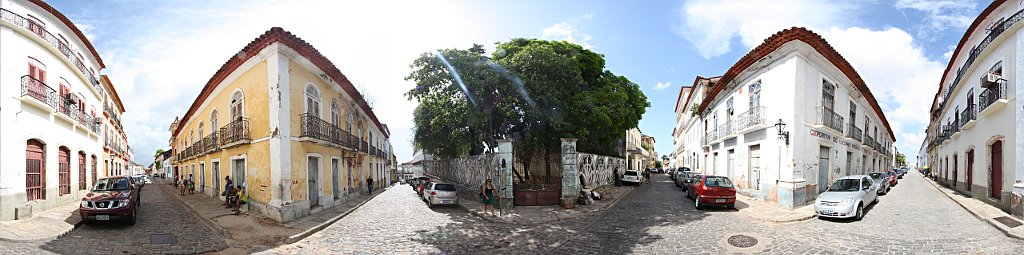
we took a very enjoyable boat trip down the Amazon, to
Santarém and particularly Alter do Chão, a ridiculously amazing
island paradise with glaring white sand in the middle of the jungle:

Tapajos 2

The town is located on the Tapajós River:

Tapajos 1

Tapajos 3

Up the river you find the Tapajós National Forest:

Tapajos 4

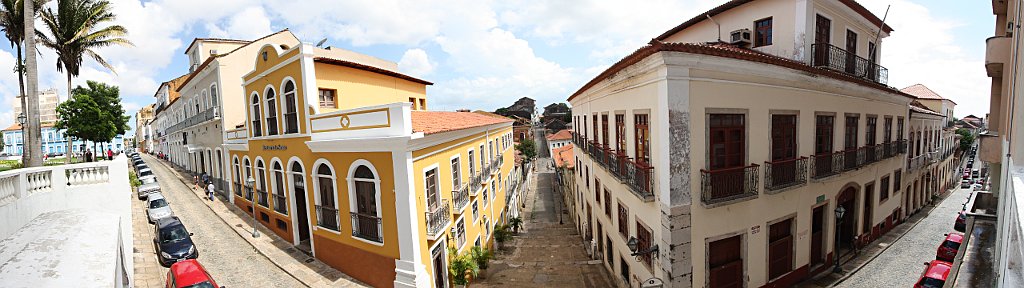
From there we went on to São Luís, a beautiful old colonial town:

Sao Luis 1

Sao Luis 3

Sao Luis 4

Sao Luis 2

A windy and wet sailing catamaran ride from São Luís you find Alcântara, another old colonial town, now partly in ruins and deserted:

Alcantara 1

Alcantara 2

Alcantara 3

LibrePlanet 2010 Completes Its Orbit

Post Syndicated from Bradley M. Kuhn original http://ebb.org/bkuhn/blog/2010/03/26/libreplanet.html

Seven and a half years ago, I got this idea: the membership of the
Free Software Foundation should have a
chance to get together every year and learn about what the FSF has been
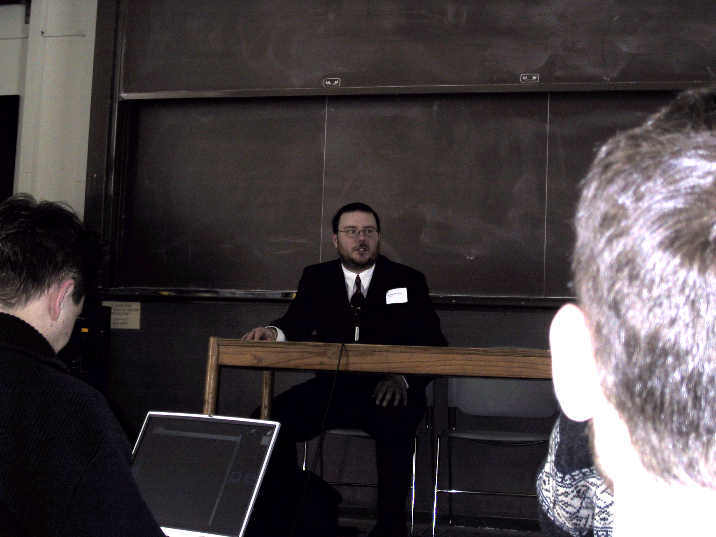
doing for the last year. I was so nervous
at the
first one on Saturday 15 March 2003
, that
I even
wore a suit
which I rarely do.

The basic idea was simple: the FSF Board of Directors came into town
anyway each March for the annual board meeting. Why not give a chance
for FSF associate members to meet the leadership and staff of FSF and
ask hard questions to their hearts’ content? I’m all about
transparency, as you know. 🙂

Since leaving
the position of Executive Director a few months before the 2005
meeting
, I’ve attended every annual meeting, just as an ordinary
Associate Member and
FSF volunteer. It’s always enjoyable to attend a conference organized
by someone else that you used to help organize; it’s like, after having
done sysadmin work for other people for years, to have someone keep a
machine running and up to date just for you. It’s been wonderful to
watch the FSF AM meeting grow into a full-fledged conference for
discussion and collaboration between folks from all over the Free
Software world. “One room, one track, one day” has become
“five rooms, three tracks, and three days” with the
proverbial complaint throughout: But, why do I have to miss this
great session so that I can go to some other great session!?!

Some highlights for me this year were:

  • I saw John
    Gilmore
    win
    a well-deserved FSF Award for the Advancement of Free Software
    .
  • I got to spend time with the
    intrepid gnash
    developer Rob Savoye
    again, whom I knew of for years (his legend precedes him) but
    I’d rarely had a chance to see in person regularly, until lately.
  • I met so many young people excited about software freedom. I can only
    imagine to be only 19 or 20 years old and have the opportunity meet
    other Free Software developers in person. At that age, I considered
    myself lucky to simply have Usenet access so that I could follow and
    participate in online discussions about Free Software (good ol’
    gnu.misc.discuss ;). I am so glad that young folks, some from as far
    away as Brazil, had the opportunity to visit and speak about their
    work.
  • On the informal Friday sessions, I was a bit amazed that I pulled off
    a marathon six-hour session of mostly well-received talks/discussions
    (for which I readily admit I had not prepped well). The first three
    hours was about the challenges of software freedom on mobile devices,
    and the second three were about the nitty-gritty details of the hardest
    and most technical GPL enforcement task: the C&CS check. People
    seemed to actually enjoy watching me break half my Fedora chroots trying
    to build some source code for a plasma television. Someone even told me
    later: it was more fun because we got to see you make all the
    mistakes
    .
  • Finally (and I realize I’ve probably buried the lede here, but I’ve
    kept the list chronological, since I wrote most of it before I found out
    this last thing), after the FSF Board meeting, which followed
    LibrePlanet, I was informed by a phone call from my good
    friend Henry Poole
    that I’d been elected to
    FSF’s Board of
    Directors
    , which has now
    been announced
    by FSF on Peter Brown’s blog
    . I’ve often told the story that when I
    first learned about the FSF as a young programmer and sysadmin, I
    thought that someday, maybe I could be good enough to get a job as a
    sysadmin for the FSF. I did indeed volunteer as a sysadmin for the FSF
    starting around 1996, but I truly felt I’d exceeded any possible dream
    when I was later named FSF’s Executive Director, and was able to serve
    in that post for so many years. Now, being part of the Board of
    Directors is an even greater opportunity for involvement in the
    organization that I’ve loved and respected for so long.

FSF is an organization based around a very simple, principled idea:
that users and programmers alike deserve inalienable rights to copy,
share, modify, and redistribute all the software that they use. This
issue isn’t merely about making better software (although Free Software
developers usually do, anyway); it’s about a principle of morality:
everyone using computers should be treated well and be given the maximal
opportunity to treat their neighbors well, too. Helping make this
simple idea into reality is the center of all the work I’ve done for the
last 12 years of my life, and I expect it will be the focus of my
(hopefully many) remaining years. I am thankful that the Voting Members
of FSF have given me this additional opportunity to help our shared
cause. I plan to work hard in this and all the other responsibilities
that I already have to our Free Software community. Like everyone on
FSF’s Board of Directors, I serve in that role completely as a
volunteer, so in some ways I feel this is just a natural extension of
the volunteer work I’ve continued to do for the FSF regularly since I
left its employment in 2005.

Finally, I was glad to meet (or meet again) so many FSF supporters at
LibrePlanet, and I deeply hope that I can serve our shared goal well in
this additional role.

The collective thoughts of the interwebz