Post Syndicated from Liz Walsh original https://www.raspberrypi.org/blog/joy-in-learning-computer-science-with-experience-cs/
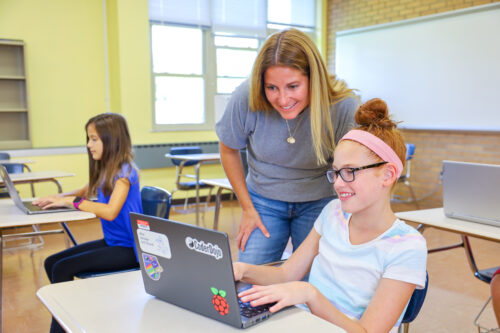
Last fall I met with Mark Nechanicky and Taryn Israel Nechanicky, two teachers from Albert Lea, Minnesota. Mark and Taryn are bringing computer science into their classroom with Experience CS, our free cross-curricular resource teaching computer science concepts and reinforcing students’ content knowledge in areas including math, science, language arts, and more.
We talked about some of the challenges they faced, and how they’ve worked around them, including constraints on their time and the requirements around teaching their core content areas. But most of our conversation was on the impact the Experience CS resources had on their students. Mark and Taryn shared how teaching cross-curricular computing helped their students to find joy in their learning, express creativity in their projects, and build a sense of leadership within the classroom.
In a little under a week Mark, Taryn, and I will be presenting a breakout session titled Foster Student Engagement, Confidence, and Collaboration through Integrated CS in New Orleans, Louisiana at the Computer Science Teachers Association (CSTA) annual conference. You can read more about our session at the end of this blog post. For now, here’s a preview.
Joy in learning through student agency
When it was time to code, Taryn’s students cheered. She said, “I believe this is because the curriculum makes coding feel like play, which is the basis of how Scratch is designed. Students have choices, agency, chances to make mistakes, and problem-solve individually and together.”
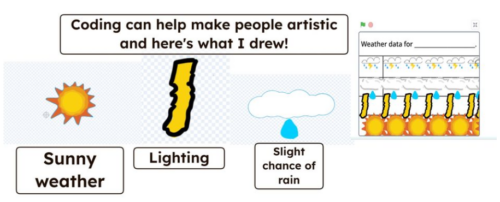
Taryn shared an example of student agency she saw when teaching the first lesson in Weather watchers, a unit designed for students in third grade (ages 8–9) that integrates math and science concepts with programming. During that lesson a student was able to bring her beloved dog, Chewy, into her program as a sprite, and create something meaningful to her.
Fostering creativity among students
While we were designing the units of Experience CS, we focused on ensuring that our resources provided students and teachers with properly scaffolded learning experiences. We did this to support all students in their computing journey, and to provide them with the opportunity to be creative and express themselves in their programs.
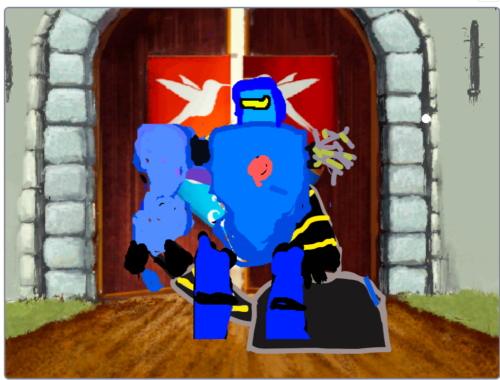
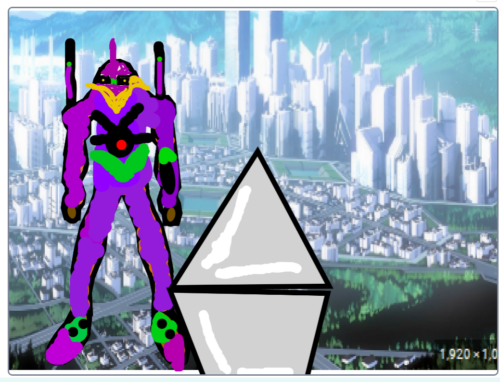
In the Weather watchers unit, students collect weather data and create picture graphs using sprites that represent different weather conditions. Mark’s class let us know the starter project for the unit was missing something — keep an eye out for a tornado sprite in the future! With a little creativity and problem solving, they were able to design just the sprite they needed.
Mark added, “students aren’t just following step-by-step directions to create identical projects. As they work through the lessons, they have the flexibility to add their own sprites, design additional interactions, customize characters, and extend projects in ways that reflect their interests.”
Fostering leadership in the computer science classroom
The largest part of our discussion was how teaching cross-curricular computer science created environments for all students to become leaders. “One thing I’ve noticed is that coding creates leadership opportunities for students who don’t always get the chance to be seen as the expert. Because it is a new experience for almost everyone, it changes the dynamic in the classroom. Students with Individualized Education Plans (IEPs), English Language Learners, introverted students, and students who may struggle in other academic areas are often the ones discovering new ideas, solving problems, and showing classmates how to do something cool.”
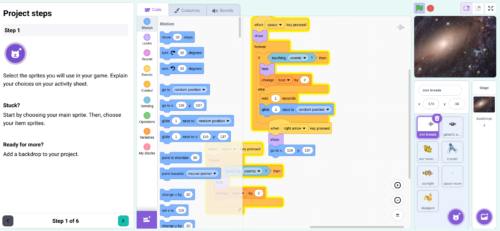
Mark also shared an experience he had while teaching Digit dash, a game design unit that reinforces multiplication fluency, designed for students in fourth grade (ages 9–10). That unit was the first time his students had explored how variables can be used to store a score in a game. The first student to figure out how to use variables in their program was introverted, but became the class “expert” on variables and modeled it for his fellow students.
Find us at CSTA
If you’re heading to New Orleans, we hope to see you at our CSTA breakout session, Foster Student Engagement, Confidence, and Collaboration through Integrated CS. During our session, you will be able to hear directly from Mark and Taryn on the impact that teaching Experience CS has had on their students in the last school year. We will include examples from the Experience CS units Weather watchers, Logic and lore, Picture this!, and Digit dash.
Our CSTA session will take place on July 17th, from 3:00 PM to 4:00 PM CT, in Borgne (Floor 3).
And we’d love to hear from you. Have you used our Experience CS resources in your classroom? How did it go?
The post Joy in learning computer science with Experience CS appeared first on Raspberry Pi Foundation.