All posts by Andrew Csizmadia

Join the UK Bebras Challenge 2026

Post Syndicated from Andrew Csizmadia original https://www.raspberrypi.org/blog/join-the-uk-bebras-challenge-2026/

The UK Bebras Challenge, the nation’s largest computing challenge, is back!

Last year, more than 526,000 students from across the UK took part, tackling fun and thought-provoking puzzles that introduce key ideas in computational thinking with no extra preparation needed.

Read on to learn how your school can get involved.

What is the UK Bebras Challenge?

The UK Bebras Challenge is a free-to-enter annual challenge that is designed to spark interest in both computational thinking and computer science among students aged 6 to 19. The 45-minute challenge is accessible to everyone, offering age-appropriate but challenging interactive tasks for students at different levels, including a tailored version for secondary students with severe sight impairments.

The tasks are designed to give every student the opportunity to showcase their potential and all participating students receive a certificate. There are also certificates based on performance within school and gold certificates based on national boundaries. With self-marking tasks and no text-based programming required, it’s easy to have your school participate in the UK Bebras Challenge.

“The UK Bebras challenge provides an engaging way for students to apply their problem-solving skills in a fun, competitive environment. It complements our coding curriculum, encouraging critical thinking and enhancing computational thinking,” – Jonathan Phillips from Hereford Cathedral School

A new way to celebrate your achievements
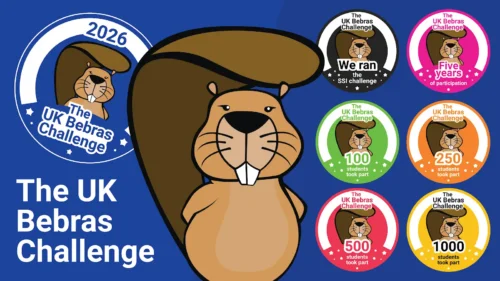
A cartoon beaver next to some digital badges for the Bebras Challenge.

Every student who takes part in the UK Bebras Challenge gets a certificate. This year, we’ve come up with a new way to celebrate schools too. Every school who takes part will now get a digital badge and can earn others for reaching participation milestones.

The badges categories are:

  • 2026 UK Bebras Challenge participants
  • 100 students take part
  • 250 students
  • 500 students
  • 1,000+ students
  • 5 years running the challenge (starting this year)
  • Running the Severe Sight Impairment (SSI) challenge

With the exception of the ‘5 years’ badge, the numbers aren’t cumulative year-on-year and reset for each new challenge year. Claiming the badges is easy: Once the results are processed, we’ll email you a link where you can download your badge and display it wherever you want.

Feel free to brag about your new badges online. It might encourage other schools to take part next year 😀

Go deeper with Ada Computer Science
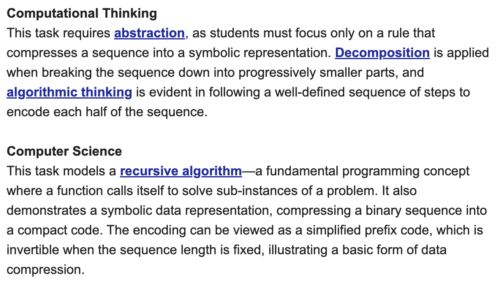
Text that reads: "Computational thinking: this task requires abstraction, as students must focus only on a rule that compresses a sequence into  a symbolic representation. Decomposition is applied when breaking the sequence down into progressively smaller parts, and algorithmic thinking is evident in following a well-defined sequence of steps to encode each half of the sequence. Computer science: this task models a recursive algorithm - a fundamental programming concept where a function calls itself to solve sub-instances of a problem. It also demonstrated a symbolic data representation, compressing a binary sequence into a compact code. The encoding can be viewed as a simplified prefix code, which is invertible when the sequence length is fixed, illustrating a basic form of data compression."
An example of the related computing concepts you’ll now see under every challenge puzzle.

Each Bebras task’s background section is now linked to a related topic on the Ada Computer Science platform. Following the live challenge, teachers and students can explore ithe detailed explanation of the computer science concept behind each Bebras task, along with the computational thinking skills students may use to solve that task.

“We have thoroughly enjoyed delivering the UK Bebras Challenge at our school. It has been an invaluable resource and by participating in this exciting event, our students have been introduced to the world of computational thinking in a fun and engaging way. The challenges are designed to push students to think critically and creatively, developing essential problem-solving skills that are applicable both inside and outside of the classroom.” – Sharon Pendreigh from Brownedge St Mary’s Catholic High School

How do I get my school involved?

If you are either a UK school or teach a UK-based curriculum, then visit the UK Bebras website for more information and to register your school.

Once you’ve registered, you’ll get access to the entire UK Bebras set of questions from previous years, allowing you to create custom quizzes for your students to tackle at any time throughout the year. These quizzes are self-marking, and you can download your students’ results to keep track of their progress. The questions are perfect for enrichment activities, end-of-term quizzes, lesson starters, and even full lessons to develop computational thinking skills and promote computing concepts.

Register for free at bebras.uk/admin.

Have a go at one of our puzzles

Here’s a question we ran in 2018 for the Juniors group (ages 10 to 12). Can you solve it?

Park walk

This is the map of a park:
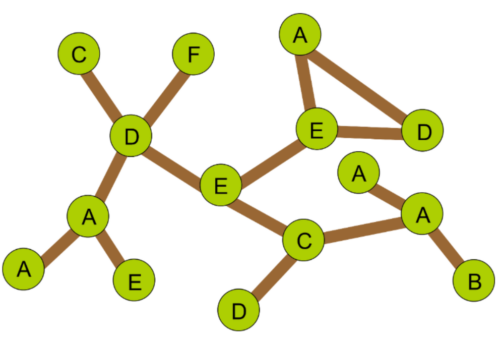
A diagram with lines connecting to circles each containing a letter of the alphabet.

The green circles with letters represent the trees and the brown lines are paths. Note that some letters are used to label more than one tree. Walking from tree F to tree B can be described as F D E C A B.

Last Sunday two families walked in the park.

The Wilde family’s walk was B A A A C E D E E D A.

The Gilde family’s walk was F D C D A E A D E D A.

Both families started their walks at the same time.

Walking from one tree to another tree, down one path takes the same amount of time.

Question:

How many times did the two families meet at a tree?

A screenshot of the answer options : "Once, Twice, Three times, They never met any of the trees".

Answer

They never met at any of the trees.

Explanation

Computer scientists often use graphs (and then they speak about vertices and edges instead of trees and paths connecting them).

Another interesting point about this task is the representation of the walks in the park. Despite the fact that some of the trees (vertices) are marked by the same letter, the walks that start from B or F can be unambiguously described by the sequence of letters along the walk. It means that one sequence of letters describes only one walk. It is because the neighbours of each tree (neighbours of tree X are the trees that are directly connected to X by a path) are always labeled with different letters. So if we know where we are at some moment of the walk and we see the next letter in the walk’s representation then there is no doubt which tree we should visit next.

This Bebras task was developed by the Bebras team in South Korea and refined by members of the international Bebras community.

In 1936, a Hungarian mathematician called Dénes Kőnig wrote the first ever textbook on graph theory. Today, graph theory is fundamental to computer science and in particular networking, operation research and data structures.

Did you get it right?

The post Join the UK Bebras Challenge 2026 appeared first on Raspberry Pi Foundation.
Bringing the global Bebras community together in Cambridge

Post Syndicated from Andrew Csizmadia original https://www.raspberrypi.org/blog/bringing-the-global-bebras-community-together-in-cambridge/

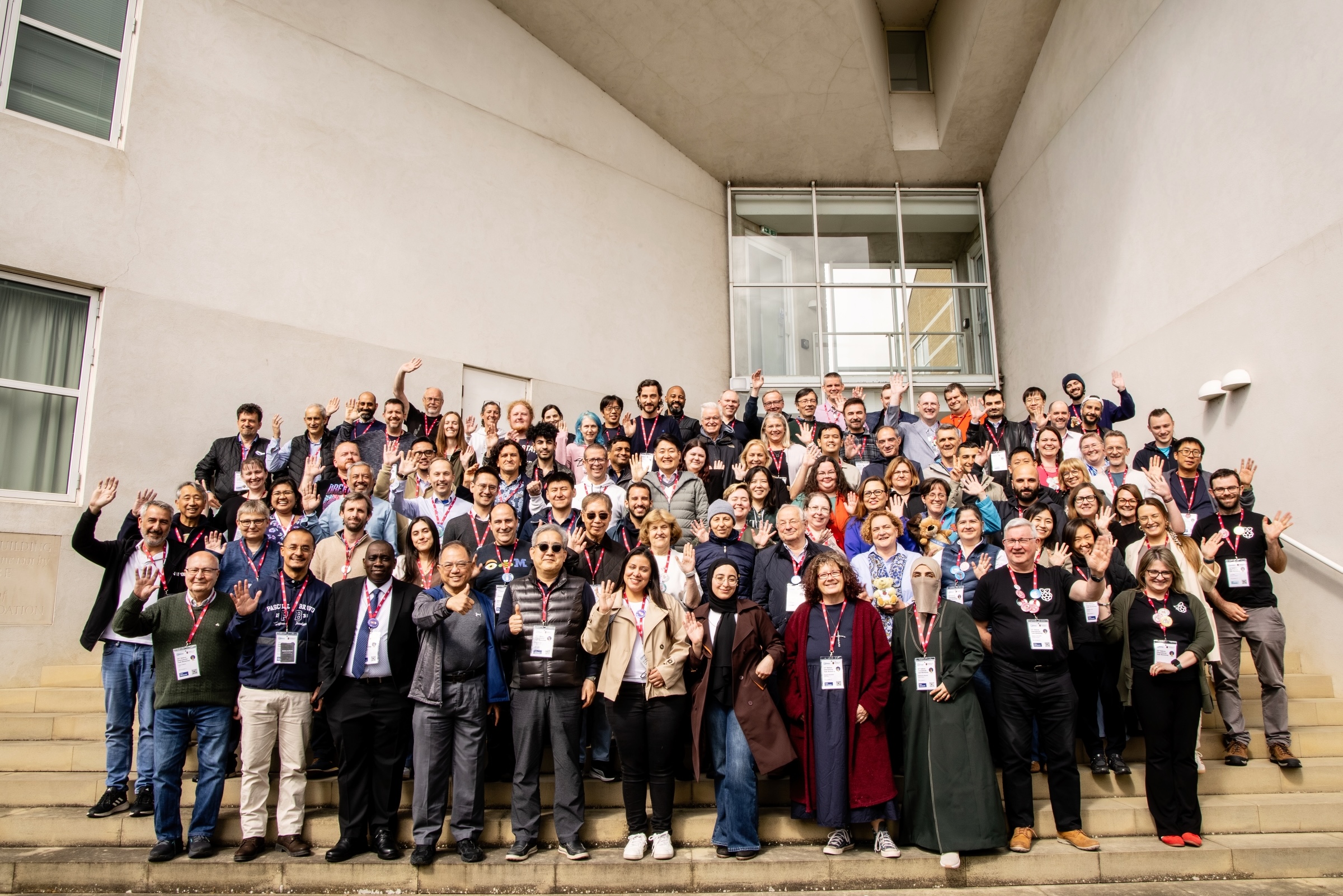
On 10–15 May, we welcomed the global Bebras community to Cambridge, UK for the 22nd Bebras International Task Workshop.

Full group photo

As organisers of the UK Bebras Challenge, we hosted this year’s annual Task Workshop, bringing together Bebras organisers, educators, and researchers from around the world to review and refine the computational thinking tasks in preparation for countries’ 2026 Bebras Challenges. The Bebras tasks young people see every November may look simple and playful, but each one has been carefully discussed, tested, debated, and improved by people who care deeply about helping young people develop problem-solving skills.

4 days, 101 delegates, 277 tasks

This May, we convened 101 delegates from 61 countries at the Møller Institute in Cambridge for the Bebras International Task Workshop, with more participants joining parts of the Task Workshop online to take part in the discussions, decisions, and community moments that make this annual gathering so special.

The meet and greet

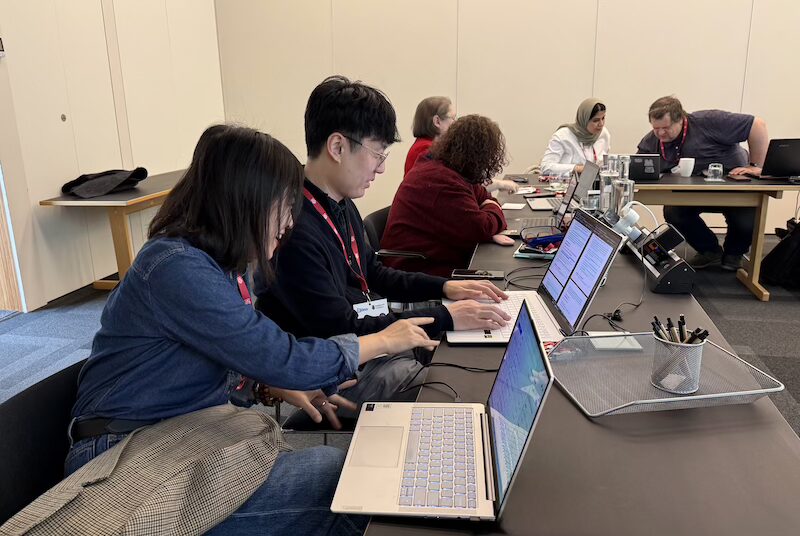
277 tasks had been submitted by the Bebras community, including 4 by us. Over 4 intensive days, delegates worked in 8 working groups, considering everything about these proposed tasks: from clarity of wording and illustrations, to age suitability and accessibility, to the computational thinking involved. By the end of the workshop, 214 tasks including our 4 had been accepted.

Alex Parry from our team reflects:

“The effort that everyone put in was remarkable — the delegates who travelled from around the world, the sometimes slightly heated discussions about computational thinking and its wider implications, and the improvements to the tasks within the working groups.”

Promoting computational thinking around the world

These lively discussions are part of what makes the Bebras Challenge impactful. A Bebras task is more than simply a computational thinking puzzle and its answer. It invites curiosity, supports careful reasoning, and gives learners a fair opportunity to show how they think. Bringing together the perspectives of people from different countries and education systems makes the tasks richer, clearer, and more useful for teachers and learners everywhere.

The Bebras Challenge currently runs in schools in 78 countries. In 2025, more than 4 million students aged 6 to 19 took part, with an incredible 526,000 participants in the UK alone.

The Bebras tasks encourage logical reasoning, pattern recognition, abstraction, decomposition, and algorithmic thinking, often through engaging stories and visual puzzles.

Learning from a global community

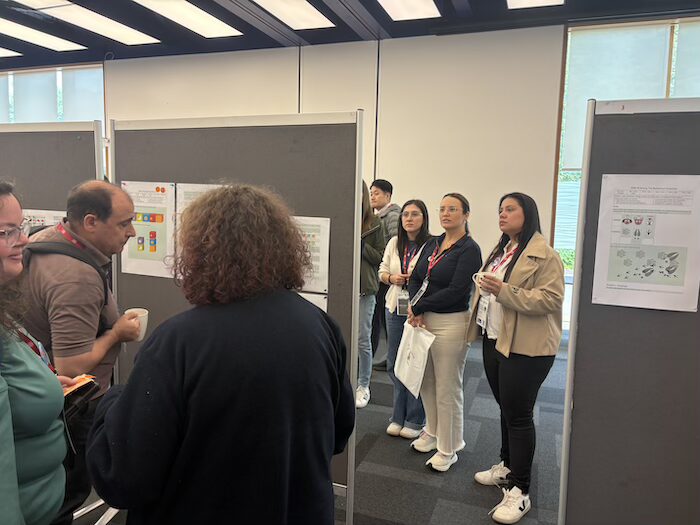
Although the formal purpose of the Workshop is to review tasks, the event is also a valuable opportunity for the Bebras community to learn from one another. On the Wednesday evening, delegates took part in the Bebras marketplace, sharing posters, resources, ideas, and questions in a wonderful showcase of how creative and adaptable the community is.

The Bebras marketplace

We heard how Bebras is being delivered in countries where schools may have limited internet connectivity or access to computing hardware, including Ghana, Jamaica, Mexico, and Sri Lanka. We saw that many countries offer paper-based versions of the challenge to overcome technical barriers. We learned about Mexico’s work towards making the challenge accessible on smartphones.

There were also inspiring examples of countries extending computational thinking beyond the annual Challenge fortnight. Armenia has developed Bebras books, Brazil has a Bebras magazine, Indonesia is creating teacher training resources for all subjects, and Lithuania is using hands-on games to help learners explore computing concepts.

These examples are a powerful reminder that computational thinking does not require computers or programming skills: it can be explored through stories, games, puzzles, printed resources, teamwork, and discussion.

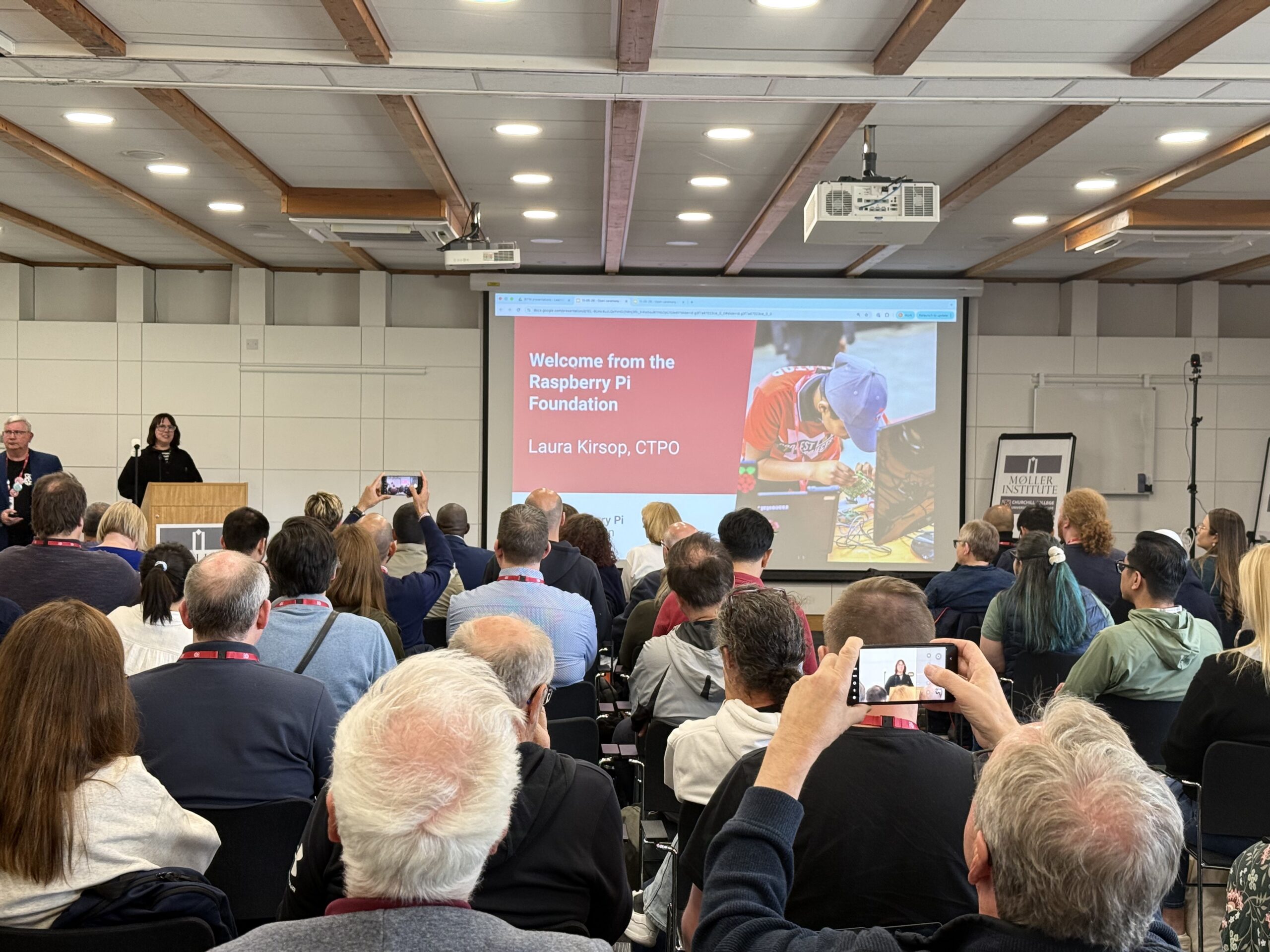
Laura Kirsop presenting

Thanks to Bebras, this is something we are bringing into other initiatives. Laura Kirsop, our Chief Technology and Product Officer, highlighted in the Workshop’s opening keynote how Bebras has influenced some of the Foundation’s educational products. For example, the unplugged Code Club resource Escape room: The jungle awakens uses previous years’ Bebras tasks in a new context to support clubs with access limitations.

Growing the Bebras community

Alongside the work of reviewing tasks, the Workshop also supports the continued growth of Bebras around the world. This year, 10 new provisional members — Bolivia, Cameroon, Ecuador, Ghana, Hong Kong and Macao, Luxembourg, Mongolia, Palestine, Sri Lanka, and Tanzania — were inducted, and 7 new full members were voted in: Armenia, Colombia, Greece, Jamaica, Mexico, Paraguay, and Puerto Rico.

Each new member country means more young people will have the opportunity to experience computational thinking in an accessible and engaging way, and more educators will be able to join the international conversation about how best to support learners.

Creating the conditions for collaboration

Hosting an international event such as this involves much more than providing meeting rooms and a timetable. The Workshop needed to support focused work, lively discussion, social connection, and participation from delegates joining remotely via livestreams.

We were pleased that our efforts were successful and recognised by delegates. One person described the event as “a truly positive experience on all fronts”, while another commented: “The planning and execution was flawless.” And for an event built around international collaboration, one piece of feedback was especially welcome: “The WiFi connection was phenomenal!”

Workshop

You can’t get everything right though, as one delegate joked when we asked what could be improved about this year’s workshop: “Sorry, the weather could have been better :-)” We will take that as a challenge for our next time as hosts!

The 23rd Bebras International Task Workshop will be held in Uruguay in May 2027. We wish the Uruguay team every success as they begin planning the next gathering of this inspiring international community.

What’s next for UK Bebras?

We are now preparing the tasks for the next UK Bebras Challenge, working in collaboration with the Bebras teams from Australia, Ireland, Canada, and the USA.

Across the world, the Bebras Challenge takes place every November and is completed and automatically marked online. For students, it’s a range of fun and engaging computational thinking tasks, to be answered within 45 minutes. For educators, Bebras is a powerful way to introduce and practice computational thinking with their learners.

If you’re an educator in the UK, you can try out past Bebras tasks to get a taste, and register now to be ready to set up your classes from September. This year, the UK Bebras Challenge will take place between 8 and 20 November.

The post Bringing the global Bebras community together in Cambridge appeared first on Raspberry Pi Foundation.
Join the UK Bebras Challenge 2025

Post Syndicated from Andrew Csizmadia original https://www.raspberrypi.org/blog/join-the-uk-bebras-challenge-2025/

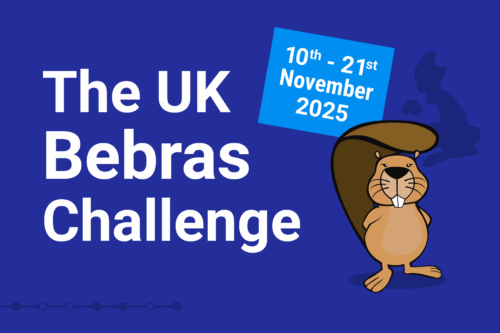
Graphic showcasing this year's UK Bebras Challenge dates "10th - 21st November 2025".

The UK Bebras Challenge, the nation’s largest computing competition, is back! Schools can enter now for this year’s Challenge, which runs from 10 to 21 November.

Last year, more than 467,000 students from across the UK took part, tackling fun and thought-provoking puzzles that introduce key ideas in computational thinking with no extra preparation needed.

Read on to learn how your school can get involved.

What is the UK Bebras Challenge?

The UK Bebras Challenge is a free-to-enter annual challenge that is designed to spark interest in both computational thinking and computer science among students aged 6 to 19. The 45-minute challenge is accessible to everyone, offering age-appropriate but challenging interactive tasks for students at different levels, including a tailored version for students with severe sight impairments. 

The tasks are designed to give every student the opportunity to showcase their potential and all participating students receive a certificate. There are also certificates based on performance within school and gold certificates based on national boundaries. With self-marking tasks and no text-based programming required, it’s easy to have your school participate in the UK Bebras Challenge.

This year, each task’s background section is linked to the Ada Computer Science platform. Teachers and students can now explore detailed explanations of the computing concepts behind the Bebras tasks, along with the computational thinking skills students may use to solve them.

“Bebras provides us with incredibly useful insights and conversations about our students who might otherwise have struggled with accessing traditional CS materials. It’s also a great resource for baseline tests where students may not have studied the curriculum the way we present it.” – Teacher in the UK

“I think the problems are a really great way to promote critical thinking, computational thinking, and logic in general. I have only seen a couple but I am very impressed and excited to share with some of my students. Thanks for what you are doing.” – Teacher in the UK

What does a UK Bebras task look like?

The tasks are inspired by classic computing problems and presented in a fun, age-appropriate way. For example, younger students aged 6 to 8 might solve the mystery of a dancing doll, while older students aged 16 to 19 could take on the challenge of an art theft. Both of these tasks involve the use of data structures.

Here’s a question we ran in 2021 for the Juniors group (ages 10 to 12). Can you solve it? 

Beaver farmer

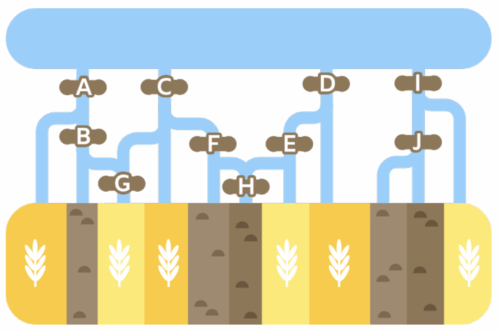
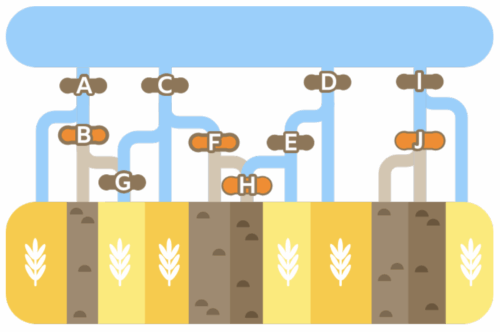
Farmer Mert grows wheat in the fields, which contain a symbol in the map below.

He also has stony fields where nothing grows, shown by the  symbol.

To save water, Mert only wants to water the wheat fields. He can block the water channels coming from the lake at the spots marked with the letters A to J.

The water will only flow downwards towards the fields and will never flow back towards the lake.

Task

Select the letters to block the water from flowing to the empty fields while still letting it flow to the wheat fields.

Example image from a task 'Beaver Farmer' featured in the UK Bebras Challenge.

Example answer

The correct answer is that spots labelled B, F, H, and J must be closed, as shown in the following figure:

Example answer image from a task 'Beaver Farmer' featured in the UK Bebras Challenge.

Explanation

If none of the gates are closed, the water will reach the stony fields. If more gates than shown above are closed, then some wheat fields will get no water. If we review all spots:

  • A must be open to allow water to flow to field 1.
  • B has to be closed to avoid watering field 2. It also brings water to field 3, but this field can also get it through C.
  • C must be open both for field 4 and for field 3, which cannot be watered though A since B is closed.
  • D must be open for fields 7 and 8.
  • E must also be open field 7.
  • F must be closed to prevent water flowing to field 5.
  • G, if closed, would only prevent field 3 from being watered and so must be open as well.
  • H must also be closed even if F is also closed, as water can flow from the open D and E.
  • I must be open for field 11.
  • J has to be closed to prevent fields 9 and 10 from getting watered.

This Bebras task was developed by the Bebras team in Turkey and refined by members of the international Bebras community.

Did you get it right?

How do I get my school involved?

If you are either a UK school or teach a UK-based curriculum, then visit the UK Bebras website for more information and to register your school. 

Once you’ve registered, you’ll get access to the entire UK Bebras back catalogue of questions, allowing you to create custom quizzes for your students to tackle at any time throughout the year. These quizzes are self-marking, and you can download your students’ results to keep track of their progress. The questions are perfect for enrichment activities, end-of-term quizzes, lesson starters, and even full lessons to develop computational thinking skills and promote computing concepts.

Join for free at bebras.uk/admin.

The post Join the UK Bebras Challenge 2025 appeared first on Raspberry Pi Foundation.
Join the UK Bebras Challenge 2024

Post Syndicated from Andrew Csizmadia original https://www.raspberrypi.org/blog/uk-bebras-challenge-2024/

The UK Bebras Challenge, the nation’s largest computing competition, is back and open for entries from schools. This year’s challenge will be open for entries from 4–15 November. Last year, over 400,000 students from across the UK took part. Read on to learn how your school can get involved.

What is UK Bebras?

UK Bebras is a free-to-enter annual competition that is designed to spark interest in computational thinking among students aged 6 to 19 by providing engaging and thought-provoking activities. The 45-minute challenge is accessible to everyone, offering age-appropriate interactive questions for students at different levels, including a tailored version for students with severe sight impairments. 

The questions are designed to give every student the opportunity to showcase their potential, whether they excel in maths or computing, or not. With self-marking questions and no programming required, it’s easy for schools to participate.

“Thank you for another fantastic Bebras event! My students have really enjoyed it. This is the first year that one of my leadership team actually did the Bebras to understand what we are preparing the children for — she was very impressed!” Reference 5487

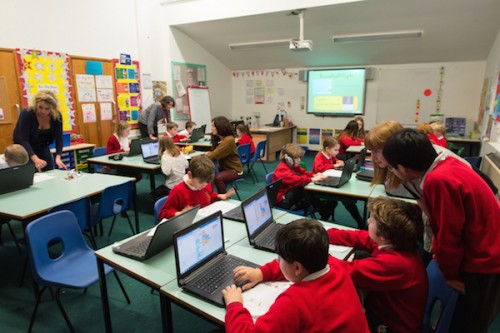
A class of primary school students do coding at laptops.

“I really enjoyed doing the Bebras challenge yesterday. It was the most accessible it’s ever been for me as a braillist/screen reader user.” Reference 5372

What does a UK Bebras question look like?

The questions are inspired by classic computing problems but are presented in a fun, age-appropriate way. For instance, a puzzle for 6- to 8-year-olds might involve guiding a hungry tortoise along the most efficient path across a lawn, while 16- to 19-year-olds could be asked to sort members for quiz teams based on who knows who — a challenging problem relating to graph theory.

Here’s a question we ran in 2023 for the Castors group (ages 8 to 10). Can you solve it? 

Planting carrots

A robotic rabbit is planting carrot seeds in these four earth mounds.

It can respond to these commands:

jump left to the next mound
jump right to the next mound
plant a carrot seed in the mound you are on

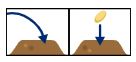
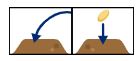
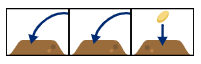
Here is a sequence of commands for the rabbit:


We don’t know which mound the rabbit started on, but we do know that, when it followed this sequence, it placed each of three carrot seeds on different mounds.

Question: 

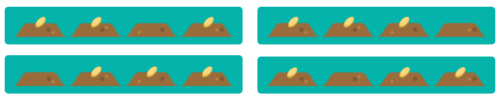
Which picture shows how the carrot seeds could have been planted by the robot following the sequence of commands?

Example puzzle answer

The correct answer is:

The image below shows the route the robot takes by following the instructions:

After executing the first two commands

the rabbit places the seed on the mound to the far right:

It then executes the commands

and lays the next seed:

Then it jumps to the left twice and lays the last seed

So the carrot seeds will be on the hills in the order:

Did you get it right?

How do I get my school involved?

Visit the UK Bebras website for more information and to register your school. Once you’ve registered, you’ll get access to the entire UK Bebras back catalogue of questions, allowing you to create custom quizzes for your students to tackle at any time throughout the year. These quizzes are self-marking, and you can download your students’ results to keep track of their progress. Schools have found these questions perfect for enrichment activities, end-of-term quizzes, lesson starters, and even full lessons to develop computational thinking skills.

Join for free at bebras.uk/admin.

The post Join the UK Bebras Challenge 2024 appeared first on Raspberry Pi Foundation.