All posts by Michael Keane

Cloudflare is the only vendor named a Visionary in 2026 SASE and SSE reports

Post Syndicated from Michael Keane original https://blog.cloudflare.com/cloudflare-sase-sse-gartner-magic-quadrants-2026/

We're honored to announce that Cloudflare is the only vendor that has been recognized as a Visionary in both the 2026 Gartner® Magic Quadrant™ for SASE Platforms and the 2026 Gartner® Magic Quadrant™ for Security Service Edge reports. To us, this validates our architectural choices and, more importantly, reflects the trust our customers place in us to navigate an increasingly complex security landscape.

To every customer who shared feedback with Gartner, discussed your roadmap challenges with our team, and pushed us to build better solutions: thank you. This recognition belongs to you as much as it does to us.

The SASE (Secure Access Service Edge) and SSE (Security Service Edge) markets are at an inflection point. Many organizations started with the SSE as the “security half” of SASE to tackle their remote work challenges during the pandemic. More recently, SASE has grown more prominent given the rise in return-to-office work mandates. Now, as AI agents, post-quantum threats, and the sprawl of shadow apps reshape enterprise security, organizations need platforms that can adapt at the speed of change, not vendors locked into yesterday's architecture. That’s exactly where Cloudflare One, our agile SASE platform, comes in.

The market gap and where SASE is heading next

It’s no secret that most SASE vendors haven't adapted to the architectural realities of modern enterprises. In fact, when customers migrate to Cloudflare, we hear some of the exact same challenges time and time again:

Fragmented architectures: When SASE platforms are stitched together through mergers and acquisitions, deploying use cases across multiple products becomes a massive headache. Cloudflare mitigates these implementation nightmares and security gaps with a connectivity cloud approach: one global network that connects and protects your workforce, AI agents, and infrastructure.

Unmanaged AI agents: The market rushed to secure human GenAI prompts, leaving AI agents largely ungoverned. Cloudflare was the first SASE platform to rein in MCP server sprawl, natively governing AI agents and human users together for total visibility. The interaction between our SASE and AI Gateway also lets admins cap AI inference costs per user, team, or application to prevent runaway bills. This is especially important when employees can rack up thousands of dollars in queries without realizing it. 

Theoretical post-quantum security: While other vendors discuss post-quantum cryptography in theory, we built it into our fabric. We were the first SASE platform to deploy post-quantum encryption across all major on- and off-ramps, and we’re neutralizing "harvest-now, decrypt-later" threats for regulated industries right now.

Nickel-and-dime pricing: Legacy vendors have a bad habit of turning advanced capabilities into expensive add-ons, or double-charging for remote and office work. Cloudflare delivers predictable, value-driven SASE bundles designed for holistic adoption, with no hidden fees.

Technological pressures reshaping SASE

We believe the SASE platforms of tomorrow will need to be much more than bundled security and connectivity. Over the coming year, four major technological shifts will force SASE to evolve into a highly agile governance layer:

Securing the "vibe-coded" app explosion: AI has made it easier than ever for employees to spin up internal tools with zero IT oversight. This shadow IT sprawl requires a secure-by-default posture. SASE platforms must automatically wrap these citizen-developed apps in zero trust access, WAF, API protection, and data loss prevention (DLP), safeguarding sensitive AI prompts without slowing builders down.

Reining in AI agents: Traditional SASE tracks human behavior, but the future is autonomous. As we shift to agentic operations, SASE must issue strict, highly scoped credentials for specific bot tasks rather than inheriting broad human permissions. Adaptive access also has to get smarter, analyzing agent intent and baselining tool-call volumes to catch anomalies instantly.

Delivering post-quantum agility today: Quantum computing is accelerating, meaning organizations must protect against "harvest-now, decrypt-later" attacks right now. The market demands native post-quantum encryption that can adapt as NIST standards finalize. By 2028, Cloudflare targets delivering the first fully quantum-secure SASE platform, including post-quantum authentication, years ahead of the 2030 National Institute of Standards and Technology (NIST) mandate, with no impact on user experience.

Deeper architectural consolidation: Deployment fatigue is real, and CIOs are tired of hollow "platformization" pitches. Genuine consolidation only happens on a single codebase with truly unified control, data, and infrastructure planes. To move at the speed of AI, composability and programmability have to be an architectural reality, not a marketing slogan.

These aren't just predictions for the future. They're the realities our customers are facing today, and the exact roadmap we are building together.

Why Cloudflare stands out

If there is one thing that defines Cloudflare’s edge in the SASE market, it’s our architecture. Many legacy SASE solutions are patchworks of disparate technologies stitched together. Cloudflare took a different route and built a unified platform from the ground up. This clean, composable design gives our customers three massive advantages:

The fast path to safe AI adoption

The rest of the market has largely treated AI security as just another bolted-on feature. But because Cloudflare shares a single architecture across our entire global network, we can rapidly roll out new security tools within our SASE platform without waiting for product integration cycles or vendor roadmaps to align.

Thanks to our composable design, your administrators can easily extend coverage using familiar SASE policies, while also keeping costs under control. Securing human GenAI prompts or governing an AI agent's connections to an MCP server happens in the same policy language they use every day. It’s not an add-on module with its own learning curve; it’s built right in.

Whenever your developers build a new AI assistant, or your finance team starts using an AI-powered forecasting tool, Cloudflare's zero trust policies are already there. You never have to retrofit security. You just apply the framework you already rely on.

SASE that’s actually easy to use

First-generation SASE platforms have a bad habit of routing traffic through multiple disjointed inspection points. The result? Complicated deployments, blown timelines, and delayed success. "Single-vendor SASE" has historically been a great pitch on a slide deck, while in reality, customers are stuck managing stitched-together engines under the hood.

Cloudflare’s composability fixes this by delivering an exceptionally intuitive SASE experience. Our architecture is unified by design; every service runs on every server across our entire network. That means no traffic tromboning between specialized appliances, no more capacity planning across siloed products, and no hidden complexity.

By operating like a modern SaaS platform, we are designed for teams to intuitively deploy new use cases in days and weeks, rather than months and years. Need to extend zero trust access to a new app, add DLP to your Gateway traffic, or bring a new office location online? Cloudflare responds at the speed of configuration.

Truly programmable SASE

Too often, the industry waters down the word "programmable" to mean simple automation, like GUI workflows or basic APIs on top of rigid logic. The result is that most SASE platforms feel like black boxes that force you to work around your vendor's limitations.

We built a truly composable, programmable SASE platform that runs natively with our edge developer platform, empowering you to weave custom code directly into our SASE fabric. Want to enrich access decisions using real-time signals from niche, internal tools? Building a custom workflow to route traffic based on a unique application context?

By integrating Cloudflare Workers into our SASE stack, customers can solve sophisticated, highly specific edge cases, without requiring custom feature development that would add bloat and reduce usability for everyone else. It's a level of flexibility legacy architectures just can't offer, and thanks to AI code generation, it's never been easier to implement.

Looking ahead

This recognition from Gartner is a fantastic milestone for us, but we're already focused on the road ahead. Our promise to you hasn't changed: we will keep listening to your feedback, building the primitives that help you adapt, and delivering a platform that gets easier to use even as your challenges grow more complex. To us, agile SASE means enabling our customers to confidently respond to whatever tomorrow brings.

Whether you're actively evaluating SASE platforms or just trying to navigate the shifts we've discussed, we'd love to connect. Download the full Gartner reports (for SASE or SSE, or both), take a closer look at Cloudflare One, or reach out to our team directly.

Gartner, Magic Quadrant for SASE Platforms, Analyst(s): Jonathan Forest, Andrew Lerner, John Watts, July 28, 2026

Gartner, Magic Quadrant for Security Service Edge, Analyst(s): John Watts, Thomas Lintemuth, Theo de Feligonde, Jonathan Forest, July 29, 2026

Gartner and Magic Quadrant are trademarks of Gartner, Inc. and/or its affiliates.

Gartner does not endorse any company, vendor, product or service depicted in its publications, and does not advise technology users to select only those vendors with the highest ratings or other designation. Gartner publications consist of the opinions of Gartner’s business and technology insights organization and should not be construed as statements of fact. Gartner disclaims all warranties, expressed or implied, with respect to this publication, including any warranties of merchantability or fitness for a particular purpose.
How to augment or replace your VPN with Cloudflare

Post Syndicated from Michael Keane original https://blog.cloudflare.com/how-to-augment-or-replace-your-vpn/

How to augment or replace your VPN with Cloudflare

“Never trust, always verify.”

How to augment or replace your VPN with Cloudflare

Almost everyone we speak to these days understands and agrees with this fundamental principle of Zero Trust. So what’s stopping folks? The biggest gripe we hear: they simply aren’t sure where to start. Security tools and network infrastructure have often been in place for years, and a murky implementation journey involving applications that people rely on to do their work every day can feel intimidating.

While there’s no universal answer, several of our customers have agreed that offloading key applications from their traditional VPN to a cloud-native Zero Trust Network Access (ZTNA) solution like Cloudflare Access is a great place to start—providing an approachable, meaningful upgrade for their business.

In fact, Gartner predicted that “by 2025, at least 70% of new remote access deployments will be served predominantly by ZTNA as opposed to VPN services, up from less than 10% at the end of 2021.”1 By prioritizing a ZTNA project, IT and Security executives can better shield their business from attacks like ransomware while simultaneously improving their employees’ daily workflows. The trade-off between security and user experience is an outmoded view of the world; organizations can truly improve both if they go down the ZTNA route.

You can get started here with Cloudflare Access for free, and in this guide we’ll show you why, and how.

Why nobody likes their VPN

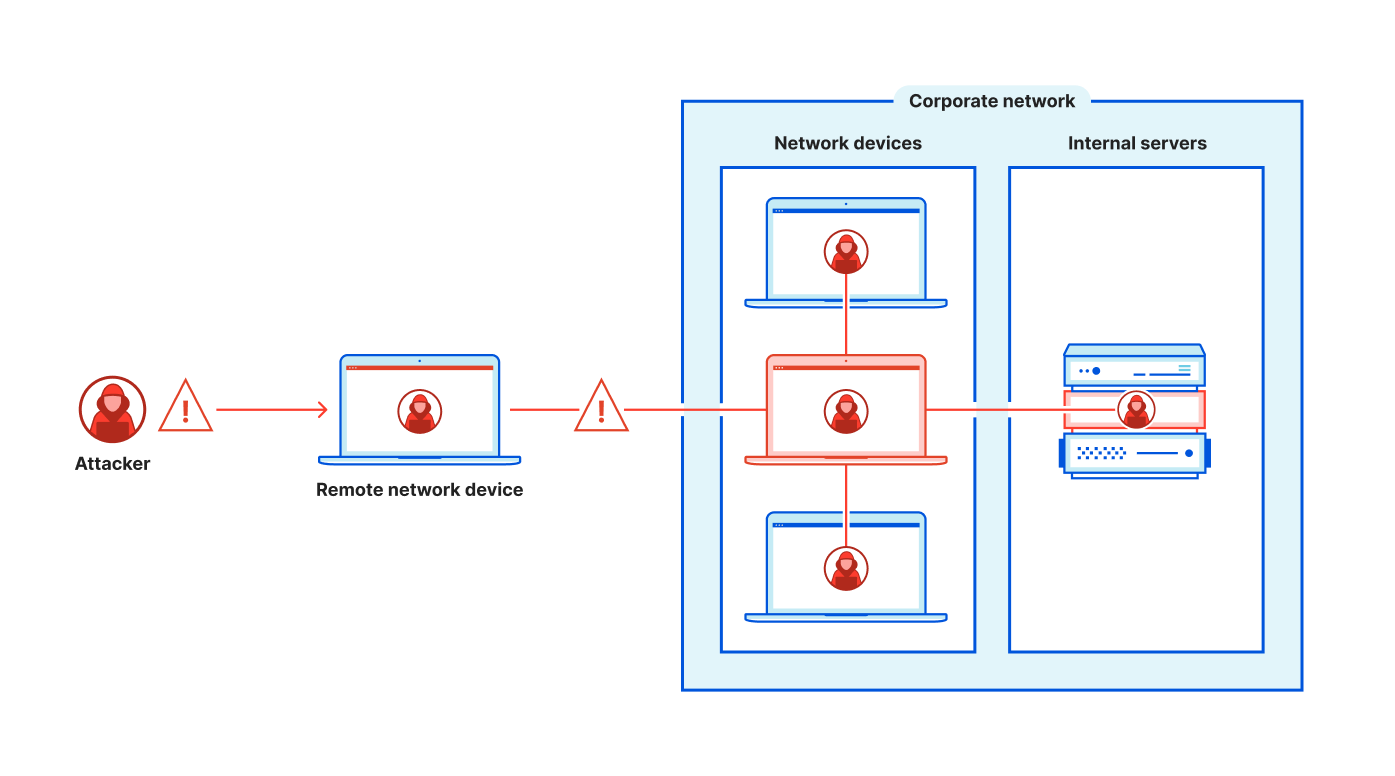
The network-level access and default trust granted by VPNs create avoidable security gaps by inviting the possibility of lateral movement within your network. Attackers may enter your network through a less-sensitive entry point after stealing credentials, and then traverse to find more business-critical information to exploit. In the face of rising attacks, the threat here is too real—and the path to mitigate is too within reach—to ignore.

How to augment or replace your VPN with Cloudflare

Meanwhile, VPN performance feels stuck in the 90s… and not in a fun, nostalgic way. Employees suffer through slow and unreliable connections that simply weren’t built for today’s scale of remote access. In the age of the “Great Reshuffle” and the current recruiting landscape, providing subpar experiences for teams based on legacy tech doesn’t have a great ROI. And when IT/security practitioners have plenty of other job opportunities readily available, they may not want to put up with manual, avoidable tasks born from an outdated technology stack. From both security and usability angles, moving toward VPN replacement is well worth the pursuit.

Make least-privilege access the default

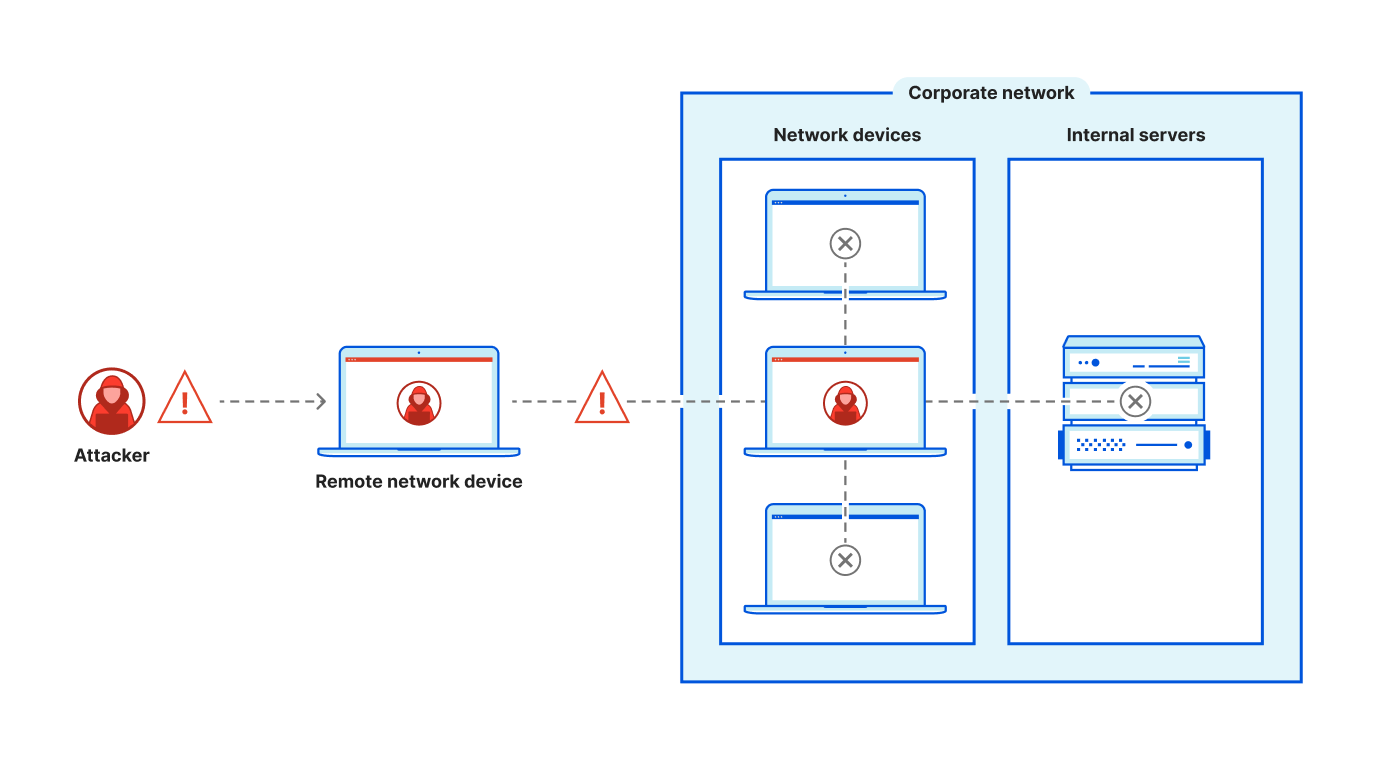
Instead of authenticating a user and providing access to everything on your corporate network, a ZTNA implementation or “software-defined perimeter” authorizes access per resource, effectively eliminating the potential for lateral movement. Each access attempt is evaluated against Zero Trust rules based on identity, device posture, geolocation, and other contextual information. Users are continuously re-evaluated as context changes, and all events are logged to help improve visibility across all types of applications.

How to augment or replace your VPN with Cloudflare

As co-founder of Udaan, Amod Malviya, noted, “VPNs are frustrating and lead to countless wasted cycles for employees and the IT staff supporting them. Furthermore, conventional VPNs can lull people into a false sense of security. With Cloudflare Access, we have a far more reliable, intuitive, secure solution that operates on a per user, per access basis. I think of it as Authentication 2.0 — even 3.0″.

Better security and user experience haven’t always co-existed, but the fundamental architecture of ZTNA really does improve both compared to legacy VPNs. Whether your users are accessing Office 365 or your custom, on-prem HR app, every login experience is treated the same. With Zero Trust rules being checked behind the scenes, suddenly every app feels like a SaaS app to your end users. Like our friends at OneTrust said when they implemented ZTNA, “employees can connect to the tools they need, so simply teams don’t even know Cloudflare is powering the backend. It just works.”

Assembling a ZTNA project plan

VPNs are so entrenched in an organization’s infrastructure that fully replacing one may take a considerable amount of time, depending on the total number of users and applications served. However, there still is significant business value in making incremental progress. You can migrate away from your VPN at your own pace and let ZTNA and your VPN co-exist for some time, but it is important to at least get started.

Consider which one or two applications behind your VPN would be most valuable for a ZTNA pilot, like one with known complaints or numerous IT support tickets associated with it. Otherwise, consider internal apps that are heavily used or are visited by particularly critical or high-risk users. If you have any upcoming hardware upgrades or license renewals planned for your VPN(s), apps behind the accompanying infrastructure may also be a sensible fit for a modernization pilot.

As you start to plan your project, it’s important to involve the right stakeholders. For your ZTNA pilot, your core team should at minimum involve an identity admin and/or admin who manages internal apps used by employees, plus a network admin who understands your organization’s traffic flow as it relates to your VPN. These perspectives will help to holistically consider the implications of your project rollout, especially if the scope feels dynamic.

Executing a transition plan for a pilot app

Step 1: Connect your internal app to Cloudflare’s network
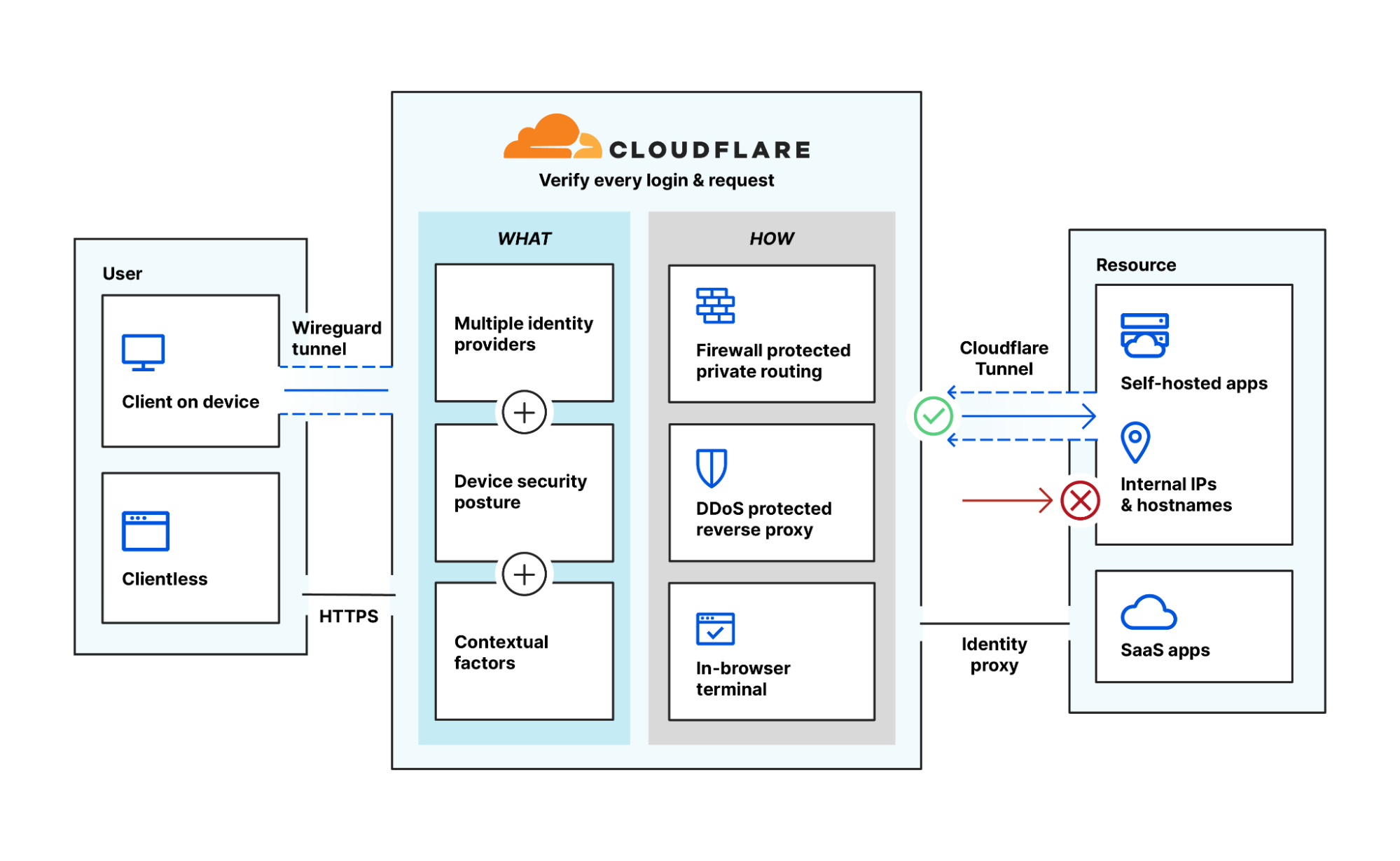
The Zero Trust dashboard guides you through a few simple steps to set up our app connector, no virtual machines required. Within minutes, you can create a tunnel for your application traffic and route it based on public hostnames or your private network routes. The dashboard will provide a string of commands to copy and paste into your command line to facilitate initial routing configurations. From there, Cloudflare will manage your configuration automatically.

A pilot web app may be the most straightforward place to start here, but you can also extend to SSH, VNC, RDP, or internal IPs and hostnames through the same workflow. With your tunnel up and running, you’ve created the means through which your users will securely access your resources and have essentially eliminated the potential for lateral movement within your network. Your application is not visible to the public Internet, significantly reducing your attack surface.

Step 2: Integrate identity and endpoint protection
Cloudflare Access acts as an aggregation layer for your existing security tools. With support for over a dozen identity providers (IdPs) like Okta, Microsoft Azure AD, Ping Identity, or OneLogin, you can link multiple simultaneous IdPs or separate tenants from one IdP. This can be particularly useful for companies undergoing mergers or acquisitions or perhaps going through compliance updates, e.g. incorporating a separate FedRAMP tenant.

In a ZTNA implementation, this linkage lets both tools play to their strengths. The IdP houses user stores and performs the identity authentication check, while Cloudflare Access controls the broader Zero Trust rules that ultimately decide access permissions to a broad range of resources.

Similarly, admins can integrate common endpoint protection providers like Crowdstrike, SentinelOne, Tanium or VMware Carbon Black to incorporate device posture into Zero Trust rulesets. Access decisions can incorporate device posture risk scores for tighter granularity.

You might find shortcut approaches to this step if you plan on using simpler authentication like one-time pins or social identity providers with external users like partners or contractors. As you mature your ZTNA rollout, you can incorporate additional IdPs or endpoint protection providers at any time without altering your fundamental setup. Each integration only adds to your source list of contextual signals at your disposal.

Step 3: Configure Zero Trust rules
Depending on your assurance levels for each app, you can customize your Zero Trust policies to appropriately restrict access to authorized users using contextual signals. For example, a low-risk app may simply require email addresses ending in “@company.com” and a successful SMS or email multifactor authentication (MFA) prompt. Higher risk apps could require hard token MFA specifically, plus a device posture check or other custom validation check using external APIs.

MFA in particular can be difficult to implement with legacy on-prem apps natively using traditional single sign-on tools. Using Cloudflare Access as a reverse proxy helps provide an aggregation layer to simplify rollout of MFA to all your resources, no matter where they live.

Step 4: Test clientless access right away
After connecting an app to Cloudflare and configuring your desired level of authorization rules, end users in most cases can test web, SSH, or VNC access without using a device client. With no downloads or mobile device management (MDM) rollouts required, this can help accelerate ZTNA adoption for key apps and be particularly useful for enabling third-party access.

Note that a device client can still be used to unlock other use cases like protecting SMB or thick client applications, verifying device posture, or enabling private routing. Cloudflare Access can handle any arbitrary L4-7 TCP or UDP traffic, and through bridges to WAN-as-a-service it can offload VPN use cases like ICMP or server-to-client initiated protocol traffic like VoIP as well.

How to augment or replace your VPN with Cloudflare

At this stage for the pilot app, you are up and running with ZTNA! Top priority apps can be offloaded from your VPN one at a time at any pace that feels comfortable to help modernize your access security. Still, augmenting and fully replacing a VPN are two very different things.

Moving toward full VPN replacement

While a few top resource candidates for VPN offloading might be clear for your company, the total scope could be overwhelming, with potentially thousands of internal IPs and domains to consider. You can configure the local domain fallback entries within Cloudflare Access to point to your internal DNS resolver for selected internal hostnames. This can help you more efficiently disseminate access to resources made available over your Intranet.

It can also be difficult for admins to granularly understand the full reach of their current VPN usage. Potential visibility issues aside, the full scope of applications and users may be in dynamic flux especially at large organizations. You can use the private network discovery report within Cloudflare Access to passively vet the state of traffic on your network over time. For discovered apps requiring more protection, Access workflows help you tighten Zero Trust rules as needed.

Both of these capabilities can help reduce anxiety around fully retiring a VPN. By starting to build your private network on top of Cloudflare’s network, you’re bringing your organization closer to achieving Zero Trust security.

The business impact our customers are seeing

Offloading applications from your VPN and moving toward ZTNA can have measurable benefits for your business even in the short term. Many of our customers speak to improvements in their IT team’s efficiency, onboarding new employees faster and spending less time on access-related help tickets. For example, after implementing Cloudflare Access, eTeacher Group reduced its employee onboarding time by 60%, helping all teams get up to speed faster.

Even if you plan to co-exist with your VPN alongside a slower modernization cadence, you can still track IT tickets for the specific apps you’ve transitioned to ZTNA to help quantify the impact. Are overall ticket numbers down? Did time to resolve decrease? Over time, you can also partner with HR for qualitative feedback through employee engagement surveys. Are employees feeling empowered with their current toolset? Do they feel their productivity has improved or complaints have been addressed?

Of course, improvements to security posture also help mitigate the risk of expensive data breaches and their lingering, damaging effects to brand reputation. Pinpointing narrow cause-and-effect relationships for the cost benefits of each small improvement may feel more art than science here, with too many variables to count. Still, reducing reliance on your VPN is a great step toward reducing your attack surface and contributes to your macro return on investment, however long your full Zero Trust journey may last.

Start the clock toward replacing your VPN

Our obsession with product simplicity has helped many of our customers sunset their VPNs already, and we can’t wait to do more.

You can get started here with Cloudflare Access for free to begin augmenting your VPN. Follow the steps outlined above with your prioritized ZTNA test cases, and for a sense of broader timing you can create your own Zero Trust roadmap as well to figure out what project should come next.

For a full summary of Cloudflare One Week and what’s new, tune in to our recap webinar.

___

1Nat Smith, Mark Wah, Christian Canales. (2022, April 08). Emerging Technologies: Adoption Growth Insights for Zero Trust Network Access. GARTNER is a registered trademark and service mark of Gartner, Inc. and/or its affiliates in the U.S. and internationally and is used herein with permission. All rights reserved.