LibrePlanet 2010 Completes Its Orbit

Post Syndicated from Bradley M. Kuhn original http://ebb.org/bkuhn/blog/2010/03/26/libreplanet.html

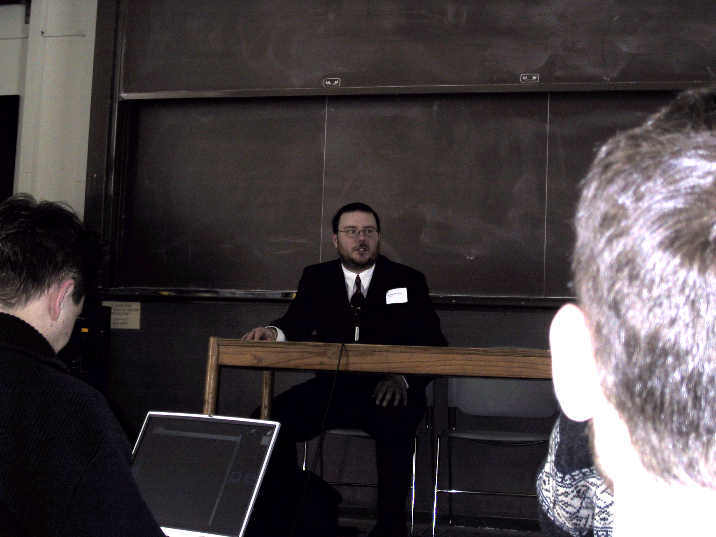
Seven and a half years ago, I got this idea: the membership of the
Free Software Foundation should have a
chance to get together every year and learn about what the FSF has been
doing for the last year. I was so nervous
at the
first one on Saturday 15 March 2003
, that
I even
wore a suit
which I rarely do.

The basic idea was simple: the FSF Board of Directors came into town
anyway each March for the annual board meeting. Why not give a chance
for FSF associate members to meet the leadership and staff of FSF and
ask hard questions to their hearts’ content? I’m all about
transparency, as you know. 🙂

Since leaving
the position of Executive Director a few months before the 2005
meeting
, I’ve attended every annual meeting, just as an ordinary
Associate Member and
FSF volunteer. It’s always enjoyable to attend a conference organized
by someone else that you used to help organize; it’s like, after having
done sysadmin work for other people for years, to have someone keep a
machine running and up to date just for you. It’s been wonderful to
watch the FSF AM meeting grow into a full-fledged conference for
discussion and collaboration between folks from all over the Free
Software world. “One room, one track, one day” has become
“five rooms, three tracks, and three days” with the
proverbial complaint throughout: But, why do I have to miss this
great session so that I can go to some other great session!?!

Some highlights for me this year were:

  • I saw John
    Gilmore
    win
    a well-deserved FSF Award for the Advancement of Free Software
    .
  • I got to spend time with the
    intrepid gnash
    developer Rob Savoye
    again, whom I knew of for years (his legend precedes him) but
    I’d rarely had a chance to see in person regularly, until lately.
  • I met so many young people excited about software freedom. I can only
    imagine to be only 19 or 20 years old and have the opportunity meet
    other Free Software developers in person. At that age, I considered
    myself lucky to simply have Usenet access so that I could follow and
    participate in online discussions about Free Software (good ol’
    gnu.misc.discuss ;). I am so glad that young folks, some from as far
    away as Brazil, had the opportunity to visit and speak about their
    work.
  • On the informal Friday sessions, I was a bit amazed that I pulled off
    a marathon six-hour session of mostly well-received talks/discussions
    (for which I readily admit I had not prepped well). The first three
    hours was about the challenges of software freedom on mobile devices,
    and the second three were about the nitty-gritty details of the hardest
    and most technical GPL enforcement task: the C&CS check. People
    seemed to actually enjoy watching me break half my Fedora chroots trying
    to build some source code for a plasma television. Someone even told me
    later: it was more fun because we got to see you make all the
    mistakes
    .
  • Finally (and I realize I’ve probably buried the lede here, but I’ve
    kept the list chronological, since I wrote most of it before I found out
    this last thing), after the FSF Board meeting, which followed
    LibrePlanet, I was informed by a phone call from my good
    friend Henry Poole
    that I’d been elected to
    FSF’s Board of
    Directors
    , which has now
    been announced
    by FSF on Peter Brown’s blog
    . I’ve often told the story that when I
    first learned about the FSF as a young programmer and sysadmin, I
    thought that someday, maybe I could be good enough to get a job as a
    sysadmin for the FSF. I did indeed volunteer as a sysadmin for the FSF
    starting around 1996, but I truly felt I’d exceeded any possible dream
    when I was later named FSF’s Executive Director, and was able to serve
    in that post for so many years. Now, being part of the Board of
    Directors is an even greater opportunity for involvement in the
    organization that I’ve loved and respected for so long.

FSF is an organization based around a very simple, principled idea:
that users and programmers alike deserve inalienable rights to copy,
share, modify, and redistribute all the software that they use. This
issue isn’t merely about making better software (although Free Software
developers usually do, anyway); it’s about a principle of morality:
everyone using computers should be treated well and be given the maximal
opportunity to treat their neighbors well, too. Helping make this
simple idea into reality is the center of all the work I’ve done for the
last 12 years of my life, and I expect it will be the focus of my
(hopefully many) remaining years. I am thankful that the Voting Members
of FSF have given me this additional opportunity to help our shared
cause. I plan to work hard in this and all the other responsibilities
that I already have to our Free Software community. Like everyone on
FSF’s Board of Directors, I serve in that role completely as a
volunteer, so in some ways I feel this is just a natural extension of
the volunteer work I’ve continued to do for the FSF regularly since I
left its employment in 2005.

Finally, I was glad to meet (or meet again) so many FSF supporters at
LibrePlanet, and I deeply hope that I can serve our shared goal well in
this additional role.

LibrePlanet 2010 Completes Its Orbit

Post Syndicated from Bradley M. Kuhn original http://ebb.org/bkuhn/blog/2010/03/26/libreplanet.html

Seven and a half years ago, I got this idea: the membership of the
Free Software Foundation should have a
chance to get together every year and learn about what the FSF has been
doing for the last year. I was so nervous
at the
first one on Saturday 15 March 2003
, that
I even
wore a suit
which I rarely do.

The basic idea was simple: the FSF Board of Directors came into town
anyway each March for the annual board meeting. Why not give a chance
for FSF associate members to meet the leadership and staff of FSF and
ask hard questions to their hearts’ content? I’m all about
transparency, as you know. 🙂

Since leaving
the position of Executive Director a few months before the 2005
meeting
, I’ve attended every annual meeting, just as an ordinary
Associate Member and
FSF volunteer. It’s always enjoyable to attend a conference organized
by someone else that you used to help organize; it’s like, after having
done sysadmin work for other people for years, to have someone keep a
machine running and up to date just for you. It’s been wonderful to
watch the FSF AM meeting grow into a full-fledged conference for
discussion and collaboration between folks from all over the Free
Software world. “One room, one track, one day” has become
“five rooms, three tracks, and three days” with the
proverbial complaint throughout: But, why do I have to miss this
great session so that I can go to some other great session!?!

Some highlights for me this year were:

  • I saw John
    Gilmore
    win
    a well-deserved FSF Award for the Advancement of Free Software
    .
  • I got to spend time with the
    intrepid gnash
    developer Rob Savoye
    again, whom I knew of for years (his legend precedes him) but
    I’d rarely had a chance to see in person regularly, until lately.
  • I met so many young people excited about software freedom. I can only
    imagine to be only 19 or 20 years old and have the opportunity meet
    other Free Software developers in person. At that age, I considered
    myself lucky to simply have Usenet access so that I could follow and
    participate in online discussions about Free Software (good ol’
    gnu.misc.discuss ;). I am so glad that young folks, some from as far
    away as Brazil, had the opportunity to visit and speak about their
    work.
  • On the informal Friday sessions, I was a bit amazed that I pulled off
    a marathon six-hour session of mostly well-received talks/discussions
    (for which I readily admit I had not prepped well). The first three
    hours was about the challenges of software freedom on mobile devices,
    and the second three were about the nitty-gritty details of the hardest
    and most technical GPL enforcement task: the C&CS check. People
    seemed to actually enjoy watching me break half my Fedora chroots trying
    to build some source code for a plasma television. Someone even told me
    later: it was more fun because we got to see you make all the
    mistakes
    .
  • Finally (and I realize I’ve probably buried the lede here, but I’ve
    kept the list chronological, since I wrote most of it before I found out
    this last thing), after the FSF Board meeting, which followed
    LibrePlanet, I was informed by a phone call from my good
    friend Henry Poole
    that I’d been elected to
    FSF’s Board of
    Directors
    , which has now
    been announced
    by FSF on Peter Brown’s blog
    . I’ve often told the story that when I
    first learned about the FSF as a young programmer and sysadmin, I
    thought that someday, maybe I could be good enough to get a job as a
    sysadmin for the FSF. I did indeed volunteer as a sysadmin for the FSF
    starting around 1996, but I truly felt I’d exceeded any possible dream
    when I was later named FSF’s Executive Director, and was able to serve
    in that post for so many years. Now, being part of the Board of
    Directors is an even greater opportunity for involvement in the
    organization that I’ve loved and respected for so long.

FSF is an organization based around a very simple, principled idea:
that users and programmers alike deserve inalienable rights to copy,
share, modify, and redistribute all the software that they use. This
issue isn’t merely about making better software (although Free Software
developers usually do, anyway); it’s about a principle of morality:
everyone using computers should be treated well and be given the maximal
opportunity to treat their neighbors well, too. Helping make this
simple idea into reality is the center of all the work I’ve done for the
last 12 years of my life, and I expect it will be the focus of my
(hopefully many) remaining years. I am thankful that the Voting Members
of FSF have given me this additional opportunity to help our shared
cause. I plan to work hard in this and all the other responsibilities
that I already have to our Free Software community. Like everyone on
FSF’s Board of Directors, I serve in that role completely as a
volunteer, so in some ways I feel this is just a natural extension of
the volunteer work I’ve continued to do for the FSF regularly since I
left its employment in 2005.

Finally, I was glad to meet (or meet again) so many FSF supporters at
LibrePlanet, and I deeply hope that I can serve our shared goal well in
this additional role.
LibrePlanet 2010 Completes Its Orbit

Post Syndicated from Bradley M. Kuhn original http://ebb.org/bkuhn/blog/2010/03/26/libreplanet.html

Seven and a half years ago, I got this idea: the membership of the
Free Software Foundation should have a
chance to get together every year and learn about what the FSF has been
doing for the last year. I was so nervous
at the
first one on Saturday 15 March 2003
, that
I even
wore a suit
which I rarely do.

The basic idea was simple: the FSF Board of Directors came into town
anyway each March for the annual board meeting. Why not give a chance
for FSF associate members to meet the leadership and staff of FSF and
ask hard questions to their hearts’ content? I’m all about
transparency, as you know. 🙂

Since leaving
the position of Executive Director a few months before the 2005
meeting
, I’ve attended every annual meeting, just as an ordinary
Associate Member and
FSF volunteer. It’s always enjoyable to attend a conference organized
by someone else that you used to help organize; it’s like, after having
done sysadmin work for other people for years, to have someone keep a
machine running and up to date just for you. It’s been wonderful to
watch the FSF AM meeting grow into a full-fledged conference for
discussion and collaboration between folks from all over the Free
Software world. “One room, one track, one day” has become
“five rooms, three tracks, and three days” with the
proverbial complaint throughout: But, why do I have to miss this
great session so that I can go to some other great session!?!

Some highlights for me this year were:

  • I saw John
    Gilmore
    win
    a well-deserved FSF Award for the Advancement of Free Software
    .
  • I got to spend time with the
    intrepid gnash
    developer Rob Savoye
    again, whom I knew of for years (his legend precedes him) but
    I’d rarely had a chance to see in person regularly, until lately.
  • I met so many young people excited about software freedom. I can only
    imagine to be only 19 or 20 years old and have the opportunity meet
    other Free Software developers in person. At that age, I considered
    myself lucky to simply have Usenet access so that I could follow and
    participate in online discussions about Free Software (good ol’
    gnu.misc.discuss ;). I am so glad that young folks, some from as far
    away as Brazil, had the opportunity to visit and speak about their
    work.
  • On the informal Friday sessions, I was a bit amazed that I pulled off
    a marathon six-hour session of mostly well-received talks/discussions
    (for which I readily admit I had not prepped well). The first three
    hours was about the challenges of software freedom on mobile devices,
    and the second three were about the nitty-gritty details of the hardest
    and most technical GPL enforcement task: the C&CS check. People
    seemed to actually enjoy watching me break half my Fedora chroots trying
    to build some source code for a plasma television. Someone even told me
    later: it was more fun because we got to see you make all the
    mistakes
    .
  • Finally (and I realize I’ve probably buried the lede here, but I’ve
    kept the list chronological, since I wrote most of it before I found out
    this last thing), after the FSF Board meeting, which followed
    LibrePlanet, I was informed by a phone call from my good
    friend Henry Poole
    that I’d been elected to
    FSF’s Board of
    Directors
    , which has now
    been announced
    by FSF on Peter Brown’s blog
    . I’ve often told the story that when I
    first learned about the FSF as a young programmer and sysadmin, I
    thought that someday, maybe I could be good enough to get a job as a
    sysadmin for the FSF. I did indeed volunteer as a sysadmin for the FSF
    starting around 1996, but I truly felt I’d exceeded any possible dream
    when I was later named FSF’s Executive Director, and was able to serve
    in that post for so many years. Now, being part of the Board of
    Directors is an even greater opportunity for involvement in the
    organization that I’ve loved and respected for so long.

FSF is an organization based around a very simple, principled idea:
that users and programmers alike deserve inalienable rights to copy,
share, modify, and redistribute all the software that they use. This
issue isn’t merely about making better software (although Free Software
developers usually do, anyway); it’s about a principle of morality:
everyone using computers should be treated well and be given the maximal
opportunity to treat their neighbors well, too. Helping make this
simple idea into reality is the center of all the work I’ve done for the
last 12 years of my life, and I expect it will be the focus of my
(hopefully many) remaining years. I am thankful that the Voting Members
of FSF have given me this additional opportunity to help our shared
cause. I plan to work hard in this and all the other responsibilities
that I already have to our Free Software community. Like everyone on
FSF’s Board of Directors, I serve in that role completely as a
volunteer, so in some ways I feel this is just a natural extension of
the volunteer work I’ve continued to do for the FSF regularly since I
left its employment in 2005.

Finally, I was glad to meet (or meet again) so many FSF supporters at
LibrePlanet, and I deeply hope that I can serve our shared goal well in
this additional role.

Public Service Announcement: Beware of rsvg_term()!

Post Syndicated from Lennart Poettering original https://0pointer.net/blog/projects/beware-of-rsvg-term.html

As a short followup on an older blog posting of mine:

So you are using librsvg’s rsvg_term() in your code? If so then
you are probably misusing it and triggering crashes in PulseAudio related code.
The same way everybody should stop using libxml2’s xmlCleanupParser()
call, stop using rsvg_term()! It’s really hard to use it correctly,
and uneeded anyway. Also see this bug
report.

НАП+Linux=ВНЛ

Post Syndicated from RealEnder original https://alex.stanev.org/blog/?p=237

Малко неочаквано, но и в разгара на данъчната кампания, основната част от услугите на НАП с електронен подпис вече работят под Linux. Съмнявам се това да доведе до бум в приходите, но пък е новина, която заслужава да се полее с поне една бира с мента.

Техническите подробности по инсталирането и конфигурирането са тук.

Благодаря на всички колеги от екипа, които отделиха следработното си време, за да се случат нещата.

Is Your Support of Copyleft Logically Consistent?

Post Syndicated from Bradley M. Kuhn original http://ebb.org/bkuhn/blog/2010/03/15/gpl-consistency.html

Most of you are aware
from one of my
previous posts
that It’s a Wonderful Life! is my
favorite film. Recently, I encountered something in the software
freedom community that reminded me of yet another quote from the
flim:

Picture of George Bailey whispering to Clarence at the bar

GEORGE:
Look, uh … I think maybe you better not mention getting your wings around here.
CLARENCE:
Why? Don’t they believe in angels?
GEORGE:
I… yeah, they believe in them…
CLARENCE:
Ohhh … Why should they be surprised when
they see one?

Obviously, I don’t believe in angels myself. But, Clarence’s
(admittedly naïve) logic is actually impeccable: Either you
believe in angels or you don’t. If you believe in angels, then you
shouldn’t be surprised to (at least occasionally) see one.

This film quote came to my mind in reference to a concept in GPL
enforcement. Many people give lip service to the idea that the GPL, and
copyleft generally, is a unique force that democratizes software and
ensures that FLOSS cannot be exploited by proprietary software
interests. Many of these same people, though, oppose GPL enforcement
when companies exploit GPL’d code and don’t give the source code and
take away users’ rights to modify and share that software.

I’ve
admitted that the copyleft is merely a strategy
to achieve maximal
software freedom. There are other strategies too, such as the Apache
community process. The Apache Software Foundation releases software
under a permissive non-copyleft license, but then negotiates with
companies to convince them to contribute to the code base publicly.
For some projects, that strategy has worked well, and I respect it
greatly.

Some (although not all) people in non-copyleft FLOSS communities (like
the Apache community) are against GPL enforcement. I disagree with
them, but their position is logically consistent. Such folks don’t
agree with us (copyleft-supporting folks) that a license should be used
as a mechanism to guarantee that all published and deployed improved
versions of the software are released in software freedom. It’s not
that those other folks don’t prefer FLOSS; they simply prefer a
non-legally binding social pressure to encourage software sharing rather
than a strategy with legal backup. I prefer a strategy with legal
strength, but I still respect non-copyleft folks who don’t support that.
They take a logically consistent and reasonable approach.

However, it’s ultimately hypocritical to claim support for a copyleft
structure but oppose GPL enforcement. If you believe the license should
have a legal requirement that ensures software is always distributed in
software freedom, then why would you be surprised — or, even
worse, angry — that a copyright holder would seek to uphold users’
rights when that license is violated?

There is great value in having multiple simultaneous strategies ongoing
to achieve important goals. Universal software freedom is my most
important goal, and I expect to spend nearly all of my life focused on
achieving it for all published and deployed software in the world.
However, I don’t expect nor even want everyone else to single-minded-ly
support my exact same strategies in all cases. The diversity of the
software freedom community makes it more likely that we’ll succeed if we
avoid single point of failure on any particular plan, and I support that
diversity.

However, I also think it’s reasonable to expect logically consistent
positions. A copyleft license is effectively indistinguishable from the
Apache license if copyleft is never enforced when violations occur.
Condemning
community-oriented0 GPL
enforcement (that seeks primarily to get the code released) while also
claiming to support the idea of copyleft is a logically inconsistent and
self-contradictory position. It’s unfortunate that so many people hold
this contradictory position.


0There
are certain types of GPL enforcement that are not consistent with the goal
of universal software freedom. For example, some
so-called “Open
Core” companies
are well known for releasing their (solely)
copyrighted code under GPL, and then using GPL enforcement as a mechanism
to pressure users to take a proprietary license. GPL enforcement is only
acceptable in my view if its primary goal is to have all code released
under GPL. Such enforcement must never compromise about one point: that
compliance with the GPL is a non-negotiable term of settling the
enforcement action. If the enforcer is willing to sell out the rights
that users’ have to source code, then even I would condemn, as I have
previously, such GPL enforcement as bad for the software freedom
community. For this reason, in all GPL enforcement that I engage in, I
make it a term of my participation that compliance with the terms of the
GPL for the code in question be a non-negotiable requirement.

The collective thoughts of the interwebz