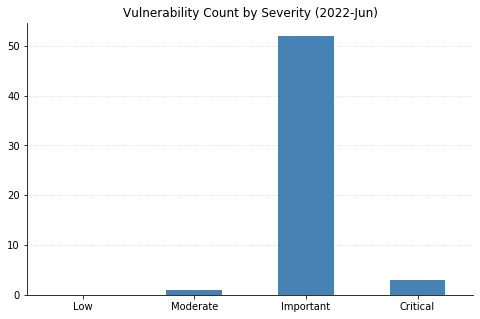
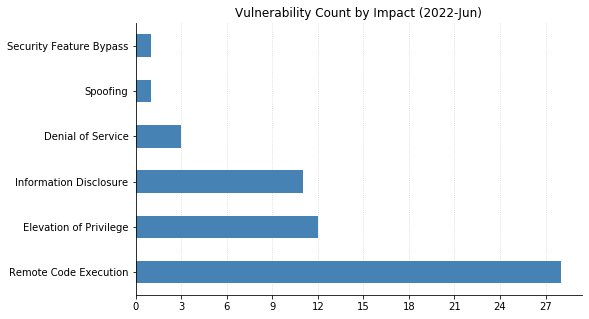
July’s Patch Tuesday sees Microsoft releasing fixes for over 60 CVEs. Top of mind for many administrators this month is CVE-2022-30190, also known as Follina, which was observed being exploited in the wild at the end of May. Microsoft provided mitigation instructions (disabling the MSDT URL protocol via the registry), but actual patches were not available until today’s cumulative Windows Updates. Even if the mitigation was previously applied, installing the updates is highly recommended.
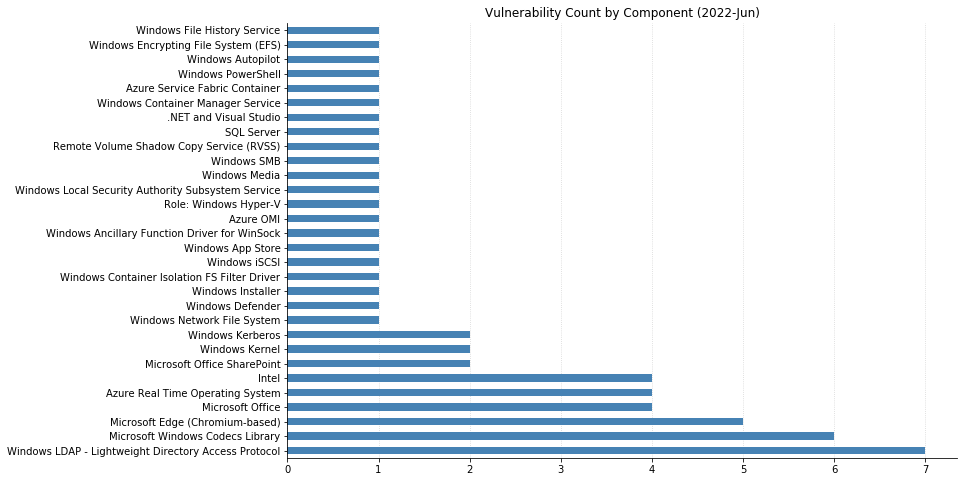
None of the other CVEs being addressed this month have been previously disclosed or seen exploited yet. However, it won’t be long before attackers start looking at CVE-2022-30136, a critical remote code execution (RCE) vulnerability affecting the Windows Network File System (NFS). Last month, Microsoft fixed a similar vulnerability (CVE-2022-26937) affecting NFS v2.0 and v3.0. CVE-2022-30136, on the other hand, is only exploitable in NFS v4.1. Microsoft has provided mitigation guidance to disable NFS v4.1, which should only be done if the May updates fixing previous NFS versions have been applied. Again, even if the mitigation has been put into place, best to patch sooner rather than later.
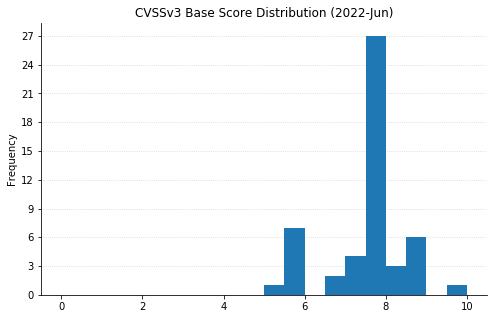
Also reminiscent of last month is CVE-2022-30139, a critical RCE in LDAP carrying a CVSSv3 base score of 7.1, which again is only exploitable if the MaxReceiveBuffer LDAP policy value is set higher than the default. Rounding out the critical RCEs for July is CVE-2022-30163, which could allow a malicious application running on a Hyper-V guest to execute code on the host OS.
The other big news this month is the end of support for Internet Explorer 11 (IE11) on Windows 10 Semi-Annual Channels and Windows 10 IoT Semi-Annual Channels, as Microsoft encourages users to adopt the Chromium-based Edge browser (which saw fixes for 5 CVEs this month). Internet Explorer 11 on other versions of Windows should continue receiving security updates and technical support based on the OS support lifecycle, so this is only the beginning of the end for the legacy browser.
To provide the best experiences, we use technologies like cookies to store and/or access device information. Consenting to these technologies will allow us to process data such as browsing behavior or unique IDs on this site. Not consenting or withdrawing consent, may adversely affect certain features and functions.
Functional
Always active
The technical storage or access is strictly necessary for the legitimate purpose of enabling the use of a specific service explicitly requested by the subscriber or user, or for the sole purpose of carrying out the transmission of a communication over an electronic communications network.
Preferences
The technical storage or access is necessary for the legitimate purpose of storing preferences that are not requested by the subscriber or user.
Statistics
The technical storage or access that is used exclusively for statistical purposes.The technical storage or access that is used exclusively for anonymous statistical purposes. Without a subpoena, voluntary compliance on the part of your Internet Service Provider, or additional records from a third party, information stored or retrieved for this purpose alone cannot usually be used to identify you.
Marketing
The technical storage or access is required to create user profiles to send advertising, or to track the user on a website or across several websites for similar marketing purposes.