Tag Archives: Patch Tuesday

Patch Tuesday – November 2025

Post Syndicated from Adam Barnett original https://www.rapid7.com/blog/post/em-patch-tuesday-november-2025

Microsoft is publishing 66 new vulnerabilities today, which is far fewer than we’ve come to expect in recent months. There’s a lone exploited-in-the-wild zero-day vulnerability, which Microsoft assesses as critical severity, although there’s apparently no public disclosure yet. Three critical remote code execution (RCE) vulnerabilities are patched today; happily, Microsoft currently assesses all three as less likely to see exploitation. Five browser vulnerabilities and a dozen or so fixes for Azure Linux (aka Mariner) have already been published separately this month, and are not included in the total.

Windows GDI+: critical 0-day RCE

Faced with a fresh stack of Patch Tuesday vulns, there are a few different ways to prioritize our analysis. Do we start with vulns exploited in the wild? Pre-authentication RCEs? The vuln with the highest CVSS base score? The vuln which is likely to affect just about every asset running Microsoft software? Any of these are sensible avenues of approach, and today, all roads lead to CVE-2025-60724. As the advisory notes, in the worst-case scenario, an attacker could exploit this vulnerability by uploading a malicious document to a vulnerable web service. The advisory doesn’t spell out the context of code execution, but if all the stars align for the attacker, the prize could be remote code execution as SYSTEM via the network without any need for an existing foothold. While this vuln almost certainly isn’t wormable, it’s clearly very serious and is surely a top priority for just about anyone considering how to approach this month’s patches.
The weakness underlying CVE-2025-60724 is CWE-122: Heap-based buffer overflow, a concept which celebrated its 50th birthday several years ago. As the authors of the original 1972 paper noted: “If the code makes use of an internal buffer, there is a possibility that a user could input enough data to overwrite other portions of the program’s private storage.” Regarding computer security in general, they opined that “this problem is neither hopeless nor solved. It is, however, perfectly clear […] that solutions to the problem will not occur spontaneously, nor will they come from the various well-intentioned attempts to provide security as an add-on to existing systems.”

Office: critical ACE

Once again, we find ourselves wondering: “when is remote code execution really remote?” CVE-2025-62199 describes a critical RCE vulnerability in Microsoft Office, where exploitation relies on the user downloading and opening a malicious file. The attacker is remote, and that’s enough to satisfy the definition, even if the action is taken on the local system by the unwitting user. Anyone hoping that the Preview Pane is not a vector will be sadly disappointed, and this certainly increases the probability of real-world exploitation, since there’s no need for the attacker to craft a way around those pesky warnings about enabling dangerous content. Just scrolling through a list of emails in Outlook could be enough.

Visual Studio: critical RCE

Some attacks are straightforward, with only a single step needed to reach the finish line. Others, like Visual Studio critical RCE CVE-2025-62214, require that the attacker execute a complex chain of events. In this case, exploitation demands multi-stage abuse of recent advances in Visual Studio AI development capabilities, including prompt injection, Agent interaction, and triggering a build. The advisory doesn’t describe the context of code execution. If the prize is simply code execution on an asset in the context of the user, there’s no obvious advancement for the attacker, since exploitation already requires code execution on the asset by the attacker or the targeted user. The brief description of the attack chain does mention that the attacker would need to trigger a build. On that basis, possible outcomes might include execution in an elevated context, or compromised build artifacts, although the advisory does not provide enough information to be certain either way.
SQL Server: critical EoP

SQL Server admins should take note of CVE-2025-59499, which describes an elevation of privilege (EoP) vulnerability. Although some level existing privileges are required, successful exploitation will permit an attacker to run arbitrary Transact-SQL (T-SQL) commands. T-SQL is the language which SQL Server databases and clients use to communicate with one another. Although the default configuration for SQL Server disables the xp_cmdshell functionality which allows direct callouts to the underlying OS, there’s more than one way to shine a penny, and the only safe assumption here is that exploitation will lead to code execution in the context of SQL Server itself. Patches are available for all supported versions of SQL Server.

Microsoft lifecycle update

Following the sweeping lifecycle changes seen in October 2025, Microsoft is taking it fairly easy this month. The only significant transition today is the end of support for Windows 11 Home and Pro 23H2. Unlike the demise of Windows 10, this much smaller change won’t affect most people; a small number of older CPUs might not make the cut, since Windows 11 24H2 introduces a requirement for a couple of newer CPU instruction sets. Microsoft provides lists of compatible Intel, AMD, and Qualcomm CPU series.

Summary charts

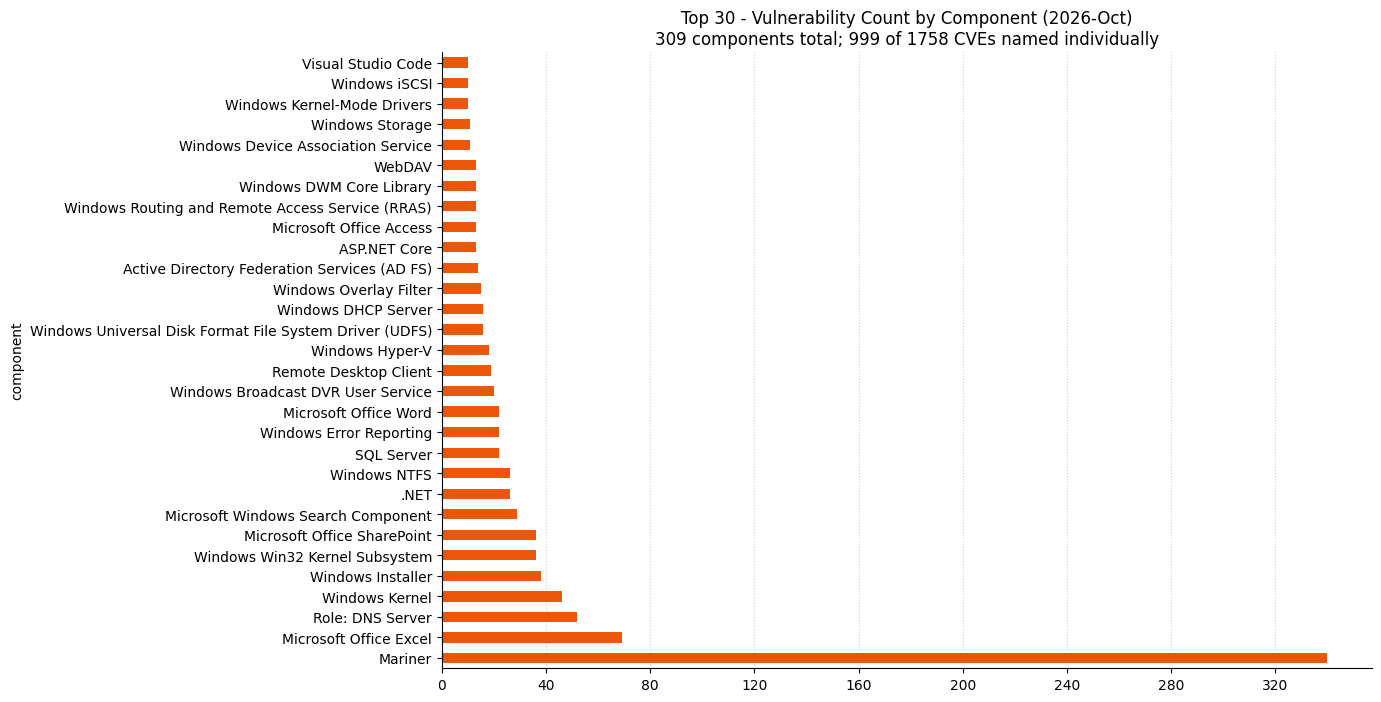
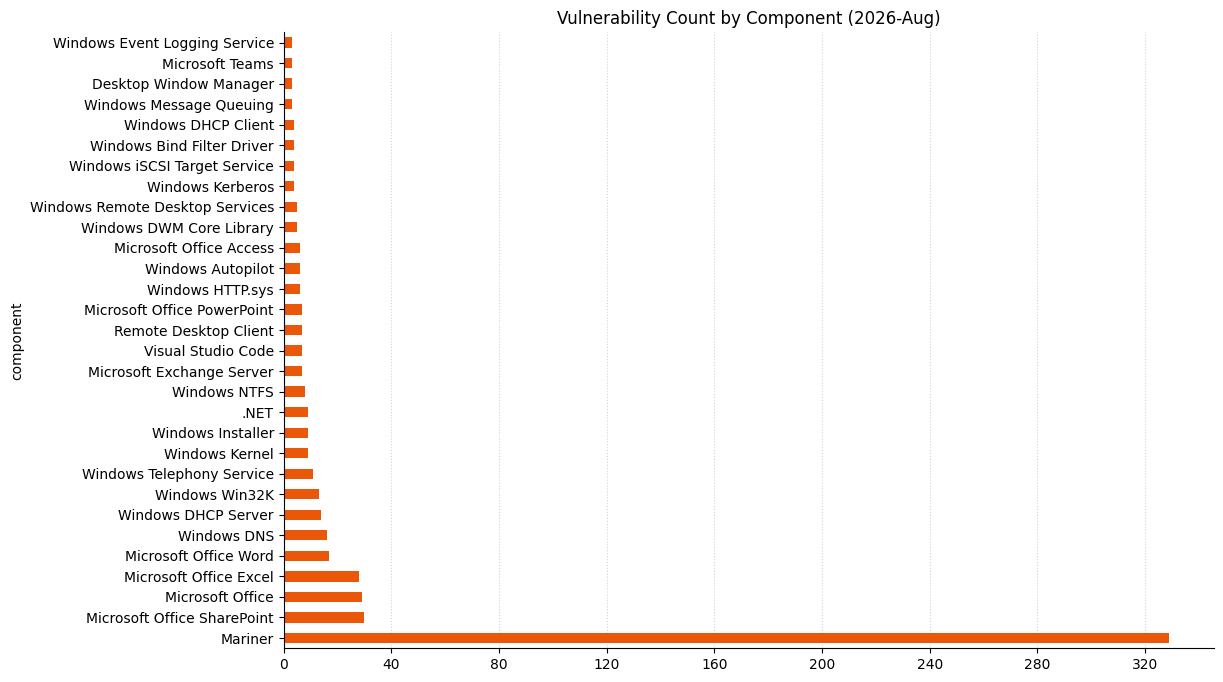
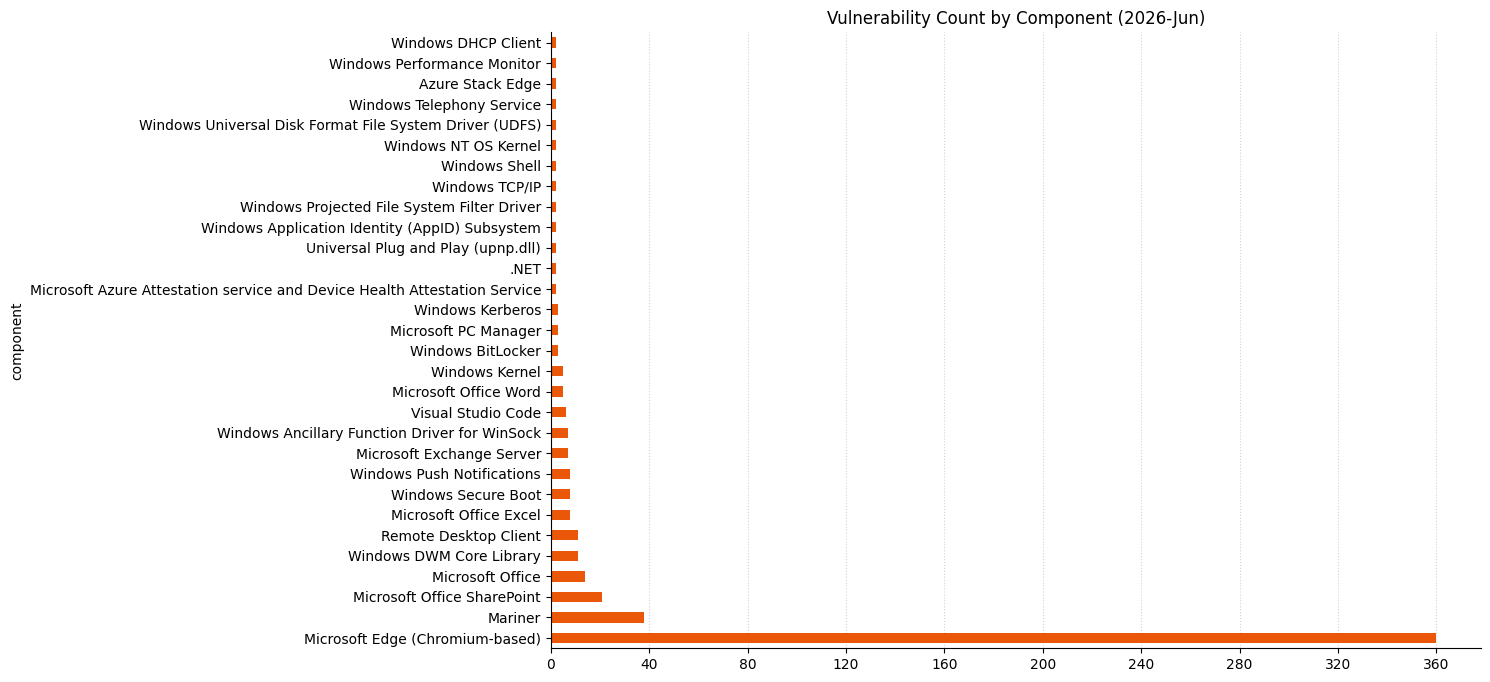
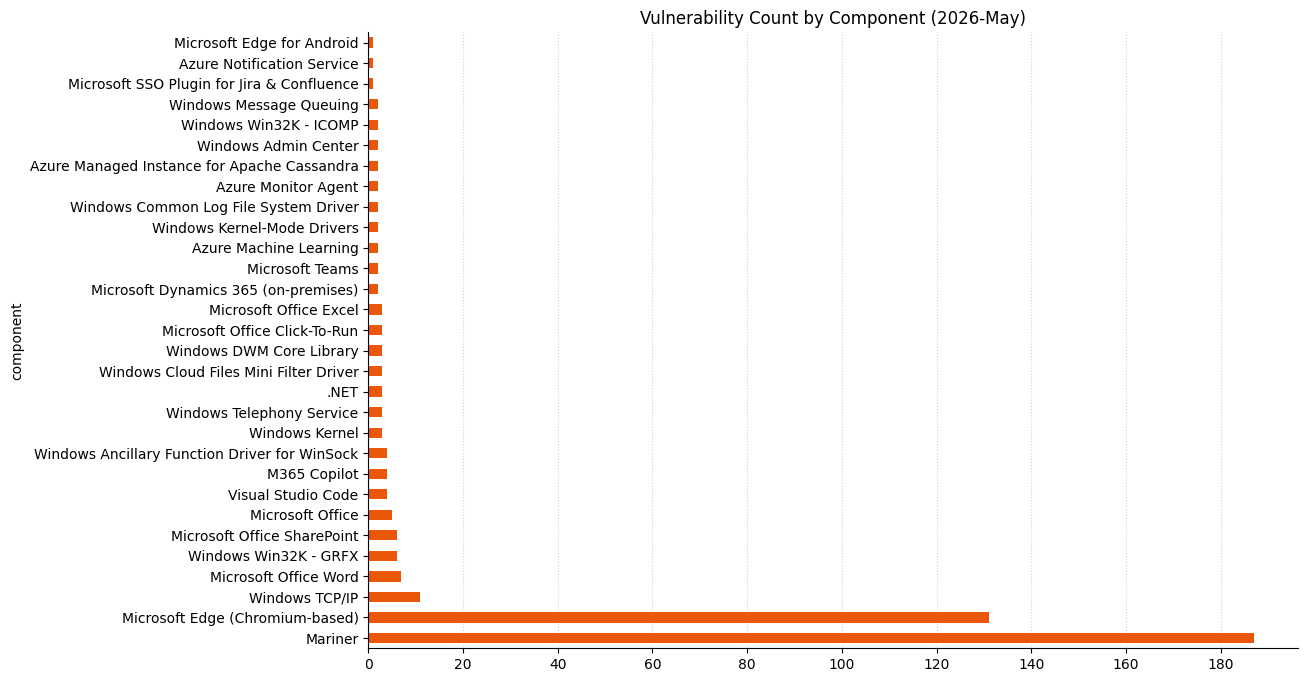
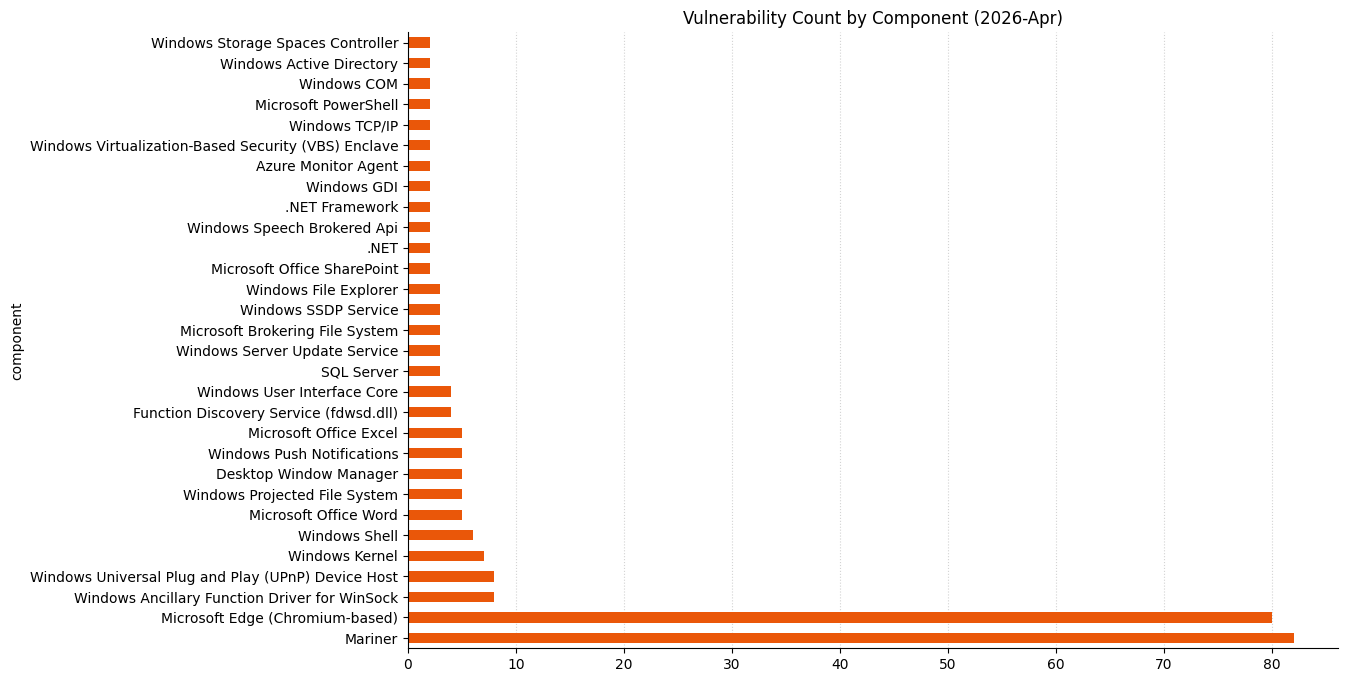
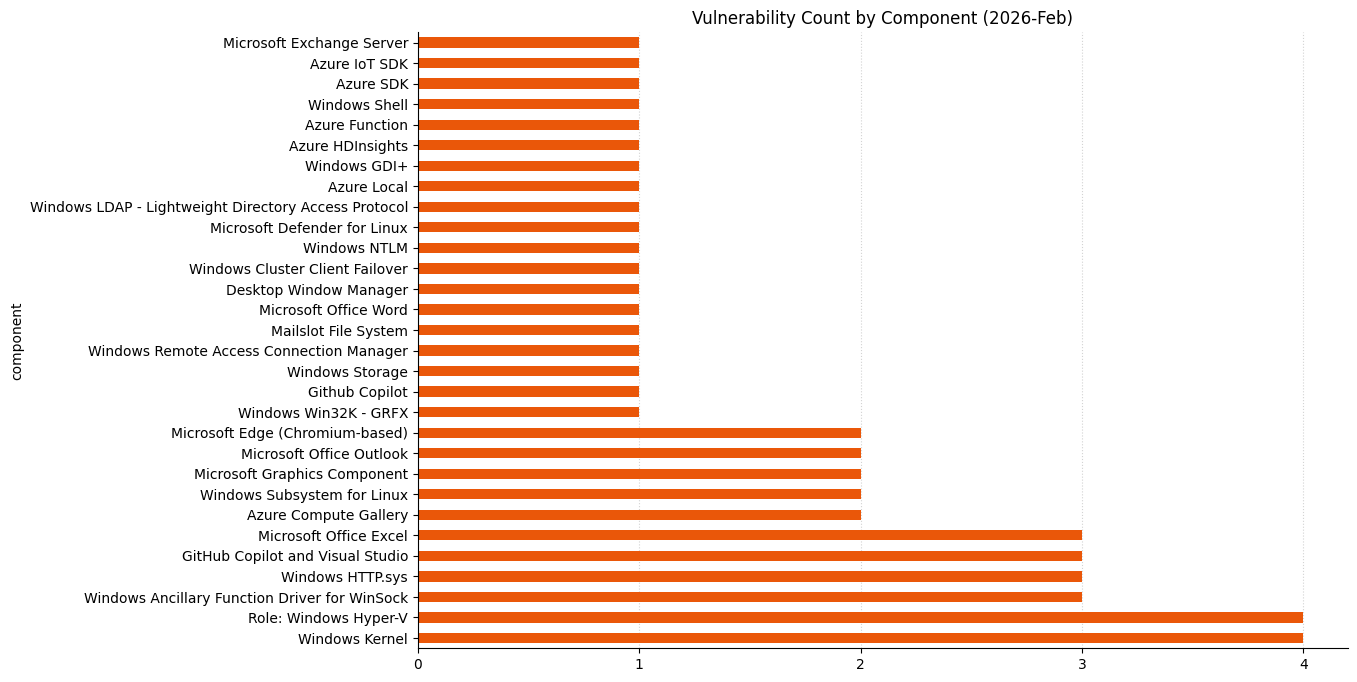
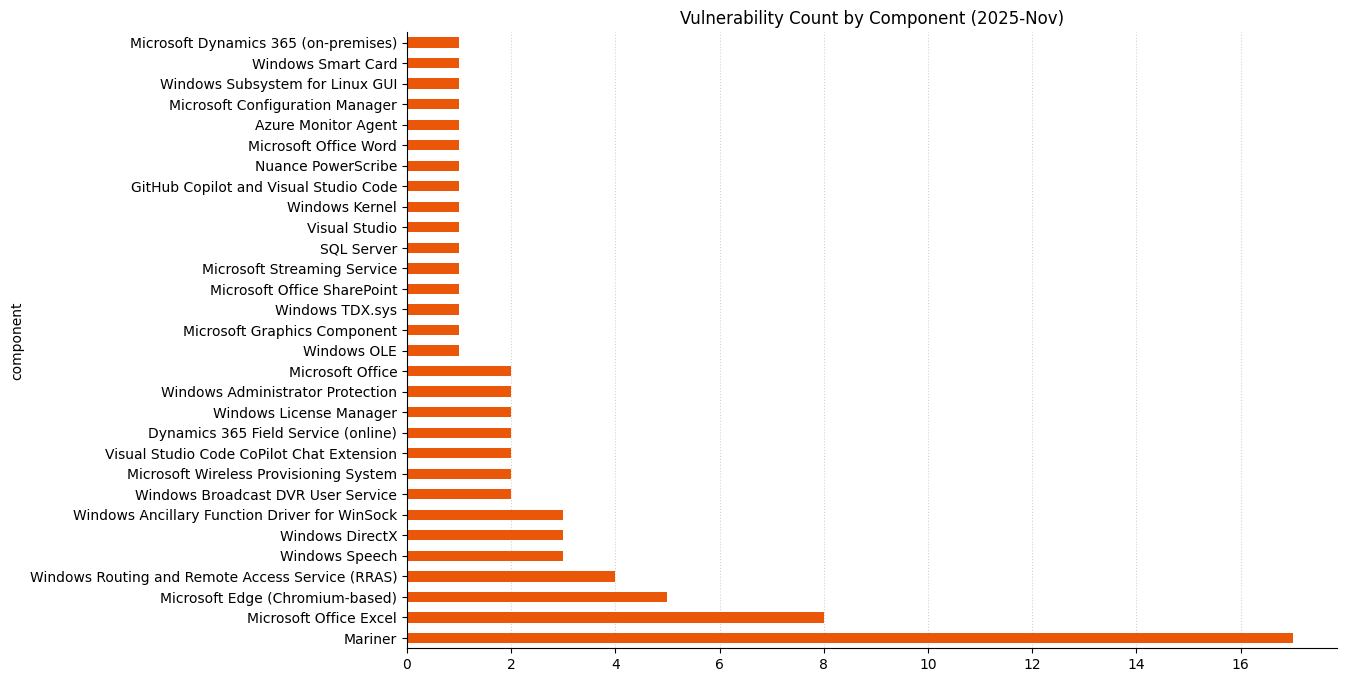
A bar chart showing vulnerability count by component for Microsoft Patch Tuesday 2025-Nov

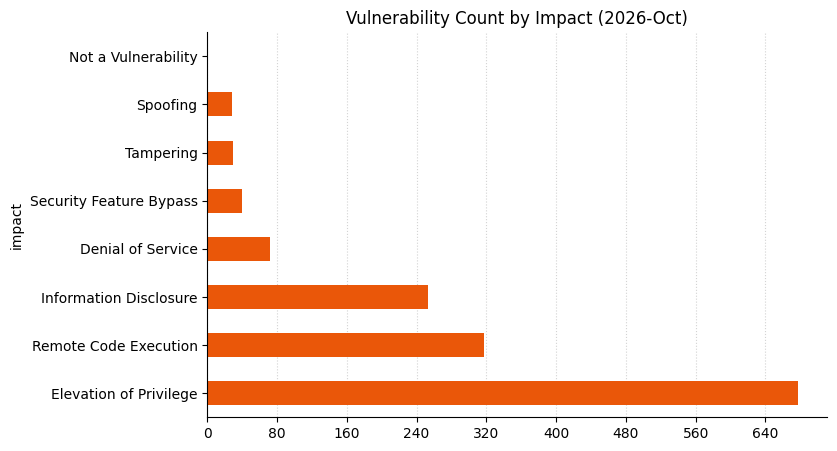
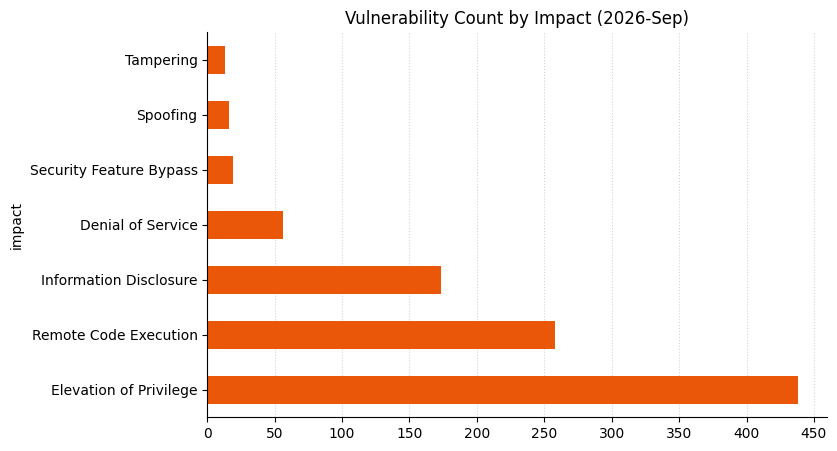
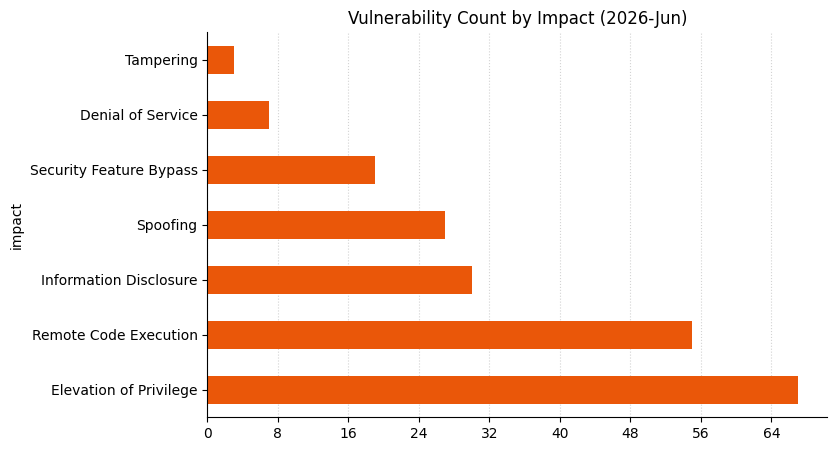
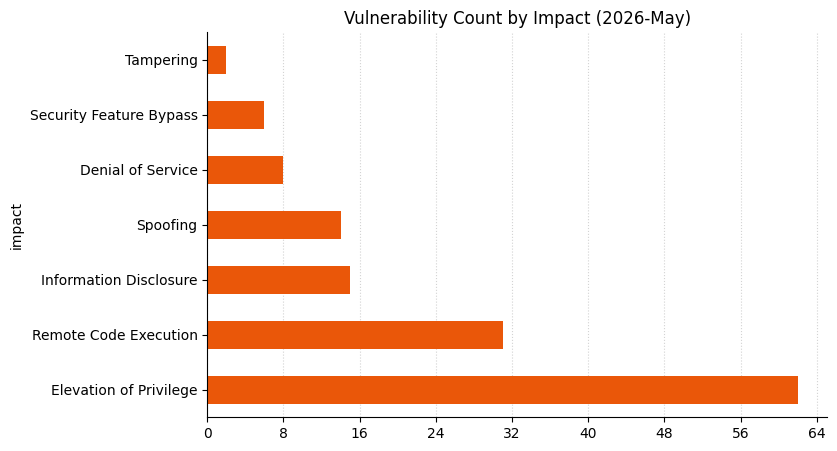
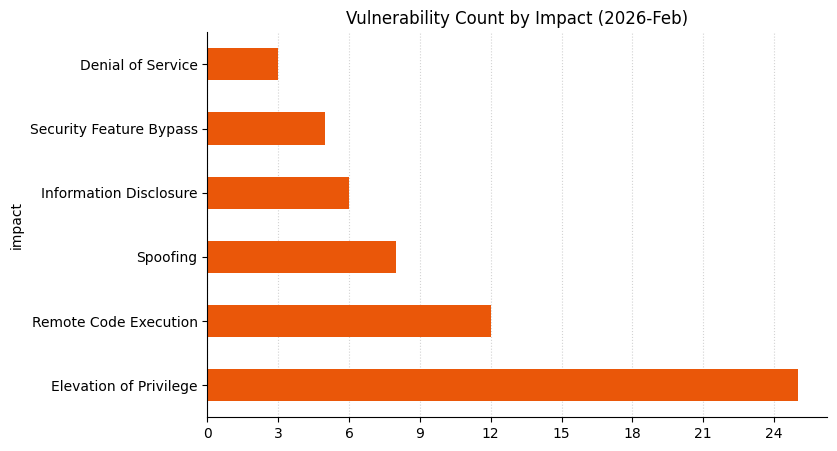
A bar chart showing vulnerability count by impact for Microsoft Patch Tuesday 2025-Nov

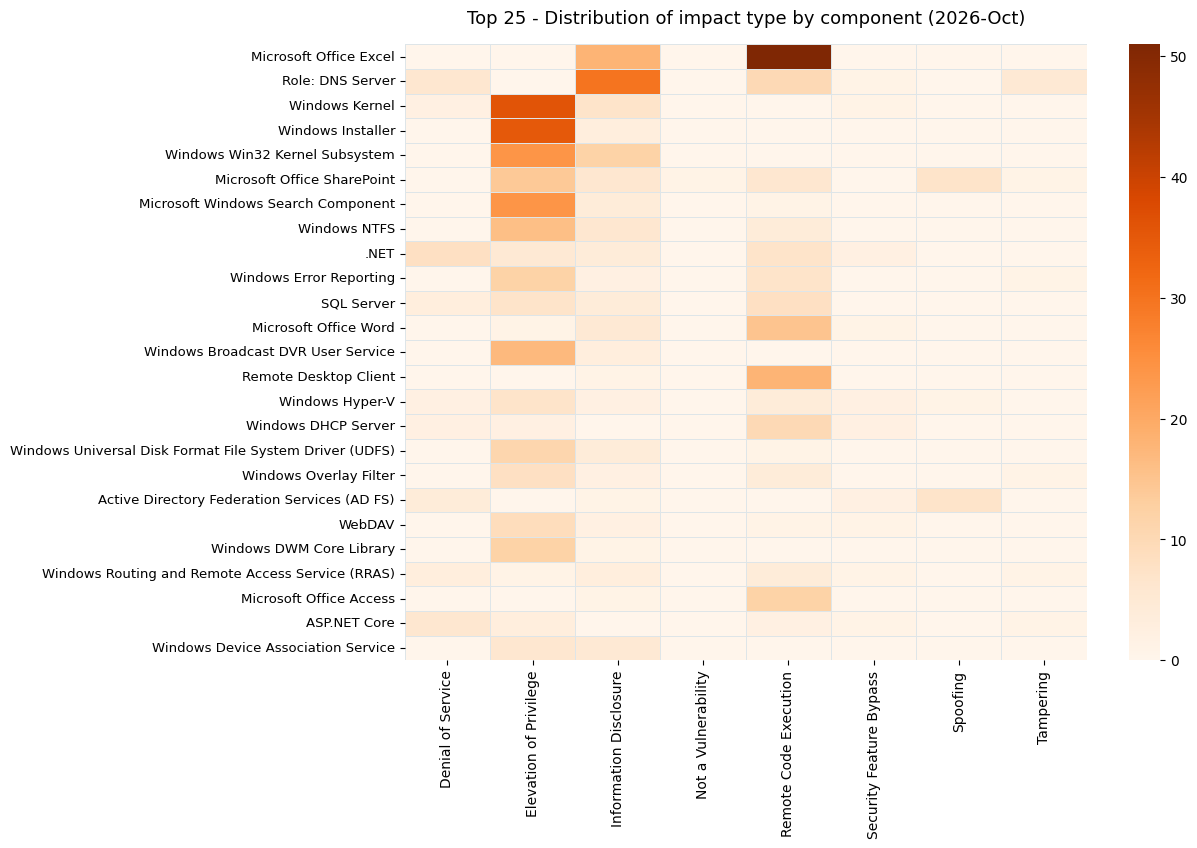
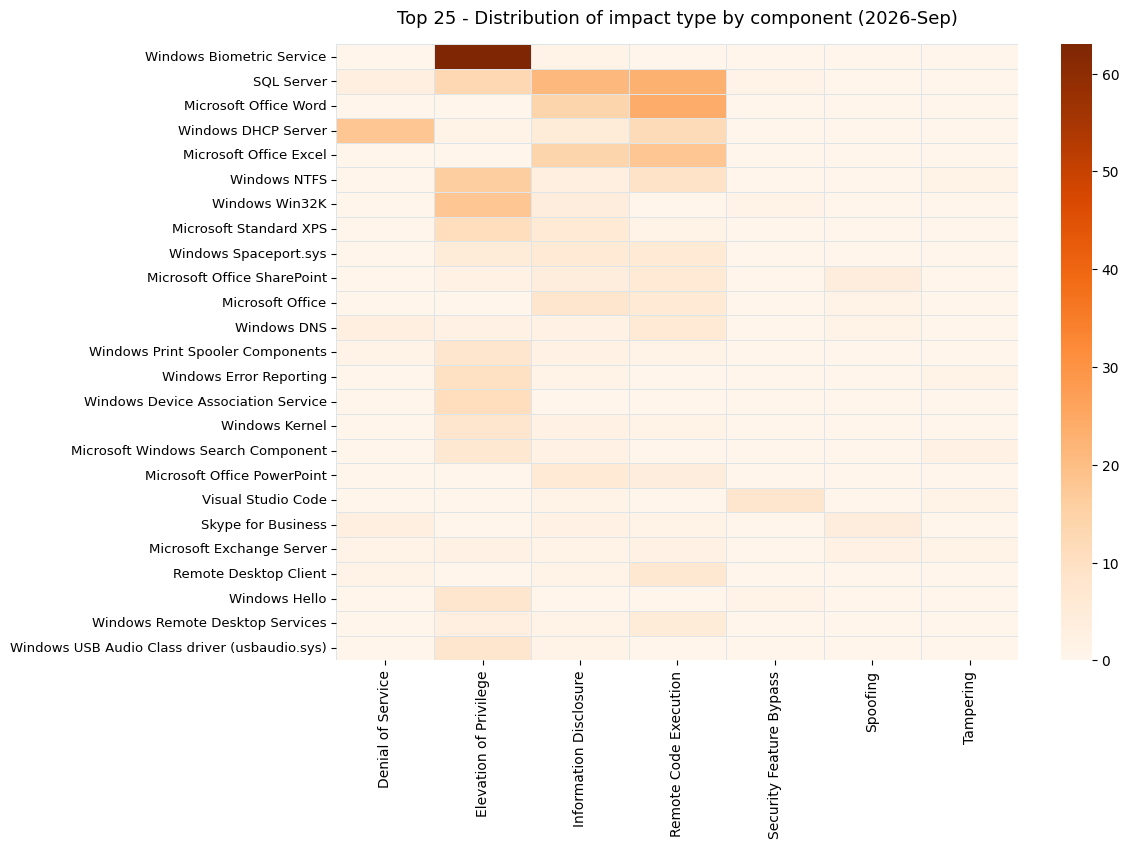
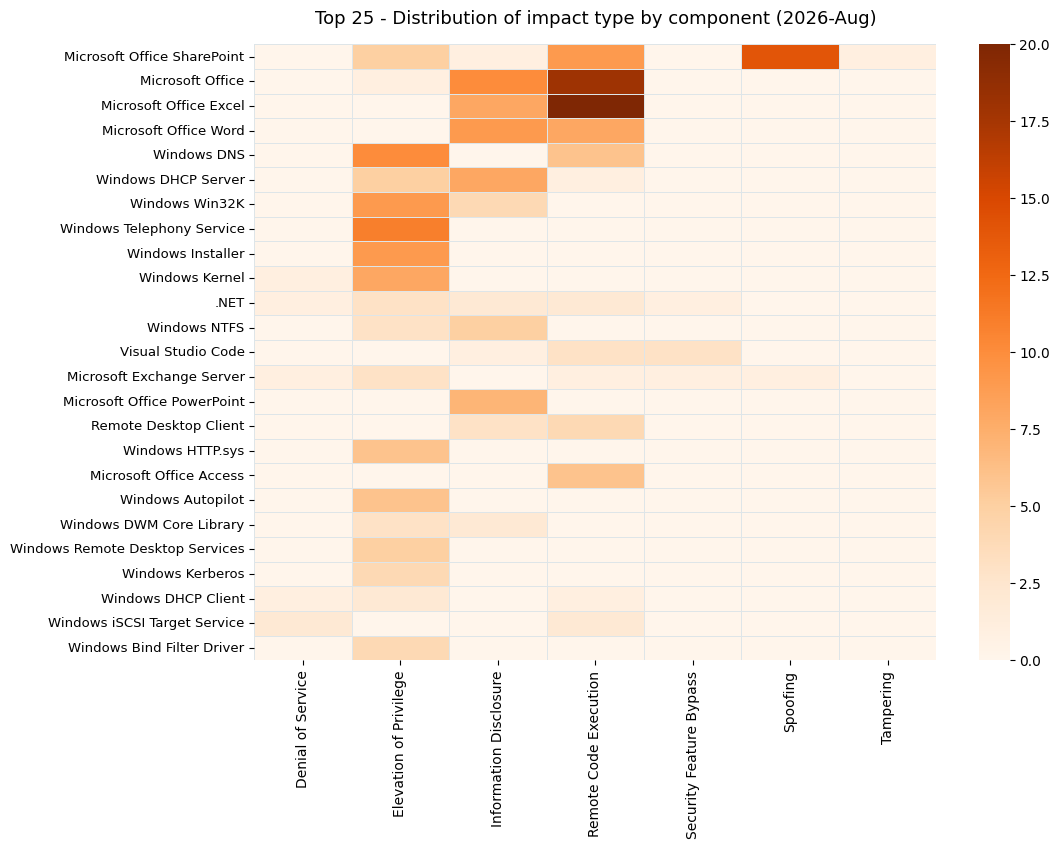
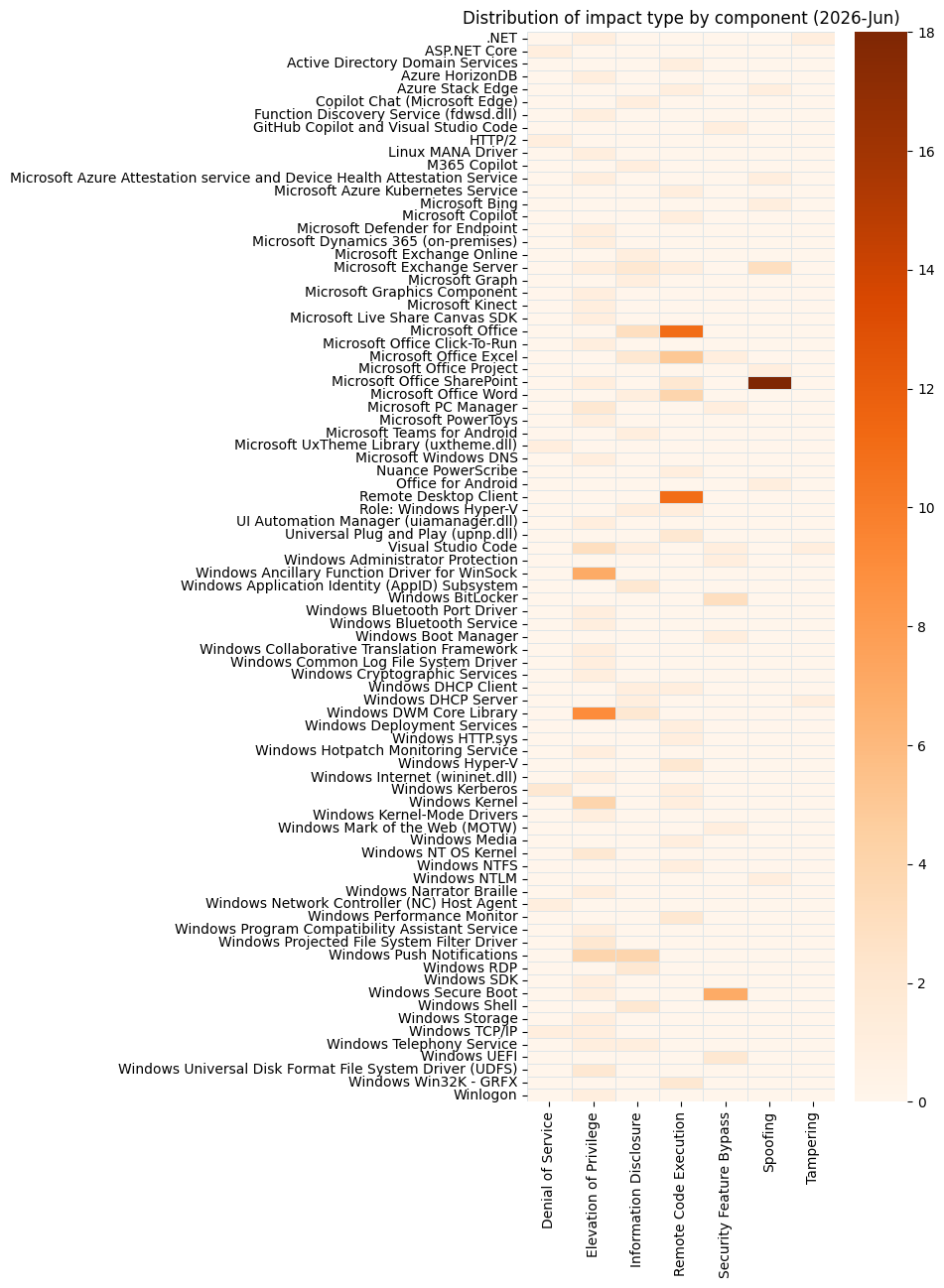
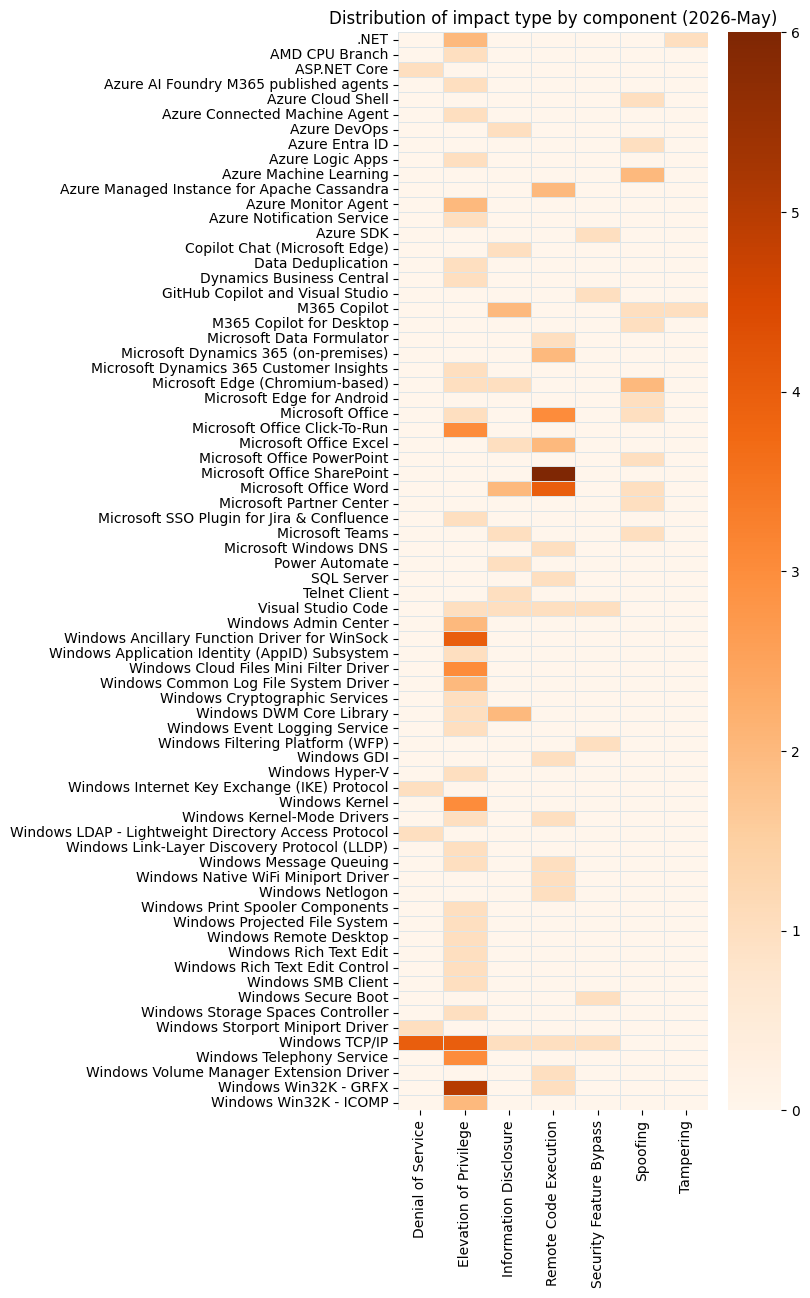
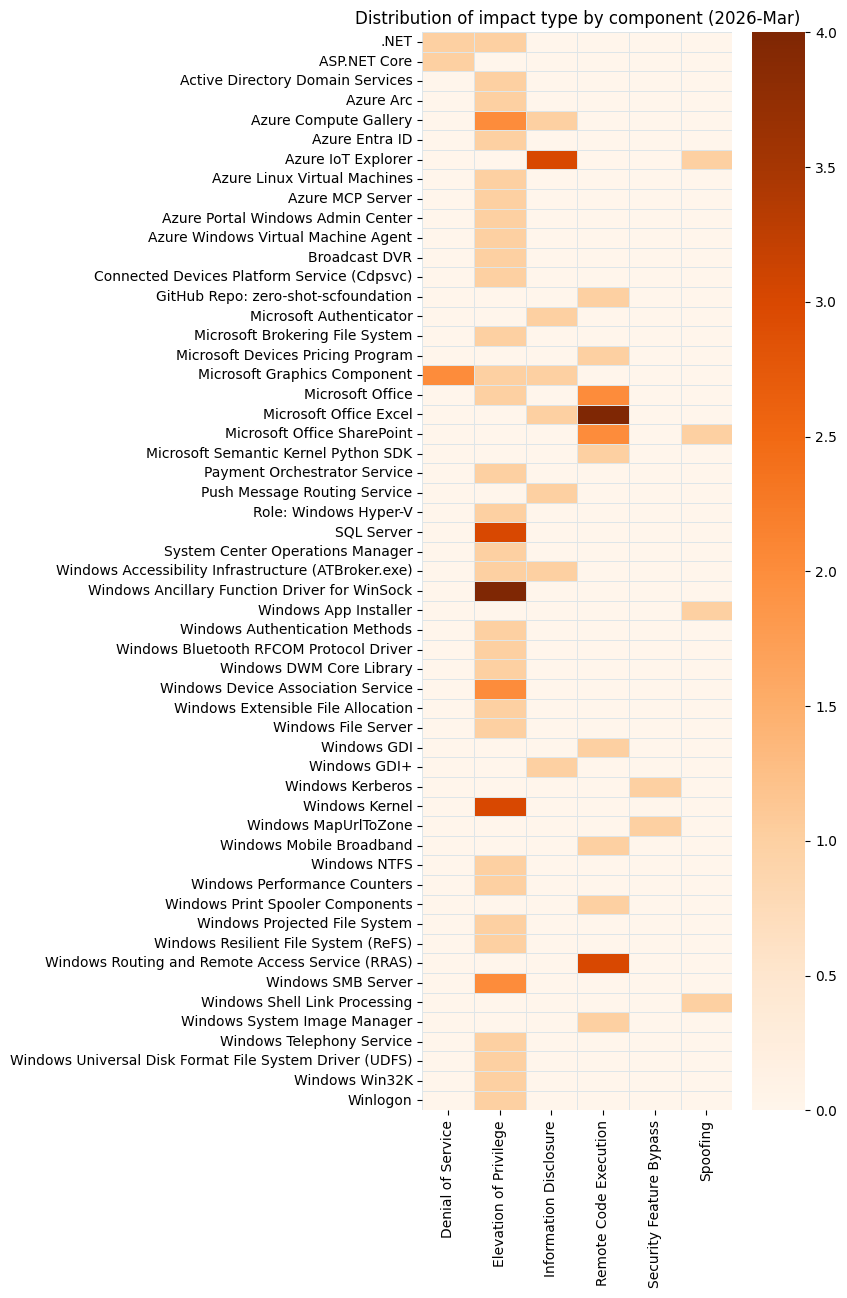
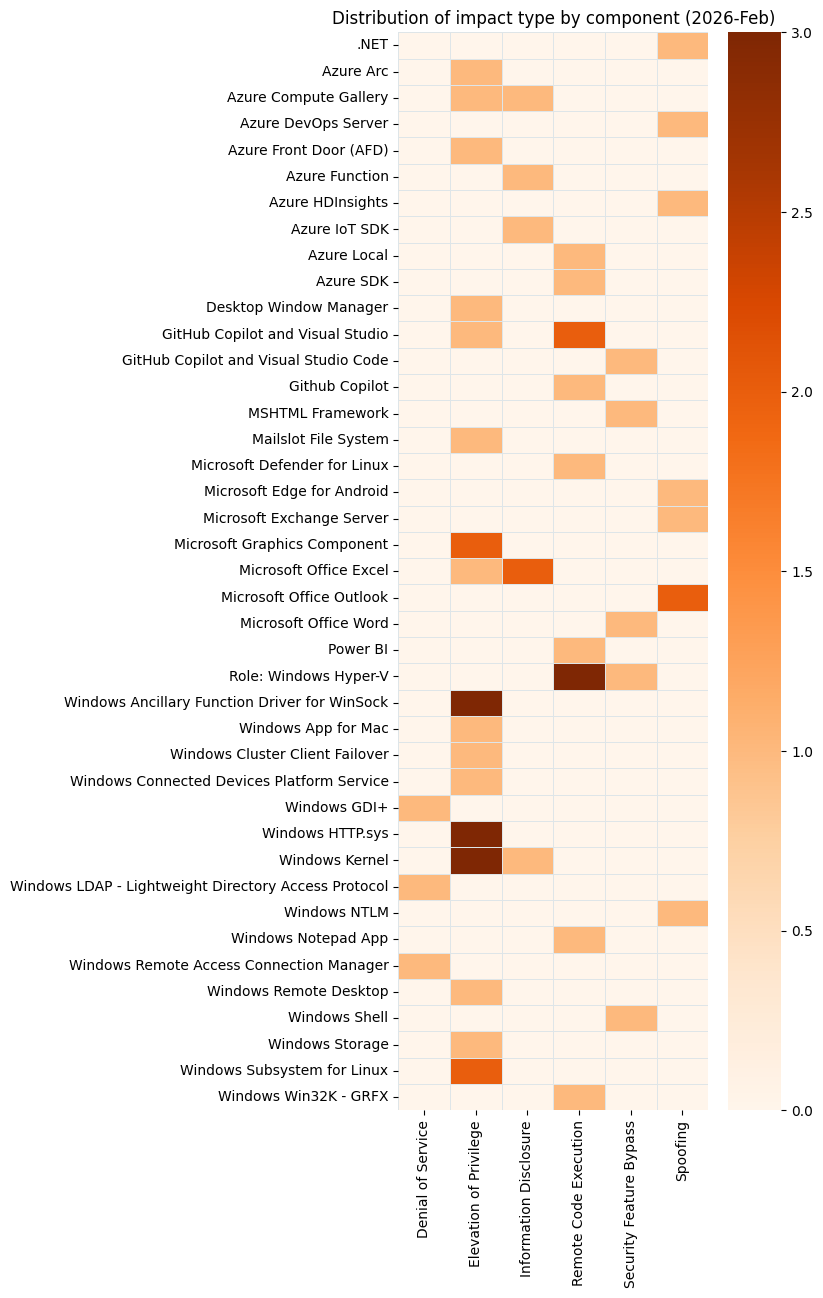
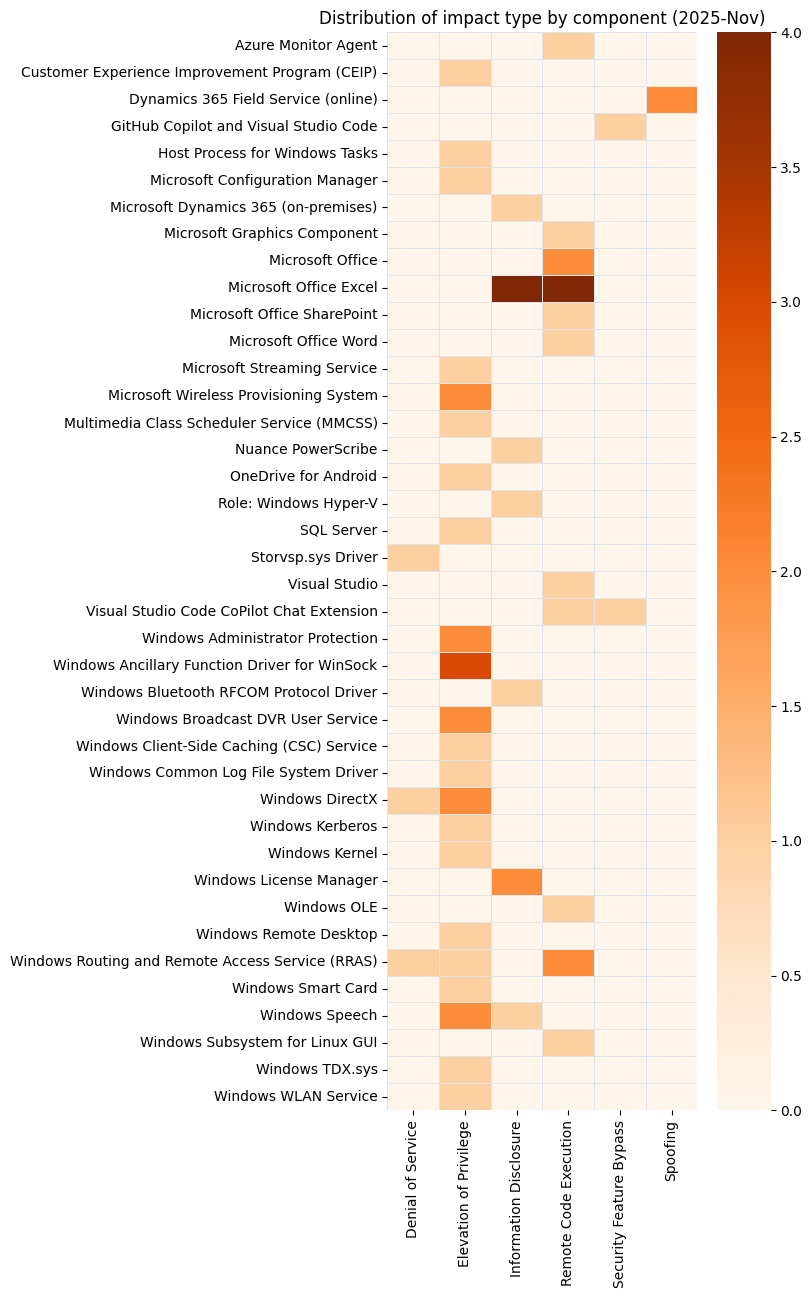
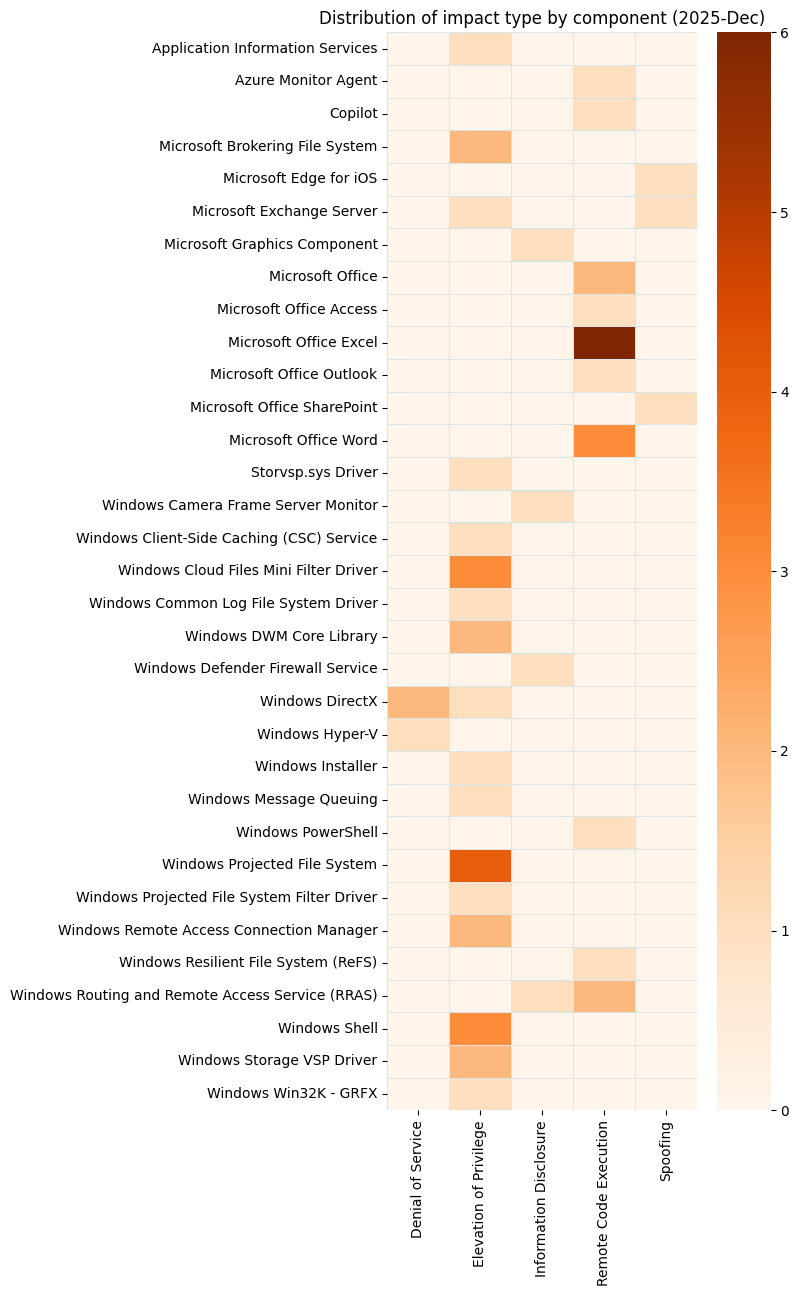
A heat map showing impact type by component for Microsoft Patch Tuesday 2025-Nov

Summary tables

Azure vulnerabilities

CVE

Title

Exploited?

Publicly disclosed?

CVSSv3 base score

CVE-2025-59504

Azure Monitor Agent Remote Code Execution Vulnerability

No

No

7.3

Browser vulnerabilities

CVE

Title

Exploited?

Publicly disclosed?

CVSSv3 base score

CVE-2025-12729

Chromium: CVE-2025-12729 Inappropriate implementation in Omnibox

No

No

N/A

CVE-2025-12728

Chromium: CVE-2025-12728 Inappropriate implementation in Omnibox

No

No

N/A

CVE-2025-12727

Chromium: CVE-2025-12727 Inappropriate implementation in V8

No

No

N/A

CVE-2025-12726

Chromium: CVE-2025-12726 Inappropriate implementation in Views.

No

No

N/A

CVE-2025-12725

Chromium: CVE-2025-12725 Out of bounds write in WebGPU

No

No

N/A

Developer Tools vulnerabilities

CVE

Title

Exploited?

Publicly disclosed?

CVSSv3 base score

CVE-2025-62222

Agentic AI and Visual Studio Code Remote Code Execution Vulnerability

No

No

8.8

CVE-2025-62449

Microsoft Visual Studio Code CoPilot Chat Extension Security Feature Bypass Vulnerability

No

No

6.8

CVE-2025-62214

Visual Studio Remote Code Execution Vulnerability

No

No

6.7

CVE-2025-62453

GitHub Copilot and Visual Studio Code Security Feature Bypass Vulnerability

No

No

5

Mariner Open Source Software vulnerabilities

CVE

Title

Exploited?

Publicly disclosed?

CVSSv3 base score

CVE-2024-25621

containerd affected by a local privilege escalation via wide permissions on CRI directory

No

No

7.3

CVE-2025-10966

missing SFTP host verification with wolfSSH

No

No

6.8

CVE-2025-64329

containerd CRI server: Host memory exhaustion through Attach goroutine leak

No

No

N/A

Microsoft Dynamics vulnerabilities

CVE

Title

Exploited?

Publicly disclosed?

CVSSv3 base score

CVE-2025-62210

Dynamics 365 Field Service (online) Spoofing Vulnerability

No

No

8.7

CVE-2025-62211

Dynamics 365 Field Service (online) Spoofing Vulnerability

No

No

8.7

CVE-2025-62206

Microsoft Dynamics 365 (On-Premises) Information Disclosure Vulnerability

No

No

6.5

Microsoft Office vulnerabilities

CVE

Title

Exploited?

Publicly disclosed?

CVSSv3 base score

CVE-2025-62204

Microsoft SharePoint Remote Code Execution Vulnerability

No

No

8

CVE-2025-62199

Microsoft Office Remote Code Execution Vulnerability

No

No

7.8

CVE-2025-62216

Microsoft Office Remote Code Execution Vulnerability

No

No

7.8

CVE-2025-62205

Microsoft Office Remote Code Execution Vulnerability

No

No

7.8

CVE-2025-60727

Microsoft Excel Remote Code Execution Vulnerability

No

No

7.8

CVE-2025-62200

Microsoft Excel Remote Code Execution Vulnerability

No

No

7.8

CVE-2025-62201

Microsoft Excel Remote Code Execution Vulnerability

No

No

7.8

CVE-2025-62203

Microsoft Excel Remote Code Execution Vulnerability

No

No

7.8

CVE-2025-60726

Microsoft Excel Information Disclosure Vulnerability

No

No

7.1

CVE-2025-62202

Microsoft Excel Information Disclosure Vulnerability

No

No

7.1

CVE-2025-60722

Microsoft OneDrive for Android Elevation of Privilege Vulnerability

No

No

6.5

CVE-2025-59240

Microsoft Excel Information Disclosure Vulnerability

No

No

5.5

CVE-2025-60728

Microsoft Excel Information Disclosure Vulnerability

No

No

4.3

Open Source Software vulnerabilities

CVE

Title

Exploited?

Publicly disclosed?

CVSSv3 base score

CVE-2025-62220

Windows Subsystem for Linux GUI Remote Code Execution Vulnerability

No

No

8.8

CVE-2025-12863

Libxml2: namespace use-after-free in xmlsettreedoc() function of libxml2

No

No

7.5

CVE-2025-64433

KubeVirt Arbitrary Container File Read

No

No

6.5

CVE-2025-40107

can: hi311x: fix null pointer dereference when resuming from sleep before interface was enabled

No

No

5.5

CVE-2025-60753

An issue was discovered in libarchive bsdtar before version 3.8.1 in function apply_substitution in file tar/subst.c when processing crafted -s substitution rules. This can cause unbounded memory allocation and lead to denial of service (Out-of-Memory crash).

No

No

5.5

CVE-2025-12875

mruby array.c ary_fill_exec out-of-bounds write

No

No

5.3

CVE-2025-64435

KubeVirt VMI Denial-of-Service (DoS) Using Pod Impersonation

No

No

5.3

CVE-2025-64437

KubeVirt Isolation Detection Flaw Allows Arbitrary File Permission Changes

No

No

5

CVE-2025-64434

KubeVirt Improper TLS Certificate Management Handling Allows API Identity Spoofing

No

No

4.7

CVE-2025-64432

KubeVirt Affected by an Authentication Bypass in Kubernetes Aggregation Layer

No

No

4.7

CVE-2025-40109

crypto: rng – Ensure set_ent is always present

No

No

4.2

CVE-2025-52881

runc: LSM labels can be bypassed with malicious config using dummy procfs files

No

No

N/A

CVE-2025-31133

runc container escape via “masked path” abuse due to mount race conditions

No

No

N/A

CVE-2025-52565

container escape due to /dev/console mount and related races

No

No

N/A

CVE-2025-64436

KubeVirt Excessive Role Permissions Could Enable Unauthorized VMI Migrations Between Nodes

No

No

N/A

Other vulnerabilities

CVE

Title

Exploited?

Publicly disclosed?

CVSSv3 base score

CVE-2025-30398

Nuance PowerScribe 360 Information Disclosure Vulnerability

No

No

8.1

SQL Server vulnerabilities

CVE

Title

Exploited?

Publicly disclosed?

CVSSv3 base score

CVE-2025-59499

Microsoft SQL Server Elevation of Privilege Vulnerability

No

No

8.8

System Center vulnerabilities

CVE

Title

Exploited?

Publicly disclosed?

CVSSv3 base score

CVE-2025-47179

Configuration Manager Elevation of Privilege Vulnerability

No

No

6.7

Windows vulnerabilities

CVE

Title

Exploited?

Publicly disclosed?

CVSSv3 base score

CVE-2025-59511

Windows WLAN Service Elevation of Privilege Vulnerability

No

No

7.8

CVE-2025-60713

Windows Routing and Remote Access Service (RRAS) Elevation of Privilege Vulnerability

No

No

7.8

CVE-2025-60718

Windows Administrator Protection Elevation of Privilege Vulnerability

No

No

7.8

CVE-2025-60721

Windows Administrator Protection Elevation of Privilege Vulnerability

No

No

7.8

CVE-2025-60707

Multimedia Class Scheduler Service (MMCSS) Driver Elevation of Privilege Vulnerability

No

No

7.8

CVE-2025-60710

Host Process for Windows Tasks Elevation of Privilege Vulnerability

No

No

7.8

CVE-2025-59507

Windows Speech Runtime Elevation of Privilege Vulnerability

No

No

7

CVE-2025-59508

Windows Speech Recognition Elevation of Privilege Vulnerability

No

No

7

CVE-2025-62215

Windows Kernel Elevation of Privilege Vulnerability

Yes

No

7

CVE-2025-59515

Windows Broadcast DVR User Service Elevation of Privilege Vulnerability

No

No

7

CVE-2025-60717

Windows Broadcast DVR User Service Elevation of Privilege Vulnerability

No

No

7

CVE-2025-62218

Microsoft Wireless Provisioning System Elevation of Privilege Vulnerability

No

No

7

CVE-2025-62219

Microsoft Wireless Provisioning System Elevation of Privilege Vulnerability

No

No

7

CVE-2025-60716

DirectX Graphics Kernel Elevation of Privilege Vulnerability

No

No

7

CVE-2025-60708

Storvsp.sys Driver Denial of Service Vulnerability

No

No

6.5

CVE-2025-60723

DirectX Graphics Kernel Denial of Service Vulnerability

No

No

6.3

CVE-2025-59509

Windows Speech Recognition Information Disclosure Vulnerability

No

No

5.5

CVE-2025-62208

Windows License Manager Information Disclosure Vulnerability

No

No

5.5

CVE-2025-62209

Windows License Manager Information Disclosure Vulnerability

No

No

5.5

CVE-2025-60706

Windows Hyper-V Information Disclosure Vulnerability

No

No

5.5

CVE-2025-60724

GDI+ Remote Code Execution Vulnerability

Yes

No

9.8

Windows ESU vulnerabilities

CVE

Title

Exploited?

Publicly disclosed?

CVSSv3 base score

CVE-2025-62452

Windows Routing and Remote Access Service (RRAS) Remote Code Execution Vulnerability

No

No

8

CVE-2025-60715

Windows Routing and Remote Access Service (RRAS) Remote Code Execution Vulnerability

No

No

8

CVE-2025-60720

Windows Transport Driver Interface (TDI) Translation Driver Elevation of Privilege Vulnerability

No

No

7.8

CVE-2025-59505

Windows Smart Card Reader Elevation of Privilege Vulnerability

No

No

7.8

CVE-2025-60703

Windows Remote Desktop Services Elevation of Privilege Vulnerability

No

No

7.8

CVE-2025-60714

Windows OLE Remote Code Execution Vulnerability

No

No

7.8

CVE-2025-60709

Windows Common Log File System Driver Elevation of Privilege Vulnerability

No

No

7.8

CVE-2025-60705

Windows Client-Side Caching Elevation of Privilege Vulnerability

No

No

7.8

CVE-2025-59514

Microsoft Streaming Service Proxy Elevation of Privilege Vulnerability

No

No

7.8

CVE-2025-59512

Customer Experience Improvement Program (CEIP) Elevation of Privilege Vulnerability

No

No

7.8

CVE-2025-60704

Windows Kerberos Elevation of Privilege Vulnerability

No

No

7.5

CVE-2025-60719

Windows Ancillary Function Driver for WinSock Elevation of Privilege Vulnerability

No

No

7

CVE-2025-62217

Windows Ancillary Function Driver for WinSock Elevation of Privilege Vulnerability

No

No

7

CVE-2025-62213

Windows Ancillary Function Driver for WinSock Elevation of Privilege Vulnerability

No

No

7

CVE-2025-59506

DirectX Graphics Kernel Elevation of Privilege Vulnerability

No

No

7

CVE-2025-59510

Windows Routing and Remote Access Service (RRAS) Denial of Service Vulnerability

No

No

5.5

CVE-2025-59513

Windows Bluetooth RFCOM Protocol Driver Information Disclosure Vulnerability

No

No

5.5

CVE-2025-60724

GDI+ Remote Code Execution Vulnerability

Yes

No

9.8

Windows Microsoft Office ESU vulnerabilities

CVE

Title

Exploited?

Publicly disclosed?

CVSSv3 base score

CVE-2025-60724

GDI+ Remote Code Execution Vulnerability

No

No

9.8

Updates

  • 2025-11-11: clarified the description of CVE-2025-62214.

Patch Tuesday – June 2025

Post Syndicated from Adam Barnett original https://blog.rapid7.com/2025/06/10/patch-tuesday-june-2025/

Patch Tuesday - June 2025

Microsoft is addressing 67 vulnerabilities this June 2025 Patch Tuesday. Microsoft has evidence of in-the-wild exploitation for just one of the vulnerabilities published today, and that is reflected in CISA KEV. Separately, Microsoft is aware of existing public disclosure for one other freshly published vulnerability. Microsoft’s luck holds for a ninth consecutive Patch Tuesday, since neither of today’s zero-day vulnerabilities are evaluated as critical severity at time of publication. Today also sees the publication of eight critical remote code execution (RCE) vulnerabilities. Two browser vulnerabilities have already been published separately this month, and are not included in the total.

Windows WebDAV: zero-day RCE

Remember the WebDAV standard? It has been seven years since Microsoft has published a vulnerability in the Windows implementation of WebDAV, and today’s publication of CVE-2025-33053 is the first zero-day vulnerability on record. Originally dreamed up in the 1990s to support interactivity on the web, WebDAV may be familiar to Exchange admins and users of a certain vintage, since older versions of Exchange, up to and including Exchange Server 2010, supported WebDAV as a means for interacting with mailboxes and public folders.

It will surprise no one that Windows still more or less supports WebDAV, and that turns out to be a bit of a problem. Microsoft acknowledges Check Point Research (CPR) on the advisory; CPR in turn attributes exploitation of CVE-2025-33053 to an APT, which they track as Stealth Falcon, an established threat actor with a long-running interest in governments and government-adjacent entities across the Middle East and the surrounding area.

Curiously, the Microsoft advisory does not mention that the Windows implementation of WebDAV is listed as deprecated since November 2023, which in practical terms means that the WebClient service no longer starts by default. The advisory also has attack complexity as low, which means that exploitation does not require preparation of the target environment in any way that is beyond the attacker’s control. Exploitation relies on the user clicking a malicious link. It’s not clear how an asset would be immediately vulnerable if the service isn’t running, but all versions of Windows receive a patch, including those released since the deprecation of WebClient, like Server 2025 and Windows 11 24H2. On Server 2025, for instance, it’s still possible to install the WebDAV Redirector server feature, which then causes the WebClient service to appear.

SMB client: zero-day EoP

Publicly disclosed elevation of privilege (EoP) zero-day vulnerabilities that lead to SYSTEM are always going to be worth a closer look, and CVE-2025-33073 is no exception. The advisory sets out that the easiest path to exploitation simply requires the user to connect to a malicious SMB server controlled by the attacker. It’s not entirely clear from the advisory whether simply connecting is enough to trigger exploitation, or whether successful authentication is required, since there is currently conflicting language in two separate FAQ entries with almost-identical titles: “How could an attacker exploit this/the vulnerability?” It may well be that Microsoft will come back around and clarify this wording, but in the meantime the only safe assumption is that fortune favours the attacker.

Windows KDC Proxy: critical RCE

The Windows KDC Proxy Service (KPSSVC) receives a patch today for CVE-2025-33071, which describes a critical unauthenticated RCE vulnerability where exploitation is via abuse of a cryptographic protocol weakness. The good news is that only Windows Server assets configured as a Kerberos Key Distribution Center Proxy Protocol server — happily, this is not enabled as standard configuration for a domain controller — and exploitation requires that the attacker win a race condition. The bad news is that Microsoft considers exploitation more likely regardless, and since a KDC proxy helps Kerberos requests from untrusted networks more easily access trusted assets without any need for a direct TCP connection from the client to the domain controller, the trade-off here is that the KDC proxy itself is quite likely to be exposed to an untrusted network. Patching this vulnerability should be top of mind for affected defenders this month.

Office preview pane: trio of critical RCEs

Microsoft expects that exploitation of three Office critical RCE vulns patched today is more likely. CVE-2025-47162, CVE-2025-47164, and CVE-2025-47167 share several attributes: each was discovered by prolific researcher 0x140ce, who topped the MSRC 2025 Q1 leaderboard, and each includes the Preview Pane as a vector, which always ups the ante for defenders. Admins responsible for installations of Microsoft 365 Apps for Enterprise — also confusingly referred to as “Microsoft 365 for Office” in the advisory FAQ — will have to hang on, since patches for today’s vulnerabilities aren’t yet available for that particular facet of the Microsoft 365 kaleidoscope.

Microsoft lifecycle update

June is a quiet month for Microsoft product lifecycle changes. The next batch of significant Microsoft product lifecycle status changes are due in July 2025, when the SQL Server 2012 ESU program draws to a close, along with support for Visual Studio 2022 17.8 LTSC.

Patch Tuesday - June 2025

Summary charts

Azure vulnerabilities

CVE Title Exploited? Publicly disclosed? CVSSv3 base score
CVE-2025-47977 Nuance Digital Engagement Platform Spoofing Vulnerability No No 7.6

Browser vulnerabilities

CVE Title Exploited? Publicly disclosed? CVSSv3 base score
CVE-2025-5419 Chromium: CVE-2025-5419 Out of bounds read and write in V8 No No N/A
CVE-2025-5068 Chromium: CVE-2025-5068 Use after free in Blink No No N/A

Developer Tools vulnerabilities

CVE Title Exploited? Publicly disclosed? CVSSv3 base score
CVE-2025-47962 Windows SDK Elevation of Privilege Vulnerability No No 7.8
CVE-2025-30399 .NET and Visual Studio Remote Code Execution Vulnerability No No 7.5
CVE-2025-47959 Visual Studio Remote Code Execution Vulnerability No No 7.1

Microsoft Dynamics vulnerabilities

CVE Title Exploited? Publicly disclosed? CVSSv3 base score
CVE-2025-47966 Power Automate Elevation of Privilege Vulnerability No No 9.8

Microsoft Office vulnerabilities

CVE Title Exploited? Publicly disclosed? CVSSv3 base score
CVE-2025-47172 Microsoft SharePoint Server Remote Code Execution Vulnerability No No 8.8
CVE-2025-47163 Microsoft SharePoint Server Remote Code Execution Vulnerability No No 8.8
CVE-2025-47166 Microsoft SharePoint Server Remote Code Execution Vulnerability No No 8.8
CVE-2025-47957 Microsoft Word Remote Code Execution Vulnerability No No 8.4
CVE-2025-47162 Microsoft Office Remote Code Execution Vulnerability No No 8.4
CVE-2025-47953 Microsoft Office Remote Code Execution Vulnerability No No 8.4
CVE-2025-47164 Microsoft Office Remote Code Execution Vulnerability No No 8.4
CVE-2025-47167 Microsoft Office Remote Code Execution Vulnerability No No 8.4
CVE-2025-47168 Microsoft Word Remote Code Execution Vulnerability No No 7.8
CVE-2025-47169 Microsoft Word Remote Code Execution Vulnerability No No 7.8
CVE-2025-47170 Microsoft Word Remote Code Execution Vulnerability No No 7.8
CVE-2025-47175 Microsoft PowerPoint Remote Code Execution Vulnerability No No 7.8
CVE-2025-47176 Microsoft Outlook Remote Code Execution Vulnerability No No 7.8
CVE-2025-47173 Microsoft Office Remote Code Execution Vulnerability No No 7.8
CVE-2025-47165 Microsoft Excel Remote Code Execution Vulnerability No No 7.8
CVE-2025-47174 Microsoft Excel Remote Code Execution Vulnerability No No 7.8
CVE-2025-47968 Microsoft AutoUpdate (MAU) Elevation of Privilege Vulnerability No No 7.8
CVE-2025-47171 Microsoft Outlook Remote Code Execution Vulnerability No No 6.7

Windows vulnerabilities

CVE Title Exploited? Publicly disclosed? CVSSv3 base score
CVE-2025-33067 Windows Task Scheduler Elevation of Privilege Vulnerability No No 8.4
CVE-2025-29828 Windows Schannel Remote Code Execution Vulnerability No No 8.1
CVE-2025-32725 DHCP Server Service Denial of Service Vulnerability No No 7.5
CVE-2025-33050 DHCP Server Service Denial of Service Vulnerability No No 7.5
CVE-2025-32721 Windows Recovery Driver Elevation of Privilege Vulnerability No No 7.3
CVE-2025-32719 Windows Storage Management Provider Information Disclosure Vulnerability No No 5.5
CVE-2025-33058 Windows Storage Management Provider Information Disclosure Vulnerability No No 5.5
CVE-2025-33059 Windows Storage Management Provider Information Disclosure Vulnerability No No 5.5
CVE-2025-33061 Windows Storage Management Provider Information Disclosure Vulnerability No No 5.5
CVE-2025-33062 Windows Storage Management Provider Information Disclosure Vulnerability No No 5.5
CVE-2025-33063 Windows Storage Management Provider Information Disclosure Vulnerability No No 5.5
CVE-2025-33065 Windows Storage Management Provider Information Disclosure Vulnerability No No 5.5
CVE-2025-24068 Windows Storage Management Provider Information Disclosure Vulnerability No No 5.5
CVE-2025-24069 Windows Storage Management Provider Information Disclosure Vulnerability No No 5.5
CVE-2025-24065 Windows Storage Management Provider Information Disclosure Vulnerability No No 5.5
CVE-2025-33055 Windows Storage Management Provider Information Disclosure Vulnerability No No 5.5
CVE-2025-47956 Windows Security App Spoofing Vulnerability No No 5.5
CVE-2025-33052 Windows DWM Core Library Information Disclosure Vulnerability No No 5.5
CVE-2025-33069 Windows App Control for Business Security Feature Bypass Vulnerability No No 5.1
CVE-2025-47969 Windows Virtualization-Based Security (VBS) Information Disclosure Vulnerability No No 4.4

Windows ESU vulnerabilities

CVE Title Exploited? Publicly disclosed? CVSSv3 base score
CVE-2025-33073 Windows SMB Client Elevation of Privilege Vulnerability No Yes 8.8
CVE-2025-33064 Windows Routing and Remote Access Service (RRAS) Remote Code Execution Vulnerability No No 8.8
CVE-2025-33066 Windows Routing and Remote Access Service (RRAS) Remote Code Execution Vulnerability No No 8.8
CVE-2025-33053 Web Distributed Authoring and Versioning (WEBDAV) Remote Code Execution Vulnerability Yes No 8.8
CVE-2025-32710 Windows Remote Desktop Services Remote Code Execution Vulnerability No No 8.1
CVE-2025-33070 Windows Netlogon Elevation of Privilege Vulnerability No No 8.1
CVE-2025-33071 Windows KDC Proxy Service (KPSSVC) Remote Code Execution Vulnerability No No 8.1
CVE-2025-32718 Windows SMB Client Elevation of Privilege Vulnerability No No 7.8
CVE-2025-47955 Windows Remote Access Connection Manager Elevation of Privilege Vulnerability No No 7.8
CVE-2025-32716 Windows Media Elevation of Privilege Vulnerability No No 7.8
CVE-2025-32714 Windows Installer Elevation of Privilege Vulnerability No No 7.8
CVE-2025-33075 Windows Installer Elevation of Privilege Vulnerability No No 7.8
CVE-2025-32713 Windows Common Log File System Driver Elevation of Privilege Vulnerability No No 7.8
CVE-2025-32712 Win32k Elevation of Privilege Vulnerability No No 7.8
CVE-2025-33068 Windows Standards-Based Storage Management Service Denial of Service Vulnerability No No 7.5
CVE-2025-33056 Windows Local Security Authority (LSA) Denial of Service Vulnerability No No 7.5
CVE-2025-32724 Local Security Authority Subsystem Service (LSASS) Denial of Service Vulnerability No No 7.5
CVE-2025-3052 Cert CC: CVE-2025-3052 InsydeH2O Secure Boot Bypass No No 6.7
CVE-2025-33057 Windows Local Security Authority (LSA) Denial of Service Vulnerability No No 6.5
CVE-2025-32715 Remote Desktop Protocol Client Information Disclosure Vulnerability No No 6.5
CVE-2025-32722 Windows Storage Port Driver Information Disclosure Vulnerability No No 5.5
CVE-2025-32720 Windows Storage Management Provider Information Disclosure Vulnerability No No 5.5
CVE-2025-33060 Windows Storage Management Provider Information Disclosure Vulnerability No No 5.5
CVE-2025-47160 Windows Shortcut Files Security Feature Bypass Vulnerability No No 5.4

Patch Tuesday – May 2025

Post Syndicated from Adam Barnett original https://blog.rapid7.com/2025/05/13/patch-tuesday-may-2025/

Patch Tuesday - May 2025

Microsoft is addressing 77 vulnerabilities this May 2025 Patch Tuesday. Microsoft has evidence of in-the-wild exploitation for five of the vulnerabilities published today, and these are already reflected in CISA KEV. Separately, Microsoft is aware of existing public disclosure for two vulnerabilities published today. This is now the eight consecutive Patch Tuesday on which Microsoft has published zero-day vulnerabilities without evaluating any of them as critical severity at time of publication. Today also sees the publication of six critical remote code execution (RCE) vulnerabilities. Six browser vulnerabilities have already been published separately this month, and are not included in the total.

Windows Scripting Engine: zero-day RCE

In the majority of cases, the CVSSv3 base score provides a solid sense of the severity of a vulnerability. Sometimes, however, even a correct CVSS assessment can disguise the potential impact of a specific vulnerability. This arguably the case with CVE-2025-30397, a zero-day RCE vulnerability in the Windows Scripting Engine with a healthy but unremarkable CVSSv3 base score of 7.5. Microsoft is aware of exploitation in the wild. It’s certainly not the worst of the worst — we save that level of alarm for pre-authentication RCE with no requirement for user interaction —  and Microsoft assesses attack complexity as high, which is arguably correct. And yet…

The advisory FAQ for CVE-2025-30397 explains that successful exploitation requires an attacker to first prepare the target so that it uses Edge in Internet Explorer Mode, and then causes the user to click a malicious link; there is no mention of a requirement for the user to actively reload the page in Internet Explorer Mode, so we must assume that exploitation requires only that the “Allow sites to be reloaded in Internet Explorer” option is enabled. Users who are most likely to require Internet Explorer compatibility mode in 2025 are surely users at enterprise organizations, where critical business workflows still depend on applications from the dinosaur days when Internet Explorer ruled the roost. No doubt the concept of a plan for migration of all of these applications exists, buried several layers deep in a dusty backlog, but Microsoft would hardly be offering IE compatibility mode until at least 2029 if it didn’t know that a huge swathe of its customer base demands it.

If the pre-requisite conditions are already conveniently in place on the target asset thanks to a well-meaning corporate IT policy, attack complexity is suddenly nice and low. If this vulnerability didn’t have that requirement for environment preparation, the CVSS base score would then be 8.8, which is as close to critical as you can get without actually stepping over the line. As Rapid7 has previously noted on a number of occasions, the MSHTML/Trident scripting engine is still present in Windows; this is true even for assets which have only ever run versions of Windows released well after the end of support for Internet Explorer 11 back in June 2022.

Common Log File System: zero-day EoPs

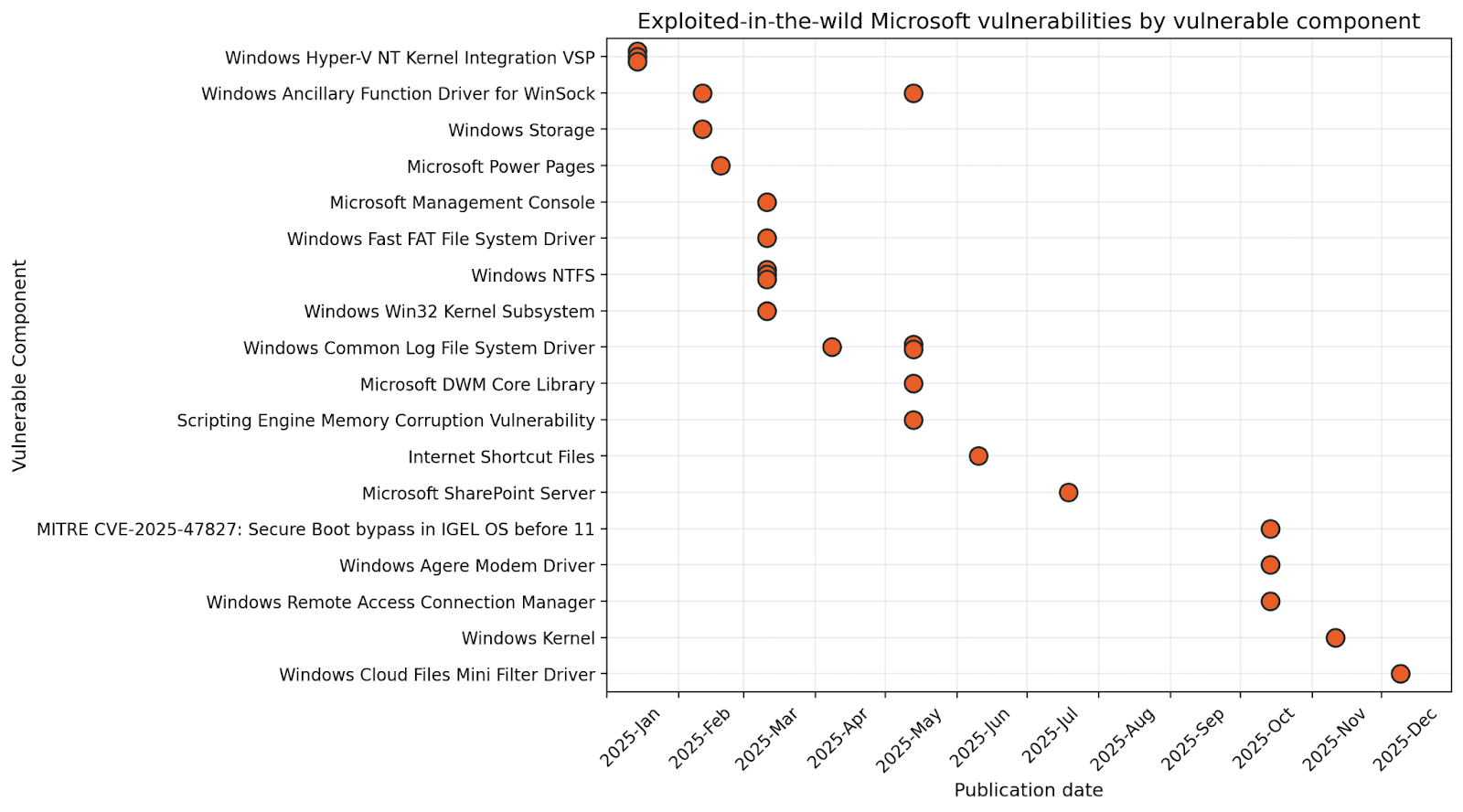
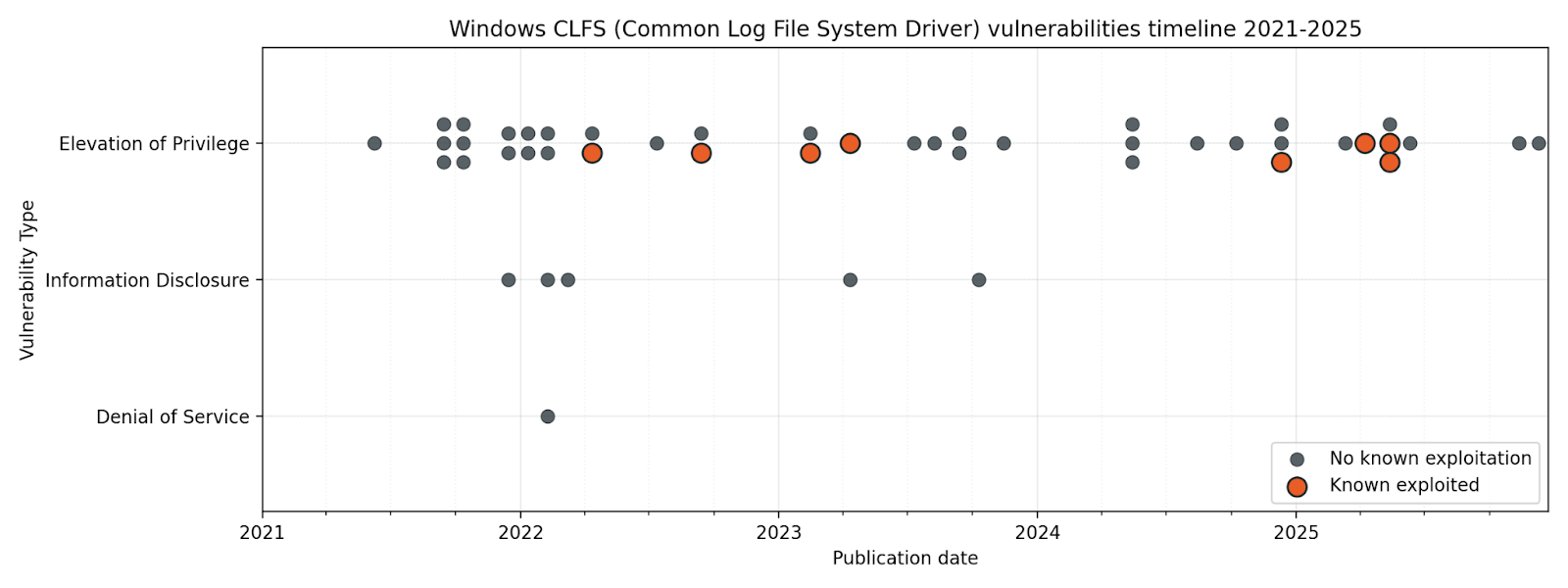
Neither CVE-2025-32701 nor CVE-2025-32706 are the first zero-day vulnerabilities in the Windows Common Log File Driver System; indeed, they are the latest members of an ongoing dynasty where exploitation typically leads to elevation of privilege to SYSTEM. Credit where credit is due: recent disclosures by Microsoft’s own Threat Intelligence Center (MSTIC), including this month’s CVE-2025-32701, demonstrate that Microsoft is putting serious effort into detecting and rooting out CLFS exploitation. Of course, since Microsoft is aware of exploitation in the wild, we know that someone else got there first, and there’s no reason to suspect that threat actors will stop looking for ways to abuse CLFS any time soon.

Windows Desktop Window Manager: zero-day EoP

If proof were needed that elevation of privilege to SYSTEM will never go out of style, today sees the publication of CVE-2025-30400, which is a zero-day vulnerability in the Windows Desktop Window Manager (DWM). As it happens, tomorrow marks the one-year anniversary of CVE-2024-30051, a previous zero-day EoP vulnerability in DWM.

Visual Studio: zero-day RCE

Today, all current versions of Visual Studio 2022 and 2019 receive patches for CVE-2025-32702, a zero-day RCE where exploitation requires the user to download and open a malicious file. There is nothing obviously remarkable about this, although Microsoft is aware of public disclosure. As usual for a malicious file/link vuln, the word Remote here refers to the location of the attacker, even though exploitation is set in motion by local user action.

Ancillary Function Driver for Winsock: zero-day EoP

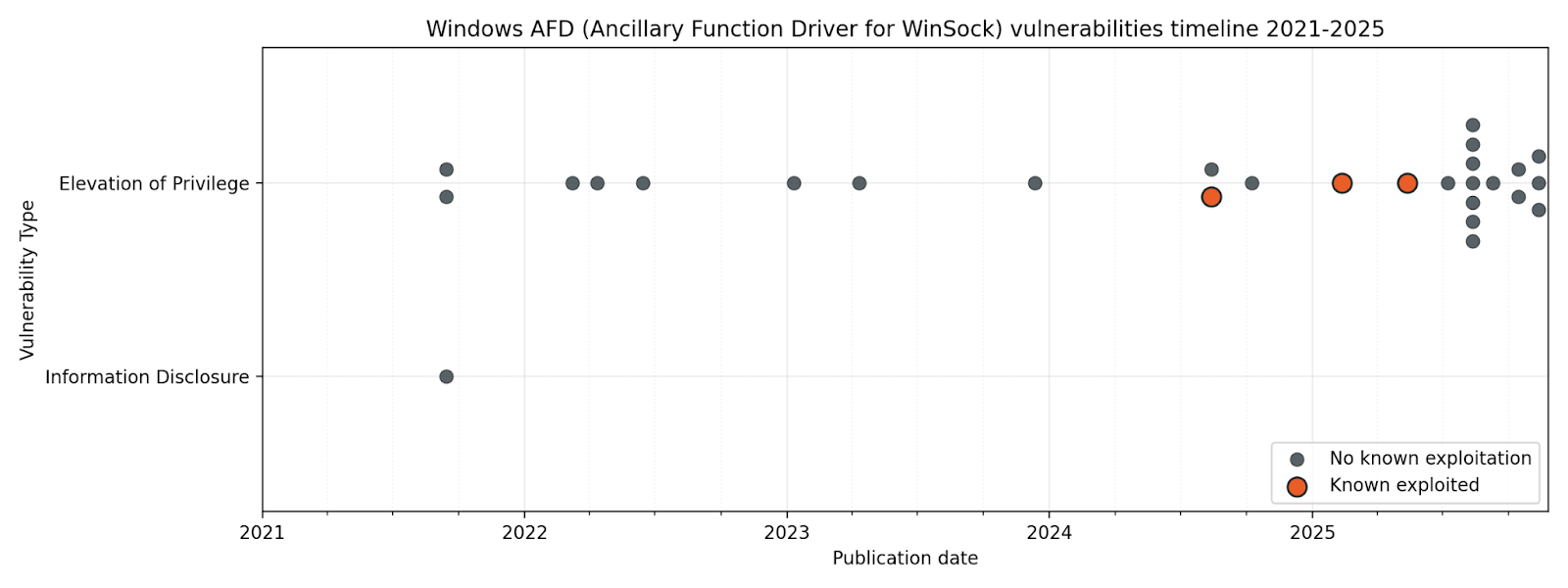
Regular Patch Tuesday watchers will recognize the Ancillary Function Driver for Winsock, which is the site of CVE-2025-32709, an elevation of privilege vulnerability for which Microsoft is aware of exploitation. In something of a break with tradition for Patch Tuesday zero-day EoP vulnerabilities, exploitation only leads to administrator privileges rather than all the way to SYSTEM, but no attacker is going to waste too many cycles feeling sad about that.

Defender for Identity: situationally-ironic zero-day spoofing

Today sees the publication of CVE-2025-26685, a zero-day spoofing vulnerability in Microsoft Defender for Identity. The advisory provides puzzle pieces which don’t by themselves add up to anything like a full explanation of the vulnerability; no action is required for remediation, but you can render yourself vulnerable if you insist by opening a case with Microsoft Support to re-enable the legacy NTLM authentication method.

However, the FAQ does offer a link to an article published yesterday: Configure SAM-R to enable lateral movement path detection in Microsoft Defender for Identity. This solid piece of documentation is part of the overall Defender for Identity administration guide, and explains that the lateral movement path detection feature can itself potentially be exploited by an adversary to obtain an NTLM hash.

Exploitation relies on achieving fallback from Kerberos to NTLM; the compromised credentials in this case would be those of the Directory Service Account for Defender for Identity. The new Defender for Identity sensor (version 3.x) is not affected by this issue as it uses different detection methods; at time of writing, the Defender for Identity What’s new? page doesn’t yet describe the 3.x release, but this will presumably receive an update soon.

Microsoft lifecycle update

The next batch of significant Microsoft product lifecycle status changes are due in July 2025, when SQL Server 2012 ESU program draws to a close, along with support for Visual Studio 2022 17.8 LTSC.

Summary charts

Patch Tuesday - May 2025

Summary tables

Apps vulnerabilities

CVE Title Exploited? Publicly disclosed? CVSSv3 base score
CVE-2025-29975 Microsoft PC Manager Elevation of Privilege Vulnerability No No 7.8

Azure vulnerabilities

CVE Title Exploited? Publicly disclosed? CVSSv3 base score
CVE-2025-29972 Azure Storage Resource Provider Spoofing Vulnerability No No 9.9
CVE-2025-29827 Azure Automation Elevation of Privilege Vulnerability No No 9.9
CVE-2025-30387 Document Intelligence Studio On-Prem Elevation of Privilege Vulnerability No No 9.8
CVE-2025-47733 Microsoft Power Apps Information Disclosure Vulnerability No No 9.1
CVE-2025-33072 Microsoft msagsfeedback.azurewebsites.net Information Disclosure Vulnerability No No 8.1
CVE-2025-29973 Microsoft Azure File Sync Elevation of Privilege Vulnerability No No 7

Azure Windows vulnerabilities

CVE Title Exploited? Publicly disclosed? CVSSv3 base score
CVE-2025-27488 Microsoft Windows Hardware Lab Kit (HLK) Elevation of Privilege Vulnerability No No 6.7

Browser vulnerabilities

CVE Title Exploited? Publicly disclosed? CVSSv3 base score
CVE-2025-29825 Microsoft Edge (Chromium-based) Spoofing Vulnerability No No 6.5
CVE-2025-4372 Chromium: CVE-2025-4372 Use after free in WebAudio No No N/A
CVE-2025-4096 Chromium: CVE-2025-4096 Heap buffer overflow in HTML No No N/A
CVE-2025-4052 Chromium: CVE-2025-4052 Inappropriate implementation in DevTools No No N/A
CVE-2025-4051 Chromium: CVE-2025-4051 Insufficient data validation in DevTools No No N/A
CVE-2025-4050 Chromium: CVE-2025-4050 Out of bounds memory access in DevTools No No N/A

Developer Tools vulnerabilities

CVE Title Exploited? Publicly disclosed? CVSSv3 base score
CVE-2025-29813 Azure DevOps Server Elevation of Privilege Vulnerability No No 10
CVE-2025-26646 .NET, Visual Studio, and Build Tools for Visual Studio Spoofing Vulnerability No No 8
CVE-2025-32702 Visual Studio Remote Code Execution Vulnerability No Yes 7.8
CVE-2025-21264 Visual Studio Code Security Feature Bypass Vulnerability No No 7.1
CVE-2025-32703 Visual Studio Information Disclosure Vulnerability No No 5.5

ESU Windows vulnerabilities

CVE Title Exploited? Publicly disclosed? CVSSv3 base score
CVE-2025-29962 Windows Media Remote Code Execution Vulnerability No No 8.8
CVE-2025-29966 Remote Desktop Client Remote Code Execution Vulnerability No No 8.8
CVE-2025-29967 Remote Desktop Client Remote Code Execution Vulnerability No No 8.8
CVE-2025-32701 Windows Common Log File System Driver Elevation of Privilege Vulnerability Yes No 7.8
CVE-2025-32706 Windows Common Log File System Driver Elevation of Privilege Vulnerability Yes No 7.8
CVE-2025-30385 Windows Common Log File System Driver Elevation of Privilege Vulnerability No No 7.8
CVE-2025-32709 Windows Ancillary Function Driver for WinSock Elevation of Privilege Vulnerability Yes No 7.8
CVE-2025-32707 NTFS Elevation of Privilege Vulnerability No No 7.8
CVE-2025-24063 Kernel Streaming Service Driver Elevation of Privilege Vulnerability No No 7.8
CVE-2025-29831 Windows Remote Desktop Services Remote Code Execution Vulnerability No No 7.5
CVE-2025-30397 Scripting Engine Memory Corruption Vulnerability Yes No 7.5
CVE-2025-29969 MS-EVEN RPC Remote Code Execution Vulnerability No No 7.5
CVE-2025-29833 Microsoft Virtual Machine Bus (VMBus) Remote Code Execution Vulnerability No No 7.1
CVE-2025-27468 Windows Kernel-Mode Driver Elevation of Privilege Vulnerability No No 7
CVE-2025-29959 Windows Routing and Remote Access Service (RRAS) Information Disclosure Vulnerability No No 6.5
CVE-2025-29960 Windows Routing and Remote Access Service (RRAS) Information Disclosure Vulnerability No No 6.5
CVE-2025-29830 Windows Routing and Remote Access Service (RRAS) Information Disclosure Vulnerability No No 6.5
CVE-2025-29832 Windows Routing and Remote Access Service (RRAS) Information Disclosure Vulnerability No No 6.5
CVE-2025-29836 Windows Routing and Remote Access Service (RRAS) Information Disclosure Vulnerability No No 6.5
CVE-2025-29958 Windows Routing and Remote Access Service (RRAS) Information Disclosure Vulnerability No No 6.5
CVE-2025-29961 Windows Routing and Remote Access Service (RRAS) Information Disclosure Vulnerability No No 6.5
CVE-2025-29835 Windows Remote Access Connection Manager Information Disclosure Vulnerability No No 6.5
CVE-2025-29968 Active Directory Certificate Services (AD CS) Denial of Service Vulnerability No No 6.5
CVE-2025-29957 Windows Deployment Services Denial of Service Vulnerability No No 6.2
CVE-2025-30394 Windows Remote Desktop Gateway (RD Gateway) Denial of Service Vulnerability No No 5.9
CVE-2025-29954 Windows Lightweight Directory Access Protocol (LDAP) Denial of Service Vulnerability No No 5.9
CVE-2025-29974 Windows Kernel Information Disclosure Vulnerability No No 5.7
CVE-2025-29837 Windows Installer Information Disclosure Vulnerability No No 5.5
CVE-2025-29956 Windows SMB Information Disclosure Vulnerability No No 5.4
CVE-2025-29839 Windows Multiple UNC Provider Driver Information Disclosure Vulnerability No No 4

Microsoft Dynamics vulnerabilities

CVE Title Exploited? Publicly disclosed? CVSSv3 base score
CVE-2025-47732 Microsoft Dataverse Remote Code Execution Vulnerability No No 8.7
CVE-2025-29826 Microsoft Dataverse Elevation of Privilege Vulnerability No No 7.3

Microsoft Office vulnerabilities

CVE Title Exploited? Publicly disclosed? CVSSv3 base score
CVE-2025-30377 Microsoft Office Remote Code Execution Vulnerability No No 8.4
CVE-2025-30386 Microsoft Office Remote Code Execution Vulnerability No No 8.4
CVE-2025-32704 Microsoft Excel Remote Code Execution Vulnerability No No 8.4
CVE-2025-30382 Microsoft SharePoint Server Remote Code Execution Vulnerability No No 7.8
CVE-2025-29976 Microsoft SharePoint Server Elevation of Privilege Vulnerability No No 7.8
CVE-2025-29978 Microsoft PowerPoint Remote Code Execution Vulnerability No No 7.8
CVE-2025-32705 Microsoft Outlook Remote Code Execution Vulnerability No No 7.8
CVE-2025-29977 Microsoft Excel Remote Code Execution Vulnerability No No 7.8
CVE-2025-29979 Microsoft Excel Remote Code Execution Vulnerability No No 7.8
CVE-2025-30375 Microsoft Excel Remote Code Execution Vulnerability No No 7.8
CVE-2025-30376 Microsoft Excel Remote Code Execution Vulnerability No No 7.8
CVE-2025-30379 Microsoft Excel Remote Code Execution Vulnerability No No 7.8
CVE-2025-30381 Microsoft Excel Remote Code Execution Vulnerability No No 7.8
CVE-2025-30383 Microsoft Excel Remote Code Execution Vulnerability No No 7.8
CVE-2025-30393 Microsoft Excel Remote Code Execution Vulnerability No No 7.8
CVE-2025-30384 Microsoft SharePoint Server Remote Code Execution Vulnerability No No 7.4
CVE-2025-30378 Microsoft SharePoint Server Remote Code Execution Vulnerability No No 7

Microsoft Office ESU Windows vulnerabilities

CVE Title Exploited? Publicly disclosed? CVSSv3 base score
CVE-2025-30388 Windows Graphics Component Remote Code Execution Vulnerability No No 7.8

System Center vulnerabilities

CVE Title Exploited? Publicly disclosed? CVSSv3 base score
CVE-2025-26684 Microsoft Defender Elevation of Privilege Vulnerability No No 6.7
CVE-2025-26685 Microsoft Defender for Identity Spoofing Vulnerability No Yes 6.5

Windows vulnerabilities

CVE Title Exploited? Publicly disclosed? CVSSv3 base score
CVE-2025-29964 Windows Media Remote Code Execution Vulnerability No No 8.8
CVE-2025-29840 Windows Media Remote Code Execution Vulnerability No No 8.8
CVE-2025-29963 Windows Media Remote Code Execution Vulnerability No No 8.8
CVE-2025-30400 Microsoft DWM Core Library Elevation of Privilege Vulnerability Yes No 7.8
CVE-2025-29970 Microsoft Brokering File System Elevation of Privilege Vulnerability No No 7.8
CVE-2025-26677 Windows Remote Desktop Gateway (RD Gateway) Denial of Service Vulnerability No No 7.5
CVE-2025-29971 Web Threat Defense (WTD.sys) Denial of Service Vulnerability No No 7.5
CVE-2025-29842 UrlMon Security Feature Bypass Vulnerability No No 7.5
CVE-2025-29838 Windows ExecutionContext Driver Elevation of Privilege Vulnerability No No 7.4
CVE-2025-29841 Universal Print Management Service Elevation of Privilege Vulnerability No No 7
CVE-2025-29955 Windows Hyper-V Denial of Service Vulnerability No No 6.2
CVE-2025-29829 Windows Trusted Runtime Interface Driver Information Disclosure Vulnerability No No 5.5

Patch Tuesday – April 2025

Post Syndicated from Adam Barnett original https://blog.rapid7.com/2025/04/08/patch-tuesday-april-2025/

Patch Tuesday - April 2025

Microsoft is addressing 121 vulnerabilities this April 2025 Patch Tuesday, which is more than twice as many as last month. Microsoft has evidence of in-the-wild exploitation for just one of the vulnerabilities published today, which is already reflected in CISA KEV. Once again, Microsoft has published zero-day vulnerabilities on Patch Tuesday without evaluating any of them as critical severity at time of publication, so that’s now a seven month unbroken streak. Today also sees the publication of 11 critical remote code execution (RCE) vulnerabilities. 13 browser vulnerabilities have already been published separately this month, and are not included in the total.

CLFS: zero-day EoP

The Windows Common Log File System (CLFS) Driver is firmly back on our radar today with CVE-2025-29824, a zero-day local elevation of privilege vulnerability. First, the good news: the Acknowledgements section credits the Microsoft Threat Intelligence Center, so the exploit was successfully reproduced by Microsoft; the less-good news is that someone other than Microsoft was first to discover the exploit, because otherwise Microsoft wouldn’t be listing CVE-2025-29824 as exploited in the wild. The advisory does not specify what privilege level is achieved upon successful exploitation, but it’ll be SYSTEM, because that’s the prize for all the other CLFS elevation of privilege zero-day vulnerabilities. As usual, some form of less-privileged local access is a pre-requisite, but attack complexity is low, so this is the sort of vulnerability which goes into any standard break-and-enter toolkit. Given the long history of similar vulnerabilities, it would be more surprising if exploit code wasn’t publicly available in the not-too-distant future. Although December 2024 Patch Tuesday seems as though it must have been a very long time ago, any standard calendar will tell us that only 119 days have elapsed since the last zero-day CLFS local elevation of privilege. Rapid7 discussed the history of CLFS zero-day elevation of privilege vulnerabilities at the time. All versions of Windows receive a patch, except for the venerable LTSC Windows 10 1507, which is listed on the advisory as vulnerable, but left out in the cold with no update; the FAQ says to check back later. Windows 10 LTSC 1507 is scheduled for end of servicing on 2025-10-14, so the clock is ticking regardless.

LDAP Server: critical RCE

Although it has been many months since we’ve seen a critical zero-day vulnerability from Microsoft, there is no shortage of critical remote code execution (RCE) vulnerabilities published today. Defenders responsible for an LDAP server — which means almost any organization with a non-trivial Microsoft footprint — should add patching for CVE-2025-26663 to their to-do list. With no privileges required, no need for user interaction, and code execution presumably in the context of the LDAP server itself, successful exploitation would be an attractive shortcut to any attacker. Anyone wondering if today is a re-run of December 2024 Patch Tuesday can take some small solace in the fact that the worst of the trio of LDAP critical RCEs published at the end of last year was likely easier to exploit than today’s example, since today’s CVE-2025-26663 requires that an attacker win a race condition. Despite that, Microsoft still expects that exploitation is more likely.

LDAP Client: critical RCE

If you breathe a sigh of relief when you see LDAP server critical RCE vulnerabilities like CVE-2025-26663, because you’re certain that you don’t have any Windows LDAP servers in your estate, how about LDAP clients? CVE-2025-26670 describes a critical RCE in the LDAP client, although the FAQ confusingly states that exploitation would require an attacker to “send specially crafted requests to a vulnerable LDAP server”; this seems like it might be a data entry error on the advisory FAQ, so keep an eye out for an update to that section of the advisory. Assuming the rest of the advisory is all present and correct, exploitation requires that the attacker win a race condition, which keeps the attack complexity higher than it otherwise would be. While we wait for clarification, it’s still a critical RCE which Microsoft rates as “exploitation more likely”. On that basis, patching is always recommended.

RDS: critical RCEs

The prolific Windows vulnerability pioneers at Kunlun Lab are credited with a pair of critical RCE vulnerabilities in Windows Remote Desktop Services. Although both CVE-2025-27480 and CVE-2025-27482 share a CVSSv3 base score of 8.1, Microsoft has ranked them both as critical using its own proprietary severity ranking scale. Both vulnerabilities require that an attacker win a race condition. If you’ve ever read Microsoft’s guide to deploying the Remote Desktop Gateway role, you probably have some systems to patch.

Hyper-V: critical RCE

Some Microsoft security advisory FAQs provide a satisfying level of detail, whereas others raise more questions than they answer. CVE-2025-27491 is a Hyper-V critical RCE which falls into the second category, since it states that an attacker must be authenticated — no need for elevated privileges — but also that the attacker must send the user a malicious site and convince them to open it, and it’s not at all clear why authentication would be required in that case. Also unusual: the remediation table on the advisory lists several 32-bit versions of Windows as receiving patches, although Hyper-V requires a 64-bit processor and a 64-bit host OS.

Microsoft lifecycle update

In Microsoft product lifecycle news, Dynamics GP 2015 moves past the end of extended support today. The next batch of significant lifecycle status changes are due in July 2025, when SQL Server 2012 ESU program draws to a close.

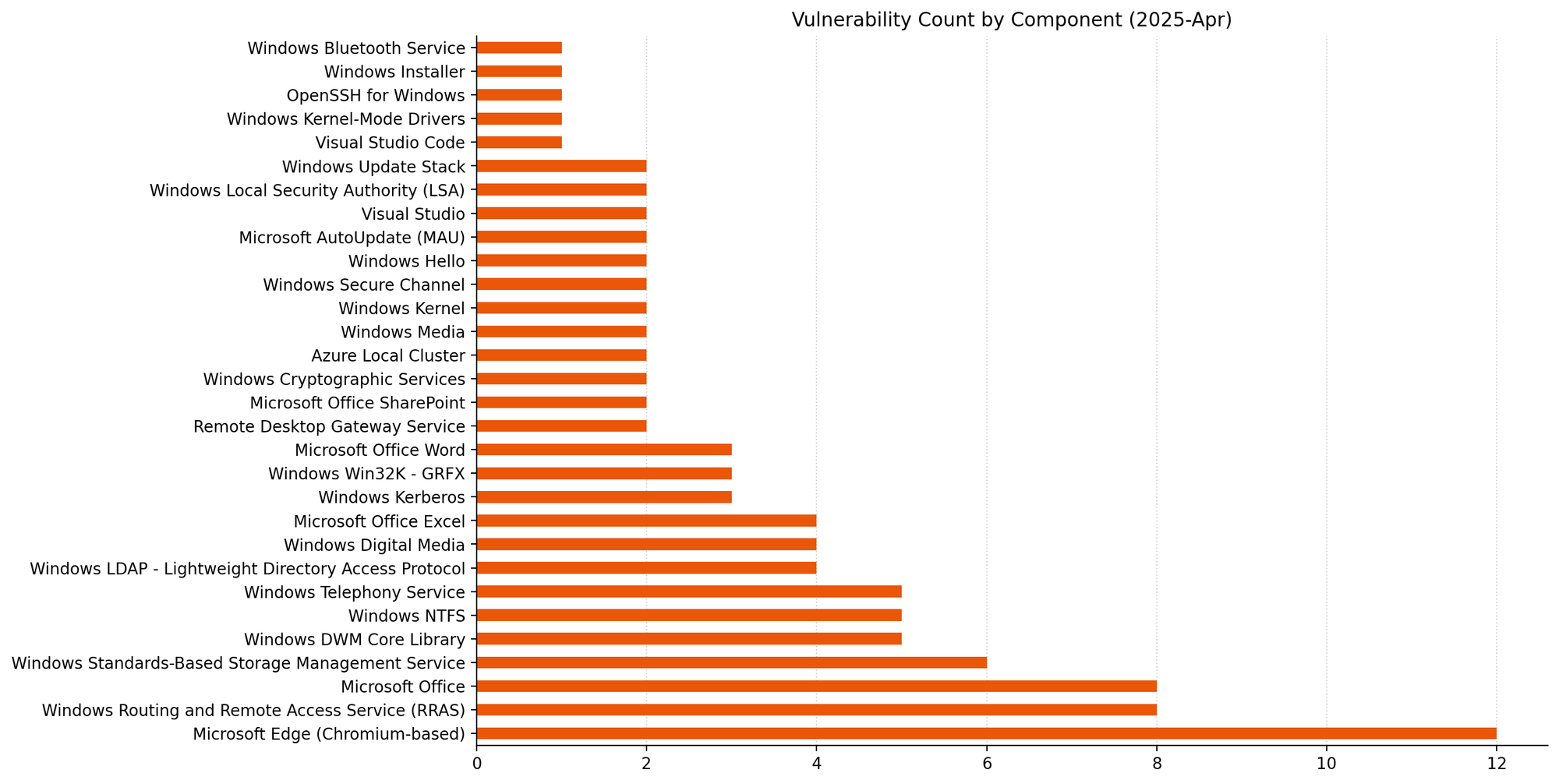
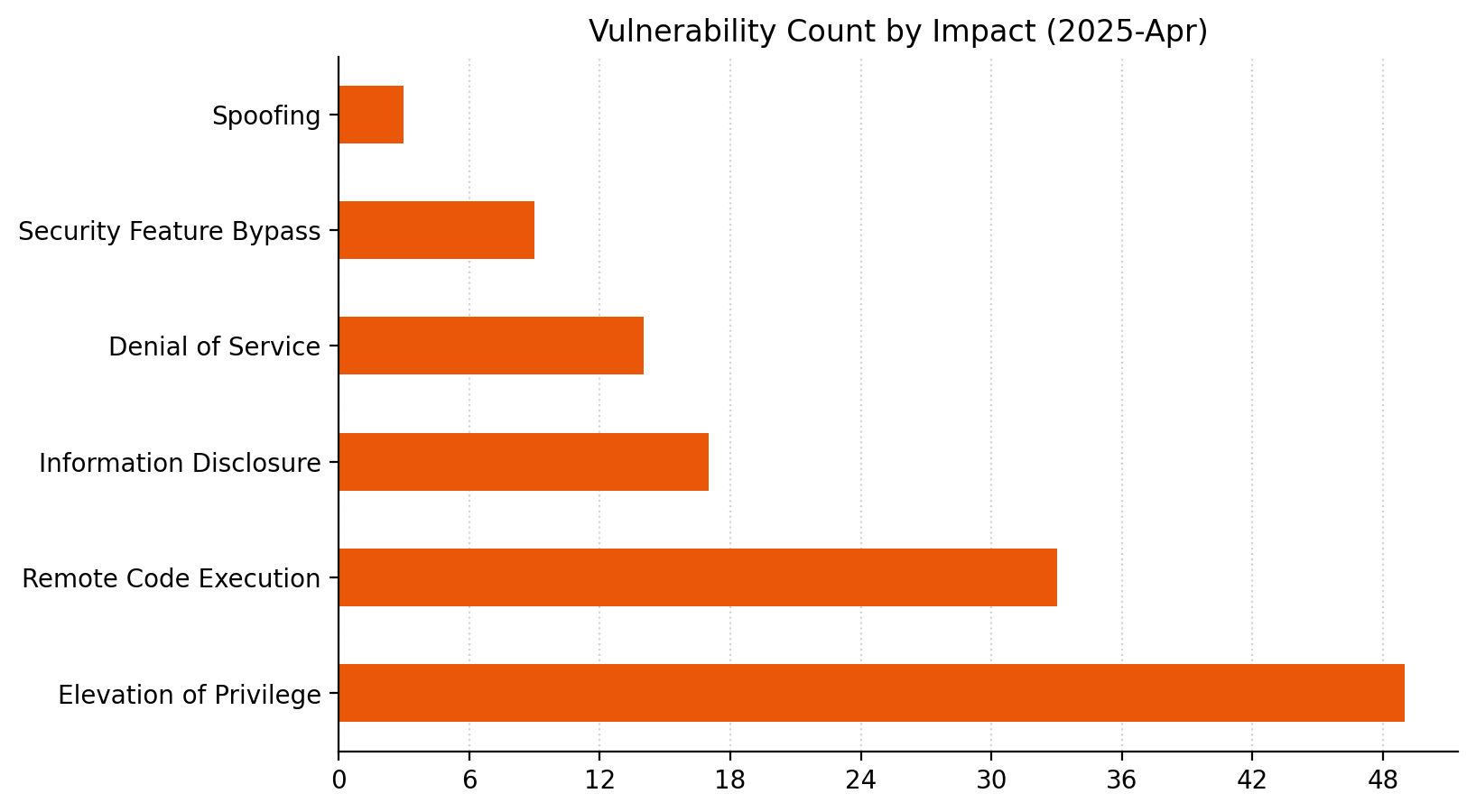
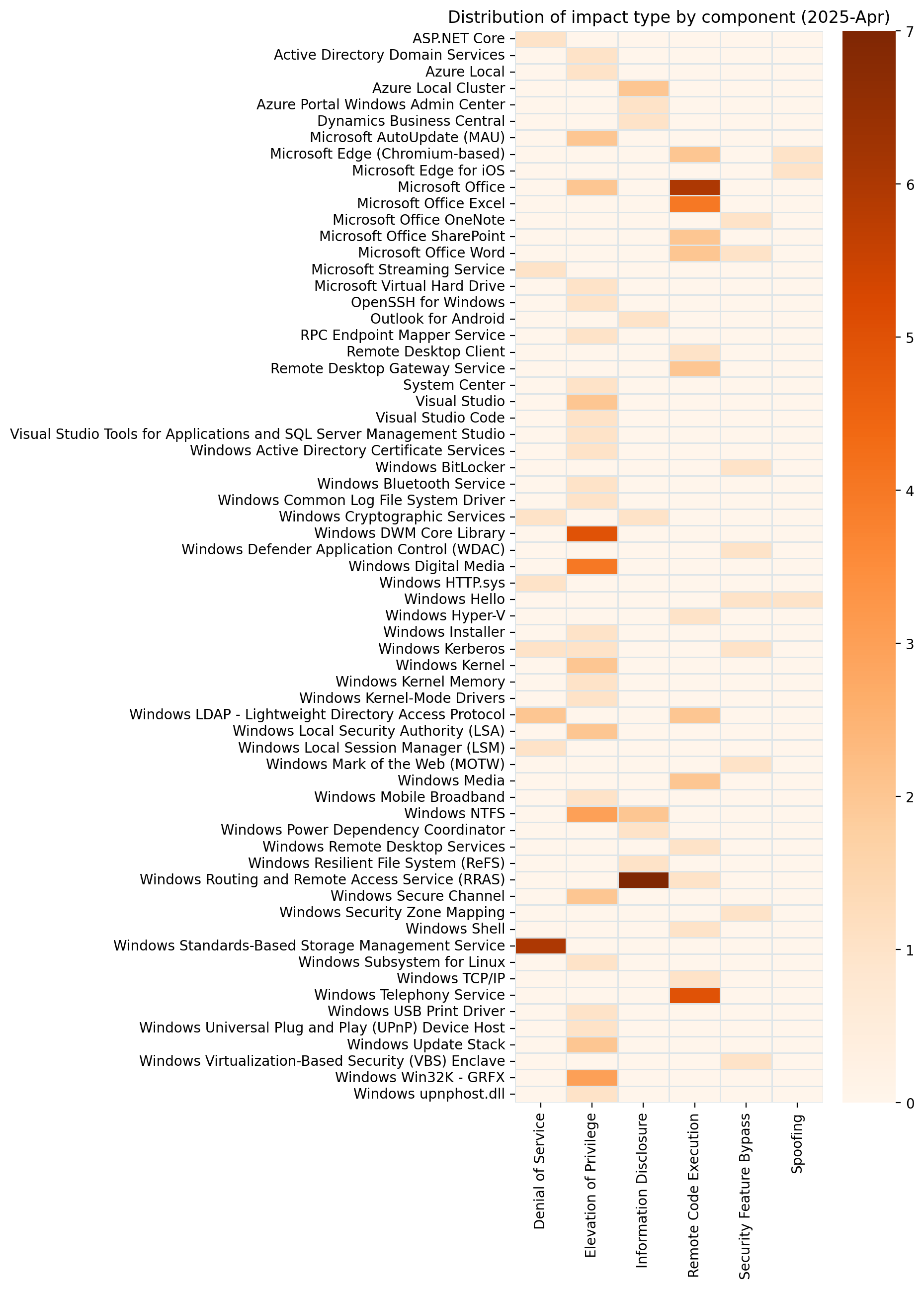
Summary charts

Patch Tuesday - April 2025
Elevated amounts of elevation of privilege
Patch Tuesday - April 2025

Summary tables

Apps vulnerabilities

CVE Title Exploited? Publicly disclosed? CVSSv3 base score
CVE-2025-29805 Outlook for Android Information Disclosure Vulnerability No No 7.5

Azure vulnerabilities

CVE Title Exploited? Publicly disclosed? CVSSv3 base score
CVE-2025-27489 Azure Local Elevation of Privilege Vulnerability No No 7.8
CVE-2025-26628 Azure Local Cluster Information Disclosure Vulnerability No No 7.3
CVE-2025-25002 Azure Local Cluster Information Disclosure Vulnerability No No 6.8

Browser vulnerabilities

CVE Title Exploited? Publicly disclosed? CVSSv3 base score
CVE-2025-25000 Microsoft Edge (Chromium-based) Remote Code Execution Vulnerability No No 8.8
CVE-2025-29815 Microsoft Edge (Chromium-based) Remote Code Execution Vulnerability No No 7.6
CVE-2025-29796 Microsoft Edge for iOS Spoofing Vulnerability No No 4.7
CVE-2025-25001 Microsoft Edge for iOS Spoofing Vulnerability No No 4.3
CVE-2025-3074 Chromium: CVE-2025-3074 Inappropriate implementation in Downloads No No N/A
CVE-2025-3073 Chromium: CVE-2025-3073 Inappropriate implementation in Autofill No No N/A
CVE-2025-3072 Chromium: CVE-2025-3072 Inappropriate implementation in Custom Tabs No No N/A
CVE-2025-3071 Chromium: CVE-2025-3071 Inappropriate implementation in Navigations No No N/A
CVE-2025-3070 Chromium: CVE-2025-3070 Insufficient validation of untrusted input in Extensions No No N/A
CVE-2025-3069 Chromium: CVE-2025-3069 Inappropriate implementation in Extensions No No N/A
CVE-2025-3068 Chromium: CVE-2025-3068 Inappropriate implementation in Intents No No N/A
CVE-2025-3067 Chromium: CVE-2025-3067 Inappropriate implementation in Custom Tabs No No N/A
CVE-2025-3066 Chromium: CVE-2025-3066 Use after free in Navigations No No N/A

Developer Tools vulnerabilities

CVE Title Exploited? Publicly disclosed? CVSSv3 base score
CVE-2025-26682 ASP.NET Core and Visual Studio Denial of Service Vulnerability No No 7.5
CVE-2025-29802 Visual Studio Elevation of Privilege Vulnerability No No 7.3
CVE-2025-29804 Visual Studio Elevation of Privilege Vulnerability No No 7.3
CVE-2025-20570 Visual Studio Code Elevation of Privilege Vulnerability No No 6.8

Developer Tools SQL Server vulnerabilities

CVE Title Exploited? Publicly disclosed? CVSSv3 base score
CVE-2025-29803 Visual Studio Tools for Applications and SQL Server Management Studio Elevation of Privilege Vulnerability No No 7.3

Microsoft Dynamics vulnerabilities

CVE Title Exploited? Publicly disclosed? CVSSv3 base score
CVE-2025-29821 Microsoft Dynamics Business Central Information Disclosure Vulnerability No No 5.5

Microsoft Office vulnerabilities

CVE Title Exploited? Publicly disclosed? CVSSv3 base score
CVE-2025-29794 Microsoft SharePoint Remote Code Execution Vulnerability No No 8.8
CVE-2025-27747 Microsoft Word Remote Code Execution Vulnerability No No 7.8
CVE-2025-29820 Microsoft Word Remote Code Execution Vulnerability No No 7.8
CVE-2025-29822 Microsoft OneNote Security Feature Bypass Vulnerability No No 7.8
CVE-2025-27745 Microsoft Office Remote Code Execution Vulnerability No No 7.8
CVE-2025-27748 Microsoft Office Remote Code Execution Vulnerability No No 7.8
CVE-2025-27749 Microsoft Office Remote Code Execution Vulnerability No No 7.8
CVE-2025-27746 Microsoft Office Remote Code Execution Vulnerability No No 7.8
CVE-2025-26642 Microsoft Office Remote Code Execution Vulnerability No No 7.8
CVE-2025-27744 Microsoft Office Elevation of Privilege Vulnerability No No 7.8
CVE-2025-27752 Microsoft Excel Remote Code Execution Vulnerability No No 7.8
CVE-2025-29791 Microsoft Excel Remote Code Execution Vulnerability No No 7.8
CVE-2025-27751 Microsoft Excel Remote Code Execution Vulnerability No No 7.8
CVE-2025-27750 Microsoft Excel Remote Code Execution Vulnerability No No 7.8
CVE-2025-29823 Microsoft Excel Remote Code Execution Vulnerability No No 7.8
CVE-2025-29800 Microsoft AutoUpdate (MAU) Elevation of Privilege Vulnerability No No 7.8
CVE-2025-29801 Microsoft AutoUpdate (MAU) Elevation of Privilege Vulnerability No No 7.8
CVE-2025-29816 Microsoft Word Security Feature Bypass Vulnerability No No 7.5
CVE-2025-29792 Microsoft Office Elevation of Privilege Vulnerability No No 7.3
CVE-2025-29793 Microsoft SharePoint Remote Code Execution Vulnerability No No 7.2

System Center vulnerabilities

CVE Title Exploited? Publicly disclosed? CVSSv3 base score
CVE-2025-27743 Microsoft System Center Elevation of Privilege Vulnerability No No 7.8

Windows vulnerabilities

CVE Title Exploited? Publicly disclosed? CVSSv3 base score
CVE-2025-26678 Windows Defender Application Control Security Feature Bypass Vulnerability No No 8.4
CVE-2025-27482 Windows Remote Desktop Services Remote Code Execution Vulnerability No No 8.1
CVE-2025-26639 Windows USB Print Driver Elevation of Privilege Vulnerability No No 7.8
CVE-2025-26675 Windows Subsystem for Linux Elevation of Privilege Vulnerability No No 7.8
CVE-2025-27729 Windows Shell Remote Code Execution Vulnerability No No 7.8
CVE-2025-29811 Windows Mobile Broadband Driver Elevation of Privilege Vulnerability No No 7.8
CVE-2025-26666 Windows Media Remote Code Execution Vulnerability No No 7.8
CVE-2025-26674 Windows Media Remote Code Execution Vulnerability No No 7.8
CVE-2025-27728 Windows Kernel-Mode Driver Elevation of Privilege Vulnerability No No 7.8
CVE-2025-27739 Windows Kernel Elevation of Privilege Vulnerability No No 7.8
CVE-2025-27476 Windows Digital Media Elevation of Privilege Vulnerability No No 7.8
CVE-2025-27467 Windows Digital Media Elevation of Privilege Vulnerability No No 7.8
CVE-2025-27730 Windows Digital Media Elevation of Privilege Vulnerability No No 7.8
CVE-2025-24058 Windows DWM Core Library Elevation of Privilege Vulnerability No No 7.8
CVE-2025-27490 Windows Bluetooth Service Elevation of Privilege Vulnerability No No 7.8
CVE-2025-27731 Microsoft OpenSSH for Windows Elevation of Privilege Vulnerability No No 7.8
CVE-2025-24074 Microsoft DWM Core Library Elevation of Privilege Vulnerability No No 7.8
CVE-2025-24073 Microsoft DWM Core Library Elevation of Privilege Vulnerability No No 7.8
CVE-2025-24060 Microsoft DWM Core Library Elevation of Privilege Vulnerability No No 7.8
CVE-2025-24062 Microsoft DWM Core Library Elevation of Privilege Vulnerability No No 7.8
CVE-2025-29812 DirectX Graphics Kernel Elevation of Privilege Vulnerability No No 7.8
CVE-2025-29809 Windows Kerberos Security Feature Bypass Vulnerability No No 7.1
CVE-2025-27491 Windows Hyper-V Remote Code Execution Vulnerability No No 7.1
CVE-2025-27475 Windows Update Stack Elevation of Privilege Vulnerability No No 7
CVE-2025-26649 Windows Secure Channel Elevation of Privilege Vulnerability No No 7
CVE-2025-27492 Windows Secure Channel Elevation of Privilege Vulnerability No No 7
CVE-2025-26640 Windows Digital Media Elevation of Privilege Vulnerability No No 7
CVE-2025-26681 Win32k Elevation of Privilege Vulnerability No No 6.7
CVE-2025-26651 Windows Local Session Manager (LSM) Denial of Service Vulnerability No No 6.5
CVE-2025-26635 Windows Hello Security Feature Bypass Vulnerability No No 6.5
CVE-2025-27735 Windows Virtualization-Based Security (VBS) Security Feature Bypass Vulnerability No No 6
CVE-2025-27736 Windows Power Dependency Coordinator Information Disclosure Vulnerability No No 5.5
CVE-2025-29808 Windows Cryptographic Services Information Disclosure Vulnerability No No 5.5
CVE-2025-26644 Windows Hello Spoofing Vulnerability No No 5.1

Windows Azure vulnerabilities

CVE Title Exploited? Publicly disclosed? CVSSv3 base score
CVE-2025-29819 Windows Admin Center in Azure Portal Information Disclosure Vulnerability No No 6.2

Windows ESU vulnerabilities

CVE Title Exploited? Publicly disclosed? CVSSv3 base score
CVE-2025-27477 Windows Telephony Service Remote Code Execution Vulnerability No No 8.8
CVE-2025-21205 Windows Telephony Service Remote Code Execution Vulnerability No No 8.8
CVE-2025-21221 Windows Telephony Service Remote Code Execution Vulnerability No No 8.8
CVE-2025-21222 Windows Telephony Service Remote Code Execution Vulnerability No No 8.8
CVE-2025-27481 Windows Telephony Service Remote Code Execution Vulnerability No No 8.8
CVE-2025-26669 Windows Routing and Remote Access Service (RRAS) Information Disclosure Vulnerability No No 8.8
CVE-2025-27740 Active Directory Certificate Services Elevation of Privilege Vulnerability No No 8.8
CVE-2025-27737 Windows Security Zone Mapping Security Feature Bypass Vulnerability No No 8.6
CVE-2025-27480 Windows Remote Desktop Services Remote Code Execution Vulnerability No No 8.1
CVE-2025-26671 Windows Remote Desktop Services Remote Code Execution Vulnerability No No 8.1
CVE-2025-26663 Windows Lightweight Directory Access Protocol (LDAP) Remote Code Execution Vulnerability No No 8.1
CVE-2025-26647 Windows Kerberos Elevation of Privilege Vulnerability No No 8.1
CVE-2025-26670 Lightweight Directory Access Protocol (LDAP) Client Remote Code Execution Vulnerability No No 8.1
CVE-2025-27487 Remote Desktop Client Remote Code Execution Vulnerability No No 8
CVE-2025-21204 Windows Process Activation Elevation of Privilege Vulnerability No No 7.8
CVE-2025-26648 Windows Kernel Elevation of Privilege Vulnerability No No 7.8
CVE-2025-27727 Windows Installer Elevation of Privilege Vulnerability No No 7.8
CVE-2025-29824 Windows Common Log File System Driver Elevation of Privilege Vulnerability Yes No 7.8
CVE-2025-26679 RPC Endpoint Mapper Service Elevation of Privilege Vulnerability No No 7.8
CVE-2025-27741 NTFS Elevation of Privilege Vulnerability No No 7.8
CVE-2025-27483 NTFS Elevation of Privilege Vulnerability No No 7.8
CVE-2025-27733 NTFS Elevation of Privilege Vulnerability No No 7.8
CVE-2025-26688 Microsoft Virtual Hard Disk Elevation of Privilege Vulnerability No No 7.8
CVE-2025-27484 Windows Universal Plug and Play (UPnP) Device Host Elevation of Privilege Vulnerability No No 7.5
CVE-2025-26686 Windows TCP/IP Remote Code Execution Vulnerability No No 7.5
CVE-2025-26680 Windows Standards-Based Storage Management Service Denial of Service Vulnerability No No 7.5
CVE-2025-27470 Windows Standards-Based Storage Management Service Denial of Service Vulnerability No No 7.5
CVE-2025-21174 Windows Standards-Based Storage Management Service Denial of Service Vulnerability No No 7.5
CVE-2025-26652 Windows Standards-Based Storage Management Service Denial of Service Vulnerability No No 7.5
CVE-2025-27485 Windows Standards-Based Storage Management Service Denial of Service Vulnerability No No 7.5
CVE-2025-27486 Windows Standards-Based Storage Management Service Denial of Service Vulnerability No No 7.5
CVE-2025-26668 Windows Routing and Remote Access Service (RRAS) Remote Code Execution Vulnerability No No 7.5
CVE-2025-26673 Windows Lightweight Directory Access Protocol (LDAP) Denial of Service Vulnerability No No 7.5
CVE-2025-27469 Windows Lightweight Directory Access Protocol (LDAP) Denial of Service Vulnerability No No 7.5
CVE-2025-26641 Microsoft Message Queuing (MSMQ) Denial of Service Vulnerability No No 7.5
CVE-2025-27479 Kerberos Key Distribution Proxy Service Denial of Service Vulnerability No No 7.5
CVE-2025-27473 HTTP.sys Denial of Service Vulnerability No No 7.5
CVE-2025-29810 Active Directory Domain Services Elevation of Privilege Vulnerability No No 7.5
CVE-2025-26665 Windows upnphost.dll Elevation of Privilege Vulnerability No No 7
CVE-2025-27478 Windows Local Security Authority (LSA) Elevation of Privilege Vulnerability No No 7
CVE-2025-21191 Windows Local Security Authority (LSA) Elevation of Privilege Vulnerability No No 7
CVE-2025-27732 Windows Graphics Component Elevation of Privilege Vulnerability No No 7
CVE-2025-26637 BitLocker Security Feature Bypass Vulnerability No No 6.8
CVE-2025-26664 Windows Routing and Remote Access Service (RRAS) Information Disclosure Vulnerability No No 6.5
CVE-2025-26667 Windows Routing and Remote Access Service (RRAS) Information Disclosure Vulnerability No No 6.5
CVE-2025-27474 Windows Routing and Remote Access Service (RRAS) Information Disclosure Vulnerability No No 6.5
CVE-2025-21203 Windows Routing and Remote Access Service (RRAS) Information Disclosure Vulnerability No No 6.5
CVE-2025-26672 Windows Routing and Remote Access Service (RRAS) Information Disclosure Vulnerability No No 6.5
CVE-2025-26676 Windows Routing and Remote Access Service (RRAS) Information Disclosure Vulnerability No No 6.5
CVE-2025-27738 Windows Resilient File System (ReFS) Information Disclosure Vulnerability No No 6.5
CVE-2025-21197 Windows NTFS Information Disclosure Vulnerability No No 6.5
CVE-2025-27471 Microsoft Streaming Service Denial of Service Vulnerability No No 5.9
CVE-2025-27742 NTFS Information Disclosure Vulnerability No No 5.5
CVE-2025-27472 Windows Mark of the Web Security Feature Bypass Vulnerability No No 5.4

Windows ESU Microsoft Office vulnerabilities

CVE Title Exploited? Publicly disclosed? CVSSv3 base score
CVE-2025-26687 Win32k Elevation of Privilege Vulnerability No No 7.5

Patch Tuesday – March 2025

Post Syndicated from Adam Barnett original https://blog.rapid7.com/2025/03/11/patch-tuesday-march-2025/

Patch Tuesday - March 2025

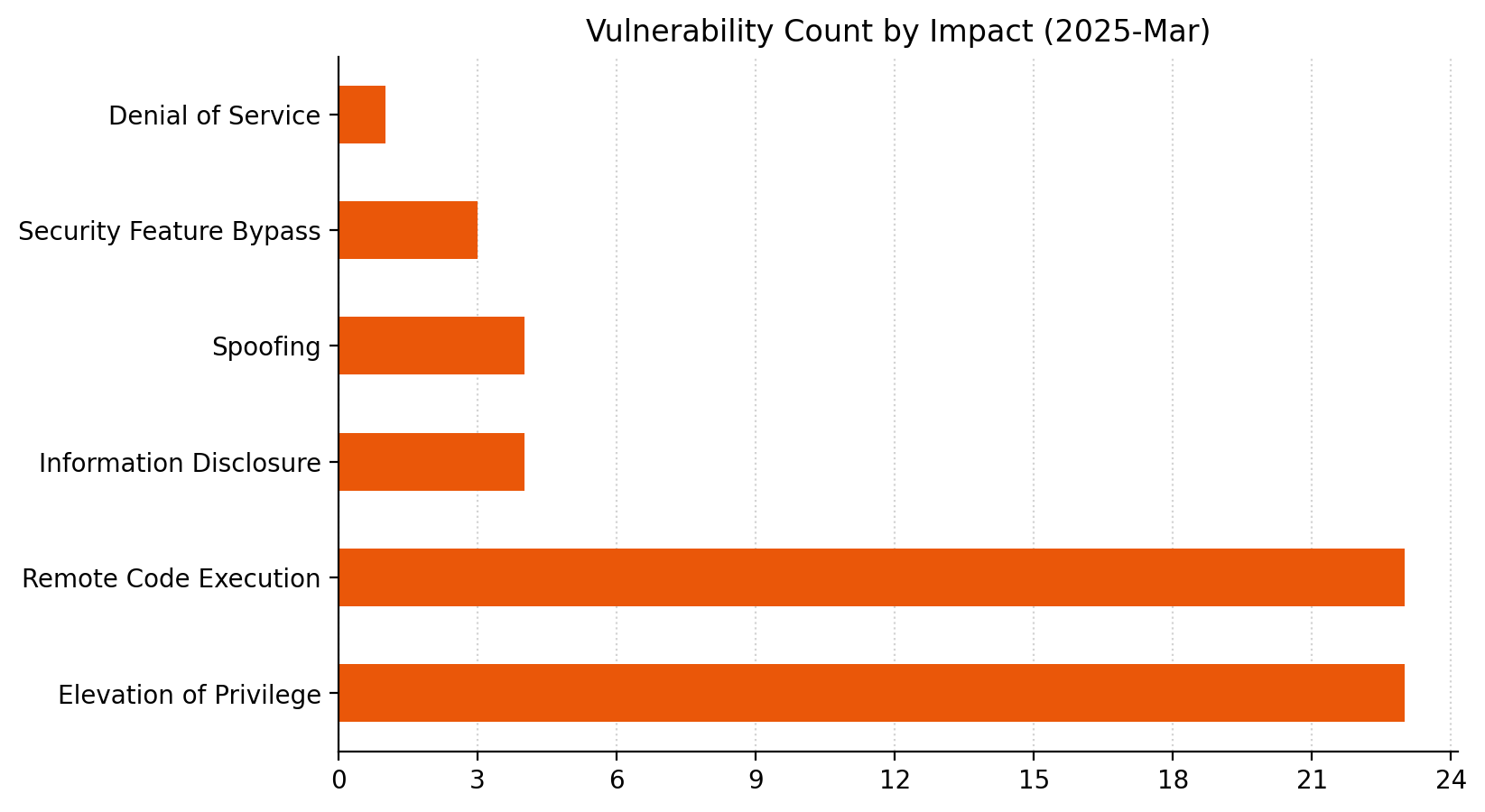
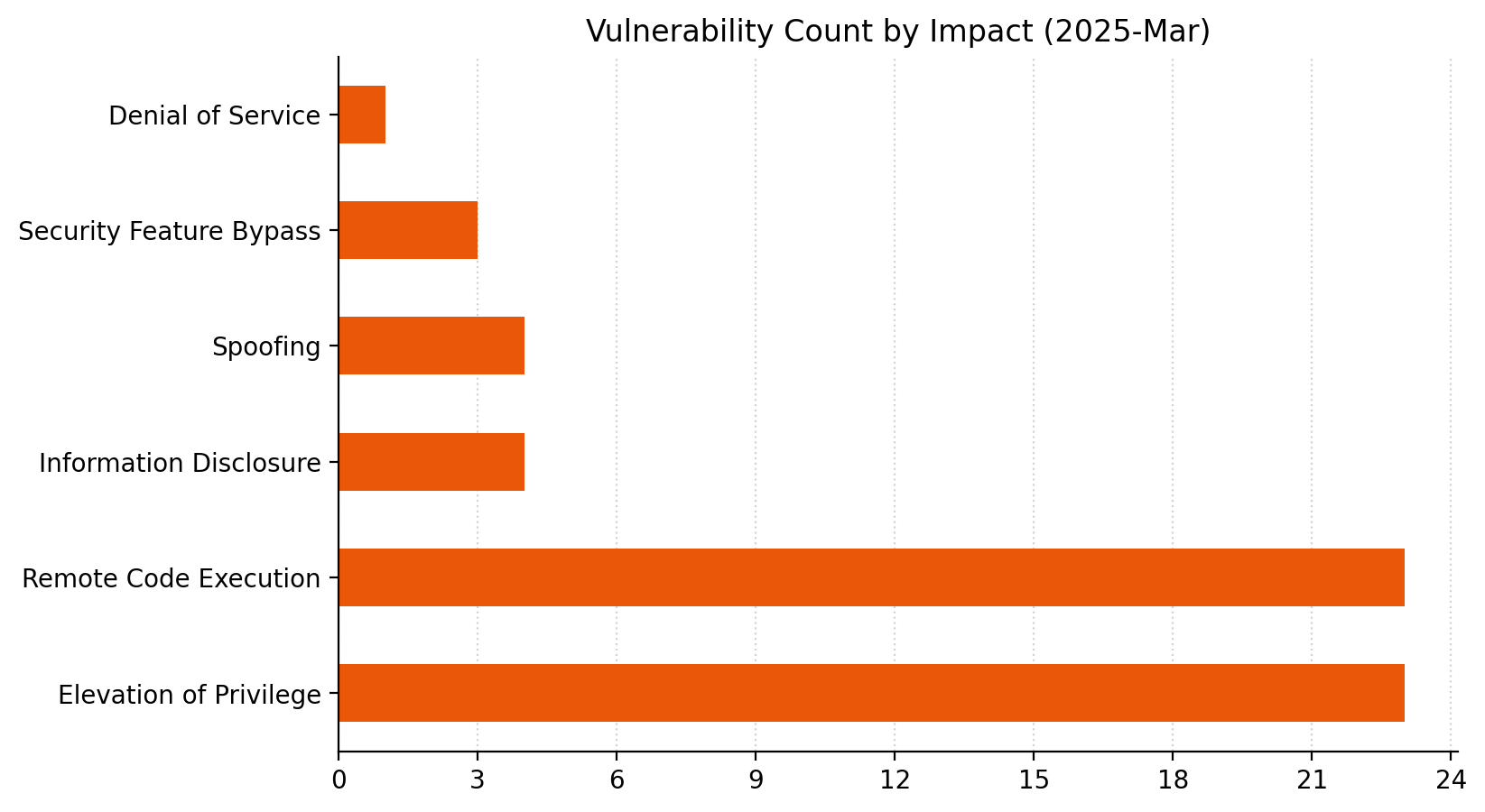
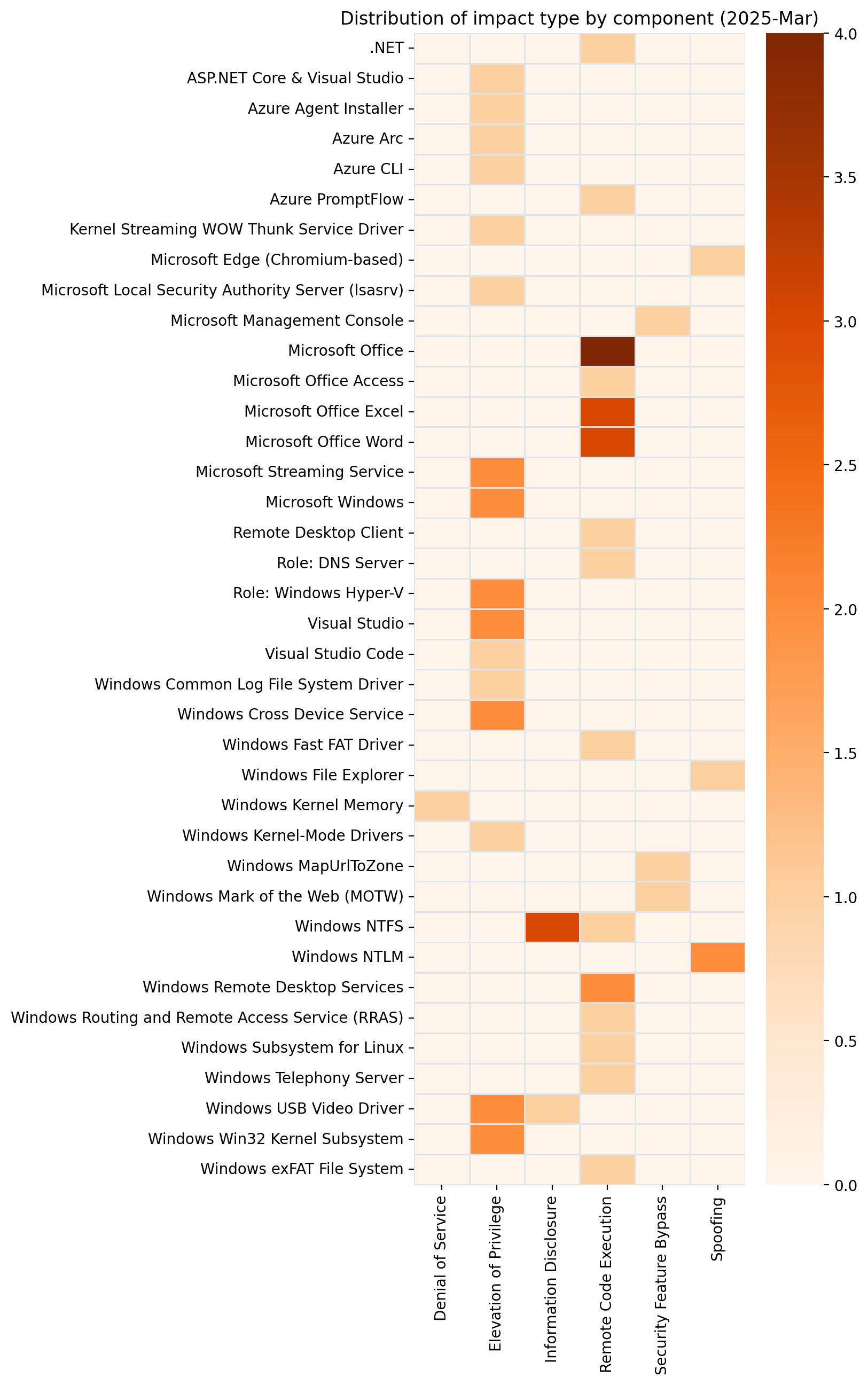
Microsoft is addressing 57 vulnerabilities this March 2025 Patch Tuesday, which is a similar volume to last month. However, Microsoft has evidence of in-the-wild exploitation for as many as six of the vulnerabilities published today, and CISA KEV already lists all of them. Microsoft is also aware of public disclosure for one other vulnerability. This is now the sixth consecutive month where Microsoft has published zero-day vulnerabilities on Patch Tuesday without evaluating any of them as critical severity at time of publication. Today also sees the publication of six critical remote code execution (RCE) vulnerabilities. Ten browser vulnerabilities have already been published separately this month, and are not included in the total.

Win32 kernel subsystem: zero-day EoP

Older Windows products receive a patch today for CVE-2025-24983, which is an elevation of privilege vulnerability in the Win32 kernel subsystem. Microsoft is aware of exploitation in the wild. Since no user interaction is required, and successful exploitation leads to SYSTEM privileges, this isn’t one to ignore, even if the attacker must win a race condition, which does raise the bar for entry somewhat. Microsoft  Windows 11 and Server 2019 onwards are not listed as receiving patches, so are presumably not vulnerable. It’s not clear why newer Windows products dodged this particular bullet; the Windows 32 subsystem is still presumably alive and well, since there is no apparent mention of its demise on the Windows client OS deprecated features list.

NTFS USB attack: zero-day information disclosure

Defense-in-depth practitioners have been limiting and monitoring access to USB ports for years now, and today brings further evidence for the value of locking things down, in the form of CVE-2025-24984, an information disclosure vulnerability in NTFS. Microsoft has evidence of exploitation in the wild, and functional exploit code. This vulnerability has a thus-far-unique combination of attributes: the attack vector is physical — the advisory describes a malicious USB drive as the delivery mechanism — and the weakness is CWE-532: Insertion of Sensitive Information into Log File. The advisory doesn’t quite join the dots, but successful exploitation appears to mean that portions of heap memory could be improperly dumped into a log file, which could then be combed through by an attacker hungry for privileged information. A relatively low CVSSv3 base score of 4.6 reflects the practical difficulties of real-world exploitation, but a motivated attacker can sometimes achieve extraordinary results starting from the smallest of toeholds, and Microsoft does rate this vulnerability as important on its own proprietary severity ranking scale.

NTFS VHD attack: zero-day information disclosure

If you like NTFS zero-day vulnerabilities, then today’s your lucky day! CVE-2025-24991 describes an out-of-bounds read in NTFS leading to information disclosure, specifically disclosure of small portions of heap memory. An attacker would need to trick a user into mounting a malicious VHD (Virtual Hard Disk), and that alone would be enough to trigger the vulnerability. The advisory does not explain how the attacker would exfiltrate the data, but clearly it’s practically possible, since Microsoft claims evidence of exploitation in the wild.

NTFS VHD attack: zero-day code execution

If you like NTFS zero-day vulnerabilities, but find information disclosure a bit pedestrian, then CVE-2025-24993 might be just what you’re after: exploitation requires that the user mount a malicious VHD, which then leads to heap-based buffer overflow, and the potential for local code execution. As is standard for a certain type of code execution vulnerability, the advisory somewhat awkwardly clarifies that the word “remote” in the title refers to the location of the attacker, and that the attack itself is carried out locally. The advisory doesn’t specify the context of code execution, but it’s a safe assumption that the end goal here is SYSTEM, since the attacker or a user must already execute code in the context of the user to trigger the vulnerability. The CVSSv3 base score of 7.8 reflects the potentially valuable reward for exploitation and low attack complexity, but is held back by the requirement for user interaction.

Fast FAT VHD attack: zero-day code execution

The Windows Fast FAT file system driver is the site of CVE-2025-24985, which Microsoft describes as a code execution vulnerability. Exploitation requires that the user mount a malicious VHD, leading to integer overflow or wraparound. Microsoft claims to have confirmed evidence of exploitation in the wild. The acknowledgments sections for CVE-2025-24984, CVE-2025-24991, CVE-2025-24993, and CVE-2025-24985 all credit an anonymous reporter. More than likely this is the same entity in each case, given the similarities between the four vulnerabilities.

Microsoft Management Console: zero-day security feature bypass

It’s been a few months since we saw a zero-day vulnerability in the Microsoft Management Console, but today brings us CVE-2025-26633, a security feature bypass for which Microsoft is aware of exploitation in the wild, as well as functional exploit code floating around somewhere out there on the internet. Successful exploitation leads to an outcome which isn’t specified by the advisory, but since the Microsoft Management Console has a feature set which includes the creation, hosting, and distribution of custom tools for the administrative management of both hardware and software for any supported version of Windows, it’s easy enough to see why an attacker might be interested. The advisory does mention that both preparation of the target environment and subsequent user interaction are required for successful exploitation, which would require the user to open a malicious file.

Microsoft Access: zero-day code execution

CVE-2025-26630 describes a remote-but-actually-local code execution vulnerability in Microsoft Access. Exploitation requires that the user open a malicious file. Microsoft is aware of public disclosure, but considers exploitation less likely. The weakness is our old friend CWE-416: Use After Free. Beyond that, the advisory is short on detail, but does claim that the Preview Pane is not an attack vector, so that’s a silver lining for this particular cloud. Going by the acknowledgements section of the advisory, it seems likely that relative newcomer Unpatched.ai intends to continue to shake things up, since they were also credited with a trio of zero-day Access vulnerabilities published back in January.

WSL magic email attack: critical RCE

The Windows Subsystem for Linux (WSL2) kernel receives a patch today for an arbitrary code execution vulnerability. Microsoft doesn’t claim evidence of public disclosure or in-the-wild exploitation for CVE-2025-24084, but does rank it as critical using its own proprietary severity ranking scale, which goes beyond what the already-significant CVSSv3 base score of 8.4 would suggest. The advisory describes multiple possible attack vectors, but in the worst case, there is no requirement for user interaction, since simply receiving a malicious email would be enough to trigger the vulnerability. The advisory does not clarify the context of code execution, but the magic email attack vector is alarming. Patch accordingly.

Malicious RDP server: critical RCE

How much do you trust the RDP server you’re about to connect to? An attacker in control of a malicious RDP server simply has to wait for a client vulnerable to CVE-2025-26645 to connect in order to achieve remote code execution on the client. Microsoft has assigned a CVSSv3 base score of 8.8 and a severity ranking of critical. While none of us should be connecting to RDP servers we’re not familiar with, an attacker might well see CVE-2025-26645 as a great opportunity for lateral movement and footprint expansion through the network.

Microsoft lifecycle update

In Microsoft product lifecycle news, SQL Server 2019 moved from mainstream support to extended support on 2025-02-28. Looking ahead, Visual Studio App Center will be retired on 2025-03-31, and Dynamics GP 2015 moves past the end of extended support on 2025-04-08.

Summary charts

Patch Tuesday - March 2025

Summary tables

Azure vulnerabilities

CVE Title Exploited? Publicly disclosed? CVSSv3 base score
CVE-2025-24049 Azure Command Line Integration (CLI) Elevation of Privilege Vulnerability No No 8.4
CVE-2025-26627 Azure Arc Installer Elevation of Privilege Vulnerability No No 7
CVE-2025-21199 Azure Agent Installer for Backup and Site Recovery Elevation of Privilege Vulnerability No No 6.7
CVE-2025-24986 Azure Promptflow Remote Code Execution Vulnerability No No 6.5

Browser vulnerabilities

CVE Title Exploited? Publicly disclosed? CVSSv3 base score
CVE-2025-26643 Microsoft Edge (Chromium-based) Spoofing Vulnerability No No 5.4
CVE-2025-1923 Chromium: CVE-2025-1923 Inappropriate Implementation in Permission Prompts No No N/A
CVE-2025-1922 Chromium: CVE-2025-1922 Inappropriate Implementation in Selection No No N/A
CVE-2025-1921 Chromium: CVE-2025-1921 Inappropriate Implementation in Media Stream No No N/A
CVE-2025-1919 Chromium: CVE-2025-1919 Out of bounds read in Media No No N/A
CVE-2025-1918 Chromium: CVE-2025-1918 Out of bounds read in PDFium No No N/A
CVE-2025-1917 Chromium: CVE-2025-1917 Inappropriate Implementation in Browser UI No No N/A
CVE-2025-1916 Chromium: CVE-2025-1916 Use after free in Profiles No No N/A
CVE-2025-1915 Chromium: CVE-2025-1915 Improper Limitation of a Pathname to a Restricted Directory in DevTools No No N/A
CVE-2025-1914 Chromium: CVE-2025-1914 Out of bounds read in V8 No No N/A

Developer Tools vulnerabilities

CVE Title Exploited? Publicly disclosed? CVSSv3 base score
CVE-2025-24043 WinDbg Remote Code Execution Vulnerability No No 7.5
CVE-2025-24998 Visual Studio Elevation of Privilege Vulnerability No No 7.3
CVE-2025-25003 Visual Studio Elevation of Privilege Vulnerability No No 7.3
CVE-2025-26631 Visual Studio Code Elevation of Privilege Vulnerability No No 7.3
CVE-2025-24070 ASP.NET Core and Visual Studio Elevation of Privilege Vulnerability No No 7

ESU Windows vulnerabilities

CVE Title Exploited? Publicly disclosed? CVSSv3 base score
CVE-2025-24056 Windows Telephony Service Remote Code Execution Vulnerability No No 8.8
CVE-2025-24051 Windows Routing and Remote Access Service (RRAS) Remote Code Execution Vulnerability No No 8.8
CVE-2025-26645 Remote Desktop Client Remote Code Execution Vulnerability No No 8.8
CVE-2025-24035 Windows Remote Desktop Services Remote Code Execution Vulnerability No No 8.1
CVE-2025-24045 Windows Remote Desktop Services Remote Code Execution Vulnerability No No 8.1
CVE-2025-24064 Windows Domain Name Service Remote Code Execution Vulnerability No No 8.1
CVE-2025-21180 Windows exFAT File System Remote Code Execution Vulnerability No No 7.8
CVE-2025-24044 Windows Win32 Kernel Subsystem Elevation of Privilege Vulnerability No No 7.8
CVE-2025-24993 Windows NTFS Remote Code Execution Vulnerability Yes No 7.8
CVE-2025-24985 Windows Fast FAT File System Driver Remote Code Execution Vulnerability Yes No 7.8
CVE-2025-24059 Windows Common Log File System Driver Elevation of Privilege Vulnerability No No 7.8
CVE-2025-24072 Microsoft Local Security Authority (LSA) Server Elevation of Privilege Vulnerability No No 7.8
CVE-2025-24071 Microsoft Windows File Explorer Spoofing Vulnerability No No 7.5
CVE-2025-24983 Windows Win32 Kernel Subsystem Elevation of Privilege Vulnerability Yes No 7
CVE-2025-26633 Microsoft Management Console Security Feature Bypass Vulnerability Yes No 7
CVE-2025-24987 Windows USB Video Class System Driver Elevation of Privilege Vulnerability No No 6.6
CVE-2025-24988 Windows USB Video Class System Driver Elevation of Privilege Vulnerability No No 6.6
CVE-2025-24996 NTLM Hash Disclosure Spoofing Vulnerability No No 6.5
CVE-2025-24054 NTLM Hash Disclosure Spoofing Vulnerability No No 6.5
CVE-2025-24991 Windows NTFS Information Disclosure Vulnerability Yes No 5.5
CVE-2025-24992 Windows NTFS Information Disclosure Vulnerability No No 5.5
CVE-2025-24984 Windows NTFS Information Disclosure Vulnerability Yes No 4.6
CVE-2025-24055 Windows USB Video Class System Driver Information Disclosure Vulnerability No No 4.3
CVE-2025-21247 MapUrlToZone Security Feature Bypass Vulnerability No No 4.3
CVE-2024-9157 Synaptics: CVE-2024-9157 Synaptics Service Binaries DLL Loading Vulnerability No No N/A

Microsoft Office vulnerabilities

CVE Title Exploited? Publicly disclosed? CVSSv3 base score
CVE-2025-24077 Microsoft Word Remote Code Execution Vulnerability No No 7.8
CVE-2025-24079 Microsoft Word Remote Code Execution Vulnerability No No 7.8
CVE-2025-24057 Microsoft Office Remote Code Execution Vulnerability No No 7.8
CVE-2025-24080 Microsoft Office Remote Code Execution Vulnerability No No 7.8
CVE-2025-24083 Microsoft Office Remote Code Execution Vulnerability No No 7.8
CVE-2025-26629 Microsoft Office Remote Code Execution Vulnerability No No 7.8
CVE-2025-24081 Microsoft Excel Remote Code Execution Vulnerability No No 7.8
CVE-2025-24082 Microsoft Excel Remote Code Execution Vulnerability No No 7.8
CVE-2025-24075 Microsoft Excel Remote Code Execution Vulnerability No No 7.8
CVE-2025-26630 Microsoft Access Remote Code Execution Vulnerability No Yes 7.8
CVE-2025-24078 Microsoft Word Remote Code Execution Vulnerability No No 7

Windows vulnerabilities

CVE Title Exploited? Publicly disclosed? CVSSv3 base score
CVE-2025-24084 Windows Subsystem for Linux (WSL2) Kernel Remote Code Execution Vulnerability No No 8.4
CVE-2025-24061 Windows Mark of the Web Security Feature Bypass Vulnerability No No 7.8
CVE-2025-24048 Windows Hyper-V Elevation of Privilege Vulnerability No No 7.8
CVE-2025-24050 Windows Hyper-V Elevation of Privilege Vulnerability No No 7.8
CVE-2025-24995 Kernel Streaming WOW Thunk Service Driver Elevation of Privilege Vulnerability No No 7.8
CVE-2025-24046 Kernel Streaming Service Driver Elevation of Privilege Vulnerability No No 7.8
CVE-2025-24066 Kernel Streaming Service Driver Elevation of Privilege Vulnerability No No 7.8
CVE-2025-24067 Kernel Streaming Service Driver Elevation of Privilege Vulnerability No No 7.8
CVE-2025-24076 Microsoft Windows Cross Device Service Elevation of Privilege Vulnerability No No 7.3
CVE-2025-24994 Microsoft Windows Cross Device Service Elevation of Privilege Vulnerability No No 7.3
CVE-2025-25008 Windows Server Elevation of Privilege Vulnerability No No 7.1
CVE-2025-24997 DirectX Graphics Kernel File Denial of Service Vulnerability No No 4.4

Patch Tuesday – February 2025

Post Syndicated from Adam Barnett original https://blog.rapid7.com/2025/02/11/microsoft-patch-tuesday/

Patch Tuesday - February 2025

Microsoft is addressing 56 vulnerabilities this February 2025 Patch Tuesday. Microsoft has evidence of in-the-wild exploitation for two of the vulnerabilities published today, which is reflected in CISA KEV. Microsoft is aware of public disclosure for two other vulnerabilities. This is now the fifth consecutive month where Microsoft has published zero-day vulnerabilities on Patch Tuesday without evaluating any of them as critical severity at time of publication. Today also sees the publication of just three critical remote code execution (RCE) vulnerabilities. Eleven browser vulnerabilities have already been published separately this month, and are not included in the total.

Ancillary Function Driver: zero-day EoP

All versions of Windows receive patches today for CVE-2025-21418, a heap-based buffer overflow in the Windows Ancillary Function Driver (AFD). Successful exploitation leads to SYSTEM privileges. The AFD has been around for decades; it handles foundational networking functionality, so it is necessarily a kernel driver which interacts with a great deal of user-supplied input. It is perhaps not very shocking that AFD has been the site of a significant number of problems over the years: specifically, elevation of privilege (EoP) vulnerabilities. Microsoft is aware of existing exploitation in the wild, and with low attack complexity, low privilege requirements, and no requirement for user interaction, CVE-2025-21418 is one to prioritize for patching. The relatively low CVSSv3 base score of 7.8 and severity rating of Important may appear relatively mild; however, broad similarities exist between this vuln and CVE-2024-38193, which Rapid7 flagged as ripe for malware abuse on the day it was published, and which has subsequently been linked to exploitation by North Korean state-associated threat actor tracked as Lazarus.

Windows Storage: zero-day EoP

Ever wanted to delete a file on a Windows box, but pesky permissions prevented you from achieving your goal? CVE-2025-21391 might be just what you need: an elevation of privilege (EoP) vulnerability in the Windows Storage service for which Microsoft is aware of exploitation in the wild. No user interaction is required, and attack complexity is low, and the weakness is given as “CWE-59: Improper Link Resolution Before File Access” but what are attackers hoping to achieve here? Although the advisory provides scant detail, and even offers some vague reassurance that “an attacker would only be able to delete targeted files on a system”, it would be a mistake to assume that the impact of deleting arbitrary files would be limited to data loss or denial of service. As long ago as 2022, ZDI researchers set out how a motivated attacker could parlay arbitrary file deletion into full SYSTEM access using techniques which also involve creative misuse of symbolic links.

NTLMv2 disclosure: zero-day spoofing

It’s almost surprising when any particular Patch Tuesday doesn’t involve plugging one or two holes through which NTLM hashes can leak. CVE-2025-21377 describes an NTLMv2 hash disclosure vulnerability where exploitation ultimately results in the attacker gaining the ability to authenticate as the targeted user. Minimal user interaction with a malicious file is required, including selecting, inspecting, or “performing an action other than opening or executing the file.” This trademark linguistic ducking and weaving may be Microsoft’s way of saying “if we told you any more, we’d give the game away.” Accordingly, Microsoft assesses exploitation as more likely. The advisory acknowledges researchers from 0patch by ACROS Security — who also reported last month’s NTLM hash disclosure zero-day vuln CVE-2025-21308 — as well as others from Securify and Cathay Pacific; this might be the first instance of an airline receiving credit for reporting a Microsoft zero-day vulnerability.

Surface: zero-day container escape

A wide array of Microsoft Surface machines are vulnerable to CVE-2025-21194 until patched, although the most recent Surface Pro 10 and 11 series are not listed as vulnerable. The vulnerability is described as a security feature bypass, and exploitation could lead to container escape from a UEFI host machine and compromise of the hypervisor. Surface devices receive updates via Windows Update, although the advisory also gives brief instructions for users who wish to apply the updates manually. Microsoft describes the vulnerability as publicly disclosed.

LDAP server: critical RCE

Any security advisory which lists multiple weakness types typically describes a complex vulnerability, and Windows LDAP critical remote code execution (RCE) CVE-2025-21376 is no exception. Successful exploitation requires an attacker to navigate multiple challenges, including winning a race condition. The prize: code execution on the Windows LDAP server. Although Microsoft seldom specifies the privilege level of code execution on LDAP server vulnerabilities, Rapid7 has noted previously that the LDAP service runs in a SYSTEM context, and that is the only safe assumption. All versions of Windows receive a patch.

DHCP client: critical RCE

Today sees the publication of a slightly mysterious critical RCE in the Windows DHCP Client Service. Exploitation of CVE-2025-21379 requires an attacker to intercept and potentially modify communications between the Windows DHCP client and the requested resource, which implies either that an attacker can break encryption, or that no encryption is present in the DHCP communication; this risk is highlighted in Microsoft’s own spec for DHCP implementation.

Excel: critical RCE

As if spreadsheets weren’t dangerous enough by themselves, today sees publication of CVE-2025-21381, a critical RCE in Excel. As usual for this class of attack, the advisory clarifies that “remote” in this case refers to the location of the attacker, since user interaction is required, and the code execution will be in the context of the user on their local machine. The Outlook Preview Pane is an attack vector, so simply glancing at an email containing a specially crafted malicious spreadsheet is enough for the attack to succeed, although an attacker could also convince a user to download and open a file from a website, or perhaps simply drop a few USB sticks in the parking lot.

Microsoft lifecycle update

In Microsoft product lifecycle news, SQL Server 2019 moves from mainstream support to extended support on 2025-02-28.

Summary charts

Patch Tuesday - February 2025

Patch Tuesday - February 2025

Patch Tuesday - February 2025

Summary tables

Apps vulnerabilities

CVE Title Exploited? Publicly disclosed? CVSSv3 base score
CVE-2025-21322 Microsoft PC Manager Elevation of Privilege Vulnerability No No 7.8
CVE-2025-21259 Microsoft Outlook Spoofing Vulnerability No No 5.3

Azure vulnerabilities

CVE Title Exploited? Publicly disclosed? CVSSv3 base score
CVE-2025-21198 Microsoft High Performance Compute (HPC) Pack Remote Code Execution Vulnerability No No 9
CVE-2025-21188 Azure Network Watcher VM Extension Elevation of Privilege Vulnerability No No 6

Browser vulnerabilities

CVE Title Exploited? Publicly disclosed? CVSSv3 base score
CVE-2025-21342 Microsoft Edge (Chromium-based) Remote Code Execution Vulnerability No No 8.8
CVE-2025-21408 Microsoft Edge (Chromium-based) Remote Code Execution Vulnerability No No 8.8
CVE-2025-21279 Microsoft Edge (Chromium-based) Remote Code Execution Vulnerability No No 6.5
CVE-2025-21283 Microsoft Edge (Chromium-based) Remote Code Execution Vulnerability No No 6.5
CVE-2025-21253 Microsoft Edge for IOS and Android Spoofing Vulnerability No No 5.3
CVE-2025-21267 Microsoft Edge (Chromium-based) Spoofing Vulnerability No No 4.4
CVE-2025-21404 Microsoft Edge (Chromium-based) Spoofing Vulnerability No No 4.3
CVE-2025-0451 Chromium: CVE-2025-0451 Inappropriate implementation in Extensions API No No N/A
CVE-2025-0445 Chromium: CVE-2025-0445 Use after free in V8 No No N/A
CVE-2025-0444 Chromium: CVE-2025-0444 Use after free in Skia No No N/A

Developer Tools vulnerabilities

CVE Title Exploited? Publicly disclosed? CVSSv3 base score
CVE-2025-21206 Visual Studio Installer Elevation of Privilege Vulnerability No No 7.3
CVE-2025-24042 Visual Studio Code JS Debug Extension Elevation of Privilege Vulnerability No No 7.3
CVE-2025-24039 Visual Studio Code Elevation of Privilege Vulnerability No No 7.3

Developer Tools Mariner vulnerabilities

CVE Title Exploited? Publicly disclosed? CVSSv3 base score
CVE-2023-32002 HackerOne: CVE-2023-32002 Node.js Module._load() policy Remote Code Execution Vulnerability No No N/A

Device vulnerabilities

CVE Title Exploited? Publicly disclosed? CVSSv3 base score
CVE-2025-21194 Microsoft Surface Security Feature Bypass Vulnerability No Yes 7.1

ESU Windows vulnerabilities

CVE Title Exploited? Publicly disclosed? CVSSv3 base score
CVE-2025-21406 Windows Telephony Service Remote Code Execution Vulnerability No No 8.8
CVE-2025-21407 Windows Telephony Service Remote Code Execution Vulnerability No No 8.8
CVE-2025-21190 Windows Telephony Service Remote Code Execution Vulnerability No No 8.8
CVE-2025-21200 Windows Telephony Service Remote Code Execution Vulnerability No No 8.8
CVE-2025-21371 Windows Telephony Service Remote Code Execution Vulnerability No No 8.8
CVE-2025-21201 Windows Telephony Server Remote Code Execution Vulnerability No No 8.8
CVE-2025-21208 Windows Routing and Remote Access Service (RRAS) Remote Code Execution Vulnerability No No 8.8
CVE-2025-21410 Windows Routing and Remote Access Service (RRAS) Remote Code Execution Vulnerability No No 8.8
CVE-2025-21368 Microsoft Digest Authentication Remote Code Execution Vulnerability No No 8.8
CVE-2025-21369 Microsoft Digest Authentication Remote Code Execution Vulnerability No No 8.8
CVE-2025-21376 Windows Lightweight Directory Access Protocol (LDAP) Remote Code Execution Vulnerability No No 8.1
CVE-2025-21359 Windows Kernel Security Feature Bypass Vulnerability No No 7.8
CVE-2025-21373 Windows Installer Elevation of Privilege Vulnerability No No 7.8
CVE-2025-21420 Windows Disk Cleanup Tool Elevation of Privilege Vulnerability No No 7.8
CVE-2025-21418 Windows Ancillary Function Driver for WinSock Elevation of Privilege Vulnerability Yes No 7.8
CVE-2025-21375 Kernel Streaming WOW Thunk Service Driver Elevation of Privilege Vulnerability No No 7.8
CVE-2025-21181 Microsoft Message Queuing (MSMQ) Denial of Service Vulnerability No No 7.5
CVE-2025-21419 Windows Setup Files Cleanup Elevation of Privilege Vulnerability No No 7.1
CVE-2025-21377 NTLM Hash Disclosure Spoofing Vulnerability No Yes 6.5
CVE-2025-21352 Internet Connection Sharing (ICS) Denial of Service Vulnerability No No 6.5
CVE-2025-21347 Windows Deployment Services Denial of Service Vulnerability No No 6
CVE-2025-21350 Windows Kerberos Denial of Service Vulnerability No No 5.9
CVE-2025-21337 Windows NTFS Elevation of Privilege Vulnerability No No 3.3

Microsoft Dynamics vulnerabilities

CVE Title Exploited? Publicly disclosed? CVSSv3 base score
CVE-2025-21177 Microsoft Dynamics 365 Sales Elevation of Privilege Vulnerability No No 8.7

Microsoft Office vulnerabilities

CVE Title Exploited? Publicly disclosed? CVSSv3 base score
CVE-2025-21400 Microsoft SharePoint Server Remote Code Execution Vulnerability No No 8
CVE-2025-21392 Microsoft Office Remote Code Execution Vulnerability No No 7.8
CVE-2025-21397 Microsoft Office Remote Code Execution Vulnerability No No 7.8
CVE-2025-21381 Microsoft Excel Remote Code Execution Vulnerability No No 7.8
CVE-2025-21386 Microsoft Excel Remote Code Execution Vulnerability No No 7.8
CVE-2025-21387 Microsoft Excel Remote Code Execution Vulnerability No No 7.8
CVE-2025-21390 Microsoft Excel Remote Code Execution Vulnerability No No 7.8
CVE-2025-21394 Microsoft Excel Remote Code Execution Vulnerability No No 7.8
CVE-2025-21383 Microsoft Excel Information Disclosure Vulnerability No No 7.8
CVE-2025-24036 Microsoft AutoUpdate (MAU) Elevation of Privilege Vulnerability No No 7

Windows vulnerabilities

CVE Title Exploited? Publicly disclosed? CVSSv3 base score
CVE-2025-21367 Windows Win32 Kernel Subsystem Elevation of Privilege Vulnerability No No 7.8
CVE-2025-21358 Windows Core Messaging Elevation of Privileges Vulnerability No No 7.8
CVE-2025-21351 Windows Active Directory Domain Services API Denial of Service Vulnerability No No 7.5
CVE-2025-21182 Windows Resilient File System (ReFS) Deduplication Service Elevation of Privilege Vulnerability No No 7.4
CVE-2025-21183 Windows Resilient File System (ReFS) Deduplication Service Elevation of Privilege Vulnerability No No 7.4
CVE-2025-21391 Windows Storage Elevation of Privilege Vulnerability Yes No 7.1
CVE-2025-21379 DHCP Client Service Remote Code Execution Vulnerability No No 7.1
CVE-2025-21184 Windows Core Messaging Elevation of Privileges Vulnerability No No 7
CVE-2025-21414 Windows Core Messaging Elevation of Privileges Vulnerability No No 7
CVE-2025-21349 Windows Remote Desktop Configuration Service Tampering Vulnerability No No 6.8
CVE-2025-21212 Internet Connection Sharing (ICS) Denial of Service Vulnerability No No 6.5
CVE-2025-21216 Internet Connection Sharing (ICS) Denial of Service Vulnerability No No 6.5
CVE-2025-21254 Internet Connection Sharing (ICS) Denial of Service Vulnerability No No 6.5
CVE-2025-21179 DHCP Client Service Denial of Service Vulnerability No No 4.8

Patch Tuesday – January 2025

Post Syndicated from Adam Barnett original https://blog.rapid7.com/2025/01/14/patch-tuesday-january-2025/

Patch Tuesday - January 2025

Microsoft is addressing 161 vulnerabilities this January 2025 Patch Tuesday. Microsoft has evidence of in-the-wild exploitation and/or public disclosure for eight of the vulnerabilities published today, with three listed on CISA KEV. This is now the fourth consecutive month where Microsoft has published zero-day vulnerabilities on Patch Tuesday without evaluating any of them as critical severity at time of publication. Today also sees the publication of nine critical remote code execution (RCE) vulnerabilities. Unusually, Microsoft has not yet published any browser vulnerabilities this month.

Access: triple zero-day RCE

Today sees the publication of three very similar zero-day Microsoft Access vulnerabilities: CVE-2025-21366, CVE-2025-21395, and CVE-2025-21186. In each case, Microsoft notes public disclosure, but does not claim evidence of exploitation in the wild. Successful exploitation leads to code execution via heap-based buffer overflow, and requires that an attacker convince the user to download and open a malicious file.

Curiously, in each case, one portion of the advisory FAQ describes the update protection as “blocking potentially malicious extensions from being sent in an email”, but the remainder of the advisory doesn’t clarify how this would prevent malicious activity. Typically, patches provide protection by blocking malicious files upon receipt of a malicious email attachment, rather than preventing a malicious attachment from being sent in the first place, since an attacker is free to send whatever they like from any system they control.

The FAQ does mention that users who would otherwise have interacted with a malicious attachment will instead receive a notification that there was an attachment but “it cannot be accessed”, which is perhaps the best play on words we’ve seen from MSRC in a while.

Hyper-V NT Kernel Integration VSP: triple zero-day EoP

Microsoft is addressing a trio of related Windows Hyper-V NT Kernel Integration VSP elevation of privilege vulnerabilities today: CVE-2025-21333, CVE-2025-21334, and CVE-2025-21335. Microsoft is aware of exploitation in the wild for all three, as seen on both the Microsoft advisories and CISA KEV. In each case, exploitation leads to SYSTEM privileges. The advisories are short on additional detail, beyond a brief acknowledgement of Anonymous — presumably an undisclosed party, rather than the hacktivist collective — on CVE-2025-21333.

While we can sometimes infer context from prior examples, in this case there aren’t any; there is no mention of Hyper-V NT Kernel Integration VSP in any vulnerability published by Microsoft, at least as far back as 2017. If we look back five years, CVE-2020-16885 does describe an elevation of privilege vulnerability in the Windows storage VSP driver, but there isn’t a lot to go on there either.

The Virtualization Service Provider (VSP) resides in the root partition of a Hyper-V instance, and provides synthetic device support to child partitions over the Virtual Machine Bus (VMBus): it’s the foundation of how Hyper-V allows the child partition to trick itself into thinking that it’s a real computer. Given that the entire thing is a security boundary, it’s perhaps surprising that no Hyper-V NT Kernel Integration VSP vulnerabilities have been acknowledged by Microsoft until today, but it won’t be at all shocking if more now emerge.

The advisories published today do not clarify whether the elevation of privilege is only to SYSTEM within the child partition, but container escape specialists will surely be hunting for exploits in this area.

Windows Themes: zero-day NTLM disclosure

Many enterprise users or even admins may not think about Windows Themes very often, but consider CVE-2025-21308: a spoofing vulnerability where successful exploitation leads to improper disclosure of an NTLM hash, which allows an attacker to impersonate the user from whom it was acquired. Microsoft does not have evidence of in-the-wild exploitation, but does note public disclosure.

The advisory FAQ dances around the exploitation methodology without explaining; what we learn is that once an attacker had somehow delivered a malicious file to the target system, a user would need to manipulate the malicious file, but not necessarily click or open it. Without further detail, we can only speculate, but it’s plausible that simply opening a folder containing the file in Windows Explorer — including the Downloads folder — or inserting a USB drive, would be enough to trigger the vulnerability and see your NTLM hash leak silently for collection by the threat actor.

Some good news: Microsoft has removed NTLMv1 support from Windows 11 24H2 and Server 2025 onwards. Less good: it has been a whole two months since Microsoft last patched a zero-day NTLM disclosure vulnerability; that flaw was within MSHTML/Trident, and Windows 11 24H2 and Server 2025 were still vulnerable, since NTLMv2 is still supported across the board.

On the advisory for CVE-2025-21308, Microsoft does link to documents describing a mitigation technique: restricting NTLM traffic. This is certainly worth a look, since a representative of reporting research organization 0patch has confirmed that NTLMv2 is affected by CVE-2025-21308.

Windows Installer: zero-day EoP

Installing or updating software often requires elevated privileges, and researchers and threat actors have known this for a long time. The advisory for CVE-2025-21275 doesn’t weigh us down with lengthy explanations, it simply says that successful exploitation leads to SYSTEM privileges. Microsoft is aware of public disclosure of this vulnerability, but not in-the-wild exploitation.

CVE-2025-21275 is the latest in a long line of Windows Installer elevation of privilege vulnerabilities; Microsoft has now published 37 Windows Installer elevation of privilege vulnerabilities in total since the start of 2020, although only five of those have been zero-days, with only CVE-2024-38014 known by Microsoft to have been exploited prior to publication in September 2024.

PGM: critical RCE

Microsoft’s in-house research teams are a reliable source of vulnerability discovery in Microsoft products, and today we get patches for the self-discovered CVE-2025-21307, a critical RCE in the Windows Reliable Multicast Transport Driver (RMCAST) with a CVSSv3 base score of 9.8. The vulnerability is only exploitable on a system where a program is listening on a Pragmatic General Multicast (PGM) port.

In 2025, you might very well expect that any service that a major commercial operating system exposes to the network would provide at least some form of authentication capability, but if so, prepare to be disappointed by the Windows implementation of PGM. The concept was first described in RFC 3208, which was published in 2001 in an Experimental state and stayed that way. As Microsoft themselves put it, “the PGM specification [RFC3208] is ambiguous in a number of areas”.

Given the lack of required user interaction and remote attack vector for CVE-2025-21307, it’s well worth asking yourself: does our firewall allow a PGM receiver to receive inbound traffic from the public internet? If so, the second-best time to prevent that is right now.

OLE: critical RCE

Outlook admins who force their users to read emails in plain text only can skip this paragraph, but everyone else should be aware of CVE-2025-21298, a Windows Object Linking and Embedding (OLE) critical RCE with a CVSSv3 base score of 9.8. The eternal threat of the malicious inbound email finds expression again here; just previewing the wrong email in Outlook is all it takes for an attacker to achieve code execution in the context of the user. All versions of Windows receive a patch.

Microsoft lifecycle update

In Microsoft product lifecycle news, Visual Studio 2022 17.6 LTSC receives its last update today.

Summary Charts

Patch Tuesday - January 2025
Windows Telephony Service looming large this month

Summary tables

Azure vulnerabilities

CVE Title Exploited? Publicly disclosed? CVSSv3 base score
CVE-2025-21380 Azure Marketplace SaaS Resources Information Disclosure Vulnerability No No 8.8
CVE-2025-21403 On-Premises Data Gateway Information Disclosure Vulnerability No No 6.4

Developer Tools vulnerabilities

CVE Title Exploited? Publicly disclosed? CVSSv3 base score
CVE-2025-21178 Visual Studio Remote Code Execution Vulnerability No No 8.8
CVE-2025-21176 .NET, .NET Framework, and Visual Studio Remote Code Execution Vulnerability No No 8.8
CVE-2025-21172 .NET and Visual Studio Remote Code Execution Vulnerability No No 7.5
CVE-2025-21171 .NET Remote Code Execution Vulnerability No No 7.5
CVE-2024-50338 GitHub: CVE-2024-50338 Malformed URL allows information disclosure through git-credential-manager No No 7.4
CVE-2025-21405 Visual Studio Elevation of Privilege Vulnerability No No 7.3
CVE-2025-21173 .NET Elevation of Privilege Vulnerability No No 7.3

ESU Windows vulnerabilities

CVE Title Exploited? Publicly disclosed? CVSSv3 base score
CVE-2025-21307 Windows Reliable Multicast Transport Driver (RMCAST) Remote Code Execution Vulnerability No No 9.8
CVE-2025-21298 Windows OLE Remote Code Execution Vulnerability No No 9.8
CVE-2025-21411 Windows Telephony Service Remote Code Execution Vulnerability No No 8.8
CVE-2025-21413 Windows Telephony Service Remote Code Execution Vulnerability No No 8.8
CVE-2025-21233 Windows Telephony Service Remote Code Execution Vulnerability No No 8.8
CVE-2025-21236 Windows Telephony Service Remote Code Execution Vulnerability No No 8.8
CVE-2025-21237 Windows Telephony Service Remote Code Execution Vulnerability No No 8.8
CVE-2025-21243 Windows Telephony Service Remote Code Execution Vulnerability No No 8.8
CVE-2025-21244 Windows Telephony Service Remote Code Execution Vulnerability No No 8.8
CVE-2025-21252 Windows Telephony Service Remote Code Execution Vulnerability No No 8.8
CVE-2025-21266 Windows Telephony Service Remote Code Execution Vulnerability No No 8.8
CVE-2025-21282 Windows Telephony Service Remote Code Execution Vulnerability No No 8.8
CVE-2025-21302 Windows Telephony Service Remote Code Execution Vulnerability No No 8.8
CVE-2025-21303 Windows Telephony Service Remote Code Execution Vulnerability No No 8.8
CVE-2025-21306 Windows Telephony Service Remote Code Execution Vulnerability No No 8.8
CVE-2025-21273 Windows Telephony Service Remote Code Execution Vulnerability No No 8.8
CVE-2025-21286 Windows Telephony Service Remote Code Execution Vulnerability No No 8.8
CVE-2025-21305 Windows Telephony Service Remote Code Execution Vulnerability No No 8.8
CVE-2025-21339 Windows Telephony Service Remote Code Execution Vulnerability No No 8.8
CVE-2025-21246 Windows Telephony Service Remote Code Execution Vulnerability No No 8.8
CVE-2025-21417 Windows Telephony Service Remote Code Execution Vulnerability No No 8.8
CVE-2025-21250 Windows Telephony Service Remote Code Execution Vulnerability No No 8.8
CVE-2025-21240 Windows Telephony Service Remote Code Execution Vulnerability No No 8.8
CVE-2025-21238 Windows Telephony Service Remote Code Execution Vulnerability No No 8.8
CVE-2025-21223 Windows Telephony Service Remote Code Execution Vulnerability No No 8.8
CVE-2025-21409 Windows Telephony Service Remote Code Execution Vulnerability No No 8.8
CVE-2025-21245 Windows Telephony Service Remote Code Execution Vulnerability No No 8.8
CVE-2025-21293 Active Directory Domain Services Elevation of Privilege Vulnerability No No 8.8
CVE-2025-21297 Windows Remote Desktop Services Remote Code Execution Vulnerability No No 8.1
CVE-2025-21309 Windows Remote Desktop Services Remote Code Execution Vulnerability No No 8.1
CVE-2025-21295 SPNEGO Extended Negotiation (NEGOEX) Security Mechanism Remote Code Execution Vulnerability No No 8.1
CVE-2025-21294 Microsoft Digest Authentication Remote Code Execution Vulnerability No No 8.1
CVE-2025-21287 Windows Installer Elevation of Privilege Vulnerability No No 7.8
CVE-2025-21378 Windows CSC Service Elevation of Privilege Vulnerability No No 7.8
CVE-2025-21281 Microsoft COM for Windows Elevation of Privilege Vulnerability No No 7.8
CVE-2025-21389 Windows upnphost.dll Denial of Service Vulnerability No No 7.5
CVE-2025-21300 Windows upnphost.dll Denial of Service Vulnerability No No 7.5
CVE-2025-21276 Windows MapUrlToZone Denial of Service Vulnerability No No 7.5
CVE-2025-21218 Windows Kerberos Denial of Service Vulnerability No No 7.5
CVE-2025-21220 Microsoft Message Queuing Information Disclosure Vulnerability No No 7.5
CVE-2025-21251 Microsoft Message Queuing (MSMQ) Denial of Service Vulnerability No No 7.5
CVE-2025-21270 Microsoft Message Queuing (MSMQ) Denial of Service Vulnerability No No 7.5
CVE-2025-21277 Microsoft Message Queuing (MSMQ) Denial of Service Vulnerability No No 7.5
CVE-2025-21285 Microsoft Message Queuing (MSMQ) Denial of Service Vulnerability No No 7.5
CVE-2025-21289 Microsoft Message Queuing (MSMQ) Denial of Service Vulnerability No No 7.5
CVE-2025-21290 Microsoft Message Queuing (MSMQ) Denial of Service Vulnerability No No 7.5
CVE-2025-21230 Microsoft Message Queuing (MSMQ) Denial of Service Vulnerability No No 7.5
CVE-2025-21231 IP Helper Denial of Service Vulnerability No No 7.5
CVE-2025-21296 BranchCache Remote Code Execution Vulnerability No No 7.5
CVE-2025-21331 Windows Installer Elevation of Privilege Vulnerability No No 7.3
CVE-2025-21211 Secure Boot Security Feature Bypass Vulnerability No No 6.8
CVE-2024-7344 Cert CC: CVE-2024-7344 Howyar Taiwan Secure Boot Bypass No No 6.7
CVE-2025-21249 Windows Digital Media Elevation of Privilege Vulnerability No No 6.6
CVE-2025-21255 Windows Digital Media Elevation of Privilege Vulnerability No No 6.6
CVE-2025-21258 Windows Digital Media Elevation of Privilege Vulnerability No No 6.6
CVE-2025-21260 Windows Digital Media Elevation of Privilege Vulnerability No No 6.6
CVE-2025-21263 Windows Digital Media Elevation of Privilege Vulnerability No No 6.6
CVE-2025-21265 Windows Digital Media Elevation of Privilege Vulnerability No No 6.6
CVE-2025-21327 Windows Digital Media Elevation of Privilege Vulnerability No No 6.6
CVE-2025-21341 Windows Digital Media Elevation of Privilege Vulnerability No No 6.6
CVE-2025-21226 Windows Digital Media Elevation of Privilege Vulnerability No No 6.6
CVE-2025-21227 Windows Digital Media Elevation of Privilege Vulnerability No No 6.6
CVE-2025-21228 Windows Digital Media Elevation of Privilege Vulnerability No No 6.6
CVE-2025-21229 Windows Digital Media Elevation of Privilege Vulnerability No No 6.6
CVE-2025-21232 Windows Digital Media Elevation of Privilege Vulnerability No No 6.6
CVE-2025-21256 Windows Digital Media Elevation of Privilege Vulnerability No No 6.6
CVE-2025-21261 Windows Digital Media Elevation of Privilege Vulnerability No No 6.6
CVE-2025-21310 Windows Digital Media Elevation of Privilege Vulnerability No No 6.6
CVE-2025-21324 Windows Digital Media Elevation of Privilege Vulnerability No No 6.6
CVE-2025-21308 Windows Themes Spoofing Vulnerability No Yes 6.5
CVE-2025-21217 Windows NTLM Spoofing Vulnerability No No 6.5
CVE-2025-21272 Windows COM Server Information Disclosure Vulnerability No No 6.5
CVE-2025-21288 Windows COM Server Information Disclosure Vulnerability No No 6.5
CVE-2025-21278 Windows Remote Desktop Gateway (RD Gateway) Denial of Service Vulnerability No No 6.2
CVE-2025-21242 Windows Kerberos Information Disclosure Vulnerability No No 5.9
CVE-2025-21336 Windows Cryptographic Information Disclosure Vulnerability No No 5.6
CVE-2025-21316 Windows Kernel Memory Information Disclosure Vulnerability No No 5.5
CVE-2025-21318 Windows Kernel Memory Information Disclosure Vulnerability No No 5.5
CVE-2025-21319 Windows Kernel Memory Information Disclosure Vulnerability No No 5.5
CVE-2025-21320 Windows Kernel Memory Information Disclosure Vulnerability No No 5.5
CVE-2025-21321 Windows Kernel Memory Information Disclosure Vulnerability No No 5.5
CVE-2025-21274 Windows Event Tracing Denial of Service Vulnerability No No 5.5
CVE-2025-21374 Windows CSC Service Information Disclosure Vulnerability No No 5.5
CVE-2025-21215 Secure Boot Security Feature Bypass Vulnerability No No 4.6
CVE-2025-21213 Secure Boot Security Feature Bypass Vulnerability No No 4.6
CVE-2025-21269 Windows HTML Platforms Security Feature Bypass Vulnerability No No 4.3
CVE-2025-21268 MapUrlToZone Security Feature Bypass Vulnerability No No 4.3
CVE-2025-21329 MapUrlToZone Security Feature Bypass Vulnerability No No 4.3
CVE-2025-21328 MapUrlToZone Security Feature Bypass Vulnerability No No 4.3
CVE-2025-21189 MapUrlToZone Security Feature Bypass Vulnerability No No 4.3
CVE-2025-21332 MapUrlToZone Security Feature Bypass Vulnerability No No 4.3
CVE-2025-21210 Windows BitLocker Information Disclosure Vulnerability No No 4.2
CVE-2025-21214 Windows BitLocker Information Disclosure Vulnerability No No 4.2
CVE-2025-21312 Windows Smart Card Reader Information Disclosure Vulnerability No No 2.4

ESU Windows Microsoft Office vulnerabilities

CVE Title Exploited? Publicly disclosed? CVSSv3 base score
CVE-2025-21338 GDI+ Remote Code Execution Vulnerability No No 7.8

Microsoft Dynamics vulnerabilities

CVE Title Exploited? Publicly disclosed? CVSSv3 base score
CVE-2025-21187 Microsoft Power Automate Remote Code Execution Vulnerability No No 7.8

Microsoft Office vulnerabilities

CVE Title Exploited? Publicly disclosed? CVSSv3 base score
CVE-2025-21385 Microsoft Purview Information Disclosure Vulnerability No No 8.8
CVE-2025-21363 Microsoft Word Remote Code Execution Vulnerability No No 7.8
CVE-2025-21344 Microsoft SharePoint Server Remote Code Execution Vulnerability No No 7.8
CVE-2025-21361 Microsoft Outlook Remote Code Execution Vulnerability No No 7.8
CVE-2025-21345 Microsoft Office Visio Remote Code Execution Vulnerability No No 7.8
CVE-2025-21356 Microsoft Office Visio Remote Code Execution Vulnerability No No 7.8
CVE-2025-21365 Microsoft Office Remote Code Execution Vulnerability No No 7.8
CVE-2025-21402 Microsoft Office OneNote Remote Code Execution Vulnerability No No 7.8
CVE-2025-21364 Microsoft Excel Security Feature Bypass Vulnerability No No 7.8
CVE-2025-21354 Microsoft Excel Remote Code Execution Vulnerability No No 7.8
CVE-2025-21362 Microsoft Excel Remote Code Execution Vulnerability No No 7.8
CVE-2025-21360 Microsoft AutoUpdate (MAU) Elevation of Privilege Vulnerability No No 7.8
CVE-2025-21366 Microsoft Access Remote Code Execution Vulnerability No Yes 7.8
CVE-2025-21395 Microsoft Access Remote Code Execution Vulnerability No Yes 7.8
CVE-2025-21186 Microsoft Access Remote Code Execution Vulnerability No Yes 7.8
CVE-2025-21348 Microsoft SharePoint Server Remote Code Execution Vulnerability No No 7.2
CVE-2025-21346 Microsoft Office Security Feature Bypass Vulnerability No No 7.1
CVE-2025-21357 Microsoft Outlook Remote Code Execution Vulnerability No No 6.7
CVE-2025-21393 Microsoft SharePoint Server Spoofing Vulnerability No No 6.3

Windows vulnerabilities

CVE Title Exploited? Publicly disclosed? CVSSv3 base score
CVE-2025-21311 Windows NTLM V1 Elevation of Privilege Vulnerability No No 9.8
CVE-2025-21239 Windows Telephony Service Remote Code Execution Vulnerability No No 8.8
CVE-2025-21241 Windows Telephony Service Remote Code Execution Vulnerability No No 8.8
CVE-2025-21248 Windows Telephony Service Remote Code Execution Vulnerability No No 8.8
CVE-2025-21292 Windows Search Service Elevation of Privilege Vulnerability No No 8.8
CVE-2025-21291 Windows Direct Show Remote Code Execution Vulnerability No No 8.8
CVE-2025-21224 Windows Line Printer Daemon (LPD) Service Remote Code Execution Vulnerability No No 8.1
CVE-2025-21370 Windows Virtualization-Based Security (VBS) Enclave Elevation of Privilege Vulnerability No No 7.8
CVE-2025-21234 Windows PrintWorkflowUserSvc Elevation of Privilege Vulnerability No No 7.8
CVE-2025-21235 Windows PrintWorkflowUserSvc Elevation of Privilege Vulnerability No No 7.8
CVE-2025-21335 Windows Hyper-V NT Kernel Integration VSP Elevation of Privilege Vulnerability Yes No 7.8
CVE-2025-21333 Windows Hyper-V NT Kernel Integration VSP Elevation of Privilege Vulnerability Yes No 7.8
CVE-2025-21334 Windows Hyper-V NT Kernel Integration VSP Elevation of Privilege Vulnerability Yes No 7.8
CVE-2025-21382 Windows Graphics Component Elevation of Privilege Vulnerability No No 7.8
CVE-2025-21271 Windows Cloud Files Mini Filter Driver Elevation of Privilege Vulnerability No No 7.8
CVE-2025-21275 Windows App Package Installer Elevation of Privilege Vulnerability No Yes 7.8
CVE-2025-21304 Microsoft DWM Core Library Elevation of Privilege Vulnerability No No 7.8
CVE-2025-21315 Microsoft Brokering File System Elevation of Privilege Vulnerability No No 7.8
CVE-2025-21372 Microsoft Brokering File System Elevation of Privilege Vulnerability No No 7.8
CVE-2025-21326 Internet Explorer Remote Code Execution Vulnerability No No 7.8
CVE-2025-21343 Windows Web Threat Defense User Service Information Disclosure Vulnerability No No 7.5
CVE-2025-21330 Windows Remote Desktop Services Denial of Service Vulnerability No No 7.5
CVE-2025-21207 Windows Connected Devices Platform Service (Cdpsvc) Denial of Service Vulnerability No No 7.5
CVE-2025-21299 Windows Kerberos Security Feature Bypass Vulnerability No No 7.1
CVE-2025-21314 Windows SmartScreen Spoofing Vulnerability No No 6.5
CVE-2025-21313 Windows Security Account Manager (SAM) Denial of Service Vulnerability No No 6.5
CVE-2025-21301 Windows Geolocation Service Information Disclosure Vulnerability No No 6.5
CVE-2025-21193 Active Directory Federation Server Spoofing Vulnerability No No 6.5
CVE-2025-21202 Windows Recovery Environment Agent Elevation of Privilege Vulnerability No No 6.1
CVE-2025-21225 Windows Remote Desktop Gateway (RD Gateway) Denial of Service Vulnerability No No 5.9
CVE-2025-21257 Windows WLAN AutoConfig Service Information Disclosure Vulnerability No No 5.5
CVE-2025-21340 Windows Virtualization-Based Security (VBS) Security Feature Bypass Vulnerability No No 5.5
CVE-2025-21280 Windows Virtual Trusted Platform Module Denial of Service Vulnerability No No 5.5
CVE-2025-21284 Windows Virtual Trusted Platform Module Denial of Service Vulnerability No No 5.5
CVE-2025-21317 Windows Kernel Memory Information Disclosure Vulnerability No No 5.5
CVE-2025-21323 Windows Kernel Memory Information Disclosure Vulnerability No No 5.5
CVE-2025-21219 MapUrlToZone Security Feature Bypass Vulnerability No No 4.3

Patch Tuesday – December 2024

Post Syndicated from Adam Barnett original https://blog.rapid7.com/2024/12/10/patch-tuesday-december-2024/

Patch Tuesday - December 2024

Microsoft is addressing 70 vulnerabilities this December 2024 Patch Tuesday. Microsoft has evidence of in-the-wild exploitation and public disclosure for one of the vulnerabilities published today, and this is reflected in a CISA KEV entry. For the third month in a row, Microsoft has published zero-day vulnerabilities on Patch Tuesday without evaluating any of them as critical severity at time of publication. Today sees the publication of 16 critical remote code execution (RCE) vulnerabilities, which is more than usual. Two browser vulnerabilities have already been published separately this month, and are not included in the total.

Common Log File System: zero-day EoP

This month’s zero-day vulnerability is CVE-2024-49138, an elevation of privilege vulnerability in the Windows Common Log File System (CLFS) driver, a general-purpose Windows logging service that can be used by software clients running in user-mode or kernel-mode. Exploitation leads to SYSTEM privileges, and if this all sounds familiar, it should.

There have been a series of zero-day elevation of privilege vulnerabilities in CLFS over the past few years. Past offenders are CVE-2022-24521, CVE-2023-23376, CVE-2022-37969, and CVE-2023-28252; today’s addition of CVE-2024-49138 is the first CLFS zero-day vulnerability which Microsoft has published in 2024. Although the advisory doesn’t provide much detail on the means of exploitation, the weakness is CWE-122: Heap-based Buffer Overflow, which most commonly leads to crashes/denial of service, but can also lead to code execution.

Ransomware authors who have abused previous CLFS vulnerabilities will be only too pleased to get their hands on a fresh one. Expect more CLFS zero-day vulnerabilities to emerge in the future, unless Microsoft decides to perform a full replacement of the aging CLFS codebase instead of offering spot fixes for specific flaws. Patches are available for all versions of Windows.

Groups of critical RCE

Patterns emerge when we consider the 16 critical RCE vulnerabilities published today as a whole, which might somewhat reduce the level of alarm that unusually large number might otherwise cause weary defenders.

LDAP: critical RCE

A trio of Windows LDAP critical RCE vulnerabilities receive patches this month, including CVE-2024-49112, which has a  CVSSv3 base score of 9.8, which is the highest of any of the vulnerabilities which Microsoft has published today. Exploitation is via a specially crafted set of LDAP calls, and leads to code execution within the context of the LDAP service; although the advisory doesn’t specify, the LDAP service runs in a SYSTEM context. Microsoft advises defenders who still permit domain controllers to receive inbound RPC calls from untrusted networks or to access the internet to stop doing that.

LSASS: critical RCE

Another potential cause for concern this month: CVE-2024-49126 is a critical RCE in the Local Security Authority Subsystem Service (LSASS). Exploitation could potentially be carried out remotely, and the attacker needs no privileges, nor does the user need to perform any action; the only silver lining is that an attacker must win a race condition. Although the advisory says that code execution would be in the context of the server’s account, it might be safest to assume that code execution would be in a SYSTEM context.

Hyper-V: container escape

CVE-2024-49117 describes a container escape for Hyper-V; exploitation requires that the attacker make specially crafted file operation requests on the virtual machine (VM) to hardware resources on the VM, which could result in remote code execution on the hypervisor. The FAQ on the advisory sets out that no special privileges are required in the context of the VM, so any level of access is enough to break free from the VM. We also learn that the container escape could be lateral, where an attacker moves from one VM to another, rather than to the hypervisor.

Remote Desktop Services: 8 critical RCEs

All eight critical RCE vulnerabilities in Remote Desktop Services published today (e.g. CVE-2024-49106) share a number of similarities: they have identical CVSS vectors, exploitation requires that an attacker win a race condition, and the same research group is credited in each case.

Microsoft lifecycle update

There are no significant Microsoft product lifecycle transitions this month.

Summary charts

Patch Tuesday - December 2024

Summary tables

Browser vulnerabilities

CVE Title Exploited? Publicly disclosed? CVSSv3 base score
CVE-2024-49041 Microsoft Edge (Chromium-based) Spoofing Vulnerability No No 4.3
CVE-2024-12053 Chromium: CVE-2024-12053 Type Confusion in V8 No No N/A

Developer Tools vulnerabilities

CVE Title Exploited? Publicly disclosed? CVSSv3 base score
CVE-2024-49063 Microsoft/Muzic Remote Code Execution Vulnerability No No 8.4

Microsoft Office vulnerabilities

CVE Title Exploited? Publicly disclosed? CVSSv3 base score
CVE-2024-49068 Microsoft SharePoint Elevation of Privilege Vulnerability No No 8.2
CVE-2024-43600 Microsoft Office Elevation of Privilege Vulnerability No No 7.8
CVE-2024-49069 Microsoft Excel Remote Code Execution Vulnerability No No 7.8
CVE-2024-49142 Microsoft Access Remote Code Execution Vulnerability No No 7.8
CVE-2024-49070 Microsoft SharePoint Remote Code Execution Vulnerability No No 7.4
CVE-2024-49059 Microsoft Office Elevation of Privilege Vulnerability No No 7
CVE-2024-49064 Microsoft SharePoint Information Disclosure Vulnerability No No 6.5
CVE-2024-49062 Microsoft SharePoint Information Disclosure Vulnerability No No 6.5
CVE-2024-49065 Microsoft Office Remote Code Execution Vulnerability No No 5.5

System Center vulnerabilities

CVE Title Exploited? Publicly disclosed? CVSSv3 base score
CVE-2024-49057 Microsoft Defender for Endpoint on Android Spoofing Vulnerability No No 8.1
CVE-2024-43594 System Center Operations Manager Elevation of Privilege Vulnerability No No 7.3

Windows vulnerabilities

CVE Title Exploited? Publicly disclosed? CVSSv3 base score
CVE-2024-49093 Windows Resilient File System (ReFS) Elevation of Privilege Vulnerability No No 8.8
CVE-2024-49117 Windows Hyper-V Remote Code Execution Vulnerability No No 8.8
CVE-2024-49106 Windows Remote Desktop Services Remote Code Execution Vulnerability No No 8.1
CVE-2024-49108 Windows Remote Desktop Services Remote Code Execution Vulnerability No No 8.1
CVE-2024-49115 Windows Remote Desktop Services Remote Code Execution Vulnerability No No 8.1
CVE-2024-49119 Windows Remote Desktop Services Remote Code Execution Vulnerability No No 8.1
CVE-2024-49123 Windows Remote Desktop Services Remote Code Execution Vulnerability No No 8.1
CVE-2024-49132 Windows Remote Desktop Services Remote Code Execution Vulnerability No No 8.1
CVE-2024-49116 Windows Remote Desktop Services Remote Code Execution Vulnerability No No 8.1
CVE-2024-49076 Windows Virtualization-Based Security (VBS) Enclave Elevation of Privilege Vulnerability No No 7.8
CVE-2024-49074 Windows Kernel-Mode Driver Elevation of Privilege Vulnerability No No 7.8
CVE-2024-49114 Windows Cloud Files Mini Filter Driver Elevation of Privilege Vulnerability No No 7.8
CVE-2024-49075 Windows Remote Desktop Services Denial of Service Vulnerability No No 7.5
CVE-2024-49107 WmsRepair Service Elevation of Privilege Vulnerability No No 7.3
CVE-2024-49097 Windows PrintWorkflowUserSvc Elevation of Privilege Vulnerability No No 7
CVE-2024-49095 Windows PrintWorkflowUserSvc Elevation of Privilege Vulnerability No No 7
CVE-2024-49073 Windows Mobile Broadband Driver Elevation of Privilege Vulnerability No No 6.8
CVE-2024-49092 Windows Mobile Broadband Driver Elevation of Privilege Vulnerability No No 6.8
CVE-2024-49077 Windows Mobile Broadband Driver Elevation of Privilege Vulnerability No No 6.8
CVE-2024-49078 Windows Mobile Broadband Driver Elevation of Privilege Vulnerability No No 6.8
CVE-2024-49083 Windows Mobile Broadband Driver Elevation of Privilege Vulnerability No No 6.8
CVE-2024-49110 Windows Mobile Broadband Driver Elevation of Privilege Vulnerability No No 6.8
CVE-2024-49094 Wireless Wide Area Network Service (WwanSvc) Elevation of Privilege Vulnerability No No 6.6
CVE-2024-49101 Wireless Wide Area Network Service (WwanSvc) Elevation of Privilege Vulnerability No No 6.6
CVE-2024-49111 Wireless Wide Area Network Service (WwanSvc) Elevation of Privilege Vulnerability No No 6.6
CVE-2024-49081 Wireless Wide Area Network Service (WwanSvc) Elevation of Privilege Vulnerability No No 6.6
CVE-2024-49109 Wireless Wide Area Network Service (WwanSvc) Elevation of Privilege Vulnerability No No 6.6
CVE-2024-49087 Windows Mobile Broadband Driver Information Disclosure Vulnerability No No 4.6
CVE-2024-49098 Windows Wireless Wide Area Network Service (WwanSvc) Information Disclosure Vulnerability No No 4.3
CVE-2024-49099 Windows Wireless Wide Area Network Service (WwanSvc) Information Disclosure Vulnerability No No 4.3
CVE-2024-49103 Windows Wireless Wide Area Network Service (WwanSvc) Information Disclosure Vulnerability No No 4.3

Windows ESU vulnerabilities

CVE Title Exploited? Publicly disclosed? CVSSv3 base score
CVE-2024-49112 Windows Lightweight Directory Access Protocol (LDAP) Remote Code Execution Vulnerability No No 9.8
CVE-2024-49085 Windows Routing and Remote Access Service (RRAS) Remote Code Execution Vulnerability No No 8.8
CVE-2024-49086 Windows Routing and Remote Access Service (RRAS) Remote Code Execution Vulnerability No No 8.8
CVE-2024-49102 Windows Routing and Remote Access Service (RRAS) Remote Code Execution Vulnerability No No 8.8
CVE-2024-49104 Windows Routing and Remote Access Service (RRAS) Remote Code Execution Vulnerability No No 8.8
CVE-2024-49125 Windows Routing and Remote Access Service (RRAS) Remote Code Execution Vulnerability No No 8.8
CVE-2024-49080 Windows IP Routing Management Snapin Remote Code Execution Vulnerability No No 8.8
CVE-2024-49120 Windows Remote Desktop Services Remote Code Execution Vulnerability No No 8.1
CVE-2024-49128 Windows Remote Desktop Services Remote Code Execution Vulnerability No No 8.1
CVE-2024-49126 Windows Local Security Authority Subsystem Service (LSASS) Remote Code Execution Vulnerability No No 8.1
CVE-2024-49127 Windows Lightweight Directory Access Protocol (LDAP) Remote Code Execution Vulnerability No No 8.1
CVE-2024-49122 Microsoft Message Queuing (MSMQ) Remote Code Execution Vulnerability No No 8.1
CVE-2024-49118 Microsoft Message Queuing (MSMQ) Remote Code Execution Vulnerability No No 8.1
CVE-2024-49124 Lightweight Directory Access Protocol (LDAP) Client Remote Code Execution Vulnerability No No 8.1
CVE-2024-49072 Windows Task Scheduler Elevation of Privilege Vulnerability No No 7.8
CVE-2024-49138 Windows Common Log File System Driver Elevation of Privilege Vulnerability Yes Yes 7.8
CVE-2024-49088 Windows Common Log File System Driver Elevation of Privilege Vulnerability No No 7.8
CVE-2024-49090 Windows Common Log File System Driver Elevation of Privilege Vulnerability No No 7.8
CVE-2024-49079 Input Method Editor (IME) Remote Code Execution Vulnerability No No 7.8
CVE-2024-49129 Windows Remote Desktop Gateway (RD Gateway) Denial of Service Vulnerability No No 7.5
CVE-2024-49121 Windows Lightweight Directory Access Protocol (LDAP) Denial of Service Vulnerability No No 7.5
CVE-2024-49113 Windows Lightweight Directory Access Protocol (LDAP) Denial of Service Vulnerability No No 7.5
CVE-2024-49096 Microsoft Message Queuing (MSMQ) Denial of Service Vulnerability No No 7.5
CVE-2024-49089 Windows Routing and Remote Access Service (RRAS) Remote Code Execution Vulnerability No No 7.2
CVE-2024-49091 Windows Domain Name Service Remote Code Execution Vulnerability No No 7.2
CVE-2024-49084 Windows Kernel Elevation of Privilege Vulnerability No No 7
CVE-2024-49082 Windows File Explorer Information Disclosure Vulnerability No No 6.8

Patch Tuesday – November 2024

Post Syndicated from Adam Barnett original https://blog.rapid7.com/2024/11/12/patch-tuesday-november-2024/

Patch Tuesday - November 2024

Microsoft is addressing 90 vulnerabilities this November 2024 Patch Tuesday. Microsoft has evidence of in-the-wild exploitation and/or public disclosure for four of the vulnerabilities published today, although as with last month’s batch, it does not evaluate any of these zero-day vulnerabilities as critical severity (yet). Of those four, Microsoft lists two as exploited in the wild, and both of these are now listed on CISA KEV. Microsoft is aware of some level of public disclosure for three. Microsoft is also patching two further critical remote code execution (RCE) vulnerabilities today. Two browser vulnerabilities have already been published separately this month, and are not included in the total.

Active Directory Certificate Service: zero-day EoP aka EKUwu

CVE-2024-49019 describes an elevation of privilege vulnerability in Active Directory Certificate Services. While the vulnerability only affects assets with the Windows Active Directory Certificate Services role, an attacker who successfully exploits this vulnerability could gain domain admin privileges, so that doesn’t offer much comfort. Unsurprisingly, given the potential prize for attackers, Microsoft assesses future exploitation as more likely. Vulnerable PKI environments are those which include published certificates created using a version 1 certificate template with the source of subject name set to “Supplied in the request” and Enroll permissions granted to a broader set of accounts. Microsoft does not obviously provide any means of determining the certificate template version used to create a certificate, although the advisory does offer recommendations for anyone hoping to secure certificate templates.

There is a significant history of research and exploitation of Active Directory Certificate Services, including the widely-discussed Certified Pre-Owned series, and the discovering researchers have now added further to that corpus, tagging CVE-2024-49019 as ESC15. In keeping with another long-standing infosec tradition, the researcher has provided a fun celebrity vulnerability name — in this case, EKUwu, a portmanteau of EKU (Extended Key Usage) and UwU, an emoticon representing a cute face — as part of their detailed and insightful write-up.

MSHTML: zero-day NTLMv2 hash disclosure

Given the CVSSv3 base score of 6.0, one might almost be forgiven for overlooking CVE-2024-43451, which describes an NTLM hash disclosure spoofing vulnerability in the MSHTML platform which powered Internet Explorer. However, public disclosure and in-the-wild exploitation are always worth a look. Although exploitation requires that the user interact with a malicious file, a successful attacker receives the user’s NTLMv2 hash, and can then use that to authenticate as the user.

Microsoft has arguably scored CVE-2024-43451 correctly according to the CVSSv3.1 specification. However, although the Microsoft CVSSv3 vector describes an impact only to confidentiality, if an attacker can authenticate as the user post-exploitation, a further potential for subsequent impact to integrity and availability now exists; if we take that potential indirect effect into account, the CVSSv3 base score would look more like 8.8, which is the sort of number where alarm bells typically start ringing for many defenders. As a further sting in the tail, the advisory FAQ describes the required user interaction as minimal: left click, right click, or even the highly non-specific “performing an action other than opening or executing [the file]”. There’s certainly the potential for a long tail of exploitation here, especially in environments with more relaxed patching cadence.

The complete Windows catalog from Server 2025 and Windows 11 24H2 all the way back to Server 2008 receives patches for CVE-2024-43451. As Rapid7 has previously noted, MSHTML (also known as Trident) is still fully present in Windows — and unpatched assets are thus vulnerable — regardless of whether or not a Windows asset has Internet Explorer 11 disabled.

Exchange: zero-day sender spoofing

It’s been a few months since we’ve seen any security patches for Exchange, but the streak is now broken with a zero-day vulnerability. Mailserver admins should be paying attention to CVE-2024-49040, which is a publicly disclosed spoofing vulnerability. The specific weakness is CWE-451: User Interface (UI) Misrepresentation of Critical Information, which is often associated with phishing attacks, as well as browser vulnerabilities, and can describe a wide range of misdeeds, from visual truncation and UI overlay to homograph abuse. Microsoft does not yet claim knowledge of in-the-wild exploitation.

The advisory for CVE-2024-49040 hints that post-patching actions may be required for remediation of CVE-2024-49040, and links to further information in a separate article titled “Exchange Server non-RFC compliant P2 FROM header detection”. A careful read of the article doesn’t appear to list any mandatory post-patching actions; instead, there is an optional extra mitigation strategy action around Exchange Transport Rules, as well as an encouragingly detailed explanation of the protection offered by today’s patches. The article showcases that an Exchange-connected email client such as Outlook might display a forged sender as if it were legitimate, which we can all agree is not a good outcome. Attackers don’t have to look far to find other vulnerabilities to chain with this one, since today’s sibling zero-day vulnerability CVE-2024-43451 is certainly an option. On the other hand, let’s take a moment to appreciate the Exchange team’s blog title: “You Had Me at EHLO”.

Patches for CVE-2024-49040 are available for Exchange 2019 CU13 and CU14, as well as Exchange 2016 CU23. It’s worth remembering that both Exchange 2016 and 2019 have an extended end date of 2025-10-14, which is now less than a year away; this despite the fact that the successor for 2016 and 2019, which Microsoft is unsubtly branding as Exchange Server Subscription Edition, isn’t due for release until early in 2025 Q3. Many admins would no doubt prefer a longer upgrade window.

The researcher who reported CVE-2024-49040 also discovered a means to impersonate Microsoft corporate email accounts earlier this year, but went public with his findings after Microsoft dismissed his report; it appears that the relationship has been at least somewhat repaired.

Task Scheduler: zero-day EoP (but not SYSTEM)

Windows Task Scheduler facilitates all sorts of useful outcomes, and if you’re a threat actor, it now offers one more: elevation of privilege via CVE-2024-49039. Microsoft is aware of exploitation in the wild. Given the low attack complexity and low privileges requirement, no requirement for user interaction, high impact across the CIA triad, and changed scope, it’s no surprise that the CVSSv3 base score comes out as a relatively zesty 8.8. However, Windows elevation of privilege vulnerabilities are always most exciting for attackers when they lead directly to SYSTEM privileges, but that’s not the case here. The attacker in this scenario starts out in a low-privileged AppContainer sandbox, and exploitation via a malicious app provides medium integrity level privileges, which is the same as a regular non-administrative user on the system. Still, every step forward for a threat actor is a step back for defenders.

.NET: critical RCE

This month brings patches for CVE-2024-43498, a critical RCE in .NET 9.0 with a CVSSv3 base score of 9.8, which is so seldom a harbinger of good news. Exploitation might mean compromise of a desktop application by loading a malicious file, but most concerningly could also describe RCE in the context of a vulnerable .NET webapp via a specially crafted request. Microsoft assesses exploitation as less likely, but there’s nothing on the advisory which obviously supports that assessment, since this is a low-complexity network attack which requires neither privileges nor user interaction. CVE-2024-43498 is surely worthy of immediate patching. It’s also never a bad idea to review other options for protection, especially for internet-exposed services.

Kerberos: critical RCE

The advisory for CVE-2024-43639 describes a critical RCE in Kerberos with a CVSSv3 base score of 9.8, although not in great detail. The FAQ explains that an unauthenticated attacker could use a specially crafted application to leverage a cryptographic protocol vulnerability in Windows Kerberos to perform remote code execution against the target, but without providing much information about the target or the precise context of code execution. The only safe assumption here is that code execution is in a highly-privileged context on a server which handles key authentication tasks. Patch accordingly.

Microsoft lifecycle update

In Microsoft lifecycle news, the most notable change is the arrival of Windows Server 2025 as a General Availability product at the start of November. Microsoft has announced a number of new features in Server 2025, which we will look forward to discussing in more detail in future editions of this blog.

At the other end of the lifecycle continuum, .NET 6.0 receives its final scheduled updates today; as .NET 6.0 is/was a Long Term Support (LTS) version, and .NET 7.0 is already beyond end of life, the only current upgrade path is to .NET 8.0.

Summary charts

Patch Tuesday - November 2024
SQL server dominating the heatmap, but it’s mostly a group of closely-related client vulns.

Summary tables

Apps vulnerabilities

CVE Title Exploited? Publicly disclosed? CVSSv3 base score
CVE-2024-49051 Microsoft PC Manager Elevation of Privilege Vulnerability No No 7.8

Azure vulnerabilities

CVE Title Exploited? Publicly disclosed? CVSSv3 base score
CVE-2024-43602 Azure CycleCloud Remote Code Execution Vulnerability No No 9.9
CVE-2024-49056 Airlift.microsoft.com Elevation of Privilege Vulnerability No No 7.3
CVE-2024-49042 Azure Database for PostgreSQL Flexible Server Extension Elevation of Privilege Vulnerability No No 7.2
CVE-2024-43613 Azure Database for PostgreSQL Flexible Server Extension Elevation of Privilege Vulnerability No No 7.2

Browser vulnerabilities

CVE Title Exploited? Publicly disclosed? CVSSv3 base score
CVE-2024-10827 Chromium: CVE-2024-10827 Use after free in Serial No No N/A
CVE-2024-10826 Chromium: CVE-2024-10826 Use after free in Family Experiences No No N/A

Developer Tools vulnerabilities

CVE Title Exploited? Publicly disclosed? CVSSv3 base score
CVE-2024-43498 .NET and Visual Studio Remote Code Execution Vulnerability No No 9.8
CVE-2024-49050 Visual Studio Code Python Extension Remote Code Execution Vulnerability No No 8.8
CVE-2024-43499 .NET and Visual Studio Denial of Service Vulnerability No No 7.5
CVE-2024-49049 Visual Studio Code Remote Extension Elevation of Privilege Vulnerability No No 7.1
CVE-2024-49044 Visual Studio Elevation of Privilege Vulnerability No No 6.7

ESU Windows vulnerabilities

CVE Title Exploited? Publicly disclosed? CVSSv3 base score
CVE-2024-43639 Windows Kerberos Remote Code Execution Vulnerability No No 9.8
CVE-2024-43627 Windows Telephony Service Remote Code Execution Vulnerability No No 8.8
CVE-2024-43628 Windows Telephony Service Remote Code Execution Vulnerability No No 8.8
CVE-2024-43620 Windows Telephony Service Remote Code Execution Vulnerability No No 8.8
CVE-2024-43621 Windows Telephony Service Remote Code Execution Vulnerability No No 8.8
CVE-2024-43622 Windows Telephony Service Remote Code Execution Vulnerability No No 8.8
CVE-2024-43635 Windows Telephony Service Remote Code Execution Vulnerability No No 8.8
CVE-2024-49046 Windows Win32 Kernel Subsystem Elevation of Privilege Vulnerability No No 7.8
CVE-2024-43626 Windows Telephony Service Elevation of Privilege Vulnerability No No 7.8
CVE-2024-43641 Windows Registry Elevation of Privilege Vulnerability No No 7.8
CVE-2024-43623 Windows NT OS Kernel Elevation of Privilege Vulnerability No No 7.8
CVE-2024-43644 Windows Client-Side Caching Elevation of Privilege Vulnerability No No 7.8
CVE-2024-43636 Win32k Elevation of Privilege Vulnerability No No 7.8
CVE-2024-49019 Active Directory Certificate Services Elevation of Privilege Vulnerability No Yes 7.8
CVE-2024-43452 Windows Registry Elevation of Privilege Vulnerability No No 7.5
CVE-2024-43450 Windows DNS Spoofing Vulnerability No No 7.5
CVE-2024-43634 Windows USB Video Class System Driver Elevation of Privilege Vulnerability No No 6.8
CVE-2024-43637 Windows USB Video Class System Driver Elevation of Privilege Vulnerability No No 6.8
CVE-2024-43638 Windows USB Video Class System Driver Elevation of Privilege Vulnerability No No 6.8
CVE-2024-43643 Windows USB Video Class System Driver Elevation of Privilege Vulnerability No No 6.8
CVE-2024-43449 Windows USB Video Class System Driver Elevation of Privilege Vulnerability No No 6.8
CVE-2024-43451 NTLM Hash Disclosure Spoofing Vulnerability Yes Yes 6.5
CVE-2024-38203 Windows Package Library Manager Information Disclosure Vulnerability No No 6.2

Mariner System Center vulnerabilities

CVE Title Exploited? Publicly disclosed? CVSSv3 base score
CVE-2024-5535 OpenSSL: CVE-2024-5535 SSL_select_next_proto buffer overread No No 9.1

Microsoft Office vulnerabilities

CVE Title Exploited? Publicly disclosed? CVSSv3 base score
CVE-2024-49031 Microsoft Office Graphics Remote Code Execution Vulnerability No No 7.8
CVE-2024-49032 Microsoft Office Graphics Remote Code Execution Vulnerability No No 7.8
CVE-2024-49026 Microsoft Excel Remote Code Execution Vulnerability No No 7.8
CVE-2024-49027 Microsoft Excel Remote Code Execution Vulnerability No No 7.8
CVE-2024-49028 Microsoft Excel Remote Code Execution Vulnerability No No 7.8
CVE-2024-49029 Microsoft Excel Remote Code Execution Vulnerability No No 7.8
CVE-2024-49030 Microsoft Excel Remote Code Execution Vulnerability No No 7.8
CVE-2024-49033 Microsoft Word Security Feature Bypass Vulnerability No No 7.5

Open Source Software vulnerabilities

CVE Title Exploited? Publicly disclosed? CVSSv3 base score
CVE-2024-49048 TorchGeo Remote Code Execution Vulnerability No No 8.1
CVE-2024-43598 LightGBM Remote Code Execution Vulnerability No No 7.5

SQL Server vulnerabilities

CVE Title Exploited? Publicly disclosed? CVSSv3 base score
CVE-2024-38255 SQL Server Native Client Remote Code Execution Vulnerability No No 8.8
CVE-2024-43459 SQL Server Native Client Remote Code Execution Vulnerability No No 8.8
CVE-2024-43462 SQL Server Native Client Remote Code Execution Vulnerability No No 8.8
CVE-2024-48994 SQL Server Native Client Remote Code Execution Vulnerability No No 8.8
CVE-2024-48995 SQL Server Native Client Remote Code Execution Vulnerability No No 8.8
CVE-2024-48996 SQL Server Native Client Remote Code Execution Vulnerability No No 8.8
CVE-2024-48993 SQL Server Native Client Remote Code Execution Vulnerability No No 8.8
CVE-2024-48997 SQL Server Native Client Remote Code Execution Vulnerability No No 8.8
CVE-2024-48998 SQL Server Native Client Remote Code Execution Vulnerability No No 8.8
CVE-2024-48999 SQL Server Native Client Remote Code Execution Vulnerability No No 8.8
CVE-2024-49000 SQL Server Native Client Remote Code Execution Vulnerability No No 8.8
CVE-2024-49001 SQL Server Native Client Remote Code Execution Vulnerability No No 8.8
CVE-2024-49002 SQL Server Native Client Remote Code Execution Vulnerability No No 8.8
CVE-2024-49003 SQL Server Native Client Remote Code Execution Vulnerability No No 8.8
CVE-2024-49004 SQL Server Native Client Remote Code Execution Vulnerability No No 8.8
CVE-2024-49005 SQL Server Native Client Remote Code Execution Vulnerability No No 8.8
CVE-2024-49007 SQL Server Native Client Remote Code Execution Vulnerability No No 8.8
CVE-2024-49006 SQL Server Native Client Remote Code Execution Vulnerability No No 8.8
CVE-2024-49008 SQL Server Native Client Remote Code Execution Vulnerability No No 8.8
CVE-2024-49009 SQL Server Native Client Remote Code Execution Vulnerability No No 8.8
CVE-2024-49010 SQL Server Native Client Remote Code Execution Vulnerability No No 8.8
CVE-2024-49011 SQL Server Native Client Remote Code Execution Vulnerability No No 8.8
CVE-2024-49012 SQL Server Native Client Remote Code Execution Vulnerability No No 8.8
CVE-2024-49013 SQL Server Native Client Remote Code Execution Vulnerability No No 8.8
CVE-2024-49014 SQL Server Native Client Remote Code Execution Vulnerability No No 8.8
CVE-2024-49015 SQL Server Native Client Remote Code Execution Vulnerability No No 8.8
CVE-2024-49016 SQL Server Native Client Remote Code Execution Vulnerability No No 8.8
CVE-2024-49017 SQL Server Native Client Remote Code Execution Vulnerability No No 8.8
CVE-2024-49018 SQL Server Native Client Remote Code Execution Vulnerability No No 8.8
CVE-2024-49043 Microsoft.SqlServer.XEvent.Configuration.dll Remote Code Execution Vulnerability No No 7.8
CVE-2024-49021 Microsoft SQL Server Remote Code Execution Vulnerability No No 7.8

Server Software vulnerabilities

CVE Title Exploited? Publicly disclosed? CVSSv3 base score
CVE-2024-49040 Microsoft Exchange Server Spoofing Vulnerability No Yes 7.5

Windows vulnerabilities

CVE Title Exploited? Publicly disclosed? CVSSv3 base score
CVE-2024-49039 Windows Task Scheduler Elevation of Privilege Vulnerability Yes No 8.8
CVE-2024-43624 Windows Hyper-V Shared Virtual Disk Elevation of Privilege Vulnerability No No 8.8
CVE-2024-43447 Windows SMBv3 Server Remote Code Execution Vulnerability No No 8.1
CVE-2024-43625 Microsoft Windows VMSwitch Elevation of Privilege Vulnerability No No 8.1
CVE-2024-43530 Windows Update Stack Elevation of Privilege Vulnerability No No 7.8
CVE-2024-43640 Windows Kernel-Mode Driver Elevation of Privilege Vulnerability No No 7.8
CVE-2024-43630 Windows Kernel Elevation of Privilege Vulnerability No No 7.8
CVE-2024-43629 Windows DWM Core Library Elevation of Privilege Vulnerability No No 7.8
CVE-2024-43642 Windows SMB Denial of Service Vulnerability No No 7.5
CVE-2024-43631 Windows Secure Kernel Mode Elevation of Privilege Vulnerability No No 6.7
CVE-2024-43646 Windows Secure Kernel Mode Elevation of Privilege Vulnerability No No 6.7
CVE-2024-43645 Windows Defender Application Control (WDAC) Security Feature Bypass Vulnerability No No 6.7
CVE-2024-43633 Windows Hyper-V Denial of Service Vulnerability No No 6.5
CVE-2024-38264 Microsoft Virtual Hard Disk (VHDX) Denial of Service Vulnerability No No 5.9

Updates

  • 2024-11-12: corrected CVSSv3 base score for CVE-2024-43639.

Patch Tuesday – October 2024

Post Syndicated from Adam Barnett original https://blog.rapid7.com/2024/10/08/patch-tuesday-october-2024/

Patch Tuesday - October 2024

Microsoft is addressing 118 vulnerabilities this October 2024 Patch Tuesday. Microsoft has evidence of in-the-wild exploitation and/or public disclosure for five of the vulnerabilities published today, although it does not rate any of these as critical (yet). Of those five, Microsoft lists two as exploited in the wild, and both of these are now listed on CISA KEV. Microsoft is also patching three further critical remote code execution (RCE) vulnerabilities today. Three browser vulnerabilities have already been published separately this month, and are not included in the total.

Somewhat unusually, we’ll take a look at two of the three critical RCEs published today — CVE-2024-43468 and CVE-2024-43582 — before moving on to the arguably somewhat-less- threatening zero-day vulnerabilities patched today.

Microsoft Configuration Manager: pre-auth RCE

Microsoft Configuration Manager receives a patch for the only vulnerability published by Microsoft today with a CVSS base score of 9.8. Although Microsoft doesn’t tag it as either publicly disclosed or exploited-in-the-wild, the advisory for CVE-2024-43468 appears to describe a no-interaction, low complexity, unauthenticated network RCE against Microsoft Configuration Manager. Exploitation is achieved by sending specially-crafted malicious requests, and leads to code execution in the context of the Configuration Manager server or its underlying database. The relevant update is installed within the Configuration Manager console, and requires specific administrator actions that Microsoft describes in detail in a generic series of articles. Further information and several specific required steps are described in KB29166583.

Confusingly, this KB29166583 was first published over a month ago on 2024-09-04, and was then subsequently unpublished and republished on 2024-09-18, all without any mention of CVE-2024-43468, which was published only today and which KB29166583 apparently remediates. Defenders should read the available documentation carefully, and then probably read it again for good measure.

RPD RPC: pre-auth RCE

Any RDP Server critical RCE is worth patching quickly. CVE-2024-43582 is a pre-auth critical RCE in the Remote Desktop Protocol Server. Exploitation requires an attacker to send deliberately-malformed packets to a Windows RPC host, and leads to code execution in the context of the RPC service, although what this means in practice may depend on factors including RPC Interface Restriction configuration on the target asset. One silver lining: attack complexity is high, since the attacker must win a race condition to access memory improperly.

Winlogon: zero-day EoP

Who doesn’t love a good elevation of privilege vulnerability? Weary blue teamers who see the words “publicly disclosed” on a brand-new advisory know the answer. CVE-2024-43583 describes a flaw in Winlogon which gets an attacker all the way to SYSTEM via abuse of a third-party Input Method Editor (IME) during the sign-on process. The supplementary KB5046254 article explains that the 2024-10-08 patches disable non-Microsoft IME during the sign-in process. On that basis, outright removal of third-party IME is a mitigation available to anyone who is not able to apply today’s patches immediately.

Attack surface reduction is always worth considering, and removal of third-party IMEs certainly accomplishes that. Anyone who needs to keep a third-party IME can still do so, but once today’s patches are applied, that third-party IME will be disabled — only in the context of the sign-in process — to prevent exploitation of CVE-2024-43583. Although Microsoft doesn’t quite spell it out, the only reasonable interpretation of the available information is that an asset with no first-party/Microsoft IME installed would remain vulnerable after patching, since otherwise no IME would be available when attempting to sign in. Use of third-party IME is more likely to be a concern in mixed-language or non-English-speaking contexts. The disclosure process around this vulnerability may not have been entirely smooth; back in September, one of the researchers credited with the discovery expressed discontent with MSRC via X-formerly-known-as-Twitter.

Hyper-V: zero-day container escape

CVE-2024-20659 describes a publicly-disclosed security feature bypass in Hyper-V. Microsoft describes exploitation as both less likely and highly complex. An attacker must be both lucky and resourceful, since only UEFI-enabled hypervisors with certain unspecified hardware are vulnerable, and exploitation requires coordination of a number of factors followed by a well-timed reboot. All this after first achieving a foothold on the same network — although in this context, this likely means access to a VM on the target hypervisor, rather than some other location on the same subnet. The prize for successful exploitation is compromise of the hypervisor kernel.

MSHTML: zero-day XSS

CVE-2024-43573 is an exploited-in-the-wild spoofing vulnerability in MSHTML for which Microsoft is also aware of functional public exploit code; the advisory lists CWE-79 as the weakness, which translates to cross-site scripting (XSS). The advisory is sparse on further detail, although Windows Server 2012/2012 R2 admins who typically install Security Only updates should note that Microsoft is encouraging installation of the Monthly Rollups to ensure remediation in this case. The low CVSSv3 base score of 6.5 reflects the requirement for user interaction and the lack of impact to integrity or availability; a reasonable assumption might be that exploitation leads to improper disclosure of sensitive data, but no other direct effect on the target asset.

cURL: zero-day RCE

Microsoft is most famous for its closed source products, but has cautiously softened its stance on open source considerably in the past quarter century or so. Windows has included components of cURL for almost seven years at this point, along with various other open source components; Microsoft does patch these from time to time, although not always as quickly as defenders might like. Today’s patches for CVE-2024-6197, a publicly-disclosed RCE vulnerability in cURL, continue that trend.

The Microsoft advisory for CVE-2024-6197 clarifies that Windows does not ship libcurl, only the curl command line, but that’s still vulnerable and thus in scope for a fix. Exploitation requires that the user connect to a malicious server controlled by the attacker, and code execution is presumably in the context of the user launching the curl CLI tool on the Windows asset. The cURL project advisory for CVE-2024-6197 was originally published on 2024-07-24, and offers further detail from their perspective. Interestingly, the cURL project describes the most likely outcome of exploitation as a crash, and does not specifically mention RCE, although it is careful not to exclude the possibility of unspecified “more serious results,” which could well mean RCE. Microsoft rates this vulnerability as important, which is on track with the CVSS base score of 8.8.

Management Console: zero-day RCE

CVE-2024-43572 rounds out today’s five zero-day vulnerabilities, and describes a low-complexity, no-user-interaction RCE in Microsoft Management Console. Microsoft is aware of both public functional exploit code and in-the-wild exploitation. The vulnerability is exploited when a user downloads and opens a specially-crafted malicious Microsoft Saved Console (MSC) file, so there’s no suggestion here that the Management Console is vulnerable via network attack. Today’s patches prevent untrusted MSC files from being opened, although the advisory does not describe how Windows will know what’s trusted and what isn’t. Microsoft has chosen to map CVE-2024-43572 to CWE-70, which is a very broad category, the use of which is explicitly discouraged by MITRE.

VS Code Arduino extension: cloud critical RCE

A third critical RCE patched today is hopefully less concerning than its siblings. CVE-2024-43488 is in the Visual Studio Code extension for Arduino, and Microsoft notes that the vulnerability documented by this CVE requires no customer action to resolve. A reasonable question is: what does “no action required” really mean here? Within the advisory, Microsoft both claims to have fully mitigated the vulnerability, and also that there is no plan to fix the vulnerability. As confusing as that all sounds, perhaps the most important takeaway here is that Microsoft is now issuing cloud service CVEs in a stated effort to improve transparency. It’s not clear when the vulnerability was first introduced or when it was remediated, but nevertheless the recent expansion into a whole new class of CVEs is a welcome step by Microsoft.

SharePoint: EoP to SYSTEM

A sparse advisory for CVE-2024-43503, which is an elevation of privilege vulnerability which leads to SYSTEM. Advisories for similar vulnerabilities typically describe the specific SharePoint privileges required, but this one does not, so a reasonable assumption might be that the requirement here is simply minimal Site Member privileges.

Microsoft lifecycle update

Today sees the end of support for Windows 11 22H2 for Home, Pro, Pro Education, Pro for Workstations, and SE editions, as well as for Windows 11 21H2 for Education, Enterprise, and Enterprise multi-session editions. Server 2012 and Server 2012 R2 pass into Year 2 of ESU. Windows Embedded POSReady — the POS stands for Point-of-Sale — receives its final ESU updates today, and that might just be the last gasp for Windows 7 as a whole. As well as patching today’s critical RCE CVE-2024-43468, Intune admins still using Configuration Manager 2303 should look to upgrade to a newer version immediately, because support ends (somewhat unusually) on Thursday this week.

Summary charts

Patch Tuesday - October 2024

Summary tables

Apps vulnerabilities

CVE Title Exploited? Publicly disclosed? CVSSv3 base score
CVE-2024-43604 Outlook for Android Elevation of Privilege Vulnerability No No 5.7

Azure vulnerabilities

CVE Title Exploited? Publicly disclosed? CVSSv3 base score
CVE-2024-38179 Azure Stack Hyperconverged Infrastructure (HCI) Elevation of Privilege Vulnerability No No 8.8
CVE-2024-43591 Azure Command Line Integration (CLI) Elevation of Privilege Vulnerability No No 8.7
CVE-2024-38097 Azure Monitor Agent Elevation of Privilege Vulnerability No No 7.1
CVE-2024-43480 Azure Service Fabric for Linux Remote Code Execution Vulnerability No No 6.6

Browser vulnerabilities

CVE Title Exploited? Publicly disclosed? CVSSv3 base score
CVE-2024-9370 Chromium: CVE-2024-9370 Inappropriate implementation in V8 No No N/A
CVE-2024-9369 Chromium: CVE-2024-9369 Insufficient data validation in Mojo No No N/A
CVE-2024-7025 Chromium: CVE-2024-7025 Integer overflow in Layout No No N/A

Developer Tools vulnerabilities

CVE Title Exploited? Publicly disclosed? CVSSv3 base score
CVE-2024-43488 Visual Studio Code extension for Arduino Remote Code Execution Vulnerability No No 8.8
CVE-2024-43497 DeepSpeed Remote Code Execution Vulnerability No No 8.4
CVE-2024-38229 .NET and Visual Studio Remote Code Execution Vulnerability No No 8.1
CVE-2024-43590 Visual C++ Redistributable Installer Elevation of Privilege Vulnerability No No 7.8
CVE-2024-43483 .NET, .NET Framework, and Visual Studio Denial of Service Vulnerability No No 7.5
CVE-2024-43484 .NET, .NET Framework, and Visual Studio Denial of Service Vulnerability No No 7.5
CVE-2024-43485 .NET and Visual Studio Denial of Service Vulnerability No No 7.5
CVE-2024-43601 Visual Studio Code for Linux Remote Code Execution Vulnerability No No 7.1
CVE-2024-43603 Visual Studio Collector Service Denial of Service Vulnerability No No 5.5

ESU Windows vulnerabilities

CVE Title Exploited? Publicly disclosed? CVSSv3 base score
CVE-2024-38124 Windows Netlogon Elevation of Privilege Vulnerability No No 9
CVE-2024-43518 Windows Telephony Server Remote Code Execution Vulnerability No No 8.8
CVE-2024-43608 Windows Routing and Remote Access Service (RRAS) Remote Code Execution Vulnerability No No 8.8
CVE-2024-43607 Windows Routing and Remote Access Service (RRAS) Remote Code Execution Vulnerability No No 8.8
CVE-2024-38265 Windows Routing and Remote Access Service (RRAS) Remote Code Execution Vulnerability No No 8.8
CVE-2024-43453 Windows Routing and Remote Access Service (RRAS) Remote Code Execution Vulnerability No No 8.8
CVE-2024-38212 Windows Routing and Remote Access Service (RRAS) Remote Code Execution Vulnerability No No 8.8
CVE-2024-43549 Windows Routing and Remote Access Service (RRAS) Remote Code Execution Vulnerability No No 8.8
CVE-2024-43564 Windows Routing and Remote Access Service (RRAS) Remote Code Execution Vulnerability No No 8.8
CVE-2024-43589 Windows Routing and Remote Access Service (RRAS) Remote Code Execution Vulnerability No No 8.8
CVE-2024-43592 Windows Routing and Remote Access Service (RRAS) Remote Code Execution Vulnerability No No 8.8
CVE-2024-43593 Windows Routing and Remote Access Service (RRAS) Remote Code Execution Vulnerability No No 8.8
CVE-2024-43611 Windows Routing and Remote Access Service (RRAS) Remote Code Execution Vulnerability No No 8.8
CVE-2024-43532 Remote Registry Service Elevation of Privilege Vulnerability No No 8.8
CVE-2024-43599 Remote Desktop Client Remote Code Execution Vulnerability No No 8.8
CVE-2024-43519 Microsoft WDAC OLE DB provider for SQL Server Remote Code Execution Vulnerability No No 8.8
CVE-2024-43517 Microsoft ActiveX Data Objects Remote Code Execution Vulnerability No No 8.8
CVE-2024-43583 Winlogon Elevation of Privilege Vulnerability No Yes 7.8
CVE-2024-38261 Windows Routing and Remote Access Service (RRAS) Remote Code Execution Vulnerability No No 7.8
CVE-2024-43514 Windows Resilient File System (ReFS) Elevation of Privilege Vulnerability No No 7.8
CVE-2024-43509 Windows Graphics Component Elevation of Privilege Vulnerability No No 7.8
CVE-2024-43556 Windows Graphics Component Elevation of Privilege Vulnerability No No 7.8
CVE-2024-43501 Windows Common Log File System Driver Elevation of Privilege Vulnerability No No 7.8
CVE-2024-43563 Windows Ancillary Function Driver for WinSock Elevation of Privilege Vulnerability No No 7.8
CVE-2024-43560 Microsoft Windows Storage Port Driver Elevation of Privilege Vulnerability No No 7.8
CVE-2024-43572 Microsoft Management Console Remote Code Execution Vulnerability Yes Yes 7.8
CVE-2024-38262 Windows Remote Desktop Licensing Service Remote Code Execution Vulnerability No No 7.5
CVE-2024-43545 Windows Online Certificate Status Protocol (OCSP) Server Denial of Service Vulnerability No No 7.5
CVE-2024-43521 Windows Hyper-V Denial of Service Vulnerability No No 7.5
CVE-2024-43567 Windows Hyper-V Denial of Service Vulnerability No No 7.5
CVE-2024-43541 Microsoft Simple Certificate Enrollment Protocol Denial of Service Vulnerability No No 7.5
CVE-2024-43544 Microsoft Simple Certificate Enrollment Protocol Denial of Service Vulnerability No No 7.5
CVE-2024-43515 Internet Small Computer Systems Interface (iSCSI) Denial of Service Vulnerability No No 7.5
CVE-2024-43506 BranchCache Denial of Service Vulnerability No No 7.5
CVE-2024-38149 BranchCache Denial of Service Vulnerability No No 7.5
CVE-2024-43550 Windows Secure Channel Spoofing Vulnerability No No 7.4
CVE-2024-43553 NT OS Kernel Elevation of Privilege Vulnerability No No 7.4
CVE-2024-43535 Windows Kernel-Mode Driver Elevation of Privilege Vulnerability No No 7
CVE-2024-37976 Windows Resume Extensible Firmware Interface Security Feature Bypass Vulnerability No No 6.7
CVE-2024-37982 Windows Resume Extensible Firmware Interface Security Feature Bypass Vulnerability No No 6.7
CVE-2024-37983 Windows Resume Extensible Firmware Interface Security Feature Bypass Vulnerability No No 6.7
CVE-2024-37979 Windows Kernel Elevation of Privilege Vulnerability No No 6.7
CVE-2024-43512 Windows Standards-Based Storage Management Service Denial of Service Vulnerability No No 6.5
CVE-2024-43573 Windows MSHTML Platform Spoofing Vulnerability Yes Yes 6.5
CVE-2024-43547 Windows Kerberos Information Disclosure Vulnerability No No 6.5
CVE-2024-43534 Windows Graphics Component Information Disclosure Vulnerability No No 6.5
CVE-2024-43570 Windows Kernel Elevation of Privilege Vulnerability No No 6.4
CVE-2024-43513 BitLocker Security Feature Bypass Vulnerability No No 6.4
CVE-2024-43520 Windows Kernel Denial of Service Vulnerability No No 5
CVE-2024-43456 Windows Remote Desktop Services Tampering Vulnerability No No 4.8

Mariner Windows vulnerabilities

CVE Title Exploited? Publicly disclosed? CVSSv3 base score
CVE-2024-6197 Open Source Curl Remote Code Execution Vulnerability No Yes 8.8

Microsoft Office vulnerabilities

CVE Title Exploited? Publicly disclosed? CVSSv3 base score
CVE-2024-43503 Microsoft SharePoint Elevation of Privilege Vulnerability No No 7.8
CVE-2024-43505 Microsoft Office Visio Remote Code Execution Vulnerability No No 7.8
CVE-2024-43576 Microsoft Office Remote Code Execution Vulnerability No No 7.8
CVE-2024-43616 Microsoft Office Remote Code Execution Vulnerability No No 7.8
CVE-2024-43504 Microsoft Excel Remote Code Execution Vulnerability No No 7.8
CVE-2024-43609 Microsoft Office Spoofing Vulnerability No No 6.5

SQL Server vulnerabilities

CVE Title Exploited? Publicly disclosed? CVSSv3 base score
CVE-2024-43612 Power BI Report Server Spoofing Vulnerability No No 6.9
CVE-2024-43481 Power BI Report Server Spoofing Vulnerability No No 6.5

System Center vulnerabilities

CVE Title Exploited? Publicly disclosed? CVSSv3 base score
CVE-2024-43468 Microsoft Configuration Manager Remote Code Execution Vulnerability No No 9.8
CVE-2024-43614 Microsoft Defender for Endpoint for Linux Spoofing Vulnerability No No 5.5

Windows vulnerabilities

CVE Title Exploited? Publicly disclosed? CVSSv3 base score
CVE-2024-43533 Remote Desktop Client Remote Code Execution Vulnerability No No 8.8
CVE-2024-43574 Microsoft Speech Application Programming Interface (SAPI) Remote Code Execution Vulnerability No No 8.3
CVE-2024-43582 Remote Desktop Protocol Server Remote Code Execution Vulnerability No No 8.1
CVE-2024-30092 Windows Hyper-V Remote Code Execution Vulnerability No No 8
CVE-2024-43551 Windows Storage Elevation of Privilege Vulnerability No No 7.8
CVE-2024-43516 Windows Secure Kernel Mode Elevation of Privilege Vulnerability No No 7.8
CVE-2024-43528 Windows Secure Kernel Mode Elevation of Privilege Vulnerability No No 7.8
CVE-2024-43527 Windows Kernel Elevation of Privilege Vulnerability No No 7.8
CVE-2024-43584 Windows Scripting Engine Security Feature Bypass Vulnerability No No 7.7
CVE-2024-43562 Windows Network Address Translation (NAT) Denial of Service Vulnerability No No 7.5
CVE-2024-43565 Windows Network Address Translation (NAT) Denial of Service Vulnerability No No 7.5
CVE-2024-38129 Windows Kerberos Elevation of Privilege Vulnerability No No 7.5
CVE-2024-43575 Windows Hyper-V Denial of Service Vulnerability No No 7.5
CVE-2024-38029 Microsoft OpenSSH for Windows Remote Code Execution Vulnerability No No 7.5
CVE-2024-43552 Windows Shell Remote Code Execution Vulnerability No No 7.3
CVE-2024-43529 Windows Print Spooler Elevation of Privilege Vulnerability No No 7.3
CVE-2024-43502 Windows Kernel Elevation of Privilege Vulnerability No No 7.1
CVE-2024-20659 Windows Hyper-V Security Feature Bypass Vulnerability No Yes 7.1
CVE-2024-43581 Microsoft OpenSSH for Windows Remote Code Execution Vulnerability No No 7.1
CVE-2024-43615 Microsoft OpenSSH for Windows Remote Code Execution Vulnerability No No 7.1
CVE-2024-43522 Windows Local Security Authority (LSA) Elevation of Privilege Vulnerability No No 7
CVE-2024-43511 Windows Kernel Elevation of Privilege Vulnerability No No 7
CVE-2024-43525 Windows Mobile Broadband Driver Remote Code Execution Vulnerability No No 6.8
CVE-2024-43526 Windows Mobile Broadband Driver Remote Code Execution Vulnerability No No 6.8
CVE-2024-43543 Windows Mobile Broadband Driver Remote Code Execution Vulnerability No No 6.8
CVE-2024-43523 Windows Mobile Broadband Driver Remote Code Execution Vulnerability No No 6.8
CVE-2024-43524 Windows Mobile Broadband Driver Remote Code Execution Vulnerability No No 6.8
CVE-2024-43536 Windows Mobile Broadband Driver Remote Code Execution Vulnerability No No 6.8
CVE-2024-43537 Windows Mobile Broadband Driver Denial of Service Vulnerability No No 6.5
CVE-2024-43538 Windows Mobile Broadband Driver Denial of Service Vulnerability No No 6.5
CVE-2024-43540 Windows Mobile Broadband Driver Denial of Service Vulnerability No No 6.5
CVE-2024-43542 Windows Mobile Broadband Driver Denial of Service Vulnerability No No 6.5
CVE-2024-43555 Windows Mobile Broadband Driver Denial of Service Vulnerability No No 6.5
CVE-2024-43557 Windows Mobile Broadband Driver Denial of Service Vulnerability No No 6.5
CVE-2024-43558 Windows Mobile Broadband Driver Denial of Service Vulnerability No No 6.5
CVE-2024-43559 Windows Mobile Broadband Driver Denial of Service Vulnerability No No 6.5
CVE-2024-43561 Windows Mobile Broadband Driver Denial of Service Vulnerability No No 6.5
CVE-2024-43546 Windows Cryptographic Information Disclosure Vulnerability No No 5.6
CVE-2024-43571 Sudo for Windows Spoofing Vulnerability No No 5.6
CVE-2024-43500 Windows Resilient File System (ReFS) Information Disclosure Vulnerability No No 5.5
CVE-2024-43554 Windows Kernel-Mode Driver Information Disclosure Vulnerability No No 5.5
CVE-2024-43508 Windows Graphics Component Information Disclosure Vulnerability No No 5.5
CVE-2024-43585 Code Integrity Guard Security Feature Bypass Vulnerability No No 5.5

Patch Tuesday – September 2024

Post Syndicated from Adam Barnett original https://blog.rapid7.com/2024/09/10/patch-tuesday-september-2024/

Patch Tuesday - September 2024

Microsoft is addressing 79 vulnerabilities this September 2024 Patch Tuesday. Microsoft has evidence of in-the-wild exploitation and/or public disclosure for four of the vulnerabilities published today; at time of writing, all four are listed on CISA KEV. Microsoft is also patching four critical remote code execution (RCE) vulnerabilities today. Unusually, Microsoft has not patched any browser vulnerabilities yet this month.

Servicing Stack: Windows 10 1507 rollback zero-day RCE

At first glance, the most concerning of today’s exploited-in-the-wild vulnerabilities is CVE-2024-43491, which describes a pre-auth RCE vulnerability caused by a regression in the Windows Servicing Stack that has rolled back fixes for a number of previous vulnerabilities affecting optional components.

The CVSSv3.1 base score is 9.8, which is typically not good news. However, things aren’t quite as bad as they seem: the key takeaway here is that only Windows 10, version 1507 (Windows 10 Enterprise 2015 LTSB and Windows 10 IoT Enterprise 2015 LTSB) is affected. Also, Microsoft notes that while at least some of the accidentally unpatched vulnerabilities were known to be exploited, they haven’t seen in-the-wild exploitation of CVE-2024-43491 itself, and the defect was discovered by Microsoft. All in all, while there are certainly more than a few organizations out there still running Windows 10 1507, most admins can breathe a sigh of relief on this one, and then go back to worrying about everything else.

The Servicing Stack regression described by CVE-2024-43491 was introduced in the March 2024 patches. Those nostalgic few still running Windows 10 1507 should note that patches are required for both Servicing Stack and the regular Windows OS patch released today, and must be applied in that order. Microsoft does not specify which vulnerabilities were accidentally unpatched back in March, although there is a significant list of affected optional components at the end of the FAQ, so potentially the set of vulnerabilities in play is quite long. Given time, an enthusiastic data miner could no doubt come up with a list of likely suspects.

Microsoft does also provide a high-level explanation of what went wrong: the build number of the March 2024 security patch for 1507 triggered a latent code defect in the Servicing Stack, and any optional component which was updated during this time was downgraded to the RTM version. This might sound eerily similar to the Windows OS downgrade attacks disclosed at Black Hat USA 2024 last month, but there’s not obviously any substantial connection between the two. It’s quite likely that someone at Microsoft HQ is carefully reviewing other Windows versions for similar version range-based flaws in the Servicing Stack.

Mark-of-the-Web: zero-day “LNK stomping” security feature bypass

The Mark-of-the-Web (MotW) security feature bypass CVE-2024-38217 is not only known to be exploited, but is also publicly disclosed via an extensive write-up which names the technique “LNK stomping” and highlights that exploitation will typically involve explorer.exe overwriting an existing LNK file. The write-up also links to exploit code on GitHub. Beyond that, the discoverer points to VirusTotal samples going back as far as 2018 to make the case that this has been abused for a very long time indeed.

As is generally the case with MotW bypass vulnerabilities, exploitation occurs when a user downloads and opens a specially-crafted malicious file, which could then bypass the SmartScreen Application Reputation security check and/or the legacy Windows Attachment Services security prompt.

Windows Installer: zero-day EoP

Next up in today’s foursome of exploited-in-the-wild vulnerabilities is CVE-2024-38014: an elevation of privilege vulnerability in Windows Installer. The middling CVSSv3.1 base score of 7.8 lines up with Microsoft’s severity assessment of Important rather than Critical. Exploitation grants code execution as SYSTEM, and although the attack vector is local, this might be at least slightly attractive to malware authors, since both attack complexity and privilege requirements are low, and no user interaction is required.

In this case, CWE-269: Improper Privilege Management presumably describes a means of causing the Windows Installer to be over-generous with the privileged access it requires to install software and configure the OS. All current versions of Windows receive a fix, as well as Server 2008, which Microsoft persists in patching from time to time out of the goodness of its heart, even if the end of official support was almost a year ago now.

Microsoft Publisher: zero-day macro policy bypass

It’s been a little while since we talked about Microsoft Publisher, so today’s publication of CVE-2024-38226 — a local security feature bypass for Office macro policy — gives us a chance to do that. The Preview Pane is not involved, and the description of exploit methodology in the FAQ is welcome, but somewhat unusual: an attacker must not only convince a user to download and open a malicious file, but the attacker must also be authenticated on the system itself, although the FAQ does not explain further.

Moving past those vulnerabilities which are known to be exploited or disclosed already, we see three critical RCE vulns: two in SharePoint, and one in the Windows NAT implementation.

SharePoint: two critical RCEs

Network-vector exploitation of SharePoint RCE CVE-2024-38018 requires that an attacker have Site Member permissions already, but since those aren’t exactly the crown jewels, attack complexity is low, and no user interaction is required, Microsoft very reasonably rates this as Critical on its own proprietary severity scale, and expects that exploitation is more likely.

The second SharePoint critical RCE patched this month is CVE-2024-43464, which describes a deserialization of untrusted data leading to code execution in the context of the SharePoint Server via specially-crafted API calls after uploading a malicious file; one mitigating factor is that the attacker must already have Site Owner permissions or better. This all sounds very similar to CVE-2024-30044, which Rapid7 wrote about back in May 2024.

Windows NAT: critical RCE

Rounding out this month’s critical RCE vulnerabilities is CVE-2024-38119, which describes a use after free flaw in the Windows NAT implementation. Attack vector is listed as adjacent, so an attacker would need an existing foothold on the same network as the target asset before winning a race condition, which bumps up the attack complexity to high. Even though this looks to be pre-auth RCE, Microsoft lists exploitation as less likely. For reasons unknown, Server 2012/2012 R2 does not receive a patch, although all newer supported versions of Windows do.

Exchange: nothing, still?

After a busy couple of months back in March and April 2024, it’s been all quiet on the Exchange front for quite some time, and this month extends that curiously lucky streak.

Microsoft lifecycle update

There are no significant changes to Microsoft product lifecycle during September 2024, although  anyone responsible for Azure Database for MySQL – Single Server has until the sunset date of 2024-09-16 to migrate to a supported service to avoid involuntary forced-migration and server unavailability.

As Rapid7 noted last month, Visual Studio for Mac received its last ever patches on 2024-08-31. Also on 2024-08-31, a number of legacy Azure services reached retirement, including Azure Cache for Redis on Cloud Services (Classic).

October will see significant lifecycle changes for Windows 11: release end date for the 21H2 versions of Windows 11 Enterprise and Education, as well as release end date for 22H2 versions for other Windows 11 editions. Fans of legacy software will already know that Server 2012 and 2012 R2 move into year two of the cash-for-updates Extended Security Update program in October.

Summary charts

Patch Tuesday - September 2024

Summary tables

Azure vulnerabilities

CVE Title Exploited? Publicly disclosed? CVSSv3 base score
CVE-2024-38220 Azure Stack Hub Elevation of Privilege Vulnerability No No 9
CVE-2024-43469 Azure CycleCloud Remote Code Execution Vulnerability No No 8.8
CVE-2024-38194 Azure Web Apps Elevation of Privilege Vulnerability No No 8.4
CVE-2024-38216 Azure Stack Hub Elevation of Privilege Vulnerability No No 8.2
CVE-2024-43470 Azure Network Watcher VM Agent Elevation of Privilege Vulnerability No No 7.3
CVE-2024-38188 Azure Network Watcher VM Agent Elevation of Privilege Vulnerability No No 7.1

ESU vulnerabilities

CVE Title Exploited? Publicly disclosed? CVSSv3 base score
CVE-2024-43475 Microsoft Windows Admin Center Information Disclosure Vulnerability No No 7.3

ESU Windows vulnerabilities

CVE Title Exploited? Publicly disclosed? CVSSv3 base score
CVE-2024-43455 Windows Remote Desktop Licensing Service Spoofing Vulnerability No No 8.8
CVE-2024-38260 Windows Remote Desktop Licensing Service Remote Code Execution Vulnerability No No 8.8
CVE-2024-43461 Windows MSHTML Platform Spoofing Vulnerability No No 8.8
CVE-2024-38240 Windows Remote Access Connection Manager Elevation of Privilege Vulnerability No No 8.1
CVE-2024-30073 Windows Security Zone Mapping Security Feature Bypass Vulnerability No No 7.8
CVE-2024-38014 Windows Installer Elevation of Privilege Vulnerability Yes No 7.8
CVE-2024-38249 Windows Graphics Component Elevation of Privilege Vulnerability No No 7.8
CVE-2024-38247 Windows Graphics Component Elevation of Privilege Vulnerability No No 7.8
CVE-2024-38245 Kernel Streaming Service Driver Elevation of Privilege Vulnerability No No 7.8
CVE-2024-43467 Windows Remote Desktop Licensing Service Remote Code Execution Vulnerability No No 7.5
CVE-2024-38263 Windows Remote Desktop Licensing Service Remote Code Execution Vulnerability No No 7.5
CVE-2024-38236 DHCP Server Service Denial of Service Vulnerability No No 7.5
CVE-2024-38239 Windows Kerberos Elevation of Privilege Vulnerability No No 7.2
CVE-2024-43454 Windows Remote Desktop Licensing Service Remote Code Execution Vulnerability No No 7.1
CVE-2024-38230 Windows Standards-Based Storage Management Service Denial of Service Vulnerability No No 6.5
CVE-2024-38258 Windows Remote Desktop Licensing Service Information Disclosure Vulnerability No No 6.5
CVE-2024-38231 Windows Remote Desktop Licensing Service Denial of Service Vulnerability No No 6.5
CVE-2024-38234 Windows Networking Denial of Service Vulnerability No No 6.5
CVE-2024-43487 Windows Mark of the Web Security Feature Bypass Vulnerability No No 6.5
CVE-2024-38256 Windows Kernel-Mode Driver Information Disclosure Vulnerability No No 5.5
CVE-2024-38217 Windows Mark of the Web Security Feature Bypass Vulnerability Yes Yes 5.4

ESU Windows Microsoft Office vulnerabilities

CVE Title Exploited? Publicly disclosed? CVSSv3 base score
CVE-2024-38250 Windows Graphics Component Elevation of Privilege Vulnerability No No 7.8

Microsoft Dynamics vulnerabilities

CVE Title Exploited? Publicly disclosed? CVSSv3 base score
CVE-2024-38225 Microsoft Dynamics 365 Business Central Elevation of Privilege Vulnerability No No 8.8
CVE-2024-43479 Microsoft Power Automate Desktop Remote Code Execution Vulnerability No No 8.5
CVE-2024-43476 Microsoft Dynamics 365 (on-premises) Cross-site Scripting Vulnerability No No 7.6

Microsoft Office vulnerabilities

CVE Title Exploited? Publicly disclosed? CVSSv3 base score
CVE-2024-38018 Microsoft SharePoint Server Remote Code Execution Vulnerability No No 8.8
CVE-2024-43463 Microsoft Office Visio Remote Code Execution Vulnerability No No 7.8
CVE-2024-43465 Microsoft Excel Elevation of Privilege Vulnerability No No 7.8
CVE-2024-43492 Microsoft AutoUpdate (MAU) Elevation of Privilege Vulnerability No No 7.8
CVE-2024-38226 Microsoft Publisher Security Feature Bypass Vulnerability Yes No 7.3
CVE-2024-43464 Microsoft SharePoint Server Remote Code Execution Vulnerability No No 7.2
CVE-2024-38227 Microsoft SharePoint Server Remote Code Execution Vulnerability No No 7.2
CVE-2024-38228 Microsoft SharePoint Server Remote Code Execution Vulnerability No No 7.2
CVE-2024-43466 Microsoft SharePoint Server Denial of Service Vulnerability No No 6.5
CVE-2024-43482 Microsoft Outlook for iOS Information Disclosure Vulnerability No No 6.5

SQL Server vulnerabilities

CVE Title Exploited? Publicly disclosed? CVSSv3 base score
CVE-2024-37338 Microsoft SQL Server Native Scoring Remote Code Execution Vulnerability No No 8.8
CVE-2024-37335 Microsoft SQL Server Native Scoring Remote Code Execution Vulnerability No No 8.8
CVE-2024-37340 Microsoft SQL Server Native Scoring Remote Code Execution Vulnerability No No 8.8
CVE-2024-37339 Microsoft SQL Server Native Scoring Remote Code Execution Vulnerability No No 8.8
CVE-2024-26186 Microsoft SQL Server Native Scoring Remote Code Execution Vulnerability No No 8.8
CVE-2024-26191 Microsoft SQL Server Native Scoring Remote Code Execution Vulnerability No No 8.8
CVE-2024-37965 Microsoft SQL Server Elevation of Privilege Vulnerability No No 8.8
CVE-2024-37341 Microsoft SQL Server Elevation of Privilege Vulnerability No No 8.8
CVE-2024-37980 Microsoft SQL Server Elevation of Privilege Vulnerability No No 8.8
CVE-2024-43474 Microsoft SQL Server Information Disclosure Vulnerability No No 7.6
CVE-2024-37966 Microsoft SQL Server Native Scoring Information Disclosure Vulnerability No No 7.1
CVE-2024-37337 Microsoft SQL Server Native Scoring Information Disclosure Vulnerability No No 7.1
CVE-2024-37342 Microsoft SQL Server Native Scoring Information Disclosure Vulnerability No No 7.1

Windows vulnerabilities

CVE Title Exploited? Publicly disclosed? CVSSv3 base score
CVE-2024-43491 Microsoft Windows Update Remote Code Execution Vulnerability Yes No 9.8
CVE-2024-38259 Microsoft Management Console Remote Code Execution Vulnerability No No 8.8
CVE-2024-21416 Windows TCP/IP Remote Code Execution Vulnerability No No 8.1
CVE-2024-38045 Windows TCP/IP Remote Code Execution Vulnerability No No 8.1
CVE-2024-38252 Windows Win32 Kernel Subsystem Elevation of Privilege Vulnerability No No 7.8
CVE-2024-38253 Windows Win32 Kernel Subsystem Elevation of Privilege Vulnerability No No 7.8
CVE-2024-43457 Windows Setup and Deployment Elevation of Privilege Vulnerability No No 7.8
CVE-2024-38046 PowerShell Elevation of Privilege Vulnerability No No 7.8
CVE-2024-38237 Kernel Streaming WOW Thunk Service Driver Elevation of Privilege Vulnerability No No 7.8
CVE-2024-38241 Kernel Streaming Service Driver Elevation of Privilege Vulnerability No No 7.8
CVE-2024-38242 Kernel Streaming Service Driver Elevation of Privilege Vulnerability No No 7.8
CVE-2024-38238 Kernel Streaming Service Driver Elevation of Privilege Vulnerability No No 7.8
CVE-2024-38243 Kernel Streaming Service Driver Elevation of Privilege Vulnerability No No 7.8
CVE-2024-38244 Kernel Streaming Service Driver Elevation of Privilege Vulnerability No No 7.8
CVE-2024-43458 Windows Networking Information Disclosure Vulnerability No No 7.7
CVE-2024-38232 Windows Networking Denial of Service Vulnerability No No 7.5
CVE-2024-38233 Windows Networking Denial of Service Vulnerability No No 7.5
CVE-2024-38119 Windows Network Address Translation (NAT) Remote Code Execution Vulnerability No No 7.5
CVE-2024-38257 Microsoft AllJoyn API Information Disclosure Vulnerability No No 7.5
CVE-2024-43495 Windows libarchive Remote Code Execution Vulnerability No No 7.3
CVE-2024-38248 Windows Storage Elevation of Privilege Vulnerability No No 7
CVE-2024-38246 Win32k Elevation of Privilege Vulnerability No No 7
CVE-2024-38235 Windows Hyper-V Denial of Service Vulnerability No No 6.5
CVE-2024-38254 Windows Authentication Information Disclosure Vulnerability No No 5.5

Patch Tuesday – August 2024

Post Syndicated from Adam Barnett original https://blog.rapid7.com/2024/08/13/patch-tuesday-august-2024/

Patch Tuesday - August 2024

Microsoft is addressing 88 vulnerabilities this August 2024 Patch Tuesday. Microsoft has evidence of in-the-wild exploitation and/or public disclosure for ten of the vulnerabilities published today, which is significantly more than usual. At time of writing, all six of the known-exploited vulnerabilities patched today are listed on CISA KEV. Microsoft is also patching five critical remote code execution (RCE) vulnerabilities today. 11 browser vulnerabilities have already been published separately this month, and are not included in the total.

Patch Tuesday watchers will know that today’s haul of four publicly-disclosed vulnerabilities and six further exploited-in-the-wild vulnerabilities is a much larger batch than usual. We’ll first address those vulnerabilities where public disclosure exists but no patch is available: the noteworthy Windows OS downgrade attacks disclosed at Black Hat last week. We’ll then examine those vulnerabilities published today which Microsoft knows to be exploited in the wild already, and then take a look at the other publicly-disclosed vulnerabilities published this month.

Windows Update: 50% patched zero-day Downdate attack

First things first: what if your patched Windows asset suddenly wasn’t patched, up to and including the hypervisor? That was the question asked and answered in a Black Hat talk by SafeBreach last week. In response, Microsoft has published two vulnerabilities. Microsoft was first notified of these vulnerabilities back in February 2024, and the advisories concede that the Black Hat talk was “appropriately coordinated with Microsoft.”

CVE-2024-38202 describes an elevation of privilege vulnerability in the Windows Update Stack, and exploitation requires that an attacker convinces an administrative user to perform a system restore — unusual, certainly, but social engineers can accomplish many things. Microsoft optimistically assesses exploitation of this vulnerability as less likely. The advisory does not explain how a user with basic privileges can modify the target asset’s System directory, which is required to plant the malicious system restore files, although the SafeBreach write-up does explain the flaw in significant detail. No patch is yet available, although the advisory states that a security update to mitigate this threat is under development. Microsoft provides several recommended actions, which do not mitigate the vulnerability, but can at least provide additional barriers to exploitation and put in place some useful additional visibility of the attack surface and exploitation attempts. One possible outcome of exploitation is that an attacker could modify the integrity and repair utility so that it will no longer detect corruptions in Windows system files.

CVE-2024-21302 is the second half of the downgrade attack pair discovered by SafeBreach. Exploitation allows an attacker with administrator privileges to replace updated Windows system files with older versions and thus reintroduce vulnerabilities to Virtualization-based security (VBS). Patches are available; however, defenders must note that the patch does not automatically remediate assets, but instead delivers an opt-in Microsoft-signed revocation policy, which brings with it the risk of a boot loop if applied and then improperly reverted. Significant guidance is available under KB5042562: Guidance for blocking rollback of Virtualization-based Security (VBS) related security updates.

Windows WinSock: zero-day EoP

Moving on to known-exploited vulnerabilities: the Windows Ancillary Function Driver for WinSock receives a patch for exploited-in-the-wild elevation of privilege vulnerability CVE-2024-38193. Successful exploitation is via a use-after-free memory management bug, and could lead to SYSTEM privileges. The advisory doesn’t provide further clues, but with existing in-the-wild exploitation, low attack complexity, no user interaction involved, and low privileges required, this is one to patch immediately to keep malware at bay.

Windows Power Dependency Coordinator: zero-day EoP

While we’re looking at exploited-in-the-wild, use-after-free vulnerabilities with minimalist advisories: CVE-2024-38107 also leads to SYSTEM privileges via abuse of the Windows Power Dependency Coordinator, which allows Windows computers to wake almost instantly from sleep. Of course, nothing comes for free: this vulnerability requires no user interaction, has low attack complexity, and requires low privileges. Patch all your Windows assets sooner rather than later.

Windows Kernel: zero-day EoP

Still on the topic of exploited-in-the-wild, elevation-to-SYSTEM vulnerabilities: CVE-2024-38106 requires an attacker to win a race condition which falls under CWE-591: Sensitive Data Storage in Improperly Locked Memory. Although the advisory for CVE-2024-38106 does not provide further detail, a reasonable assumption here might be that the vulnerability could be similar to CVE-2023-36403, where exploitation relies on a flaw in the way the Windows kernel handles locking for registry virtualization, which allows Windows to redirect globally-impactful registry read/write operations to per-user locations to support legacy applications which are not UAC-compatible. Curiously, Windows Server 2012 does not receive a patch for CVE-2024-38106, so either the vulnerability was introduced in a later codebase, or Microsoft is hoping that attackers won’t notice.

Windows SmartScreen: zero-day MotW bypass

CVE-2024-38213 describes a Mark of the Web (MotW) security bypass vulnerability in all current Windows products. An attacker who convinces a user to open a malicious file could bypass SmartScreen, which would normally warn the user about files downloaded from the internet, which Windows would otherwise have tagged with MotW. CVE-2024-38213 likely offers less utility to attackers than a broadly-similar SmartScreen bypass published in February 2024, since unlike today’s offering, the advisory for CVE-2024-21351 also described the potential for code injection into SmartScreen itself. The lower CVSSv3 base score for CVE-2024-21351 reflects that difference.

Edge Internet Explorer mode: zero-day EoP

Although Edge RCE vulnerability CVE-2024-38178 is already known to be exploited in the wild, it likely won’t be top of anyone’s list of greatest concerns this month. The advisory clarifies that successful exploitation would require the attacker to not only convince a user to click a malicious link, but also to first prepare the target asset so that it uses Edge in Internet Explorer Mode. IE Mode provides backwards-compatibility functionality so that users can view legacy websites which rely on the fascinating idiosyncrasies of Internet Explorer; such sites are often served by enterprise legacy web applications, which goes a long way to explaining Microsoft’s continued motivation to keep Internet Explorer somewhat alive. If not already enabled on the target asset, the attacker would have to achieve a modification of Edge settings to enable the “Allow sites to be reloaded in Internet Explorer” setting. Subsequent exploitation would involve convincing the user to open an Internet Explorer mode tab within Edge and then opening the malicious URL. Remediation involves patching Windows itself; all current versions of Windows are affected.

Microsoft Project: zero-day RCE

Rounding out this month’s half dozen exploited-in-the-wild vulnerabilities is CVE-2024-38189, which describes RCE in Microsoft Project. Exploitation requires that an attacker convince the user to open a malicious file, and is possible only where the “Block macros from running in Office files from the Internet” policy is disabled — it is enabled by default — and the “VBA Macro Notification Settings” are set to a low enough level.  Happily, the Preview Pane is not an attack vector in this case.

Microsoft Office: zero-day spoofing

Published last week to acknowledge its public disclosure, and patched today for all current versions of Office, CVE-2024-38200 describes a spoofing vulnerability. Exploitation requires that the user click a malicious link. Although the advisory doesn’t describe the impact, the weakness is CWE-200: Exposure of Sensitive Information to an Unauthorized Actor, and the FAQ mentions outgoing NTLM traffic; reading between the lines, it’s highly likely that NTLM hashes are exposed upon successful exploitation.

The advisory suggests mitigating factors which may already apply, or which may prove helpful to improve security posture: adding users to the Protected Users Security Group, which prevents the use of NTLM authentication, and blocking outbound SMB connections to port 445. Both of these mitigation measures may break legacy authentication in some scenarios.

Somewhat unusually, Microsoft claims to have fixed this vulnerability twice, since in addition to today’s patches, an alternative fix was enabled via Feature Flighting on 2024-07-30 for all in-support versions of Office and 365. Microsoft still recommends that customers update to the 2024-08-13 patches to receive the final version of the fix. Somewhat confusingly, the FAQ then goes on to say that the Security Updates table will be revised when the update is publicly available; however, it’s likely that Microsoft will update the FAQ in the near future to clarify that a this was a minor FAQ editing oversight rather than a suggestion that further patches are expected.

Windows Line Printer Daemon: zero-day RCE

Line Printer Daemon (LPD) vulnerabilities are like buses: you wait ages for one, and then two come along in quick succession. Last month’s denial of service vulnerability is now joined by CVE-2024-38199, a publicly-disclosed RCE vulnerability. Exploitation requires that an attacker sends a malicious print task to a shared vulnerable Windows Line Printer Daemon service across the network. Many admins won’t need to worry about this vulnerability, since Microsoft has been encouraging everyone to migrate away from LPD for almost a decade, and it isn’t installed by default on Windows products newer than Server 2012. Still, patches are available for Windows Server 2008 SP2, Server 2022 23H2, and everything in between.

SharePoint & Exchange update

As something of an olive branch for defenders who may now be eyeing their to-do list with concern, Microsoft has not published any SharePoint or Exchange vulnerabilities this month.

Microsoft lifecycle update

All versions of Visual Studio for Mac retire on 2024-08-31 and will no longer receive any further updates — including security patches — after that date. The URL seems to anticipate that some people will have questions: https://learn.microsoft.com/en-us/visualstudio/mac/what-happened-to-vs-for-mac. Microsoft suggests the C# Dev Kit for Visual Studio Code as one possible alternative.

Summary Charts

Patch Tuesday - August 2024

Summary Tables

Apps vulnerabilities

CVE Title Exploited? Publicly disclosed? CVSSv3 base score
CVE-2024-38177 Windows App Installer Spoofing Vulnerability No No 7.8

Azure vulnerabilities

CVE Title Exploited? Publicly disclosed? CVSSv3 base score
CVE-2024-38108 Azure Stack Hub Spoofing Vulnerability No No 9.3
CVE-2024-38109 Azure Health Bot Elevation of Privilege Vulnerability No No 9.1
CVE-2024-38195 Azure CycleCloud Remote Code Execution Vulnerability No No 7.8
CVE-2024-38098 Azure Connected Machine Agent Elevation of Privilege Vulnerability No No 7.8
CVE-2024-38162 Azure Connected Machine Agent Elevation of Privilege Vulnerability No No 7.8
CVE-2024-38201 Azure Stack Hub Elevation of Privilege Vulnerability No No 7

Browser vulnerabilities

CVE Title Exploited? Publicly disclosed? CVSSv3 base score
CVE-2024-38218 Microsoft Edge (HTML-based) Memory Corruption Vulnerability No No 8.4
CVE-2024-38219 Microsoft Edge (Chromium-based) Remote Code Execution Vulnerability No No 6.5
CVE-2024-7536 Chromium: CVE-2024-7550 Type Confusion in V8 No No N/A
CVE-2024-7535 Chromium: CVE-2024-7536 Use after free in WebAudio No No N/A
CVE-2024-7534 Chromium: CVE-2024-7535 Inappropriate implementation in V8 No No N/A
CVE-2024-7533 Chromium: CVE-2024-7534 Heap buffer overflow in Layout No No N/A
CVE-2024-7532 Chromium: CVE-2024-7533 Use after free in Sharing No No N/A
CVE-2024-7550 Chromium: CVE-2024-7532 Out of bounds memory access in ANGLE No No N/A
CVE-2024-7256 Chromium: CVE-2024-7256 Insufficient data validation in Dawn No No N/A
CVE-2024-7255 Chromium: CVE-2024-7255 Out of bounds read in WebTransport No No N/A
CVE-2024-6990 Chromium: CVE-2024-6990 Uninitialized Use in Dawn No No N/A
CVE-2024-38222 Microsoft Edge (Chromium-based) Information Disclosure Vulnerability No No N/A

Developer Tools vulnerabilities

CVE Title Exploited? Publicly disclosed? CVSSv3 base score
CVE-2024-38168 .NET and Visual Studio Denial of Service Vulnerability No No 7.5
CVE-2024-38157 Azure IoT SDK Remote Code Execution Vulnerability No No 7
CVE-2024-38158 Azure IoT SDK Remote Code Execution Vulnerability No No 7
CVE-2024-38167 .NET and Visual Studio Information Disclosure Vulnerability No No 6.5

Mariner Windows ESU vulnerabilities

CVE Title Exploited? Publicly disclosed? CVSSv3 base score
CVE-2022-2601 Redhat: CVE-2022-2601 grub2 – Buffer overflow in grub_font_construct_glyph() can lead to out-of-bound write and possible secure boot bypass No No 8.6
CVE-2022-3775 Redhat: CVE-2022-3775 grub2 – Heap based out-of-bounds write when rendering certain Unicode sequences No No 7.1

Microsoft Dynamics vulnerabilities

CVE Title Exploited? Publicly disclosed? CVSSv3 base score
CVE-2024-38166 Microsoft Dynamics 365 Cross-site Scripting Vulnerability No No 8.2
CVE-2024-38211 Microsoft Dynamics 365 (on-premises) Cross-site Scripting Vulnerability No No 8.2

Microsoft Office vulnerabilities

CVE Title Exploited? Publicly disclosed? CVSSv3 base score
CVE-2024-38189 Microsoft Project Remote Code Execution Vulnerability Yes No 8.8
CVE-2024-38206 Microsoft Copilot Studio Information Disclosure Vulnerability No No 8.5
CVE-2024-38171 Microsoft PowerPoint Remote Code Execution Vulnerability No No 7.8
CVE-2024-38084 Microsoft OfficePlus Elevation of Privilege Vulnerability No No 7.8
CVE-2024-38169 Microsoft Office Visio Remote Code Execution Vulnerability No No 7.8
CVE-2024-38172 Microsoft Excel Remote Code Execution Vulnerability No No 7.8
CVE-2024-38170 Microsoft Excel Remote Code Execution Vulnerability No No 7.1
CVE-2024-38173 Microsoft Outlook Remote Code Execution Vulnerability No No 6.7
CVE-2024-38197 Microsoft Teams for iOS Spoofing Vulnerability No No 6.5
CVE-2024-38200 Microsoft Office Spoofing Vulnerability No Yes 6.5

Windows vulnerabilities

CVE Title Exploited? Publicly disclosed? CVSSv3 base score
CVE-2024-38159 Windows Network Virtualization Remote Code Execution Vulnerability No No 9.1
CVE-2024-38160 Windows Network Virtualization Remote Code Execution Vulnerability No No 9.1
CVE-2024-38163 Windows Update Stack Elevation of Privilege Vulnerability No No 7.8
CVE-2024-38142 Windows Secure Kernel Mode Elevation of Privilege Vulnerability No No 7.8
CVE-2024-38135 Windows Resilient File System (ReFS) Elevation of Privilege Vulnerability No No 7.8
CVE-2024-38184 Windows Kernel-Mode Driver Elevation of Privilege Vulnerability No No 7.8
CVE-2024-38185 Windows Kernel-Mode Driver Elevation of Privilege Vulnerability No No 7.8
CVE-2024-38186 Windows Kernel-Mode Driver Elevation of Privilege Vulnerability No No 7.8
CVE-2024-38187 Windows Kernel-Mode Driver Elevation of Privilege Vulnerability No No 7.8
CVE-2024-38133 Windows Kernel Elevation of Privilege Vulnerability No No 7.8
CVE-2024-38150 Windows DWM Core Library Elevation of Privilege Vulnerability No No 7.8
CVE-2024-38215 Windows Cloud Files Mini Filter Driver Elevation of Privilege Vulnerability No No 7.8
CVE-2024-38147 Microsoft DWM Core Library Elevation of Privilege Vulnerability No No 7.8
CVE-2024-38148 Windows Secure Channel Denial of Service Vulnerability No No 7.5
CVE-2024-38138 Windows Deployment Services Remote Code Execution Vulnerability No No 7.5
CVE-2024-38202 Windows Update Stack Elevation of Privilege Vulnerability No Yes 7.3
CVE-2024-38136 Windows Resource Manager PSM Service Extension Elevation of Privilege Vulnerability No No 7
CVE-2024-38137 Windows Resource Manager PSM Service Extension Elevation of Privilege Vulnerability No No 7
CVE-2024-38106 Windows Kernel Elevation of Privilege Vulnerability Yes No 7
CVE-2024-38161 Windows Mobile Broadband Driver Remote Code Execution Vulnerability No No 6.8
CVE-2024-21302 Windows Secure Kernel Mode Elevation of Privilege Vulnerability No Yes 6.7
CVE-2024-38165 Windows Compressed Folder Tampering Vulnerability No No 6.5
CVE-2024-38155 Security Center Broker Information Disclosure Vulnerability No No 5.5
CVE-2024-38123 Windows Bluetooth Driver Information Disclosure Vulnerability No No 4.4
CVE-2024-38143 Windows WLAN AutoConfig Service Elevation of Privilege Vulnerability No No 4.2

Windows ESU vulnerabilities

CVE Title Exploited? Publicly disclosed? CVSSv3 base score
CVE-2024-38063 Windows TCP/IP Remote Code Execution Vulnerability No No 9.8
CVE-2024-38140 Windows Reliable Multicast Transport Driver (RMCAST) Remote Code Execution Vulnerability No No 9.8
CVE-2024-38199 Windows Line Printer Daemon (LPD) Service Remote Code Execution Vulnerability No Yes 9.8
CVE-2024-38180 Windows SmartScreen Security Feature Bypass Vulnerability No No 8.8
CVE-2024-38121 Windows Routing and Remote Access Service (RRAS) Remote Code Execution Vulnerability No No 8.8
CVE-2024-38128 Windows Routing and Remote Access Service (RRAS) Remote Code Execution Vulnerability No No 8.8
CVE-2024-38130 Windows Routing and Remote Access Service (RRAS) Remote Code Execution Vulnerability No No 8.8
CVE-2024-38154 Windows Routing and Remote Access Service (RRAS) Remote Code Execution Vulnerability No No 8.8
CVE-2024-38120 Windows Routing and Remote Access Service (RRAS) Remote Code Execution Vulnerability No No 8.8
CVE-2024-38114 Windows IP Routing Management Snapin Remote Code Execution Vulnerability No No 8.8
CVE-2024-38115 Windows IP Routing Management Snapin Remote Code Execution Vulnerability No No 8.8
CVE-2024-38116 Windows IP Routing Management Snapin Remote Code Execution Vulnerability No No 8.8
CVE-2024-38144 Kernel Streaming WOW Thunk Service Driver Elevation of Privilege Vulnerability No No 8.8
CVE-2024-38131 Clipboard Virtual Channel Extension Remote Code Execution Vulnerability No No 8.8
CVE-2023-40547 Redhat: CVE-2023-40547 Shim – RCE in HTTP boot support may lead to secure boot bypass No No 8.3
CVE-2024-29995 Windows Kerberos Elevation of Privilege Vulnerability No No 8.1
CVE-2024-38107 Windows Power Dependency Coordinator Elevation of Privilege Vulnerability Yes No 7.8
CVE-2024-38152 Windows OLE Remote Code Execution Vulnerability No No 7.8
CVE-2024-38153 Windows Kernel Elevation of Privilege Vulnerability No No 7.8
CVE-2024-38127 Windows Hyper-V Elevation of Privilege Vulnerability No No 7.8
CVE-2024-38196 Windows Common Log File System Driver Elevation of Privilege Vulnerability No No 7.8
CVE-2024-38193 Windows Ancillary Function Driver for WinSock Elevation of Privilege Vulnerability Yes No 7.8
CVE-2024-38141 Windows Ancillary Function Driver for WinSock Elevation of Privilege Vulnerability No No 7.8
CVE-2024-38117 NTFS Elevation of Privilege Vulnerability No No 7.8
CVE-2024-38125 Kernel Streaming WOW Thunk Service Driver Elevation of Privilege Vulnerability No No 7.8
CVE-2024-38134 Kernel Streaming WOW Thunk Service Driver Elevation of Privilege Vulnerability No No 7.8
CVE-2024-38191 Kernel Streaming Service Driver Elevation of Privilege Vulnerability No No 7.8
CVE-2024-38198 Windows Print Spooler Elevation of Privilege Vulnerability No No 7.5
CVE-2024-38126 Windows Network Address Translation (NAT) Denial of Service Vulnerability No No 7.5
CVE-2024-38132 Windows Network Address Translation (NAT) Denial of Service Vulnerability No No 7.5
CVE-2024-38145 Windows Layer-2 Bridge Network Driver Denial of Service Vulnerability No No 7.5
CVE-2024-38146 Windows Layer-2 Bridge Network Driver Denial of Service Vulnerability No No 7.5
CVE-2024-37968 Windows DNS Spoofing Vulnerability No No 7.5
CVE-2024-38178 Scripting Engine Memory Corruption Vulnerability Yes No 7.5
CVE-2024-38223 Windows Initial Machine Configuration Elevation of Privilege Vulnerability No No 6.8
CVE-2024-38214 Windows Routing and Remote Access Service (RRAS) Information Disclosure Vulnerability No No 6.5
CVE-2024-38213 Windows Mark of the Web Security Feature Bypass Vulnerability Yes No 6.5
CVE-2024-38151 Windows Kernel Information Disclosure Vulnerability No No 5.5
CVE-2024-38118 Microsoft Local Security Authority (LSA) Server Information Disclosure Vulnerability No No 5.5
CVE-2024-38122 Microsoft Local Security Authority (LSA) Server Information Disclosure Vulnerability No No 5.5

Patch Tuesday – July 2024

Post Syndicated from Greg Wiseman original https://blog.rapid7.com/2024/07/09/patch-tuesday-july-2024/

Patch Tuesday - July 2024

Microsoft is addressing 139 vulnerabilities this July 2024 Patch Tuesday, which is on the high side in terms of typical CVE counts. They’ve also republished details for 4 CVEs issued by other vendors that affect Microsoft products. Microsoft has evidence of in-the-wild exploitation for 2 of the vulnerabilities published today. At time of writing, none of the vulnerabilities patched today are listed in CISA’s Known Exploited Vulnerabilities catalog, though we can expect CVE-2024-38080 and CVE-2024-38112 to appear there in short order. Microsoft is also patching 5 critical remote code execution (RCE) vulnerabilities today.

Windows Hyper-V: zero-day EoP

CVE-2024-38080 is an elevation of privilege (EoP) vulnerability affecting Microsoft’s Hyper-V virtualization functionality. Successful exploitation will give an attacker SYSTEM-level privileges. Only more recent editions of Windows are affected; Windows 11 since version 21H2 and Windows Server 2022 (including Server Core).

Windows MSHTML Platform: zero-day Spoofing

The other vulnerability seen exploited in the wild this month is CVE-2024-38112, a Spoofing vulnerability affecting Microsoft’s MSHTML browser engine which can be found on all versions of Windows, including Server editions. User interaction is required for exploitation – for example, a threat actor would need to send the victim a malicious file and convince them to open it. Microsoft is characteristically cagey about what exactly can be spoofed here, though they do indicate that the associated Common Weakness Enumeration (CWE) is CWE-668: Exposure of Resource to Wrong Sphere, which is defined as providing unintended actors with inappropriate access to a resource.

SharePoint: critical post-auth RCE

Similar to a vulnerability seen in May, CVE-2024-38023 is a SharePoint vulnerability that could allow an authenticated attacker with Site Owner permissions or higher to upload a specially crafted file to a SharePoint Server, then craft malicious API requests to trigger deserialization of the file’s parameters, thus enabling them to achieve remote code execution in the context of the SharePoint Server. The CVSS base score of 7.2 reflects the requirement of Site Owner privileges or higher to exploit the vulnerability.

Windows Imaging: critical RCE

All supported versions of Windows (and almost certainly unsupported versions as well) are vulnerable to CVE-2024-38060, a flaw in the Windows Imaging Component related to TIFF (Tagged Image File Format) image processing that could allow an attacker to execute arbitrary code on a system. The example scenario Microsoft provides is simply of an authenticated attacker uploading a specially crafted TIFF image to a server in order to exploit this.

Remote Desktop Licensing Service: multiple critical RCEs

Three critical CVEs related to the Windows Remote Desktop Licensing Service were patched this month. CVE-2024-38074, CVE-2024-38076, and CVE-2024-38077. All three of these carry a CVSS 3.1 base score of 9.8 – if you rely on the Remote Desktop licensing service, best get patching immediately. As a mitigation, consider disabling the service entirely until there is an opportunity to apply the update.

SQL Server

Microsoft has patched a host of CVEs affecting SQL Server, all with a CVSS 3.1 base score of 8.8 and allowing RCE. These specifically affect the OLE DB Provider, so not only do SQL Server instances need to be updated, but client code running vulnerable versions of the connection driver will also need to be addressed. For example, an attacker could use social engineering tactics to dupe an authenticated user into attempting to connect to a SQL Server database configured to return malicious data, allowing arbitrary code execution on the client.

Lifecycle update

Also in SQL Server news this month, Microsoft SQL Server 2014 moves past the end of extended support. From this point onward, Microsoft only guarantees to provide SQL Server 2014 security updates to customers who pay for the Extended Security Updates program.

Summary charts

Patch Tuesday - July 2024

Summary tables

Azure vulnerabilities

CVE Title Exploited? Publicly disclosed? CVSSv3 base score
CVE-2024-38092 Azure CycleCloud Elevation of Privilege Vulnerability No No 8.8
CVE-2024-35261 Azure Network Watcher VM Extension Elevation of Privilege Vulnerability No No 7.8
CVE-2024-35266 Azure DevOps Server Spoofing Vulnerability No No 7.6
CVE-2024-35267 Azure DevOps Server Spoofing Vulnerability No No 7.6
CVE-2024-38086 Azure Kinect SDK Remote Code Execution Vulnerability No No 6.4

Developer Tools vulnerabilities

CVE Title Exploited? Publicly disclosed? CVSSv3 base score
CVE-2024-35264 .NET and Visual Studio Remote Code Execution Vulnerability No Yes 8.1
CVE-2024-38095 .NET and Visual Studio Denial of Service Vulnerability No No 7.5
CVE-2024-30105 .NET Core and Visual Studio Denial of Service Vulnerability No No 7.5
CVE-2024-38081 .NET, .NET Framework, and Visual Studio Elevation of Privilege Vulnerability No No 7.3

ESU Windows vulnerabilities

CVE Title Exploited? Publicly disclosed? CVSSv3 base score
CVE-2024-38077 Windows Remote Desktop Licensing Service Remote Code Execution Vulnerability No No 9.8
CVE-2024-38074 Windows Remote Desktop Licensing Service Remote Code Execution Vulnerability No No 9.8
CVE-2024-38053 Windows Layer-2 Bridge Network Driver Remote Code Execution Vulnerability No No 8.8
CVE-2024-38060 Windows Imaging Component Remote Code Execution Vulnerability No No 8.8
CVE-2024-38104 Windows Fax Service Remote Code Execution Vulnerability No No 8.8
CVE-2024-28899 Secure Boot Security Feature Bypass Vulnerability No No 8.8
CVE-2024-37973 Secure Boot Security Feature Bypass Vulnerability No No 8.4
CVE-2024-37984 Secure Boot Security Feature Bypass Vulnerability No No 8.4
CVE-2024-37969 Secure Boot Security Feature Bypass Vulnerability No No 8
CVE-2024-37970 Secure Boot Security Feature Bypass Vulnerability No No 8
CVE-2024-37974 Secure Boot Security Feature Bypass Vulnerability No No 8
CVE-2024-37986 Secure Boot Security Feature Bypass Vulnerability No No 8
CVE-2024-37987 Secure Boot Security Feature Bypass Vulnerability No No 8
CVE-2024-37971 Secure Boot Security Feature Bypass Vulnerability No No 8
CVE-2024-37972 Secure Boot Security Feature Bypass Vulnerability No No 8
CVE-2024-37975 Secure Boot Security Feature Bypass Vulnerability No No 8
CVE-2024-37988 Secure Boot Security Feature Bypass Vulnerability No No 8
CVE-2024-37989 Secure Boot Security Feature Bypass Vulnerability No No 8
CVE-2024-38010 Secure Boot Security Feature Bypass Vulnerability No No 8
CVE-2024-38011 Secure Boot Security Feature Bypass Vulnerability No No 8
CVE-2024-38050 Windows Workstation Service Elevation of Privilege Vulnerability No No 7.8
CVE-2024-38066 Windows Win32k Elevation of Privilege Vulnerability No No 7.8
CVE-2024-30079 Windows Remote Access Connection Manager Elevation of Privilege Vulnerability No No 7.8
CVE-2024-38070 Windows LockDown Policy (WLDP) Security Feature Bypass Vulnerability No No 7.8
CVE-2024-38051 Windows Graphics Component Remote Code Execution Vulnerability No No 7.8
CVE-2024-38085 Windows Graphics Component Elevation of Privilege Vulnerability No No 7.8
CVE-2024-38079 Windows Graphics Component Elevation of Privilege Vulnerability No No 7.8
CVE-2024-38034 Windows Filtering Platform Elevation of Privilege Vulnerability No No 7.8
CVE-2024-38054 Kernel Streaming WOW Thunk Service Driver Elevation of Privilege Vulnerability No No 7.8
CVE-2024-38052 Kernel Streaming WOW Thunk Service Driver Elevation of Privilege Vulnerability No No 7.8
CVE-2024-38057 Kernel Streaming WOW Thunk Service Driver Elevation of Privilege Vulnerability No No 7.8
CVE-2024-39684 Github: CVE-2024-39684 TenCent RapidJSON Elevation of Privilege Vulnerability No No 7.8
CVE-2024-38064 Windows TCP/IP Information Disclosure Vulnerability No No 7.5
CVE-2024-38071 Windows Remote Desktop Licensing Service Denial of Service Vulnerability No No 7.5
CVE-2024-38073 Windows Remote Desktop Licensing Service Denial of Service Vulnerability No No 7.5
CVE-2024-38015 Windows Remote Desktop Gateway (RD Gateway) Denial of Service Vulnerability No No 7.5
CVE-2024-38031 Windows Online Certificate Status Protocol (OCSP) Server Denial of Service Vulnerability No No 7.5
CVE-2024-38067 Windows Online Certificate Status Protocol (OCSP) Server Denial of Service Vulnerability No No 7.5
CVE-2024-38068 Windows Online Certificate Status Protocol (OCSP) Server Denial of Service Vulnerability No No 7.5
CVE-2024-38112 Windows MSHTML Platform Spoofing Vulnerability Yes No 7.5
CVE-2024-30098 Windows Cryptographic Services Security Feature Bypass Vulnerability No No 7.5
CVE-2024-38091 Microsoft WS-Discovery Denial of Service Vulnerability No No 7.5
CVE-2024-38061 DCOM Remote Cross-Session Activation Elevation of Privilege Vulnerability No No 7.5
CVE-2024-3596 CERT/CC: CVE-2024-3596 RADIUS Protocol Spoofing Vulnerability No No 7.5
CVE-2024-38033 PowerShell Elevation of Privilege Vulnerability No No 7.3
CVE-2024-38025 Microsoft Windows Performance Data Helper Library Remote Code Execution Vulnerability No No 7.2
CVE-2024-38019 Microsoft Windows Performance Data Helper Library Remote Code Execution Vulnerability No No 7.2
CVE-2024-38028 Microsoft Windows Performance Data Helper Library Remote Code Execution Vulnerability No No 7.2
CVE-2024-38044 DHCP Server Service Remote Code Execution Vulnerability No No 7.2
CVE-2024-30081 Windows NTLM Spoofing Vulnerability No No 7.1
CVE-2024-38022 Windows Image Acquisition Elevation of Privilege Vulnerability No No 7
CVE-2024-38065 Secure Boot Security Feature Bypass Vulnerability No No 6.8
CVE-2024-38058 BitLocker Security Feature Bypass Vulnerability No No 6.8
CVE-2024-38013 Microsoft Windows Server Backup Elevation of Privilege Vulnerability No No 6.7
CVE-2024-38049 Windows Distributed Transaction Coordinator Remote Code Execution Vulnerability No No 6.6
CVE-2024-38030 Windows Themes Spoofing Vulnerability No No 6.5
CVE-2024-38048 Windows Network Driver Interface Specification (NDIS) Denial of Service Vulnerability No No 6.5
CVE-2024-38027 Windows Line Printer Daemon Service Denial of Service Vulnerability No No 6.5
CVE-2024-38102 Windows Layer-2 Bridge Network Driver Denial of Service Vulnerability No No 6.5
CVE-2024-38101 Windows Layer-2 Bridge Network Driver Denial of Service Vulnerability No No 6.5
CVE-2024-38105 Windows Layer-2 Bridge Network Driver Denial of Service Vulnerability No No 6.5
CVE-2024-38099 Windows Remote Desktop Licensing Service Denial of Service Vulnerability No No 5.9
CVE-2024-38055 Microsoft Windows Codecs Library Information Disclosure Vulnerability No No 5.5
CVE-2024-38056 Microsoft Windows Codecs Library Information Disclosure Vulnerability No No 5.5
CVE-2024-38017 Microsoft Message Queuing Information Disclosure Vulnerability No No 5.5
CVE-2024-35270 Windows iSCSI Service Denial of Service Vulnerability No No 5.3
CVE-2024-30071 Windows Remote Access Connection Manager Information Disclosure Vulnerability No No 4.7

Microsoft Dynamics vulnerabilities

CVE Title Exploited? Publicly disclosed? CVSSv3 base score
CVE-2024-30061 Microsoft Dynamics 365 (On-Premises) Information Disclosure Vulnerability No No 7.3

Microsoft Office vulnerabilities

CVE Title Exploited? Publicly disclosed? CVSSv3 base score
CVE-2024-38021 Microsoft Office Remote Code Execution Vulnerability No No 8.8
CVE-2024-32987 Microsoft SharePoint Server Information Disclosure Vulnerability No No 7.5
CVE-2024-38023 Microsoft SharePoint Server Remote Code Execution Vulnerability No No 7.2
CVE-2024-38024 Microsoft SharePoint Server Remote Code Execution Vulnerability No No 7.2
CVE-2024-38094 Microsoft SharePoint Remote Code Execution Vulnerability No No 7.2
CVE-2024-38020 Microsoft Outlook Spoofing Vulnerability No No 6.5

SQL Server vulnerabilities

CVE Title Exploited? Publicly disclosed? CVSSv3 base score
CVE-2024-38088 SQL Server Native Client OLE DB Provider Remote Code Execution Vulnerability No No 8.8
CVE-2024-38087 SQL Server Native Client OLE DB Provider Remote Code Execution Vulnerability No No 8.8
CVE-2024-21332 SQL Server Native Client OLE DB Provider Remote Code Execution Vulnerability No No 8.8
CVE-2024-21333 SQL Server Native Client OLE DB Provider Remote Code Execution Vulnerability No No 8.8
CVE-2024-21335 SQL Server Native Client OLE DB Provider Remote Code Execution Vulnerability No No 8.8
CVE-2024-21373 SQL Server Native Client OLE DB Provider Remote Code Execution Vulnerability No No 8.8
CVE-2024-21398 SQL Server Native Client OLE DB Provider Remote Code Execution Vulnerability No No 8.8
CVE-2024-21414 SQL Server Native Client OLE DB Provider Remote Code Execution Vulnerability No No 8.8
CVE-2024-21415 SQL Server Native Client OLE DB Provider Remote Code Execution Vulnerability No No 8.8
CVE-2024-21428 SQL Server Native Client OLE DB Provider Remote Code Execution Vulnerability No No 8.8
CVE-2024-37318 SQL Server Native Client OLE DB Provider Remote Code Execution Vulnerability No No 8.8
CVE-2024-37332 SQL Server Native Client OLE DB Provider Remote Code Execution Vulnerability No No 8.8
CVE-2024-37331 SQL Server Native Client OLE DB Provider Remote Code Execution Vulnerability No No 8.8
CVE-2024-35271 SQL Server Native Client OLE DB Provider Remote Code Execution Vulnerability No No 8.8
CVE-2024-35272 SQL Server Native Client OLE DB Provider Remote Code Execution Vulnerability No No 8.8
CVE-2024-20701 SQL Server Native Client OLE DB Provider Remote Code Execution Vulnerability No No 8.8
CVE-2024-21303 SQL Server Native Client OLE DB Provider Remote Code Execution Vulnerability No No 8.8
CVE-2024-21308 SQL Server Native Client OLE DB Provider Remote Code Execution Vulnerability No No 8.8
CVE-2024-21317 SQL Server Native Client OLE DB Provider Remote Code Execution Vulnerability No No 8.8
CVE-2024-21331 SQL Server Native Client OLE DB Provider Remote Code Execution Vulnerability No No 8.8
CVE-2024-21425 SQL Server Native Client OLE DB Provider Remote Code Execution Vulnerability No No 8.8
CVE-2024-37319 SQL Server Native Client OLE DB Provider Remote Code Execution Vulnerability No No 8.8
CVE-2024-37320 SQL Server Native Client OLE DB Provider Remote Code Execution Vulnerability No No 8.8
CVE-2024-37321 SQL Server Native Client OLE DB Provider Remote Code Execution Vulnerability No No 8.8
CVE-2024-37322 SQL Server Native Client OLE DB Provider Remote Code Execution Vulnerability No No 8.8
CVE-2024-37323 SQL Server Native Client OLE DB Provider Remote Code Execution Vulnerability No No 8.8
CVE-2024-37324 SQL Server Native Client OLE DB Provider Remote Code Execution Vulnerability No No 8.8
CVE-2024-21449 SQL Server Native Client OLE DB Provider Remote Code Execution Vulnerability No No 8.8
CVE-2024-37326 SQL Server Native Client OLE DB Provider Remote Code Execution Vulnerability No No 8.8
CVE-2024-37327 SQL Server Native Client OLE DB Provider Remote Code Execution Vulnerability No No 8.8
CVE-2024-37328 SQL Server Native Client OLE DB Provider Remote Code Execution Vulnerability No No 8.8
CVE-2024-37329 SQL Server Native Client OLE DB Provider Remote Code Execution Vulnerability No No 8.8
CVE-2024-37330 SQL Server Native Client OLE DB Provider Remote Code Execution Vulnerability No No 8.8
CVE-2024-37333 SQL Server Native Client OLE DB Provider Remote Code Execution Vulnerability No No 8.8
CVE-2024-37336 SQL Server Native Client OLE DB Provider Remote Code Execution Vulnerability No No 8.8
CVE-2024-28928 SQL Server Native Client OLE DB Provider Remote Code Execution Vulnerability No No 8.8
CVE-2024-35256 SQL Server Native Client OLE DB Provider Remote Code Execution Vulnerability No No 8.8
CVE-2024-37334 Microsoft OLE DB Driver for SQL Server Remote Code Execution Vulnerability No No 8.8

System Center vulnerabilities

CVE Title Exploited? Publicly disclosed? CVSSv3 base score
CVE-2024-38089 Microsoft Defender for IoT Elevation of Privilege Vulnerability No No 9.1

Windows vulnerabilities

CVE Title Exploited? Publicly disclosed? CVSSv3 base score
CVE-2024-38076 Windows Remote Desktop Licensing Service Remote Code Execution Vulnerability No No 9.8
CVE-2024-21417 Windows Text Services Framework Elevation of Privilege Vulnerability No No 8.8
CVE-2024-30013 Windows MultiPoint Services Remote Code Execution Vulnerability No No 8.8
CVE-2024-37981 Secure Boot Security Feature Bypass Vulnerability No No 8
CVE-2024-37977 Secure Boot Security Feature Bypass Vulnerability No No 8
CVE-2024-37978 Secure Boot Security Feature Bypass Vulnerability No No 8
CVE-2024-38062 Windows Kernel-Mode Driver Elevation of Privilege Vulnerability No No 7.8
CVE-2024-38080 Windows Hyper-V Elevation of Privilege Vulnerability Yes No 7.8
CVE-2024-38100 Windows File Explorer Elevation of Privilege Vulnerability No No 7.8
CVE-2024-38059 Win32k Elevation of Privilege Vulnerability No No 7.8
CVE-2024-38043 PowerShell Elevation of Privilege Vulnerability No No 7.8
CVE-2024-38047 PowerShell Elevation of Privilege Vulnerability No No 7.8
CVE-2024-38517 Github: CVE-2024-38517 TenCent RapidJSON Elevation of Privilege Vulnerability No No 7.8
CVE-2024-38078 Xbox Wireless Adapter Remote Code Execution Vulnerability No No 7.5
CVE-2024-38072 Windows Remote Desktop Licensing Service Denial of Service Vulnerability No No 7.5
CVE-2024-38032 Microsoft Xbox Remote Code Execution Vulnerability No No 7.1
CVE-2024-38069 Windows Enroll Engine Security Feature Bypass Vulnerability No No 7
CVE-2024-26184 Secure Boot Security Feature Bypass Vulnerability No No 6.8
CVE-2024-37985 Arm: CVE-2024-37985 Systematic Identification and Characterization of Proprietary Prefetchers No Yes 5.9
CVE-2024-38041 Windows Kernel Information Disclosure Vulnerability No No 5.5

Patch Tuesday – June 2024

Post Syndicated from Adam Barnett original https://blog.rapid7.com/2024/06/11/patch-tuesday-june-2024/

Patch Tuesday - June 2024

It’s June 2024 Patch Tuesday. Microsoft is addressing 51 vulnerabilities today, and has evidence of public disclosure for just a single one of those. At time of writing, none of the vulnerabilities published today are listed on CISA KEV, although this is always subject to change. Microsoft is patching a single critical remote code execution (RCE) vulnerability today. Seven browser vulnerabilities were published separately this month, and are not included in the total.

MSMQ: critical RCE

The sole critical RCE patched today is CVE-2024-30080 for all current versions of Windows. Exploitation requires that an attacker send a specially crafted malicious packet to an MSMQ server, which Patch Tuesday watchers will know as a perennial source of vulnerabilities. As usual, Microsoft points out that the Windows message queuing service is not enabled by default; as usual, Rapid7 notes that a number of applications – including Microsoft Exchange – quietly introduce MSMQ as part of their own installation routine. As is typical of MSMQ RCE vulnerabilities, CVE-2024-30080 receives a high CVSSv3 base score due to the network attack vector, low attack complexity, and lack of required privileges. Code execution is presumably in a SYSTEM context, although the advisory does not specify.

Office: malicious file RCEs

Microsoft Office receives patches for a pair of RCE-via-malicious-file vulnerabilities. CVE-2024-30101 is a vulnerability in Outlook; although the Preview Pane is a vector, the user must subsequently perform unspecified specific actions to trigger the vulnerability and the attacker must win a race condition. On the other hand, CVE-2024-30104 does not have the Preview Pane as a vector, but nevertheless ends up with a slightly higher CVSS base score of 7.8, since exploitation relies solely on the user opening a malicious file.

SharePoint: RCE

This month also brings a patch for SharePoint RCE CVE-2024-30100. The advisory is sparing on details, and the context of code exploitation is not clear. The weakness is described as CWE-426: Untrusted Search Path; many (but not all) vulnerabilities associated with CWE-426 lead to elevation of privilege.

DNSSEC NSEC3: CPU exhaustion DoS

And now for something completely different: ​​CVE-2023-50868, which describes a denial of service vulnerability in DNSSEC. This vulnerability is present in the DNSSEC spec itself, and the CVE was assigned by MITRE on behalf of DNSSEC. Microsoft’s implementation of DNSSEC is thus subject to the same attack as other implementations. An attacker can exhaust CPU resources on a DNSSEC-validating DNS resolver by demanding responses from a DNSSEC-signed zone, if the resolver uses NSEC3 to respond to the request. NSEC3 is designed to provide a safe way for a DNSSEC-validating DNS resolver to indicate that a requested resource does not exist. Under certain circumstances, the DNS resolver must perform thousands of iterations of a hash function to calculate an NSEC3 response, and this is the foundation on which this DoS exploit rests. All current versions of Windows Server receive a patch today.

Typically, when Microsoft publishes a security advisory and describes the vulnerability as publicly disclosed, that public disclosure will have been recent. However, in the case of CVE-2023-50868, the flaw in DNSSEC was first publicly disclosed on 2024-02-13. The advisory acknowledges four academics from the German National Research Centre for Applied Cybersecurity (ATHENE), which is perhaps of interest since these same researchers are authors on a March 2024 academic paper that downplays the DoS potential of CVE-2024-50868. Those same researchers published another DNSSEC flaw CVE-2023-50387 (also known as KeyTrap) in January 2024, which they describe as having potentially serious implications; Microsoft patched that one at the next scheduled opportunity in February. The CVE-2023-50868 advisory published today does not provide further insight as to why this vulnerability wasn’t patched sooner; a reasonable assumption might be that Microsoft assesses CVE-2023-50868 as less urgent/critical than CVE-2023-50387, although both receive a rating of Important on Microsoft’s proprietary severity ranking scale. It’s also possible that Microsoft does not wish to be the only major server OS vendor without a patch.

Lifecycle update

There are no significant changes to the lifecycle phase of Microsoft products this month. In July, Microsoft SQL Server 2014 will move past the end of extended support. From August onwards, Microsoft only guarantees to provide SQL Server 2014 security updates to customers who choose to participate in the paid Extended Security Updates program.

Summary Charts

Patch Tuesday - June 2024
What goes up must come down and/or is an attacker’s privilege level.
Patch Tuesday - June 2024
No spoofing. No security feature bypass. Plenty of elevation of privilege though.

Summary Tables

Azure vulnerabilities

CVE Title Exploited? Publicly disclosed? CVSSv3 base score
CVE-2024-37325 Azure Science Virtual Machine (DSVM) Elevation of Privilege Vulnerability No No 8.1
CVE-2024-35252 Azure Storage Movement Client Library Denial of Service Vulnerability No No 7.5
CVE-2024-35254 Azure Monitor Agent Elevation of Privilege Vulnerability No No 7.1
CVE-2024-35255 Azure Identity Libraries and Microsoft Authentication Library Elevation of Privilege Vulnerability No No 5.5
CVE-2024-35253 Microsoft Azure File Sync Elevation of Privilege Vulnerability No No 4.4

Browser vulnerabilities

CVE Title Exploited? Publicly disclosed? CVSSv3 base score
CVE-2024-5499 Chromium: CVE-2024-5499 Out of bounds write in Streams API No No N/A
CVE-2024-5498 Chromium: CVE-2024-5498 Use after free in Presentation API No No N/A
CVE-2024-5497 Chromium: CVE-2024-5497 Out of bounds memory access in Keyboard Inputs No No N/A
CVE-2024-5496 Chromium: CVE-2024-5496 Use after free in Media Session No No N/A
CVE-2024-5495 Chromium: CVE-2024-5495 Use after free in Dawn No No N/A
CVE-2024-5494 Chromium: CVE-2024-5494 Use after free in Dawn No No N/A
CVE-2024-5493 Chromium: CVE-2024-5493 Heap buffer overflow in WebRTC No No N/A

Developer Tools vulnerabilities

CVE Title Exploited? Publicly disclosed? CVSSv3 base score
CVE-2024-29187 GitHub: CVE-2024-29187 WiX Burn-based bundles are vulnerable to binary hijack when run as SYSTEM No No 7.3
CVE-2024-29060 Visual Studio Elevation of Privilege Vulnerability No No 6.7
CVE-2024-30052 Visual Studio Remote Code Execution Vulnerability No No 4.7

ESU vulnerabilities

CVE Title Exploited? Publicly disclosed? CVSSv3 base score
CVE-2024-30074 Windows Link Layer Topology Discovery Protocol Remote Code Execution Vulnerability No No 8
CVE-2024-30075 Windows Link Layer Topology Discovery Protocol Remote Code Execution Vulnerability No No 8

Microsoft Dynamics vulnerabilities

CVE Title Exploited? Publicly disclosed? CVSSv3 base score
CVE-2024-35249 Microsoft Dynamics 365 Business Central Remote Code Execution Vulnerability No No 8.8
CVE-2024-35248 Microsoft Dynamics 365 Business Central Elevation of Privilege Vulnerability No No 7.3
CVE-2024-35263 Microsoft Dynamics 365 (On-Premises) Information Disclosure Vulnerability No No 5.7

Microsoft Office vulnerabilities

CVE Title Exploited? Publicly disclosed? CVSSv3 base score
CVE-2024-30103 Microsoft Outlook Remote Code Execution Vulnerability No No 8.8
CVE-2024-30100 Microsoft SharePoint Server Remote Code Execution Vulnerability No No 7.8
CVE-2024-30104 Microsoft Office Remote Code Execution Vulnerability No No 7.8
CVE-2024-30101 Microsoft Office Remote Code Execution Vulnerability No No 7.5
CVE-2024-30102 Microsoft Office Remote Code Execution Vulnerability No No 7.3

Windows vulnerabilities

CVE Title Exploited? Publicly disclosed? CVSSv3 base score
CVE-2024-30064 Windows Kernel Elevation of Privilege Vulnerability No No 8.8
CVE-2024-30068 Windows Kernel Elevation of Privilege Vulnerability No No 8.8
CVE-2024-30097 Microsoft Speech Application Programming Interface (SAPI) Remote Code Execution Vulnerability No No 8.8
CVE-2024-30085 Windows Cloud Files Mini Filter Driver Elevation of Privilege Vulnerability No No 7.8
CVE-2024-30089 Microsoft Streaming Service Elevation of Privilege Vulnerability No No 7.8
CVE-2024-30072 Microsoft Event Trace Log File Parsing Remote Code Execution Vulnerability No No 7.8
CVE-2024-35265 Windows Perception Service Elevation of Privilege Vulnerability No No 7
CVE-2024-30088 Windows Kernel Elevation of Privilege Vulnerability No No 7
CVE-2024-30099 Windows Kernel Elevation of Privilege Vulnerability No No 7
CVE-2024-30076 Windows Container Manager Service Elevation of Privilege Vulnerability No No 6.8
CVE-2024-30096 Windows Cryptographic Services Information Disclosure Vulnerability No No 5.5
CVE-2024-30069 Windows Remote Access Connection Manager Information Disclosure Vulnerability No No 4.7

Windows ESU vulnerabilities

CVE Title Exploited? Publicly disclosed? CVSSv3 base score
CVE-2024-30080 Microsoft Message Queuing (MSMQ) Remote Code Execution Vulnerability No No 9.8
CVE-2024-30078 Windows Wi-Fi Driver Remote Code Execution Vulnerability No No 8.8
CVE-2024-30077 Windows OLE Remote Code Execution Vulnerability No No 8
CVE-2024-30086 Windows Win32 Kernel Subsystem Elevation of Privilege Vulnerability No No 7.8
CVE-2024-30062 Windows Standards-Based Storage Management Service Remote Code Execution Vulnerability No No 7.8
CVE-2024-30094 Windows Routing and Remote Access Service (RRAS) Remote Code Execution Vulnerability No No 7.8
CVE-2024-30095 Windows Routing and Remote Access Service (RRAS) Remote Code Execution Vulnerability No No 7.8
CVE-2024-35250 Windows Kernel-Mode Driver Elevation of Privilege Vulnerability No No 7.8
CVE-2024-30082 Win32k Elevation of Privilege Vulnerability No No 7.8
CVE-2024-30087 Win32k Elevation of Privilege Vulnerability No No 7.8
CVE-2024-30091 Win32k Elevation of Privilege Vulnerability No No 7.8
CVE-2024-30083 Windows Standards-Based Storage Management Service Denial of Service Vulnerability No No 7.5
CVE-2023-50868 MITRE: CVE-2023-50868 NSEC3 closest encloser proof can exhaust CPU No Yes 7.5
CVE-2024-30070 DHCP Server Service Denial of Service Vulnerability No No 7.5
CVE-2024-30093 Windows Storage Elevation of Privilege Vulnerability No No 7.3
CVE-2024-30084 Windows Kernel-Mode Driver Elevation of Privilege Vulnerability No No 7
CVE-2024-30090 Microsoft Streaming Service Elevation of Privilege Vulnerability No No 7
CVE-2024-30063 Windows Distributed File System (DFS) Remote Code Execution Vulnerability No No 6.7
CVE-2024-30066 Winlogon Elevation of Privilege Vulnerability No No 5.5
CVE-2024-30067 Winlogon Elevation of Privilege Vulnerability No No 5.5
CVE-2024-30065 Windows Themes Denial of Service Vulnerability No No 5.5

Patch Tuesday – May 2024

Post Syndicated from Adam Barnett original https://blog.rapid7.com/2024/05/14/patch-tuesday-may-2024/

Patch Tuesday - May 2024

Microsoft is addressing 61 vulnerabilities this May 2024 Patch Tuesday. Microsoft has evidence of in-the-wild exploitation and/or public disclosure for three of the vulnerabilities published today. At time of writing, two of the vulnerabilities patched today are listed on CISA KEV. Microsoft is also patching a single critical remote code execution (RCE) vulnerability today. Six browser vulnerabilities were published separately this month, and are not included in the total.

Windows DWM: zero-day EoP

The first of today’s zero-day vulnerabilities is CVE-2024-30051, an elevation of privilege (EoP) vulnerability in the Windows Desktop Windows Manager (DWM) Core Library which is listed on the CISA KEV list. Successful exploitation grants SYSTEM privileges. First introduced as part of Windows Vista, DWM is responsible for drawing everything on the display of a Windows system.

Reporters Securelist have linked exploitation of CVE-2024-30051 with deployment of QakBot malware, and the vulnerability while investigating a partial proof-of-concept contained within an unusual file originally submitted to VirusTotal by an unknown party. Securelist further notes that the exploitation method for CVE-2024-30051 is identical to a previous DWM zero-day vulnerability CVE-2023-36033, which Microsoft patched back in November 2023.

Courtesy of Microsoft’s recent enhancement of their security advisories to include Common Weakness Enumeration (CWE) data, the mechanism of exploitation is listed as CVE-122: Heap-based Buffer Overflow, which is just the sort of defect which recent US federal government calls for memory safe software development are designed to address.

MSHTML: zero-day security feature bypass

The Windows MSHTML platform receives a patch for CVE-2024-30040, a security feature bypass vulnerability for which Microsoft has evidence of exploitation in the wild, and which CISA has also listed on KEV.

The advisory states that an attacker would have to convince a user to open a malicious file; successful exploitation bypasses COM/OLE protections in Microsoft 365 and Microsoft Office to achieve code execution in the context of the user.

As Rapid7 has previously noted, MSHTML (also known as Trident) is still fully present in Windows — and unpatched assets are thus vulnerable to CVE-2024-30040 — regardless of whether or not a Windows asset has Internet Explorer 11 fully disabled.

Visual Studio: zero-day DoS

Rounding out today’s trio of zero-day vulnerabilities: a denial of service (DoS) vulnerability in Visual Studio.

Microsoft describes CVE-2024-30046 as requiring a highly complex attack to win a race condition through “[the investment of] time in repeated exploitation attempts through sending constant or intermittent data”. Since all data sent anywhere is transmitted either constantly or intermittently, and the rest of the advisory is short on detail, the potential impact of exploitation remains unclear.

Only Visual Studio 2022 receives an update, so older supported versions of Visual Studio are presumably unaffected.

SharePoint: critical post-auth RCE

SharePoint admins are no strangers to patches for critical RCE vulnerabilities. CVE-2024-30044 allows an authenticated attacker with Site Owner permissions or higher to achieve code execution in the context of SharePoint Server via upload of a specially crafted file, followed by specific API calls to trigger deserialization of the file’s parameters.

Microsoft considers exploitation of CVE-2024-30044 more likely, and the low attack complexity and network attack contribute to a relatively high CVSS 3.1 base score of 8.8. The advisory also lists the privileges required vector component as low, which is debatable given the Site Owner authentication requirement for exploitation.

Microsoft has previously published an accessible introduction to deserialization vulnerabilities and the risks of assuming data to be trustworthy, aimed at .NET developers.

Excel: arbitrary code execution

Microsoft Excel receives a patch for CVE-2024-30042. Successful exploitation requires that an attacker convince the user to open a malicious file, which leads to code execution, presumably in the context of the user.

Remote Access Connection Manager: last month’s vulns repatched

Also of interest today: Microsoft is releasing updated patches for three Windows Remote Access Connection Manager information disclosure vulnerabilities originally published in April 2024: CVE-2024-26207, CVE-2024-26217, and CVE-2024-28902. Microsoft states that an unspecified regression introduced by the April patches is resolved by installation of the May patches.

Mobile Broadband driver: 11 local USB RCEs

The Windows Mobile Broadband driver receives patches for no fewer than 11 vulnerabilities; for example, CVE-2024-29997. All 11 vulnerabilities appear very similar based on the advisories. In each case, the relatively low CVSS base score of 6.8 reflects that an attacker must be physically present and insert a malicious USB device into the target host.

Third-party open source patches

Back in 2021, Microsoft started publishing the Assigning CNA (CVE Numbering Authority) field on advisories. A welcome trend of publishing advisories for third-party software included in Microsoft products continues this month with two vulnerabilities in MinGit patched as part of the May 2024 Windows security updates. MinGit is published by GitHub and consumed by Visual Studio. CVE-2024-32002 describes a RCE vulnerability on case-insensitive filesystems that support symlinks — macOS APFS comes to mind — and CVE-2024-32004 describes RCE while cloning specially-crafted local repositories.

Lifecycle update

There are no significant changes to the lifecycle phase of Microsoft products this month.

Summary Charts

Patch Tuesday - May 2024
Mobile Broadband is this month’s winner, albeit for 11 apparently very similar vulns.
Patch Tuesday - May 2024
RCE: the people’s champion.
Patch Tuesday - May 2024
The lesser-spotted Tampering impact type makes an appearance this month.

Summary Tables

Apps vulnerabilities

CVE Title Exploited? Publicly disclosed? CVSSv3 base score
CVE-2024-30059 Microsoft Intune for Android Mobile Application Management Tampering Vulnerability No No 6.1
CVE-2024-30041 Microsoft Bing Search Spoofing Vulnerability No No 5.4

Azure vulnerabilities

CVE Title Exploited? Publicly disclosed? CVSSv3 base score
CVE-2024-30053 Azure Migrate Cross-Site Scripting Vulnerability No No 6.5

Browser vulnerabilities

CVE Title Exploited? Publicly disclosed? CVSSv3 base score
CVE-2024-30055 Microsoft Edge (Chromium-based) Spoofing Vulnerability No No 5.4
CVE-2024-4671 Chromium: CVE-2024-4671 Use after free in Visuals No No N/A
CVE-2024-4559 Chromium: CVE-2024-4559 Heap buffer overflow in WebAudio No No N/A
CVE-2024-4558 Chromium: CVE-2024-4558 Use after free in ANGLE No No N/A
CVE-2024-4368 Chromium: CVE-2024-4368 Use after free in Dawn No No N/A
CVE-2024-4331 Chromium: CVE-2024-4331 Use after free in Picture In Picture No No N/A

Developer Tools vulnerabilities

CVE Title Exploited? Publicly disclosed? CVSSv3 base score
CVE-2024-32002 CVE-2024-32002 Recursive clones on case-insensitive filesystems that support symlinks are susceptible to Remote Code Execution No No 9
CVE-2024-32004 GitHub: CVE-2024-32004 Remote Code Execution while cloning special-crafted local repositories No No 8.1
CVE-2024-30045 .NET and Visual Studio Remote Code Execution Vulnerability No No 6.3
CVE-2024-30046 Visual Studio Denial of Service Vulnerability No Yes 5.9

ESU vulnerabilities

CVE Title Exploited? Publicly disclosed? CVSSv3 base score
CVE-2024-30030 Win32k Elevation of Privilege Vulnerability No No 7.8

ESU Windows vulnerabilities

CVE Title Exploited? Publicly disclosed? CVSSv3 base score
CVE-2024-30009 Windows Routing and Remote Access Service (RRAS) Remote Code Execution Vulnerability No No 8.8
CVE-2024-30010 Windows Hyper-V Remote Code Execution Vulnerability No No 8.8
CVE-2024-30006 Microsoft WDAC OLE DB provider for SQL Server Remote Code Execution Vulnerability No No 8.8
CVE-2024-30020 Windows Cryptographic Services Remote Code Execution Vulnerability No No 8.1
CVE-2024-30049 Windows Win32 Kernel Subsystem Elevation of Privilege Vulnerability No No 7.8
CVE-2024-29996 Windows Common Log File System Driver Elevation of Privilege Vulnerability No No 7.8
CVE-2024-30025 Windows Common Log File System Driver Elevation of Privilege Vulnerability No No 7.8
CVE-2024-30031 Windows CNG Key Isolation Service Elevation of Privilege Vulnerability No No 7.8
CVE-2024-30028 Win32k Elevation of Privilege Vulnerability No No 7.8
CVE-2024-30038 Win32k Elevation of Privilege Vulnerability No No 7.8
CVE-2024-30027 NTFS Elevation of Privilege Vulnerability No No 7.8
CVE-2024-30014 Windows Routing and Remote Access Service (RRAS) Remote Code Execution Vulnerability No No 7.5
CVE-2024-30015 Windows Routing and Remote Access Service (RRAS) Remote Code Execution Vulnerability No No 7.5
CVE-2024-30022 Windows Routing and Remote Access Service (RRAS) Remote Code Execution Vulnerability No No 7.5
CVE-2024-30023 Windows Routing and Remote Access Service (RRAS) Remote Code Execution Vulnerability No No 7.5
CVE-2024-30024 Windows Routing and Remote Access Service (RRAS) Remote Code Execution Vulnerability No No 7.5
CVE-2024-30029 Windows Routing and Remote Access Service (RRAS) Remote Code Execution Vulnerability No No 7.5
CVE-2024-30037 Windows Common Log File System Driver Elevation of Privilege Vulnerability No No 7.5
CVE-2024-30011 Windows Hyper-V Denial of Service Vulnerability No No 6.5
CVE-2024-30036 Windows Deployment Services Information Disclosure Vulnerability No No 6.5
CVE-2024-30019 DHCP Server Service Denial of Service Vulnerability No No 6.5
CVE-2024-30039 Windows Remote Access Connection Manager Information Disclosure Vulnerability No No 5.5
CVE-2024-30016 Windows Cryptographic Services Information Disclosure Vulnerability No No 5.5
CVE-2024-30050 Windows Mark of the Web Security Feature Bypass Vulnerability No No 5.4

Microsoft Dynamics vulnerabilities

CVE Title Exploited? Publicly disclosed? CVSSv3 base score
CVE-2024-30047 Dynamics 365 Customer Insights Spoofing Vulnerability No No 7.6
CVE-2024-30048 Dynamics 365 Customer Insights Spoofing Vulnerability No No 7.6

Microsoft Office vulnerabilities

CVE Title Exploited? Publicly disclosed? CVSSv3 base score
CVE-2024-30044 Microsoft SharePoint Server Remote Code Execution Vulnerability No No 8.8
CVE-2024-30042 Microsoft Excel Remote Code Execution Vulnerability No No 7.8
CVE-2024-30043 Microsoft SharePoint Server Information Disclosure Vulnerability No No 6.5

SQL Server vulnerabilities

CVE Title Exploited? Publicly disclosed? CVSSv3 base score
CVE-2024-30054 Microsoft Power BI Client JavaScript SDK Information Disclosure Vulnerability No No 6.5

Windows vulnerabilities

CVE Title Exploited? Publicly disclosed? CVSSv3 base score
CVE-2024-30040 Windows MSHTML Platform Security Feature Bypass Vulnerability Yes No 8.8
CVE-2024-30017 Windows Hyper-V Remote Code Execution Vulnerability No No 8.8
CVE-2024-30007 Microsoft Brokering File System Elevation of Privilege Vulnerability No No 8.8
CVE-2024-30018 Windows Kernel Elevation of Privilege Vulnerability No No 7.8
CVE-2024-30051 Windows DWM Core Library Elevation of Privilege Vulnerability Yes Yes 7.8
CVE-2024-30032 Windows DWM Core Library Elevation of Privilege Vulnerability No No 7.8
CVE-2024-30035 Windows DWM Core Library Elevation of Privilege Vulnerability No No 7.8
CVE-2024-29994 Microsoft Windows SCSI Class System File Elevation of Privilege Vulnerability No No 7.8
CVE-2024-26238 Microsoft PLUGScheduler Scheduled Task Elevation of Privilege Vulnerability No No 7.8
CVE-2024-30033 Windows Search Service Elevation of Privilege Vulnerability No No 7
CVE-2024-29997 Windows Mobile Broadband Driver Remote Code Execution Vulnerability No No 6.8
CVE-2024-29998 Windows Mobile Broadband Driver Remote Code Execution Vulnerability No No 6.8
CVE-2024-29999 Windows Mobile Broadband Driver Remote Code Execution Vulnerability No No 6.8
CVE-2024-30000 Windows Mobile Broadband Driver Remote Code Execution Vulnerability No No 6.8
CVE-2024-30001 Windows Mobile Broadband Driver Remote Code Execution Vulnerability No No 6.8
CVE-2024-30002 Windows Mobile Broadband Driver Remote Code Execution Vulnerability No No 6.8
CVE-2024-30003 Windows Mobile Broadband Driver Remote Code Execution Vulnerability No No 6.8
CVE-2024-30004 Windows Mobile Broadband Driver Remote Code Execution Vulnerability No No 6.8
CVE-2024-30005 Windows Mobile Broadband Driver Remote Code Execution Vulnerability No No 6.8
CVE-2024-30012 Windows Mobile Broadband Driver Remote Code Execution Vulnerability No No 6.8
CVE-2024-30021 Windows Mobile Broadband Driver Remote Code Execution Vulnerability No No 6.8
CVE-2024-30008 Windows DWM Core Library Information Disclosure Vulnerability No No 5.5
CVE-2024-30034 Windows Cloud Files Mini Filter Driver Information Disclosure Vulnerability No No 5.5

Patch Tuesday – April 2024

Post Syndicated from Adam Barnett original https://blog.rapid7.com/2024/04/09/patch-tuesday-april-2024/

Patch Tuesday - April 2024

Microsoft is addressing 149 vulnerabilities this April 2024 Patch Tuesday, which is significantly more than usual. For the second month in a row, Microsoft indicated that they aren’t aware of prior public disclosure or exploitation in the wild for any of the vulnerabilities patched today, which means no new additions to CISA KEV at time of writing.

Despite the large number of vulnerabilities published today, Microsoft has ranked only three as critical under its proprietary severity scale. Five browser vulnerabilities were published separately this month, and are not included in the total.

Microsoft is now including two additional data points on advisories: Common Weakness Enumeration (CWE) and Vector String Source assessments.

Defender for IoT: three critical RCEs

Microsoft Defender for IoT receives patches for three critical remote code execution (RCE) vulnerabilities. Microsoft describes Defender for IoT as an Azure-deployable agentless monitoring solution for Internet of Things (IoT) and Operational Technology (OT) devices.

The advisory for CVE-2024-21322 is light on detail, but notes that exploitation requires the attacker to have existing administrative access to the Defender for IoT web application; this limits the attacker value in isolation, although the potential for insider threat or use as part of an exploit chain remains.

CVE-2024-21323 describes an update-based attack and requires prior authentication; an attacker with the ability to control how a Defender for IoT sensor receives updates could cause the sensor device to apply a malicious update package, overwriting arbitrary files on the sensor filesystem via a path traversal weakness.

Exploitation of CVE-2024-29053 allows arbitrary file upload for any authenticated user, also via a path traversal weakness, although the advisory does not specify what the target is other than “the server”.

The Defender for IoT 24.1.3 release notes do not call out these security fixes and describe only improvements to clock drift detection and unspecified stability improvements; this omission highlights the evergreen value of timely patching.

SharePoint: XSS spoofing

SharePoint receives a patch for CVE-2024-26251, a spoofing vulnerability which abuses cross-site scripting (XSS) and affects SharePoint Server 2016, 2019, and Subscription Edition. Exploitation requires multiple conditions to be met, including but not limited to a reliance on user actions, token impersonation, and specific application configuration. On that basis, although Microsoft is in possession of mature exploit code, exploitation is rated less likely.

Excel: arbitrary file execution

Microsoft is patching a single Office vulnerability today. CVE-2024-26257 describes a RCE vulnerability in Excel; exploitation requires that the attacker convinces the user to open a specially-crafted malicious file.

Patches for Windows-based click-to-run (C2R) Office deployments and Microsoft 365 Apps for Enterprise are available immediately. Not for the first time, a patch for Office for Mac is unavailable at time of writing, and will follow at some unspecified point in the future.

SQL Server OLE DB driver: dozens of RCE

The Microsoft OLE DB Driver for SQL Server receives patches for no fewer than 38 separate RCE vulnerabilities today, which might be a record for a single component. The common theme here is that an attacker could trick a user into connecting to a malicious SQL server to achieve code execution in the context of the client.

All quiet on the Exchange front

There are no security patches for Exchange this month.

Microsoft advisory metadata: CWE and Vector String Source

The addition of CWE assessments to Microsoft security advisories helps pinpoint the generic root cause of a vulnerability; e.g., CVE-2024-21322 is assigned “CWE-77: Improper Neutralization of Special Elements used in a Command (‘Command Injection’).” By embracing CWE taxonomy, Microsoft is moving away from its own proprietary system to describe root cause. The CWE program has recently updated its guidance on mapping CVEs to a CWE Root Cause.

Analysis of CWE trends can help developers reduce future occurrences through improved Software Development Life Cycle (SDLC) workflows and testing, as well as helping defenders understand where to direct defense-in-depth and deployment-hardening efforts for best return on investment. At time of writing, the addition of CWE assessments does not appear to be retroactive.

The Common Vulnerability Scoring System (CVSS) is a widely-used standard for evaluation of vulnerability severity, and Microsoft has helpfully provided CVSS data for each vulnerability for a long time. The CVSS vector describes the variables which comprise the overall CVSS severity score for a vulnerability. The addition of Vector String Source — typically, the entity providing the CVSS assessment on a Microsoft vulnerability will be Microsoft — provides further welcome clarity, at least for vulnerabilities where Microsoft is the CVE Numbering Authority (CNA). It may not be a coincidence that Microsoft is choosing to start explicitly describing the source of the CVSS vector during the ongoing uncertainty around the future of the NVD program.

Lifecycle update

Several Microsoft products move past the end of mainstream support after today:

  • Azure DevOps Server 2019.
  • System Center 2019.
  • Visual Studio 2019.

Additionally, some older products move past the end of extended support, including:

  • Microsoft Deployment Agent 2013.
  • Microsoft Diagnostics and Recovery Toolset 8.1.
  • Visual Studio 2013.

Summary Charts

Patch Tuesday - April 2024
38 is a big number in this context.
Patch Tuesday - April 2024
Blowout victory for RCE this month.

Patch Tuesday - April 2024
The sheer volume of OLE DB provider for SQL vulns eclipses everything else this month.

Summary Tables

Azure vulnerabilities

CVE Title Exploited? Publicly disclosed? CVSSv3 base score
CVE-2024-29990 Microsoft Azure Kubernetes Service Confidential Container Elevation of Privilege Vulnerability No No 9
CVE-2024-29993 Azure CycleCloud Elevation of Privilege Vulnerability No No 8.8
CVE-2024-29989 Azure Monitor Agent Elevation of Privilege Vulnerability No No 8.4
CVE-2024-29063 Azure AI Search Information Disclosure Vulnerability No No 7.3
CVE-2024-21424 Azure Compute Gallery Elevation of Privilege Vulnerability No No 6.5
CVE-2024-26193 Azure Migrate Remote Code Execution Vulnerability No No 6.4
CVE-2024-28917 Azure Arc-enabled Kubernetes Extension Cluster-Scope Elevation of Privilege Vulnerability No No 6.2
CVE-2024-20685 Azure Private 5G Core Denial of Service Vulnerability No No 5.9
CVE-2024-29992 Azure Identity Library for .NET Information Disclosure Vulnerability No No 5.5

Browser vulnerabilities

CVE Title Exploited? Publicly disclosed? CVSSv3 base score
CVE-2024-29981 Microsoft Edge (Chromium-based) Spoofing Vulnerability No No 4.3
CVE-2024-29049 Microsoft Edge (Chromium-based) Webview2 Spoofing Vulnerability No No 4.1
CVE-2024-3159 Chromium: CVE-2024-3159 Out of bounds memory access in V8 No No N/A
CVE-2024-3158 Chromium: CVE-2024-3158 Use after free in Bookmarks No No N/A
CVE-2024-3156 Chromium: CVE-2024-3156 Inappropriate implementation in V8 No No N/A

Developer Tools vulnerabilities

CVE Title Exploited? Publicly disclosed? CVSSv3 base score
CVE-2024-21409 .NET, .NET Framework, and Visual Studio Remote Code Execution Vulnerability No No 7.3

ESU vulnerabilities

CVE Title Exploited? Publicly disclosed? CVSSv3 base score
CVE-2024-20688 Secure Boot Security Feature Bypass Vulnerability No No 7.1
CVE-2024-20689 Secure Boot Security Feature Bypass Vulnerability No No 7.1

Microsoft Office vulnerabilities

CVE Title Exploited? Publicly disclosed? CVSSv3 base score
CVE-2024-26257 Microsoft Excel Remote Code Execution Vulnerability No No 7.8
CVE-2024-26251 Microsoft SharePoint Server Spoofing Vulnerability No No 6.8

Other vulnerabilities

CVE Title Exploited? Publicly disclosed? CVSSv3 base score
CVE-2024-20670 Outlook for Windows Spoofing Vulnerability No No 8.1

SQL Server vulnerabilities

CVE Title Exploited? Publicly disclosed? CVSSv3 base score
CVE-2024-28906 Microsoft OLE DB Driver for SQL Server Remote Code Execution Vulnerability No No 8.8
CVE-2024-28908 Microsoft OLE DB Driver for SQL Server Remote Code Execution Vulnerability No No 8.8
CVE-2024-28909 Microsoft OLE DB Driver for SQL Server Remote Code Execution Vulnerability No No 8.8
CVE-2024-28910 Microsoft OLE DB Driver for SQL Server Remote Code Execution Vulnerability No No 8.8
CVE-2024-28911 Microsoft OLE DB Driver for SQL Server Remote Code Execution Vulnerability No No 8.8
CVE-2024-28912 Microsoft OLE DB Driver for SQL Server Remote Code Execution Vulnerability No No 8.8
CVE-2024-28913 Microsoft OLE DB Driver for SQL Server Remote Code Execution Vulnerability No No 8.8
CVE-2024-28914 Microsoft OLE DB Driver for SQL Server Remote Code Execution Vulnerability No No 8.8
CVE-2024-28915 Microsoft OLE DB Driver for SQL Server Remote Code Execution Vulnerability No No 8.8
CVE-2024-28939 Microsoft OLE DB Driver for SQL Server Remote Code Execution Vulnerability No No 8.8
CVE-2024-28942 Microsoft OLE DB Driver for SQL Server Remote Code Execution Vulnerability No No 8.8
CVE-2024-28945 Microsoft OLE DB Driver for SQL Server Remote Code Execution Vulnerability No No 8.8
CVE-2024-29047 Microsoft OLE DB Driver for SQL Server Remote Code Execution Vulnerability No No 8.8
CVE-2024-28926 Microsoft OLE DB Driver for SQL Server Remote Code Execution Vulnerability No No 8.8
CVE-2024-28927 Microsoft OLE DB Driver for SQL Server Remote Code Execution Vulnerability No No 8.8
CVE-2024-28940 Microsoft OLE DB Driver for SQL Server Remote Code Execution Vulnerability No No 8.8
CVE-2024-28944 Microsoft OLE DB Driver for SQL Server Remote Code Execution Vulnerability No No 8.8
CVE-2024-29044 Microsoft OLE DB Driver for SQL Server Remote Code Execution Vulnerability No No 8.8
CVE-2024-29046 Microsoft OLE DB Driver for SQL Server Remote Code Execution Vulnerability No No 8.8
CVE-2024-29048 Microsoft OLE DB Driver for SQL Server Remote Code Execution Vulnerability No No 8.8
CVE-2024-29982 Microsoft OLE DB Driver for SQL Server Remote Code Execution Vulnerability No No 8.8
CVE-2024-29983 Microsoft OLE DB Driver for SQL Server Remote Code Execution Vulnerability No No 8.8
CVE-2024-29984 Microsoft OLE DB Driver for SQL Server Remote Code Execution Vulnerability No No 8.8
CVE-2024-29985 Microsoft OLE DB Driver for SQL Server Remote Code Execution Vulnerability No No 8.8
CVE-2024-29043 Microsoft ODBC Driver for SQL Server Remote Code Execution Vulnerability No No 8.8
CVE-2024-28941 Microsoft ODBC Driver for SQL Server Remote Code Execution Vulnerability No No 8.8
CVE-2024-28943 Microsoft ODBC Driver for SQL Server Remote Code Execution Vulnerability No No 8.8
CVE-2024-29045 Microsoft OLE DB Driver for SQL Server Remote Code Execution Vulnerability No No 7.5

SQL Server Developer Tools vulnerabilities

CVE Title Exploited? Publicly disclosed? CVSSv3 base score
CVE-2024-28929 Microsoft ODBC Driver for SQL Server Remote Code Execution Vulnerability No No 8.8
CVE-2024-28931 Microsoft ODBC Driver for SQL Server Remote Code Execution Vulnerability No No 8.8
CVE-2024-28932 Microsoft ODBC Driver for SQL Server Remote Code Execution Vulnerability No No 8.8
CVE-2024-28936 Microsoft ODBC Driver for SQL Server Remote Code Execution Vulnerability No No 8.8
CVE-2024-28930 Microsoft ODBC Driver for SQL Server Remote Code Execution Vulnerability No No 8.8
CVE-2024-28933 Microsoft ODBC Driver for SQL Server Remote Code Execution Vulnerability No No 8.8
CVE-2024-28934 Microsoft ODBC Driver for SQL Server Remote Code Execution Vulnerability No No 8.8
CVE-2024-28935 Microsoft ODBC Driver for SQL Server Remote Code Execution Vulnerability No No 8.8
CVE-2024-28937 Microsoft ODBC Driver for SQL Server Remote Code Execution Vulnerability No No 8.8
CVE-2024-28938 Microsoft ODBC Driver for SQL Server Remote Code Execution Vulnerability No No 8.8

System Center vulnerabilities

CVE Title Exploited? Publicly disclosed? CVSSv3 base score
CVE-2024-21323 Microsoft Defender for IoT Remote Code Execution Vulnerability No No 8.8
CVE-2024-29053 Microsoft Defender for IoT Remote Code Execution Vulnerability No No 8.8
CVE-2024-21322 Microsoft Defender for IoT Remote Code Execution Vulnerability No No 7.2
CVE-2024-21324 Microsoft Defender for IoT Elevation of Privilege Vulnerability No No 7.2
CVE-2024-29055 Microsoft Defender for IoT Elevation of Privilege Vulnerability No No 7.2
CVE-2024-29054 Microsoft Defender for IoT Elevation of Privilege Vulnerability No No 7.2

Windows vulnerabilities

CVE Title Exploited? Publicly disclosed? CVSSv3 base score
CVE-2024-29988 SmartScreen Prompt Security Feature Bypass Vulnerability No No 8.8
CVE-2024-26256 libarchive Remote Code Execution Vulnerability No No 7.8
CVE-2024-26235 Windows Update Stack Elevation of Privilege Vulnerability No No 7.8
CVE-2024-29052 Windows Storage Elevation of Privilege Vulnerability No No 7.8
CVE-2024-26245 Windows SMB Elevation of Privilege Vulnerability No No 7.8
CVE-2024-20693 Windows Kernel Elevation of Privilege Vulnerability No No 7.8
CVE-2024-26218 Windows Kernel Elevation of Privilege Vulnerability No No 7.8
CVE-2024-26237 Windows Defender Credential Guard Elevation of Privilege Vulnerability No No 7.8
CVE-2024-21447 Windows Authentication Elevation of Privilege Vulnerability No No 7.8
CVE-2024-28920 Secure Boot Security Feature Bypass Vulnerability No No 7.8
CVE-2024-28905 Microsoft Brokering File System Elevation of Privilege Vulnerability No No 7.8
CVE-2024-28904 Microsoft Brokering File System Elevation of Privilege Vulnerability No No 7.8
CVE-2024-28907 Microsoft Brokering File System Elevation of Privilege Vulnerability No No 7.8
CVE-2024-23593 Lenovo: CVE-2024-23593 Zero Out Boot Manager and drop to UEFI Shell No No 7.8
CVE-2024-26254 Microsoft Virtual Machine Bus (VMBus) Denial of Service Vulnerability No No 7.5
CVE-2024-26219 HTTP.sys Denial of Service Vulnerability No No 7.5
CVE-2024-26221 Windows DNS Server Remote Code Execution Vulnerability No No 7.2
CVE-2024-26222 Windows DNS Server Remote Code Execution Vulnerability No No 7.2
CVE-2024-26223 Windows DNS Server Remote Code Execution Vulnerability No No 7.2
CVE-2024-26224 Windows DNS Server Remote Code Execution Vulnerability No No 7.2
CVE-2024-26227 Windows DNS Server Remote Code Execution Vulnerability No No 7.2
CVE-2024-26231 Windows DNS Server Remote Code Execution Vulnerability No No 7.2
CVE-2024-26233 Windows DNS Server Remote Code Execution Vulnerability No No 7.2
CVE-2024-26236 Windows Update Stack Elevation of Privilege Vulnerability No No 7
CVE-2024-26243 Windows USB Print Driver Elevation of Privilege Vulnerability No No 7
CVE-2024-26213 Microsoft Brokering File System Elevation of Privilege Vulnerability No No 7
CVE-2024-23594 Lenovo: CVE-2024-23594 Stack Buffer Overflow in LenovoBT.efi No No 6.4
CVE-2024-29064 Windows Hyper-V Denial of Service Vulnerability No No 6.2
CVE-2024-26255 Windows Remote Access Connection Manager Information Disclosure Vulnerability No No 5.5
CVE-2024-26172 Windows DWM Core Library Information Disclosure Vulnerability No No 5.5
CVE-2024-26220 Windows Mobile Hotspot Information Disclosure Vulnerability No No 5

Windows ESU vulnerabilities

CVE Title Exploited? Publicly disclosed? CVSSv3 base score
CVE-2024-26179 Windows Routing and Remote Access Service (RRAS) Remote Code Execution Vulnerability No No 8.8
CVE-2024-26200 Windows Routing and Remote Access Service (RRAS) Remote Code Execution Vulnerability No No 8.8
CVE-2024-26205 Windows Routing and Remote Access Service (RRAS) Remote Code Execution Vulnerability No No 8.8
CVE-2024-20678 Remote Procedure Call Runtime Remote Code Execution Vulnerability No No 8.8
CVE-2024-26214 Microsoft WDAC SQL Server ODBC Driver Remote Code Execution Vulnerability No No 8.8
CVE-2024-26210 Microsoft WDAC OLE DB Provider for SQL Server Remote Code Execution Vulnerability No No 8.8
CVE-2024-26244 Microsoft WDAC OLE DB Provider for SQL Server Remote Code Execution Vulnerability No No 8.8
CVE-2024-29050 Windows Cryptographic Services Remote Code Execution Vulnerability No No 8.4
CVE-2024-26180 Secure Boot Security Feature Bypass Vulnerability No No 8
CVE-2024-26189 Secure Boot Security Feature Bypass Vulnerability No No 8
CVE-2024-26240 Secure Boot Security Feature Bypass Vulnerability No No 8
CVE-2024-28925 Secure Boot Security Feature Bypass Vulnerability No No 8
CVE-2024-26230 Windows Telephony Server Elevation of Privilege Vulnerability No No 7.8
CVE-2024-26239 Windows Telephony Server Elevation of Privilege Vulnerability No No 7.8
CVE-2024-26211 Windows Remote Access Connection Manager Elevation of Privilege Vulnerability No No 7.8
CVE-2024-26228 Windows Cryptographic Services Security Feature Bypass Vulnerability No No 7.8
CVE-2024-26229 Windows CSC Service Elevation of Privilege Vulnerability No No 7.8
CVE-2024-26241 Win32k Elevation of Privilege Vulnerability No No 7.8
CVE-2024-26175 Secure Boot Security Feature Bypass Vulnerability No No 7.8
CVE-2024-29061 Secure Boot Security Feature Bypass Vulnerability No No 7.8
CVE-2024-26158 Microsoft Install Service Elevation of Privilege Vulnerability No No 7.8
CVE-2024-26248 Windows Kerberos Elevation of Privilege Vulnerability No No 7.5
CVE-2024-28896 Secure Boot Security Feature Bypass Vulnerability No No 7.5
CVE-2024-26212 DHCP Server Service Denial of Service Vulnerability No No 7.5
CVE-2024-26215 DHCP Server Service Denial of Service Vulnerability No No 7.5
CVE-2024-26194 Secure Boot Security Feature Bypass Vulnerability No No 7.4
CVE-2024-26216 Windows File Server Resource Management Service Elevation of Privilege Vulnerability No No 7.3
CVE-2024-26232 Microsoft Message Queuing (MSMQ) Remote Code Execution Vulnerability No No 7.3
CVE-2024-29066 Windows Distributed File System (DFS) Remote Code Execution Vulnerability No No 7.2
CVE-2024-26208 Microsoft Message Queuing (MSMQ) Remote Code Execution Vulnerability No No 7.2
CVE-2024-26195 DHCP Server Service Remote Code Execution Vulnerability No No 7.2
CVE-2024-26202 DHCP Server Service Remote Code Execution Vulnerability No No 7.2
CVE-2024-29062 Secure Boot Security Feature Bypass Vulnerability No No 7.1
CVE-2024-26242 Windows Telephony Server Elevation of Privilege Vulnerability No No 7
CVE-2024-26252 Windows rndismp6.sys Remote Code Execution Vulnerability No No 6.8
CVE-2024-26253 Windows rndismp6.sys Remote Code Execution Vulnerability No No 6.8
CVE-2024-26168 Secure Boot Security Feature Bypass Vulnerability No No 6.8
CVE-2024-28897 Secure Boot Security Feature Bypass Vulnerability No No 6.8
CVE-2024-20669 Secure Boot Security Feature Bypass Vulnerability No No 6.7
CVE-2024-26250 Secure Boot Security Feature Bypass Vulnerability No No 6.7
CVE-2024-28921 Secure Boot Security Feature Bypass Vulnerability No No 6.7
CVE-2024-28919 Secure Boot Security Feature Bypass Vulnerability No No 6.7
CVE-2024-28903 Secure Boot Security Feature Bypass Vulnerability No No 6.7
CVE-2024-26171 Secure Boot Security Feature Bypass Vulnerability No No 6.7
CVE-2024-28924 Secure Boot Security Feature Bypass Vulnerability No No 6.7
CVE-2024-26234 Proxy Driver Spoofing Vulnerability No No 6.7
CVE-2024-26183 Windows Kerberos Denial of Service Vulnerability No No 6.5
CVE-2024-26226 Windows Distributed File System (DFS) Information Disclosure Vulnerability No No 6.5
CVE-2024-28923 Secure Boot Security Feature Bypass Vulnerability No No 6.4
CVE-2024-28898 Secure Boot Security Feature Bypass Vulnerability No No 6.3
CVE-2024-20665 BitLocker Security Feature Bypass Vulnerability No No 6.1
CVE-2024-28901 Windows Remote Access Connection Manager Information Disclosure Vulnerability No No 5.5
CVE-2024-28902 Windows Remote Access Connection Manager Information Disclosure Vulnerability No No 5.5
CVE-2024-26207 Windows Remote Access Connection Manager Information Disclosure Vulnerability No No 5.5
CVE-2024-26217 Windows Remote Access Connection Manager Information Disclosure Vulnerability No No 5.5
CVE-2024-28900 Windows Remote Access Connection Manager Information Disclosure Vulnerability No No 5.5
CVE-2024-26209 Microsoft Local Security Authority Subsystem Service Information Disclosure Vulnerability No No 5.5
CVE-2024-2201 Intel: CVE-2024-2201 Branch History Injection No No 4.7
CVE-2024-29056 Windows Authentication Elevation of Privilege Vulnerability No No 4.3
CVE-2024-28922 Secure Boot Security Feature Bypass Vulnerability No No 4.1

Patch Tuesday – March 2024

Post Syndicated from Adam Barnett original https://blog.rapid7.com/2024/03/12/patch-tuesday-march-2024/

Patch Tuesday - March 2024

Microsoft is addressing 60 vulnerabilities this March 2024 Patch Tuesday. Microsoft indicated that they aren’t aware of prior public disclosure or exploitation in the wild for any of the vulnerabilities patched today, which means no new additions to CISA KEV at time of writing. Microsoft is patching a single critical remote code execution (RCE) in Windows, which could allow virtual machine escape from a Hyper-V guest. Four browser vulnerabilities were published separately this month, and are not included in the total.

Windows Hyper-V: critical RCE VM escape

Attackers hoping to escape from a Hyper-V guest virtual machine (VM) and achieve RCE on the Hyper-V host will be interested in CVE-2024-21407. Microsoft describes attack complexity as high: an attacker must first gather information specific to the environment and carry out unspecified preparatory work. Exploitation is via specially crafted file operation requests on the VM to hardware resources on the VM. Every supported version of Windows receives a patch. The advisory describes that no privileges are required for exploitation of the Hyper-V host, although an attacker will presumably need an existing foothold on a guest VM.

Exchange: RCE

A single Exchange vulnerability receives a patch this month. Microsoft describes CVE-2024-26198 as a RCE vulnerability for Exchange, where an attacker places a specially-crafted DLL file into a network share or other file-sharing resource, and convinces the user to open it. Although the FAQ on the advisory asks: “What is the target context of the remote code execution?”, the answer boils down to ”[exploitation] results in loading a malicious DLL”. Since the context of the user opening the malicious file is not specified — an Exchange admin? a user running a mail client connecting to Exchange? something else altogether? — it remains unclear what an attacker might be able to achieve.

It remains vitally important to patch any on-premises instances of Exchange, a perennial attacker favourite. Exchange 2016 admins who were dismayed by the lack of patch for last month’s CVE-2024-21410 may feel somewhat reassured that Microsoft has issued a patch which claims to fully remediate this month’s CVE-2024-26198, but in the absence of any explicit advice to the contrary, a fully-patched Exchange 2016 remains unprotected against CVE-2024-21410 unless the guidance on that advisory is followed.

SharePoint: arbitrary code execution

SharePoint receives a patch for CVE-2024-21426, which Microsoft describes as RCE via the attacker convincing a user to open a malicious file. Although the context of code execution isn’t stated in the advisory, exploitation is local to the user, and could lead to a total loss of confidentiality, integrity, and availability, including downtime for the affected environment.

Azure Kubernetes Service Confidential Containers: confidentiality impact

Azure Kubernetes admins should take note of CVE-2024-21400, which allows an unauthenticated attacker to take over confidential guests and containers, with other outcomes including credential theft and resource impact beyond the scope managed by the Azure Kubernetes Service Confidential Containers (AKSCC). Microsoft describes AKSCC as providing a set of features and capabilities to further secure standard container workloads when working with sensitive data such as PII. The advisory describes additional steps for remediation beyond merely patching AKSCC, including upgrading to the latest version of the az confcom Azure CLI confidential computing extension and Kata Image.

Windows 11: compressed folder tampering

Defenders responsible for Windows 11 assets can protect assets against exploitation of CVE-2024-26185, which Microsoft describes as a compressed folder tampering vulnerability. The advisory is sparse on detail, so while we know that an attacker must convince the user to open a specially crafted file, it’s not clear what the outcome of successful exploitation might be. Since the only impact appears to be to integrity, it’s possible that an attacker could modify a compressed folder but not necessarily read from it. Microsoft expects that exploitation is more likely.

Windows Print Spooler: elevation to SYSTEM

Another site of “exploitation more likely” vulnerabilities this month: the Windows Print Spooler service. A local attacker who successfully exploits CVE-2024-21433 via winning a race condition could elevate themselves to SYSTEM privileges.

Exploitation in the wild: status updates

In the days following February 2024 Patch Tuesday, Microsoft announced several updates where the known exploited status of more than one vulnerability changed, as noted by Rapid7. It remains to be seen if those changes were exceptional or the start of a pattern.

Microsoft products lifecycle review

There are no significant changes to the lifecycle phase of Microsoft products this month.

Summary Charts

Patch Tuesday - March 2024
Windows Kernel: get the popcorn
Patch Tuesday - March 2024
A comparatively rare outing for Tampering, and a somewhat unusual second place for RCE.
Patch Tuesday - March 2024
Similar to last month: a significant round of WDAC patches, but this time current versions of Windows get a patch too.

Summary Tables

Apps vulnerabilities

CVE Title Exploited? Publicly disclosed? CVSSv3 base score
CVE-2024-21411 Skype for Consumer Remote Code Execution Vulnerability No No 8.8
CVE-2024-26204 Outlook for Android Information Disclosure Vulnerability No No 7.5
CVE-2024-21390 Microsoft Authenticator Elevation of Privilege Vulnerability No No 7.1
CVE-2024-26201 Microsoft Intune Linux Agent Elevation of Privilege Vulnerability No No 6.6

Azure vulnerabilities

CVE Title Exploited? Publicly disclosed? CVSSv3 base score
CVE-2024-21400 Microsoft Azure Kubernetes Service Confidential Container Elevation of Privilege Vulnerability No No 9
CVE-2024-21418 Software for Open Networking in the Cloud (SONiC) Elevation of Privilege Vulnerability No No 7.8
CVE-2024-21421 Azure SDK Spoofing Vulnerability No No 7.5
CVE-2024-26203 Azure Data Studio Elevation of Privilege Vulnerability No No 7.3

Azure System Center vulnerabilities

CVE Title Exploited? Publicly disclosed? CVSSv3 base score
CVE-2024-21334 Open Management Infrastructure (OMI) Remote Code Execution Vulnerability No No 9.8
CVE-2024-21330 Open Management Infrastructure (OMI) Elevation of Privilege Vulnerability No No 7.8

Browser vulnerabilities

CVE Title Exploited? Publicly disclosed? CVSSv3 base score
CVE-2024-26167 Microsoft Edge for Android Spoofing Vulnerability No No 4.3
CVE-2024-2176 Chromium: CVE-2024-2176 Use after free in FedCM No No N/A
CVE-2024-2174 Chromium: CVE-2024-2174 Inappropriate implementation in V8 No No N/A
CVE-2024-2173 Chromium: CVE-2024-2173 Out of bounds memory access in V8 No No N/A

Developer Tools vulnerabilities

CVE Title Exploited? Publicly disclosed? CVSSv3 base score
CVE-2024-26165 Visual Studio Code Elevation of Privilege Vulnerability No No 8.8
CVE-2024-21392 .NET and Visual Studio Denial of Service Vulnerability No No 7.5

Developer Tools Windows vulnerabilities

CVE Title Exploited? Publicly disclosed? CVSSv3 base score
CVE-2024-26190 Microsoft QUIC Denial of Service Vulnerability No No 7.5

ESU Windows vulnerabilities

CVE Title Exploited? Publicly disclosed? CVSSv3 base score
CVE-2024-21441 Microsoft WDAC OLE DB provider for SQL Server Remote Code Execution Vulnerability No No 8.8
CVE-2024-21444 Microsoft WDAC OLE DB provider for SQL Server Remote Code Execution Vulnerability No No 8.8
CVE-2024-21450 Microsoft WDAC OLE DB provider for SQL Server Remote Code Execution Vulnerability No No 8.8
CVE-2024-26161 Microsoft WDAC OLE DB provider for SQL Server Remote Code Execution Vulnerability No No 8.8
CVE-2024-26166 Microsoft WDAC OLE DB provider for SQL Server Remote Code Execution Vulnerability No No 8.8
CVE-2024-21451 Microsoft ODBC Driver Remote Code Execution Vulnerability No No 8.8
CVE-2024-26159 Microsoft ODBC Driver Remote Code Execution Vulnerability No No 8.8
CVE-2024-21440 Microsoft ODBC Driver Remote Code Execution Vulnerability No No 8.8
CVE-2024-26162 Microsoft ODBC Driver Remote Code Execution Vulnerability No No 8.8
CVE-2024-21407 Windows Hyper-V Remote Code Execution Vulnerability No No 8.1
CVE-2024-26173 Windows Kernel Elevation of Privilege Vulnerability No No 7.8
CVE-2024-26176 Windows Kernel Elevation of Privilege Vulnerability No No 7.8
CVE-2024-26178 Windows Kernel Elevation of Privilege Vulnerability No No 7.8
CVE-2024-21436 Windows Installer Elevation of Privilege Vulnerability No No 7.8
CVE-2024-21437 Windows Graphics Component Elevation of Privilege Vulnerability No No 7.8
CVE-2024-26169 Windows Error Reporting Service Elevation of Privilege Vulnerability No No 7.8
CVE-2024-21446 NTFS Elevation of Privilege Vulnerability No No 7.8
CVE-2024-21427 Windows Kerberos Security Feature Bypass Vulnerability No No 7.5
CVE-2024-21432 Windows Update Stack Elevation of Privilege Vulnerability No No 7
CVE-2024-21439 Windows Telephony Server Elevation of Privilege Vulnerability No No 7
CVE-2024-21433 Windows Print Spooler Elevation of Privilege Vulnerability No No 7
CVE-2024-21429 Windows USB Hub Driver Remote Code Execution Vulnerability No No 6.8
CVE-2024-26197 Windows Standards-Based Storage Management Service Denial of Service Vulnerability No No 6.5
CVE-2024-21430 Windows USB Attached SCSI (UAS) Protocol Remote Code Execution Vulnerability No No 5.7
CVE-2024-26174 Windows Kernel Information Disclosure Vulnerability No No 5.5
CVE-2024-26177 Windows Kernel Information Disclosure Vulnerability No No 5.5
CVE-2024-26181 Windows Kernel Denial of Service Vulnerability No No 5.5
CVE-2023-28746 Intel: CVE-2023-28746 Register File Data Sampling (RFDS) No No N/A

Exchange Server vulnerabilities

CVE Title Exploited? Publicly disclosed? CVSSv3 base score
CVE-2024-26198 Microsoft Exchange Server Remote Code Execution Vulnerability No No 8.8

Microsoft Dynamics vulnerabilities

CVE Title Exploited? Publicly disclosed? CVSSv3 base score
CVE-2024-21419 Microsoft Dynamics 365 (on-premises) Cross-site Scripting Vulnerability No No 7.6

Microsoft Office vulnerabilities

CVE Title Exploited? Publicly disclosed? CVSSv3 base score
CVE-2024-21426 Microsoft SharePoint Server Remote Code Execution Vulnerability No No 7.8
CVE-2024-26199 Microsoft Office Elevation of Privilege Vulnerability No No 7.8
CVE-2024-21448 Microsoft Teams for Android Information Disclosure Vulnerability No No 5

SQL Server vulnerabilities

CVE Title Exploited? Publicly disclosed? CVSSv3 base score
CVE-2024-26164 Microsoft Django Backend for SQL Server Remote Code Execution Vulnerability No No 8.8

System Center vulnerabilities

CVE Title Exploited? Publicly disclosed? CVSSv3 base score
CVE-2024-20671 Microsoft Defender Security Feature Bypass Vulnerability No No 5.5

Windows vulnerabilities

CVE Title Exploited? Publicly disclosed? CVSSv3 base score
CVE-2024-21435 Windows OLE Remote Code Execution Vulnerability No No 8.8
CVE-2024-21442 Windows USB Print Driver Elevation of Privilege Vulnerability No No 7.8
CVE-2024-26182 Windows Kernel Elevation of Privilege Vulnerability No No 7.8
CVE-2024-26170 Windows Composite Image File System (CimFS) Elevation of Privilege Vulnerability No No 7.8
CVE-2024-21434 Microsoft Windows SCSI Class System File Elevation of Privilege Vulnerability No No 7.8
CVE-2024-21431 Hypervisor-Protected Code Integrity (HVCI) Security Feature Bypass Vulnerability No No 7.8
CVE-2024-21438 Microsoft AllJoyn API Denial of Service Vulnerability No No 7.5
CVE-2024-21443 Windows Kernel Elevation of Privilege Vulnerability No No 7.3
CVE-2024-21445 Windows USB Print Driver Elevation of Privilege Vulnerability No No 7
CVE-2024-26185 Windows Compressed Folder Tampering Vulnerability No No 6.5
CVE-2024-21408 Windows Hyper-V Denial of Service Vulnerability No No 5.5
CVE-2024-26160 Windows Cloud Files Mini Filter Driver Information Disclosure Vulnerability No No 5.5

Patch Tuesday – February 2024

Post Syndicated from Adam Barnett original https://blog.rapid7.com/2024/02/13/patch-tuesday-february-2024/

Patch Tuesday - February 2024

Microsoft is addressing 73 vulnerabilities this February 2024 Patch Tuesday, including two zero-day/exploited-in-the-wild vulnerabilities, both of which are already included on the CISA KEV list. Today also brings patches for two critical remote code execution (RCE) vulnerabilities, and a critical elevation of privilege vulnerability in Exchange. Six browser vulnerabilities were published separately this month, and are not included in the total.

Windows SmartScreen: exploited-in-the-wild critical security bypass

CVE-2024-21351 describes a security feature bypass vulnerability in Windows SmartScreen. Microsoft has already seen evidence of exploitation in the wild. Successful exploitation requires that the attacker convince the user to open a malicious file. Successful exploitation bypasses the SmartScreen user experience and potentially allows code injection into SmartScreen to achieve remote code execution. Of interest: other critical SmartScreen bypass vulnerabilities from the past couple of years (e.g. CVE-2023-36025 from November 2023) have not included language describing code injection into SmartScreen itself, focusing instead on the security feature bypass only. Microsoft’s own researchers reported both CVE-2024-21351 and CVE-2023-36025.

Internet Shortcut files: exploited-in-the-wild security bypass

If further evidence were ever needed that clicking Internet Shortcut files from unknown sources is typically a bad idea, CVE-2024-21412 provides it. An attacker who convinces a user to open a malicious Internet Shortcut file can bypass the typical dialog which warns that “files from the internet can potentially harm your computer”. Microsoft notes that it has seen exploitation in the wild, although the requirement for user interaction helps keep the severity rating below critical, both for CVSS and Microsoft’s proprietary ranking system.

Microsoft Office: critical RCE

Microsoft Office typically shields users from a variety of attacks by opening files with Mark of the Web in Protected View, which means Office will render the document without fetching potentially malicious external resources. CVE-2024-21413 is a critical RCE vulnerability in Office which allows an attacker to cause a file to open in editing mode as though the user had agreed to trust the file. The Outlook Preview Pane is listed as an attack vector, and no user interaction is required. Microsoft assesses this vulnerability as a critical CVSSv3 base score of 9.8, as well as critical under their own proprietary severity ranking scale. Administrators responsible for Office 2016 installations who apply patches outside of Microsoft Update should note that the advisory lists no fewer than five separate patches which must be installed to achieve remediation of CVE-2024-21413; individual update KB articles further note that partially-patched Office installations will be blocked from starting until the correct combination of patches has been installed.

Windows PGM: critical RCE

Microsoft is patching CVE-2024-21357, a flaw in Windows Pragmatic General Multicast (PGM).  Although the CVSSv3 base score is a relatively mild 7.5 thanks to the high attack complexity and the same-subnet limitation of the attack, Microsoft rates this vulnerability as critical under its own proprietary severity scale. A discrepancy between the two severity ranking systems is always worth noting. A further clue that Microsoft considers this vulnerability particularly serious:  patches are available for Windows Server 2008, which is now completely end of life. The advisory is light on detail when it comes to exploitation methods; other recent critical RCE vulnerabilities in Windows PGM have involved Microsoft Message Queuing Service.

Exchange: critical elevation of privilege

Exchange admins may have enjoyed a rare two-month break from patching, but this month sees the publication of CVE-2024-21410, a critical elevation of privilege vulnerability in Exchange. Microsoft explains that an attacker could use NTLM credentials previously acquired via another means to act as the victim on the Exchange server using an NTLM relay attack. One possible avenue for that credential acquisition: an NTLM credential-leaking vulnerability in Outlook such as CVE-2023-36761, which Rapid7 wrote about back in September 2023. Compounding the concern for defenders: Exchange 2016 is listed as affected, but no patch is yet listed on the CVE-2024-21410 advisory. Exchange 2019 patches are available for CU13 and the newly minted CU14 series. According to Microsoft, Exchange installations where Extended Protection for Authentication (EPA) is already enabled are protected, although Microsoft strongly recommends installing the latest Cumulative Update. Further resources are provided on the advisory, including Microsoft’s generic guidance on mitigating Pass the Hash-style attacks, as well as Microsoft’s Exchange Server Health Checker script, which includes an overview of EPA status. The Exchange 2019 CU14 update series enables EPA by default.

Lifecycle update

There are no significant end-of-lifecycle changes for Microsoft products this month.

Summary Charts

Patch Tuesday - February 2024
A big month for fans of Windows Data Access Components vulnerabilities.
Patch Tuesday - February 2024
RCE patches dominate yet again.
Patch Tuesday - February 2024
Most of those WDAC patches are for ESU Windows versions only.

Summary Tables

Azure vulnerabilities

CVE Title Exploited? Publicly disclosed? CVSSv3 base score
CVE-2024-21401 Microsoft Entra Jira Single-Sign-On Plugin Elevation of Privilege Vulnerability No No 9.8
CVE-2024-21364 Microsoft Azure Site Recovery Elevation of Privilege Vulnerability No No 9.3
CVE-2024-21376 Microsoft Azure Kubernetes Service Confidential Container Remote Code Execution Vulnerability No No 9
CVE-2024-21403 Microsoft Azure Kubernetes Service Confidential Container Elevation of Privilege Vulnerability No No 9
CVE-2024-21329 Azure Connected Machine Agent Elevation of Privilege Vulnerability No No 7.3
CVE-2024-21381 Microsoft Azure Active Directory B2C Spoofing Vulnerability No No 6.8
CVE-2024-20679 Azure Stack Hub Spoofing Vulnerability No No 6.5
CVE-2024-21397 Microsoft Azure File Sync Elevation of Privilege Vulnerability No No 5.3

Azure Developer Tools vulnerabilities

CVE Title Exploited? Publicly disclosed? CVSSv3 base score
CVE-2024-20667 Azure DevOps Server Remote Code Execution Vulnerability No No 7.5

Browser vulnerabilities

CVE Title Exploited? Publicly disclosed? CVSSv3 base score
CVE-2024-21399 Microsoft Edge (Chromium-based) Remote Code Execution Vulnerability No No 8.3
CVE-2024-1284 Chromium: CVE-2024-1284 Use after free in Mojo No No N/A
CVE-2024-1283 Chromium: CVE-2024-1283 Heap buffer overflow in Skia No No N/A
CVE-2024-1077 Chromium: CVE-2024-1077 Use after free in Network No No N/A
CVE-2024-1060 Chromium: CVE-2024-1060 Use after free in Canvas No No N/A
CVE-2024-1059 Chromium: CVE-2024-1059 Use after free in WebRTC No No N/A

Developer Tools vulnerabilities

CVE Title Exploited? Publicly disclosed? CVSSv3 base score
CVE-2024-21386 .NET Denial of Service Vulnerability No No 7.5
CVE-2024-21404 .NET Denial of Service Vulnerability No No 7.5

ESU Windows vulnerabilities

CVE Title Exploited? Publicly disclosed? CVSSv3 base score
CVE-2024-21372 Windows OLE Remote Code Execution Vulnerability No No 8.8
CVE-2024-21350 Microsoft WDAC OLE DB provider for SQL Server Remote Code Execution Vulnerability No No 8.8
CVE-2024-21352 Microsoft WDAC OLE DB provider for SQL Server Remote Code Execution Vulnerability No No 8.8
CVE-2024-21358 Microsoft WDAC OLE DB provider for SQL Server Remote Code Execution Vulnerability No No 8.8
CVE-2024-21360 Microsoft WDAC OLE DB provider for SQL Server Remote Code Execution Vulnerability No No 8.8
CVE-2024-21361 Microsoft WDAC OLE DB provider for SQL Server Remote Code Execution Vulnerability No No 8.8
CVE-2024-21366 Microsoft WDAC OLE DB provider for SQL Server Remote Code Execution Vulnerability No No 8.8
CVE-2024-21369 Microsoft WDAC OLE DB provider for SQL Server Remote Code Execution Vulnerability No No 8.8
CVE-2024-21375 Microsoft WDAC OLE DB provider for SQL Server Remote Code Execution Vulnerability No No 8.8
CVE-2024-21420 Microsoft WDAC OLE DB provider for SQL Server Remote Code Execution Vulnerability No No 8.8
CVE-2024-21359 Microsoft WDAC OLE DB provider for SQL Server Remote Code Execution Vulnerability No No 8.8
CVE-2024-21365 Microsoft WDAC OLE DB provider for SQL Server Remote Code Execution Vulnerability No No 8.8
CVE-2024-21367 Microsoft WDAC OLE DB provider for SQL Server Remote Code Execution Vulnerability No No 8.8
CVE-2024-21368 Microsoft WDAC OLE DB provider for SQL Server Remote Code Execution Vulnerability No No 8.8
CVE-2024-21370 Microsoft WDAC OLE DB provider for SQL Server Remote Code Execution Vulnerability No No 8.8
CVE-2024-21391 Microsoft WDAC OLE DB provider for SQL Server Remote Code Execution Vulnerability No No 8.8
CVE-2024-21349 Microsoft ActiveX Data Objects Remote Code Execution Vulnerability No No 8.8
CVE-2024-21363 Microsoft Message Queuing (MSMQ) Remote Code Execution Vulnerability No No 7.8
CVE-2024-21354 Microsoft Message Queuing (MSMQ) Elevation of Privilege Vulnerability No No 7.8
CVE-2024-21406 Windows Printing Service Spoofing Vulnerability No No 7.5
CVE-2024-21357 Windows Pragmatic General Multicast (PGM) Remote Code Execution Vulnerability No No 7.5
CVE-2024-21347 Microsoft ODBC Driver Remote Code Execution Vulnerability No No 7.5
CVE-2024-21348 Internet Connection Sharing (ICS) Denial of Service Vulnerability No No 7.5
CVE-2024-21377 Windows DNS Information Disclosure Vulnerability No No 7.1
CVE-2024-21371 Windows Kernel Elevation of Privilege Vulnerability No No 7
CVE-2024-21355 Microsoft Message Queuing (MSMQ) Elevation of Privilege Vulnerability No No 7
CVE-2024-21405 Microsoft Message Queuing (MSMQ) Elevation of Privilege Vulnerability No No 7
CVE-2024-21356 Windows Lightweight Directory Access Protocol (LDAP) Denial of Service Vulnerability No No 6.5
CVE-2024-21343 Windows Network Address Translation (NAT) Denial of Service Vulnerability No No 5.9
CVE-2024-21344 Windows Network Address Translation (NAT) Denial of Service Vulnerability No No 5.9
CVE-2024-21340 Windows Kernel Information Disclosure Vulnerability No No 4.6
CVE-2023-50387 MITRE: CVE-2023-50387 DNSSEC verification complexity can be exploited to exhaust CPU resources and stall DNS resolvers No No N/A

Exchange Server vulnerabilities

CVE Title Exploited? Publicly disclosed? CVSSv3 base score
CVE-2024-21410 Microsoft Exchange Server Elevation of Privilege Vulnerability No No 9.8

Microsoft Dynamics vulnerabilities

CVE Title Exploited? Publicly disclosed? CVSSv3 base score
CVE-2024-21395 Microsoft Dynamics 365 (on-premises) Cross-site Scripting Vulnerability No No 8.2
CVE-2024-21380 Microsoft Dynamics Business Central/NAV Information Disclosure Vulnerability No No 8
CVE-2024-21327 Microsoft Dynamics 365 Customer Engagement Cross-Site Scripting Vulnerability No No 7.6
CVE-2024-21389 Microsoft Dynamics 365 (on-premises) Cross-site Scripting Vulnerability No No 7.6
CVE-2024-21393 Microsoft Dynamics 365 (on-premises) Cross-site Scripting Vulnerability No No 7.6
CVE-2024-21396 Dynamics 365 Sales Spoofing Vulnerability No No 7.6
CVE-2024-21328 Dynamics 365 Sales Spoofing Vulnerability No No 7.6
CVE-2024-21394 Dynamics 365 Field Service Spoofing Vulnerability No No 7.6

Microsoft Office vulnerabilities

CVE Title Exploited? Publicly disclosed? CVSSv3 base score
CVE-2024-21413 Microsoft Outlook Remote Code Execution Vulnerability No No 9.8
CVE-2024-21378 Microsoft Outlook Remote Code Execution Vulnerability No No 8
CVE-2024-21379 Microsoft Word Remote Code Execution Vulnerability No No 7.8
CVE-2024-20673 Microsoft Office Remote Code Execution Vulnerability No No 7.8
CVE-2024-21384 Microsoft Office OneNote Remote Code Execution Vulnerability No No 7.8
CVE-2024-21402 Microsoft Outlook Elevation of Privilege Vulnerability No No 7.1
CVE-2024-20695 Skype for Business Information Disclosure Vulnerability No No 5.7
CVE-2024-21374 Microsoft Teams for Android Information Disclosure No No 5

System Center vulnerabilities

CVE Title Exploited? Publicly disclosed? CVSSv3 base score
CVE-2024-21315 Microsoft Defender for Endpoint Protection Elevation of Privilege Vulnerability No No 7.8

Windows vulnerabilities

CVE Title Exploited? Publicly disclosed? CVSSv3 base score
CVE-2024-21345 Windows Kernel Elevation of Privilege Vulnerability No No 8.8
CVE-2024-21353 Microsoft WDAC ODBC Driver Remote Code Execution Vulnerability No No 8.8
CVE-2024-21412 Internet Shortcut Files Security Feature Bypass Vulnerability Yes No 8.1
CVE-2024-21338 Windows Kernel Elevation of Privilege Vulnerability No No 7.8
CVE-2024-21346 Win32k Elevation of Privilege Vulnerability No No 7.8
CVE-2024-21351 Windows SmartScreen Security Feature Bypass Vulnerability Yes No 7.6
CVE-2024-21342 Windows DNS Client Denial of Service Vulnerability No No 7.5
CVE-2024-21341 Windows Kernel Remote Code Execution Vulnerability No No 6.8
CVE-2024-20684 Windows Hyper-V Denial of Service Vulnerability No No 6.5
CVE-2024-21339 Windows USB Generic Parent Driver Remote Code Execution Vulnerability No No 6.4
CVE-2024-21362 Windows Kernel Security Feature Bypass Vulnerability No No 5.5
CVE-2024-21304 Trusted Compute Base Elevation of Privilege Vulnerability No No 4.1

Patch Tuesday – January 2024

Post Syndicated from Adam Barnett original https://blog.rapid7.com/2024/01/09/patch-tuesday-january-2024/

Patch Tuesday - January 2024

Microsoft is addressing 49 vulnerabilities this January 2024 Patch Tuesday, including a single critical remote code execution vulnerability. Four browser vulnerabilities were published separately this month, and are not included in the total. No zero-day vulnerabilities are published or patched today.

Hyper-V: critical remote code execution

CVE-2024-20700 describes a remote code execution vulnerability in the Windows Hyper-V hardware virtualization service. Microsoft ranks this vulnerability as critical under its own proprietary severity scale. However, the CVSS 3.1 base score of 7.5 equates only to high severity, reflecting the high attack complexity — attackers must win a race condition — and the requirement for the attack to be launched from the restricted network. The advisory is light on detail, so it isn’t clear exactly where the attacker must be located — the LAN on which the hypervisor resides, or a virtual network created and managed by the hypervisor — or in what context the remote code execution would occur. However, since Microsoft ranks the vulnerability as more severe than the CVSS score would suggest, defenders should assume that exploitation is possible from the same subnet as the hypervisor, and that code execution will occur in a SYSTEM context on the Hyper-V host.

FBX 3D models in Office: arbitrary code execution

A patch for Microsoft Office disables the ability to insert 3D models from FBX (Filmbox) files into Office documents to guard against exploitation of CVE-2024-20677, which Microsoft describes as an arbitrary code execution. Exploitation would involve an Office user interacting with a malicious FBX file, and could lead to information disclosure or downtime. Models already present in documents will continue to function as before, unless the “Link to File” option was chosen upon insertion. In a related blog post, Microsoft recommends avoiding FBX and instead making use of the GLB 3D file format from now on. The blog post also provides instructions on a registry modification which re-enables the ability to insert FBX files into Office documents, although Microsoft strongly recommends against this. Silver lining: the Preview Pane is not a vector for CVE-2024-20677. Both the Windows and Mac editions of Office are vulnerable until patched.

SharePoint: remote code execution

SharePoint admins should take note of CVE-2024-21318. Successful exploitation allows an attacker with existing Site Owner permissions to execute code in the context of the SharePoint Server. Many SharePoint RCE vulnerabilities require only Site Member privileges, so the requirement for Site Owner here does provide some small comfort, but the potential remains that CVE-2024-21318 could be abused either by a malicious insider or as part of an exploit chain. The advisory does mention that exploitation requires that an attacker must already be authenticated as “at least a Site Owner,” although it’s not clear what level of privilege above Site Owner is implicated here; a user with SharePoint Administrator or Microsoft 365 Global Administrator role could certainly assign themselves the Site Owner role.

Windows Kerberos: MitM security feature bypass

All current versions of Windows receive a patch for CVE-2024-20674, which describes a flaw in the Windows implementation of Kerberos. By establishing a machine-in-the-middle (MitM), an attacker could trick a client into thinking it is communicating directly with the Kerberos authentication server, and subsequently bypass authentication and impersonate the client user on the network. Although exploitation requires an existing foothold on the local network, both the CVSS 3.1 base score of 9.1 and Microsoft’s proprietary severity ranking of critical reflect that there is no requirement for user interaction or prior authentication. Microsoft also notes that it considers exploitation of this vulnerability more likely.

Exchange: no security patches two months in a row

Exchange admins bracing themselves for extra security patches this month after the lack of Exchange security patches last month are once again given a reprieve: there are no security patches for Exchange released today.

Microsoft products lifecycle update

A number of Microsoft products transition from mainstream support to extended support as of today: Exchange Server 2019, Hyper-V Server 2019, SharePoint Server 2019, Skype for Business 2019 (both client and server), as well as various facets of Windows 10: Enterprise LTSC 2019, IoT Core LTSC, IoT Enterprise LTSC 2019, IoT LTSC 2019 Core, Windows Server 2019, Windows Server IoT 2019, and Windows Server IoT 2019 for Storage. Also moving to extended support: Dynamics SL 2018 and Project Server 2019. During the extended support lifecycle phase, Microsoft continues to provide security updates, but does not typically release new features. Extended support is not available for Microsoft consumer products.

Today marks the end of the road for Microsoft Dynamics CRM 2013, which moves past the end of extended support. No ESU program is available, so admins must move to a newer version of Dynamics CRM to continue receiving security updates.

Summary Charts

Patch Tuesday - January 2024
Hyper-V always worth defender attention.
Patch Tuesday - January 2024
Remote Code Execution reclaims the top spot.
Patch Tuesday - January 2024
WIndows Message Queuing is now a perennial feature of Patch Tuesday.

Summary Tables

Azure vulnerabilities

CVE Title Exploited? Publicly disclosed? CVSSv3 base score
CVE-2024-20676 Azure Storage Mover Remote Code Execution Vulnerability No No 8

Browser vulnerabilities

CVE Title Exploited? Publicly disclosed? CVSSv3 base score
CVE-2024-0225 Chromium: CVE-2024-0225 Use after free in WebGPU No No N/A
CVE-2024-0224 Chromium: CVE-2024-0224 Use after free in WebAudio No No N/A
CVE-2024-0223 Chromium: CVE-2024-0223 Heap buffer overflow in ANGLE No No N/A
CVE-2024-0222 Chromium: CVE-2024-0222 Use after free in ANGLE No No N/A

Developer Tools vulnerabilities

CVE Title Exploited? Publicly disclosed? CVSSv3 base score
CVE-2024-0057 NET, .NET Framework, and Visual Studio Security Feature Bypass Vulnerability No No 9.1
CVE-2024-20656 Visual Studio Elevation of Privilege Vulnerability No No 7.8
CVE-2024-21312 .NET Framework Denial of Service Vulnerability No No 7.5
CVE-2024-20672 .NET Core and Visual Studio Denial of Service Vulnerability No No 7.5

Developer Tools Azure vulnerabilities

CVE Title Exploited? Publicly disclosed? CVSSv3 base score
CVE-2024-21319 Microsoft Identity Denial of service vulnerability No No 6.8

Developer Tools SQL Server vulnerabilities

CVE Title Exploited? Publicly disclosed? CVSSv3 base score
CVE-2024-0056 Microsoft.Data.SqlClient and System.Data.SqlClient SQL Data Provider Security Feature Bypass Vulnerability No No 8.7

ESU Windows vulnerabilities

CVE Title Exploited? Publicly disclosed? CVSSv3 base score
CVE-2024-20674 Windows Kerberos Security Feature Bypass Vulnerability No No 9
CVE-2024-20654 Microsoft ODBC Driver Remote Code Execution Vulnerability No No 8
CVE-2024-20682 Windows Cryptographic Services Remote Code Execution Vulnerability No No 7.8
CVE-2024-20683 Win32k Elevation of Privilege Vulnerability No No 7.8
CVE-2024-20658 Microsoft Virtual Hard Disk Elevation of Privilege Vulnerability No No 7.8
CVE-2024-20653 Microsoft Common Log File System Elevation of Privilege Vulnerability No No 7.8
CVE-2024-20652 Windows HTML Platforms Security Feature Bypass Vulnerability No No 7.5
CVE-2024-21307 Remote Desktop Client Remote Code Execution Vulnerability No No 7.5
CVE-2024-20661 Microsoft Message Queuing Denial of Service Vulnerability No No 7.5
CVE-2024-20657 Windows Group Policy Elevation of Privilege Vulnerability No No 7
CVE-2024-20655 Microsoft Online Certificate Status Protocol (OCSP) Remote Code Execution Vulnerability No No 6.6
CVE-2024-21320 Windows Themes Spoofing Vulnerability No No 6.5
CVE-2024-20680 Windows Message Queuing Client (MSMQC) Information Disclosure No No 6.5
CVE-2024-20663 Windows Message Queuing Client (MSMQC) Information Disclosure No No 6.5
CVE-2024-20660 Microsoft Message Queuing Information Disclosure Vulnerability No No 6.5
CVE-2024-20664 Microsoft Message Queuing Information Disclosure Vulnerability No No 6.5
CVE-2024-21314 Microsoft Message Queuing Information Disclosure Vulnerability No No 6.5
CVE-2024-20692 Microsoft Local Security Authority Subsystem Service Information Disclosure Vulnerability No No 5.7
CVE-2024-21311 Windows Cryptographic Services Information Disclosure Vulnerability No No 5.5
CVE-2024-21313 Windows TCP/IP Information Disclosure Vulnerability No No 5.3
CVE-2024-20662 Windows Online Certificate Status Protocol (OCSP) Information Disclosure Vulnerability No No 4.9
CVE-2024-20691 Windows Themes Information Disclosure Vulnerability No No 4.7

Microsoft Office vulnerabilities

CVE Title Exploited? Publicly disclosed? CVSSv3 base score
CVE-2024-21318 Microsoft SharePoint Server Remote Code Execution Vulnerability No No 8.8
CVE-2024-20677 Microsoft Office Remote Code Execution Vulnerability No No 7.8

Windows vulnerabilities

CVE Title Exploited? Publicly disclosed? CVSSv3 base score
CVE-2024-20681 Windows Subsystem for Linux Elevation of Privilege Vulnerability No No 7.8
CVE-2024-21309 Windows Kernel-Mode Driver Elevation of Privilege Vulnerability No No 7.8
CVE-2024-20698 Windows Kernel Elevation of Privilege Vulnerability No No 7.8
CVE-2024-21310 Windows Cloud Files Mini Filter Driver Elevation of Privilege Vulnerability No No 7.8
CVE-2024-20686 Win32k Elevation of Privilege Vulnerability No No 7.8
CVE-2024-20700 Windows Hyper-V Remote Code Execution Vulnerability No No 7.5
CVE-2024-20687 Microsoft AllJoyn API Denial of Service Vulnerability No No 7.5
CVE-2024-20696 Windows Libarchive Remote Code Execution Vulnerability No No 7.3
CVE-2024-20697 Windows Libarchive Remote Code Execution Vulnerability No No 7.3
CVE-2024-20666 BitLocker Security Feature Bypass Vulnerability No No 6.6
CVE-2024-20690 Windows Nearby Sharing Spoofing Vulnerability No No 6.5
CVE-2024-21316 Windows Server Key Distribution Service Security Feature Bypass No No 6.1
CVE-2024-21306 Microsoft Bluetooth Driver Spoofing Vulnerability No No 5.7
CVE-2024-20699 Windows Hyper-V Denial of Service Vulnerability No No 5.5
CVE-2024-20694 Windows CoreMessaging Information Disclosure Vulnerability No No 5.5
CVE-2024-21305 Hypervisor-Protected Code Integrity (HVCI) Security Feature Bypass Vulnerability No No 4.4
CVE-2024-21325 Microsoft Printer Metadata Troubleshooter Tool Remote Code Execution Vulnerability No No N/A

Windows Mariner vulnerabilities

CVE Title Exploited? Publicly disclosed? CVSSv3 base score
CVE-2022-35737 MITRE: CVE-2022-35737 SQLite allows an array-bounds overflow No No N/A

Patch Tuesday – December 2023

Post Syndicated from Adam Barnett original https://blog.rapid7.com/2023/12/12/patch-tuesday-december-2023/

Patch Tuesday - December 2023

Microsoft is addressing 34 vulnerabilities this December Patch Tuesday, including a single zero-day vulnerability and three critical remote code execution (RCE) vulnerabilities. December Patch Tuesday has historically seen fewer patches than a typical month, and this trend continues in 2023. This total does not include eight browser vulnerabilities published earlier this month. At time of writing, none of the vulnerabilities patched today are yet added to the CISA KEV list.

Certain AMD processors: zero-day information disclosure

This month’s lone zero-day vulnerability is CVE-2023-20588, which describes a potential information disclosure due to a flaw in certain AMD processor models as listed on the AMD advisory. AMD states that a divide-by-zero on these processor models could potentially return speculative data. AMD believes the potential impact of the vulnerability is low since local access is required; however, Microsoft ranks severity as important under its own proprietary severity scale. The vulnerability is patched at the OS level in all supported versions of Windows, even as far back as Windows Server 2008 for Azure-hosted assets participating in the Extended Security Update (ESU) program.

Outlook: no-interaction critical RCE

CVE-2023-35628 describes a critical RCE vulnerability in the MSHTML proprietary browser engine still used by Outlook, among others, to render HTML content. Of particular note: the most concerning exploitation scenario leads to exploitation as soon as Outlook retrieves and processes the specially crafted malicious email. This means that exploitation could occur before the user interacts with the email in any way; not even the Preview Pane is required in this scenario. Other attack vectors exist: the user could also click a malicious link received via email, instant message, or other medium. Assets where Internet Explorer 11 has been fully disabled are still vulnerable until patched; the MSHTML engine remains installed within Windows regardless of the status of IE11.

Internet Connection Sharing: critical RCE

This month also brings patches for a pair of critical RCE vulnerabilities in Internet Connection Sharing. CVE-2023-35630 and CVE-2023-35641 share a number of similarities: a base CVSS v3.1 score of 8.8, Microsoft critical severity ranking, low attack complexity, and presumably execution in SYSTEM context on the target machine, although the advisories do not specify execution context. Description of the exploitation method does differ between the two, however. CVE-2023-35630 requires the attacker to modify an option->length field in a DHCPv6 DHCPV6_MESSAGE_INFORMATION_REQUEST input message. Exploitation of CVE-2023-35641 is also via a maliciously crafted DHCP message to an ICS server, but the advisory gives no further clues. A broadly similar ICS vulnerability in September 2023 led to RCE in a SYSTEM context on the ICS server. In all three cases, a mitigating factor is the requirement for the attack to be launched from the same network segment as the ICS server. It seems improbable that either of this month’s ICS vulnerabilities are exploitable against a target on which ICS is not running, although Microsoft does not explicitly deny the possibility.

Holiday season update

Notable by their absence this month: no security patches for Exchange, SharePoint, Visual Studio/.NET, or SQL Server. There are also no lifecycle transitions for Microsoft products this month, although a number of Windows Server 2019 editions and Office components will transition out of mainstream support and into extended support from January 2024.

Summary Charts

Patch Tuesday - December 2023
Sharing is caring, unless it’s exploitative.
Patch Tuesday - December 2023
A rare occurence: Remote Code Execution not in the top spot.
Patch Tuesday - December 2023
Fewer vulns this month overall means less variation in the heatmap.

Summary Tables

Azure vulnerabilities

CVE Title Exploited? Publicly disclosed? CVSSv3 base score
CVE-2023-35624 Azure Connected Machine Agent Elevation of Privilege Vulnerability No No 7.3
CVE-2023-35625 Azure Machine Learning Compute Instance for SDK Users Information Disclosure Vulnerability No No 4.7

Browser vulnerabilities

CVE Title Exploited? Publicly disclosed? CVSSv3 base score
CVE-2023-35618 Microsoft Edge (Chromium-based) Elevation of Privilege Vulnerability No No 9.6
CVE-2023-36880 Microsoft Edge (Chromium-based) Information Disclosure Vulnerability No No 4.8
CVE-2023-38174 Microsoft Edge (Chromium-based) Information Disclosure Vulnerability No No 4.3
CVE-2023-6512 Chromium: CVE-2023-6512 Inappropriate implementation in Web Browser UI No No N/A
CVE-2023-6511 Chromium: CVE-2023-6511 Inappropriate implementation in Autofill No No N/A
CVE-2023-6510 Chromium: CVE-2023-6510 Use after free in Media Capture No No N/A
CVE-2023-6509 Chromium: CVE-2023-6509 Use after free in Side Panel Search No No N/A
CVE-2023-6508 Chromium: CVE-2023-6508 Use after free in Media Stream No No N/A

ESU Windows vulnerabilities

CVE Title Exploited? Publicly disclosed? CVSSv3 base score
CVE-2023-36006 Microsoft WDAC OLE DB provider for SQL Server Remote Code Execution Vulnerability No No 8.8
CVE-2023-35639 Microsoft ODBC Driver Remote Code Execution Vulnerability No No 8.8
CVE-2023-35641 Internet Connection Sharing (ICS) Remote Code Execution Vulnerability No No 8.8
CVE-2023-35630 Internet Connection Sharing (ICS) Remote Code Execution Vulnerability No No 8.8
CVE-2023-35628 Windows MSHTML Platform Remote Code Execution Vulnerability No No 8.1
CVE-2023-21740 Windows Media Remote Code Execution Vulnerability No No 7.8
CVE-2023-35633 Windows Kernel Elevation of Privilege Vulnerability No No 7.8
CVE-2023-35632 Windows Ancillary Function Driver for WinSock Elevation of Privilege Vulnerability No No 7.8
CVE-2023-36011 Win32k Elevation of Privilege Vulnerability No No 7.8
CVE-2023-36005 Windows Telephony Server Elevation of Privilege Vulnerability No No 7.5
CVE-2023-36004 Windows DPAPI (Data Protection Application Programming Interface) Spoofing Vulnerability No No 7.5
CVE-2023-35622 Windows DNS Spoofing Vulnerability No No 7.5
CVE-2023-35643 DHCP Server Service Information Disclosure Vulnerability No No 7.5
CVE-2023-35638 DHCP Server Service Denial of Service Vulnerability No No 7.5
CVE-2023-35629 Microsoft USBHUB 3.0 Device Driver Remote Code Execution Vulnerability No No 6.8
CVE-2023-35642 Internet Connection Sharing (ICS) Denial of Service Vulnerability No No 6.5
CVE-2023-36012 DHCP Server Service Information Disclosure Vulnerability No No 5.3
CVE-2023-20588 AMD: CVE-2023-20588 AMD Speculative Leaks Security Notice No Yes N/A

Microsoft Dynamics vulnerabilities

CVE Title Exploited? Publicly disclosed? CVSSv3 base score
CVE-2023-36020 Microsoft Dynamics 365 (on-premises) Cross-site Scripting Vulnerability No No 7.6
CVE-2023-35621 Microsoft Dynamics 365 Finance and Operations Denial of Service Vulnerability No No 7.5

Microsoft Dynamics Azure vulnerabilities

CVE Title Exploited? Publicly disclosed? CVSSv3 base score
CVE-2023-36019 Microsoft Power Platform Connector Spoofing Vulnerability No No 9.6

Microsoft Office vulnerabilities

CVE Title Exploited? Publicly disclosed? CVSSv3 base score
CVE-2023-35636 Microsoft Outlook Information Disclosure Vulnerability No No 6.5
CVE-2023-36009 Microsoft Word Information Disclosure Vulnerability No No 5.5
CVE-2023-35619 Microsoft Outlook for Mac Spoofing Vulnerability No No 5.3

System Center vulnerabilities

CVE Title Exploited? Publicly disclosed? CVSSv3 base score
CVE-2023-36010 Microsoft Defender Denial of Service Vulnerability No No 7.5

Windows vulnerabilities

CVE Title Exploited? Publicly disclosed? CVSSv3 base score
CVE-2023-35634 Windows Bluetooth Driver Remote Code Execution Vulnerability No No 8
CVE-2023-35644 Windows Sysmain Service Elevation of Privilege No No 7.8
CVE-2023-36696 Windows Cloud Files Mini Filter Driver Elevation of Privilege Vulnerability No No 7.8
CVE-2023-35631 Win32k Elevation of Privilege Vulnerability No No 7.8
CVE-2023-36391 Local Security Authority Subsystem Service Elevation of Privilege Vulnerability No No 7.8
CVE-2023-36003 XAML Diagnostics Elevation of Privilege Vulnerability No No 6.7
CVE-2023-35635 Windows Kernel Denial of Service Vulnerability No No 5.5