Post Syndicated from Liz Eaton original https://www.raspberrypi.org/blog/play-pedagogy-and-real-world-impact-what-we-learned-from-the-ai-quests-webinars/
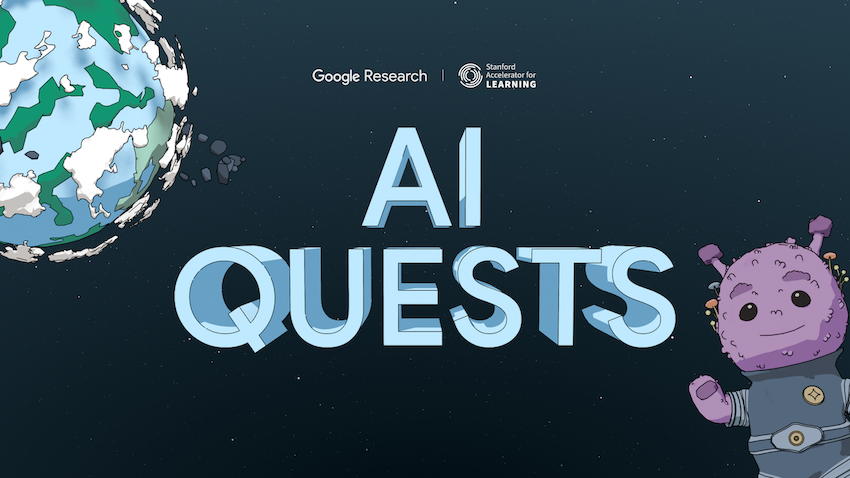
How do you teach AI in a way that resonates with 11- to 14-year-olds long after the lesson ends? In two recent Experience AI webinars, we explored that question with collaborators from Google Research, Google DeepMind, and the Stanford Accelerator for Learning. During the webinars, we also showcased AI Quests, a gamified, classroom-first experience where learners use AI concepts to solve real problems.
“The AI technology you’ll experience is amazing, but it’s not magic. Success depends on the decisions you make.”
That line, delivered by Professor Sky, the in-game mentor, captures the core message of AI Quests: AI systems are built by people and shaped by human judgment at every step.
What is AI Quests?
We’ve embedded AI Quests into the Foundations of AI unit in Experience AI, our free AI literacy programme created with Google DeepMind.
As Google Research’s Liat Ben Rafael explained, “AI Quests is a gamified experience… where students discover firsthand how AI is used in the real world to create positive impact.” Each quest is grounded in a real research programme and mirrors the AI project lifecycle you’ll recognise from our Experience AI lessons: define the problem, prepare data, train, test, deploy.
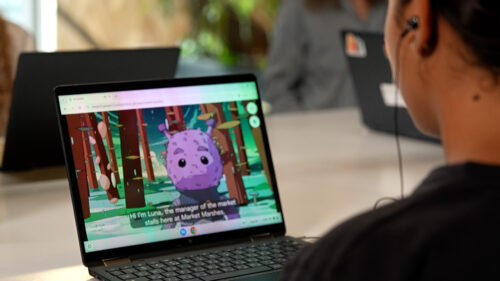
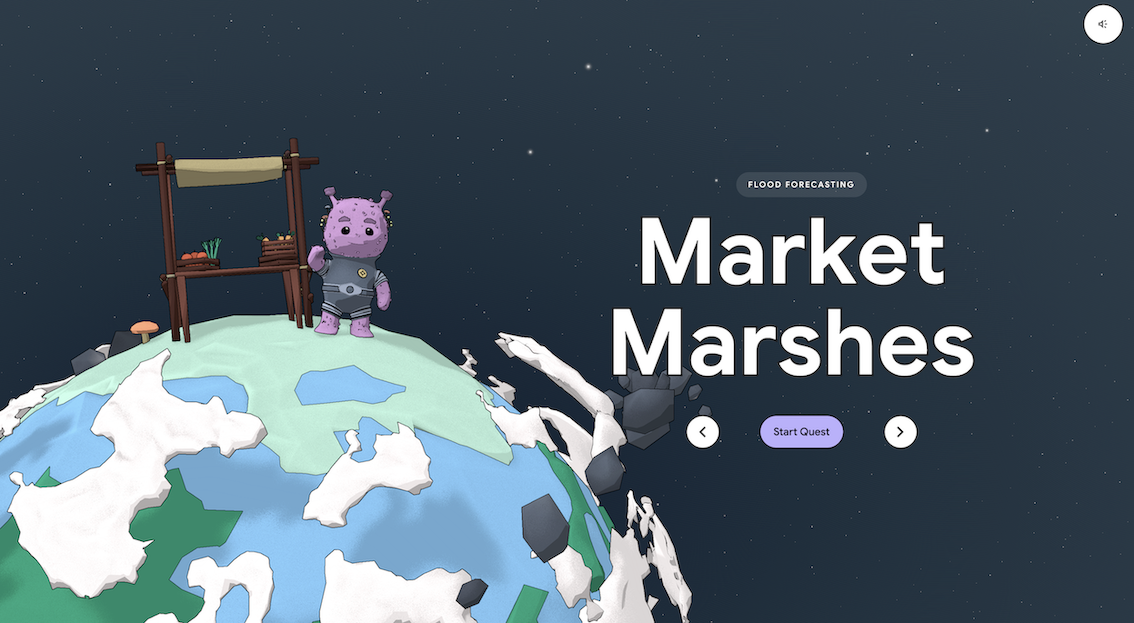
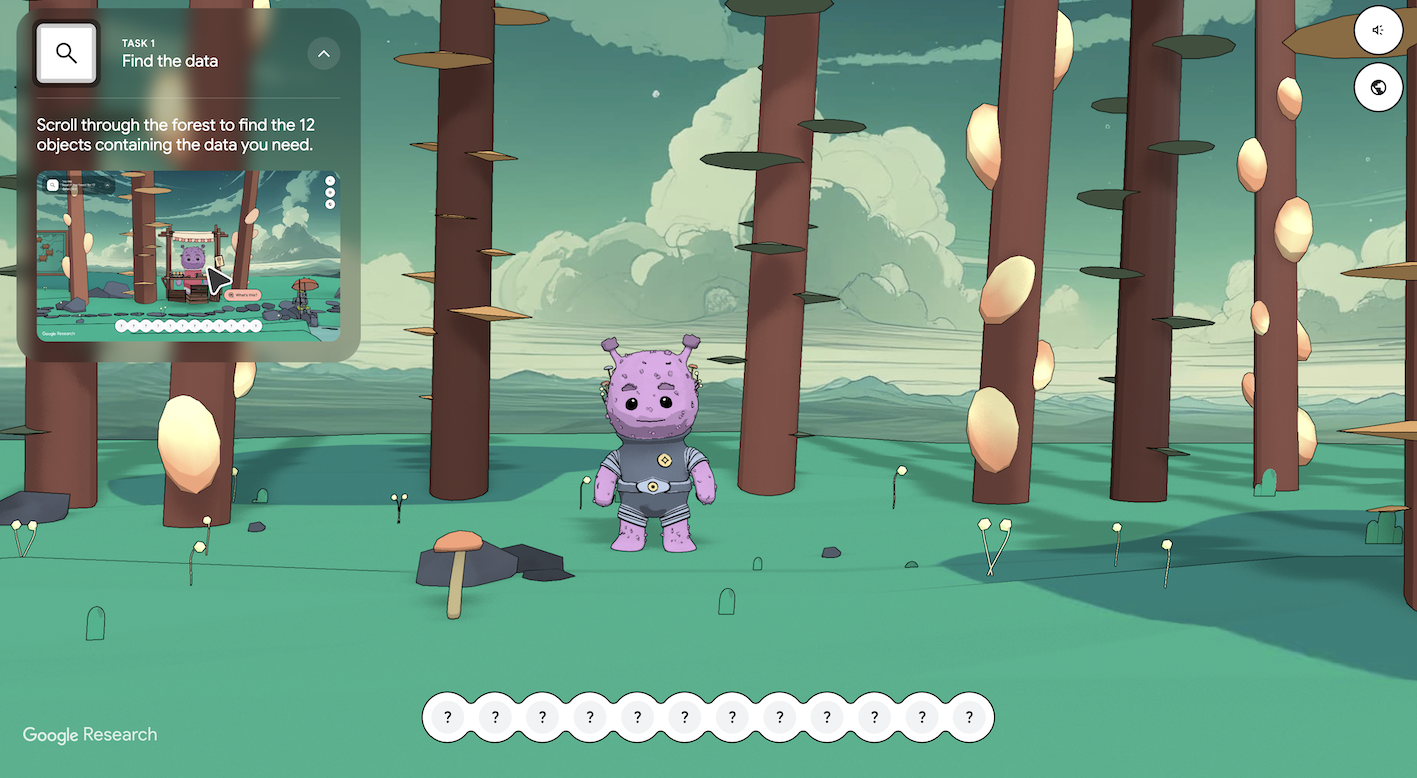
The first quest, Market Marshes, asks students to help Luna, one of the central characters, to protect a riverside market from flooding. Players roam, gather candidate data (from rainfall stats to town gossip), clean it, choose relevant features, and train a model. If the model underperforms, they iterate, exactly as real AI developers would.
Emma Staves, Learning Manager at the Foundation, notes that a key moment is when learners test their model: “It’s made really clear that the data that’s being used to test the model is historic data.” That simple design choice can help you to unlock rich discussions with your learners about validation, reliability, and what counts as “accurate enough” for real decisions.
Designed around how students actually learn
Developed in collaboration with learning scientists at the Stanford Accelerator for Learning, the quests reflect what Victor Lee, Faculty Lead for AI and Education at Stanford, describes as “enduring understanding”:
“The enduring understanding is about how humans can initiate and design AI applications that can address some of humanity’s biggest unsolved challenges.”
To keep that focus, the team blends:
- Situated learning – for example, a concrete flood scenario rather than abstract exercises
- Pedagogical agents – characters who nudge, model, and explain
- Embedded feedback and productive failure – learn by trying, revising, and trying again
- Self-explanation prompts – ‘learning tickets’ that ask students to articulate what they’re doing and why
In other words, the quests are all about playing with purpose.
What teachers are seeing in the classroom
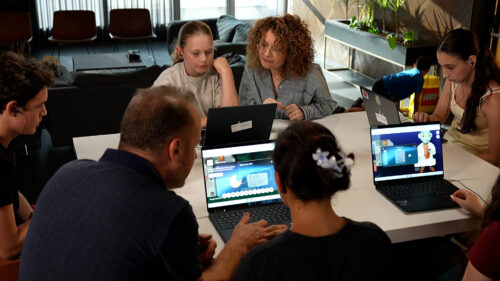
We piloted AI Quests with some teachers, including Dave Cross, Curriculum Leader for Computer Science at North Liverpool Academy, who tested the quests with his Year 7 students, before extending it to his GCSE classes:
“We see it moving forward as a really solid foundation… for that further learning.”
He also saw strong cross-curricular ties: geography colleagues spotted “massive opportunities” to use the flood quest in their own units, while broader staff discussions turned to digital citizenship, data literacy, and fairness. The cross-disciplinary nature of AI is increasingly apparent, and so AI literacy shouldn’t be limited to computing — students need to encounter AI across multiple subjects and in everyday life.
Where the research comes in: Forecasting floods days in advance
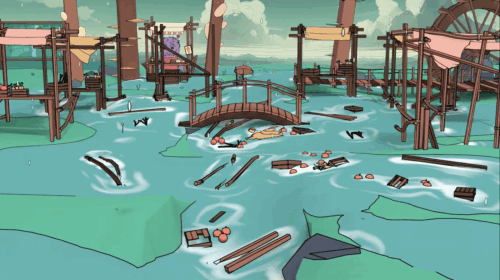
The second webinar connected the classroom experience to the real project it’s modelled on: Google Research Flood Forecasting. Gila Loike, Product Manager, set the scene:
“Our research team develops AI models that predict flooding all over the world, five to seven days before the flood occurs.”
Deborah Cohen, the Research Scientist leading the team at Google Research focused on flooding, also explained that traditional models can’t easily predict floods in places with little data. However, AI can fill those gaps by combining information from rivers, weather forecasts, and satellites, to give accurate warnings around the world:
“With AI we were able to expand our coverage to the entire world.”
The results are real and practical. Accurate predictions help:
- People stay safe by receiving flood alerts through familiar apps
- Emergency teams plan routes and close roads in time
- Farmers decide whether to move animals or harvest early
- Aid organisations act sooner, delivering supplies or financial support before the flood hits
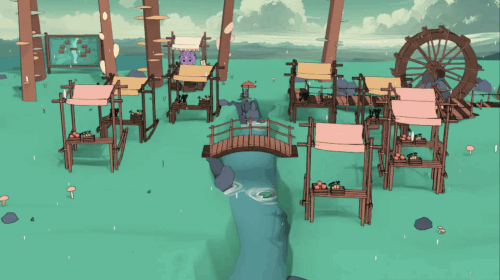
To make sure their models work well, the team compares predictions with real river data, where available, and with satellite images showing flooded areas. Students explore these same ideas in the AI Quest game, cleaning messy data, testing their models, and checking how accurate their results are.
“Students are really engaged by the real-world challenge,” said Emma Staves about the Market Marshes quest. “That authenticity makes learning come alive.” It helps students see how classroom ideas, like features, accuracy, bias, and model cards, connect directly to real decisions and their consequences.
Coming soon: Health quests and more languages
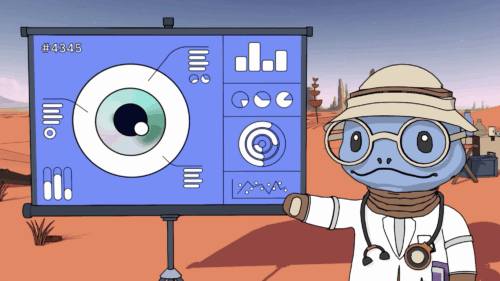
Liat also gave a sneak peek at the next quest, a health-focused story on blindness prevention. It introduces new layers — privacy, diverse data, field testing — while following the same lifecycle. More quests are in development, with additional languages planned from early 2026.
Why this matters now
The key message from both webinars is clear: AI literacy isn’t just about using technology — it’s about understanding our role in shaping it. As one Stanford researcher put it, “AI isn’t this magic thing that just happens to us. Humans decide how to use it, and how choices around data affect accuracy and fairness.”
Our goal with Experience AI is to help young people become thoughtful, creative problem-solvers who can navigate an AI-powered world with confidence and integrity — and AI Quests fits perfectly with that.
Find out more
You can watch both webinars anytime on our YouTube and LinkedIn channels
Webinar 1: LinkedIn, YouTube
Webinar 2: LinkedIn, YouTube
Explore our Experience AI resources — already used by nearly two million learners and educators to understand, question, and create with AI — to bring them and AI Quests into your classroom. You’ll find the Foundations of AI unit, alongside materials on large language models, ecosystems and AI, and AI safety, at rpf.io/experienceai-resources
The post Play, pedagogy, and real-world impact: What we learned from the AI Quests webinars appeared first on Raspberry Pi Foundation.