Tag Archives: localisation

Empowering global AI literacy: Translating Experience AI resources into Croatian

Post Syndicated from Zeljka Novak Baxter original https://www.raspberrypi.org/blog/empowering-global-ai-literacy-translating-experience-ai-resources-into-croatian/

We work with partners globally to promote AI literacy through Experience AI, our programme created in collaboration with Google DeepMind. With resources available in 19+ languages and a network of partners in over 38 countries, a key part of our work is translating and localising our materials so as many young people around the world as possible build the confidence to engage with AI critically and responsibly.
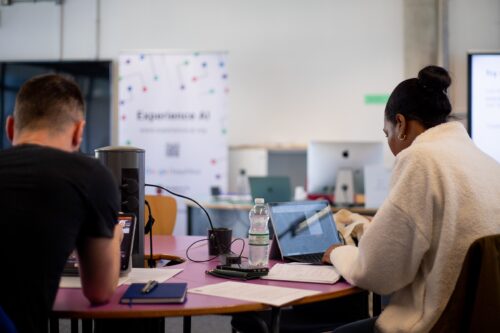
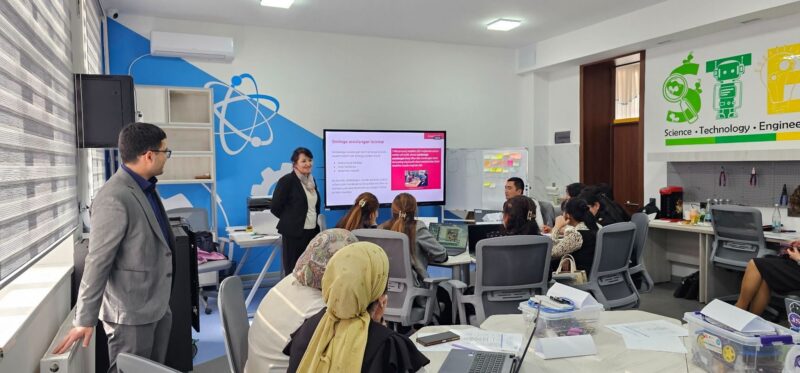
Educators at a workshop

But localisation introduces a unique hurdle: sometimes, languages are divided into ‘small languages’ and ‘big languages’.

As a speaker of Croatian, a ‘small language’, I think about this divide often. What makes a language small? A small language has a small number of speakers and is usually not considered a key market. Practically, this means resources for translation are often directed towards ‘big languages’. This makes sense from an impact perspective: translating into languages with more speakers maximises reach.

That is why, as a localisation coordinator at the Foundation, I am delighted that we partnered with Croatian organisation Suradnici u učenju to ensure that for Experience AI, Croatian is not treated as a small language — it is simply a language.

Translating text about emerging technologies is not easy

But translating into Croatian can present hurdles. When I got my first computer in Croatia, the user interface was in English. As a result, I never learned how to say “copy/paste” in Croatian. Those types of menus and tools had simply not been translated yet when I lived there. This happens a lot, especially with software and fast-emerging technologies like AI. Native speakers have no other choice but to use English words: the English words enter the language, and sometimes they stay.

As a result, translating key Experience AI terms into Croatian wasn’t easy. Even terms like ‘AI’ went through several rounds of discussion. Should we use the English ‘AI’ (artificial intelligence) or the Croatian ‘UI’ (umjetna inteligencija)? How should we pronounce ‘AI’ or ‘UI’ in spoken language?
Sometimes, it can be hard to know what the right thing to do is. While the English terms have been normalised, the Croatian word can seem foreign and out of place. When making a decision about how we translate terms for Experience AI resources, we also have to think about fairness and accessibility. Is it fair to assume that all young people and educators understand English words? If we assume incorrectly, we are preventing some learners from fully accessing and understanding our materials.

That’s why our in-country partners are a big part of our translation process. When we aren’t sure about whether we are making the right choice for educators and learners, we can rely on their expertise. They are not only native speakers, but also subject matter experts. For Croatian specifically, Suradnici u učenju did a very thorough review of the translation.

It’s about more than just words

Beyond AI terminology, localisation also meant aligning resources with the terminology and conventions already used in Croatian schools and curricula. This ensured that the resources felt familiar to teachers and reflected the language they already use in classrooms, textbooks, and educational guidance.
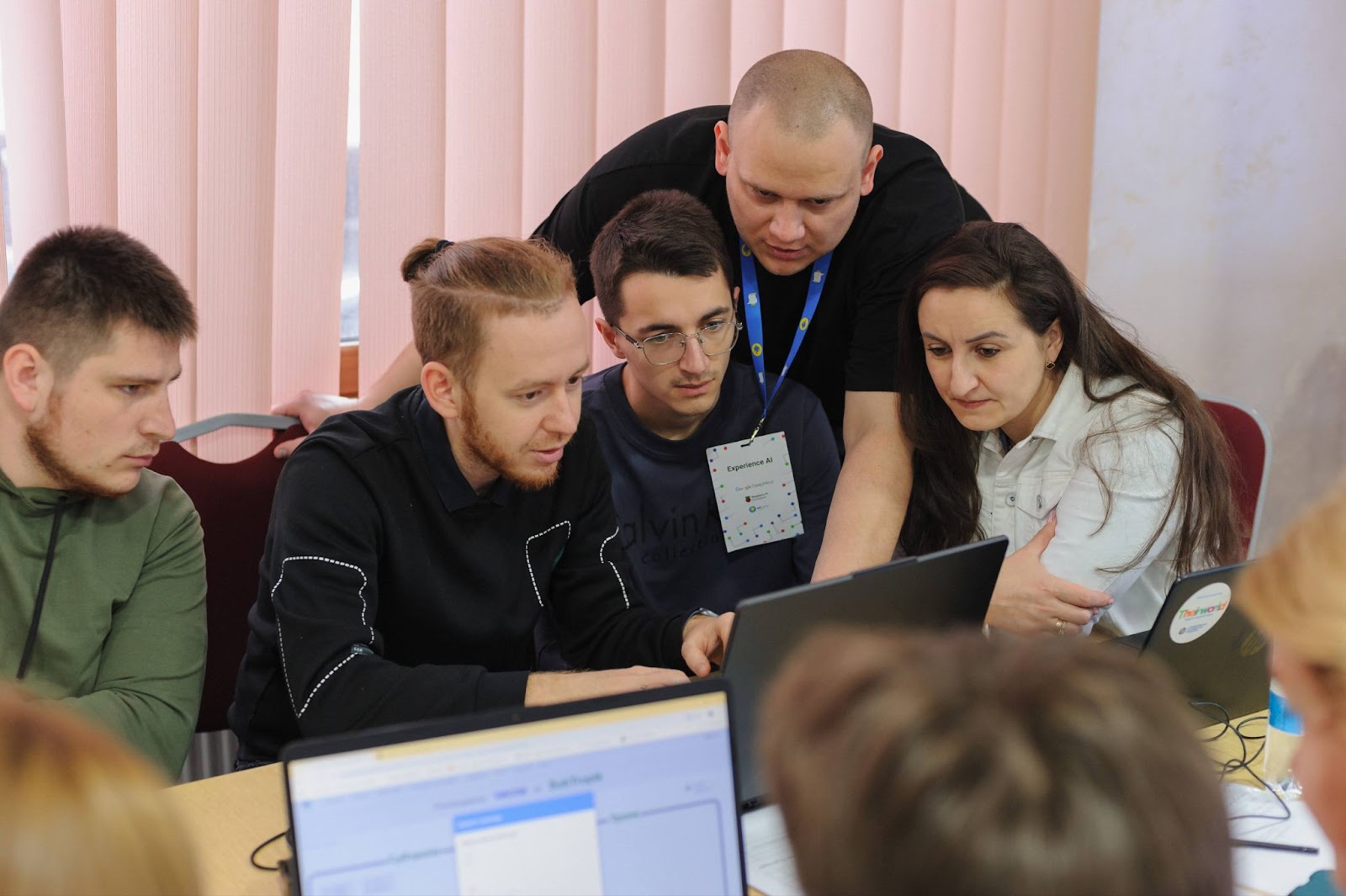
A group of educators looking at a laptop screen.

As Lidija Kralj, from Suradnici u učenju explained:

“It was very important that an Informatics subject expert worked together with a Croatian language expert, and that both of us are teachers. We discussed whether to use the English abbreviation ‘AI’ or the Croatian ‘UI’, and ultimately felt it was our responsibility as educators to use Croatian terms where they already exist. We also wanted to be consistent with terminology that teachers already know from textbooks and the Croatian education system.

This combination — a subject expert, a language expert, and a Raspberry Pi Foundation localisation expert who understands our language — helped us create resources that feel natural and ready for classroom use. The response from participants in our first Experience AI course in Croatian has already shown us how much teachers value having fully localised materials.”
We opted for the approach where, if a Croatian word exists, we will use the Croatian word. Personally, I enjoyed seeing words like ‘offline activity’ slowly disappear from our resources and get replaced with Croatian words like “aktivnost bez računala” (activity without a computer).

As a result, the Croatian translation of our resources now flows very naturally, is accessible, and doesn’t read like a translation. You can check out our Croatian resources online.

AI literacy education with a global network of partners

We work with partners worldwide to bring AI literacy education to millions of young people. Discover all Experience AI partners here.

And to learn more about our resources and to see what other languages we translate into, check out the Experience AI website.

The post Empowering global AI literacy: Translating Experience AI resources into Croatian appeared first on Raspberry Pi Foundation.
Translating educational content: four key principles

Post Syndicated from Vicente Forcada original https://www.raspberrypi.org/blog/translating-educational-content-four-key-principles/

As an organisation with global reach, translation and localisation have been part of the Raspberry Pi Foundation’s activities from the start. Code Clubs and educational partners all over the world are helping young people learn about computing in their own language. We’ve already published over 1,900 translated learning resources, covering up to 32 languages, thanks to the work of our talented localisation team and our amazing community of volunteer translators.

How our approach to translation considers design, process and people

English is seen by many as the language of computing, and in many countries, it’s also either the language of education or a language that young people aspire to learn. However, English is, in some instances, a barrier to learning: young people in many communities don’t have enough knowledge of English to use it to learn about digital technologies, or even if they do, the language of communication with other students, teachers, or volunteers may not be English.

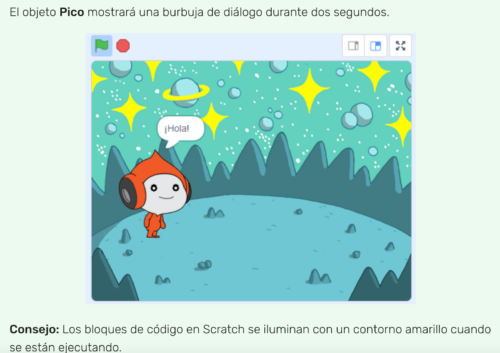
Our ‘Space Talk’ project in Latin American Spanish

In a world where browsers can instantly translate web pages and large language models can power seemingly perfect conversations in virtually any language, it’s easy to assume that translation just happens and that somehow, technology takes care of it. Unfortunately, that’s not the case. Technology is certainly crucial to translation, but there’s much more to it than that. Our approach to translation involves considering design, process, and people to ensure that localised materials truly help young people with their learning journey. 

Localisation or translation?

Localisation and translation are similar terms that are often used interchangeably. Localisation normally refers to adapting a product to suit a local market, whereas translation is a subset of localisation that involves changing the language of the text. For instance, localisation includes currencies, measurements, formatting dates and numbers, and contextual references. Meanwhile, translation involves only changing the language of the text, such as from English to French.

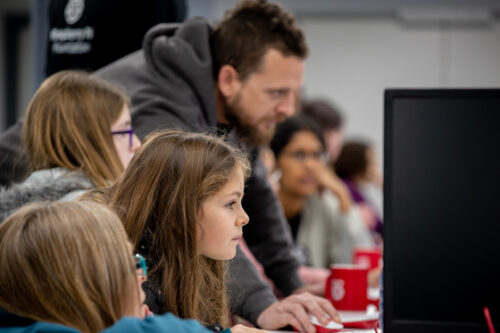
Learners at a Code Club.

At the Raspberry Pi Foundation, we see translation as an enabler. It enables volunteers to reach learners, learners to succeed in their educational goals, and the Foundation to achieve its mission all over the world.

Four key ways the Foundation maximises the impact and reach of our translated materials

1. Create with localisation in mind

Regardless of whether learning materials are intended for English-speaking or global audiences, it’s important to create and design them with localisation in mind. That way, they can be used in a variety of places, and any piece of content (text, graphics, or illustrations) can be modified to meet the needs of the target audience. Keeping localisation in mind might include allowing space for text expansion, being mindful of any text embedded in graphic elements, and even making sure the context is understandable for a variety of audiences. Making a piece of content localisable at the creation stage is virtually cost-free. Modifying fully built assets to translate them or to use them in other markets can be expensive and extremely time-consuming!

2. Always have user needs and priorities upfront

Before investing in localising or translating any materials, we seek to understand the needs and priorities of our users. In many countries where English is not the usual language of communication, materials in English are a barrier, even if some of the users have a working knowledge of English. Making materials available in local languages directly results in additional reach and enhanced learning outcomes. In other communities where English has a certain status, a more selective approach may be more appropriate. A full translation may not be expected, but translating or adapting elements within them, such as introductions, videos, infographics, or glossaries, can help engage new learners.

Photo of a young person coding on a desktop computer.

3. Maximise the use of technology

While it’s possible to translate with pen and paper, translation is only scalable with the use of technology. Computer-assisted translation tools, translation memories, terminology databases, machine translation, large language models, and so on are all technologies that play their part in making the translation process more efficient and scalable. 

At the Foundation, we make use of a variety of translation technologies and also, crucially, work very closely with our content and development teams to integrate their tools and processes into the overall localisation workflow. 

4. Take great care of the people

Even with the best technology and the smoothest integrations, there is a human element that is absolutely essential. Our amazing community of volunteers and partners work very closely with learners in their communities. They understand the needs of those learners and have a wealth of information and insights. We work with them to prioritise, translate, review and test the learning materials. They are key to ensuring that our learning materials help our users reach their learning goals.

In summary

Thinking about localisation from the moment we start creating learning materials, understanding the needs of users when creating our end goals, maximising the use of technology, and taking good care of our people and partners are the key principles that drive our translation effort. 

If you’d like to find out more about translation at the Raspberry Pi Foundation or would like to contribute to the translation of our learning materials, feel free to contact us at [email protected].  

A version of this article also appears in Hello World issue 23.

The post Translating educational content: four key principles appeared first on Raspberry Pi Foundation.