Post Syndicated from Adam Barnett original https://www.rapid7.com/blog/post/em-patch-tuesday-june-2026
Microsoft is publishing 200 vulnerabilities on June 2026 Patch Tuesday. Microsoft is not aware of exploitation in the wild for any of these vulnerabilities, and is aware of public disclosure for three. This is similar to last month’s Patch Tuesday, however several of last month’s vulnerabilities ended up on CISA KEV in the days following their publication. So far this month, Microsoft has provided patches to address 360 browser vulnerabilities, which is an order of magnitude more than has been typical in any given month over the past few years. As usual, browser vulns are not included in the Patch Tuesday count above. Indeed, the vast, and presumably sustained, uptick in the number of browser vulnerabilities has led to Microsoft no longer enumerating Chromium CVEs in the Security Update Guide. Other vulnerability categories, especially Linux kernel vulnerabilities, are seeing a similar increase in AI-assisted vulnerability reports.
What’s the opposite of coordinated disclosure?
In recent weeks, an independent vulnerability researcher going by the pseudonym Nightmare Eclipse has attracted significant attention by publishing details of six Microsoft vulnerabilities, including elevation of privilege vulnerabilities in Defender, and a Secure Boot disk encryption bypass. The researcher provided full proof-of-concept code for some, and provided significant-but-incomplete detail around the path to exploitation for others. Microsoft has confirmed that these disclosures were not coordinated, and it is clear that the relationship between this researcher and Microsoft is less than cordial. Two of the disclosures emerged in the hours after last month’s Patch Tuesday, which provides maximum visibility, while limiting Microsoft’s ability to respond without out-of-cycle patches.
At time of writing, Microsoft has provided mitigation advice and patches for CVE-2026-33825, CVE-2026-45585, CVE-2026-45498, and CVE-2026-41091, leaving only two elevation of privilege vulnerabilities unpatched, known as MiniPlasma and GreenPlasma. However, a recent blog post by Nightmare Eclipse with the title “7” has been widely interpreted to mean that there is at least one more vulnerability to come. The post contained no content other than an image of Albert Vesker, a character from the Resident Evil video game series who formerly worked as a researcher for a technology corporation before going rogue. Any inference around the possible meaning of the image is left as an exercise for the reader.
Given the timing of last month’s disclosures in the hours following Patch Tuesday, a further high-friction disclosure today would perhaps be unsurprising. Indeed, a new blog post and a new GitHub account from the same researcher have emerged in the hours following Microsoft’s publication of the June 2026 Patch Tuesday updates. The apparent seventh disclosure is nicknamed RoguePlanet, and appears to describe another elevation of privilege to SYSTEM in Defender.
It is not at all difficult to understand why Microsoft and many blue team practitioners are deeply alarmed by the partial or even full disclosure of proof-of-concept code for an ongoing series of vulnerabilities affecting fully-patched Windows systems. However, multiple leading voices in the broader vulnerability disclosure community have expressed concern that Microsoft’s invocation of the Digital Crimes Unit in a May 27, 2026 blog post may yet prove counterproductive, especially if it causes other researchers to back away from mutually beneficial engagements with MSRC. A few days later, MSRC issued a further statement clarifying that they have no intention of pursuing action against security researchers, but only those who break the law or engage in malicious activity causing real harm. For now, one safe conclusion is that this unusually sensational Microsoft vulnerability management story arc is far from over.
HTTP/2: denial of service
Every so often, a new round of denial of service vulnerabilities emerge which affect web servers implementing HTTP/2 and HTTP/3 standards. This class of vulnerabilities is likely to expand further as researchers, including the discoverers of CVE-2026-49160, use advances in LLM capability to probe not just specific software, but also the standards on which software rests. Microsoft warns that exploitation leads to uncontrolled resource consumption over a network, and expects that exploitation is more likely. The advisory credits both a third-party research firm and OpenAI’s Codex.
Microsoft has not yet directly addressed another HTTP/2 vulnerability which allows trivial denial-of-service against the default HTTP/2 configuration of multiple web server platforms, including Microsoft IIS. CVE-2026-49975, also known as HTTP/2 Bomb, became public knowledge a week ago. This denial of service works by exhausting memory on the target server, and unlike a distributed denial of service attack, there is no requirement that an attacker control a large amount of bandwidth. Patches are available for NGINX and Apache, with IIS presumably to follow at some point. If practically possible, disabling HTTP/2 is a valid mitigation.
PowerToys: SYSTEM EoP
The Microsoft PowerToys utility provides a wide variety of useful control and configuration options for Windows power users which aren’t otherwise easily accessible. It turns out that PowerToys also offers an undocumented extra: local elevation of privilege to SYSTEM via successful exploitation of CVE-2026-42902. It is worth noting that the fix was included in PowerToys v0.99.1 on April 29, 2026, without any apparent mention in the release notes. Attackers with patch-diffing toolkits may well take note of this discrepancy.
Microsoft lifecycle update
There are no significant Microsoft product lifecycle changes this month. SQL Server 2016 moves beyond regular extended support and into the pay-to-play Extended Security Updates (ESU) phase after July 14, 2026. On that same date, SharePoint 2016 and 2019 will also move past extended support, but since there’s no ESU available, the only remaining option for fully-supported self-hosted SharePoint after the middle of next month will be SharePoint Subscription Edition.
Summary charts
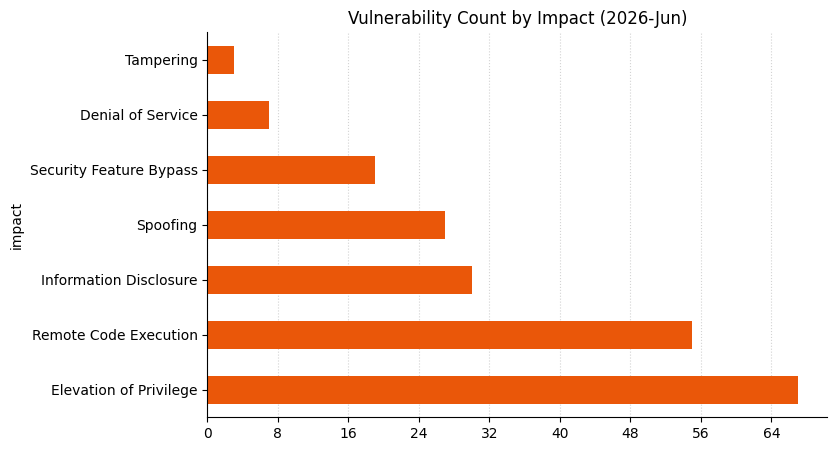
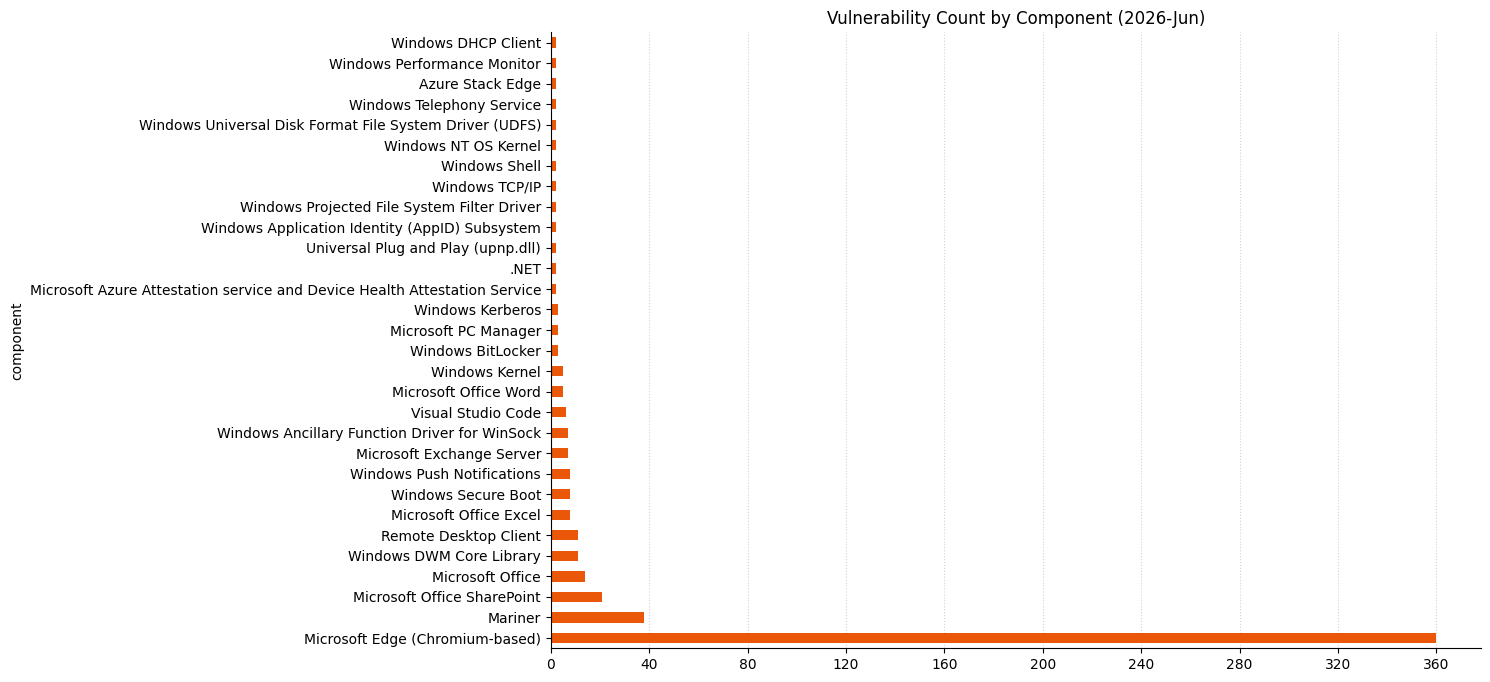
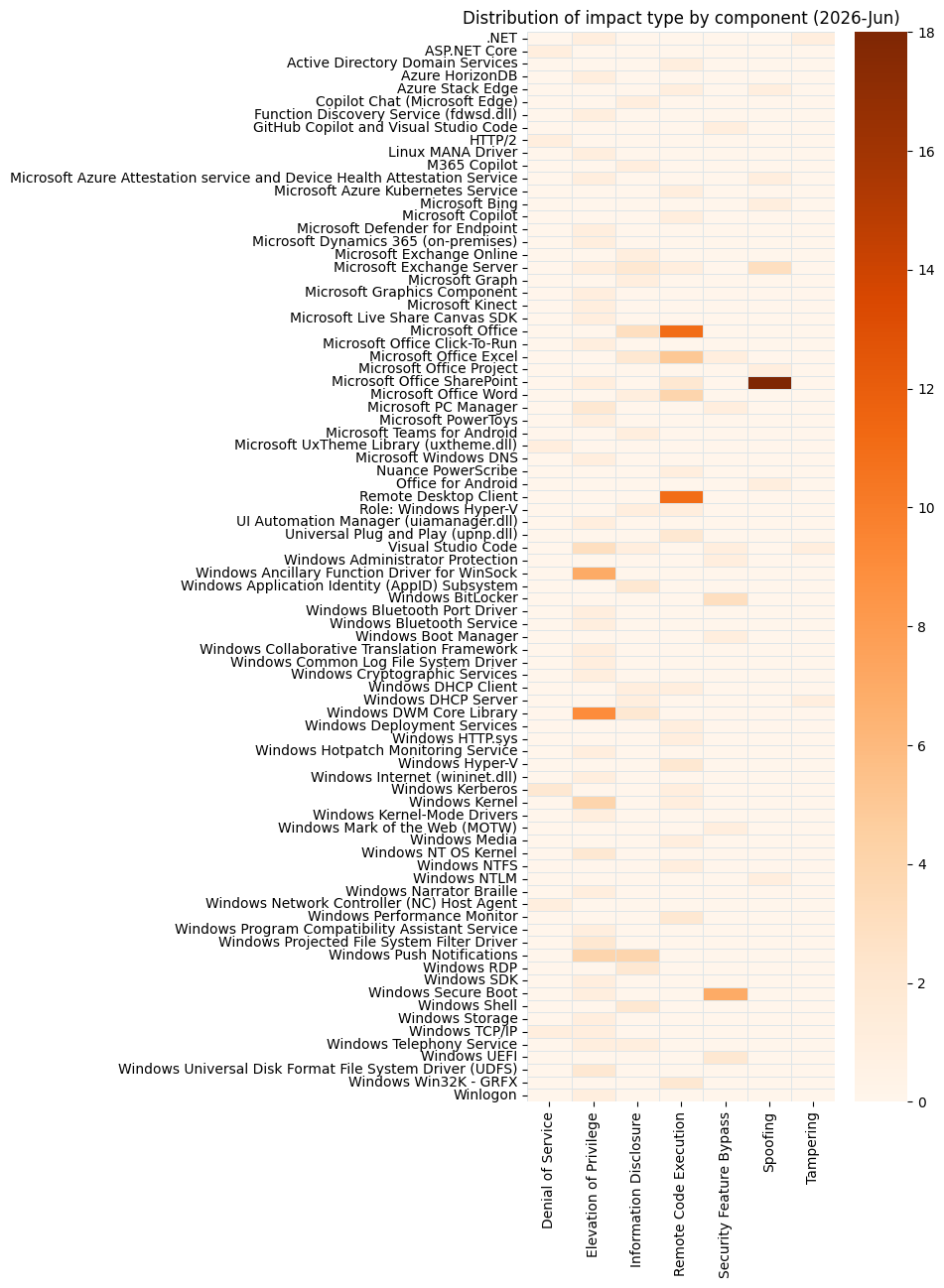
Vulnerabilities by Product Family
Apps vulnerabilities
|
CVE |
Title |
Exploitation status |
Publicly disclosed? |
CVSS v3 base score |
|---|---|---|---|---|
| CVE-2026-45650 |
Microsoft Bing Search Spoofing Vulnerability |
Exploitation Less Likely |
No |
4.3 |
| CVE-2026-49161 |
Microsoft PC Manager Security Feature Bypass Vulnerability |
Exploitation Unlikely |
No |
7.8 |
| CVE-2026-42902 |
Microsoft PowerToys Elevation of Privilege Vulnerability |
Exploitation Less Likely |
No |
7.8 |
| CVE-2026-45649 |
Office for Android Spoofing Vulnerability |
Exploitation Unlikely |
No |
7.1 |
| CVE-2026-44803 |
Windows Graphics Component Remote Code Execution Vulnerability |
Exploitation More Likely |
No |
7.8 |
| CVE-2026-44812 |
Windows Graphics Component Remote Code Execution Vulnerability |
Exploitation More Likely |
No |
7.8 |
Azure vulnerabilities
|
CVE |
Title |
Exploitation status |
Publicly disclosed? |
CVSS v3 base score |
|---|---|---|---|---|
| CVE-2026-32193 |
Azure Kubernetes Service (AKS) Remote Code Execution Vulnerability |
Exploitation Unlikely |
No |
8.8 |
| CVE-2026-47643 |
Azure Stack Edge Remote Code Execution Vulnerability |
Exploitation Unlikely |
No |
9.8 |
| CVE-2026-41098 |
Azure Stack Edge Spoofing Vulnerability |
Exploitation Less Likely |
No |
8.4 |
Developer Tools vulnerabilities
|
CVE |
Title |
Exploitation status |
Publicly disclosed? |
CVSS v3 base score |
|---|---|---|---|---|
| CVE-2026-45490 |
.NET SDK Elevation of Privilege Vulnerability |
Exploitation Less Likely |
No |
7.8 |
| CVE-2026-45491 |
.NET Tampering Vulnerability |
Exploitation Unlikely |
No |
6.2 |
| CVE-2026-45591 |
ASP.NET Core Denial of Service Vulnerability |
Exploitation Less Likely |
No |
7.5 |
| CVE-2026-45644 |
Microsoft Live Share Canvas SDK Elevation of Privilege Vulnerability |
Exploitation Less Likely |
No |
8.0 |
| CVE-2026-45482 |
Microsoft Visual Studio Code CoPilot Chat Extension Security Feature Bypass Vulnerability |
Exploitation Less Likely |
No |
8.4 |
| CVE-2026-40376 |
Visual Studio Code Elevation of Privilege Vulnerability |
Exploitation Less Likely |
No |
7.5 |
| CVE-2026-47281 |
Visual Studio Code Elevation of Privilege Vulnerability |
Exploitation Unlikely |
No |
9.6 |
| CVE-2026-47284 |
Visual Studio Code Information Disclosure Vulnerability |
Exploitation Less Likely |
No |
6.5 |
| CVE-2026-47292 |
Visual Studio Code MSSQL Extension Remote Code Execution Vulnerability |
Exploitation Less Likely |
No |
7.8 |
| CVE-2026-48569 |
Visual Studio Code Security Feature Bypass Vulnerability |
Exploitation Less Likely |
No |
7.1 |
| CVE-2026-47287 |
Visual Studio Code Tampering Vulnerability |
Exploitation Less Likely |
No |
6.5 |
ESU vulnerabilities
|
CVE |
Title |
Exploitation status |
Publicly disclosed? |
CVSS v3 base score |
|---|---|---|---|---|
| CVE-2025-10263 |
ARM: CVE-2025-10263 Completion of affected memory accesses might not be guaranteed by completion of a TLBI [kernel] |
Exploitation Less Likely |
No |
9.3 |
| CVE-2026-44815 |
DHCP Client Service Remote Code Execution Vulnerability |
Exploitation Less Likely |
No |
9.8 |
| CVE-2026-49160 |
HTTP.sys Denial of Service Vulnerability |
Exploitation More Likely |
Yes |
7.5 |
| CVE-2026-47291 |
HTTP.sys Remote Code Execution Vulnerability |
Exploitation More Likely |
No |
9.8 |
| CVE-2026-45642 |
Microsoft Azure Attestation service and Device Health Attestation Service Spoofing Vulnerability |
Exploitation Less Likely |
No |
3.9 |
| CVE-2026-45637 |
Microsoft DWM Core Library Elevation of Privilege Vulnerability |
Exploitation Less Likely |
No |
7.8 |
| CVE-2026-45504 |
Microsoft Exchange Server Elevation of Privilege Vulnerability |
Exploitation Unlikely |
No |
8.8 |
| CVE-2026-45502 |
Microsoft Exchange Server Information Disclosure Vulnerability |
Exploitation Unlikely |
No |
5.0 |
| CVE-2026-45503 |
Microsoft Exchange Server Information Disclosure Vulnerability |
Exploitation Unlikely |
No |
8.1 |
| CVE-2026-45583 |
Microsoft Exchange Server Remote Code Execution Vulnerability |
Exploitation Less Likely |
No |
7.5 |
| CVE-2026-45500 |
Microsoft Exchange Server Spoofing Vulnerability |
Exploitation Less Likely |
No |
6.1 |
| CVE-2026-45501 |
Microsoft Exchange Server Spoofing Vulnerability |
Exploitation Less Likely |
No |
6.5 |
| CVE-2026-47631 |
Microsoft Exchange Server Spoofing Vulnerability |
Exploitation Less Likely |
No |
8.1 |
| CVE-2026-42986 |
Microsoft Graphics Component Elevation of Privilege Vulnerability |
Exploitation More Likely |
No |
7.8 |
| CVE-2026-41092 |
Microsoft Kinect Elevation of Privilege Vulnerability |
Exploitation Less Likely |
No |
7.8 |
| CVE-2026-45606 |
Microsoft UxTheme Library (uxtheme.dll) Denial of Service Vulnerability |
Exploitation Less Likely |
No |
5.5 |
| CVE-2026-42980 |
NT OS Kernel Elevation of Privilege Vulnerability |
Exploitation More Likely |
No |
7.8 |
| CVE-2026-42916 |
NT OS Kernel Elevation of Privilege Vulnerability |
Exploitation Less Likely |
No |
7.8 |
| CVE-2026-47289 |
Remote Desktop Client Remote Code Execution Vulnerability |
Exploitation Less Likely |
No |
8.8 |
| CVE-2026-47653 |
Remote Desktop Client Remote Code Execution Vulnerability |
Exploitation Unlikely |
No |
8.8 |
| CVE-2026-48563 |
Remote Desktop Client Remote Code Execution Vulnerability |
Exploitation Less Likely |
No |
7.5 |
| CVE-2026-42909 |
Remote Desktop Client Remote Code Execution Vulnerability |
Exploitation Unlikely |
No |
7.5 |
| CVE-2026-42992 |
Remote Desktop Client Remote Code Execution Vulnerability |
Exploitation Less Likely |
No |
7.5 |
| CVE-2026-44799 |
Remote Desktop Client Remote Code Execution Vulnerability |
Exploitation Less Likely |
No |
7.5 |
| CVE-2026-44801 |
Remote Desktop Client Remote Code Execution Vulnerability |
Exploitation Less Likely |
No |
7.5 |
| CVE-2026-42985 |
Remote Desktop Client Remote Code Execution Vulnerability |
Exploitation More Likely |
No |
8.8 |
| CVE-2026-42993 |
Remote Desktop Client Remote Code Execution Vulnerability |
Exploitation Less Likely |
No |
7.5 |
| CVE-2026-45588 |
Secure Boot Security Feature Bypass Vulnerability |
Exploitation Less Likely |
No |
7.9 |
| CVE-2026-48568 |
Secure Boot Security Feature Bypass Vulnerability |
Exploitation Less Likely |
No |
7.9 |
| CVE-2026-48570 |
Secure Boot Security Feature Bypass Vulnerability |
Exploitation Less Likely |
No |
7.9 |
| CVE-2026-48573 |
Secure Boot Security Feature Bypass Vulnerability |
Exploitation Less Likely |
No |
7.9 |
| CVE-2026-48575 |
Secure Boot Security Feature Bypass Vulnerability |
Exploitation Less Likely |
No |
7.9 |
| CVE-2026-48576 |
Secure Boot Security Feature Bypass Vulnerability |
Exploitation Less Likely |
No |
7.9 |
| CVE-2026-48578 |
Secure Boot Security Feature Bypass Vulnerability |
Exploitation Less Likely |
No |
7.9 |
| CVE-2026-45656 |
UEFI Secure Boot Security Feature Bypass Vulnerability |
Exploitation Less Likely |
No |
7.8 |
| CVE-2026-8863 |
UEFI Secure Boot Security Feature Bypass Vulnerability |
Exploitation Less Likely |
No |
7.8 |
| CVE-2026-34335 |
Windows Ancillary Function Driver for WinSock Elevation of Privilege Vulnerability |
Exploitation Unlikely |
No |
7.0 |
| CVE-2026-45601 |
Windows Ancillary Function Driver for WinSock Elevation of Privilege Vulnerability |
Exploitation Less Likely |
No |
7.0 |
| CVE-2026-45598 |
Windows Ancillary Function Driver for WinSock Elevation of Privilege Vulnerability |
Exploitation Less Likely |
No |
7.0 |
| CVE-2026-45596 |
Windows Ancillary Function Driver for WinSock Elevation of Privilege Vulnerability |
Exploitation Less Likely |
No |
7.0 |
| CVE-2026-45638 |
Windows Ancillary Function Driver for WinSock Elevation of Privilege Vulnerability |
Exploitation Less Likely |
No |
7.8 |
| CVE-2026-45603 |
Windows Ancillary Function Driver for WinSock Elevation of Privilege Vulnerability |
Exploitation Less Likely |
No |
7.0 |
| CVE-2026-42911 |
Windows Ancillary Function Driver for WinSock Elevation of Privilege Vulnerability |
Exploitation Less Likely |
No |
7.0 |
| CVE-2026-45594 |
Windows Application Identity (AppID) Information Disclosure Vulnerability |
Exploitation Less Likely |
No |
5.5 |
| CVE-2026-45655 |
Windows BitLocker Security Feature Bypass Vulnerability |
Exploitation Less Likely |
No |
5.3 |
| CVE-2026-45658 |
Windows BitLocker Security Feature Bypass Vulnerability |
Exploitation More Likely |
No |
7.8 |
| CVE-2026-50507 |
Windows BitLocker Security Feature Bypass Vulnerability |
Exploitation More Likely |
Yes |
6.8 |
| CVE-2026-45640 |
Windows Bluetooth Port Driver Elevation of Privilege Vulnerability |
Exploitation Less Likely |
No |
7.0 |
| CVE-2026-45605 |
Windows Bluetooth Service Elevation of Privilege Vulnerability |
Exploitation Less Likely |
No |
7.8 |
| CVE-2026-47656 |
Windows Boot Manager Security Feature Bypass Vulnerability |
Exploitation Less Likely |
No |
7.9 |
| CVE-2026-45586 |
Windows Collaborative Translation Framework (CTFMON) Elevation of Privilege Vulnerability |
Exploitation More Likely |
Yes |
7.8 |
| CVE-2026-42987 |
Windows Deployment Services (WDS) Remote Code Execution |
Exploitation Less Likely |
No |
8.1 |
| CVE-2026-33828 |
Windows Device Health Attestation (DHA) Elevation of Privilege Vulnerability |
Exploitation Unlikely |
No |
7.8 |
| CVE-2026-45634 |
Windows DHCP Client Information Disclosure Vulnerability |
Exploitation Unlikely |
No |
5.5 |
| CVE-2026-45608 |
Windows DHCP Client Information Disclosure Vulnerability |
Exploitation Unlikely |
No |
6.8 |
| CVE-2026-41108 |
Windows DNS Client Elevation of Privilege Vulnerability |
Exploitation Unlikely |
No |
7.0 |
| CVE-2026-42905 |
Windows DWM Core Library Elevation of Privilege Vulnerability |
Exploitation More Likely |
No |
7.8 |
| CVE-2026-42983 |
Windows DWM Core Library Elevation of Privilege Vulnerability |
Exploitation Less Likely |
No |
7.8 |
| CVE-2026-44802 |
Windows DWM Core Library Elevation of Privilege Vulnerability |
Exploitation Less Likely |
No |
7.8 |
| CVE-2026-45602 |
Windows Dynamic Host Configuration Protocol (DHCP) Tampering Vulnerability |
Exploitation Less Likely |
No |
9.1 |
| CVE-2026-42836 |
Windows Function Discovery Service (fdwsd.dll) Elevation of Privilege Vulnerability |
Exploitation Less Likely |
No |
7.0 |
| CVE-2026-44803 |
Windows Graphics Component Remote Code Execution Vulnerability |
Exploitation More Likely |
No |
7.8 |
| CVE-2026-44812 |
Windows Graphics Component Remote Code Execution Vulnerability |
Exploitation More Likely |
No |
7.8 |
| CVE-2026-42972 |
Windows Hyper-V Information Disclosure Vulnerability |
Exploitation Less Likely |
No |
5.5 |
| CVE-2026-45607 |
Windows Hyper-V Remote Code Execution Vulnerability |
Exploitation Less Likely |
No |
8.4 |
| CVE-2026-45641 |
Windows Hyper-V Remote Code Execution Vulnerability |
Exploitation Less Likely |
No |
8.4 |
| CVE-2026-45592 |
Windows Internet (wininet.dll) Elevation of Privilege Vulnerability |
Exploitation Unlikely |
No |
7.8 |
| CVE-2026-42903 |
Windows Kerberos Denial of Service Vulnerability |
Exploitation Unlikely |
No |
6.5 |
| CVE-2026-42914 |
Windows Kerberos Denial of Service Vulnerability |
Exploitation Less Likely |
No |
5.3 |
| CVE-2026-47288 |
Windows Kerberos Key Distribution Center (KDC) Remote Code Execution |
Exploitation Unlikely |
No |
7.1 |
| CVE-2026-48583 |
Windows Kernel Elevation of Privilege Vulnerability |
Exploitation Less Likely |
No |
7.8 |
| CVE-2026-45653 |
Windows Kernel Elevation of Privilege Vulnerability |
Exploitation Unlikely |
No |
7.0 |
| CVE-2026-42984 |
Windows Kernel Elevation of Privilege Vulnerability |
Exploitation Unlikely |
No |
7.0 |
| CVE-2026-45595 |
Windows Mark of the Web Security Feature Bypass Vulnerability |
Exploitation Less Likely |
No |
5.4 |
| CVE-2026-48574 |
Windows Media Remote Code Execution Vulnerability |
Exploitation Less Likely |
No |
7.8 |
| CVE-2026-45636 |
Windows NTFS Remote Code Execution Vulnerability |
Exploitation Less Likely |
No |
7.8 |
| CVE-2026-50508 |
Windows NTLM Spoofing Vulnerability |
Exploitation More Likely |
No |
6.5 |
| CVE-2026-45487 |
Windows Program Compatibility Assistant Service Elevation of Privilege Vulnerability |
Exploitation Unlikely |
No |
7.8 |
| CVE-2026-42828 |
Windows Projected File System Elevation of Privilege Vulnerability |
Exploitation Less Likely |
No |
7.8 |
| CVE-2026-42837 |
Windows Projected File System Elevation of Privilege Vulnerability |
Exploitation Less Likely |
No |
7.8 |
| CVE-2026-42969 |
Windows Push Notification Information Disclosure Vulnerability |
Exploitation Unlikely |
No |
5.5 |
| CVE-2026-42971 |
Windows Push Notification Information Disclosure Vulnerability |
Exploitation Less Likely |
No |
5.5 |
| CVE-2026-42970 |
Windows Push Notification Information Disclosure Vulnerability |
Exploitation Less Likely |
No |
5.5 |
| CVE-2026-42973 |
Windows Push Notification Information Disclosure Vulnerability |
Exploitation Less Likely |
No |
5.5 |
| CVE-2026-42978 |
Windows Push Notifications Elevation of Privilege Vulnerability |
Exploitation Unlikely |
No |
7.8 |
| CVE-2026-42977 |
Windows Push Notifications Elevation of Privilege Vulnerability |
Exploitation Unlikely |
No |
7.8 |
| CVE-2026-42979 |
Windows Push Notifications Elevation of Privilege Vulnerability |
Exploitation Unlikely |
No |
7.8 |
| CVE-2026-42991 |
Windows Push Notifications Elevation of Privilege Vulnerability |
Exploitation Unlikely |
No |
7.8 |
| CVE-2026-45639 |
Windows Remote Desktop Protocol (RDP) Information Disclosure Vulnerability |
Exploitation Less Likely |
No |
7.5 |
| CVE-2026-42908 |
Windows Remote Desktop Protocol (RDP) Information Disclosure Vulnerability |
Exploitation Less Likely |
No |
7.5 |
| CVE-2026-45593 |
Windows SDK Elevation of Privilege Vulnerability |
Exploitation Less Likely |
No |
7.8 |
| CVE-2026-42906 |
Windows Shell Information Disclosure Vulnerability |
Exploitation Less Likely |
No |
5.5 |
| CVE-2026-42907 |
Windows Shell Information Disclosure Vulnerability |
Exploitation Less Likely |
No |
6.5 |
| CVE-2026-47648 |
Windows Storage Elevation of Privilege Vulnerability |
Exploitation Unlikely |
No |
7.0 |
| CVE-2026-42915 |
Windows TCP/IP Denial of Service Vulnerability |
Exploitation Less Likely |
No |
5.7 |
| CVE-2026-42904 |
Windows TCP/IP Elevation of Privilege Vulnerability |
Exploitation Unlikely |
No |
9.6 |
| CVE-2026-42968 |
Windows Telephony Server Information Disclosure Vulnerability |
Exploitation Less Likely |
No |
5.5 |
| CVE-2026-42912 |
Windows Telephony Service Elevation of Privilege Vulnerability |
Exploitation Less Likely |
No |
7.0 |
| CVE-2026-40409 |
Windows Universal Disk Format File System Driver (UDFS) Elevation of Privilege Vulnerability |
Exploitation Less Likely |
No |
7.8 |
| CVE-2026-40404 |
Windows Universal Disk Format File System Driver (UDFS) Elevation of Privilege Vulnerability |
Exploitation Less Likely |
No |
7.8 |
| CVE-2026-45599 |
Windows UPnP Device Host Remote Code Execution Vulnerability |
Exploitation Less Likely |
No |
8.1 |
| CVE-2026-45635 |
Windows UPnP Device Host Remote Code Execution Vulnerability |
Exploitation Less Likely |
No |
8.1 |
| CVE-2026-42989 |
Winlogon Elevation of Privilege Vulnerability |
Exploitation More Likely |
No |
7.8 |
Mariner vulnerabilities
|
CVE |
Title |
Exploitation status |
Publicly disclosed? |
CVSS v3 base score |
|---|---|---|---|---|
| CVE-2026-40930 |
LIBPNG: Chunk smuggling in push-mode APNG parser via unconsumed chunk body |
n/a |
No |
5.4 |
Microsoft Dynamics vulnerabilities
|
CVE |
Title |
Exploitation status |
Publicly disclosed? |
CVSS v3 base score |
|---|---|---|---|---|
| CVE-2026-40371 |
Microsoft Dynamics 365 (on-premises) Elevation of Privilege Vulnerability |
Exploitation Less Likely |
No |
8.8 |
Microsoft Office vulnerabilities
|
CVE |
Title |
Exploitation status |
Publicly disclosed? |
CVSS v3 base score |
|---|---|---|---|---|
| CVE-2026-44822 |
Microsoft Excel Information Disclosure Vulnerability |
Exploitation Unlikely |
No |
8.2 |
| CVE-2026-45455 |
Microsoft Excel Information Disclosure Vulnerability |
Exploitation Less Likely |
No |
3.3 |
| CVE-2026-45469 |
Microsoft Excel Remote Code Execution Vulnerability |
Exploitation Less Likely |
No |
7.8 |
| CVE-2026-44817 |
Microsoft Excel Remote Code Execution Vulnerability |
Exploitation Unlikely |
No |
7.8 |
| CVE-2026-44818 |
Microsoft Excel Remote Code Execution Vulnerability |
Exploitation Less Likely |
No |
7.0 |
| CVE-2026-44820 |
Microsoft Excel Remote Code Execution Vulnerability |
Exploitation Less Likely |
No |
7.8 |
| CVE-2026-44823 |
Microsoft Excel Remote Code Execution Vulnerability |
Exploitation Less Likely |
No |
7.8 |
| CVE-2026-45459 |
Microsoft Excel Security Feature Bypass Vulnerability |
Exploitation Less Likely |
No |
3.3 |
| CVE-2026-47293 |
Microsoft Office Click-To-Run Elevation of Privilege Vulnerability |
Exploitation Less Likely |
No |
7.0 |
| CVE-2026-45485 |
Microsoft Office Information Disclosure Vulnerability |
Exploitation Less Likely |
No |
3.3 |
| CVE-2026-44821 |
Microsoft Office Information Disclosure Vulnerability |
Exploitation Less Likely |
No |
5.5 |
| CVE-2026-45460 |
Microsoft Office Information Disclosure Vulnerability |
Exploitation Unlikely |
No |
4.7 |
| CVE-2026-45483 |
Microsoft Office Project Server Spoofing Vulnerability |
Exploitation Less Likely |
No |
4.6 |
| CVE-2026-45475 |
Microsoft Office Remote Code Execution Vulnerability |
Exploitation Less Likely |
No |
7.8 |
| CVE-2026-45472 |
Microsoft Office Remote Code Execution Vulnerability |
Exploitation Less Likely |
No |
8.4 |
| CVE-2026-45474 |
Microsoft Office Remote Code Execution Vulnerability |
Exploitation Less Likely |
No |
8.4 |
| CVE-2026-44819 |
Microsoft Office Remote Code Execution Vulnerability |
Exploitation Less Likely |
No |
7.8 |
| CVE-2026-44824 |
Microsoft Office Remote Code Execution Vulnerability |
Exploitation Less Likely |
No |
7.8 |
| CVE-2026-45461 |
Microsoft Office Remote Code Execution Vulnerability |
Exploitation Less Likely |
No |
8.4 |
| CVE-2026-45645 |
Microsoft Office Remote Code Execution Vulnerability |
Exploitation Less Likely |
No |
7.8 |
| CVE-2026-45463 |
Microsoft Office Remote Code Execution Vulnerability |
Exploitation Less Likely |
No |
8.4 |
| CVE-2026-45456 |
Microsoft Outlook and Word Remote Code Execution Vulnerability |
Exploitation Less Likely |
No |
8.4 |
| CVE-2026-45458 |
Microsoft Outlook and Word Remote Code Execution Vulnerability |
Exploitation Less Likely |
No |
8.4 |
| CVE-2026-47635 |
Microsoft Outlook and Word Remote Code Execution Vulnerability |
Exploitation Less Likely |
No |
8.4 |
| CVE-2026-45484 |
Microsoft SharePoint Elevation of Privilege Vulnerability |
Exploitation Less Likely |
No |
8.8 |
| CVE-2026-45454 |
Microsoft SharePoint Remote Code Execution Vulnerability |
Exploitation Less Likely |
No |
6.5 |
| CVE-2026-47298 |
Microsoft SharePoint Server Remote Code Execution Vulnerability |
Exploitation Less Likely |
No |
8.0 |
| CVE-2026-45467 |
Microsoft SharePoint Server Spoofing Vulnerability |
Exploitation Less Likely |
No |
4.6 |
| CVE-2026-45468 |
Microsoft SharePoint Server Spoofing Vulnerability |
Exploitation Less Likely |
No |
4.6 |
| CVE-2026-45479 |
Microsoft SharePoint Server Spoofing Vulnerability |
Exploitation Less Likely |
No |
4.6 |
| CVE-2026-45453 |
Microsoft SharePoint Server Spoofing Vulnerability |
Exploitation Less Likely |
No |
5.4 |
| CVE-2026-47636 |
Microsoft SharePoint Server Spoofing Vulnerability |
Exploitation Less Likely |
No |
5.4 |
| CVE-2026-47637 |
Microsoft SharePoint Server Spoofing Vulnerability |
Exploitation Less Likely |
No |
4.6 |
| CVE-2026-47638 |
Microsoft SharePoint Server Spoofing Vulnerability |
Exploitation Less Likely |
No |
4.6 |
| CVE-2026-47639 |
Microsoft SharePoint Server Spoofing Vulnerability |
Exploitation Unlikely |
No |
5.4 |
| CVE-2026-47641 |
Microsoft SharePoint Server Spoofing Vulnerability |
Exploitation Less Likely |
No |
4.6 |
| CVE-2026-33113 |
Microsoft SharePoint Server Spoofing Vulnerability |
Exploitation Less Likely |
No |
5.4 |
| CVE-2026-45462 |
Microsoft SharePoint Server Spoofing Vulnerability |
Exploitation Less Likely |
No |
4.6 |
| CVE-2026-45464 |
Microsoft SharePoint Server Spoofing Vulnerability |
Exploitation Less Likely |
No |
5.4 |
| CVE-2026-45465 |
Microsoft SharePoint Server Spoofing Vulnerability |
Exploitation Less Likely |
No |
5.4 |
| CVE-2026-47634 |
Microsoft SharePoint Server Spoofing Vulnerability |
Exploitation More Likely |
No |
7.3 |
| CVE-2026-47640 |
Microsoft SharePoint Server Spoofing Vulnerability |
Exploitation Unlikely |
No |
4.6 |
| CVE-2026-45481 |
Microsoft SharePoint Server Spoofing Vulnerability |
Exploitation More Likely |
No |
7.3 |
| CVE-2026-48560 |
Microsoft SharePoint Server Spoofing Vulnerability |
Exploitation Less Likely |
No |
5.4 |
| CVE-2026-48562 |
Microsoft SharePoint Server Spoofing Vulnerability |
Exploitation Less Likely |
No |
4.6 |
| CVE-2026-42835 |
Microsoft Teams for Android Information Disclosure Vulnerability |
Exploitation Less Likely |
No |
8.1 |
| CVE-2026-45466 |
Microsoft Word Information Disclosure Vulnerability |
Exploitation Unlikely |
No |
3.3 |
| CVE-2026-45471 |
Microsoft Word Remote Code Execution Vulnerability |
Exploitation Less Likely |
No |
7.8 |
| CVE-2026-45486 |
Microsoft Word Remote Code Execution Vulnerability |
Exploitation Less Likely |
No |
7.8 |
| CVE-2026-45643 |
Microsoft Word Remote Code Execution Vulnerability |
Exploitation Less Likely |
No |
7.8 |
| CVE-2026-45457 |
Microsoft Word Remote Code Execution Vulnerability |
Exploitation Less Likely |
No |
7.8 |
| CVE-2026-45649 |
Office for Android Spoofing Vulnerability |
Exploitation Unlikely |
No |
7.1 |
| CVE-2026-44803 |
Windows Graphics Component Remote Code Execution Vulnerability |
Exploitation More Likely |
No |
7.8 |
| CVE-2026-44812 |
Windows Graphics Component Remote Code Execution Vulnerability |
Exploitation More Likely |
No |
7.8 |
Open Source Software vulnerabilities
|
CVE |
Title |
Exploitation status |
Publicly disclosed? |
CVSS v3 base score |
|---|---|---|---|---|
| CVE-2026-11463 |
USCiLab Cereal Shared Pointer type confusion |
n/a |
No |
7.3 |
| CVE-2026-49975 |
Apache HTTP Server: mod_http2 denial of service |
n/a |
No |
7.5 |
| CVE-2026-50265 |
Rejected reason: This CVE ID was assigned as a duplicate of CVE-2026-50292 |
n/a |
No |
5.3 |
| CVE-2026-40930 |
LIBPNG: Chunk smuggling in push-mode APNG parser via unconsumed chunk body |
n/a |
No |
5.4 |
| CVE-2026-10879 |
DBI versions before 1.648 for Perl have a heap overflow when preparsing SQL statements with more than 9 binders |
n/a |
No |
8.6 |
| CVE-2026-50261 |
Xorg-x11-server: xorg-x11-server-xwayland: xorg-x11-server: use-after-free in syncchangecounter() |
n/a |
No |
7.8 |
| CVE-2026-50256 |
Xorg-x11-server: xorg-x11-server-xwayland: xorg-x11-server: stack buffer overflow in font alias resolution due to libxfont2 name length mismatch |
n/a |
No |
7.8 |
| CVE-2026-50262 |
Xorg-x11-server: xorg-x11-server-xwayland: xorg-x11-server: out-of-bounds read/write in glx changedrawableattributes |
n/a |
No |
5.5 |
| CVE-2026-50260 |
Xorg-x11-server: xorg-x11-server-xwayland: xorg-x11-server: use-after-free in freecounter() |
n/a |
No |
6.6 |
| CVE-2026-50259 |
Xorg-x11-server: xorg-x11-server-xwayland: xorg-x11-server: stack buffer overflow in xkb setmap request via mapwidths indexing |
n/a |
No |
7.8 |
| CVE-2026-50257 |
Xorg-x11-server: xorg-x11-server-xwayland: xorg-x11-server: use-after-free in misyncdestroyfence() |
n/a |
No |
6.6 |
| CVE-2026-50258 |
Xorg-x11-server: xorg-x11-server-xwayland: xorg-x11-server: stack buffer overflow in xkb key types due to unchecked shift levels |
n/a |
No |
7.8 |
| CVE-2026-50263 |
Xorg-x11-server: xorg-x11-server-xwayland: xorg-x11-server: use-after-free information disclosure in createsaverwindow() |
n/a |
No |
5.5 |
Other vulnerabilities
|
CVE |
Title |
Exploitation status |
Publicly disclosed? |
CVSS v3 base score |
|---|---|---|---|---|
| CVE-2026-45476 |
Microsoft Azure Network Adapter Elevation of Privilege Vulnerability |
Exploitation Less Likely |
No |
8.2 |
| CVE-2026-26142 |
Nuance PowerScribe Remote Code Execution Vulnerability |
Exploitation Less Likely |
No |
9.8 |
Server Software vulnerabilities
|
CVE |
Title |
Exploitation status |
Publicly disclosed? |
CVSS v3 base score |
|---|---|---|---|---|
| CVE-2026-45504 |
Microsoft Exchange Server Elevation of Privilege Vulnerability |
Exploitation Unlikely |
No |
8.8 |
| CVE-2026-45502 |
Microsoft Exchange Server Information Disclosure Vulnerability |
Exploitation Unlikely |
No |
5.0 |
| CVE-2026-45503 |
Microsoft Exchange Server Information Disclosure Vulnerability |
Exploitation Unlikely |
No |
8.1 |
| CVE-2026-45583 |
Microsoft Exchange Server Remote Code Execution Vulnerability |
Exploitation Less Likely |
No |
7.5 |
| CVE-2026-45500 |
Microsoft Exchange Server Spoofing Vulnerability |
Exploitation Less Likely |
No |
6.1 |
| CVE-2026-45501 |
Microsoft Exchange Server Spoofing Vulnerability |
Exploitation Less Likely |
No |
6.5 |
| CVE-2026-47631 |
Microsoft Exchange Server Spoofing Vulnerability |
Exploitation Less Likely |
No |
8.1 |
System Center vulnerabilities
|
CVE |
Title |
Exploitation status |
Publicly disclosed? |
CVSS v3 base score |
|---|---|---|---|---|
| CVE-2026-45647 |
Microsoft Defender for Endpoint for Mac Elevation of Privilege Vulnerability |
Exploitation Less Likely |
No |
5.5 |
Windows vulnerabilities
|
CVE |
Title |
Exploitation status |
Publicly disclosed? |
CVSS v3 base score |
|---|---|---|---|---|
| CVE-2025-10263 |
ARM: CVE-2025-10263 Completion of affected memory accesses might not be guaranteed by completion of a TLBI [kernel] |
Exploitation Less Likely |
No |
9.3 |
| CVE-2026-44815 |
DHCP Client Service Remote Code Execution Vulnerability |
Exploitation Less Likely |
No |
9.8 |
| CVE-2026-49160 |
HTTP.sys Denial of Service Vulnerability |
Exploitation More Likely |
Yes |
7.5 |
| CVE-2026-47291 |
HTTP.sys Remote Code Execution Vulnerability |
Exploitation More Likely |
No |
9.8 |
| CVE-2026-45642 |
Microsoft Azure Attestation service and Device Health Attestation Service Spoofing Vulnerability |
Exploitation Less Likely |
No |
3.9 |
| CVE-2026-44810 |
Microsoft Cryptographic Services Elevation of Privilege Vulnerability |
Exploitation Less Likely |
No |
8.4 |
| CVE-2026-45637 |
Microsoft DWM Core Library Elevation of Privilege Vulnerability |
Exploitation Less Likely |
No |
7.8 |
| CVE-2026-42986 |
Microsoft Graphics Component Elevation of Privilege Vulnerability |
Exploitation More Likely |
No |
7.8 |
| CVE-2026-41092 |
Microsoft Kinect Elevation of Privilege Vulnerability |
Exploitation Less Likely |
No |
7.8 |
| CVE-2026-45606 |
Microsoft UxTheme Library (uxtheme.dll) Denial of Service Vulnerability |
Exploitation Less Likely |
No |
5.5 |
| CVE-2026-42980 |
NT OS Kernel Elevation of Privilege Vulnerability |
Exploitation More Likely |
No |
7.8 |
| CVE-2026-42916 |
NT OS Kernel Elevation of Privilege Vulnerability |
Exploitation Less Likely |
No |
7.8 |
| CVE-2026-47289 |
Remote Desktop Client Remote Code Execution Vulnerability |
Exploitation Less Likely |
No |
8.8 |
| CVE-2026-47653 |
Remote Desktop Client Remote Code Execution Vulnerability |
Exploitation Unlikely |
No |
8.8 |
| CVE-2026-47654 |
Remote Desktop Client Remote Code Execution Vulnerability |
Exploitation Unlikely |
No |
7.5 |
| CVE-2026-48563 |
Remote Desktop Client Remote Code Execution Vulnerability |
Exploitation Less Likely |
No |
7.5 |
| CVE-2026-42909 |
Remote Desktop Client Remote Code Execution Vulnerability |
Exploitation Unlikely |
No |
7.5 |
| CVE-2026-42913 |
Remote Desktop Client Remote Code Execution Vulnerability |
Exploitation Unlikely |
No |
7.5 |
| CVE-2026-42992 |
Remote Desktop Client Remote Code Execution Vulnerability |
Exploitation Less Likely |
No |
7.5 |
| CVE-2026-44799 |
Remote Desktop Client Remote Code Execution Vulnerability |
Exploitation Less Likely |
No |
7.5 |
| CVE-2026-44801 |
Remote Desktop Client Remote Code Execution Vulnerability |
Exploitation Less Likely |
No |
7.5 |
| CVE-2026-42985 |
Remote Desktop Client Remote Code Execution Vulnerability |
Exploitation More Likely |
No |
8.8 |
| CVE-2026-42993 |
Remote Desktop Client Remote Code Execution Vulnerability |
Exploitation Less Likely |
No |
7.5 |
| CVE-2026-45588 |
Secure Boot Security Feature Bypass Vulnerability |
Exploitation Less Likely |
No |
7.9 |
| CVE-2026-48568 |
Secure Boot Security Feature Bypass Vulnerability |
Exploitation Less Likely |
No |
7.9 |
| CVE-2026-48570 |
Secure Boot Security Feature Bypass Vulnerability |
Exploitation Less Likely |
No |
7.9 |
| CVE-2026-48573 |
Secure Boot Security Feature Bypass Vulnerability |
Exploitation Less Likely |
No |
7.9 |
| CVE-2026-48575 |
Secure Boot Security Feature Bypass Vulnerability |
Exploitation Less Likely |
No |
7.9 |
| CVE-2026-48576 |
Secure Boot Security Feature Bypass Vulnerability |
Exploitation Less Likely |
No |
7.9 |
| CVE-2026-48578 |
Secure Boot Security Feature Bypass Vulnerability |
Exploitation Less Likely |
No |
7.9 |
| CVE-2026-45654 |
Secure Boot Security Feature Bypass Vulnerability |
Exploitation Less Likely |
No |
7.9 |
| CVE-2026-45656 |
UEFI Secure Boot Security Feature Bypass Vulnerability |
Exploitation Less Likely |
No |
7.8 |
| CVE-2026-8863 |
UEFI Secure Boot Security Feature Bypass Vulnerability |
Exploitation Less Likely |
No |
7.8 |
| CVE-2026-45648 |
Windows Active Directory Domain Services Remote Code Execution Vulnerability |
Exploitation Unlikely |
No |
8.8 |
| CVE-2026-42829 |
Windows Administrator Protection Secure Feature Bypass Vulnerability |
Exploitation Less Likely |
No |
7.8 |
| CVE-2026-34335 |
Windows Ancillary Function Driver for WinSock Elevation of Privilege Vulnerability |
Exploitation Unlikely |
No |
7.0 |
| CVE-2026-45601 |
Windows Ancillary Function Driver for WinSock Elevation of Privilege Vulnerability |
Exploitation Less Likely |
No |
7.0 |
| CVE-2026-45598 |
Windows Ancillary Function Driver for WinSock Elevation of Privilege Vulnerability |
Exploitation Less Likely |
No |
7.0 |
| CVE-2026-45596 |
Windows Ancillary Function Driver for WinSock Elevation of Privilege Vulnerability |
Exploitation Less Likely |
No |
7.0 |
| CVE-2026-45638 |
Windows Ancillary Function Driver for WinSock Elevation of Privilege Vulnerability |
Exploitation Less Likely |
No |
7.8 |
| CVE-2026-45603 |
Windows Ancillary Function Driver for WinSock Elevation of Privilege Vulnerability |
Exploitation Less Likely |
No |
7.0 |
| CVE-2026-42911 |
Windows Ancillary Function Driver for WinSock Elevation of Privilege Vulnerability |
Exploitation Less Likely |
No |
7.0 |
| CVE-2026-45594 |
Windows Application Identity (AppID) Information Disclosure Vulnerability |
Exploitation Less Likely |
No |
5.5 |
| CVE-2026-45655 |
Windows BitLocker Security Feature Bypass Vulnerability |
Exploitation Less Likely |
No |
5.3 |
| CVE-2026-45658 |
Windows BitLocker Security Feature Bypass Vulnerability |
Exploitation More Likely |
No |
7.8 |
| CVE-2026-50507 |
Windows BitLocker Security Feature Bypass Vulnerability |
Exploitation More Likely |
Yes |
6.8 |
| CVE-2026-45640 |
Windows Bluetooth Port Driver Elevation of Privilege Vulnerability |
Exploitation Less Likely |
No |
7.0 |
| CVE-2026-45605 |
Windows Bluetooth Service Elevation of Privilege Vulnerability |
Exploitation Less Likely |
No |
7.8 |
| CVE-2026-47656 |
Windows Boot Manager Security Feature Bypass Vulnerability |
Exploitation Less Likely |
No |
7.9 |
| CVE-2026-45586 |
Windows Collaborative Translation Framework (CTFMON) Elevation of Privilege Vulnerability |
Exploitation More Likely |
Yes |
7.8 |
| CVE-2026-44809 |
Windows Common Log File System Driver Elevation of Privilege Vulnerability |
Exploitation Unlikely |
No |
7.8 |
| CVE-2026-42987 |
Windows Deployment Services (WDS) Remote Code Execution |
Exploitation Less Likely |
No |
8.1 |
| CVE-2026-33828 |
Windows Device Health Attestation (DHA) Elevation of Privilege Vulnerability |
Exploitation Unlikely |
No |
7.8 |
| CVE-2026-45634 |
Windows DHCP Client Information Disclosure Vulnerability |
Exploitation Unlikely |
No |
5.5 |
| CVE-2026-45608 |
Windows DHCP Client Information Disclosure Vulnerability |
Exploitation Unlikely |
No |
6.8 |
| CVE-2026-41108 |
Windows DNS Client Elevation of Privilege Vulnerability |
Exploitation Unlikely |
No |
7.0 |
| CVE-2026-42905 |
Windows DWM Core Library Elevation of Privilege Vulnerability |
Exploitation More Likely |
No |
7.8 |
| CVE-2026-44811 |
Windows DWM Core Library Elevation of Privilege Vulnerability |
Exploitation Less Likely |
No |
7.8 |
| CVE-2026-44808 |
Windows DWM Core Library Elevation of Privilege Vulnerability |
Exploitation Less Likely |
No |
7.8 |
| CVE-2026-44807 |
Windows DWM Core Library Elevation of Privilege Vulnerability |
Exploitation Less Likely |
No |
7.8 |
| CVE-2026-42983 |
Windows DWM Core Library Elevation of Privilege Vulnerability |
Exploitation Less Likely |
No |
7.8 |
| CVE-2026-44802 |
Windows DWM Core Library Elevation of Privilege Vulnerability |
Exploitation Less Likely |
No |
7.8 |
| CVE-2026-44813 |
Windows DWM Core Library Elevation of Privilege Vulnerability |
Exploitation Less Likely |
No |
7.8 |
| CVE-2026-44804 |
Windows DWM Core Library Elevation of Privilege Vulnerability |
Exploitation Less Likely |
No |
7.8 |
| CVE-2026-48566 |
Windows DWM Core Library Information Disclosure Vulnerability |
Exploitation Less Likely |
No |
5.5 |
| CVE-2026-44814 |
Windows DWM Core Library Information Disclosure Vulnerability |
Exploitation Less Likely |
No |
5.5 |
| CVE-2026-45602 |
Windows Dynamic Host Configuration Protocol (DHCP) Tampering Vulnerability |
Exploitation Less Likely |
No |
9.1 |
| CVE-2026-42836 |
Windows Function Discovery Service (fdwsd.dll) Elevation of Privilege Vulnerability |
Exploitation Less Likely |
No |
7.0 |
| CVE-2026-44803 |
Windows Graphics Component Remote Code Execution Vulnerability |
Exploitation More Likely |
No |
7.8 |
| CVE-2026-44812 |
Windows Graphics Component Remote Code Execution Vulnerability |
Exploitation More Likely |
No |
7.8 |
| CVE-2026-42910 |
Windows Hotpatch Monitoring Service Elevation of Privilege Vulnerability |
Exploitation Less Likely |
No |
7.8 |
| CVE-2026-42972 |
Windows Hyper-V Information Disclosure Vulnerability |
Exploitation Less Likely |
No |
5.5 |
| CVE-2026-45607 |
Windows Hyper-V Remote Code Execution Vulnerability |
Exploitation Less Likely |
No |
8.4 |
| CVE-2026-45641 |
Windows Hyper-V Remote Code Execution Vulnerability |
Exploitation Less Likely |
No |
8.4 |
| CVE-2026-47652 |
Windows Hyper-V Remote Code Execution Vulnerability |
Exploitation Less Likely |
No |
8.2 |
| CVE-2026-45592 |
Windows Internet (wininet.dll) Elevation of Privilege Vulnerability |
Exploitation Unlikely |
No |
7.8 |
| CVE-2026-42903 |
Windows Kerberos Denial of Service Vulnerability |
Exploitation Unlikely |
No |
6.5 |
| CVE-2026-42914 |
Windows Kerberos Denial of Service Vulnerability |
Exploitation Less Likely |
No |
5.3 |
| CVE-2026-47288 |
Windows Kerberos Key Distribution Center (KDC) Remote Code Execution |
Exploitation Unlikely |
No |
7.1 |
| CVE-2026-48583 |
Windows Kernel Elevation of Privilege Vulnerability |
Exploitation Less Likely |
No |
7.8 |
| CVE-2026-45653 |
Windows Kernel Elevation of Privilege Vulnerability |
Exploitation Unlikely |
No |
7.0 |
| CVE-2026-42984 |
Windows Kernel Elevation of Privilege Vulnerability |
Exploitation Unlikely |
No |
7.0 |
| CVE-2026-45657 |
Windows Kernel Remote Code Execution Vulnerability |
Exploitation Less Likely |
No |
9.8 |
| CVE-2026-45600 |
Windows Kernel-Mode Driver Elevation of Privilege Vulnerability |
Exploitation Unlikely |
No |
7.8 |
| CVE-2026-45604 |
Windows Managed Installer Information Disclosure Vulnerability |
Exploitation Less Likely |
No |
5.5 |
| CVE-2026-45595 |
Windows Mark of the Web Security Feature Bypass Vulnerability |
Exploitation Less Likely |
No |
5.4 |
| CVE-2026-48574 |
Windows Media Remote Code Execution Vulnerability |
Exploitation Less Likely |
No |
7.8 |
| CVE-2026-48565 |
Windows Narrator Braille Elevation of Privilege Vulnerability |
Exploitation Less Likely |
No |
7.8 |
| CVE-2026-44805 |
Windows Network Controller (NC) Host Agent Denial of Service Vulnerability |
Exploitation Unlikely |
No |
5.5 |
| CVE-2026-45636 |
Windows NTFS Remote Code Execution Vulnerability |
Exploitation Less Likely |
No |
7.8 |
| CVE-2026-50508 |
Windows NTLM Spoofing Vulnerability |
Exploitation More Likely |
No |
6.5 |
| CVE-2026-42981 |
Windows Performance Monitor Remote Code Execution Vulnerability |
Exploitation Less Likely |
No |
8.1 |
| CVE-2026-42974 |
Windows Performance Monitor Remote Code Execution Vulnerability |
Exploitation Less Likely |
No |
8.1 |
| CVE-2026-45487 |
Windows Program Compatibility Assistant Service Elevation of Privilege Vulnerability |
Exploitation Unlikely |
No |
7.8 |
| CVE-2026-42828 |
Windows Projected File System Elevation of Privilege Vulnerability |
Exploitation Less Likely |
No |
7.8 |
| CVE-2026-42837 |
Windows Projected File System Elevation of Privilege Vulnerability |
Exploitation Less Likely |
No |
7.8 |
| CVE-2026-42969 |
Windows Push Notification Information Disclosure Vulnerability |
Exploitation Unlikely |
No |
5.5 |
| CVE-2026-42971 |
Windows Push Notification Information Disclosure Vulnerability |
Exploitation Less Likely |
No |
5.5 |
| CVE-2026-42970 |
Windows Push Notification Information Disclosure Vulnerability |
Exploitation Less Likely |
No |
5.5 |
| CVE-2026-42973 |
Windows Push Notification Information Disclosure Vulnerability |
Exploitation Less Likely |
No |
5.5 |
| CVE-2026-42978 |
Windows Push Notifications Elevation of Privilege Vulnerability |
Exploitation Unlikely |
No |
7.8 |
| CVE-2026-42977 |
Windows Push Notifications Elevation of Privilege Vulnerability |
Exploitation Unlikely |
No |
7.8 |
| CVE-2026-42979 |
Windows Push Notifications Elevation of Privilege Vulnerability |
Exploitation Unlikely |
No |
7.8 |
| CVE-2026-42991 |
Windows Push Notifications Elevation of Privilege Vulnerability |
Exploitation Unlikely |
No |
7.8 |
| CVE-2026-45639 |
Windows Remote Desktop Protocol (RDP) Information Disclosure Vulnerability |
Exploitation Less Likely |
No |
7.5 |
| CVE-2026-42908 |
Windows Remote Desktop Protocol (RDP) Information Disclosure Vulnerability |
Exploitation Less Likely |
No |
7.5 |
| CVE-2026-45593 |
Windows SDK Elevation of Privilege Vulnerability |
Exploitation Less Likely |
No |
7.8 |
| CVE-2026-42906 |
Windows Shell Information Disclosure Vulnerability |
Exploitation Less Likely |
No |
5.5 |
| CVE-2026-42907 |
Windows Shell Information Disclosure Vulnerability |
Exploitation Less Likely |
No |
6.5 |
| CVE-2026-47648 |
Windows Storage Elevation of Privilege Vulnerability |
Exploitation Unlikely |
No |
7.0 |
| CVE-2026-42915 |
Windows TCP/IP Denial of Service Vulnerability |
Exploitation Less Likely |
No |
5.7 |
| CVE-2026-42904 |
Windows TCP/IP Elevation of Privilege Vulnerability |
Exploitation Unlikely |
No |
9.6 |
| CVE-2026-42968 |
Windows Telephony Server Information Disclosure Vulnerability |
Exploitation Less Likely |
No |
5.5 |
| CVE-2026-42912 |
Windows Telephony Service Elevation of Privilege Vulnerability |
Exploitation Less Likely |
No |
7.0 |
| CVE-2026-45597 |
Windows UI Automation Manager (uiamanager.dll) Elevation of Privilege Vulnerability |
Exploitation Unlikely |
No |
7.0 |
| CVE-2026-40409 |
Windows Universal Disk Format File System Driver (UDFS) Elevation of Privilege Vulnerability |
Exploitation Less Likely |
No |
7.8 |
| CVE-2026-40404 |
Windows Universal Disk Format File System Driver (UDFS) Elevation of Privilege Vulnerability |
Exploitation Less Likely |
No |
7.8 |
| CVE-2026-45599 |
Windows UPnP Device Host Remote Code Execution Vulnerability |
Exploitation Less Likely |
No |
8.1 |
| CVE-2026-45635 |
Windows UPnP Device Host Remote Code Execution Vulnerability |
Exploitation Less Likely |
No |
8.1 |
| CVE-2026-42989 |
Winlogon Elevation of Privilege Vulnerability |
Exploitation More Likely |
No |
7.8 |
Zero-Day Vulnerabilities: Publicly Disclosed (No known exploitation)
|
CVE |
Title |
Exploitation status |
Publicly disclosed? |
CVSS v3 base score |
|---|---|---|---|---|
| CVE-2026-49160 |
HTTP.sys Denial of Service Vulnerability |
Exploitation More Likely |
Yes |
7.5 |
| CVE-2026-50507 |
Windows BitLocker Security Feature Bypass Vulnerability |
Exploitation More Likely |
Yes |
6.8 |
| CVE-2026-45586 |
Windows Collaborative Translation Framework (CTFMON) Elevation of Privilege Vulnerability |
Exploitation More Likely |
Yes |
7.8 |
Critical RCEs
|
CVE |
Title |
Exploitation status |
Publicly disclosed? |
CVSS v3 base score |
|---|---|---|---|---|
| CVE-2025-10263 |
ARM: CVE-2025-10263 Completion of affected memory accesses might not be guaranteed by completion of a TLBI [kernel] |
Exploitation Less Likely |
No |
9.3 |
| CVE-2026-47643 |
Azure Stack Edge Remote Code Execution Vulnerability |
Exploitation Unlikely |
No |
9.8 |
| CVE-2026-44815 |
DHCP Client Service Remote Code Execution Vulnerability |
Exploitation Less Likely |
No |
9.8 |
| CVE-2026-47291 |
HTTP.sys Remote Code Execution Vulnerability |
Exploitation More Likely |
No |
9.8 |
| CVE-2026-26142 |
Nuance PowerScribe Remote Code Execution Vulnerability |
Exploitation Less Likely |
No |
9.8 |
| CVE-2026-47281 |
Visual Studio Code Elevation of Privilege Vulnerability |
Exploitation Unlikely |
No |
9.6 |
| CVE-2026-45602 |
Windows Dynamic Host Configuration Protocol (DHCP) Tampering Vulnerability |
Exploitation Less Likely |
No |
9.1 |
| CVE-2026-45657 |
Windows Kernel Remote Code Execution Vulnerability |
Exploitation Less Likely |
No |
9.8 |
| CVE-2026-42904 |
Windows TCP/IP Elevation of Privilege Vulnerability |
Exploitation Unlikely |
No |
9.6 |