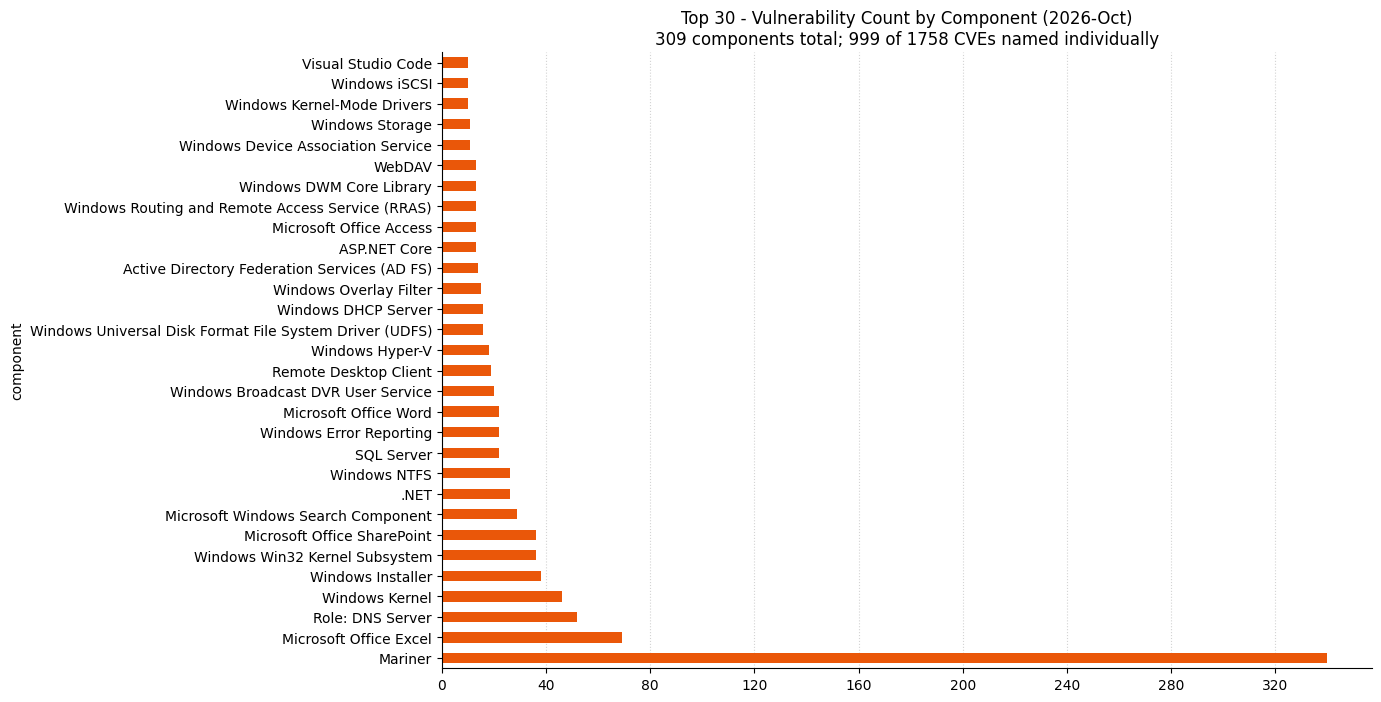
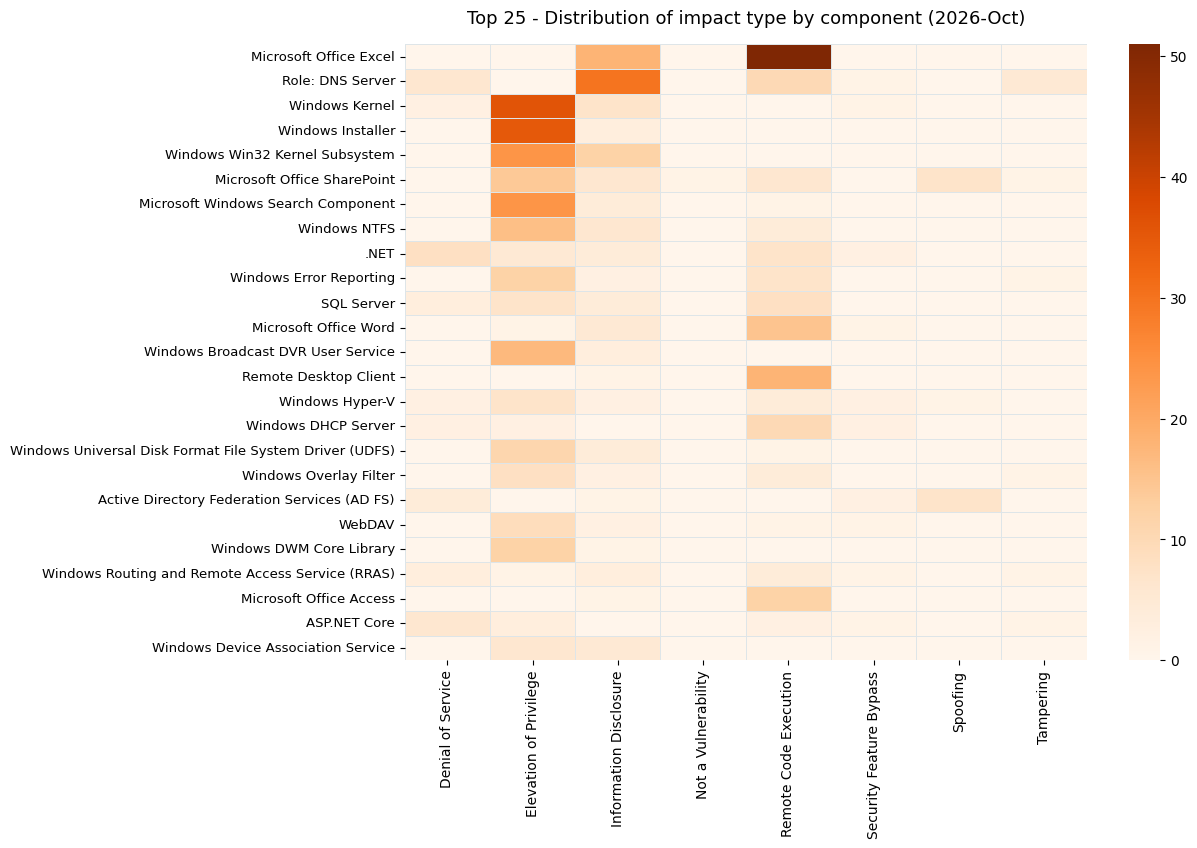
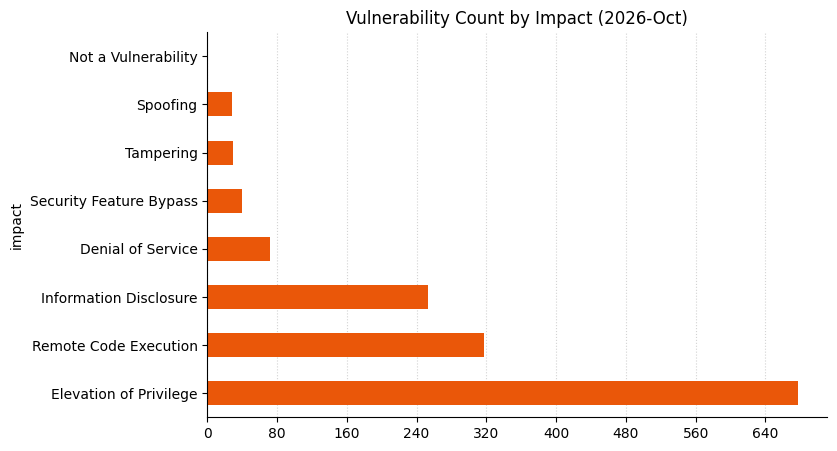
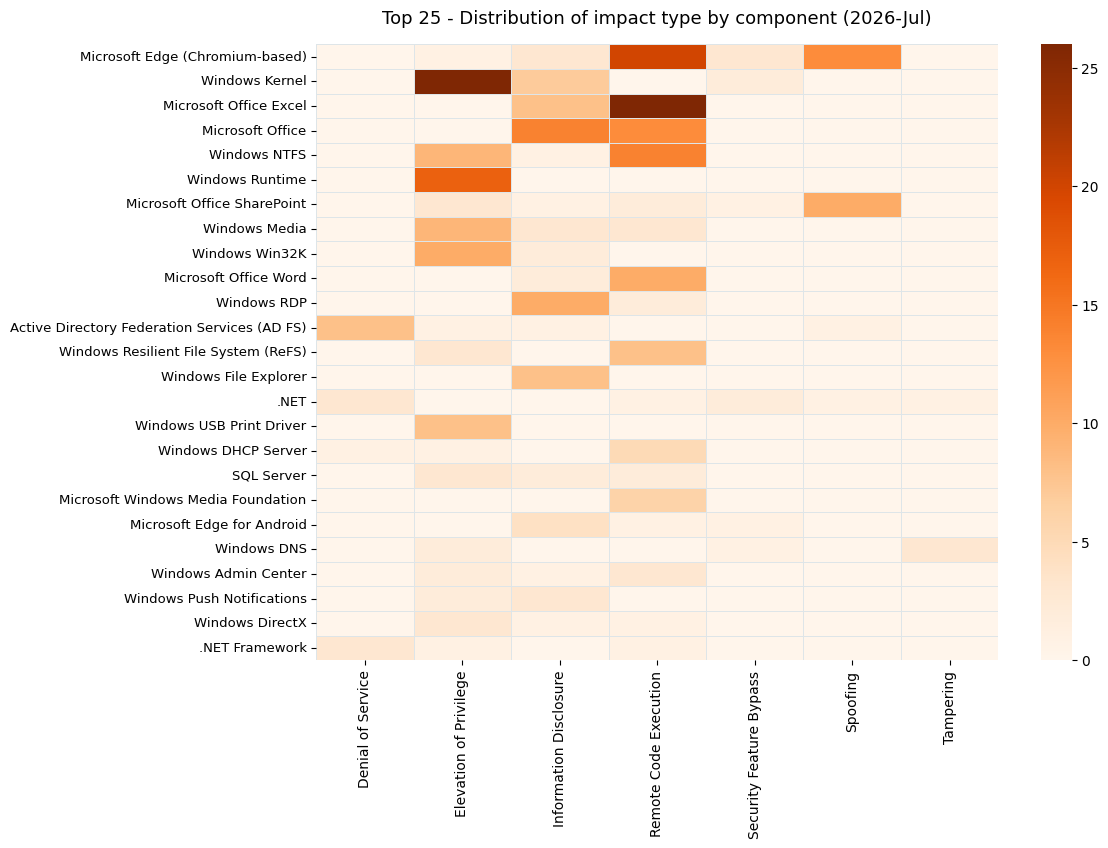
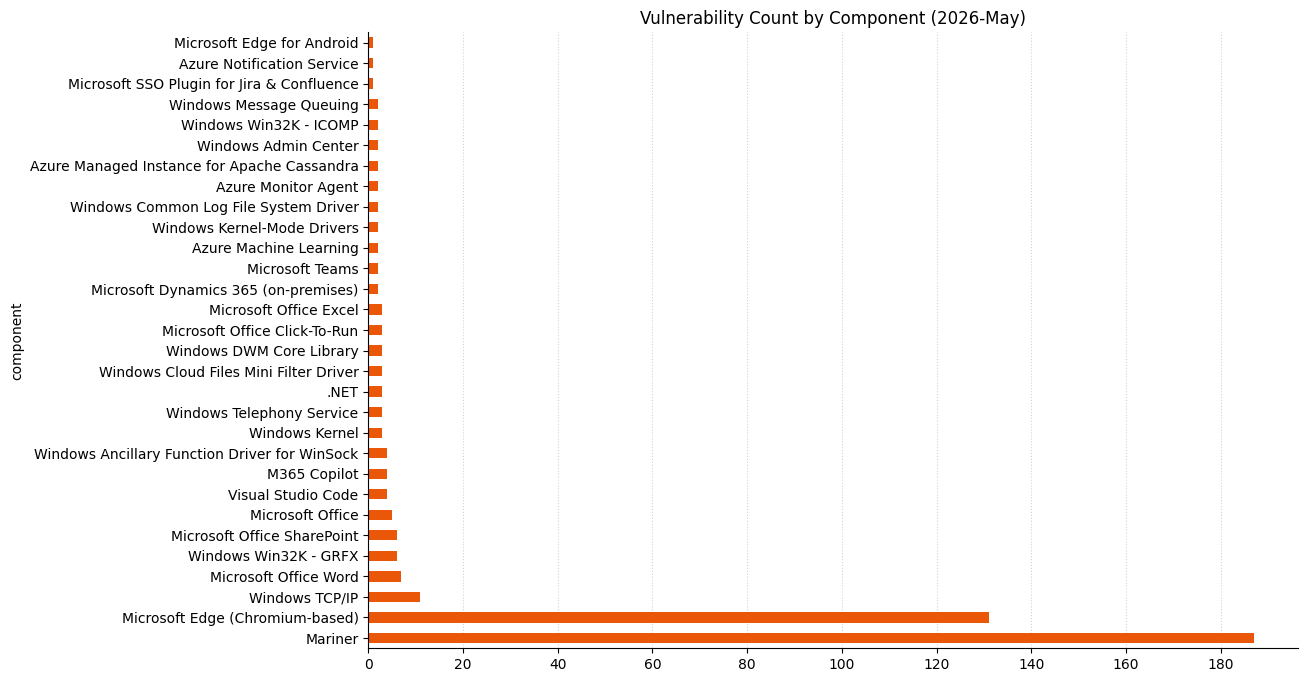
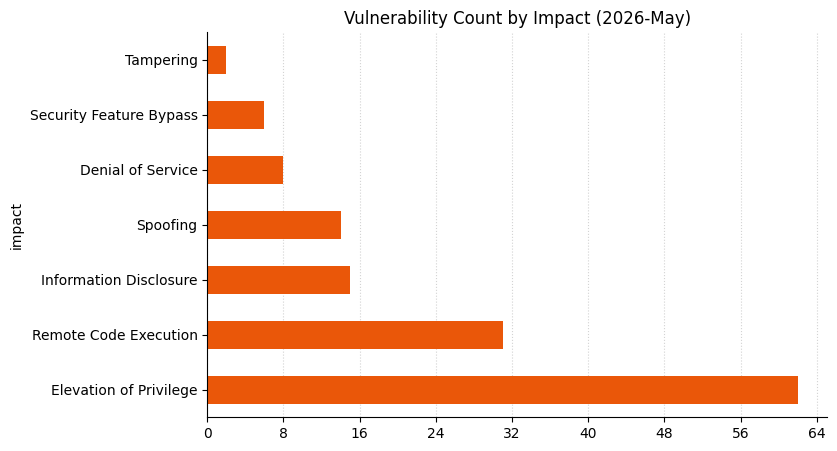
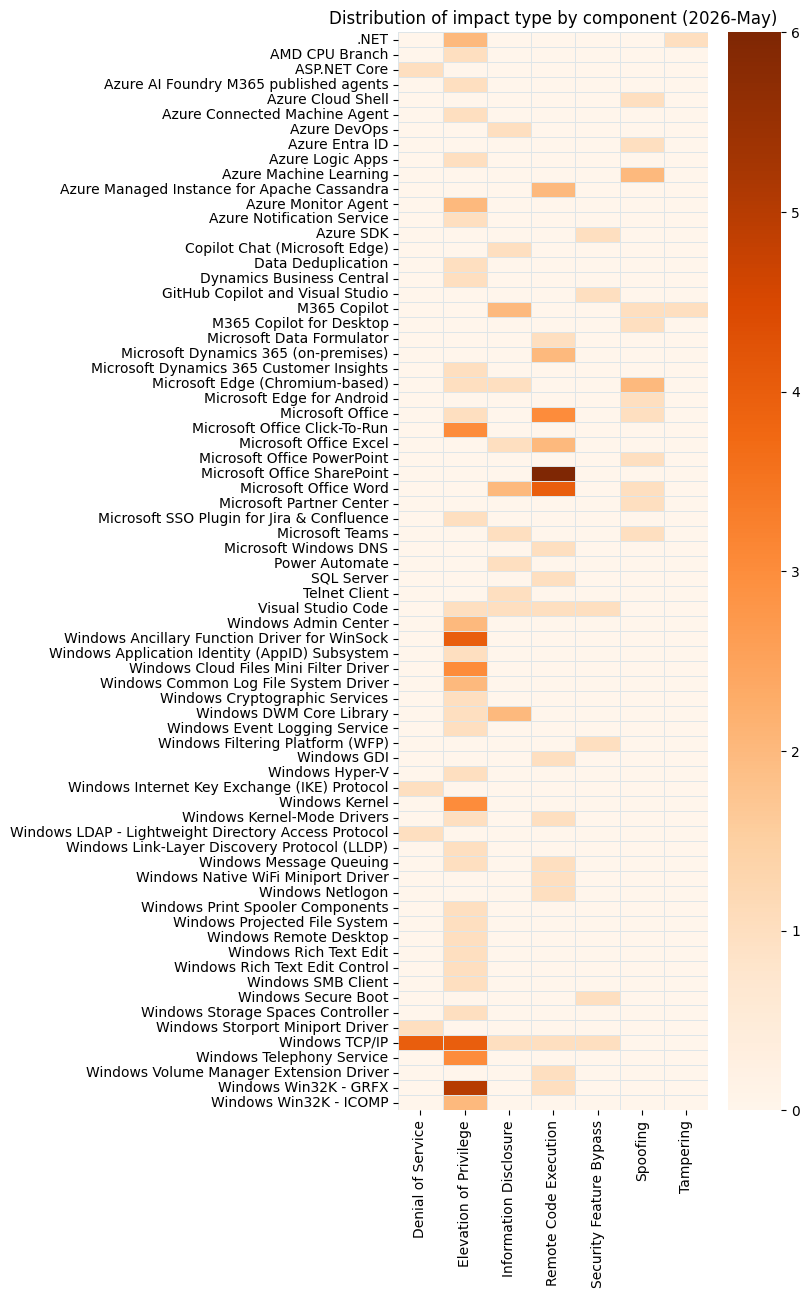
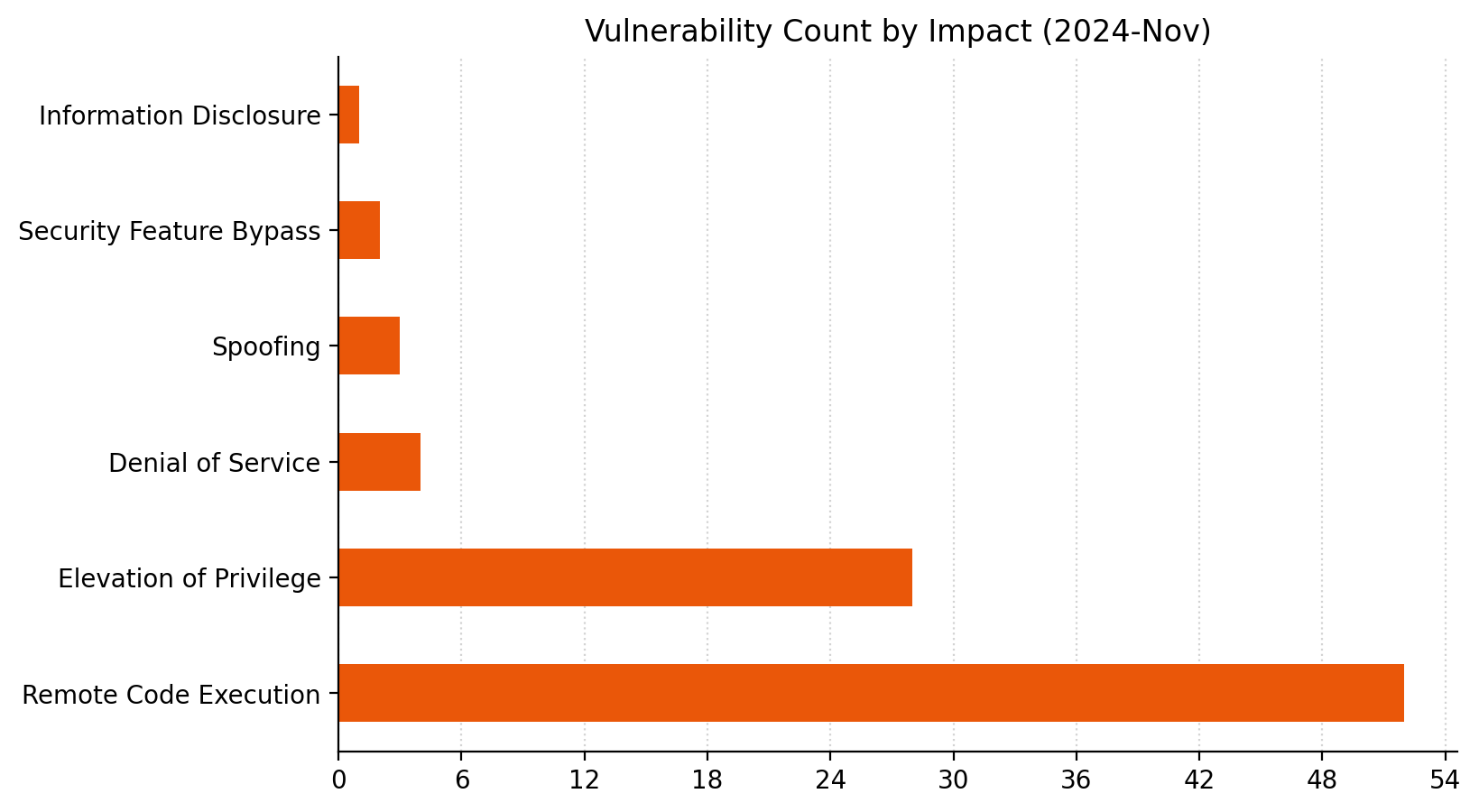
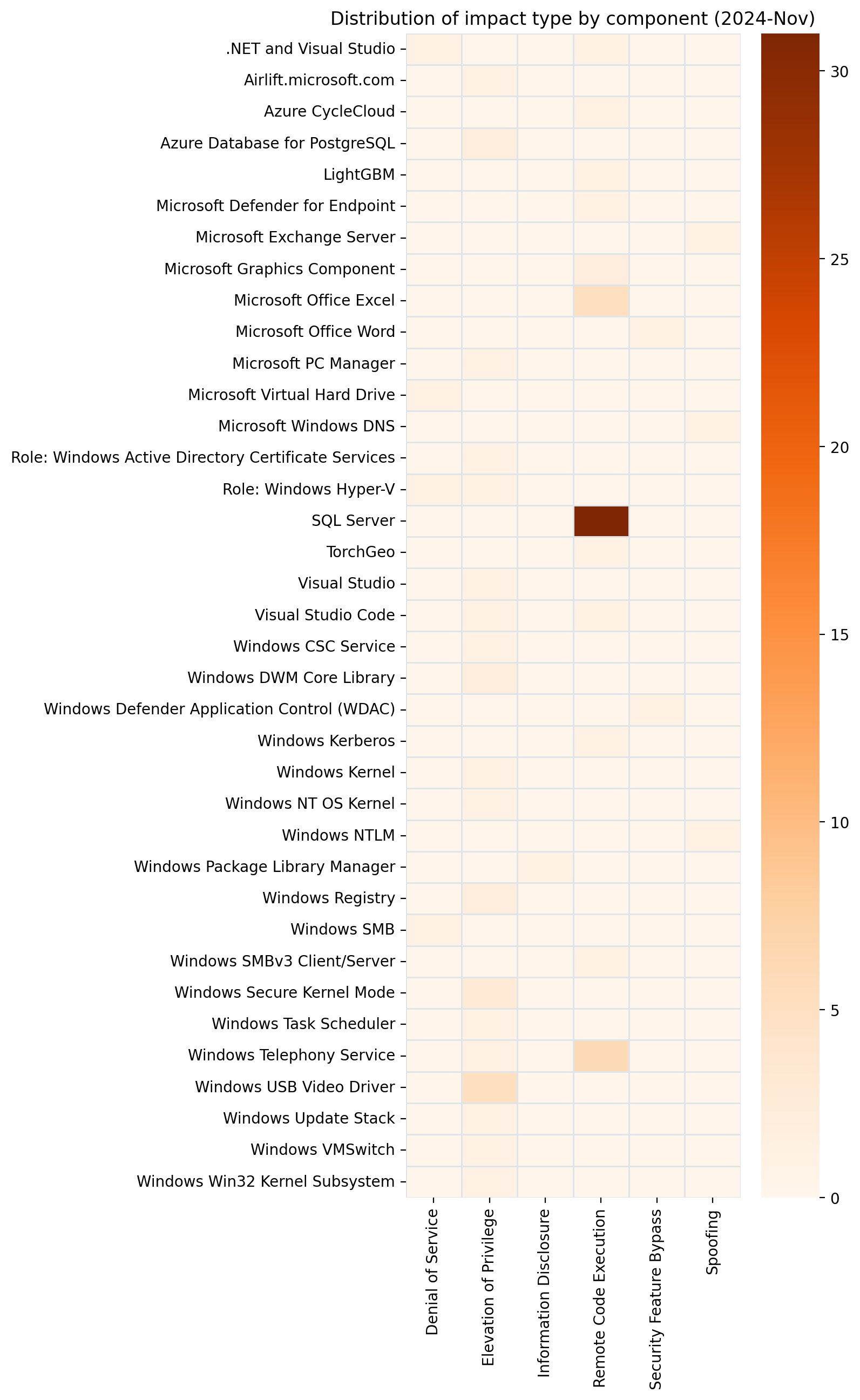
Microsoft is publishing 1,413 own-product vulnerabilities on October 2026 Patch Tuesday, including 1,102 vulnerabilities in Windows. Anyone who enjoyed last month’s record-setting Patch Tuesday will love the October 2026 edition, because it’s much bigger still. As Rapid7 has noted over the course of 2026, there is every reason to suppose that vulnerability volumes will continue to rise. Microsoft is aware of exploitation in the wild for just one of the vulnerabilities published today, as well as public disclosure for two others.
Windows Shell: zero-day security feature bypass
The Windows Shell is Microsoft’s term for the GUI interaction logic for the entire OS provided by explorer.exe and associated libraries and APIs, and for the second time this year, the Windows Shell is the site of an exploited-in-the-wild zero-day vulnerability. Today’s specimen is CVE-2026-96951. Once again, the immediate prize for an attacker is a Mark of the Web (MOTW) bypass. What this means is that Windows won’t provide the user with a dialog explaining that Windows protected their PC, because in this case, it didn’t. Exploitation requires that a user opens a specially crafted malicious file or visits an attacker-controlled site, so the evergreen advice about being careful what you click remains valid. Fans of vintage operating systems should note that Windows Server 2012 doesn’t receive a patch, although Server 2012 R2 does. The advisory acknowledges reporters from multiple organizations, although none from within Microsoft. The vulnerability also affected Microsoft’s Outlook.com cloud services, although Outlook.com was patched in a build dated several weeks ago.
.NET Framework: zero-day security feature bypass
Microsoft is aware of some level of public disclosure of CVE-2026-108398, a .NET Framework security feature bypass. Exploitation requires an attacker with an existing foothold to register a malicious .NET assembly for loading by a protected process, bypassing Windows Defender Application Control (WDAC) enforcement. Microsoft rebranded WDAC as App Control for Business several years ago, so you may know it under its new name. The Microsoft Learn page for Application Control for Windows points out that “your organization’s data is one of its most valuable assets… and threat actors want it”, and this is, of course, correct. The patch presumably removes an attacker-controlled location from the list of places .NET Framework searches for registered assemblies, which are typically contained within DLLs and executables. If any further indications were needed that vulnerability volumes are increasing industry-wide, this is only the second month that Microsoft has published vulnerabilities with six-digit CVE numbers, but these extra-large CVEs will seem unremarkable from now on.
Outlook: multiple no-interaction RCEs
The sheer volume of vulnerabilities in recent Patch Tuesday releases can easily include several examples of potentially concerning vulnerabilities, each of which might have been more remarkable in its own right back when volumes were lower. Today, Microsoft has published five separate remote code execution vulnerabilities in Outlook where the preview pane is a vector, meaning that simply scrolling past an email in the Outlook reading pane would be sufficient to trigger exploitation. Worse still, Outlook might helpfully display the preview without any user interaction at all. All five of CVE-2026-70242, CVE-2026-97749, CVE-2026-97016, CVE-2026-88156, and CVE-2026-70291 receive fixes in the same patches. No-interaction Outlook preview pane vulnerabilities can sometimes feature prominently in state-backed actor campaigns, with CVE-2023-23397 as a prominent example in this category.
Edge: security updates unclear
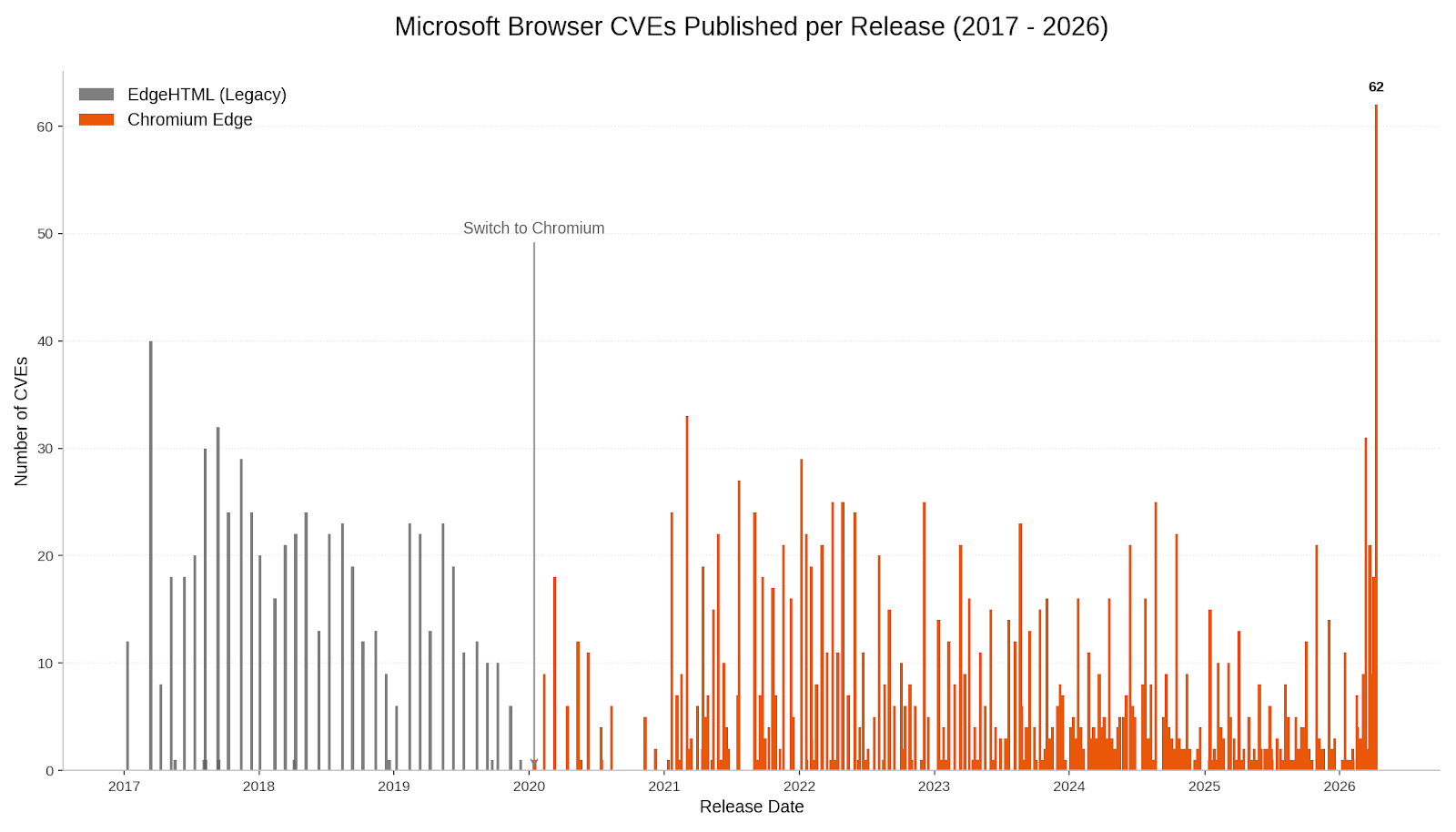
In September 2026, Microsoft did not appear to publish any desktop browser security advisories between the start of the month and Patch Tuesday. In October, a slightly different approach has emerged: several recent entries in the Edge security updates release notes mention new versions of Edge which incorporate the latest updates from the Chromium project, but without detailing which vulnerabilities have been fixed, stating instead, “CVE’s will be added as soon as available,” and directing readers to the Security Update Guide (SUG). At the time of writing, the SUG lists a total of zero vulnerabilities addressed in Edge in the first 13 days of October, and the “CVE’s added soon” message has been up for over a week. As a result, defenders have no obvious way of knowing which recent vulnerabilities Microsoft has addressed in Edge.
Microsoft lifecycle update
In Microsoft product lifecycle news, today sees Windows 11 24H2 Home & Pro reach end of servicing, while Windows Server 2022 moves to extended support, with free critical security updates continuing but no further feature development. Also this month, the final curtain falls for Windows Server 2012 and 2012 R2 with the expiry of the third and final year of cash-for-updates Extended Security Update (ESU) program for these aging workhorses. Microsoft lists the end of ESU Year 3 on October 14, 2026, in both cases. Microsoft has a long history of providing at least some security patches for products beyond the end of support, with Server 2008 being a case in point, but the time to move past Server 2012 is now. Office 2021 also moves into retirement on October 14; this includes the Long-Term Servicing Channel, with no ESU available in that case.
Also on October 15, 2026, Exchange Server 2016 and Exchange Server 2019 finally join the “no ESU” club, after two previous six-month reprieves. Microsoft seems to really mean it this time, since any future Exchange Server CVEs released by MSRC will stop mentioning Exchange 2016 and 2019. However, Microsoft points out that a lack of warnings does not mean those unsupported versions are not vulnerable to future security issues.
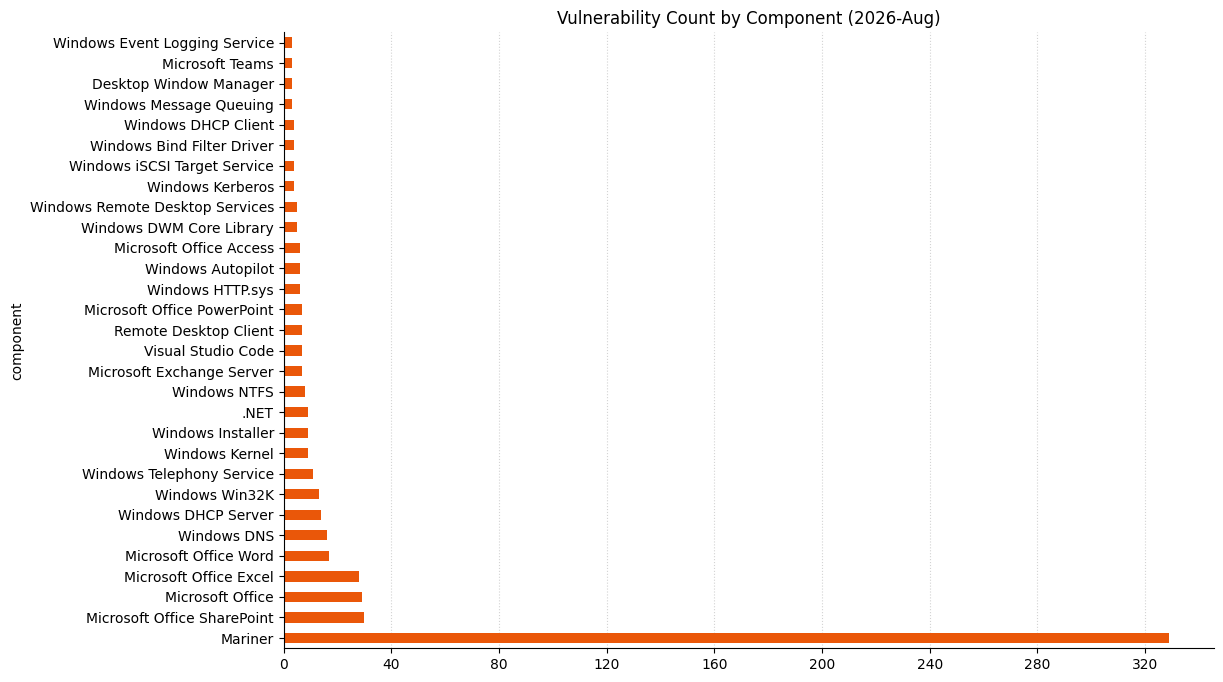
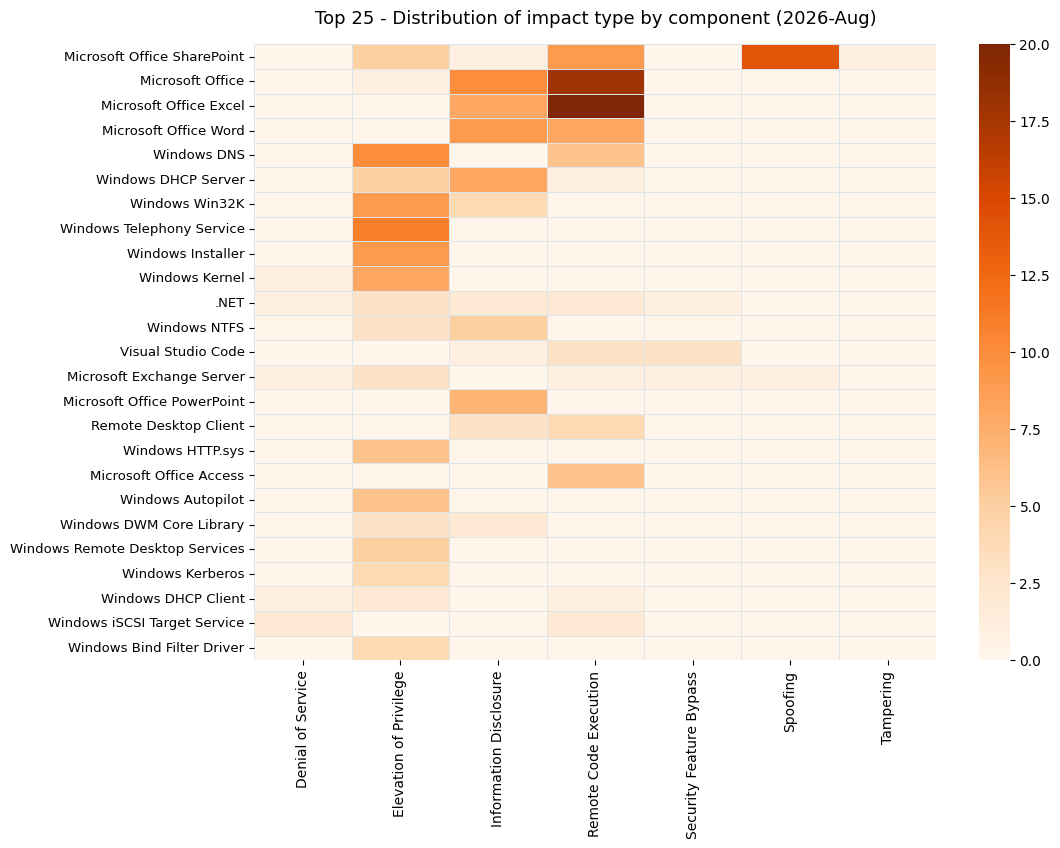
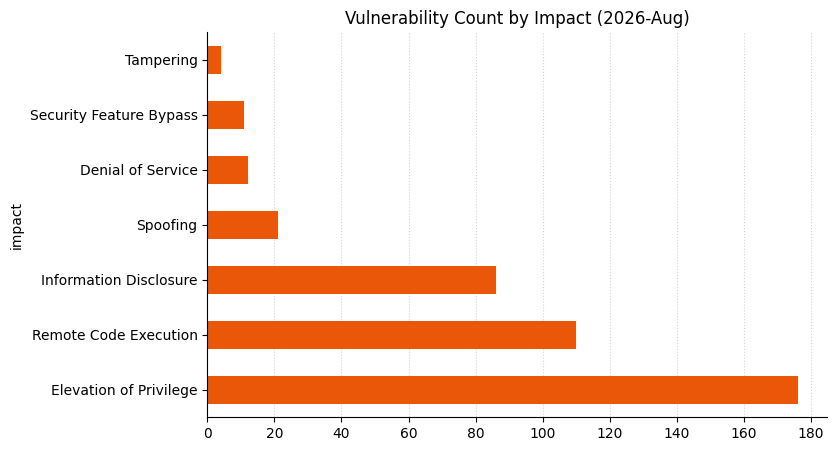
Microsoft is publishing 421 vulnerabilities on August 2026 Patch Tuesday, including 236 vulnerabilities in Windows. This is lower volume than last month’s record-breaking behemoth, but still one of the largest Patch Tuesday totals ever. There is no reason to suppose that Patch Tuesday will ever return to the lower volumes we saw prior to 2026. Microsoft is aware of exploitation in the wild for one of the vulnerabilities published today, as well as public disclosure for two others, although the Notable CVEs section of the Security Update Guide omits one of these. As usual, browser vulns are not included in the Patch Tuesday count above, but unusually, Microsoft does not appear to have published any desktop browser security patches so far this month.
SharePoint: critical RCE chain by Rapid7
Today sees the publication of CVE-2026-63520, a high-severity remote code execution in Microsoft SharePoint. Discovered by Rapid7 Senior Principal Security Researcher Stephen Fewer, and published today in coordination with Microsoft; this vulnerability is the second in a pair of exploits which, when chained together, comprise a critical unauthenticated remote code execution vulnerability in a vulnerable SharePoint server. Patches are available for SharePoint Server Subscription Edition, 2019, and 2016. Alongside today’s coordinated disclosure of CVE-2026-63520, Rapid7 has now published a detailed technical analysis and proof-of-concept for CVE-2026-55040, the first vulnerability in the chain.
AFD for Winsock: zero-day EoP
Rapid7 has previously discussed the Windows Ancillary Function Driver for WinSock, and today it returns to center stage with another exploited-in-the-wild elevation-of-privilege vulnerability. Successful exploitation requires winning a race condition, which increases the difficulty of producing a stable exploit. This also helps keep the CVSS v3 base score down to 7.0, along with a Microsoft proprietary severity ranking of merely important, rather than critical. However, with no user interaction required, and a prize of SYSTEM-level access, CVE-2026-68820 is just what the doctor ordered, if the doctor is based in Pyongyang and wants to steal your cryptocurrency. Microsoft credits CVE-2026-68820 to researchers at Check Point (misspelled “Checkpoint” on the advisory). CVE-2026-68820 isn’t yet listed on CISA KEV, but it will be soon.
What’s the opposite of coordinated disclosure?
This month’s entry in the ongoing saga of Microsoft vs. a pseudonymous security researcher with a clear dislike of Microsoft comes in the form of CVE-2026-62832, an elevation of privilege vulnerability in the Windows User Profile Service. Exploitation leads to administrator rights on the local asset, and is achieved via a specially crafted application, which is Microsoft corporate argot for exploit code. Between the public disclosure and the FAQ, which describes an authenticated attacker who has credentials for another account and loads another user’s registry hive, the advisory is a solid match for Nightmare Eclipse’s description of LegacyHive, which Rapid7 discussed last month.
Patch Tuesday watchers will have been wondering whether Nightmare Eclipse would continue the pattern of the past few months by dropping yet another zero-day vuln late on Patch Tuesday to maximize friction and inconvenience for Microsoft. Wonder no more, because the new entry on this growing list of headaches is ShieldBreak. Nightmare Eclipse describes ShieldBreak as a full patch bypass for RoguePlanet, a previous entry in the series which Microsoft patched as CVE-2026-50656 during July, a month after its public disclosure. Both vulnerabilities are therefore elevation-of-privilege to SYSTEM vulnerabilities in Defender.
CVE-2026-72971 describes a tampering vulnerability in the Windows Container Isolation FS Filter Driver (unionfs.sys), where abuse of a flaw in the vulnerable driver presumably allows an unauthorized attacker to overwrite certain files. Since this might include an action taken within a container leading to an unauthorized impact outside the container, it might be surprising that the advisory claims no scope change. Presumably Microsoft is leaning on the fact that the vulnerability is within a driver which operates entirely within a single security authority, i.e. kernel space, so there is only one impacted component and no scope change according to the CVSS v3 spec. Still, the low CVSS v3 base score of 5.5 probably isn’t telling the whole story in this case.
Vulnerabilities classed as tampering are somewhat rare in the Microsoft corpus, making up just a few dozen of the thousands of unique vulnerabilities which MSRC has ever patched or otherwise addressed. CVE-2026-72971 isn’t mentioned in the Notable CVEs section of the new slimline Security Update Guide. Should it be? Perhaps, because Microsoft is aware of public disclosure in this case, but then again the categorization as tampering means that Microsoft is not currently aware of a path to a more severe impact such as elevation of privilege or code execution. The advisory acknowledges a pair of pseudonymous reporters, who also receive credit on at least 40 other advisories over the past few months, across a wide variety of Windows components and Microsoft Office, including 11 critical vulnerabilities.
Edge: update slowdown?
Typically, Microsoft patches a fair few browser vulnerabilities between the start of each month and that month’s Patch Tuesday, but not this month. Conspicuous by its absence at the time of Patch Tuesday publication today was Microsoft Edge, which receives regular batches of patches as a downstream consumer of Google Chromium. At the moment of Patch Tuesday publication, the desktop incarnations of Edge last received security patches on July 31, 2026. Meanwhile, the Chrome Stable Channel received patches for 41 vulnerabilities on August 6, 2026. Anyone responsible for assets with Microsoft Edge installed will be relieved to know that patches for Edge eventually emerged a few hours later on Patch Tuesday itself, but five days is still a longer unpatched gap between Chrome and Edge than has been typical in the past.
Microsoft lifecycle update
August is typically a quieter month for Microsoft product lifecycle transitions, and this year continues that pattern. The next lifecycle changes with broad impact occur on October 14, 2026, when Windows 11 24H2 Home & Pro reach end of servicing, and Windows Server 2022 moves to extended support, with free critical security updates continuing, but no further feature development. At the same time, the final curtain falls for Windows Server 2012 and 2012 R2 with the expiry of the third and final year of cash-for-updates Extended Security Update (ESU) program for these aging workhorses. Office 2021 also moves beyond support, including the Long-Term Servicing Channel, with no ESU available in that case. Also in October, Exchange Server 2016 and 2019 will join the “no ESU” club, after two previous six-month reprieves. Presumably, Microsoft really means it this time.
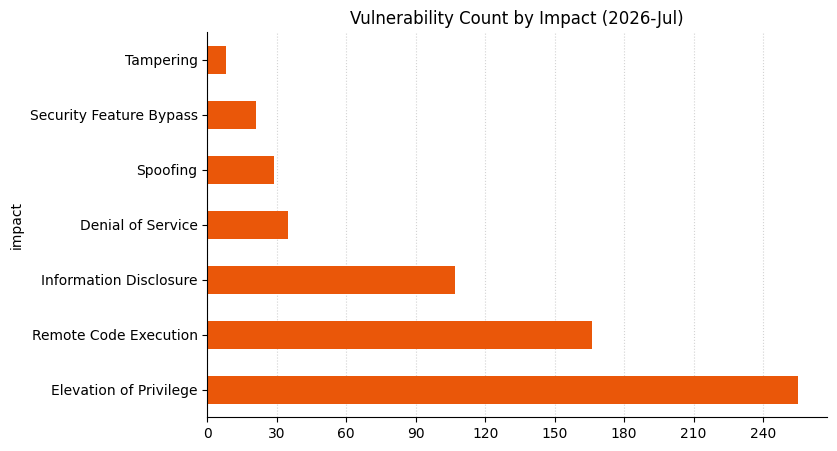
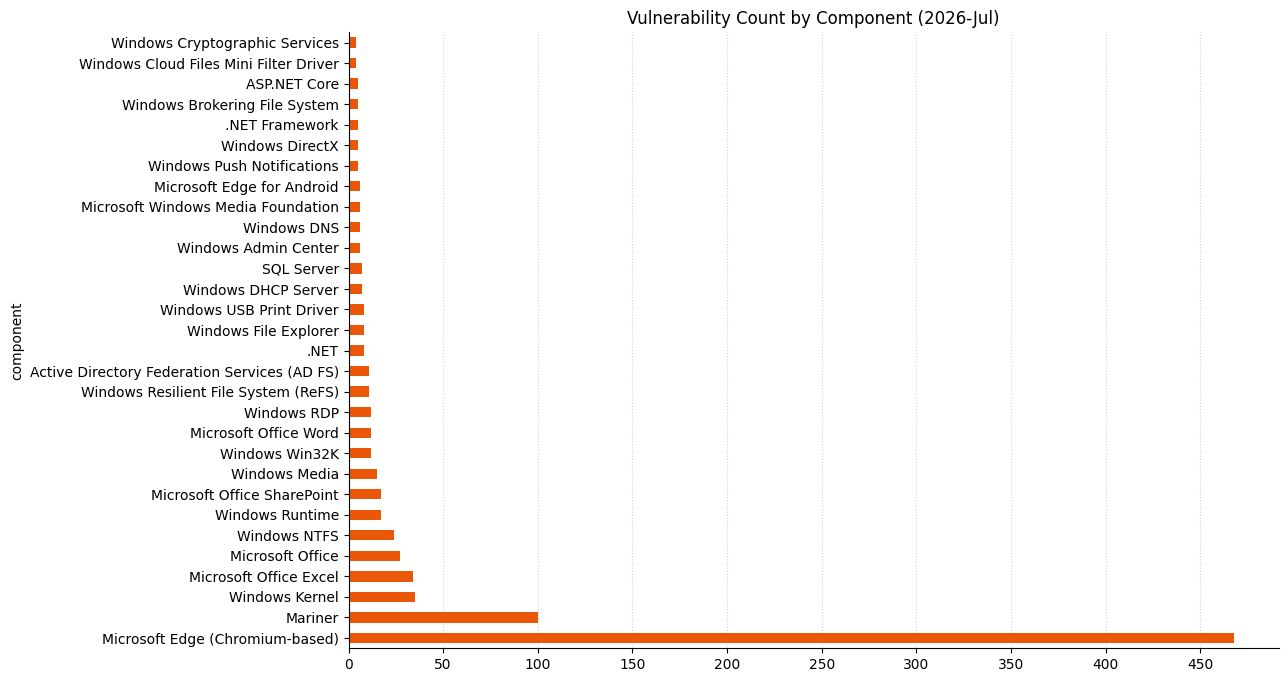
Microsoft is publishing 622 vulnerabilities on July 2026 Patch Tuesday, including a record-breaking 416 Windows vulnerabilities. Microsoft is aware of exploitation in the wild for two of the vulnerabilities published today, both of which are listed on CISA KEV, as well as public disclosure for one other. As usual, browser vulns are not included in the Patch Tuesday count above. Rapid7 noted last month that Microsoft no longer enumerates Chromium CVEs in the Security Update Guide. However, Microsoft has now taken the pursuit of minimalism much further, since today’s Security Update Guide no longer lists out even Microsoft vulnerabilities! Instead, we now receive a summary table of vulnerability counts by product family, as well as a new slimline “Notable CVEs” section. All of this only serves to illustrate the recent industry-wide trend of exploding vulnerability report counts, with an associated uptick in the publication of remediations as a trailing indicator.
SharePoint: critical auth bypass by Rapid7
Today sees the publication of CVE-2026-55040, a critical authentication bypass in Microsoft SharePoint. Discovered by Rapid7 Senior Principal Security Researcher Stephen Fewer, and published today in coordination with Microsoft, this vulnerability is the first in a pair of exploits which, when chained together, can lead to unauthenticated remote code execution against a vulnerable SharePoint server. Patches are available for SharePoint Server Subscription Edition, 2019, and 2016. As the full Rapid7 blog post sets out, the second vulnerability in the full RCE chain remains embargoed for now, with Microsoft expected to publish patches for that second vulnerability as part of Patch Tuesday August 2026. Microsoft noted: “We would like to thank Rapid7 for responsibly reporting this issue through coordinated vulnerability disclosure.”
SharePoint: zero-day EoP
It’s a rare Patch Tuesday which doesn’t include multiple SharePoint fixes, and today is no exception. Microsoft is aware of existing in-the-wild exploitation of CVE-2026-56164, where successful exploitation allows an attacker to elevate privileges over a network, with no existing privileges required, and low attack complexity since “an attacker does not require significant prior knowledge of the system, and can achieve repeatable success”. This is as good an example as any that a relatively low CVSS v3 base score (5.3) may be an imperfect signal concealing something much spicier, and Microsoft acknowledges that possibility by assigning a severity rating of Important. Microsoft certainly intended to list CVE-2026-56164 in the new Notable CVEs section of the Security Update Guide instead of erroneously listing CVE-2026-56155 twice, and it’s likely that this will be corrected shortly.
What’s the opposite of coordinated disclosure?
After years of relative stability, the Patch Tuesday process has experienced significant turbulence so far in 2026. As well as the AI-fuelled exponential growth of vulnerability reporting and discovery, Microsoft is grappling with the emergence of a series of vulnerabilities disclosed in such a way as to bring maximum discomfort for Redmond. Pseudonymous researcher Nightmare Eclipse dropped another Defender elevation of privilege vulnerability in the hours following Patch Tuesday June 2026, which Microsoft subsequently published and patched as CVE-2026-50656, along with a terse acknowledgement of the vulnerability’s celebrity nickname of RoguePlanet. Recently, Nightmare Eclipse has given conflicting estimates of what sort of surprises Microsoft can expect today, as well as claiming that the CVE-2026-50656 patches introduce a new avenue for a disk exhaustion attack. Today, a new proof of concept for a further vulnerability nicknamed LegacyHive has emerged from the same source, which appears to allow a non-privileged user to mount another user’s user hive.
Microsoft BitLocker receives patches today for a publicly-known security feature bypass vulnerability. The advisory for CVE-2026-50661 explains that an unauthorized attacker with physical access to the target machine can bypass Windows BitLocker. While Microsoft doesn’t confirm either way, it’s very probable that this is a patch for the GreatXML vulnerability which Nightmare Eclipse announced the day after Patch Tuesday June 2026.
Active Directory Federation Services: zero-day EoP
Active Directory administrators should note the emergence today of CVE-2026-56155, an exploited-in-the-wild elevation of privilege vulnerability in Active Directory Federation Services which allows an authorized attacker to elevate privileges locally. Eight other vulnerabilities are also published today in Active Directory Federation Services, all ranked as Important on Microsoft’s proprietary severity ranking scale. The advisory doesn’t explicitly describe the location of the attacker, but it’s likely that an attacker would need an existing toehold on the target system to chain together with the elevation of privilege opportunity on offer here.
Age of Empires II: RCE
Historically, Patch Tuesday hasn’t seen too many security patches for video games. However, Age of Empires II: Definitive Edition is a new entrant to the Microsoft CVE roster today. Veteran AoE2 players may well be familiar with dangerous opposition early game strategies such as the Persian Town Center nuisance or the Aztec monk rush, but anyone who opens a malicious game scenario file without applying the patch for CVE-2026-50663 might suffer a serious defeat. Successful exploitation allows an attacker to place malicious files in unexpected locations, potentially enabling code execution on the target system.
Microsoft lifecycle update
As Rapid7 noted last month, there are some significant Microsoft product lifecycle changes taking place in mid-July. SQL Server 2016 moves beyond regular extended support and into the pay-to-play Extended Security Updates (ESU) phase from July 15, 2026, and its older sibling SQL Server 2014 moves into the third and final year of ESU. Also on July 14, 2026, SharePoint Server 2016 and 2019 reach extended end date, and since there’s no ESU available, the only remaining option for fully-supported self-hosted SharePoint after today is SharePoint Subscription Edition. The July 2026 lifecycle casualties continue with Project Server 2016 and 2019, Dynamics GP 2016 and 2016 R2, InfoPath 2013, and SharePoint Designer 2013, which also all reach their Extended End Dates, ending their supported lifecycles. Visual Studio 2022 Version 17.12 Long-Term Servicing Channel (LTSC) reaches its release end date on July 14, leaving either the Visual Studio 2022 current channel or an upgrade to Visual Studio 2026 as supported options.
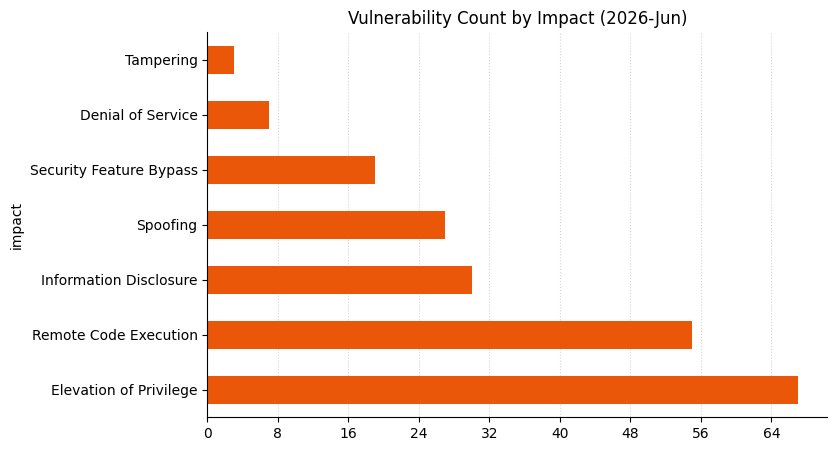
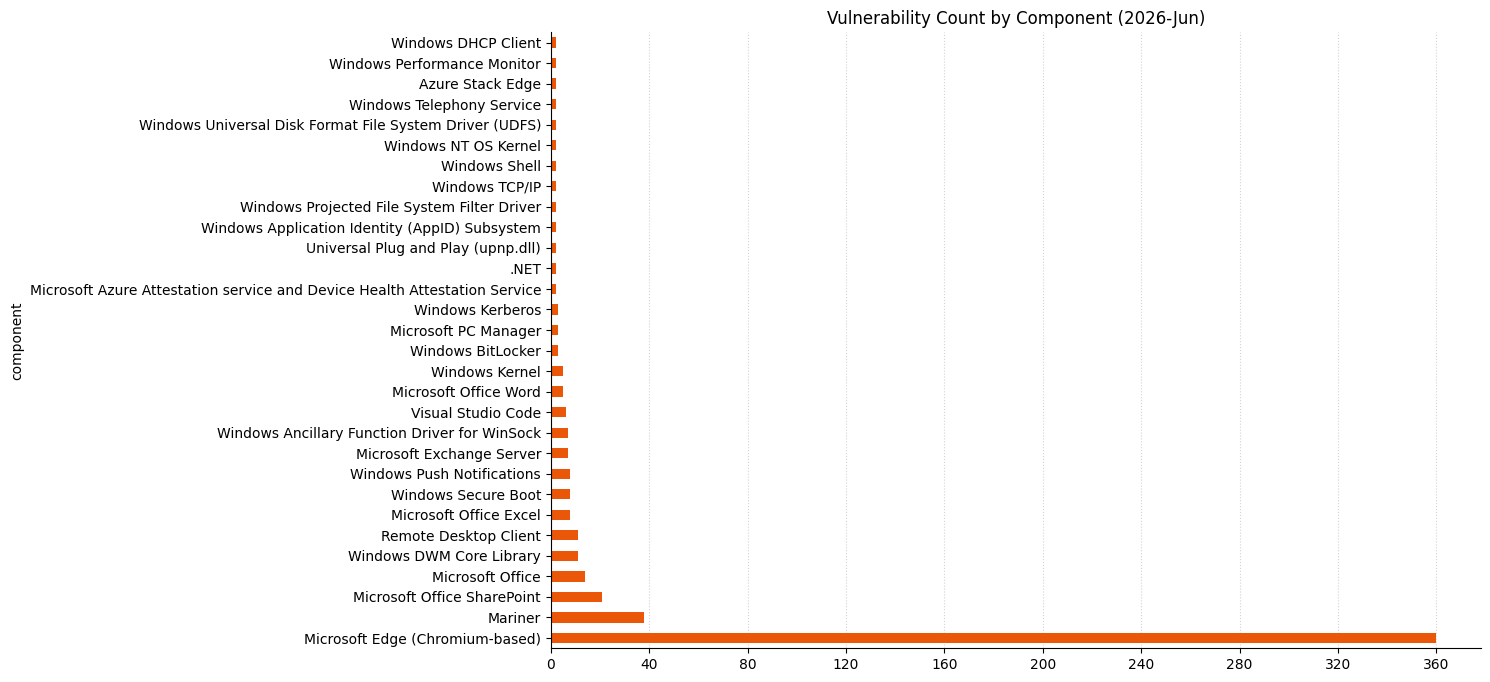
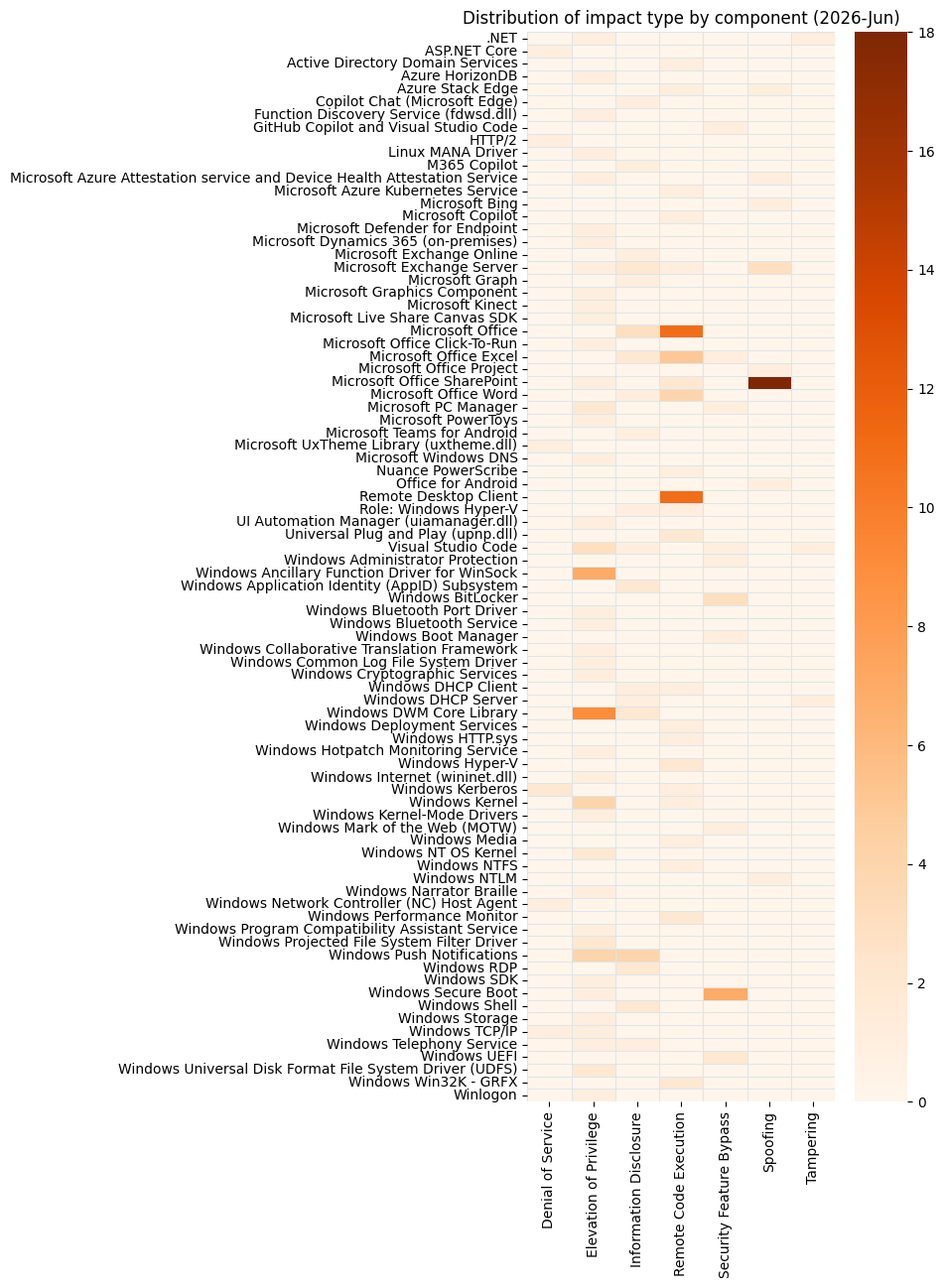
Microsoft is publishing 200 vulnerabilities on June 2026 Patch Tuesday. Microsoft is not aware of exploitation in the wild for any of these vulnerabilities, and is aware of public disclosure for three. This is similar to last month’s Patch Tuesday, however several of last month’s vulnerabilities ended up on CISA KEV in the days following their publication. So far this month, Microsoft has provided patches to address 360 browser vulnerabilities, which is an order of magnitude more than has been typical in any given month over the past few years. As usual, browser vulns are not included in the Patch Tuesday count above. Indeed, the vast, and presumably sustained, uptick in the number of browser vulnerabilities has led to Microsoft no longer enumerating Chromium CVEs in the Security Update Guide. Other vulnerability categories, especially Linux kernel vulnerabilities, are seeing a similar increase in AI-assisted vulnerability reports.
What’s the opposite of coordinated disclosure?
In recent weeks, an independent vulnerability researcher going by the pseudonym Nightmare Eclipse has attracted significant attention by publishing details of six Microsoft vulnerabilities, including elevation of privilege vulnerabilities in Defender, and a Secure Boot disk encryption bypass. The researcher provided full proof-of-concept code for some, and provided significant-but-incomplete detail around the path to exploitation for others. Microsoft has confirmed that these disclosures were not coordinated, and it is clear that the relationship between this researcher and Microsoft is less than cordial. Two of the disclosures emerged in the hours after last month’s Patch Tuesday, which provides maximum visibility, while limiting Microsoft’s ability to respond without out-of-cycle patches.
At time of writing, Microsoft has provided mitigation advice and patches for CVE-2026-33825, CVE-2026-45585, CVE-2026-45498, and CVE-2026-41091, leaving only two elevation of privilege vulnerabilities unpatched, known as MiniPlasma and GreenPlasma. However, a recent blog post by Nightmare Eclipse with the title “7” has been widely interpreted to mean that there is at least one more vulnerability to come. The post contained no content other than an image of Albert Vesker, a character from the Resident Evil video game series who formerly worked as a researcher for a technology corporation before going rogue. Any inference around the possible meaning of the image is left as an exercise for the reader.
Given the timing of last month’s disclosures in the hours following Patch Tuesday, a further high-friction disclosure today would perhaps be unsurprising. Indeed, a new blog post and a new GitHub account from the same researcher have emerged in the hours following Microsoft’s publication of the June 2026 Patch Tuesday updates. The apparent seventh disclosure is nicknamed RoguePlanet, and appears to describe another elevation of privilege to SYSTEM in Defender.
It is not at all difficult to understand why Microsoft and many blue team practitioners are deeply alarmed by the partial or even full disclosure of proof-of-concept code for an ongoing series of vulnerabilities affecting fully-patched Windows systems. However, multiple leading voices in the broader vulnerability disclosure community have expressed concern that Microsoft’s invocation of the Digital Crimes Unit in a May 27, 2026 blog post may yet prove counterproductive, especially if it causes other researchers to back away from mutually beneficial engagements with MSRC. A few days later, MSRC issued a further statement clarifying that they have no intention of pursuing action against security researchers, but only those who break the law or engage in malicious activity causing real harm. For now, one safe conclusion is that this unusually sensational Microsoft vulnerability management story arc is far from over.
HTTP/2: denial of service
Every so often, a new round of denial of service vulnerabilities emerge which affect web servers implementing HTTP/2 and HTTP/3 standards. This class of vulnerabilities is likely to expand further as researchers, including the discoverers of CVE-2026-49160, use advances in LLM capability to probe not just specific software, but also the standards on which software rests. Microsoft warns that exploitation leads to uncontrolled resource consumption over a network, and expects that exploitation is more likely. The advisory credits both a third-party research firm and OpenAI’s Codex.
Microsoft has not yet directly addressed another HTTP/2 vulnerability which allows trivial denial-of-service against the default HTTP/2 configuration of multiple web server platforms, including Microsoft IIS. CVE-2026-49975, also known as HTTP/2 Bomb, became public knowledge a week ago. This denial of service works by exhausting memory on the target server, and unlike a distributed denial of service attack, there is no requirement that an attacker control a large amount of bandwidth. Patches are available for NGINX and Apache, with IIS presumably to follow at some point. If practically possible, disabling HTTP/2 is a valid mitigation.
PowerToys: SYSTEM EoP
The Microsoft PowerToys utility provides a wide variety of useful control and configuration options for Windows power users which aren’t otherwise easily accessible. It turns out that PowerToys also offers an undocumented extra: local elevation of privilege to SYSTEM via successful exploitation of CVE-2026-42902. It is worth noting that the fix was included in PowerToys v0.99.1 on April 29, 2026, without any apparent mention in the release notes. Attackers with patch-diffing toolkits may well take note of this discrepancy.
Microsoft lifecycle update
There are no significant Microsoft product lifecycle changes this month. SQL Server 2016 moves beyond regular extended support and into the pay-to-play Extended Security Updates (ESU) phase after July 14, 2026. On that same date, SharePoint 2016 and 2019 will also move past extended support, but since there’s no ESU available, the only remaining option for fully-supported self-hosted SharePoint after the middle of next month will be SharePoint Subscription Edition.
Microsoft is publishing 137 vulnerabilities on May 2026 Patch Tuesday. Microsoft is not aware of exploitation in the wild or public disclosure for any of these vulnerabilities. So far this month, Microsoft has provided patches to address 133 browser vulnerabilities, which are not included in the Patch Tuesday count above.
Windows Netlogon: critical RCE
Anyone responsible for securing a domain controller should prioritize remediation of CVE-2026-41089, which is a critical stack-based buffer overflow in Windows Netlogon with a CVSS v3 base score of 9.8. Exploitation leads to execution in the context of the Netlogon service, so that’s SYSTEM privileges on the domain controller. For most pentesters, that’s the point at which the customer report more or less writes itself. No privileges or user interaction are required, and attack complexity is low, which suggests that creation of a reliable exploit might not be especially difficult for anyone with knowledge of the specific mechanism.
Microsoft assesses exploitation as less likely, but since those exploitability assessments are provided without an accompanying explanation, it’s not clear how much reassurance defenders should take. Anyone who remembers the much-discussed CVE-2020-1472 (aka ZeroLogon) back in 2020 will note that CVE-2026-41089 offers an attacker more immediate control of a domain controller. Patches are available for all versions of Windows Server from 2012 onwards.
Windows DNS Client: critical RCE
An attacker looking for a master key for Windows assets will pay attention to CVE-2026-41096, a critical RCE in the Windows DNS client implementation. A modern computer talks to DNS the way a child in the back of a car asks “are we there yet?” The variable and complex structure of DNS responses means that DNS client implementations are also complex and thus prone to flaws. Microsoft assesses exploitation as less likely, and we can hope that modern mitigations such as heap address randomization and optional-but-recommended encrypted channel DNS will make weaponization significantly more challenging by putting barriers across specific paths to exploitation. The DNS client on Windows runs as the NetworkService role, rather than SYSTEM, but a foothold is a foothold, and skilled attackers expect to chain exploits together.
JIRA/Confluence Entra ID auth plugin: critical EoP
If you’re still self-hosting Atlassian JIRA or Confluence and relying on the Microsoft Entra ID authentication plugin, you’ll want to know about CVE-2026-41103. This critical elevation of privilege vulnerability allows an unauthorized attacker to impersonate an existing user by presenting forged credentials, thus bypassing Entra ID. Microsoft expects that exploitation is more likely. Even if you can’t always find what you want on the corporate Confluence, a motivated attacker probably will. Curiously, the patch links on the advisory lead to older versions of the plugins published in 2024.
Microsoft WARP team
Microsoft’s WARP team is credited with multiple critical vulnerabilities today, after making their first appearance in MSRC advisory acknowledgements in last month’s Patch Tuesday. We can speculate that they likely know a great deal about the current state of AI-powered vulnerability research as it applies to Microsoft products.
Microsoft lifecycle update
There are no significant Microsoft product lifecycle changes this month. Microsoft .NET 9 STS (Standard Term Support, as distinct from Long Term Support) was originally scheduled to move past the end of support in May 2026, but late last year, Microsoft granted a six-month extension, so that .NET 9 STS now reaches end of support on November 10, 2026.
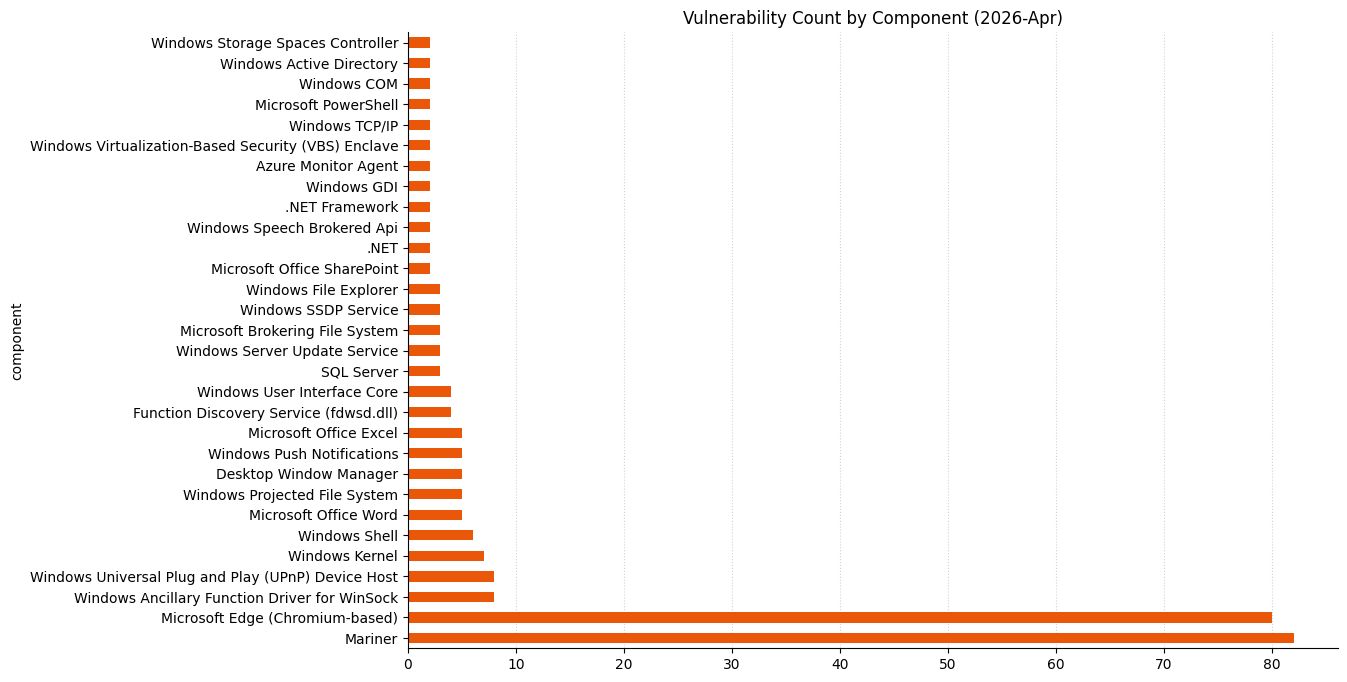
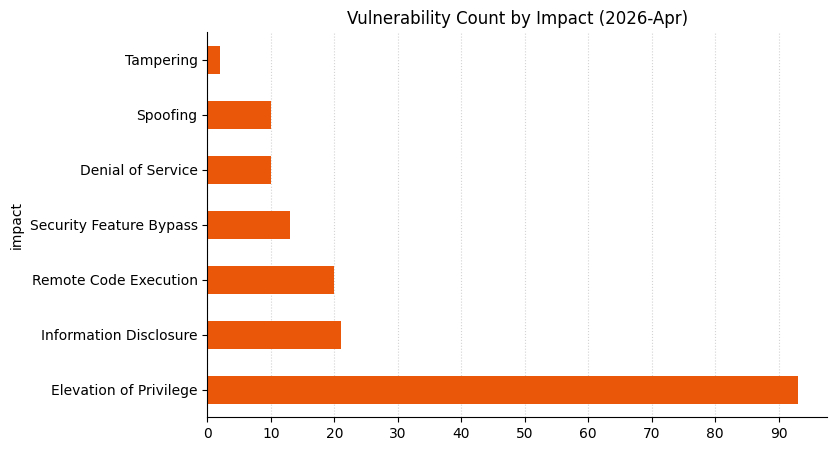
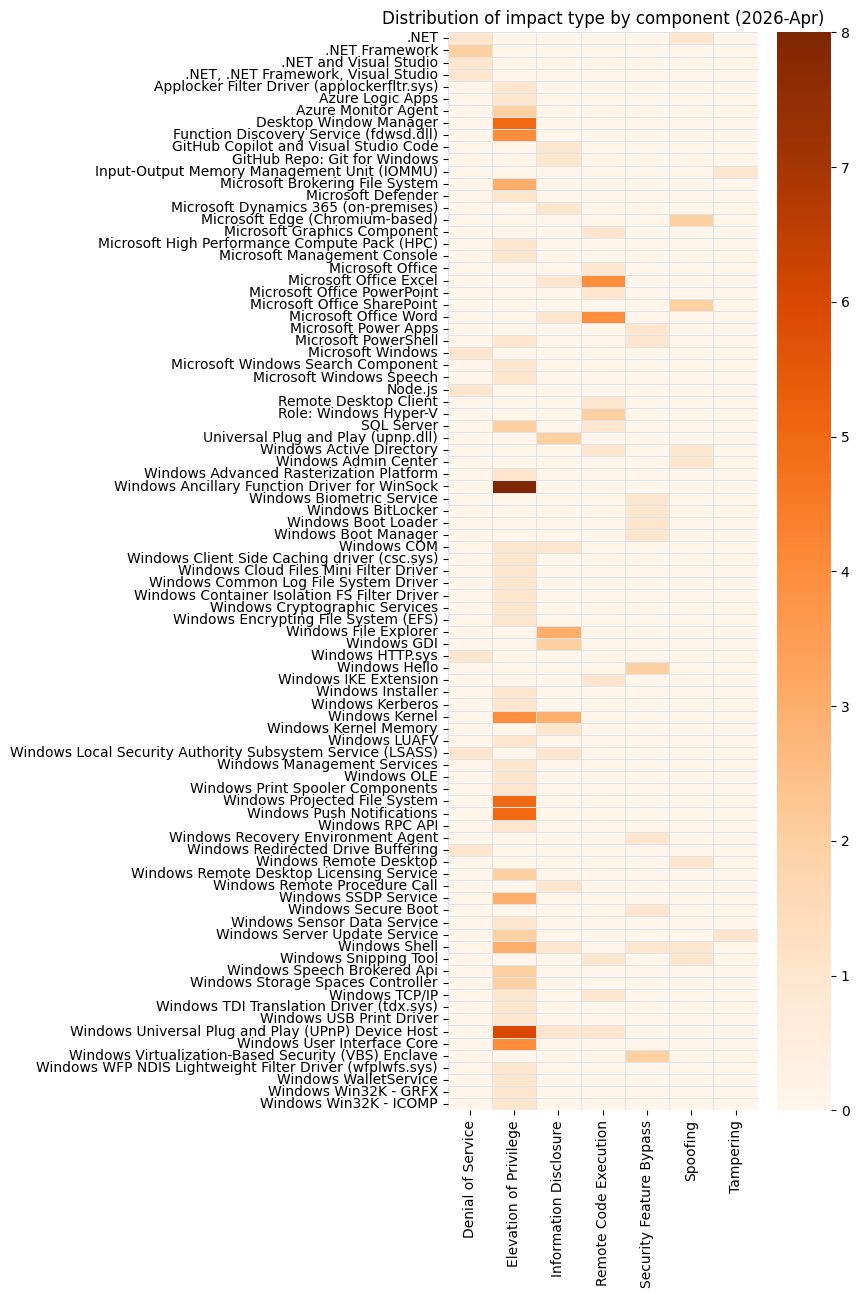
Microsoft is publishing 167 vulnerabilities on April 2026 Patch Tuesday. Microsoft is aware of exploitation in the wild for one of today’s vulnerabilities, and public disclosure for one other. Microsoft evaluates 19 of the vulnerabilities published today as more likely to see future exploitation. So far this month, Microsoft has provided patches to address 80 browser vulnerabilities, which are not included in the Patch Tuesday count above.
Increasing volumes of vulnerabilities
Regular Patch Tuesday watchers will know that these vulnerability totals are significantly higher than usual, especially the browser numbers. Late last week, Microsoft published patches to resolve more than 60 browser vulnerabilities in a single day, which is a new record in that very specific category.
It might be tempting to imagine that this sudden spike was tied to the buzz around the announcement a week ago today of Project Glasswing, but this is not the case. Edge is based on the Chromium engine, and the Chromium maintainers acknowledge a wide range of researchers for the vulnerabilities which Microsoft republished last Friday. This reflects a significant industry-wide uptick in the volume of vulnerability reports over the past few weeks. A safe conclusion is that this increase in volume is driven by ever-expanding AI capabilities. We should expect to see further increases in vulnerability reporting volume as the impact of AI models extend further, both in terms of capability and availability.
SharePoint: zero-day spoofing
When everything is changing rapidly, it can be tempting to look to familiar things for comfort. SharePoint admins should start by addressing CVE-2026-32201, an exploited-in-the-wild spoofing vulnerability. The advisory doesn’t offer much detail, but does mention CWE-20: Improper Input Validation and low impact to confidentiality and integrity, with no impact to availability. Of course, the greatest attacker impact is typically achieved by chaining together multiple vulnerabilities that by themselves might not seem so bad.
Ever-increasing novel AI capabilities in offensive cybersecurity now appear to provide real competition for all but the most elite human researchers; if it was ever valid to suppose that a vulnerability with a CVSS v3 base score of 6.5 was unlikely to cause much pain, it’s certainly not a safe defensive assumption in 2026. Patches are available for all supported versions of SharePoint, including SharePoint 2016, which moves beyond extended support on July 14, 2026.
Defender: zero-day elevation of privilege
Microsoft Defender receives a patch today for CVE-2026-33825, a local privilege escalation vulnerability for which Microsoft is aware of public disclosure. Successful exploitation leads to SYSTEM privileges, so this is certainly worth patching sooner rather than later. Microsoft points out that no action should be required to install this update, since the Microsoft Defender Antimalware Platform automatically updates by default. A further silver lining is that systems that have disabled Microsoft Defender are not in an exploitable state. Hopefully, any such system is running a suitable third-party replacement for Defender’s capabilities.
Windows [I don’t like] IKE: zero-day pre-auth RCE
The Windows Internet Key Exchange (IKE) Services Extensions is the site of CVE-2026-33824, a critical unauthenticated remote code execution vulnerability. Exploitation requires an attacker to send specially crafted packets to a Windows machine with IKE v2 enabled, which could enable remote code execution. Vulnerabilities leading to unauthenticated RCE against modern Windows assets are relatively rare, or we’d see more wormable vulnerabilities self-propagating across the internet. However, since IKE provides secure tunnel negotiation services, for instance for VPNs, it is necessarily exposed to untrusted networks and reachable in a pre-authorization context. It’s hard to imagine this turning into a rampaging internet-wide worm, but there’s plenty of scope for initial access abuse, so this IKE vulnerability is still yikes.
The advisory does contain a section with potential mitigations for anyone unable to patch immediately, which center on least-privilege restriction of relevant UDP traffic. This same portion of the advisory also furnishes a helpful link to the definition of the word “mitigations” in the MSDN glossary. All versions of Windows back as far as Server 2016 and Windows 10 1607 LTSC receive patches.
The advisory credits both the WARP and MORSE (Microsoft Offensive Research & Security Engineering) teams at Microsoft. MORSE appears in Acknowledgements over the past few years, but today marks the first explicit mention of WARP in a Microsoft security advisory Acknowledgements section; we can speculate that WARP is an internal designator for the Microsoft Windows Enterprise Security Team.
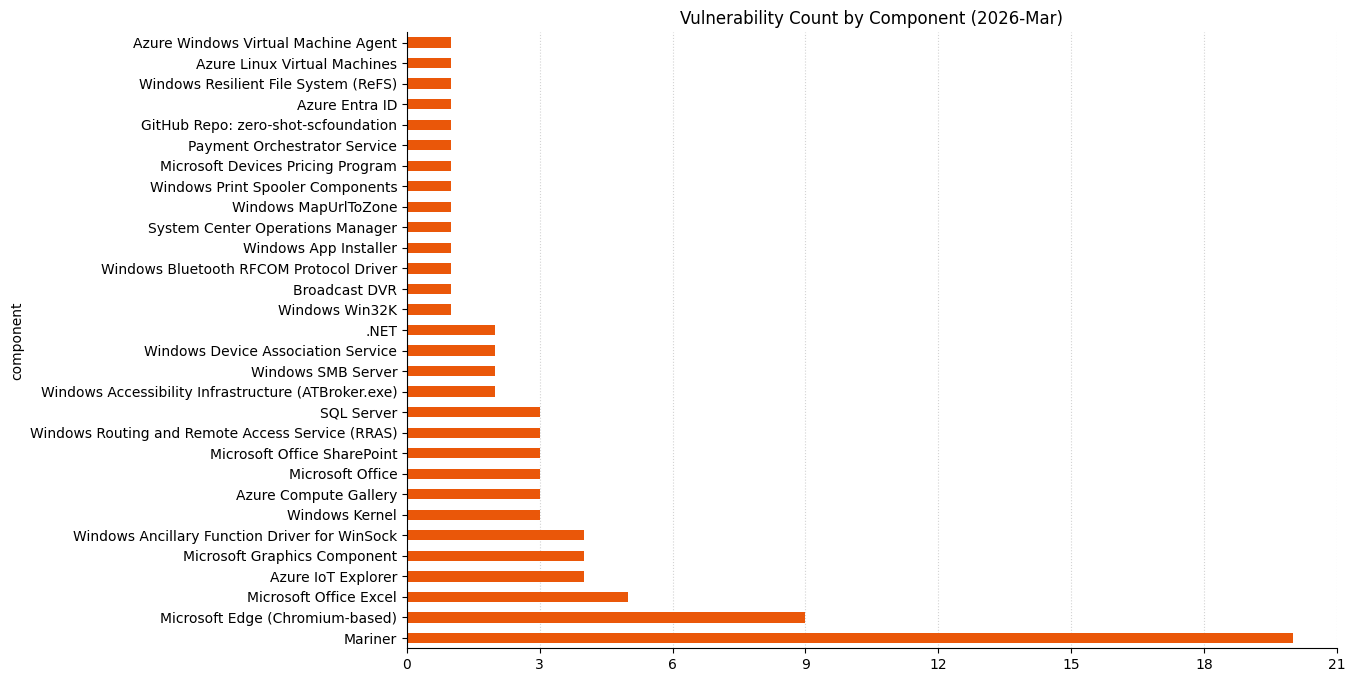
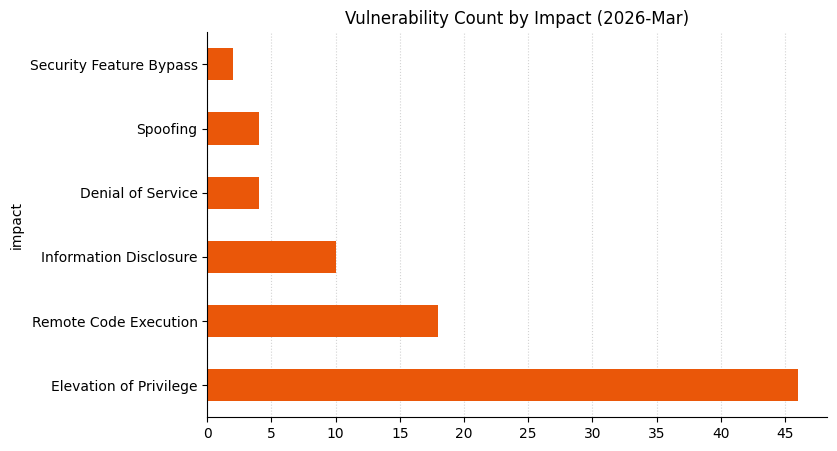
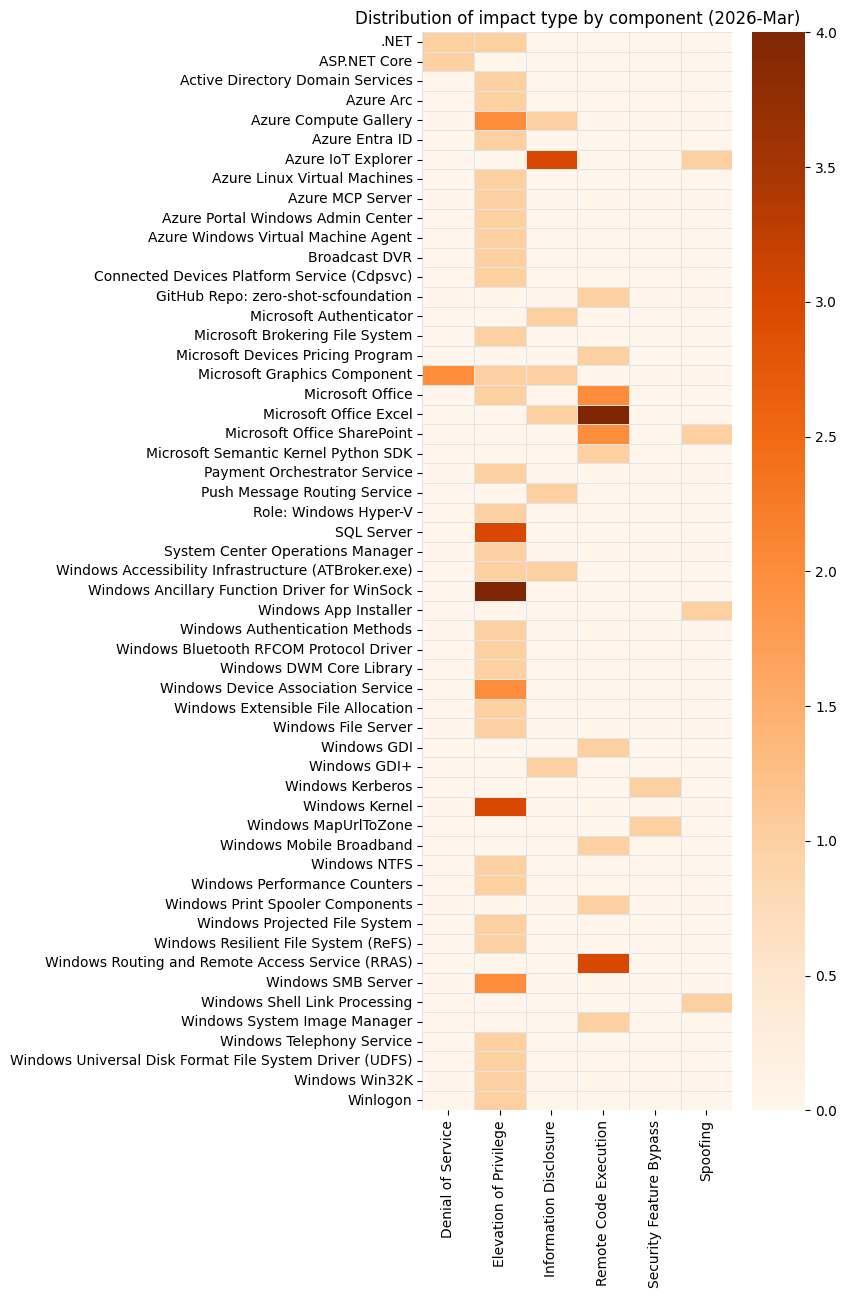
Microsoft is publishing 77 vulnerabilities this March 2026 Patch Tuesday. Microsoft is aware of public disclosure of two of today’s vulnerabilities, but without evidence of exploitation in the wild for any (yet), so there are no Microsoft additions to CISA KEV today. Earlier in the month, Microsoft provided patches to address nine browser vulnerabilities, which are not included in the Patch Tuesday count above.
SQL Server: zero-day remote EoP
SQL Server often goes several months in a row without any mention on Patch Tuesday. Today, however, all versions from the latest and greatest SQL Server 2025 back as far as SQL Server 2016 SP3 receive patches for CVE-2026-21262, a SQL Server elevation of privilege vulnerability. This isn’t just any elevation of privilege vulnerability, either; the advisory notes that an authorized attacker can elevate privileges to sysadmin over a network. The CVSS v3 base score of 8.8 is just below the threshold for critical severity, since low-level privileges are required.
Microsoft is aware of public disclosure, so while they assess the likelihood of exploitation as less likely, it would be a courageous defender who shrugged and deferred the patches for this one. Most SQL Server admins and security teams concluded many years ago that exposing SQL Server directly to the internet was not a good idea. Then again, popular search engines for internet-connected devices describe tens of thousands of SQL Server instances, and they can’t all be honeypots.
What could an attacker do as SQL Server sysadmin? Beyond exfiltrating or interfering with the database itself, the obvious target is xp_cmdshell, which allows direct callouts to the underlying OS. The good news is that xp_cmdshell is disabled by default as far back as SQL Server 2005; the bad news is that anyone acting as SQL Server sysadmin can enable it in seconds. At that point, the attacker is acting with the full privileges of the security context under which SQL Server runs, which is ideally a purpose-built account designed with least privilege in mind. If you want to hear some hair-raising stories, you have only to ask any incident response veteran if they’ve ever seen it set up differently.
Anyone paying for Extended Security Updates (ESU) for SQL Server 2014 or SQL Server 2012 may be forgiven for wondering why there’s no security update for those venerable versions of the world’s most widely deployed closed-source database product. We can hope that the vulnerability described by CVE-2026-21262 was introduced in newer codebases only.
.NET: zero-day DoS
Attackers fond of low-effort denial of service attacks against .NET applications will be checking out CVE-2026-26127 today. Microsoft is aware of public disclosure. While the immediate impact of exploitation is likely contained to denial of service by triggering a crash, opportunities for other types of attacks might emerge during a service reboot. Alternatively, if a log forwarder or security agent is impacted, even for a brief period of time, an attacker might carry out an attack in that moment hoping to evade detection under cover of this artificial darkness. Even if a low-skilled attacker simply causes downtime, in some contexts that could be enough to cause an SLA breach or loss of revenue, or at the very least cause a bleary-eyed defender to get paged in the middle of the night.
Authenticator: QR code impersonation
Microsoft Authenticator mobile app users on both iOS and Android should update to the latest version to prevent exploitation of CVE-2026-26123, which involves a malicious app disguising itself as Microsoft Authenticator. Exploitation succeeds when the malicious app receives enough information to impersonate the user. The legitimate Authenticator app could be installed on a personal device, but often provides multi-factor authentication (MFA) codes for production services in a bring-your-own-device context. Typically, users can choose their own authenticator app. Accordingly, defenders should consider how well their mobile device management policy covers app choice enforcement and patching for MFA apps.
The CVSS v3 base score of 5.5 is unremarkable, and exploitation requires user interaction, since the user must select the malicious app as the handler for the sign-in flow. However, exploitation could begin via an attacker-controlled link, or even a malicious QR code that drives users to the malicious app, and a motivated attacker with a physical presence near the user base might well consider this option. Microsoft ranks this vulnerability as important on their proprietary severity scale. The advisory also provides a brief peek behind the curtain, since the executive summary notes that “Cwe is not in rca”. The weakness listed on the advisory is CWE-939: Improper Authorization in Handler for Custom URL Scheme.
Microsoft lifecycle update
There are no significant Microsoft product lifecycle changes this month, unless you are responsible for a Microsoft SQL Server 2012 Parallel Data Warehouse instance, which moves beyond extended support as of March 31st. It would be wise not to count on a last-minute extension, since Microsoft has already granted a six month reprieve.
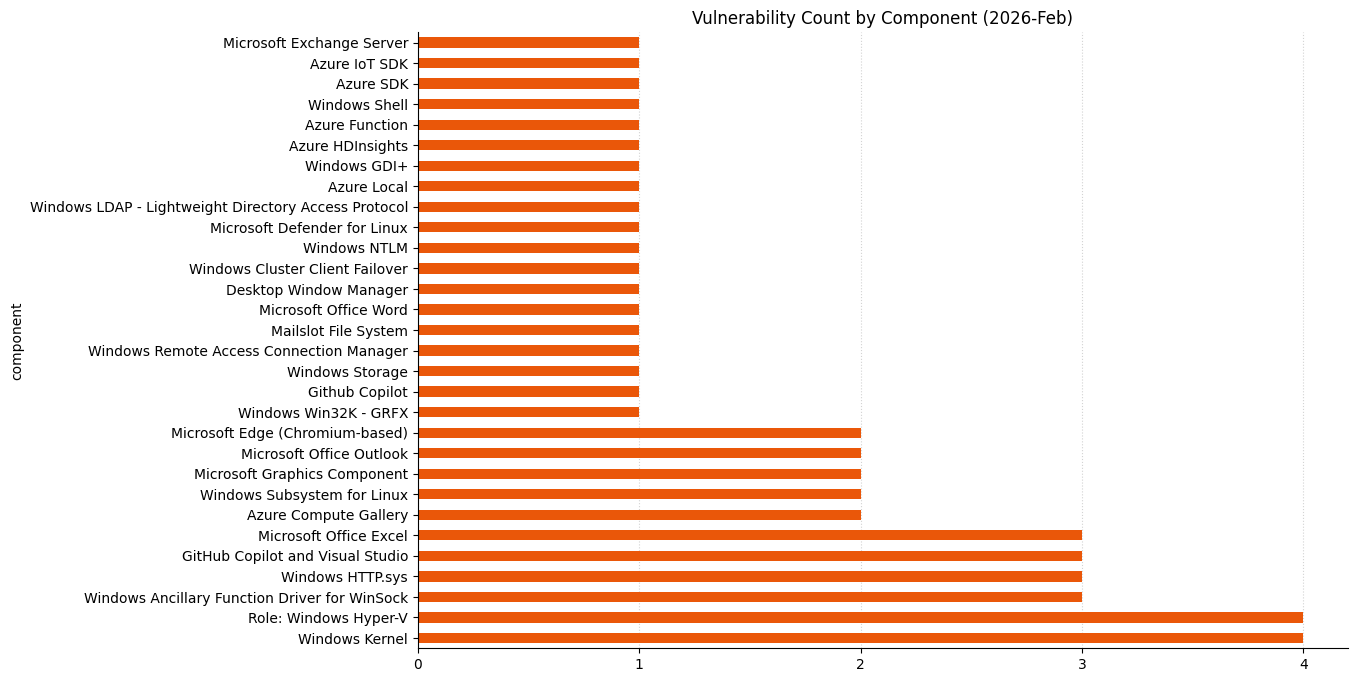
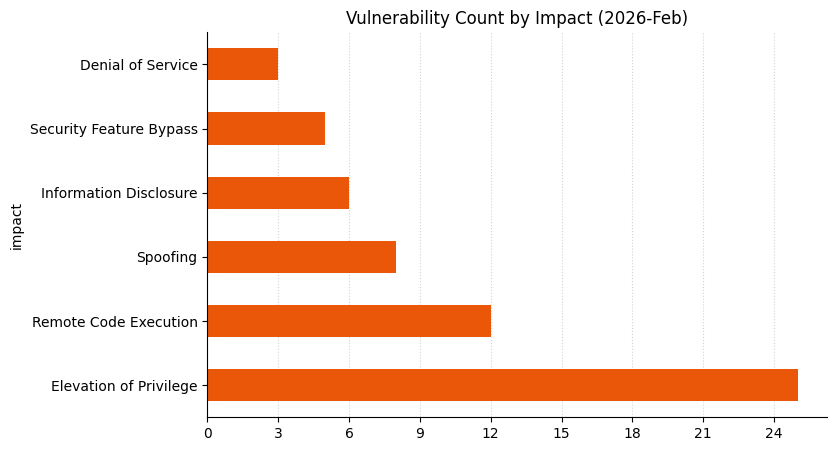
Microsoft is publishing 55 vulnerabilities this February 2026 Patch Tuesday. Microsoft is aware of exploitation in the wild for six of today’s vulnerabilities, and notes public disclosure for three of those. Earlier in the month, Microsoft provided patches to address three browser vulnerabilities, which are not included in the Patch Tuesday count above.
All three of the publicly disclosed zero-day vulnerabilities published today are security feature bypasses, and Microsoft acknowledges the same cast of reporters in each case.
CVE-2026-21510 describes a zero-day Windows Shell security feature bypass vulnerability which is already exploited in the wild. Not to be confused with PowerShell, most people will use the Windows Shell without ever learning its name or even really contemplating its existence. The Windows Shell is Microsoft’s term for the GUI interaction logic for the entire OS provided by explorer.exe and associated libraries and APIs.
CVE-2026-21510 provides an attacker with a way to dodge those pesky Smart Screen or other “are you sure?” prompts. The advisory sets out that “an attacker must convince a user to open a malicious link or shortcut file”. We could parse this wording more than one way, and while shortcut files with a .lnk extension are certainly a prime suspect here, it’s possible that .url files might also be a vector.
The venerable MSHTML/Trident web rendering engine is still present in Windows as a daily driver for Office and Explorer, many years after most people stopped using Internet Explorer. Accordingly, every so often Microsoft has to patch another zero-day vulnerability in the browser it can’t quite bring itself to rip out of its flagship operating system. Today’s example is CVE-2026-21513, a security feature bypass which starts with the attacker convincing a user to open a malicious HTML file or shortcut file.
If good things come in threes, then perhaps CVE-2026-21514 makes security bypass zero-day vulnerabilities a good thing. Exploitation involves bypassing Object Linking & Embedding (OLE) mitigations by convincing the user to open a malicious Word document. The advisory only lists remediations for LTSC versions of Office and on-prem Microsoft 365 Apps for Enterprise, without mentioning the standard Microsoft 365 suite.
It’s curious that Microsoft has evaluated the attack vector for CVE-2026-21514 as local, because MSRC typically assesses any vulnerability which boils down to “remote attacker tricks user into opening malicious payload” as a remote attack, based on the location of the attacker. However, the advisory specifically calls out that “reliance on untrusted inputs in a security decision in Microsoft Office Word allows an unauthorized attacker to bypass a security feature locally.” It’s not clear whether this is a deviation from prior practice by MSRC, an inadvertent mis-assessment, or an unusual-but-correct assessment of an attack vector that relies on details which Microsoft has not made public. Happily, the Preview Pane is not a vector, which raises the bar slightly for an attacker, since the user must explicitly open the malicious file or web page.
Ultimately, although none of the advisories for CVE-2026-21510, CVE-2026-21513, or CVE-2026-21514 explicitly come out and say it, it’s likely that exploitation in each case involves tricking Windows into participating in another Mark-of the Web laundering scheme using flaws in old components.
Windows DWM: zero-day elevation of privilege
For the second month in a row, the Windows Desktop Windows Manager (DWM) is the site of an exploited-in-the-wild zero-day vulnerability. Last month’s CVE-2026-20805 was an information disclosure vulnerability, effectively a treasure map for threat actors seeking the otherwise obfuscated in-memory address of the kernel-space DWM process. The publication of zero-day elevation of privilege (EoP) vulnerability CVE-2026-21519 today very likely reflects MSTIC and MSRC working to thwart the same threat actor in both cases. As Rapid7 has noted in the past, initial access coupled with local elevation of privilege vulnerabilities is the staple diet of many successful attackers, so the lower CVSS v3 base score of 7.8 seen here versus a broadly equivalent remote code execution is not a sign to delay patching.
Remote Desktop Services: zero-day elevation of privilege
Remote Desktop Services (RDP) are designed to allow a duly authorized remote user to interact with the server, but CVE-2026-21533 allows an unauthorized local user to elevate privileges to SYSTEM. Every Windows Server product back as far as Server 2012 receives patches, so this one has been present for a while. It’s possible that today’s patches close off a long-running exploitation story for at least one threat actor.
RasMan: zero-day denial of service
Exploited in the wild, but perhaps of less concern is CVE-2026-21525, a local denial of service vulnerability in the Windows Remote Access Connection Manager (RasMan). Somewhat unusually for a local vulnerability, the advisory sets out that no privileges are required at all, so even a guest account can exploit this one. You have disabled those guest accounts, right?
Microsoft lifecycle update
There are no significant Microsoft product lifecycle changes this month.
If you received an email with the subject “I LOVE YOU” and an attachment called “LOVE-LETTER-FOR-YOU.TXT”, would you open it? Probably not, but back in the year 2000, plenty of people did exactly that. The internet learned a hard lesson about the disproportionate power available to a university dropout with some VBScript skills, and millions of ordinary people suffered the anguish of deleted family photos or even reputational damage as the worm propagated itself across their entire Outlook address book.
In the quarter century since ILOVEYOU rampaged across global networks, cybersecurity has moved from a niche topic to an “everyone” problem, and many users are wary of all sorts of threats. In recent years, the increasing ubiquity and urgency of AI adoption across the business landscape has attracted the attention of both security researchers and threat actors.
Of course, recency bias and shiny object fixation are real. Even as AI and automation continue to drive down time to known exploitation (TTKE), an attacker who abuses a traditional exploit chain to achieve SYSTEM privileges on a sensitive server still has the keys to the kingdom.
Wormable remote code execution (RCE) vulnerabilities remain rare, but well over half of the 25 exploited-in-the-wild zero-day vulnerabilities published by Microsoft during 2025 provided attackers with elevation of privilege opportunities on Windows assets. Some of those flaws are older than the iPhone, let alone ChatGPT.
Microsoft’s decades-long commitment to backwards compatibility creates a conveyor belt supply of déjà vu vulnerabilities. Ultimately, the most pressing threats faced by defenders managing Microsoft estates remain essentially unchanged. Rather than a new wave of AI-related flaws, the chief danger stems from the towering tech debt within core Windows components.
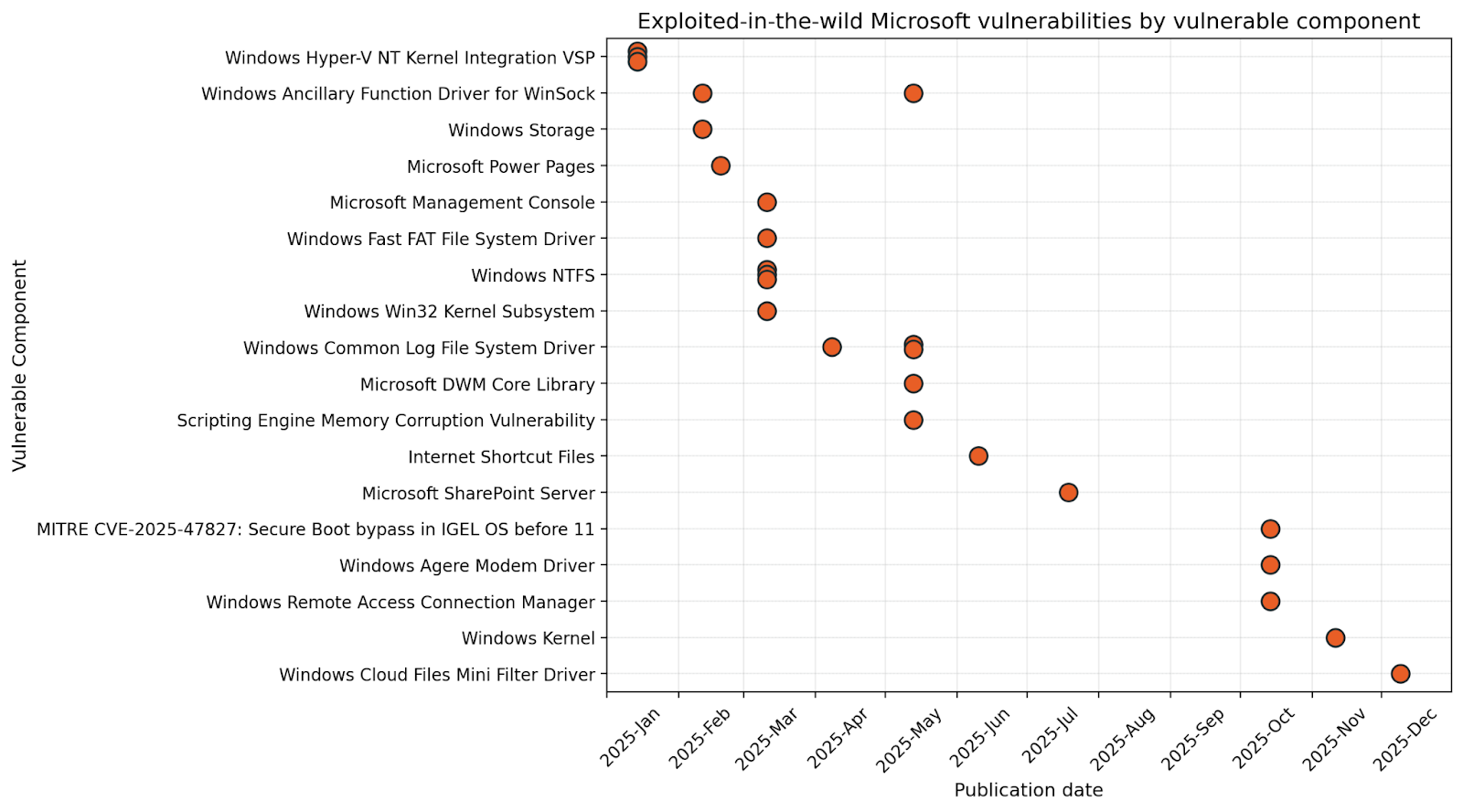
A whirlwind tour of exploited-in-the-wild Microsoft vulnerabilities (2025 edition)
If we really want to know which Microsoft vulnerabilities will provide the most value to attackers in 2026, we should ask a threat actor. Since that might prove difficult to arrange, we’ll do the next best thing: review vulnerabilities exploited in the wild during 2025.
⠀
Chart 1: Exploited-in-the-wild Microsoft vulnerabilities, by vulnerable component
January: The great escape
The vast Microsoft ecosystem has something for everyone, whether customer or threat actor. Patch Tuesday January 2025 brought us a trio of exploited-in-the-wild Hyper-V kernel vulnerabilities. By September 2025, at least one plausible public proof-of-concept (PoC) for CVE-2025-21333 was published by a vulnerability researcher who apparently shares a name with a Kazakhstani Olympic gymnast. The only safe assumption is that a well-resourced threat actor could develop a private exploit far in advance of that.
Starting from a child VM or Windows Sandbox, exploitation first requires setting out a banquet of benign requests for the hypervisor, delivered via the Hyper-V Virtualization Service Provider (VSP). The goal: mass-allocating objects to arrange large swathes of hypervisor memory in a predictable pattern (aka “heap feng shui”). Next, the attacker sends a malicious request with an oversized buffer, which an unpatched VSP merrily copies into kernel memory, overwriting the header of the adjacent object, whose relative position is now easily surmised. Once the kernel subsequently references the artfully corrupted sibling object, execution as SYSTEM jumps to a portion of memory where the attacker has planted shellcode to exfiltrate a token. The compromised hypervisor could be anything from a developer laptop running a malicious container all the way up to enterprise private cloud infrastructure.
So far, January 2025 is the only time that Microsoft has ever published vulnerabilities in the Hyper-V VSP. Generally speaking, a significant degree of sophistication is required to develop successful exploits of this nature. This goes double if the name of the game is stealth and stability, since a wave of unexplained BSOD events on critical production infrastructure tends to attract blue team attention. Still, once a viable proof of concept hits the public internet, ransomware crews will fold it into their toolkits, and someone, somewhere, is either sitting on an unknown Hyper-V VSP exploit, or hard at work creating the next one.
February: Socket to me
It’s hard to imagine a modern computer without storage or networking capabilities. In fact, it’s hard to imagine a computer from several decades ago without storage or networking. Microsoft is now middle-aged, and that means that buried deep within your shiny new PC are a variety of architectural decisions and logic paths born in the 1980s. If this sounds far-fetched, take a minute to find yourself a fully-patched Windows 11 25H2 machine, and then try to rename any file or directory CON, NUL or PRN. I’ll wait.
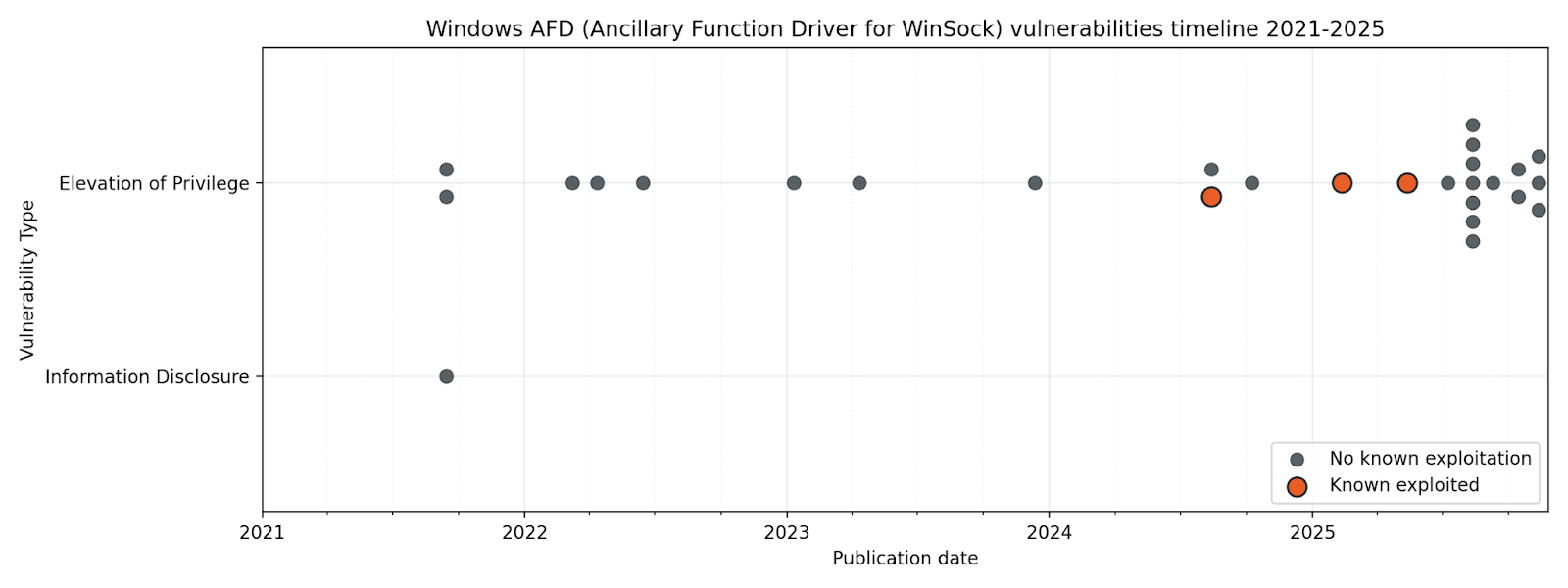
Generally speaking, user-mode applications are prevented from wreaking havoc on the kernel through a careful separation of concerns. On Windows, when a user mode application wants to communicate over the network, it talks to WinSock, which in turn talks to the ancillary function driver (AFD), which sits on the kernel side, and coordinates with the kernel network drivers which handle the actual traffic. The AFD is a security boundary between user space and kernel space, and it must be universally accessible to local processes, because even a browser tab in a sandbox needs to make network calls. Any defect in the way AFD parses input from user space can thus provide a way to influence the kernel in unexpected ways. A number of advanced exploit development courses, including offerings from SANS and OffSec, cover AFD in detail.
⠀
Chart 2: Windows AFD vulnerabilities timeline, 2021-2025
⠀
Patch Tuesday February 2025 brought us CVE-2025-21418, which Microsoft credited to Anonymous. We don’t know whether the unnamed tipster provided evidence of exploitation in the wild, or whether Microsoft threat hunters subsequently tracked down their own trail of suspicious bread crumbs, but notorious threat actors such as North Korea’s Lazarus are known to be enthusiastic students of AFD exploits. With several high-profile zero-day vulnerabilities emerging from AFD from late 2024 onwards, it tracks that Microsoft subsequently published and patched a cluster of AFD vulnerabilities in the latter half of 2025.
March: File system shenanigans
Any defenders who had enjoyed a quieter start to the year were rudely awakened by Patch Tuesday March 2025, when six exploited-in-the-wild vulnerabilities all dropped at once. Exploitation of most of the zero-day vulnerabilities published in March starts with the user mounting a malicious Virtual Hard Disk (VHD) image or plugging in a malicious USB stick so that the attacker can exploit a weakness in a filesystem driver, including NTFS and FastFAT.
Remember that information security training which asked you to imagine finding a USB stick with an “IMPORTANT (CONFIDENTIAL)” label on the floor outside the office? The one which asked if you would A) plug the mystery stick into your work PC B) use your boss’ personal laptop in case the files are business critical C) try it in all the PCs in the office until someone asks you to stop or D) report it immediately to the security officer? This is why.
Meanwhile, the true villain of the month was almost certainly CVE-2025-24983, a no-user-interaction-required elevation of privilege vulnerability in the Win32 kernel subsystem. At the time, we pondered why Windows 11 and Server 2019 onwards didn’t receive patches for what looks like a fairly severe vulnerability, but since Microsoft is gradually reimplementing portions of the kernel in memory-safe Rust, we can hope that the vulnerability simply doesn’t exist in modern Windows.
April: Common Log File System driver vulns are quite common
If anyone ever corners you at a party and talks at length about the Ancillary Function Driver as a bounteous source of elevation of privilege vulnerabilities, you will probably have to concede that they are technically correct. While your options include “doing a lap” and then climbing out of the bathroom window, the power move here is to hold your ground, and point to the Common Log File System driver as a far richer vein of exploitable goodness.
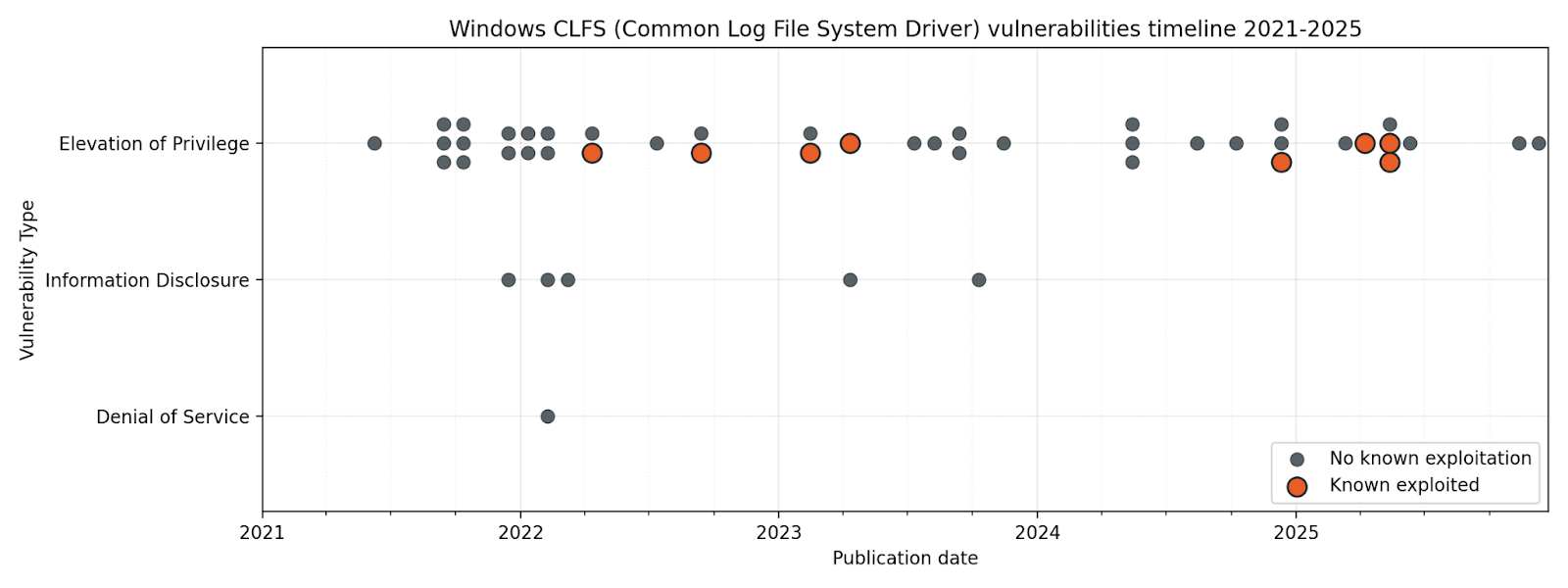
As of Patch Tuesday April 2025, CLFS boasts almost twice the number of total vulnerabilities over the past five years vs. AFD, and more than double the number of known-exploited zero-day vulnerabilities. It really is the gift which keeps on giving.
⠀
Windows CLFS vulnerabilities timeline, 2021-2025
⠀
It makes sense that something like the Ancillary Function Driver lives in kernel space. After all, something has to sit inside the perimeter to marshall all those network requests from dozens of Chrome tabs. What about the Common Log File System driver though?
It would be tempting to imagine that anything which simply handles log files shouldn’t need direct kernel access at all. When exploring this concept, it’s useful to understand that not only was CLFS designed a long time ago, when high performance in user mode was harder to achieve than it is today, but also that CLFS is much more than simply a means to interact with log files. CLFS is the home of still-essential building blocks like Transactional NTFS (TxF), first introduced almost 25 years ago in Windows Vista, which provides a means for applications to guarantee the integrity of data on disk.
For the past several years, Microsoft has strongly recommended that developers avoid the use of TxF, and while Microsoft is gradually providing modern alternatives to TxF functionality, essential Windows functions such as Windows Update still rely on it to manage critical file integrity. Moreover, CLFS is more than just TxF, and is so tightly integrated into Windows that it’s here to stay for the foreseeable future.
May: The month of expectation, wishes, hope, and classic Windows zero-days [1]
A few days after Patch Tuesday May 2025, Satya Nadella took to the stage at Microsoft Build 2025 to pitch his vision of the open agentic web, although exactly who this version of the future would be open to remains an open question, like: What if a cloud email service was vulnerable to a zero-click prompt injection attack, but could also now buy things with your credit card?
While critical reception for the open agentic web has been mixed, threat actors will be glad of the new attack surface. Meanwhile, defenders worried about in-the-wild exploitation were hard at work patching some more frequent fliers, including another pair of CLFS vulnerabilities and an MSHTML/Trident arbitrary code execution bug. That last one will be familiar to regular Patch Tuesday watchers, but it might come as a surprise to anyone who thought Internet Explorer had gone to live on a nice farm upstate years ago.
The Ancillary Function Driver made another appearance, although it couldn’t quite summon the same main character energy this time around. The May 2025 episode of “AFD vulns exploited in the wild” offered elevation to Administrator, rather than SYSTEM, and a lower exploit code maturity rating. We can always be grateful for small mercies.
[1]: With apologies to Emily Brontë.
June: I’m afraid I can’t let you do that, WebDAV
Windows archeologists and internet users of a certain age may remember WebDAV, a standard originally dreamed up to support interactivity on the web. It was employed by versions of Microsoft Exchange up to and including 2010 to handle interactions with mailboxes and public folders.
Surprising no-one, Windows still more or less supports WebDAV, and it was only a matter of time before that turned out to be a bit of a problem, in the form of CVE-2025-33053 published as part of Patch Tuesday June 2025. Microsoft acknowledged Check Point Research (CPR) on the advisory; CPR in turn attributes exploitation to an APT (Advanced Persistent Threat), which they track as the objectively cool-sounding Stealth Falcon, an established threat actor with a long-running interest in governments and government-adjacent entities across the Middle East and beyond.
June 2025 also saw the publication of CVE-2025-32711, a critical information disclosure vulnerability in Microsoft 365 Copilot. Microsoft is not aware of exploitation in the wild. The researchers named it EchoLeak, describing it as “the first real-world zero-click prompt injection exploit in a production LLM system,” although other researchers arguably got there first.
EchoLeak relies on hidden white-text-on-white-background instructions in an email, which are then ingested into the LLM via RAG (Retrieval-Augmented Generation) when the user asks an entirely pedestrian question (e.g. “Summarize my emails from the past two days”) which requires Copilot to scan the inbox. The malicious instructions have two parts: First, dig up some juicy info, and then retrieve an image from an attacker-controlled server with the sensitive data exfiltrated as a URL parameter.
EchoLeak circumvented Copilot’s Content Security Policy by making the request via a trusted Microsoft service: a now-patched Teams image preview proxy. History suggests that attackers will find other ways out of the walled garden. The Microsoft advisory makes a virtue of minimalism by providing almost no information about the nature of the vulnerability, although Microsoft is surely to be commended for assigning CVEs for cloud service vulnerabilities.
July: The call is coming from inside the intranet
When Patch Tuesday July 2025 came and went without a single exploited-in-the-wild vulnerability published, many people may have breathed a sigh of relief. Possibly this was a valid move, at least for anyone not responsible for a SharePoint instance.
SharePoint defenders will remember July as the month of ToolShell, an actively-exploited vulnerability chain in SharePoint which Microsoft published out of band ten days after Patch Tuesday. Out of band patches for Microsoft flagship products are rare, since they inevitably cause downstream disruption. Once MSTIC publicly attributes exploitation to two Chinese nation-state actors, that line has been crossed.
The vulnerability described by the out-of-band CVE-2025-53770 turned out to be a bypass for the patch introduced by CVE-2025-49704 earlier in the month, which was itself a response to a successful Pwn2Own Berlin entry from May.
August: It’s almost too quiet
Microsoft was not aware of exploitation in the wild for any of the vulnerabilities published as part of Patch Tuesday August 2025. SharePoint admins may have been dealing with the fallout from last month’s ToolShell and bracing for a possible repeat, but August might otherwise have made for an eerily quiet month. Still, the Windows implementation of Kerberos managed to cough up a publicly-disclosed elevate-to-domain-admin vulnerability.
Separately, we learned that simply saving a JPEG could be enough to hand an attacker RCE capabilities, because the internet never sleeps. If the vulnerable codepath had been within JPEG decoding, rather than encoding, this one could have been the biggest vuln of the year.
September: Almost too quiet, part 2
Patch Tuesday September 2025 was the second month in a row with no known-exploited vulnerabilities, but vuln spotters will appreciate that this month saw the publication of a fairly rare beast: a Microsoft vulnerability with a perfect(?) CVSS v3 base score of 10.0, albeit a cloud service vulnerability discovered by Microsoft and patched prior to publication. No customer action required, but also no customer verification possible, and since the impacted cloud service was Azure Networking, the blast radius could have been stupendous.
October: Dial M for exploitation
These days, there are plenty of seasoned IT professionals who don’t even know what a dialup modem negotiation song sounds like, simply because broadband has been around for that long. For younger readers, “broadband” is what we used to call “internet fast enough that you don’t have to wait to download a single email attachment”.
By this point, we all know where this is going: Windows still ships with modem capabilities well beyond their sell-by date, and someone found a good old elevation of privilege vulnerability. The vulnerable fax modem driver was developed almost 30 years ago by a long-defunct third party, and Microsoft has now taken uncharacteristically bold action by removing it from Windows altogether, perhaps recognizing that traditional landlines are no longer available at all in many places. Are there other fax modem drivers still lurking in Windows? You betcha.
Patch Tuesday November 2025 included an exploited-in-the-wild vulnerability in the Windows kernel itself. While the advisory was light with details, exploitation of CVE-2025-62215 led to elevation to SYSTEM, presumably via a complex bit of memory management three card monte. Those kernel Rust rewrites can’t come soon enough.
December: A cloud of suspicion
After a year filled with variations of the same old exploitable vulns, it might almost be refreshing to consider the altogether more modern-sounding exploited-in-the-wild vulnerability published on Patch Tuesday December 2025. CVE-2025-62221 describes an elevation of privilege vulnerability in the Windows Cloud Files Mini Filter Driver.
On Windows, a file or directory can contain a reparse point, a collection of user-controlled metadata designed to be interpreted by a file filter driver. An example would be a file which appears present in a local folder, but where the actual contents of the file are stored remotely on OneDrive. The user double-clicks on the file, the file filter driver intercepts the request, reads the metadata, and calls out to OneDrive, while the user gets the experience of opening the file as though it had been stored locally. Of course, the file filter driver needs kernel access to perform its duties. Find an exploitable flaw in the way a file filter driver parses the metadata, and you can trick it into doing things like overwriting protected system files.
What’s next?
Everything gets faster, including bad things
As Rapid7 has observed repeatedly, time to known exploitation for widely-exploited vulnerabilities has been shrinking year-on-year. By 2022, the time to exploitation after public disclosure for some of the most notable security vulnerabilities was as low as 24 hours. With exploit development now widely augmented by automation and AI, there is every reason to suppose that the window will continue to shrink further.
Threat actors will stay best friends with elevation of privilege vulns
A wormable unauthenticated RCE vulnerability remains the scariest scenario, but mercifully these are historically rare. The one-two combo of minimally-privileged initial access and local privilege escalation presents a much more clear and present danger in most modern threat models. Sure, you could parachute in from a helicopter, abseil down from the roof, and crawl through an air vent to steal the diamond, but why bother when you could simply tailgate a delivery driver, and then distract a maintenance worker while you swipe their all-access keycard?
AI is here to stay, but tech debt is the real killer
In 2026, Microsoft will regularly publish AI-related vulnerabilities, and AI-wielding threat actors will hammer Microsoft’s cloud services. Blue teams managing significant Windows estates will still spend more time worrying about on-prem vulnerabilities where the root cause is a classic software engineering snafu.
Final thoughts
Arguably the biggest takeaway from 2025 is that the more things change, the more they stay the same. The scariest Microsoft vulnerabilities tend to emerge from the same few familiar places: core Windows components with codebases older than many of the humans who rely on them.
Microsoft’s wildly successful business model is founded on a decades-long insistence on ironclad backwards compatibility. Why? Enterprise customers with deep pockets and deeper catalogues of ancient business applications. These retro capabilities come at a high price: a supervolcano of tech debt potentially unmatched in all of human history, and a seemingly endless supply of sort-of-new but depressingly familiar vulnerabilities.
For anyone responsible for defending a significant Microsoft footprint in 2026, tomorrow’s biggest problem remains today’s secrets exposed by yesterday’s software design choices.
Microsoft is publishing 114 vulnerabilities this January 2026 Patch Tuesday. Today’s menu includes just one vulnerability marked as exploited in the wild, as well as two vulnerabilities where Microsoft is aware of public disclosure. There are no critical remote code execution or elevation of privilege vulnerabilities. So far this month, Microsoft has already provided patches to address one browser vulnerability and around a dozen vulnerabilities in open source products, which are not included in the Patch Tuesday count above.
Windows DWM: exploited-in-the-wild information disclosure
The Windows Desktop Windows Manager (DWM) is a high value target for vulnerability researchers and threat actors, and CVE-2026-20805 is the latest in an occasionalseries of exploited-in-the-wild zero-day vulnerabilities to have emerged from it. DWM is responsible for drawing everything on the display of a Windows system, which means it offers an enticing combination of privileged access and universal availability, since just about any process might need to display something. In this case, exploitation leads to improper disclosure of an ALPC port section address, which is a section of user mode memory where Windows components coordinate various actions between themselves.
The CVSS v3 score of 5.5 evaluates to medium severity, which wouldn’t typically scream “patch me first”, but Microsoft evaluates CVE-2026-20805 as important on their proprietary severity scale, and information disclosure vulnerabilities by their very nature tend to end up with lower CVSS scores, since there’s no direct impact on integrity or availability. Also, Microsoft information disclosure vulnerabilities very rarely end up marked as exploited in the wild; any that do are very likely to be part of a longer exploit chain. In this case, it’s likely that the improperly disclosed memory address gives an attacker a starting point in the hunt for the in-memory address of the DWM process, sidestepping Address Space Layout Randomization (ASLR), and greatly increasing the chance of developing a stable elevation of privilege exploit for DWM rather than a flakey blue screen of death generator.
Windows Agere modem driver: publicly disclosed elevation of privilege
Back in October 2025, Microsoft removed a specific modem driver ltmdm64.sys from all versions of Windows, after it was implicated in CVE-2025-24052, an exploited-in-the-wild elevation of privilege vulnerability. Today sees another couple of modem drivers removed from Windows for a broadly similar reason: Microsoft is aware of functional exploit code for an elevation of privilege vulnerability in a very similar modem driver, tracked as CVE-2023-31096. That’s not a typo; this vulnerability was originally published via MITRE over two years ago, along with a credible public writeup by the original researcher. Today’s Windows patches remove agrsm64.sys and agrsm.sys. All three modem drivers were originally developed by the same now-defunct third party, and have been included in Windows for decades. These driver removals will pass unnoticed for most people, but you might find active modems still in a few contexts, including some industrial control systems.
Two questions remain: how many more legacy modem drivers are still present on a fully-patched Windows asset, and how many more elevation-to-SYSTEM vulnerabilities will emerge from them before Microsoft cuts off attackers who have been enjoying living off the land[line] by exploiting an entire class of dusty old device drivers? Although Microsoft doesn’t claim evidence of exploitation for CVE-2023-31096, the relevant 2023 write-up and the 2025 removal of the other Agere modem driver have provided two strong signals for anyone looking for Windows exploits in the meantime. In case you were wondering, there is no need to have a modem connected; the mere presence of the driver is enough to render an asset vulnerable.
Secure Boot: critical security feature bypass
Today sees the publication of CVE-2026-21265, which is a critical security feature bypass vulnerability affecting Windows Secure Boot. Fifteen years is a very long time indeed in information security, but the clock is running out on the Microsoft root certificates which have been signing essentially everything in the Secure Boot ecosystem since the days of Stuxnet. Microsoft issued replacement certificates back in 2023, alongside CVE-2023-24932 which covered relevant Windows patches as well as subsequent steps to remediate the Secure Boot bypass exploited by the BlackLotus bootkit.
Once the ancient 2011 certificates expire later this year, Windows devices that do not have the new 2023 certificates can no longer receive Secure Boot security fixes. When updating the bootloader and BIOS, it is essential to prepare fully ahead of time for the specific OS and BIOS combination you’re working with, since incorrect remediation steps can lead to an unbootable system.
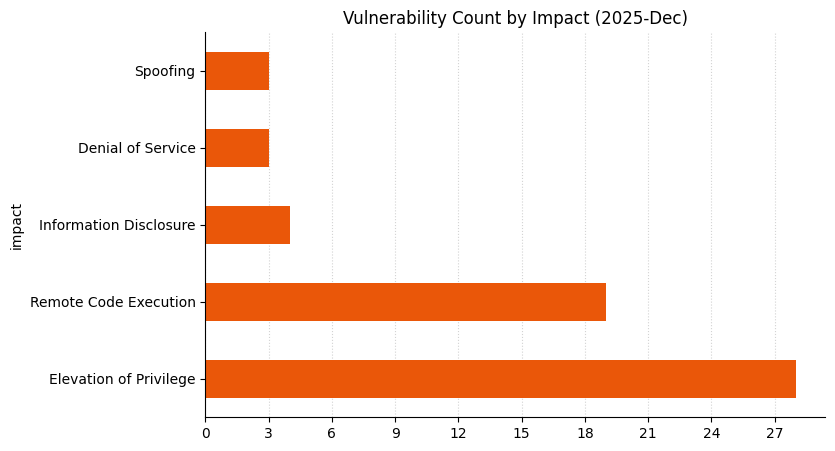
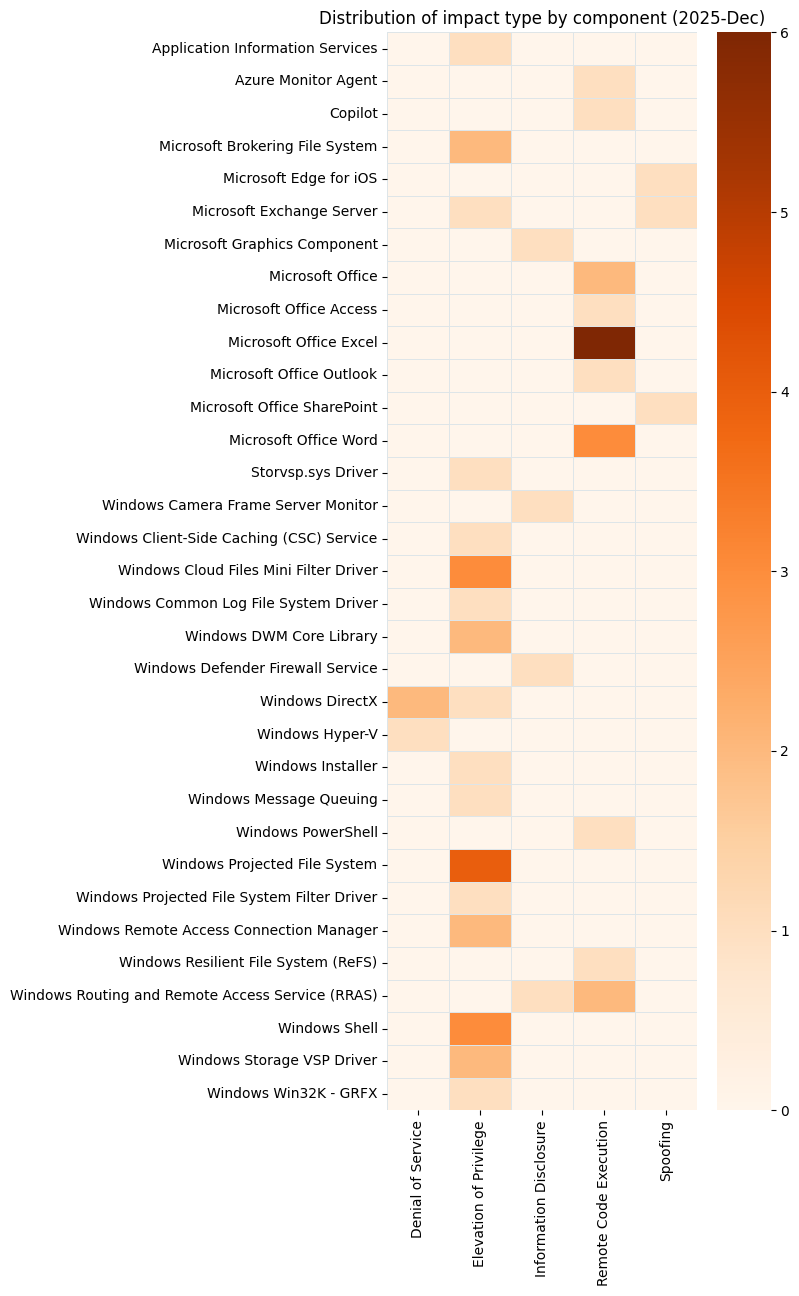
Microsoft is publishing a relatively light 54 new vulnerabilities this December 2025 Patch Tuesday, which is significantly lower than we have come to expect over the past couple of years. Today’s list includes two publicly disclosed remote code vulnerabilities, and a single exploited-in-the-wild vulnerability. Three critical remote code execution (RCE) vulnerabilities are also patched today; Microsoft currently assesses those as less likely or even unlikely to see exploitation. During December, Microsoft has already patched 14 browser vulnerabilities and more than 80 vulnerabilities in open source products, which are not included in the Patch Tuesday count above.
Windows Cloud Files minifilter: zero-day EoP
Microsoft has evidence that attackers are already making full use of CVE-2025-62221, a zero-day local elevation of privilege (EoP) vulnerability in the Windows Cloud Files Mini Filter Driver leading to SYSTEM privileges. File system filter drivers, aka minifilters, attach to the system software stack, and intercept requests targeted at a file system, and extend or replace the functionality provided by the original target. Typical use cases include data encryption, automated backup, on-the-fly compression, and cloud storage.
The Cloud Files minifilter is used by OneDrive, Google Drive, iCloud, and others, although as a core Windows component, it would still be present on a system where none of those apps were installed. Microsoft ranks CVE-2025-62221 as important rather than critical, since an attacker would need to have an existing foothold on the target system, but since it’s already exploited in the wild and leads to SYSTEM privileges, all but the most optimistic blue team threat models will surely treat CVE-2025-62221 as a top priority for remediation.
PowerShell: zero-day RCE
Under normal circumstances, PowerShell does a decent job of looking out for the unwary end user, and will wait for confirmation or even outright block unexpected attempts to run code from the internet that isn’t signed by a trusted publisher. Windows Mark-of-the-Web (MotW) functionality tracks files that were downloaded from the internet, but CVE-2025-54100 is a zero-day vulnerability which allows attackers to sidestep security controls that rely on MotW by the simple expedient of relying on code execution before the file is ever written. Microsoft is aware of public disclosure.
The Windows security updates published today address CVE-2025-54100 by altering the default functionality of Invoke-WebRequest in PowerShell 5.1 so that it will prompt the user, instead of simply executing potentially malicious code as it processes the full Document Object Model of the requested remote resource. Scripts that rely on the impacted functionality may hang indefinitely when encountering the new prompt, unless updated to pass the -UseBasicParsing parameter to Invoke-WebRequest, since this explicitly avoids the potential for script execution. PowerShell 7 avoids all of this by moving beyond dependency on the legacy MSHTML/Trident engine, which used to power Internet Explorer. However, PowerShell 5.1 is what’s installed by default with a fresh Windows installation, even for Server 2025 and Windows 11 25H2, because Microsoft has a hard time telling enterprise customers that continuing support for legacy business applications comes with an ever-increasing security cost.
Copilot: zero-day
The GitHub Copilot for Jetbrains plugin promises users that they can take control of their code using Copilot Edit Mode. Unfortunately, an attacker exploiting CVE-2025-64671 will be aiming to do something very similar. Microsoft is aware of public disclosure. In this scenario, cross-prompt injection, where an attacker hides malicious instructions inside a malicious file or within MCP server data, can lead to arbitrary command execution, where unsafe commands sneak past security boundaries while appended to safe, allowlisted commands. This issue is by no means specific to Copilot or Jetbrains; as the original researcher points out, this is an example of an entire class of vulnerabilities, where the addition of agentic AI to an IDE extends and alters the attack surface. Other well-known IDE vendors have assigned CVEs and/or published patches for broadly similar issues.
Office: two critical no-click RCEs
Microsoft Office is widely deployed, and it’s a rare Patch Tuesday when it doesn’t receive at least a few security updates. Two Office RCEs are particularly noteworthy this month. The advisory FAQs for both CVE-2025-62554 and CVE-2025-62557 mention that the Preview Pane is a vector, so a user who scrolls past a malicious email in Outlook or a sketchy file in Explorer could trigger exploitation without doing anything obviously wrong. However, it gets worse, because even receiving a specially-crafted email could trigger exploitation, without any requirement that the user open, read, or click on the malicious link within it. CVE-2023-23397, a widely-discussed critical Outlook vulnerability from some two-and-a-half years ago shares these characteristics. In that case, Microsoft detected in-the-wild exploitation by a Russia-based threat actor targeting government, military, and critical infrastructure targets in Europe. While there’s no suggestion that either of the vulnerabilities patched today necessarily result in NTLM hash disclosure in the same vein as CVE-2023-23397, the potential for exploitation without the need for any user interaction is a serious concern.
Microsoft lifecycle update
There are no significant Microsoft product lifecycle changes this month. Visual Studio 2022 LTSC 17.10 will reach end of life in January.
A denial-of-service vulnerability exists in github.com/sirupsen/logrus when using Entry.Writer() to log a single-line payload larger than 64KB without newline characters.
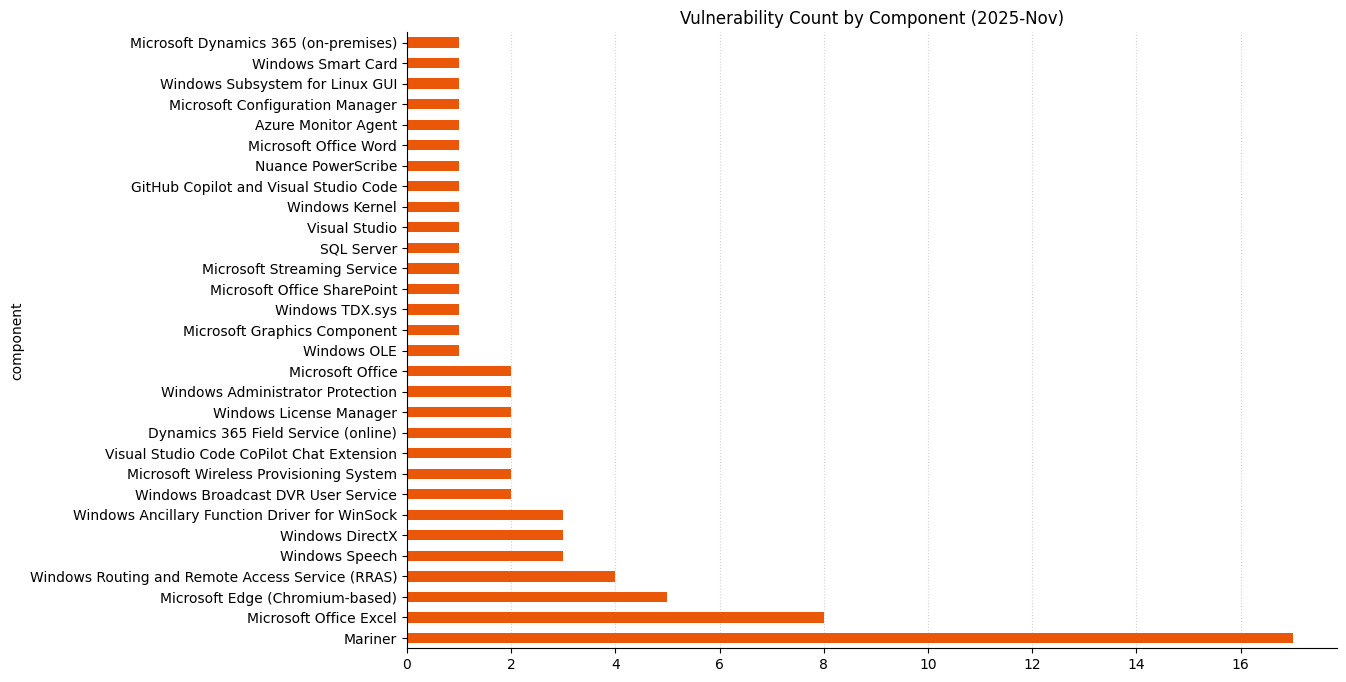
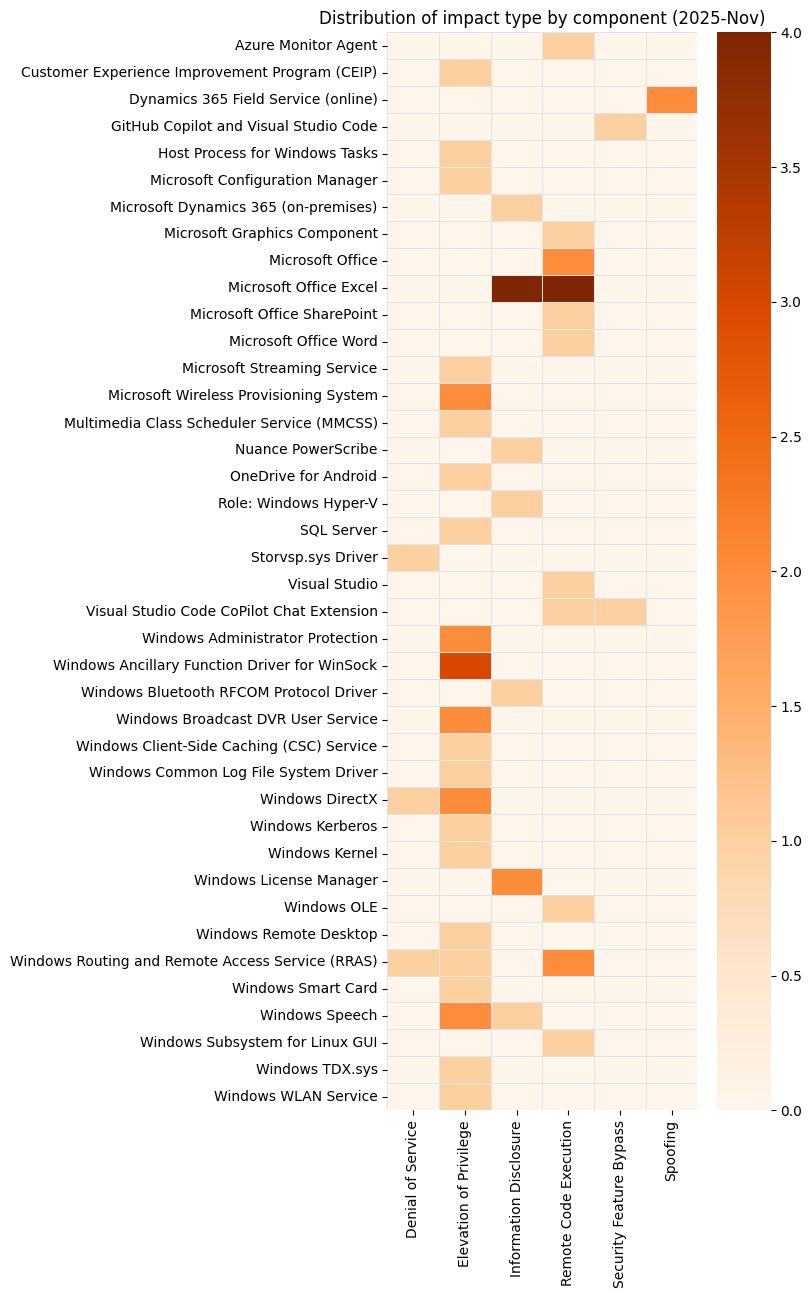
Microsoft is publishing 66 new vulnerabilities today, which is far fewer than we’ve come to expect in recent months. There’s a lone exploited-in-the-wild zero-day vulnerability, which Microsoft assesses as critical severity, although there’s apparently no public disclosure yet. Three critical remote code execution (RCE) vulnerabilities are patched today; happily, Microsoft currently assesses all three as less likely to see exploitation. Five browser vulnerabilities and a dozen or so fixes for Azure Linux (aka Mariner) have already been published separately this month, and are not included in the total.
Windows GDI+: critical 0-day RCE
Faced with a fresh stack of Patch Tuesday vulns, there are a few different ways to prioritize our analysis. Do we start with vulns exploited in the wild? Pre-authentication RCEs? The vuln with the highest CVSS base score? The vuln which is likely to affect just about every asset running Microsoft software? Any of these are sensible avenues of approach, and today, all roads lead to CVE-2025-60724. As the advisory notes, in the worst-case scenario, an attacker could exploit this vulnerability by uploading a malicious document to a vulnerable web service. The advisory doesn’t spell out the context of code execution, but if all the stars align for the attacker, the prize could be remote code execution as SYSTEM via the network without any need for an existing foothold. While this vuln almost certainly isn’t wormable, it’s clearly very serious and is surely a top priority for just about anyone considering how to approach this month’s patches.
The weakness underlying CVE-2025-60724 is CWE-122: Heap-based buffer overflow, a concept which celebrated its 50th birthday several years ago. As the authors of the original 1972 paper noted: “If the code makes use of an internal buffer, there is a possibility that a user could input enough data to overwrite other portions of the program’s private storage.” Regarding computer security in general, they opined that “this problem is neither hopeless nor solved. It is, however, perfectly clear […] that solutions to the problem will not occur spontaneously, nor will they come from the various well-intentioned attempts to provide security as an add-on to existing systems.”
Office: critical ACE
Once again, we find ourselves wondering: “when is remote code execution really remote?” CVE-2025-62199 describes a critical RCE vulnerability in Microsoft Office, where exploitation relies on the user downloading and opening a malicious file. The attacker is remote, and that’s enough to satisfy the definition, even if the action is taken on the local system by the unwitting user. Anyone hoping that the Preview Pane is not a vector will be sadly disappointed, and this certainly increases the probability of real-world exploitation, since there’s no need for the attacker to craft a way around those pesky warnings about enabling dangerous content. Just scrolling through a list of emails in Outlook could be enough.
Visual Studio: critical RCE
Some attacks are straightforward, with only a single step needed to reach the finish line. Others, like Visual Studio critical RCE CVE-2025-62214, require that the attacker execute a complex chain of events. In this case, exploitation demands multi-stage abuse of recent advances in Visual Studio AI development capabilities, including prompt injection, Agent interaction, and triggering a build. The advisory doesn’t describe the context of code execution. If the prize is simply code execution on an asset in the context of the user, there’s no obvious advancement for the attacker, since exploitation already requires code execution on the asset by the attacker or the targeted user. The brief description of the attack chain does mention that the attacker would need to trigger a build. On that basis, possible outcomes might include execution in an elevated context, or compromised build artifacts, although the advisory does not provide enough information to be certain either way.
SQL Server: critical EoP
SQL Server admins should take note of CVE-2025-59499, which describes an elevation of privilege (EoP) vulnerability. Although some level existing privileges are required, successful exploitation will permit an attacker to run arbitrary Transact-SQL (T-SQL) commands. T-SQL is the language which SQL Server databases and clients use to communicate with one another. Although the default configuration for SQL Server disables the xp_cmdshell functionality which allows direct callouts to the underlying OS, there’s more than one way to shine a penny, and the only safe assumption here is that exploitation will lead to code execution in the context of SQL Server itself. Patches are available for all supported versions of SQL Server.
Microsoft lifecycle update
Following the sweeping lifecycle changes seen in October 2025, Microsoft is taking it fairly easy this month. The only significant transition today is the end of support for Windows 11 Home and Pro 23H2. Unlike the demise of Windows 10, this much smaller change won’t affect most people; a small number of older CPUs might not make the cut, since Windows 11 24H2 introduces a requirement for a couple of newer CPU instruction sets. Microsoft provides lists of compatible Intel, AMD, and Qualcomm CPU series.
An issue was discovered in libarchive bsdtar before version 3.8.1 in function apply_substitution in file tar/subst.c when processing crafted -s substitution rules. This can cause unbounded memory allocation and lead to denial of service (Out-of-Memory crash).
Microsoft is addressing 67 vulnerabilities this June 2025 Patch Tuesday. Microsoft has evidence of in-the-wild exploitation for just one of the vulnerabilities published today, and that is reflected in CISA KEV. Separately, Microsoft is aware of existing public disclosure for one other freshly published vulnerability. Microsoft’s luck holds for a ninth consecutive Patch Tuesday, since neither of today’s zero-day vulnerabilities are evaluated as critical severity at time of publication. Today also sees the publication of eight critical remote code execution (RCE) vulnerabilities. Two browser vulnerabilities have already been published separately this month, and are not included in the total.
Windows WebDAV: zero-day RCE
Remember the WebDAV standard? It has been seven years since Microsoft has published a vulnerability in the Windows implementation of WebDAV, and today’s publication of CVE-2025-33053 is the first zero-day vulnerability on record. Originally dreamed up in the 1990s to support interactivity on the web, WebDAV may be familiar to Exchange admins and users of a certain vintage, since older versions of Exchange, up to and including Exchange Server 2010, supported WebDAV as a means for interacting with mailboxes and public folders.
It will surprise no one that Windows still more or less supports WebDAV, and that turns out to be a bit of a problem. Microsoft acknowledges Check Point Research (CPR) on the advisory; CPR in turn attributes exploitation of CVE-2025-33053 to an APT, which they track as Stealth Falcon, an established threat actor with a long-running interest in governments and government-adjacent entities across the Middle East and the surrounding area.
Curiously, the Microsoft advisory does not mention that the Windows implementation of WebDAV is listed as deprecated since November 2023, which in practical terms means that the WebClient service no longer starts by default. The advisory also has attack complexity as low, which means that exploitation does not require preparation of the target environment in any way that is beyond the attacker’s control. Exploitation relies on the user clicking a malicious link. It’s not clear how an asset would be immediately vulnerable if the service isn’t running, but all versions of Windows receive a patch, including those released since the deprecation of WebClient, like Server 2025 and Windows 11 24H2. On Server 2025, for instance, it’s still possible to install the WebDAV Redirector server feature, which then causes the WebClient service to appear.
SMB client: zero-day EoP
Publicly disclosed elevation of privilege (EoP) zero-day vulnerabilities that lead to SYSTEM are always going to be worth a closer look, and CVE-2025-33073 is no exception. The advisory sets out that the easiest path to exploitation simply requires the user to connect to a malicious SMB server controlled by the attacker. It’s not entirely clear from the advisory whether simply connecting is enough to trigger exploitation, or whether successful authentication is required, since there is currently conflicting language in two separate FAQ entries with almost-identical titles: “How could an attacker exploit this/the vulnerability?” It may well be that Microsoft will come back around and clarify this wording, but in the meantime the only safe assumption is that fortune favours the attacker.
Windows KDC Proxy: critical RCE
The Windows KDC Proxy Service (KPSSVC) receives a patch today for CVE-2025-33071, which describes a critical unauthenticated RCE vulnerability where exploitation is via abuse of a cryptographic protocol weakness. The good news is that only Windows Server assets configured as a Kerberos Key Distribution Center Proxy Protocol server — happily, this is not enabled as standard configuration for a domain controller — and exploitation requires that the attacker win a race condition. The bad news is that Microsoft considers exploitation more likely regardless, and since a KDC proxy helps Kerberos requests from untrusted networks more easily access trusted assets without any need for a direct TCP connection from the client to the domain controller, the trade-off here is that the KDC proxy itself is quite likely to be exposed to an untrusted network. Patching this vulnerability should be top of mind for affected defenders this month.
Office preview pane: trio of critical RCEs
Microsoft expects that exploitation of three Office critical RCE vulns patched today is more likely. CVE-2025-47162, CVE-2025-47164, and CVE-2025-47167 share several attributes: each was discovered by prolific researcher 0x140ce, who topped the MSRC 2025 Q1 leaderboard, and each includes the Preview Pane as a vector, which always ups the ante for defenders. Admins responsible for installations of Microsoft 365 Apps for Enterprise — also confusingly referred to as “Microsoft 365 for Office” in the advisory FAQ — will have to hang on, since patches for today’s vulnerabilities aren’t yet available for that particular facet of the Microsoft 365 kaleidoscope.
Microsoft lifecycle update
June is a quiet month for Microsoft product lifecycle changes. The next batch of significant Microsoft product lifecycle status changes are due in July 2025, when the SQL Server 2012 ESU program draws to a close, along with support for Visual Studio 2022 17.8 LTSC.
Microsoft is addressing 77 vulnerabilities this May 2025 Patch Tuesday. Microsoft has evidence of in-the-wild exploitation for five of the vulnerabilities published today, and these are already reflected in CISA KEV. Separately, Microsoft is aware of existing public disclosure for two vulnerabilities published today. This is now the eight consecutive Patch Tuesday on which Microsoft has published zero-day vulnerabilities without evaluating any of them as critical severity at time of publication. Today also sees the publication of six critical remote code execution (RCE) vulnerabilities. Six browser vulnerabilities have already been published separately this month, and are not included in the total.
Windows Scripting Engine: zero-day RCE
In the majority of cases, the CVSSv3 base score provides a solid sense of the severity of a vulnerability. Sometimes, however, even a correct CVSS assessment can disguise the potential impact of a specific vulnerability. This arguably the case with CVE-2025-30397, a zero-day RCE vulnerability in the Windows Scripting Engine with a healthy but unremarkable CVSSv3 base score of 7.5. Microsoft is aware of exploitation in the wild. It’s certainly not the worst of the worst — we save that level of alarm for pre-authentication RCE with no requirement for user interaction — and Microsoft assesses attack complexity as high, which is arguably correct. And yet…
The advisory FAQ for CVE-2025-30397 explains that successful exploitation requires an attacker to first prepare the target so that it uses Edge in Internet Explorer Mode, and then causes the user to click a malicious link; there is no mention of a requirement for the user to actively reload the page in Internet Explorer Mode, so we must assume that exploitation requires only that the “Allow sites to be reloaded in Internet Explorer” option is enabled. Users who are most likely to require Internet Explorer compatibility mode in 2025 are surely users at enterprise organizations, where critical business workflows still depend on applications from the dinosaur days when Internet Explorer ruled the roost. No doubt the concept of a plan for migration of all of these applications exists, buried several layers deep in a dusty backlog, but Microsoft would hardly be offering IE compatibility mode until at least 2029 if it didn’t know that a huge swathe of its customer base demands it.
If the pre-requisite conditions are already conveniently in place on the target asset thanks to a well-meaning corporate IT policy, attack complexity is suddenly nice and low. If this vulnerability didn’t have that requirement for environment preparation, the CVSS base score would then be 8.8, which is as close to critical as you can get without actually stepping over the line. As Rapid7 has previously noted on a number of occasions, the MSHTML/Trident scripting engine is still present in Windows; this is true even for assets which have only ever run versions of Windows released well after the end of support for Internet Explorer 11 back in June 2022.
Common Log File System: zero-day EoPs
Neither CVE-2025-32701 nor CVE-2025-32706 are the first zero-day vulnerabilities in the Windows Common Log File Driver System; indeed, they are the latest members of an ongoingdynasty where exploitation typically leads to elevation of privilege to SYSTEM. Credit where credit is due: recent disclosures by Microsoft’s own Threat Intelligence Center (MSTIC), including this month’s CVE-2025-32701, demonstrate that Microsoft is putting serious effort into detecting and rooting out CLFS exploitation. Of course, since Microsoft is aware of exploitation in the wild, we know that someone else got there first, and there’s no reason to suspect that threat actors will stop looking for ways to abuse CLFS any time soon.
Windows Desktop Window Manager: zero-day EoP
If proof were needed that elevation of privilege to SYSTEM will never go out of style, today sees the publication of CVE-2025-30400, which is a zero-day vulnerability in the Windows Desktop Window Manager (DWM). As it happens, tomorrow marks the one-year anniversary of CVE-2024-30051, a previous zero-day EoP vulnerability in DWM.
Visual Studio: zero-day RCE
Today, all current versions of Visual Studio 2022 and 2019 receive patches for CVE-2025-32702, a zero-day RCE where exploitation requires the user to download and open a malicious file. There is nothing obviously remarkable about this, although Microsoft is aware of public disclosure. As usual for a malicious file/link vuln, the word Remote here refers to the location of the attacker, even though exploitation is set in motion by local user action.
Ancillary Function Driver for Winsock: zero-day EoP
Regular Patch Tuesday watchers will recognize the Ancillary Function Driver for Winsock, which is the site of CVE-2025-32709, an elevation of privilege vulnerability for which Microsoft is aware of exploitation. In something of a break with tradition for Patch Tuesday zero-day EoP vulnerabilities, exploitation only leads to administrator privileges rather than all the way to SYSTEM, but no attacker is going to waste too many cycles feeling sad about that.
Defender for Identity: situationally-ironic zero-day spoofing
Today sees the publication of CVE-2025-26685, a zero-day spoofing vulnerability in Microsoft Defender for Identity. The advisory provides puzzle pieces which don’t by themselves add up to anything like a full explanation of the vulnerability; no action is required for remediation, but you can render yourself vulnerable if you insist by opening a case with Microsoft Support to re-enable the legacy NTLM authentication method.
However, the FAQ does offer a link to an article published yesterday: Configure SAM-R to enable lateral movement path detection in Microsoft Defender for Identity. This solid piece of documentation is part of the overall Defender for Identity administration guide, and explains that the lateral movement path detection feature can itself potentially be exploited by an adversary to obtain an NTLM hash.
Exploitation relies on achieving fallback from Kerberos to NTLM; the compromised credentials in this case would be those of the Directory Service Account for Defender for Identity. The new Defender for Identity sensor (version 3.x) is not affected by this issue as it uses different detection methods; at time of writing, the Defender for Identity What’s new? page doesn’t yet describe the 3.x release, but this will presumably receive an update soon.
Microsoft lifecycle update
The next batch of significant Microsoft product lifecycle status changes are due in July 2025, when SQL Server 2012 ESU program draws to a close, along with support for Visual Studio 2022 17.8 LTSC.
Microsoft is addressing 121 vulnerabilities this April 2025 Patch Tuesday, which is more than twice as many as last month. Microsoft has evidence of in-the-wild exploitation for just one of the vulnerabilities published today, which is already reflected in CISA KEV. Once again, Microsoft has published zero-day vulnerabilities on Patch Tuesday without evaluating any of them as critical severity at time of publication, so that’s now a seven month unbroken streak. Today also sees the publication of 11 critical remote code execution (RCE) vulnerabilities. 13 browser vulnerabilities have already been published separately this month, and are not included in the total.
CLFS: zero-day EoP
The Windows Common Log File System (CLFS) Driver is firmly back on our radar today with CVE-2025-29824, a zero-day local elevation of privilege vulnerability. First, the good news: the Acknowledgements section credits the Microsoft Threat Intelligence Center, so the exploit was successfully reproduced by Microsoft; the less-good news is that someone other than Microsoft was first to discover the exploit, because otherwise Microsoft wouldn’t be listing CVE-2025-29824 as exploited in the wild. The advisory does not specify what privilege level is achieved upon successful exploitation, but it’ll be SYSTEM, because that’s the prize for all the other CLFS elevation of privilege zero-day vulnerabilities. As usual, some form of less-privileged local access is a pre-requisite, but attack complexity is low, so this is the sort of vulnerability which goes into any standard break-and-enter toolkit. Given the long history of similar vulnerabilities, it would be more surprising if exploit code wasn’t publicly available in the not-too-distant future. Although December 2024 Patch Tuesday seems as though it must have been a very long time ago, any standard calendar will tell us that only 119 days have elapsed since the last zero-day CLFS local elevation of privilege. Rapid7 discussed the history of CLFS zero-day elevation of privilege vulnerabilities at the time. All versions of Windows receive a patch, except for the venerable LTSC Windows 10 1507, which is listed on the advisory as vulnerable, but left out in the cold with no update; the FAQ says to check back later. Windows 10 LTSC 1507 is scheduled for end of servicing on 2025-10-14, so the clock is ticking regardless.
LDAP Server: critical RCE
Although it has been many months since we’ve seen a critical zero-day vulnerability from Microsoft, there is no shortage of critical remote code execution (RCE) vulnerabilities published today. Defenders responsible for an LDAP server — which means almost any organization with a non-trivial Microsoft footprint — should add patching for CVE-2025-26663 to their to-do list. With no privileges required, no need for user interaction, and code execution presumably in the context of the LDAP server itself, successful exploitation would be an attractive shortcut to any attacker. Anyone wondering if today is a re-run of December 2024 Patch Tuesday can take some small solace in the fact that the worst of the trio of LDAP critical RCEs published at the end of last year was likely easier to exploit than today’s example, since today’s CVE-2025-26663 requires that an attacker win a race condition. Despite that, Microsoft still expects that exploitation is more likely.
LDAP Client: critical RCE
If you breathe a sigh of relief when you see LDAP server critical RCE vulnerabilities like CVE-2025-26663, because you’re certain that you don’t have any Windows LDAP servers in your estate, how about LDAP clients? CVE-2025-26670 describes a critical RCE in the LDAP client, although the FAQ confusingly states that exploitation would require an attacker to “send specially crafted requests to a vulnerable LDAP server”; this seems like it might be a data entry error on the advisory FAQ, so keep an eye out for an update to that section of the advisory. Assuming the rest of the advisory is all present and correct, exploitation requires that the attacker win a race condition, which keeps the attack complexity higher than it otherwise would be. While we wait for clarification, it’s still a critical RCE which Microsoft rates as “exploitation more likely”. On that basis, patching is always recommended.
RDS: critical RCEs
The prolific Windows vulnerability pioneers at Kunlun Lab are credited with a pair of critical RCE vulnerabilities in Windows Remote Desktop Services. Although both CVE-2025-27480 and CVE-2025-27482 share a CVSSv3 base score of 8.1, Microsoft has ranked them both as critical using its own proprietary severity ranking scale. Both vulnerabilities require that an attacker win a race condition. If you’ve ever read Microsoft’s guide to deploying the Remote Desktop Gateway role, you probably have some systems to patch.
Hyper-V: critical RCE
Some Microsoft security advisory FAQs provide a satisfying level of detail, whereas others raise more questions than they answer. CVE-2025-27491 is a Hyper-V critical RCE which falls into the second category, since it states that an attacker must be authenticated — no need for elevated privileges — but also that the attacker must send the user a malicious site and convince them to open it, and it’s not at all clear why authentication would be required in that case. Also unusual: the remediation table on the advisory lists several 32-bit versions of Windows as receiving patches, although Hyper-V requires a 64-bit processor and a 64-bit host OS.
Microsoft lifecycle update
In Microsoft product lifecycle news, Dynamics GP 2015 moves past the end of extended support today. The next batch of significant lifecycle status changes are due in July 2025, when SQL Server 2012 ESU program draws to a close.
Microsoft is addressing 57 vulnerabilities this March 2025 Patch Tuesday, which is a similar volume to last month. However, Microsoft has evidence of in-the-wild exploitation for as many as six of the vulnerabilities published today, and CISA KEV already lists all of them. Microsoft is also aware of public disclosure for one other vulnerability. This is now the sixth consecutive month where Microsoft has published zero-day vulnerabilities on Patch Tuesday without evaluating any of them as critical severity at time of publication. Today also sees the publication of six critical remote code execution (RCE) vulnerabilities. Ten browser vulnerabilities have already been published separately this month, and are not included in the total.
Win32 kernel subsystem: zero-day EoP
Older Windows products receive a patch today for CVE-2025-24983, which is an elevation of privilege vulnerability in the Win32 kernel subsystem. Microsoft is aware of exploitation in the wild. Since no user interaction is required, and successful exploitation leads to SYSTEM privileges, this isn’t one to ignore, even if the attacker must win a race condition, which does raise the bar for entry somewhat. Microsoft Windows 11 and Server 2019 onwards are not listed as receiving patches, so are presumably not vulnerable. It’s not clear why newer Windows products dodged this particular bullet; the Windows 32 subsystem is still presumably alive and well, since there is no apparent mention of its demise on the Windows client OS deprecated features list.
NTFS USB attack: zero-day information disclosure
Defense-in-depth practitioners have been limiting and monitoring access to USB ports for years now, and today brings further evidence for the value of locking things down, in the form of CVE-2025-24984, an information disclosure vulnerability in NTFS. Microsoft has evidence of exploitation in the wild, and functional exploit code. This vulnerability has a thus-far-unique combination of attributes: the attack vector is physical — the advisory describes a malicious USB drive as the delivery mechanism — and the weakness is CWE-532: Insertion of Sensitive Information into Log File. The advisory doesn’t quite join the dots, but successful exploitation appears to mean that portions of heap memory could be improperly dumped into a log file, which could then be combed through by an attacker hungry for privileged information. A relatively low CVSSv3 base score of 4.6 reflects the practical difficulties of real-world exploitation, but a motivated attacker can sometimes achieve extraordinary results starting from the smallest of toeholds, and Microsoft does rate this vulnerability as important on its own proprietary severity ranking scale.
NTFS VHD attack: zero-day information disclosure
If you like NTFS zero-day vulnerabilities, then today’s your lucky day! CVE-2025-24991 describes an out-of-bounds read in NTFS leading to information disclosure, specifically disclosure of small portions of heap memory. An attacker would need to trick a user into mounting a malicious VHD (Virtual Hard Disk), and that alone would be enough to trigger the vulnerability. The advisory does not explain how the attacker would exfiltrate the data, but clearly it’s practically possible, since Microsoft claims evidence of exploitation in the wild.
NTFS VHD attack: zero-day code execution
If you like NTFS zero-day vulnerabilities, but find information disclosure a bit pedestrian, then CVE-2025-24993 might be just what you’re after: exploitation requires that the user mount a malicious VHD, which then leads to heap-based buffer overflow, and the potential for local code execution. As is standard for a certain type of code execution vulnerability, the advisory somewhat awkwardly clarifies that the word “remote” in the title refers to the location of the attacker, and that the attack itself is carried out locally. The advisory doesn’t specify the context of code execution, but it’s a safe assumption that the end goal here is SYSTEM, since the attacker or a user must already execute code in the context of the user to trigger the vulnerability. The CVSSv3 base score of 7.8 reflects the potentially valuable reward for exploitation and low attack complexity, but is held back by the requirement for user interaction.
Fast FAT VHD attack: zero-day code execution
The Windows Fast FAT file system driver is the site of CVE-2025-24985, which Microsoft describes as a code execution vulnerability. Exploitation requires that the user mount a malicious VHD, leading to integer overflow or wraparound. Microsoft claims to have confirmed evidence of exploitation in the wild. The acknowledgments sections for CVE-2025-24984, CVE-2025-24991, CVE-2025-24993, and CVE-2025-24985 all credit an anonymous reporter. More than likely this is the same entity in each case, given the similarities between the four vulnerabilities.
Microsoft Management Console: zero-day security feature bypass
It’s been a few months since we saw a zero-day vulnerability in the Microsoft Management Console, but today brings us CVE-2025-26633, a security feature bypass for which Microsoft is aware of exploitation in the wild, as well as functional exploit code floating around somewhere out there on the internet. Successful exploitation leads to an outcome which isn’t specified by the advisory, but since the Microsoft Management Console has a feature set which includes the creation, hosting, and distribution of custom tools for the administrative management of both hardware and software for any supported version of Windows, it’s easy enough to see why an attacker might be interested. The advisory does mention that both preparation of the target environment and subsequent user interaction are required for successful exploitation, which would require the user to open a malicious file.
Microsoft Access: zero-day code execution
CVE-2025-26630 describes a remote-but-actually-local code execution vulnerability in Microsoft Access. Exploitation requires that the user open a malicious file. Microsoft is aware of public disclosure, but considers exploitation less likely. The weakness is our old friend CWE-416: Use After Free. Beyond that, the advisory is short on detail, but does claim that the Preview Pane is not an attack vector, so that’s a silver lining for this particular cloud. Going by the acknowledgements section of the advisory, it seems likely that relative newcomer Unpatched.ai intends to continue to shake things up, since they were also credited with a trio of zero-day Access vulnerabilities published back in January.
WSL magic email attack: critical RCE
The Windows Subsystem for Linux (WSL2) kernel receives a patch today for an arbitrary code execution vulnerability. Microsoft doesn’t claim evidence of public disclosure or in-the-wild exploitation for CVE-2025-24084, but does rank it as critical using its own proprietary severity ranking scale, which goes beyond what the already-significant CVSSv3 base score of 8.4 would suggest. The advisory describes multiple possible attack vectors, but in the worst case, there is no requirement for user interaction, since simply receiving a malicious email would be enough to trigger the vulnerability. The advisory does not clarify the context of code execution, but the magic email attack vector is alarming. Patch accordingly.
Malicious RDP server: critical RCE
How much do you trust the RDP server you’re about to connect to? An attacker in control of a malicious RDP server simply has to wait for a client vulnerable to CVE-2025-26645 to connect in order to achieve remote code execution on the client. Microsoft has assigned a CVSSv3 base score of 8.8 and a severity ranking of critical. While none of us should be connecting to RDP servers we’re not familiar with, an attacker might well see CVE-2025-26645 as a great opportunity for lateral movement and footprint expansion through the network.
Microsoft lifecycle update
In Microsoft product lifecycle news, SQL Server 2019 moved from mainstream support to extended support on 2025-02-28. Looking ahead, Visual Studio App Center will be retired on 2025-03-31, and Dynamics GP 2015 moves past the end of extended support on 2025-04-08.
Microsoft is addressing 56 vulnerabilities this February 2025 Patch Tuesday. Microsoft has evidence of in-the-wild exploitation for two of the vulnerabilities published today, which is reflected in CISA KEV. Microsoft is aware of public disclosure for two other vulnerabilities. This is now the fifth consecutive month where Microsoft has published zero-day vulnerabilities on Patch Tuesday without evaluating any of them as critical severity at time of publication. Today also sees the publication of just three critical remote code execution (RCE) vulnerabilities. Eleven browser vulnerabilities have already been published separately this month, and are not included in the total.
Ancillary Function Driver: zero-day EoP
All versions of Windows receive patches today for CVE-2025-21418, a heap-based buffer overflow in the Windows Ancillary Function Driver (AFD). Successful exploitation leads to SYSTEM privileges. The AFD has been around for decades; it handles foundational networking functionality, so it is necessarily a kernel driver which interacts with a great deal of user-supplied input. It is perhaps not very shocking that AFD has been the site of a significant number of problems over the years: specifically, elevation of privilege (EoP) vulnerabilities. Microsoft is aware of existing exploitation in the wild, and with low attack complexity, low privilege requirements, and no requirement for user interaction, CVE-2025-21418 is one to prioritize for patching. The relatively low CVSSv3 base score of 7.8 and severity rating of Important may appear relatively mild; however, broad similarities exist between this vuln and CVE-2024-38193, which Rapid7 flagged as ripe for malware abuse on the day it was published, and which has subsequently been linked to exploitation by North Korean state-associated threat actor tracked as Lazarus.
Windows Storage: zero-day EoP
Ever wanted to delete a file on a Windows box, but pesky permissions prevented you from achieving your goal? CVE-2025-21391 might be just what you need: an elevation of privilege (EoP) vulnerability in the Windows Storage service for which Microsoft is aware of exploitation in the wild. No user interaction is required, and attack complexity is low, and the weakness is given as “CWE-59: Improper Link Resolution Before File Access” but what are attackers hoping to achieve here? Although the advisory provides scant detail, and even offers some vague reassurance that “an attacker would only be able to delete targeted files on a system”, it would be a mistake to assume that the impact of deleting arbitrary files would be limited to data loss or denial of service. As long ago as 2022, ZDI researchers set out how a motivated attacker could parlay arbitrary file deletion into full SYSTEM access using techniques which also involve creative misuse of symbolic links.
NTLMv2 disclosure: zero-day spoofing
It’s almost surprising when any particular Patch Tuesday doesn’t involve plugging one or two holes through which NTLM hashes can leak. CVE-2025-21377 describes an NTLMv2 hash disclosure vulnerability where exploitation ultimately results in the attacker gaining the ability to authenticate as the targeted user. Minimal user interaction with a malicious file is required, including selecting, inspecting, or “performing an action other than opening or executing the file.” This trademark linguistic ducking and weaving may be Microsoft’s way of saying “if we told you any more, we’d give the game away.” Accordingly, Microsoft assesses exploitation as more likely. The advisory acknowledges researchers from 0patch by ACROS Security — who also reported last month’s NTLM hash disclosure zero-day vuln CVE-2025-21308 — as well as others from Securify and Cathay Pacific; this might be the first instance of an airline receiving credit for reporting a Microsoft zero-day vulnerability.
Surface: zero-day container escape
A wide array of Microsoft Surface machines are vulnerable to CVE-2025-21194 until patched, although the most recent Surface Pro 10 and 11 series are not listed as vulnerable. The vulnerability is described as a security feature bypass, and exploitation could lead to container escape from a UEFI host machine and compromise of the hypervisor. Surface devices receive updates via Windows Update, although the advisory also gives brief instructions for users who wish to apply the updates manually. Microsoft describes the vulnerability as publicly disclosed.
LDAP server: critical RCE
Any security advisory which lists multiple weakness types typically describes a complex vulnerability, and Windows LDAP critical remote code execution (RCE) CVE-2025-21376 is no exception. Successful exploitation requires an attacker to navigate multiple challenges, including winning a race condition. The prize: code execution on the Windows LDAP server. Although Microsoft seldom specifies the privilege level of code execution on LDAP server vulnerabilities, Rapid7 has noted previously that the LDAP service runs in a SYSTEM context, and that is the only safe assumption. All versions of Windows receive a patch.
DHCP client: critical RCE
Today sees the publication of a slightly mysterious critical RCE in the Windows DHCP Client Service. Exploitation of CVE-2025-21379 requires an attacker to intercept and potentially modify communications between the Windows DHCP client and the requested resource, which implies either that an attacker can break encryption, or that no encryption is present in the DHCP communication; this risk is highlighted in Microsoft’s own spec for DHCP implementation.
Excel: critical RCE
As if spreadsheets weren’t dangerous enough by themselves, today sees publication of CVE-2025-21381, a critical RCE in Excel. As usual for this class of attack, the advisory clarifies that “remote” in this case refers to the location of the attacker, since user interaction is required, and the code execution will be in the context of the user on their local machine. The Outlook Preview Pane is an attack vector, so simply glancing at an email containing a specially crafted malicious spreadsheet is enough for the attack to succeed, although an attacker could also convince a user to download and open a file from a website, or perhaps simply drop a few USB sticks in the parking lot.
Microsoft lifecycle update
In Microsoft product lifecycle news, SQL Server 2019 moves from mainstream support to extended support on 2025-02-28.
Microsoft is addressing 161 vulnerabilities this January 2025 Patch Tuesday. Microsoft has evidence of in-the-wild exploitation and/or public disclosure for eight of the vulnerabilities published today, with three listed on CISA KEV. This is now the fourth consecutive month where Microsoft has published zero-day vulnerabilities on Patch Tuesday without evaluating any of them as critical severity at time of publication. Today also sees the publication of nine critical remote code execution (RCE) vulnerabilities. Unusually, Microsoft has not yet published any browser vulnerabilities this month.
Access: triple zero-day RCE
Today sees the publication of three very similar zero-day Microsoft Access vulnerabilities: CVE-2025-21366, CVE-2025-21395, and CVE-2025-21186. In each case, Microsoft notes public disclosure, but does not claim evidence of exploitation in the wild. Successful exploitation leads to code execution via heap-based buffer overflow, and requires that an attacker convince the user to download and open a malicious file.
Curiously, in each case, one portion of the advisory FAQ describes the update protection as “blocking potentially malicious extensions from being sent in an email”, but the remainder of the advisory doesn’t clarify how this would prevent malicious activity. Typically, patches provide protection by blocking malicious files upon receipt of a malicious email attachment, rather than preventing a malicious attachment from being sent in the first place, since an attacker is free to send whatever they like from any system they control.
The FAQ does mention that users who would otherwise have interacted with a malicious attachment will instead receive a notification that there was an attachment but “it cannot be accessed”, which is perhaps the best play on words we’ve seen from MSRC in a while.
Hyper-V NT Kernel Integration VSP: triple zero-day EoP
Microsoft is addressing a trio of related Windows Hyper-V NT Kernel Integration VSP elevation of privilege vulnerabilities today: CVE-2025-21333, CVE-2025-21334, and CVE-2025-21335. Microsoft is aware of exploitation in the wild for all three, as seen on both the Microsoft advisories and CISA KEV. In each case, exploitation leads to SYSTEM privileges. The advisories are short on additional detail, beyond a brief acknowledgement of Anonymous — presumably an undisclosed party, rather than the hacktivist collective — on CVE-2025-21333.
While we can sometimes infer context from prior examples, in this case there aren’t any; there is no mention of Hyper-V NT Kernel Integration VSP in any vulnerability published by Microsoft, at least as far back as 2017. If we look back five years, CVE-2020-16885 does describe an elevation of privilege vulnerability in the Windows storage VSP driver, but there isn’t a lot to go on there either.
The Virtualization Service Provider (VSP) resides in the root partition of a Hyper-V instance, and provides synthetic device support to child partitions over the Virtual Machine Bus (VMBus): it’s the foundation of how Hyper-V allows the child partition to trick itself into thinking that it’s a real computer. Given that the entire thing is a security boundary, it’s perhaps surprising that no Hyper-V NT Kernel Integration VSP vulnerabilities have been acknowledged by Microsoft until today, but it won’t be at all shocking if more now emerge.
The advisories published today do not clarify whether the elevation of privilege is only to SYSTEM within the child partition, but container escape specialists will surely be hunting for exploits in this area.
Windows Themes: zero-day NTLM disclosure
Many enterprise users or even admins may not think about Windows Themes very often, but consider CVE-2025-21308: a spoofing vulnerability where successful exploitation leads to improper disclosure of an NTLM hash, which allows an attacker to impersonate the user from whom it was acquired. Microsoft does not have evidence of in-the-wild exploitation, but does note public disclosure.
The advisory FAQ dances around the exploitation methodology without explaining; what we learn is that once an attacker had somehow delivered a malicious file to the target system, a user would need to manipulate the malicious file, but not necessarily click or open it. Without further detail, we can only speculate, but it’s plausible that simply opening a folder containing the file in Windows Explorer — including the Downloads folder — or inserting a USB drive, would be enough to trigger the vulnerability and see your NTLM hash leak silently for collection by the threat actor.
Some good news: Microsoft has removed NTLMv1 support from Windows 11 24H2 and Server 2025 onwards. Less good: it has been a whole two months since Microsoft last patched a zero-day NTLM disclosure vulnerability; that flaw was within MSHTML/Trident, and Windows 11 24H2 and Server 2025 were still vulnerable, since NTLMv2 is still supported across the board.
On the advisory for CVE-2025-21308, Microsoft does link to documents describing a mitigation technique: restricting NTLM traffic. This is certainly worth a look, since a representative of reporting research organization 0patch has confirmed that NTLMv2 is affected by CVE-2025-21308.
Windows Installer: zero-day EoP
Installing or updating software often requires elevated privileges, and researchers and threat actors have known this for a long time. The advisory for CVE-2025-21275 doesn’t weigh us down with lengthy explanations, it simply says that successful exploitation leads to SYSTEM privileges. Microsoft is aware of public disclosure of this vulnerability, but not in-the-wild exploitation.
CVE-2025-21275 is the latest in a long line of Windows Installer elevation of privilege vulnerabilities; Microsoft has now published 37 Windows Installer elevation of privilege vulnerabilities in total since the start of 2020, although only five of those have been zero-days, with only CVE-2024-38014 known by Microsoft to have been exploited prior to publication in September 2024.
PGM: critical RCE
Microsoft’s in-house research teams are a reliable source of vulnerability discovery in Microsoft products, and today we get patches for the self-discovered CVE-2025-21307, a critical RCE in the Windows Reliable Multicast Transport Driver (RMCAST) with a CVSSv3 base score of 9.8. The vulnerability is only exploitable on a system where a program is listening on a Pragmatic General Multicast (PGM) port.
In 2025, you might very well expect that any service that a major commercial operating system exposes to the network would provide at least some form of authentication capability, but if so, prepare to be disappointed by the Windows implementation of PGM. The concept was first described in RFC 3208, which was published in 2001 in an Experimental state and stayed that way. As Microsoft themselves put it, “the PGM specification [RFC3208] is ambiguous in a number of areas”.
Given the lack of required user interaction and remote attack vector for CVE-2025-21307, it’s well worth asking yourself: does our firewall allow a PGM receiver to receive inbound traffic from the public internet? If so, the second-best time to prevent that is right now.
OLE: critical RCE
Outlook admins who force their users to read emails in plain text only can skip this paragraph, but everyone else should be aware of CVE-2025-21298, a Windows Object Linking and Embedding (OLE) critical RCE with a CVSSv3 base score of 9.8. The eternal threat of the malicious inbound email finds expression again here; just previewing the wrong email in Outlook is all it takes for an attacker to achieve code execution in the context of the user. All versions of Windows receive a patch.
Microsoft is addressing 70 vulnerabilities this December 2024 Patch Tuesday. Microsoft has evidence of in-the-wild exploitation and public disclosure for one of the vulnerabilities published today, and this is reflected in a CISA KEV entry. For the third month in a row, Microsoft has published zero-day vulnerabilities on Patch Tuesday without evaluating any of them as critical severity at time of publication. Today sees the publication of 16 critical remote code execution (RCE) vulnerabilities, which is more than usual. Two browser vulnerabilities have already been published separately this month, and are not included in the total.
Common Log File System: zero-day EoP
This month’s zero-day vulnerability is CVE-2024-49138, an elevation of privilege vulnerability in the Windows Common Log File System (CLFS) driver, a general-purpose Windows logging service that can be used by software clients running in user-mode or kernel-mode. Exploitation leads to SYSTEM privileges, and if this all sounds familiar, it should.
There have been a series of zero-day elevation of privilege vulnerabilities in CLFS over the past few years. Past offenders are CVE-2022-24521, CVE-2023-23376, CVE-2022-37969, and CVE-2023-28252; today’s addition of CVE-2024-49138 is the first CLFS zero-day vulnerability which Microsoft has published in 2024. Although the advisory doesn’t provide much detail on the means of exploitation, the weakness is CWE-122: Heap-based Buffer Overflow, which most commonly leads to crashes/denial of service, but can also lead to code execution.
Ransomware authors who have abused previous CLFS vulnerabilities will be only too pleased to get their hands on a fresh one. Expect more CLFS zero-day vulnerabilities to emerge in the future, unless Microsoft decides to perform a full replacement of the aging CLFS codebase instead of offering spot fixes for specific flaws. Patches are available for all versions of Windows.
Groups of critical RCE
Patterns emerge when we consider the 16 critical RCE vulnerabilities published today as a whole, which might somewhat reduce the level of alarm that unusually large number might otherwise cause weary defenders.
LDAP: critical RCE
A trio of Windows LDAP critical RCE vulnerabilities receive patches this month, including CVE-2024-49112, which has a CVSSv3 base score of 9.8, which is the highest of any of the vulnerabilities which Microsoft has published today. Exploitation is via a specially crafted set of LDAP calls, and leads to code execution within the context of the LDAP service; although the advisory doesn’t specify, the LDAP service runs in a SYSTEM context. Microsoft advises defenders who still permit domain controllers to receive inbound RPC calls from untrusted networks or to access the internet to stop doing that.
LSASS: critical RCE
Another potential cause for concern this month: CVE-2024-49126 is a critical RCE in the Local Security Authority Subsystem Service (LSASS). Exploitation could potentially be carried out remotely, and the attacker needs no privileges, nor does the user need to perform any action; the only silver lining is that an attacker must win a race condition. Although the advisory says that code execution would be in the context of the server’s account, it might be safest to assume that code execution would be in a SYSTEM context.
Hyper-V: container escape
CVE-2024-49117 describes a container escape for Hyper-V; exploitation requires that the attacker make specially crafted file operation requests on the virtual machine (VM) to hardware resources on the VM, which could result in remote code execution on the hypervisor. The FAQ on the advisory sets out that no special privileges are required in the context of the VM, so any level of access is enough to break free from the VM. We also learn that the container escape could be lateral, where an attacker moves from one VM to another, rather than to the hypervisor.
Remote Desktop Services: 8 critical RCEs
All eight critical RCE vulnerabilities in Remote Desktop Services published today (e.g. CVE-2024-49106) share a number of similarities: they have identical CVSS vectors, exploitation requires that an attacker win a race condition, and the same research group is credited in each case.
Microsoft lifecycle update
There are no significant Microsoft product lifecycle transitions this month.
Microsoft is addressing 90 vulnerabilities this November 2024 Patch Tuesday. Microsoft has evidence of in-the-wild exploitation and/or public disclosure for four of the vulnerabilities published today, although as with last month’s batch, it does not evaluate any of these zero-day vulnerabilities as critical severity (yet). Of those four, Microsoft lists two as exploited in the wild, and both of these are now listed on CISA KEV. Microsoft is aware of some level of public disclosure for three. Microsoft is also patching two further critical remote code execution (RCE) vulnerabilities today. Two browser vulnerabilities have already been published separately this month, and are not included in the total.
Active Directory Certificate Service: zero-day EoP aka EKUwu
CVE-2024-49019 describes an elevation of privilege vulnerability in Active Directory Certificate Services. While the vulnerability only affects assets with the Windows Active Directory Certificate Services role, an attacker who successfully exploits this vulnerability could gain domain admin privileges, so that doesn’t offer much comfort. Unsurprisingly, given the potential prize for attackers, Microsoft assesses future exploitation as more likely. Vulnerable PKI environments are those which include published certificates created using a version 1 certificate template with the source of subject name set to “Supplied in the request” and Enroll permissions granted to a broader set of accounts. Microsoft does not obviously provide any means of determining the certificate template version used to create a certificate, although the advisory does offer recommendations for anyone hoping to secure certificate templates.
There is a significant history of research and exploitation of Active Directory Certificate Services, including the widely-discussed Certified Pre-Owned series, and the discovering researchers have now added further to that corpus, tagging CVE-2024-49019 as ESC15. In keeping with another long-standing infosec tradition, the researcher has provided a fun celebrity vulnerability name — in this case, EKUwu, a portmanteau of EKU (Extended Key Usage) and UwU, an emoticon representing a cute face — as part of their detailed and insightful write-up.
MSHTML: zero-day NTLMv2 hash disclosure
Given the CVSSv3 base score of 6.0, one might almost be forgiven for overlooking CVE-2024-43451, which describes an NTLM hash disclosure spoofing vulnerability in the MSHTML platform which powered Internet Explorer. However, public disclosure and in-the-wild exploitation are always worth a look. Although exploitation requires that the user interact with a malicious file, a successful attacker receives the user’s NTLMv2 hash, and can then use that to authenticate as the user.
Microsoft has arguably scored CVE-2024-43451 correctly according to the CVSSv3.1 specification. However, although the Microsoft CVSSv3 vector describes an impact only to confidentiality, if an attacker can authenticate as the user post-exploitation, a further potential for subsequent impact to integrity and availability now exists; if we take that potential indirect effect into account, the CVSSv3 base score would look more like 8.8, which is the sort of number where alarm bells typically start ringing for many defenders. As a further sting in the tail, the advisory FAQ describes the required user interaction as minimal: left click, right click, or even the highly non-specific “performing an action other than opening or executing [the file]”. There’s certainly the potential for a long tail of exploitation here, especially in environments with more relaxed patching cadence.
The complete Windows catalog from Server 2025 and Windows 11 24H2 all the way back to Server 2008 receives patches for CVE-2024-43451. As Rapid7 has previously noted, MSHTML (also known as Trident) is still fully present in Windows — and unpatched assets are thus vulnerable — regardless of whether or not a Windows asset has Internet Explorer 11 disabled.
Exchange: zero-day sender spoofing
It’s been a few months since we’ve seen any security patches for Exchange, but the streak is now broken with a zero-day vulnerability. Mailserver admins should be paying attention to CVE-2024-49040, which is a publicly disclosed spoofing vulnerability. The specific weakness is CWE-451: User Interface (UI) Misrepresentation of Critical Information, which is often associated with phishing attacks, as well as browser vulnerabilities, and can describe a wide range of misdeeds, from visual truncation and UI overlay to homograph abuse. Microsoft does not yet claim knowledge of in-the-wild exploitation.
The advisory for CVE-2024-49040 hints that post-patching actions may be required for remediation of CVE-2024-49040, and links to further information in a separate article titled “Exchange Server non-RFC compliant P2 FROM header detection”. A careful read of the article doesn’t appear to list any mandatory post-patching actions; instead, there is an optional extra mitigation strategy action around Exchange Transport Rules, as well as an encouragingly detailed explanation of the protection offered by today’s patches. The article showcases that an Exchange-connected email client such as Outlook might display a forged sender as if it were legitimate, which we can all agree is not a good outcome. Attackers don’t have to look far to find other vulnerabilities to chain with this one, since today’s sibling zero-day vulnerability CVE-2024-43451 is certainly an option. On the other hand, let’s take a moment to appreciate the Exchange team’s blog title: “You Had Me at EHLO”.
Patches for CVE-2024-49040 are available for Exchange 2019 CU13 and CU14, as well as Exchange 2016 CU23. It’s worth remembering that both Exchange 2016 and 2019 have an extended end date of 2025-10-14, which is now less than a year away; this despite the fact that the successor for 2016 and 2019, which Microsoft is unsubtly branding as Exchange Server Subscription Edition, isn’t due for release until early in 2025 Q3. Many admins would no doubt prefer a longer upgrade window.
The researcher who reported CVE-2024-49040 also discovered a means to impersonate Microsoft corporate email accounts earlier this year, but went public with his findings after Microsoft dismissed his report; it appears that the relationship has been at least somewhat repaired.
Task Scheduler: zero-day EoP (but not SYSTEM)
Windows Task Scheduler facilitates all sorts of useful outcomes, and if you’re a threat actor, it now offers one more: elevation of privilege via CVE-2024-49039. Microsoft is aware of exploitation in the wild. Given the low attack complexity and low privileges requirement, no requirement for user interaction, high impact across the CIA triad, and changed scope, it’s no surprise that the CVSSv3 base score comes out as a relatively zesty 8.8. However, Windows elevation of privilege vulnerabilities are always most exciting for attackers when they lead directly to SYSTEM privileges, but that’s not the case here. The attacker in this scenario starts out in a low-privileged AppContainer sandbox, and exploitation via a malicious app provides medium integrity level privileges, which is the same as a regular non-administrative user on the system. Still, every step forward for a threat actor is a step back for defenders.
.NET: critical RCE
This month brings patches for CVE-2024-43498, a critical RCE in .NET 9.0 with a CVSSv3 base score of 9.8, which is so seldom a harbinger of good news. Exploitation might mean compromise of a desktop application by loading a malicious file, but most concerningly could also describe RCE in the context of a vulnerable .NET webapp via a specially crafted request. Microsoft assesses exploitation as less likely, but there’s nothing on the advisory which obviously supports that assessment, since this is a low-complexity network attack which requires neither privileges nor user interaction. CVE-2024-43498 is surely worthy of immediate patching. It’s also never a bad idea to review other options for protection, especially for internet-exposed services.
Kerberos: critical RCE
The advisory for CVE-2024-43639 describes a critical RCE in Kerberos with a CVSSv3 base score of 9.8, although not in great detail. The FAQ explains that an unauthenticated attacker could use a specially crafted application to leverage a cryptographic protocol vulnerability in Windows Kerberos to perform remote code execution against the target, but without providing much information about the target or the precise context of code execution. The only safe assumption here is that code execution is in a highly-privileged context on a server which handles key authentication tasks. Patch accordingly.
At the other end of the lifecycle continuum, .NET 6.0 receives its final scheduled updates today; as .NET 6.0 is/was a Long Term Support (LTS) version, and .NET 7.0 is already beyond end of life, the only current upgrade path is to .NET 8.0.
Summary charts
SQL server dominating the heatmap, but it’s mostly a group of closely-related client vulns.
Microsoft Virtual Hard Disk (VHDX) Denial of Service Vulnerability
No
No
5.9
Updates
2024-11-12: corrected CVSSv3 base score for CVE-2024-43639.
The collective thoughts of the interwebz
Manage Consent
To provide the best experiences, we use technologies like cookies to store and/or access device information. Consenting to these technologies will allow us to process data such as browsing behavior or unique IDs on this site. Not consenting or withdrawing consent, may adversely affect certain features and functions.
Functional
Always active
The technical storage or access is strictly necessary for the legitimate purpose of enabling the use of a specific service explicitly requested by the subscriber or user, or for the sole purpose of carrying out the transmission of a communication over an electronic communications network.
Preferences
The technical storage or access is necessary for the legitimate purpose of storing preferences that are not requested by the subscriber or user.
Statistics
The technical storage or access that is used exclusively for statistical purposes.The technical storage or access that is used exclusively for anonymous statistical purposes. Without a subpoena, voluntary compliance on the part of your Internet Service Provider, or additional records from a third party, information stored or retrieved for this purpose alone cannot usually be used to identify you.
Marketing
The technical storage or access is required to create user profiles to send advertising, or to track the user on a website or across several websites for similar marketing purposes.