All posts by Luca Mezzalira

Let’s Architect! Architecting for Blockchain

Post Syndicated from Luca Mezzalira original https://aws.amazon.com/blogs/architecture/lets-architect-architecting-for-blockchain/

You’ve likely read about or heard someone talk about blockchain. This distributed and decentralized ledger collects immutable blocks of information and helps secure your data without going through third party. It is commonly used to maintain secure and decentralized records for registries, consensus, cryptocurrencies, and the latest trend: non-fungible tokens (NFTs).

This collection of content will help you learn the basics of blockchain and drill down in to the mindset to apply while architecting for blockchain. We focus on the architectural aspects to explain what the blockchain is from a technological perspective, how it works, when we need it, as well as its characteristics applied to different scenarios.

Amazon Managed Blockchain: When to use blockchain

There is a lot of buzz about blockchain, but when should you use it? What are its benefits and limitations? This video introduces you to Amazon Managed Blockchain and will help you identify if blockchain is a good solution for you and what type of blockchain is best suited for your use case.
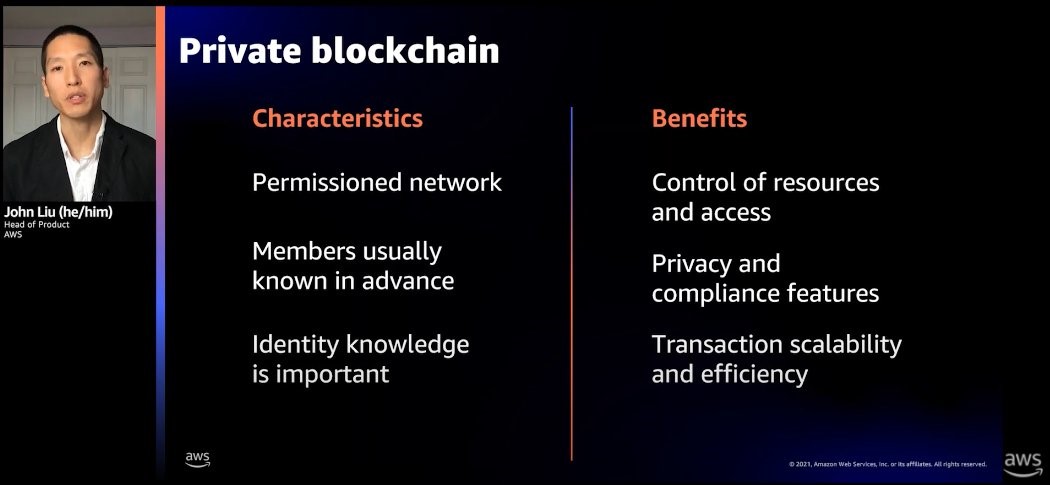
John Liu covers the characteristics and benefits of private and public blockchain

John Liu covers the characteristics and benefits of private and public blockchain

Deep Dive on Amazon Managed Blockchain

In this video, Johnathan Fritz, a Principal Product Manager for Managed Blockchain shares some challenges his team faced while building a distributed and immutable network and how they overcame them. The talk provides a good example of mental models you can use to understand and solve challenges while architecting.

Blockchain is based on a consensus mechanism in a distributed system

Blockchain is based on a consensus mechanism in a distributed system

Mint and deploy NFTs to the Ethereum blockchain using Amazon Managed Blockchain

Buying NFTs is a hot topic right now. But how do you create your own? This blog post provides you a step-by-step guide that shows you how to create an NFT and how to establish a workflow to deploy ERC-721 contracts to the public blockchain Ethereum Rinkeby testnet.
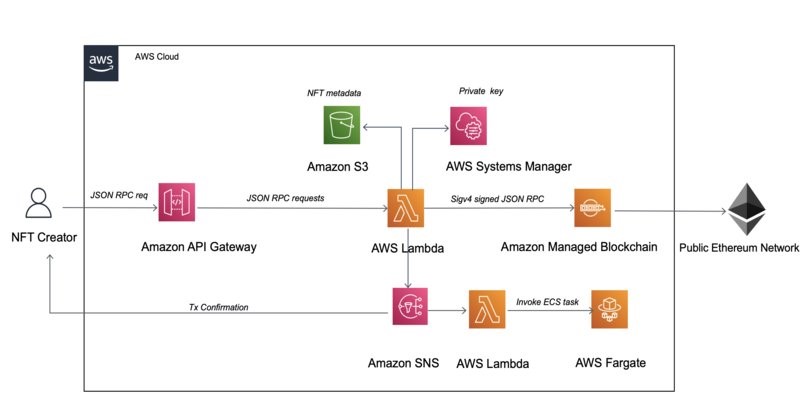
The architecture uses Managed Blockchain to take advantage of maintained Ethereum nodes and allow developers to focus on smart contracts

The architecture uses Managed Blockchain to take advantage of maintained Ethereum nodes and allow developers to focus on smart contracts

How Specright uses Amazon QLDB to create a traceable supply chain network

Blockchain and distributed ledger technologies focus on decentralizing applications involving multiple parties where no single entity owns the application. When your application is decentralized and involves multiple, unknown parties, blockchains can be appropriate. On the other hand, if your application only requires a complete and verifiable history of data changes, you can consider a ledger database.

This post shows how Specright uses use Amazon Quantum Ledger Database (Amazon QLDB) to generate a complete, verifiable history of data changes, to generate an append-only immutable journal of events. Their architecture makes sure that all members of the network have access to the same and latest version of the specification to instantly track change history to investigate quality issues.

This architecture allows all members of the supply chain network to access the same and latest versions of specifications

This architecture allows all members of the supply chain network to access the same and latest versions of specifications

See you next time!

Thanks for reading! If you’re looking for more ways tools to architect your workload, check out the AWS Architecture Center.

See you in a couple of weeks when we discuss strategies for running microservices with containers!
Other posts in this series

Let’s Architect! Tools for Cloud Architects

Post Syndicated from Luca Mezzalira original https://aws.amazon.com/blogs/architecture/lets-architect-tools-for-cloud-architects/

This International Women’s Day, we’re featuring more than a week’s worth of posts that highlight female builders and leaders. We’re showcasing women in the industry who are building, creating, and, above all, inspiring, empowering, and encouraging everyone—especially women and girls—in tech.


A great way for cloud architects to learn is to experiment with the tools that our teams are using or could consider for the future. This allows us to learn new technologies, become familiar with the latest trends, and understand the entire cycle of our solutions.

Amazon Web Services (AWS) provides several tools for architects, including resources that can analyze your environment for creating a visual diagram and a community of builders who can answer your technical questions.

Today we’re excited to share  tools and methodologies that you should be aware of. In honor of the Architecture Blog’s International Women’s Day, half of these tools have been developed with and by women.

AWS Perspective

One of the main challenges for every architect is making sure their documentation is up to date. Recently, we’ve seen the rise of “architecture as code” tools for deriving architecture diagrams directly from the code in production.

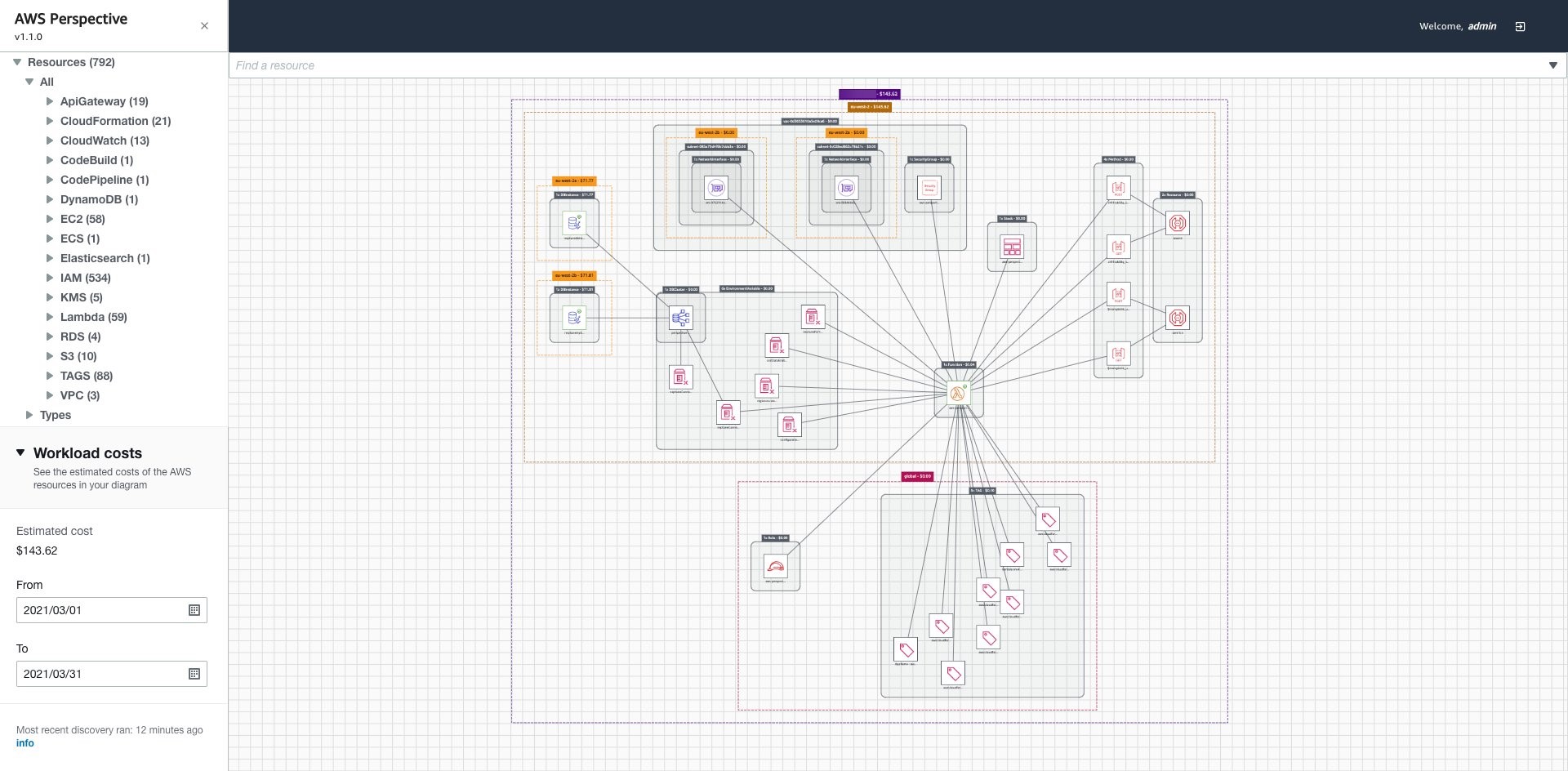
In that vein, AWS developed AWS Perspective, a diagramming tool solution that helps you represent your live workload.

AWS Perspective analyzes your environment and creates a diagram with all your cloud components

AWS Perspective analyzes your environment and creates a diagram with all your cloud components

Chaos Testing with AWS Fault Injection Simulator and AWS CodePipeline

Chaos engineering is the process of testing a distributed computing system to ensure that it can withstand unexpected disruptions.

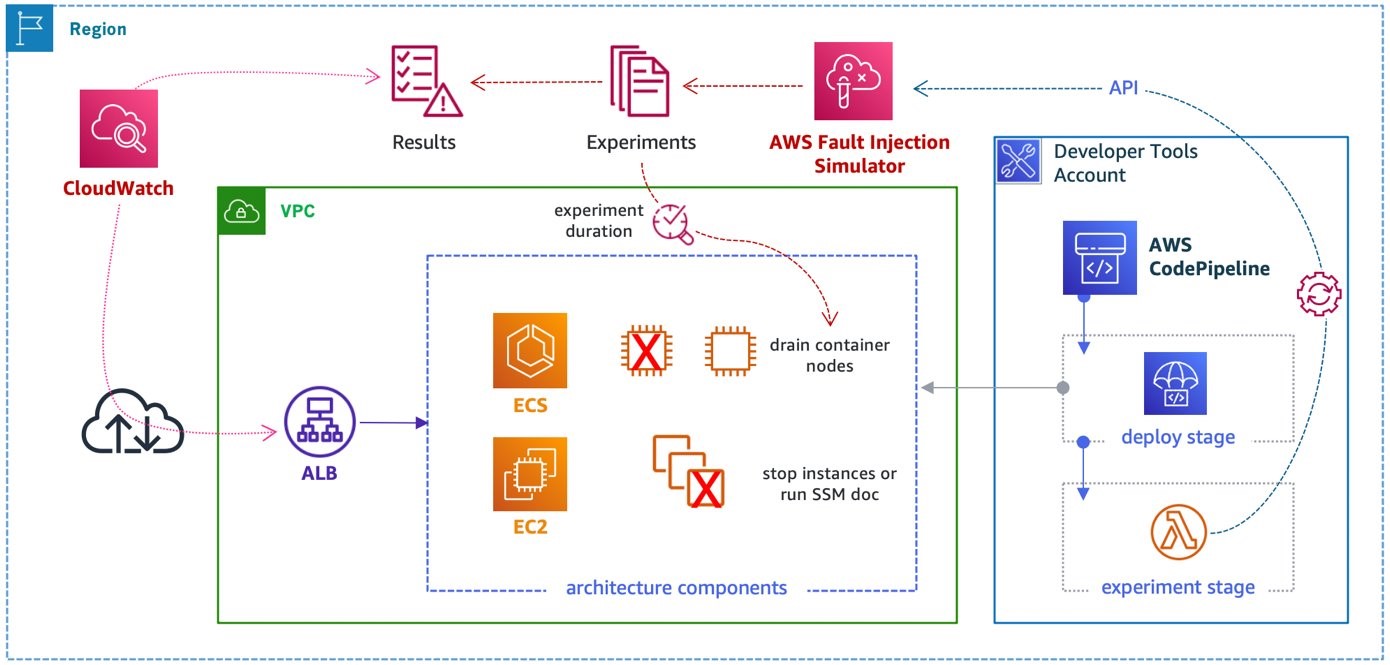
This blog post shows an architecture pattern for automating chaos testing as part of your continuous integration/continuous delivery (CI/CD) process. By automating the implementation of chaos experiments inside CI/CD pipelines, complex risks and modeled failure scenarios can be tested against application environments with every deployment

This high-level architecture shows how to automate chaos engineering in your environment

This high-level architecture shows how to automate chaos engineering in your environment

AWS re:Post – A Reimagined Q&A Experience for the AWS Community

Often when architecting we run into different design choices, issues, and roadblocks. What service should you use? What is the best way to implement this? Who do you ask?

AWS re:Post is a new question-and-answer service (think Stack Overflow specifically for AWS). It is monitored by the community who answers your questions, and then employees and official partners review these answers to ensure accuracy.

AWS re:Post is public. There is a wide community of AWS experts ready to answer your questions

AWS re:Post is public. There is a wide community of AWS experts ready to answer your questions

Establishing Feedback Loops Based on the AWS Well-Architected Framework Review

In 2018, AWS released the Well-Architected Framework, a mechanism for reviewing and/or improving your workloads that provides recommendations based on best practices in different areas such as security, costs optimization, or reliability. This article shows you how to improve iteratively your systems in the cloud using the Well-Architected Framework.

Creating a healthy feedback loop will enhance your architecture over time

Creating a healthy feedback loop will enhance your architecture over time

See you next time!

Thanks for reading! If you’re looking for more ways tools to architect your workload, check out the AWS Architecture Center.

See you in a couple of weeks when we discuss blockchain!

Other posts in this series

Let’s Architect! Architecting for Security

Post Syndicated from Luca Mezzalira original https://aws.amazon.com/blogs/architecture/lets-architect-architecting-for-security/

At AWS, security is “job zero” for every employee—it’s even more important than any number one priority. In this Let’s Architect! post, we’ve collected security content to help you protect data, manage access, protect networks and applications, detect and monitor threats, and ensure privacy and compliance.

Managing temporary elevated access to your AWS environment

One challenge many organizations face is maintaining a solid security governance across AWS accounts.

This Security Blog post provides a practical approach to temporarily elevate access for specific users. For example, imagine a developer wants to access a resource in the production environment. With elevated access, you won’t have to provide them an account that has access to the production environment. You would just elevate their access for a short period of time. The following diagram shows the few steps needed to temporarily elevate access to a user.

This diagram shows the few steps needed to temporarily elevate access to a user

This diagram shows the few steps needed for to temporarily elevate access to a user

Security should start left: The problem with shift left

You already know security is job zero at AWS. But it’s not just a technology challenge. The gaps between security, operations, and development cycles are widening. To close these gaps, teams must have real-time visibility and control over their tools, processes, and practices to prevent security breaches.

This re:Invent session shows how establishing relationships, empathy, and understanding between development and operations teams early in the development process helps you maintain the visibility and control you need to keep your applications secure.

Screenshot from re:Invent session

Empowering developers means shifting security left and presenting security issues as early as possible in your process

AWS Security Reference Architecture: Visualize your security

Securing a workload in the cloud can be tough; almost every workload is unique and has different requirements. This re:Invent video shows you how AWS can simplify the security of your workloads, no matter their complexity.

You’ll learn how various services work together and how you can deploy them to meet your security needs. You’ll also see how the AWS Security Reference Architecture can automate common security tasks and expand your security practices for the future. The following diagram shows how AWS Security Reference Architecture provides guidelines for securing your workloads in multiple AWS Regions and accounts.

The AWS Security Reference Architecture provides guidelines for securing your workloads in multiple AWS Regions and accounts

The AWS Security Reference Architecture provides guidelines for securing your workloads in multiple AWS Regions and accounts

Network security for serverless workloads

Serverless technologies can improve your security posture. You can build layers of control and security with AWS managed and abstracted services, meaning that you don’t have to do as much security work and can focus on building your system.

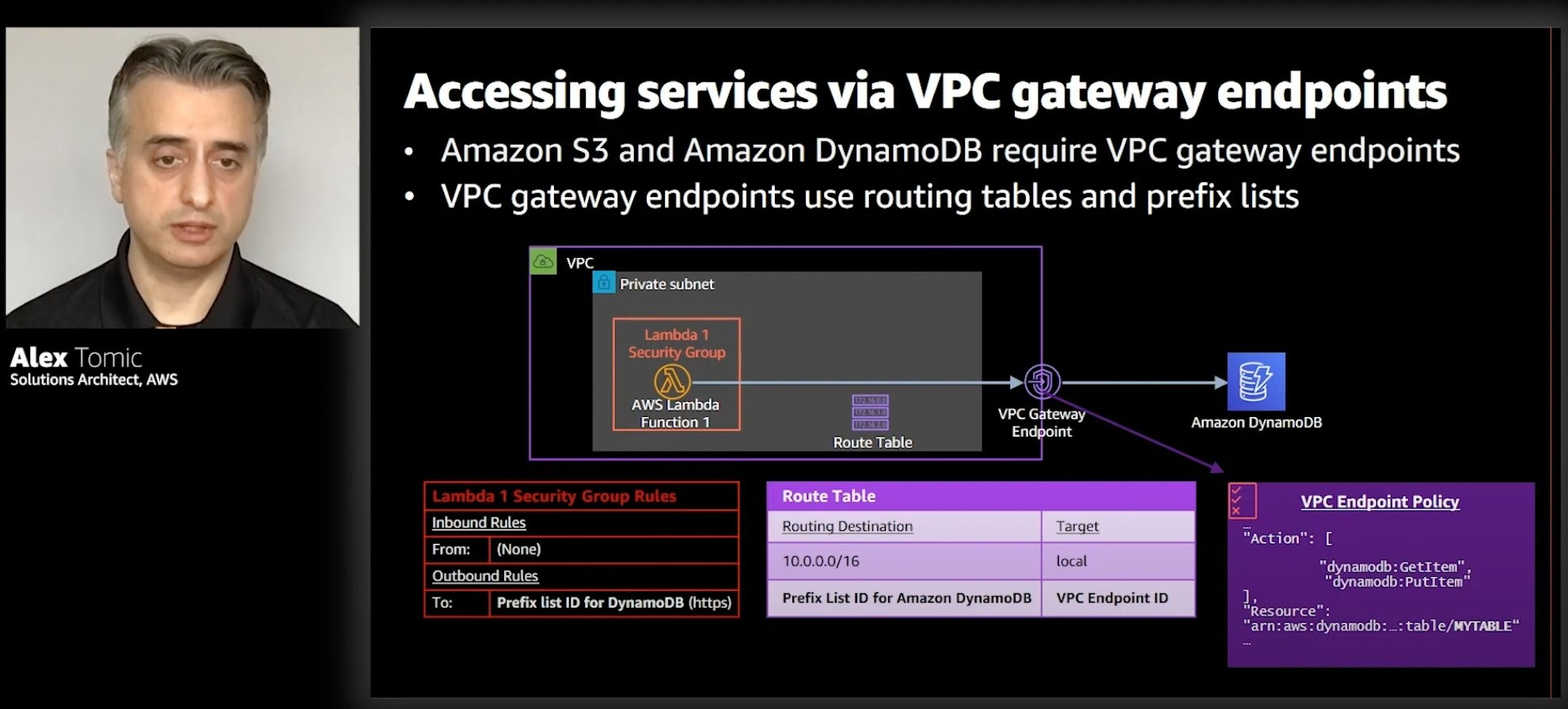
This video from re:Invent provides serverless strategies to consider to gain greater control of networking security. You will learn patterns to implement security at the edge, as well as options for controlling an AWS Lambda function’s network traffic. These strategies are designed to securely access resources (for example, databases) placed in a virtual private cloud (VPC), as well as resources outside of a VPC. The following screenshot shows how
Lambda functions can run in a VPC and connect to services like Amazon DynamoDB using VPC gateway endpoints.

Lambda functions can run in a VPC and connect to services like Amazon DynamoDB using VPC gateway endpoints

Lambda functions can run in a VPC and connect to services like Amazon DynamoDB using VPC gateway endpoints

See you next time!

Thanks for reading! If you’re looking for more ways to architect your workload for security, check out Best Practices for Security, Identity, & Compliance in the AWS Architecture Center.

See you in a couple of weeks when we discuss the best tools offered by AWS for software architects!

Other posts in this series

Let’s Architect! Architecting for Machine Learning

Post Syndicated from Luca Mezzalira original https://aws.amazon.com/blogs/architecture/architecting-for-machine-learning/

Though it seems like something out of a sci-fi movie, machine learning (ML) is part of our day-to-day lives. So often, in fact, that we may not always notice it. For example, social networks and mobile applications use ML to assess user patterns and interactions to deliver a more personalized experience.

However, AWS services provide many options for the integration of ML. In this post, we will show you some use cases that can enhance your platforms and integrate ML into your production systems.

Dynamic A/B testing for machine learning models with Amazon SageMaker MLOps projects

Performing A/B testing on production traffic to compare a new ML model with the old model is a recommended step after offline evaluation.

This blog post explains how A/B testing works and how it can be combined with multi-armed bandit testing to gradually send traffic to the more effective variants during the experiment. It will teach you how to build it with AWS Cloud Development Kit (AWS CDK), architect your system for MLOps, and automate the deployment of the solutions for A/B testing.

This diagram shows the iterative process to analyze the performance of ML models in online and offline scenarios.

This diagram shows the iterative process to analyze the performance of ML models in online and offline scenarios

Enhance your machine learning development by using a modular architecture with Amazon SageMaker projects

Modularity is a key characteristic for modern applications. You can modularize code, infrastructure, and even architecture.

A modular architecture provides an architecture and framework that allows each development role to work on their own part of the system, and hide the complexity of integration, security, and environment configuration. This blog post provides an approach to building a modular ML workload that is easy to evolve and maintain across multiple teams.

A modular architecture allows you to easily assemble different parts of the system and replace them when needed

A modular architecture allows you to easily assemble different parts of the system and replace them when needed

Automate model retraining with Amazon SageMaker Pipelines when drift is detected

The accuracy of ML models can deteriorate over time because of model drift or concept drift. This is a common challenge when deploying your models to production. Have you ever experienced it? How would you architect a solution to address this challenge?

Without metrics and automated actions, maintaining ML models in production can be overwhelming. This blog post shows you how to design an MLOps pipeline for model monitoring to detect concept drift. You can then expand the solution to automatically launch a new training job after the drift was detected to learn from the new samples, update the model, and take into account the changes in the data distribution.

Concept drift happens when there is a shift in the distribution. In this case, the distribution of the newly collected data (in blue) starts differing from the baseline distribution (in green)

Concept drift happens when there is a shift in the distribution. In this case, the distribution of the newly collected data (in blue) starts differing from the baseline distribution (in green)

Architect and build the full machine learning lifecycle with AWS: An end-to-end Amazon SageMaker demo

Moving from experimentation to production forces teams to move fast and automate their operations. Adopting scalable solutions for MLOps is a fundamental step to successfully create production-oriented ML processes.

This blog post provides an extended walkthrough of the ML lifecycle and explains how to optimize the process using Amazon SageMaker. Starting from data ingestion and exploration, you will see how to train your models and deploy them for inference. Then, you’ll make your operations consistent and scalable by architecting automated pipelines. This post offers a fraud detection use case so you can see how all of this can be used to put ML in production.

The ML lifecycle involves three macro steps: data preparation, train and tuning, and deployment with continuous monitoring.

The ML lifecycle involves three macro steps: data preparation, train and tuning, and deployment with continuous monitoring

See you next time!

Thanks for reading! We’ll see you in a couple of weeks when we discuss how to secure your workloads in AWS.

Looking for more architecture content? AWS Architecture Center provides reference architecture diagrams, vetted architecture solutions, Well-Architected best practices, patterns, icons, and more!

Other posts in this series

Let’s Architect! Architecture and Sustainability

Post Syndicated from Luca Mezzalira original https://aws.amazon.com/blogs/architecture/lets-architect-1-architecture-and-sustainability/

We often read news about sustainability and how governments and large corporations are working to build a better world for the future. But, have you ever asked yourself what you can do? As a software architect, how can you make a difference by addressing sustainability challenges?

In this first post of Let’s Architect!, a series of posts that gathers content to help software architects and tech leaders explore new ideas, case studies, and technical approaches, we provide materials to help you design sustainable architectures and create awareness on sustainability.

Optimizing your AWS Infrastructure for Sustainability

How do you optimize the compute layer of your environment from a sustainability perspective? An idle server still consumes power, and regulating its power consumption is one way to improve environmental impact. But, the cloud offers many other metrics and features to monitor and optimize your system.

This blog post shows you how to analyze the utilization of your compute resources, explains the main features to automatically scale based on demand, and highlights how serverless can optimize your resource utilization. Knowing how to use your resources efficiently will help reduce the amount of energy spent by your workload.

The shared responsibility model for sustainability shows how it is a shared responsibility between AWS and customers

The shared responsibility model for sustainability shows how it is a shared responsibility between AWS and customers

Building Sustainably on AWS

This talk provides several best practices you can follow as to design more sustainable architectures. It gives different tips to integrate sustainable practices throughout business operations and provides some guardrails that could help you achieve your organization’s sustainability goals more quickly.

Luke Hargreaves explaining how to build sustainably on AWS

Luke Hargreaves explaining how to build sustainably on AWS

Moving to event-driven architectures

An efficient architecture is typically a more sustainable architecture. This video explains how Amazon.com approaches event-driven architectures.

Event-driven architectures use events to communicate across different microservices. This architectural pattern works to reduce bandwidth consumption and CPU utilization and potentially lower cost. By choosing a serverless event-driven architecture, you’ll optimize your overall resource utilization because the code is run in response to events.

Tim Bray presenting how to move to an event-driven architecture at re:Invent 2019

Tim Bray presenting how to move to an event-driven architecture at re:Invent 2019

Supporting climate model simulations to accelerate climate science

This blog post discusses how collaborating research teams use the data generated through climate model simulations to study impacts on Earth and human systems—including agriculture, drought, flooding, and human health—in various parts of the world.

These studies will advance understanding of near-term climate and climate-intervention responses, and accelerate progress on a time-sensitive problem for humanity.

This architecture built on AWS Parallel Cluster supports weather and climate modeling workloads

This architecture built on AWS ParallelCluster supports weather and climate modeling workloads

See you next time!

Thanks for reading! If you want to deep dive into the topic of sustainability even more, don’t miss the Architecture Monthly edition on Sustainability.

See you in a couple of weeks when we discuss novel ways to use machine learning and artificial intelligence!

Looking for more architecture content? AWS Architecture Center provides reference architecture diagrams, vetted architecture solutions, Well-Architected best practices, patterns, icons, and more!