Post Syndicated from Philippa Hanman original https://www.raspberrypi.org/blog/celebrating-the-uks-national-engineering-day-2026/
We’re celebrating National Engineering Day in the UK with our friends at the Royal Academy of Engineering. National Engineering Day aims to make the UK’s engineers and engineering more visible, and celebrate how they improve everyday lives and shape the world around us.
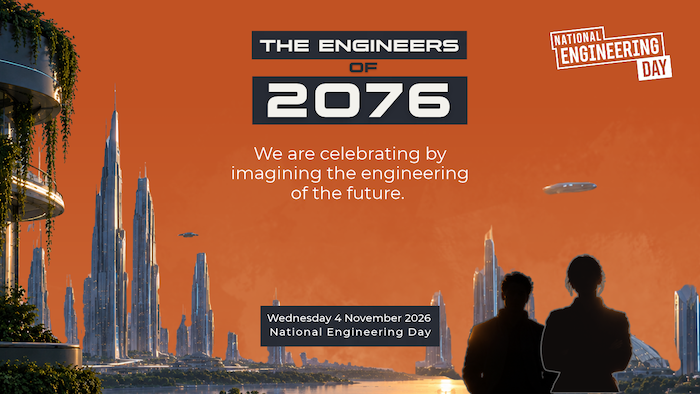
Now hiring: The engineers of 2076
This year, the Royal Academy of Engineering is marking its 50th anniversary by looking 50 years into the future. Through job ads for roles that don’t exist yet, they invite us to imagine the engineering careers that will build life on the Moon, Mars, and beyond.
Scientific investigations in space
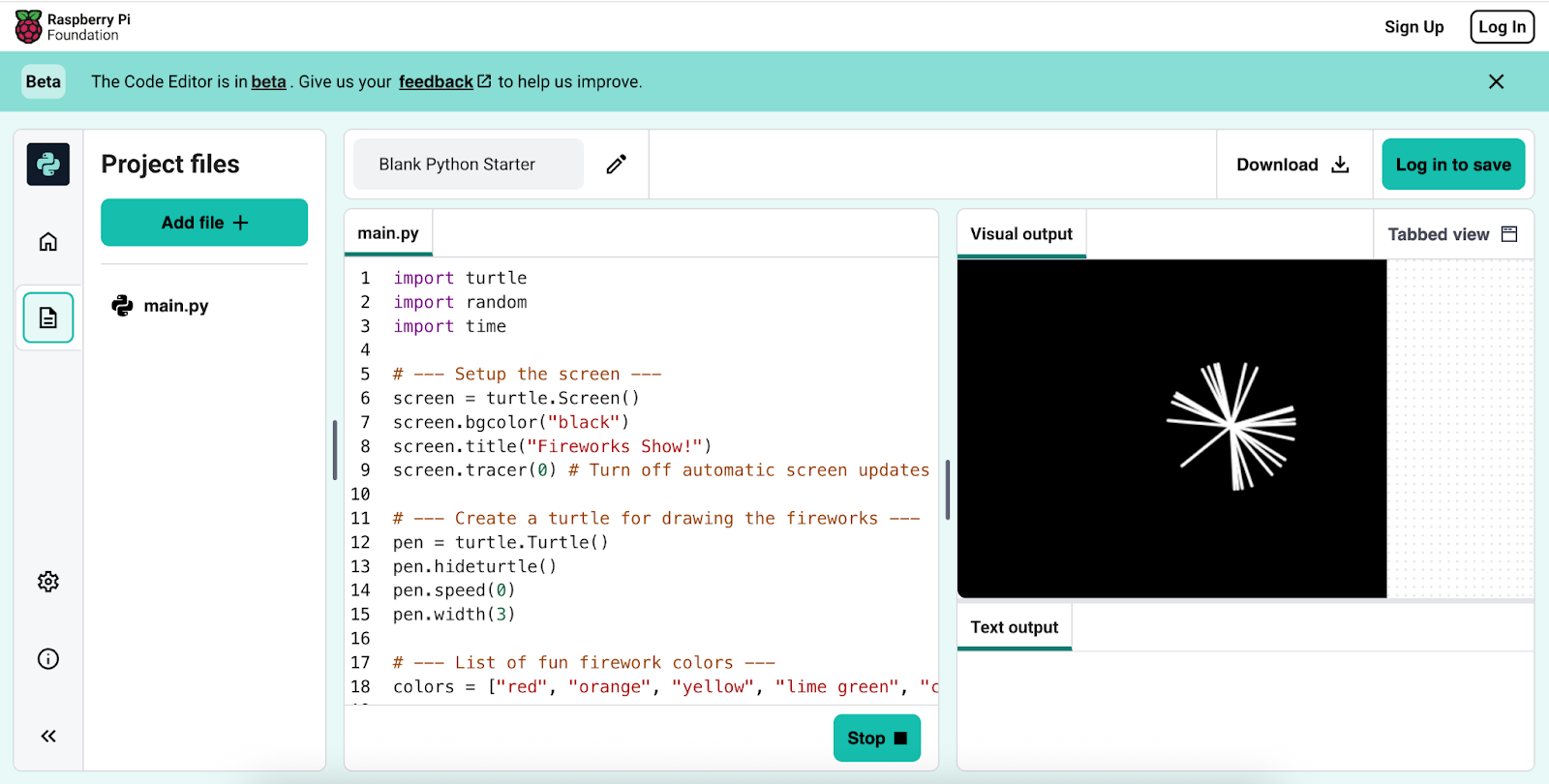
Some of those future engineers could be taking their first steps today. They might be getting their first experience with space science in the European Astro Pi Challenge, for example. This ESA Education project is run in collaboration with the Raspberry Pi Foundation and offers young people the amazing opportunity to conduct scientific investigations in space by writing computer programs that run on Raspberry Pi computers aboard the International Space Station (ISS).
We spoke to Geraint Ballinger, a Software Development and Deployment Engineer who works on the Astro Pi Challenge, to find out what engineering roles he thought could be important in the future. We also discussed how the engineers of 2076 need opportunities to experiment, solve problems, and build confidence today.
Hi Geraint. Can you tell us a bit about your role as a Software Development and Deployment Engineer at the Raspberry Pi Foundation?
I like to describe it as a blend between traditional software engineering and teaching. The overall aim of my work is to help young people run code on the Astro Pi computers aboard the International Space Station, which means designing systems that hide unnecessary complexity so students can learn and solve problems effectively, while ensuring the software deployed to orbit remains secure and compliant.
Part of the role is to create applications and code libraries that young people can use to simplify the routine things so they can focus their energy on the interesting aspects of running code in space: taking pictures of the Earth and investigating various scientific concepts. I also oversee the pipeline that receives their work — reviewing submissions, moderating Mission Zero images, and building internal tools to streamline the review process.
On the flight software side, I am jointly responsible for delivering the Astro Pi operating system on the ISS. This involves preparing and delivering system updates, coordinating security reviews, and developing internal astronaut-facing applications such as the application used by the astronauts to focus the Astro Pi cameras.
What do you most enjoy about your role?
I enjoy the sheer variety of engineering challenges to which I am exposed. In any given week, I might be writing a Python library, developing a Typescript web application, or diagnosing a low-level hardware failure on the ISS — like debugging corrupted SD cards. In particular, I have really enjoyed the challenge of maintaining a system on real physical hardware in space. Operating a Raspberry Pi in orbit makes it impossible to ignore the physical machine: you have to actively design around constraints such as solar radiation, tight power and bandwidth budgets, and hardware degradation over the mission lifecycle. It’s been really interesting to learn about the procedures and processes involved in delivering software and hardware into orbit.
How does your work help young people’s Astro Pi programs run on the ISS?
I developed the Astro Pi Replay tool, an online browser emulator that simplifies testing and code submission for Mission Space Lab. This allows anyone with a standard school laptop to test their code as if it were running on the ISS, without the need for physical hardware.
Alongside the software tooling, I am also involved in writing the educational materials that guide young people and mentors through the core concepts required for Mission Space Lab. These resources hopefully enable participants to get up to speed quickly, and to produce working code within a few hours.
What skills do you see young people practising through Astro Pi that future space engineers will need?
Problem-solving, patience, critical thinking, and creativity are vital skills for future space engineers that young people put into practice through the Astro Pi Challenge.
In Mission Space Lab, the more advanced of the Astro Pi missions, young people learn to break down complex tasks into manageable pieces and to coordinate independent pieces of work as a team.
Becauses technical failures and software bugs are inevitable realities of operating in space, Mission Space Lab gives participants practical opportunities to hone their debugging skills, to build resilience and a constructive approach to problem-solving, and foster an active curiosity about underlying system processes.
National Engineering Day is imagining the engineers of 2076. What space engineering job would you invent, and what would someone need to know or be able to do to succeed in it?
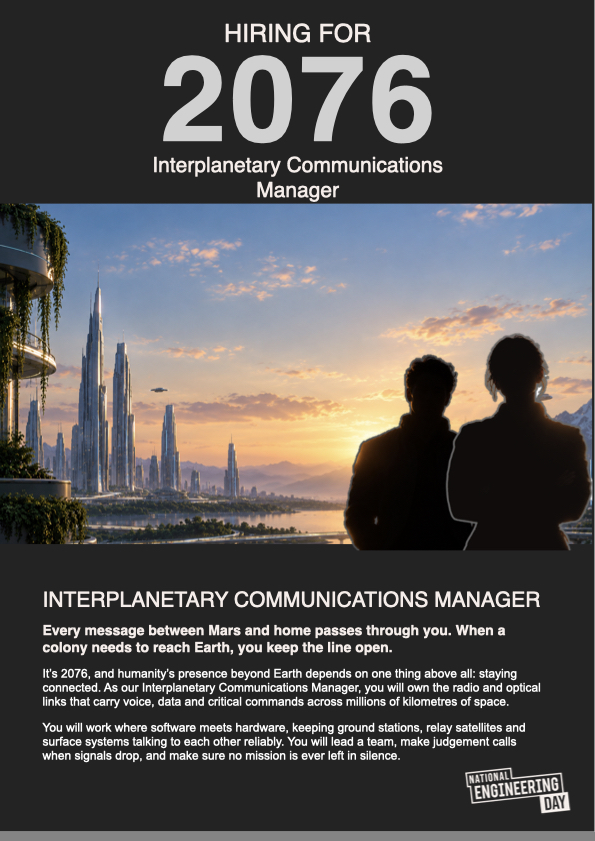
I’d invent the role of Interplanetary Communications Manager. If we’ve reached Mars by 2076, then keeping a reliable link back to Earth will be critical infrastructure, and someone will need to look after it.
The job would sit across software and hardware. Software will be a big part of it, but you’d always be working with physical systems, particularly radio transmission. I don’t think we’ll find a fundamentally new way to communicate across space, so I’d expect the role to build on radio and optical technology we already use today. So the key knowledge would be the physics of communication, such as how radio waves and light travel over huge distances, along with how networks are designed to stay reliable.
I also expect AI to touch almost every area of engineering, but I doubt something this critical (and expensive!) would be left entirely without human oversight. There will always be a need for people who truly understand how the system works and can judge whether it can be trusted. That understanding is what I’d want a candidate to bring to the role.
Thanks, Geraint! And we hope any future Interplanetary Communications Managers try out the Astro Pi Challenge, which is open for submissions now!
Get involved with National Engineering Day
Now it’s your turn. What engineering role would you create for 2076? Find out more about how to take part on the Royal Academy of Engineering website.
And if your young people and future engineers would like to enter the European Astro Pi Challenge 26/27, visit: https://astro-pi.org/ to select a mission.
The post Celebrating the UK’s National Engineering Day 2026 appeared first on Raspberry Pi Foundation.