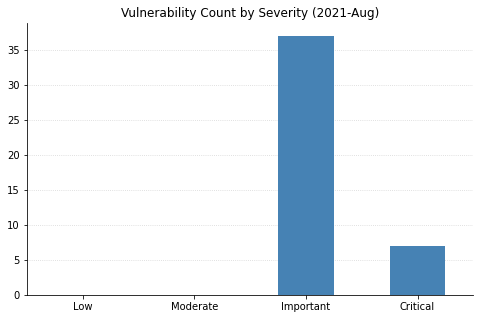
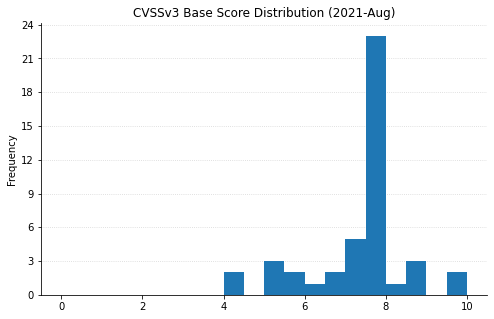
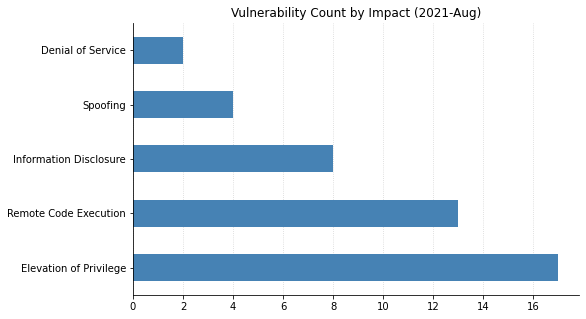
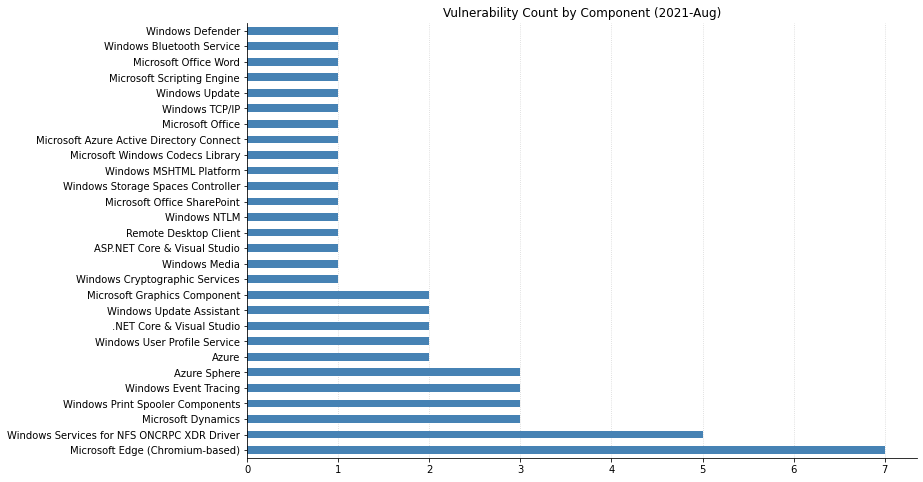
Hot off the press, it’s another issue of the Patch Tuesday blog! While the number of vulnerabilities is low this month, there are a number of high risk items administrators will want to patch right away including a few that will require additional remediation steps. This Patch Tuesday also includes updates for three vulnerabilities that were publicly disclosed earlier this month. Let’s jump in.
Windows Elevation of Privilege Vulnerability aka HiveNightmare/SeriousSAM
https://msrc.microsoft.com/update-guide/vulnerability/CVE-2021-36934 With a public proof-of-concept having been available for some time, administrators should prioritize taking action on CVE-2021-36934. Remediation for this vulnerability requires volume shadow copies for system files to be deleted. This is due to the nature of the vulnerability, as the files with the vulnerable permissions could be restored from a backup and accessed even after the patch is installed. Microsoft indicates they took caution not to delete users’ backups, but the trade-off is that customers will need to do the chore themselves. We’ve updated our blog post with this additional information.
Windows LSA Spoofing Vulnerability aka ADV210003
https://msrc.microsoft.com/update-guide/vulnerability/CVE-2021-36942 Another high priority action for patching teams is CVE-2021-36942. This update patches one of the vectors used in the PetitPotam attack. After applying this update there are additional configurations required in order to protect systems from other attack vectors using registry keys. The InsightVM team has included detection for the registry keys needed to enable EPA and SMB Signing in addition to the normal update. Please see our blog post for more information.
Windows Services for NFS ONCRPC XDR Driver Remote Code Execution Vulnerability
https://msrc.microsoft.com/update-guide/en-US/vulnerability/CVE-2021-26432 While Microsoft has not offered up any details for this vulnerability we can glean some info from the CVSS information. This remote code execution vulnerability is reachable from the network service with no authentication or user action required. There may not be an exploit available for this yet, but Microsoft indicates that “Exploitation [is] more likely”. Put this update near the top of your TODO list.
Windows TCP/IP Remote Code Execution Vulnerability
To provide the best experiences, we use technologies like cookies to store and/or access device information. Consenting to these technologies will allow us to process data such as browsing behavior or unique IDs on this site. Not consenting or withdrawing consent, may adversely affect certain features and functions.
Functional
Always active
The technical storage or access is strictly necessary for the legitimate purpose of enabling the use of a specific service explicitly requested by the subscriber or user, or for the sole purpose of carrying out the transmission of a communication over an electronic communications network.
Preferences
The technical storage or access is necessary for the legitimate purpose of storing preferences that are not requested by the subscriber or user.
Statistics
The technical storage or access that is used exclusively for statistical purposes.The technical storage or access that is used exclusively for anonymous statistical purposes. Without a subpoena, voluntary compliance on the part of your Internet Service Provider, or additional records from a third party, information stored or retrieved for this purpose alone cannot usually be used to identify you.
Marketing
The technical storage or access is required to create user profiles to send advertising, or to track the user on a website or across several websites for similar marketing purposes.