Post Syndicated from LastWeekTonight original https://www.youtube.com/watch?v=J1xUky5QIIs
Comic for 2026.05.11 – Last Thing
Post Syndicated from Explosm.net original https://explosm.net/comics/last-thing
New Cyanide and Happiness Comic
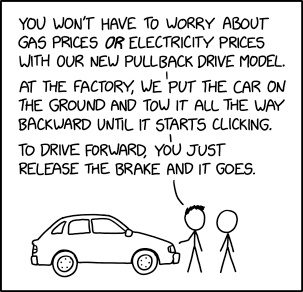
Pullback Drive
Post Syndicated from xkcd.com original https://xkcd.com/3244/
Kernel prepatch 7.1-rc3
Post Syndicated from corbet original https://lwn.net/Articles/1072100/
Linus has released 7.1-rc3 for testing.
“I think this answers the ‘is 7.1 continuing the larger size pattern
“
that we saw with 7.0?’ question, and the answer is yes: that wasn’t a fluke
brought on by a .0 release – it simply seems to be the new normal.
The Only Two Choices I’ve Ever Made
Post Syndicated from The Atlantic original https://www.youtube.com/shorts/_PoyINGsKB4
Comic for 2026.05.10 – Mother’s Day
Post Syndicated from Explosm.net original https://explosm.net/comics/mothers-day
New Cyanide and Happiness Comic
The Case For Compilers: A Look at SPEC CPU 2026 on LLVM 22
Post Syndicated from Ryan Smith original https://www.servethehome.com/the-case-for-compilers-a-look-at-spec-cpu-2026-on-llvm-22/
Looking at the role of compilers in SPEC CPU 2026 performance, we have tested the benchmark suite on LLVM 22. The newest compiler provides a meaningful improvement to benchmark scores for multiple architectures
The post The Case For Compilers: A Look at SPEC CPU 2026 on LLVM 22 appeared first on ServeTheHome.
The Shakespeare Riot
Post Syndicated from The History Guy: History Deserves to Be Remembered original https://www.youtube.com/shorts/TnafP9-l0-c
Hexxy
Post Syndicated from Oglaf! -- Comics. Often dirty. original https://www.oglaf.com/hexxy/


Anthropic Signs SpaceX Colossus 1 Data Center to Boost Capacity
Post Syndicated from Patrick Kennedy original https://www.servethehome.com/anthropic-signs-spacex-colossus-1-data-center-to-boost-capacity/
Anthropic signed a deal this week for the SpaceX Colossus 1 data center compute capacity which hit home at STH since we took you on a tour
The post Anthropic Signs SpaceX Colossus 1 Data Center to Boost Capacity appeared first on ServeTheHome.
I Tried to Automate My Entire Property (This Got Out of Control)
Post Syndicated from BeardedTinker original https://www.youtube.com/watch?v=ARRSem_uWvs
The Only Thing Worse Than Spirit Airlines
Post Syndicated from The Atlantic original https://www.youtube.com/shorts/Gre6DBrzSGk
Shortened The War
Post Syndicated from The History Guy: History Deserves to Be Remembered original https://www.youtube.com/shorts/SS4iDz7igjE
The BUMPBOXX BB-777 Assessment
Post Syndicated from Techmoan original https://www.youtube.com/watch?v=_1DAyHpP1ok
Friday Squid Blogging: Giant Squid Live in the Waters of Western Australia
Post Syndicated from Bruce Schneier original https://www.schneier.com/blog/archives/2026/05/friday-squid-blogging-giant-squid-live-in-the-waters-of-western-australia.html
Evidence of them has been found by analyzing DNA in the seawater.
As usual, you can also use this squid post to talk about the security stories in the news that I haven’t covered.
What We Lose by Ditching Our Devices
Post Syndicated from The Atlantic original https://www.youtube.com/shorts/kZIdc8hSgQQ
Sabrent NT-P10G USB4 10GbE Network Adapter Review
Post Syndicated from Rohit Kumar original https://www.servethehome.com/sabrent-nt-p10g-usb4-10gbe-network-adapter-review/
We review the Sabrent NT-P10G a USB4 and Thunderbolt 10Gbase-T adapter that uses the Marvell AQC113 to bring 10GbE to more systems
The post Sabrent NT-P10G USB4 10GbE Network Adapter Review appeared first on ServeTheHome.
More stable kernels with partial Dirty Frag fixes
Post Syndicated from jzb original https://lwn.net/Articles/1071483/
Greg Kroah-Hartman has released the 6.1.171, 5.15.205, and 5.10.255 stable kernels, quickly
followed by 6.1.172 and 5.15.206 kernels. This is another round
of stable kernels to provide fixes for one of the CVEs (CVE-2026-43284)
assigned following the Dirty
Frag and Copy Fail 2
security disclosures. There is not, yet, a stable kernel with a fix
for CVE-2026-43500,
though a
patch to fix the second half is in the works.
7-OH #lastweektonight
Post Syndicated from LastWeekTonight original https://www.youtube.com/shorts/EKICvMASVRM
Data Annotation Infrastructure: Building a Scalable Pipeline with CVAT and B2 Object Storage
Post Syndicated from Jeronimo De Leon original https://www.backblaze.com/blog/data-annotation-infrastructure-building-a-scalable-pipeline-with-cvat-and-b2-object-storage/

Every computer vision model is a reflection of the data it was trained on. The precision of the labels, the consistency across annotators, the coverage of edge cases. Get the data right and the model performs. Get it wrong and no amount of architecture or compute will compensate.
AI-assisted annotation tools have made it possible to label at a speed and scale that was unthinkable a few years ago. Teams that used to spend weeks on manual labeling now generate annotations automatically and refine them. That acceleration opens up real opportunity, but it also raises the bar for the infrastructure underneath the annotation pipeline. The architecture needs to keep pace with the volume of data now moving through it.
We have spent the last decade building AI workflows and one pattern shows up consistently: the teams that treat annotation as infrastructure from day one outperform the ones that bolt it on later. The difference is not just tooling. It is the architectural decisions underneath, particularly around storage, that determine whether an annotation operation scales or stalls.
Annotation within the ML pipeline
A production ML pipeline spans data ingestion, preprocessing, training, serving, and monitoring. Annotation sits within the data layer, but it is the stage where several consequential storage decisions converge: how raw data is stored, who can access it, how long it is retained, and how it flows between labeling, training, and evaluation. Getting storage right at this layer strengthens every stage downstream.
Data gravity. A single autonomous driving project can produce terabytes of camera and LiDAR data before a single label is applied. This data needs to live somewhere durable and accessible before, during, and after annotation. It rarely moves once it lands.
Collaboration. Labeling teams may be internal, external, or a mix. Quality reviewers need the same data access as annotators. The data layer has to support concurrent access across roles and geographies without creating bottlenecks or redundant copies.
Lifecycle persistence. Labeled datasets are reused across training runs, refined as models improve, and versioned as labeling standards evolve. Storage needs to retain raw data alongside annotations for months or years.
Regulatory constraints. In healthcare, automotive, and defense, access controls around training data are subject to compliance requirements. Encryption, scoped credentials, and auditability are non-negotiable.
The teams that design for these requirements upfront build data operations that scale cleanly across the entire pipeline.
CVAT as the annotation layer
CVAT (Computer Vision Annotation Tool) started as an internal tool at Intel in 2017, was open sourced in 2018, and spun out as CVAT.ai Corporation in 2022. Millions of users use it today, and for good reason.
Annotation breadth. CVAT covers the full range of label types: bounding boxes, polygons, polylines, keypoints, skeletons, cuboids, brush-based masks, and tags. It handles images, video, and 3D point clouds natively, so teams working across object detection, segmentation, and pose estimation stay on one platform instead of stitching separate tools together.
AI-assisted labeling. Beyond SAM 3 and YOLO, CVAT supports custom models through its AI Agents framework, which lets teams plug their own inference endpoints directly into the labeling workflow. For video, SAM 2-powered tracking propagates annotations across frames. The shift from manual annotation to review-and-correct workflows is where the real throughput gains happen.
Deployment flexibility. CVAT ships in three editions: Community (free, self-hosted), Online (managed SaaS), and Enterprise (on-premises with SSO, RBAC, and audit logging). You can start hosted and move to self-hosted as data governance needs evolve.
Pipeline integration. CVAT exposes a REST API with a Python SDK and CLI, so annotation tasks can be created, populated, and exported programmatically. For teams building CI/CD-style retraining loops, this is what makes CVAT a pipeline component rather than a standalone manual step.
Backblaze B2: The storage layer that compounds
Annotation tools get the attention, but the storage layer is where the architecture compounds over time. CVAT supports native cloud storage integration through S3-compatible buckets, and Backblaze B2 fits directly into that connector. Configure your B2 endpoint, bucket name, and application key credentials, and CVAT treats it as native cloud storage.
This architecture decouples compute from storage. CVAT handles annotation logic while B2 owns durability and access, and you can scale, migrate, or replace either independently. Because B2 is S3-compatible, other stages of the ML pipeline, from training scripts to data validation to orchestration, access the same data directly from the same bucket CVAT writes to. No intermediate exports. No dataset copies drifting out of sync.
Retention is where the storage decision pays off most. Annotation datasets have long lifecycles, and footprints accumulate fast across concurrent projects. B2’s storage economics let teams hold large datasets across the full model development lifecycle without cost becoming the limiting factor. This is especially relevant for video-heavy projects and multi-sensor datasets where raw data runs into tens of terabytes.
Access control matters too. B2 application keys can be scoped to individual buckets or file prefixes with granular permissions and optional expiration, so access boundaries stay clean across annotators, labeling services, and downstream training pipelines. The CVAT integration guide for Backblaze B2 walks through the full setup, and the CVAT cloud storage documentation covers access permissions, manifest files, and endpoint routing.
Building the pipeline that scales into what’s next
The teams building the best computer vision models are not just choosing better algorithms. They are investing in the annotation infrastructure that feeds those algorithms: the right labeling platform, the right storage architecture, and the right cost structure to sustain it all as data grows.
This becomes even more critical as the field moves toward world models. NVIDIA’s Cosmos platform has already been downloaded over two million times. World Labs launched Marble for commercial 3D world generation. DeepMind’s Genie 3 produces interactive 3D environments in real time. Yann LeCun left Meta to start AMI Labs with the explicit goal of building AI systems that understand physics, not just predict text. These systems need training data that goes far beyond today’s labeled images: synchronized multi-sensor captures, physics-aware video, dense 3D point cloud annotations. The data volumes and annotation complexity will dwarf what most teams work with today, and the infrastructure underneath will need to handle it.
The annotation pipeline you build now is the one that will carry you into that future. Both layers are worth getting right early.
You can get started with CVAT at cvat.ai and with Backblaze B2 at backblaze.com/cloud-storage.
The post Data Annotation Infrastructure: Building a Scalable Pipeline with CVAT and B2 Object Storage appeared first on Backblaze Blog | Cloud Storage & Cloud Backup