By Kevin Zielnicki, Guy Aridor, Aurélien Bibaut, Allen Tran, Winston Chou, and Nathan Kallus
Introduction
Personalization is everywhere on the internet. It shapes the products we discover, the stories we read, the music we hear, and the movies and TV shows we watch. At Netflix, personalization has been central to the member experience for decades — from the Netflix Prize to our modern recommender system that helps members navigate a large and constantly changing catalog.
But personalization is not only an algorithmic problem, it is also a measurement problem. How do we know how much value personalization creates? More precisely, how do we separate the appeal of a title from the value created by recommending that title to the right member at the right time?
In a new article in the International Journal of Industrial Organization — which we are also presenting at this year’s ACM Conference on Economics & Computation (EC ‘26) — we develop a model of member behavior, title choice, and personalized recommendations. The model lets us estimate how recommendations affect both whether members choose to watch and, if so, which titles they choose. In this post, we summarize our approach and main findings.
The Measurement Challenge
A natural first attempt at valuing recommendations is to ask: what share of viewing comes from titles that were recommended? This is an intuitive metric, but it fails to answer the causal question at hand.
The problem is that recommendations are not randomly assigned. A title appears on a member’s homepage precisely because the recommender system predicts that the member might want to watch it. If a member watches that title, was it because the recommendation caused the member to watch it? Or would she have watched it anyway because of her underlying preference for that kind of title? This is the core measurement challenge: recommendations are targeted to demand, so viewing a recommended title combines the effect of personalization with the member’s underlying preferences.
One way to solve this would be to run a large experiment that replaces Netflix’s personalized experience with an unpersonalized one. That would create clean variation — but it would also be a poor member experience. Personalization is a central part of how members locate valuable titles in a large catalog, so turning it off broadly is not an acceptable measurement strategy.
Instead, we take a hybrid approach. We build a behavioral model that separates members’ underlying preferences from the incremental effect of recommendations. The model uses the natural variation in the recommendation system, for example due to algorithmic exploration, to estimate how recommendations affect choice. Then, to validate the model predictions about title substitutability, we use small-scale A/B tests that “nudge” the salience of a handful of titles exogenously, generating ground-truth substitution patterns for a subset of titles. This lets us combine the scale and richness of modeling with the credibility of experimental evidence.
A Model of Member Choice
To measure the value of personalization, we need a model of what members would watch under different recommendation systems. Our model treats Netflix viewing as a day-by-day choice process. On each day, a member chooses among the titles available in the catalog, or she chooses not to watch anything. This gives us a concrete target to estimate: the probability that a member watches each title on a given day, as a function of their preferences, their viewing history, and the recommendations they see.
A simple version of this model would be too restrictive. It might assume, for example, that removing one title from the catalog shifts viewing toward all other titles in roughly proportional ways. But that isn’t how member choice works. If a member is considering a romantic comedy, the closest substitutes are likely other romantic comedies, not every title on Netflix equally. For similar reasons, two members may react very differently to the same recommendation.
To capture this complexity, we use a low-rank choice model. The model learns a representation of each title and a corresponding representation of each member’s current preferences. These representations are not limited to manually specified features like genre, cast, or language. Instead, they are learned from viewing behavior itself, allowing the model to capture nuanced similarities between titles that may be difficult to describe with coarse features, such as genre or release date, alone.
Our Model Attributes Choices to Dynamic Member-Title Affinity and the Effect of Recommendations
Member preferences are dynamic. What someone wants to watch today depends on what they have watched recently. A member who just finished a crime thriller may be in a different preference state than the same member after watching a stand-up special or a kids’ movie. Rather than estimate a fixed preference vector for each member, the model summarizes each member’s past viewing history into a current preference state. This lets us capture heterogeneous and time-varying tastes while also scaling to millions of members.
Our Model Architecture Allows Us to Scale to Millions of Members Efficiently
The key component for our purposes is that the model explicitly parameterizes the effect of recommendations. When a title is recommended, the model gives it an additional recommendation effect, or “bonus,” that increases its probability of being chosen. This bonus is a reduced-form way to capture two related mechanisms. First, recommendations can create awareness by helping members discover titles they may not have known about. Second, recommendations can provide information by signaling that a title is likely to be a good match.
Once estimated, the model becomes an engine for predicting counterfactuals. We can ask what would happen if a title were not recommended, if a different set of titles were recommended, or if the current recommender system were replaced with simpler alternatives. Because the model separately represents member preferences, title appeal, and recommendation effects, it lets us estimate not only how recommendations affect total viewing, but also how they change which titles are watched.
The model is only useful, however, if it captures real substitution patterns. The next step is therefore validation: comparing the model’s predictions to randomized experiments that directly perturb, on a small scale, the visibility that each title receives.
Validating the Model with Randomized Experiments
The model relies on an important assumption. After conditioning on the member, title, and state information available to the recommender system, we treat the remaining variation in whether a title is recommended as if it were randomly assigned. In our setting, this assumption is reasonable: we observe all of the information available to the recommender system, so we should be able to model its behavior accurately. But it is still an assumption. A useful model should not only fit historical viewing patterns; it should also predict what happens when recommendations change for external reasons.
Thus, to validate the model, we used randomized experiments that introduce variation in title visibility exogenously. These experiments mirror the kinds of variation that occur routinely when recommendation algorithms are updated: some titles receive more impressions, while others receive fewer. The key difference is that, in the validation experiment, this variation was prespecified so that we could estimate clean experimental benchmarks.
Specifically, we randomly assigned members to treatment arms that slightly nudged recommendations towards and away from different categories of titles. This let us measure diversion ratios: when a set of titles becomes less visible, how much viewing shifts to other titles, and how much shifts out of Netflix viewing altogether?
We then asked whether the model could reproduce those experimentally measured substitution patterns. We estimated the model on the control group, simulated the same recommendation changes, and compared the model-implied diversion ratios to the experimental ones. The agreement was strong: the model’s predicted diversion ratios had a correlation of 0.86 with the experimental estimates and an R-squared of 0.73.
Our Model Predicts Out-of-Sample Experimental Diversion Ratios Well
This validation gives us confidence that the model captures counterfactual substitution patterns accurately. Subsequently, we ask what would happen under more dramatic changes, such as different recommender systems.
Counterfactuals: Aggregate Consumption and Diversity
With a validated model in hand, we can move from measurement to counterfactuals. Instead of asking only what happened under the current Netflix experience, we can ask what would have happened if members had seen recommendations generated by a different system.
We compare the current recommender system to three baselines:
The first is random recommendations: every member receives titles selected uniformly at random from the catalog. This is not intended as a realistic product experience, but it helps isolate the value of having recommendations that are relevant.
The second is popularity-based recommendations: every member receives broadly popular titles. This is a natural non-personalized benchmark.
The third is a basic matrix factorization model, a classic personalized recommendation approach and a useful baseline for older generations of recommender systems.
In each counterfactual, we replace the recommended titles while keeping the rest of the choice environment fixed. This lets us estimate how much viewing would change if the recommendation policy changed, holding constant the catalog, members, and model of member choice.
The results show that the current recommender system generates substantially more engagement than each benchmark. Relative to the current system, random recommendations reduce engagement by 16%, popularity-based recommendations reduce engagement by 12%, and matrix factorization reduces engagement by 4%. These are large differences at Netflix scale. Even the comparison to matrix factorization — a personalized baseline — suggests that continued improvements in personalization translate into meaningful gains in how effectively members find titles they want to watch.
Personalized Recommendations Increase Engagement and its Diversity
Engagement is only part of the story. A recommender system could increase viewing while concentrating attention on a narrow set of already-popular titles. That would be a worse experience for members whose tastes are not well represented by those titles, and it would make poorer use of a broad catalog.
We therefore also examine consumption diversity: how broadly viewing is distributed across titles. The current system performs well on this dimension too. Popularity-based and matrix-factorization recommendations both substantially increase concentration, meaning that fewer titles receive meaningful viewership. Random recommendations produce slightly more diversity, as expected, but at a large cost to engagement.
Taken together, these counterfactuals show that the value of personalization is not just that members watch more. It is also that members are matched to a broader set of titles. The current recommender system increases engagement while preserving a wide distribution of viewing, reflecting the diversity of member tastes across the Netflix catalog.
Decomposing the Impact on Titles
The aggregate counterfactuals show that personalization increases engagement while maintaining broad consumption across the catalog. We can also use the model to ask a more granular question: why does a recommended title get watched?
There are three conceptually distinct channels:
The first is exposure: simply showing a title to a member can increase the probability that the member watches it. This captures the basic value of surfacing a title that may otherwise have been hard to find.
The second is selection: recommended titles are shown to members who already have a relatively high baseline probability of watching them. This channel doesn’t lead to incremental engagement, but it can smooth the discovery experience and help users feel that the recommender system understands their preferences.
The third is targeting: the recommender system may identify members for whom the recommendation itself is especially effective, meaning members who are much more likely to watch the title when it is recommended than when it is not.
The distinction matters because not all recommendation-driven viewing should be interpreted the same way. If recommendations worked only through exposure, then any reasonably visible surface could generate much of the same value. If they worked mostly through selection, then recommendations would mainly be finding members who were already likely to watch a title. Targeting is different: it captures whether the system is placing titles in front of members for whom the recommendation changes the decision.
Decomposing the Impact of Recommendations into Selection, Exposure, and Targeting
Our model lets us estimate these channels title by title. For each title, we can compare the predicted probability that a targeted member watches it when recommended to the probability that an average member watches it when not recommended. We then decompose that difference into selection, exposure, and targeting.
We first show that exposure is meaningful: showing a title to an average member roughly triples its consumption probability relative to the baseline. Exposure is not the main driver of differences in consumption, as mechanical exposure explains only about 7% of the gap under the current recommender system, while selection and targeting account for the vast majority of the difference and the targeting effect is nearly seven times larger than the exposure effect.
This pattern is especially informative when compared with simpler recommendation systems. Random recommendations are dominated by exposure because they do not personalize: differences in consumption mostly reflect differences in what titles are shown. Matrix factorization changes this by making recommendations personal, reducing the role of exposure and leaving exposure, selection, and targeting to contribute nearly evenly to consumption differences. The current recommender system goes further: its gains come less from mechanical exposure, but more from targeting the right titles to the right viewers.
Targeting is also not uniform across the catalog. It is strongest for mid-popularity titles: titles with enough potential audience to be broadly relevant, but not so much mass appeal that everyone already knows about them. Very popular titles need less help from targeting, while very niche titles may have too small an audience to target effectively. The largest gains come from the middle of the catalog, where personalization helps connect specific titles with specific member tastes.
Personalized Recommendations Give the Strongest Boost to Medium-Popularity Titles
Conclusion
Personalized recommendations are valuable because they help members navigate a large catalog and find titles they want to watch. They are also valuable to Netflix because they make the service more useful, more engaging, and better able to serve a wide range of tastes.
But measuring that value is not straightforward. Recommendations are targeted by design, so we cannot simply compare recommended and non-recommended viewing. At the same time, turning off personalization at scale would create a worse member experience.
Our approach combines a large-scale model of member choice with true experimental validation. The model lets us separate underlying title preferences from the incremental effect of recommendations, and the experiments verify that the model captures real substitution patterns.
Using this framework, we find that personalization affects both how much members watch and which titles they watch. The value of recommendations comes not just from exposure, but from matching the right titles to the right members.
Any team generating text with an LLM at scale hits the same problem. You cannot evaluate everything manually. You don't know which outputs are great, which are mediocre, and which are harmful, because you simply cannot read them all. The standard solution is LLM-as-a-Judge, a second model that scores the first model’s output as a proxy for human raters. It is fast, cheap, and easy to deploy. However, it introduces a new and critical question: Who evaluates the evaluator? Furthermore, if the judge drifts, quietly degrading and starting to approve bad output, nothing downstream will flag it.
This post is about how we solve that problem, by building, aligning, and continuously monitoring LLM judges so they stay trustworthy over time. Our core principle is simple: An LLM judge must never operate alone. It has to be anchored in human judgment. We keep a human-in-the-loop (HITL) at every phase of the lifecycle. Humans define what “good” means, create the labeled benchmark datasets to train and validate the judge, monitor its behavior while it runs in the system, and review and approve any updates before they’re rolled out.
We believe:
A reliable LLM judge is not a static artifact. It has a lifecycle.
It needs to be built against trusted human labels, aligned with human preference and reasoning, run under human-set policy, and maintained as the data and usage pattern shift. Each of these stages has human owners. In the sections below, we walk through these four phases, the key design decisions in each, and the lessons we’d share with a team building their own LLM judge, using one concrete task as our running example: recommendation explanations.
A recommendation explanation is a short natural-language message that accompanies a recommended item, and it shapes how users perceive and trust a recommender system. In our work, an explanation is human-readable evidence for why a title was recommended based on what the member has previously watched, shown on the title’s detail page, which is the screen a member reaches by selecting a title from the homepage. We focus on similarity-based explanations, which connect a recommended title to one reference title the member has interacted with via shared attributes such as genre and tone. For example,
A funny, heartfelt holiday romance about love and new beginnings, much like “My Secret Santa.”
Quality matters here because a misleading or poorly grounded explanation erodes the very trust the explanation is meant to build.
Everything that follows comes out of a series of controlled, user-facing online experiments we ran on the explanation feature, including a month-long experiment on the Netflix mobile app. In these tests we used an LLM to generate explanations, hundreds of thousands a week across a constantly changing catalog. Manually reviewing them at this scale isn’t feasible, so we deployed a second LLM to evaluate them.
What counts as a good explanation is specific to our task. However, the way we build, align, and monitor the LLM judge for evaluating explanations should be reusable and generalizable across different tasks.
The Lifecycle at a Glance
Figure 1 summarizes the four phases of our LLM-judge lifecycle and the data flow connecting them.
Figure 1. The four-phase lifecycle of an LLM judge, and the data that flows between the phases.
We start with Birth: Benchmark Data Creation, where human experts craft hard or near-boundary examples and human raters label them with pass/fail decisions and written rationales. We augment this with LLM-generated gray-area examples to build a richer benchmark dataset.
Next, in the second phase of Training: LLM Judge Development, we tune the LLM judge to align with human labels and rationales from the Birth phase, using self-reflection to identify mismatches between the judge and humans, and updating the rubrics based on those mismatches and anchor examples. We iterate in this phase until our metrics show that the judge is sufficiently aligned with human raters.
In the third phase, Deployment, we integrate the judge into the explanation generation system as both a gate and a critic. The LLM generator writes explanations, and the LLM judge scores them and either passes them through or blocks them and supplies a rationale that the generator can use for self-refinement and retries. Passed explanations are served to members, and low-quality explanations are gated.
Finally, in the last phase, HITL Alignment & Drift Monitoring, we keep the judge aligned with humans over time. “Human-in-the-loop” here means a person is directly involved in the decision, not just reviewing outcomes after the fact. We benchmark the judge against trained raters, and a human approves every change before it is rolled out to the system. During each test we sampled a set of explanations each week (both passed and gated, with a bias toward newer items), had human raters review them with labels and rationales, and compared the judge against these human ratings. If drift exceeded a threshold, we triggered retraining and benchmark data augmentation. This closes the loop by feeding new human-labeled data and updated signals back into the benchmark and development phases.
System components
Four automated components appear across all phases, alongside the human roles that define, validate, and supervise them.
Generator: produces the explanation text, optionally using prior judge rationales and traces as part of its prompt for revision.
Judge: evaluates an explanation and returns a pass/fail label together with a written rationale. In the deployed pipeline, it acts as both a guardrail (gating bad outputs) and a critic (providing feedback for self-refinement).
Reflector: revises the Judge’s rubric when the Judge makes mistakes. It updates the rubric based on mismatched examples, human rationales, and anchor examples. It tunes the rubric and does not directly evaluate explanations.
Meta-Judge: checks whether the Judge failed an explanation for the right reason by comparing the Judge’s rationale against a human rater’s rationale.
Human experts and raters: the experts who define the quality criteria; the raters whose labels and written rationales the Judge is tuned and measured against; the reviewers who monitor the Judge while it is running and explicitly approve any changes before they were rolled out.
Phase I, Birth: Establishing Ground Truth
Everything downstream depends on knowing what “good” means, so this is the most human-intensive phase. Our internal writing experts define the must-have criteria an explanation must satisfy, author detailed labeling guidelines, and hand-craft tricky adversarial examples. Those same guidelines do double duty. They’re both the rulebook for human raters and the seed rubric for the LLM judges we tune later.
Why we built our own benchmark
Off-the-shelf LLM-judge benchmarks focus on general-purpose text evaluation and miss what makes our task specific. Explanations are short, item-specific, and context-dependent (each one is tied to a target title and one or two reference titles the member has watched). We also care about alignment to our own editorial bar, not just generic language quality. As a result, we built our own custom benchmark from three complementary sources:
Expert-crafted adversarial cases: hand-authored pass/fail examples with known failure modes, the kind of edge cases nothing else reliably produces.
Boundary examples: LLM-synthesized explanations that are deliberately pushed near the pass/fail boundary, then rated by humans. These capture the ambiguous cases that sampling from live traffic rarely surfaces on its own.
Real sampled explanations: explanations sampled from the output of our LLM generator during test runs.
Two details that mattered
The benchmark is not frozen. Amonitoring pipeline (Phase IV) appends a fresh batch of human-rated explanations on a weekly cadence, so over the course of a test the benchmark tracked the current catalog and new usage patterns instead of going stale.
Every “fail” label carries a free-text rationale explaining why the explanation failed. This looks like a small bookkeeping detail, but it is actually critical for the next phase, since those rationales are what we use to tune and audit the judge’s reasoning.
Phase II, Training: Aligning the Judge to Humans
The failure mode: right answer, wrong reason
There is a failure mode that does not show up in label-agreement metrics at all. A judge can agree with humans on the label, passing when they would pass and failing when they would fail, while reaching the right verdict for the wrong reason. On a dashboard it looks perfectly aligned. But as soon as you ask it to explain a rejection, which our pipeline does to steer self-revision, it can return misleading guidance.
We therefore care about not just label agreement but also reasoning alignment. In our setup, the Judge is always asked to output:
a label (e.g., PASS/FAIL), and
a short natural-language rationale for that label.
Here is an illustrative example. The member watched a musical, a family fantasy with a young heroine and a well-known ensemble cast. We recommend an adventure movie that is also a family fantasy with a young heroine, which is why the recommender paired them. But it shares neither the songs nor the ensemble cast.
The label (FAIL) is correct, and the stated reason is reasonable at first glance. But it turns out to be incomplete in a way that simple label agreement cannot detect, as we show below.
Reasoning-Aligned Rubric Tuning
We tune each criterion’s LLM Judge with a procedure we call Reasoning-Aligned Rubric Tuning (RART). As introduced in the system components above, the Judge, Meta-Judge, and Reflector are distinct components. The Judge scores an explanation against a rubric and gives a rationale, the Meta-Judge compares that rationale against a human-written one, and the Reflector edits the rubric text itself. RART is how the three are combined into a training loop.
Every Judge is a fixed prompt template parameterized by a rubric, so tuning it does not mean retraining the underlying model. Instead we iteratively refine the rubric text until the Judge’s behavior matches human labels and human rationales. At iteration i, the Judge is conditioned on the current rubric text and maps an explanation to a pair, a label and a rationale.
R_i is the current rubric text, y_J(x) the label, and r_J(x) the rationale.
At a high level, each RART iteration proceeds as follows.
Score the training data with the current rubric.
Evaluate weighted alignment metrics on a held-out validation set. If all per-criterion metrics exceed their thresholds, stop.
Otherwise, construct an error-driven focus set of misaligned examples and hand it to the Reflector, which proposes a revised rubric.
The key difference from a standard loop is how we define a “mistake.” Most self-improvement loops look only at label disagreements. RART adds a second class of error. The Meta-Judge examines the cases where the Judge and a human both said fail and compares the Judge’s stated reason against the human’s rationale. When the two diverge, that is a right answer, wrong reason error, and it is also fed to the Reflector. Concretely, the focus set handed to the Reflector is the union of two error classes:
Label mismatches: examples where the Judge’s label differs from the human’s.
Right label, wrong reason: examples where the Judge and the human both said FAIL, but the Meta-Judge finds their two rationales don’t match.
So the Reflector revises the rubric from both ordinary label errors and right label, wrong reason errors. That second term is the core of RART. The Judge is pushed not only to match human decisions but to justify them in a way the Meta-Judge recognizes as aligned with human reasoning.
Returning to the earlier example, the LLM Judge said FAIL and a human said FAIL, so a label-only check would register agreement. Placing the two reasons side by side shows what that check misses.
RART routes it into the focus set, so the next rubric revision has to account for it.
Since the Meta-Judge is an LLM too, we checked it against humans first. Trained human raters labeled a sample of agreed-fail rationale pairs, and the Meta-Judge matched their verdicts on nearly all of them.
Alignment metrics
We run one Judge per criterion, each with its own rubric, tuned and scored on its own. So everything below is measured per criterion on held-out data. For each one we track three metrics.
Specificity (fail-recall): how often the Judge correctly rejects bad explanations. This is the one we care about most, because a bad explanation that slips through the gate is a trust hazard.
Recall (pass-recall): how often it correctly passes good explanations, which keeps coverage high and revision cost low.
Reasoning agreement: on the explanations both reject, how often they reject for the same reason.
Each criterion’s Judge gets its own three, and one can be healthy while another slips. That is also why the gate is strict. An explanation has to pass every must-have criterion to be eligible to serve.
Ablation: does the reasoning signal help?
To isolate the impact of the reasoning signal, we compare RART to an otherwise identical loop that uses only label disagreements. We call this baseline vanilla: same Reflector, same Judge, same data, but no Meta-Judge and no use of human rationales.
Figure 2. Improvement over the starting rubric, per criterion, for reasoning-aware tuning (RART) and label-only tuning (vanilla).
Figure 2 shows the result. On two of the three must-have criteria, vanilla and RART land in the same place, because the starting rubric was already near ceiling and the metrics had very little room to gain. On the third criterion, the vanilla (label-only) method degrades. The Reflector in the vanilla loop rewrites the rubric into degenerate forms, and specificity and reasoning agreement fall with every iteration, ending up worse than the rubric it started from. RART stays stable on that same criterion and lifts both, with a small recall gain as well. The reason is that a vanilla (label-only) optimizer can reach the right label through unsound reasoning, and unsound reasoning doesn’t generalize to new data. Anchoring the signal on the rationale prevents that. Reasoning alignment helps where there is headroom and doesn’t hurt where there isn’t.
Phase III, Deployment: Putting the Judge to Work
Once deployed, the judge sat inside the generation pipeline, gating and critiquing explanations as they were produced during our tests.
Two roles for one judge
Once we align the LLM Judge with humans, we reuse it in two distinct roles for every generated explanation:
Role 1, the gate. The Judge scores each explanation against the must-have criteria and rejects anything that fails.
Role 2, the critic. When an explanation fails, we don’t just throw it away. The Judge’s free-text reason gets appended to the Generator’s prompt, and the Generator tries again.
The second role turns the pipeline into a generate → judge → revise loop, with the Judge’s critique steering each revision.
Bounded retries, and why we drop rather than serve
We cap the retries. Each revision costs another round of generation and judging, and the gains flatten quickly. Figure 3 shows what the loop actually buys, on 1,000 generated explanations run through as many as 12 revisions with four generators. Every curve climbs, which is the Judge’s critique doing its job, but the steep part is early, and the gap between generators is obvious. Revision amplifies a capable generator rather than rescuing a weak one. In our test runs we used a budget of 3 retries with our strongest generator, and an explanation still failing after that was dropped rather than served.
Figure 3. Cumulative share of explanations that clear the Judge as we allow more revisions, across four generator models.
That “drop rather than serve” rule is deliberate. The two outcomes aren’t symmetric. A bad explanation is a trust hazard, while a missing explanation just forgoes an opportunity. When in doubt we’d rather show nothing, and most explanations cleared the bar within the retry budget.
Do judge-approved explanations help members?
Passing the Judge proves an explanation is good by our standards, but it doesn’t prove that judge-approved explanations are useful to members. To test that connection, we ran a one-time controlled experiment on the Netflix mobile app, explanations vs. no explanations on the title detail page, over roughly a month, with the pipeline generating and judging hundreds of thousands of explanations a week during the period.
Members who saw explanations shifted their viewing toward titles they hadn’t watched before, and more of their browse sessions ended in a meaningful play. Both effects were statistically significant, and we saw no member-initiated takedowns or escalations about explanation quality during the test. The result worth carrying over isn’t the size of that effect. It’s that offline agreement with our raters was necessary for these explanations to work but never sufficient to show they help members. Only the online A/B test could establish that judge-aligned explanations are not just quality-compliant but genuinely useful.
Phase IV, Monitoring: Keeping the Judge Aligned
A judge that’s well aligned at launch won’t stay that way. The catalog shifts, and so does what counts as high quality. The lifecycle has to close the loop.
The weekly human review
For each week a test was running, we pulled roughly 300 generated explanations for human review, stratified across the Judge’s decisions (served, revised, dropped) and weighted toward newer catalog items, where drift is most likely. The stratification stayed fixed week to week, so successive weeks were comparable. A panel of at least three raters reviewed each explanation, and the majority label was our ground truth. Those labels did two jobs. They told us whether judge-human agreement was slipping, and they grew the benchmark.
Setting the bar with human disagreement
The panel also tells us how much the raters disagreed with each other, which turns out to be the right yardstick for the Judge. Rather than hold it to a fixed threshold, we score the Judge and each rater against the samemajority label and ask that the Judge fall within the raters’ own spread.
Take one criterion and one of its metrics, M. That week’s sample gives one value M(J) for the Judge and a set of per-rater values M(H) for the three or more raters on the panel. We require
so the Judge must score no worse than two standard deviations below the average rater. A harder week widens human disagreement and widens the band with it, so the Judge isn’t penalized for difficulty the humans also felt.
Falling below the band on any metric-criterion pair is a drift event, which triggers re-tuning (back to Phase II) on the augmented benchmark. A re-tuned rubric never goes live automatically. Someone on the team reads the proposed changes and signs off before it reaches the running pipeline, and we keep the previous rubric for instant rollback.
What human review catches that metrics can’t
Beyond asking whether the Judge still agrees with human raters, the weekly review answers a second question. Are the current guidelines still asking for the right things?
In the weekly review process, reviewers surfaced issues that did not show up in Judge–rater agreement. An explanation can use accurate attributes and still overstate how similar two titles really are. A single vague adjective (“exciting”, “fun”, “emotional”) can technically satisfy the rubric while saying almost nothing. Sometimes the reference itself is the problem, something the member wouldn’t think of as a comparable title at all, so the comparison lands oddly no matter how the attributes line up. Some genres show the same problem at scale. Stand-up specials can share similar metadata tags but differ completely in tone and cultural context, so a comparison may look justified on paper, not be bad enough for a rater to fail, and still land poorly with members. And some explanations meet every must-have criterion while still reading like generic “word soup” that does not help the user much.
When recurring patterns kept appearing, we updated the Phase I guidelines, which seed both the raters’ instructions and the judges’ rubrics, so one revision updates both sides. Other times we added product rules outside the Judge, for example by blocking certain title types from being used as references.
Drift detection catches a judge that has stopped agreeing with people. Only the continued human review tells us when our definition of a “good explanation” is too narrow or incomplete. We need both.
Drift detection keeps the Judge aligned with the current rubric.
Continuous human review keeps the rubric aligned with what actually works for members.
What We Learned
Five lessons we think transfer to any team shipping an LLM judge:
Invest in the benchmark before the judge. A modest, rationale-annotated benchmark beats a large label-only one. Those written rationales are exactly what make reasoning-aligned tuning possible. You can’t correct a judge’s reasoning if you never wrote down the human’s.
Tune on reasoning, not just labels. A judge can reach the right verdict for the wrong reason, which looks fine on a dashboard but gives misleading feedback and doesn’t hold up on new data. In our ablation, the label-only loop degraded a rubric that the reasoning-aware loop kept stable.
One aligned judge can serve many roles. Reusing the same judge as both gate and critic amortizes the alignment cost and keeps production behavior consistent across roles. Alignment is the expensive part, so get one judge right and use it more than once.
Plan for monitoring from day one. A recommender platform’s items and members never stop changing, so an LLM judge, like any ML model, has to be watched and re-tuned if needed, not shipped and forgotten.
Keep people in the loop by design, not by exception. Automating evaluation is not the same as delegating responsibility for it. In our lifecycle, humans set the standard (Phase I), supply the rationales the judge is aligned to (Phase II), decide the conservative default of dropping rather than serving a doubtful output (Phase III), and review a standing sample of live decisions and approve every rubric change before it ships (Phase IV). These checkpoints are much harder to retrofit once a judge is already making decisions on its own. The standing review also tells us what our rubric is missing, not just when our judge has slipped.
Taken together, the judge extends the reach of our reviewers, and those reviewers are the basis for trusting the judge. That relationship is what makes it responsible to run this system at scale. An automated evaluator that no one audits provides no assurance about the decisions it is making.
Our thanks to the internal human writers and review experts who defined what a good explanation is and keep those guidelines current; to our Human Data Operations team and the raters they train and calibrate, whose labels and written rationales are what the judges are aligned to; and to the engineers across the team who built and operate the pipeline; and to our UI engineering partners, who built the member-facing surfaces that bring these explanations to the homepage.
Recommendations sit at the heart of the Netflix experience. Our current production models rely on thousands of hand‑crafted features over users, items, and interactions, along with specialized architectures for sequence modeling, feature interactions, and multi‑task objectives. This stack has evolved over many years to support diverse content types (movies, series, games, live, podcasts) and product surfaces, but its complexity makes it costly to onboard new use cases: adding a content type or surface can require significant feature engineering, architecture change, infrastructure work, and experimentation.
At the same time, large language models (LLMs) are changing how we think about recommendation, as shown by recent work such as PLUM, GLIDE, and OneRec-Think. Their broad world knowledge and strong language understanding make it possible to represent user histories and item metadata directly as text, capture rich relationships in a shared semantic space, and steer recommendations via natural‑language prompts. However, off‑the‑shelf LLMs are still far from production‑ready recommenders: they often over‑recommend globally popular content, hallucinate out‑of‑catalog items, ignore business constraints, and provide only limited personalization.
To address this, we built GenRec, an LLM‑backed recommendation ranker that post‑trains an internal foundation LLM on Netflix‑specific data and objectives. GenRec shows that an LLM‑based ranker can match or exceed a mature production system while relying on far fewer labeled examples and input signals.
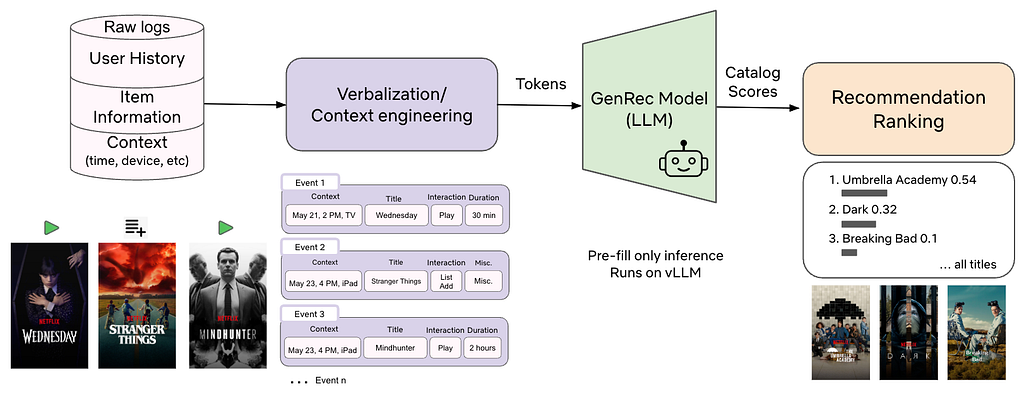
Figure 1: GenRec pipeline. Raw logs of user history, item metadata, and context are transformed via context engineering into natural-language prompts and fed into the GenRec, which runs on vLLM in prefill-only mode and outputs scores for each catalog item, yielding a recommendation ranking.
At a high level, GenRec:
Verbalizes user histories, item metadata, and context as text.
Post‑trains a Netflix‑adapted foundation LLM for ranking.
Adds a catalog‑aware scoring head over Netflix titles.
Uses reward signals to align with long‑term member value and business goals.
Runs in prefill‑only mode on Netflix’s LLM serving stack for cost efficiency.
In a large‑scale A/B test against a well‑tuned production ranker, GenRec achieves statistically significant improvements in both short‑term and long‑term online metrics, while using only a small fraction of the Phase‑2 labeled data and input signals. It reduces our reliance on hand‑engineered features and shifts the focus from feature engineering to context engineering. In this blog post, we will describe how GenRec works, how it performs, and why we believe it points toward a more LLM‑centric future for recommendation at Netflix.
Problem Setting
We focus on a full‑catalog rankingtask (or top‑K ranking when a candidate set is provided).
Given a user 𝑢, their interaction history 𝐻, and the current context 𝜏 (device, surface, locale, time, etc.), GenRec scores each item and produces a personalized ranking that can directly power recommendations or serve as input for downstream personalization systems.
Formally, we map a request (u,τ,t,H) — user, context, time, and history — to a ranking 𝜋 over the catalog C, where π(i) is the position assigned to item i. We optimize π for expected long‑term member utility (a proxy for satisfaction and retention), not just short‑term engagements.
From Foundation LLM to Recommendation Ranker
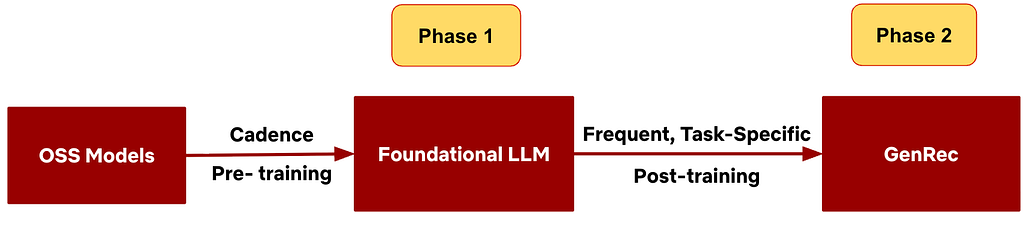
GenRec follows a two‑phase training framework (Figure 2):
Figure 2: Two Phase Framework. Phase 1 trains a foundational LLM on Netflix data for user and content understanding, and Phase 2 post-trains on ranking-specific data and objectives.
Phase 1 — Netflix-AdaptedFoundation LLM.
We start from an open‑source LLM and adapt it on proprietary Netflix corpora, so it learns foundational capabilities such as
Netflix content understanding
Member behavior and preference patterns
General language understanding and generation.
Phase 1 is updated relatively infrequently and serves as a shared, Netflix‑aware backbone for many applications.
Phase 2 — GenRec.
We then turn this foundation model into a high‑quality ranking model by post‑training on ranking‑specific data and objectives. Phase 2:
Focuses on ranking quality and steering
Incorporates multiple reward signals via reward‑weighted losses
Is refreshed more frequently to track new content and evolving tastes
Is explicitly optimized under serving cost constraints.
Training Data as Conversations
Netflix members generate hundreds of billions of interaction events spanning many surfaces (views, plays, durations, thumbs up/down, add to list, abandons, etc.). We convert this log data into single‑turn or multi‑turn “conversations” between a user and a recommender. Each turn contains:
User message: verbalized context, profile, history, item metadata, and task (e.g., recommend what the user will watch or thumb next).
Assistant message: the member’s actual engagement (e.g., which titles were played, for how long, what feedback they provided).
During Phase‑2 training, the LLM learns how assistant messages depend on user messages. This allows us to express rich recommendation signals as text, jointly supporting both the language-modeling (LM) and ranking objectives.
At inference time, we feed in the verbalized context and apply a catalog‑aware scoring head to rank items; we do not decode assistant messages. The conversational format is primarily used during training to support the LM objective and preserve strong language understanding over the verbalized text.
Verbalization and Context Engineering
Traditional recommenders operate on dense features and embeddings. GenRec takes a different approach: it verbalizes rich user histories and context as natural language, encoding raw interaction signals directly in the LLM’s semantic space. In doing so, it relies on the model to discover higher‑level patterns — such as item relationships and evolving user interests — rather than on manual feature engineering.
Naively verbalizing every interaction in a user’s history can quickly exceed the token budget and be too expensive at Netflix scale. The context window becomes our new “feature budget”, so we apply contextengineering:
Retain in full: high‑signal engagements (e.g., long plays, thumbs‑up) with richer details
Omit: low‑signal events (e.g., very short plays or quick hovers)
Summarize or compress: repetitive behaviors (e.g., binge‑watching )
Elaborate selectively: important or cold‑start items (e.g., new releases)
Within a fixed token budget, we prioritize recent, high‑signal history and compress or drop older history. We also structure the prompt to maximize shared prefixes for better prefix caching. The goal is a compact, high‑information prompt that preserves ranking quality without prohibitive costs.
Objectives: Ranking, Language, and Rewards
The overall GenRec model is trained with a multi‑objective loss that combines a recommendation ranking objective, language modeling objectives, and alignment via reward‑weighted training.
1. Catalog‑Aware Ranking Objective
The primary task is a ranking objective that teaches the model to score items by engagement quality. We label positives using high‑value engagements (e.g., sufficiently long plays, strong explicit feedback), with thresholds and denoising logic, and train the model — via a cross‑entropy loss over the catalog or candidate set — to assign higher scores to these positives given a verbalized context.
2. Language Modeling Objective
We also retain a language modeling (LM) objective over the verbalized inputs and outputs. This helps preserve the model’s general language understanding, improves its ability to interpret rich natural‑language histories and item metadata, and keeps the door open for text‑generation use cases such as recommendation explanations.
3. Reward‑Weighted Loss for Alignment
Beyond raw ranking accuracy, GenRec must (1) respect business requirements — for example, balancing movies, series, games, live, and podcasts — and (2) optimize long‑term member satisfaction rather than just immediate clicks or plays.
Training only on raw interaction sequences can lead to undesirable behaviors, such as over‑favoring binge‑watching or over‑focusing on a single content type. To address this, we weight the ranking loss usingsignalsfrom separate reward models. Each training example receives a scalar weight derived from two types of signals:
Long‑term satisfaction proxies: estimate how much a short‑term engagement contributes to long‑term outcomes, such as return behavior, catalog exploration, or sustained engagement.
Behavior rebalancing: adjust behaviors across content types and launch stages (for example, games vs. movies, new releases vs. evergreen titles) to better align with business goals.
The example’s ranking loss is then scaled by this weight: high‑value engagements receive larger weights, and low‑value ones are down‑weighted. This reward‑weighted approach is simpler and more cost-efficient than full reinforcement learning, yet provides effective alignment in practice. We have seen additional gains from RL‑style methods (e.g., GRPO), but leave them to future work due to their higher cost.
Model Architecture and Serving
Backbone and Scoring Head
GenRec’s architecture closely follows our foundational LLM: a decoder‑only Transformer trained with next‑token‑prediction style objectives, augmented with a catalog‑aware ranking head that scores only Netflix in-catalog items. The scoring pipeline works as follows:
Verbalization: A verbalizer V serializes user history H, context 𝜏 , and relevant item metadata into a single text sequence x.
Pooled representation: The LLM processes x, and we extract a pooled hidden state h that summarizes the user’s current preferences and context.
Catalog‑aware scoring: Each catalog item i has a learned embedding eᵢ. A scoring head ϕ combines h and eᵢ (e.g., via dot product or small MLP) to produce a score sᵢ. Applying a softmax over scores yields a probability distribution which we convert into a ranking π.
All parameters — the backbone, scoring head, and item embeddings — are trained jointly. For very large catalogs, we can use sampled softmax or candidate sets for efficient training and inference. This architecture constrains recommendations to the Netflix catalog while supporting efficient scoring over large candidate sets.
Serving and Cost Optimization
GenRec is served on Netflix’s internal LLM stack using vLLM. At Netflix scale, serving cost is driven primarily by 1) Model size; 2) Context length; 3) Inference mode (prefill vs. autoregressive decoding). We control cost through three strategies:
Smaller / distilled models: We train GenRec on smaller or distilled foundation models, often with larger or more targeted datasets, to capture most of the quality of larger models at lower serving cost.
Aggressive context compaction: Using the context engineering described earlier, we minimize tokens while preserving ranking quality.
Prefill‑only inference: Autoregressive decoding over large candidate sets would be prohibitively expensive. Instead, we run in prefill‑only mode: the model consumes the prompt once and scores the entire candidate set in a single forward pass, with no token‑by‑token decoding.
Together, these choices make it feasible to serve GenRec on high‑volume workloads within compute budgets.
Offline and Online Experiments
We evaluated GenRec against a mature production ranker that has been tuned over many years. The baseline model relies on thousands of engineered dense and embedding features, as well as custom architectures for modeling feature interactions and sequences. We assessed performance using both offline evaluation metrics and a large‑scale online A/B test.
GenRec vs Production Baseline
Offline, GenRec outperformed the production ranker on ranking metrics despite using far fewer input signals and labeled examples. With roughly 40× fewer Phase‑2 labeled training examples, GenRec achieved about +1.6%improvement in Mean Reciprocal Rank (MRR). As we increased Phase‑2 training data and enriched the input signals, GenRec’s offline metrics continued to improve.
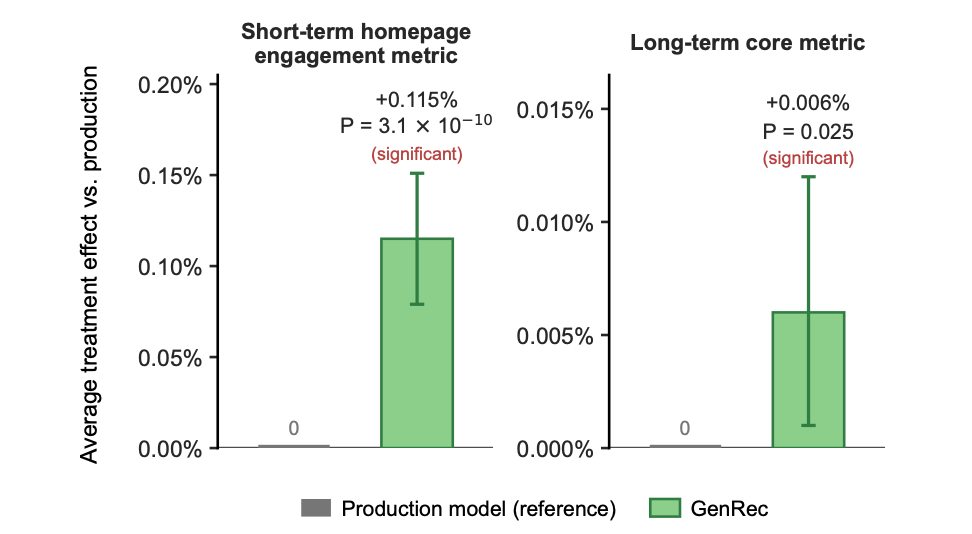
Online, we ran a large A/B test on batch‑compute recommendation surfaces, covering ~10% of Netflix traffic over ~4 weeks. In this low‑data, low‑signal configuration, GenRec delivered statistically significant gains over the production baseline on both short‑term and long‑term online metrics (Figure 3).
These results indicate that a properly post‑trained and aligned LLM‑backed ranker can be a strong alternative to traditional recommendation models, with substantial headroom as we further scale data and input signals.
Figure 3: Online metrics of GenRec vs. production model. GenRec achieves statistically significant improvements on both short-term and long-term online metrics.
Data, Model, and Phase Contributions
We ran ablations to understand where GenRec’s gains come from.
Data and Model Scaling
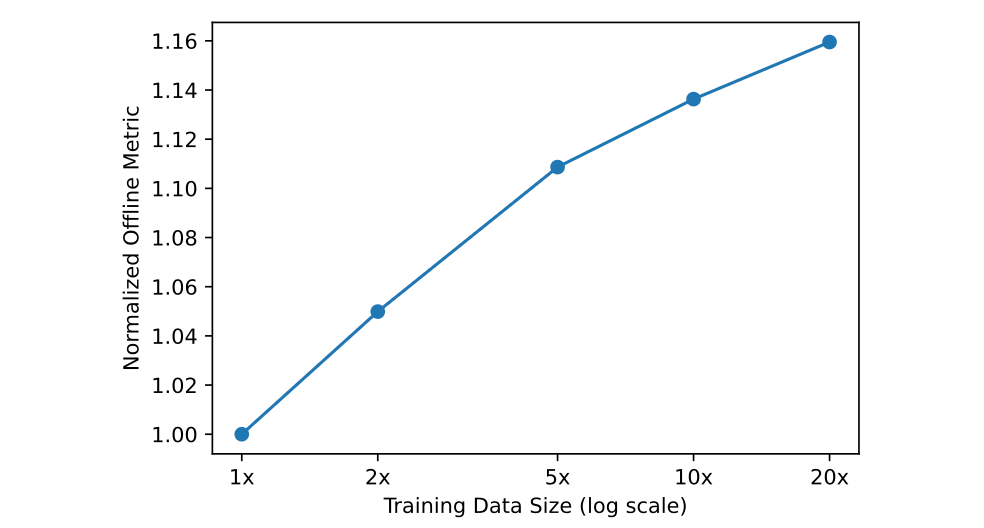
Data scaling: For both ~1B and ~10B parameter backbones, offline MRR improves as we increase Phase‑2 post‑training data. Larger models reach higher absolute MRR but follow a similar scaling curve (see Figure 4).
Model scaling: Under a fixed training budget, we post‑trained GenRec variants from ~1B to ~10B parameters. Within this budget, larger backbones consistently achieved higher offline MRR than smaller ones.
Figure 4: GenRec Phase-2 data scaling for the∼10B model.
Phase-1 vs. OSS, Phase-2 vs. Phase-1
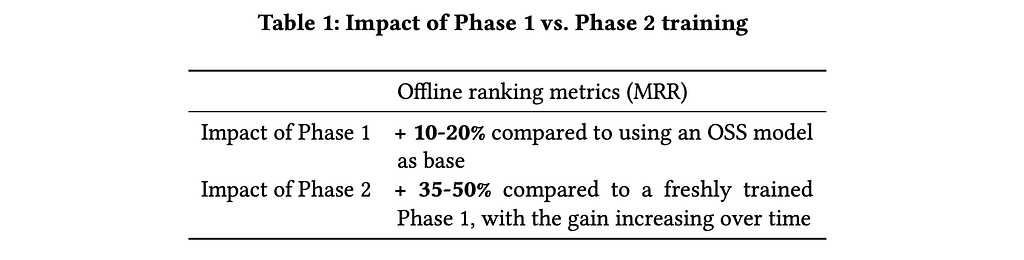
Phase-1 vs. OSS: Using the Phase‑1 Netflix‑adapted foundation LLM as the base model improves offline ranking metrics by roughly 10–20% compared to starting directly from an off‑the‑shelf LLM.
Phase-2 vs. Phase-1: Phase‑2 post‑training adds another 35–50% gain in offline ranking metrics when evaluated near the Phase‑1 training cutoff (i.e. when Phase‑1 model is the freshest). As time passes and Phase‑1 becomes stale with new content and shifting tastes, the relative benefit of Phase 2 grows to about 80% after 2 weeks.
Data efficiency vs. production ranker
Starting from a strong Phase‑1 model, GenRec matches or exceeds the production ranker using 10–40× fewerPhase‑2 labeled examples, depending on configuration. This marginal data efficiency is especially valuable because Phase 2 is refreshed far more frequently than Phase 1.
Context Length Optimization
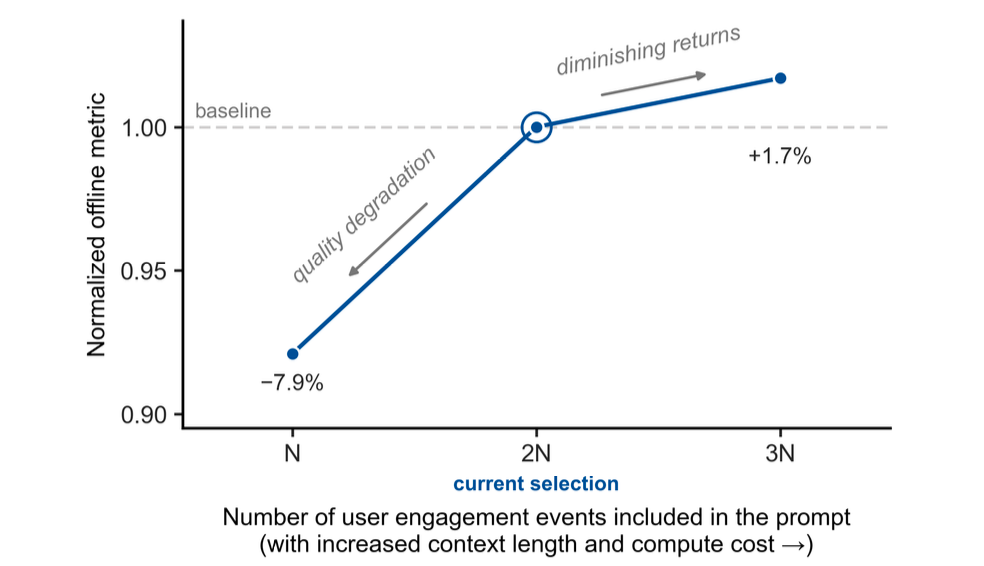
Context length drives both quality and cost: longer verbalizations expose more behavior and context but increase training and serving cost. To study this trade‑off, we varied context length and verbosity and optimized them in three steps:
Clean and compress events: drop low‑signal engagements and compress repetitive behavior to form a cleaned sequence of events.
Find the “elbow point”: vary how many historical events we include and plot MRR vs. number of events to identify an elbow beyond which additional context yields diminishing returns (see Figure 5).
Optimize verbosity: for the retained events, test different levels of details and simplified wordings, measuring MRR each time.
In our experiments, we can reduce the context tokens to roughly one-third of the original budget with negligible degradation in offline ranking metrics. Since serving cost is approximately proportional to context length, we observed a similar reduction in serving cost.
Figure 5: Offline ranking metric (MRR) vs. number of user engagement events included in the prompt. The dashed line marks the elbow point: increasing the number of events beyond this yields diminishing returns.
Towards LLM‑Native Recommendation
GenRec is more than “swapping in a Transformer” for an existing ranker. It hints at a broader shift toward LLM‑native recommendation at Netflix. A few notable changes:
From Feature Engineering to Context Engineering
Traditional RecSys stacks revolve around large feature sets and heavy feature infrastructure. LLM‑centric systems instead revolve around constructing rich textual contexts from raw logs, metadata, and tools. The “prompt” becomes the new feature vector.
Modeling effort shifts from designing features to deciding which signals to include, how far back in time to go, how to compress or summarize history within a token budget. Our experiments on verbalization compaction illustrate this shift: careful context design can preserve quality while dramatically reducing serving cost.
From Customized Architectures to Foundation Backbones
Historically, each recommendation task often had its own custom architecture (two‑tower models, DLRM‑style networks, bespoke attention blocks). In an LLM‑centric world, many tasks share a common foundation backbone, with differentiation coming from data and verbalization strategies, post‑training objectives and rewards, and inference optimization.
GenRec leverages the same backbone as our foundation LLM rather than introducing a new architecture built from scratch. This makes it easier to share learnings across applications, and opens the door to natural‑language steering for future experiences.
Scaling Laws as Design Guides
Traditional RecSys can hit diminishing returns due to sparse IDs, heavy engineering objectives, and task‑specific architectures. With an LLM‑backed backbone, recommendation inherits clearer data and model scaling behavior: within cost limits, more data and larger models consistently improve quality. This brings RecSys design closer to the broader LLM paradigm, where scaling laws help guide model and data investment.
From RecSys Infra to LLM Infra
LLM‑backed recommenders push us toward LLM‑style infrastructure: GPU‑accelerated, vLLM/Triton‑based, with careful batching and caching. Over time, recommendation serving infra starts to look more like general LLM infra than classic RecSys stacks built around MLPs or factorization models.
Conclusions
We have presented GenRec, an LLM‑backed recommendation ranker at Netflix that adapts an internal foundation LLM for large‑scale personalization. By verbalizing user histories, context, and item metadata, adding a catalog‑aware ranking head, using reward‑weighted objectives aligned to long‑term satisfaction and business goals, and serving efficiently on our LLM infrastructure, we obtain a model that improves on a strong production ranker while using far fewer Phase‑2 labels and input signals.
GenRec is an early but promising step toward a more LLM‑centric recommendation stack at Netflix. Our results suggest that, with careful attention to cost, infrastructure, and alignment, LLM‑backed recommenders can play a central role in large‑scale personalization.
Acknowledgments
GenRec is the result of close collaboration among multiple teams and organizations across Netflix. The contributors to this work (in alphabetical order):
AI for members: Arjun Rao, Ashish Rastogi, Baolin Li, Fernando Amat Gil, Grace Huang, Justin Basilico, Kamelia Aryafar, Linas Baltrunas, Moumita Bhattacharya, Ogheneovo Dibie, Rein Houthooft, Shradha Sehgal, Sejoon Oh, Sergi Perez, Sourabh Medapati, Thea Wang, Yaochen Zhu, Yesu Feng, Ying Li, Yun Li, Yucheng Shi, Yunan Hu
AI platform and serving: Abhishek Agrawal, Adam Singer, Binh Tang, Daneo Zhang, Derek Olejnik, Ed Maddox, Erik Osheim, Lingyi Liu, Liping Peng, Meghana Chilukuri, Nicolas Hortiguera, Shaojing Li, ZQ Zhang
Product: Ilke Kaya, Michelle Kislak, Scarlet Chen, Si Cheng
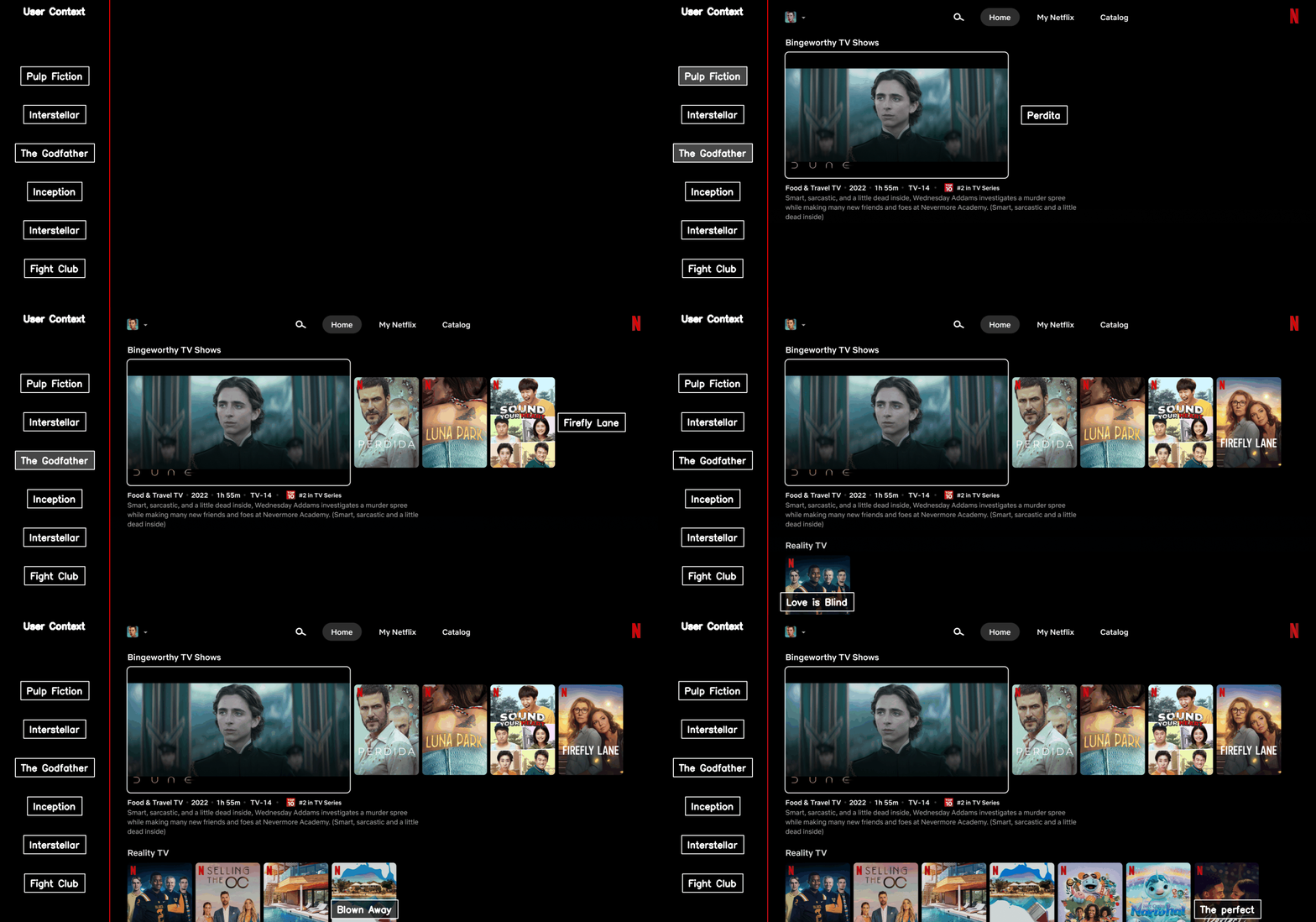
Figure 1. Autoregressive homepage generation. GenPage builds a Netflix homepage one row or entity at a time, each one conditioned on what’s already on the page and the user’s context.
Introduction
The Netflix homepage is the first thing users see when they open the app and the primary way they discover content to enjoy. Almost every part of it is personalized, including which rows appear, which entities show up within those rows, and how everything is arranged on the page.
Constructing that homepage is a genuinely hard problem. It is not simply producing one ranked list. The homepage is a structured, two-dimensional layout, made up of recommendation rows and the entities within them. Here, an entity can be a movie, show, game, live event, or other recommendable item. Each choice can affect the value of the others. Traditionally, it is built through a complex, multi-stage pipeline, with separate components for candidate generation and ranking at both the row and entity levels.
We saw an opportunity to rethink this design. Large language models have shown that a single generative model can perform diverse tasks just by generating a response to a prompt. Inspired by this prompt-response paradigm, we trained a single generative model to build the homepage by directly answering one question:
Given everything we know about this user and this request, what homepage should we generate to maximize user satisfaction?
We call this approach GenPage. It treats the user history and request context as the prompt, and autoregressively generates the entire homepage as the response (Figure 1). Unlike most generative recommenders, such as TIGER, HSTU, and OneRec, which generate flat ranked lists, GenPage generates the rows, entities, and layout together.
This shift is motivated by several goals:
End-to-end modeling. A single transformer model that constructs the page from raw input signals can replace a complex multi-stage recommender stack. This reduces the number of ML models to maintain, avoids misaligned objectives across stages, and eliminates much of the traditional feature engineering.
Whole-page optimization via reinforcement learning (RL). Autoregressive page generation makes it possible to optimize for page-level rewards with RL. This can capture interactions across rows and entities, such as diversity or the balance between rows with different stopping power. For example, a Continue Watching row near the top of the page may strongly satisfy a user’s immediate intent, but also reduce how much of the page they browse. Modeling these interactions at the page level lets us align the system more directly with user satisfaction than entity-level objectives alone.
Better scaling behavior. A generative transformer model gives us a clearer path to improving quality through more data, compute, and model capacity, without repeatedly redesigning the system.
Flexibility and extensibility. The prompt-response paradigm is flexible by design. By simplifying feature engineering and enabling whole-page optimization, GenPage makes it easier to support new product experiences, such as additional content types like live events, games, and podcasts; layouts beyond the current two-dimensional structure; personalized UI components; and per-entity artwork personalization, all with fewer architectural changes.
Bringing GenPage into production at Netflix also required solving challenges specific to industry-scale recommender systems. Because the homepage is generated in real time, serving latency is a primary engineering constraint. We also need to handle entity cold start in a constantly evolving catalog, keep the model fresh as user interests and cultural trends shift, and enforce complex product and business rules on the generated output.
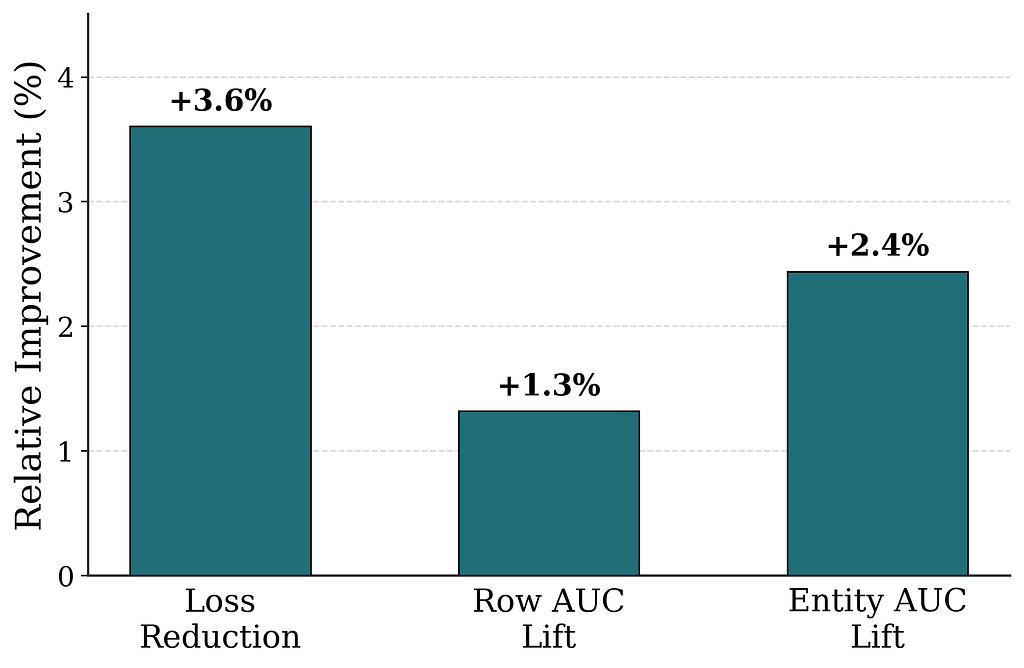
Despite these challenges, GenPage has already had substantial production impact. In an online A/B test against a mature, highly optimized multi-stage production recommender, GenPage delivered statistically significant gains on the core user engagement metric we use for launch decisions, while reducing end-to-end serving latency by 20%.
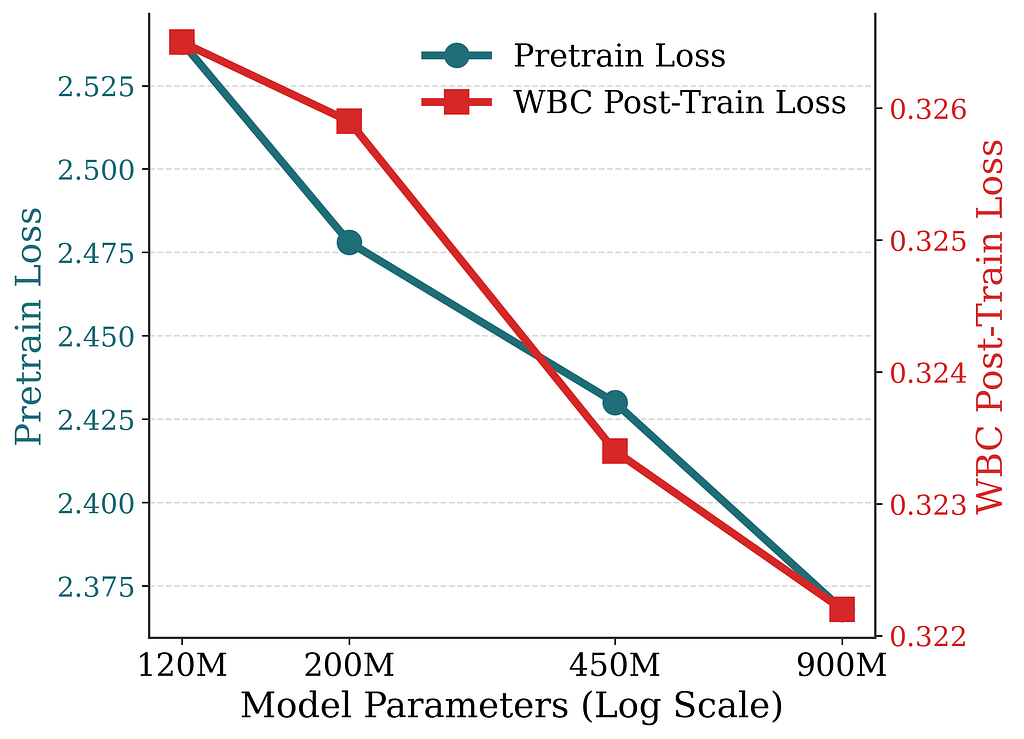
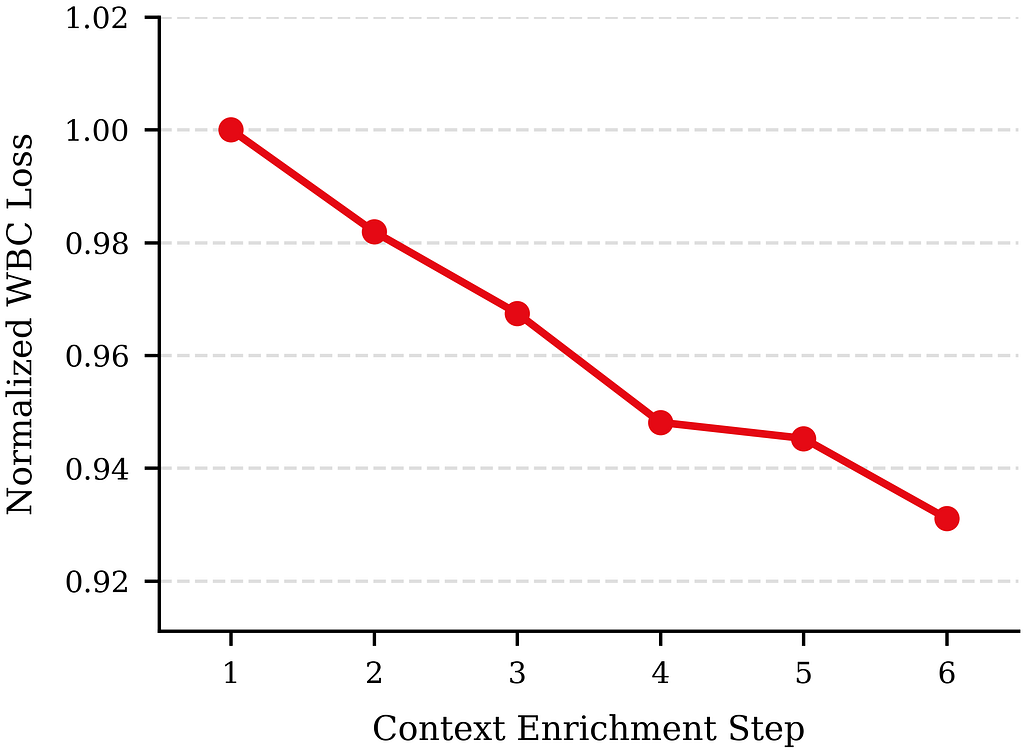
Offline, two findings stood out. First, enriching the prompt helped more than scaling model capacity in our current regime. Second, RL post-training increased homepage diversity even though diversity was not part of the objective.
We expect this approach to generalize to many personalization settings. In this post, we focus on Netflix homepage construction as a concrete case study, sharing our design, trade-offs, and lessons learned.
Data
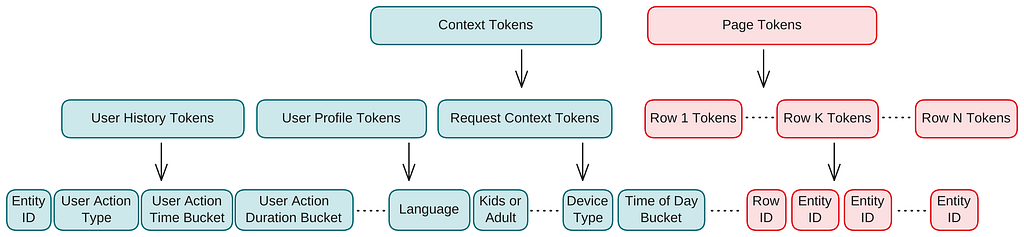
Moving from a traditional recommender to a generative transformer requires us to rethink how the data is represented. Similar to how an LLM turns text into tokens, GenPage represents both the user context and the generated homepage as one sequence of discrete tokens (Figure 2). This sequence includes the full structured homepage layout, with multiple rows and the entities inside them, so the model can generate the page holistically rather than scoring each row or entity in isolation.
Figure 2. Tokenization of Netflix homepage construction data. The context tokens function as the prompt, drawing from diverse data sources including user history, profile attributes, and request context, with example tokens shown for each source. The page tokens represent the generated response, encoding the structured layout of rows and entities.
Each training example represents a homepage impression and consists of three components:
Context: user engagement history, profile attributes, and request context.
Page: the recommended rows and entities shown on the homepage, in layout order.
Feedback: user interactions with that page, such as play, thumbs-up, or abandonment for entities on the page.
Only the context and page are tokenized as model inputs and outputs. Feedback is used to derive supervision signals via our internal reward system (see the Reward system section).
Instead of using an off-the-shelf text tokenizer, we build a domain-specific tokenizer for the homepage construction data. This is a proven approach in recommender systems and other specialized domains including computer vision, biology, and chemistry, where the raw data is not naturally represented as text. Compared with generic text tokenization, this gives us two key advantages:
Computational efficiency. Custom tokenization significantly reduces sequence length, lowering inference cost and latency. For example, representing the event “User watched Orange Is the New Black for 50 minutes 30 days ago.” would require 16 tokens with the GPT-5 tokenizer, whereas our scheme compresses it to 4 tokens: [Entity_ID], [Action_Type], [Action_Time_Bucket], and [Action_Duration_Bucket].
Product control. A direct mapping between tokens and product concepts, such as rows and entities, makes it easier to control what the model can generate. This is crucial for enforcing business rules on the final homepage.
Context tokens
Context tokens encode user engagement history, user profile, and request context.
We represent user history as a sequence of user actions. For each action, we extract key metadata, including the action type, entity ID, timestamp, and duration. These actions include both explicit signals, such as play, add to My List, and thumbs-up, and implicit signals, such as trailer views or visits to a details page.
User profile tokens capture attributes such as language and profile type. Request context tokens encode signals like time of day, day of week, and device.
Some data sources are too long to include directly as raw token sequences. A user’s full impression history, for example, would be prohibitively expensive to represent in full. In these cases, we use a summarized version. This is a pragmatic trade-off: while GenPage aims to operate on raw inputs as much as possible, handcrafted summaries still introduce a form of prompt engineering into the pipeline. Learning to compress these long data sources end to end is an important direction for future work.
To help the model distinguish between data sources, we insert special tokens that mark the start of each segment. Continuous signals, such as timestamps and durations, are bucketized into discrete ranges to keep the vocabulary finite.
Page tokens
Each entity, such as a show, movie, or game, and each row, such as Korean TV Shows, is represented as a single token. The homepage is serialized in layout order: left to right, then top to bottom. We update the entity and row vocabulary daily to incorporate newly added entities and rows. Entities that are still out of vocabulary at serving time are handled through semantic embedding fusion and fallback tokens, both described later.
In principle, the same paradigm can extend to any output that can be expressed as a linear token sequence. This includes layouts beyond the current two-dimensional structure, such as one-dimensional feeds or mixed layouts, as well as personalized UI components and per-entity outputs such as personalized artwork. We leave these extensions to future work.
Paginated recommendation
To make recommendations responsive to in-session user preferences, the homepage is often generated incrementally, a few rows at a time. Before each pagination request, we append the page tokens from previously generated rows to the prompt, along with the user’s latest engagements on those rows from Netflix’s real-time event-logging infrastructure. This allows the model to generate the next set of recommendations using both the user’s long-term preferences and their most recent in-session behavior.
Reward system
To quantify the long-term value of a recommendation, we rely on an internal reward system described in prior work. The reward system is tuned through online A/B testing to align with long-term user satisfaction and serves as the primary supervision signal for both supervised and reinforcement learning.
The reward system processes user feedback and assigns a scalar reward for every impressed entity on the homepage. For instance, a TV show binge-watched in one night reflects stronger user satisfaction and receives a higher reward than a movie watched for only 10 minutes. An impressed entity that the user abandons receives a negative reward.
We define the page-level reward as the sum of rewards across all impressed entities on the homepage.
Model architecture
GenPage uses a standard decoder-only transformer architecture, the same general architecture behind many modern LLMs. This choice keeps the model simple and flexible, while also letting us benefit from the broad ecosystem of tooling around transformer training and serving.
One architectural detail is that we untie the input embedding and output projection weights. This is useful because pretraining and post-training place different demands on the logits. Next-token prediction pretraining optimizes a softmax over the vocabulary, while weighted binary classification (WBC) post-training optimizes per-token sigmoid scores, as described below. Untying the weights gives the model more flexibility to adapt to both objectives.
Training recipe
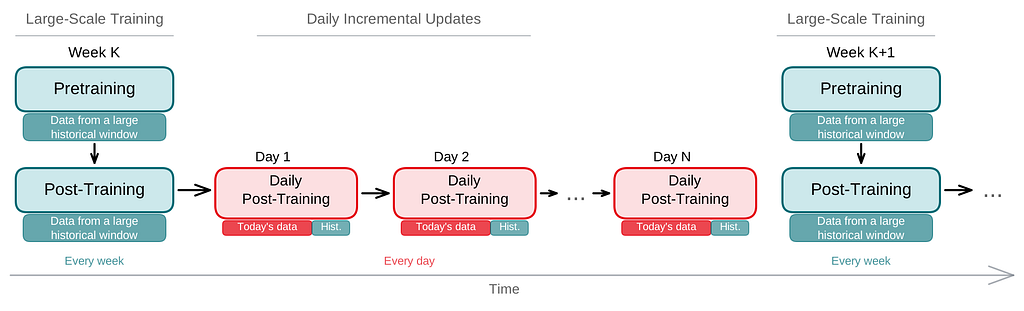
Our training pipeline mirrors the LLM recipe: we first teach the model the “language” of the Netflix homepage through pretraining, then align its outputs with user satisfaction through post-training. For post-training, we explore two alternative approaches: weighted binary classification (WBC) and reinforcement learning (RL).
WBC is simpler to optimize and aligns directly with the entity-level objectives of our production ranking models. RL is harder to evaluate and optimize, but it is the key path to GenPage’s full vision of page-level optimization, with the flexibility to incorporate test-time reasoning and multi-token entity representations.
Pretraining via next-token prediction
We pretrain the model with a standard next-token prediction objective: given the context tokens and a prefix of page tokens, the model learns to predict the next page token. This stage focuses on representation learning, teaching the model the relationship between user contexts and successful homepages. Note that our context-page training examples resemble the prompt-response pairs used in LLM supervised fine-tuning (SFT) more than the raw text used in LLM pretraining. We nonetheless call this stage pretraining because we train the model from scratch rather than fine-tuning from an existing checkpoint.
Unlike LLMs, which often face a scarcity of high-quality labeled data, recommender systems have an abundance of user feedback. For pretraining, we use homepage impressions that received positive feedback when served in production, bootstrapping the model to generate pages similar to those produced by the existing production system.
However, pretraining mainly teaches GenPage to imitate the production system. It does not directly optimize the magnitude of the reward, and as GenPage becomes part of production, repeatedly training on pages generated by earlier versions of the model can risk model degeneration. To address these limitations, we explore two post-training approaches.
Post-training via weighted binary classification
One effective way to align the generative model with user satisfaction is weighted binary classification (WBC). At a high level, WBC turns generation into token-level value prediction: given the user context and the tokens generated so far, the model learns to estimate the value of generating each possible next row or entity token.
This objective is easier to optimize than page-level RL. By decomposing the homepage into per-token targets, WBC provides token-level credit assignment by construction, rather than requiring RL to infer how each generated decision contributed to the final page-level reward.
This training setup is enabled by our custom tokenization. Each page token corresponds directly to a specific entity or row, making it straightforward to assign a reward. For every impressed entity on the page, our reward system provides a scalar reward based on user feedback. For each impressed row, we derive a row-level reward by aggregating the rewards of the entities in that row.
From each reward, we derive a binary label from its sign, such as positive engagement versus abandonment, and a weight from its magnitude, such as binge-watching receiving a higher weight than a short play. We then optimize a weighted binary cross-entropy loss on the logit for the corresponding token. Under this setup, the logit for a token can be interpreted as the model’s value estimate for generating that token at that position.
Although the model is trained as a value predictor, it can still generate pages autoregressively. At each step, the model scores the candidate next tokens, greedily selects the token with the highest value, and appends it to the prefix. This process repeats token by token until the full homepage is generated.
Post-training via reinforcement learning
Our second post-training approach is reinforcement learning (RL). WBC is effective for optimizing entity-level metrics, but it does not directly optimize the homepage as a whole. RL treats page generation as a sequential decision-making problem, allowing the model to optimize a page-level reward while preserving the flexibility of autoregressive generation.
This opens the door to several important capabilities:
Whole-page optimization. RL directly optimizes an aggregate page-level reward, allowing the model to account for interactions across rows and entities, such as diversity, stopping power, and page-level business constraints.
Test-time reasoning. Analogous to its application in LLMs, RL can optimize reasoning capabilities for generative recommendation. Reasoning outputs can also be viewed as a form of automated feature engineering.
Multi-token entity support. In our current tokenization, each entity and row is represented as a single token, so rewards map cleanly to individual tokens. In more complex settings, however, an entity may require multiple tokens, such as [Show_ID] plus [Episode_#] for an episode, or a sequence of semantic ID tokens. In that case, WBC’s per-token labeling becomes ambiguous because a single entity-level reward must be distributed across multiple tokens. RL avoids this issue by optimizing the sequence-level return, making it a more natural fit for variable-length, multi-token entities.
Inspired by the RLHF recipe used to align large language models, we adopt a two-step approach. First, we train a reward model that predicts the page-level reward for a generated page. This reward model is distinct from the reward system described earlier. The reward system converts observed user feedback into a scalar reward for a page that was actually shown, whereas the reward model predicts the page-level reward for a generated page without showing it to the user. This prediction is what lets RL optimize against arbitrary candidate pages during training.
Training against a reward model avoids the high variance of off-policy correction on logged or predicted propensities, but introduces the risk of reward hacking. Since the reward model is trained on data generated from the production policy, it is most reliable on pages similar to those the production policy generates. We therefore use a KL penalty to keep the policy close to the pretrained checkpoint, which itself was trained to mimic the production policy. This keeps the pages within the reward model’s region of coverage and limits opportunities for reward hacking.
For the RL algorithm, we adopt Dr. GRPO, a variant of GRPO that mitigates biases in the training objective. To train the model within this framework, we need the following components:
Prompts: production user requests, represented by context tokens.
Policy and reference models: both are initialized from the pretrained checkpoint; the reference model anchors the KL penalty discussed above.
Reward model: a dedicated transformer-based reward model, also initialized from the pretrained checkpoint, predicts the page-level outcome reward, using the sum of entity-level rewards from our internal reward system as the supervision target. We also incorporate rule-based format rewards to guide the RL policy. For example, the page should resemble a list of rows, and business-critical rows or entities should not appear too low on the page.
Addressing production challenges
Cold start
New entities lack the rich interaction data needed to learn robust token embeddings. We address this through two complementary strategies:
Context injection. We inject metadata about new or time-sensitive entities (e.g., Live Now events) directly into the context tokens, providing the model with semantic and time-sensitive information.
Semantic embedding fusion. Rather than relying solely on entity ID embeddings learned from user interaction data, we represent each entity as a fusion of its ID embedding and a content-based embedding derived from semantic information such as synopses, cast, transcripts, genres, and video content. This fused embedding serves as the input embedding for the entity’s token in the transformer. During training, with small probability, we randomly replace an entity ID token with the generic fallback token (described below), so the model learns to make recommendations from the content-based embedding alone. This ensures that a new entity has a meaningful representation in the same latent space as established entities as soon as its content metadata is available — even before it has any interaction data.
Multi-cadence incremental training
At Netflix scale, daily retraining of a large transformer from scratch is prohibitively expensive, but recommendation models must remain fresh to capture shifting trends and new catalog additions. We address this with a multi-cadence incremental training strategy (Figure 3).
Figure 3. Multi-cadence incremental training. Periodic large-scale pretraining and post-training passes run on a broad historical window. Between them, daily incremental updates combine the latest day’s data with a sampled subset of past data to keep the model fresh while avoiding catastrophic forgetting.
Our training pipeline operates on a cyclic schedule with two distinct rhythms. At a tunable cadence, we conduct a large-scale pretraining and post-training pass on data from a broad historical window. Between these passes, each day we perform an incremental update by continuing post-training from the previous day’s checkpoint, using a mix of the latest day’s data and a sampled subset of past data. This helps the model stay current with new trends and catalog changes while preventing overfitting and catastrophic forgetting.
To manage the daily influx of new tokens (e.g., new entities, rows), we employ fallback tokens. New tokens are initialized using fallback tokens of their type (e.g., [Row_Fallback_Token] for new rows, [Entity_Fallback_Token] for new entities). During training, we randomly replace a small percentage of known tokens with fallback tokens, teaching the model to handle unknown tokens gracefully.
Enforcing business rules
A Netflix homepage must satisfy structural constraints (e.g., organized as a list of rows) as well as product logic such as deduplication, row pinning, and category consistency (e.g., entities in a Comedy row must be comedies). While training signals can encourage rule adherence, they cannot guarantee strict compliance.
We enforce these rules at inference time through constrained decoding. At each autoregressive generation step, we compute a mask of eligible tokens based on the applicable business rules and apply it to the output logits, allowing only rule-compliant tokens to be generated. This is greatly simplified by our custom tokenization: because each entity and row is a single token, business rules map directly to token-level masks, avoiding the multi-token bookkeeping that constrained decoding requires over a text vocabulary. For example, to pin a specific row (e.g., popular games) at a fixed position (e.g., row position 2), we simply mask out all other tokens at that position.
Hybrid row decoding
Autoregressive generation ensures that each newly generated token is conditioned on the full preceding context, but generating every entity token one at a time can be expensive. We leverage the structure of the homepage to balance inference efficiency with the amount of contextual information available to each generated token.
Within each row, the first few entities are especially important: they receive the most user attention and strongly shape the row’s perceived quality and theme. To reduce inference latency, we use a hybrid row decoding strategy. The model autoregressively generates only the first few entities in each row. Conditioned on this generated prefix, we obtain logits for all eligible entities in a single forward pass and select the top-scoring remaining entities, subject to the same inference-time business-rule constraints described above.
This approach preserves autoregressive conditioning where it matters most while avoiding the latency and cost of decoding long rows token by token.
Offline experiments
We ran a series of ablations on Netflix internal data to understand how different components of GenPage affect model quality. Because the system was developed iteratively, individual ablations span different training configurations and data snapshots, so we report only relative comparisons within each study. Unless otherwise noted, experiments use ~200M-parameter models and report results on a held-out evaluation set.
Does pretraining help?
We compare WBC post-training with and without a preceding next-token-prediction pretraining stage. Figure 4 shows that pretraining yields substantial improvements across all metrics.
Figure 4. Relative improvement from pretraining (versus WBC post-training without a pretraining stage), across loss reduction, row AUC lift, and entity AUC lift. Loss is the weighted binary cross-entropy; Row and Entity AUC are sample-weighted ROC-AUC over row and entity targets.
The gains may look small in absolute terms, but they are large in our production regime: setting aside the sample weighting, an Entity AUC lift from 0.91 to 0.92 means that for a randomly drawn pair of impressed entities, the model’s misranking rate drops from 9% to 8% — a magnitude of improvement we rarely observe from a single change on a mature production system. Pretraining the model on the “language” of the Netflix homepage provides a strong initialization for post-training, mirroring the pretrain-then-post-train recipe behind modern LLMs.
How does performance scale with model size?
We sweep model size from ~120M to ~900M parameters (Figure 5) and report the next-token-prediction loss from pretraining and the WBC loss from post-training. Both losses decrease in a power-law-like fashion, mirroring the scaling trends seen in LLMs. This confirms that the generative approach scales favorably with model size, suggesting that recommendation quality can be further improved by scaling capacity.
Figure 5. Pretraining and WBC post-training losses as model size scales from 120M to 900M parameters. Both decrease in a power-law-like fashion, mirroring LLM scaling trends.
How does performance scale with information in the user context?
Over the course of development, we progressively enriched the prompt, both by adding new data sources to the context and by refining how each source is tokenized. With model size held fixed, the WBC post-training loss decreases substantially as the context is enriched (Figure 6).
Figure 6. WBC post-training loss as we progressively enrich the user context tokens. Loss is normalized to the first step (= 1.0).
The model-size sweep and the context-enrichment sweep span different axes and are not strictly comparable: the model-size study covers roughly an order of magnitude in parameters, while the context study spans the full trajectory of our prompt design. Even so, the gap between the two is striking. Scaling the model from 120M to 900M parameters reduces WBC loss by roughly 1.3%, whereas the cumulative effect of enriching the context is around 6.9%. In several cases, a single well-designed context addition delivers a larger improvement than the entire ~7.5× model-capacity scaling.
This suggests that, in our regime, enriching the prompt — both what we put in the context and how we tokenize it — yields a substantially larger improvement than scaling model capacity. Personalization quality appears to be bottlenecked first by the information and representation available to the model, and only then by capacity. We expect context enrichment to dominate until the context is saturated, at which point model capacity becomes the primary driver.
Does RL post-training optimize at the page level?
In offline evaluations (Figure 7), RL post-training consistently improves the page-level reward over the pretrained checkpoint, but this is largely confirmatory: the reward is computed using the same model the policy is optimizing against. More interestingly, although diversity is not part of the RL objective, homepage diversity — measured via pairwise embedding distance among entities on the page — also increases over the course of training. This suggests that the RL-trained policy is optimizing the page as a whole rather than myopically optimizing each token in isolation.
Figure 7. RL post-training dynamics. Reward and diversity are shown relative to the initial checkpoint (1.0). Reward rises as expected; diversity also rises, despite not being part of the RL objective.
Online evaluation
We conducted an online A/B test against the current production homepage recommender using GenPage. In this test, GenPage decoded over the existing production row and entity candidate sets, which help handle many business rules (such as eligibility).
Figure 8 shows the result: all variants delivered statistically significant improvements on the core user engagement metric we use for launch decisions (p < 0.001) against a mature, highly optimized multi-stage production baseline. The variants differed in their training-data configurations; that they all delivered comparable lifts suggests the gain is robust to these design choices rather than dependent on a particular configuration.
Figure 8. Daily core user engagement metric over a 14-day online A/B test. The figure shows the average treatment effect of several GenPage variants (differing in training-data configurations) against the production baseline. Shaded regions are 95% confidence intervals. All variants delivered statistically significant improvements over production.
Alongside the engagement wins, we observed unintended shifts in the distribution of impressed entity categories (e.g., new vs. established titles, TV shows vs. movies). These shifts are not necessarily negative, but they are not something we explicitly optimized for, and they warrant deeper investigation. We suspect these shifts reflect GenPage personalizing more precisely than the production stack — consistent with an increase in homepage impression efficiency, i.e., users engaging with what they saw using fewer impressions. This sharper personalization appears to surface production-inherited components (such as the reward system) that aren’t yet aligned with the new generative paradigm. We plan to characterize the drivers of these shifts and, where appropriate, tune these components so the resulting distributions better align with desired product behavior.
We also observed strong responsiveness to in-session signals: the latest in-session actions quickly influenced subsequent recommendations and faded back to long-term preferences after a day or two, confirming that the model effectively attends to action timestamps. This responsiveness emerges naturally from the generative formulation, without the extensive manual feature engineering used in our production stack.
Contrary to the common assumption that generative models are slower, GenPage reduced end-to-end serving latency by 20% relative to the baseline. By replacing multiple ranking stages and heavy feature computation with a single transformer operating on raw tokenized inputs, we eliminated substantial serving complexity and computational overhead. Custom tokenization and hybrid row decoding further reduced the number of decoding steps, and thus latency. The 20% reduction was achieved without exhausting the available optimizations; further reductions are possible, and this headroom can be reinvested in capacity or richer prompts.
Conclusion
We presented GenPage, an early step toward end-to-end generative Netflix homepage construction: representing user context as a tokenized prompt and generating the entire homepage autoregressively in real time. This collapses the traditional multi-stage recommender stack into a single transformer that can be optimized end-to-end.
In online A/B tests against a mature, highly optimized multi-stage production system, GenPage delivered statistically significant gains on the core user engagement metric we use for launch decisions, while reducing end-to-end serving latency by 20%. Achieving this required adapting the LLM training recipe — pretraining followed by WBC or RL post-training — together with a set of domain-specific techniques: custom tokenization for serving efficiency and product control, context injection and semantic embedding fusion for entity cold start, multi-cadence incremental training for model freshness, constrained decoding for business-rule enforcement, and hybrid row decoding for inference efficiency.
Two offline findings stand out. First, in our current regime, enriching the prompt yields a substantially larger improvement than scaling model capacity — a takeaway we expect to generalize to other industry-scale personalization settings, at least until the available context is fully exploited. Second, RL post-training increases homepage diversity even though diversity is not part of the objective — an indication that page-level optimization captures interactions across rows and entities.
Several pieces of the full vision are still in progress: long context still relies on handcrafted summarization, and broader LLM-style capabilities — language, multimodality, and reasoning — have not yet been incorporated. One promising direction here is a hybrid tokenization combining our domain-specific tokens with generic text tokens, retaining structured control while inheriting the strengths of general-purpose LLMs; conceptually, this introduces an additional recommendation modality into an LLM.
More broadly, we expect many advances from the LLM ecosystem to transfer naturally to this setting, and the boundary between an LLM and a recommender system may increasingly blur. Our results suggest this is a viable path toward simpler recommender systems that align more directly with user satisfaction.
Acknowledgments
Contributors to this work (in alphabetical order): Abhishek Agrawal, Baolin Li, Casey Stella, Daneo Zhang, Dan Zheng, Donnie DeBoer, Fengdi Che, Fernando Amat Gil, Grace Huang, Inbar Naor, Ishita Verma, Jason Uh, Jimmy Patel, Justin Basilico, Lanxi Huang, Lingyi Liu, Liping Peng, Louis Wang, Michelle Kislak, Nathan Kallus, Nicolas Hortiguera, Paran Jain, Qusai Al-Rabadi, Rein Houthooft, Ryan Lee, Santino Ramos, Scarlet Chen, Shaojing Li, Sheallika Singh, Si Cheng, Wei Wang, and ZQ Zhang.
Our mission at Netflix is to entertain the world. Our personalization algorithms play a crucial role in delivering on this mission for all members by recommending the right shows, movies, and games at the right time. This goal extends beyond immediate engagement; we aim to create an experience that brings lasting enjoyment to our members. Traditional recommender systems often optimize for short-term metrics like clicks or engagement, which may not fully capture long-term satisfaction. We strive to recommend content that not only engages members in the moment but also enhances their long-term satisfaction, which increases the value they get from Netflix, and thus they’ll be more likely to continue to be a member.
Recommendations as Contextual Bandit
One simple way we can view recommendations is as a contextual bandit problem. When a member visits, that becomes a context for our system and it selects an action of what recommendations to show, and then the member provides various types of feedback. These feedback signals can be immediate (skips, plays, thumbs up/down, or adding items to their playlist) or delayed (completing a show or renewing their subscription). We can define reward functions to reflect the quality of the recommendations from these feedback signals and then train a contextual bandit policy on historical data to maximize the expected reward.
Improving Recommendations: Models and Objectives
There are many ways that a recommendation model can be improved. They may come from more informative input features, more data, different architectures, more parameters, and so forth. In this post, we focus on a less-discussed aspect about improving the recommender objective by defining a reward function that tries to better reflect long-term member satisfaction.
Retention as Reward?
Member retention might seem like an obvious reward for optimizing long-term satisfaction because members should stay if they’re satisfied, however it has several drawbacks:
Noisy: Retention can be influenced by numerous external factors, such as seasonal trends, marketing campaigns, or personal circumstances unrelated to the service.
Low Sensitivity: Retention is only sensitive for members on the verge of canceling their subscription, not capturing the full spectrum of member satisfaction.
Hard to Attribute: Members might cancel only after a series of bad recommendations.
Slow to Measure: We only get one signal per account per month.
Due to these challenges, optimizing for retention alone is impractical.
Proxy Rewards
Instead, we can train our bandit policy to optimize a proxy reward function that is highly aligned with long-term member satisfaction while being sensitive to individual recommendations. The proxy reward r(user, item) is a function of user interaction with the recommended item. For example, if we recommend “One Piece” and a member plays then subsequently completes and gives it a thumbs-up, a simple proxy reward might be defined as r(user, item) = f(play, complete, thumb).
Click-through rate (CTR)
Click-through rate (CTR), or in our case play-through rate, can be viewed as a simple proxy reward where r(user, item) = 1 if the user clicks a recommendation and 0 otherwise. CTR is a common feedback signal that generally reflects user preference expectations. It is a simple yet strong baseline for many recommendation applications. In some cases, such as ads personalization where the click is the target action, CTR may even be a reasonable reward for production models. However, in most cases, over-optimizing CTR can lead to promoting clickbaity items, which may harm long-term satisfaction.
Beyond CTR
To align the proxy reward function more closely with long-term satisfaction, we need to look beyond simple interactions, consider all types of user actions, and understand their true implications on user satisfaction.
We give a few examples in the Netflix context:
Fast season completion ✅: Completing a season of a recommended TV show in one day is a strong sign of enjoyment and long-term satisfaction.
Thumbs-down after completion ❌: Completing a TV show in several weeks followed by a thumbs-down indicates low satisfaction despite significant time spent.
Playing a movie for just 10 minutes ❓: In this case, the user’s satisfaction is ambiguous. The brief engagement might indicate that the user decided to abandon the movie, or it could simply mean the user was interrupted and plans to finish the movie later, perhaps the next day.
Discovering new genres ✅ ✅: Watching more Korean or game shows after “Squid Game” suggests the user is discovering something new. This discovery was likely even more valuable since it led to a variety of engagements in a new area for a member.
Reward Engineering
Reward engineering is the iterative process of refining the proxy reward function to align with long-term member satisfaction. It is similar to feature engineering, except that it can be derived from data that isn’t available at serving time. Reward engineering involves four stages: hypothesis formation, defining a new proxy reward, training a new bandit policy, and A/B testing. Below is a simple example.
Challenge: Delayed Feedback
User feedback used in the proxy reward function is often delayed or missing. For example, a member may decide to play a recommended show for just a few minutes on the first day and take several weeks to fully complete the show. This completion feedback is therefore delayed. Additionally, some user feedback may never occur; while we may wish otherwise, not all members provide a thumbs-up or thumbs-down after completing a show, leaving us uncertain about their level of enjoyment.
We could try and wait to give a longer window to observe feedback, but how long should we wait for delayed feedback before computing the proxy rewards? If we wait too long (e.g., weeks), we miss the opportunity to update the bandit policy with the latest data. In a highly dynamic environment like Netflix, a stale bandit policy can degrade the user experience and be particularly bad at recommending newer items.
Solution: predict missing feedback
We aim to update the bandit policy shortly after making a recommendation while also defining the proxy reward function based on all user feedback, including delayed feedback. Since delayed feedback has not been observed at the time of policy training, we can predict it. This prediction occurs for each training example with delayed feedback, using already observed feedback and other relevant information up to the training time as input features. Thus, the prediction also gets better as time progresses.
The proxy reward is then calculated for each training example using both observed and predicted feedback. These training examples are used to update the bandit policy.
But aren’t we still only relying on observed feedback in the proxy reward function? Yes, because delayed feedback is predicted based on observed feedback. However, it is simpler to reason about rewards using all feedback directly. For instance, the delayed thumbs-up prediction model may be a complex neural network that takes into account all observed feedback (e.g., short-term play patterns). It’s more straightforward to define the proxy reward as a simple function of the thumbs-up feedback rather than a complex function of short-term interaction patterns. It can also be used to adjust for potential biases in how feedback is provided.
The reward engineering diagram is updated with an optional delayed feedback prediction step.
Two types of ML models
It’s worth noting that this approach employs two types of ML models:
Delayed Feedback Prediction Models: These models predict p(final feedback | observed feedbacks). The predictions are used to define and compute proxy rewards for bandit policy training examples. As a result, these models are used offline during the bandit policy training.
Bandit Policy Models: These models are used in the bandit policy π(item | user; r) to generate recommendations online and in real-time.
Challenge: Online-Offline Metric Disparity
Improved input features or neural network architectures often lead to better offline model metrics (e.g., AUC for classification models). However, when these improved models are subjected to A/B testing, we often observe flat or even negative online metrics, which can quantify long-term member satisfaction.
This online-offline metric disparity usually occurs when the proxy reward used in the recommendation policy is not fully aligned with long-term member satisfaction. In such cases, a model may achieve higher proxy rewards (offline metrics) but result in worse long-term member satisfaction (online metrics).
Nevertheless, the model improvement is genuine. One approach to resolve this is to further refine the proxy reward definition to align better with the improved model. When this tuning results in positive online metrics, the model improvement can be effectively productized. See [1] for more discussions on this challenge.
Summary and Open Questions
In this post, we provided an overview of our reward engineering efforts to align Netflix recommendations with long-term member satisfaction. While retention remains our north star, it is not easy to optimize directly. Therefore, our efforts focus on defining a proxy reward that is aligned with long-term satisfaction and sensitive to individual recommendations. Finally, we discussed the unique challenge of delayed user feedback at Netflix and proposed an approach that has proven effective for us. Refer to [2] for an earlier overview of the reward innovation efforts at Netflix.
As we continue to improve our recommendations, several open questions remain:
Can we learn a good proxy reward function automatically by correlating behavior with retention?
How long should we wait for delayed feedback before using its predicted value in policy training?
How can we leverage Reinforcement Learning to further align the policy with long-term satisfaction?
This writeup is about using reinforcement learning to construct an optimal list of recommendations when the user has a finite time budget to make a decision from the list of recommendations. Working within the time budget introduces an extra resource constraint for the recommender system. It is similar to many other decision problems (for e.g. in economics and operations research) where the entity making the decision has to find tradeoffs in the face of finite resources and multiple (possibly conflicting) objectives. Although time is the most important and finite resource, we think that it is an often ignored aspect of recommendation problems.
In addition to relevance of the recommendations, time budget also determines whether users will accept a recommendation or abandon their search. Consider the scenario that a user comes to the Netflix homepage looking for something to watch. The Netflix homepage provides a large number of recommendations and the user has to evaluate them to choose what to play. The evaluation process may include trying to recognize the show from its box art, watching trailers, reading its synopsis or in some cases reading reviews for the show on some external website. This evaluation process incurs a cost that can be measured in units of time. Different shows will require different amounts of evaluation time. If it’s a popular show like Stranger Things then the user may already be aware of it and may incur very little cost before choosing to play it. Given the limited time budget, the recommendation model should construct a slate of recommendations by considering both the relevance of the items to the user and their evaluation cost. Balancing both of these aspects can be difficult as a highly relevant item may have a much higher evaluation cost and it may not fit within the user’s time budget. Having a successful slate therefore depends on the user’s time budget, relevance of each item as well as their evaluation cost. The goal for the recommendation algorithm therefore is to construct slates that have a higher chance of engagement from the user with a finite time budget. It is important to point out that the user’s time budget, like their preferences, may not be directly observable and the recommender system may have to learn that in addition to the user’s latent preferences.
A typical slate recommender system
We are interested in settings where the user is presented with a slate of recommendations. Many recommender systems rely on a bandit style approach to slate construction. A bandit recommender system constructing a slate of K items may look like the following:
A bandit style recommender system for slate construction
To insert an element at slot k in the slate, the item scorer scores all of the available N items and may make use of the slate constructed so far (slate above) as additional context. The scores are then passed through a sampler (e.g. Epsilon-Greedy) to select an item from the available items. The item scorer and the sampling step are the main components of the recommender system.
Problem formulation
Let’s make the problem of budget constrained recommendations more concrete by considering the following (simplified) setting. The recommender system presents a one dimensional slate (a list) of K items and the user examines the slate sequentially from top to bottom.
A user with a fixed time budget evaluating a slate of recommendations with K items. Item 2 gets the click/response from the user. The item shaded in red falls outside of the user’s time budget.
The user has a time budget which is some positive real valued number. Let’s assume that each item has two features, relevance (a scalar, higher value of relevance means that the item is more relevant) and cost (measured in a unit of time). Evaluating each recommendation consumes from the user’s time budget and the user can no longer browse the slate once the time budget has exhausted. For each item examined, the user makes a probabilistic decision to consume the recommendation by flipping a coin with probability of success proportional to the relevance of the video. Since we want to model the user’s probability of consumption using the relevance feature, it is helpful to think of relevance as a probability directly (between 0 and 1). Clearly the probability to choose something from the slate of recommendations is dependent not only on the relevance of the items but also on the number of items the user is able to examine. A recommendation system trying to maximize the user’s engagement with the slate needs to pack in as many relevant items as possible within the user budget, by making a trade-off between relevance and cost.
Connection with the 0/1 Knapsack problem
Let’s look at it from another perspective. Consider the following definitions for the slate recommendation problem described above
Clearly the abandonment probability is small if the items are highly relevant (high relevance) or the list is long (since the abandonment probability is a product of probabilities). The abandonment option is sometimes referred to as the null choice/arm in bandit literature.
This problem has clear connections with the 0/1 Knapsack problem in theoretical computer science. The goal is to find the subset of items with the highest total utility such that the total cost of the subset is not greater than the user budget. If β_i and c_i are the utility and cost of the i-th item and u is the user budget, then the budget constrained recommendations can be formulated as
0/1 Knapsack formulation for Budget constrained recommendations
There is an additional requirement that optimal subset S be sorted in descending order according to the relevance of items in the subset.
The 0/1 Knapsack problem is a well studied problem and is known to be NP-Complete. There are many approximate solutions to the 0/1 Knapsack problem. In this writeup, we propose to model the budget constrained recommendation problem as a Markov Decision process and use algorithms from reinforcement learning (RL) to find a solution. It will become clear that the RL based solution to budget constrained recommendation problems fits well within the recommender system architecture for slate construction. To begin, we first model the budget constrained recommendation problem as a Markov Decision Process.
Budget constrained recommendations as a Markov Decision Process
In a Markov decision process, the key component is the state evolution of the environment as a function of the current state and the action taken by the agent. In the MDP formulation of this problem, the agent is the recommender system and the environment is the user interacting with the recommender system. The agent constructs a slate of K items by repeatedly selecting actions it deems appropriate at each slot in the slate. The state of the environment/user is characterized by the available time budget and the items examined in the slate at a particular step in the slate browsing process. Specifically, the following table defines the Markov Decision Process for the budget constrained recommendation problem,
Markov Decision Process for Budget constrained recommendations
In real world recommender systems, the user budget may not be observable. This problem can be solved by computing an estimate of the user budget from historical data (e.g. how long the user scrolled before abandoning in the historical data logs). In this writeup, we assume that the recommender system/agent has access to the user budget for sake of simplicity.
The slate generation task above is an episodic task i-e the recommender agent is tasked with choosing K items in the slate. The user provides feedback by choosing one or zero items from the slate. This can be viewed as a binary reward r per item in the slate. Let π be the recommender policy generating the slate and γ be the reward discount factor, we can then define the discounted return for each state, action pair as,
State, Action Value function estimation
The reinforcement learning algorithm we employ is based on estimating this return using a model. Specifically, we use Temporal Difference learning TD(0) to estimate the value function. Temporal difference learning uses Bellman’s equation to define the value function of current state and action in terms of value function of future state and action.
Bellman’s equation for state, action value function
Based on this Bellman’s equation, a squared loss for TD-Learning is,
Loss Function for TD(0) Learning
The loss function can be minimized using semi-gradient based methods. Once we have a model for q, we can use that as the item scorer in the above slate recommender system architecture. If the discount factor γ =0, the return for each (state, action) pair is simply the immediate user feedback r. Therefore q with γ = 0 corresponds to an item scorer for a contextual bandit agent whereas for γ > 0, the recommender corresponds to a (value function based) RL agent. Therefore simply using the model for the value function as the item scorer in the above system architecture makes it very easy to use an RL based solution.
Budget constrained Recommendation Simulation
As in other applications of RL, we find simulations to be a helpful tool for studying this problem. Below we describe the generative process for the simulation data,
Generative model for simulated data
Note that, instead of sampling the per-item Bernoulli, we can alternatively sample once from a categorical distribution with relative relevances for items and a fixed weight for the null arm. The above generative process for simulated data depends on many hyper-parameters (loc, scale etc.). Each setting of these hyper-parameters results in a different simulated dataset and it’s easy to realize many simulated datasets in parallel. For the experiments below, we fix the hyper-parameters for the cost and relevance distributions and sweep over the initial user budget distribution’s location parameter. The attached notebook contains the exact settings of the hyper-parameters used for the simulations.
Metric
A slate recommendation algorithm generates slates and then the user model is used to predict the success/failure of each slate. Given the simulation data, we can train various recommendation algorithms and compare their performance using a simple metric as the average number of successes of the generated slates (referred to as play-rate below). In addition to play-rate, we look at the effective-slate-size as well, which we define to be the number of items in the slate that fit the user’s time budget. As mentioned earlier, one of the ways play-rate can be improved is by constructing larger effective slates (with relevant items of-course) so looking at this metric helps understand the mechanism of the recommendation algorithms.
On-policy learning results
Given the flexibility of working in the simulation setting, we can learn to construct optimal slates in an on-policy manner. For this, we start with some initial random model for the value function, generate slates from it, get user feedback (using the user model) and then update the value function model using the feedback and keep repeating this loop until the value function model converges. This is known as the SARSA algorithm.
The following set of results show how the learned recommender policies behave in terms of metric of success, play-rate for different settings of the user budget distributions’s location parameter and the discount factor. In addition to the play rate, we also show the effective slate size, average number of items that fit within the user budget. While the play rate changes are statistically insignificant (the shaded areas are the 95% confidence intervals estimated using bootstrapping simulations 100 times), we see a clear trend in the increase in the effective slate size (γ > 0) compared to the contextual bandit (γ= 0)
Play-Rate and Effective slate sizes for different User Budget distributions. The user budget distribution’s location is on the same scale of the item cost and we are looking for changes in the metrics as we make changes to the user budget distribution
We can actually get a more statistically sensitive result by comparing the result of the contextual bandit with an RL model for each simulation setting (similar to a paired comparison in paired t-test). Below we show the change in play rate (delta play rate) between any RL model (shown with γ = 0.8 below as an example) and a contextual bandit (γ = 0). We compare the change in this metric for different user budget distributions. By performing this paired comparison, we see a statistically significant lift in play rate for small to medium budget user budget ranges. This makes intuitive sense as we would expect both approaches to work equally well when the user budget is too large (therefore the item’s cost is irrelevant) and the RL algorithm only outperforms the contextual bandit when the user budget is limited and finding the trade-off between relevance and cost is important. The increase in the effective slate size is even more dramatic. This result clearly shows that the RL agent is performing better by minimizing the abandonment probability by packing more items within the user budget.
Paired comparison between RL and Contextual bandit. For limited user budget settings, we see statistically significant lift in play rate for the RL algorithm.
Off-policy learning results
So far the results have shown that in the budget constrained setting, reinforcement learning outperforms contextual bandit. These results have been for the on-policy learning setting which is very easy to simulate but difficult to execute in realistic recommender settings. In a realistic recommender, we have data generated by a different policy (called a behavior policy) and we want to learn a new and better policy from this data (called the target policy). This is called the off-policy setting. Q-Learning is one well known technique that allows us to learn optimal value function in an off-policy setting. The loss function for Q-Learning is very similar to the TD(0) loss except that it uses Bellman’s optimality equation instead
Loss function for Q-Learning
This loss can again be minimized using semi-gradient techniques. We estimate the optimal value function using Q-Learning and compare its performance with the optimal policy learned using the on-policy SARSA setup. For this, we generate slates using Q-Learning based optimal value function model and compare the play-rate with the slates generated using the optimal policy learned with SARSA. Below is result of the paired comparison between SARSA and Q-Learning,
Paired comparison between Q-Learning and SARSA. Play rates are similar between the two approaches but effective slate sizes are very different.
In this result, the change in the play-rate between on-policy and off-policy models is close to zero (see the error bars crossing the zero-axis). This is a favorable result as this shows that Q-Learning results in similar performance as the on-policy algorithm. However, the effective slate size is quite different between Q-Learning and SARSA. Q-Learning seems to be generating very large effective slate sizes without much difference in the play rate. This is an intriguing result and needs a little more investigation to fully uncover. We hope to spend more time understanding this result in future.
Conclusion:
To conclude, in this writeup we presented the budget constrained recommendation problem and showed that in order to generate slates with higher chances of success, a recommender system has to balance both the relevance and cost of items so that more of the slate fits within the user’s time budget. We showed that the problem of budget constrained recommendation can be modeled as a Markov Decision Process and we can find a solution to optimal slate construction under budget constraints using reinforcement learning based methods. We showed that the RL outperforms contextual bandits in this problem setting. Moreover, we compared the performance of On-policy and Off-policy approaches and found the results to be comparable in terms of metrics of success.
To provide the best experiences, we use technologies like cookies to store and/or access device information. Consenting to these technologies will allow us to process data such as browsing behavior or unique IDs on this site. Not consenting or withdrawing consent, may adversely affect certain features and functions.
Functional
Always active
The technical storage or access is strictly necessary for the legitimate purpose of enabling the use of a specific service explicitly requested by the subscriber or user, or for the sole purpose of carrying out the transmission of a communication over an electronic communications network.
Preferences
The technical storage or access is necessary for the legitimate purpose of storing preferences that are not requested by the subscriber or user.
Statistics
The technical storage or access that is used exclusively for statistical purposes.The technical storage or access that is used exclusively for anonymous statistical purposes. Without a subpoena, voluntary compliance on the part of your Internet Service Provider, or additional records from a third party, information stored or retrieved for this purpose alone cannot usually be used to identify you.
Marketing
The technical storage or access is required to create user profiles to send advertising, or to track the user on a website or across several websites for similar marketing purposes.