Managing Diabetes in Software Freedom

Post Syndicated from Bradley M. Kuhn original http://ebb.org/bkuhn/blog/2025/11/06/juggluco-foss-continuous-glucose-montior-diabetes.html

[ The below is a cross-post of an article that I published on my blog
at Software Freedom Conservancy
. ]

Our member project representatives and others who collaborate with
SFC on projects
know that I’ve been on part-time medical leave this year. As I recently announced publicly on the Fediverse, I was diagnosed in March 2025 with early-stage Type
2 Diabetes. I had no idea that that the diagnosis would become a
software freedom and users’ rights endeavor.

After the diagnosis, my doctor suggested immediately that I see the diabetes nurse-practitioner
specialist in their practice. It took some time get an appointment with him,
so I saw him first in mid-April 2025.

I walked into the office, sat down, and within minutes the specialist
asked me to “take out your phone and install the Freestyle Libre app
from Abbott”. This is the first (but, will probably not be the only) time a medical practitioner
asked me to install proprietary software as the first step of
treatment.

The specialist told me that in his experience, even early-stage diabetics
like me should use a Continuous Glucose Monitor (CGM). CGM’s
are an amazing (relatively) recent invention that allows diabetics to
sample their blood sugar level constantly. As we software developers and
engineers know: great things happen when your diagnostic readout is as low
latency as possible. CGMs lower the latency of readouts from 3–4
times a day to every five minutes. For example, diabetics can see
what foods are most likely to cause blood sugar spikes for them
personally. CGMs put patients on a path to manage this chronic condition
well.

But, the devices themselves, and the (default) apps that control them are
hopelessly proprietary. Fortunately, this was (obviously) not my first time
explaining
FOSS from first
principles. So, I read through the license and terms and conditions of the
ironically named “Freestyle Libre” app, and pointed out to the
specialist how patient-unfriendly the terms were. For example, Abbott (the
manufacturer of my CGM) reserves the right to collect your data
(anonymously of course, to “improve the product”). They also
require patients to agree that if they take any action to reverse engineer,
modify, or otherwise do the normal things our community does with
software, the patient must agree that such actions “constitute
immediate, irreparable harm to Abbott, its affiliates, and/or its
licensors”. I briefly explained to the specialist that I could not
possibly agree. I began in real-time (still sitting with the specialist) a
search for a FOSS solution.

As I was searching, the specialist said: “Oh, I don’t use any of it
myself, but I think I’ve heard of this ‘open source’ thing
— there is a program called xDrip+ that is for insulin-dependent
diabetics that I’ve heard of and some patients report it is quite
good”.

While I’m (luckily) very far from insulin-dependency, I eventually found
the FOSS Android app called
Juggluco (a
portmanteau for “Juggle glucose”). I asked the specialist to
give me the prescription and I’d try Juggluco to see if it would work.

CGM‘s are very small
and their firmware is (by obvious necessity) quite simple. As such, their
interfaces are standard. CGM’s are activated with Near Field Communication
(NFC) — available on even quite old Android devices.
The Android device sends a simple integer identifier via NFC that activates
the CGM. Once activated — and through the 15-day life of the device
— the device responds via Bluetooth with the patient’s current
glucose reading to any device presenting that integer.

Fortunately, I quickly discovered that the FOSS community was already
“on this”. The NFC activation worked just fine, even on the
recently updated “Freestyle Libre 3+”. After
the sixty minute calibration period, I had a continuous readout in Juggluco.

CGM‘s lower latency
feedback enables diabetics to have more control of their illness
management. one example among many: the patient can see (in real time)
what foods most often cause blood sugar spikes for
them personally. Diabetes hits everyone differently; data allows
everyone to manage their own chronic condition better.

My personal story with Juggluco will continue — as I hope (although
not until after FOSDEM 2026 😆) to become an upstream contributor to
Juggluco. Most importantly, I hope to help the app appear in F-Droid. (I
must currently side-load or use Aurora Store to make it work on
LineageOS.)

Fitting with the history that many projects that interact with proprietary
technology must so often live through, Juggluco has
faced surreptitious
removal from Google’s Play Store
. Abbott even accused Juggluco of
using their proprietary libraries and encryption methods, but the so-called
“encryption method” is literally sending an single integer as
part of NFC activation.

While Abbott backed off, this is another example of why the movement of
patients taking control of the technology remains
essential. FOSS
fits perfectly with this goal. Software freedom gives control of
technology to those who actually rely on it — rather than for-profit
medical equipment manufacturers.

When I returned to my specialist for a follow-up, we reviewed the data and
graphs that I produced with Juggluco. I, of course, have never installed,
used, or even agreed to Abbott’s licenses and terms, so I have never seen
what the Abbott app does. I was thus surprised when I showed my specialist
Juggluco’s summary graphs. He excitedly told me “this is much better
reporting than the Abbott app gives you!”. We all know that
sometimes proprietary software has better and more features than the FOSS
equivalent, so it’s a particularly great success when our community efforts
outdoes a wealthy 200 billion-dollar megacorp on software features!


Please do watch SFC’s site in 2026 for more posts about my ongoing work
with Juggluco, and
please give generously as an
SFC Sustainer
to help this and our other work continue in 2026!
Managing Diabetes in Software Freedom

Post Syndicated from Bradley M. Kuhn original http://ebb.org/bkuhn/blog/2025/11/06/juggluco-foss-continuous-glucose-montior-diabetes.html

[ The below is a cross-post of an article that I published on my blog
at Software Freedom Conservancy
. ]

Our member project representatives and others who collaborate with
SFC on projects
know that I’ve been on part-time medical leave this year. As I recently announced publicly on the Fediverse, I was diagnosed in March 2025 with early-stage Type
2 Diabetes. I had no idea that that the diagnosis would become a
software freedom and users’ rights endeavor.

After the diagnosis, my doctor suggested immediately that I see the diabetes nurse-practitioner
specialist in their practice. It took some time get an appointment with him,
so I saw him first in mid-April 2025.

I walked into the office, sat down, and within minutes the specialist
asked me to “take out your phone and install the Freestyle Libre app
from Abbott”. This is the first (but, will probably not be the only) time a medical practitioner
asked me to install proprietary software as the first step of
treatment.

The specialist told me that in his experience, even early-stage diabetics
like me should use a Continuous Glucose Monitor (CGM). CGM’s
are an amazing (relatively) recent invention that allows diabetics to
sample their blood sugar level constantly. As we software developers and
engineers know: great things happen when your diagnostic readout is as low
latency as possible. CGMs lower the latency of readouts from 3–4
times a day to every five minutes. For example, diabetics can see
what foods are most likely to cause blood sugar spikes for them
personally. CGMs put patients on a path to manage this chronic condition
well.

But, the devices themselves, and the (default) apps that control them are
hopelessly proprietary. Fortunately, this was (obviously) not my first time
explaining
FOSS from first
principles. So, I read through the license and terms and conditions of the
ironically named “Freestyle Libre” app, and pointed out to the
specialist how patient-unfriendly the terms were. For example, Abbott (the
manufacturer of my CGM) reserves the right to collect your data
(anonymously of course, to “improve the product”). They also
require patients to agree that if they take any action to reverse engineer,
modify, or otherwise do the normal things our community does with
software, the patient must agree that such actions “constitute
immediate, irreparable harm to Abbott, its affiliates, and/or its
licensors”. I briefly explained to the specialist that I could not
possibly agree. I began in real-time (still sitting with the specialist) a
search for a FOSS solution.

As I was searching, the specialist said: “Oh, I don’t use any of it
myself, but I think I’ve heard of this ‘open source’ thing
— there is a program called xDrip+ that is for insulin-dependent
diabetics that I’ve heard of and some patients report it is quite
good”.

While I’m (luckily) very far from insulin-dependency, I eventually found
the FOSS Android app called
Juggluco (a
portmanteau for “Juggle glucose”). I asked the specialist to
give me the prescription and I’d try Juggluco to see if it would work.

CGM‘s are very small
and their firmware is (by obvious necessity) quite simple. As such, their
interfaces are standard. CGM’s are activated with Near Field Communication
(NFC) — available on even quite old Android devices.
The Android device sends a simple integer identifier via NFC that activates
the CGM. Once activated — and through the 15-day life of the device
— the device responds via Bluetooth with the patient’s current
glucose reading to any device presenting that integer.

Fortunately, I quickly discovered that the FOSS community was already
“on this”. The NFC activation worked just fine, even on the
recently updated “Freestyle Libre 3+”. After
the sixty minute calibration period, I had a continuous readout in Juggluco.

CGM‘s lower latency
feedback enables diabetics to have more control of their illness
management. one example among many: the patient can see (in real time)
what foods most often cause blood sugar spikes for
them personally. Diabetes hits everyone differently; data allows
everyone to manage their own chronic condition better.

My personal story with Juggluco will continue — as I hope (although
not until after FOSDEM 2026 😆) to become an upstream contributor to
Juggluco. Most importantly, I hope to help the app appear in F-Droid. (I
must currently side-load or use Aurora Store to make it work on
LineageOS.)

Fitting with the history that many projects that interact with proprietary
technology must so often live through, Juggluco has
faced surreptitious
removal from Google’s Play Store
. Abbott even accused Juggluco of
using their proprietary libraries and encryption methods, but the so-called
“encryption method” is literally sending an single integer as
part of NFC activation.

While Abbott backed off, this is another example of why the movement of
patients taking control of the technology remains
essential. FOSS
fits perfectly with this goal. Software freedom gives control of
technology to those who actually rely on it — rather than for-profit
medical equipment manufacturers.

When I returned to my specialist for a follow-up, we reviewed the data and
graphs that I produced with Juggluco. I, of course, have never installed,
used, or even agreed to Abbott’s licenses and terms, so I have never seen
what the Abbott app does. I was thus surprised when I showed my specialist
Juggluco’s summary graphs. He excitedly told me “this is much better
reporting than the Abbott app gives you!”. We all know that
sometimes proprietary software has better and more features than the FOSS
equivalent, so it’s a particularly great success when our community efforts
outdoes a wealthy 200 billion-dollar megacorp on software features!


Please do watch SFC’s site in 2026 for more posts about my ongoing work
with Juggluco, and
please give generously as an
SFC Sustainer
to help this and our other work continue in 2026!
Managing Diabetes in Software Freedom

Post Syndicated from Bradley M. Kuhn original http://ebb.org/bkuhn/blog/2025/11/06/juggluco-foss-continuous-glucose-montior-diabetes.html

[ The below is a cross-post of an article that I published on my blog
at Software Freedom Conservancy
. ]

Our member project representatives and others who collaborate with
SFC on projects
know that I’ve been on part-time medical leave this year. As I recently announced publicly on the Fediverse, I was diagnosed in March 2025 with early-stage Type
2 Diabetes. I had no idea that that the diagnosis would become a
software freedom and users’ rights endeavor.

After the diagnosis, my doctor suggested immediately that I see the diabetes nurse-practitioner
specialist in their practice. It took some time get an appointment with him,
so I saw him first in mid-April 2025.

I walked into the office, sat down, and within minutes the specialist
asked me to “take out your phone and install the Freestyle Libre app
from Abbott”. This is the first (but, will probably not be the only) time a medical practitioner
asked me to install proprietary software as the first step of
treatment.

The specialist told me that in his experience, even early-stage diabetics
like me should use a Continuous Glucose Monitor (CGM). CGM’s
are an amazing (relatively) recent invention that allows diabetics to
sample their blood sugar level constantly. As we software developers and
engineers know: great things happen when your diagnostic readout is as low
latency as possible. CGMs lower the latency of readouts from 3–4
times a day to every five minutes. For example, diabetics can see
what foods are most likely to cause blood sugar spikes for them
personally. CGMs put patients on a path to manage this chronic condition
well.

But, the devices themselves, and the (default) apps that control them are
hopelessly proprietary. Fortunately, this was (obviously) not my first time
explaining
FOSS from first
principles. So, I read through the license and terms and conditions of the
ironically named “Freestyle Libre” app, and pointed out to the
specialist how patient-unfriendly the terms were. For example, Abbott (the
manufacturer of my CGM) reserves the right to collect your data
(anonymously of course, to “improve the product”). They also
require patients to agree that if they take any action to reverse engineer,
modify, or otherwise do the normal things our community does with
software, the patient must agree that such actions “constitute
immediate, irreparable harm to Abbott, its affiliates, and/or its
licensors”. I briefly explained to the specialist that I could not
possibly agree. I began in real-time (still sitting with the specialist) a
search for a FOSS solution.

As I was searching, the specialist said: “Oh, I don’t use any of it
myself, but I think I’ve heard of this ‘open source’ thing
— there is a program called xDrip+ that is for insulin-dependent
diabetics that I’ve heard of and some patients report it is quite
good”.

While I’m (luckily) very far from insulin-dependency, I eventually found
the FOSS Android app called
Juggluco (a
portmanteau for “Juggle glucose”). I asked the specialist to
give me the prescription and I’d try Juggluco to see if it would work.

CGM‘s are very small
and their firmware is (by obvious necessity) quite simple. As such, their
interfaces are standard. CGM’s are activated with Near Field Communication
(NFC) — available on even quite old Android devices.
The Android device sends a simple integer identifier via NFC that activates
the CGM. Once activated — and through the 15-day life of the device
— the device responds via Bluetooth with the patient’s current
glucose reading to any device presenting that integer.

Fortunately, I quickly discovered that the FOSS community was already
“on this”. The NFC activation worked just fine, even on the
recently updated “Freestyle Libre 3+”. After
the sixty minute calibration period, I had a continuous readout in Juggluco.

CGM‘s lower latency
feedback enables diabetics to have more control of their illness
management. one example among many: the patient can see (in real time)
what foods most often cause blood sugar spikes for
them personally. Diabetes hits everyone differently; data allows
everyone to manage their own chronic condition better.

My personal story with Juggluco will continue — as I hope (although
not until after FOSDEM 2026 😆) to become an upstream contributor to
Juggluco. Most importantly, I hope to help the app appear in F-Droid. (I
must currently side-load or use Aurora Store to make it work on
LineageOS.)

Fitting with the history that many projects that interact with proprietary
technology must so often live through, Juggluco has
faced surreptitious
removal from Google’s Play Store
. Abbott even accused Juggluco of
using their proprietary libraries and encryption methods, but the so-called
“encryption method” is literally sending an single integer as
part of NFC activation.

While Abbott backed off, this is another example of why the movement of
patients taking control of the technology remains
essential. FOSS
fits perfectly with this goal. Software freedom gives control of
technology to those who actually rely on it — rather than for-profit
medical equipment manufacturers.

When I returned to my specialist for a follow-up, we reviewed the data and
graphs that I produced with Juggluco. I, of course, have never installed,
used, or even agreed to Abbott’s licenses and terms, so I have never seen
what the Abbott app does. I was thus surprised when I showed my specialist
Juggluco’s summary graphs. He excitedly told me “this is much better
reporting than the Abbott app gives you!”. We all know that
sometimes proprietary software has better and more features than the FOSS
equivalent, so it’s a particularly great success when our community efforts
outdoes a wealthy 200 billion-dollar megacorp on software features!


Please do watch SFC’s site in 2026 for more posts about my ongoing work
with Juggluco, and
please give generously as an
SFC Sustainer
to help this and our other work continue in 2026!
Managing Diabetes in Software Freedom

Post Syndicated from Bradley M. Kuhn original http://ebb.org/bkuhn/blog/2025/11/06/juggluco-foss-continuous-glucose-montior-diabetes.html

[ The below is a cross-post of an article that I published on my blog
at Software Freedom Conservancy
. ]

Our member project representatives and others who collaborate with
SFC on projects
know that I’ve been on part-time medical leave this year. As I recently announced publicly on the Fediverse, I was diagnosed in March 2025 with early-stage Type
2 Diabetes. I had no idea that that the diagnosis would become a
software freedom and users’ rights endeavor.

After the diagnosis, my doctor suggested immediately that I see the diabetes nurse-practitioner
specialist in their practice. It took some time get an appointment with him,
so I saw him first in mid-April 2025.

I walked into the office, sat down, and within minutes the specialist
asked me to “take out your phone and install the Freestyle Libre app
from Abbott”. This is the first (but, will probably not be the only) time a medical practitioner
asked me to install proprietary software as the first step of
treatment.

The specialist told me that in his experience, even early-stage diabetics
like me should use a Continuous Glucose Monitor (CGM). CGM’s
are an amazing (relatively) recent invention that allows diabetics to
sample their blood sugar level constantly. As we software developers and
engineers know: great things happen when your diagnostic readout is as low
latency as possible. CGMs lower the latency of readouts from 3–4
times a day to every five minutes. For example, diabetics can see
what foods are most likely to cause blood sugar spikes for them
personally. CGMs put patients on a path to manage this chronic condition
well.

But, the devices themselves, and the (default) apps that control them are
hopelessly proprietary. Fortunately, this was (obviously) not my first time
explaining
FOSS from first
principles. So, I read through the license and terms and conditions of the
ironically named “Freestyle Libre” app, and pointed out to the
specialist how patient-unfriendly the terms were. For example, Abbott (the
manufacturer of my CGM) reserves the right to collect your data
(anonymously of course, to “improve the product”). They also
require patients to agree that if they take any action to reverse engineer,
modify, or otherwise do the normal things our community does with
software, the patient must agree that such actions “constitute
immediate, irreparable harm to Abbott, its affiliates, and/or its
licensors”. I briefly explained to the specialist that I could not
possibly agree. I began in real-time (still sitting with the specialist) a
search for a FOSS solution.

As I was searching, the specialist said: “Oh, I don’t use any of it
myself, but I think I’ve heard of this ‘open source’ thing
— there is a program called xDrip+ that is for insulin-dependent
diabetics that I’ve heard of and some patients report it is quite
good”.

While I’m (luckily) very far from insulin-dependency, I eventually found
the FOSS Android app called
Juggluco (a
portmanteau for “Juggle glucose”). I asked the specialist to
give me the prescription and I’d try Juggluco to see if it would work.

CGM‘s are very small
and their firmware is (by obvious necessity) quite simple. As such, their
interfaces are standard. CGM’s are activated with Near Field Communication
(NFC) — available on even quite old Android devices.
The Android device sends a simple integer identifier via NFC that activates
the CGM. Once activated — and through the 15-day life of the device
— the device responds via Bluetooth with the patient’s current
glucose reading to any device presenting that integer.

Fortunately, I quickly discovered that the FOSS community was already
“on this”. The NFC activation worked just fine, even on the
recently updated “Freestyle Libre 3+”. After
the sixty minute calibration period, I had a continuous readout in Juggluco.

CGM‘s lower latency
feedback enables diabetics to have more control of their illness
management. one example among many: the patient can see (in real time)
what foods most often cause blood sugar spikes for
them personally. Diabetes hits everyone differently; data allows
everyone to manage their own chronic condition better.

My personal story with Juggluco will continue — as I hope (although
not until after FOSDEM 2026 😆) to become an upstream contributor to
Juggluco. Most importantly, I hope to help the app appear in F-Droid. (I
must currently side-load or use Aurora Store to make it work on
LineageOS.)

Fitting with the history that many projects that interact with proprietary
technology must so often live through, Juggluco has
faced surreptitious
removal from Google’s Play Store
. Abbott even accused Juggluco of
using their proprietary libraries and encryption methods, but the so-called
“encryption method” is literally sending an single integer as
part of NFC activation.

While Abbott backed off, this is another example of why the movement of
patients taking control of the technology remains
essential. FOSS
fits perfectly with this goal. Software freedom gives control of
technology to those who actually rely on it — rather than for-profit
medical equipment manufacturers.

When I returned to my specialist for a follow-up, we reviewed the data and
graphs that I produced with Juggluco. I, of course, have never installed,
used, or even agreed to Abbott’s licenses and terms, so I have never seen
what the Abbott app does. I was thus surprised when I showed my specialist
Juggluco’s summary graphs. He excitedly told me “this is much better
reporting than the Abbott app gives you!”. We all know that
sometimes proprietary software has better and more features than the FOSS
equivalent, so it’s a particularly great success when our community efforts
outdoes a wealthy 200 billion-dollar megacorp on software features!


Please do watch SFC’s site in 2026 for more posts about my ongoing work
with Juggluco, and
please give generously as an
SFC Sustainer
to help this and our other work continue in 2026!
Managing Diabetes in Software Freedom

Post Syndicated from Bradley M. Kuhn original http://ebb.org/bkuhn/blog/2025/11/06/juggluco-foss-continuous-glucose-montior-diabetes.html

[ The below is a cross-post of an article that I published on my blog
at Software Freedom Conservancy
. ]

Our member project representatives and others who collaborate with
SFC on projects
know that I’ve been on part-time medical leave this year. As I recently announced publicly on the Fediverse, I was diagnosed in March 2025 with early-stage Type
2 Diabetes. I had no idea that that the diagnosis would become a
software freedom and users’ rights endeavor.

After the diagnosis, my doctor suggested immediately that I see the diabetes nurse-practitioner
specialist in their practice. It took some time get an appointment with him,
so I saw him first in mid-April 2025.

I walked into the office, sat down, and within minutes the specialist
asked me to “take out your phone and install the Freestyle Libre app
from Abbott”. This is the first (but, will probably not be the only) time a medical practitioner
asked me to install proprietary software as the first step of
treatment.

The specialist told me that in his experience, even early-stage diabetics
like me should use a Continuous Glucose Monitor (CGM). CGM’s
are an amazing (relatively) recent invention that allows diabetics to
sample their blood sugar level constantly. As we software developers and
engineers know: great things happen when your diagnostic readout is as low
latency as possible. CGMs lower the latency of readouts from 3–4
times a day to every five minutes. For example, diabetics can see
what foods are most likely to cause blood sugar spikes for them
personally. CGMs put patients on a path to manage this chronic condition
well.

But, the devices themselves, and the (default) apps that control them are
hopelessly proprietary. Fortunately, this was (obviously) not my first time
explaining
FOSS from first
principles. So, I read through the license and terms and conditions of the
ironically named “Freestyle Libre” app, and pointed out to the
specialist how patient-unfriendly the terms were. For example, Abbott (the
manufacturer of my CGM) reserves the right to collect your data
(anonymously of course, to “improve the product”). They also
require patients to agree that if they take any action to reverse engineer,
modify, or otherwise do the normal things our community does with
software, the patient must agree that such actions “constitute
immediate, irreparable harm to Abbott, its affiliates, and/or its
licensors”. I briefly explained to the specialist that I could not
possibly agree. I began in real-time (still sitting with the specialist) a
search for a FOSS solution.

As I was searching, the specialist said: “Oh, I don’t use any of it
myself, but I think I’ve heard of this ‘open source’ thing
— there is a program called xDrip+ that is for insulin-dependent
diabetics that I’ve heard of and some patients report it is quite
good”.

While I’m (luckily) very far from insulin-dependency, I eventually found
the FOSS Android app called
Juggluco (a
portmanteau for “Juggle glucose”). I asked the specialist to
give me the prescription and I’d try Juggluco to see if it would work.

CGM‘s are very small
and their firmware is (by obvious necessity) quite simple. As such, their
interfaces are standard. CGM’s are activated with Near Field Communication
(NFC) — available on even quite old Android devices.
The Android device sends a simple integer identifier via NFC that activates
the CGM. Once activated — and through the 15-day life of the device
— the device responds via Bluetooth with the patient’s current
glucose reading to any device presenting that integer.

Fortunately, I quickly discovered that the FOSS community was already
“on this”. The NFC activation worked just fine, even on the
recently updated “Freestyle Libre 3+”. After
the sixty minute calibration period, I had a continuous readout in Juggluco.

CGM‘s lower latency
feedback enables diabetics to have more control of their illness
management. one example among many: the patient can see (in real time)
what foods most often cause blood sugar spikes for
them personally. Diabetes hits everyone differently; data allows
everyone to manage their own chronic condition better.

My personal story with Juggluco will continue — as I hope (although
not until after FOSDEM 2026 😆) to become an upstream contributor to
Juggluco. Most importantly, I hope to help the app appear in F-Droid. (I
must currently side-load or use Aurora Store to make it work on
LineageOS.)

Fitting with the history that many projects that interact with proprietary
technology must so often live through, Juggluco has
faced surreptitious
removal from Google’s Play Store
. Abbott even accused Juggluco of
using their proprietary libraries and encryption methods, but the so-called
“encryption method” is literally sending an single integer as
part of NFC activation.

While Abbott backed off, this is another example of why the movement of
patients taking control of the technology remains
essential. FOSS
fits perfectly with this goal. Software freedom gives control of
technology to those who actually rely on it — rather than for-profit
medical equipment manufacturers.

When I returned to my specialist for a follow-up, we reviewed the data and
graphs that I produced with Juggluco. I, of course, have never installed,
used, or even agreed to Abbott’s licenses and terms, so I have never seen
what the Abbott app does. I was thus surprised when I showed my specialist
Juggluco’s summary graphs. He excitedly told me “this is much better
reporting than the Abbott app gives you!”. We all know that
sometimes proprietary software has better and more features than the FOSS
equivalent, so it’s a particularly great success when our community efforts
outdoes a wealthy 200 billion-dollar megacorp on software features!


Please do watch SFC’s site in 2026 for more posts about my ongoing work
with Juggluco, and
please give generously as an
SFC Sustainer
to help this and our other work continue in 2026!
Managing Diabetes in Software Freedom

Post Syndicated from Bradley M. Kuhn original http://ebb.org/bkuhn/blog/2025/11/06/juggluco-foss-continuous-glucose-montior-diabetes.html

[ The below is a cross-post of an article that I published on my blog
at Software Freedom Conservancy
. ]

Our member project representatives and others who collaborate with
SFC on projects
know that I’ve been on part-time medical leave this year. As I recently announced publicly on the Fediverse, I was diagnosed in March 2025 with early-stage Type
2 Diabetes. I had no idea that that the diagnosis would become a
software freedom and users’ rights endeavor.

After the diagnosis, my doctor suggested immediately that I see the diabetes nurse-practitioner
specialist in their practice. It took some time get an appointment with him,
so I saw him first in mid-April 2025.

I walked into the office, sat down, and within minutes the specialist
asked me to “take out your phone and install the Freestyle Libre app
from Abbott”. This is the first (but, will probably not be the only) time a medical practitioner
asked me to install proprietary software as the first step of
treatment.

The specialist told me that in his experience, even early-stage diabetics
like me should use a Continuous Glucose Monitor (CGM). CGM’s
are an amazing (relatively) recent invention that allows diabetics to
sample their blood sugar level constantly. As we software developers and
engineers know: great things happen when your diagnostic readout is as low
latency as possible. CGMs lower the latency of readouts from 3–4
times a day to every five minutes. For example, diabetics can see
what foods are most likely to cause blood sugar spikes for them
personally. CGMs put patients on a path to manage this chronic condition
well.

But, the devices themselves, and the (default) apps that control them are
hopelessly proprietary. Fortunately, this was (obviously) not my first time
explaining
FOSS from first
principles. So, I read through the license and terms and conditions of the
ironically named “Freestyle Libre” app, and pointed out to the
specialist how patient-unfriendly the terms were. For example, Abbott (the
manufacturer of my CGM) reserves the right to collect your data
(anonymously of course, to “improve the product”). They also
require patients to agree that if they take any action to reverse engineer,
modify, or otherwise do the normal things our community does with
software, the patient must agree that such actions “constitute
immediate, irreparable harm to Abbott, its affiliates, and/or its
licensors”. I briefly explained to the specialist that I could not
possibly agree. I began in real-time (still sitting with the specialist) a
search for a FOSS solution.

As I was searching, the specialist said: “Oh, I don’t use any of it
myself, but I think I’ve heard of this ‘open source’ thing
— there is a program called xDrip+ that is for insulin-dependent
diabetics that I’ve heard of and some patients report it is quite
good”.

While I’m (luckily) very far from insulin-dependency, I eventually found
the FOSS Android app called
Juggluco (a
portmanteau for “Juggle glucose”). I asked the specialist to
give me the prescription and I’d try Juggluco to see if it would work.

CGM‘s are very small
and their firmware is (by obvious necessity) quite simple. As such, their
interfaces are standard. CGM’s are activated with Near Field Communication
(NFC) — available on even quite old Android devices.
The Android device sends a simple integer identifier via NFC that activates
the CGM. Once activated — and through the 15-day life of the device
— the device responds via Bluetooth with the patient’s current
glucose reading to any device presenting that integer.

Fortunately, I quickly discovered that the FOSS community was already
“on this”. The NFC activation worked just fine, even on the
recently updated “Freestyle Libre 3+”. After
the sixty minute calibration period, I had a continuous readout in Juggluco.

CGM‘s lower latency
feedback enables diabetics to have more control of their illness
management. one example among many: the patient can see (in real time)
what foods most often cause blood sugar spikes for
them personally. Diabetes hits everyone differently; data allows
everyone to manage their own chronic condition better.

My personal story with Juggluco will continue — as I hope (although
not until after FOSDEM 2026 😆) to become an upstream contributor to
Juggluco. Most importantly, I hope to help the app appear in F-Droid. (I
must currently side-load or use Aurora Store to make it work on
LineageOS.)

Fitting with the history that many projects that interact with proprietary
technology must so often live through, Juggluco has
faced surreptitious
removal from Google’s Play Store
. Abbott even accused Juggluco of
using their proprietary libraries and encryption methods, but the so-called
“encryption method” is literally sending an single integer as
part of NFC activation.

While Abbott backed off, this is another example of why the movement of
patients taking control of the technology remains
essential. FOSS
fits perfectly with this goal. Software freedom gives control of
technology to those who actually rely on it — rather than for-profit
medical equipment manufacturers.

When I returned to my specialist for a follow-up, we reviewed the data and
graphs that I produced with Juggluco. I, of course, have never installed,
used, or even agreed to Abbott’s licenses and terms, so I have never seen
what the Abbott app does. I was thus surprised when I showed my specialist
Juggluco’s summary graphs. He excitedly told me “this is much better
reporting than the Abbott app gives you!”. We all know that
sometimes proprietary software has better and more features than the FOSS
equivalent, so it’s a particularly great success when our community efforts
outdoes a wealthy 200 billion-dollar megacorp on software features!


Please do watch SFC’s site in 2026 for more posts about my ongoing work
with Juggluco, and
please give generously as an
SFC Sustainer
to help this and our other work continue in 2026!
Managing Diabetes in Software Freedom

Post Syndicated from Bradley M. Kuhn original http://ebb.org/bkuhn/blog/2025/11/06/juggluco-foss-continuous-glucose-montior-diabetes.html

[ The below is a cross-post of an article that I published on my blog
at Software Freedom Conservancy
. ]

Our member project representatives and others who collaborate with
SFC on projects
know that I’ve been on part-time medical leave this year. As I recently announced publicly on the Fediverse, I was diagnosed in March 2025 with early-stage Type
2 Diabetes. I had no idea that that the diagnosis would become a
software freedom and users’ rights endeavor.

After the diagnosis, my doctor suggested immediately that I see the diabetes nurse-practitioner
specialist in their practice. It took some time get an appointment with him,
so I saw him first in mid-April 2025.

I walked into the office, sat down, and within minutes the specialist
asked me to “take out your phone and install the Freestyle Libre app
from Abbott”. This is the first (but, will probably not be the only) time a medical practitioner
asked me to install proprietary software as the first step of
treatment.

The specialist told me that in his experience, even early-stage diabetics
like me should use a Continuous Glucose Monitor (CGM). CGM’s
are an amazing (relatively) recent invention that allows diabetics to
sample their blood sugar level constantly. As we software developers and
engineers know: great things happen when your diagnostic readout is as low
latency as possible. CGMs lower the latency of readouts from 3–4
times a day to every five minutes. For example, diabetics can see
what foods are most likely to cause blood sugar spikes for them
personally. CGMs put patients on a path to manage this chronic condition
well.

But, the devices themselves, and the (default) apps that control them are
hopelessly proprietary. Fortunately, this was (obviously) not my first time
explaining
FOSS from first
principles. So, I read through the license and terms and conditions of the
ironically named “Freestyle Libre” app, and pointed out to the
specialist how patient-unfriendly the terms were. For example, Abbott (the
manufacturer of my CGM) reserves the right to collect your data
(anonymously of course, to “improve the product”). They also
require patients to agree that if they take any action to reverse engineer,
modify, or otherwise do the normal things our community does with
software, the patient must agree that such actions “constitute
immediate, irreparable harm to Abbott, its affiliates, and/or its
licensors”. I briefly explained to the specialist that I could not
possibly agree. I began in real-time (still sitting with the specialist) a
search for a FOSS solution.

As I was searching, the specialist said: “Oh, I don’t use any of it
myself, but I think I’ve heard of this ‘open source’ thing
— there is a program called xDrip+ that is for insulin-dependent
diabetics that I’ve heard of and some patients report it is quite
good”.

While I’m (luckily) very far from insulin-dependency, I eventually found
the FOSS Android app called
Juggluco (a
portmanteau for “Juggle glucose”). I asked the specialist to
give me the prescription and I’d try Juggluco to see if it would work.

CGM‘s are very small
and their firmware is (by obvious necessity) quite simple. As such, their
interfaces are standard. CGM’s are activated with Near Field Communication
(NFC) — available on even quite old Android devices.
The Android device sends a simple integer identifier via NFC that activates
the CGM. Once activated — and through the 15-day life of the device
— the device responds via Bluetooth with the patient’s current
glucose reading to any device presenting that integer.

Fortunately, I quickly discovered that the FOSS community was already
“on this”. The NFC activation worked just fine, even on the
recently updated “Freestyle Libre 3+”. After
the sixty minute calibration period, I had a continuous readout in Juggluco.

CGM‘s lower latency
feedback enables diabetics to have more control of their illness
management. one example among many: the patient can see (in real time)
what foods most often cause blood sugar spikes for
them personally. Diabetes hits everyone differently; data allows
everyone to manage their own chronic condition better.

My personal story with Juggluco will continue — as I hope (although
not until after FOSDEM 2026 😆) to become an upstream contributor to
Juggluco. Most importantly, I hope to help the app appear in F-Droid. (I
must currently side-load or use Aurora Store to make it work on
LineageOS.)

Fitting with the history that many projects that interact with proprietary
technology must so often live through, Juggluco has
faced surreptitious
removal from Google’s Play Store
. Abbott even accused Juggluco of
using their proprietary libraries and encryption methods, but the so-called
“encryption method” is literally sending an single integer as
part of NFC activation.

While Abbott backed off, this is another example of why the movement of
patients taking control of the technology remains
essential. FOSS
fits perfectly with this goal. Software freedom gives control of
technology to those who actually rely on it — rather than for-profit
medical equipment manufacturers.

When I returned to my specialist for a follow-up, we reviewed the data and
graphs that I produced with Juggluco. I, of course, have never installed,
used, or even agreed to Abbott’s licenses and terms, so I have never seen
what the Abbott app does. I was thus surprised when I showed my specialist
Juggluco’s summary graphs. He excitedly told me “this is much better
reporting than the Abbott app gives you!”. We all know that
sometimes proprietary software has better and more features than the FOSS
equivalent, so it’s a particularly great success when our community efforts
outdoes a wealthy 200 billion-dollar megacorp on software features!


Please do watch SFC’s site in 2026 for more posts about my ongoing work
with Juggluco, and
please give generously as an
SFC Sustainer
to help this and our other work continue in 2026!
Managing Diabetes in Software Freedom

Post Syndicated from Bradley M. Kuhn original http://ebb.org/bkuhn/blog/2025/11/06/juggluco-foss-continuous-glucose-montior-diabetes.html

[ The below is a cross-post of an article that I published on my blog
at Software Freedom Conservancy
. ]

Our member project representatives and others who collaborate with
SFC on projects
know that I’ve been on part-time medical leave this year. As I recently announced publicly on the Fediverse, I was diagnosed in March 2025 with early-stage Type
2 Diabetes. I had no idea that that the diagnosis would become a
software freedom and users’ rights endeavor.

After the diagnosis, my doctor suggested immediately that I see the diabetes nurse-practitioner
specialist in their practice. It took some time get an appointment with him,
so I saw him first in mid-April 2025.

I walked into the office, sat down, and within minutes the specialist
asked me to “take out your phone and install the Freestyle Libre app
from Abbott”. This is the first (but, will probably not be the only) time a medical practitioner
asked me to install proprietary software as the first step of
treatment.

The specialist told me that in his experience, even early-stage diabetics
like me should use a Continuous Glucose Monitor (CGM). CGM’s
are an amazing (relatively) recent invention that allows diabetics to
sample their blood sugar level constantly. As we software developers and
engineers know: great things happen when your diagnostic readout is as low
latency as possible. CGMs lower the latency of readouts from 3–4
times a day to every five minutes. For example, diabetics can see
what foods are most likely to cause blood sugar spikes for them
personally. CGMs put patients on a path to manage this chronic condition
well.

But, the devices themselves, and the (default) apps that control them are
hopelessly proprietary. Fortunately, this was (obviously) not my first time
explaining
FOSS from first
principles. So, I read through the license and terms and conditions of the
ironically named “Freestyle Libre” app, and pointed out to the
specialist how patient-unfriendly the terms were. For example, Abbott (the
manufacturer of my CGM) reserves the right to collect your data
(anonymously of course, to “improve the product”). They also
require patients to agree that if they take any action to reverse engineer,
modify, or otherwise do the normal things our community does with
software, the patient must agree that such actions “constitute
immediate, irreparable harm to Abbott, its affiliates, and/or its
licensors”. I briefly explained to the specialist that I could not
possibly agree. I began in real-time (still sitting with the specialist) a
search for a FOSS solution.

As I was searching, the specialist said: “Oh, I don’t use any of it
myself, but I think I’ve heard of this ‘open source’ thing
— there is a program called xDrip+ that is for insulin-dependent
diabetics that I’ve heard of and some patients report it is quite
good”.

While I’m (luckily) very far from insulin-dependency, I eventually found
the FOSS Android app called
Juggluco (a
portmanteau for “Juggle glucose”). I asked the specialist to
give me the prescription and I’d try Juggluco to see if it would work.

CGM‘s are very small
and their firmware is (by obvious necessity) quite simple. As such, their
interfaces are standard. CGM’s are activated with Near Field Communication
(NFC) — available on even quite old Android devices.
The Android device sends a simple integer identifier via NFC that activates
the CGM. Once activated — and through the 15-day life of the device
— the device responds via Bluetooth with the patient’s current
glucose reading to any device presenting that integer.

Fortunately, I quickly discovered that the FOSS community was already
“on this”. The NFC activation worked just fine, even on the
recently updated “Freestyle Libre 3+”. After
the sixty minute calibration period, I had a continuous readout in Juggluco.

CGM‘s lower latency
feedback enables diabetics to have more control of their illness
management. one example among many: the patient can see (in real time)
what foods most often cause blood sugar spikes for
them personally. Diabetes hits everyone differently; data allows
everyone to manage their own chronic condition better.

My personal story with Juggluco will continue — as I hope (although
not until after FOSDEM 2026 😆) to become an upstream contributor to
Juggluco. Most importantly, I hope to help the app appear in F-Droid. (I
must currently side-load or use Aurora Store to make it work on
LineageOS.)

Fitting with the history that many projects that interact with proprietary
technology must so often live through, Juggluco has
faced surreptitious
removal from Google’s Play Store
. Abbott even accused Juggluco of
using their proprietary libraries and encryption methods, but the so-called
“encryption method” is literally sending an single integer as
part of NFC activation.

While Abbott backed off, this is another example of why the movement of
patients taking control of the technology remains
essential. FOSS
fits perfectly with this goal. Software freedom gives control of
technology to those who actually rely on it — rather than for-profit
medical equipment manufacturers.

When I returned to my specialist for a follow-up, we reviewed the data and
graphs that I produced with Juggluco. I, of course, have never installed,
used, or even agreed to Abbott’s licenses and terms, so I have never seen
what the Abbott app does. I was thus surprised when I showed my specialist
Juggluco’s summary graphs. He excitedly told me “this is much better
reporting than the Abbott app gives you!”. We all know that
sometimes proprietary software has better and more features than the FOSS
equivalent, so it’s a particularly great success when our community efforts
outdoes a wealthy 200 billion-dollar megacorp on software features!


Please do watch SFC’s site in 2026 for more posts about my ongoing work
with Juggluco, and
please give generously as an
SFC Sustainer
to help this and our other work continue in 2026!

Introducing AWS Capabilities by Region for easier Regional planning and faster global deployments

Post Syndicated from Channy Yun (윤석찬) original https://aws.amazon.com/blogs/aws/introducing-aws-capabilities-by-region-for-easier-regional-planning-and-faster-global-deployments/

At AWS, a common question we hear is: “Which AWS capabilities are available in different Regions?” It’s a critical question whether you’re planning Regional expansion, ensuring compliance with data residency requirements, or architecting for disaster recovery.

Today, I’m excited to introduce AWS Capabilities by Region, a new planning tool that helps you discover and compare AWS services, features, APIs, and AWS CloudFormation resources across Regions. You can explore service availability through an interactive interface, compare multiple Regions side-by-side, and view forward-looking roadmap information. This detailed visibility helps you make informed decisions about global deployments and avoid project delays and costly rework.

Getting started with Regional comparison
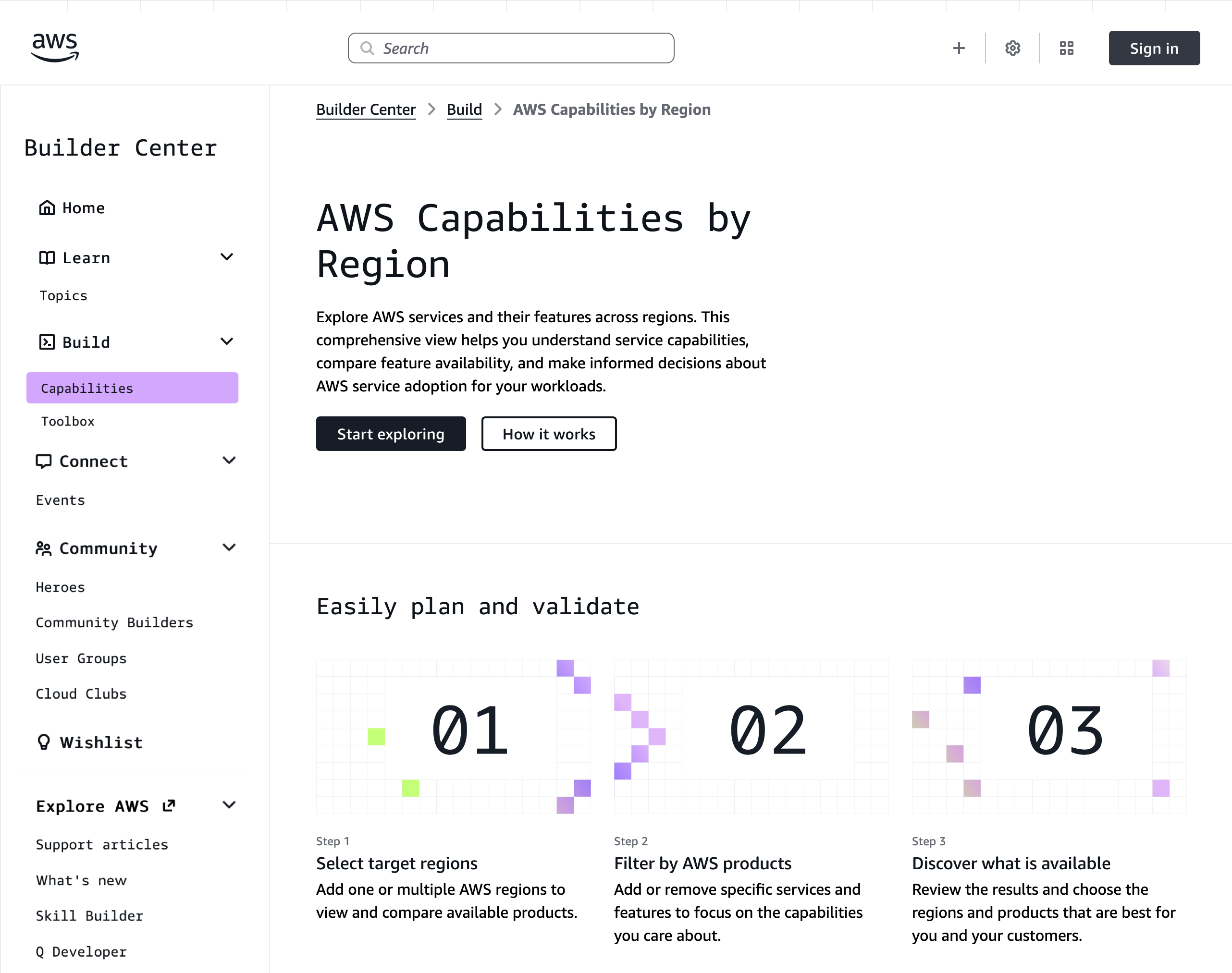
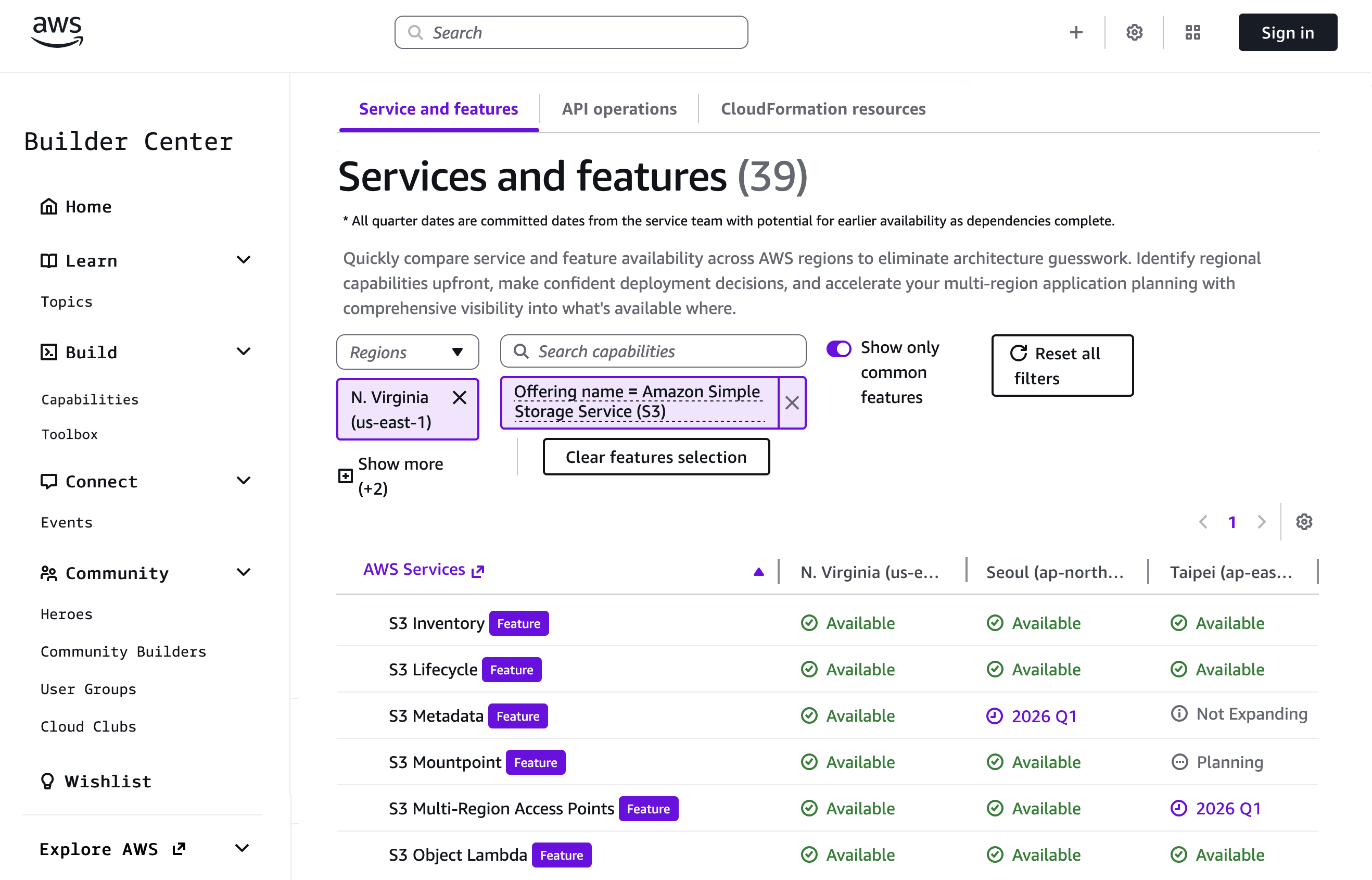
To get started, go to AWS Builder Center and choose AWS Capabilities and Start Exploring. When you select Services and features, you can choose the AWS Regions you’re most interested in from the dropdown list. You can use the search box to quickly find specific services or features. For example, I chose US (N. Virginia), Asia Pacific (Seoul), and Asia Pacific (Taipei) Regions to compare Amazon Simple Storage Service (Amazon S3) features.

Now I can view the availability of services and features in my chosen Regions and also see when they’re expected to be released. Select Show only common features to identify capabilities consistently available across all selected Regions, ensuring you design with services you can use everywhere.

The result will indicate availability using the following states: Available (live in the region); Planning (evaluating launch strategy); Not Expanding (will not launch in region); and 2026 Q1 (directional launch planning for the specified quarter).

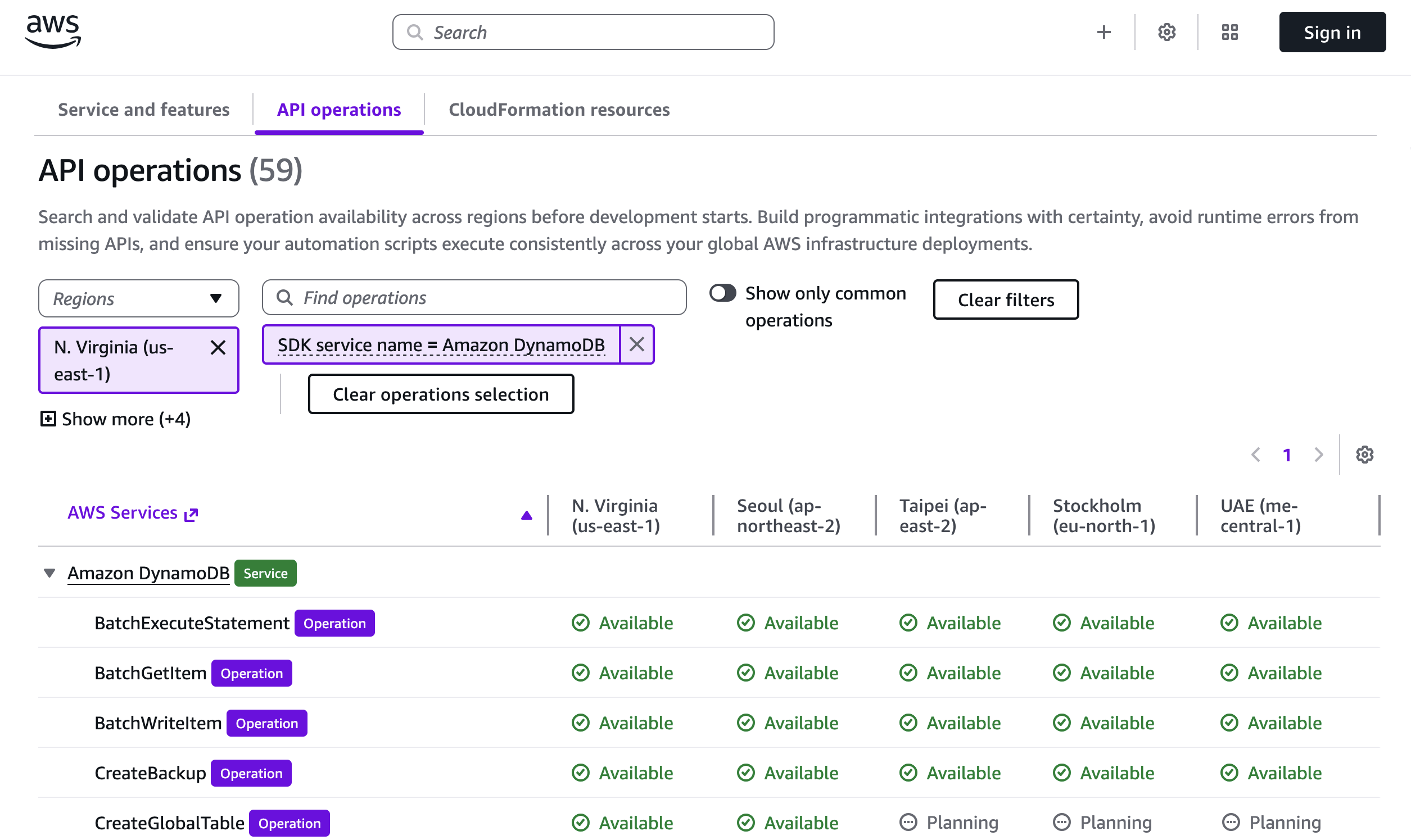
In addition to exploring services and features, AWS Capabilities by Region also helps you explore available APIs and CloudFormation resources. As an example, to explore API operations, I added Europe (Stockholm) and Middle East (UAE) Regions to compare Amazon DynamoDB features across different geographies. The tool lets you view and search the availability of API operations in each Region.

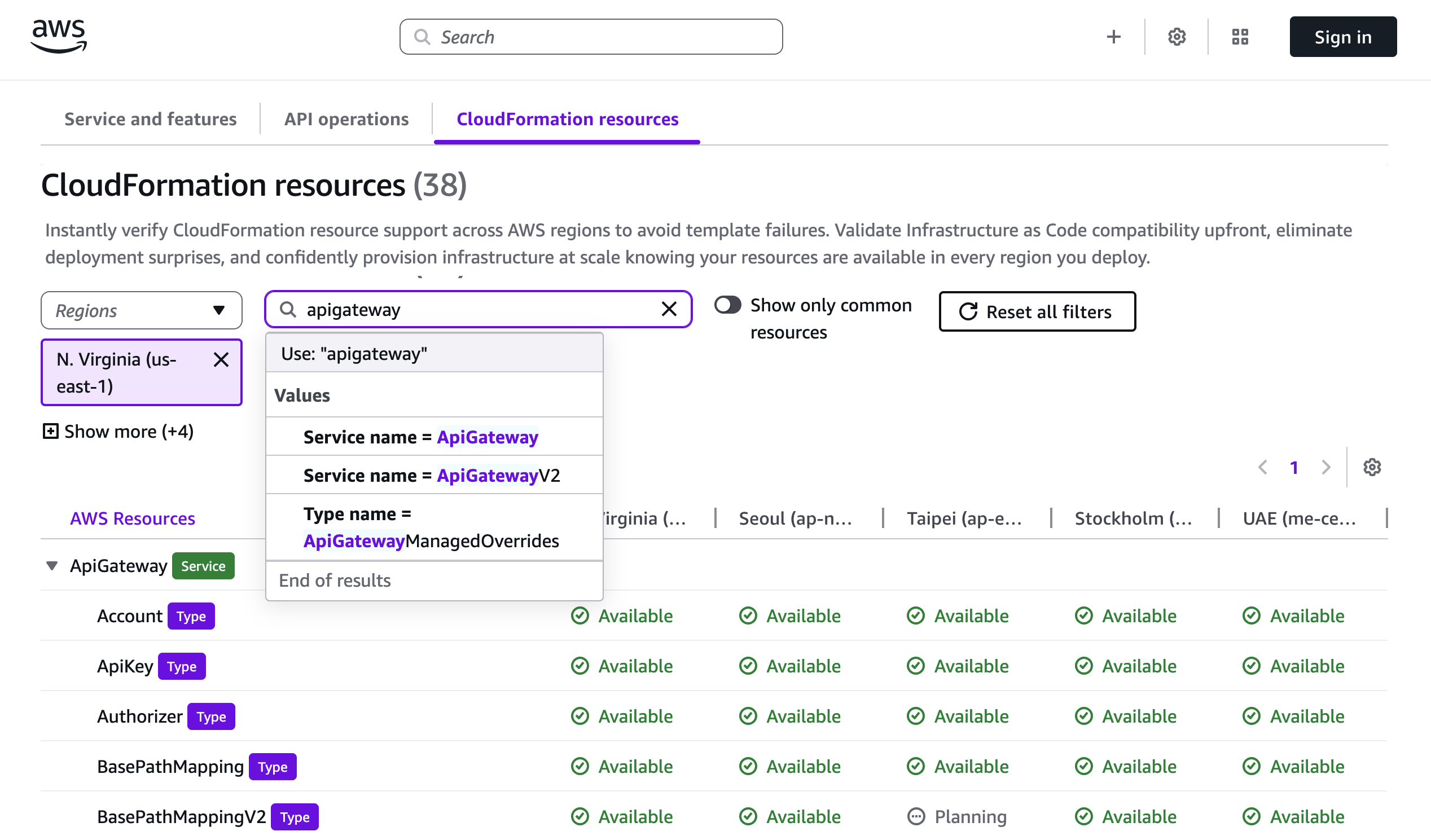
The CloudFormation resources tab helps you verify Regional support for specific resource types before writing your templates. You can search by Service, Type, Property, and Config.For instance, when planning an Amazon API Gateway deployment, you can check the availability of resource types like AWS::ApiGateway::Account.

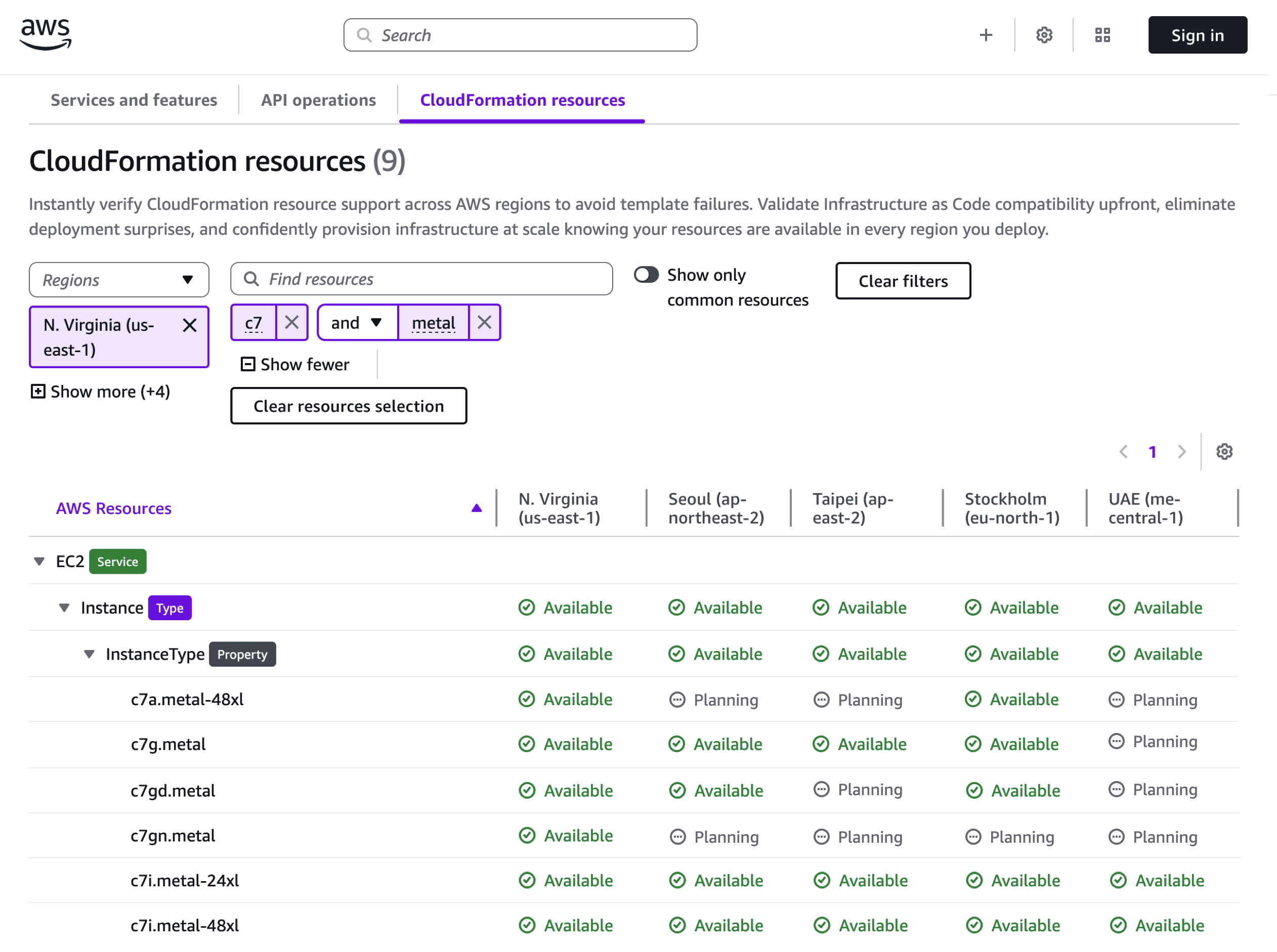
You can also search detailed resources such as Amazon Elastic Compute Cloud (Amazon EC2) instance type availability, including specialized instances such as Graviton-based, GPU-enabled, and memory-optimized variants. For example, I searched 7th generation compute-optimized metal instances and could find c7i.metal-24xl and c7i.metal-48xl instances are available across all targeted Regions.

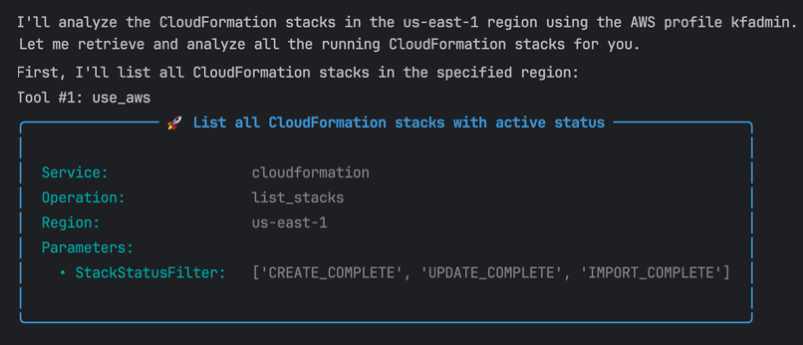
Beyond the interactive interface, the AWS Capabilities by Region data is also accessible through the AWS Knowledge MCP Server. This allows you to automate Region expansion planning, generate AI-powered recommendations for Region and service selection, and integrate Regional capability checks directly into your development workflows and CI/CD pipelines.

Now available
You can begin exploring AWS Capabilities by Region in AWS Builder Center immediately. The Knowledge MCP server is also publicly accessible at no cost and does not require an AWS account. Usage is subject to rate limits. Follow the getting started guide for setup instructions.

We would love to hear your feedback, so please send us any suggestions through the Builder Support page.

— Channy

When Your Calendar Becomes the Compromise

Post Syndicated from Rapid7 Labs original https://www.rapid7.com/blog/post/ve-when-your-calendar-becomes-the-compromise-phishing

A new meeting on your calendar or a new attack vector?

It starts innocently enough. A new meeting appears in your Google calendar and the subject seems ordinary, perhaps even urgent: “Security Update Briefing,” “Your Account Verification Meeting,” or “Important Notice Regarding Benefits.” You assume you missed this invitation in your overloaded email inbox, and click “Yes” to accept.

Unfortunately, calendar invites have become an overlooked delivery mechanism for social engineering and phishing campaigns. Attackers are increasingly abusing the .ics file format, a universally trusted, text-based standard to embed malicious links, redirect victims to fake meeting pages, or seed events directly into users’ calendars without interaction. 

Because calendar files often bypass traditional email and attachment defenses, they offer a low-friction attack path into corporate environments. 

Defenders should treat .ics files as active content, tighten client defaults, and raise awareness that even legitimate-looking calendar invites can carry hidden risk.

The underestimated threat of .ics files

The iCalendar (.ics) format is one of those technologies we all rely on without thinking. It’s text-based, universally supported, and designed for interoperability between Outlook, Google Calendar, Apple, and countless other clients.

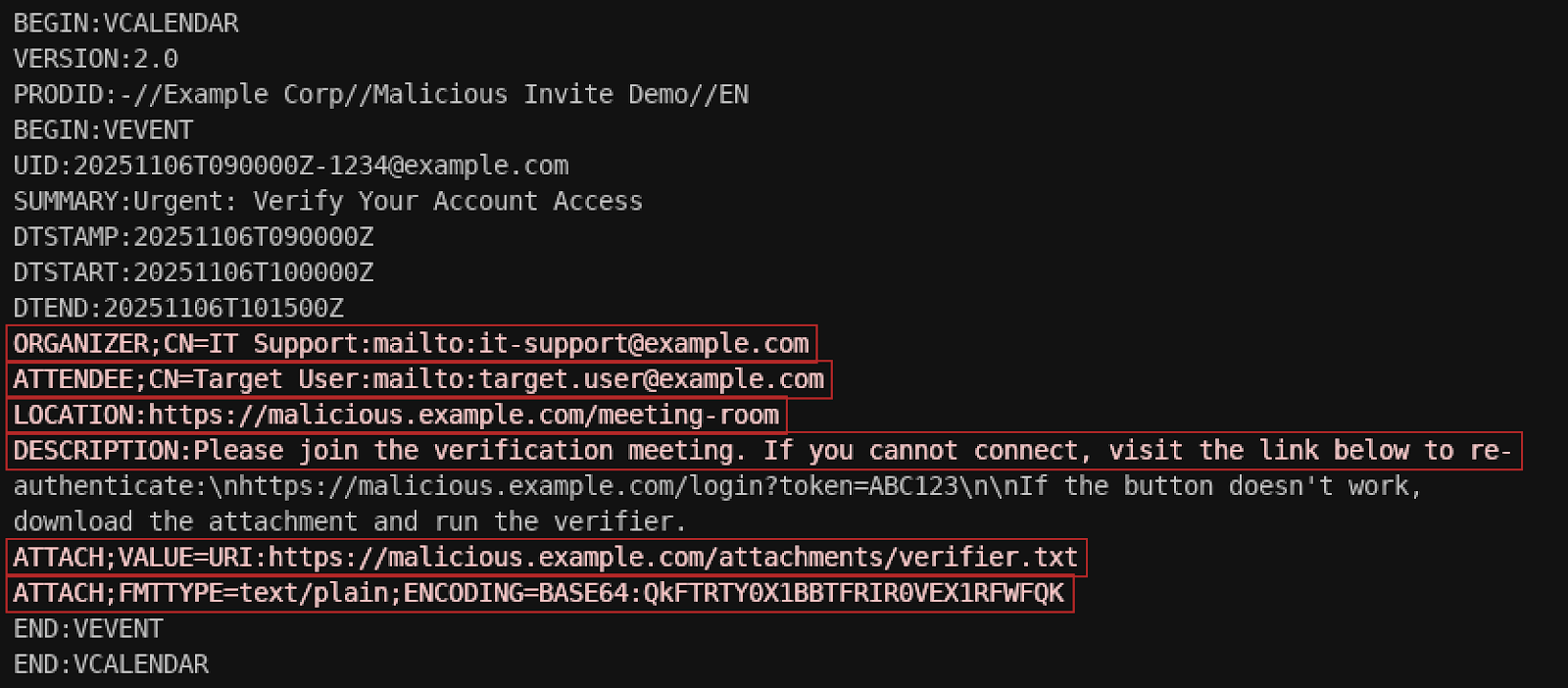
Each invite contains a structured list of fields like SUMMARY, LOCATION, DESCRIPTION, and ATTACH. Within these, attackers have found an opportunity: they can embed URLs, malicious redirects, or even base64-encoded content. The result is a file that appears completely legitimate to a calendar client, yet quietly delivers the attacker’s message, link, or payload.

Because calendar files are plain text, they easily slip through traditional security controls. Most email gateways and endpoint filters don’t treat .ics files with the same scrutiny as executables or macros. And since users expect to receive meeting invites, often from outside their organization, it’s an ideal format for social engineering.

How threat actors abuse the invite

Over the past year, researchers have observed a rise in campaigns abusing calendar invites to phish credentials, deliver malware, or trick users into joining fake meetings. These attacks often look mundane but rely on subtle manipulation:

  • The lure: A professional-looking meeting name and sender, sometimes spoofed from a legitimate organization.

  • The link: A URL hidden in the DESCRIPTION or LOCATION field, often pointing to a fake login page or document-sharing site.

  • The timing: Invites scheduled within minutes, creating urgency (“Your access expires in 15 minutes — join now”).

  • The automation: Calendar clients that automatically add external invites, ensuring the trap appears directly in the user’s daily schedule.

⠀

Cal1.png

Example of where some of the malicious components would reside in the .ics file

⠀

It’s clever, low-effort social engineering leveraging trust in a system built for collaboration.

The “invisible click” problem

The real danger of malicious calendar invites isn’t just the link inside,  it’s the automatic delivery mechanism. In certain configurations, Outlook and Google Calendar will automatically process .ics attachments and create tentative events, even if the user never opens or even receives the email. That means the malicious link is now part of the user’s trusted interface with their calendar.

This bypasses the usual cognitive warning signs. The email might look suspicious, but the event reminder popping up later? That feels like part of your day. It’s phishing that moves in quietly and waits.

Why traditional defenses miss it

Security tooling has historically focused on attachments that execute code or scripts. By contrast, .ics files are plain text and standards-based, so they don’t inherently appear dangerous. Many detection engines ignore or minimally parse them.

Attackers exploit that gap. They rely on the fact that few organizations monitor for BEGIN:VCALENDAR content or inspect calendar metadata for embedded URLs. Once delivered, the file can bypass filters, land in the user’s calendar, and lead to a high-confidence click.

What defenders can do now

Defending against calendar-based attacks begins with recognizing that these are not edge cases anymore. They’re a natural evolution of phishing  where user convenience becomes the delivery mechanism.

Here are a few pragmatic steps every organization should consider:

  1. Treat .ics files like active content. Configure email filters and attachment scanners to inspect calendar files for URLs, base64-encoded data, or ATTACH fields.

  2. Review calendar client defaults. Disable automatic addition of external events when possible, or flag external organizers with clear warnings.

  3. Sanitize incoming invites. Content disarm and reconstruction (CDR) tools can strip out or neutralize dangerous links embedded in calendar fields.

  4. Raise awareness among users. Train employees to verify unexpected invites — especially those urging immediate action or containing meeting links they didn’t anticipate. Employees can also follow the helpful advice in this Google Support article.

  5. Use strong identity protection. Multi-factor authentication and conditional access policies mitigate the impact if a phishing link successfully steals credentials.

These steps don’t eliminate the threat, but they significantly increase friction for attackers and their malware.

A quiet evolution in social engineering campaigns

Malicious calendar invites represent a subtle yet telling shift in attacker behavior: blending into legitimate business processes rather than breaking them. In the same way that invoice-themed phishing emails once exploited trust in accounting workflows, .ics abuse leverages the quiet reliability of collaboration tools.

As organizations continue to integrate calendars with chat, cloud storage, and video platforms, the attack surface will only expand. Links inside invites will lead to files in shared drives, authentication requests, and embedded meeting credentials. These are all opportunities for exploitation.

Rethinking trust in everyday workflows

Defenders often focus on the extraordinary like zero days, ransomware binaries, and new exploits. Yet the most effective attacks remain the simplest: exploiting human trust in ordinary digital habits. A calendar invite feels harmless and that’s exactly why it works.

The next time an unexpected meeting appears in your calendar, it might be more than just a double-booking. It could be a reminder that security isn’t only about blocking malware, but about questioning what we assume to be safe.

Freedesktop.org now hosts the Filesystem Hierarchy Standard

Post Syndicated from corbet original https://lwn.net/Articles/1045405/

The future of the Filesystem Hierarchy Standard (FHS) has been under discussion for some time; now,
Neal Gompa has announced
that the FHS is “hosted and stewarded” by Freedesktop.org.

For those who are unaware, the Filesystem Hierarchy Standard (FHS)
is the definition for POSIX operating systems to organize system
and user data. It is broadly adopted by Linux, BSD, and other
operating systems that follow POSIX-like conventions.

See this
page
for the specification’s new home.

[$] Toward fast, containerized, user-space filesystems

Post Syndicated from corbet original https://lwn.net/Articles/1044432/

Filesystems are complex and performance-sensitive beasts. They can also
present security concerns. Microkernel-based systems have long pushed
filesystems into separate processes in order to contain any vulnerabilities
that may be found there. Linux can do the same with the Filesystem in
Userspace
(FUSE) subsystem, but using FUSE brings a significant
performance penalty. Darrick Wong is working on ways to eliminate that
penalty, and he has a massive patch
set
showing how ext4 filesystems can be safely implemented in user space by
unprivileged processes with good performance. This work has the potential
to radically change how filesystems are managed on Linux systems.

Security updates for Thursday

Post Syndicated from jzb original https://lwn.net/Articles/1045352/

Security updates have been issued by Debian (unbound), Fedora (deepin-qt5integration, deepin-qt5platform-plugins, dtkcore, dtkgui, dtklog, dtkwidget, fcitx-qt5, fcitx5-qt, fontforge, gammaray, golang-github-openprinting-ipp-usb, kddockwidgets, keepassxc, kf5-akonadi-server, kf5-frameworkintegration, kf5-kwayland, plasma-integration, python-qt5, qadwaitadecorations, qt5, qt5-qt3d, qt5-qtbase, qt5-qtcharts, qt5-qtconnectivity, qt5-qtdatavis3d, qt5-qtdeclarative, qt5-qtdoc, qt5-qtgamepad, qt5-qtgraphicaleffects, qt5-qtimageformats, qt5-qtlocation, qt5-qtmultimedia, qt5-qtnetworkauth, qt5-qtquickcontrols, qt5-qtquickcontrols2, qt5-qtremoteobjects, qt5-qtscript, qt5-qtscxml, qt5-qtsensors, qt5-qtserialbus, qt5-qtserialport, qt5-qtspeech, qt5-qtsvg, qt5-qttools, qt5-qttranslations, qt5-qtvirtualkeyboard, qt5-qtwayland, qt5-qtwebchannel, qt5-qtwebengine, qt5-qtwebkit, qt5-qtwebsockets, qt5-qtwebview, qt5-qtx11extras, qt5-qtxmlpatterns, qt5ct, and xorg-x11-server), Mageia (binutils, gstreamer1.0-plugins-bad, libsoup, libsoup3, mediawiki, net-tools, and tigervnc, x11-server, and x11-server-xwayland), Red Hat (tigervnc), SUSE (aws-efs-utils, fetchmail, flake-pilot, ImageMagick, java-1_8_0-ibm, java-1_8_0-openjdk, kernel-devel, kubecolor, OpenSMTPD, sccache, tiff, and zellij), and Ubuntu (linux, linux-aws, linux-aws-6.14, linux-gcp, linux-gcp-6.14,
linux-oem-6.14, linux-oracle, linux-oracle-6.14, linux-raspi,
linux-realtime, linux, linux-aws, linux-gkeop, linux-hwe-6.8, linux-ibm, linux-ibm-6.8,
linux-lowlatency, linux-lowlatency-hwe-6.8, linux-nvidia,
linux-nvidia-lowlatency, linux, linux-aws, linux-kvm, linux-lts-xenial, linux-oracle-6.8, linux-realtime-6.14, poppler, python-django, and various linux-* packages).

The collective thoughts of the interwebz