Tag Archives: Integrated CS

Experience CS: The complete set of units is live

Post Syndicated from Andrea Wilson Vazquez original https://www.raspberrypi.org/blog/experience-cs-the-complete-set-of-units-is-live/

The complete set of Experience CS units is now available.

With the release of the final six units, Experience CS now provides 18 cross-curricular, project-based computer science units for grades 3–8. It offers educators a collection of free, standards-aligned units to bring computing into their classrooms with confidence.
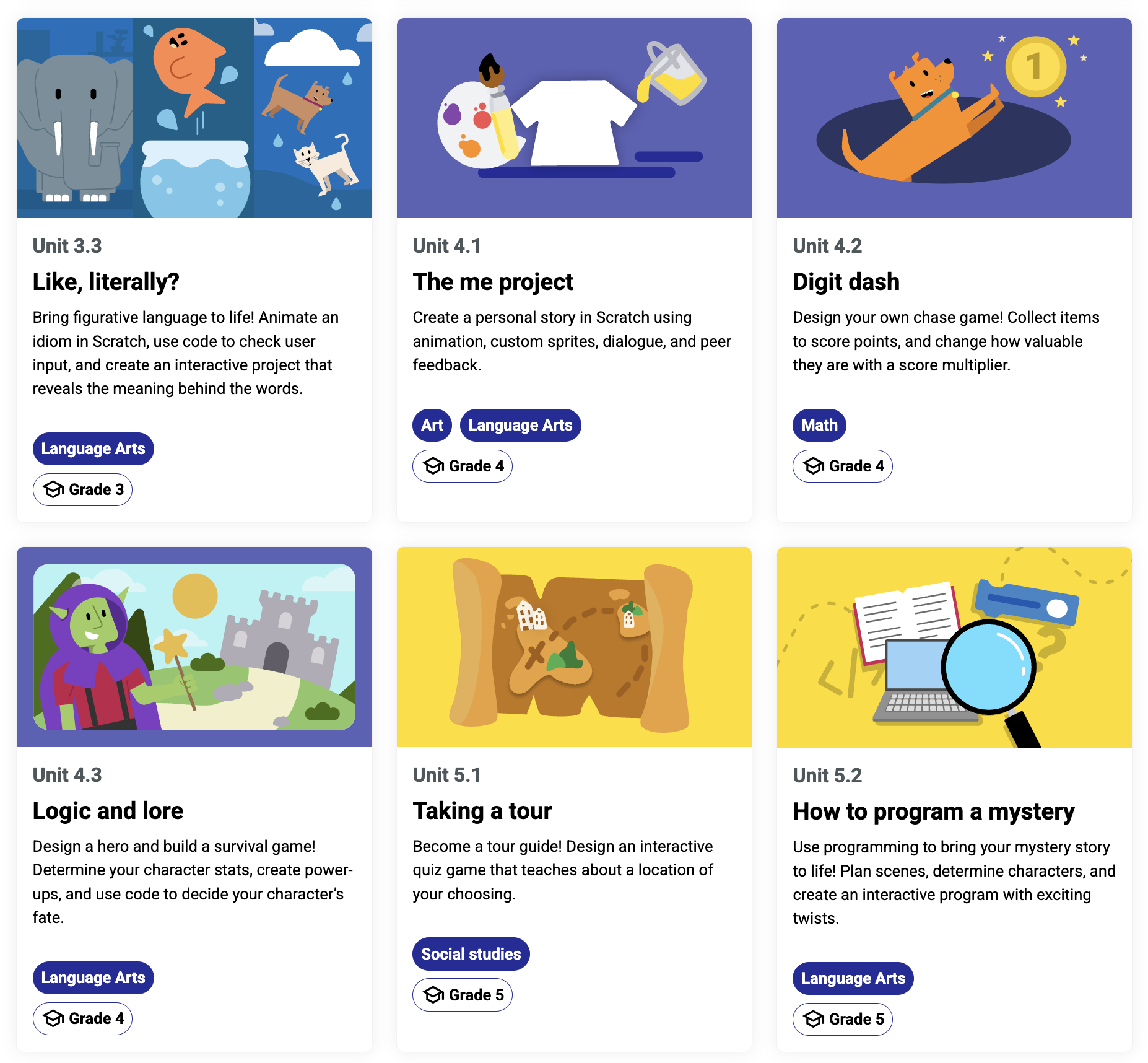
The six final units shown on the Experience CS curriculum page.
Some of the units on the Experience CS website

This milestone marks the culmination of a year of development, iteration, and collaboration with educators. The result is a set of learning resources designed by educators for educators, for real classrooms and real teaching needs.

What is Experience CS?

Experience CS is built to make computer science (CS) accessible, engaging, and relevant for all learners, and teachable for all educators.

Rather than treating CS as a standalone subject, Experience CS integrates computing into core subjects like science, math, and the arts. Students learn key concepts such as sequencing, loops, cybersecurity, and networks while exploring meaningful, real-world themes. The Experience CS platform includes a school-safe version of Scratch that is easy for teachers to use and where students can explore making coding projects.

Every Experience CS unit includes:

  • Ready-to-use lesson plans
  • Slides and teaching resources
  • Student activities and starter Scratch projects
  • Step-by-step teacher guidance

No prior computer science experience is required — Experience CS makes it easier than ever for schools to get started.

From launch to completion

Since we launched Experience CS in June 2025 with the first 6 units, we’ve worked steadily to create more resources, guided by feedback from educators and classroom testing.

Now complete, Experience CS offers:

  • A fully scaffolded learning experience for students aged 8–14
  • 18 classroom-ready units
  • 3 units per grade level (Grades 3–8)

Along the way, we have also added:

  • Unit 0: Getting started, introducing Scratch and the Code Editor for Education platform
  • Spanish and French translations, broadening access for more learners
  • Updates informed by teacher feedback

What are the newest units about?

The final Experience CS units give students more opportunities to create, explore, and apply their learning:

  • Unit 3.3 — Like, literally? Bring figurative language to life! Students animate an idiom in Scratch, use code to check user guesses, and create an interactive project that reveals the meaning behind the words.
  • Unit 4.3 — Logic and lore: Design a hero and build a survival game! Students determine character stats, create power-ups, and use code to determine their character’s fate.
  • Unit 5.3 — What are the odds? Can a program predict your future? Students build a yes-or-no response generator, explore how data is stored, and test whether their program’s predictions match real-world results.
  • Unit 6.3 — Under the sea: Discover how messages travel across the world! Students explore networks, packets, and error-checking, then create an interactive program that tells the story of digital communication in action.
  • Unit 7.3 — Cipher quest: Crack codes and design your own digital escape room! Students explore ciphers, build secure password systems, and use programming to hide and protect secret information.
  • Unit 8.3 — Art all around: Use code to create stunning abstract art! Students design algorithms, transform shapes, and build programs that turn mathematical ideas into original works of art.

What’s next for Experience CS?

While the curriculum is now complete, our work to expand access is just getting started.

Events and professional development

Throughout 2026, we will host sessions, workshops, and conference events to support educators across the US in bringing Experience CS into their classrooms. These free professional development opportunities will help teachers build confidence, explore best practices, and connect with a growing community of educators.

We will host a webinar on April 30 at 3pm CT / 4pm ET to highlight the new units. Register today to join:

And you’ll find us at the following events this spring and summer:

And more! Keep up with us on social media to stay in the loop with conference appearances and sign up for Experience CS mailing updates to hear about upcoming PD opportunities.

Supporting adoption in schools

Experience CS is already being implemented in schools and districts across the United States. With Data Privacy Agreements (DPAs) now in place in multiple states, even more districts can adopt the curriculum.If you have any questions about DPAs or district expansion, please reach out to [email protected].

A milestone for integrated computer science education

The completion of Experience CS marks a big step forward in making computer science education accessible, creative, and inclusive.
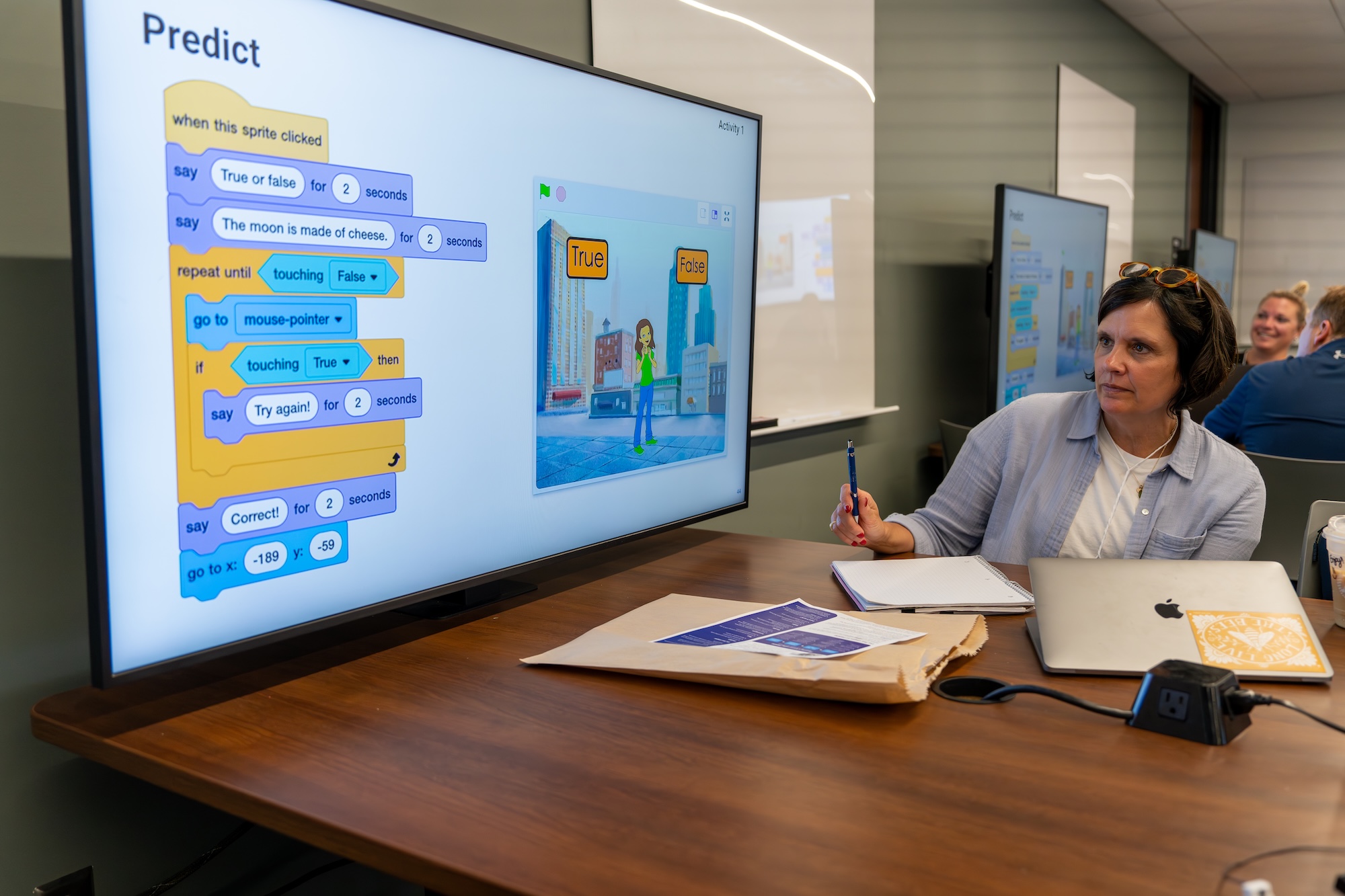
PD photo from Empower

The cross-curricular design of each unit empowers non-specialist teachers to confidently introduce computer science in their subject and help students connect it to the world around them.

Start exploring today

The complete Experience CS curriculum is now available.

Visit experience-cs.org to explore all 18 units and get started in your classroom.

The post Experience CS: The complete set of units is live appeared first on Raspberry Pi Foundation.
New Hello World podcast series: Bringing computer science into every classroom

Post Syndicated from Sean Sayers original https://www.raspberrypi.org/blog/new-hello-world-podcast-series-bringing-computer-science-into-every-classroom/

The Hello World podcast is back, accompanying the latest issue of Hello World magazine. This new three-part miniseries explores some of the topics from issue 27 of Hello World, which focuses on integrating computing education across the curriculum.

Whether you’re a seasoned educator or just starting your journey with computing education, this podcast audio and video series is full of insights, inspiration, and practical tips from educators and experts around the world.

If you’re already subscribed, the new episodes will appear automatically in your favourite podcast app every Tuesday.

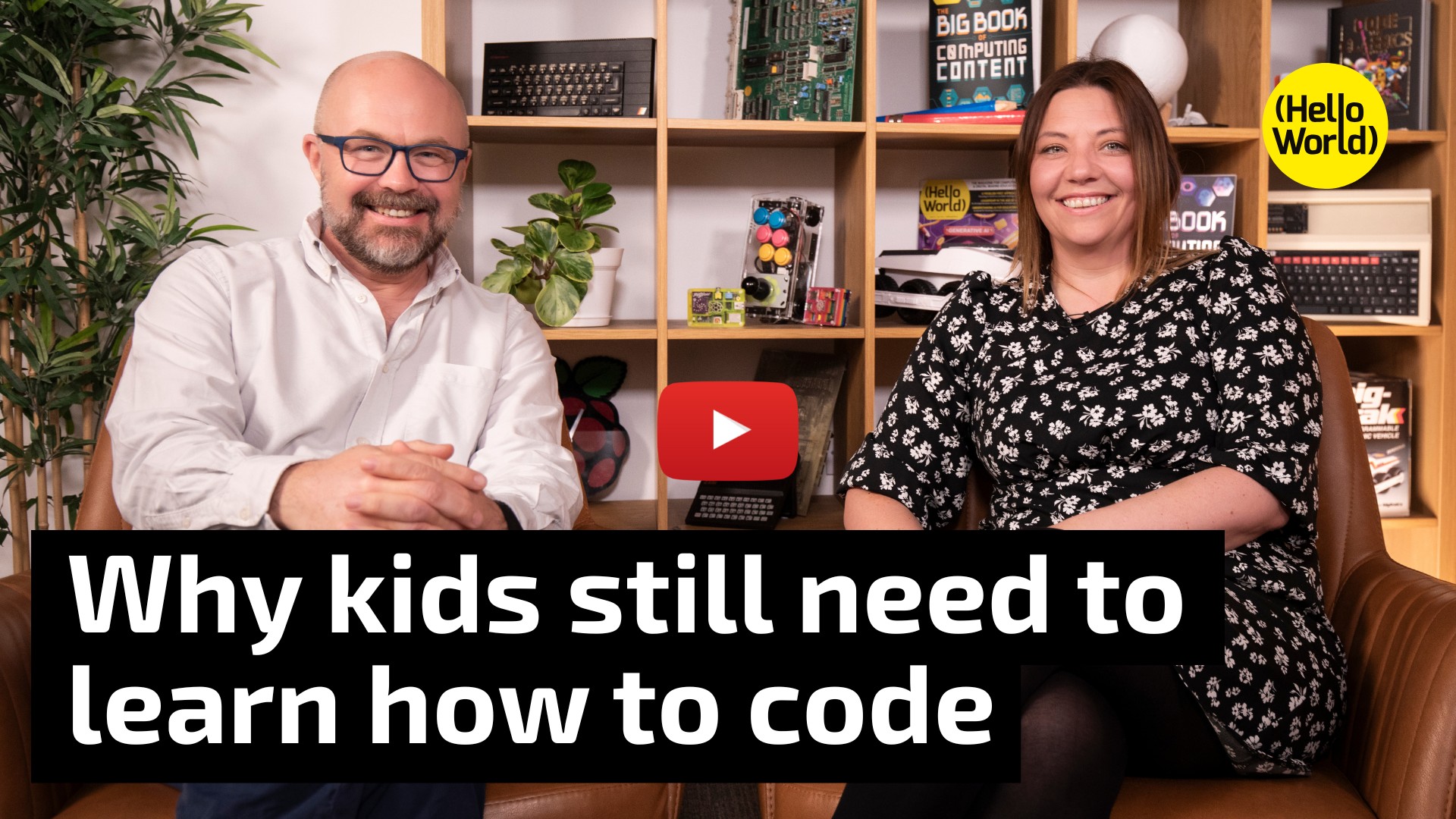
Episode 1: Why kids still need to learn to code in the age of AI

Out now

In our first episode, Raspberry Pi Foundation CEO Philip Colligan, CBE, sits down with teacher Janine Kirk to discuss why, in the age of AI, it’s more important than ever for young people to learn to code. Their conversation draws on ideas from our downloadable position paper, which is also featured in issue 27 of Hello World magazine.

Episode 2: Voices & tips from CSTA conference

Released Tuesday 15 July

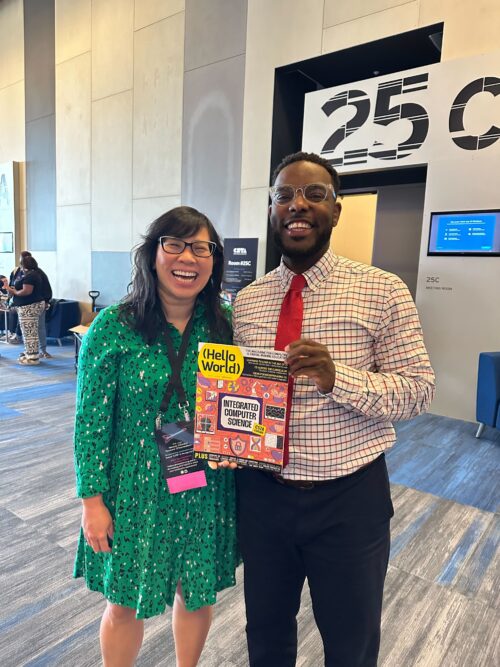
Photo of Hello World editor, Meg Wang, and contributing editor Dominick Sanders at CSTA 2025.

Next week, we’ll bring you the buzz from the Computer Science Teachers Association’s annual conference in Cleveland, USA. We’re speaking with educators at the conference to hear how they’re integrating computer science across subjects, and you’ll hear their top classroom tips for teaching CS in context.

Episode 3: Global perspectives on AI education

Released Tuesday 22 July

Episode 3 of the Hello World Podcast set

The miniseries wraps up with an in-depth discussion about AI education around the world. Hosted by Ben Garside, Senior Learning Manager for Experience AI, the conversation features Leonida Soi, Learning Manager in Kenya; Monika Katkute-Gelzine, CEO of Vedliai in Lithuania; and Aimy Lee, COO of Penang Science Cluster in Malaysia. Monika and Aimy work with us in our global Experience AI partner programme.

Listen, read, learn, subscribe, and share

Each of these three podcast episode builds on the themes in the latest Hello World issue, where you’ll find inspiration and practical tips from educators who are integrating CS across a variety of subjects and for all school ages.

Subscribe to the Hello World podcast wherever you get your podcasts to never miss an episode, and to help us reach more teachers. If you’re subscribe to Hello World magazine (it’s free), we’ll also let you know when new podcast episodes are available.

And, don’t forget to share this new podcast series with your fellow educators.

The post New Hello World podcast series: Bringing computer science into every classroom appeared first on Raspberry Pi Foundation.
Hello World 27 out now: Integrated computer science

Post Syndicated from Meg Wang original https://www.raspberrypi.org/blog/hello-world-27-out-now-integrated-computer-science/

While in some countries, such as England, computing is taught as a standalone subject, in others, like the USA, computing concepts are integrated across the school curriculum. In our brand-new issue of Hello World, out today for free, educators share ways to integrate computer science into your classroom.

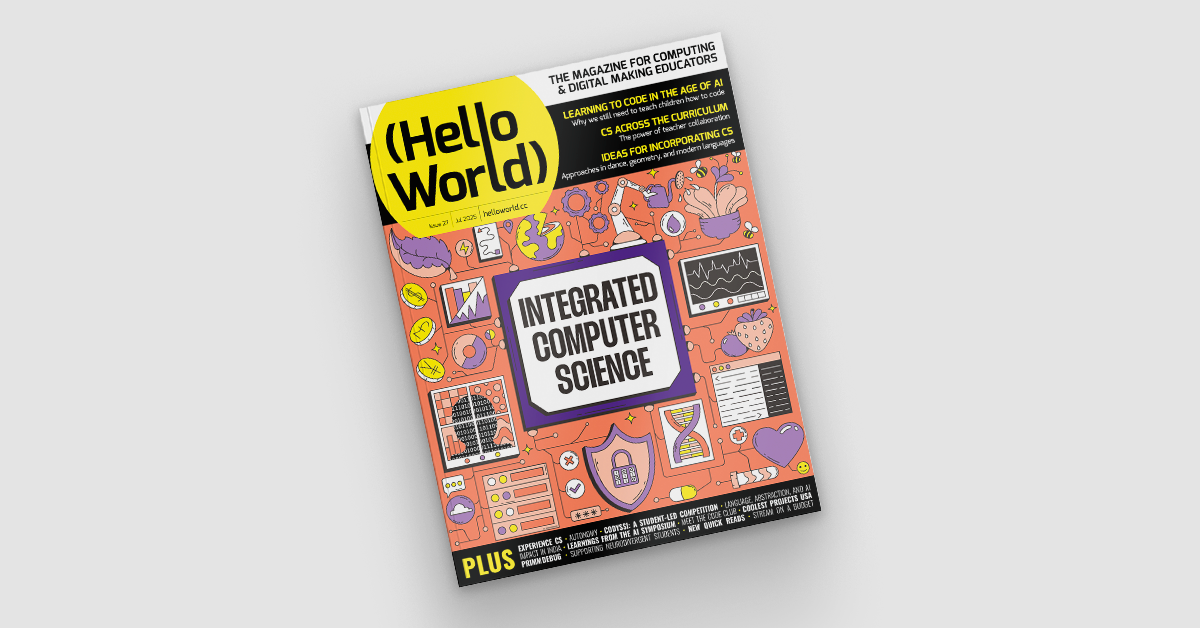
Hello World Issue 27 front cover

Integrating CS to broaden participation

The argument for making computing and computer science (CS) standalone has often been about quality. We’ve heard educators say that teaching CS as part of other subjects can be hard, especially if you don’t have a CS background. On the other hand, integrating computer science into other subjects can offer a more accessible entry point for young people, broadening participation in CS education. And the critical thinking and problem-solving skills young people gain through computer science can enhance their learning of any subject. 

As digital technology increasingly shapes our world, it may be that thoughtful cross-curricular CS education is the most effective way to empower all young people to become confident and critical technology users.

Issue 27 of Hello World features a range of practical articles with ideas for integrating CS over a variety of subjects at the primary, elementary, and high-school levels.

For example:

  • James Abela shares how to teach coding across the curriculum using OctoStudio and the concepts of sequence, selection, and repetition
  • Jesualdo Martínez Molina presents hands-on examples of weaving together cross-curricular and modern foreign languages in the primary classroom
  • Jane Waite introduces the Autonomy framework, which explores whether we can effectively teach two things at once

Also in this issue:

  • Laurie Gale introduces PRIMMDebug, a new way to teach debugging
  • Teresa Harris Boag defines strategies for a whole-school approach to artificial intelligence (AI) to engage parents and school staff in developing an effective AI strategy
  • Tiffany Jones shares how she ensures that students can see themselves in tech

And much, much more.

Jake Baskin, Executive Director of the Computer Science Teachers Association, says in this issue of Hello World: “If you’re a teacher who is implementing CS principles in your classroom, you are a computer science teacher.”

Whether CS is your specialist subject or not, Hello World is full of ideas from your fellow educators on how to inspire your students. 

New podcast series

The Hello World podcast is also back, with a miniseries in audio and video focused on integrated CS. If you’re subscribed already, the three new episodes will show up in your favourite podcast app on Tuesdays.

Hello World Editor: Meg Wang, presenting an episode of the Hello World Podcast

Share your thoughts & subscribe to Hello World

We hope you enjoy this issue of Hello World. Please get in touch with your article ideas or what you would like to see in the magazine.

The post Hello World 27 out now: Integrated computer science appeared first on Raspberry Pi Foundation.