Tag Archives: young creators

Celebrating young tech creators at Coolest Projects Ireland 2026

Post Syndicated from Rosie Lucas original https://www.raspberrypi.org/blog/celebrating-young-tech-creators-at-coolest-projects-ireland-2026/

In April, young tech creators gathered at Explorium in Dublin for Coolest Projects Ireland 2026, a lively, creative celebration of young makers and their digital projects. This year’s event was held as part of Kinia’s Creative Technology Week, and welcomed over 100 young people, showcasing more than 80 incredible tech projects. Participants included young people from Code Clubs, CoderDojos, and schools across Ireland, as well as young creators taking part individually.

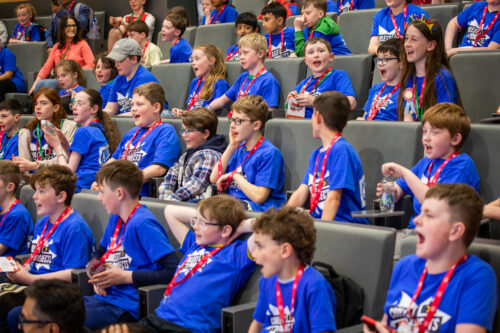
Young people sat in an auditorium wearing Coolest Projects t-shirts.

With creations ranging from coding projects to hardware builds to AI systems, the event provided a wonderful opportunity to celebrate the creativity and passion of young tech creators across Ireland. Here are some project highlights from the day.

Jake | Enter the Kindergarten, Scratch

Jake’s project, Enter the Kindergarten, is a Scratch game where the player has to dodge babies and obstacles in a childcare setting. Jake was inspired to create the game after overcoming his own fear of babies. Here is what he shared with us about his project:

“Well, I used to be afraid of babies. So one Saturday morning, me and my dad came up with the idea to make a kindergarten game where you have to get to the end of the kindergarten.”

Aarabhi | Mystical Waterfall, Hardware

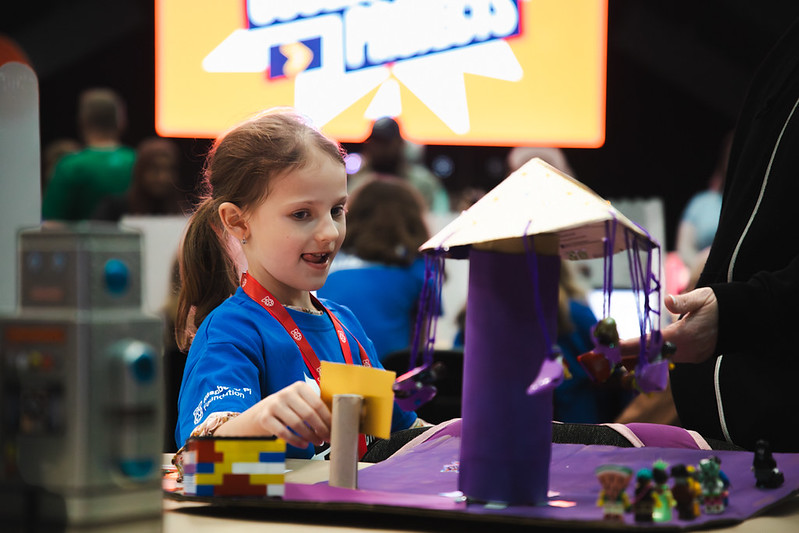
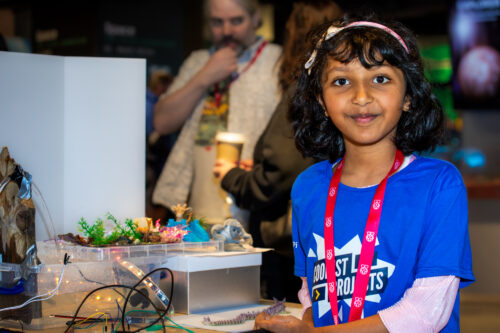
To build her hardware project, Mystical Waterfall, Aarabhi used a Raspberry Pi Pico to create a nature scene, featuring running water and LED lights. Aarabhi spoke to us about why she wanted to enter Coolest Projects:

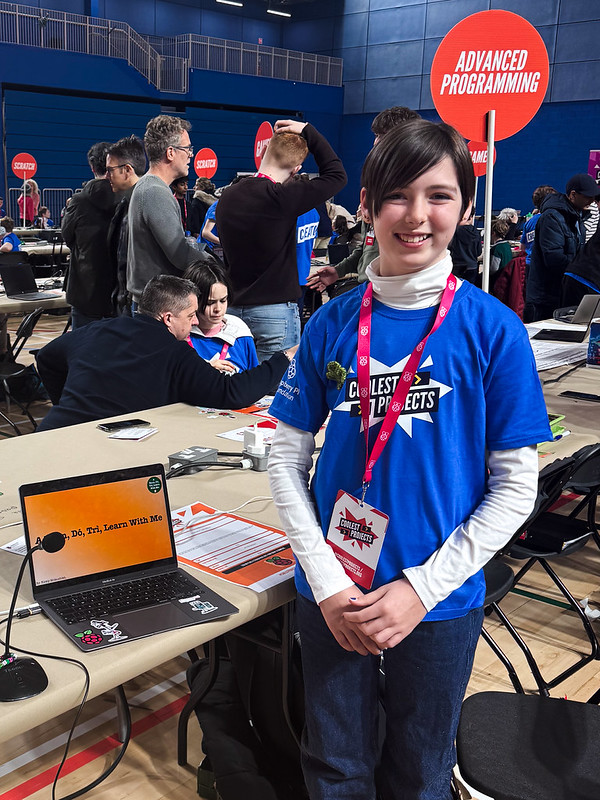
A young person standing next to their project.

“I watched a Netflix series, The InBESTigators, where children showcase their science projects. After watching it, it was my dream to do the same!”

Arittra | Cara, AI

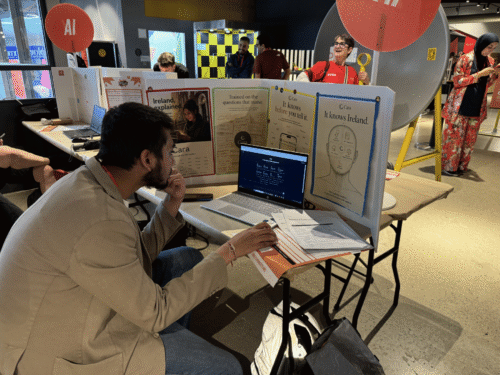
Arittra’s project, Cara, was chosen as the judges’ favourite in the AI category this year. Cara, which means ‘friend’ in Irish, is a large language model (LLM) that provides information on the Irish legal, housing, and administrative systems, aimed at supporting people who have emigrated to Ireland. Arittra told us more about the challenges he faced whilst building his project:

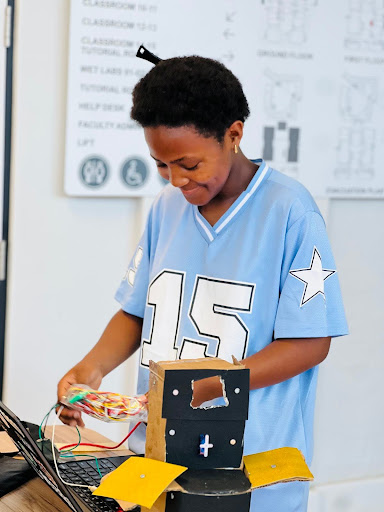
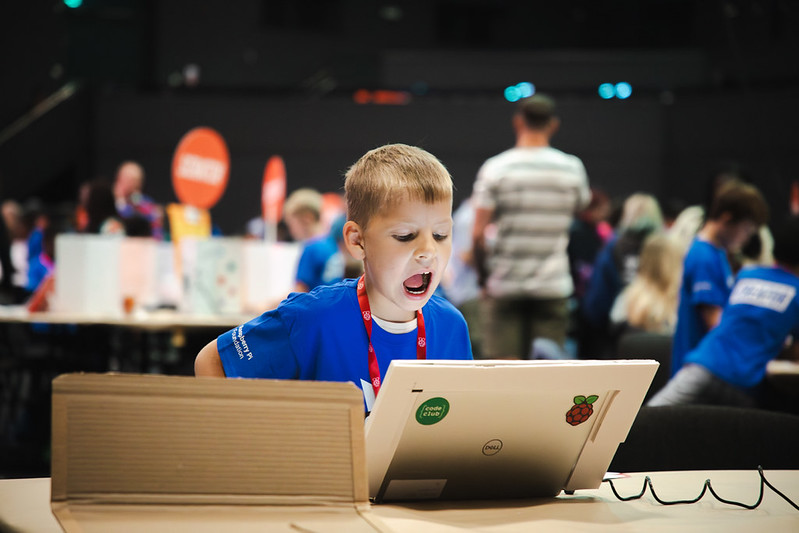
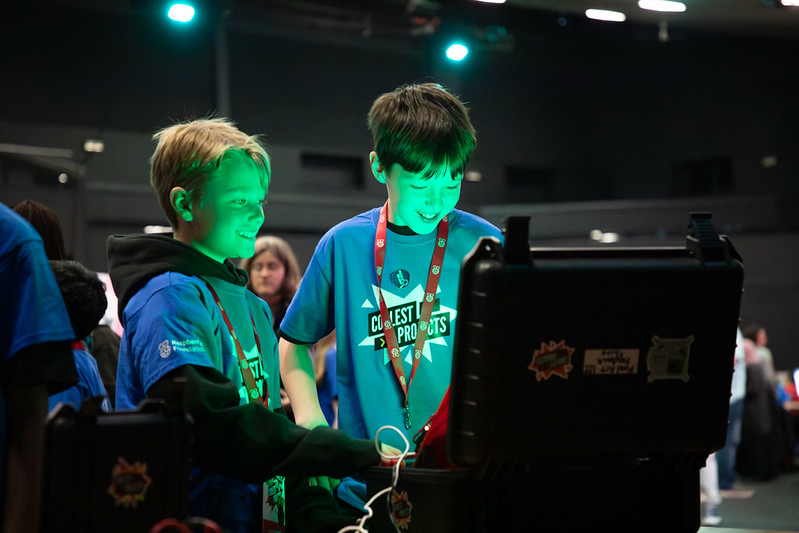
A young person working at a computer at a Coolest Projects event.

“One of the key problems with artificial intelligence is that they hallucinate, but I found a countermeasure to it. I trained it on search variety and gave it backup data, so if one part of the server starts hallucinating, another part automatically steps into its place to find maximum accuracy.”

Get involved

Congratulations and thank you to each and every young creator who joined us for Coolest Projects Ireland 2026. Sharing your projects, celebrating your achievements, and inspiring others is what Coolest Projects is all about.

Missed the fun in Dublin, or want to take your projects to a global stage? Take part in the Coolest Projects 2026 online showcase, which is open for entries from young creators anywhere in the world until 27 May. Look out for more in-person Coolest Projects events taking place around the world over the rest of the year, too!

Find out more at coolestprojects.org.

The post Celebrating young tech creators at Coolest Projects Ireland 2026 appeared first on Raspberry Pi Foundation.

A day of big ideas at Coolest Projects USA Minnesota 2026

Post Syndicated from Sophie Ashford original https://www.raspberrypi.org/blog/a-day-of-big-ideas-at-coolest-projects-usa-minnesota-2026/

Coolest Projects USA Minnesota returned for its second year in the state on 11 April, with the celebration of creativity and coding coming to the Science Museum of Minnesota once again.

At its heart, Coolest Projects is about giving young tech creators the opportunity to be seen and heard, and to share something they’ve made and be celebrated for it, regardless of their experience level. With some joining in for the first time and others returning to showcase their latest build, every participant played a part in making the day special.

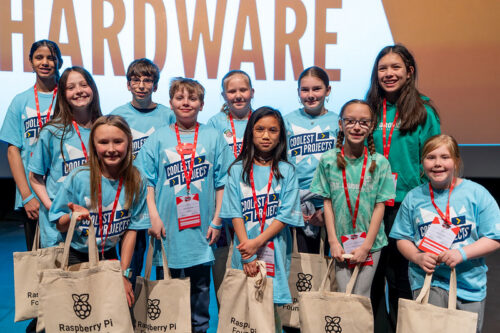
A group of children standing together at Coolest Projects event.

The event welcomed 65 participants and over 150 showcase visitors, with creators talking through their ideas, the challenges they had faced, and what they had learned along the way. Visitors explored the showcase, tried out hands-on activities, and connected with a community brought together by a want to celebrate the incredible things young people can do when given the opportunity.

Coding for a social purpose

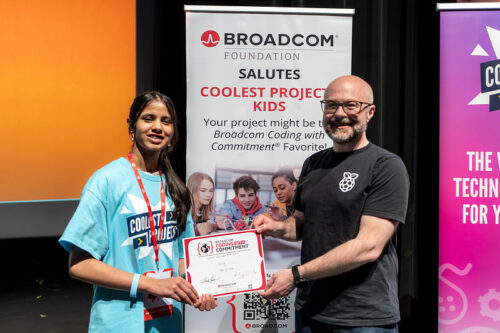
A key moment in the day was the presentation of the Broadcom Foundation Coding with Commitment® award, celebrating a project that uses technology to make a positive difference.

This year’s recognition went to Rikita for her project ‘Smart Electronic Fruit Sorter — An affordable assistive technology for visually impaired people’.

The project is a fruit sorter designed to help visually impaired people identify fresh produce. Using a microcontroller and a gas sensor, the Fruit Sorter detects whether fruit is good or spoiled, triggering lights, sounds, and a servomechanism to either keep or discard the fruit.

Rikita overcame many challenges when building her project. She told us more about her experiences:

“First, I started out with a sorter made out of foam. However, when testing, I realised that the sorter would not bear the weight of the fruit. Then, I pivoted to 3D printing the sorter parts.
I also faced trouble with the electronics not working. I constantly played around with the connections and got it working. YouTube videos were of great help in guiding me!”

Two people holding a certificate in front of a Broadcom banner.

The award highlights how young people are not just learning to code, but using those skills to explore real-world challenges and ideas that matter to them. Rikita shared how she felt about receiving the award:

“I felt very happy and it has motivated me to continue my journey of inventions further. I did not expect the award, and so it was a very pleasant surprise.”

Celebrating ideas big and small

With entries spanning multiple categories, the event featured a wide variety of creative and technical work. Here are a few highlights.

ZaLayaa | FIND ME ASAP, AI

FIND ME ASAP is an emergency resource platform designed to help parents and guardians act quickly and effectively in the critical first moments after a child goes missing. Built by ZaLayaa in just 15 days, it goes beyond static guides by offering real-time, tailored support that people can use in high-stress situations. The platform is intentionally inclusive, recognising groups that can often be overlooked in emergencies, with features that consider children with invisible disabilities, complex medical needs, and rare health conditions, for example. Inspired by her own experiences navigating the world with multiple invisible conditions, ZaLayaa created FIND ME ASAP to fill a vital gap.

ZaLayaa shared what she found most challenging in building her project:

“My biggest challenge was making sure everything was actually real, correct, and useful, not just something that looks good.

This isn’t just information. It has to work when someone is stressed, scared, and trying to make fast decisions.”

ZaLayaa also explained what she enjoyed most about taking part in Coolest Projects:

“My favorite thing was the experience and all the lovely people there. It was really cool seeing all the different projects and what other kids built, and being in a room where it was all kids creating and sharing their ideas.”

You can find out more about ZaLayaa’s project at findmeasap.com.

Lawrence | Find the Chomiks, Scratch

Lawrence’s project is a fun exploration game he built using Scratch. You control a character, roam around the map, and hunt for hidden chomiks, each one with its own quirky look. It’s all about exploring, discovering, and collecting them all.

Lawrence shared some of the challenges he faced along the way:

“It was really hard switching between settings. I overcame [the challenges] by looking for bugs within my code, but when I figured that out, I was able to complete my game.”

Karin | Princess Maze, Scratch

Karin created Princess Maze, a Scratch game where players navigate four maze levels and battle a witch to win, or risk being trapped. During development, a bug allowed players to win even after being hit, which she fixed by using a ‘forever’ block to properly detect collisions.

Karin shared why she wanted to take part in Coolest Projects:

“I found out about it through The Bakken Museum and I thought, ‘Why not? I love coding.’ My favorite thing about the day was seeing all the different projects.”

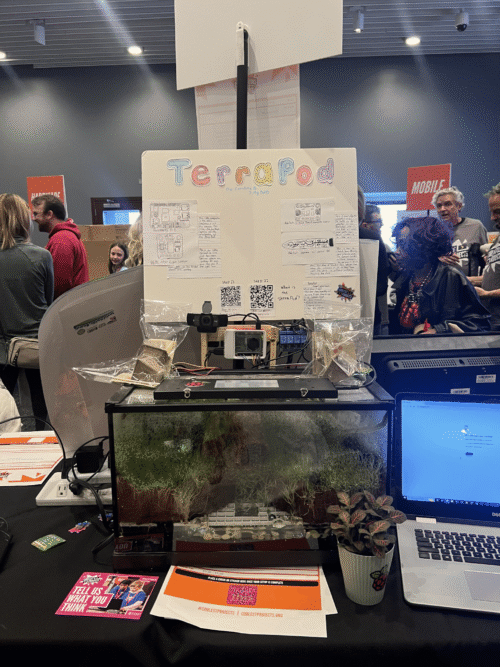
Caroline | Terrapod, AI

Caroline created Terrapod to make plant care more accessible, especially for people who are too busy or physically unable to tend to their plants. It aims to provide a solution that allows plants to be cared for even when their owners can’t, making plant growing easier for everyone. She told us:

“I think our biggest problem was the wire management. We numbered them to be organised into numbered groups, but I’ve seen others do symbols like stars, which I think is really cool!”

A "Terrapod" project, featuring a fish tank full of plants.

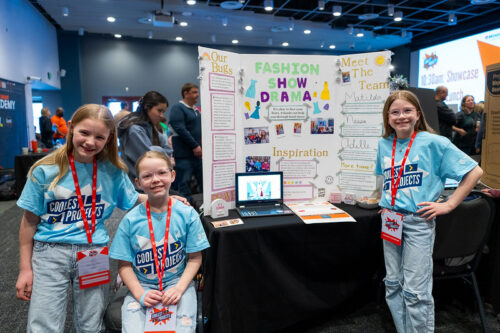
Adelle, Nessa, and Matilda | Fashion Show Drama, Scratch

Adelle, Nessa, and Matilda created a Scratch project that tells the story of two performers, Charlie and Emma. Charlie struggles with stage fright that Emma only discovers just before their performance. With Emma’s support, Charlie overcomes her fear and is able to go on stage.

Nessa shared a challenge the team tackled during their build:

“One challenge was learning how to convert images from a JPEG to a PNG for the sprites to have a dress costume change. We wanted to show a difference between before the show and then preparing to go on stage. We found dress pictures on the internet and then we had to figure out how to make it look like they were actually wearing the dresses so it wasn’t just a copied picture with a white square background. We overcame it by our mentor helping us remove the background in Canva.”

Matilda also told us how the girls found working as a part of a team:

“We each had a part so each of our voices could be heard. We all had a say in what was going on. Nessa was the fashion designer. Adelle was the coder. I was the visionary! It was easier to work on this project in a group than alone.”

Three children standing in front of their project at Coolest Projects event.

Thank you

We’d like to say a big thank you to all the young people who shared their projects, the families and mentors who supported them, and the volunteers and partners who made the event possible.

We would also like to thank Broadcom Foundation and Best Buy Co., Inc. for their continued support of Coolest Projects.

There’s still time to get involved in Coolest Projects 2026

If you would like to take part in Coolest Projects this year, there are still ways to get involved:

  • Young creators anywhere in the world can take part in the Coolest Projects 2026 online showcase. Entries close on 27 May.
  • Young people in several countries can participate in local events taking place around the world over the rest of the year, including Coolest Projects UK in Bradford on 16 May and Coolest Projects Canada in Vancouver on 30 May.

You can find out more at coolestprojects.org.

The post A day of big ideas at Coolest Projects USA Minnesota 2026 appeared first on Raspberry Pi Foundation.
A day with young creators at Coolest Projects Mzansi 2025

Post Syndicated from Tanaka Dhliwayo original https://www.raspberrypi.org/blog/a-day-with-young-creators-at-coolest-projects-mzansi-2025/

Coolest Projects is the world’s leading technology showcase for young people, a space where creativity, curiosity, and problem-solving come together through code. Last November, Coolest Projects returned to South Africa, providing another exciting opportunity to celebrate and amplify the voices of young digital creators across Mzansi, a local name for South Africa.

A student working on their project.

Coolest Projects brings young people together to share what excites them the most about creating with technology, whether that’s making a game, a website, a robot, or a simple Scratch animation. What matters most is not perfection, but participation.

A showcase for young makers

Coolest Projects, an initiative of the Raspberry Pi Foundation, is brought to South Africa by our long-standing partner Coder:LevelUp, giving young people the space to share how they get creative with technology.

I spent the day surrounded by young people explaining their ideas with a mix of excitement, nerves, and confidence — the kind of emotions you get when you build something yourself and someone is finally asking you about it.

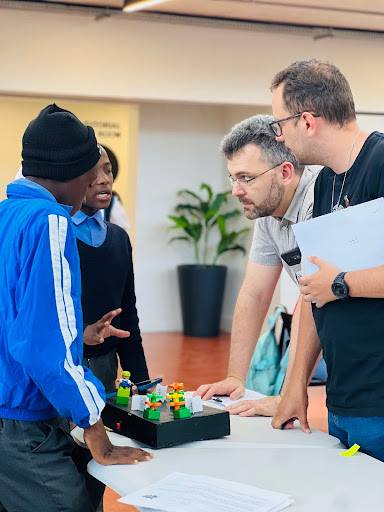
A group of people standing around a table.

The event brought together over 250 young people to share the projects they had been working on. Some had been preparing for months, while others had begun exploring their ideas more recently. All of them arrived ready to explain what they made, how it worked, and what they would do differently next time.

There wasn’t a single kind of project. There was a Scratch animation at one table, a game at the next, and a hardware project across the room. Some projects were polished, others rougher around the edges. But the event isn’t about perfection, it’s about learning and having the courage to show your work.

For a lot of participants, this was the first time they had presented their work to an audience, and you could see their confidence build as they spoke. By the end of the day, many were already talking about what they wanted to build next! From experience, we know that many of these young people will come back to Coolest Projects in the future, with our global impact data showing that over 1 in 10 participants in the Coolest Projects online showcase in 2025 had also taken part in Coolest Projects in 2024.

The coolest projects and the coolest people

One of my favourite things about Coolest Projects is that although you might come for the projects, what stays with you is often the people behind them. Coolest Projects celebrates both what young people build and who they are becoming.

The coolest projects

A project that really stood out to me was created by a group of girls who built a language app that translates words from isiZulu, one of South Africa’s official languages, into French and other languages — an ambitious and thoughtful idea.

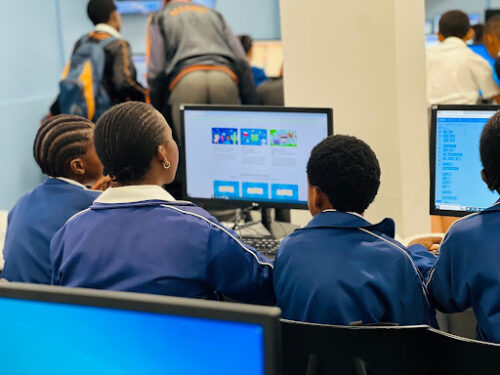
A group of students looking at a computer screen.

What made this project especially meaningful to me was how well it reflected South Africa’s identity as a rainbow nation, with 12 official languages and countless cultures intersecting everyday. Their work wasn’t just technical, it was deeply relevant. It showed how young creators are already thinking about inclusion, communication, and using technology to bridge the gap between people in different parts of the country. Seeing these young girls confidently present such a culturally aware solution was incredibly inspiring.

And the coolest people

A group of boys arrived with a project that, honestly, fell apart on the day. Things didn’t work the way they had planned. But instead of shutting down or panicking, they laughed it off, explained what should have happened, and kept the energy positive. Their confidence, humour, and teamwork were great to see.

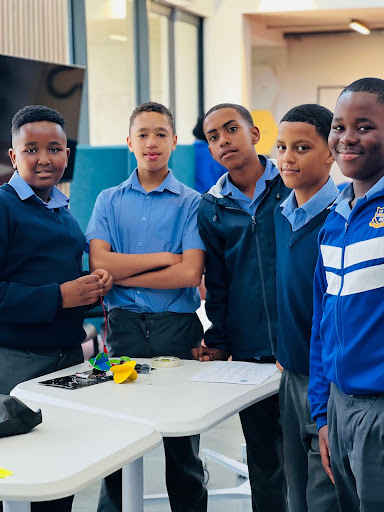
A group of students standing around a table.

They showed that Coolest Projects is not about having everything work perfectly. It’s about showing up, trying something ambitious, and being willing to talk about what went wrong.

Why does Coolest Projects matter?

Coolest Projects goes beyond showcasing technical skills. It helps young people:

  1. Build confidence in presenting ideas
  2. Develop problem-solving and communication skills
  3. See themselves as creators, not just consumers, of technology

For many young creators in South Africa, participating in Coolest Projects is a powerful way to gain recognition and see that their ideas matter and that they belong in the world of technology.

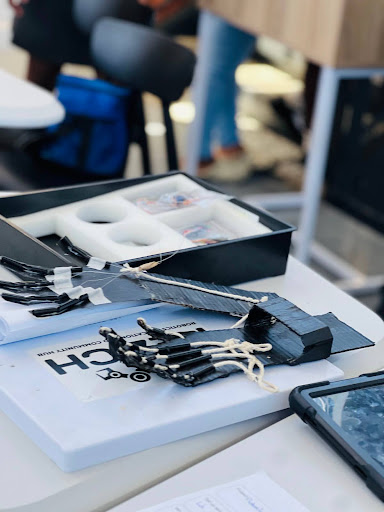
A project on a table.

We look forward to Coolest Projects South Africa returning in 2026 to once again showcase the incredible potential of young tech creators across the country.

Inspired to take part?

The Coolest Projects 2026 global online showcase is now open for entries. Find all the details on how to enter, as well as details of Coolest Projects in-person events you can look forward to throughout 2026, in our recent blog post.

To be the first to hear about events near you, sign up to the Coolest Projects newsletter.

The post A day with young creators at Coolest Projects Mzansi 2025 appeared first on Raspberry Pi Foundation.
Coolest Projects 2026: Opens for entries in January!

Post Syndicated from Helen Gardner original https://www.raspberrypi.org/blog/coolest-projects-2026-opens-for-entries-in-january/

Coolest Projects is our global technology showcase for young people up to age 18. It’s a place where young creators share the brilliant things they’ve made using digital technology — from first-ever Scratch projects and coding for fun experiments to ambitious robotics builds — with a global audience. Everyone who takes part receives certificates and rewards to celebrate their achievements.

What you need to know about Coolest Projects 2026

Coolest Projects is open to any young person, anywhere in the world. Creators can submit their tech projects to our online showcase, explore the global project gallery, and join our special celebration livestream. There are in-person events in some countries for local creators, too (find out more below).

Young learner at Coolest Projects UK

By taking part in Coolest Projects, young people can:

  • Join an international community of digital makers
  • Represent their country on a global stage
  • Receive feedback on their creations
  • Earn certificates to recognise their achievements
  • Celebrate their progress at our livestream event on 24 June 2026

It is completely free to take part in Coolest Projects, and we welcome all kinds of digital technology projects — from first attempts to an ambitious STEM project or advanced build. Projects don’t need to be finished to be submitted. 

Creators can enter a project into one of seven categories: Scratch, Games, Hardware, Web, Mobile Apps, Advanced Programming, and the emergent category of AI.

How Coolest Projects makes a difference

The findings from the Coolest Projects 2025 Impact report offer clear, evidence-based insights into how Coolest Projects builds confidence, creativity, and a sense of belonging for young people around the world. In 2025, almost 12,000 young people from 41 countries took part in Coolest Projects online, a 57% increase on the previous year. This year, we’re excited to welcome even more creators to the Coolest Projects community.

Young learner with her project at Coolest Projects UK

Our annual evaluation shows that Coolest Projects continues to have a powerful impact on young digital creators worldwide. In 2025:

  • 100% of mentors and 72% of young people taking part in the online showcase said their confidence in digital making increased
  • 83% of young people felt inspired to continue learning and participating in computing after taking part
  • 74% of young creators and 100% of mentors said Coolest Projects helped them or their team feel a sense of belonging in computing
  • 80% of surveyed young people said seeing projects from around the world made them feel part of a larger community of makers

Creators told us how proud they felt sharing their work:

“It feels like I’m being noticed!” – Young creator, UK

 “I enjoyed presenting my project and seeing so many creative ideas from others.” – Young creator, India

With many early-stage makers joining for the first time, including 55% of young people at in-person events, Coolest Projects continues to be an accessible entry point into the world of digital creativity.

Young learner at Coolest Projects Ireland

We’re also proud to see growing participation from girls who code, who tell us they value the chance to share their ideas and be inspired by others. At in-person events, girls made up 63% of creators in India, 50% in the US, 39% in Ireland, and 37% in the UK.

Find out more about the incredible creativity and collaboration from mentors and makers worldwide in our 2025 Impact report: rpf.io/cp-impact-2025

How to take part in Coolest Projects

  1. Come up with an idea — or choose something you’ve already made for school or a science fair project. Whether it started as a small classroom task or a personal coding challenge, any tech creation can be part of Coolest Projects. Our projects site offers hundreds of free, step-by-step guides — ideal for beginners, mentors, and anyone looking for engaging STEM activities for kids. The 2025 online gallery is also a great place to find inspiration for your next cool coding project.
  2. Select your category. Our category pages break down each of the seven categories, including our AI category.
  3. Work on the project individually or with friends. Young people can take part individually or in teams of up to five.
  4. Submit it via the Coolest Projects website by 27 May 2026. We encourage creators to take part in both the online showcase and their local in-person event — find the dates below.
  5. See your project showcased in our online gallery.
  6. Join the celebration livestream to discover creations from around the world on 24 June 2026.
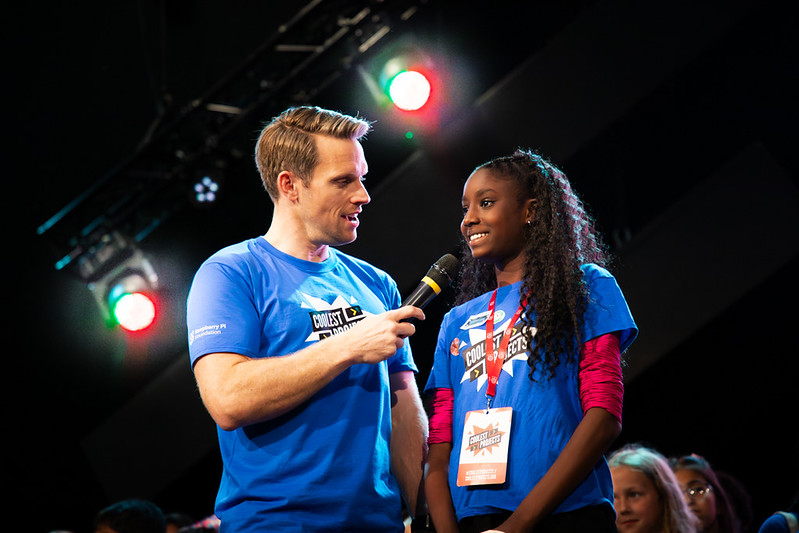
Presenter: Greg Foot interviewing a young learner at Coolest Projects

Group codes for mentors entering multiple projects online

If you’re entering several projects on behalf of your group, you can create a group code to link young people’s projects to your account.

Here’s a quick reminder of how it works:

  • Sign up or log in: Use your Raspberry Pi account or create a new one.
  • Create a group: Add your group details, including name and country.
  • Share your group code: Young people enter the code on their project submission form.
  • Review and submit: View all linked projects in your group dashboard.

There is no limit to the number of young people who can submit through one group code.

If you’d like a full walkthrough, watch our step-by-step group code ‘how-to’ video.

Whether your coders are beginners or experienced digital makers, there are lots of resources to support them. Visit the Coolest Projects guidance page for mentor guides, session plans, and more.

Coolest Projects in-person events in 2026

Alongside the global online showcase, Coolest Projects events will take place in several countries again this year. We encourage creators to take part in both their local in-person event and the global showcase.

Two young learner testing out a project at Coolest Projects UK

Save the date for:

  • Coolest Projects Belgium – 14 March
  • Coolest Projects Japan – 29 March
  • Coolest Projects USA (Minnesota) – 11 April
  • Coolest Projects Ireland – 25 April
  • Coolest Projects USA (Georgia) – 2 May
  • Coolest Projects UK – 16 May
  • Coolest Projects Sudan (held in Egypt) – 12 August
  • Coolest Projects Nigeria – 29 August

More dates coming soon for:

  • Coolest Projects Canada 
  • Coolest Projects India
  • Coolest Projects Indonesia
  • Coolest Projects Malaysia
  • Coolest Projects South Africa
  • Coolest Projects Sri Lanka

Sign up to the Coolest Projects newsletter to be the first to hear about events near you.

We can’t wait to see what your young people create

Whether your young people already have something they’re excited to share or they’re ready to start something new, Coolest Projects is the perfect place to celebrate their creativity, problem solving, and imagination.

We can’t wait to see the incredible projects they bring to Coolest Projects 2026.

The post Coolest Projects 2026: Opens for entries in January! appeared first on Raspberry Pi Foundation.
From learners to leaders: Jayantika and Ruturaj’s journey as Code Club youth mentors

Post Syndicated from Sarah Lygoe original https://www.raspberrypi.org/blog/from-learners-to-leaders-jayantika-and-ruturajs-journey-as-code-club-youth-mentors/

Two remarkable teenagers from Pune in the state of Maharashtra, India — Jayantika (age 16) and Ruturaj (age 14) — have turned curiosity into community impact.

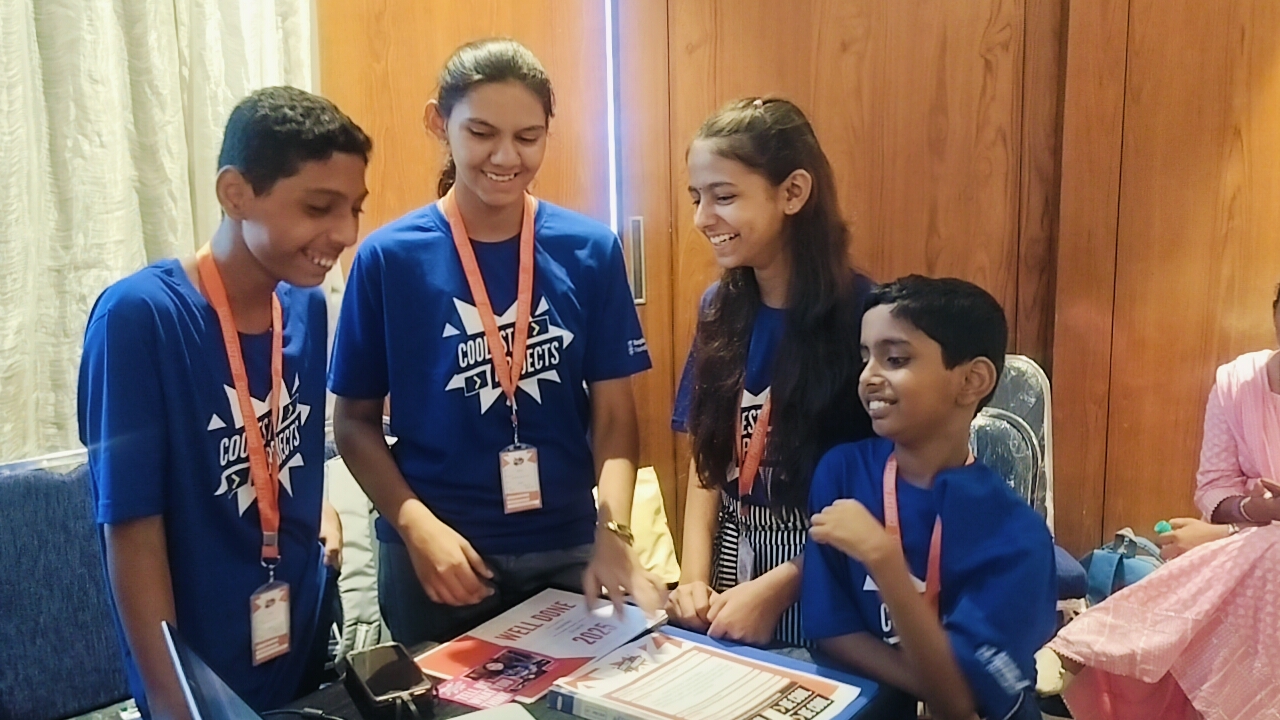
Jayantika (age 16) and Ruturaj (age 14) taking part in Coolest Projects India.
Jayantika, Ruturaj, and their friends at Coolest Projects India 2025.

With support from the Bidkar Foundation and the Raspberry Pi Foundation, they now help run five Code Clubs, reaching over 200 young people in rural areas of Pune. Along the way, they have twice received the Coolest Projects Judges’ Favourite Award: first online in 2023, and again at Coolest Projects India in September 2025. 

How it all began

For Jayantika and Ruturaj, the spark for coding began at home. During the pandemic, when schools were closed and days felt long, their father encouraged them to try something new.

“When we were at home and there was nothing to do,” recalls Jayantika, “my dad introduced us to coding, and from that time till this date we are participating — and yeah, we love it.”

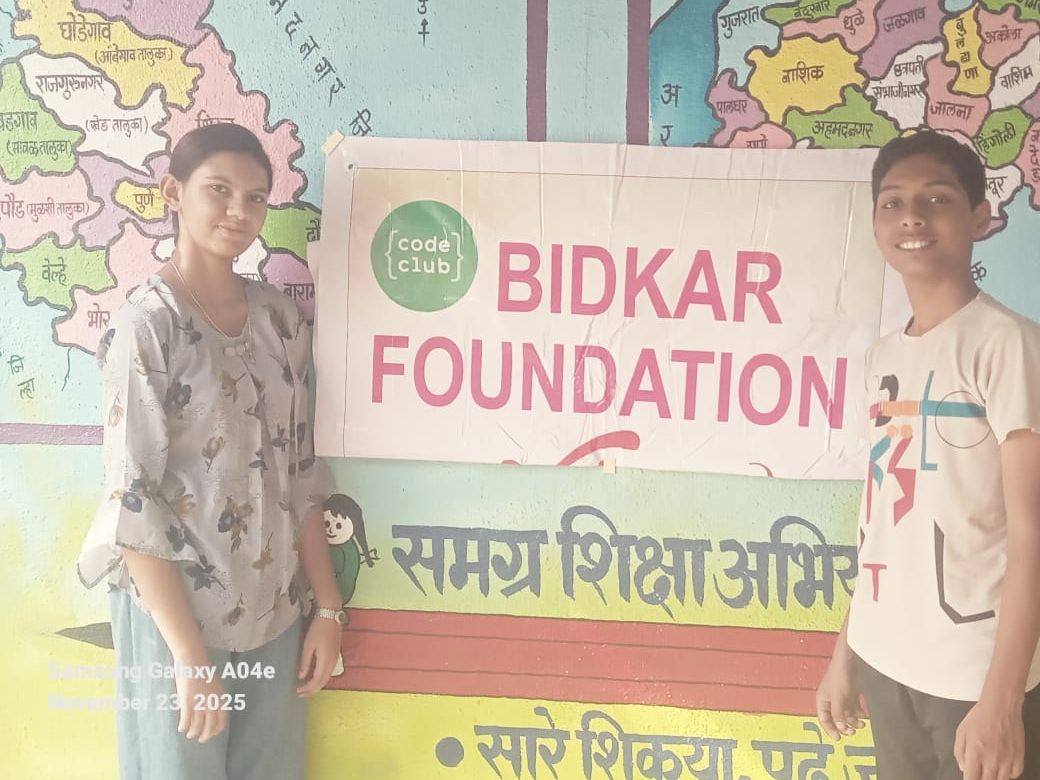
In 2021, they joined their local Code Club, run by the Bidkar Foundation, which provides coding opportunities for young people in rural areas of Pune. That moment opened a door to creativity neither of them expected. Scratch projects soon filled their weekends with problem-solving, and Ruturaj found himself fascinated by how games worked.

“I was too curious how games were made,” he says. “After a while in Code Club, I learned new things and got the answers to my questions.”

As their confidence grew, so did their sense of purpose. They wanted others to experience the same excitement they had discovered. “We thought these things should be shared with others,” says Jayantika. “So that’s why we started a Code Club and began teaching — to spread awareness and knowledge to everyone.”

Reaching out to rural learners

Each weekend, Jayantika and Ruturaj set out for nearby villages, with laptops, lesson plans, and a sense of possibility. Their aim is simple but powerful: to bring coding opportunities to children who might otherwise never encounter them. “Village students must also learn coding and get opportunities to come in front,” explains Jayantika.

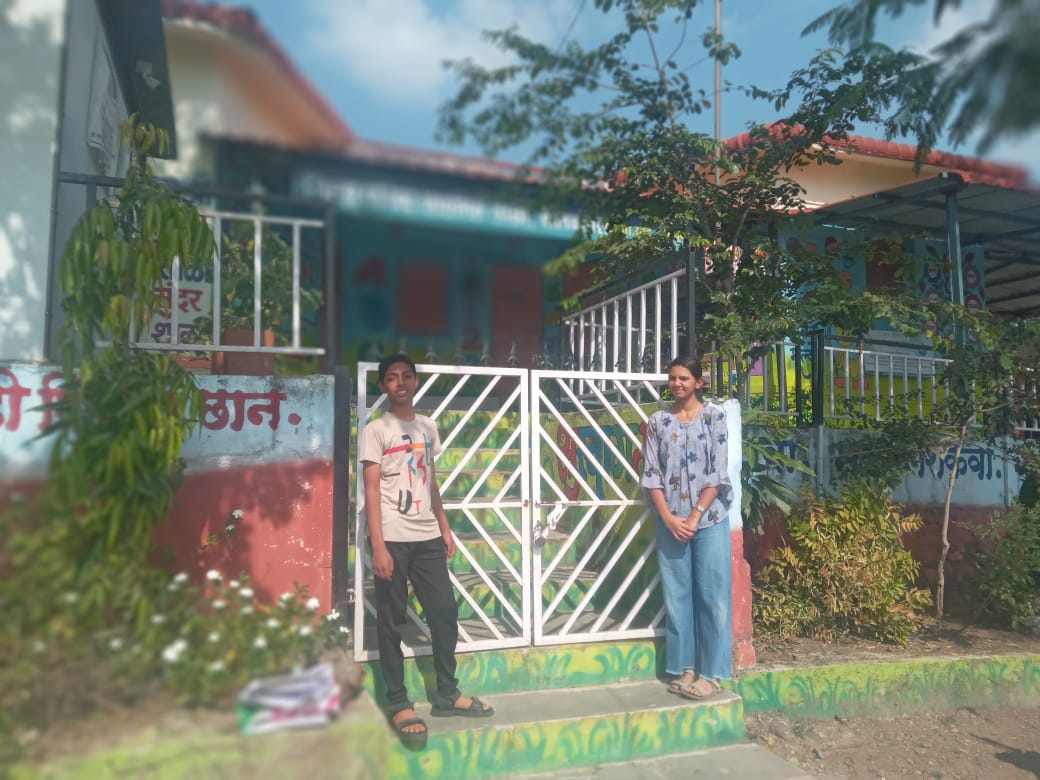
Jayantika (age 16) and Ruturaj (age 14)

What started modestly — “one computer and seven students” — has become a thriving network of clubs that now reaches hundreds of young learners. Their father, Mr Bidkar, has been by their side throughout, watching as their initiative has grown from a small idea to something that’s changing lives. “Now we are 25 computers, 200-plus children,” he says proudly.

Inside their Code Club sessions

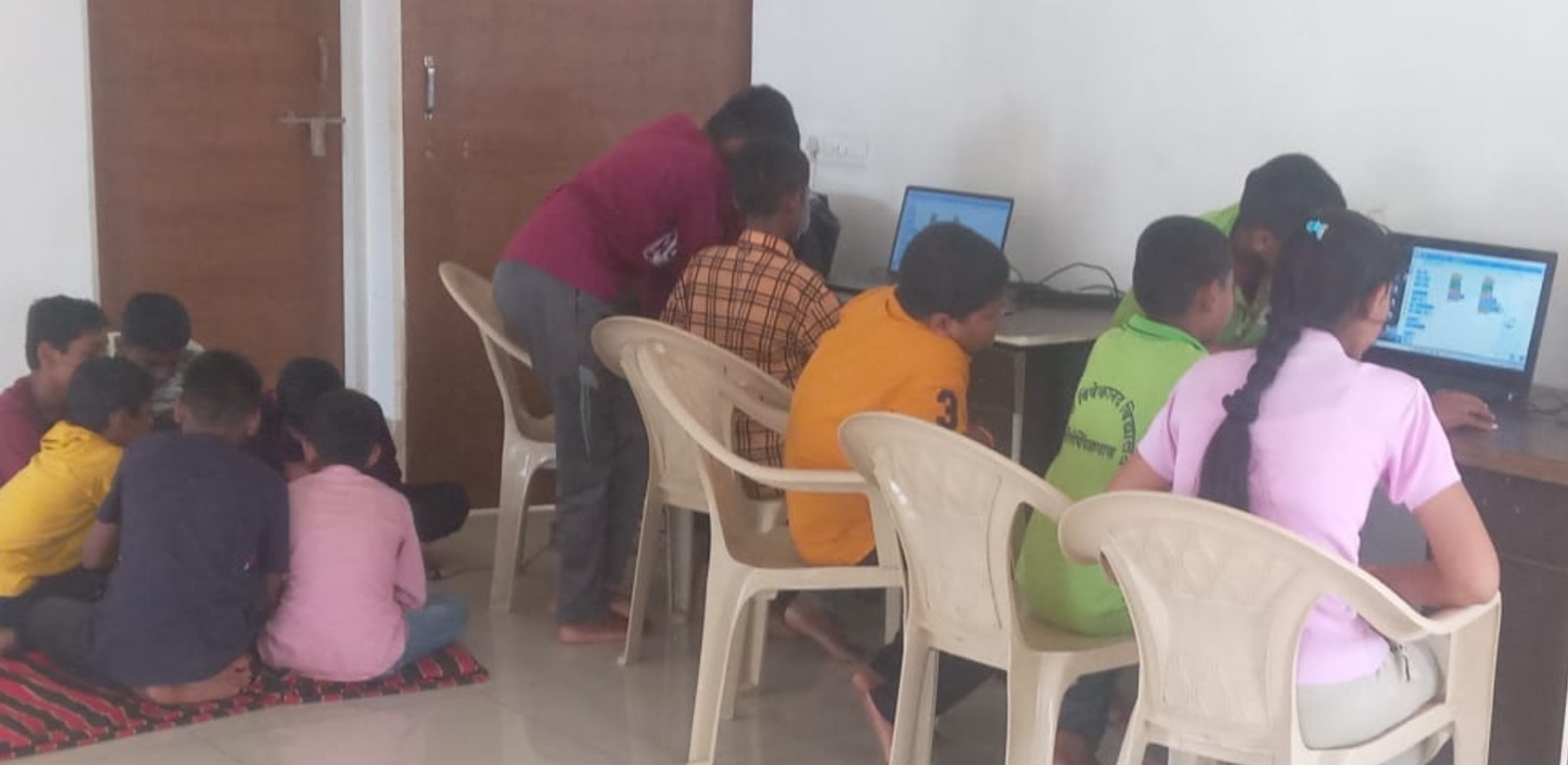
Their Code Club sessions are lively and filled with curiosity. Children crowd around laptops, excited to build their next animation or game. The mentors blend teaching with fun, alternating between theory and practice to keep things engaging.

“At first, we take theory classes — we explain what’s the game,” says Jayantika. “At the end we let them sit on computers.”

Some weeks are spent planning and others creating. “We give them a plan, and then next time they create,” she explains. Younger learners, aged six to ten, start with small projects such as animations or motion-based activities. Older learners tackle bigger challenges in Scratch, building their own games from ideas they’ve brainstormed together.

Jayantika (age 16) and Ruturaj (age 14)

Sessions end with a much-loved tradition: “After the session ends, we give them 15–20 minutes to do whatever they want,” says Ruturaj. “Because they’re very curious.” The pair work in perfect rhythm. “I manage one group and Ruturaj manages another,” says Jayantika. “If any doubt is there, we solve them together.”

Mentoring has given both siblings new confidence and skills. “At first we were only on Scratch, and now we’ve expanded our knowledge,” says Jayantika. “Next, we’re going to start robotics. It is simple and it is creative also and it can connect to Scratch.”

The role of a mentor

Over time, Jayantika and Ruturaj have learned that mentoring is as much about listening as it is about instructing.

“Sometimes their questions are not so obvious,” laughs Jayantika. “Like ‘Why can’t we change the sprite?’ or ‘Why can’t we use another block?’ We can explain to a certain limit, but after that we are speechless!”

These moments, she says, are part of the magic of teaching. They push the mentors to explore new ways of explaining and to see coding from a beginner’s perspective again. 

Watching their students succeed brings the biggest reward. “We feel very happy that the students are listening to us and they’re doing what we wanted — and they’re even adding extras,” says Jayantika. “Most of them tell us they want to create another project; they want more time.”

And for those thinking about becoming mentors, they both agree that empathy is key. “If you want to teach them, you must become a student,” says Ruturaj. 

“First, think at the students’ level… explain in simple language and give more time to experiment,” adds Jayantika.

Looking ahead

Ruturaj dreams of exploring game development and cybersecurity, while Jayantika hopes to move into web and app design. Together, they balance logic and creativity, each complementing the other’s strengths.

“Even though both are coding, we are on different paths,” she smiles.

Bidkar foundation young learners in the classroom

For anyone curious about coding, Ruturaj’s advice is simple: “Do it by yourself. Make projects by yourself, share them, and learn from others.” Jayantika adds: “Coding has no limits. You can create anything you imagine — open your mind, open your creativity.”

Their father, rightly, is proud not just of their achievements but of how they have inspired others to learn. From a single laptop to five thriving Code Clubs, Jayantika and Ruturaj’s journey shows what’s possible when young people lead with passion and purpose. With support from their family, the Bidkar Foundation, and the Raspberry Pi Foundation’s India team, they’re proving that talent truly is everywhere — opportunity just needs a spark.

Thank you, Jayantika and Ruturaj, for inspiring young people across India and around the world.

The post From learners to leaders: Jayantika and Ruturaj’s journey as Code Club youth mentors appeared first on Raspberry Pi Foundation.