Tag Archives: STEM

Designing for every learner in every classroom

Post Syndicated from Rachel Arthur original https://www.raspberrypi.org/blog/designing-for-every-learner-in-every-classroom/

One of the things I love most about my role as Chief Learning Officer at the Raspberry Pi Foundation is hearing from teachers around the world. A teacher in Kenya told me how their students debugged their first programming projects on a shared laptop. In Scotland, another explained how our resources gave them the confidence to teach computing for the very first time. These stories remind me daily why our work matters: every young person, no matter where they live, should have the chance to explore the power of computing.

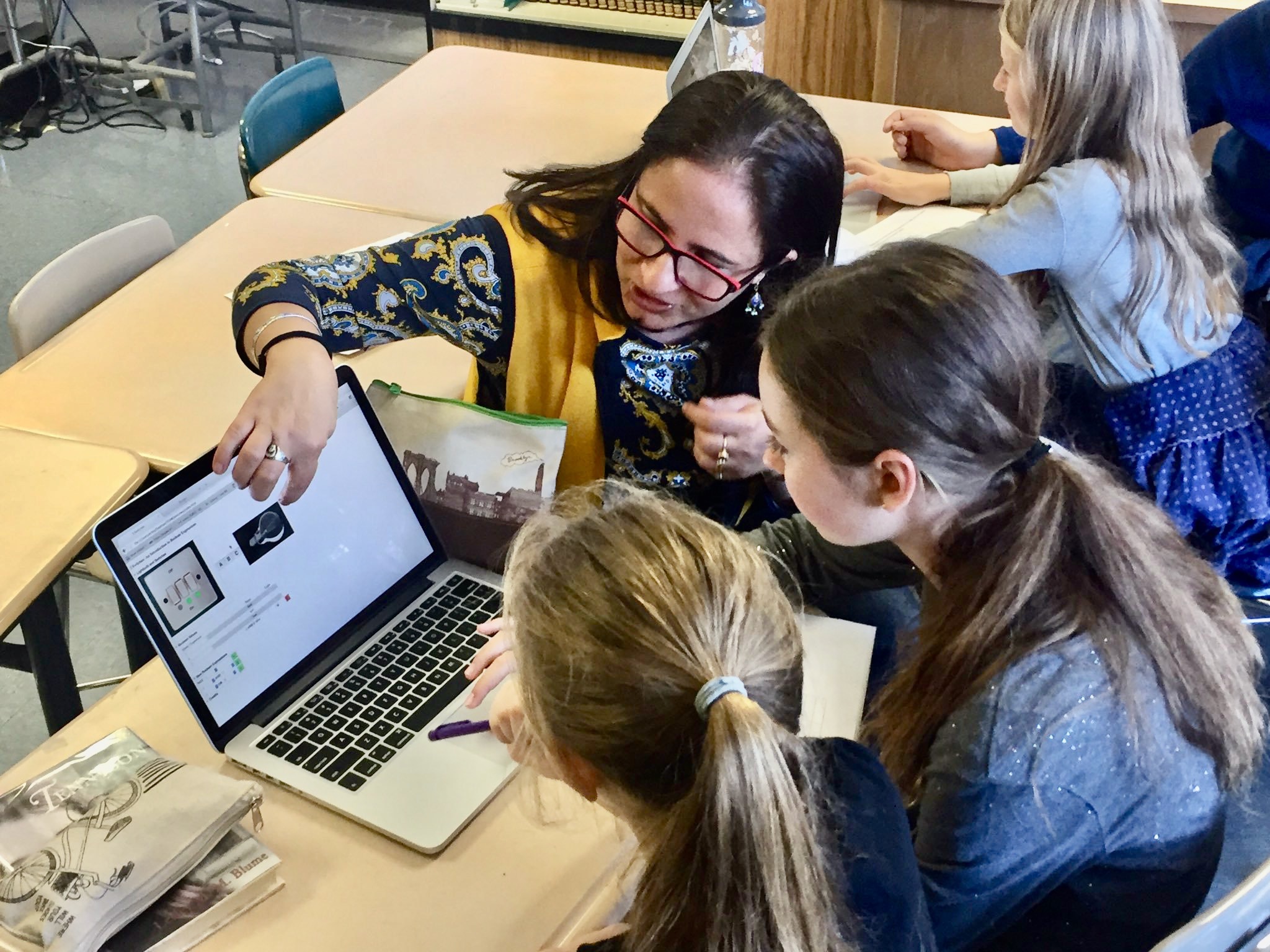
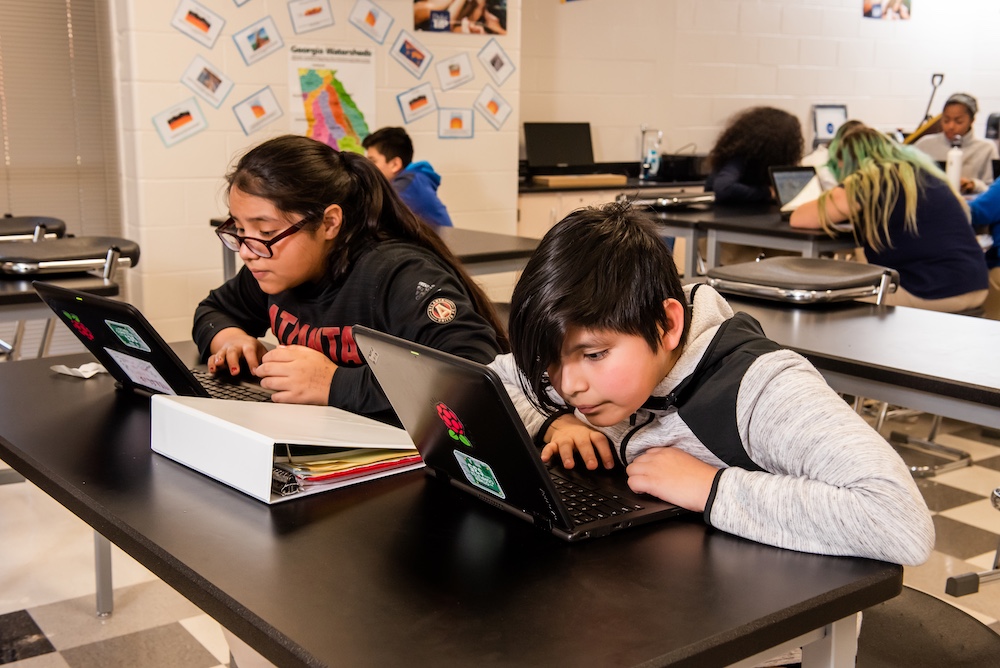
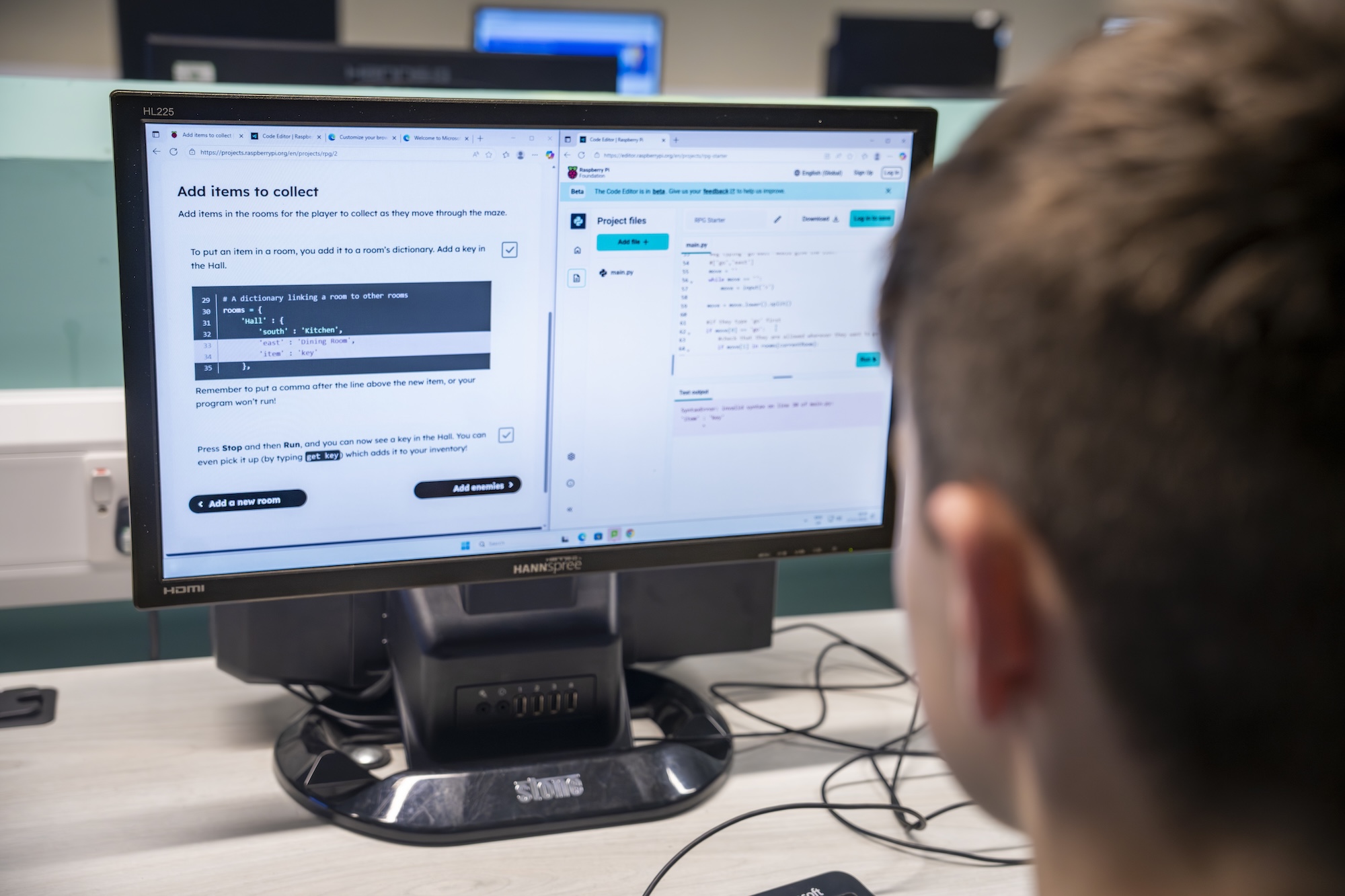
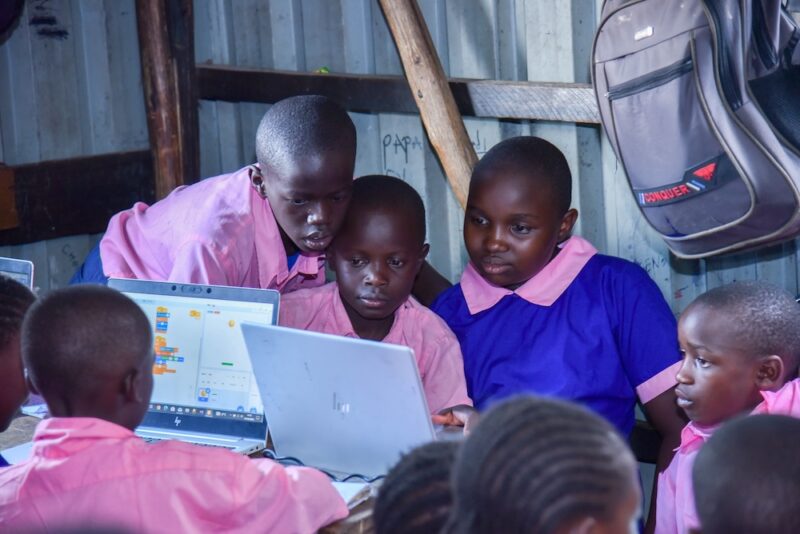
Young people use laptops to do their coding tasks.

But creating resources that work in such different contexts is not easy. How do we design materials that work in a wide range of learning environments, from a bustling city classroom to a rural school where internet access can vary? How do we make sure that every learner sees themselves reflected in the examples we choose?

That’s where our teaching and learning design principles come in.

What makes our approach different

Over the past decade, we’ve learned a huge amount about what teachers and learners need from us. We’ve made mistakes, we’ve listened, and we’ve refined our practice again and again. The result is a set of design principles that guide the creation of everything we make, from full curricula to one-off projects.

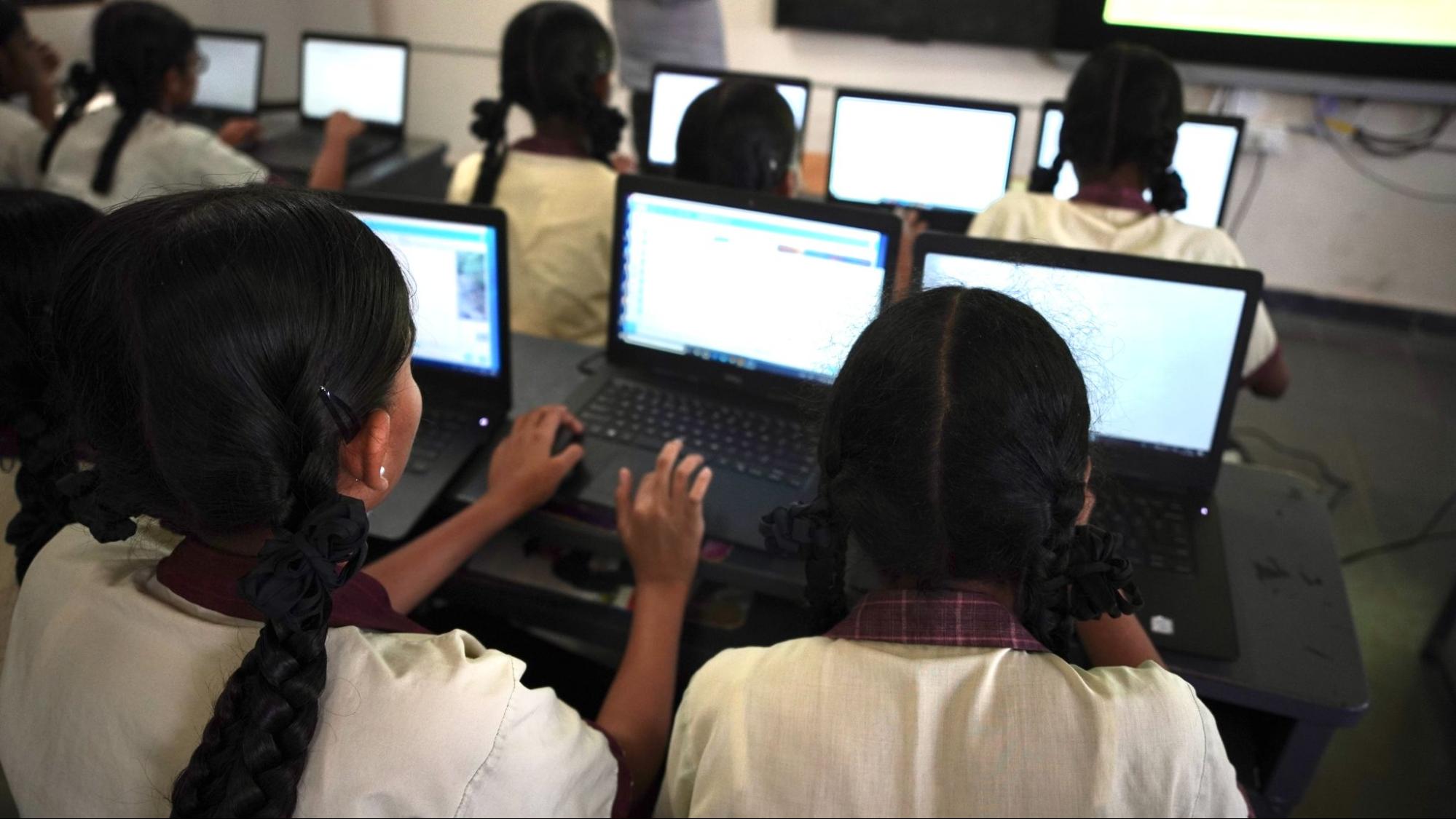
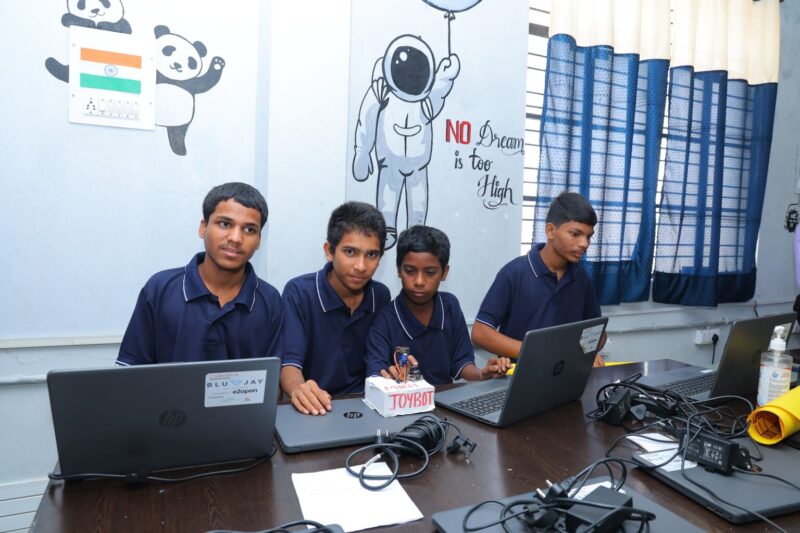
Four students at laptops in a school in India.

These principles are practical and based on real classroom experience. They’re our way of making sure our resources are reliable, inspiring, and flexible, wherever and however teachers use them.

Here’s what that looks like in action:

  • High quality – You can trust our resources to be accurate and classroom-ready. We put every piece of content through rigorous checks because we understand how busy you are.
  • Research-informed – Our choices are grounded in evidence, not guesswork. We blend academic studies with insight from teachers like you and our own evaluations to create approaches that genuinely work.
  • Consistent – We design our materials to fit together, so learners can build skills step by step, without confusion or contradiction along the way.
  • Inclusive by design – We think carefully about accessibility, representation, and language right from the start. When young people see themselves reflected in computing, they see it as a future they can be a part of.
  • Adaptable – No two classrooms are the same. By making our resources editable and flexible, we give you the freedom to shape them for your learners.

Why share these design principles now?

For us, being transparent about our approach is about trust. Teachers make daily decisions about which resources to use, often with limited preparation time. By showing you the principles behind our work, we want to give you the confidence that our content is not only free and adaptable, but also designed with care, expertise, and your learners at the heart.

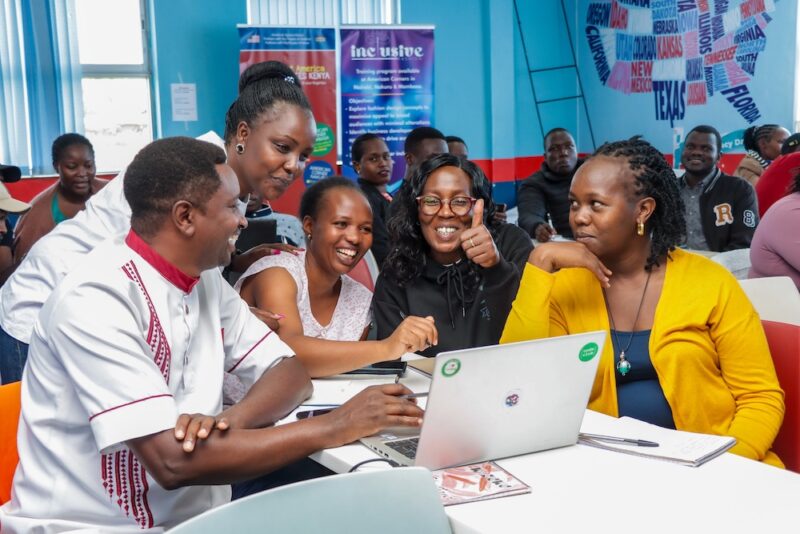
Educators participate in a teacher training in Kenya.

Looking ahead

The world of computing education is moving fast, from new programming software, to artificial intelligence tools. Our design principles give us a strong foundation to keep innovating while staying true to our mission of enabling young people to realise their full potential through the power of computing and digital technologies.

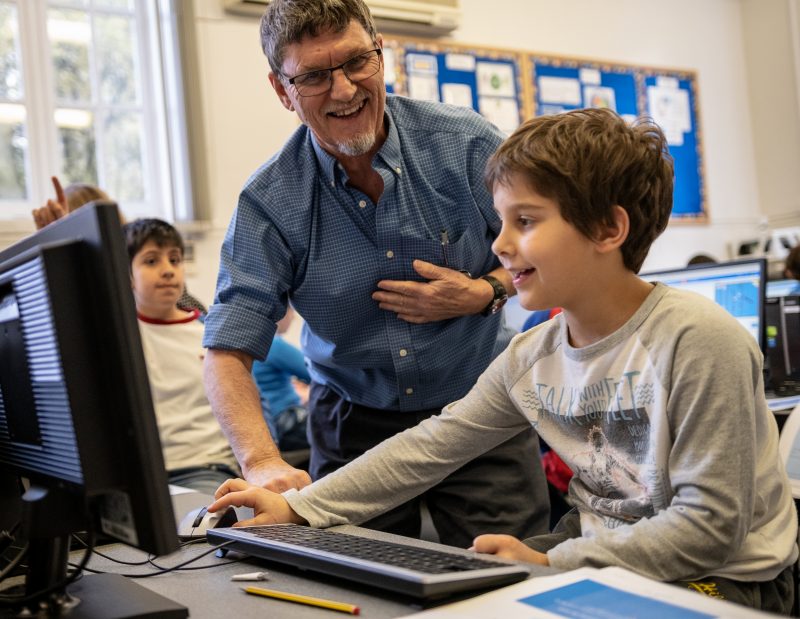
A boy and teacher in a computing class

And we’d love to hear from you! How do these principles resonate with your teaching? What helps you most in the classroom? Your feedback is what keeps making our work better.

The post Designing for every learner in every classroom appeared first on Raspberry Pi Foundation.
Celebrating the community: Prabhath

Post Syndicated from Sophie Ashford original https://www.raspberrypi.org/blog/celebrating-the-community-prabhath/

We love hearing from members of the community and sharing the stories of amazing young people, volunteers, and educators who are using their passion for technology to create positive change in the world around them.

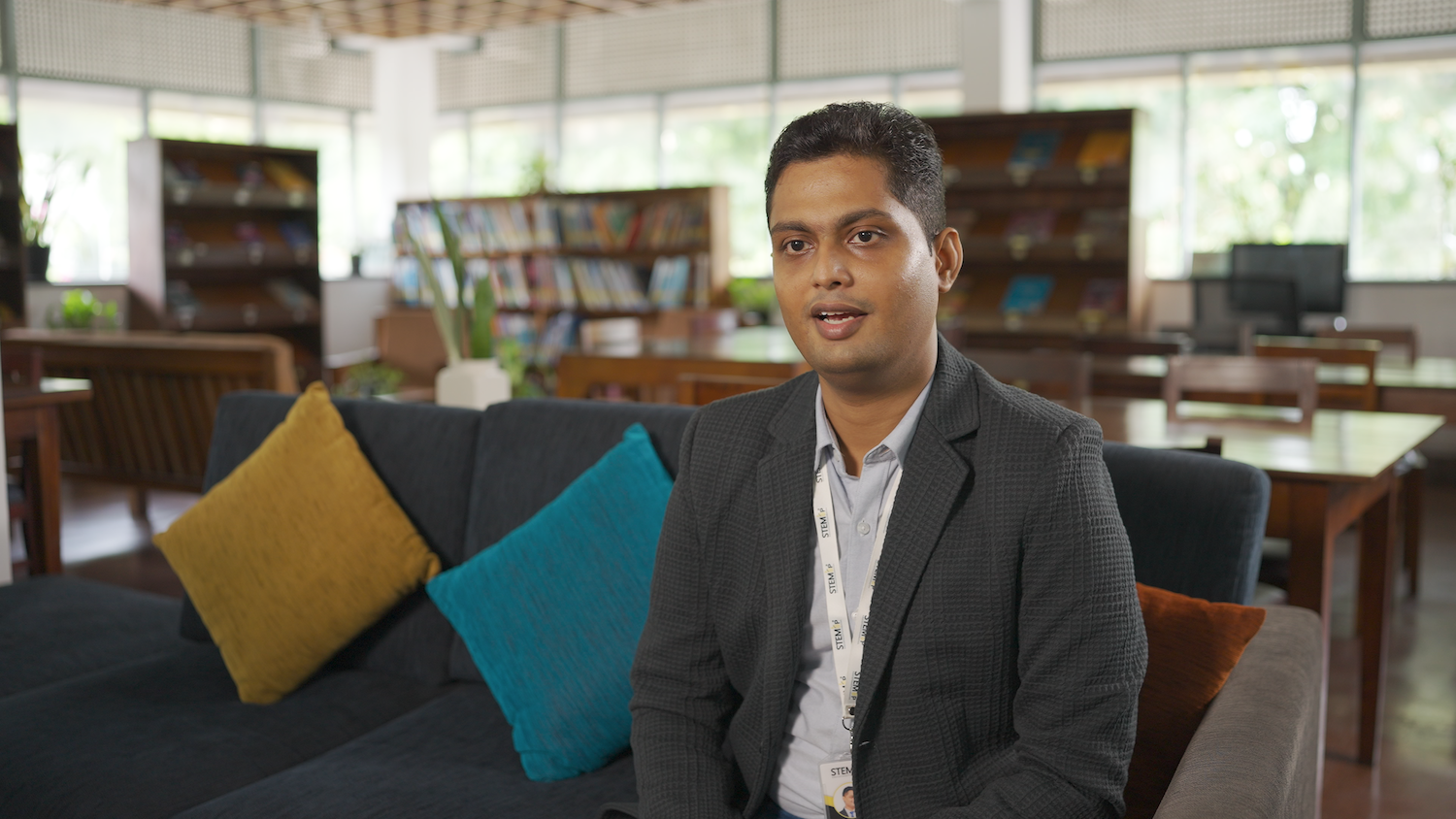
An educator sits in a library.

Prabhath, the founder of the STEMUP Educational Foundation, began his journey into technology at an early age, influenced by his cousin, Harindra.

“He’s the one who opened up my eyes. Even though I didn’t have a laptop, he had a computer, and I used to go to their house and practise with it. That was the turning point in my life.”

This early exposure to technology, combined with support from his parents to leave his rural home in search of further education, set Prabhath on a path to address a crucial issue in Sri Lanka’s education system: the gap in opportunities for students, especially in STEM education. 

“There was a gap between the kids who are studying in Sri Lanka versus the kids in other developed markets. We tried our best to see how we can bridge this gap with our own capacity, with our own strengths.” 

Closing the gap through STEMUP

Recognising the need to close this gap in opportunities, Prabhath, along with four friends who worked with him in his day job as a Partner Technology Strategist, founded the STEMUP Educational Foundation in 2016.  STEMUP’s mission is straightforward but ambitious — it seeks to provide Sri Lankan students with equal access to STEM education, with a particular focus on those from underserved communities.

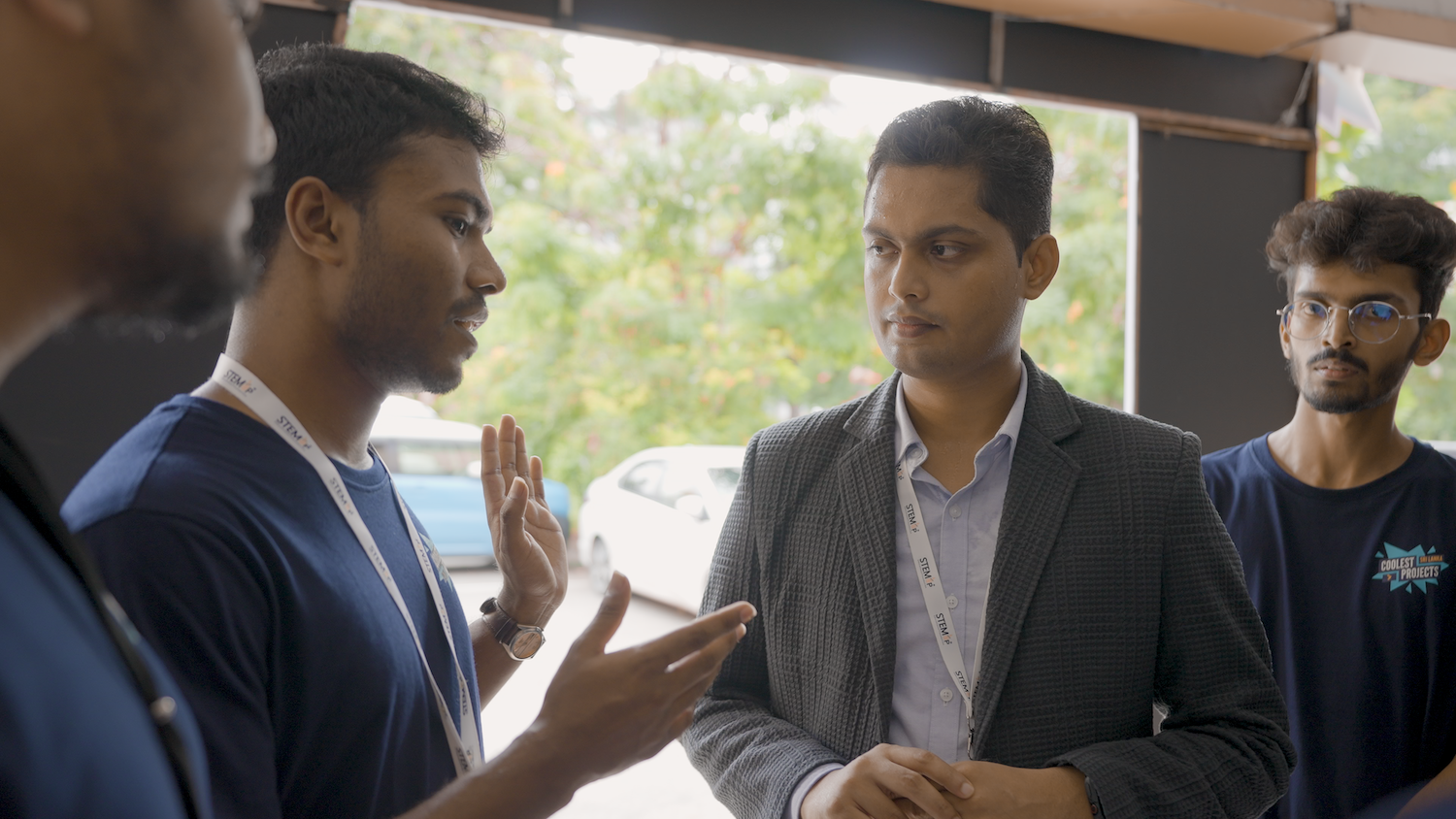
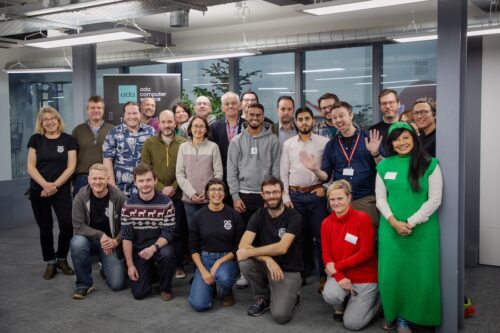
A group of people stands together, engaged in a lively discussion.

To help close the gap, Prabhath and his team sought to establish coding clubs for students across the country. Noting the lack of infrastructure and access to resources in many parts of Sri Lanka, they partnered with Code Club at the Raspberry Pi Foundation to get things moving. 

Their initiative started small with a Code Club in the Colombo Public Library, but things quickly gained traction. 

What began with just a handful of friends has now grown into a movement involving over 1,500 volunteers who are all working to provide free education in coding and emerging technologies to students who otherwise wouldn’t have access.

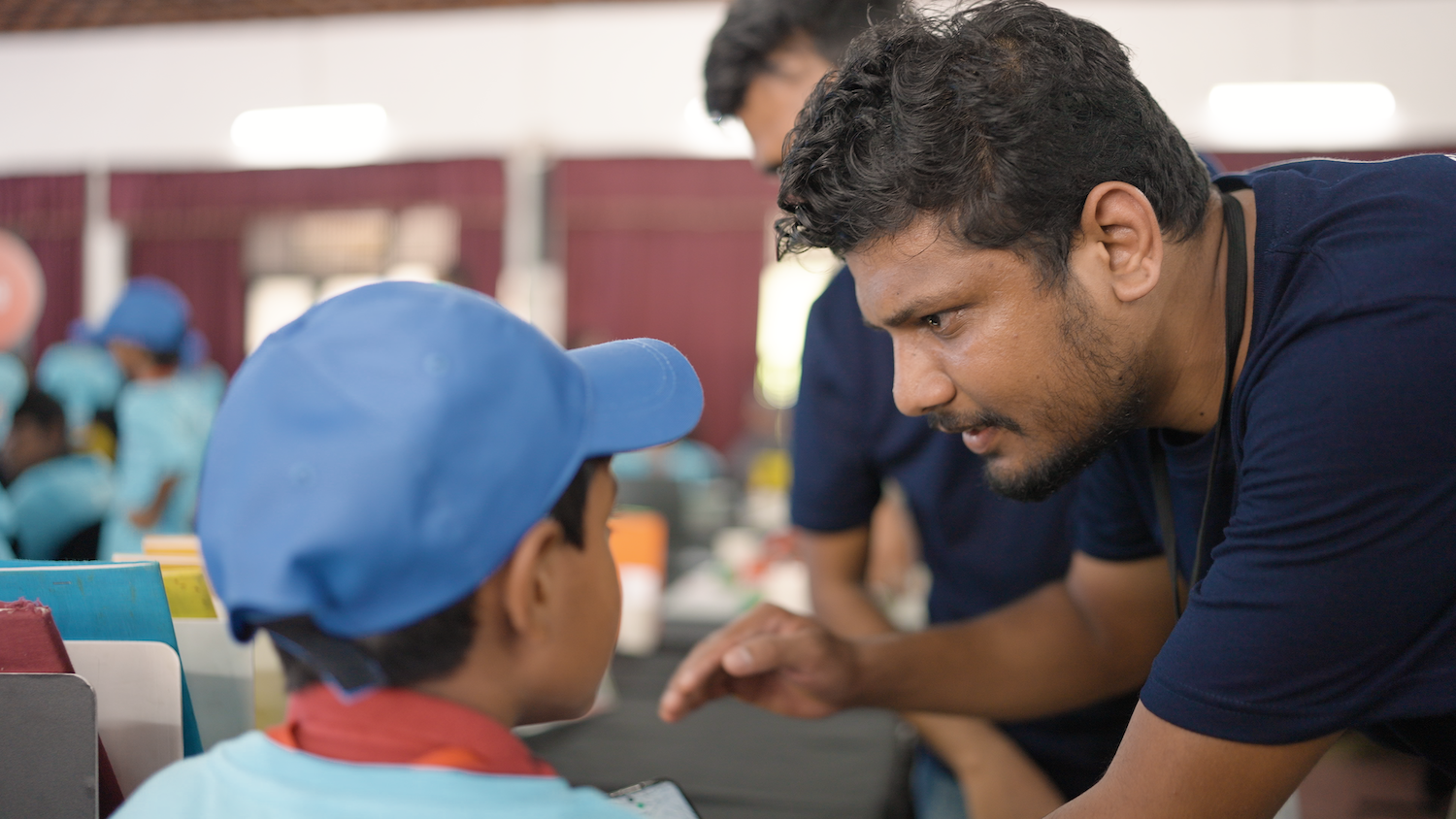
An educator helps a young person at a Code Club.

A key reason for STEMUP’s reach has been the mobilisation of university students to serve as mentors at the Code Clubs. Prabhath believes this partnership has not only helped the success of Code Club Sri Lanka, but also given the university students themselves a chance to grow, granting them opportunities to develop the life skills needed to thrive in the workforce. 

“The main challenge we see here today, when it comes to graduate students, is that they have the technology skills, but they don’t have soft skills. They don’t know how to do a presentation, how to manage a project from A to Z, right? By being a volunteer, that particular student can gain 360-degree knowledge.” 

Helping rural communities

STEMUP’s impact stretches beyond cities and into rural areas, where young people often have even fewer opportunities to engage with technology. The wish to address this imbalance  is a big motivator for the student mentors.

“When we go to rural areas, the kids don’t have much exposure to tech. They don’t know about the latest technologies. What are the new technologies for that development? And what subjects can they  study for the future job market? So I think I can help them. So I actually want to teach someone what I know.” – Kasun, Student and Code Club mentor

This lack of access to opportunities is precisely what STEMUP aims to change, giving students a platform to explore, innovate, and connect with the wider world.

Coolest Projects Sri Lanka

STEMUP recently held the first Coolest Projects Sri Lanka, a showcase for the creations of young learners. Prabhath first encountered Coolest Projects while attending the Raspberry Pi Foundation Asia Partner summit in Malaysia. 

“That was my first experience with the Coolest Projects,” says Prabhath, “and when I came back, I shared the idea with our board and fellow volunteers. They were all keen to bring it to Sri Lanka.” 

For Prabhath, the hope is that events like these will open students’ eyes to new possibilities. The first event certainly lived up to his hope. There was a lot of excitement, especially in rural areas, with multiple schools banding together and hiring buses to attend the event. 

“That kind of energy… because they do not have these opportunities to showcase what they have built, connect with like minded people, and connect with the industry.”

Building a better future

Looking ahead, Prabhath sees STEMUP’s work as a vital part of shaping the future of education in Sri Lanka. By bringing technology to public libraries, engaging university students as mentors, and giving kids hands-on experience with coding and emerging technologies, STEMUP is empowering the next generation to thrive in a digital world. 

“These programmes are really helpful for kids to win the future, be better citizens, and bring this country forward.”

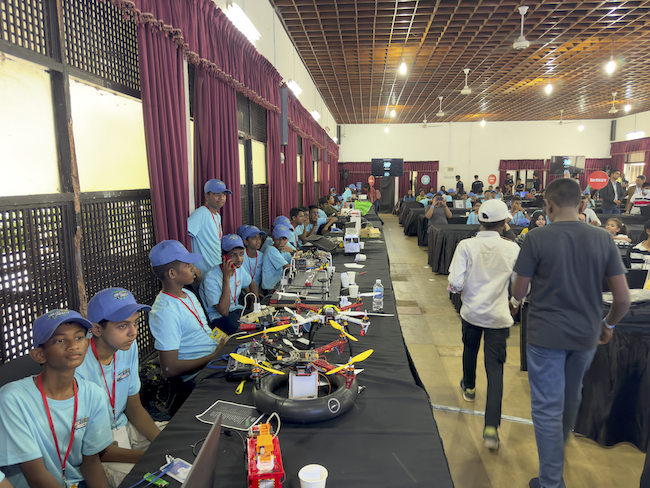
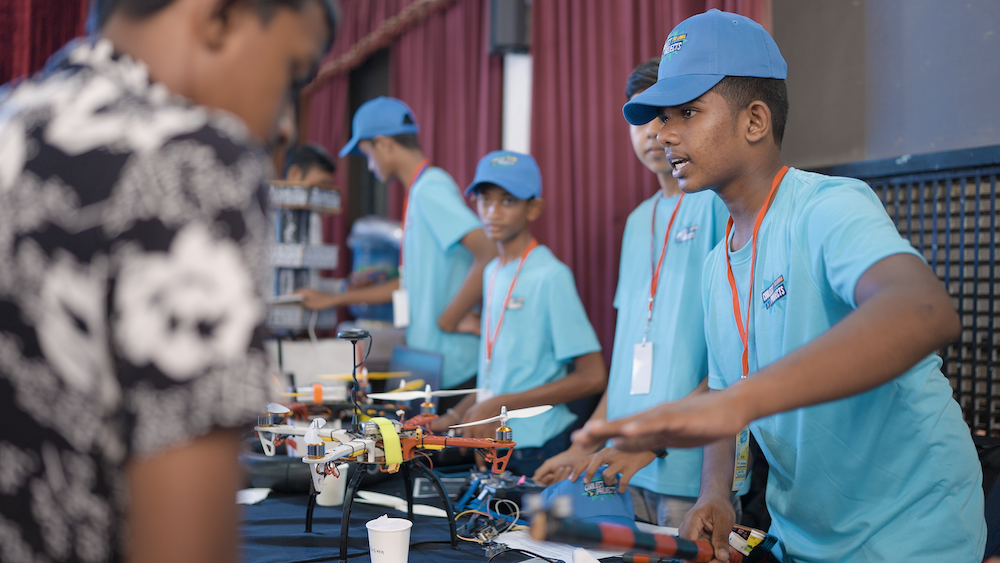
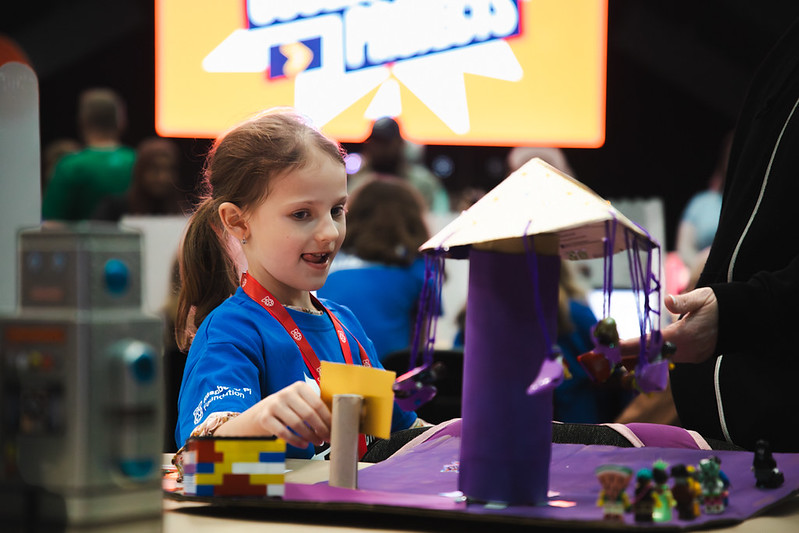
Young people showcase their tech creations at Coolest Projects.

STEMUP is not just bridging a gap — it’s building a brighter, more equitable future for all students in Sri Lanka. We can’t wait to see what they achieve next!

Inspire the next generation of young coders

To find out how you and young creators you know can get involved in Coolest Projects, visit coolestprojects.org. If the young people in your community are just starting out on their computing journey, visit our projects site for free, fun beginner coding projects.

For more information to help you set up a Code Club in your community, visit codeclub.org.

Help us celebrate Prabhath and his inspiring journey with STEMUP by sharing this story on X, LinkedIn, and Facebook.

The post Celebrating the community: Prabhath appeared first on Raspberry Pi Foundation.
Celebrating the community: Isabel

Post Syndicated from Sophie Ashford original https://www.raspberrypi.org/blog/celebrating-the-community-isabel/

One of our favourite things is sharing the stories of amazing young people, volunteers, and educators who are using their passion for technology to create positive change in the world around them.

Recently, we had the pleasure of speaking with Isabel, a computer science teacher at Barton Peveril Sixth Form College in Eastleigh, England. She told us her fascinating journey from industry to education, along with how she is helping to make the tech space inviting to all.

From industry to the classroom: Isabel’s journey to encourage diversity in tech

Isabel’s path to working in the tech sector started with her early exposure to engineering thanks to her father’s career in telecoms.

“I find this is true for a lot of female engineers my age: you will find that their dad or their uncle was an engineer. I remember that when I made the decision to study engineering, my teachers asked me if I was sure that it was something I wanted to do.”

Isabel pursued a degree in engineering because she loved the technical aspects, and during her studies she found a passion for programming. She went to work as a software engineer in Hampshire, contributing to the development of 3G mobile phone technology.

Despite enjoying her career in tech, Isabel felt a strong pull towards teaching due to her long-standing involvement with youth groups and a desire to give back to the community.

“While I was at university in London, I took part in a scheme where we could go into local primary schools and help with their science teaching. At the time, I just thought this was my way of giving back, I hadn’t really thought of it as a career. But actually, after a while, I thought ‘I’m enjoying this programming, but I really liked helping the young kids as well’.”

The transition wasn’t easy, as Computer Science was not widely taught in schools at the time, but Isabel persevered, teaching IT and Media to her classes as well.

Once Isabel settled into her teaching role, she began thinking about how she could tackle a problem she noticed in the STEM field.

Championing diversity in tech

Having experienced first-hand what it was like to be the only woman in STEM spaces, Isabel’s commitment to diversity in technology is at the core of her teaching philosophy. She works hard to create an inclusive environment and a diversity of opportunities in her classroom, making sure girls feel encouraged to pursue careers in tech through exploring various enrichment activities.

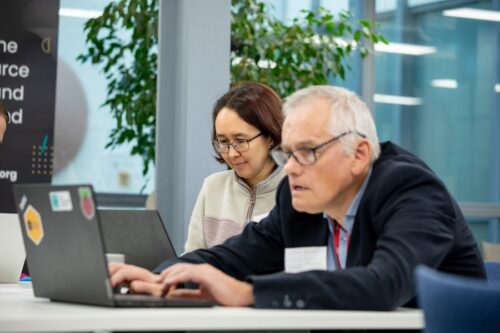
Two educators at a desk using their computers.

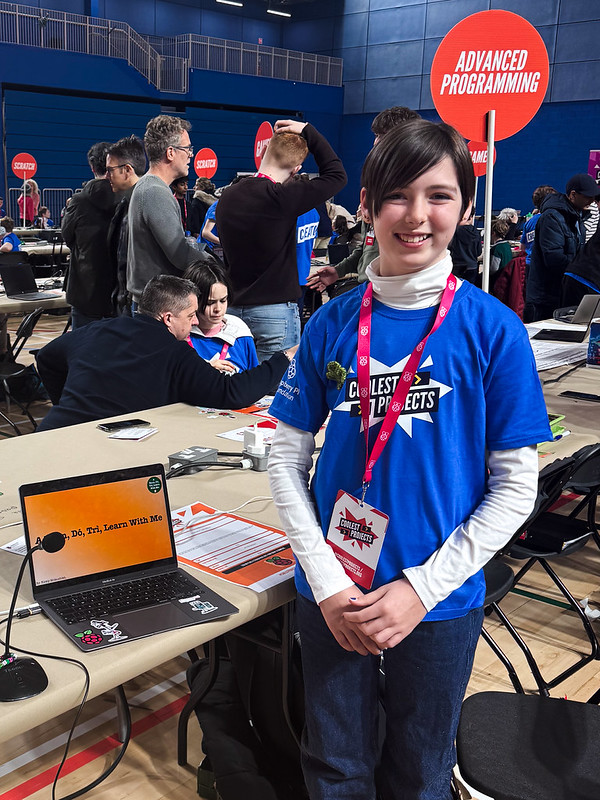
Isabel focuses on enrichment activities that bridge the gap between academic learning and real-world application. She runs various projects and competitions, ensuring a balanced representation of girls in these initiatives, and gives her students the opportunity to participate in programs like the Industrial Cadets, Student Robotics, and Coolest Projects

Isabel told us that she feels these opportunities provide essential soft skills that are crucial for success in any career.

“The A level environment is so academic; it is heavily focused on working on your own on very abstract topics. Having worked in industry and knowing the need to collaborate, I found that really hard. So I’ve always made sure to do lots of projects with my students where we actually work with real engineers, do real-world projects. I believe strongly in teaching soft skills like team working, project management, and time management.”

Harnessing trusted resources

A key resource in Isabel’s teaching toolkit is the Ada Computer Science platform. She values its reliability and the timely updates to the topics, which are crucial in a rapidly evolving subject like Computer Science.

She said she encourages both her students and fellow teachers, especially those who have retrained in Computer Science, to use the platform as a resource. 

“Ada Computer Science is amazing. We know we can rely on saying to the students ‘look on Ada, the information will be correct’ because I trust the people creating the resources. And we even found ourselves as teachers double-checking things on there. We struggle to get Computer science teachers, so actually only two of us are Computer Science teachers, and the other three are Maths teachers we have trained up. To be able to say ‘if you are not sure about something, look on Ada’ is a really nice thing to have.”

A large group of educators at a workshop.

The ongoing challenge and hope for the future

Despite her efforts, Isabel acknowledges that progress in getting more girls to pursue tech careers is slow. Many girls still view tech as an uninviting space and feel like they don’t belong when they find themselves as one of a few girls — if not the only one — in a class. But Isabel remains hopeful that continuous exposure and positive experiences can change these perceptions.

“I talk to students who are often the only girl in the class and they find that really hard. So, if at GCSE they are the only girl in the class, they won’t do [the subject] at A level. So, if we leave it until A level, it is almost too late. Because of this, I try as much as I can to get as many girls as possible onto my engineering enrichment projects to show them as many opportunities in engineering as possible early on.”

Her work with organisations like the UK Electronics Skills Foundation reflects her commitment to raising awareness about careers in electronics and engineering. Through her outreach and enrichment projects, Isabel educates younger students about the opportunities in these fields, hoping to inspire more girls to consider them as viable career paths.

Looking ahead

As new technology continues to be built, Isabel recognises the challenges in keeping up with rapid changes, especially with fields like artificial intelligence (AI). She stays updated through continuous learning and collaborating with her peers, and encourages her students to be adaptable and open to new developments. “The world of AI is both exciting and daunting,” she admits. “We need to prepare our students for a future that we can hardly predict.”

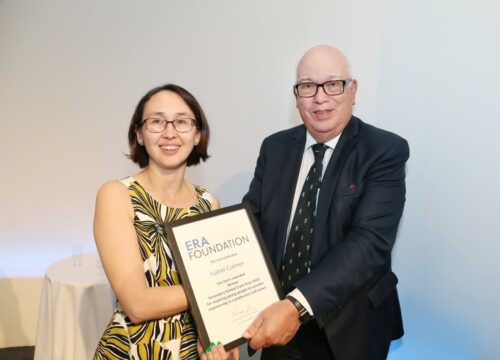
Isabel’s dedication to teaching, her advocacy for diversity, and her efforts to provide real-world learning opportunities make her an inspiring educator. Her commitment was recognised by the Era Foundation in 2023: Isabel was named as one of their David Clark Prize recipients. The award recognises those who “have gone above and beyond the curriculum to inspire students and showcase real-world engineering in the classroom”.

A woman receives a certificate of recognition.

Isabel not only imparts technical knowledge — she inspires her students to believe in their potential, encouraging a new generation of diverse tech professionals. 

If Isabel’s story has inspired you to encourage the next generation of young tech creators, check out the free teaching and training resources we provide to support your journey.

If you are working in Computer Science teaching for learners age 14 and up, take a look at how Ada Computer Science will support you. 

The post Celebrating the community: Isabel appeared first on Raspberry Pi Foundation.
Tim Peake joins us as we get ready to launch special Raspberry Pi computers to space

Post Syndicated from Katie Gouskos original https://www.raspberrypi.org/blog/tim-peake-parents-stem-astro-pi-raspberry-pi-computers-space-launch/

We’re feeling nostalgic because six years ago, two special Raspberry Pi computers named Ed and Izzy were travelling to the International Space Station (ISS) from Cape Canaveral, Florida, USA. These two Astro Pi units joined British ESA astronaut Tim Peake as part of his six-month Principia space mission. Tim and Astro Pis Ed and Izzy helped hundreds of young people run their own computer programs in space as part of the first Astro Pi Challenge.

We are also feeling excited, because Tim and our Head of Youth Partnerships, Olympia Brown, are talking to British TV and radio shows today about all things space and Astro Pi, including the exciting new developments and how families can get involved! You might catch Tim on your favourite channel.

Tim Peake being interviewed about the Astro Pi Challenge and how parents getting their children involved will benefit the whole family.

Tim Peake has been our Astro Pi champion from the start

Tim says: “I had the privilege to take the first Astro Pi computers to the International Space Station in 2015. Since then, more than 50,000 children have run experiments and sent messages into orbit. The Astro Pi Challenge is a great activity for children and their parents to discover more about coding and to use digital tools to be creative.”

During his space mission, Tim Peake deployed Astro Pi units Ed and Izzy in a number of different locations on board the ISS. He was responsible for loading the Astro Pi participants’ programs onto Ed and Izzy, collecting the data they generated, and making sure it was downlinked back to Earth for the participants.

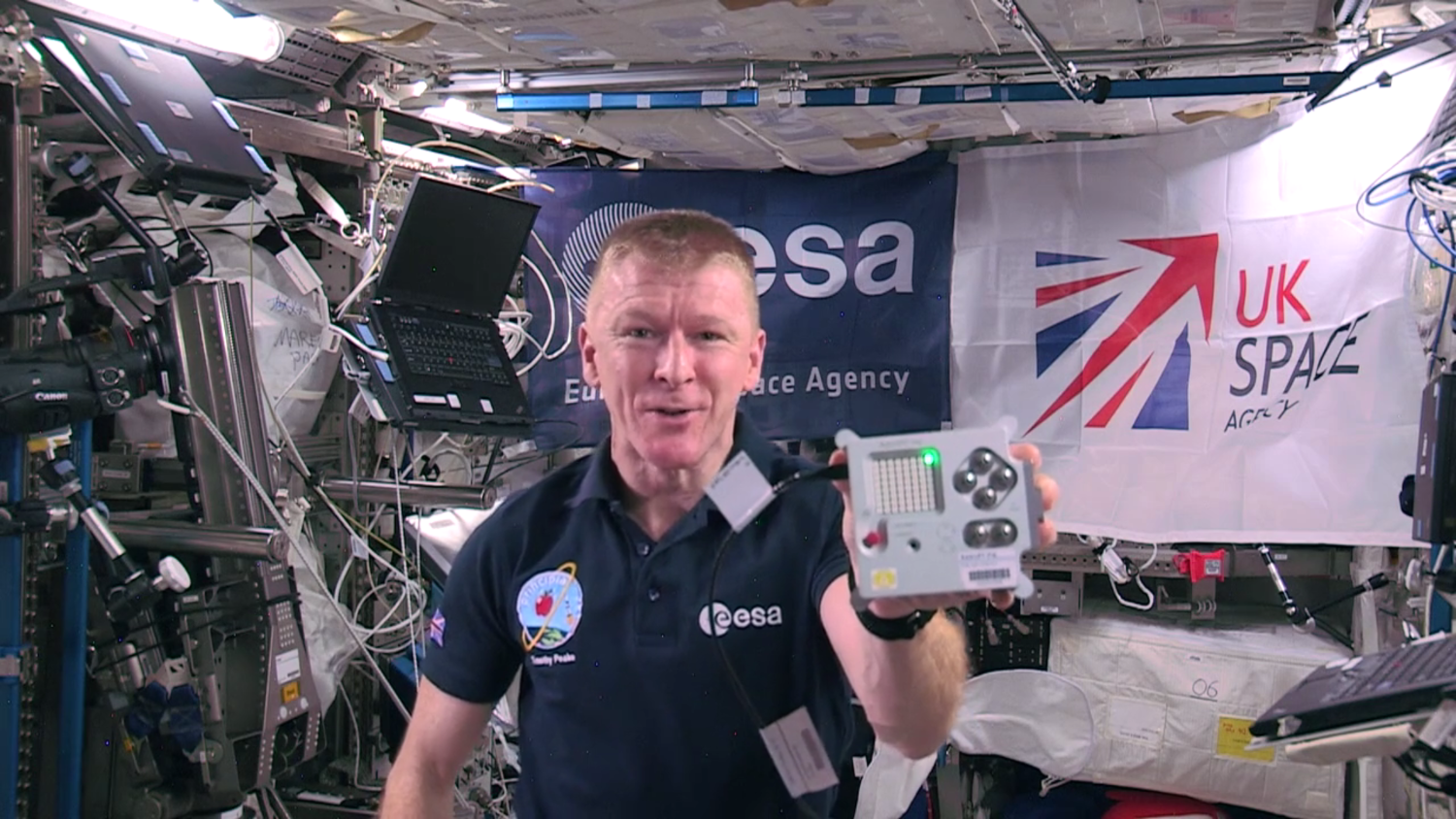
Tim Peake with one of the first two Astro Pi units during his Principia mission on the ISS.
Tim Peake with one of the first two Astro Pis unit during his Principia mission on the ISS

Fast forward six years, and we’re retiring Astro Pis Ed and Izzy and sending two upgraded Astro Pi units to space – in just over a week’s time, to be precise. This year, Italian ESA astronaut Samantha Cristoforetti will be taking the helm for the Challenge on board the ISS, while Tim continues to champion the Astro Pi Challenge down here on Earth.

Thank you Tim, for inspiring so many families to get involved with STEM and coding.

Your family’s very own space mission with Astro Pi

To get involved in the Astro Pi Challenge, you and your young people don’t even have to wait until the new Raspberry Pi computers arrive on the ISS. You can do Astro Pi Mission Zero — the beginners’ coding activity of the European Astro Pi Challenge — today!

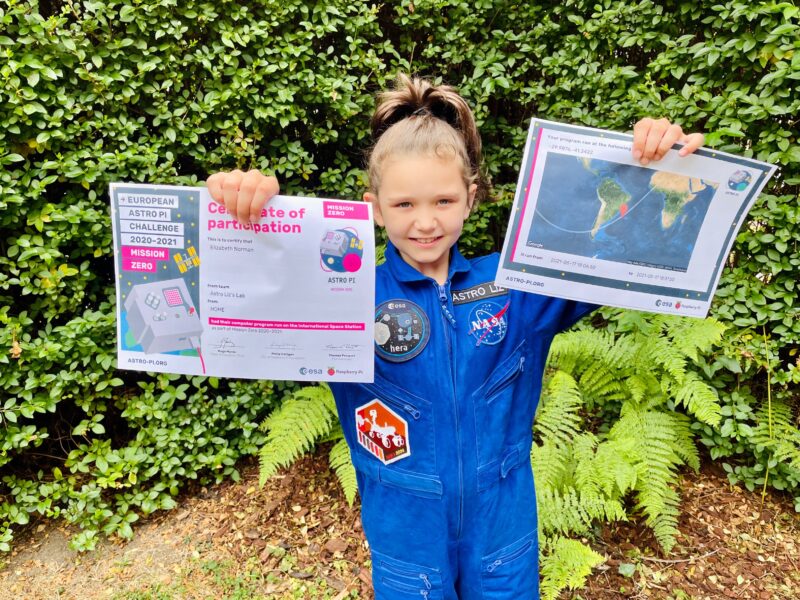
Mission Zero participant Liz with her 2020-2021 certificate

In Mission Zero, young people, by themselves or in a team of up to four, follow our step-by-step instructions to write the code for a simple program, which we will send up to ISS to run on the new Astro Pi units. With their program, young people take a humidity reading on board the ISS and show it to the astronauts stationed there, together with a personal message or colourful design. This beginner-friendly coding activity takes about an hour and can be done on any computer in a web browser. It’s completely free too.

Logo of Mission Zero, part of the European Astro Pi Challenge.

As a parent (or educator), you support young people on Mission Zero by:

  • Registering as a Mission Zero mentor on astro-pi.org so we can send you a unique code for submitting your child’s program once it’s written
  • Helping them follow the step-by-step instructions so you can learn about coding together
  • Motivating them to keep going if their program doesn’t work right away, and helping to spot mistakes
  • Celebrating with them when they’ve finished writing the code for their Mission Zero program

After a young person’s Mission Zero code has run and their message has been shown in the ISS, we’ll send you a special certificate for them so you can commemorate their space mission.

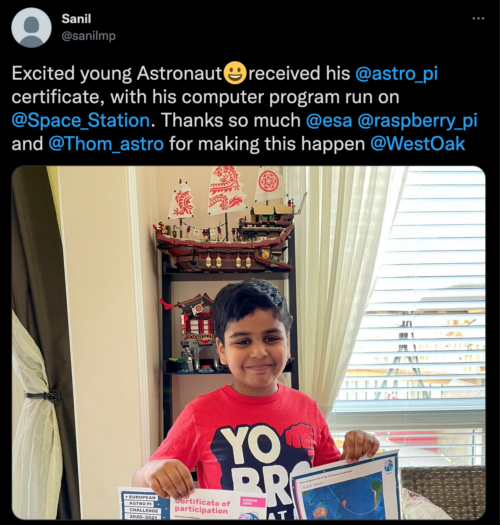
A tweet about a young person who participated in Astro Pi Mission Zero.

And this year, Astro Pi Mission Zero is extra special: we are asking all participants to help us name the upgraded Raspberry Pi computers that will go to live on board the ISS. We’ve created a list of renowned European scientists whose names participants can vote for, in case you need inspiration.

Parents have lots of enthusiasm for learning about science and technology

It’s not just young people that benefit from getting involved with the Astro Pi Challenge – it’s something the whole family will enjoy doing together. And as findings from our recent UK survey showed, parents are rediscovering their passion for science, technology, and coding through helping their kids with homework. The survey found that parents of children in primary and secondary school are far more likely than any other group of adults to enjoy learning about science, with 3 in 5 parents (62%) revealing their enthusiasm for the subject. Nearly as many parents (58%) wished they had greater knowledge of STEM from school, and 62% said they are interested in learning how to code.

A mother and daughter do a coding activity together at a laptop at home.

“It’s wonderful to find out that parents of schoolchildren are discovering a passion for science and technology, especially after a year of home-schooling where they have been able to see first-hand what their children are learning.” says Olympia Brown, our Head of Youth Partnerships. “The Astro Pi Challenge is a fun, free, and creative way to learn about coding and carry out science experiments on board the International Space Station that both children and parents can get involved in.”

Young people love Astro Pi Mission Zero

If Tim Peake and we have not convinced you how fun and inspiring the Astro Pi Challenge will be for your family, then here are some young people to tell you about their experiences. We asked learners at Linton-on-Ouse Primary School how they found taking part in this year’s Mission Zero.

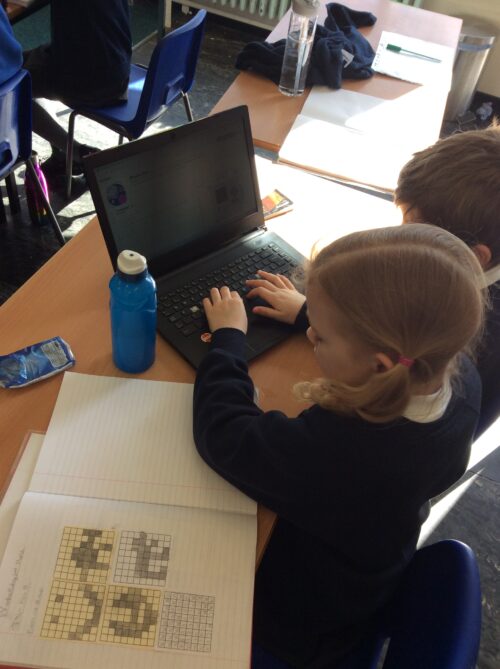
Learners at a Primary School taking part in Mission Zero.
Learners at Linton-on-Ouse Primary School taking part in Mission Zero

This is what some of the young learners shared with us:

“I learned a bit about how to code. Everyone was very helpful. This was very fun, and I wish we can do this again. It was tricky when we tried to make the colours change.”

– A learner in Year 4

“I worked as a team by helping check all the time. Next time I want to do it on my own, because I am feeling confident.”

– A learner in Year 3

Head over to astro-pi.org to register as a Mission Zero mentor today and start coding with your children. There you’ll find all the details you need for your family space mission.

The post Tim Peake joins us as we get ready to launch special Raspberry Pi computers to space appeared first on Raspberry Pi.