All posts by Jan Ander

What should be included in a data science curriculum for schools?

Post Syndicated from Jan Ander original https://www.raspberrypi.org/blog/what-should-be-included-in-a-data-science-curriculum-for-schools/

Current artificial intelligence (AI) methods, especially machine learning (ML), rely heavily on data. To complement our work on AI literacy, we have been investigating what data science teaching resources and education research are currently available. Our goal is to work out what data science concepts should be taught in a data science curriculum for schools.
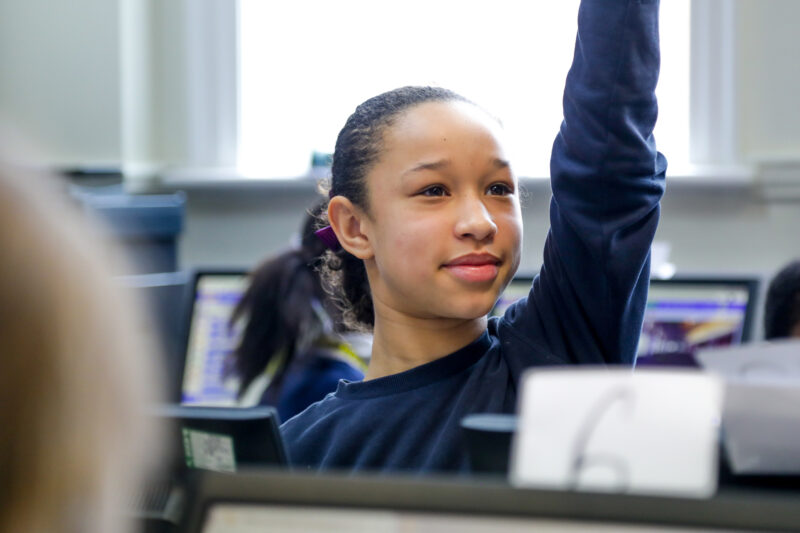
In a computing classroom, a smiling girl raises her hand.

Read on to find out what resources and materials we have reviewed, and what concept themes we have identified.

What is data science? Why is teaching it important?

Data science is an interdisciplinary science of learning from large datasets, aided by modern computational tools and methods (Ow‑Yeong et al., 2023). We see data science skills as fundamental for using, creating, and thinking critically about:

  • Insights from data, generally
  • Data-driven computational tools and methods (such as machine learning) and their outputs and predictions, specifically
Someone explains a graph shown on a computer screen.

To navigate a world where decision making in many areas is influenced by data-driven insights and predictions, young people need to be taught about data science. Data science skills empower young people to become critical thinkers, discerning consumers, adaptable professionals, and informed citizens.

Worldwide, countries are taking a variety of approaches to introducing data science into their education systems, as highlighted in a 2024 report from the coalition Data Science 4 Everyone.

An overview of data science education across the world
An overview of data science education across the world. Source: Beyond Borders 2024: Primary and Secondary Data Science Education Around the World, republished with kind permission of Data Science 4 Everyone. Click the image to enlarge it.

In some countries, such as India and Israel, data science education is an established school subject. It is taught as part of the curriculum in at least one of the primary, secondary, or post-16 age phases. Meanwhile in other countries, for example Canada, Germany, and Poland, data science is a very new school subject, or there are still only recommendations to develop it into a school subject.

While we are currently considering what a comprehensive data science curriculum should include, we already offer several resources to support you with your teaching about data science and data-driven technologies. You can find a list of these resources at the end of this blog. Now, however, I’ll give you an overview of our recent work to identify concepts for a data science curriculum that fits with our approach to AI literacy.

Data science education: What should we teach?

To answer the question ‘What should we teach about data science to learners aged 5 to 19?’, we undertook a grey literature review of data science teaching materials. A grey literature review is structured like an academic literature review and conducted with the same rigour. The difference is that a grey literature review also considers publications that have not been peer-reviewed, including reports, white papers, curriculum materials, and similar resources.

To orient our work, we combined four frameworks for data science and AI/ML education:

With these combined frameworks as our map, we reviewed 79 data science learning resources. The resources varied:

  • In quality in terms of clarity and teaching approach
  • In their focus, e.g. on maths, coding, or a specific field such as biology
  • In their perspective on data science, with some prioritising theory and others real-world applications

From among the 79 resources, we chose 9 that included clear learning outcomes, and that together covered a wide field of concepts. We examined these 9 in detail to extract 181 explicit and implicit data science concepts. Next, we grouped the concepts into themes, and finally we refined these themes by comparing them against the four frameworks listed above.

The themes we have identified for a data science curriculum are:

  • Fundamentals of data literacy: Key terms and definitions
  • Understanding bias in data
  • Ethical responsibility in data use
  • Data creation, curation, and transformation
  • Analysis and modelling: Maths and statistics fundamentals
  • ML principles
  • Deploying and maintaining ML applications
  • Software tools and programming
  • Data visualisation
  • Presenting findings effectively

This set of themes both fits with the frameworks by Olari and Romeike and Data Science 4 Everyone, and expands them by covering ML principles and programming approaches and calling out data bias and ethics.

What’s next for this work?

Through our grey literature review on data science education, we’ve:

  • Pinpointed a large set of candidate concepts that could be taught within a data science curriculum
  • Created a set of clear themes to structure our work going forward

Our next step is to shape these candidate concepts into a progression framework to describe their relationships and establish which concepts could be taught at each age or phase of schooling.

Young people studying in a computing classroom.

The literature review also gave us an overview of the pedagogical approaches and tools used for teaching data science concepts. These findings will become useful once we start designing learning activities.

You’ll hear more about how this work is going here on our blog and on our social channels. In the meantime, comment below to let us know what you think about the themes, or to tell us what you’d like to see in a data science curriculum for the learners you work with.


Our resources related to data science

Classroom resources

You can read about our thinking behind the data science-related teaching resources we’ve created so far in our ‘Data and information within the computing curriculum’ report from 2019.

  • The report lists the data-related units within The Computing Curriculum materials, which we no longer update but continue to offer as free downloads. Updated classroom materials are available as part of the Computing materials we created for Oak National Academy in the UK for ages 5–11 and ages 12–19.
  • The Ada Computer Science platform offers learning materials on data and information, and on AI and ML, for ages 14–19.

You might also be interested in exploring the Experience AI programme, which offers everything teachers need to help students develop a foundational understanding of data-driven AI technologies, their social and ethical implications, and the role that AI can play in their lives.

Teacher training and development resources

Our free online course ‘Teach teens computing: Machine learning and AI‘ helps teachers understand and explain the types of problems that ML can help to solve, discuss how AI is changing the world, and think about the ethics of collecting data to train a ML model.

Teaching young people to understand data-driven AI technologies means teaching them thinking skills that are different to those needed to understand rule-based computer systems. You can read about these Computational Thinking 2.0 skills in our Quick Read PDF.

Our current research seminar series focuses on teaching about AI and data science. Sign up for an upcoming seminar session (the next one is on 11 November) or catch up on past sessions to find out what the latest research findings are in this area. You can also revisit our 2021/22 series on the same topic to see how work in this area has developed. The Raspberry Pi Computing Education Research Centre also has ongoing projects in the area of AI education for you to explore.

The post What should be included in a data science curriculum for schools? appeared first on Raspberry Pi Foundation.
How to give your students structure as they learn programming skills

Post Syndicated from Jan Ander original https://www.raspberrypi.org/blog/how-to-give-your-students-structure-as-they-learn-programming-skills/

Creating a computer program involves many different skills — knowing how to code is just one part. When we teach programming to young people, we want to guide them to learn these skills in a structured way. The ‘levels of abstraction’ framework is a great tool for doing that. This blog describes how using the framework will benefit you and your learners in the computing classroom.

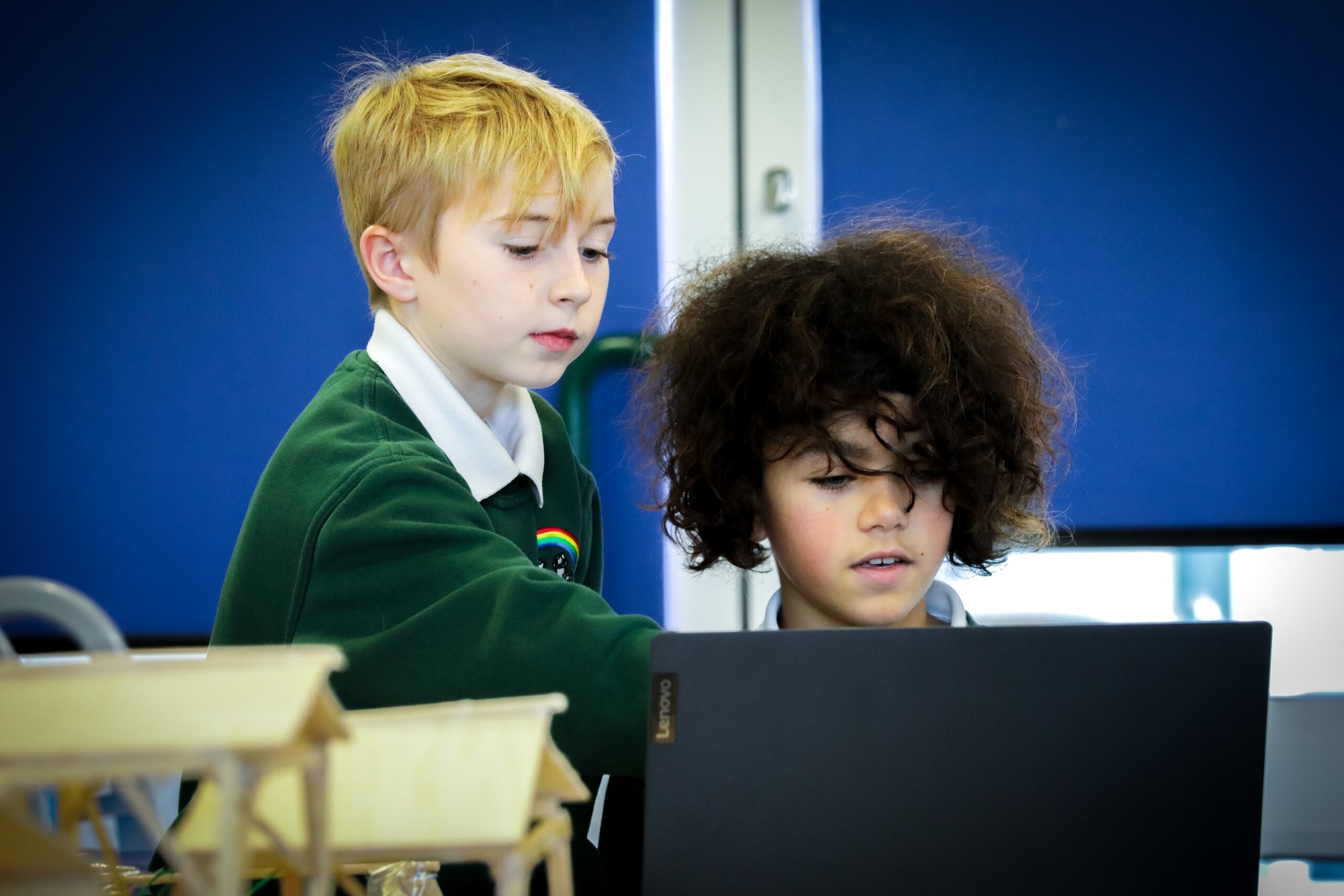
Two learners at a laptop in a computing classroom.

We’re also excited to share our new Pedagogy Quick Read, which you can download for free to:

  • Find practical tips for using the ‘levels of abstraction’ framework with your learners
  • Read a summary of the research behind the framework

Learning to program: Everything at once?

Creating a program from the ground up can be daunting, especially for new learners. Without support, they’ll likely get stuck sooner or later; programs rarely work the first time round. And the more complex the problem that a program is addressing, the more likely it is that the first version of the program won’t work.

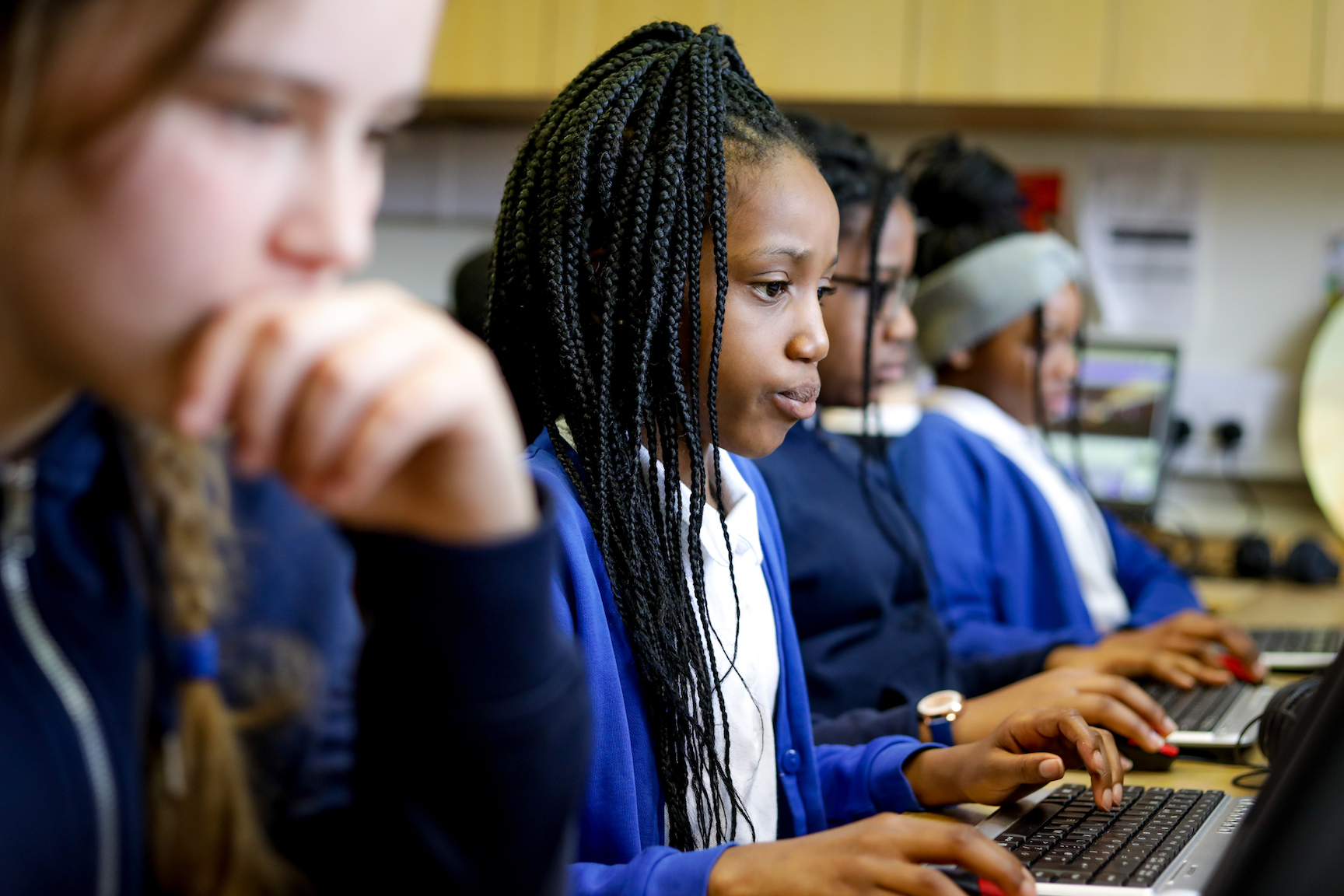
In a computing classroom, two girls concentrate on their programming task.

One reason that learning to program can be challenging is that it involves understanding a lot of specific concepts and applying many varied skills. From early on in their learning journey, young people need to have a firm grasp of concepts such as repetition, selection, variables, and functions. Also fundamental to learning to program well is the skill of abstraction: understanding a task and identifying which details are relevant and which can be ignored.

To get to grips with all these different concepts and skills, young people need structure — otherwise they’ll try to hold everything in their head at once, and likely feel overwhelmed by the cognitive load. This sort of experience may cause them to disengage instead of persisting. They may even decide that programming is not for them.

In light of these challenges, the ‘levels of abstraction’ framework is a great tool for teaching.

The benefits of the ‘levels of abstraction’ framework

The framework breaks programming down into four levels, each focusing on a different aspect of creating a program:

  • Problem: Analysing the problem or task the program should address, to understand and record the requirements.
  • Design: Turning the analysis into an algorithm — a set of steps for the computer to follow to create the desired output. This can involve flowcharts or storyboards, but importantly no code.
  • Code: Developing the code based on the design (and building the physical components if any are involved).
  • Running the code: Testing the code, checking outputs, and debugging where necessary.

Throughout the processes of developing a program, learners (and professional programmers) move between these levels as they implement their designs and debug them, sometimes even returning to the problem level if more analysis or clarification is needed.

Young child in the classroom using Scratch to program.

Potential benefits of the ‘levels of abstraction’ framework for teachers:

  • It helps you break down the activity of programming into discrete parts.
  • It helps you engage your learners, as you can show them that programming involves more than knowing how to code.
  • If your learners get stuck with their programming, the framework can help you guide them to a solution.

Potential benefits for learners:

  • The framework will help them think through all the steps needed to create a program that works, and practise their problem-solving skills and analytical thinking.
  • They will more readily see how programming connects to their world — at the problem level — and find aspects of programming where they have strengths and can use their creativity.
  • They will gain a stronger idea of how software is built in the tech sector.

Our new Quick Read shares tips on how to best use the framework in your teaching.

Things to aim for when using the framework with your learners:

  • Be aware of what level they are working at and when it’s time to switch to a different one.
  • Understand that, when they encounter an issue with their program, they can step back and use the framework to figure out where the issue comes from. The issue might be a bug in the code, the algorithm not working as intended, or a description of the problem not taking into account something important.

We hope you find the framework useful. If you have ideas for how to use it in your teaching, why not share them in the comments?

Teaching programming: The wider context

When following the ‘levels of abstraction’ approach, learners need to explain how programs work and debug them. That means program comprehension is a key skill here. You may have already helped your learners to develop and practise this skill, for example with the PRIMM approach. The Block Model is another useful tool for helping your learners talk about various aspects of a program. And if you use the pair programming approach in programming activities, your learners can improve their program comprehension by talking about their code with each other. On our website, you’ll find more guidance on the best ways to teach programming and computing.

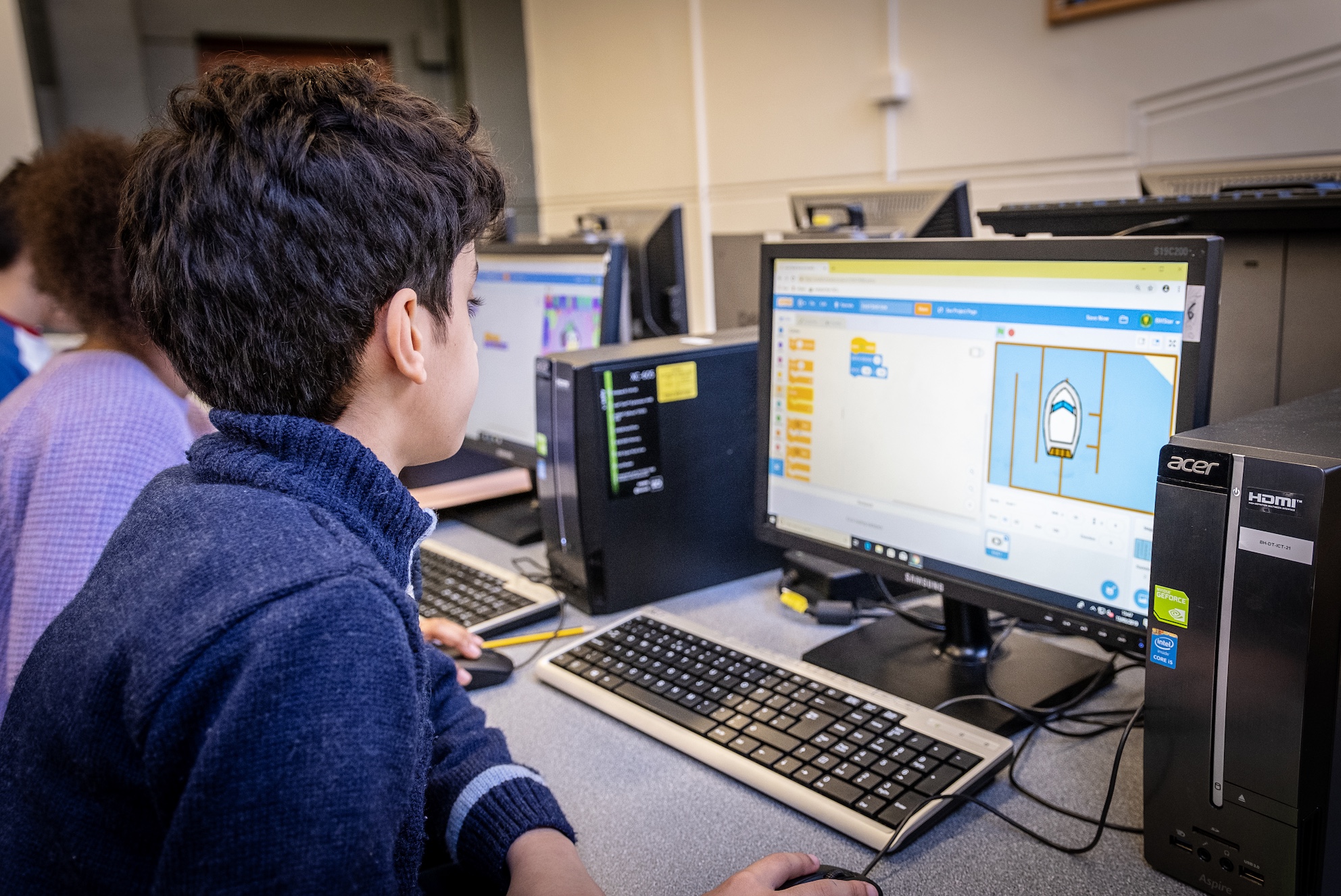
Photo of a young person coding on a desktop computer.

And what about generative artificial intelligence (AI) tools for programmers? In the age of AI, we think young people still need to learn to code because it empowers them to navigate and think critically about all digital technologies, including AI. And while generative AI tools can help a skilled programmer create quality code more quickly, more research is needed to show whether such tools help school-age young people build their understanding as they learn to code. You can see some of the great work being done in this area if you catch up with our 2024 research seminar series.

The ‘levels of abstraction’ framework is useful in your teaching no matter what tools young people use to create programs. Even with an AI tool, they will still need to work at all four levels of abstraction to program effectively. 

The post How to give your students structure as they learn programming skills appeared first on Raspberry Pi Foundation.
Join our free data science education workshop for teachers

Post Syndicated from Jan Ander original https://www.raspberrypi.org/blog/join-our-free-data-science-education-workshop-for-teachers/

Are you a teacher who is interested in data science education for key stage 5 (age 16 to 18)? Then we invite you to join our free, in-person workshop exploring the topic, taking place in Cambridge, UK on 10 July 2025.

Teachers at a workshop.

You will be among the very first educators to see some of our first test activities for teacher training to build data science concepts, and your contributions will feed into our future work. Sign up by 20 June to take part.

Data science: What do we need to teach school-age learners?

Current artificial intelligence (AI) methods, especially machine learning (ML), rely heavily on data. While young people learn mathematics, and some statistics, at school, data science concepts are not commonly taught.

Teachers at a workshop.

To complement our work on AI literacy, we have been investigating what data science teaching resources and education research are currently available.

Our goals for this work are:

  1. To work out what data science concepts may need to be taught in schools, initially with a focus on key stage 5
  2. To develop related teacher professional development and classroom resources

Join us to discuss data science education

If you are interested in data science education for young people, and maybe even have experience of teaching it to learners aged 16 to 18 in your school (in any subject, including computer science, social sciences, mathematics, statistics, and ethics), please join our free workshop on Thursday 10 July in our office in Cambridge. We are able to reimburse some travel expenses.

At the workshop:

  • We would love to hear about your experience of teaching any elements of data science
  • We will share some exploratory concept building activities with you and discuss them together

You’ll be the first group of working teachers we will share these activities with — your feedback will be invaluable, and you’ll have the chance to shape our work going forward.

If you are interested, please fill in this form by Friday 20 June:

You will then receive more information from us by 27 June. Spaces in the workshop are limited, so please do not book any travel until we confirm your space.

We’re looking forward to shaping the future of data science education with you.


PS In our current seminar series, researchers from around the world are presenting their latest work on teaching about AI and data science. You can catch up on past sessions and sign up for upcoming ones on our website.

The post Join our free data science education workshop for teachers appeared first on Raspberry Pi Foundation.

Our T Level resources to support vocational education in England

Post Syndicated from Jan Ander original https://www.raspberrypi.org/blog/t-level-resources-support-vocational-education-england/

You can now access classroom resources created by us for the T Level in Digital Production, Design and Development. T Levels are a type of vocational qualification young people in England can gain after leaving school, and we are pleased to be able to support T Level teachers and students.

A teenager learning computer science.

With our new resources, we aim to empower more young people to develop their digital skills and confidence while studying, meaning they can access more jobs and opportunities for further study once they finish their T Levels.

We worked collaboratively with the Gatsby Charitable Foundation on this pilot project as part of their Technical Education Networks Programme, the first time that we have created classroom resources for post-16 vocational education.

Post-16 vocational training and T Levels

T Levels are Technical Levels, 2-year courses for 16- to 18-year-old school leavers. Launched in England in September 2020, T Levels cover a range of subjects and have been developed in collaboration with employers, education providers, and other organisations. The aim is for T Levels to specifically prepare young people for entry into skilled employment, an apprenticeship, or related technical study in further or higher education.

A group of young people in a lecture hall.

For us, this T Level pilot project follows on from work we did in 2022 to learn more about post-16 vocational training and identify gaps where we could make a difference. 

Something interesting we found was the relatively low number of school-age young people who started apprenticeships in the UK in 2019/20. For example, a 2021 Worldskills UK report stated that only 18% of apprentices were young people aged 19 and under. 39% were aged 19-24, and the remaining 43% were people aged 25 and over.

To hear from young people about their thoughts directly, we spoke to a group of year 10 students (ages 14 to 15) at Gladesmore School in Tottenham. Two thirds of these students said that digital skills were ‘very important’ to them, and that they would consider applying for a digital apprenticeship or T Level. When we asked them why, one of the key reasons they gave was the opportunity to work and earn money, rather than moving into further study in higher education and paying tuition fees. One student’s answer was for example, “It’s a good way to learn new skills while getting paid, and also gives effective work experience.”

T Level curriculum materials and project brief

To support teachers in delivering the Digital Production, Design and Development T Level qualification, we created a new set of resources: curriculum materials as well a project brief with examples to support the Occupational Specialism component of the qualification. 

A girl in a university computing classroom.

The curriculum materials on the topic ‘Digital environments’ cover content related to computer systems including hardware, software, networks, and cloud environments. They are designed for teachers to use in the classroom and consist of a complete unit of work: lesson plans, slide decks, activities, a progression chart, and assessment materials. The materials are designed in line with our computing content framework and pedagogy principles, on which the whole of our Computing Curriculum is based.

The project brief is a real-world scenario related to our work and gives students the opportunity to problem-solve as though they are working in an industry job.

Access the T Level resources

The T Level project brief materials are available for download now, with the T Level classroom materials coming in the next few weeks.

We hope T Level teachers and students find the resources useful and interesting — if you’re using them, please let us know your thoughts and feedback.

Our thanks to the Gatsby Foundation for collaborating with us on this work to empower more young people to fulfil their potential through the power of computing and digital technologies.

The post Our T Level resources to support vocational education in England appeared first on Raspberry Pi Foundation.

Experience AI: Making AI relevant and accessible

Post Syndicated from Jan Ander original https://www.raspberrypi.org/blog/experience-ai-equal-access-ai-education/

Google DeepMind’s Aimee Welch discusses our partnership on the Experience AI learning programme and why equal access to AI education is key. This article also appears in issue 22 of Hello World on teaching and AI.

From AI chatbots to self-driving cars, artificial intelligence (AI) is here and rapidly transforming our world. It holds the potential to solve some of the biggest challenges humanity faces today — but it also has many serious risks and inherent challenges, like reinforcing existing patterns of bias or “hallucinating”, a term that describes AI making up false outputs that do not reflect real events or data.

A teenager learning computer science.
Young people need the knowledge and skills to navigate and shape AI.

Teachers want to build young people’s AI literacy

As AI becomes an integral part of our daily lives, it’s essential that younger generations gain the knowledge and skills to navigate and shape this technology. Young people who have a foundational understanding of AI are able to make more informed decisions about using AI applications in their daily lives, helping ensure safe and responsible use of the technology. This has been recognised for example by the UK government’s AI Council, whose AI Roadmap sets out the goal of ensuring that every child in the UK leaves school with a basic sense of how AI works.

Learner in a computing classroom.
Every young person should have access to learning AI literacy.

But while AI literacy is a key skill in this new era, not every young person currently has access to sufficient AI education and resources. In a recent survey by the EdWeek Research Center in the USA, only one in 10 teachers said they knew enough about AI to teach its basics, and very few reported receiving any professional development related to the topic. Similarly, our work with the Raspberry Pi Computing Education Research Centre has suggested that UK-based teachers are eager to understand more about AI and how to engage their students in the topic.

Bringing AI education into classrooms

Ensuring broad access to AI education is also important to improve diversity in the field of AI to ensure safe and responsible development of the technology. There are currently stark disparities in the field and these start already early on, with school-level barriers contributing to underrepresentation of certain groups of people. By increasing diversity in AI, we bring diverse values, hopes, and concerns into the design and deployment of the technology — something that’s critical for AI to benefit everyone.

Kenyan children work on a physical computing project.
Bringing diverse values into AI is critical.

By focusing on AI education from a young age, there is an opportunity to break down some of these long-standing barriers. That’s why we partnered with the Raspberry Pi Foundation to co-create Experience AI, a new learning programme with free lesson plans, slide decks, worksheets and videos, to address gaps in AI education and support teachers in engaging and inspiring young people in the subject.

The programme aims to help young people aged 11–14 take their first steps in understanding the technology, making it relevant to diverse learners, and encouraging future careers in the field. All Experience AI resources are freely available to every school across the UK and beyond.

A woman teacher helps a young person with a coding project.
The Experience AI resources are free for every school.

The partnership is built on a shared vision to make AI education more inclusive and accessible. Bringing together the Foundation’s expertise in computing education and our cutting-edge technical knowledge and industry insights has allowed us to create a holistic learning experience that connects theoretical concepts and practical applications.

Experience AI: Informed by AI experts

A group of 15 research scientists and engineers at Google DeepMind contributed to the development of the lessons. From drafting definitions for key concepts, to brainstorming interesting research areas to highlight, and even featuring in the videos included in the lessons, the group played a key role in shaping the programme in close collaboration with the Foundation’s educators and education researchers.

Interview for Experience AI at Google DeepMind.
Interviews with AI scientists and engineers at Google DeepMind are part of Experience AI.

To bring AI concepts to life, the lessons include interactive activities as well as real-life examples, such as a project where Google DeepMind collaborated with ecologists and conservationists to develop machine learning methods to study the behaviour of an entire animal community in the Serengeti National Park and Grumeti Reserve in Tanzania.

Elephants in the Serengeti.
One of the Experience AI lessons focuses on an AI-enabled research project in the Serengeti.

Member of the working group, Google DeepMind Research Scientist Petar Veličković, shares: “AI is a technology that is going to impact us all, and therefore educating young people on how to interact with this technology is likely going to be a core part of school education going forward. The project was eye-opening and humbling for me, as I learned of the challenges associated with making such a complex topic accessible — not only to every pupil, but also to every teacher! Observing the thoughtful approach undertaken by the Raspberry Pi Foundation left me deeply impressed, and I’m taking home many useful ideas that I hope to incorporate in my own AI teaching efforts going forward.”

The lessons have been carefully developed to:

  • Follow a clear learning journey, underpinned by the SEAME framework which guides learners sequentially through key concepts and acts as a progression framework.
  • Build foundational knowledge and provide support for teachers. Focus on teacher training and support is at the core of the programme.
  • Embed ethics and responsibility. Crucially, key concepts in AI ethics and responsibility are woven into each lesson and progressively built on. Students are introduced to concepts like data bias, user-focused approaches, model cards, and how AI can be used for social good. 
  • Ensure cultural relevance and inclusion. Experience AI was designed with diverse learners in mind and includes a variety of activities to enable young people to pick topics that most interest them. 

What teachers say about the Experience AI lessons

To date, we estimate the resources have reached 200,000+ students in the UK and beyond. We’re thrilled to hear from teachers already using the resources about the impact they are having in the classroom, such as Mrs J Green from Waldegrave School in London, who says: “I thought that the lessons covered a really important topic. Giving the pupils an understanding of what AI is and how it works will become increasingly important as it becomes more ubiquitous in all areas of society. The lessons that we trialled took some of the ‘magic’ out of AI and started to give the students an understanding that AI is only as good as the data that is used to build it. It also started some really interesting discussions with the students around areas such as bias.”

An educator points to an image on a student's computer screen.
Experience AI offers support for teachers.

At North Liverpool Academy, teacher Dave Cross tells us: “AI is such a current and relevant topic in society that [these lessons] will enable Key Stage 3 computing students [ages 11–14] to gain a solid foundation in something that will become more prevalent within the curriculum, and wider subjects too as more sectors adopt AI and machine learning as standard. Our Key Stage 3 computing students now feel immensely more knowledgeable about the importance and place that AI has in their wider lives. These lessons and activities are engaging and accessible to students and educators alike, whatever their specialism may be.”

A stronger global AI community

Our hope is that the Experience AI programme instils confidence in both teachers and students, helping to address some of the critical school-level barriers leading to underrepresentation in AI and playing a role in building a stronger, more inclusive AI community where everyone can participate irrespective of their background. 

Children in a Code Club in India.

Today’s young people are tomorrow’s leaders — and as such, educating and inspiring them about AI is valuable for everybody.

Teachers can visit experience-ai.org to download all Experience AI resources for free.

We are now building a network of educational organisations around the world to tailor and translate the Experience AI resources so that more teachers and students can engage with them and learn key AI literacy skills. Find out more.

The post Experience AI: Making AI relevant and accessible appeared first on Raspberry Pi Foundation.