All posts by Philip Colligan, CBE

The new home for Blockly

Post Syndicated from Philip Colligan, CBE original https://www.raspberrypi.org/blog/new-home-for-blockly/

I am delighted to announce that the Raspberry Pi Foundation is the new home for Blockly, the world’s leading open source library for visual programming.

New home for Blockly.

What is Blockly? 

Blockly is a free, open source library that enables developers to build applications and websites that use block-based coding interfaces. That means that instead of typing code, you snap blocks together to build programs. Behind the scenes, those blocks are turned into text-based code like JavaScript and Python. 

Blockly started life in 2011 in Google as a passion project of one engineer. Since then — thanks to the generous support of Google, a small team of brilliant engineers, and an amazing community of open source contributors and partners — it has grown to become the de facto standard for visual programming interfaces.

In particular, Blockly is the foundation for pretty much all of the block-based coding applications that you may have used to teach or learn about programming. Platforms like Scratch, MakeCode, and MIT’s App Inventor are all built with Blockly. It’s no exaggeration to say that hundreds of millions of young people have learnt the fundamentals of computer science using software that is built with Blockly. 

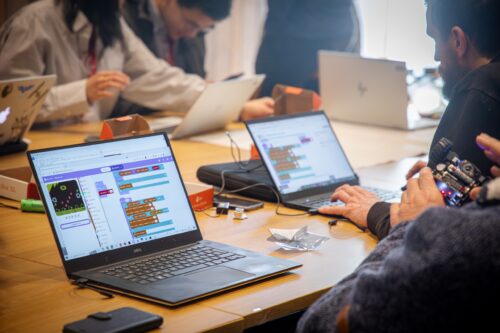
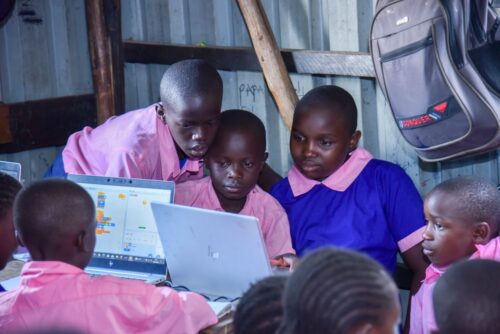
Young people use laptops to do their coding tasks.

As we enter the age of AI, it is more important than ever that all young people develop a foundational understanding of computer science. Blockly and the block-based coding platforms and applications that it enables are essential to realising that vision. 

You can read more about the importance of coding in the age of AI in our position paper

Blockly is also widely used to create interfaces that control hardware and robotics platforms. And, while its main use cases are in education, Blockly is increasingly being used to build industrial and commercial applications.

What does this change mean? 

From 10 November 2025, the Blockly open source library and assets, and key members of the Blockly team will transition from Google to the Raspberry Pi Foundation. 

Our vision is for Blockly to continue to be the standard visual programming interface that makes coding accessible to all. We are committed to maintaining Blockly as an open source project, and to working collaboratively with the community of developers and educators.

Educators collaborating on projects at a desk, with laptops open displaying a block-based coding environment.

Over the next year, we will roll out features that improve accessibility, including screen reader support and keyboard navigation, working closely with partners to support implementation of these accessibility improvements across their platforms.

Looking to the future, we want to make sure that Blockly is at the leading edge of innovations that support the teaching and learning of programming in the age of AI. We’re also excited about the potential for the Blockly team to collaborate with the Foundation’s research, learning, and product teams. 

If you are already part of the community of developers and educators, then I want to reassure you that you can continue to expect the same outstanding partnership and support from the Blockly team. We also look forward to welcoming many more members to the Blockly community over the coming years. 

Finally, I want to say a huge thank you to Google for their support for Blockly over the years, and for enabling this transition with generous grant funding. 

The post The new home for Blockly appeared first on Raspberry Pi Foundation.
Experience AI receives global recognition from UNESCO

Post Syndicated from Philip Colligan, CBE original https://www.raspberrypi.org/blog/experience-ai-recognition-unesco/

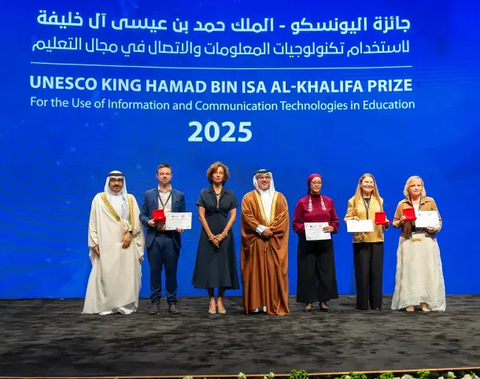
I am very proud to share the news that Experience AI has been recognised as a laureate for the 2025 UNESCO King Hamad Bin Isa Al-Khalifa Prize for the Use of ICT in Education.

The winners of the 2025 UNESCO King Hamad Bin Isa Al-Khalifa Prize.
At the award ceremony of the 2025 UNESCO King Hamad Bin Isa Al-Khalifa Prize. © Government of the Kingdom of Bahrain

What is Experience AI?

Experience AI is a free educational programme that helps teachers and students learn about artificial intelligence (AI). It was developed by the Raspberry Pi Foundation in partnership with Google DeepMind and includes lessons, classroom resources, and hands-on activities to help students develop a foundational understanding of AI technologies, their social and ethical implications, and the role that AI can play in their lives.

It is based on original research into AI literacy and highlights real-world applications of AI technologies, including through videos featuring research scientists that help to bring the lessons to life for students. 

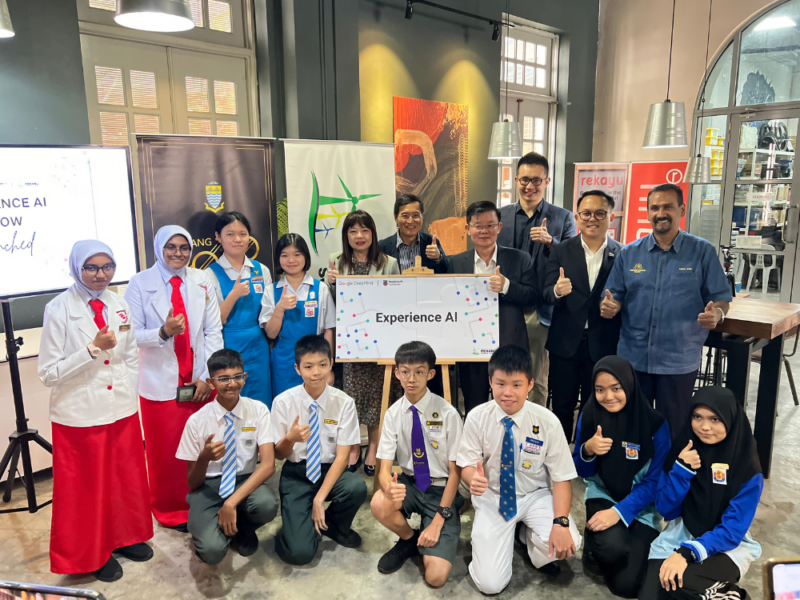
A group of students and educators at Penang Science Cluster's launch of Experience AI in Malaysia.
A group of students and educators at the launch of Experience AI in Malaysia.

Since we launched the first Experience AI resources in April 2023, they have been used to teach over 2 million students, and that number is growing fast. 

This reach is possible thanks to a global network of Experience AI education partners who work with us to localise and translate the resources and deliver large-scale teacher training in their regions. 

UNESCO recognition

Experience AI was one of four laureates of the prestigious global Prize selected by the Director-General of UNESCO, based on recommendations from an independent, international jury. The jury commended the programme for its strong ethical foundation and wide international reach. 

This year, marking its 20th anniversary, the Prize focused on the theme ‘Preparing learners and teachers for the ethical and responsible use of artificial intelligence’.

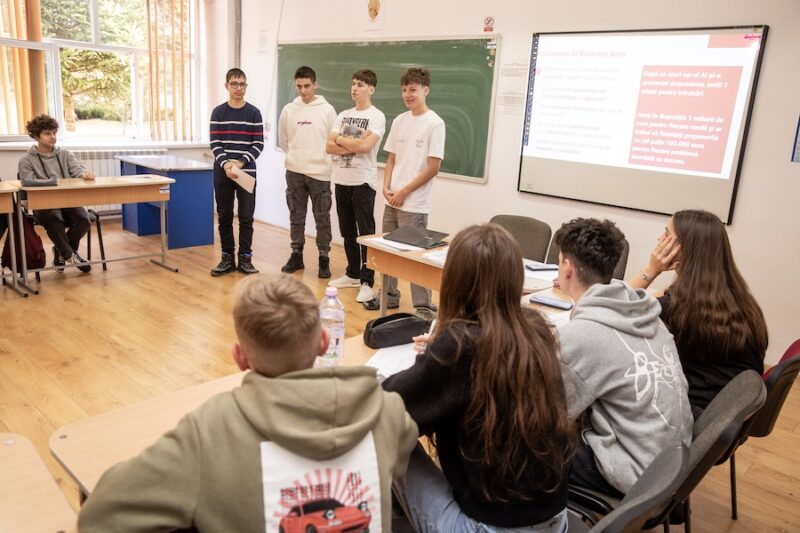
Students in class during an Experience AI lesson.
Romanian students in class during an Experience AI lesson.

The Prize was awarded at a ceremony at the University of Bahrain attended by the Director-General of UNESCO, Ministers of Education of the Gulf Cooperation Council, and members of the Raspberry Pi Foundation and Google DeepMind teams.

I want to say a heartfelt congratulations and thank you to everyone who has worked on Experience AI so far. It has been a fantastic, collaborative effort from colleagues across the Foundation, Google DeepMind, and all of our partner organisations. 

I also want to pay tribute to all of the teachers — all over the world — who have engaged so enthusiastically with Experience AI, for helping us develop the materials, including testing them in your classrooms and providing such thoughtful feedback, and for everything you do, every day, to inspire your students. This recognition is for all of your hard work, diligence, and care. Congratulations and thank you.

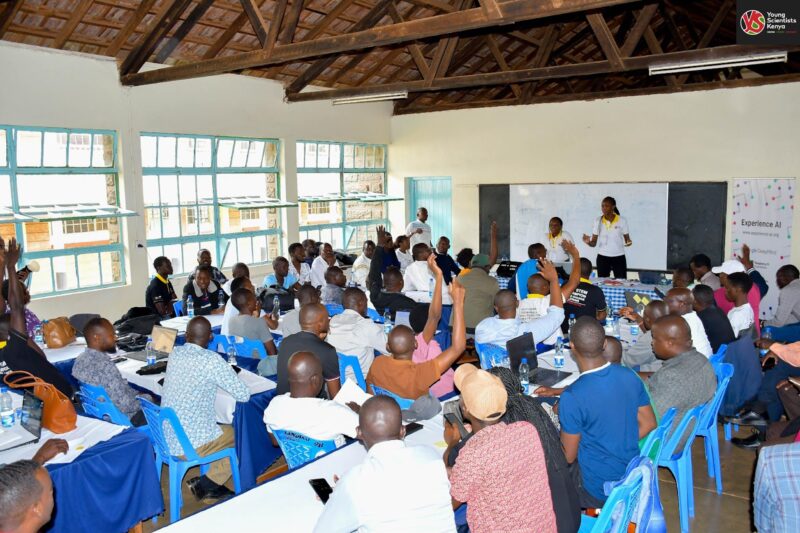
Teachers in Kenya during an Experience AI teacher training event.

Experience AI is provided at no cost to schools, teachers, or students thanks to generous funding from Google.org. We are also very grateful to Broadcom Foundation, which has provided additional funding to support the programme. 

What next for Experience AI? 

We are exceptionally proud to have received this recognition for Experience AI, but we aren’t complacent. Equipping all young people, and their teachers, with a foundational understanding of AI technologies is one of the most urgent challenges facing all education systems.

We have made a great start, and we know there is much more to be done. That’s why we have lots of important updates and developments coming soon, including: 

  • Updating and improving the current lessons: We are finalising an update to the resources to respond to feedback from teachers and students, including significant improvements to make them more accessible. These will be published early in 2026. 
  • Expanding the range of lessons: Alongside the updates to the existing resources, we are developing new lessons. This will include lessons designed for both younger and older learners, as well as integrated lessons that enable teachers to bring AI concepts and skills into subjects such as science, language, and the arts. 
  • Updated and improved professional development: We are also updating and improving the training that we offer to teachers, including both online courses and webinars, and in-person training delivered through the global network of education partners. 
  • AI chatbot for educators: We recently integrated a chatbot into the Experience AI website. Powered by Gemini 2.5, this is intended as a tool to help teachers navigate and understand the concepts and lessons. This is an early experiment and we’d love to get your feedback, so please give it a try and let us know what you think. 
  • Expanding the global network of partners: We currently have partners supporting teacher professional development in 25 countries, from Malaysia to Mexico. Over the coming year we will be launching partnerships in at least 15 more countries. If your organisation is interested in becoming a partner, you can let us know by filling in this form.

The post Experience AI receives global recognition from UNESCO appeared first on Raspberry Pi Foundation.
A Code Club in every school and library

Post Syndicated from Philip Colligan, CBE original https://www.raspberrypi.org/blog/a-code-club-in-every-school-and-library/

Today we are starting a campaign to support every school and library in the UK to set up a free Code Club to make sure that all young people can develop the skills and knowledge they need to thrive in the age of AI.

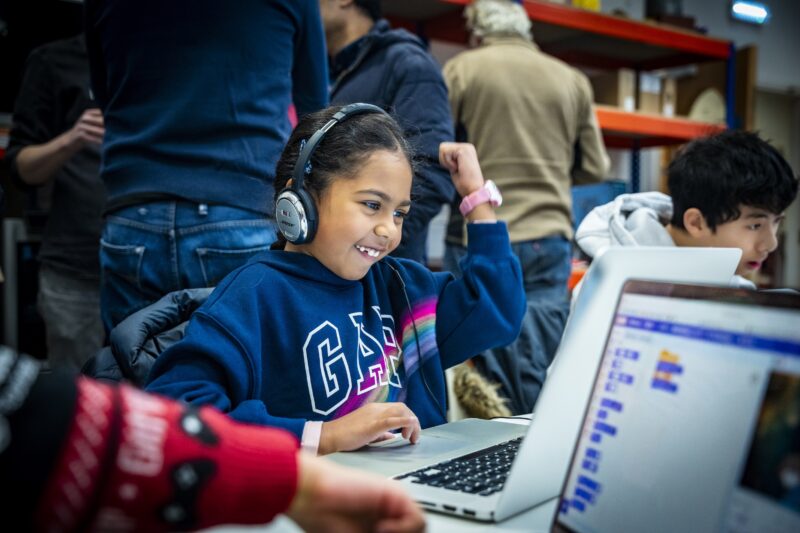
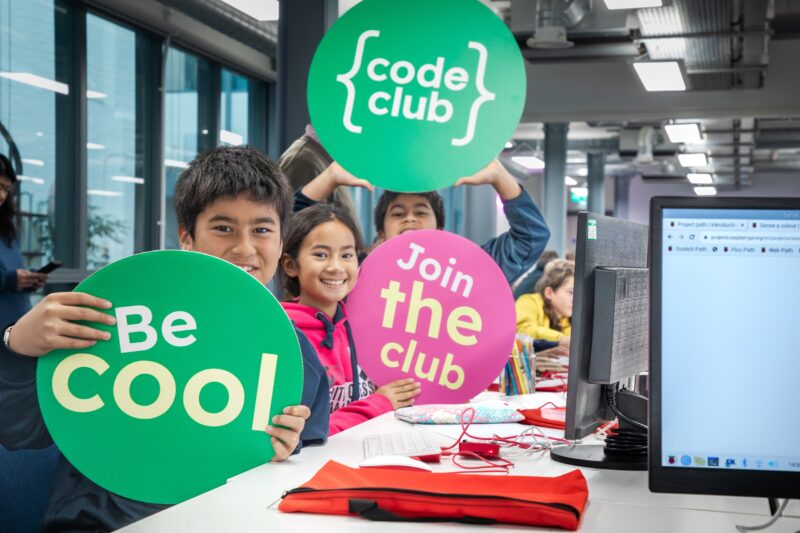
A young person celebrates at a Code Club.

Over the past decade, Code Club has provided more than 2 million young people with the opportunity to learn how to build their own apps, games, animations, websites, robots, and so much more. 

We know that getting hands-on, practical experience of building real projects with technology works. Independent evaluations have shown that attending a Code Club not only helps young people develop their programming skills, but also builds wider life skills such as confidence, resilience, problem-solving, and communication. All of which we know are essential if they are going to thrive in a world where AI is ubiquitous. 

Right now, there are over 2,000 Code Clubs meeting in schools and libraries all over the UK, organised by an amazing community of teachers, educators, and volunteers from all walks of life. We want to see that number grow. 

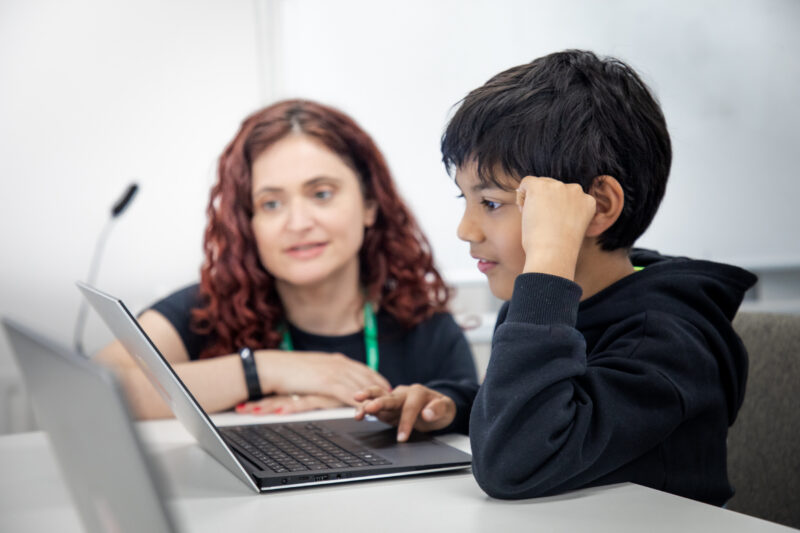
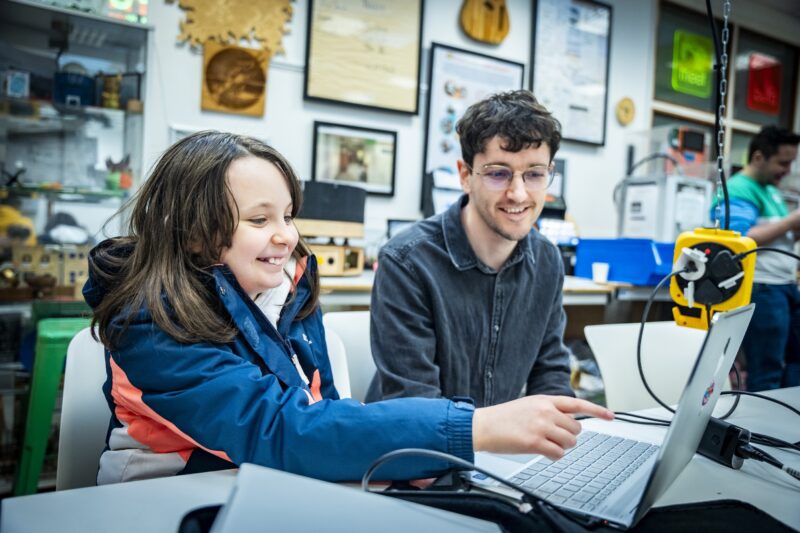
A young person and mentor at a Code Club.

You don’t need technical skills to mentor at a Code Club. The Raspberry Pi Foundation provides free, self-guided projects that help young people learn how to create with different technologies. We have over 200 Code Club Projects on our website, all of which are developed by expert educators, based on evidence of how young people learn, and rigorously tested; so we know that they are effective.

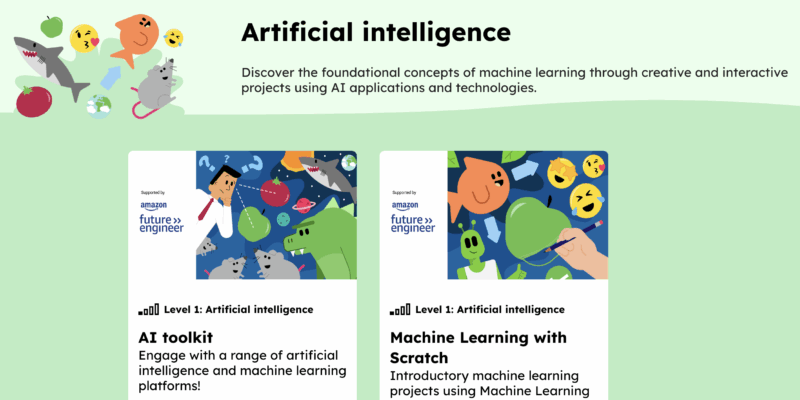
That includes a set of projects that support the safe exploration of AI technologies, helping young people understand how AI works, its possibilities and limitations.

A screenshot of the AI projects on our website.

We also provide training and support to help you set up and run your Code Club, all of which is available at no charge.  

I can promise you that the hour you spend in a Code Club will be the highlight of your week. I always come away from Code Club inspired and optimistic about what young people can achieve if we give them a sense of agency over technology.

Three young persons cheer at a Code Club.

If you have been inspired to set up your own Code Club, you can find all the information you need to run your own club here

You don’t have to take my word for it: here’s Janine, a Computer Science teacher and long-time Code Club mentor from Stoke-on-Trent sharing her experience.

Janine Kirk is a Computer Science Teacher at The King’s Church of England Academy in Stoke-on-Trent, UK, who has been running a Code Club for over ten years. She has been inspired by the campaign for a Code Club in every school and library in the UK, to set up clubs in six other schools in her multi-academy trust.

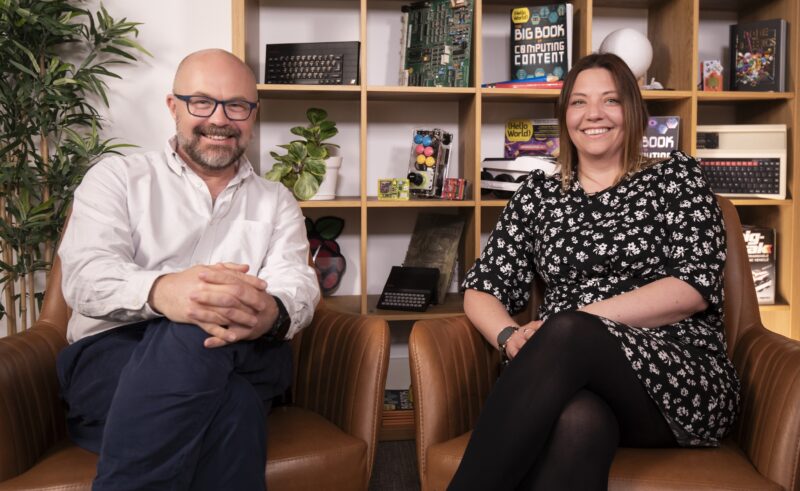
Philip Colligan and Janine Kirk at the recording of the Hello World podcast.
Philip and Janine Kirk at the recording of the Hello World podcast.

Setting up a Code Club is really easy as a teacher, as you can just tag it onto the end of your school day, or during lunch. The website is clear and easy to use — and once you have signed up, you have access to additional resources to promote your club. Code Club gives time and space to explore coding in a completely different way than in a classroom. For me, it’s about seeing what programs really inspire students: it gives an insight into how students like to code, ideas of preferred coding language, and tasks they keep coming back to. Running a Code Club has also allowed me to build relationships with students outside of the classroom environment, and all of this spills into my lessons and improves my teaching practice.

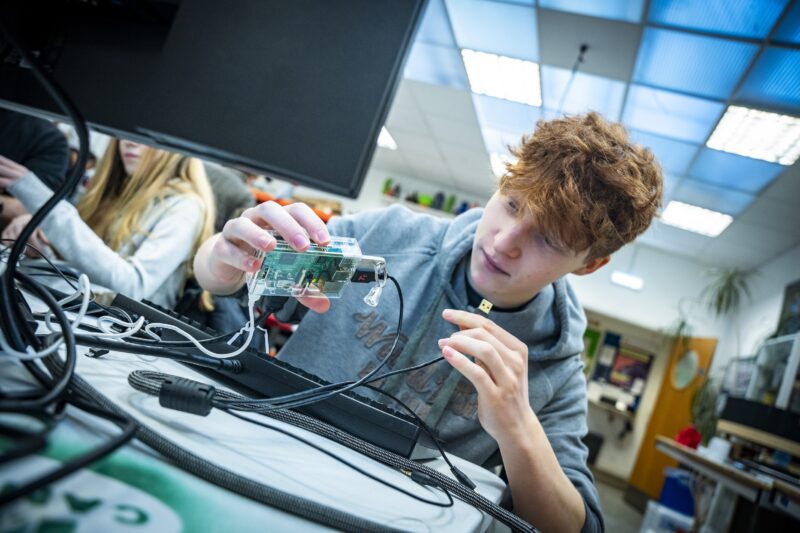
A young person connects a Raspberry Pi computer at a Code Club.

For students, Code Club is a great space where they can collaborate and work on their chosen tasks. Students often comment on how they look forward to Code Club and how they have continued their projects at home. It also allows students much more variety in enrichment activity, as Code Club is often popular with students who are neurodivergent. It’s amazing to see the children grow in confidence and friendship as they find likeminded students to support each other. 

My students really love the certificates they can earn. We have been inspired by the excellent activities that revamp the old ways of teaching programming and give them a really nice spin. In fact, I have used the resources in computer science lessons too, as they are often much more visual and fun for the students to create. 

A young person and mentor at a Code Club.

Since joining Code Club I have felt part of a community. I receive regular updates, and attending events such as the Clubs Conference really helps inspire creative ways to teach coding. As a computing teacher in a secondary school, you are often part of a very small team — but Code Club has allowed me to feel part of something bigger, and I know that should I need support, they are always there with friendly advice. It really is the best thing that I have done in my career.

Are you inspired to set up your own Code Club? Then find more information on how to get started running a club today.

The post A Code Club in every school and library appeared first on Raspberry Pi Foundation.