Federal Hearing about Rights under GPL

Post Syndicated from Bradley M. Kuhn original http://ebb.org/bkuhn/blog/2022/05/11/vizio-gpl-federal-hearing.html

[ This is
a crosspost
from my professional blog at Software Freedom Conservancy
(SFC)
. I encourage you
to use
that copy of the post as the canonical linkage for this essay — I
crossposted here merely for posterity and to reach a wider
audience. ]

Possible Opportunity for the Public To Hear Oral Arguments in Key GPL Enforcement Case

In our previous update regarding our copyleft
enforcement lawsuit against Vizio
, we talked about how Vizio
“removed” the case to USA federal court (namely, the Central
District of California), and how we filed a motion to “remand”
the case back to state court. While this all seems like minor legal
wrangling early in a case, this very first skirmish in our case goes to the
very heart of the right for software repair for consumers. While it won’t
be a final decision in the case, this motion will be the first indication
whether the federal courts view the GPL as purely a copyright license, or
as a contract, or as both. That question has been central to legal debate
about the GPL for decades, and, thanks to our case, for the first time, a
federal Court will directly consider this question.

Our view (and the view of many attorneys whose opinions we trust) and which is supported by substantial case law, is that the
GPL functions as both a copyright license and a contract, and that third
parties who receive distribution of GPL’d (and LGPL’d) software are
third-party beneficiaries. We’ve done both copyright-based and
contract-based enforcement, and both have their advantages. Contract-based enforcement as a third-party has advantages that are central to the GPL’s policy goals. Consumers are the first to discover violations in the first place. Consumers are the most likely to utilize complete, corresponding source code (CCS) to enhance their use of the products they have purchased. Third-party, contractual based enforcement gives consumers legal authority when they ask companies for access to the source code that should be available to them. In other words, this approach gives consumers the
ability to ask the Court directly for the most
important
thing that copyleft assures: a right to receive the
CCS and “the scripts used to control
compilation and installation of the executable”. Indeed, in our suit we have asked only for access to the source code, not for any money.

Our case
now is the first of its kind to adjudicate the third-party beneficiary
contractual theory. We are excited that a federal district Court is poised
to give its first answer to the central question to this endeavor, namely:
“Are the GPL and LGPL merely copyright licenses, and thus
preempted and only subject matter for the US federal courts, or can a
third-party bring a contract claim in state court?” If this
question intrigues you, we encourage you to read our motion
for remand
, Vizio’s reply to that motion
and our rebuttal reply.

Most importantly, clear your calendar for this Friday 13 May 2022 at 10:30
US/Pacific! While Judge Staton may chose to rule on this motion strictly
based on those paper filings, the judge has scheduled a hearing for
that date and time. What’s more, anyone in the world can attend this hearing to
listen! Instructions for how to
attend are
found on Judge Staton’s
website
0.

While, as FOSS activists, we’re very sad that the Judge has
chosen to use a proprietary videochat platform, we’re glad that
PSTN dial-in
is provided, and we’ll be dialing in and encourage you to do so as well.
Watch our microblog for live updates!


0 Please
take careful note of the warning on the Judge’s website: Recording,
copying, photographing and rebroadcasting of court proceedings is prohibited
by federal law.
Remember: you can take as many notes as you like, and
even live blog/microblog what you hear, but take great care to follow the
directives on Judge Staton’s website.

Federal Hearing about Rights under GPL

Post Syndicated from Bradley M. Kuhn original http://ebb.org/bkuhn/blog/2022/05/11/vizio-gpl-federal-hearing.html

[ This is
a crosspost
from my professional blog at Software Freedom Conservancy
(SFC)
. I encourage you
to use
that copy of the post as the canonical linkage for this essay — I
crossposted here merely for posterity and to reach a wider
audience. ]

Possible Opportunity for the Public To Hear Oral Arguments in Key GPL Enforcement Case

In our previous update regarding our copyleft
enforcement lawsuit against Vizio
, we talked about how Vizio
“removed” the case to USA federal court (namely, the Central
District of California), and how we filed a motion to “remand”
the case back to state court. While this all seems like minor legal
wrangling early in a case, this very first skirmish in our case goes to the
very heart of the right for software repair for consumers. While it won’t
be a final decision in the case, this motion will be the first indication
whether the federal courts view the GPL as purely a copyright license, or
as a contract, or as both. That question has been central to legal debate
about the GPL for decades, and, thanks to our case, for the first time, a
federal Court will directly consider this question.

Our view (and the view of many attorneys whose opinions we trust) and which is supported by substantial case law, is that the
GPL functions as both a copyright license and a contract, and that third
parties who receive distribution of GPL’d (and LGPL’d) software are
third-party beneficiaries. We’ve done both copyright-based and
contract-based enforcement, and both have their advantages. Contract-based enforcement as a third-party has advantages that are central to the GPL’s policy goals. Consumers are the first to discover violations in the first place. Consumers are the most likely to utilize complete, corresponding source code (CCS) to enhance their use of the products they have purchased. Third-party, contractual based enforcement gives consumers legal authority when they ask companies for access to the source code that should be available to them. In other words, this approach gives consumers the
ability to ask the Court directly for the most
important
thing that copyleft assures: a right to receive the
CCS and “the scripts used to control
compilation and installation of the executable”. Indeed, in our suit we have asked only for access to the source code, not for any money.

Our case
now is the first of its kind to adjudicate the third-party beneficiary
contractual theory. We are excited that a federal district Court is poised
to give its first answer to the central question to this endeavor, namely:
“Are the GPL and LGPL merely copyright licenses, and thus
preempted and only subject matter for the US federal courts, or can a
third-party bring a contract claim in state court?” If this
question intrigues you, we encourage you to read our motion
for remand
, Vizio’s reply to that motion
and our rebuttal reply.

Most importantly, clear your calendar for this Friday 13 May 2022 at 10:30
US/Pacific! While Judge Staton may chose to rule on this motion strictly
based on those paper filings, the judge has scheduled a hearing for
that date and time. What’s more, anyone in the world can attend this hearing to
listen! Instructions for how to
attend are
found on Judge Staton’s
website
0.

While, as FOSS activists, we’re very sad that the Judge has
chosen to use a proprietary videochat platform, we’re glad that
PSTN dial-in
is provided, and we’ll be dialing in and encourage you to do so as well.
Watch our microblog for live updates!


0 Please
take careful note of the warning on the Judge’s website: Recording,
copying, photographing and rebroadcasting of court proceedings is prohibited
by federal law.
Remember: you can take as many notes as you like, and
even live blog/microblog what you hear, but take great care to follow the
directives on Judge Staton’s website.
Federal Hearing about Rights under GPL

Post Syndicated from Bradley M. Kuhn original http://ebb.org/bkuhn/blog/2022/05/11/vizio-gpl-federal-hearing.html

[ This is
a crosspost
from my professional blog at Software Freedom Conservancy
(SFC)
. I encourage you
to use
that copy of the post as the canonical linkage for this essay — I
crossposted here merely for posterity and to reach a wider
audience. ]

Possible Opportunity for the Public To Hear Oral Arguments in Key GPL Enforcement Case

In our previous update regarding our copyleft
enforcement lawsuit against Vizio
, we talked about how Vizio
“removed” the case to USA federal court (namely, the Central
District of California), and how we filed a motion to “remand”
the case back to state court. While this all seems like minor legal
wrangling early in a case, this very first skirmish in our case goes to the
very heart of the right for software repair for consumers. While it won’t
be a final decision in the case, this motion will be the first indication
whether the federal courts view the GPL as purely a copyright license, or
as a contract, or as both. That question has been central to legal debate
about the GPL for decades, and, thanks to our case, for the first time, a
federal Court will directly consider this question.

Our view (and the view of many attorneys whose opinions we trust) and which is supported by substantial case law, is that the
GPL functions as both a copyright license and a contract, and that third
parties who receive distribution of GPL’d (and LGPL’d) software are
third-party beneficiaries. We’ve done both copyright-based and
contract-based enforcement, and both have their advantages. Contract-based enforcement as a third-party has advantages that are central to the GPL’s policy goals. Consumers are the first to discover violations in the first place. Consumers are the most likely to utilize complete, corresponding source code (CCS) to enhance their use of the products they have purchased. Third-party, contractual based enforcement gives consumers legal authority when they ask companies for access to the source code that should be available to them. In other words, this approach gives consumers the
ability to ask the Court directly for the most
important
thing that copyleft assures: a right to receive the
CCS and “the scripts used to control
compilation and installation of the executable”. Indeed, in our suit we have asked only for access to the source code, not for any money.

Our case
now is the first of its kind to adjudicate the third-party beneficiary
contractual theory. We are excited that a federal district Court is poised
to give its first answer to the central question to this endeavor, namely:
“Are the GPL and LGPL merely copyright licenses, and thus
preempted and only subject matter for the US federal courts, or can a
third-party bring a contract claim in state court?” If this
question intrigues you, we encourage you to read our motion
for remand
, Vizio’s reply to that motion
and our rebuttal reply.

Most importantly, clear your calendar for this Friday 13 May 2022 at 10:30
US/Pacific! While Judge Staton may chose to rule on this motion strictly
based on those paper filings, the judge has scheduled a hearing for
that date and time. What’s more, anyone in the world can attend this hearing to
listen! Instructions for how to
attend are
found on Judge Staton’s
website
0.

While, as FOSS activists, we’re very sad that the Judge has
chosen to use a proprietary videochat platform, we’re glad that
PSTN dial-in
is provided, and we’ll be dialing in and encourage you to do so as well.
Watch our microblog for live updates!


0 Please
take careful note of the warning on the Judge’s website: Recording,
copying, photographing and rebroadcasting of court proceedings is prohibited
by federal law.
Remember: you can take as many notes as you like, and
even live blog/microblog what you hear, but take great care to follow the
directives on Judge Staton’s website.

Federal Hearing about Rights under GPL

Post Syndicated from Bradley M. Kuhn original http://ebb.org/bkuhn/blog/2022/05/11/vizio-gpl-federal-hearing.html

[ This is
a crosspost
from my professional blog at Software Freedom Conservancy
(SFC)
. I encourage you
to use
that copy of the post as the canonical linkage for this essay — I
crossposted here merely for posterity and to reach a wider
audience. ]

Possible Opportunity for the Public To Hear Oral Arguments in Key GPL Enforcement Case

In our previous update regarding our copyleft
enforcement lawsuit against Vizio
, we talked about how Vizio
“removed” the case to USA federal court (namely, the Central
District of California), and how we filed a motion to “remand”
the case back to state court. While this all seems like minor legal
wrangling early in a case, this very first skirmish in our case goes to the
very heart of the right for software repair for consumers. While it won’t
be a final decision in the case, this motion will be the first indication
whether the federal courts view the GPL as purely a copyright license, or
as a contract, or as both. That question has been central to legal debate
about the GPL for decades, and, thanks to our case, for the first time, a
federal Court will directly consider this question.

Our view (and the view of many attorneys whose opinions we trust) and which is supported by substantial case law, is that the
GPL functions as both a copyright license and a contract, and that third
parties who receive distribution of GPL’d (and LGPL’d) software are
third-party beneficiaries. We’ve done both copyright-based and
contract-based enforcement, and both have their advantages. Contract-based enforcement as a third-party has advantages that are central to the GPL’s policy goals. Consumers are the first to discover violations in the first place. Consumers are the most likely to utilize complete, corresponding source code (CCS) to enhance their use of the products they have purchased. Third-party, contractual based enforcement gives consumers legal authority when they ask companies for access to the source code that should be available to them. In other words, this approach gives consumers the
ability to ask the Court directly for the most
important
thing that copyleft assures: a right to receive the
CCS and “the scripts used to control
compilation and installation of the executable”. Indeed, in our suit we have asked only for access to the source code, not for any money.

Our case
now is the first of its kind to adjudicate the third-party beneficiary
contractual theory. We are excited that a federal district Court is poised
to give its first answer to the central question to this endeavor, namely:
“Are the GPL and LGPL merely copyright licenses, and thus
preempted and only subject matter for the US federal courts, or can a
third-party bring a contract claim in state court?” If this
question intrigues you, we encourage you to read our motion
for remand
, Vizio’s reply to that motion
and our rebuttal reply.

Most importantly, clear your calendar for this Friday 13 May 2022 at 10:30
US/Pacific! While Judge Staton may chose to rule on this motion strictly
based on those paper filings, the judge has scheduled a hearing for
that date and time. What’s more, anyone in the world can attend this hearing to
listen! Instructions for how to
attend are
found on Judge Staton’s
website
0.

While, as FOSS activists, we’re very sad that the Judge has
chosen to use a proprietary videochat platform, we’re glad that
PSTN dial-in
is provided, and we’ll be dialing in and encourage you to do so as well.
Watch our microblog for live updates!


0 Please
take careful note of the warning on the Judge’s website: Recording,
copying, photographing and rebroadcasting of court proceedings is prohibited
by federal law.
Remember: you can take as many notes as you like, and
even live blog/microblog what you hear, but take great care to follow the
directives on Judge Staton’s website.

Federal Hearing about Rights under GPL

Post Syndicated from Bradley M. Kuhn original http://ebb.org/bkuhn/blog/2022/05/11/vizio-gpl-federal-hearing.html

[ This is
a crosspost
from my professional blog at Software Freedom Conservancy
(SFC)
. I encourage you
to use
that copy of the post as the canonical linkage for this essay — I
crossposted here merely for posterity and to reach a wider
audience. ]

Possible Opportunity for the Public To Hear Oral Arguments in Key GPL Enforcement Case

In our previous update regarding our copyleft
enforcement lawsuit against Vizio
, we talked about how Vizio
“removed” the case to USA federal court (namely, the Central
District of California), and how we filed a motion to “remand”
the case back to state court. While this all seems like minor legal
wrangling early in a case, this very first skirmish in our case goes to the
very heart of the right for software repair for consumers. While it won’t
be a final decision in the case, this motion will be the first indication
whether the federal courts view the GPL as purely a copyright license, or
as a contract, or as both. That question has been central to legal debate
about the GPL for decades, and, thanks to our case, for the first time, a
federal Court will directly consider this question.

Our view (and the view of many attorneys whose opinions we trust) and which is supported by substantial case law, is that the
GPL functions as both a copyright license and a contract, and that third
parties who receive distribution of GPL’d (and LGPL’d) software are
third-party beneficiaries. We’ve done both copyright-based and
contract-based enforcement, and both have their advantages. Contract-based enforcement as a third-party has advantages that are central to the GPL’s policy goals. Consumers are the first to discover violations in the first place. Consumers are the most likely to utilize complete, corresponding source code (CCS) to enhance their use of the products they have purchased. Third-party, contractual based enforcement gives consumers legal authority when they ask companies for access to the source code that should be available to them. In other words, this approach gives consumers the
ability to ask the Court directly for the most
important
thing that copyleft assures: a right to receive the
CCS and “the scripts used to control
compilation and installation of the executable”. Indeed, in our suit we have asked only for access to the source code, not for any money.

Our case
now is the first of its kind to adjudicate the third-party beneficiary
contractual theory. We are excited that a federal district Court is poised
to give its first answer to the central question to this endeavor, namely:
“Are the GPL and LGPL merely copyright licenses, and thus
preempted and only subject matter for the US federal courts, or can a
third-party bring a contract claim in state court?” If this
question intrigues you, we encourage you to read our motion
for remand
, Vizio’s reply to that motion
and our rebuttal reply.

Most importantly, clear your calendar for this Friday 13 May 2022 at 10:30
US/Pacific! While Judge Staton may chose to rule on this motion strictly
based on those paper filings, the judge has scheduled a hearing for
that date and time. What’s more, anyone in the world can attend this hearing to
listen! Instructions for how to
attend are
found on Judge Staton’s
website
0.

While, as FOSS activists, we’re very sad that the Judge has
chosen to use a proprietary videochat platform, we’re glad that
PSTN dial-in
is provided, and we’ll be dialing in and encourage you to do so as well.
Watch our microblog for live updates!


0 Please
take careful note of the warning on the Judge’s website: Recording,
copying, photographing and rebroadcasting of court proceedings is prohibited
by federal law.
Remember: you can take as many notes as you like, and
even live blog/microblog what you hear, but take great care to follow the
directives on Judge Staton’s website.
Get kids coding and learning electronics with Raspberry Pi Pico

Post Syndicated from Rebecca Franks original https://www.raspberrypi.org/blog/kids-coding-electronics-raspberry-pi-pico-free-learning-resource/

Since the release of the Raspberry Pi Pico microcontroller in 2021, we have seen people all over the world come up with creative Pico-based inventions.

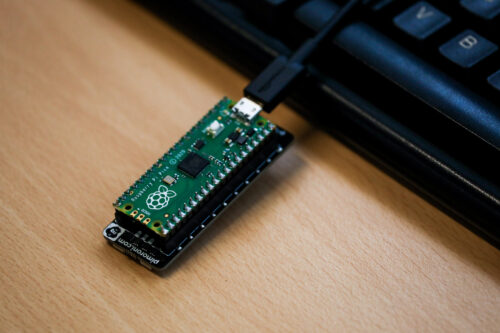
Raspberry Pi Pico with its inbuilt LED blinking.
The Raspberry Pi Pico microcontroller.

Now, thanks to our brand-new and free ‘Introduction to Raspberry Pi Pico’ learning path, young coders can easily join in and make their own cool Pico projects! This free learning path has six guided projects to help kids to independently develop their coding skills, and their skills in physical computing and electronics.

A girl creates a physical computing project.
Physical computing is a great way to help young people get creative with coding.

In this post, I’ll tell you about Raspberry Pi Pico, what kids can make by following our free ‘Intro to Pico’ path, and what skills they will be learning.

Meet Raspberry Pi Pico

Raspberry Pi Pico is a physical computing device that is low-cost and easy to use. It’s much smaller than any Raspberry Pi computer, and it needs much less power. That’s because it’s not a full computer but instead a microcontroller. That means Pico is a device that you program by writing code on any computer, and then sending that code to Pico via a USB cable.

Raspberry Pi Pico has GPIO pins (like Raspberry Pi computers do). These pins mean it can interact with different types of physical computing components, such as buttons, buzzers, and LEDs.

In the ‘Intro to Raspberry Pi Pico’ path, we’ve designed new digital making projects specifically using Pico. By following the projects in the path, young people learn to make things with different electronic components. They’ll bring to life their own LED fireflies; they’ll make music with a sound machine and dial (a potentiometer); they’ll look after themselves and people around them by making a mood indicator and a heart rate visualiser. To find out more, visit the path, or scroll to the bottom of this post and click on ‘Details about the projects’.

The specially designed structure of our learning paths helps kids become confident and independent coders and digital makers. Through this project path, we want to show young people what is possible with Raspberry Pi Pico and inspire them to continue their digital making journey beyond the six projects. Seeing tech creations from our amazing community is super special to us, and we would love to hear about what your young coders have made with Pico. Kids can share their projects in the path gallery, or you can tag us on social media if you post photos!   

alt=""

Learning skills and independence with our project paths 

While young people make all these Raspberry Pi Pico projects, they will learn the skills and independence to make and code their very own, unique creations with a Pico. We have designed our new project paths to help kids become independent digital makers. As they progress through a path, kids gain new skills, practise what they have learnt, and finally write and follow their own project brief. 

Our learning paths help kids develop many of the skills that are important to all coders and digital makers, no matter how much experience they have: 

  • How to turn an idea on paper into a tech creation
  • How to debug a project
  • How to combine new information with what they already know about digital making 

The learning paths also encourage kids to make projects about the things that matter to them.  

Key questions answered

Who is this path for?

We have written the projects in this path with young people around the age of 9 to 13 in mind. 

Programs for Raspberry Pi Pico are written in a text-based language called MicroPython. That means a young person who wants to start the ‘Intro to Pico’ path needs to be familiar with typing on a keyboard.

A young person codes at a Raspberry Pi computer.

If your kid has never coded in a text-based language before, they could complete our free ‘Introduction to Python‘ project path first, but this is not a prerequisite.

What will young people learn?

To help with the programming aspects of the projects, the instructions in the path tell young people about:  

  • Displaying output
  • Arithmetic expressions
  • Importing from a library
  • While loops
  • Nested if statements
  • Defining and calling functions
  • Events
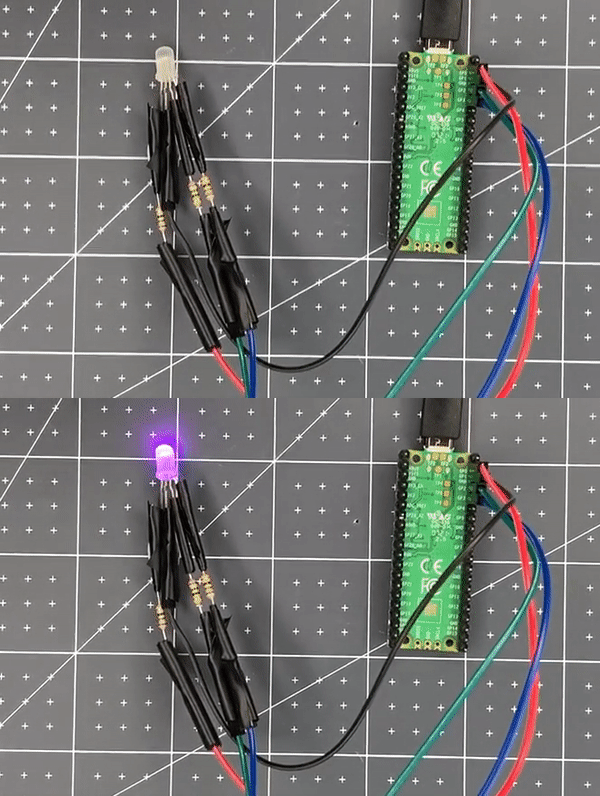
Raspberry Pi Pico attached with jumper wires to a purple LED.
We still get excited by a flashing LED.

One of the great things about this project path is that it helps young people explore physical computing and electronics. In the ‘Intro to Pico’ path, they’ll use:

  • Single-colour LEDs
  • Multi-colour LEDs (so-called RGB LEDs)
  • Buzzers
  • Switches (including switches the kids will make out of craft materials!)
  • Buttons
  • Potentiometers (dials)

How much time is needed to complete the path?

We’ve designed the path to be completed in around six one-hour sessions, with one hour per project. However, the project instructions encourage kids to upgrade their projects and go further if they wish. This means that they might want to spend a little more time getting their projects exactly as they imagine. 

What software is needed for the projects?

Young people need a web browser so they can follow the project instructions. The first two projects in the path provide detailed instructions for how to install the free software needed for the projects. 

alt=""
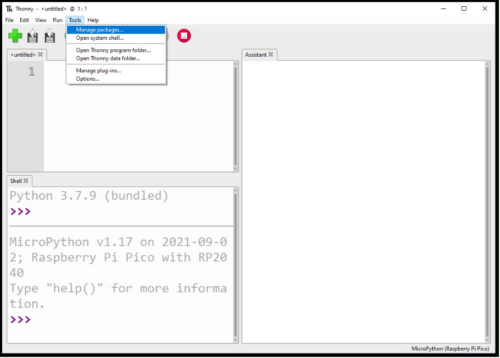
The projects in the path show you how to program Raspberry Pi Pico using MicroPython in the Thonny software.

What hardware is needed for these projects?

The first step of each project lists what components are needed to create the project. You can purchase a kit from Kitronik or from Pimoroni that includes all of the components used in the path:

‘Intro to Raspberry Pi Pico’ kit list (click here)

  • 1 × soldered Raspberry Pi Pico
  • 1 × USB cable
  • 1 × red LED
  • 1 × blue LED
  • 2 × yellow LEDs
  • 6 × single-colour LEDs (random)
  • 3 × RGB LEDs
  • 15 × 75 ohm resistors (max 220 ohm)
  • 2 × potentiometers
  • 8 × push buttons (optional, these can be made from crafting materials)
  • 15 × pin–socket jumper wires
  • 38 × socket–socket jumper wires
  • 4 × pin–pin jumper wires

What can young people do next?

Explore Python coding with us 

If your young coders enjoy MicroPython, they’ll also love our Python learning paths: ‘Introduction to Python‘ and ‘More Python‘. Both are structured in the same way as our Pico path, and will help young people learn Python while creating their own visual designs.

A girl points happily at a project on the Raspberry Pi Foundation's projects site.
Details about the projects in ‘Intro to Raspberry Pi Pico’

The ‘Intro to Raspberry Pi Pico’ path is structured according to our Digital Making Framework, with three Explore projects, two Design projects, and a final Invent project. You can also check out our learning graph to see the progression of skills and knowledge throughout the path.

Explore project 1: LED firefly


The ‘LED firefly’ project introduces creators to Raspberry Pi Pico while they make their first project with a blinking LED. They program the LED with a blink pattern that is common to fireflies in the wild. To upgrade their projects, creators can place their LED firefly into a glass jar to create a twinkling effect.  

Explore project 2: Party popper


‘Party popper’ introduces creators to the RGB LED and a buzzer. To form the popper, they craft a pull switch out of kitchen foil and cardboard. When the popper is activated, the RGB LED flashes in their chosen colour, and a ‘tada’ sound plays on the buzzer. 

Explore project 3: Beating heart


‘Beating heart’ uses a potentiometer (dial) to control the pulsing speed of an LED. Creators craft their own hearts using red paper and origami before placing the pulsing LED inside. In this way, they create a model of a heart they can use to learn about medicine or to bring to life a favourite toy. 

Design project 1: Mood indicator


In the ‘Mood indicator’ project, kids use switches and an RGB LED to create a device that can communicate a need or a mood to another person. This Design project gives young creators lots of opportunities to use their new skills to create something personal to them.

Design project 2: Sound machine


‘Sound machine’ is a project for kids to work with the different tones that a buzzer can make. They can use the buzzer to create sound effects, or to recreate their favourite songs. Once they have decided on their sounds, they can think about how a user of their project might choose to play them. 

Invent project: Sensory gadget


This project gives creators that chance to pick their favourite elements of the path to create something totally unique to them. They could make all sorts of sensory gadgets, from a Picosaber to a candle that can be blown out. Creators are encouraged to showcase their creations in the path gallery to give other young makers inspiration. 

The post Get kids coding and learning electronics with Raspberry Pi Pico appeared first on Raspberry Pi.

Federal Hearing about Rights under GPL

Post Syndicated from Bradley M. Kuhn original http://ebb.org/bkuhn/blog/2022/05/11/vizio-gpl-federal-hearing.html

[ This is
a crosspost
from my professional blog at Software Freedom Conservancy
(SFC)
. I encourage you
to use
that copy of the post as the canonical linkage for this essay — I
crossposted here merely for posterity and to reach a wider
audience. ]

Possible Opportunity for the Public To Hear Oral Arguments in Key GPL Enforcement Case

In our previous update regarding our copyleft
enforcement lawsuit against Vizio
, we talked about how Vizio
“removed” the case to USA federal court (namely, the Central
District of California), and how we filed a motion to “remand”
the case back to state court. While this all seems like minor legal
wrangling early in a case, this very first skirmish in our case goes to the
very heart of the right for software repair for consumers. While it won’t
be a final decision in the case, this motion will be the first indication
whether the federal courts view the GPL as purely a copyright license, or
as a contract, or as both. That question has been central to legal debate
about the GPL for decades, and, thanks to our case, for the first time, a
federal Court will directly consider this question.

Our view (and the view of many attorneys whose opinions we trust) and which is supported by substantial case law, is that the
GPL functions as both a copyright license and a contract, and that third
parties who receive distribution of GPL’d (and LGPL’d) software are
third-party beneficiaries. We’ve done both copyright-based and
contract-based enforcement, and both have their advantages. Contract-based enforcement as a third-party has advantages that are central to the GPL’s policy goals. Consumers are the first to discover violations in the first place. Consumers are the most likely to utilize complete, corresponding source code (CCS) to enhance their use of the products they have purchased. Third-party, contractual based enforcement gives consumers legal authority when they ask companies for access to the source code that should be available to them. In other words, this approach gives consumers the
ability to ask the Court directly for the most
important
thing that copyleft assures: a right to receive the
CCS and “the scripts used to control
compilation and installation of the executable”. Indeed, in our suit we have asked only for access to the source code, not for any money.

Our case
now is the first of its kind to adjudicate the third-party beneficiary
contractual theory. We are excited that a federal district Court is poised
to give its first answer to the central question to this endeavor, namely:
“Are the GPL and LGPL merely copyright licenses, and thus
preempted and only subject matter for the US federal courts, or can a
third-party bring a contract claim in state court?” If this
question intrigues you, we encourage you to read our motion
for remand
, Vizio’s reply to that motion
and our rebuttal reply.

Most importantly, clear your calendar for this Friday 13 May 2022 at 10:30
US/Pacific! While Judge Staton may chose to rule on this motion strictly
based on those paper filings, the judge has scheduled a hearing for
that date and time. What’s more, anyone in the world can attend this hearing to
listen! Instructions for how to
attend are
found on Judge Staton’s
website
0.

While, as FOSS activists, we’re very sad that the Judge has
chosen to use a proprietary videochat platform, we’re glad that
PSTN dial-in
is provided, and we’ll be dialing in and encourage you to do so as well.
Watch our microblog for live updates!


0 Please
take careful note of the warning on the Judge’s website: Recording,
copying, photographing and rebroadcasting of court proceedings is prohibited
by federal law.
Remember: you can take as many notes as you like, and
even live blog/microblog what you hear, but take great care to follow the
directives on Judge Staton’s website.
Federal Hearing about Rights under GPL

Post Syndicated from Bradley M. Kuhn original http://ebb.org/bkuhn/blog/2022/05/11/vizio-gpl-federal-hearing.html

[ This is
a crosspost
from my professional blog at Software Freedom Conservancy
(SFC)
. I encourage you
to use
that copy of the post as the canonical linkage for this essay — I
crossposted here merely for posterity and to reach a wider
audience. ]

Possible Opportunity for the Public To Hear Oral Arguments in Key GPL Enforcement Case

In our previous update regarding our copyleft
enforcement lawsuit against Vizio
, we talked about how Vizio
“removed” the case to USA federal court (namely, the Central
District of California), and how we filed a motion to “remand”
the case back to state court. While this all seems like minor legal
wrangling early in a case, this very first skirmish in our case goes to the
very heart of the right for software repair for consumers. While it won’t
be a final decision in the case, this motion will be the first indication
whether the federal courts view the GPL as purely a copyright license, or
as a contract, or as both. That question has been central to legal debate
about the GPL for decades, and, thanks to our case, for the first time, a
federal Court will directly consider this question.

Our view (and the view of many attorneys whose opinions we trust) and which is supported by substantial case law, is that the
GPL functions as both a copyright license and a contract, and that third
parties who receive distribution of GPL’d (and LGPL’d) software are
third-party beneficiaries. We’ve done both copyright-based and
contract-based enforcement, and both have their advantages. Contract-based enforcement as a third-party has advantages that are central to the GPL’s policy goals. Consumers are the first to discover violations in the first place. Consumers are the most likely to utilize complete, corresponding source code (CCS) to enhance their use of the products they have purchased. Third-party, contractual based enforcement gives consumers legal authority when they ask companies for access to the source code that should be available to them. In other words, this approach gives consumers the
ability to ask the Court directly for the most
important
thing that copyleft assures: a right to receive the
CCS and “the scripts used to control
compilation and installation of the executable”. Indeed, in our suit we have asked only for access to the source code, not for any money.

Our case
now is the first of its kind to adjudicate the third-party beneficiary
contractual theory. We are excited that a federal district Court is poised
to give its first answer to the central question to this endeavor, namely:
“Are the GPL and LGPL merely copyright licenses, and thus
preempted and only subject matter for the US federal courts, or can a
third-party bring a contract claim in state court?” If this
question intrigues you, we encourage you to read our motion
for remand
, Vizio’s reply to that motion
and our rebuttal reply.

Most importantly, clear your calendar for this Friday 13 May 2022 at 10:30
US/Pacific! While Judge Staton may chose to rule on this motion strictly
based on those paper filings, the judge has scheduled a hearing for
that date and time. What’s more, anyone in the world can attend this hearing to
listen! Instructions for how to
attend are
found on Judge Staton’s
website
0.

While, as FOSS activists, we’re very sad that the Judge has
chosen to use a proprietary videochat platform, we’re glad that
PSTN dial-in
is provided, and we’ll be dialing in and encourage you to do so as well.
Watch our microblog for live updates!


0 Please
take careful note of the warning on the Judge’s website: Recording,
copying, photographing and rebroadcasting of court proceedings is prohibited
by federal law.
Remember: you can take as many notes as you like, and
even live blog/microblog what you hear, but take great care to follow the
directives on Judge Staton’s website.
Federal Hearing about Rights under GPL

Post Syndicated from Bradley M. Kuhn original http://ebb.org/bkuhn/blog/2022/05/11/vizio-gpl-federal-hearing.html

[ This is
a crosspost
from my professional blog at Software Freedom Conservancy
(SFC)
. I encourage you
to use
that copy of the post as the canonical linkage for this essay — I
crossposted here merely for posterity and to reach a wider
audience. ]

Possible Opportunity for the Public To Hear Oral Arguments in Key GPL Enforcement Case

In our previous update regarding our copyleft
enforcement lawsuit against Vizio
, we talked about how Vizio
“removed” the case to USA federal court (namely, the Central
District of California), and how we filed a motion to “remand”
the case back to state court. While this all seems like minor legal
wrangling early in a case, this very first skirmish in our case goes to the
very heart of the right for software repair for consumers. While it won’t
be a final decision in the case, this motion will be the first indication
whether the federal courts view the GPL as purely a copyright license, or
as a contract, or as both. That question has been central to legal debate
about the GPL for decades, and, thanks to our case, for the first time, a
federal Court will directly consider this question.

Our view (and the view of many attorneys whose opinions we trust) and which is supported by substantial case law, is that the
GPL functions as both a copyright license and a contract, and that third
parties who receive distribution of GPL’d (and LGPL’d) software are
third-party beneficiaries. We’ve done both copyright-based and
contract-based enforcement, and both have their advantages. Contract-based enforcement as a third-party has advantages that are central to the GPL’s policy goals. Consumers are the first to discover violations in the first place. Consumers are the most likely to utilize complete, corresponding source code (CCS) to enhance their use of the products they have purchased. Third-party, contractual based enforcement gives consumers legal authority when they ask companies for access to the source code that should be available to them. In other words, this approach gives consumers the
ability to ask the Court directly for the most
important
thing that copyleft assures: a right to receive the
CCS and “the scripts used to control
compilation and installation of the executable”. Indeed, in our suit we have asked only for access to the source code, not for any money.

Our case
now is the first of its kind to adjudicate the third-party beneficiary
contractual theory. We are excited that a federal district Court is poised
to give its first answer to the central question to this endeavor, namely:
“Are the GPL and LGPL merely copyright licenses, and thus
preempted and only subject matter for the US federal courts, or can a
third-party bring a contract claim in state court?” If this
question intrigues you, we encourage you to read our motion
for remand
, Vizio’s reply to that motion
and our rebuttal reply.

Most importantly, clear your calendar for this Friday 13 May 2022 at 10:30
US/Pacific! While Judge Staton may chose to rule on this motion strictly
based on those paper filings, the judge has scheduled a hearing for
that date and time. What’s more, anyone in the world can attend this hearing to
listen! Instructions for how to
attend are
found on Judge Staton’s
website
0.

While, as FOSS activists, we’re very sad that the Judge has
chosen to use a proprietary videochat platform, we’re glad that
PSTN dial-in
is provided, and we’ll be dialing in and encourage you to do so as well.
Watch our microblog for live updates!


0 Please
take careful note of the warning on the Judge’s website: Recording,
copying, photographing and rebroadcasting of court proceedings is prohibited
by federal law.
Remember: you can take as many notes as you like, and
even live blog/microblog what you hear, but take great care to follow the
directives on Judge Staton’s website.

Federal Hearing about Rights under GPL

Post Syndicated from Bradley M. Kuhn original http://ebb.org/bkuhn/blog/2022/05/11/vizio-gpl-federal-hearing.html

[ This is
a crosspost
from my professional blog at Software Freedom Conservancy
(SFC)
. I encourage you
to use
that copy of the post as the canonical linkage for this essay — I
crossposted here merely for posterity and to reach a wider
audience. ]

Possible Opportunity for the Public To Hear Oral Arguments in Key GPL Enforcement Case

In our previous update regarding our copyleft
enforcement lawsuit against Vizio
, we talked about how Vizio
“removed” the case to USA federal court (namely, the Central
District of California), and how we filed a motion to “remand”
the case back to state court. While this all seems like minor legal
wrangling early in a case, this very first skirmish in our case goes to the
very heart of the right for software repair for consumers. While it won’t
be a final decision in the case, this motion will be the first indication
whether the federal courts view the GPL as purely a copyright license, or
as a contract, or as both. That question has been central to legal debate
about the GPL for decades, and, thanks to our case, for the first time, a
federal Court will directly consider this question.

Our view (and the view of many attorneys whose opinions we trust) and which is supported by substantial case law, is that the
GPL functions as both a copyright license and a contract, and that third
parties who receive distribution of GPL’d (and LGPL’d) software are
third-party beneficiaries. We’ve done both copyright-based and
contract-based enforcement, and both have their advantages. Contract-based enforcement as a third-party has advantages that are central to the GPL’s policy goals. Consumers are the first to discover violations in the first place. Consumers are the most likely to utilize complete, corresponding source code (CCS) to enhance their use of the products they have purchased. Third-party, contractual based enforcement gives consumers legal authority when they ask companies for access to the source code that should be available to them. In other words, this approach gives consumers the
ability to ask the Court directly for the most
important
thing that copyleft assures: a right to receive the
CCS and “the scripts used to control
compilation and installation of the executable”. Indeed, in our suit we have asked only for access to the source code, not for any money.

Our case
now is the first of its kind to adjudicate the third-party beneficiary
contractual theory. We are excited that a federal district Court is poised
to give its first answer to the central question to this endeavor, namely:
“Are the GPL and LGPL merely copyright licenses, and thus
preempted and only subject matter for the US federal courts, or can a
third-party bring a contract claim in state court?” If this
question intrigues you, we encourage you to read our motion
for remand
, Vizio’s reply to that motion
and our rebuttal reply.

Most importantly, clear your calendar for this Friday 13 May 2022 at 10:30
US/Pacific! While Judge Staton may chose to rule on this motion strictly
based on those paper filings, the judge has scheduled a hearing for
that date and time. What’s more, anyone in the world can attend this hearing to
listen! Instructions for how to
attend are
found on Judge Staton’s
website
0.

While, as FOSS activists, we’re very sad that the Judge has
chosen to use a proprietary videochat platform, we’re glad that
PSTN dial-in
is provided, and we’ll be dialing in and encourage you to do so as well.
Watch our microblog for live updates!


0 Please
take careful note of the warning on the Judge’s website: Recording,
copying, photographing and rebroadcasting of court proceedings is prohibited
by federal law.
Remember: you can take as many notes as you like, and
even live blog/microblog what you hear, but take great care to follow the
directives on Judge Staton’s website.

Federal Hearing about Rights under GPL

Post Syndicated from Bradley M. Kuhn original http://ebb.org/bkuhn/blog/2022/05/11/vizio-gpl-federal-hearing.html

[ This is
a crosspost
from my professional blog at Software Freedom Conservancy
(SFC)
. I encourage you
to use
that copy of the post as the canonical linkage for this essay — I
crossposted here merely for posterity and to reach a wider
audience. ]

Possible Opportunity for the Public To Hear Oral Arguments in Key GPL Enforcement Case

In our previous update regarding our copyleft
enforcement lawsuit against Vizio
, we talked about how Vizio
“removed” the case to USA federal court (namely, the Central
District of California), and how we filed a motion to “remand”
the case back to state court. While this all seems like minor legal
wrangling early in a case, this very first skirmish in our case goes to the
very heart of the right for software repair for consumers. While it won’t
be a final decision in the case, this motion will be the first indication
whether the federal courts view the GPL as purely a copyright license, or
as a contract, or as both. That question has been central to legal debate
about the GPL for decades, and, thanks to our case, for the first time, a
federal Court will directly consider this question.

Our view (and the view of many attorneys whose opinions we trust) and which is supported by substantial case law, is that the
GPL functions as both a copyright license and a contract, and that third
parties who receive distribution of GPL’d (and LGPL’d) software are
third-party beneficiaries. We’ve done both copyright-based and
contract-based enforcement, and both have their advantages. Contract-based enforcement as a third-party has advantages that are central to the GPL’s policy goals. Consumers are the first to discover violations in the first place. Consumers are the most likely to utilize complete, corresponding source code (CCS) to enhance their use of the products they have purchased. Third-party, contractual based enforcement gives consumers legal authority when they ask companies for access to the source code that should be available to them. In other words, this approach gives consumers the
ability to ask the Court directly for the most
important
thing that copyleft assures: a right to receive the
CCS and “the scripts used to control
compilation and installation of the executable”. Indeed, in our suit we have asked only for access to the source code, not for any money.

Our case
now is the first of its kind to adjudicate the third-party beneficiary
contractual theory. We are excited that a federal district Court is poised
to give its first answer to the central question to this endeavor, namely:
“Are the GPL and LGPL merely copyright licenses, and thus
preempted and only subject matter for the US federal courts, or can a
third-party bring a contract claim in state court?” If this
question intrigues you, we encourage you to read our motion
for remand
, Vizio’s reply to that motion
and our rebuttal reply.

Most importantly, clear your calendar for this Friday 13 May 2022 at 10:30
US/Pacific! While Judge Staton may chose to rule on this motion strictly
based on those paper filings, the judge has scheduled a hearing for
that date and time. What’s more, anyone in the world can attend this hearing to
listen! Instructions for how to
attend are
found on Judge Staton’s
website
0.

While, as FOSS activists, we’re very sad that the Judge has
chosen to use a proprietary videochat platform, we’re glad that
PSTN dial-in
is provided, and we’ll be dialing in and encourage you to do so as well.
Watch our microblog for live updates!


0 Please
take careful note of the warning on the Judge’s website: Recording,
copying, photographing and rebroadcasting of court proceedings is prohibited
by federal law.
Remember: you can take as many notes as you like, and
even live blog/microblog what you hear, but take great care to follow the
directives on Judge Staton’s website.
Federal Hearing about Rights under GPL

Post Syndicated from Bradley M. Kuhn original http://ebb.org/bkuhn/blog/2022/05/11/vizio-gpl-federal-hearing.html

[ This is
a crosspost
from my professional blog at Software Freedom Conservancy
(SFC)
. I encourage you
to use
that copy of the post as the canonical linkage for this essay — I
crossposted here merely for posterity and to reach a wider
audience. ]

Possible Opportunity for the Public To Hear Oral Arguments in Key GPL Enforcement Case

In our previous update regarding our copyleft
enforcement lawsuit against Vizio
, we talked about how Vizio
“removed” the case to USA federal court (namely, the Central
District of California), and how we filed a motion to “remand”
the case back to state court. While this all seems like minor legal
wrangling early in a case, this very first skirmish in our case goes to the
very heart of the right for software repair for consumers. While it won’t
be a final decision in the case, this motion will be the first indication
whether the federal courts view the GPL as purely a copyright license, or
as a contract, or as both. That question has been central to legal debate
about the GPL for decades, and, thanks to our case, for the first time, a
federal Court will directly consider this question.

Our view (and the view of many attorneys whose opinions we trust) and which is supported by substantial case law, is that the
GPL functions as both a copyright license and a contract, and that third
parties who receive distribution of GPL’d (and LGPL’d) software are
third-party beneficiaries. We’ve done both copyright-based and
contract-based enforcement, and both have their advantages. Contract-based enforcement as a third-party has advantages that are central to the GPL’s policy goals. Consumers are the first to discover violations in the first place. Consumers are the most likely to utilize complete, corresponding source code (CCS) to enhance their use of the products they have purchased. Third-party, contractual based enforcement gives consumers legal authority when they ask companies for access to the source code that should be available to them. In other words, this approach gives consumers the
ability to ask the Court directly for the most
important
thing that copyleft assures: a right to receive the
CCS and “the scripts used to control
compilation and installation of the executable”. Indeed, in our suit we have asked only for access to the source code, not for any money.

Our case
now is the first of its kind to adjudicate the third-party beneficiary
contractual theory. We are excited that a federal district Court is poised
to give its first answer to the central question to this endeavor, namely:
“Are the GPL and LGPL merely copyright licenses, and thus
preempted and only subject matter for the US federal courts, or can a
third-party bring a contract claim in state court?” If this
question intrigues you, we encourage you to read our motion
for remand
, Vizio’s reply to that motion
and our rebuttal reply.

Most importantly, clear your calendar for this Friday 13 May 2022 at 10:30
US/Pacific! While Judge Staton may chose to rule on this motion strictly
based on those paper filings, the judge has scheduled a hearing for
that date and time. What’s more, anyone in the world can attend this hearing to
listen! Instructions for how to
attend are
found on Judge Staton’s
website
0.

While, as FOSS activists, we’re very sad that the Judge has
chosen to use a proprietary videochat platform, we’re glad that
PSTN dial-in
is provided, and we’ll be dialing in and encourage you to do so as well.
Watch our microblog for live updates!


0 Please
take careful note of the warning on the Judge’s website: Recording,
copying, photographing and rebroadcasting of court proceedings is prohibited
by federal law.
Remember: you can take as many notes as you like, and
even live blog/microblog what you hear, but take great care to follow the
directives on Judge Staton’s website.

Federal Hearing about Rights under GPL

Post Syndicated from Bradley M. Kuhn original http://ebb.org/bkuhn/blog/2022/05/11/vizio-gpl-federal-hearing.html

[ This is
a crosspost
from my professional blog at Software Freedom Conservancy
(SFC)
. I encourage you
to use
that copy of the post as the canonical linkage for this essay — I
crossposted here merely for posterity and to reach a wider
audience. ]

Possible Opportunity for the Public To Hear Oral Arguments in Key GPL Enforcement Case

In our previous update regarding our copyleft
enforcement lawsuit against Vizio
, we talked about how Vizio
“removed” the case to USA federal court (namely, the Central
District of California), and how we filed a motion to “remand”
the case back to state court. While this all seems like minor legal
wrangling early in a case, this very first skirmish in our case goes to the
very heart of the right for software repair for consumers. While it won’t
be a final decision in the case, this motion will be the first indication
whether the federal courts view the GPL as purely a copyright license, or
as a contract, or as both. That question has been central to legal debate
about the GPL for decades, and, thanks to our case, for the first time, a
federal Court will directly consider this question.

Our view (and the view of many attorneys whose opinions we trust) and which is supported by substantial case law, is that the
GPL functions as both a copyright license and a contract, and that third
parties who receive distribution of GPL’d (and LGPL’d) software are
third-party beneficiaries. We’ve done both copyright-based and
contract-based enforcement, and both have their advantages. Contract-based enforcement as a third-party has advantages that are central to the GPL’s policy goals. Consumers are the first to discover violations in the first place. Consumers are the most likely to utilize complete, corresponding source code (CCS) to enhance their use of the products they have purchased. Third-party, contractual based enforcement gives consumers legal authority when they ask companies for access to the source code that should be available to them. In other words, this approach gives consumers the
ability to ask the Court directly for the most
important
thing that copyleft assures: a right to receive the
CCS and “the scripts used to control
compilation and installation of the executable”. Indeed, in our suit we have asked only for access to the source code, not for any money.

Our case
now is the first of its kind to adjudicate the third-party beneficiary
contractual theory. We are excited that a federal district Court is poised
to give its first answer to the central question to this endeavor, namely:
“Are the GPL and LGPL merely copyright licenses, and thus
preempted and only subject matter for the US federal courts, or can a
third-party bring a contract claim in state court?” If this
question intrigues you, we encourage you to read our motion
for remand
, Vizio’s reply to that motion
and our rebuttal reply.

Most importantly, clear your calendar for this Friday 13 May 2022 at 10:30
US/Pacific! While Judge Staton may chose to rule on this motion strictly
based on those paper filings, the judge has scheduled a hearing for
that date and time. What’s more, anyone in the world can attend this hearing to
listen! Instructions for how to
attend are
found on Judge Staton’s
website
0.

While, as FOSS activists, we’re very sad that the Judge has
chosen to use a proprietary videochat platform, we’re glad that
PSTN dial-in
is provided, and we’ll be dialing in and encourage you to do so as well.
Watch our microblog for live updates!


0 Please
take careful note of the warning on the Judge’s website: Recording,
copying, photographing and rebroadcasting of court proceedings is prohibited
by federal law.
Remember: you can take as many notes as you like, and
even live blog/microblog what you hear, but take great care to follow the
directives on Judge Staton’s website.

Federal Hearing about Rights under GPL

Post Syndicated from Bradley M. Kuhn original http://ebb.org/bkuhn/blog/2022/05/11/vizio-gpl-federal-hearing.html

[ This is
a crosspost
from my professional blog at Software Freedom Conservancy
(SFC)
. I encourage you
to use
that copy of the post as the canonical linkage for this essay — I
crossposted here merely for posterity and to reach a wider
audience. ]

Possible Opportunity for the Public To Hear Oral Arguments in Key GPL Enforcement Case

In our previous update regarding our copyleft
enforcement lawsuit against Vizio
, we talked about how Vizio
“removed” the case to USA federal court (namely, the Central
District of California), and how we filed a motion to “remand”
the case back to state court. While this all seems like minor legal
wrangling early in a case, this very first skirmish in our case goes to the
very heart of the right for software repair for consumers. While it won’t
be a final decision in the case, this motion will be the first indication
whether the federal courts view the GPL as purely a copyright license, or
as a contract, or as both. That question has been central to legal debate
about the GPL for decades, and, thanks to our case, for the first time, a
federal Court will directly consider this question.

Our view (and the view of many attorneys whose opinions we trust) and which is supported by substantial case law, is that the
GPL functions as both a copyright license and a contract, and that third
parties who receive distribution of GPL’d (and LGPL’d) software are
third-party beneficiaries. We’ve done both copyright-based and
contract-based enforcement, and both have their advantages. Contract-based enforcement as a third-party has advantages that are central to the GPL’s policy goals. Consumers are the first to discover violations in the first place. Consumers are the most likely to utilize complete, corresponding source code (CCS) to enhance their use of the products they have purchased. Third-party, contractual based enforcement gives consumers legal authority when they ask companies for access to the source code that should be available to them. In other words, this approach gives consumers the
ability to ask the Court directly for the most
important
thing that copyleft assures: a right to receive the
CCS and “the scripts used to control
compilation and installation of the executable”. Indeed, in our suit we have asked only for access to the source code, not for any money.

Our case
now is the first of its kind to adjudicate the third-party beneficiary
contractual theory. We are excited that a federal district Court is poised
to give its first answer to the central question to this endeavor, namely:
“Are the GPL and LGPL merely copyright licenses, and thus
preempted and only subject matter for the US federal courts, or can a
third-party bring a contract claim in state court?” If this
question intrigues you, we encourage you to read our motion
for remand
, Vizio’s reply to that motion
and our rebuttal reply.

Most importantly, clear your calendar for this Friday 13 May 2022 at 10:30
US/Pacific! While Judge Staton may chose to rule on this motion strictly
based on those paper filings, the judge has scheduled a hearing for
that date and time. What’s more, anyone in the world can attend this hearing to
listen! Instructions for how to
attend are
found on Judge Staton’s
website
0.

While, as FOSS activists, we’re very sad that the Judge has
chosen to use a proprietary videochat platform, we’re glad that
PSTN dial-in
is provided, and we’ll be dialing in and encourage you to do so as well.
Watch our microblog for live updates!


0 Please
take careful note of the warning on the Judge’s website: Recording,
copying, photographing and rebroadcasting of court proceedings is prohibited
by federal law.
Remember: you can take as many notes as you like, and
even live blog/microblog what you hear, but take great care to follow the
directives on Judge Staton’s website.

The collective thoughts of the interwebz

Proudly powered by Ants