Tag Archives: astro pi

Young people can name a piece of space history with Astro Pi Mission Zero

Post Syndicated from Claire Given original https://www.raspberrypi.org/blog/free-beginner-coding-activity-astro-pi-mission-zero-name-space-history/

Your young people don’t need to wait to become astronauts to be part of a space mission! In Mission Zero, the free beginners’ coding activity of the European Astro Pi Challenge, young people can create a simple computer program to send to the International Space Station (ISS) today.
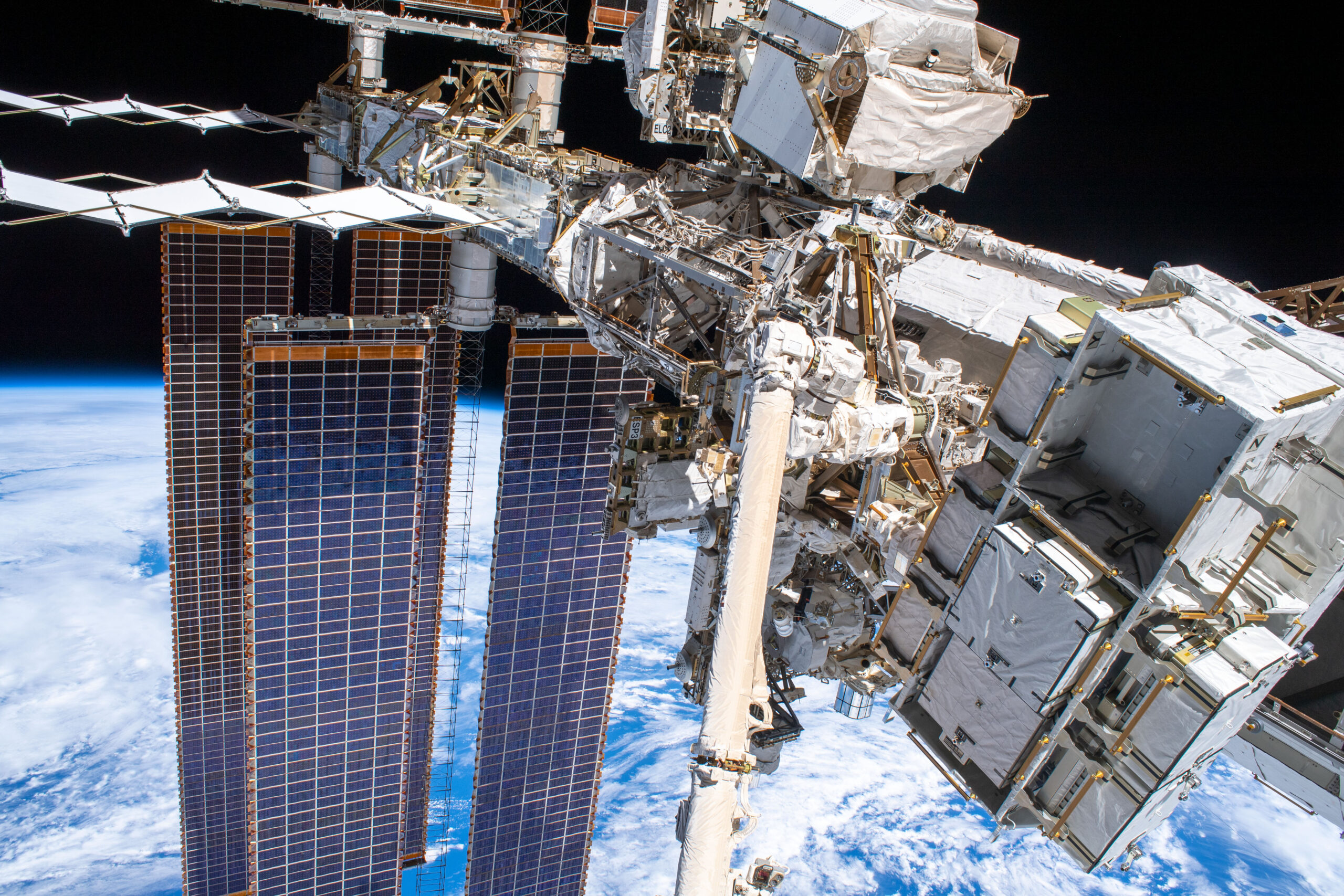
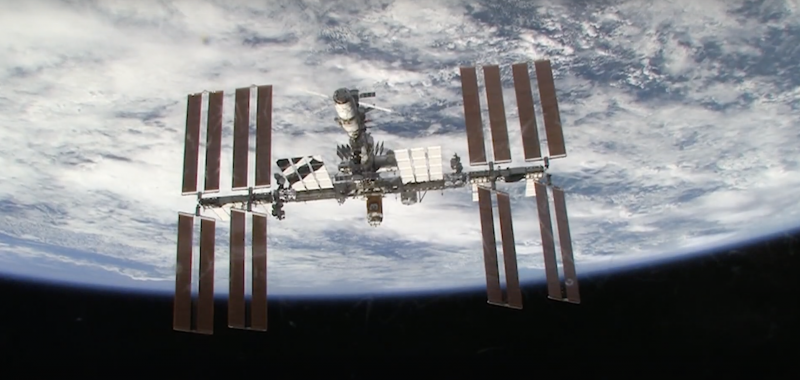
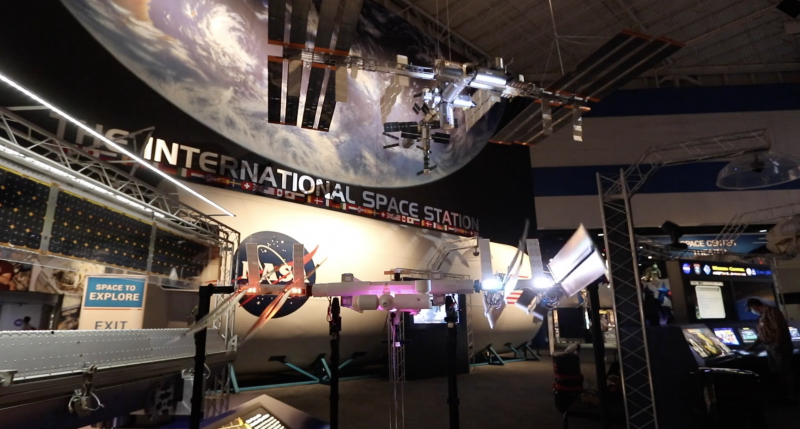
The International Space Station.
The International Space Station, where your young people’s Mission Zero code could run soon! © ESA–L. Parmitano, CC BY-SA 3.0 IGO

This year, young people taking part in Astro Pi Mission Zero have the historic chance to help name the special Raspberry Pi computers we are sending up to the ISS for the Astro Pi Challenge. Their voices will decide the names of these unique pieces of space exploration hardware.
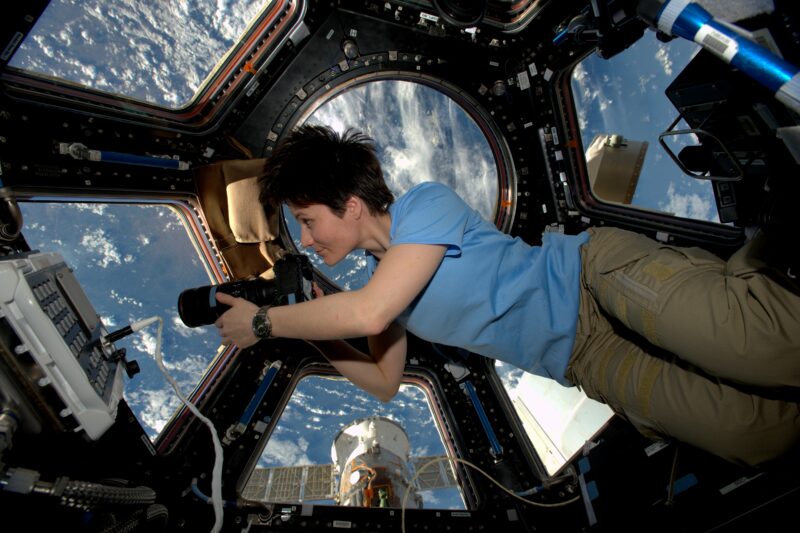
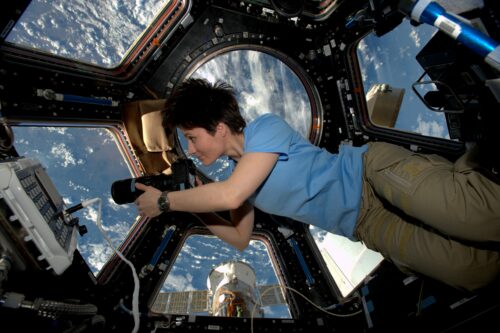
Astronaut Samantha Cristoforetti in the ISS's cupola.
Samantha Cristoforetti is one of the ESA astronauts who will be on the ISS when young people’s Mission Zero code runs. © ESA

Your young people can become part of a space mission today!

The European Astro Pi Challenge is a collaboration by us and ESA Education. Astro Pi Mission Zero is free, open to all young people up to age 19 from eligible countries*, and it’s designed for beginner coders.
Logo of Mission Zero, part of the European Astro Pi Challenge.

You can support participants easily, whether at home, in the classroom, or in a youth club. Simply sign up as a mentor and let your young people follow the step-by-step instructions we provide (in 19 European languages!) for writing their Mission Zero code online. Young people can complete Mission Zero in around an hour, and they don’t need any previous coding experience.

A mother and daughter do a coding activity together at a laptop at home.

Mission Zero is the perfect coding activity for parents and their children at home, for STEM or Scouts club leaders and attendees, and for teachers and students who are new to computer programming. You don’t need any special tech for Mission Zero participants. Any computer with a web browser and internet connection works for Mission Zero, because everything is done online.

We need young people to help name the Raspberry Pis we’re sending to space

Mission Zero participants follow our step-by-step instructions to create a simple program that takes a humidity reading on board the ISS and displays it for the astronauts — together with the participants’ own unique messages. And as part of their messages, they can vote for the name of the new hardware for the Astro Pi Challenge, hardware with Raspberry Pi computers at its heart.
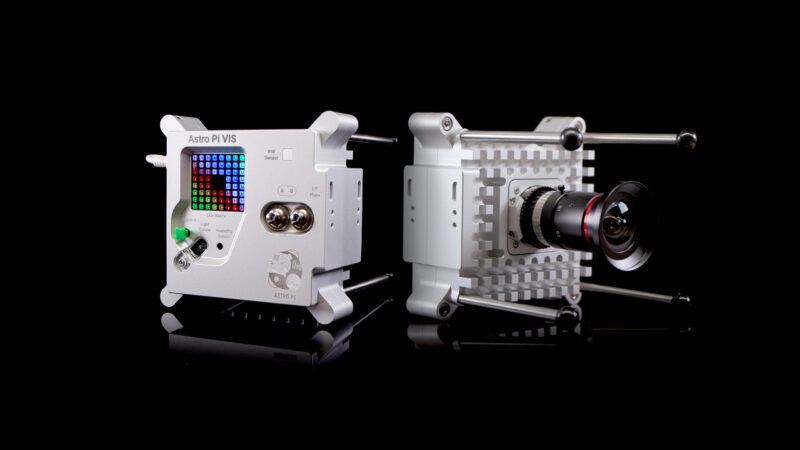
Astro Pi MK II hardware.
The shiny new Raspberry Pi-powered hardware for the Astro Pi Challenge, which will replace the Raspberry Pi-powered Astro Pi units that have run Astro Pi participants’ code on board the ISS every year since 2015.

The new Astro Pi hardware, which will travel up in a rocket to the ISS on 21 December, is so new that these special augmented computers don’t even have names yet. Participants in Astro Pi Mission Zero get to vote for a name inspired by our list of ten renowned European scientists. Their vote will be part of the message they send to space.
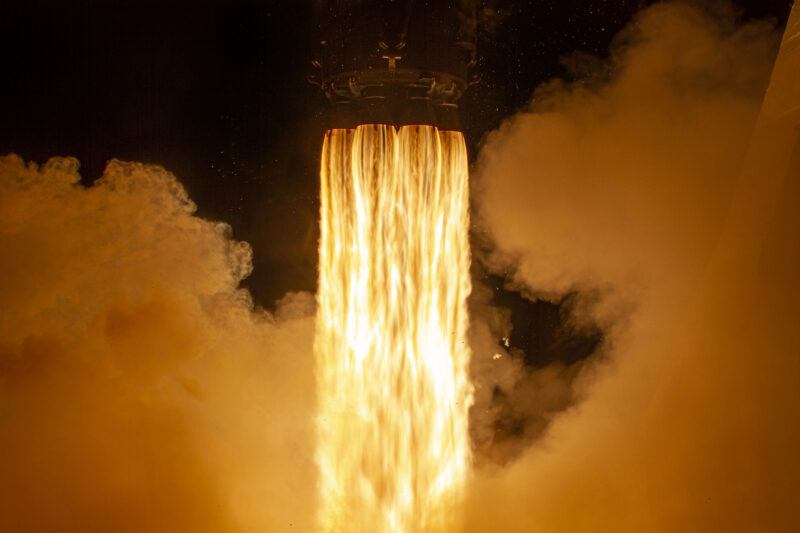
SpaceX’s Falcon 9 rocket carrying the Crew Dragon spits fire as it lifts off from Kennedy Space Center in Florida.
A SpaceX rocket will deliver the special Raspberry Pi computers to the ISS. © SpaceX

What do your young people want to say in space?

Your young people’s messages to the ISS astronauts can say anything they like (apart from swear words, of course). Maybe they want to send some encouraging words to the astronauts or tell them a joke. They can even design a cool pixel art image to show on the Astro Pi hardware’s display:
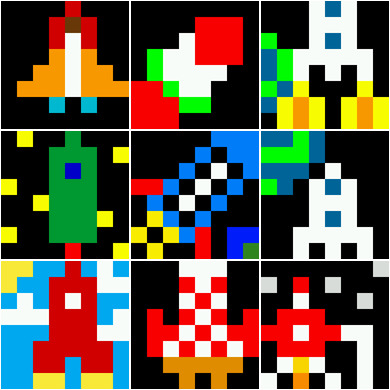
Pixel art from Astro Pi Mission Zero participants.
Some of the pixel art from last year’s Astro Pi Mission Zero participants.

Whatever else they code for their Mission Zero entry, they’re supporting the astronauts with their important work on board the ISS. Since Mission Zero participants tell the Astro Pi hardware to read and display the humidity level inside the ISS, they provide helpful information for the astronauts as they go about their tasks.

Their own place in space history

After a participant’s Mission Zero code has run and their message has been shown in the ISS, we’ll send you a special certificate for them so you can commemorate their space mission.
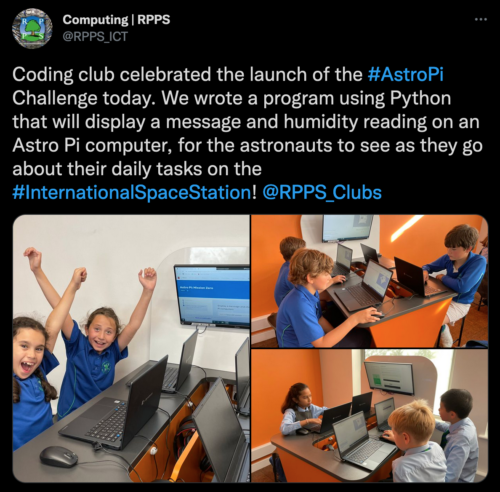
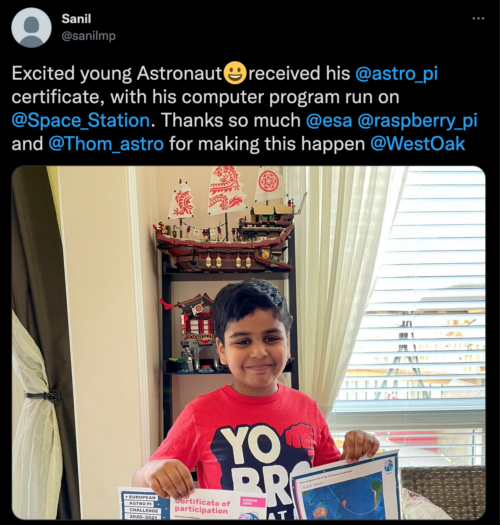
The certificate will feature their name, the exact date and time their code ran, and a world map to mark the place on Earth above which the ISS was while their message was visible up there in space.

10 key things about Astro Pi Mission Zero

  1. It’s young people’s unique chance to be part of a real space mission
  2. Participation is free
  3. Participants send the ISS astronauts their own unique message
  4. This year only, participants can help name the two special Raspberry Pi computers that are travelling up to the ISS
  5. Mission Zero is open to young people up to age 19 who live in eligible countries (more about eligibility here)
  6. It’s a beginners’ coding activity with step-by-step instructions, available in 19 languages
  7. Completing the activity takes about one hour — at home, in the classroom, or in a Scouts or coding club session
  8. The activity can be done online in a web browser on any computer
  9. Participants will receive a special certificate to help celebrate their space mission
  10. Mission Zero is open until 18 March 2022

If you don’t want to let any young people in your life miss out on this amazing opportunity, sign up as their Mission Zero mentor today.


* The European Astro Pi Challenge is run as a collaboration by us at the Raspberry Pi Foundation and ESA Education. That’s why participants need to be from an ESA Member State, or from Slovenia, Canada, Latvia, Lithuania, or Malta, which have agreements with ESA.

If you live elsewhere, it’s possible to partner with Mission Zero mentors and young people in an eligible country. You can work together to support the young people to form international Mission Zero teams that write programs together.

If you live elsewhere and cannot partner with people in an eligible country, Mission Zero is still an awesome and inspiring project for your young people to try out coding. While these young people’s code unfortunately won’t run on the ISS, they will receive a certificate to mark their efforts.

The post Young people can name a piece of space history with Astro Pi Mission Zero appeared first on Raspberry Pi.
We’re sending Raspberry Pi computers to space for the European Astro Pi Challenge

Post Syndicated from Olympia Brown original https://www.raspberrypi.org/blog/astro-pi-2021-news-rocket-launch-hardware/

We’re super excited to announce that the European Astro Pi Challenge is back for another year of amazing space-based coding adventures.

This time we are delighted to tell you that we’re upgrading the Raspberry Pi computers on the International Space Station (ISS) and adding new hardware to expand the range of experiments that young people can run in space!

What’s new with Astro Pi?

The first Astro Pi units were taken up to the ISS by British ESA astronaut Tim Peake in December 2015 as part of the Principia mission. Since then, 54000 young people from 26 countries have written code that has run on these specially augmented Raspberry Pi computers.

Working with our partners at the European Space Agency, we are now upgrading the Astro Pi units to include:

  • Raspberry Pi 4 Model B with 8GB RAM
  • Raspberry Pi High Quality Camera
  • Google Coral machine learning accelerator
  • Colour and luminosity sensor
  • Passive infrared sensor
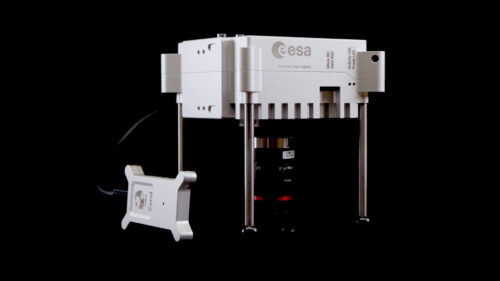
Astro Pi MK II hardware.
The augmented Raspberry Pi computers we are sending up to the International Space station, in all their glory

The units will continue to have a gyroscope; an accelerometer; a magnetometer; and humidity, temperature, and pressure sensors.

Astro Pi MK II hardware with Coral machine learning accelerator.
The little device on the left is the Google Coral machine learning accelerator

The new hardware makes it possible for teams to design new types of experiments. With the Raspberry Pi High Quality Camera they can take sharper, more detailed images, and, for the first time, teams will be able to get full-colour photos of the beauty of Earth from space. This will also enable teams to investigate plant health thanks to the higher-quality optical filter in conjunction with the IR-sensitive camera. Using the Coral machine learning accelerator, teams will also be able to develop machine learning models that allow high-speed, real-time processing.

Getting into space

The Astro Pi units, in their space-ready cases of machined aluminium, will travel to the ISS in December on the SpaceX Dragon Cargo rocket, launching from Kennedy Space Center. Once the resupply vehicle docks with the ISS, the units will be unpacked and set up ready to run Astro Pi participants’ code in 2022.

Getting the units ready for launch has been a significant effort from lots of people. Once we worked with our friends at ESA to agree on the new features and hardware, we commissioned the design of the new case from Jon Wells. Manufacturing was made significantly more challenging by the pandemic, not least because we weren’t able to attend the factory and had to interact over video calls.

ESA astronaut Samantha Cristoforetti aboard the ISS. Credit: ESA

Once we had the case and hardware ready, we could take on the huge battery of tests that are required before any equipment can be used on the ISS. These included the vibration test, to ensure that the Astro Pi units would survive the rigours of the launch; thermal testing, to make sure that units wouldn’t get too hot to touch; and stringent, military-grade electromagnetic emissions and susceptibility tests to guarantee that the Astro Pi computers wouldn’t interfere with any ISS systems, and would not themselves be affected by other equipment that is on board the space station.

Huge thanks to Jon Wells and our collaborators at Airbus, Google, MidOpt, and Shearline Precision Engineering for everything they’ve done to get us to the point where we were able to ship the new Astro Pi units to the Aerospace Logistics Technology Engineering Company (ALTEC) in Italy for final preparations before their launch.

There are two Astro Pi missions for young people to choose from: Mission Zero and Mission Space Lab. Young people can participate in one or both of the missions! Participation is free and open for young people up to age 19 in ESA member states (exceptions listed on the Astro Pi website).

Mission Zero

In Mission Zero, young people write a simple Python program that takes a sensor reading and displays a message on the LED screen. This year, participation in Mission Zero also gives young people the opportunity to vote for the names of the two new computers. Mission Zero can be completed in around an hour and is open to anyone aged 7 to 19 years old. Every eligible entry is guaranteed to run on board the ISS and participants will receive an official certificate with the exact time and location of the ISS when their program ran.

Mission Zero opens today and runs until 18 March 2022.

Mission Space Lab

Mission Space Lab is for teams of young people who want to run their own scientific experiments on the Astro Pi units aboard the ISS. It runs over eight months in four phases, from idea registration to data analysis. 

Have a look at the winning teams from last year for amazing examples of what teams have investigated in the past. But remember — the new Astro Pi computers offer exciting new ways of investigating life in space and on Earth. We can’t wait to see what ideas participants come up with this year. 

To start, Mission Space Lab team mentors just need to send us their team’s experiment idea by 29 October 2021.

Follow our progress

You can keep updated with all of the latest Astro Pi news, including the build-up to the rocket launch in December, by following the Astro Pi Twitter account.

The post We’re sending Raspberry Pi computers to space for the European Astro Pi Challenge appeared first on Raspberry Pi.
Amazing science from the winners of Astro Pi Mission Space Lab 2020/21

Post Syndicated from Claire Given original https://www.raspberrypi.org/blog/winners-astro-pi-mission-space-lab-20-21/

The Raspberry Pi Foundation and ESA Education are excited to announce the winners and highly commended Mission Space Lab teams of the 2020/21 European Astro Pi Challenge!

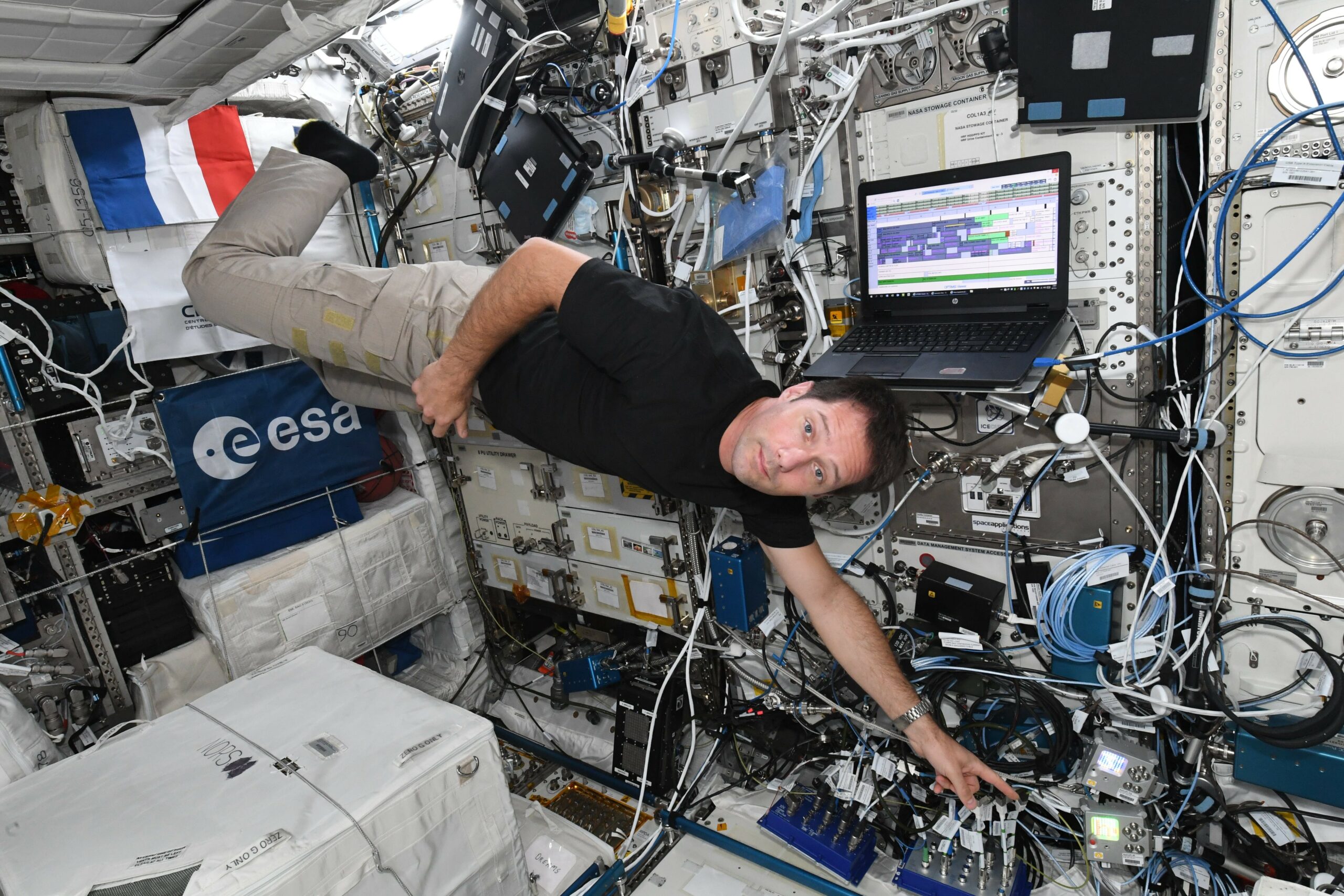
ESA Astronaut Thomas Pesquet with the Astro Pi computers aboard the International Space Station
ESA Astronaut Thomas Pesquet floating aboard the International Space Station with the two Astro Pi computers

In Mission Space Lab, teams of young people aged up to 19 create scientific experiments that run on the International Space Station’s two Astro Pi computers — space-hardened Raspberry Pis with cameras and an array of sensors.

In the final phase of Mission Space Lab, teams analyse the data captured during their experiment’s three-hour runtime on the ISS and write a short report describing their experiment’s hypothesis, methods, results, and conclusions.

The Maldives shown from space by an Astro Pi computer on the International Space Station
The Maldives as captured by the Mechabot team

You can read the best reports below! From 154 final reports, the Astro Pi team has now chosen 10 winners and 5 highly commended teams that have each demonstrated great scientific merit and innovative use of the Astro Pi hardware.

Our winning teams are…

Zeus from Tudor Vianu National College of Computer Science in Romania, who used photos of Earth captured by the Astro Pi’s camera, historical data sets, and machine learning to develop a weather forecast system that predicts meteorological phenomena on Earth.

Mag-AZ from Escola Secundária Domingos Rebelo in Portugal, who attempted to create an algorithm that could calculate the location of the magnetic poles of any planet or star by using the Astro Pi’s sensors to map Earth’s magnetic fields.

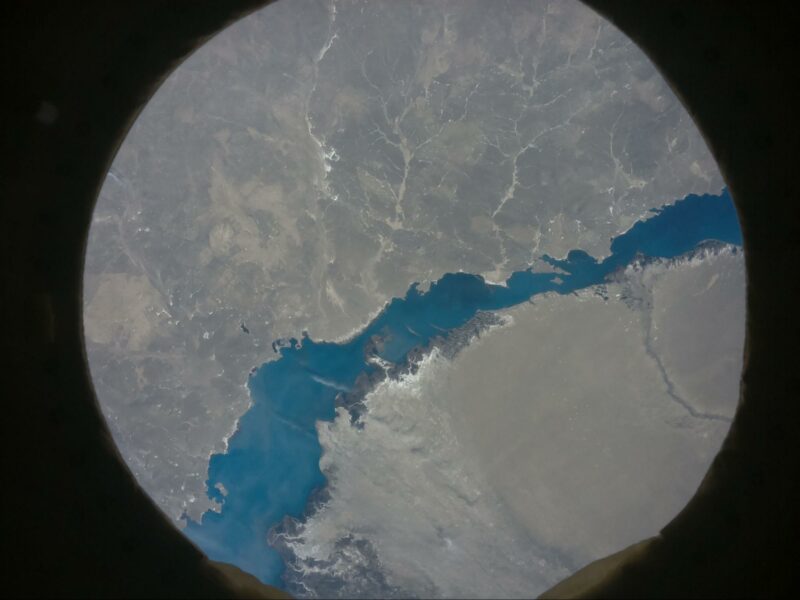
Lake Balkhash in Kazakhstan shown from space by an Astro Pi computer on the International Space Station
Lake Balkhash in Kazakhstan as captured by the Jupiter team

Atlantes from Niubit Coding Club in Spain, who used a sonification process to convert data captured by the Astro Pi’s sensors into music, inspired by Commander Chris Hadfield’s performance of Space Oddity on the ISS in 2013. You can see more about their experiment here.

Mateii from Saint Sava National College in Romania, who investigated the potential growth of Aspergillus and Penicillium mold on the ISS in comparison to on Earth using a simulation model and Astro Pi sensor readings taken inside the Columbus module.

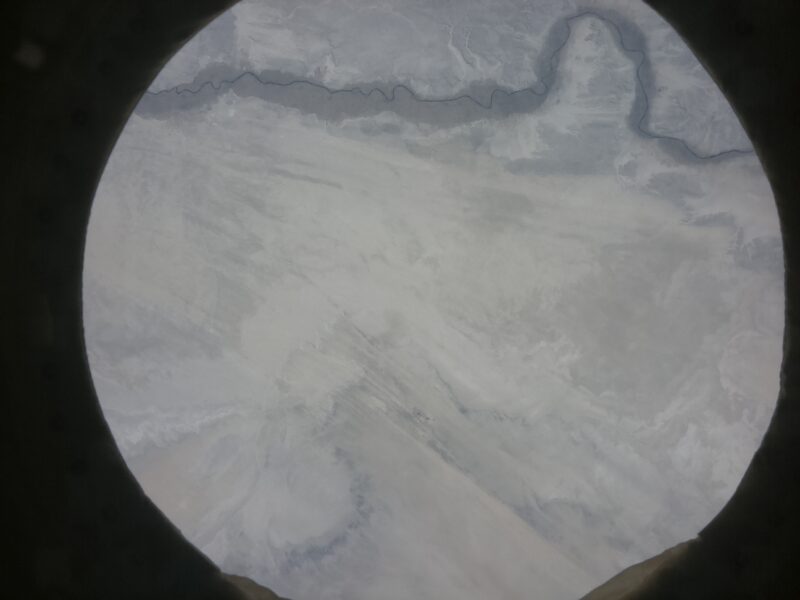
The River Nile in Egypt seen by an Astro Pi computer on the International Space Station
The river Nile in Egypt as captured by the Mechabot team

Juno from Institut d’Altafulla in Spain, who attempted to determine how much heat the astronauts aboard the ISS experience by using temperature, pressure, and humidity data captured by the Astro Pi’s sensors together with psychrometric calculations.

Albedo from Lycée Albert Camus in France, who investigated albedo on Earth, using photos captured by the Astro Pi’s camera to classify cloud, land, and sea coverage, and analysing their corresponding albedo values.

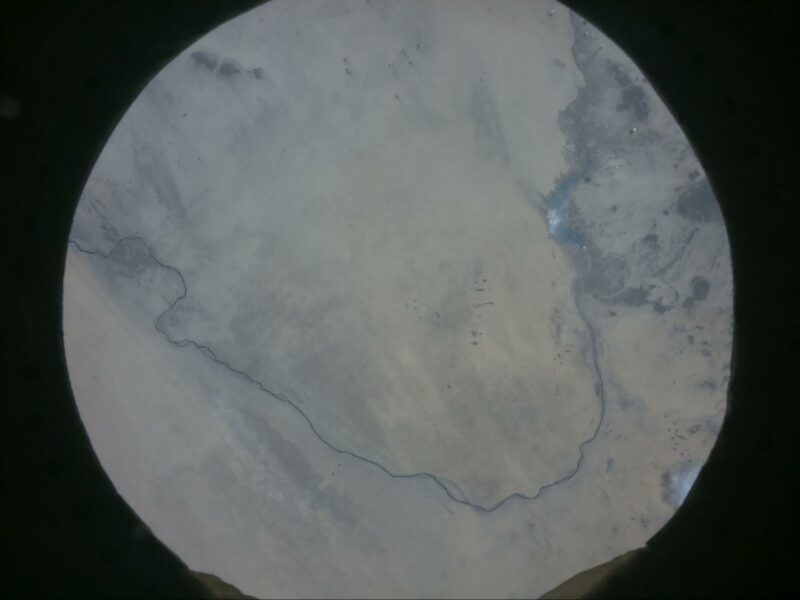
The river Nile in Sudan shown from space by an Astro Pi computer on the International Space Station
The river Nile in Sudan as captured by the Spacepi2 team

SpaceRad from Centrum Nauki Keplera – Planetarium Wenus in Poland, who also investigated albedo (the proportion of light or radiation that is reflected by a surface) on Earth to evaluate the efficacy of using solar farms to combat climate change.

Magtrix from The Leys School in the United Kingdom, who analysed whether geographical features of Earth such as mountains affect the planet’s magnetic field using the Astro Pi’s magnetometer, GPS data, and photos of Earth captured by the Astro Pi’s camera.

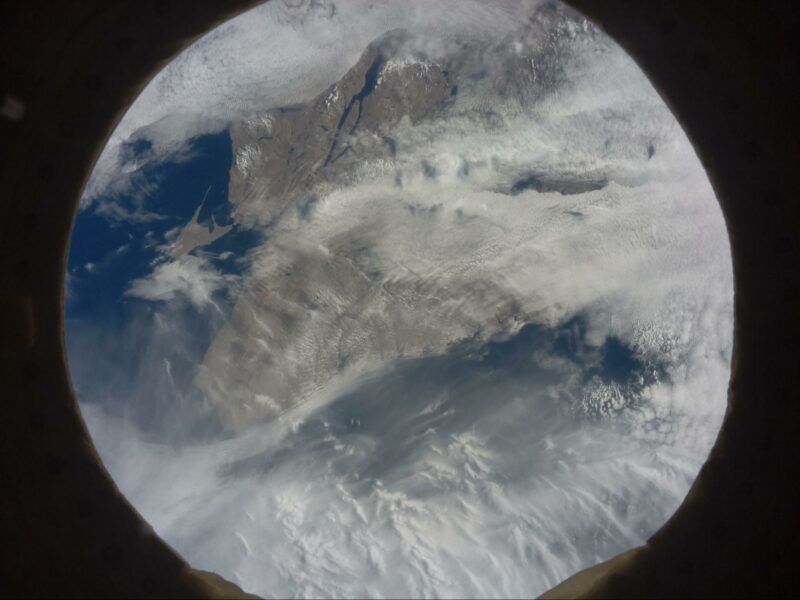
Newfoundland and Labrador shown from space by an Astro Pi computer on the International Space Station
Newfoundland and Labrador as captured by the SpaceRad team

Mechabot from Robone Robotics Club in Germany, who investigated how the Earth’s magnetic field correlates with its climate, and how this affects near-Earth objects’ behaviour in low-Earth orbit.

Spacepi2 from Zanneio Model High School in Greece, who investigated urbanisation on Earth by comparing photos captured by the Astro Pi’s camera with historical data using an automated photo classification program they created and NDVI analysis.

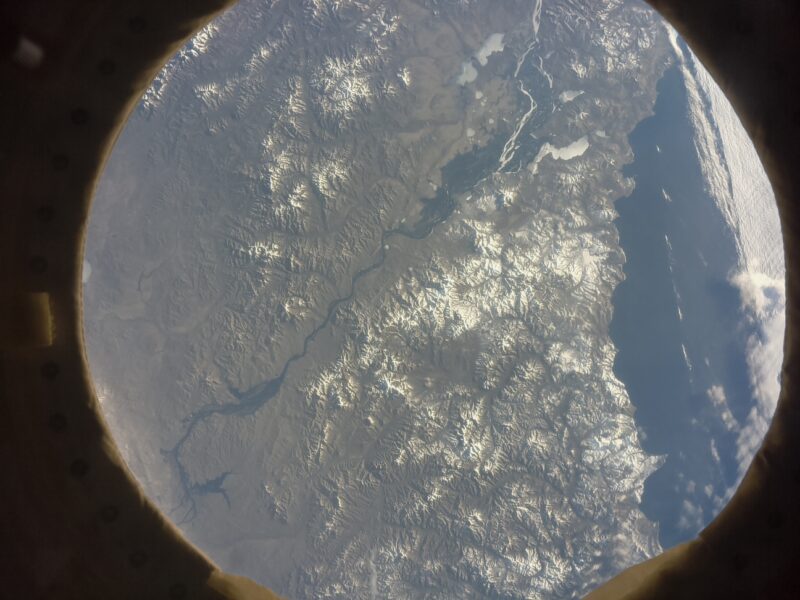
Sakhalin Oblast in Russia shown from space by an Astro Pi computer on the International Space Station
Sakhalin Oblast in Russia as captured by the Liontech team

Highly commended teams

Bergson from Lycée Henri-Bergson Paris in France, who built an AI model predicting nitrogen dioxide pollution levels on Earth using NDVI analysis of photos taken by the Astro Pi’s camera.

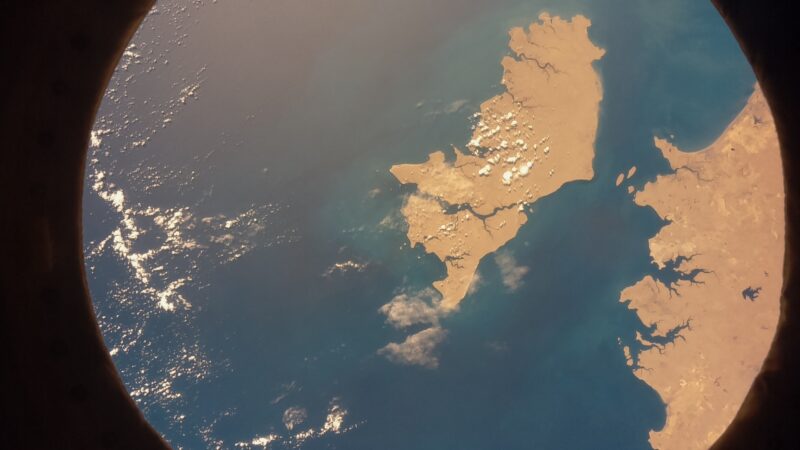
The Tiwi Islands off the coast of Northern Australia shown from space by an Astro Pi computer on the International Space Station
The Tiwi Islands off the coast of Northern Australia as captured by the Magtrix team

LionTech from Mihai Eminescu National College, Oradea in Romania, who attempted to measure the velocity of the ISS in orbit, and also created an algorithm to detect smoke, pollution, and types of cloud coverage in the images they captured using the Astro Pi’s camera.

RosSpace from Ceo Boecillo in Spain, who are the third team in our list to have investigated Earth’s albedo levels in relation to global warming using photo analysis. A popular theme this year!

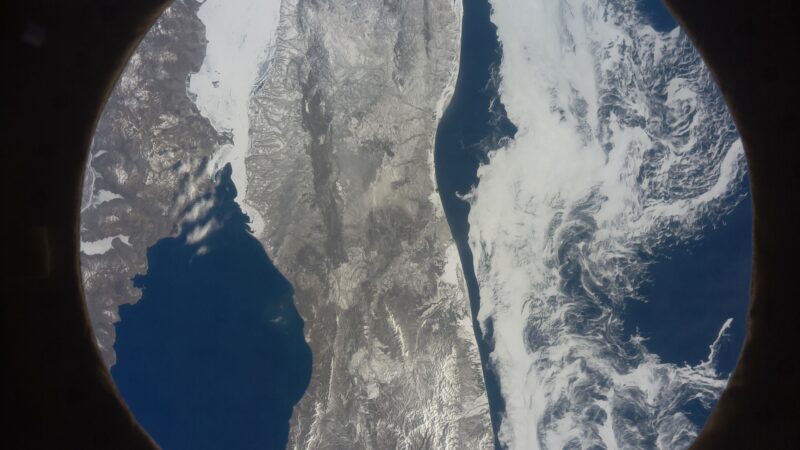
The Amur River and Sea of Oghotsk in Eastern Russia shown from space by an Astro Pi computer on the International Space Station
The Amur river and the Sea of Oghotsk (right) in Eastern Russia as captured by the Zeus team

Jupiter from Institut d’Altafulla in Spain, who looked at variations in the current surface area of water bodies on Earth compared to historical records as an indicator of climate change.

And a special mention for:

Ultrafly from Ultrafly Coding Club in Canada, who were the youngest team to make the highly commended list this year, with an average age of 8! Their experiment explored whether the environmental variables on the ISS created allergy-friendly living conditions for the astronauts on board.

The prize? A special webinar with ESA Astronaut Luca Parmitano

Every Astro Pi team that reached Phase 2 of Mission Space Lab by having their experiment idea accepted this year will receive participation certificates recognising their achievement, and the winners and highly commended teams will receive special certificates and an additional prize.

The prize for this year’s winners and highly commended teams is the chance to pose their questions to ESA astronaut Luca Parmitano during a webinar in September! We’ll shortly email the teams’ mentors the instructions for submitting their teams’ questions to Luca.

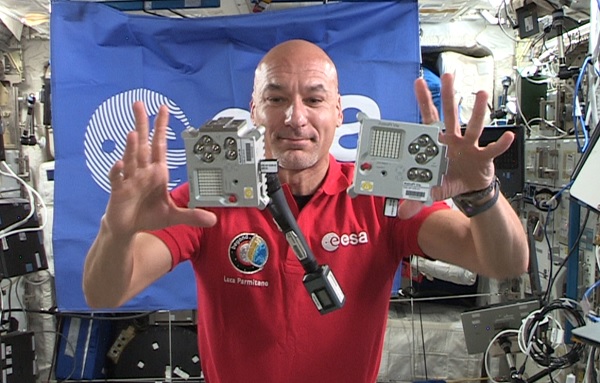
ESA Astronaut Luca Parmitano floating aboard the ISS with two Astro Pi computers
ESA Astronaut Luca Parmitano floating aboard the ISS with the two Astro Pi computers

This Q&A event for the finalists will conclude this year’s European Astro Pi Challenge. It’s been an incredible year for the Challenge, with 15756 young people from 23 countries participating in Mission Zero or Mission Space Lab.

Everyone on the Raspberry Pi and ESA Education teams congratulates this year’s participants for their efforts, especially given the obstacles many teams had to overcome due to the coronavirus pandemic.

Thank you and congratulations to everyone who has taken part — we hope you found it as fun and inspiring as we did!

We can’t wait to welcome you back for the next European Astro Pi Challenge!

While this year’s Challenge is coming to an end, the European Astro Pi Challenge will return with both Mission Zero and Mission Space Lab in September!

Logo of the European Astro Pi Challenge

We invite all teachers, educators, club leaders, and young people who love coding and space science to follow our updates on astro-pi.org and the Astro Pi Twitter account to make sure you don’t miss any announcements.

The post Amazing science from the winners of Astro Pi Mission Space Lab 2020/21 appeared first on Raspberry Pi.
Meet team behind the mini Raspberry Pi–powered ISS

Post Syndicated from Ashley Whittaker original https://www.raspberrypi.org/blog/meet-team-behind-the-mini-raspberry-pi-powered-iss/

Quite possibly the coolest thing we saw Raspberry Pi powering this year was ISS Mimic, a mini version of the International Space Station (ISS). We wanted to learn more about the brains that dreamt up ISS Mimic, which uses data from the ISS to mirror exactly what the real thing is doing in orbit.

The ISS Mimic team’s a diverse, fun-looking bunch of people and they all made their way to NASA via different paths. Maybe you could see yourself there in the future too?

Dallas Kidd

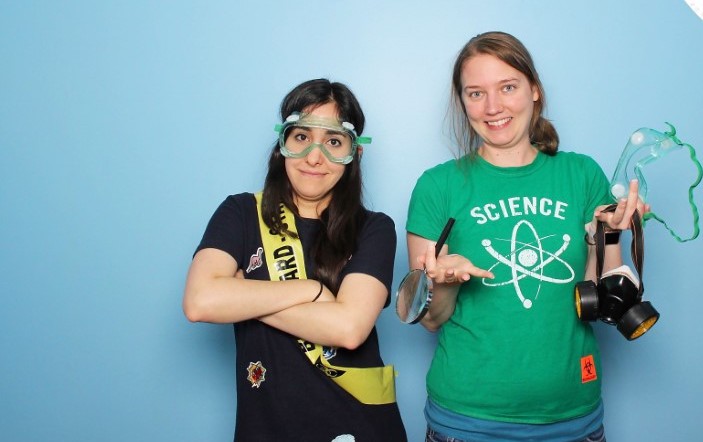
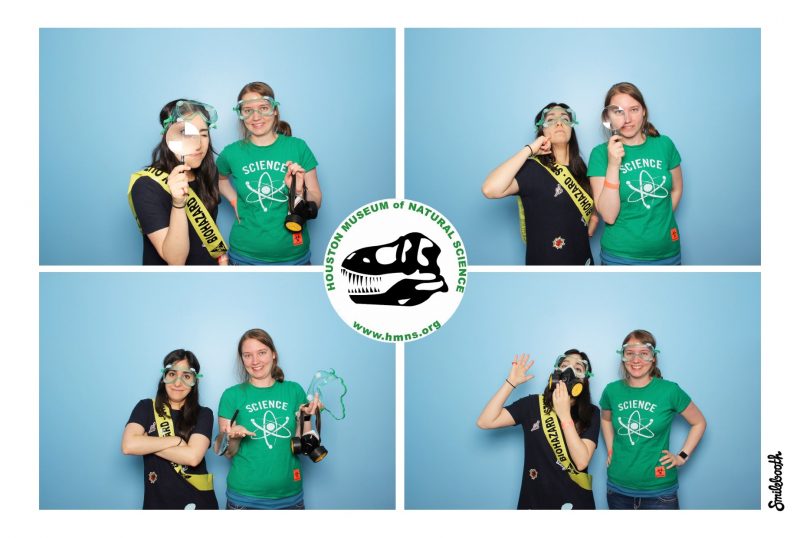
Dallas in a green t shirt stood next to Estefannie in a black t shirt on a blue background. Estefannie is wearing safety googles
Dallas (in the green t shirt) having a lark with teammate Estefannie. Safety first!

Dallas Kidd currently works at the startup Skylark Wireless, helping to advance the technology to provide affordable high speed internet to rural areas.

Previously, she worked on traffic controllers and sensors, in finance on a live trading platform, on RAID controllers for enterprise storage, and at a startup tackling the problem of alarm fatigue in hospitals.

Before getting her Master’s in computer science with a thesis on automatically classifying stars, she taught English as a second language, Algebra I, geometry, special education, reading, and more.

Her hobbies are scuba diving, learning about astronomy, creative writing, art, and gaming.

Tristan Moody

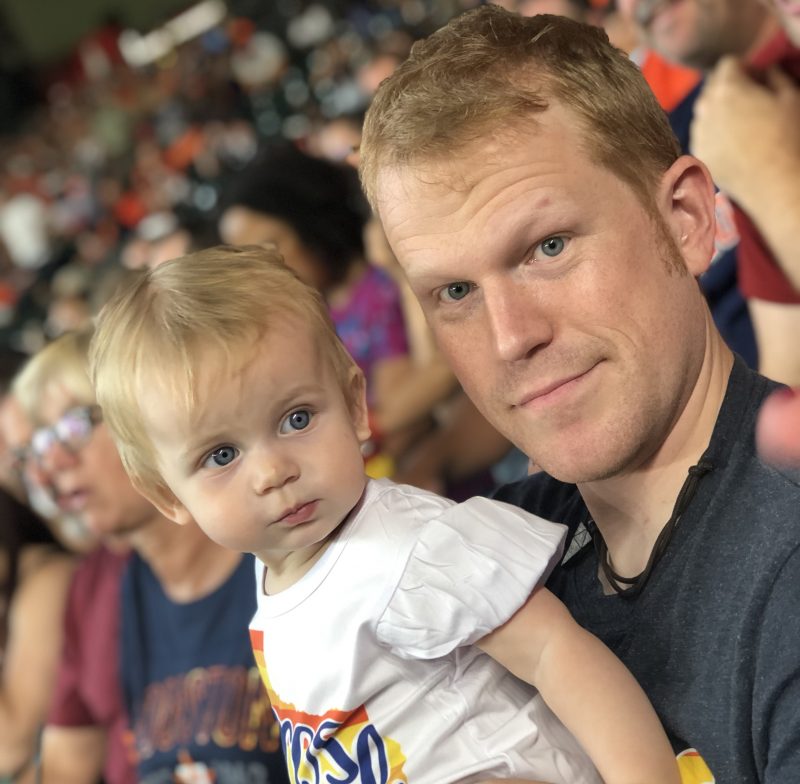
Tristan Moody holding his kid Team ISS NASA
That’s Tristan on the right. NASA does not currently hire small children.

Tristan Moody currently works as a spacecraft survivability engineer at Boeing, helping to keep the ISS and other satellites safe from the threat posed by meteoroids and orbital debris.

He has a PhD in mechanical engineering and currently spends much of his free time as playground equipment for his two young kids.

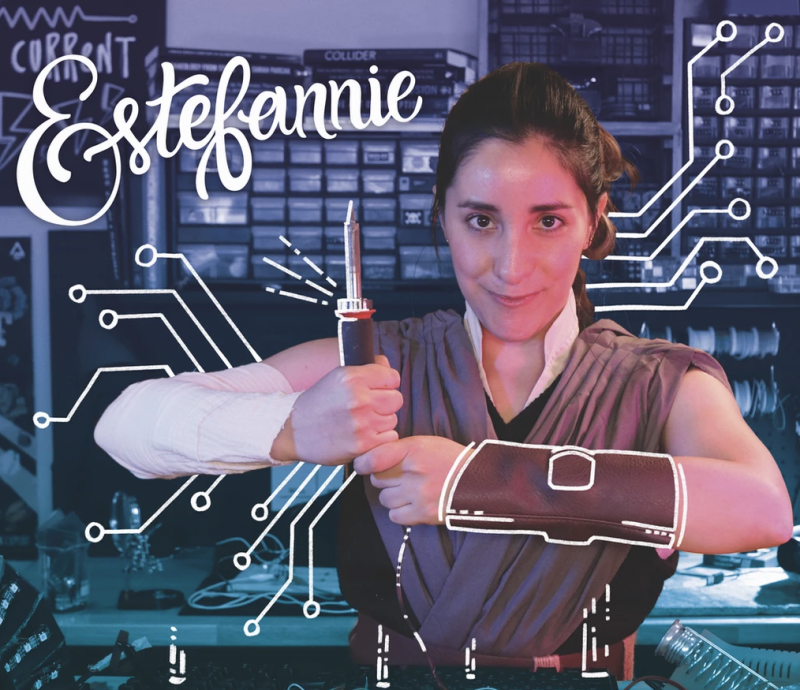
Estefannie

Estefannie dressed up as Rey from Star Wars for the 2021 princesses with powertools calendar
Estefannie as Rey from Star Wars for the 2021 Princesses with Powertools calendar

Estefannie is a software engineer, designer, punk rocker and likes to overly engineer things and document her findings on her YouTube and Instagram channels as Estefannie Explains It All.

Estefannie spends her time inventing things before thinking, soldering for fun, writing, filming and producing content for her YouTube channel, and public speaking at universities, conferences, and hackathons.

She lives in Houston, Texas and likes tacos.

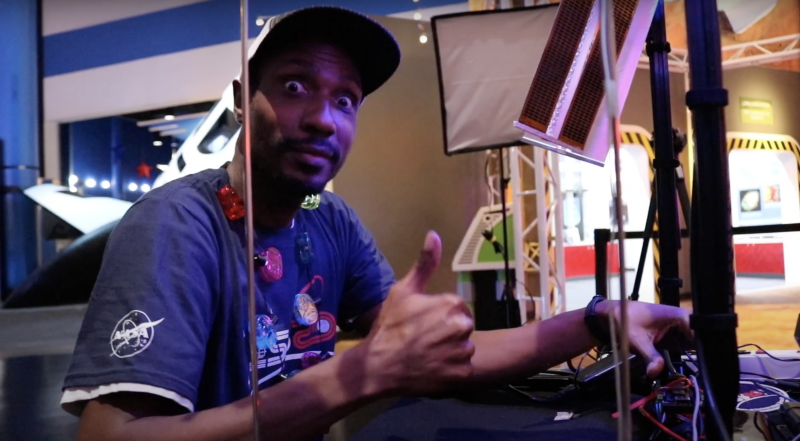
Douglas Kimble

A member of team ISS Mimic giving a thumbs up while working on the ISS Mimic
Where are the dogs, Douglas?!

Douglas Kimble currently works as an electrical/mechanical design engineer at Boeing. He has designed countless wire harness and installation drawings for the ISS.

He assumes the mentor role and interacts well with diverse personalities. He is also the world’s biggest Lakers fan living in Texas.

His favorite pastimes includes hanging out with his two dogs, Boomer and Teddy. 

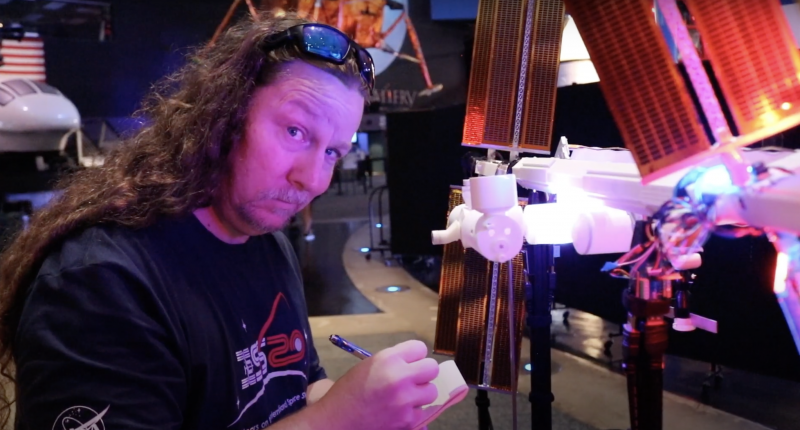
Craig Stanton

A member of team ISS Mimic raising an eyebrow while working on the ISS Mimic hardware
Craig’s knows what’s up. Or knows a secret. We can’t tell. Maybe both?

Craig’s father worked for the Space Shuttle program, designing the ascent flight trajectories profiles for the early missions. He remembers being on site at Johnson Space Center one evening, in a freezing cold computer terminal room, punching cards for a program his dad wrote in the early 1980s.

Craig grew up with LEGO and majored in Architecture and Space Design at the University of Houston’s Sasakawa International Center for Space Architecture (SICSA).

His day job involves measuring ISS major assemblies on the ground to ensure they’ll fit together on-orbit. Traveling to many countries to measure hardware that will never see each other until on-orbit is the really coolest part of the job.

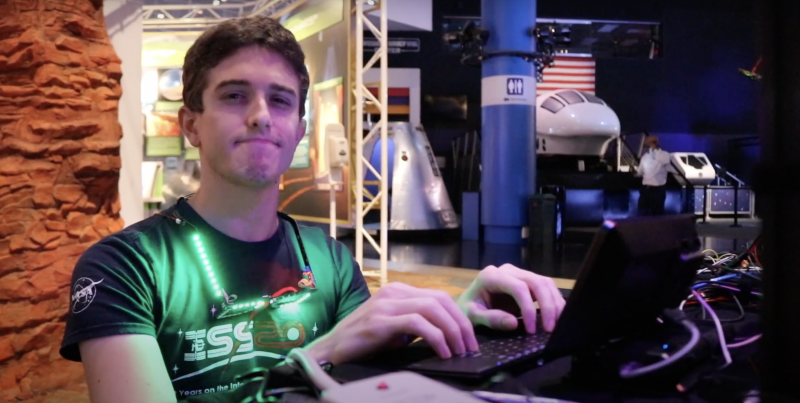
Sam Treagold

A member of team ISS Mimc sitting at a laptop
Sam: not to be trusted with hardware you don’t want shot in the desert

Sam Treadgold is an aerospace engineer who also works on the Meteoroid and Orbital Debris team, helping to protect the ISS and Space Launch System from hypervelocity impacts. Occasionally they take spaceflight hardware out to the desert and shoot it with a giant gun to see what happens.

In a non-pandemic world he enjoys rock climbing, music festivals, and making sound-reactive LED sunglasses.

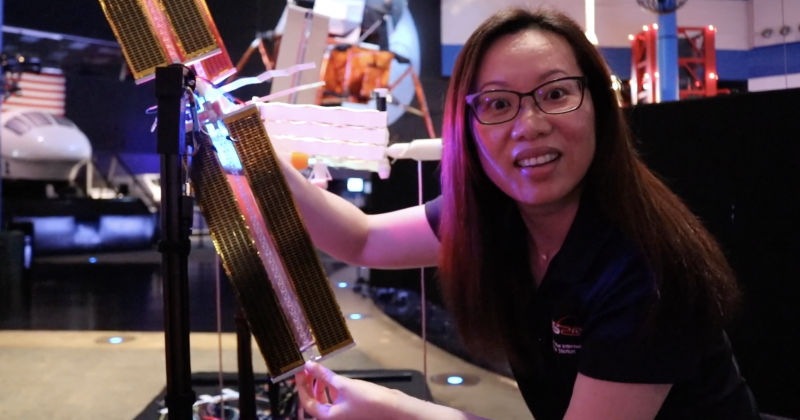
Chen Deng

A member of team ISS Mimic showing off a solar panel
Chen showing off the very shiniest part of the ISS Mimic (solar panels)

Chen Deng is a Systems Engineer working at Boeing with the International Space Station (ISS) program. Her job is to ensure readiness of Payloads, or science experiments, to launch in various spacecraft and operations to conduct research aboard the ISS.

The ISS provides a very unique science laboratory environment, something we can’t get much of on earth: microgravity!  The term microgravity means a state of little or very weak gravity.  The virtual absence of gravity allows scientists to conduct experiments that are impossible to perform on earth, where gravity affects everything that we do.

In her free time, Chen enjoys hiking, board games, and creative projects alike.

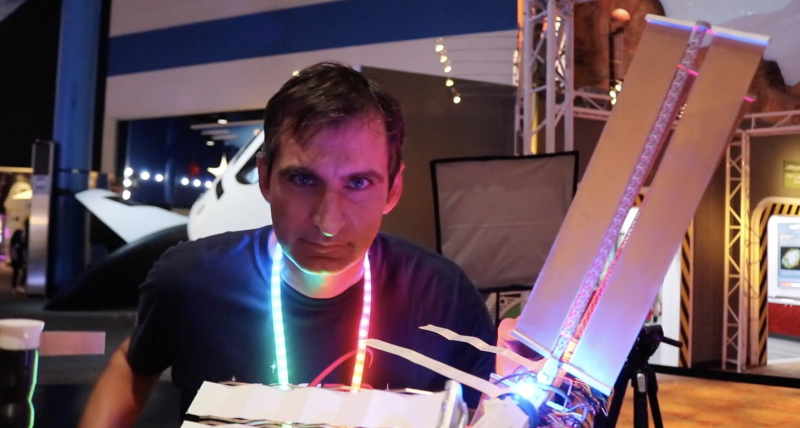
Bryan Murphy

bryan murphy from team iss mimic at nasa
Bryan, adorned with an LED necklace, posing next to ISS Mimic’s rotating solar panel ‘wings’

Bryan Murphy is a dynamics and motion control engineer at Boeing, where he gets to create digital physics models of robotic space mechanisms to predict their performance.

His favorite projects include the ISS treadmill vibration isolation system and the shiny new docking system. He grew up on a small farm where his hands-on time with mechanical devices fueled his interest in engineering.

When not at work, he loves to brainstorm and create with his artist/engineer wife and their nerdy kids, or go on long family roadtrips—- especially to hike and kayak or eat ice cream. He’s also vice president of a local makerspace, where he leads STEM outreach and includes excess LEDs in all his builds.

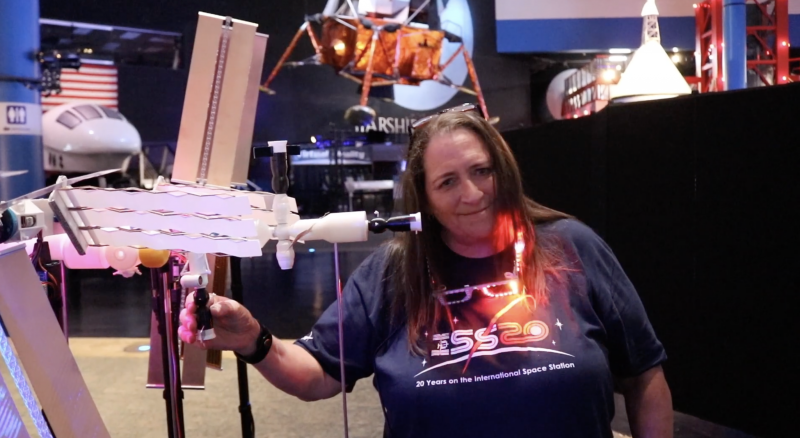
Susan

A member of team ISS Mimic
Here’s Susan rocking some of those LED glasses and getting a good grip on ISS Mimic

Susan is a mechanical engineer and a 30+-year veteran of manned spaceflight operations.  She has worked the Space Shuttle Program for Payloads (middeck experiments and payloads deployed with the shuttle arm) starting with STS-30 and was on the team that deployed the Hubble Space Telescope.

She then transitioned into life sciences experiments, which led to the NASA Mir Program where she was on continuous rotation for three years to Russian Mission Control, supporting the NASA astronaut and science experiments onboard the space station as a predecessor to the ISS.

She currently works on the ISS Program (for over 20 years now), where she used to write procedures for on-orbit assembly of the Space Xtation and now writes installation procedures for on-orbit modifications like the docking adapter. She is also an artist and makes crosses out of found objects, and even used to play professional women’s football.

Keep in touch

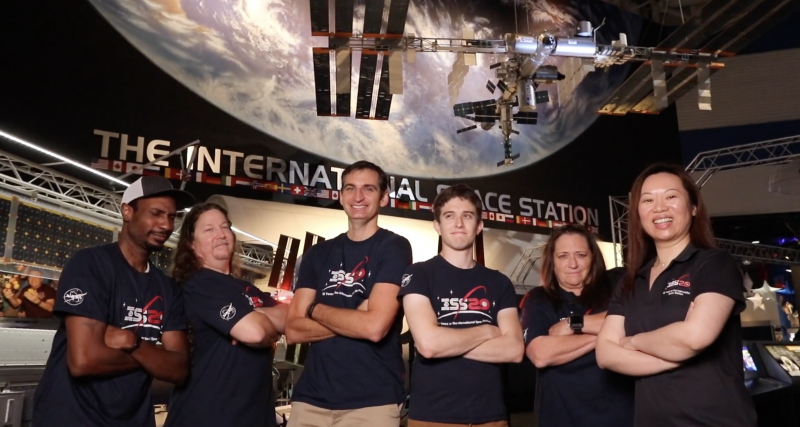
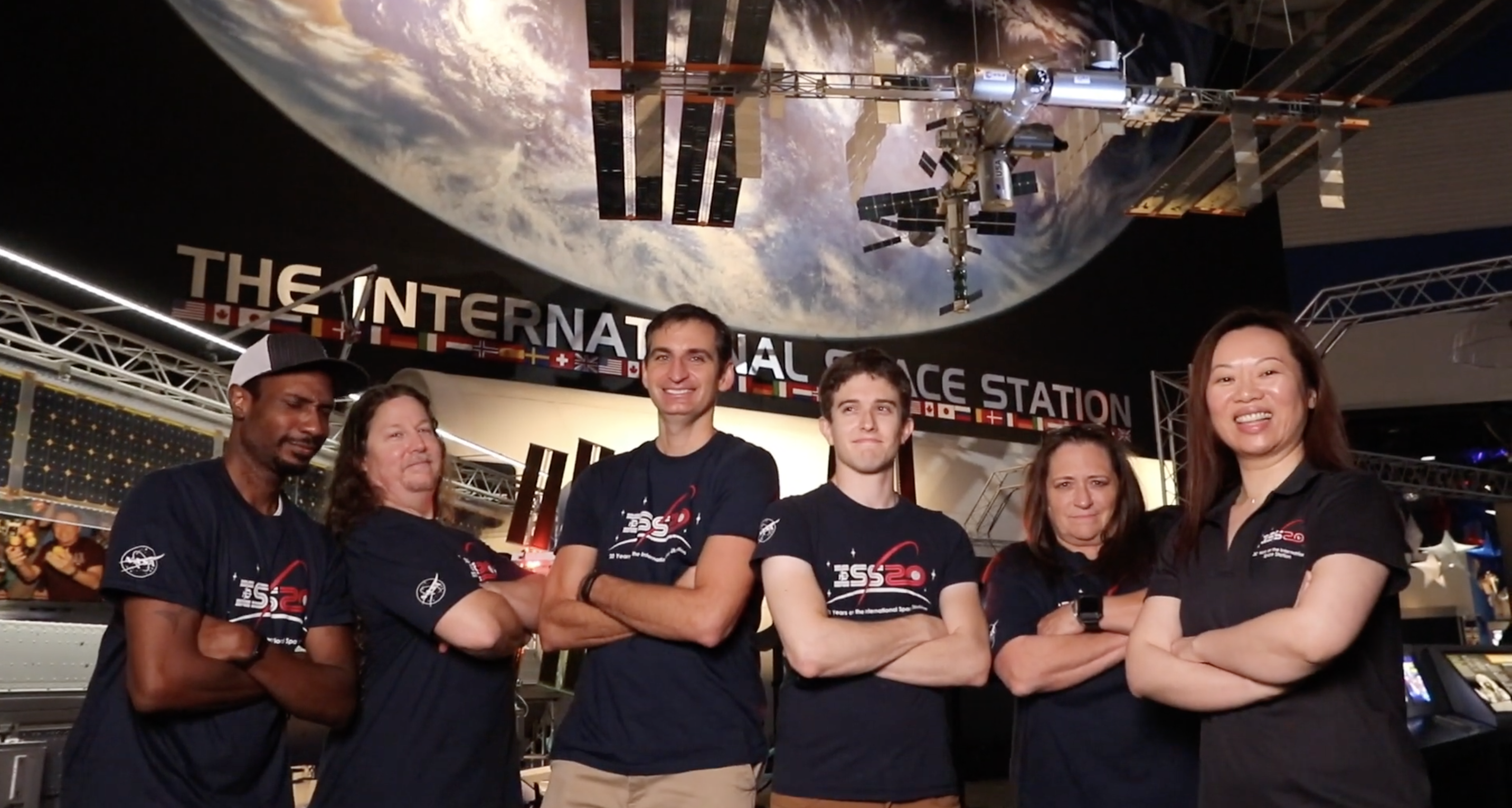
Team ISS posing in NASA t shirts in front of the ISS mimic

You can keep up with Team ISS Mimic on FacebookInstagram, and Twitter. For more info or to join the team, check out their GitHub page and Discord.

Kids, run your code on the ISS!

Logo of the European Astro Pi Challenge

Did you know that there are Raspberry Pi computers aboard the real ISS that young people can run their own Python programs on? How cool is that?!

Find out how to participate at astro-pi.org.

The post Meet team behind the mini Raspberry Pi–powered ISS appeared first on Raspberry Pi.
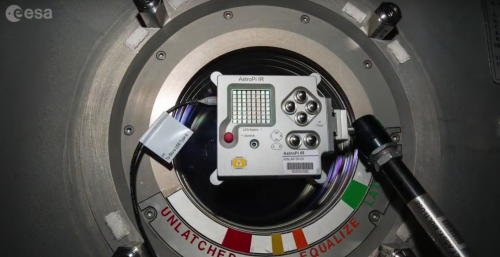
Q&A with NASA engineers behind Raspberry Pi–powered ISS Mimic

Post Syndicated from NASA Engineers original https://www.raspberrypi.org/blog/qa-with-nasa-engineers-behind-raspberry-pi-powered-iss-mimic/

Did you see the coolest International Space Station (ISS) on Earth on the blog last week? ISS Mimic is powered by Raspberry Pi, mirrors exactly what the real ISS is doing in orbit, and was built by NASA engineers to make the ISS feel more real for Earth-bound STEAM enthusiasts.

Here’s (most of) the team behind ISS Mimic

The team launched ISS Mimic in celebration of 20 years of continuous human presence in space on the ISS. And they’ve been getting lots of questions since we posted about their creation so, we asked them back to fill you in with a quick Q&A.

And here are newbies Dallas and Estefannie (Estefannie made the ISS Mimic video)

1. Since this is NASA-related, “MIMIC” must be an acronym, right?

Yes, we forced one: “Mechatronic Instantiated Model, Interactively Controlled”

2. What’s your subtitle? 

“The second-most complicated International Space Station ever made”. We also like “1/100th scale for 1/100,000,000th cost”

3. Wait, are US tax dollars paying for you to make this?

No, it’s a volunteer project, but we do get lots of support. It’s done on our own time and money — though many NASA types and others have kicked in to help buy materials. 

ISS Mimic, filmed by YouTube’s finest Estefannie Explains it All

4. So you have supporters?

Yes — mostly other organisations that we have teamed up with. We partner with a non-profit makerspace near NASA, Creatorspace, for tools, materials, and outreach. And an awesome local 3D printer manufacturer, re:3D, has joined us and printed our (large) solar panels for free, and is helping to refine our models. They are also working towards making a kit of parts for sale for those who don’t have a printer or the time to print all the pieces, with a discount for educators.

Particularly helpful has been Space Center Houston (NASA’s visitor center), who invited us to present to the public and at an educator conference (pre-COVID), and allowed us to spend a full day filming in their beautiful facility. Our earliest supporter was Boeing, who we‘ve worked with to facilitate outreach to educators and students from the start.

The real International Space Station (ISS) in orbit

5. How long have you been working on this?

5 years — a looong time. We spent much effort early on to establish the scale and feasibility and test the capabilities of 3D printing. We maintained a hard push to keep the materials cost down and reduce build time/complexity for busy educators. We always knew we’d use Raspberry Pi for the brain, but were looking for less costly options for the mechatronics. We’d still like to cut the cost down a lot to make the project more attainable for lower-income schools and individuals.

6. Have you done any outreach so far?

All of the support has allowed us to take our prototype to schools and STEM events locally. But we really want this to be built around the world to reach those who don’t have much connection to space exploration and hands-on STEM. The big build is probably most suitable for teens and adults, while the alternative builds (in-work) would be much more approachable for younger students.

‘ISS Mimic’ on display

7. So, this just for schools? 

No, not at all. Our focus is to make it viable for schools/educators — in cost and build complexity — but we want any space nerd to be able to build their own and help drive the design.

8. Biggest challenge?

Gravity. And time to work on the project… and trying to keep the cost down.

9. What about a Lunar Gateway or Habitat version of ISS Mimic?

It’s on our radar! Another build that’s screaming to be made is hacking the LEGO ISS model (released this year) to rotate its joints and light LEDs.

Raspberry Pi on the real ISS

There are two Raspberry Pi computers aboard the real ISS right now! And even better, young people have the chance to write Python code that will run on them — IN SPACE — as part of the European Astro Pi Challenge.

Tell the young space enthusiast in your life about Astro Pi to inspire them to try coding! All the info lives at astro-pi.org.

The post Q&A with NASA engineers behind Raspberry Pi–powered ISS Mimic appeared first on Raspberry Pi.
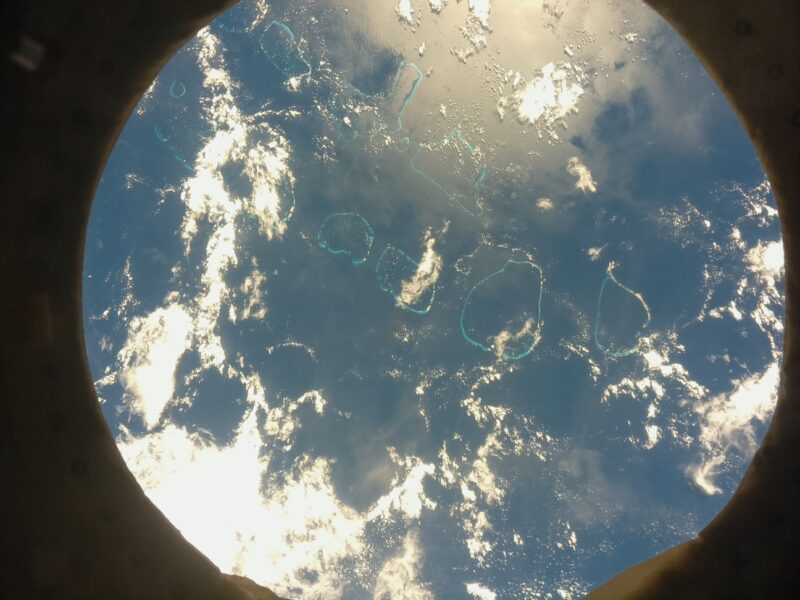
How young people can run their computer programs in space with Astro Pi

Post Syndicated from Claire Given original https://www.raspberrypi.org/blog/how-young-people-run-computer-programs-in-space-astro-pi/

Do you know young people who dream of sending something to space? You can help them make that dream a reality!

We’re calling on educators, club leaders, and parents to inspire young people to develop their digital skills by participating in this year’s European Astro Pi Challenge.
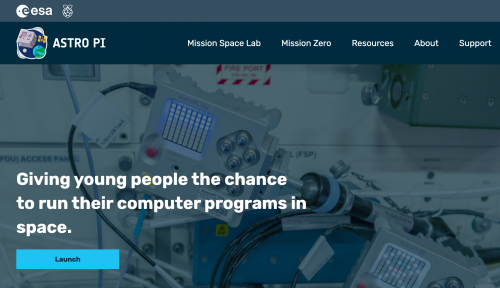
The European Astro Pi Challenge, which we run in collaboration with the European Space Agency, gives young people in 26 countries* the opportunity to write their own computer programs and run them on two special Raspberry Pi units — called Astro Pis! — on board the International Space Station (ISS).

This year’s Astro Pi ambassador is ESA astronaut Thomas Pesquet. Thomas will accompany our Astro Pis on the ISS and oversee young people’s programs while they run.

And the young people need your support to take part in the Astro Pi Challenge!

A group of young people and educators smiling while engaging with a computer

Astro Pi is back big-time!

The Astro Pi Challenge is back and better than ever, with a brand-new website, a cool new look, and the chance for more young people to get involved.

Logo of the European Astro Pi Challenge

During the last challenge, a record 6558 Astro Pi programs from over 17,000 young people ran on the ISS, and we want even more young people to take part in our new 2020/21 challenge.

British ESA astronaut Tim Peake was the ambassador of the first Astro Pi Challenge in 2015.

So whether your children or learners are complete beginners to programming or have experience of Python coding, we’d love for them to take part!

You and your young people have two Astro Pi missions to choose from: Mission Zero and Mission Space Lab.

Mission Zero — for beginners and younger programmers

In Mission Zero, young people write a simple program to take a humidity reading onboard the ISS and communicate it to the astronauts with a personalised message, which will be displayed for 30 seconds.

Logo of Mission Zero, part of the European Astro Pi Challenge

Mission Zero is designed for beginners and younger participants up to 14 years old. Young people can complete Mission Zero online in about an hour following a step-by-step guide. Taking part doesn’t require any previous coding experience or specific hardware.

All Mission Zero participants who follow the simple challenge rules are guaranteed to have their programs run aboard the ISS in 2021.

All you need to do is support the young people to submit their programs!

Mission Zero is a perfect activity for beginners to digital making and Python programming, whether they’re young people at home or in coding clubs, or groups of students or club participants.

We have made some exciting changes to this year’s Mission Zero challenge:

  1. Participants will be measuring humidity on the ISS instead of temperature
  2. For the first time, young people can enter individually, as well as in teams of up to 4 people

You have until 19 March 2021 to support your young people to submit their Mission Zero programs!

Mission Space Lab — for young people with programming experience

In Mission Space Lab, teams of young people design and program a scientific experiment to run for 3 hours onboard the ISS.

Logo of Mission Space Lab, part of the European Astro Pi Challenge

Mission Space Lab is aimed at more experienced or older participants up to 19 years old, and it takes place in 4 phases over the course of 8 months.

Your role in Mission Space Lab is to mentor a team of participants while they design and write a program for a scientific experiment that increases our understanding of either life on Earth or life in space.

The best experiments will be deployed to the ISS, and teams will have the opportunity to analyse their experimental data and report on their results.

You have until 23 October 2020 to register your team and their experiment idea.

To see the kind of experiments young people have run on the ISS, check out our blog post congratulating the Mission Space Lab 2019/20 winners!

Get started with Astro Pi today!

To find out more about taking part in the European Astro Pi Challenge 2020/21, head over to our new and improved astro-pi.org website.

screenshot of Astro Pi home page

There, you’ll find everything you need to get started on sending young people’s computer program to space!


* ESA Member States in 2020: Austria, Belgium, Czech Republic, Denmark, Estonia, Finland, France, Germany, Greece, Hungary, Ireland, Italy, Luxembourg, the Netherlands, Norway, Poland, Portugal, Romania, Spain, Sweden, Switzerland, Latvia, and the United Kingdom. Other participating states: Canada, Latvia, Slovenia, Malta.

The post How young people can run their computer programs in space with Astro Pi appeared first on Raspberry Pi.