Tag Archives: Behind Backblaze

Distributed by Design: Building a Truly Remote Backblaze

Post Syndicated from Elisa Ramos Miller original https://www.backblaze.com/blog/distributed-by-design-building-a-truly-remote-backblaze/
A decorative image showing different, interconnected icons of servers, buildings, and data.

In 2007, Backblaze started in a one-bedroom Palo Alto apartment. Since those days of hand-assembling Storage Pods, we’ve grown to manage over 5 exabytes of data for 500,000 customers across 175 countries. As our mission to make customers unstoppable grew, our team naturally grew with it, moving far beyond the walls of any single office.

The pandemic gave us the final piece of data we needed to evolve. When the world reopened, our San Mateo headquarters never quite looked the same. The office became a bit of a paradox: a large, quiet space where a handful of people moved through a space designed for hundreds. Meanwhile, the true heart and soul of the company was already thriving elsewhere, solving the world’s toughest storage challenges from data centers in Phoenix, spare bedrooms in Austin, and kitchen tables in Cheltenham.

We didn’t rush this. We experimented, explored, and really listened to our team. When we looked at the data, we found only around 5% of our teams worked out of the San Mateo office regularly. By testing new ways of collaborating, we confirmed what we already suspected: our culture isn’t tied to a physical floor plan, it’s tied to our shared commitment to our customers and each other. As of February 1, 2026, we made it official: Backblaze has moved beyond the hybrid model to become a fully remote, distributed company.

Listening, learning, and being practical

This transition isn’t about a grand corporate strategy, but about meeting our employees where they’re at—everywhere. While we appreciate the flexibility, we noticed that hybrid models can unintentionally create two different cultures, one for those who can make it into the office and another for everyone else. Whether an employee is in San Jose or the Philippines, we want them to have the same access to leadership, and each other. We’re now a team that finally matches the diversity and reach of the 175 countries we serve.

Beyond the culture, this is also about being good stewards of our financial resources. Holding onto an expensive, mostly empty office in one of the world’s costliest real estate markets was not a good investment.  By letting go of the San Mateo office, we can more responsibly direct those investments toward our people—funding intentional collaboration tools, resources, and smaller local gatherings that strengthen connection and culture. 

Let’s talk about the bedrock : Our data centers

While the “cloud” often feels like a metaphor, our Data Center Technicians know it’s built on hardware, precision, and physical presence. When it comes to data centers, there is no shifting the in-person work. Someone needs to be there to swap out a drive, and when it comes to making sure we’re always-on, that is a 24/7/365 commitment. 

They are the heartbeat of Backblaze. Every day, they show up in person to the facilities where data actually lives, keeping the drives spinning to ensure that your data is always available and accessible.

Remote flexibility is a privilege afforded to the rest of the company by the physical excellence of our Data Center teams. They are the essential anchor that allows the rest of us to be weightless. We celebrate their work not as an exception to our model, but as the very foundation that makes our distributed future possible.

We’re still figuring it out

We are still finding new ways to connect. This isn’t a static policy, but a continuous effort to make sure people can be successful wherever they work. We’re replacing accidental hallway chats with deliberate rituals, from cross-functional coffee chats and regional off-sites with local talent and execs, to providing on-demand access to professional workspaces for solo work or we want to assemble together. 

Closing the San Mateo office isn’t a retreat from our history; it’s an embrace of the company we’ve already become. As we grow across new markets and time zones, we’re committed to raising the bar on what distributed work can look like so our teams can collaborate in ways that drive real impact around the world. We are building a smarter, more intentional Backblaze, one that is as distributed as the data we protect and as resilient as the customers we serve.

The post Distributed by Design: Building a Truly Remote Backblaze appeared first on Backblaze Blog | Cloud Storage & Cloud Backup
Backblaze, Part of Computer History

Post Syndicated from Yev original https://www.backblaze.com/blog/backblaze-part-of-computer-history/

A decorative image showing a stylized version of the original Storage Pod.

Some innovations change the trajectory of a company, others change the trajectory of an entire industry. Today, I’m absolutely chuffed that one of our original Storage Pods, ul010 to be exact, is heading to the Computer History Museum. Not as a curiosity, but as a piece of living history that changed not just how Backblaze stored data, but how the entire cloud industry thought about server design.

Some history

On September 1, 2009, we published a blog post called Petabytes on a Budget: How to Build Cheap Cloud Storage. The post went into detail about how we, as a bootstrapped company, could provide an unlimited backup service at a reasonable rate without compromising on performance or burning through cash. Essentially, open-sourcing our server design and making it available to the masses was a bit of a gamble given that a better-funded company could copy our design, deploy it at scale, and put us out of business.

Our “secret sauce” has always been our software stack and design decisions, so we felt strongly that while they could mimic some of our economics, being able to build a service as performant as ours would be out of reach. 

At the beginning

Founder Brian Wilson had this to say about some of Backblaze’s history:

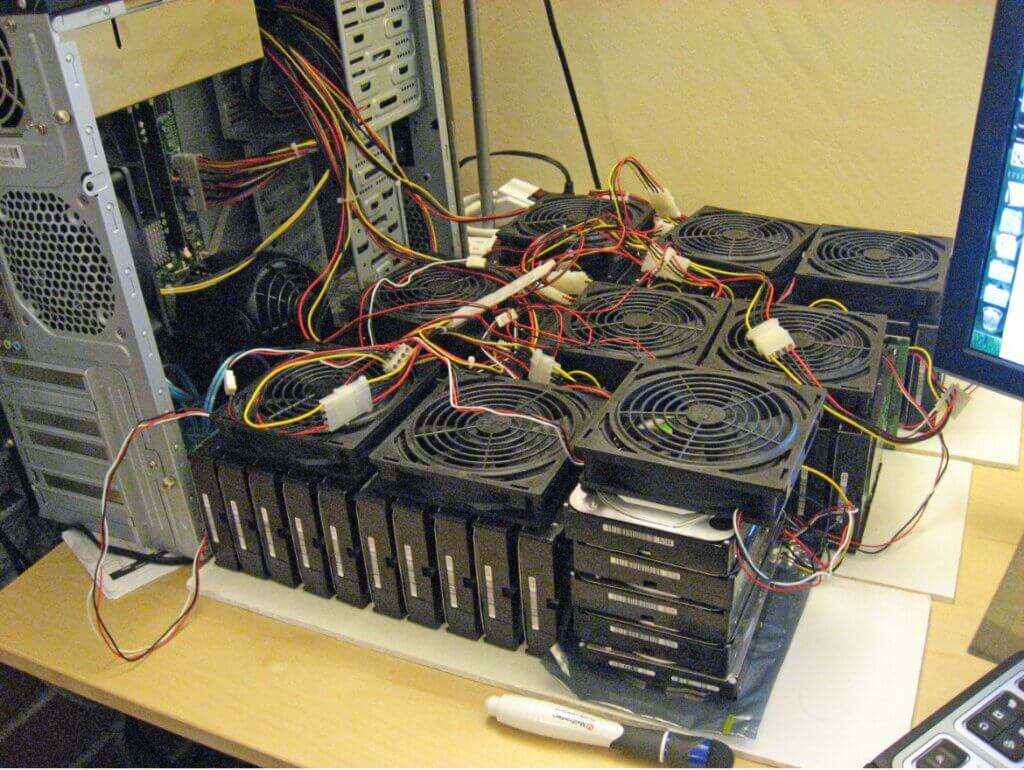
The founders of Backblaze were primarily software engineers, and after wiring up some prototypes on Tim’s office desk, we worked with the company Protocase all by email and telephone to have the first actual sheet metal Pod enclosure manufactured. The “custom” part of the Pods is the sheet metal enclosure, for cost reasons all of the components inside the enclosure are standard drives, motherboard, power supplies that you can purchase for consumers.

A photograph of an early Storage Pod prototype.
An early Storage Pod prototype (never in production)

So the sheet metal Pod has screw holes where the computer motherboard sits down and gets attached to the metal enclosure. They have to be precisely in the correct location or the screws wouldn’t line up. I (Brian) thought there was no way we (a bunch of software engineers) could get that all perfectly lined up on the very first prototype. But when we got the very first sheet metal enclosure shipped to our corporate office, every screw hole to mount the drives, backplanes, power supply, and motherboard were in perfect with alignment. However…

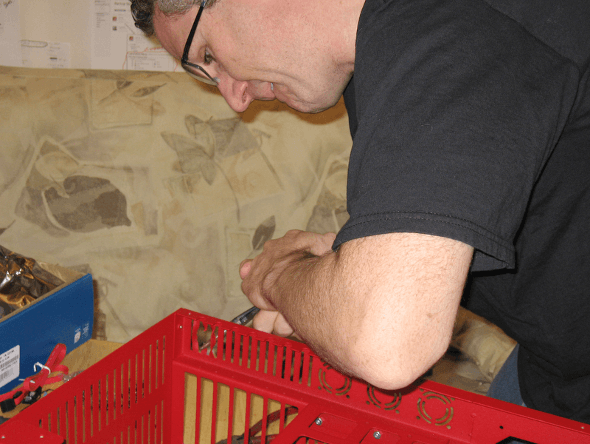
We forgot that computers have power buttons! All the complex stuff was correct, but there was no location on the case to have a power button. So Tim jammed a screwdriver in some air vents on the first prototype sheet metal Pod and opened up a hole wide enough for the power button. Below is Tim opening a hole for the Pod’s power button:

A photo of one of the Backblaze founders modifying a Storage Pod prototype.

And with that one modification, the very first sheet metal Pod was deployed in the datacenter and started storing customer data for the next several years, performing flawlessly.

While we’d spend the next decade moving away from the title word “cheap”, the blog post and how we thought about our storage problem struck a chord with enthusiasts, businesses, and the storage industry at large. Our Storage Pod wasn’t just a chassis full of drives, it was proof that infrastructure innovation doesn’t have to come from billion-dollar labs. Sometimes it comes from engineers willing to be cleverly unconventional. 

Innovation across the industry followed. Partially inspired by our architecture and philosophies around solving storage density and interconnectivity issues, the Open Compute Project (2011), and Netflix’s Open Connect (2012) came to life and continue their innovative charters to this day. Protocase, which bent the sheet metal for our original Storage Pod, spun up an entire company, 45 Drives, to meet the “build this for us” demand they were experiencing. As we moved from version 1 to version 6 of our Storage Pods and beyond, we looked on fondly as capital-efficient, high-density 4u servers became commonplace, and commoditized. Today, you can customize your own dense servers from a variety of providers, from 45Drives to Sanmina to Dell.

Why donate the Pod?

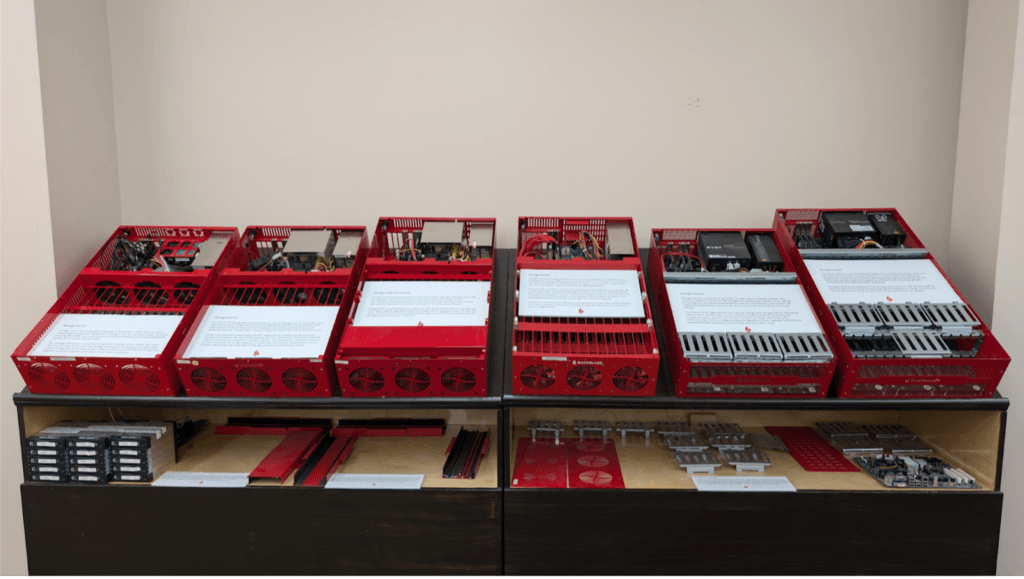
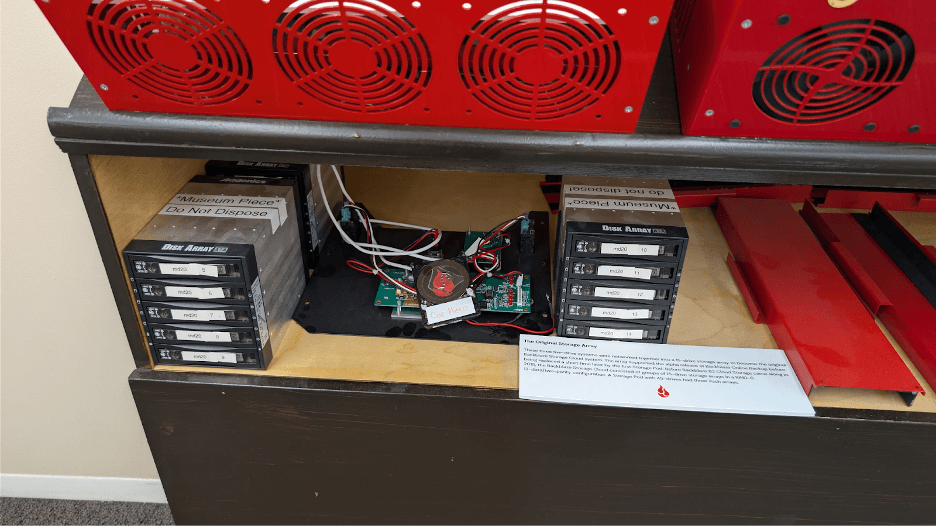
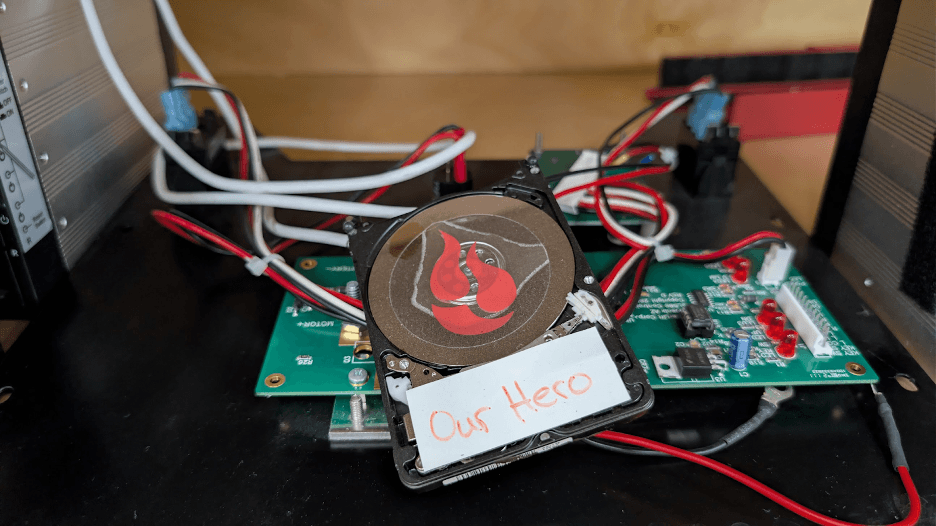
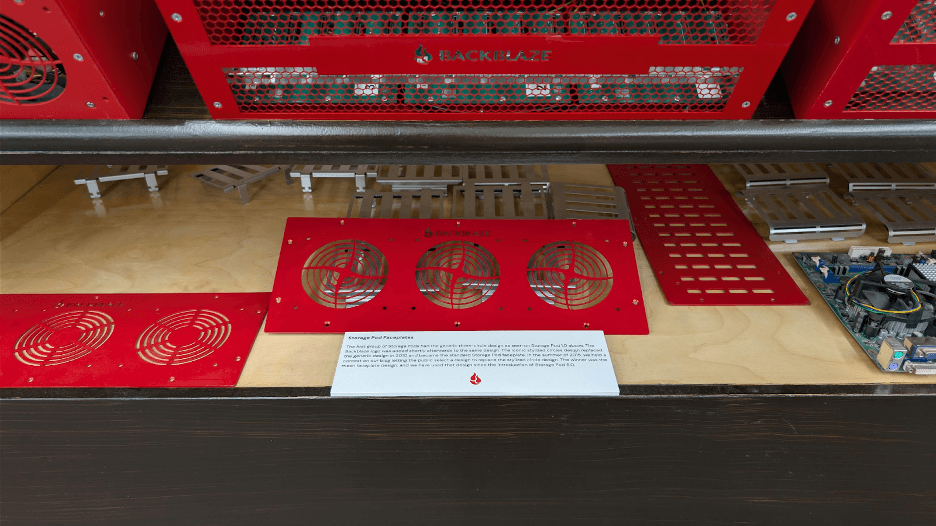
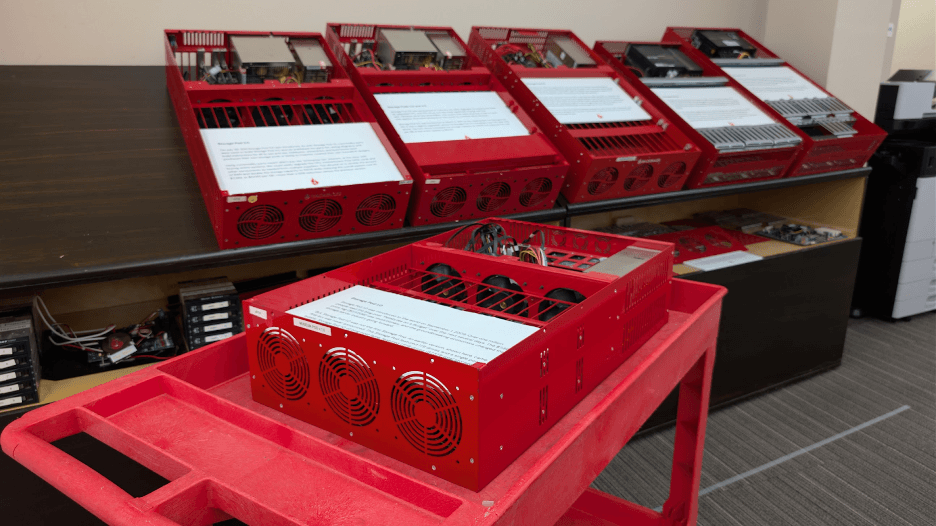
One of my favorite places in the Bay Area is the Computer History Museum in Mountain View. Walking through the exhibits, and seeing an old Babbage machine, telecom equipment, and the evolution of electronic gaming was inspiring to me when I first moved to the bay 15 years ago. At Backblaze, we’ve also kept a museum of sorts, originally created by Andy Klein. Our museum consisted of Storage Pods from version 1 all the way to version 6, along with the original RAID array we tested our systems on, and it has been displayed at our office for years.

A photo from the Backblaze Storage Pod museum (now closed).

Backblaze went fully remote in mid-January, and as our museum became destined for storage, I tried to think of other interesting things to do with it, and the Computer History Museum sprang to mind. I reached out and they graciously agreed to consider the original Storage Pod. (I appreciated the kind way in which they declined taking on our entire museum—they have space constraints as well!)

The handoff was a bit of an adventure

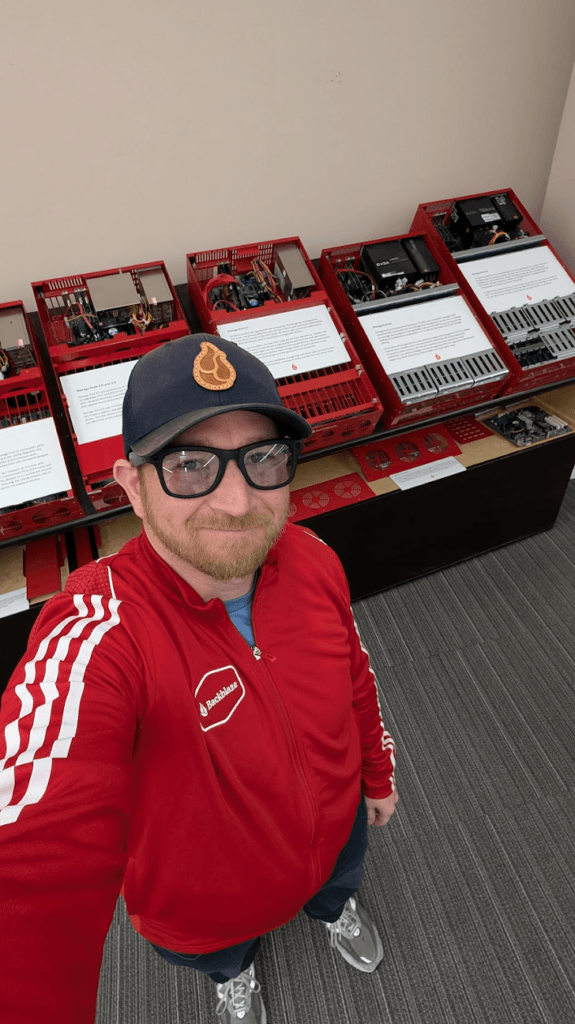
I went to our office before it closed up for good to take some pictures and bring the Storage Pod to their ingestion site.

Yev at the Backblaze Storage Pod museum.
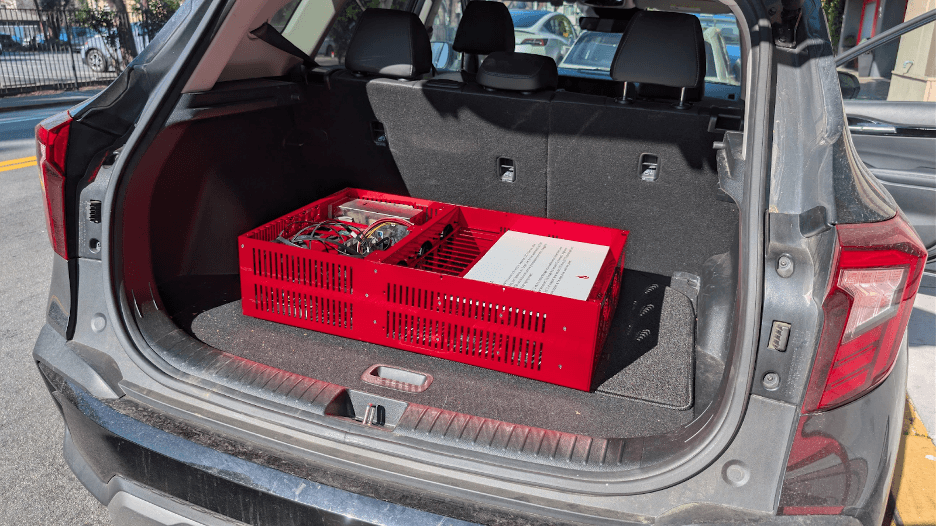
The Backblaze Storage Pod getting transported to the Computer History Museum.
The Storage Pod being transported to the Computer History Museum.

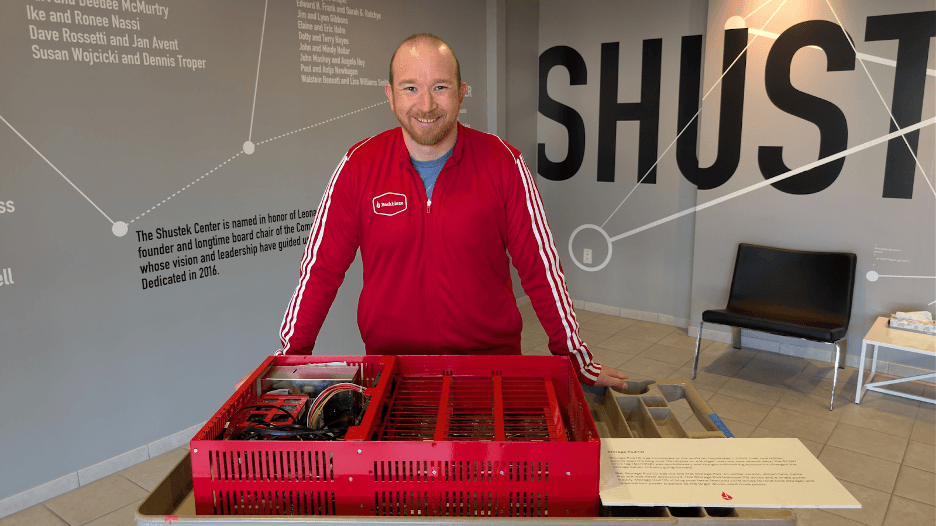
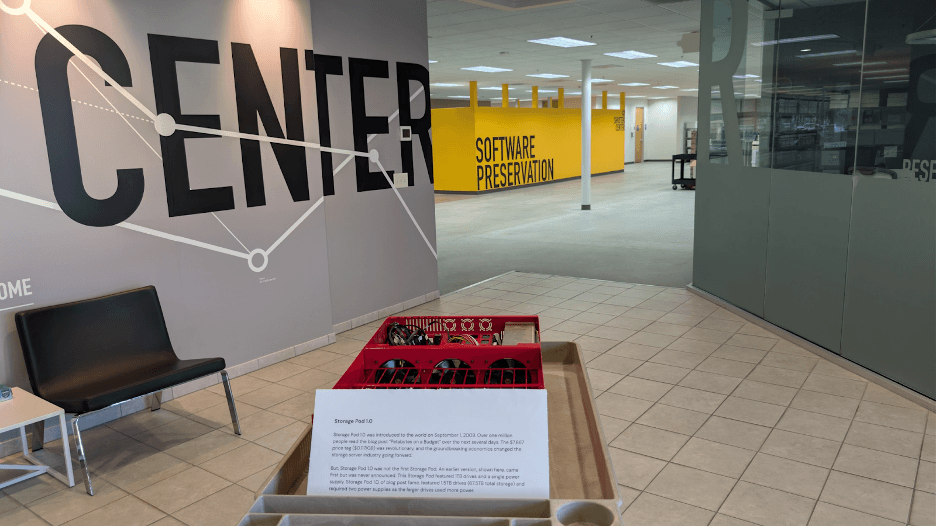
I drove to the Shustek Research Archives, which serves as an archive, preservation, and ingestion site for all the historic items bound for the Computer History Museum and its archives. It’s also where the curators do a final yay/nay on whether the items truly are a part of computer history. It was a little bittersweet to drop off the Storage Pod, but knowing it would be going to a nice home felt great.

When Backblaze began in 2007, their goal was to provide unlimited cloud backup storage for $5 a month. Their first product relied on hardware—Storage Pod 1.0—which represented a watershed, defying the era’s proprietary technical norms by using off-the-shelf components and open-source software. By famously sharing their design blueprints with the world, Backblaze also ignited a revolution in ‘open hardware,’ proving that high-density enterprise storage could be built for a fraction of the cost of traditional approaches. We are honored to preserve this original unit.

— Dag Spicer, Senior Curator, Computer History Museum

Yev with the Storage Pod at the Computer History Museum.
The Storage Pod in its new home at the Computer History Museum.

After the handoff, all I could do was wait and see whether the curators felt that our Storage Pod was worthy to be a part of their collection. Less than three weeks later, I got the news that the Pod was accepted and will join the historical relics of the CHM.

A post-Pod world

While our Storage Pod helped democratize storage at a time where the industry was in need, today B2 Cloud Storage with B2 Overdrive and B2 Neo help companies, industries, and builders democratize their tech stacks. And that kind of flexibility will help accelerate them into and past the AI-era. 

Our donated Storage Pod once held backups—data comprising the many aspects of our customer’s lives, stories, and work. And, it’s also a symbol of our stories—the late nights, bold bets, and belief in the innovation that sparked the Backblaze founders in the first place. My sincere hope is that through its retirement at the Computer History Museum, it will inspire the next generation of innovators, and if that’s you…hey, nice to meet you!

The post Backblaze, Part of Computer History appeared first on Backblaze Blog | Cloud Storage & Cloud Backup