All posts by Diane Dowling

Supporting a technical AI-focused qualification for young people in England

Post Syndicated from Diane Dowling original https://www.raspberrypi.org/blog/support-for-ai-focused-qualification-young-people-england/

Young people see and use artificial intelligence (AI) systems frequently, and hear a lot about how they are applied across many areas of life. That makes them understandably eager to find out more about how AI works. For some, this interest extends to wanting to experiment with the technology to investigate their own questions and build something themselves. How can schools support learners who want to take their interest further and gain recognition for the knowledge and skills they develop along the way?

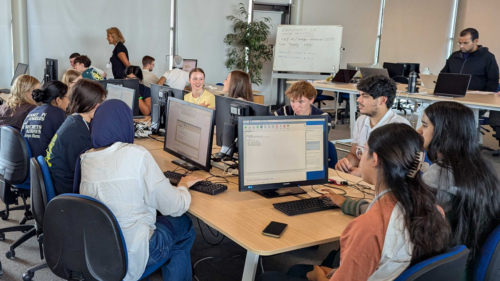
Computer science students at a desktop computer in a classroom.

For learners in the UK, there is currently no established qualification that develops technical AI skills. This can make it difficult to create space in the curriculum for dedicated AI learning, especially for learners from age 14, for whom preparation for high-stakes exams is prioritised over non-examined learning.

We have been working over the past year to develop a research-informed curriculum framework for data science, which lays out many of the foundational skills and knowledge needed to understand and develop AI models. Alongside this, we have been making the case in England for a Level 3 qualification in data science and AI. However, establishing a new qualification can take years.

In the meantime, we are starting to support students in England who choose an established route for extending their skills and getting that effort recognised: the Extended Project Qualification (EPQ).

An established qualification with room to explore AI

The EPQ is a well-established qualification for 16- to 19-year-olds offered in England, Northern Ireland, and Wales by several exam boards (including AQA, Pearson Edexcel, OCR, Eduqas/WJEC, and City & Guilds). It is completed by around 1 in 10 learners at this stage of education.

Learners pursuing an EPQ undertake an extended, self-directed investigation or project. They choose an area of interest where they want to develop their own project and take responsibility for planning, completing, and evaluating the project work.

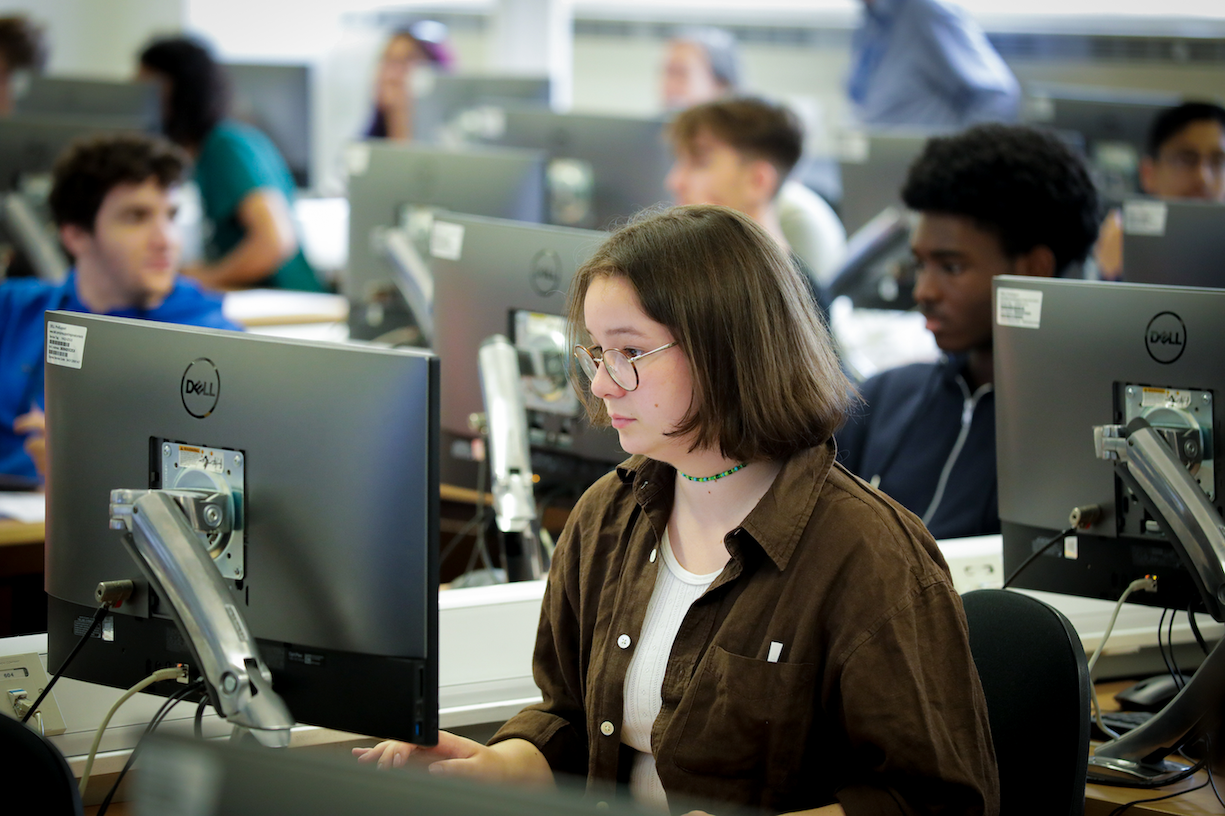
A teenager learning computer science.

Its self-directed nature makes the EPQ particularly well suited to learners who want to explore emerging areas, such as artificial intelligence and data science. For students fascinated by AI, an EPQ offers an opportunity to do more than simply learn about the technology. With the right foundations and support, they can investigate a question of their own, build a machine learning model, and use that work to gain a recognised qualification.

We are now working to offer those foundations through a new introductory ‘Data Science and AI’ course that will enable learners to build a machine learning model as their EPQ artefact.

Building the foundations for an independent AI investigation

Creating a machine learning model involves much more than choosing a statistical technique and using easily available training data. It involves understanding the problem being addressed, deciding what data to use, exploring and preparing that data, building and evaluating a model, and interpreting the model’s outputs.

Learners who want to do this work for their EPQ need not only technical knowledge and skills, but also skills for critical thinking, research, decision-making, evaluation, and reflection — skills that are valuable for any further study and future career.
To help learners develop these foundations, we are creating an introductory ‘Data Science and AI’ course, based on our curriculum framework for data science and designed to be completed before learners begin their AI-focused EPQ.

The course will guide students through a structured investigation based on a recognised data science lifecycle. By working through it, students will:

  • Learn about each stage of the data science lifecycle
  • Develop the technical understanding they need to make independent decisions during an AI investigation 
  • Gain practical experience of working with data and building a machine learning model
  • Learn about key concepts behind the techniques they use, through theoretical content that supports them to understand not just what to do, but why

The course will consist of 10 units, each involving 2 to 3 hours of independent study for learners. We are designing the activities with a no-code approach to allow students to focus on understanding data science concepts and processes.

Supporting independent project work

Importantly, the work learners produce during this course won’t be the EPQ investigation itself. Working through ‘Data Science and AI’ will give learners the knowledge and skills they need to undertake an AI-focused project with greater independence and confidence.

A young person in a university computing classroom.

After they have completed the course, when they begin their EPQ project pursuing a question that interests them, students can apply their new skills and knowledge to make decisions about their AI investigation and document their progress.

We are looking forward to supporting learners in England to turn their interest in one of today’s most significant technologies into the opportunity to develop independent research and project skills through a recognised qualification.

What’s next?

The ‘Data Science and AI’ course will be available to selected schools in England from September 2026, where students and teachers will test the materials and we will learn from their feedback to improve the course materials. We plan to make the course freely available in 2027. 

The post Supporting a technical AI-focused qualification for young people in England appeared first on Raspberry Pi Foundation.

Supporting an AI-focused qualification for young people in England

Post Syndicated from Diane Dowling original https://www.raspberrypi.org/blog/support-for-ai-focused-qualification-young-people-england/

Young people see and use artificial intelligence (AI) systems frequently, and hear a lot about how they are applied across many areas of life. That makes them understandably eager to find out more about how AI works. For some, this interest extends to wanting to experiment with the technology to investigate their own questions and build something themselves. How can schools support students who want to take their interest further and gain recognition for the knowledge and skills they develop along the way?

Computer science students at a desktop computer in a classroom.

Currently, there is no widely available subject qualification in AI for students in the UK. This can make it difficult to create space in the curriculum for dedicated AI learning, especially for students from age 14, for whom preparation for high-stakes exams is prioritised over non-examined learning.

We have been working over the past year to develop a research-informed curriculum framework for data science, which lays out many of the foundational skills and knowledge needed to understand and develop AI models. Alongside this, we have been making the case in England for a Level 3 qualification in data science and AI. However, establishing a new qualification can take years.

In the meantime, we are starting to support students in England who choose an established route for extending their skills and getting that effort recognised: the Extended Project Qualification (EPQ).

An established qualification with room to explore AI

The EPQ is a well-established qualification for 16- to 19-year-olds offered in England, Northern Ireland, and Wales by several exam boards (including AQA, Pearson Edexcel, OCR, Eduqas/WJEC, and City & Guilds). It is completed by around 1 in 10 learners at this stage of education.

Learners pursuing an EPQ undertake an extended, self-directed investigation or project. They choose an area of interest where they want to develop their own project and take responsibility for planning, completing, and evaluating the project work.

A teenager learning computer science.

Its self-directed nature makes the EPQ particularly well suited to learners who want to explore emerging areas, such as artificial intelligence and data science. For students fascinated by AI, an EPQ offers an opportunity to do more than simply learn about the technology. With the right foundations and support, they can investigate a question of their own, build a machine learning model, and use that work to gain a recognised qualification.

We are now working to offer those foundations through a new introductory ‘Data Science and AI’ course that will enable learners to build a machine learning (ML) model as their EPQ artefact.

Building the foundations for an independent AI investigation

Creating an ML model involves much more than choosing a statistical technique and using easily available training data. It involves understanding the problem being addressed, deciding what data to use, exploring and preparing that data, building and evaluating a model, and interpreting the model’s outputs.

Learners who want to do this work for their EPQ need not only technical knowledge and skills, but also skills for critical thinking, research, decision-making, evaluation, and reflection — skills that are valuable for any further study and future career.

To help learners develop these foundations, we are creating an introductory ‘Data Science and AI’ course, based on our curriculum framework for data science and designed to be completed before learners begin their AI-focused EPQ.

The course will guide students through a structured investigation based on a recognised data science lifecycle. By working through it, students will:

  • Learn about each stage of the data science lifecycle
  • Develop the technical understanding they need to make independent decisions during an AI investigation 
  • Gain practical experience of working with data and building a machine learning model
  • Learn about key concepts behind the techniques they use, through theoretical content that supports them to understand not just what to do, but why

The course will consist of 10 units, each involving 2 to 3 hours of independent study for learners. We are designing the activities with a no-code approach to allow students to focus on understanding data science concepts and processes.

Supporting independent project work

Importantly, the work learners produce during this course won’t be the EPQ investigation itself. Working through ‘Data Science and AI’ will give learners the knowledge and skills they need to undertake an AI-focused project with greater independence and confidence.

A young person in a university computing classroom.

After they have completed the course, when they begin their EPQ project pursuing a question that interests them, students can apply their new skills and knowledge to make decisions about their AI investigation and document their progress.

We are looking forward to supporting learners in England to turn their interest in one of today’s most significant technologies into the opportunity to develop independent research and project skills through a recognised qualification.

What’s next?

The ‘Data Science and AI’ course will be available to selected schools in England from September 2026, where students and teachers will test the materials and we will learn from their feedback to improve the course materials. We plan to make the course freely available in 2027. 

The post Supporting an AI-focused qualification for young people in England appeared first on Raspberry Pi Foundation.
A new qualification in data science and AI for students in England?

Post Syndicated from Diane Dowling original https://www.raspberrypi.org/blog/a-new-qualification-in-data-science-and-ai-for-students-in-england/

At the end of last year, Professor Becky Francis published her long-awaited Curriculum and Assessment Review for England, accompanied by the UK government’s official response. Buried within that response — and not actually proposed in the Review itself — was a notable commitment: to “explore introducing a new Level 3 qualification* in data science and AI, to ensure that more young people can secure high-value skills for the future and that we cement the UK’s position as a global leader in AI and technology.”

Photo of a class of students at computers, in a computer science classroom.

This announcement reflects a growing global recognition that young people need more than basic digital literacy — they need a deeper understanding of data, automation, and the rapidly evolving capabilities of AI. Countries around the world, from Singapore to the United States, are already wrestling with how to embed AI education into secondary schooling. England now joins that international conversation.

Why AI education matters

AI is an everyday technology now. Young people interact with AI systems constantly, often without realising it. Whether they pursue careers in medicine, engineering, the creative industries, or public policy, they will need a foundational understanding of how AI systems work, what their limitations are, and the ethical implications around them.

A teenager learning computer science.

Yet in England — and in many education systems globally — very few students receive formal teaching about AI. The English national curriculum makes no explicit reference to AI, and specifications for exams taken at the end of high school include only scattered mentions. This gap leaves young people navigating one of the most transformative technologies of their generation with limited guidance.

Exploring a qualification: Opportunities and challenges

In 2025, we joined forces with Professor Lord Lionel Tarassenko, one of the UK’s foremost researchers in AI and machine learning, and Simon Peyton Jones, a world-renowned computer scientist and long-time champion of computing education. Together with teachers, school leaders, universities, industry specialists, and exam boards, we have been exploring how we might begin to close the emerging gap in AI and data science education for 16- to 18-year-olds.

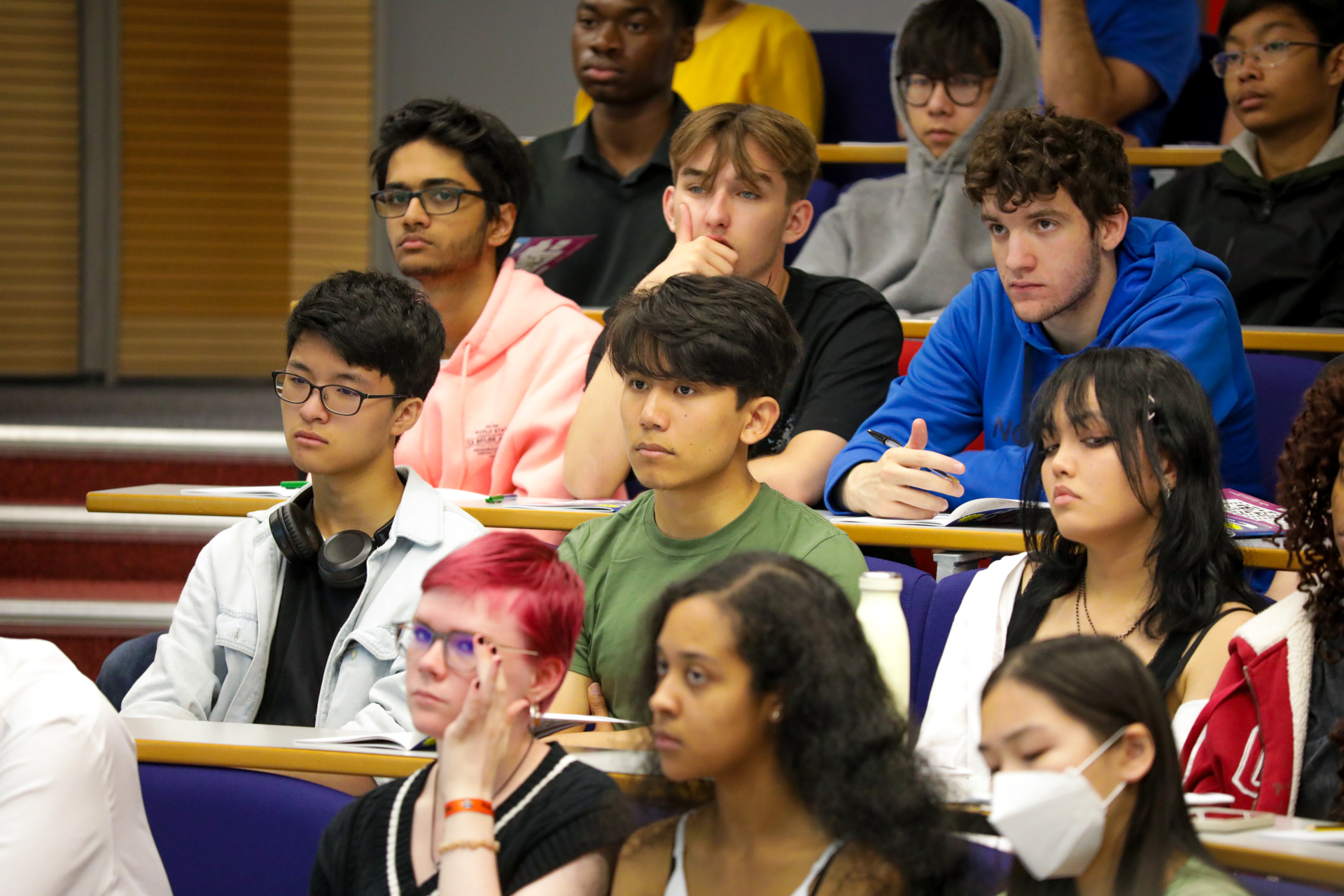
A group of young people in a lecture hall.

Over the past eight months, this collaboration has allowed us to refine our shared thinking and gather insights from a wide network of experts and practitioners. We are delighted that England’s Department for Education has recognised the potential of this work by appointing us to draft the subject content for a possible new A level in Data Science and AI.

We are delighted that England’s Department for Education has recognised the potential of [the work we have done] by appointing us to draft the subject content for a possible new A level in Data Science and AI.

Designing a qualification of this kind raises important questions — not just for the UK, but for any country considering a similar path.

What knowledge and skills should young people gain from the qualification?

A meaningful qualification must go beyond the use of tools. It should help students understand data literacy, model behaviour, bias, ethics, and the societal implications of AI. Balancing technical understanding with critical thinking is challenging but essential.

How do we ensure the qualification is accessible and inclusive?

AI should not become the preserve of already-advantaged students. Any qualification must be designed with equity in mind, recognising differences in school capacity, teacher expertise, and students’ prior experience.

How do we support teachers to deliver the qualification?

Teacher professional development is a major challenge worldwide. Delivering a qualification in AI will require confidence with concepts that are not yet common in teacher training. Sustainable delivery models — supported by high-quality resources and professional development — will be crucial.

What form should the qualification take?

There is an active debate about whether the best route for students in England is a high-stakes qualification or a supplementary course that broadens a core programme of study:

  • An A level provides structure, national recognition, and clear progression into higher education or employment.
  • An Extended Project Qualification (EPQ) may offer more flexibility, allowing students to explore AI through research or practical investigation without requiring schools to timetable a full qualification.

Different countries will make different choices based on their systems, but the underlying questions are the same: how do we create something rigorous, scalable, and future-proof?

What we’ve learned so far

In October, the Foundation hosted a workshop with representatives from schools, industry, universities, exam boards, and the Department for Education. Together, we explored key questions including:

  1. How do we make a qualification compelling – both for students who choose it and for schools that offer it?
  2. What delivery models will genuinely support teachers to succeed?
An undergraduate student is raising his hand up during a lecture at a university.

The feedback we received has been invaluable and will continue to shape the next stage of development. We believe the UK has a significant opportunity to contribute meaningfully to the global conversation about AI education. You can read the latest version of our discussion paper here.

A global call for insights

Although the current proposal focuses on England, the underlying challenge is international: how do we prepare young people everywhere to engage thoughtfully and confidently with AI?

We would love to hear from educators, researchers, and policymakers across the world:

  • Do you know of any successful qualifications or programmes for 16- to 18-year-olds that centre AI or data science?
  • What lessons should countries learn from each other?

To share your ideas or feedback, please get in touch. We’d be delighted to learn from your experience as this important work progresses.


* Level 3 in England is the stage of learning for 16- to 19-year-olds, typically ending in qualifications that pave the way for higher study or advanced apprenticeships.

The post A new qualification in data science and AI for students in England? appeared first on Raspberry Pi Foundation.