Tag Archives: England

Supporting a technical AI-focused qualification for young people in England

Post Syndicated from Diane Dowling original https://www.raspberrypi.org/blog/support-for-ai-focused-qualification-young-people-england/

Young people see and use artificial intelligence (AI) systems frequently, and hear a lot about how they are applied across many areas of life. That makes them understandably eager to find out more about how AI works. For some, this interest extends to wanting to experiment with the technology to investigate their own questions and build something themselves. How can schools support learners who want to take their interest further and gain recognition for the knowledge and skills they develop along the way?

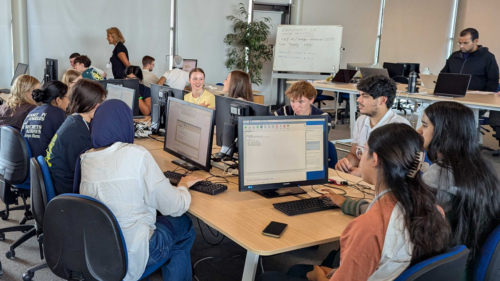
Computer science students at a desktop computer in a classroom.

For learners in the UK, there is currently no established qualification that develops technical AI skills. This can make it difficult to create space in the curriculum for dedicated AI learning, especially for learners from age 14, for whom preparation for high-stakes exams is prioritised over non-examined learning.

We have been working over the past year to develop a research-informed curriculum framework for data science, which lays out many of the foundational skills and knowledge needed to understand and develop AI models. Alongside this, we have been making the case in England for a Level 3 qualification in data science and AI. However, establishing a new qualification can take years.

In the meantime, we are starting to support students in England who choose an established route for extending their skills and getting that effort recognised: the Extended Project Qualification (EPQ).

An established qualification with room to explore AI

The EPQ is a well-established qualification for 16- to 19-year-olds offered in England, Northern Ireland, and Wales by several exam boards (including AQA, Pearson Edexcel, OCR, Eduqas/WJEC, and City & Guilds). It is completed by around 1 in 10 learners at this stage of education.

Learners pursuing an EPQ undertake an extended, self-directed investigation or project. They choose an area of interest where they want to develop their own project and take responsibility for planning, completing, and evaluating the project work.

A teenager learning computer science.

Its self-directed nature makes the EPQ particularly well suited to learners who want to explore emerging areas, such as artificial intelligence and data science. For students fascinated by AI, an EPQ offers an opportunity to do more than simply learn about the technology. With the right foundations and support, they can investigate a question of their own, build a machine learning model, and use that work to gain a recognised qualification.

We are now working to offer those foundations through a new introductory ‘Data Science and AI’ course that will enable learners to build a machine learning model as their EPQ artefact.

Building the foundations for an independent AI investigation

Creating a machine learning model involves much more than choosing a statistical technique and using easily available training data. It involves understanding the problem being addressed, deciding what data to use, exploring and preparing that data, building and evaluating a model, and interpreting the model’s outputs.

Learners who want to do this work for their EPQ need not only technical knowledge and skills, but also skills for critical thinking, research, decision-making, evaluation, and reflection — skills that are valuable for any further study and future career.
To help learners develop these foundations, we are creating an introductory ‘Data Science and AI’ course, based on our curriculum framework for data science and designed to be completed before learners begin their AI-focused EPQ.

The course will guide students through a structured investigation based on a recognised data science lifecycle. By working through it, students will:

  • Learn about each stage of the data science lifecycle
  • Develop the technical understanding they need to make independent decisions during an AI investigation 
  • Gain practical experience of working with data and building a machine learning model
  • Learn about key concepts behind the techniques they use, through theoretical content that supports them to understand not just what to do, but why

The course will consist of 10 units, each involving 2 to 3 hours of independent study for learners. We are designing the activities with a no-code approach to allow students to focus on understanding data science concepts and processes.

Supporting independent project work

Importantly, the work learners produce during this course won’t be the EPQ investigation itself. Working through ‘Data Science and AI’ will give learners the knowledge and skills they need to undertake an AI-focused project with greater independence and confidence.

A young person in a university computing classroom.

After they have completed the course, when they begin their EPQ project pursuing a question that interests them, students can apply their new skills and knowledge to make decisions about their AI investigation and document their progress.

We are looking forward to supporting learners in England to turn their interest in one of today’s most significant technologies into the opportunity to develop independent research and project skills through a recognised qualification.

What’s next?

The ‘Data Science and AI’ course will be available to selected schools in England from September 2026, where students and teachers will test the materials and we will learn from their feedback to improve the course materials. We plan to make the course freely available in 2027. 

The post Supporting a technical AI-focused qualification for young people in England appeared first on Raspberry Pi Foundation.
Supporting an AI-focused qualification for young people in England

Post Syndicated from Diane Dowling original https://www.raspberrypi.org/blog/support-for-ai-focused-qualification-young-people-england/

Young people see and use artificial intelligence (AI) systems frequently, and hear a lot about how they are applied across many areas of life. That makes them understandably eager to find out more about how AI works. For some, this interest extends to wanting to experiment with the technology to investigate their own questions and build something themselves. How can schools support students who want to take their interest further and gain recognition for the knowledge and skills they develop along the way?

Computer science students at a desktop computer in a classroom.

Currently, there is no widely available subject qualification in AI for students in the UK. This can make it difficult to create space in the curriculum for dedicated AI learning, especially for students from age 14, for whom preparation for high-stakes exams is prioritised over non-examined learning.

We have been working over the past year to develop a research-informed curriculum framework for data science, which lays out many of the foundational skills and knowledge needed to understand and develop AI models. Alongside this, we have been making the case in England for a Level 3 qualification in data science and AI. However, establishing a new qualification can take years.

In the meantime, we are starting to support students in England who choose an established route for extending their skills and getting that effort recognised: the Extended Project Qualification (EPQ).

An established qualification with room to explore AI

The EPQ is a well-established qualification for 16- to 19-year-olds offered in England, Northern Ireland, and Wales by several exam boards (including AQA, Pearson Edexcel, OCR, Eduqas/WJEC, and City & Guilds). It is completed by around 1 in 10 learners at this stage of education.

Learners pursuing an EPQ undertake an extended, self-directed investigation or project. They choose an area of interest where they want to develop their own project and take responsibility for planning, completing, and evaluating the project work.

A teenager learning computer science.

Its self-directed nature makes the EPQ particularly well suited to learners who want to explore emerging areas, such as artificial intelligence and data science. For students fascinated by AI, an EPQ offers an opportunity to do more than simply learn about the technology. With the right foundations and support, they can investigate a question of their own, build a machine learning model, and use that work to gain a recognised qualification.

We are now working to offer those foundations through a new introductory ‘Data Science and AI’ course that will enable learners to build a machine learning (ML) model as their EPQ artefact.

Building the foundations for an independent AI investigation

Creating an ML model involves much more than choosing a statistical technique and using easily available training data. It involves understanding the problem being addressed, deciding what data to use, exploring and preparing that data, building and evaluating a model, and interpreting the model’s outputs.

Learners who want to do this work for their EPQ need not only technical knowledge and skills, but also skills for critical thinking, research, decision-making, evaluation, and reflection — skills that are valuable for any further study and future career.

To help learners develop these foundations, we are creating an introductory ‘Data Science and AI’ course, based on our curriculum framework for data science and designed to be completed before learners begin their AI-focused EPQ.

The course will guide students through a structured investigation based on a recognised data science lifecycle. By working through it, students will:

  • Learn about each stage of the data science lifecycle
  • Develop the technical understanding they need to make independent decisions during an AI investigation 
  • Gain practical experience of working with data and building a machine learning model
  • Learn about key concepts behind the techniques they use, through theoretical content that supports them to understand not just what to do, but why

The course will consist of 10 units, each involving 2 to 3 hours of independent study for learners. We are designing the activities with a no-code approach to allow students to focus on understanding data science concepts and processes.

Supporting independent project work

Importantly, the work learners produce during this course won’t be the EPQ investigation itself. Working through ‘Data Science and AI’ will give learners the knowledge and skills they need to undertake an AI-focused project with greater independence and confidence.

A young person in a university computing classroom.

After they have completed the course, when they begin their EPQ project pursuing a question that interests them, students can apply their new skills and knowledge to make decisions about their AI investigation and document their progress.

We are looking forward to supporting learners in England to turn their interest in one of today’s most significant technologies into the opportunity to develop independent research and project skills through a recognised qualification.

What’s next?

The ‘Data Science and AI’ course will be available to selected schools in England from September 2026, where students and teachers will test the materials and we will learn from their feedback to improve the course materials. We plan to make the course freely available in 2027. 

The post Supporting an AI-focused qualification for young people in England appeared first on Raspberry Pi Foundation.

Enhancing your enrichment offer? Code Club is the answer

Post Syndicated from John McAtominey original https://www.raspberrypi.org/blog/code-club-enrichment-offer-schools-free-support/

There’s something really special about a Code Club. It’s a unique space for young people to get creative with technology on their terms, explore what interests them, and learn through experimenting and having fun. But speak to any Code Club leader and they’ll tell you: Code Club delivers so much more than just coding skills.

Two young people work together at a Code Club.

In the thousands of free Code Clubs across the world, you’ll see young people not only make amazing tech creations, but also grow as people. You’ll see young people find their voice and grow in confidence as they present what they’ve made to a room full of friends and parents. You’ll see them show a problem in their code to their friends and work as a team to fix it. You’ll see young people come up with the most creative digital solutions to challenges they see around them.

The ideal enrichment activity for the age of AI

We’re delighted that the UK government recently recognised Code Club as a key resource to help schools enhance their enrichment offer. This confirms what the community tells us, and what independent research shows: that Code Club works. Not only does it help young people develop their programming skills, but it also builds life skills including confidence, resilience, and problem solving. And Code Club is completely free. Schools, libraries, and community centres can set up Code Clubs using their existing equipment, and register their clubs to access all our free resources and support for getting started and running successful club sessions for the long term.

A Code Club session in a school classroom filled with young people working together at laptops.

And what about AI? There’s no getting around it, at the moment AI dominates almost every conversation about computing education, and this includes enrichment and non-formal activities too. All young people should have the power and agency to understand, question, and shape the AI systems increasingly affecting their lives. We believe that kids still need to learn to code in the age of AI, and we’ve created resources and coding projects for Code Clubs that help young people understand how AI tools work, and how to use them carefully. 

A Code Club in every UK school and library

Last year we announced our ambition to support every school and library in the UK to set up a free Code Club so that young people can develop the skills and knowledge they need to thrive in the age of AI.

Two young people smiling whilst working on their laptop with an adult mentor by their side.

Now we’re pleased to announce a package of free support for UK trusts and local authorities that are interested in becoming growth partners and setting up Code Clubs across their networks. If you join us as a growth partner, you will get:

  • Direct support from a member of our team, who will work with you to get new Code Clubs running
  • Training for your team on how to run a great Code Club experience
  • Exclusive partner logos to use on your website and in social media posts
  • Resources to promote and celebrate your clubs
  • The chance to be included in our global communications
  • Priority places at our community events
  • Access to a digital platform to monitor and manage your clubs
  • A welcome pack including some of our most popular resources
  • And of course, easy-to-follow projects for your young people

If you would like to find out more about how Code Club can enhance your enrichment offer, how easy it is to get started, and how we can help, please get in touch!

The post Enhancing your enrichment offer? Code Club is the answer appeared first on Raspberry Pi Foundation.
What students and teachers in England want from a computing curriculum

Post Syndicated from Rachel Arthur original https://www.raspberrypi.org/blog/what-students-and-teachers-in-england-want-from-a-computing-curriculum/

The UK Government is undertaking the first major review of England’s curriculum and qualifications system since the current national curriculum was introduced in 2014. We believe that this is an excellent opportunity not simply to update the computing curriculum content, but to reconsider what computing education is for, who it serves, and how it prepares young people for life in a digital society.

Today, we are launching a report featuring 6 key priorities for curriculum reform based on discussions we have had with students and teachers. 

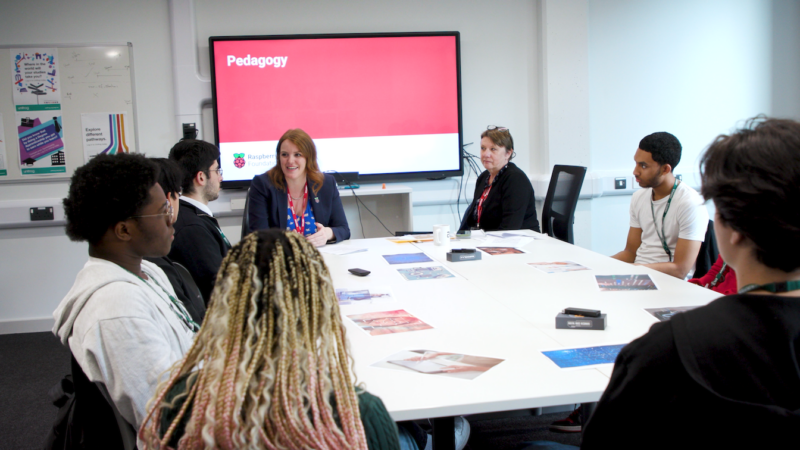
Students and educators sit at a table discussing England's curriculum review and The Future of England's Computing Curriculum.

Putting students and teachers at the heart of the conversation 

Too often, curriculum reform happens around students and teachers rather than with them. Yet these are the people who experience computing education every day, and they have valuable insights into what is working, what is not, and what needs to change. 

Our new report is based on a series of student focus groups and teacher workshops held by us and the University of Cambridge in Manchester, London, and Cambridge during spring 2026.

Teachers sit at a table discussing England's curriculum review and The Future of England's Computing Curriculum.

The student discussions included young people currently studying computer science at GCSE and A level (ages 14–18), as well as young people who had decided to not continue with the subject. We also brought together 18 computing teachers from secondary schools across England to explore curriculum priorities and challenges for implementation. 

Although participants in our workshops had differing perspectives, they consistently pointed to the same underlying challenge: the current curriculum no longer reflects the realities of technology, work, or young people’s lives. 

“AI is everywhere now, we need to understand how it works, not just be told not to use it.”
– Student, London

In particular, many students highlighted a lack of confidence in their practical digital skills despite using technology constantly in everyday life.

“I can code a bit, but I don’t know how to use Excel properly, that’s what I’ll actually need.”
– Student, London

Calls for a practical, relevant, inclusive, and future-facing curriculum

Students and teachers are not calling for a less rigorous curriculum. Nor are they arguing that computing should lose its technical foundations, with teachers consistently emphasising the value of understanding computational thinking, programming, algorithms, data, and computer systems and networks.

Instead, students and teachers want to make computing education more practical, relevant, inclusive, and future-facing.

Teachers sit at a table discussing England's curriculum review and The Future of England's Computing Curriculum.

Teachers particularly emphasised the importance of helping students understand how AI systems function, including issues such as bias, training data, limitations, and ethical implications. Participants argued that computing education should help young people understand the technologies shaping their lives, not simply prepare them for examinations. Perhaps the strongest area of agreement was that curriculum reform will only succeed if it is matched by investment in teaching.

Six key priorities for curriculum reform 

Based on our discussions with students and teachers, we have identified several priorities for curriculum reform.

1. Guarantee a core digital education for every young person

All students should leave school with a strong foundation in digital literacy, online safety, data awareness, and AI literacy. These should be treated as essential components of modern education, not optional extras.

2. Modernise curriculum content

The curriculum should focus on contemporary technologies and concepts, including AI, cybersecurity, and data, while trimming content that is overly specific, outdated, or disconnected from modern practice. Foundations such as programming, algorithms, and computational thinking should remain central.

3. Prioritise practical and applied learning

Computing should be taught through making, experimentation, and problem solving. Project-based learning, physical computing, and relevant, real-world applications should become central approaches across all ages.

4. Introduce greater flexibility and specialisation

The revised curriculum should balance a shared foundation with opportunities for students to specialise in areas aligned with their interests and aspirations.

5. Embed inclusion throughout the curriculum

Any reforms should actively address barriers to participation by ensuring inclusive teaching approaches, diverse, relatable role models, and accessible learning experiences.

6. Invest in teachers and implementation

Curriculum reform must be accompanied by sustained investment in teacher recruitment, professional development, and classroom resources. Without this, reforming the curriculum  risks widening existing inequalities in provision.

Read our full report

We believe listening to students and teachers should be central to curriculum reform. You can read the full report now:

The post What students and teachers in England want from a computing curriculum appeared first on Raspberry Pi Foundation.