Letter To The European Commission About Age Verification And Social Networks

Post Syndicated from Bozho original https://techblog.bozho.net/letter-to-the-european-commission-about-age-verification-and-social-networks/

My previous post here in August was about the age verification plans of the European Commission. Since then the EC has proposed the EU KIDS Act, which implements the idea of age verification.

Yesterday I presented the alternative approach – heavily relying on parental control apps – on the OpenFest conference. Apart from proposing a local legislation in Bulgarian parliament, I’ve sent a letter the the European Commission. You can find it here. The text is as follows:


Dear President von der Leyen,
Dear Executive Vice-President Virkkunen,

Subject: The right approach to protecting children from the negative effects of social media

I’m writing this letter as a member of parliament from Bulgaria, as a former minister for digital transformation, as a technical expert and as a father.

Protecting children online has become a priority for the European Commission and for many EU governments, and rightly so. The threats online, the negative psychological effects of addictive designs and the algorithms that prioritize virality over quality have significant negative effects on children.

The European Commission has started addressing the addictive design problem, analyzes algorithmic bias and has undertaken an age verification initiative, in addition to long-term measures against CSAM, online crimes against children, etc.

While we all see the good intentions behind these initiatives, they sometimes lack the technical depth and the ambition to achieve swift results. My focus in this letter will be age verification, as the measure that is the most polarizing and may have significant negative side effects if done wrong. And I’m concerned that the currently selected approach by the European Commission is the wrong one.

The idea sounds simple – “social networks are proven to be detrimental to children’s mental health, and so they must not be allowed to use it. The way to do it is to add an age check before registration, so that only adults can use the service”. While simple to formulate, it’s much more difficult to implement, if not impossible.

There is an inherent paradox – if a solution is fully privacy-preserving, it’s ineffective. If it’s effective, it bears significant risks to privacy, as it will require every citizen to prove their identity online in order to use everyday services.

The European Commission has made a well-meaning attempt to design and implement a proper zero-knowledge proof of age. It’s a great tool, with proper cryptography, complex-yet-elegant. It has “just” one problem – it doesn’t account for the actual “threat actor” in this scenario – the user, who would try many things to circumvent the age limitation. As security consultant Paul Moore has brilliantly shown, you don’t have to compromise the age verification app in order to circumvent the flow – by a simple relay attack, where you just present someone else’s verified age credentials in order to use a service. The proof of concept was implemented as a chrome extension which relays age checks to 3rd party service, backed by an over-18 person’s device, which sends the proof to the service. That way a single adult can verify the accounts of all minors, and because of the necessary privacy guarantees, the relying party (the social network) won’t even know.

This is very likely to happen – “age verification as a service” providers will certainly pop-up to help minors get into social networks. What’s worse – some of these providers may collect children’s personal data, including phone number or social network account ID, in order to provide them with the much coveted proof of age. That data, purposefully or after an inevitable data breach, may be used by sex predators to target children. There are completely realistic nightmare scenarios, born from the good intention to limit the negative effects of social networks.

Even in a school context, a single over-18 (or over-16) student can lend their age verification app to help younger children register profiles. What are policy makers going to do then? Issue administrative fines for sharing age tokens/attestations? Criminalize it?

Any attempt to fix that technically, breaks the privacy guarantees; any attempt to fix it legally, is doomed to fail in enforcement.

My advice, in all my capacities listed in the beginning of this letter, is to abandon that approach and focus on a different approach – rely on parental control apps.

Parental control apps remain rudimentary, and perhaps there are reasons for this. They are not widely used and are often unintuitive and unreliable. However, they can be regulated and improved. They can also incorporate government-mandated lists of apps and domains restricted for children according to age. For example, a child protection agency could publish a list that parental control apps would be required to import automatically. Legislators could also require these apps to be pre-installed on every phone sold in their country. Parents would remain in control and could adjust the settings if they considered their children ready to use particular services responsibly.

Certain apps can be banned for under-14, others for under-16 and others – for under-18. Governments would have much better control over the exact services they deem risky for children, without the need for any changes on the service’s side. Or, if an app vendor wants to have it whitelisted, they may have to implement children-friendly versions.

Going further, this may eventually lead to platform-level parental control APIs, so that each app can read parental control settings, and on the other hand export parental control configuration options to be used in the parental control app.

What’s even better about this approach, is that VPNs can’t be used to circumvent it – it’s a device-level limitation, not service-level limitation, which needs to figure out the country of the user, which can only be done by their IP address.

And It’s completely privacy-preserving, as users don’t have to show or prove anything to anyone.
Of course, the harder part is making sure every child and parent has a parental control app installed. Information campaigns and teachers can help with that, and I’m sure it will achieve much better results than what we are seeing in Australia for example.
Even if the right age limitation measures are implemented, the efforts to limit the addictiveness and so-called “brainrot” on online platforms should continue.
We have proposed national legislation to implement the approach above. But in order to avoid fragmentation in the digital single market, and in order to have a working, cross-border model, where the experience of each country improves the model EU-wide, a solution should be discussed on a EU-level.

Yours sincerely,
Bozhidar Bozhanov,
Member of parliament of the Republic of Bulgaria

The post Letter To The European Commission About Age Verification And Social Networks appeared first on Bozho's tech blog.


AI Security

Post Syndicated from Bruce Schneier original https://www.schneier.com/blog/archives/2026/11/ai-security.html

Two weeks ago, I attended the [un]prompted AI security conference in San Francisco. It was an excellent event: three days of very dense talks about all aspects of AI security. (My talk was about integrous AI, and I will post it when it is online.)

AI security can be divided into three broad topics. It’s important for researchers to understand which one they are working on. And it’s important for us as a community to work on them all. They are: security of AI, security with AI, and security from AI. [un]prompted had good talks about all three.

Dell PowerEdge R770AP Review One Fast Intel Xeon 6 Server

Post Syndicated from Patrick Kennedy original https://www.servethehome.com/dell-poweredge-r770ap-review-one-fast-intel-xeon-6-server/

Today we are taking a look at Dell’s PowerEdge R770AP. The 2U server goes all-in on performance with a dual-socket Xeon 6 setup and 24 channels of DDR5 memory

The post Dell PowerEdge R770AP Review One Fast Intel Xeon 6 Server appeared first on ServeTheHome.

ASRock Rack DMRD16-2L+ Spotted with 16 DDR5 Slots for Diamond Rapids

Post Syndicated from John Lee original https://www.servethehome.com/asrock-rack-dmrd16-2l-plus-diamond-rapids-ocp-summit-2026/

We check out the ASRock Rack DMRD16-2L+ which is a 16-channel Intel Diamond Rapids Xeon motherboard with 128x PCIe Gen6 lanes over MCIO

The post ASRock Rack DMRD16-2L+ Spotted with 16 DDR5 Slots for Diamond Rapids appeared first on ServeTheHome.

Asahi Linux 7.3 progress report

Post Syndicated from corbet original https://lwn.net/Articles/1105936/

The Asahi Linux developers have put out a new report
on their progress toward a Linux distribution for Apple devices.

Some time ago, we were made aware of multiple attempts to exploit
our permissive licensing to hijack our work, with a direct view to
replacing the project and aggressively monetising Linux on Apple
Silicon. In some extreme cases, in-development feature code was
being lifted straight out of our personal forks and published
without attribution or lazily rewritten with LLM assistance to
obfuscate its origin. The MIT licence explicitly allows this, and
has no carveouts to protect against bad faith actors.

As such, we made the difficult decision to begin the process of
transitioning all of our repositories to the GNU General Public
License version 2 or later. Going forward all Asahi Linux code will
be licenced under strong copyleft licences only. Those who do not
learn from history are doomed to repeat it.

Amutable Foundations: A Technical Overview

Post Syndicated from corbet original https://lwn.net/Articles/1105934/

Lennart Poettering, Michael Vogt, and Joaquim Rocha have put together a
detailed overview
of what the Amutable Operating System (AOS) and
associated infrastructure will look like.

The image-based OS approach enables us to enforce some very strict
but powerful security properties, which elevate the security
posture of the system substantially above traditional Linux
systems. Specifically, let’s highlight seven major essential
security properties of AOS here:

  1. No Shell + No SSH + No Language Interpreters. By default AOS
    does not install a UNIX shell, nor makes remote access via SSH
    available on the nodes. Moreover, we do not install any of the usual
    language interpreters (Python, Perl, …) by default. For most nodes a
    shell or interpreted language support is not required and it removes a
    whole class of attacks.

  2. Signed Images Only. On AOS only images that come with Verity
    data signed by a signing key listed in the Verity keyring may be
    activated.

  3. […]

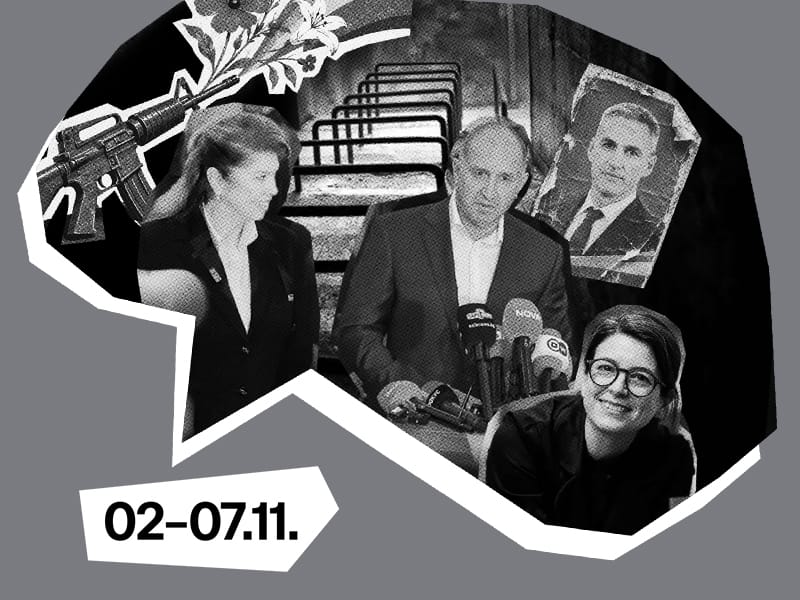
Седмицата (2–7 ноември)

Post Syndicated from Боряна Телбис original https://www.toest.bg/sedmitsata-2-7-noemvri/

Седмицата (2–7 ноември)

Целият свят ври и кипи. В Америка демократите пометоха републиканците на междинните избори, войните продължават, цените растат, политиците се обвиняват взаимно, а хората тук-там дори сменят мнението си.

У нас, слава богу, подобни сътресения няма. Всичко е подредено, стройно, вчесано. Всички са от една партия и навсякъде ще се ползва само един език, за да се разбираме точно и конкретно всички. На когото не му изнася, ще му показваме izhoda.

Седмицата (2–7 ноември)
Интернет фолклорът ни порасна с няколко века през последната седмица

Иначе изборите минаха, победителят е ясен, а България вече има първата жена, избрана за президент. Това самò по себе си е историческо постижение. Дали обаче е постижение и за правата на жените, е съвсем друг въпрос. В „Имаме си президентка. Съвсем“ Светла Енчева разглежда десетте години на Илияна Йотова в сянката на Румен Радев, отношението ѝ към равноправието и шансовете най-после да докаже политическата си самостоятелност.

Имаме си президентка. Съвсем

Светла Енчева коментира избора на първата жена президент на България. Йотова дължи възможността да заеме този пост на борбата за равноправие, но не е защитавала особено правата на жените. А след 10 години в сянката на Румен Радев тепърва ще трябва да доказва политическата си самостоятелност.

За това как Йотова стигна дотук и защо Андрей Гюров не успя да я спре, пише Емилия Милчева в анализа си на президентските избори. Накратко, оказа се, че изкуственото форсиране на страх от война е по-убедително от всеки реален опит за промяна. Особено когато успееш да убедиш избирателите, че опасността идва не от този, който води войната, а от онзи, който не иска да се оставят развързани ръцете на агресора.

Йотова ли спечели, или Гюров загуби?

На президентския балотаж страхът от война победи обещанието за промяна. Емилия Милчева анализира как управляващите превърнаха мира в предизборно оръжие, защо Андрей Гюров не успя да наложи собствен дневен ред и какво политическо бъдеще очаква двамата кандидати след изборите.

И понеже толкова много държим на мира, Александър Малинов реши да провери къде точно ще се скрием, ако този мир все пак ни подмине. В „Бомбоубежища за 1%“ става ясно, че с гражданската защита положението е доста по-неутешително, отколкото с предизборните обещания. Докато други европейски държави инвестират в убежища, системи за предупреждение и планове за действие при бедствия и военни конфликти, у нас защитените места стигат за по-малко от един процент от населението. Останалите явно ще разчитаме на мира, който ни обещаха.

Бомбоубежища за 1%

Внимание, внимание! Знаете ли къде трябва да се скриете при бедствие или военна атака? Не се притеснявайте, държавата също не знае съвсем. След изборите е време да поговорим и за по-съществени неща. Александър Малинов проверява имаме ли изобщо някакъв план и разказва как е в Европа.

Отвъд океана междувременно избирателите решиха да не разчитат повече на обещания. В брой 20 на „Гласовете на Америка“ Йоанна Елми разказва как демократите постигнаха най-голямата си изборна победа от десетилетия, какво не разбраха републиканците и защо реалните проблеми на хората се оказаха по-силни от поредната порция идеологически плашила.

Гласовете на Америка – брой 20

То бива, бива, ама чак пък това никой не го е очаквал. Демократите спечелиха убедително дори там, където доскоро изглеждаше немислимо, а републиканците имат доста поводи за размисъл. Йоанна Елми с обобщение на междинните избори в САЩ в 10 точки.

Но да оставим за момент естествения интелект, който ни управлява, и да видим какво става с изкуствения, защото и той се бори за своето място под слънцето, така да се каже. Илия Тошев задава един стар въпрос в нова обстановка: „Кой пази пазачите?“ Когато ИИ агентите вече могат да кандидатстват за кредити, да вземат решения и да действат от наше име, кой контролира тях и кой контролира онези, които имат правото да ги спират?

Илия предлага конкретни правила за независим надзор, публичност и възможност за обжалване. Когато този, който определя правилата, сам контролира и спазването им, надзорът лесно се превръща във формалност. В България имаме достатъчно опит с подобни сбъркани модели, макар и без участието на изкуствен интелект, и би трябвало да сме наясно. Оу, уейт… както се казва по новия законопроект.

Кой пази пазачите?

Да оставиш ИИ да ти намери кредит звучи удобно. Но какво става, ако нещо се обърка, и към кого се обръщаш тогава? Илия Тошев ни превежда през практическата страна на живота с ИИ: кой отговаря за агентите, които действат от наше име, и как да защитим интересите си, когато вече решават вместо нас.

И докато се чудим колко власт да дадем на машините, все по-рядко си задаваме въпроса какво ни отнемат те. В разговора си със Стефан Иванов аржентинската писателка Саманта Швеблин обяснява защо литературата е противоположност на радикализацията, защо машините ни правят предвидими и скучни и какво губим, когато престанем да мислим с хора, които мислят различно от нас. Много хубав разговор, особено в страна, в която очевидно сме решили да се разбираме само на един език, буквално и преносно.

Саманта Швеблин: Да избягаме от езика, за да докоснем тялото на читателя

Преди броени дни станалата вече култова аржентинска писателка Саманта Швеблин в дискусия с Георги Господинов и Дария Карапеткова разказа за рисковете и радостите да четеш, пишеш и мислиш света през литературата днес. Часове преди това тя се срещна и със Стефан Иванов – ето техния разговор.

Тази седмица Зорница Христова ни предлага две книги за трудното изкуство да живееш с друг човек. В „По буквите: Линч, Рой“ тя представя „Отвъд морето“ на Пол Линч и „Моят подслон и моята буря“ на Арундати Рой. В едната двама мъже са заседнали в лодка насред океана, в другата майка и дъщеря цял живот се опитват да намерят правилната дистанция помежду си. И в двете се оказва, че за да оцелееш заедно с някого, се изисква повече от това да го накараш да мисли като теб.

По буквите: Линч, Рой

Тази седмица Зорница Христова поставя на фокус две чудесни съвременни книги, в които апокалипсисът е „в една лодка“ близки хора, но изплуването се оказва невъзможно без широтата на разбирането и приемането, без щедростта на протегнатата сурова и помилваща ръка.

За да продължаваме да публикуваме текстове, в които не всички мислят еднакво, имаме нужда от вашата подкрепа. „Тоест“ се издържа от читателите си. За щастие, независимата журналистика струва доста по-малко от една предизборна кампания, но все пак не може да се прави съвсем без пари. Ако харесвате това, което четете, подкрепете ни. Обещаваме да не ви казваме на какъв език да мислите и откъде да излизате, освен ако, разбира се, не търсите izhoda ot cqloto tova bezobrazie.

Приятна почивка!

The collective thoughts of the interwebz