Post Syndicated from Explosm.net original https://explosm.net/comics/monitors
New Cyanide and Happiness Comic
Post Syndicated from Explosm.net original https://explosm.net/comics/monitors
New Cyanide and Happiness Comic
Post Syndicated from Techmoan original https://www.youtube.com/watch?v=7hQWYaGEx_E
Post Syndicated from The History Guy: History Deserves to Be Remembered original https://www.youtube.com/watch?v=lG5TMoBiV5M
Post Syndicated from Curious Droid original https://www.youtube.com/watch?v=feDk6oaeVAY
Post Syndicated from Home Assistant original https://www.youtube.com/watch?v=dSbCzRhbOVA
Post Syndicated from Simon Janusz original https://blog.rapid7.com/2024/08/30/metasploit-weekly-wrap-up-08-30-2024/
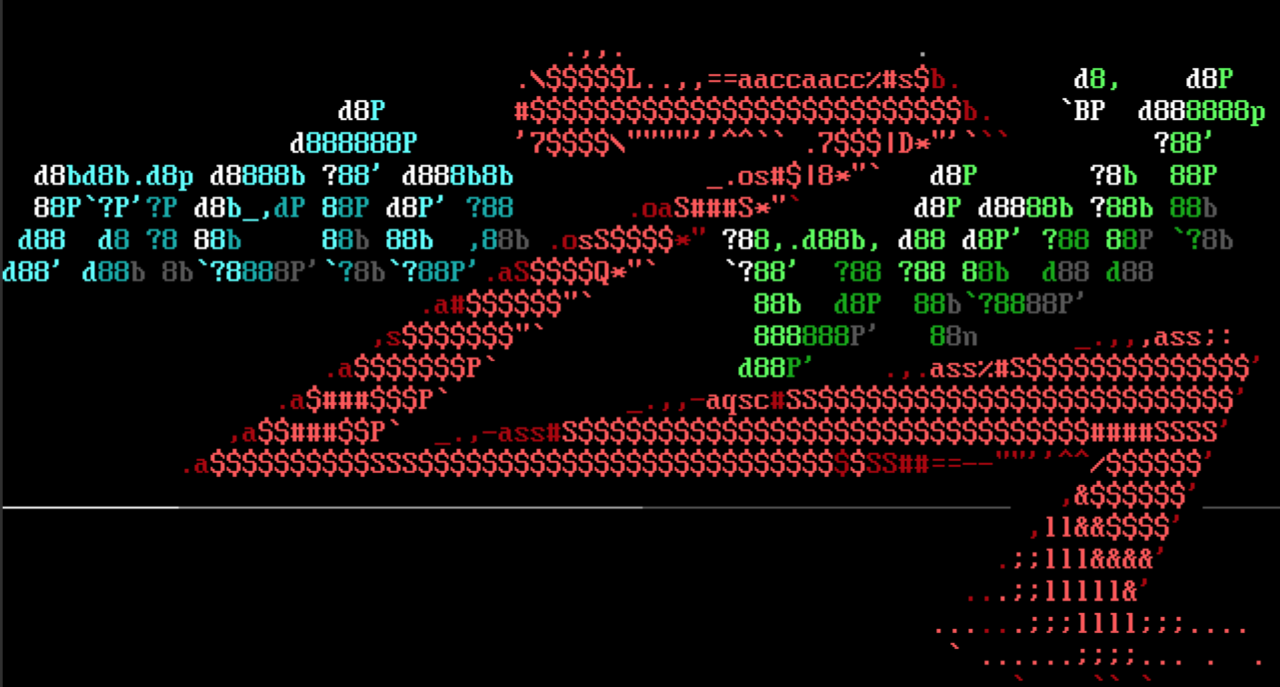
A new PHP encoder has been released by a community contributor, jvoisin, allowing a PHP payload to be encoded as an ASCII-Hex string. This can then be decoded on the receiver to prevent issues with unescaped or bad characters.
This release of Metasploit Framework also features 3 new modules to target ray.io, which is a framework for distributing AI-related workloads across multiple machines, which makes it an excellent exploitation target. These modules can perform arbitrary file reads, perform remote code execution and command injection, making them a great all-round addition to a penetration testing workflow.
The vulnerabilities for which modules are provided are:
Authors: Michael Heinzl and Tenable
Type: Auxiliary
Pull request: #19380 contributed by h4x-x0r
Path: admin/http/idsecure_auth_bypass
AttackerKB reference: CVE-2023-6329
Description: Adds an auxiliary module targeting CVE-2023-6329, an improper access control vulnerability, which allows an unauthenticated user to compute valid credentials and to add a new administrative user to the web interface of Control iD iDSecure <= v4.7.43.0.
Authors: Michael Heinzl, mxalias, and ohnoisploited
Type: Auxiliary
Pull request: #19386 contributed by h4x-x0r
Path: admin/http/ivanti_vtm_admin
AttackerKB reference: CVE-2024-7593
Description: Adds an exploit targeting CVE-2024-7593 which is an improper access control vulnerability in Ivanti Virtual Traffic Manager (vTM) . It allows an unauthenticated remote attacker to add a new administrative user to the web interface of the product before 22.7R2.
Authors: Takahiro Yokoyama, byt3bl33d3r [email protected], and danmcinerney [email protected]
Type: Auxiliary
Pull request: #19363 contributed by Takahiro-Yoko
Path: gather/ray_lfi_cve_2023_6020
AttackerKB reference: CVE-2023-6020
Description: The auxiliary module allows reading files on the remote system through a local file inclusion vulnerability.
Author: Julien Voisin
Type: Encoder
Pull request: #19420 contributed by jvoisin
Path: php/hex
Description: This adds an ascii-hex encoder for PHP with optional compression.
Authors: Takahiro Yokoyama, byt3bl33d3r [email protected], and sierrabearchell
Type: Exploit
Pull request: #19363 contributed by Takahiro-Yoko
Path: linux/http/ray_agent_job_rce
AttackerKB reference: CVE-2023-48022
Description: This exploit module allows for arbitrary code execution on the target.
Authors: Takahiro Yokoyama, byt3bl33d3r [email protected], and sierrabearchell
Type: Exploit
Pull request: #19363 contributed by Takahiro-Yoko
Path: linux/http/ray_cpu_profile_cmd_injection_cve_2023_6019
AttackerKB reference: CVE-2023-6019
Description: This exploit module allows for command injection to be performed on the target.
Authors: EQSTSeminar, Julien Ahrens, Valentin Lobstein, and Villu Orav
Type: Exploit
Pull request: #19424 contributed by Chocapikk
Path: multi/http/wp_givewp_rce
AttackerKB reference: CVE-2024-5932
Description: Adds a new module exploits/multi/http/wp_givewp_rce which targets CVE-2024-5932 – a critical RCE vulnerability in the WordPress GiveWP plugin (up to version 3.14.1).
Authors: Ayoub Mokhtar, M.Selim Karahan, and Mustafa Mutlu
Type: Exploit
Pull request: #19422 contributed by igomeow
Path: windows/http/pgadmin_binary_path_api
AttackerKB reference: CVE-2024-3116
Description: Adds a new module targeting all versions of PgAdmin up to 8.4 which leverages a Remote Code Execution (RCE) CVE-2024-3116 flaw through the validate binary path API.
Author: Kali-Team [email protected]
Type: Post
Pull request: #19395 contributed by cn-kali-team
Path: multi/gather/electerm
Description: Adds a post module to gather passwords and saved session information stored in the Electerm program.
Modules which have either been enhanced, or renamed:
post/linux/gather/checkvm module to more accurately identify VMs.ldap_esc_vulnerable_cert_finder to be more useful, including display changes favoring useful templates and including an explanation of why a template may be vulnerable.module.results when a nil module result was present.You can find the latest Metasploit documentation on our docsite at docs.metasploit.com.
As always, you can update to the latest Metasploit Framework with msfupdate
and you can get more details on the changes since the last blog post from
GitHub:
If you are a git user, you can clone the Metasploit Framework repo (master branch) for the latest.
To install fresh without using git, you can use the open-source-only Nightly Installers or the
commercial edition Metasploit Pro

Post Syndicated from Ruy Cavalcanti original https://aws.amazon.com/blogs/security/automatically-replicate-your-card-payment-keys-across-aws-regions/
In this blog post, I dive into a cross-Region replication (CRR) solution for card payment keys, with a specific focus on the powerful capabilities of AWS Payment Cryptography, showing how your card payment keys can be securely transported and stored.
In today’s digital landscape, where online transactions have become an integral part of our daily lives, ensuring the seamless operation and security of card payment transactions is of utmost importance. As customer expectations for uninterrupted service and data protection continue to rise, organizations are faced with the challenge of implementing robust security measures and disaster recovery strategies that can withstand even the most severe disruptions.
For large enterprises dealing with card payments, the stakes are even higher. These organizations often have stringent requirements related to disaster recovery (DR), resilience, and availability, where even a 99.99 percent uptime isn’t enough. Additionally, because these enterprises deliver their services globally, they need to ensure that their payment applications and the associated card payment keys, which are crucial for securing card data and payment transactions, are securely replicated and stored across AWS Regions.
Furthermore, I explore an event-driven, serverless architecture and the use of AWS PrivateLink to securely move keys through the AWS backbone, providing additional layers of security and efficiency. Overall, this blog post offers valuable insights into using AWS services for secure and resilient data management across AWS Regions.
If you examine key management, you will notice that card payment keys are shared between devices and third parties today the same as they were around 40 years ago.
A key ceremony is the process held when parties want to securely exchange keys. It involves key custodians responsible for transporting and entering, key components that have been printed on pieces of paper into a hardware security module (HSM). This is necessary to share initial key encryption keys.
Let’s look at the main issues with the current key ceremony process:
Now, let’s consider the working keys used to encrypt sensitive card data. They rely on those initial keys to protect them. If the initial keys are compromised, their associated working keys are also considered compromised. I also see companies using key management standards from the 1990s, such as ANSI X9.17 / FIPS 171, to share working keys. NIST withdrew the FIPS 171 standard in 2005.
Analyzing the current scenario, you’ll notice security risks because of the way keys are shared today and sometimes because organizations are using deprecated standards.
So, let’s get card payment security into the twenty-first century!
AWS Payment Cryptography is a highly available and scalable service that currently operates within the scope of an individual Region. This means that the encryption keys and associated metadata are replicated across multiple Availability Zones within that Region, providing redundancy and minimizing the risk of downtime caused by failures within a single Region.
While this regional replication across multiple Availability Zones provides a higher level of availability and fault tolerance compared to traditional on-premises HSM solutions, some customers with stringent business continuity requirements have requested support for multi-Region replication.
By spanning multiple Regions, organizations can achieve a higher level of resilience and disaster recovery capabilities because data and services can be replicated and failover mechanisms can be implemented across geographically dispersed locations.
This Payment Cryptography CRR solution addresses the critical requirements of high availability, resilience, and disaster recovery for card payment transactions. By replicating encryption keys and associated metadata across multiple Regions, you can maintain uninterrupted access to payment services, even in the event of a regional outage or disaster.
Note: When planning your replication strategy, check the available Payment Cryptography service endpoints.
Here’s how it works:
This cross-Region replication approach enhances availability and resilience and facilitates robust disaster recovery strategies, allowing organizations to quickly restore payment services in a new Region if necessary.

Figure 1: Cross-Region replication (CRR) solution architecture
The elements of the CRR architecture are as follows:
The CRR solution is deployed in several steps, and it’s essential to understand the underlying processes involved, particularly TR-34 (ANSI X9.24-2) and TR-31 (ANSI X9.143-2022), which play crucial roles in ensuring the secure replication of card payment keys across Regions.

Figure 2: TR-34 import key process

Figure 3: TR-31 import key process
Detailed information about key blocks can be found on the related ANSI documentation. To summarize, the TR-31 key block specification and the TR-34 key block specification, which is based on the TR-31 key block specification, consists of three parts:
Figure 4 presents the entire TR-31 and TR-34 key block parts. It is also called key binding method, which is the technique used to protect the key block secrecy and integrity. On both key blocks, the key, its length, and padding fields are encrypted, maintaining the key block secrecy. Signing of the entire key block fields verifies its integrity and authenticity. The signed result is appended to the end of the block.

Figure 4: TR-31 and TR-34 key block formats
By adhering to industry-standard protocols like TR-34 and TR-31, this solution helps to ensure that the replication of card payment keys across Regions is performed in a secure manner that delivers confidentiality, integrity, and authenticity. It’s worth mentioning that Payment Cryptography fully supports and implements these standards, providing a solution that adheres to PCI standards for secure key management and replication.
If you want to dive deep into this key management processes, see the service documentation page on import and export keys.
The Payment Cryptography CRR solution will be deployed through the AWS CDK. The code was developed in Python and assumes that there is a python3 executable in your path. It’s also assumed that the AWS Command Line Interface (AWS CLI) and AWS CDK executables exist in the path system variable of your local computer.
Download and install the following:
It’s recommended that you use the latest stable versions. Tests were performed using the following versions:
To set up access to your AWS account, see Configure the AWS CLI.
Note: Tests and commands in the following sections where run on a MacOS operating system.
The solution is deployed in two main parts:
This section will cover the first part:

Figure 5: Primary Region resources
Figure 5 shows the resources that will be deployed in the primary Region:
Some parameters can be configured before deployment. They’re located in the cdk.json file (part of the GitHub solution to be downloaded) inside the solution base directory.
The parameters reside inside the context.ENVIRONMENTS.dev key:
{
  ...
  "context": {
    ...
    "ENVIRONMENTS": {
      "dev": {
        "origin_vpc_cidr": "10.2.0.0/16",
        "origin_vpc_name": "origin-vpc",
        "origin_subnets_mask": 22,
        "origin_subnets_prefix_name": "origin-subnet-private"
      }
    }
  }
}
Note: You can change the parameters
origin_vpc_cidr,origin_vpc_nameandorigin_subnets_prefix_name.
Validate that there aren’t VPCs already created with the same CIDR range as the one defined in this file. Currently, the solution is set to be deployed in only two Availability Zones, so the suggestion is to keep the origin_subnet_mask value as is.
To deploy the primary resources:
Expected output:
apc-crr will have a status of CREATE_COMPLETE status. You can check that by running the following command:
Expected output:
Some parameters can be configured before initiating the setup. They’re located in the enable-crr.json file in the ./application folder.
The contents of the enable-crr.json file are:
You can change the dest_region, dest_vpc_name, dest_vpc_cidr, dest_subnet1_cidr, dest_subnet2_cidr, dest_subnets_prefix_name and dest_rt_prefix_name parameters.
Validate that there are no VPCs or subnets already created with the same CIDR ranges as are defined in this file.
To enable CRR and monitor its deployment process
From the solution base folder, navigate to the application directory:
Run the enable script.
Expected output:
This will launch a CloudFormation stack to be deployed in the AWS Region that the keys will be replicated to (secondary Region). Logs will be presented in the /aws/lambda/apcStackMonitor log (terminal from step 2).
If the stack is successfully deployed (CREATE_COMPLETE state), then the KEK setup will be invoked. Logs will be presented in the /aws/lambda/apcKekSetup log (terminal from step 3).
If the following message is displayed in the apcKekSetup log, then it means that the setup was concluded and new working keys created, deleted, or imported will be replicated.
There should be two keys created in the Region where CRR is deployed and two keys created where the working keys will be replicated. Use the following commands to check the keys:
Command output showing the keys generated in the primary Region (us-east-1 in the example):
The following is the command output showing the keys generated in the secondary Region (us-west-2 in the example):
The expected output is:
apcKekSetup Lambda log and check the setup of the KEK between the key distribution host (Payment Cryptography in the primary Region) and the key receiving devices (Payment Cryptography in the secondary Region).
This process uses the TR-34 norm.
The expected output is:
Now it’s time to test the solution. The idea is to simulate an application that manages keys in the service. You will use AWS CLI to send commands directly from a local computer to the Payment Cryptography public endpoints.
Check if the user or role being used has the necessary permissions to manage keys in the service. The following AWS Identity and Access Management (IAM) policy example shows an IAM policy that can be attached to the user or role that will run the commands in the service.
Note: As an add-on, you can change the *(asterisk) to the Amazon Resource Name (ARN) of the created key.
For information about IAM policies, see the Identity and access management for Payment Cryptography documentation.
To test the solution
apcReplicateWk log and verify that keys are being replicated from one Region to the other.
Currently, the solution only listens to the CreateKey, ImportKey and DeleteKey commands. CreateAlias and DeleteAlias commands aren’t yet implemented, so the aliases won’t replicate.
It takes some time for the replication function to be invoked because it relies on the following steps:
CreateKey, ImportKey, or DeleteKey) log event is delivered to a CloudTrail trail.CloudTrail typically delivers logs within about 5 minutes of an API call. This time isn’t guaranteed. See the AWS CloudTrail Service Level Agreement for more information.
Example 1: Create a working key
Run the following command:
Command output:
From the terminal where the /aws/lambda/apcReplicateWk log is being tailed, the expected output is:
Example 2: Delete a working key:
Run the following command:
Command output:
From the terminal where the /aws/lambda/apcReplicateWk log is being tailed, the expected output is:
See the service documentation for more information about key management operations.
You can disable the solution (keys will stop being replicated, but the resources from the primary Region will remain deployed) or destroy the resources that were deployed.
Note: Completing only Step 3, destroying the stack, won’t delete the resources deployed in the secondary Region or the keys that have been generated.
The KEKs created during the enablement process will be disabled and marked for deletion in both the primary and secondary Regions. The waiting period before deletion is 3 days.
From the base directory where the solution is deployed, run the following commands:
Expected output:
Open two other terminals.
Keys created during the exchange of the KEK will be deleted and the logs will be presented in the /aws/lambda/apcKekSetup log group.
Expected output:
Second, the CloudFormation stack will be deleted with its associated resources.
Logs will be presented in the /aws/lambda/apcStackMonitor Log group.
Expected output:
Expected output:
CREATE_COMPLETE and delete them.
While using this Payment Cryptography CRR solution, it is crucial that you follow security best practices to maintain the highest level of protection for sensitive payment data:
In the rapidly evolving world of card payment transactions, maintaining high availability, resilience, robust security, and disaster recovery capabilities is crucial for maintaining customer trust and business continuity. AWS Payment Cryptography offers a solution that is tailored specifically for protecting sensitive payment card data.
By using the CRR solution, organizations can confidently address the stringent requirements of the payment industry, safeguarding sensitive data while providing continued access to payment services, even in the face of regional outages or disasters. With Payment Cryptography, organizations are empowered to deliver seamless and secure payment experiences to their customers.
To go further with this solution, you can modify it to fit your organization architecture by, for example, adding replication for the CreateAlias command. This will allow the Payment Cryptography keys alias to also be replicated between the primary and secondary Regions.
If you have feedback about this post, submit comments in the Comments section below. If you have questions about this post, contact AWS Support.
Post Syndicated from Patrick Kennedy original https://www.servethehome.com/farewell-to-anandtech-after-over-27-years/
Today marks the end of a 27 plus year journey for what was one of the best technology sites the world has ever seen
The post Farewell to AnandTech After Over 27 Years appeared first on ServeTheHome.
Post Syndicated from Talks at Google original https://www.youtube.com/watch?v=EvVDu55Jux4
Post Syndicated from jzb original https://lwn.net/Articles/987892/
Reading an established open-source project’s developer mailing list
may leave new contributors wishing they had a decoder ring. Greg
Sabino Mullane has written up a valuable explainer
for those new to the PostgreSQL hackers (pgsql-hackers)
mailing list that may also be useful for decoding other lists as well:
The mailing lists are full of acronyms and jargon that might not be
familiar to younger people who did not grow up on email (although text
messages have inherited many of the abbreviations). If you are a
non-native English speaker, or under the age of 30, or not steeped in
the world of tech, I offer some solutions below.To do this, I downloaded the last year’s worth of hackers email,
wrote a program to strip out all the non-human stuff (headers, code
blocks, attachments, etc.), and then did some data analysis on the
results.
Post Syndicated from The Hook Up original https://www.youtube.com/watch?v=kF1y2rLqAGM
Post Syndicated from corbet original https://lwn.net/Articles/987566/
Here is a piece of advice for anybody wanting an easy and frustration-free
life: do not run your own email system. While there numerous advantages to
keeping some control over your communications, there is also a long list of
things that can go wrong. A recent failure of spam filtering on the LWN
email system illustrated one of those ways, as well as shining a light on
how even a seemingly independent email system is tied to other services
across the net.
Post Syndicated from corbet original https://lwn.net/Articles/987850/
Back in 2021, the ElasticSearch search engine and Kibana visualization
platform were relicensed under the non-free
Server Side Public License (SSPL). Now, Elastic (the company owning those
projects) has announced
that those projects will also be distributable under the Affero GPL license.
We never stopped believing and behaving like an open source
community after we changed the license. But being able to use the
term Open Source, by using AGPL, an OSI approved license, removes
any questions, or fud, people might have.
Post Syndicated from corbet original https://lwn.net/Articles/987849/
Dave Airlie makes
an analogy between the stages of road building and those of adding Rust
to the Linux kernel.
For the wayfinders the process of interacting with maintainers is
frustrating and slow, and they don’t enjoy it as much as
wayfinding, and because they still only care about the hotel at the
end, when a maintainer gets into the details of their particular
intersection they don’t want to do anything but go stay in their
hotel.The road will get built, it will get traffic on it. There will be
tunnels where we should have intersections, there will be bridges
that need to be built from both sides, but I do think it will get
built.
Post Syndicated from corbet original https://lwn.net/Articles/987847/
The venerable AnandTech site has announced
its closing after 27 years of technology-industry coverage.
Still, few things last forever, and the market for written tech
journalism is not what it once was – nor will it ever be again. So,
the time has come for AnandTech to wrap up its work, and let the
next generation of tech journalists take their place within the
zeitgeist.
The site will surely be missed.
Post Syndicated from Explosm.net original https://explosm.net/comics/what-cats-want
New Cyanide and Happiness Comic
Post Syndicated from jzb original https://lwn.net/Articles/987836/
Security updates have been issued by AlmaLinux (libvpx, postgresql, postgresql:12, postgresql:13, postgresql:15, and python39:3.9 and python39-devel:3.9), Debian (chromium and ghostscript), Fedora (python3.13), and SUSE (chromium and podman).
Post Syndicated from The History Guy: History Deserves to Be Remembered original https://www.youtube.com/watch?v=Ox50EJiS2dg
Post Syndicated from The History Guy: History Deserves to Be Remembered original https://www.youtube.com/watch?v=xZ2EOJ6mBcg
 apc-crr
 Deployment time: 307.88s
Stack ARN:
arn:aws:cloudformation:<aws_region>:<aws_account>:stack/apc-crr/<stack_id>