Post Syndicated from The History Guy: History Deserves to Be Remembered original https://www.youtube.com/watch?v=LSkwqUAfoJw
Flash duration, Sync Speed and Global Shutter – THE FULL PICTURE
Post Syndicated from Matt Granger original https://www.youtube.com/watch?v=bta9-8cpZf4
Culturally relevant Computing: Experiences of primary learners
Post Syndicated from Alex Hadwen-Bennett original https://www.raspberrypi.org/blog/culturally-relevant-pedagogy-experiences-primary-computing/
Today’s blog is written by Dr Alex Hadwen-Bennett, who we worked with to find out primary school learners’ experiences of engaging with culturally relevant Computing lessons. Alex is a Lecturer in Computing Education at King’s College London, where he undertakes research focusing on inclusive computing education and the pedagogy of making.
Despite many efforts to make a career in Computing more accessible, many groups of people are still underrepresented in the field. For instance, a 2022 report revealed that only 22% of people currently working in the IT industry in the UK are women. Additionally, among learners who study Computing at schools in England, Black Caribbean students are currently one of the most underrepresented groups. One approach that has been suggested to address this underrepresentation at school is culturally relevant pedagogy.

For this reason, a particular focus of the Raspberry Pi Foundation’s academic research programme is to support Computing teachers in the use of culturally relevant pedagogy. This pedagogy involves developing learning experiences that deliberately aim to enable all learners to engage with and succeed in Computing, including by bringing their culture and interests into the classroom.
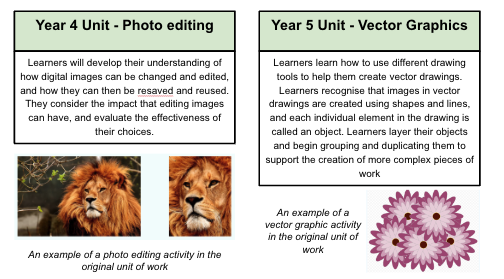
The Foundation’s work in this area started with the development of guidelines for culturally relevant and responsive teaching together with a group of teachers and external researchers. The Foundation’s researchers then explored how a group of Computing teachers employed the guidelines in their own teaching. In a follow-on study funded by Cognizant, the team worked with 13 primary school teachers in England to adapt Computing lessons to make them culturally relevant for their learners. In this process, the teachers adapted a unit on photo editing for Year 4 (ages 8–9), and a unit about vector graphics for Year 5 (ages 9–10). As part of the project, I worked with the Foundation team to analyse and report on data gathered from focus groups of primary learners who had engaged with the adapted units.
Conducting the focus groups
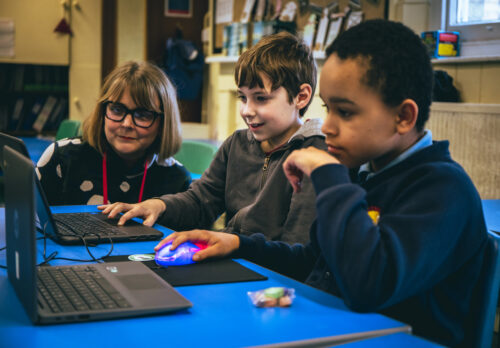
For the focus groups, the Foundation team asked teachers from three schools to each choose four learners to take part. All children in the three focus groups had taken part in all the lessons involving the culturally adapted resources. The children were both boys and girls, and came from diverse cultural backgrounds where possible.
The questions for the focus groups were prepared in advance and covered:
- Perceptions of Computing as a subject
- Reflections of their experiences of the engaging with culturally adapted resources
- Perceptions of who does Computing
Outcomes from the focus groups
“I feel happy that I see myself represented in some way.”
“It was nice to do something that actually represented you in many different ways, like your culture and your background.”
– Statements of learners who participated in the focus groups
When the learners were asked about what they did in their Computing lessons, most of them made references to working with and manipulating graphics; fewer made references to programming and algorithms. This emphasis on graphics is likely related to this being the most recent topic the learners engaged with. The learners were also asked about their reflections on the culturally adapted graphics unit that they had recently completed. Many of them felt that the unit gave them the freedom to incorporate things that related to their interests or culture. The learners’ responses also suggested that they felt represented in the work they completed during the unit. Most of them indicated that their interests were acknowledged, whereas fewer mentioned that they felt their cultural backgrounds were highlighted.
“Anyone can be good at computing if they have the passion to do it.”
– Statement by a learner who participated in a focus group
When considering who does computing, the learners made multiple references to people who keep trying or do not give up. Whereas only a couple of learners said that computer scientists need to be clever or intelligent to do computing. A couple of learners suggested that they believed that anyone can do computing. It is encouraging that the learners seemed to associate being good at computing with effort rather than with ability. However, it is unclear whether this is associated with the learners engaging with the culturally adapted resources.
Reflections and next steps
While this was a small-scale study, the focus groups findings do suggest that engaging with culturally adapted resources can make primary learners feel more represented in their Computing lessons. In particular, engaging with an adapted unit led learners to feel that their interests were recognised as well as, to a lesser extent, their cultural backgrounds. This suggests that primary-aged learners may identify their practical interests as the most important part of their background, and want to share this in class.
Finally, the responses of the learners suggest that they feel that perseverance is a more important quality than intelligence for success in computing and that anyone can do it. While it is not possible to say whether this is directly related to their engagement with a culturally adapted unit, it would be an interesting area for further research.
More information and resources
You can find out more about culturally relevant pedagogy and the Foundation’s research on it, for example by:
- Reading the two-page Quick Read on the topic
- Downloading the practical guidelines we created with a group of teachers and academic specialists
- Watching the seminar presentation where Katharine Childs introduced the ten areas of opportunity in more detail
The Foundation would like to extend thanks to Cognizant for funding this research, and to the primary computing teachers and learners who participated in the project.
The post Culturally relevant Computing: Experiences of primary learners appeared first on Raspberry Pi Foundation.
Home Assistant 2023.12 Release Party
Post Syndicated from Home Assistant original https://www.youtube.com/watch?v=2o-Uw5ZGd0M
„Тук можем да бъдем свободни.“ Защо България отказва убежище на Оксана и Елена от Русия?
Post Syndicated from Светла Енчева original https://www.toest.bg/tuk-mozhem-da-budem-svobodni/

С Оксана Глазунова и Елена Санина се срещаме онлайн. Те имаха готовност да говорят на български език, но по предложение на „Тоест“ използваха предимно родния си език. Преводът от руски е на Светла Енчева.
Първо бих ви помолила да се представите накратко.
О: Аз съм Оксана Глазунова, театрална режисьорка от Русия.
Е: Аз съм Елена Санина, актриса и преподавателка от Русия.
В Русия сте имали проблеми заради политическите ви позиции. Може ли да разкажете повече за това?
О: И с политическите ни позиции, и със сексуалната ни ориентация. Напуснахме Русия през 2021 г. Сега много ни е страх за приятелите ни, които са в Русия, защото законодателството става по-репресивно. Във Върховния съд на Русия ще се гледа иск на Правосъдното министерство за признаване на ЛГБТ движението за екстремистка организация [няколко дни след интервюто Върховният съд на Русия действително обяви ЛГБТ за екстремистка организация – б.а.]. Вече не се изненадваме от ожесточението…
Занимаваме се професионално не само с театър и спектакли, работим също като педагози – и с деца, и с възрастни. Когато заминахме, по закон не можехме да работим с деца. Защото в Русия вече съществуваше законът за ЛГБТ пропагандата, който забранява на хората, отнасящи се към нашата социална група, да работят с деца. А когато вече бяхме тук, беше приет закон, по силата на който вече е забранено да работим и с възрастни – заради „ЛГБТ пропаганда“.
Открити ли бяхте за сексуалната си ориентация?
О: Криехме се, разбира се. Но имахме снимки в социалните мрежи… Когато подадохме молби за убежище за първи път и отидохме в съда в Бургас, събрахме всички наши снимки в социалните мрежи за последните десет години и ги предоставихме като доказателство, че сме двойка. Но в Русия, естествено, ни се налагаше да се крием. Много често работим заедно. И дори да казваме, че сме просто колеги или роднини, хората виждат, че идваме и си тръгваме заедно. Трудно е да го скрием, защото в Русия нещата с личните граници са много зле. Много е трудно в женски колектив, защото всички питат защо не си омъжена, защо нямаш деца…
И тук питат…
О: Не (смеят се). В България за първи път мога открито да говоря за сексуалната си ориентация.
Да, в България ЛГБТ хората могат да са открити, аз например съм. Имах предвид обаче, че и тук хората питат защо нямаш семейство и деца. Но да се върна към темата – може ли да дадете примери, когато сте били репресирани в Русия?
Е: Работехме в културния дом и – ако може да го кажа меко – не се вписвахме в колектива. Наши колеги ни агитираха, доколкото културният дом също е държавна институция, да ходим на митинги за Путин, за „Единна Русия“, за [Сергей] Собянин. Собянин е кметът на Москва. Защото работещите в културни учреждения просто са длъжни да го правят. Съответно ние всячески се опитвахме да изклинчим, защото е в противоречие с нашите политически позиции.
Разбраха и че сме двойка и живеем заедно. Невъзможно е да скриеш принципите си. За нас не е важно каква е ориентацията ти, важен е животът ти и зад какво стоиш. Когато все пак разбраха за нас, ни извикаха в кабинета и казаха: „Не сте подходящи за нашето учреждение, вие сте ЛГБТ, опозиционери. Напишете, че напускате по собствено желание.“ Сега не можем да докажем, че са ни принудили да напуснем, защото в трудовата книжка пише „Напуснала по собствено желание“.
О: Нашия театър го закриха от пожарната инспекция заради несъответствие с правилата за пожарна безопасност. Наложиха ни огромна глоба, защото сме имали много тесни врати. Но вратите нямаше как да се сменят, защото бяхме наели помещение в сграда – паметник на културата.
Заради всички тези неща ли решихте да напуснете Русия?
О: Да, защото ситуацията ставаше все по-лоша и по-лоша. През цялото време се сблъсквахме с цензура – и в театралните постановки, и в работата с учениците… Последните години се стигна дотам, че искаха да одобряват текстовете на спектаклите ни. Затова решението назря. А след избухването на войната не успяхме да тръгнем по друг път, освен да станем бежанци.
Е: Пристигнахме в България преди войната, купихме си жилище. Но за да получиш виза за България – за обучение или работа, – трябва разрешение от Русия. Когато дойдохме, се опитахме да останем на законно основание с помощта на брат ми, но избухна войната. Брат ми загуби целия си бизнес и нищо не стана с документите. Разбрахме, че не можем да се върнем в Русия, защото за един месец от 24 февруари 2022 г., докато подадохме молби за убежище на 25 март, Русия прие огромно количество репресивни закони, в т.ч. и за ЛГБТ.
О: И се въведе военна цензура.
Е: Просто разбрахме, че ни грози опасност. Защото открито се изказвахме против войната в социалните мрежи. Работехме с украински бежанци, с деца. Разбрахме, че ако се върнем, ще бъдем преследвани.
О: А тук можем да бъдем свободни. Беше много приятно откритие да отидем на митинг и полицията да е там, за да ни пази. Защото в Русия, ако отидеш на митинг, полицията идва да те бие и да те арестува.
Имам един може би странен въпрос: защо решихте да кандидатствате за убежище точно в България? България не е много добра страна за бежанци. И за ЛГБТ хора не е добра страна, но за бежанци – особено.
О: Когато подавахме молбите си за убежище, не знаехме това. (Смеят се.)
Е: Когато преди войната се подготвяхме да дойдем в България – защото в Русия стана просто невъзможно да творим, а творчеството е огромна част от живота и от нас самите, – се влюбихме в страната. Защото останахме с впечатлението, че тук има хора, които много се интересуват и разбират от култура. Приветливи, добри, хубави хора. За първи път дойдохме през 2019 г. и се влюбихме в Бургас. Бяхме на прайд в София същата година…
О: Първият ни прайд!
Е: И независимо че там [във връзка с прайда – б.а.] също имаше някакви вълнения, все пак вярваме, че страната ви върви по демократичен път, макар и бавно. Вярваме, че България няма да тръгне след Русия, защото Русия върви към пропаст.
На прайда в София видях огромен радостен флаг, висящ на сграда, мисля, че беше сграда на институт [знамето на прайда беше закачено на сградата на Френския културен институт – б.а.]. Емоциите ме изпълниха, защото в Русия това е невъзможно.
Може ли да разкажете за делата си в Държавната агенция за бежанците (ДАБ)?
Е: За първи път подадохме молба за убежище през 2022 г. Много дълго чакахме за интервю. Нямахме адвокат, защото просто не намерихме. Всички адвокати в Бургас се занимавали с недвижими имоти, а с бежанци – никой. Тръгнахме сами. Много дълго чакахме за интервю, защото ДАБ в Баня [регистрационно-приемателния център на ДАБ в село Баня край Нова Загора – б.а.] не можеше да намери преводач.
Интервюто се състоя в най-горещия ден от лятото. Преди нас имаше момиче, което интервюираха четири часа, а ние чакахме. За интервюто с нас вече нямаше достатъчно време и само казваха: „Хайде по-бързо, хайде по същество.“ Преводачката беше страшно уморена. Стаята беше малка и много задушна.
О: Сега вече знаем някои неща. Разбираме, че имаше нарушения от интервюиращите, но и ние много неща казвахме с неправилни термини, защото нямахме адвокат.
Е: И защото ни подвеждаха.
О: След това все пак намерихме адвокат в Бургас, който се занимава с бежанци, и обжалвахме. Той направи всичко, което можа, но нито моят съдия, нито съдията на Елена застана на наша страна. В съда се държаха странно – на моето дело практически нямах възможност да кажа нищо, а Елена я разпитваха половин час. На нея ѝ стана лошо.
Е: Съдийката на Оксана не знаеше какво се случва в Русия. Тя не разбираше какви документи ѝ даваме, изобщо не беше в час. Затова Оксана не можа да каже и дума в своя защита. А мен ме разпитваха дълго. Въпросите, които съдийката задаваше, просто се губеха. Тя задава въпрос, започвам да отговарям, но не разбира нищо и задава още един въпрос.
О: Елена толкова се уплаши на моето дело, че щеше да загуби съзнание.
Е: Малко като паническа атака. Защото изпитвах чувство за отговорност – аз говорех и заради нея на нейното дело. И това, което щях да кажа, беше много важно. Адвокатът каза, че просто ще ме разпитат като свидетел, ще отговоря на два въпроса. А толкова дълго ме разпитваха! Аз изобщо бях за първи път в съд в живота си.
На моето дело всичко изглеждаше добре. Съдийката много ми съчувстваше, по човешки. Попита ме: „Искате ли да отменя решението на ДАБ?“ Аз отговорих: „Да“. Тя разбираше всичко, което казвам, и беше в течение какво се случва в Русия. Говорих много добре и по същество. Но за съжаление, получихме отказ, макар да бяхме убедени, че ще спечелим.
После беше Върховният съд [Върховният административен съд, ВАС – б.а.]. На делото дойде и нашата адвокатка, която се занимава конкретно с ЛГБТ – Деница Любенова, забележителна адвокатка. Тя ни каза, че в началото не сме направили нещата правилно. Делото беше само по документи – дадохме ги на съдията и толкова, буквално за 5 минути.
Но най-интересното беше, че делото във ВАС на Оксана протече без нито тя, нито адвокатът да бъдат уведомени. Тоест те сами са проверили нещо и са отказали. Когато имахме дело в Административния съд в Бургас, бяхме получили на адреса си уведомление от съда кога ще се гледа то. От София не получихме никакво официално уведомление. Не бяхме и информирани, че вече има решение на ВАС.
Отидохме в ДАБ след съда за удължаване на документите ни [временни документи за хора, търсещи убежище – б.а.]. Оказа се, че от половин година има решение на ВАС за отказ. И когато отидохме за втори път след три месеца, ни съобщиха, че делото е загубено, производството е прекратено. Тогава Деница [Любенова] каза, че ще подадем [молба за убежище] за втори път, тъй като обстоятелствата са се променили. За тази година [в Русия] бяха приети нови репресивни закони, в това число политически и за ЛГБТ.
Подготвихме второто заявление. Но този път от ДАБ в София много дълго не искаха да приемат документите ни. Изпращаха ни ту в „Овча купел“, ту във „Враждебна“. И все пак в „Овча купел“ приеха документите ни от втория път, когато вече позвънихме в централния офис. Приеха ги, издадоха ни входящи номера и след това… ни отказаха.
Помня деня, когато отидохме да вземем решението. Към нас дойдоха веднага три жени. Застанаха като стена: „Разбирате ли български?“ Отговорих [на български]: „Аз мога да разбера думичката „не“.
Връчиха ни отказите. Беше напълно ясно, че разбират, че не са прави. Ние сме актриси, наблюдателни хора сме. Една от жените попита Оксана: „Искате ли да знаете причините за отказа?“ „Но защо? Аз знам, че съм права.“ „Ами тогава пак ще се срещнем“, казаха те, а ние отговорихме: „Да, да, да.“
О: Приложихме нотариалния акт за апартамента, защото той е на името на двете. Тоест парите бяха мои – от продажбата на апартамента ми в Москва. Но го купихме на името и на двете като доказателство, че сме двойка. В моя случай ДАБ изобщо не спомена това в отказа. А в решението на Елена написа, че наличието на собственост върху апартамент не е повод за искане на убежище (смее се).
Бяхме приложили и документ, че сме се занимавали с благотворителна дейност. Помагахме да се събират пари за украинските бежанци и провеждахме събития с деца бежанци от Украйна. Проектът на фондацията, която организира това, е екологичен – хората да слязат от автомобилите и да се качат на велосипеди. И това стои в заглавието. Въпреки че документите ни с Елена бяха еднакви, в нейния отказ бяха реагирали, сякаш нищо подобно не е правила, а в моя пишеше, че пропагандата на здравословен живот чрез каране на велосипед също не е основание за убежище и не се преследва в Русия.
Всъщност това, което правят [от ДАБ – б.а.] не само по отношение на нас, а и на други наши приятели, търсещи политическо убежище, е, ако нещо могат да оспорят, да го оспорят, а това, което не могат да оспорят, просто го игнорират.
Е: Или го преиначават по някакъв начин.
Ако ви депортират в Русия, какво ще ви се случи?
О: Надявам се, че няма.
Аз също. Но ако все пак ви върнат в Русия, какво ви очаква там?
О: Мисля, че затвор. Несъмнено. Много показателен и ужасен е случаят с художничката Александра Скочиленко. Тя прекара половин година в ареста и сега я осъдиха на седем години и половина затвор. Александра също е против войната и е ЛГБТ, има приятелка и двете открито са заявявали сексуалната си ориентация. Мисля, че това също е повлияло на присъдата.
Изобщо, оставам с впечатлението, че понастоящем руските власти нарочно провеждат такива дела, за да се изплашат останалите и да си мълчат.
С какво се занимавате в България?
Е: Продължаваме артистичната си дейност в читалище, правим малки представления за рускоговорещи. Привличаме и пълнолетни българоговорещи, които се интересуват от театър.
О: Имаме огромен професионален и педагогически опит. Успях да заснема клип онлайн за артрок група в Русия. Антивоенен клип. Те [членовете на групата – б.а.] също се страхуват, но се опитват да направят нещо. Казах им да не обявяват, че аз съм режисьорът, защото тук давам интервюта, ходя по митинги. Ако не ги свързват с мен, ще бъдат в по-голяма безопасност. За първи път през живота си снимах клип онлайн (смее се). Но много ни харесва да работим и в България.
Е: Скоро ще има дебют на нашата група. Ще четем сонети на Шекспир на български.
О: Миналата година работихме с деца. Имахме група рускоговорещи деца, сред които и украинчета. Мисля, че това е много важно, защото, когато периодично между тях възникват спорове или някакви обяснения кой от каква националност е, кой откъде е, ние се опитваме да балансираме всичко и да покажем, че има творчество, има мирен живот, всички хора са индивидуалности, не трябва никой да бъде съден по етнически признак и т.н.
Имате ли вече приятели в България?
И двете: Да, да.
О: Запознахме се с много хора. Участвахме в мастърклас по имерсивен театър. Запознахме се с хора на изкуството в България. Беше наистина страхотно, много приятно. И сега си общуваме и може би ще създадем нещо интересно и творческо.
Искате ли да добавите нещо, за което не съм ви попитала?
О: Вярвам, че всичко ще бъде наред с правата и свободите в България, защото България е много хубава държава. Сега тук има много бежанци от Русия и Украйна, които могат да бъдат полезни, защото истински са обикнали тази страна и искат да имат принос. Да не бъдат в тежест, да не използват ресурсите ѝ, а да дадат нещо на хората.
Е: Усещаме ценността си, понеже призванието ни е да говорим с хората, да им помагаме. Преподавателската дейност чрез театър, чрез актьорски тренинги много помага да бъдеш вътрешно свободен и по-разкрепостен. Иска ни се да продължаваме да правим това.
О: Вече не можем да впишем тези ценности в Русия, но можем да го направим тук, без да бъдем преследвани. Мисля, че от това трябва да последва нещо хубаво. Защото Русия няма да успее да убие всичко добро, което е съществувало в нея. То може да се съхрани и преумножи – ако не в Русия, то извън границите ѝ.
Comic for 2023.12.06 – Rise of The Groper
Post Syndicated from Explosm.net original https://explosm.net/comics/rise-of-the-groper
New Cyanide and Happiness Comic
Compact Graphs
Post Syndicated from xkcd.com original https://xkcd.com/2864/

Mothering in Mississippi: The State of Maternal Health, Access, and Outcomes | State of Our Union
Post Syndicated from The Atlantic original https://www.youtube.com/watch?v=J-_ANJQJwg4
Breakout Session – Reimagining K-12 Education | State of Our Union: Mississippi
Post Syndicated from The Atlantic original https://www.youtube.com/watch?v=lwA8lcbvSvo
Lonnie Bunch, Miguel Cardona, and More on Narrowing Opportunity Gaps | The Atlantic’s Equity Review
Post Syndicated from The Atlantic original https://www.youtube.com/watch?v=_Eeti2GiqZQ
Marvell Silicon Photonics Light Engine for AI
Post Syndicated from Patrick Kennedy original https://www.servethehome.com/marvell-silicon-photonics-light-engine-for-ai-marvell-analyst-day-2023/
Marvell just showed off its next-generation silicon photonics light engine for future pluggable modules and co-packaged optics
The post Marvell Silicon Photonics Light Engine for AI appeared first on ServeTheHome.
[$] Supplementing CVEs with !CVEs
Post Syndicated from jake original https://lwn.net/Articles/953738/
The Common Vulnerabilities and Exploits
(CVE) system is the main mechanism for tracking various security
flaws,
using the omnipresent CVE number—even vulnerabilities with fancy names and
web sites
have CVE numbers. But the CVE system is not without its critics and, in
truth, the incentives between the reporting side and those responsible for
handling the bugs have always been misaligned, which leads to abuse of
various kinds. There have been efforts to
combat some of those abuses along the way; a newly announced
“!CVE” project is meant to track vulnerabilities “that are not
“.
acknowledged by vendors but
still are serious security issues
How HR&A uses Amazon Redshift spatial analytics on Amazon Redshift Serverless to measure digital equity in states across the US
Post Syndicated from Harman Singh Dhodi original https://aws.amazon.com/blogs/big-data/how-hra-uses-amazon-redshift-spatial-analytics-on-amazon-redshift-serverless-to-measure-digital-equity-in-states-across-the-us/
In our increasingly digital world, affordable access to high-speed broadband is a necessity to fully participate in our society, yet there are still millions of American households without internet access. HR&A Advisors—a multi-disciplinary consultancy with extensive work in the broadband and digital equity space is helping its state, county, and municipal clients deliver affordable internet access by analyzing locally specific digital inclusion needs and building tailored digital equity plans.
The first step in this process is mapping the digital divide. Which households don’t have access to the internet at home? Where do they live? What are their specific needs?
Public data sources aren’t sufficient for building a true understanding of digital inclusion needs. To fill in the gaps in existing data, HR&A creates digital equity surveys to build a more complete picture before developing digital equity plans. HR&A has used Amazon Redshift Serverless and CARTO to process survey findings more efficiently and create custom interactive dashboards to facilitate understanding of the results. HR&A’s collaboration with Amazon Redshift and CARTO has resulted in a 75% reduction in overall deployment and dashboard management time and helped the team achieve the following technical goals:
- Load survey results (CSV files) and geometry data (shape files) in a data warehouse
- Perform geo-spatial transformations using extract, transform, and load (ELT) jobs to join geometry data with survey results within the data warehouse to allow for visualization of survey results on a map
- Integrate with a business intelligence (BI) tool for advanced geo-spatial functions, visualizations, and mapping dashboards
- Scale data warehouse capacity up or down to address workloads of varying complexity in a cost-efficient manner
In this post, we unpack how HR&A uses Amazon Redshift spatial analytics and CARTO for cost-effective geo-spatial measurement of digital inclusion and internet access across multiple US states.
Before we get to the architecture details, here is what HR&A and its client, Colorado’s Office of the Future of Work, has to say about the solution.
“Working with the team at HR&A Advisors, Colorado’s Digital Equity Team created a custom dashboard that allowed us to very effectively evaluate our reach while surveying historically marginalized populations across Colorado. This dynamic tool, powered by AWS and CARTO, provided robust visualizations of which regions and populations were interacting with our survey, enabling us to zoom in quickly and address gaps in coverage. Ensuring we were able to seek out data from those who are most impacted by the digital divide in Colorado has been vital to addressing digital inequities in our state.”
— Melanie Colletti, Digital Equity Manager at Colorado’s Office of the Future of Work
“AWS allows us to securely house all of our survey data in one place, quickly scrub and analyze it on Amazon Redshift, and mirror the results through integration with data visualization tools such as CARTO without the data ever leaving AWS. This frees up our local computer space, greatly automates the survey cleaning and analysis step, and allows our clients to easily access the data results. Following the proof of concept and development of first prototype, almost all of our state clients showed interest in using the same solution for their states.”
— Harman Singh Dhodi, Analyst at HR&A Advisors, Inc.
Storing and analyzing large survey datasets
HR&A used Redshift Serverless to store large amounts of digital inclusion data in one place and quickly transform and analyze it using CARTO’s analytical toolkit to extend the spatial capabilities of Amazon Redshift and integrate with CARTO’s data visualization tools—all without the data ever leaving the AWS environment. This cut down significantly on analytical turnaround times.
The CARTO Analytics Toolbox for Redshift is composed of a set of user-defined functions and procedures organized in a set of modules based on the functionality they offer.
The following figure shows the solution and workflow steps developed during the proof of concept with a virtual private cloud (VPC) on Amazon Redshift.

Figure 1: Workflow illustrating data ingesting, transformation, and visualization using Redshift and CARTO.
In the following sections, we discuss each phase in the workflow in more detail.
Data ingestion
HR&A receives survey data as wide CSV files with hundreds of columns in each file and related spatial data in hexadecimal Extended Well-Known Binary (EWKB) in the form of shape files. These files are stored in Amazon Simple Storage Service (Amazon S3).
The Redshift COPY command is used to ingest the spatial data from shape files into the native GEOMETRY data type supported in Amazon Redshift. A combination of Amazon Redshift Spectrum and COPY commands are used to ingest the survey data stored as CSV files. For the files with unknown structures, AWS Glue crawlers are used to extract metadata and create table definitions in the Data Catalog. These table definitions are used as the metadata repository for external tables in Amazon Redshift.
For files with known structures, a Redshift stored procedure is used, which takes the file location and table name as parameters and runs a COPY command to load the raw data into corresponding Redshift tables.
Data transformation
Multiple stored procedures are used to split the raw table data and load it into corresponding target tables while applying the user-defined transformations.
These transformation rules include transformation of GEOMETRY data using native Redshift geo-spatial functions, like ST_Area and ST_length, and CARTO’s advanced spatial functions, which are readily available in Amazon Redshift as part of the CARTO Analytics Toolbox for Redshift installation. Furthermore, all the data ingestion and transformation steps are automated using an AWS Lambda function to run the Redshift query when any dataset in Amazon S3 gets updated.
Data visualization
The HR&A team used CARTO’s Redshift connector to connect to the Redshift Serverless endpoint and built dashboards using CARTO’s SQL interface and widgets to assist mapping while performing dynamic calculations of the map data as per client needs.
The following are sample screenshots of the dashboards that show survey responses by zip code. The counties that are in lighter shades represent limited survey responses and need to be included in the targeted data collection strategy.
The first image shows the dashboard without any active filters. The second image shows filtered map and chats by respondents who took the survey in Spanish. The user can select and toggle between features by clicking on the respective category in any of the bar charts.

Figure 2: Illustrative Digital Equity Survey Dashboard for the State of Colorado. (© HR&A Advisors)

Figure 3: Illustrative Digital Equity Survey Dashboard for the State of Colorado, filtered for respondents who took the survey in Spanish language. (© HR&A Advisors)
The result: A new standard for automatically updating digital inclusion dashboards
After developing the first interactive dashboard prototype with this methodology, five of HR&A’s state clients (CA, TX, NV, CO, and MA) showed interest in the solution. HR&A was able to implement it for each of them within 2 months—an incredibly quick turnaround for a custom, interactive digital inclusion dashboard.
HR&A also realized about a 75% reduction in overall deployment and dashboard management time, which meant the consulting team could redirect their focus from manually analyzing data to helping clients interpret and strategically plan around the results. Finally, the dashboard’s user-friendly interface made survey data more accessible to a wider range of stakeholders. This helped build a shared understanding when assessing gaps in each state’s digital inclusion landscape and allowed for a targeted data collection strategy from areas with limited survey responses, thereby supporting more productive collaboration overall.
Conclusion
In this post, we showed how HR&A was able to analyze geo-spatial data in large volumes using Amazon Redshift Serverless and CARTO.
With HR&A’s successful implementation, it’s evident that Redshift Serverless, with its flexibility and scalability, can be used as a catalyst for positive social change. As HR&A continues to pave the way for digital equity, their story stands as a testament to how AWS services and its partners can be used in addressing real-world challenges.
We encourage you to explore Redshift Serverless with CARTO for analyzing spatial data and let us know your experience in the comments.
About the authors
 Harman Singh Dhodi is an Analyst at HR&A Advisors, Harman combines his passion for data analytics with sustainable infrastructure practices, social inclusion, economic viability, climate resiliency, and building stakeholder capacity. Harman’s work often focuses on translating complex datasets into visual stories and accessible tools that help empower communities to understand the challenges they’re facing and create solutions for a brighter future.
 Kiran Kumar Tati is an Analytics Specialist Solutions Architect based out of Omaha, NE. He specializes in building end-to-end analytic solutions. He has more than 13 years of experience with designing and implementing large scale Big Data and Analytics solutions. In his spare time, he enjoys playing cricket and watching sports.
 Sapna Maheshwari is a Sr. Solutions Architect at Amazon Web Services. She helps customers architect data analytics solutions at scale on AWS. Outside of work she enjoys traveling and trying new cuisines.
 Washim Nawaz is an Analytics Specialist Solutions Architect at AWS. He has worked on building and tuning data warehouse and data lake solutions for over 15 years. He is passionate about helping customers modernize their data platforms with efficient, performant, and scalable analytic solutions. Outside of work, he enjoys watching games and traveling.
Paolo Gallo | The Seven Games of Leadership | Talks at Google
Post Syndicated from Talks at Google original https://www.youtube.com/watch?v=3Ykm0MMtjRY
HA 2023.12 update to login, cards, to-do, dashboards, blueprints &more
Post Syndicated from BeardedTinker original https://www.youtube.com/watch?v=V1tcSl1D4lc
A Trusted Voice in a Crowded Market: Meet Joanne Guariglia, Senior Channel Account Manager at Rapid7
Post Syndicated from Rapid7 original https://blog.rapid7.com/2023/12/05/a-trusted-voice-in-a-crowded-market-meet-joanne-guariglia-senior-channel-account-manager-at-rapid7/

When you’re a seller, it’s important to represent a reputable brand and products you can stand behind. For many companies, their partners act as an extension of the sales team to help identify and engage new customers. As a Senior Channel Account Manager, Joanne Guariglia shares what she loves most about her role, Rapid7, and why now is a great time to join the team.
What is it that initially attracted you to Rapid7?
In my previous role, I was with a company that had an integration with Rapid7 so I had been working in tandem with some of the leadership team. They were always down to earth, very genuine,open and honest about the great things happening, and what some of the challenges were. My partners also enjoyed working with the Rapid7 team and I could see they were making waves in the partner community.
Aside from that, Rapid7 is not just a single solution. Our products can meet customers where they are in their security journey, and grow and scale with them. So having that ability to grow alongside customers was something that I was really interested in.
Would you say a cybersecurity background is required for your role? What skills or knowledge is most important?
I wouldn’t necessarily say a cyber background is a must have before joining Rapid7. We have a comprehensive onboarding program that can help give you a strong foundation in cyber security knowledge as well as our products and services. What’s most important is your ability to grow relationships with our partners and to bring the best technology and solutions to the customer. This is a role where you have to be an effective communicator and a bridge between cross functional teams including Sales, Marketing, Customer Success, Sales Operations, Finance, and the Renewals team to make sure we are aligned on business decisions moving forward. Having that collaboration between teams and knowing we are all working towards the same goal has been really rewarding.
What does the cybersecurity landscape look like, and how does Rapid7 differentiate itself from competitors?
When it comes to the landscape, cyber criminals are always evolving their tactics and continue to increase efforts against businesses of all sizes. Security is not a ‘nice to have’; It’s a priority for all businesses and industries, so it’s a field that’s very stable and always growing.
Cybersecurity can also be challenging because it is a crowded market but where Rapid7 has a competitive advantage is in consolidation. Our customers don’t have to work with multiple vendors to satisfy all aspects of their security needs, we can consolidate multiple products and offerings into one cost with one vendor. We’ve come a long way in growing our portfolio and responding to the customers needs, and we are well positioned to continue that growth into 2024 and beyond.
What do you find most rewarding about your role?
What I enjoy most is being able to build lasting relationships with our partners. Partners want to work with trusted brands that are leaders in the space and we have that here at Rapid7. Being that trusted voice and growing the relationship, while educating them about our offerings, enables me to have a positive impact.
Another thing I find rewarding is the ability to create change and outcomes that our partners find valuable. We are a large company, but we are still agile enough to pivot when needed and our culture is one that is supportive of asking questions and sharing new ideas that we can bring to fruition.
What are you most excited for in 2024?
2024 is exciting because our channel team is at the forefront of impacting growth across the organization. We are investing heavily in our partnerships and partner programs, and are making strides with the channel community more than ever. Our company strategy and goals are really clear, and we’re all excited to execute and drive positive impact for the business.
With incredible product offerings and an opportunity to foster and grow partner relationships, there is no better time to be a part of this journey. 2024 is going to be a huge year for us!
Interested in learning more about working for Rapid7? Click here for our careers page, or view all open sales opportunities.
Intel Xeon EE with vRAN Boost SKU List
Post Syndicated from John Lee original https://www.servethehome.com/intel-xeon-ee-with-vran-boost-sku-list/
We get into the Intel Xeon EE with vRAN Boost SKUs and see how these 5G infrastructure products use different dies
The post Intel Xeon EE with vRAN Boost SKU List appeared first on ServeTheHome.
Security updates for Tuesday
Post Syndicated from jake original https://lwn.net/Articles/953783/
Security updates have been issued by Debian (roundcube), Fedora (java-latest-openjdk), Mageia (libqb), SUSE (python-Django1), and Ubuntu (request-tracker4).
THG Podcast: New York Riots
Post Syndicated from The History Guy: History Deserves to Be Remembered original https://www.youtube.com/watch?v=4xWiqZkP6_0
AI and Mass Spying
Post Syndicated from Bruce Schneier original https://www.schneier.com/blog/archives/2023/12/ai-and-mass-spying.html
Spying and surveillance are different but related things. If I hired a private detective to spy on you, that detective could hide a bug in your home or car, tap your phone, and listen to what you said. At the end, I would get a report of all the conversations you had and the contents of those conversations. If I hired that same private detective to put you under surveillance, I would get a different report: where you went, whom you talked to, what you purchased, what you did.
Before the internet, putting someone under surveillance was expensive and time-consuming. You had to manually follow someone around, noting where they went, whom they talked to, what they purchased, what they did, and what they read. That world is forever gone. Our phones track our locations. Credit cards track our purchases. Apps track whom we talk to, and e-readers know what we read. Computers collect data about what we’re doing on them, and as both storage and processing have become cheaper, that data is increasingly saved and used. What was manual and individual has become bulk and mass. Surveillance has become the business model of the internet, and there’s no reasonable way for us to opt out of it.
Spying is another matter. It has long been possible to tap someone’s phone or put a bug in their home and/or car, but those things still require someone to listen to and make sense of the conversations. Yes, spyware companies like NSO Group help the government hack into people’s phones, but someone still has to sort through all the conversations. And governments like China could censor social media posts based on particular words or phrases, but that was coarse and easy to bypass. Spying is limited by the need for human labor.
AI is about to change that. Summarization is something a modern generative AI system does well. Give it an hourlong meeting, and it will return a one-page summary of what was said. Ask it to search through millions of conversations and organize them by topic, and it’ll do that. Want to know who is talking about what? It’ll tell you.
The technologies aren’t perfect; some of them are pretty primitive. They miss things that are important. They get other things wrong. But so do humans. And, unlike humans, AI tools can be replicated by the millions and are improving at astonishing rates. They’ll get better next year, and even better the year after that. We are about to enter the era of mass spying.
Mass surveillance fundamentally changed the nature of surveillance. Because all the data is saved, mass surveillance allows people to conduct surveillance backward in time, and without even knowing whom specifically you want to target. Tell me where this person was last year. List all the red sedans that drove down this road in the past month. List all of the people who purchased all the ingredients for a pressure cooker bomb in the past year. Find me all the pairs of phones that were moving toward each other, turned themselves off, then turned themselves on again an hour later while moving away from each other (a sign of a secret meeting).
Similarly, mass spying will change the nature of spying. All the data will be saved. It will all be searchable, and understandable, in bulk. Tell me who has talked about a particular topic in the past month, and how discussions about that topic have evolved. Person A did something; check if someone told them to do it. Find everyone who is plotting a crime, or spreading a rumor, or planning to attend a political protest.
There’s so much more. To uncover an organizational structure, look for someone who gives similar instructions to a group of people, then all the people they have relayed those instructions to. To find people’s confidants, look at whom they tell secrets to. You can track friendships and alliances as they form and break, in minute detail. In short, you can know everything about what everybody is talking about.
This spying is not limited to conversations on our phones or computers. Just as cameras everywhere fueled mass surveillance, microphones everywhere will fuel mass spying. Siri and Alexa and “Hey Google” are already always listening; the conversations just aren’t being saved yet.
Knowing that they are under constant surveillance changes how people behave. They conform. They self-censor, with the chilling effects that brings. Surveillance facilitates social control, and spying will only make this worse. Governments around the world already use mass surveillance; they will engage in mass spying as well.
Corporations will spy on people. Mass surveillance ushered in the era of personalized advertisements; mass spying will supercharge that industry. Information about what people are talking about, their moods, their secrets—it’s all catnip for marketers looking for an edge. The tech monopolies that are currently keeping us all under constant surveillance won’t be able to resist collecting and using all of that data.
In the early days of Gmail, Google talked about using people’s Gmail content to serve them personalized ads. The company stopped doing it, almost certainly because the keyword data it collected was so poor—and therefore not useful for marketing purposes. That will soon change. Maybe Google won’t be the first to spy on its users’ conversations, but once others start, they won’t be able to resist. Their true customers—their advertisers—will demand it.
We could limit this capability. We could prohibit mass spying. We could pass strong data-privacy rules. But we haven’t done anything to limit mass surveillance. Why would spying be any different?
This essay originally appeared in Slate.