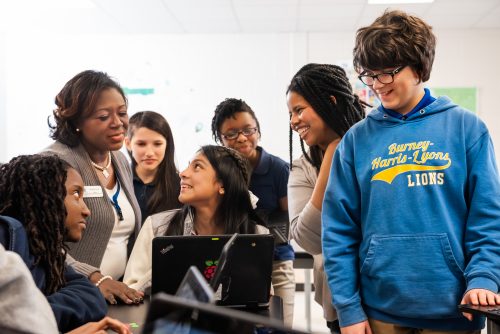
This year, 768 teams made up of 3086 young people from 23 countries sent us their ideas for experiments to run on board the International Space Station (ISS) for Astro Pi Mission Space Lab.
Mission Space Lab is part of the European Astro Pi Challenge, an ESA Education programme run in collaboration with us at the Raspberry Pi Foundation. Mission Space Lab teams can choose between ‘Life on Earth’ and ‘Life in space’ for their experiment idea. As in previous years, ‘Life on Earth’ was the most popular experiment theme: three quarters of the teams chose to submit an idea with this theme, for experiments using one of the Astro Pi’s High Quality Cameras. Half of these experiments involved using the near-infrared sensitive camera to investigate topics such as deforestation. Across both themes, over 40% of teams expressed an interest in using machine learning in their experiment.
Mission Space Lab teams are now getting ready to write and test their code
A panel of 25 judges from the Raspberry Pi Foundation and ESA Education assessed the submitted ideas. We are restricted in how many teams we can accommodate, as time to run experiments on board the ISS is limited, especially for ‘Life on Earth’ experiments which need time in a nadir window. The standard of the submitted ideas was higher than ever, making this the toughest judging yet. We are delighted to announce that 486 teams will move on to Phase 2 of Mission Space Lab: writing the code for their experiments.
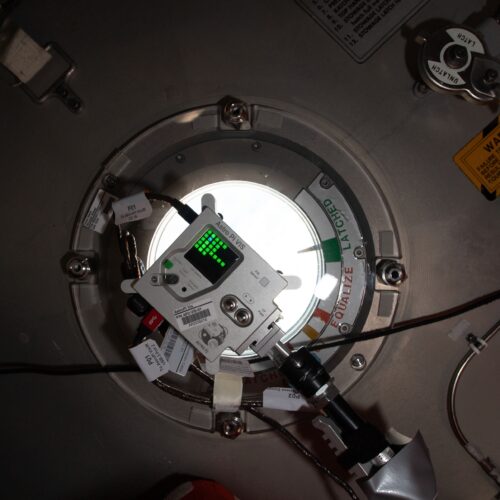
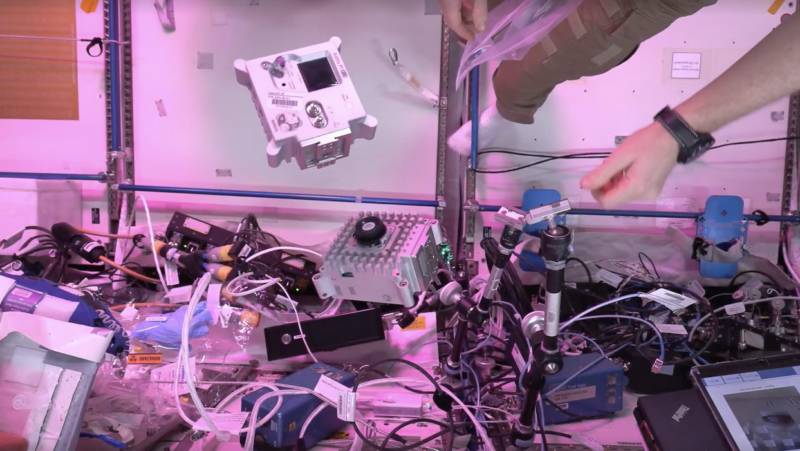
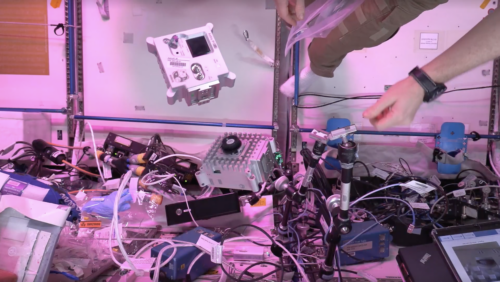
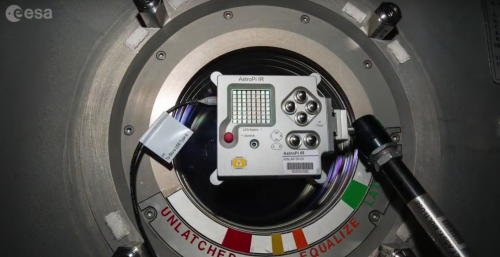
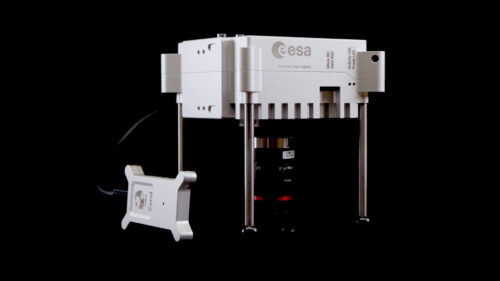
A Mark II Astro Pi in the NODE window on the ISS. Credit: ESA/NASA
If your experiment idea was unsuccessful this time, we understand that this will be disappointing news for your team. We encourage them to submit a new experiment idea in next year’s Mission Space Lab. We will let you know when Mission Space Lab 23/24 will be launching.
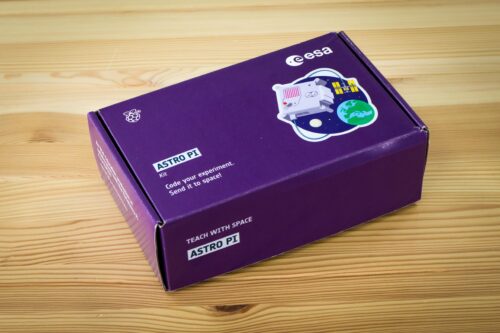
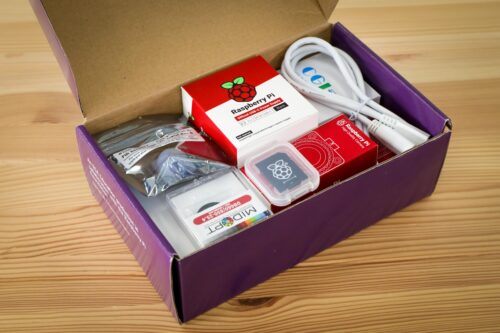
All the teams whose experiment ideas we’ve selected will receive a special Astro Pi hardware kit, customised to their idea, to help them write and test the Python programs to execute their experiments. Once the teams of young people have received their kits, they can familiarise themselves with the Astro Pi hardware and then create and test (and re-test!) their programs.
Young people’s Mission Space Lab code will run in space next year
The deadline for Mission Space Lab teams to submit the code for their experiments to us is Thursday 24 February 2023. Once their program code has been through our rigorous checks and tests, it will be ready to run on the Astro Pis on board the ISS during April/May 2023.
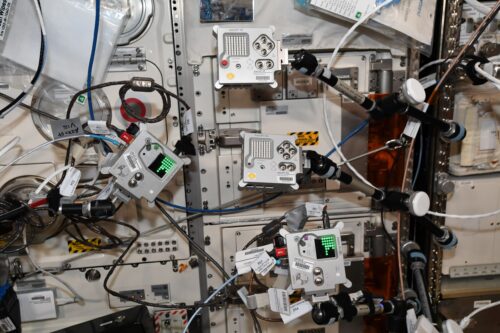
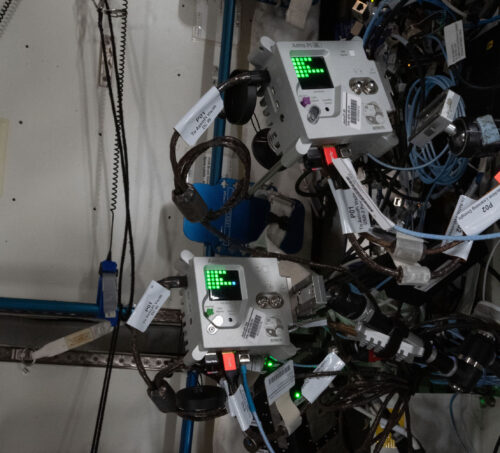
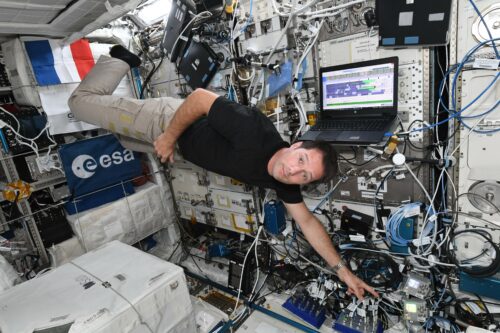
The Mark I and Mark II Astro Pi computers on board the ISS earlier this year. Credit: ESA/NASA
Congratulations to the successful teams, and thank you to everyone who sent us their ideas for Mission Space Lab this year. And a special thank you to all the teachers, educators, club volunteers, and other wonderful people who are acting as mentors for Mission Space Lab teams. You are helping your young people do something remarkable that they will remember for the rest of their lives, and the Astro Pi Challenge would not happen without you.
Welcome back, Ed and Izzy!
Every year since 2015, thanks to our annual Astro Pi Challenge, teams of young people have written computer programs to run scientific experiments on two Astro Pi computers on the ISS.
Mark I Astro Pi computers Ed and Izzy back on Earth after five years on board the International Space Station. Credit: ESA
This is the second year that experiments will run on the Mark II Astro Pi computers, named after Nikola Tesla and Marie Curie, but lots of people have been wondering what would happen to their predecessors. After running over 50,000 young people’s computer programs, the Mark I Astro Pi computers, Ed and Izzy, have safely returned to Earth for a well-earned rest.
Young people can take part in Astro Pi Mission Zero
Astro Pi Mission Zero is a one-hour beginners’ programming activity. In Mission Zero, young people, in teams or as individuals, write a program to display an image or series of images of their own design on one of the Astro Pi computers, to remind the astronauts on the ISS of home.
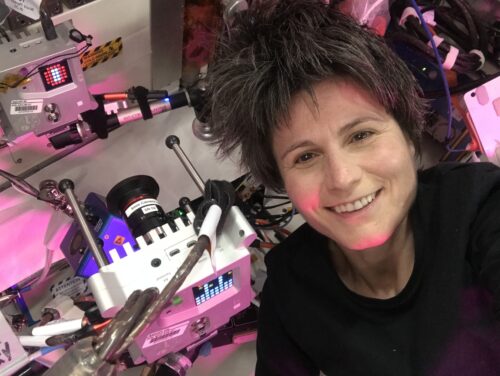
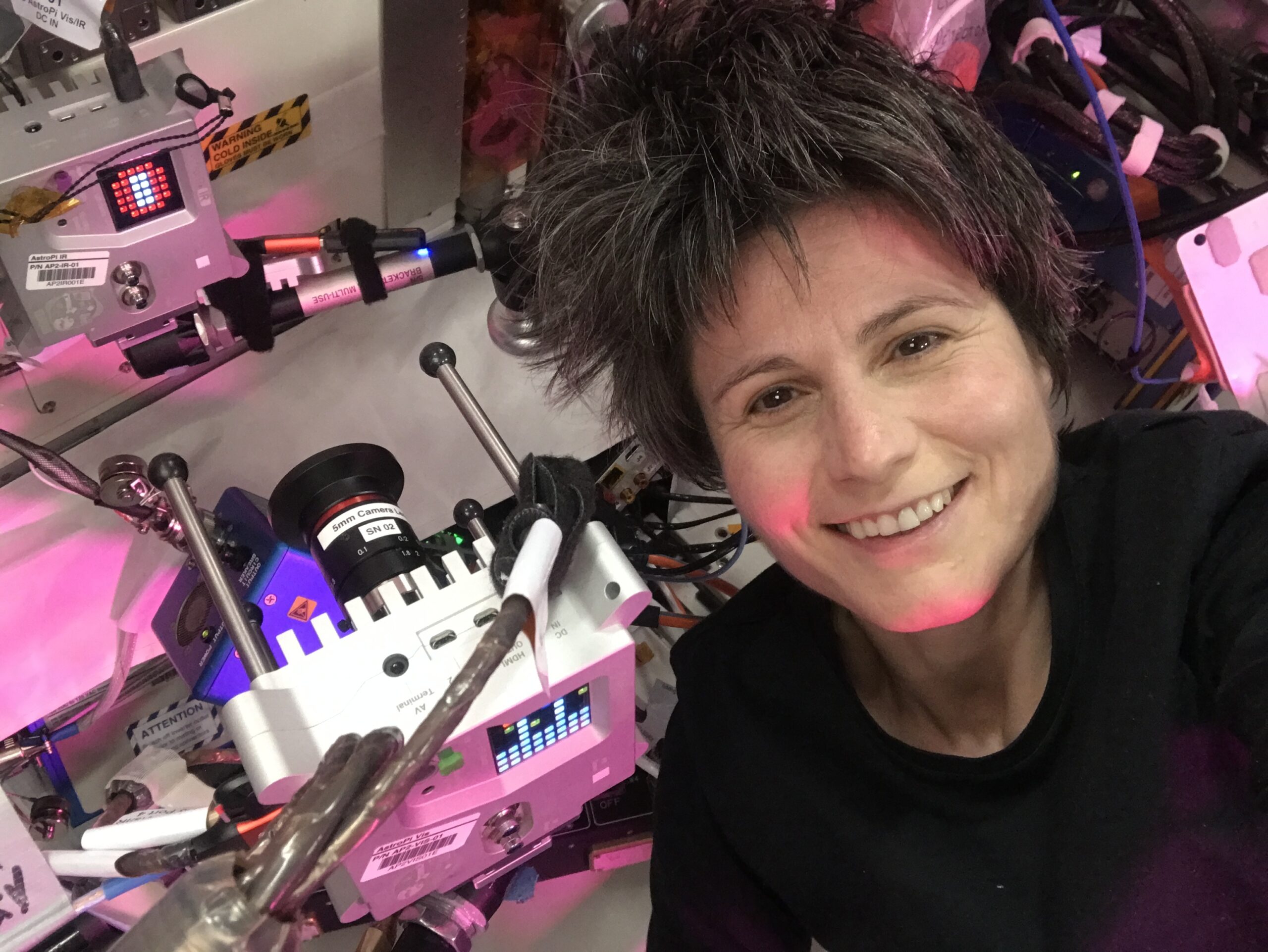
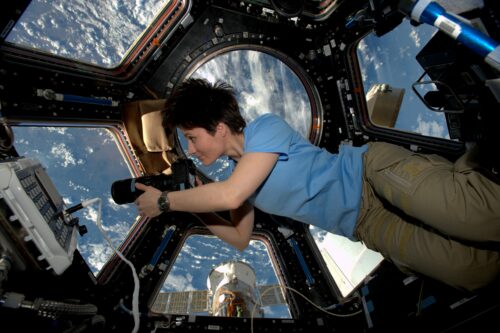
ESA astronaut Samantha Cristoforetti with an Astro Pi computer. Credit: ESA/NASA
In their Mission Zero programs, young people get to use a reading from the Astro Pi’s colour and luminosity sensor to set the colour of their image background. Young people up to age 19 from eligible countries can take part in Mission Zero 2022/23 until 17 March. Visit the Astro Pi website for more details.
The European Astro Pi Challenge is back for another year. This is young people’s chance to write computer programs that run on board the International Space Station.
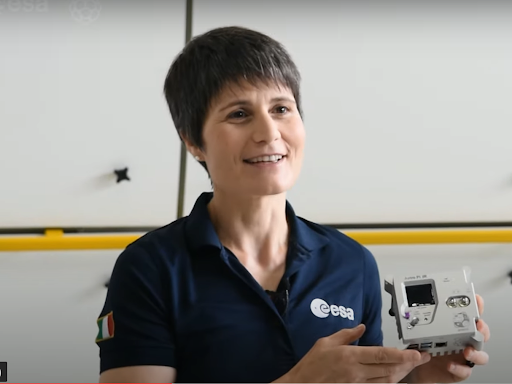
ESA astronaut Samantha Cristoforetti with one of the upgraded Astro Pi computers on which young people’s programs will run.
Young people can take part in two Astro Pi challenges: Mission Zero and Mission Space Lab. Participation is free and open for young people up to age 19 in ESA Member States (see more details about eligibility on the Astro Pi website). Young people can participate in one or both of the challenges.
Their programs will run on the two new upgraded Astro Pi computers, which launched into space in December 2021. The Astro Pis were named after the two inspirational European scientists Nikola Tesla and Marie Skłodowska-Curie by Mission Zero participants. For the 2021/22 European Astro Pi Challenge, these new computers ran over 17,000 programs written by young people from 26 countries.
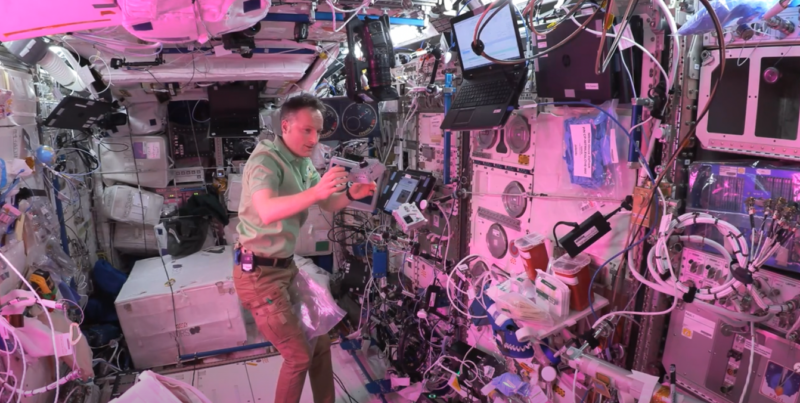
Here is ESA astronaut Matthias Maurer getting the new Astro Pis ready for young people’s experiments.
You can register for Mission Space Lab from today
In Mission Space Lab, teams of young people work together with a mentor who supports them, as they design a scientific experiment to be run on the Astro Pis in space.
Teams write programs that use an Astro Pi’s sensors and camera to collect data from the International Space Station, which the teams then analyse. This video has more information about the Astro Pi computers and how teams can choose an experiment idea:
Registration for Mission Space Lab is now open, and participation takes place over eight months. Mentors need to register their team and submit the team’s experiment idea by 28 October 2022. For more details on how to register, visit the Mission Space Lab webpages.
Mission Zero is the beginners’ challenge where young people write a simple program and get a taste of space science.
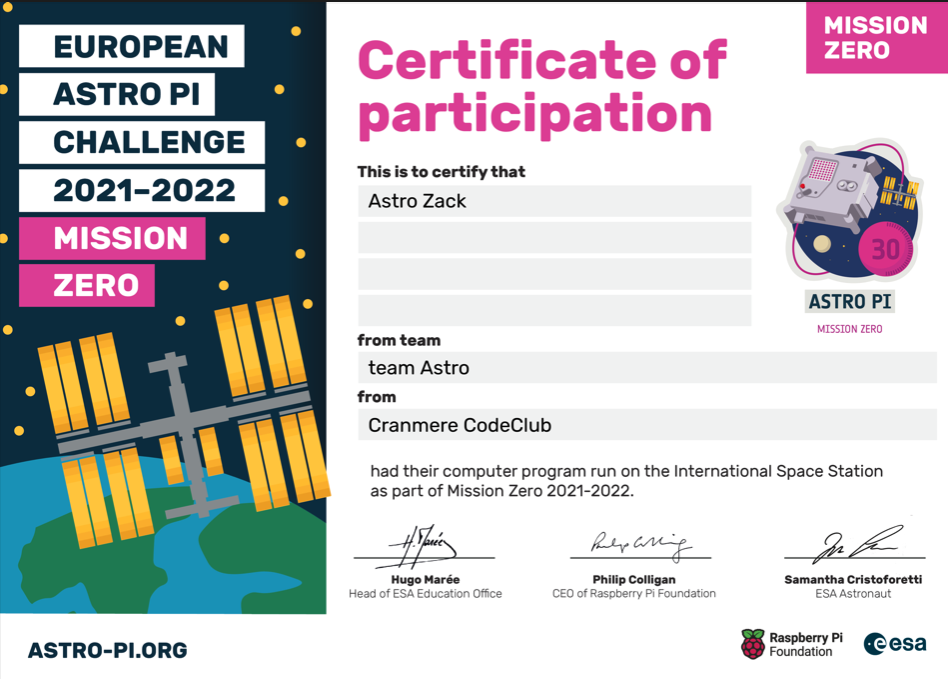
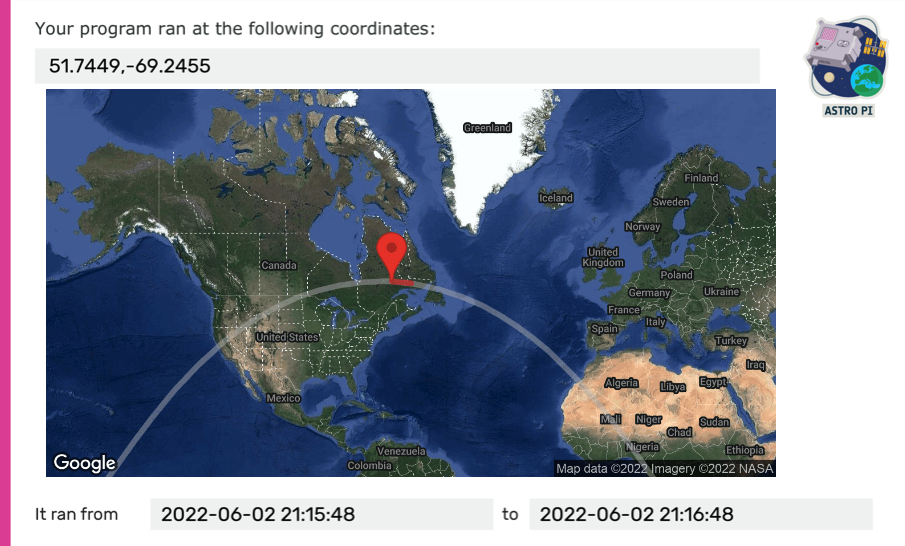
All eligible programs that follow the official guidelines will run in space for up to 30 seconds. The young people who participate receive a certificate they can download which shows their program’s exact start and end time, and the position of the ISS when their program ran — a piece of space science history to keep!
Mission Zero opens on 22 September 2022. Watch this space for more details on launch day.
Stay up to date
The European Astro Pi Challenge is an ESA Education project run in collaboration with us here at the Raspberry Pi Foundation.
You can stay up to date with all of the latest Astro Pi news by following the Astro Pi Twitter account or signing up to the newsletter at astro-pi.org
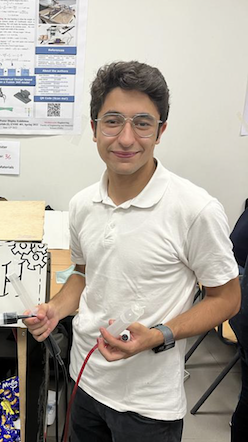
Sobhy Fouda started his Astro Pi journey in 2019 by helping a group of young people participate in Astro Pi Mission Zero, the beginners’ activity of the annual European Astro Pi Challenge. In Mission Zero, participants write a simple computer program that runs on board the International Space Station (ISS).
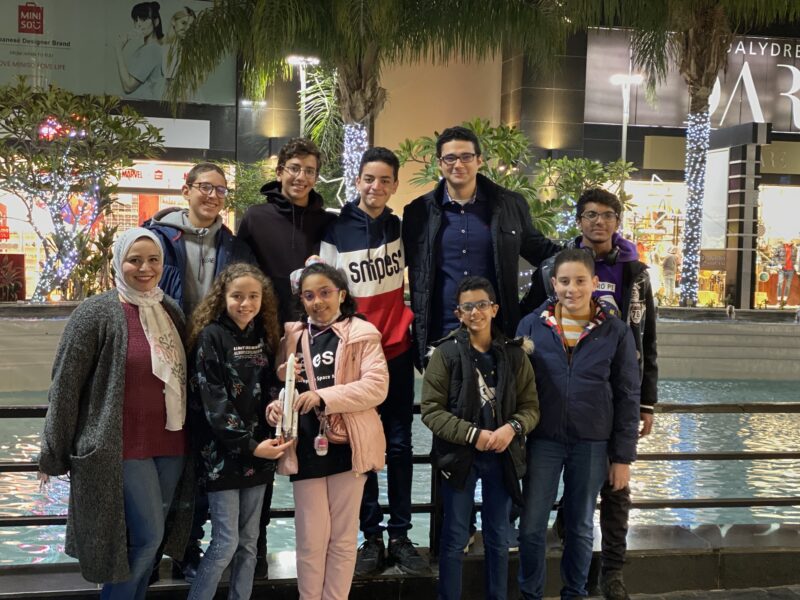
Sobhy with a group of the young people he mentored in the Astro Pi Challenge.
Seeing the wonder on the faces of the young people on the day when their programs were sent to space motivated Sobhy to take the next step: the year after, he became the mentor of a team of young people who wanted to take part in Astro Pi Mission Space Lab 2020/21. Sobhy supported them for 8 months as they designed and wrote a program to conduct their own scientific experiment on the ISS. The team placed among the 10 winners of Mission Space Lab that year.
Among this winning team was Ismail, who joined Sobhy as a mentor for the next round of Astro Pi Mission Space Lab in 2021/22. We spoke to Sobhy and Ismail about their experiences as mentors, about how being involved in Astro Pi changed their life, and about how when you dream big, you can inspire others to do the same.
Finding inspiration in mentoring young people
“I have always loved space and I had big dreams of becoming a pilot,” said Sobhy. After graduating with a mechatronics engineering degree from the German University in Cairo, he moved to the UK to study aircraft maintenance and aerospace engineering. During this time, Sobhy heard about the Astro Pi Challenge and decided to support some young people in his community to take part in Mission Zero. “It was my first experience with the Astro Pi programme, so it was a great first step for me to teach the team some basic Python skills.”
Sobhy says about mentoring: “Seeing the team’s reaction was so rewarding.”
Sadly, Sobhy was unable to continue down his chosen career path in the UK due to health issues. He said, “It was a very difficult time for me. It was hard to walk away from a dream I had held for so long. I decided to apply for a scholarship within aerospace in Germany, focusing more on writing code, as well as on R&D [research and development].” Sobhy credited his participation as a mentor in Mission Zero as crucial to his success with this next step: “I thoroughly believe that my mentorship of a Mission Zero team helped me to demonstrate my social commitment, which was a significant requirement for the scholarship.”
When Sobhy was awarded the scholarship, he and his wife moved to Berlin, but it was hard for him to find inspiration. This changed when he decided to be an Astro Pi mentor again. “My wife put the word out about it [Astro Pi Mission Space Lab] in my community, and we had a number of young people come forward.”
Supporting young people to understand the Astro Pi computers
With help from Sobhy, his Mission Space Lab team started thinking through experiment ideas a couple of months in advance of the challenge start. “Once I had got the kids familiarised with the sensors on the Astro Pi computer and the conditions on the ISS, it was the logical next step to start introducing more Python to learn how to control these sensors and discuss what we could analyse.”
On the ISS, the first-generation Astro Pi computers, which Sobhy’s team used, and the new Astro Pi computers (with green displays), which we sent to space last year.
Sobhy’s team successfully submitted an idea for a Mission Space Lab experiment: investigating how the Earth’s magnetic field correlates with its climate, and how this affects near-Earth objects’ behaviour in low-Earth orbit. Next, the team of young people received an Astro Pi hardware kit with which to test the program they wrote in realistic conditions. Sobhy said that “once we received our Astro Pi kit with the sensors, I then used these sensors to make the experiments more relatable to the kids, getting them to measure the humidity in their rooms for example, and I tried to gamify the sessions as much as possible to keep it fun and ignite their imagination.”
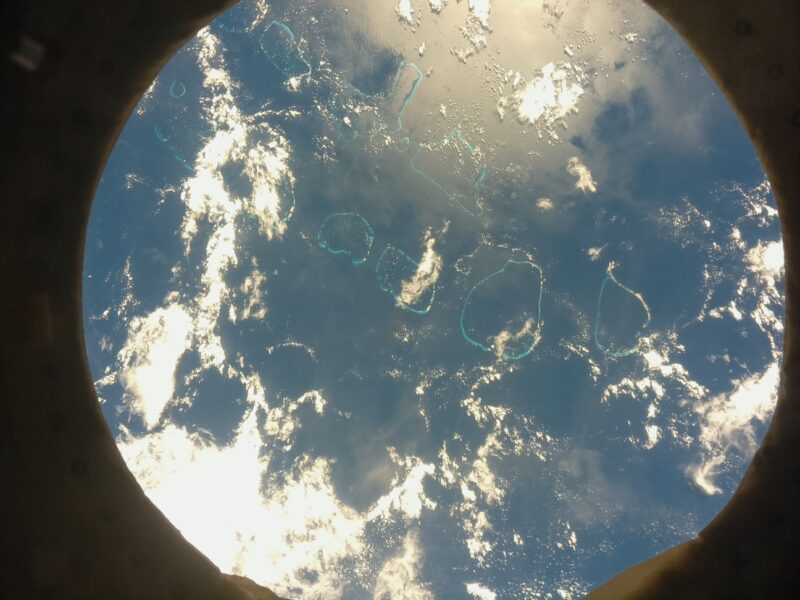
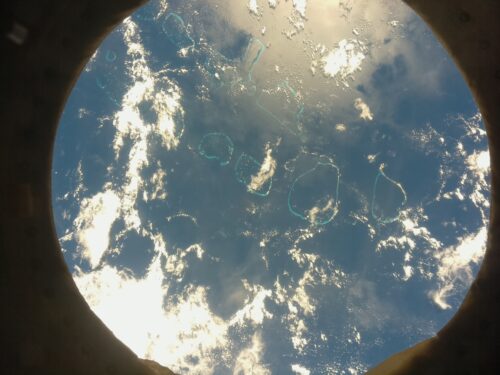
A photo of the Maledives captured by Sobhy’s team during their experiment for Mission Space Lab 2020/21.
One young person on Sobhy’s Mission Space Lab team was Ismail, who was 17 at the time. Ismail explained, “I had some programming experience, as I had worked in Sobhy’s previous teams for Mission Zero, but taking part in Mission Space Lab really helped me to develop these skills in a practical way.”
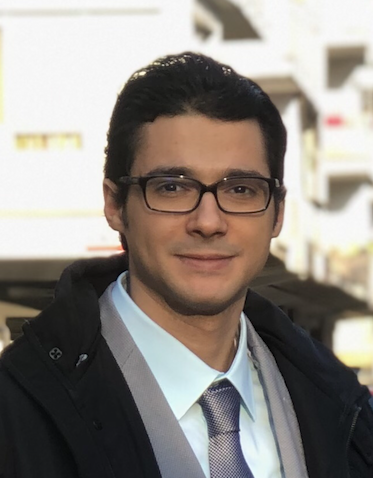
Ismail, who went from being an Astro Pi participant to mentoring a team together with Sobhy
Ismail was particularly surprised by how much he loved working with the Astro Pi hardware . “I always thought I would follow a career path in programming, however, working with the Raspberry Pi computer and its sensors made me realise that I liked working with the hardware even more than doing programming,” said Ismail. “I ended up changing my choice of degree to mechatronics, so my Mission Space Lab experience really helped me to find the career path I was meant to be on.”
Making a real impact through mentoring
Taking part in Astro Pi Mission Space Lab wasn’t the only thing that shaped Ismail’s path: he credits Sobhy’s mentorship for helping him achieve his goals. “Sobhy was such a good mentor. His passion for the project radiated from him and infected us all! He explained what we needed to tackle, asked questions, and then gave us small activities to put our programming experience into practice in a practical way. It made the programming so much more interesting.”
Sobhy said that when the team was announced among the winners of Mission Space Lab in the 20/21 Astro Pi Challenge, “seeing the team’s reaction was so rewarding. All our hard work paid off, and I was so happy and proud of the team and what they had achieved.” Ismail added, “I still have to pinch myself that we actually won. I’m constantly asking myself if it actually happened, as it was so unbelievable. It was incredible.”
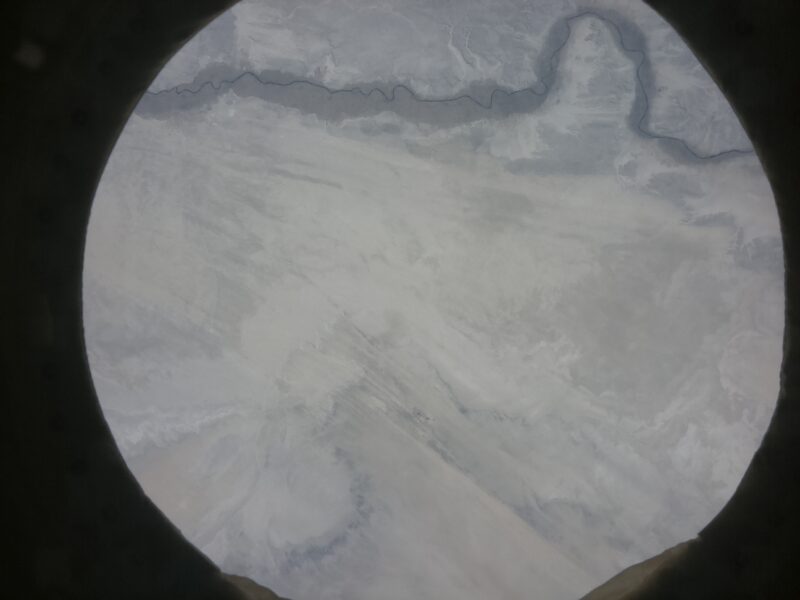
The river Nile in Egypt, photographed by Sobhy’s team during their experiment for Mission Space Lab 2020/21.
Sobhy has stayed in contact with the young people he mentored in the Astro Pi Challenge and their bond remains strong. Ismail said, “He has really become a friend. He was always so helpful and knowledgeable. I just loved working with him, so when he asked if I wanted to become an assistant Astro Pi mentor, I took the opportunity despite having other commitments.”
Mentoring and the skills it teaches
Moving on to become a mentor alongside Sobhy in the 2021/22 Astro Pi Challenge was an eye-opening experience for Ismail. “I had to learn a new set of skills,” said Ismail. “In particular, I realised I needed to improve my presentation skills. To start with I was really uncomfortable speaking in front of a group, but now I’m not, and this confidence transferred over to my university studies. That’s been a really great benefit I’ve taken from the experience.”
“[My] Mission Space Lab experience really helped me to find the career path I was meant to be on.”
Ismail, Mission Space Lab participant and mentor
For us it was wonderful to hear about these lasting friendships and connections that have formed among the people participating in Mission Space Lab. Both Sobhy and Ismail felt that while mentoring a Mission Space Lab team can be challenging at times, the rewards are worth it. Watching their team develop and seeing the young people connect made the experience extremely rewarding.
Ismail concluded by saying: “Astro Pi has been one of the best experiences I have had in my life. I have so much to be thankful for, and I owe this to Astro Pi, but even more to my mentor Sobhy. He has encouraged me to have this incredible experience, helped me find my path in life, and guided me every step of the way. I will remember him and be thankful to him for the rest of my life. It’s been life-changing.”
Get involved in Astro Pi Mission Space Lab
In only a few days, you’ll be able to register as a team mentor for Astro Pi Mission Space Lab 2022/23.
The European Astro Pi Challenge, an ESA education programme in collaboration with us at the Raspberry Pi Foundation, starts again from 12 September. Sign up to the newsletter at astro-pi.org to be the first to hear news about the programme.
It’s been an incredible year for the European Astro Pi Challenge. We’ve sent new hardware into space, seen record numbers of young people participate in the Challenge, and received lots of fantastic programs. Before we say goodbye to the 2021/22 European Astro Pi Challenge, the Raspberry Pi Foundation and the European Space Agency are thrilled to announce this year’s winning and highly commended Mission Space Lab teams.
What is Mission Space Lab?
In Mission Space Lab, teams of young people aged up to 19 work together to create scientific experiments to be carried out on the International Space Station. Their mission is to design and create a program to run on the two Astro Pi computers — space-adapted Raspberry Pis with cameras and a range of sensors.
ESA astronaut Samantha Cristoforetti with the new Astro Pi computers on the ISS Credit: ESA/NASA
This year, 799 teams of young people designed experiments and entered Mission Space Lab and 502 of these teams were invited to Phase 2, which is 25% more than last year! The teams each received an Astro Pi kit to write and test their programs on and 299 teams submitted programs that passed rigorous testing at Astro Pi Mission Control and achieved ‘flight status’.
After their program collected data during the experiment’s three-hour runtime on the ISS, each team analysed the results and wrote a short report to describe their experiment.
We were especially excited to see what experiments young people would investigate this year, as their programs would be the first to run on the brand-new Astro Pi units, which were named after Nikola Tesla and Marie Curie by participants in this year’s Mission Zero.
The two original Astro Pis with the new upgraded Astro Pis, together on the ISS Credit: ESA/NASA
Let’s take a look at the teams’ investigations for Mission Space Lab 2021/22!
Clouds, volcanos, and seaweed rafts
In this year’s Challenge, the environment and climate change was a strong theme among the 205 team experiment reports. Several teams investigated topics such as changing water levels, wildfires, and the effect of different clouds and aeroplane contrails on global warming.
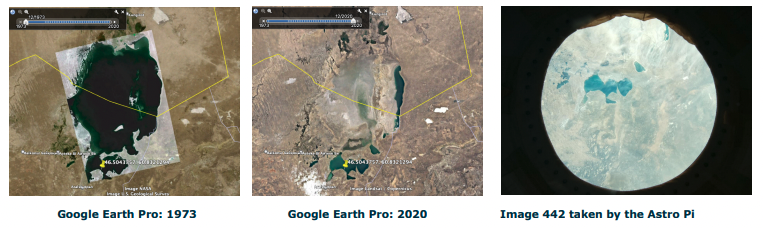
Team Seekers from Itis Delpozzo Cuneo in Italy and Team Adastra from St Paul’s Girls’ School in the UK made observations about reduction of water levels in the Aral Sea, located between Kazakhstan and Uzbekistan.
Team Adastra compared their image of the Aral Sea with data from Google Earth to show the significant decrease in water coverage
“We have gained skills with data research and machine learning, in relation to scientific experiments, which will hopefully give us a basis to move into more complex projects with machine learning.”
Team Adastra
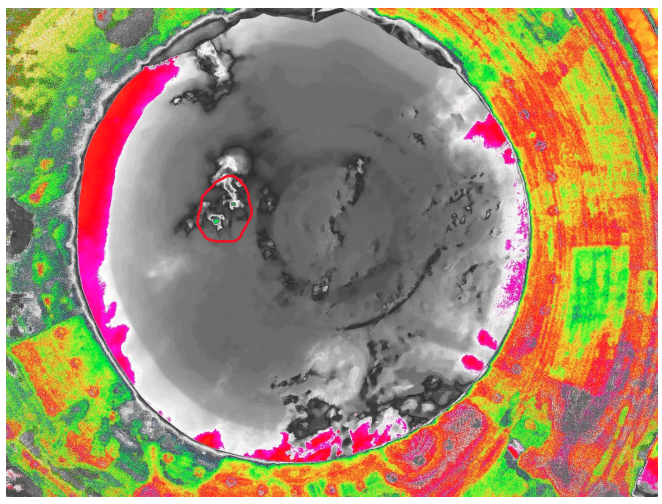
Team St Marks from Saint Marks Church of England School in the UK calculated NDVI (normalised difference vegetation index) for images they had captured to look for macroplastics in the ocean. This is a technique for identifying vegetation from images. The team used it to search for the rafts of sargassum seaweed that form around plastics floating on the water. They were lucky enough to successfully photograph and identify several seaweed rafts during their three hour experiment time.
Two seaweed rafts (circled in red) off the coast of Brazil captured by Team St Marks
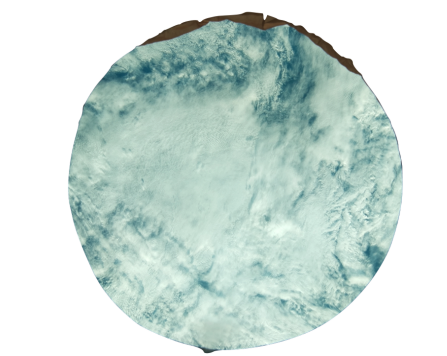
Team Nanokids from the UK used the Coral machine learning accelerator to analyse images of clouds in real time. Collecting this data could be used to warn aircraft of the risk of turbulence, predict weather, and detect pollution. The team reported that they “learned a lot about the various different cloud types, their characteristics and their different effects, as well as how to create a simple ML model with Teachable Machine, which will help us in future projects.”
Cumulonimbus cloud analysed by Team Nanokids
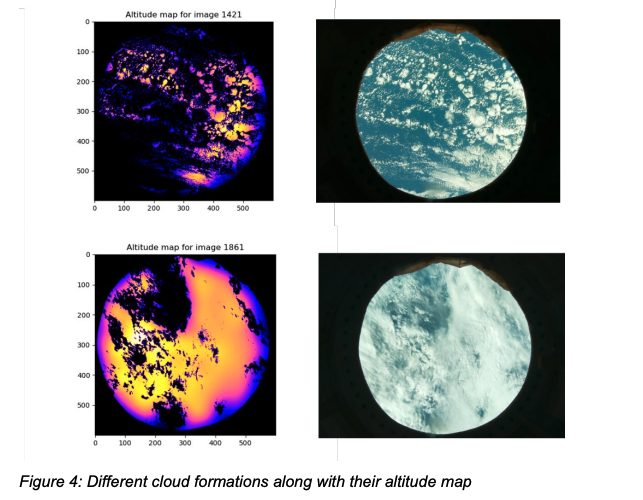
Team Centauri from Diverbot in Spain were inspired by the influence of high altitude cloud vapour on the Greenhouse Effect to calculate the height of clouds from images taken by the Raspberry Pi High Quality Camera. They identified the potential to scale-up their experiment, in order to analyse hundreds or thousands of images of clouds and calculate their impact on the temperature of the Earth.
Some examples of the cloud formations analysed by Team Centauri
We also saw lots of experiment reports about volcanoes. Team Six Sense from Escola Secundária Inês de Castro in Portugal ran an experiment inspired by the La Palma volcano, which erupted in September 2021. The team’s experiment captured images of a volcano in Fogo Island, Cape Verde.
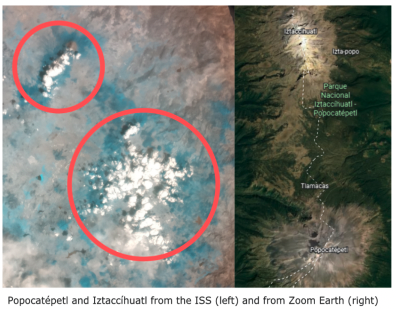
Team LandISS from Liceo Scientifico “A. Landi” in Italy captured an extraordinary image of emissions from the Popocatépetl volcano in Mexico, which reactivated in 1994 and has been producing powerful explosions at irregular intervals ever since.
Popocatépetl volcano in the Iztaccíhuatl–Popocatépetl National Park by Team LandISS
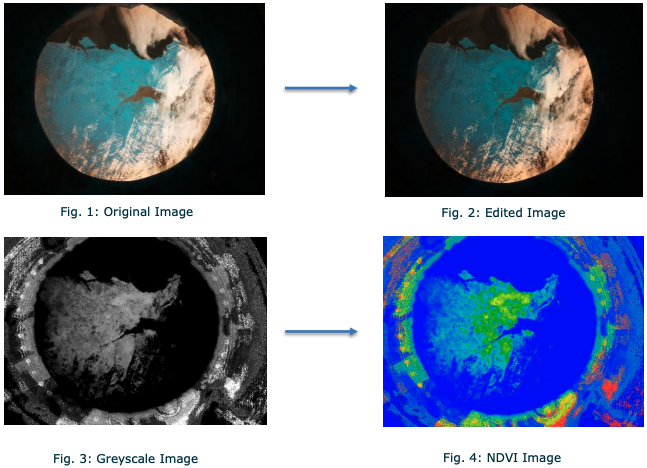
Team DuoDo from Liceul Teoretic Tudor Vianu in Romania investigated if there had been changes to vegetation health on the Earth since the pandemic, by comparing NDVI calculations from their data. The judges were especially impressed with how they reported their analysis and results.
NDVI processing by Team DoDuo
Team Atlantes from Niubit in Spain wanted to build a bridge between the real and virtual world by visualising their NDVI calculations as a three dimensional Minecraft video game. Check out how they did this and some of their results in their video.
From ISS 🛰️ to Minecraft 🧱 : Astro Pi Mission Space Lab 2021-22 by Team Atlantes
Team Rocha21, from IES José Frugoni Pérez in the Canary Islands, also explored different ways to communicate and share their data. They used sonoUno (software originally developed to sonify astronomical data) and online Braille translators to design tactile diagrams in order to explore their Life on Earth photographs and NDVI data, working in collaboration with six visually-impaired students.
Up in space
Some of this year’s Mission Space Lab teams chose to conduct their experiments about life on the ISS. We saw experiments to investigate the possibility for growing fungi as space crops (Team NGC224 from CoderDojo Perugia in Italy) and the effect of temperature and pressure on the human body on Earth and in space (Team CDV-CDI2 from CoderDojo Votanikos in Greece, in collaboration with CoderDojo Iraq).
Team Hyperion from JVS Hyperion in Belgium investigated the effect of the sun on the Earth’s magnetic field, comparing data collected during daytime and nighttime as the ISS orbited Earth.
Not only did we get to see this year’s experiments, but we also had a chance to hear them! Sound and music was very popular among the Mission Space Lab teams.
Team Cuza3 from Colegiul National ”Alexandru Ioan Cuza” in Romania, made “The Ballad of Pressure” by attributing notes to pressure data from the ISS. Team Alessi Pi from Liceo Scientifico “G.Alessi” in Italy made a melody by mapping data to a music scale with other sensor readings mapped to additional instruments.
Team Gubbins, from Hyvinkään Lukio in Finland, measured magnetic flux density to determine the strength of the Earth’s magnetic field, using the Astro Pi magnetometer, which they sonified and used to make a music video.
Sonification of the Earth’s magnetic field by Team Gubbins
And the winning teams are…
The judges from ESA and the Raspberry Pi Foundation took on the huge task of reviewing all the reports to consider scientific merit, experiment design and methodology, data analysis, report quality, and innovative use of the Astro Pi hardware.
The ten winning teams come from coding clubs and schools from France, Italy, Greece, Spain, Romania, and the United Kingdom and will each receive cool space swag.
Click each team name to read their experiment report.
Every Astro Pi team that reached Phase 3 of Mission Space Lab will receive a certificate signed by ESA astronaut Samantha Cristoforetti to show family and friends that they have had a scientific experiment run on the ISS!
The winning and highly commended teams will be invited to an online Q&A with an ESA astronaut in the autumn. Look out for more information about this soon!
Congratulations Mission Space Lab teams 2021/22
Everyone from the Raspberry Pi Foundation and ESA Education teams congratulates this year’s Mission Space Lab participants — we hope you found it as fun and inspiring as we did!
Thank you to everyone who has been involved in Mission Zero and Mission Space Lab as part of this year’s Challenge. It has been incredible to have 28,126 young people from 26 countries run their programs in space! We can’t wait to do it all again.
When will the 2022/23 European Astro Pi Challenge lift off?
Mission Zero and Mission Space Lab relaunch in September 2022!
If you know a young person who would be interested in the Challenge, sign up for the newsletter on astro-pi.org and follow the Astro Pi Twitter account for all the latest announcements.
We and our collaborators at ESA Education are excited to announce that 17,168 programs written by young people from 26 countries have been successfully deployed on board the International Space Station (ISS) for the European Astro Pi Challenge 2021/22. And we can finally reveal the names of the two new and upgraded Astro Pi computers that Astro Pi participants have chosen.
Young people participating in this year’s Astro Pi Mission Zero had the chance to help name these two upgraded Astro Pi computers, which we sent to the ISS in December.
Astro Pi is more popular than ever with young people
A record number of 28,126 young people took part across both missions in the Astro Pi Challenge 2021/22. In addition to the 299 Mission Space Lab teams who achieved flight status with the code they wrote for their scientific experiments this year, young people wrote 16,869 Mission Zero programs that were run on the new Astro Pi computers. This is an amazing 84% increase compared to Mission Zero last year.
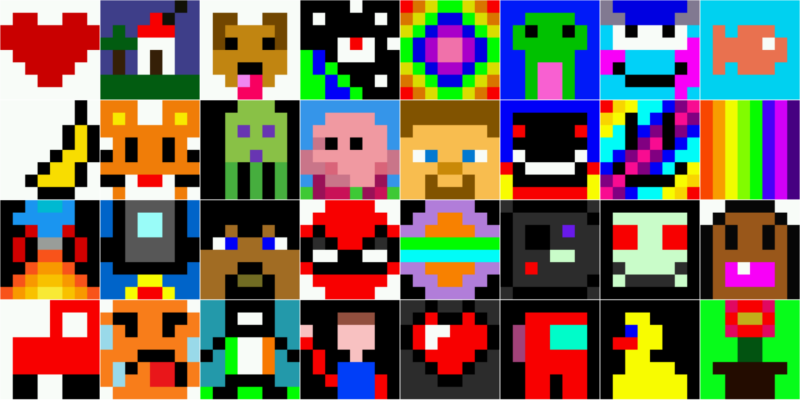
Mission Zero is perfect for beginner coders: participants follow our step-by-step instructions and write a simple program for the Astro Pis. The program takes a humidity reading on board the ISS and displays it for the astronauts. Participants can also include code to display their own unique message on the Astro Pi LED displays. Mission Zero teams are very inventive, and the young people made great use of the Astro Pis’ LED display to create pixel art:
Examples of pixel art images designed by Mission Zero 2021/22 teams for the Astro Pis’ LED displays.
Every Mission Zero participant receives a unique certificate showing exactly where the ISS was on its orbital path when their program was run:
The new Astro Pi computers’ names
This year, the deployment of all the Mission Zero and Mission Space Lab programs was overseen by ESA astronaut Matthias Maurer. But before he could do that, he first had an extra special task: unpacking and assembling the brand-new Astro Pi units in microgravity.
The two original Astro Pis, named Ed and Izzy, travelled to the ISS back in 2015 as part of Tim Peake’s Principia mission. Since the, these two special Raspberry Pi computers have run programs written by more than 54,000 young people. They have done an amazing job and will return to Earth later in 20 22.
This year’s European Astro Pi Challenge is the first to use the two all-new Astro Pi computers, which we sent up to the ISS in December 2021. They are packed with special features, widening young people’s possibilities for new Mission Space Lab experiments. Running this year’s 17,168 programs was the new Astro Pis’ first task.
The two new Astro Pi computers on board the ISS
All young people taking part in Mission Zero this year had the once-in-a-lifetime opportunity: they got to suggest and vote for the names of the two new Astro Pi computers. We received nearly 7,000 name suggestions.
ESA astronaut Matthias Maurer has recorded a special message for all Astro Pi participants, revealing that the new Astro Pi computers will be named in honour of two inspirational European scientists drum roll… Nikola Tesla and Marie Curie!
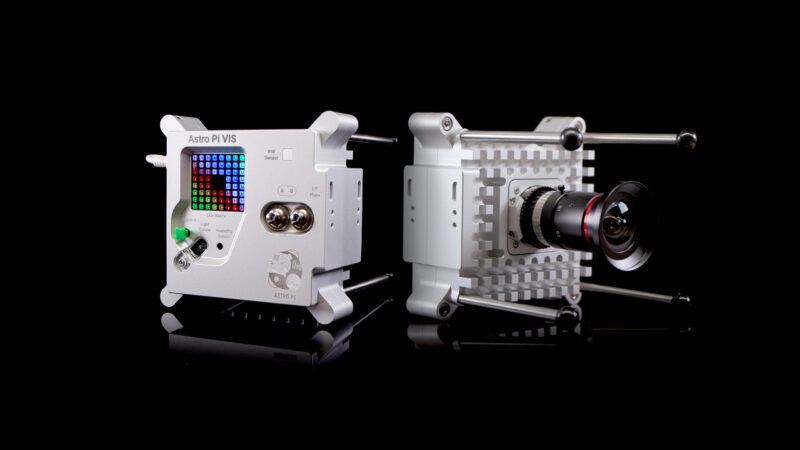
The Astro Pi unit equipped with a Raspberry Pi High Quality Camera that is sensitive to near-infrared light is now called Nikola, and the Astro Pi unit with a visible-light sensitive High Quality Camera is now called Marie.
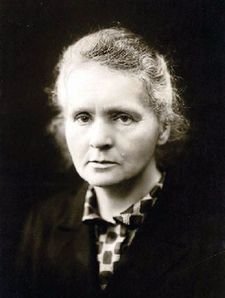
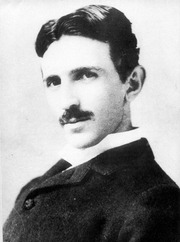
Marie Curie was born in Poland in 1867 and the first person ever to win two Nobel Prizes, in Physics and Chemistry, for her contribution to pioneering work on radioactivity and the treatment of cancer. Nikola Tesla was born in Croatia in 1856, and his innovations in electrical engineering included alternating current — vital for transmitting electricity over long distances — and the induction motor.
Marie CurieNikola Tesla
Marie Curie and Nikola Tesla’s work continues to impact all of our lives today, and we are delighted that this year’s Astro Pi participants have democratically chosen their names for the new Astro Pi computers.
Sign up for news about the next Astro Pi Challenge
The European Astro Pi Challenge will be back again in September 2022. Subscribe to the Astro Pi newsletter on the Astro Pi website to be the first to hear when the 2022/23 missions have lift off!
We and our partners at ESA Education are excited to announce that 299 teams have achieved flight status in Mission Space Lab of the 2021/22 European Astro Pi Challenge. This means that these young people’s programs are the first ever to run on the two upgraded Astro Pi units on board the International Space Station (ISS).
Mission Space Lab gives teams of young people up to age 19 the opportunity to design and conduct their own scientific experiments that run on board the ISS. It’s an eight-month long activity that follows the European school year. The exciting hardware upgrades inspired a record number of young people to send us their Mission Space Lab experiment ideas.
Teams who want to take on Mission Space Lab choose between two themes for their experiments, investigating either ‘Life in space’ or ‘Life on Earth’. From this year onwards, thanks to the new Astro Pi hardware, teams can also choose to use new sensors and a Coral machine learning accelerator during their experiment time.
Investigating life in space
Using the Astro Pi units’ sensors, teams can investigate life inside the Columbus module of the ISS. This year, 71 ‘Life in space’ experiments are running on the Astro Pi units. The 71 teams are investigating a wide range of topics: for example, how the Earth’s magnetic field is experienced on the ISS in space, how the environmental conditions that the astronauts experience compare with those on Earth beneath the ISS on its orbit, or whether the conditions in the ISS might be suitable for other lifeforms, such as plants or bacteria.
For ‘Life in space’ experiments, teams can collect data about factors such as the colour and intensity of cabin light (using the new colour and luminosity sensor included in the upgraded hardware), astronaut movement in the cabin (using the new PIR sensor), and temperature and humidity (using the Sense HAT add-on board’s standard sensors).
Investigating life on Earth
Using the camera on an Astro Pi unit when it’s positioned to view Earth from a window of the ISS, teams can investigate features on the Earth’s surface. This year, for the first time, teams had the option to use visible-light instead of infrared (IR) photography, thanks to the new Astro Pi cameras.
228 teams’ ‘Life on Earth’ experiments are running this year. Some teams are using the Astro Pis’ sensors to determine the precise location of the ISS when images are captured, to identify whether the ISS is flying over land or sea, or which country it is passing over. Other teams are using IR photography to examine plant health and the effects of deforestation in different regions. Some teams are using visible-light photography to analyse clouds, calculate the velocity of the ISS, and classify biomes (e.g. desert, forest, grassland, wetland) it is passing over. The new hardware available from this year onward has helped to encourage 144 of the teams to use machine learning techniques in their experiments.
Testing, testing, testing
We received 88% more idea submissions for Mission Space Lab this year compared to last year: during Phase 1, 799 teams sent us their experiment ideas. We invited 502 of the teams to proceed to Phase 2 based on the quality of their ideas. 386 teams wrote their code and submitted computer programs for their experiments during Phase 2 this year. Achieving flight status, and thus progressing to Phase 3 of Mission Space Lab, is really a huge accomplishment for the 299 successful teams.
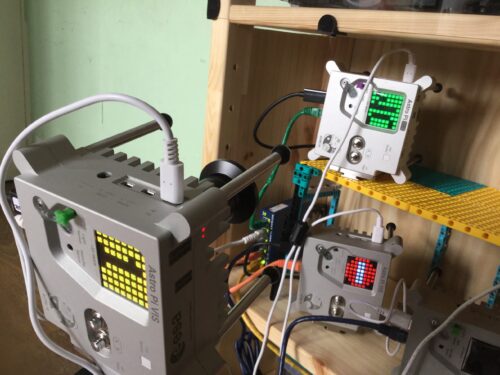
Three replica Astro Pi units run tests on the Mission Space Lab programs submitted by young people.
For us, Phase 2 involved putting every team’s program through a number of tests to make sure that it follows experiment rules, doesn’t compromise the safety and security of the ISS, and will run without errors on the Astro Pi units. Testing means that April is a very busy time for us in the Astro Pi team every year. We run these tests on a number of exact replicas of the new Astro Pis, including a final test to run every experiment that has passed every test for the full 3 hours allotted to each team. The 299 experiments with flight status will run on board the ISS for over 5 weeks in total during Phase 3, and once they have started running, we can’t rely on astronaut intervention to resolve issues. So we have to make sure that all of the programs will run without any problems.
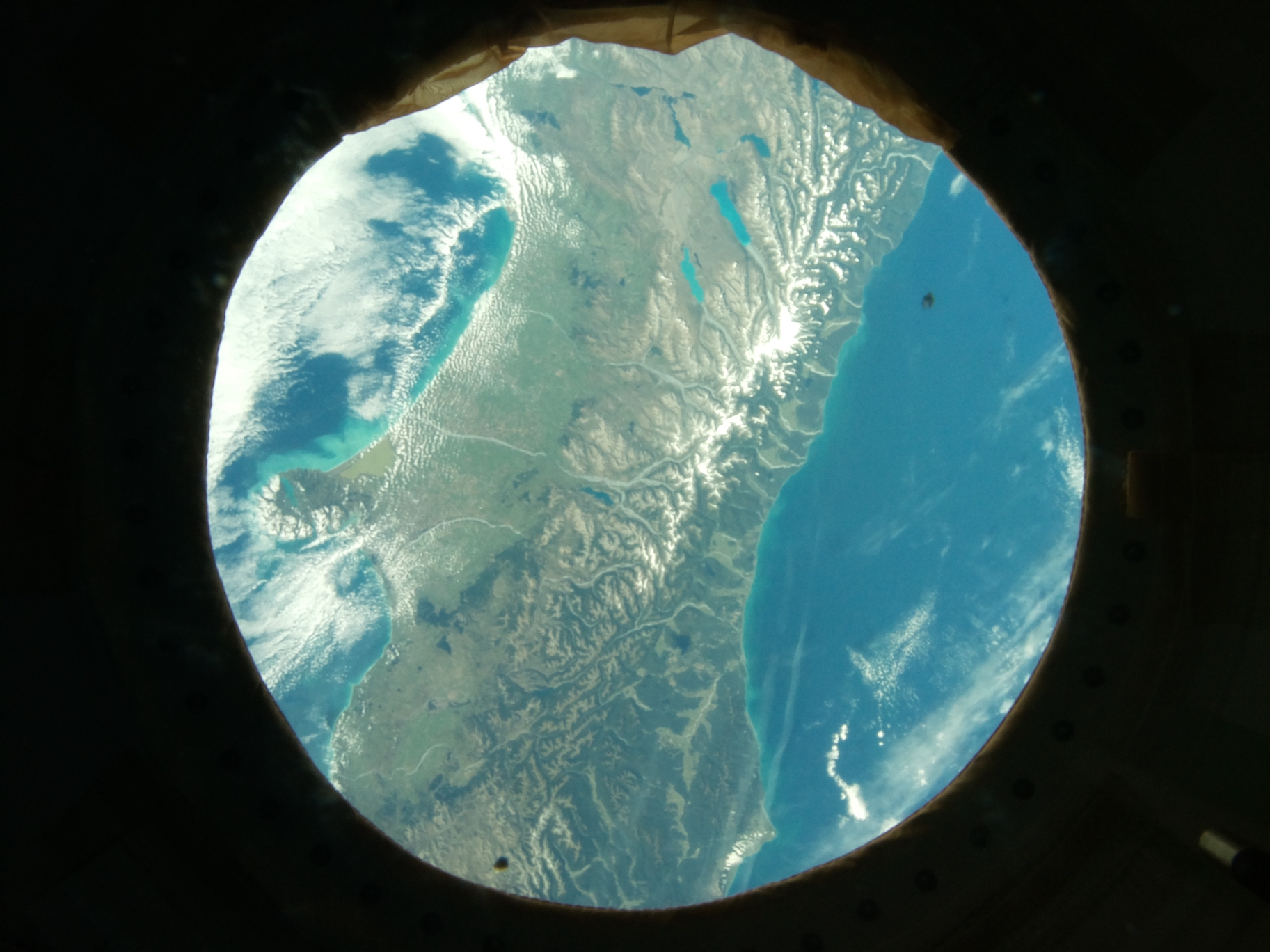
The South Island (Te Waipounamu) of New Zealand (Aotearoa), photographed from the International Space Station using an Astro Pi unit. Click to enlarge.
Thanks to the team at ESA, we are delighted that 67 more Mission Space Lab experiments are running on the ISS this year compared to last year. In fact, teams’ experiments using the Astro Pi units are underway right now!
The 299 teams awarded flight status this year represent 23 countries and 1205 young people, with 32% female participants and an average age of 15. Spain has the most teams with experiments progressing to Phase 3 (38), closely followed by the UK (34), Italy (27), Romania (23), and Greece (22).
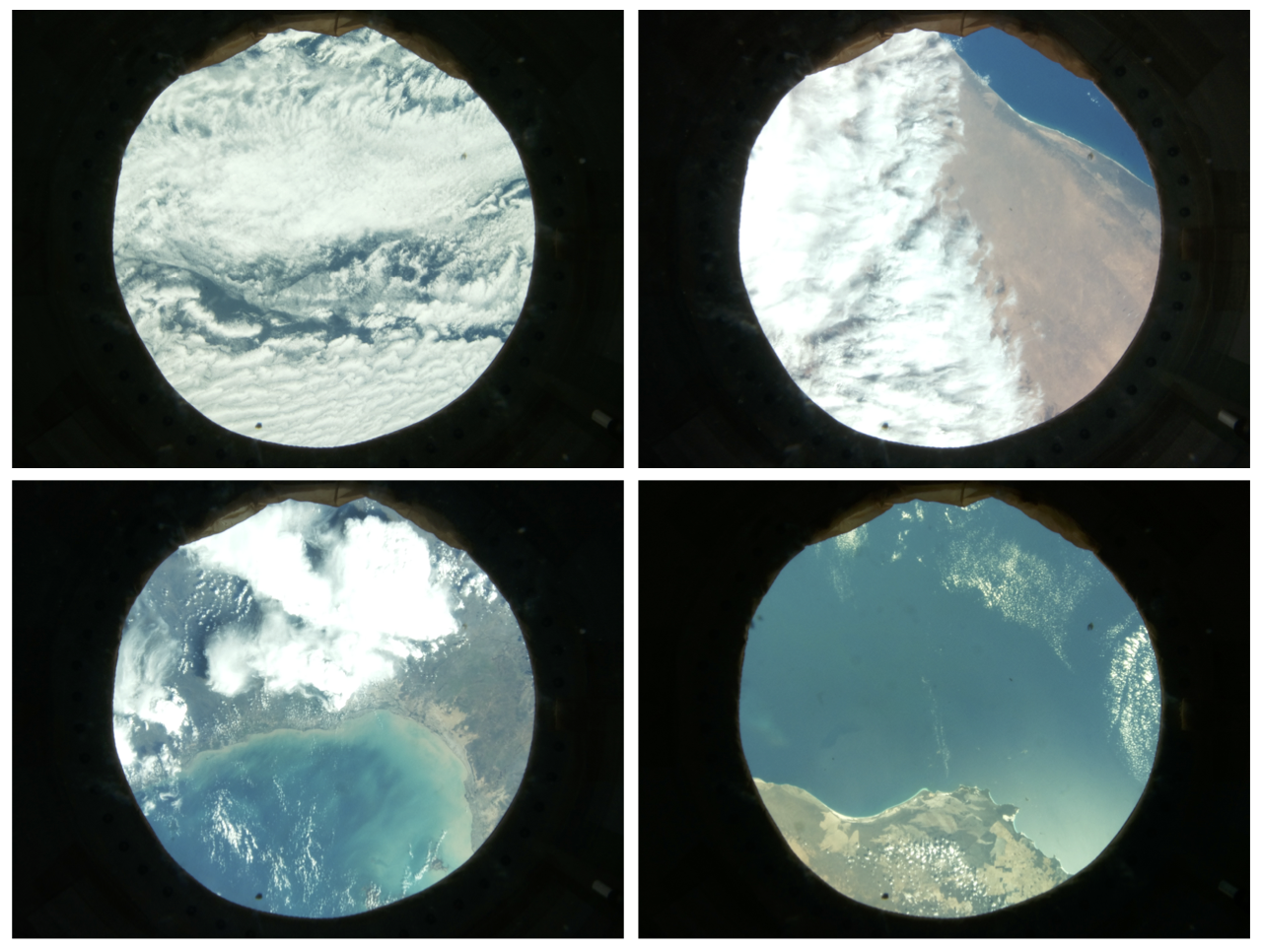
Four photographs of the Earth taken on the International Space Station using an Astro Pi unit. Click to enlarge.
Unfortunately, it isn’t possible to run every Mission Space Lab experiment submitted, as there is only limited time for the Astro Pis to be positioned in the ISS window. We wish we could run every experiment that is submitted, but unfortunately time on the ISS, especially on the nadir window, is limited. Eliminating programs was very difficult because of the high quality of this year’s submissions. Many unsuccessful teams’ programs were eliminated based on very small issues. 87 teams submitted programs this year which did not pass testing and so could not be awarded flight status.
The teams whose experiments are not progressing to Phase 3 should still be very proud to have designed experiments that passed Phase 1, and to have made a Phase 2 submission. We recognise how much work all Mission Space Lab teams have done, and we hope to see you again in next year’s Astro Pi Challenge.
What’s next?
Once the programs for all the experiments have run, we will send the teams the data collected by their experiments for Phase 4. In this final phase of Mission Space Lab, teams analyse their data and write a short report to describe their findings. Based on these reports, the ESA Education and Raspberry Pi Foundation teams will determine the winner of this year’s Mission Space Lab. The winning and highly commended teams will receive special prizes.
Congratulations to all Mission Space Lab teams who’ve achieved flight status! We are really looking forward to reading your reports.
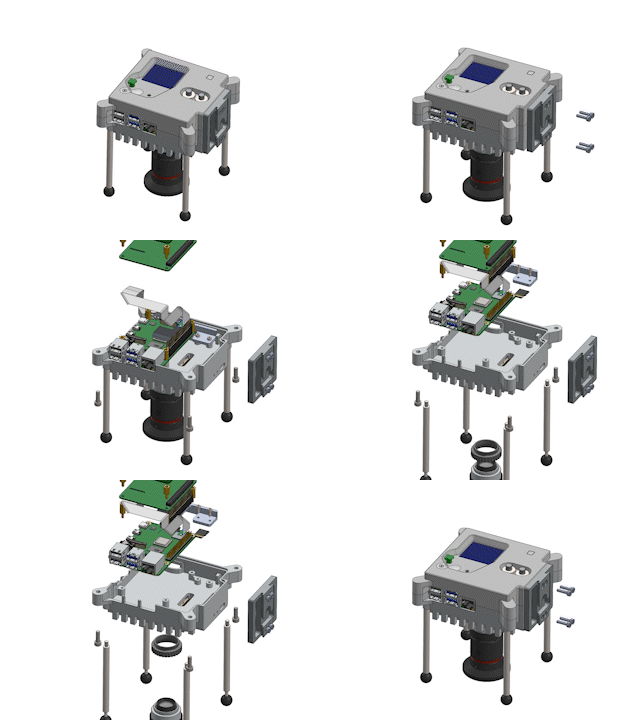
We’ve put together a new how-to guide for 3D printing and assembling your own Astro Pi unit replica, based on the upgraded units we sent to the International Space Station in December.
The new, upgraded Astro Pi units.
The Astro Pi case connects young people to the Astro Pi Challenge
It wasn’t long after the first Raspberry Pi computer was launched that people started creating the first cases for it. Over the years, they’ve designed really useful ones, along with some very stylish ones. Without a doubt, the most useful and stylish one has to be the Astro Pi flight case.
What’s inside the new units.
This case houses the Astro Pi units, the hardware young people use when they take part in the European Astro Pi Challenge. Designed by the amazing Jon Wells for the very first Astro Pi Challenge, which was part of Tim Peake’s Principia mission to the ISS in 2015, the case has become an iconic part of the Astro Pi journey for young people.
As Jon says: “The design of the original flight case, although functional, formed an emotional connection with the young people who took part in the programme and is an engaging and integral part of the experience of the Astro Pi.”
People love to 3D print Astro Pi cases
Although printing an Astro Pi case is absolutely not essential for participating in the European Astro Pi Challenge, many of the teams of young people who participate in Astro Pi Mission Space Lab, and create experiments to run on the Astro Pi units aboard the ISS, do print Astro Pi cases to house the hardware that we send them for testing their experiments.
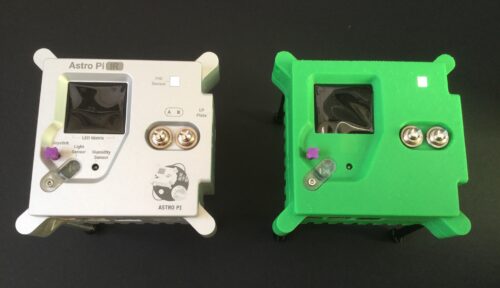
An aluminium Astro Pi case, and a 3D printed case.
When we published the first how-to guide for 3D printing an Astro Pi case and making a working replica of the unit, it was immediately popular. We saw an exciting range of cases being produced. Some people (such as me) tried to make theirs look as similar as possible to the original aluminium Astro Pi flight unit, even using metallic spray paint to complete the effect. Others chose to go for a multicolour model, or even used glow-in-the-dark filament.
The guide also includes step-by-step instructions to completing the internal wiring so you can construct a working Astro Pi unit. We’re provided a custom version of the self-test software that is used on the official Astro Pis, so you can check that everything is operational.
If you’re new to 3D printing, you might like to try one of our BlocksCAD projects and practice printing a simpler design before you move on the the Astro Pi case.
Changes and improvements to the guide
We’ve made some changes to the original CAD designs to make printing the Mark II case parts and assembling a working Astro Pi replica unit as easy as possible. Unlike the STL files for the Mark I case, we’ve kept the upper and lower body components as single parts, rather than splitting each into two thinner halves. 3D printers have continued to improve since we wrote the first how-to guide. Most now have heated beds, which prevent warping, and we’ve successfully printed the Mark II parts on a range of affordable machines.
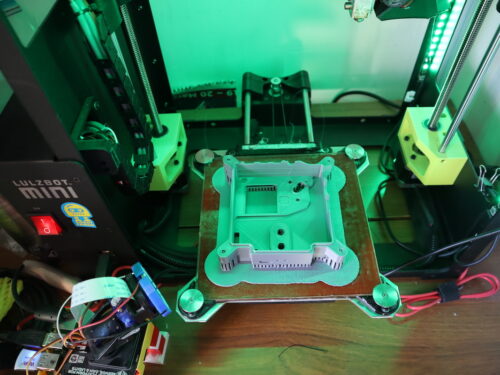
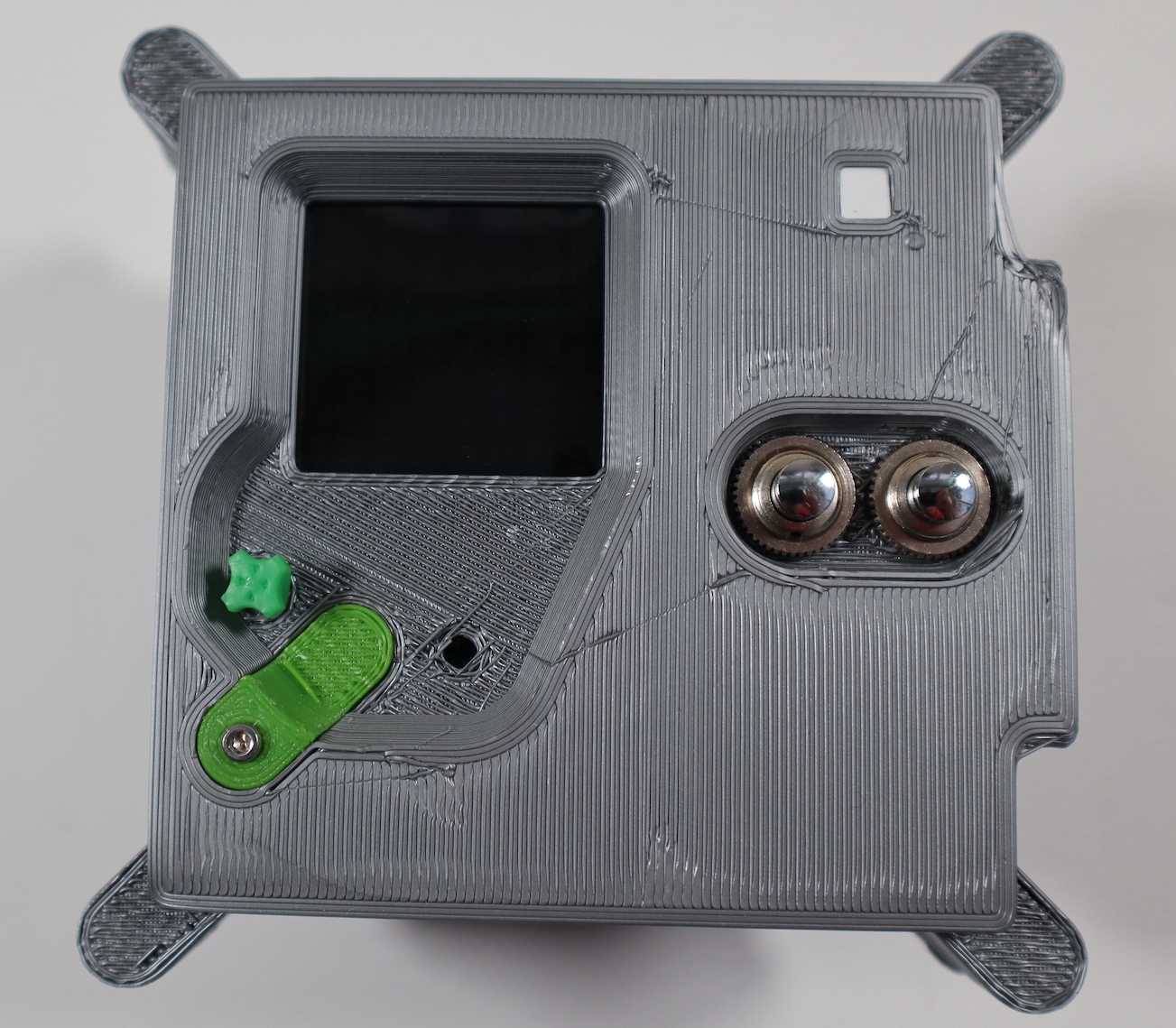
Printing an Astro Pi case.
The guide contains lots of hints and tips for getting the best results. As usual with 3D printing, be prepared to make some tweaks for the particular printer that you use.
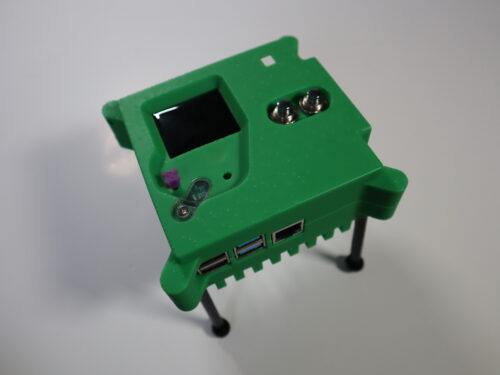
In addition to the upper and lower case parts, there are also some extra components to print this time: the colour sensor window, the joystick cap, the Raspberry Pi High Quality Camera housing, and the legs that protect the lenses and allow the Astro Pi units on the ISS to be safely placed up against the nadir window.
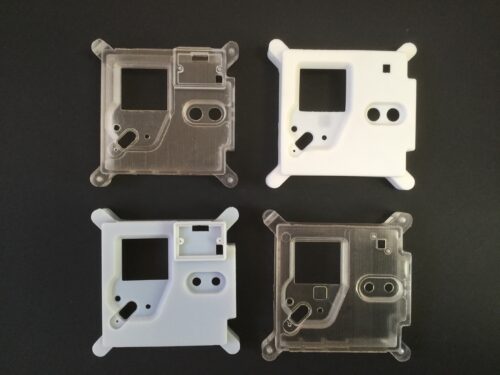
You can choose between four variants of the upper case part.
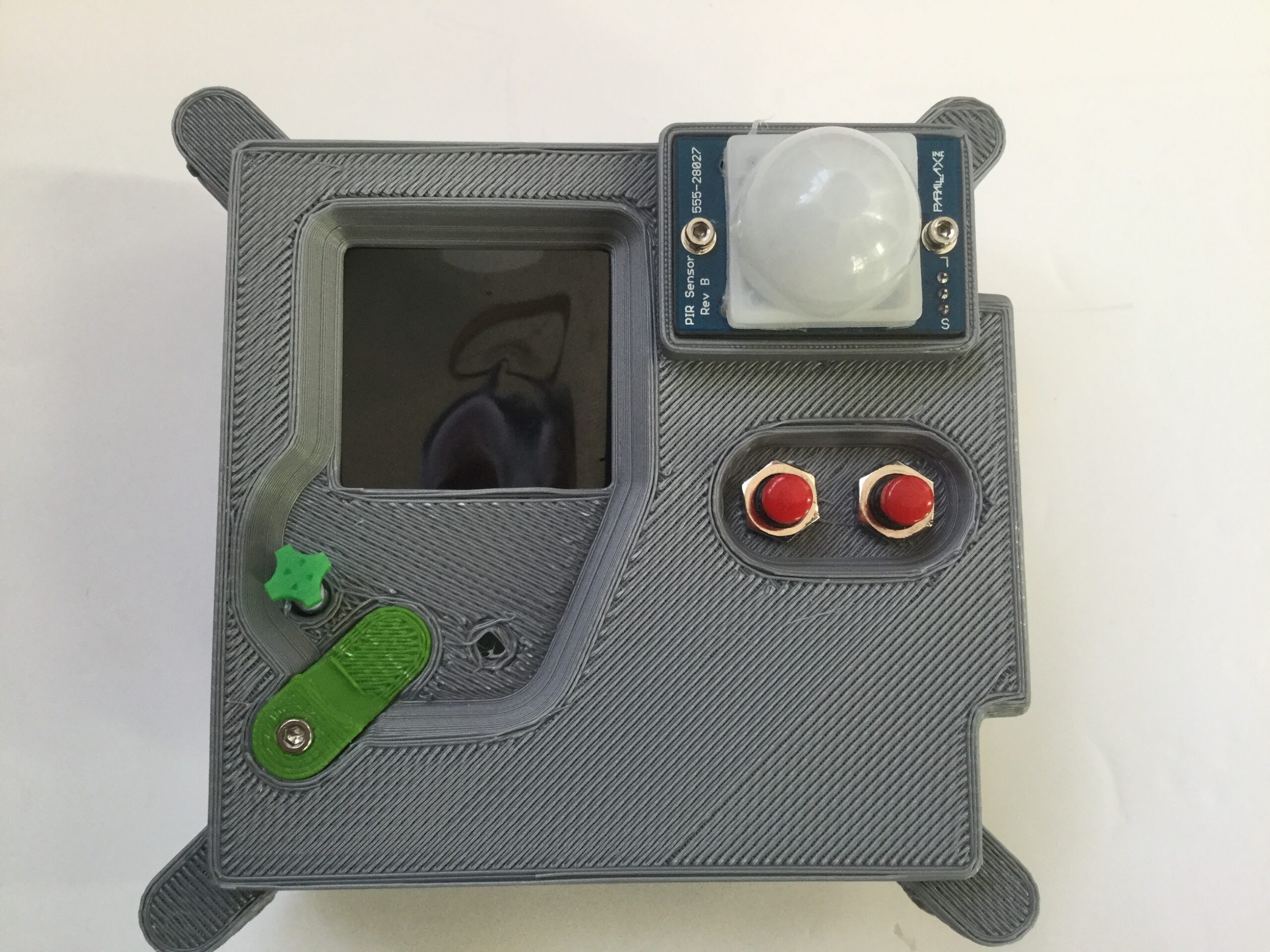
We’ve included files for four variants of the upper case part (see above). In order to keep costs down, the kits that we send to Astro Pi Mission Space Lab teams have a different PIR sensor to the ones of the proper Astro Pi units. So we’ve produced files for upper case parts that allow that sensor to be fitted. If you’re not taking part in the European Astro Pi Challenge, this also offers a cheaper alternative to creating an Astro Pi replica which still includes the motion detection capability:
We’ve also provided versions for the upper case part that have smaller holes for the push buttons. So, if you don’t fancy splashing out on the supremely pressable authentic buttons, you can use other colourful alternatives, which typically have a smaller diameter.
The guide includes files for printing the Astro Pi’s protective legs.
Do share photos of your 3D-printed Astro Pi cases with us by tweeting pictures of them to @astro_pi and @RaspberryPi_org.
One week left to help young people make space history with Astro Pi Mission Zero
We are really excited that our two upgraded Astro Pi units have arrived on the International Space Station. Each unit contains the latest model of the Raspberry Pi computer, plus a Raspberry Pi High Quality Camera and a host of sensors on a custom Sense HAT, all housed inside a special flight case designed to keep everything cool and protected. Here is the story of how the Astro Pi units were built:
The upgraded Astro Pi units have been designed and built in collaboration with ESA Education, the European Space Agency’s education programme. The Astro Pis’ purpose is for young people to use them in the European Astro Pi Challenge. The film highlights the units’ exciting new features, such as a machine learning accelerator and new camera, which can capture high-quality images of Earth from space using both visible light and near-infrared light.
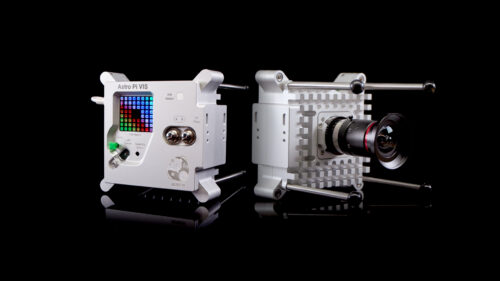
The new Astro Pi unit, with its camera and machine learning accelerator.
There’s an extended team behind the new hardware and software, not just us working at the Raspberry Pi Foundation and the European Space Agency.
“Thanks to our friends at ESA, and all the people who have shared their unique expertise and knowledge with us, […] we’ve managed to take two ordinary Raspberry Pi computers from the production line in Wales and see them end up on the International Space Station. It’s been a real privilege to get to work with such an amazing group of space professionals.”
– Richard Hayler, Senior Programme Manager and lead engineer of the Astro Pi units
The new Astro Pis are all ready to run young peoples’ computer programs as part of the European Astro Pi Challenge. The young people who successfully proposed experiments for the 2021/22 round of Astro Pi Mission Space Lab have just submitted their programs to us for testing. These programs will run the teams’ experiments on the new Astro Pis in May.
Your young people’s code in space
There is still time until 18 March to take part in the 2021/22 round of Astro Pi Mission Zero. Mission Zero is a beginners’ coding activity for all young people up to age 19 in ESA member and associate states. Mission Zero is free, can be completed online in an hour, and lets young people send their unique message to the astronauts on board the ISS.
To take part, participants follow our step-by-step guide to write a simple Python program. Their program will display their message to the astronautsvia the Astro Pi’s LED display (complete with ‘sunglasses’). Parents or educators support the participants by signing up for a mentor code to submit the young people’s programs.
All Mission Zero participants receive a certificate showing the exact time and location of the ISS when their program was run — their moment of space history to keep. And this year only, Mission Zero is extra special: participants can also help name the two new Astro Pi units!
You can watch ESA astronaut Matthias Maurer unpack and assemble the Astro Pi units in microgravity on board the ISS. It’s so exciting to work with the European Space Agency in order to send young people’s code into space. We hope you and your young people will take part in this year’s Astro Pi Challenge.
PS If you want to build your own replica of the Astro Pi units, we’ve got a treat for you soon. Next week, we’ll share a step-by-step how-to guide, including 3D printing files.
This morning, our two new Astro Pi units launched into space. Actual, real-life space. The new Astro Pi units each consist of a Raspberry Pi computer with a Raspberry Pi High Quality Camera and a host of sensors, all housed inside a special space-ready case that makes the hardware suitable for the International Space Station (ISS).
The journey to space for two special Raspberry Pi computers
Today’s launch is the culmination of a huge piece of work we’ve done for the European Space Agency to get the new Astro Pi units ready to become part of the European Astro Pi Challenge.
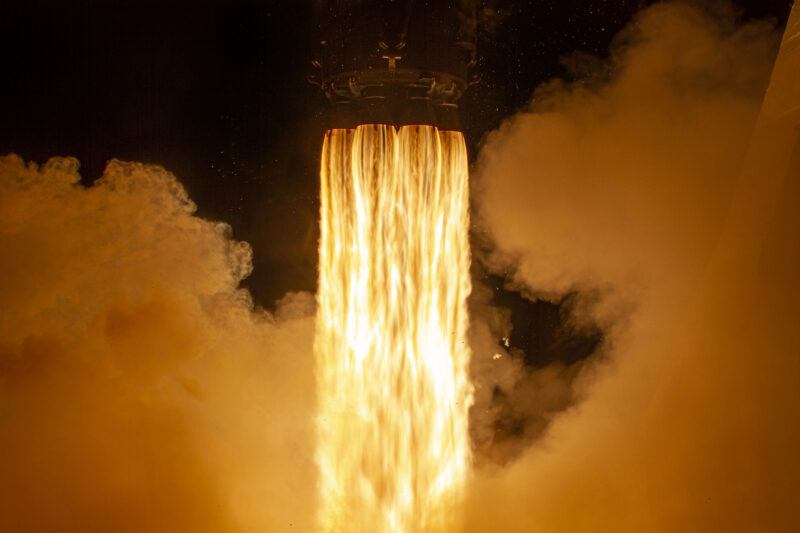
After lift-off from Launch Complex 39A at Kennedy Space Center in Florida, the new Astro Pi units are currently travelling on a SpaceX Falcon 9 rocket carrying the Dragon 2 spacecraft, the module atop the rocket. You can watch the launch again here.
Also travelling with our Astro Pi units are food and some Christmas presents for the astronauts on board the ISS, materials for a study of the delivery of cancer drugs; a bioprinter for experiments investigating wound healing; and materials for a study of how detergents work in microgravity.
The Dragon 2 spacecraft will berth with the ISS tomorrow, with NASA astronauts Raja Chari and Tom Marshburn monitoring its arrival. ESA astronaut Matthias Maurer and another colleague will be there to unpack its cargo. You can watch the process of unpacking tomorrow, Wed 22 December, at 8.30am GMT / 9.30am CET. In the new year, Matthias will be switching our Astro Pi units on and getting them ready to run the code written by young people participating in the European Astro Pi Challenge. The new Astro Pi units will replace Astro Pi units Ed and Izzy, which have been on the ISS for 6 years — ever since the very first Astro Pi Challenge with British ESA astronaut Tim Peake in 2015.
None of us on the team working on the Astro Pi Challenge here at the Foundation are aerospace engineers. While building the new Astro Pi units, we’ve learned so much.
To get the Astro Pis ready to be loaded onto the rocket has been a project of more than three years. That’s because, in addition to manufacturing the Astro Pi units, we also had to ensure they pass the necessary safety and certification process. The official name for this is the Safety Gate process. It’s been set up by ESA and NASA to ensure that any items sent to the ISS are safe to operate on board the station.
For the three separate safety panels the Astro Pi units needed to get through, we put the units through different tests and completed various safety reports. The tests included:
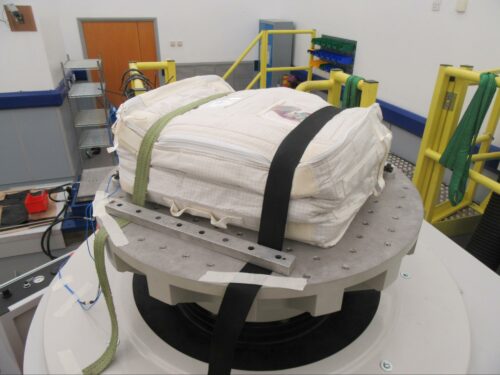
A vibration test: To make sure the Astro Pi units survive the rigours of the launch, we tested them using the sophisticated rigs at Airbus in Portsmouth. These rigs are capable of simulating the vibrations produced by various different launch vehicles. We needed to test all possible options, because the Astro Pi units didn’t have a confirmed vehicle to travel to the ISS yet.
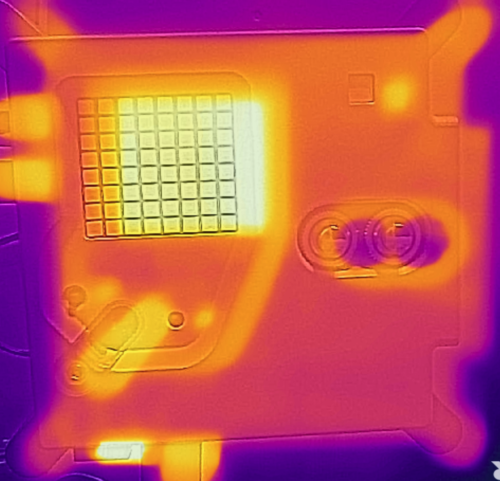
A thermal test: To make sure no harm can possibly come to the crew from the Astro Pi units, we needed to check that the touch temperature of the Astro Pi units’ surface is never above 45°C.
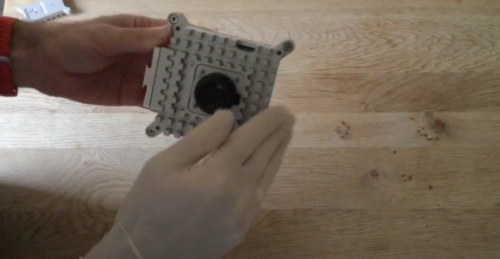
A test for sharp edges: Each Astro Pi unit also needed to be manually inspected by someone wearing a latex glove who carefully feels the case for sharp edges.
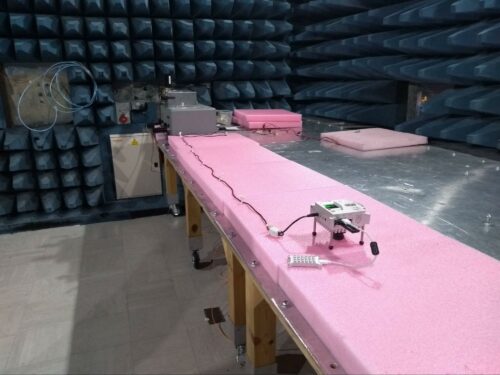
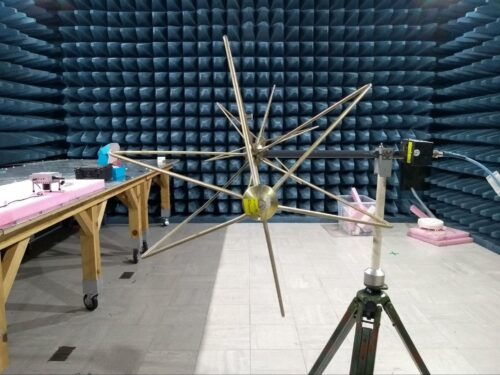
Stringent, military-grade electromagnetic emissions and susceptibility tests: These are required to guarantee that the Astro Pi units won’t interfere with any ISS systems, and that the units themselves are not affected by other equipment on board.
We built two additional Astro Pi units and sent them to NASA so that they could test that plugging the units into the ISS power grid wouldn’t cause a power overload.
For almost all of these tests, we created custom software to do things like stress the Astro Pi units’ processors, saturate the network links, and generally make the units work as hard as possible.
To accompany these safety and test reports, we also had to create the Flight Safety Data Package (FSDP), which contains exact technical information about every component of the Astro Pi hardware, and about all the necessary safety controls to qualify the use of certain materials and safely manage operation of the units. The current FSDP paperwork stands at over 700 pages, which thankfully we haven’t had to actually print out!
Young people’s code will run on the new Astro Pi units next year — is yours on board?
All of this work culminated today in the Astro Pis being launched up into space from Cape Canaveral. And we’re doing all this so that more young people can take part in the European Astro Pi Challenge and send messages to the ISS astronauts using code as part of Mission Zero, or write code for new, ambitious experiments to run on the ISS as part of Mission Space Lab.
Young people can take part in Astro Pi Mission Zero right now! Mission Zero is a beginners’ coding activity for all young people under the age of 19 in ESA member and associate states. It gives them the chance to write code to show their own message to the astronauts on board the ISS using the Astro Pi units. And this time, Mission Zero participants can also vote to name the new Astro Pi units!
To participate, young people follow our step-by-step instructions to write their Mission Zero code. As an adult supporting a young person on Mission Zero, all you need to do is sign up as a mentor to get them a registration code for their Mission Zero entry. Once your young person’s code has run in space, we’ll send you a special certificate for them showing where the ISS, and the Astro Pi computers, were when their code ran.
Inspire a young person to learn about coding and space science today with Astro Pi Mission Zero!
We and our partners ESA Education are delighted to announce that for this year’s Mission Space Lab of the European Astro Pi Challenge, a record number of 800 teams from 23 countries sent us their ideas for experiments to run on board the International Space Station (ISS).
This is an incredible 83% increase from last year and means that more than 3100 young people from across Europe and other eligible countries have taken part in Phase 1 of Mission Space Lab.
Young people’s scientific experiments in space with Mission Space Lab
Every year since 2015, thanks to our yearly Astro Pi Challenge, Mission Space Lab teams of young people have created code for their own scientific experiments to run on the ISS’s two Astro Pi units. These Astro Pi units are Raspberry Pi computers in space-proof cases, with cameras and an array of sensors. In Phase 1 of Mission Space Lab, teams submit their idea for an experiment that uses the Astro Pi hardware to investigate either the environmental conditions inside the Columbus module on the ISS, or life on the Earth’s surface.
For Mission Space Lab participants, the new hardware opens up a range of options for experiments that were not possible before. Among these are experiments using elements of artificial intelligence such as advanced machine learning, and higher-resolution photography than ever before.
Inside the new Astro Pi unit
It’s clear that young people are really excited about the new hardware. Not only did we see an overall increase in participating teams, but 49% of the Mission Space Lab experiment ideas that teams sent us involved machine learning.
Mission Space Lab teams are getting ready to write and test their code
We’ve now selected 502 teams for Phase 2 of Mission Space Lab based on the quality of their experiment ideas. Despite the fierce competition, this is 26% more teams than we were able to progress to Phase 2 last year.
All the teams we’ve selected are about to be sent a special Astro Pi hardware kit to help them write the programs for their experiments. These kits include all the components to replicate the new Astro Pi units that will travel to space in December: a Raspberry Pi 4 computer, a Raspberry Pi High Quality Camera, and the same sensors that are on the Astro Pi computers on the ISS. In addition, teams conducting experiments involving machine learning will receive a Coral machine learning accelerator, and teams conducting experiments involving Infrared photography will receive a red optical filter.
Once the teams of young people have received their hardware kits, they’ll be able to familiarise themselves with the Astro Pi sensors and cameras, and then create and test (and re-test!) their code.
Young people’s code will run in space next year
The teams’ deadline for submitting the code for their experiments to us is Thursday 24 February 2022. Once their code has gone through our checks and tests, it will be ready to run on the shiny new Astro Pi units on board the ISS in April or May.
Congratulations to the successful teams, and thank you to everyone who sent us their ideas for Mission Space Lab this year. And a special thank you to all the teachers, educators, club volunteers, and other wonderful people who are acting as Mission Space Lab team mentors this year. You are helping your young people do something remarkable that they will remember for the rest of their lives.
If your team was unsuccessful this time, we’re sorry for the disappointment — please try again next year.
Young people up to age 19 can also take part in Mission Zero, the beginners’ coding activity of the European Astro Pi Challenge, to vote for which European scientist they think we should name the units after. All Mission Zero entries are guaranteed to run on the ISS for 30 seconds!
We’re super excited to announce that the European Astro Pi Challenge is back for another year of amazing space-based coding adventures.
This time we are delighted to tell you that we’re upgrading the Raspberry Pi computers on the International Space Station (ISS) and adding new hardware to expand the range of experiments that young people can run in space!
What’s new with Astro Pi?
The first Astro Pi units were taken up to the ISS by British ESA astronaut Tim Peake in December 2015 as part of the Principia mission. Since then, 54000 young people from 26 countries have written code that has run on these specially augmented Raspberry Pi computers.
Working with our partners at the European Space Agency, we are now upgrading the Astro Pi units to include:
Raspberry Pi 4 Model B with 8GB RAM
Raspberry Pi High Quality Camera
Google Coral machine learning accelerator
Colour and luminosity sensor
Passive infrared sensor
The augmented Raspberry Pi computers we are sending up to the International Space station, in all their glory
The units will continue to have a gyroscope; an accelerometer; a magnetometer; and humidity, temperature, and pressure sensors.
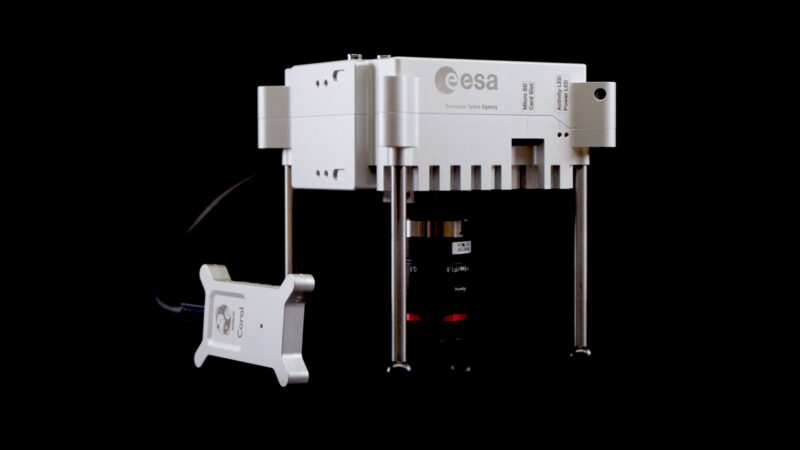
The little device on the left is the Google Coral machine learning accelerator
The new hardware makes it possible for teams to design new types of experiments. With the Raspberry Pi High Quality Camera they can take sharper, more detailed images, and, for the first time, teams will be able to get full-colour photos of the beauty of Earth from space. This will also enable teams to investigate plant health thanks to the higher-quality optical filter in conjunction with the IR-sensitive camera. Using the Coral machine learning accelerator, teams will also be able to develop machine learning models that allow high-speed, real-time processing.
Getting into space
The Astro Pi units, in their space-ready cases of machined aluminium, will travel to the ISS in December on the SpaceX Dragon Cargo rocket, launching from Kennedy Space Center. Once the resupply vehicle docks with the ISS, the units will be unpacked and set up ready to run Astro Pi participants’ code in 2022.
Getting the units ready for launch has been a significant effort from lots of people. Once we worked with our friends at ESA to agree on the new features and hardware, we commissioned the design of the new case from Jon Wells. Manufacturing was made significantly more challenging by the pandemic, not least because we weren’t able to attend the factory and had to interact over video calls.
ESA astronaut Samantha Cristoforetti aboard the ISS. Credit: ESA
Once we had the case and hardware ready, we could take on the huge battery of tests that are required before any equipment can be used on the ISS. These included the vibration test, to ensure that the Astro Pi units would survive the rigours of the launch; thermal testing, to make sure that units wouldn’t get too hot to touch; and stringent, military-grade electromagnetic emissions and susceptibility tests to guarantee that the Astro Pi computers wouldn’t interfere with any ISS systems, and would not themselves be affected by other equipment that is on board the space station.
Huge thanks to Jon Wells and our collaborators at Airbus, Google, MidOpt, and Shearline Precision Engineering for everything they’ve done to get us to the point where we were able to ship the new Astro Pi units to the Aerospace Logistics Technology Engineering Company (ALTEC) in Italy for final preparations before their launch.
There are two Astro Pi missions for young people to choose from: Mission Zero and Mission Space Lab. Young people can participate in one or both of the missions! Participation is free and open for young people up to age 19 in ESA member states (exceptions listed on the Astro Pi website).
Mission Zero
In Mission Zero, young people write a simple Python program that takes a sensor reading and displays a message on the LED screen. This year, participation in Mission Zero also gives young people the opportunity to vote for the names of the two new computers. Mission Zero can be completed in around an hour and is open to anyone aged 7 to 19 years old. Every eligible entry is guaranteed to run on board the ISS and participants will receive an official certificate with the exact time and location of the ISS when their program ran.
Mission Zero opens today and runs until 18 March 2022.
Mission Space Lab is for teams of young people who want to run their own scientific experiments on the Astro Pi units aboard the ISS. It runs over eight months in four phases, from idea registration to data analysis.
Have a look at the winning teams from last year for amazing examples of what teams have investigated in the past. But remember — the new Astro Pi computers offer exciting new ways of investigating life in space and on Earth. We can’t wait to see what ideas participants come up with this year.
To start, Mission Space Lab team mentors just need to send us their team’s experiment idea by 29 October 2021.
You can keep updated with all of the latest Astro Pi news, including the build-up to the rocket launch in December, by following the Astro Pi Twitter account.
The Raspberry Pi Foundation and ESA Education are excited to announce the winners and highly commended Mission Space Lab teams of the 2020/21 European Astro Pi Challenge!
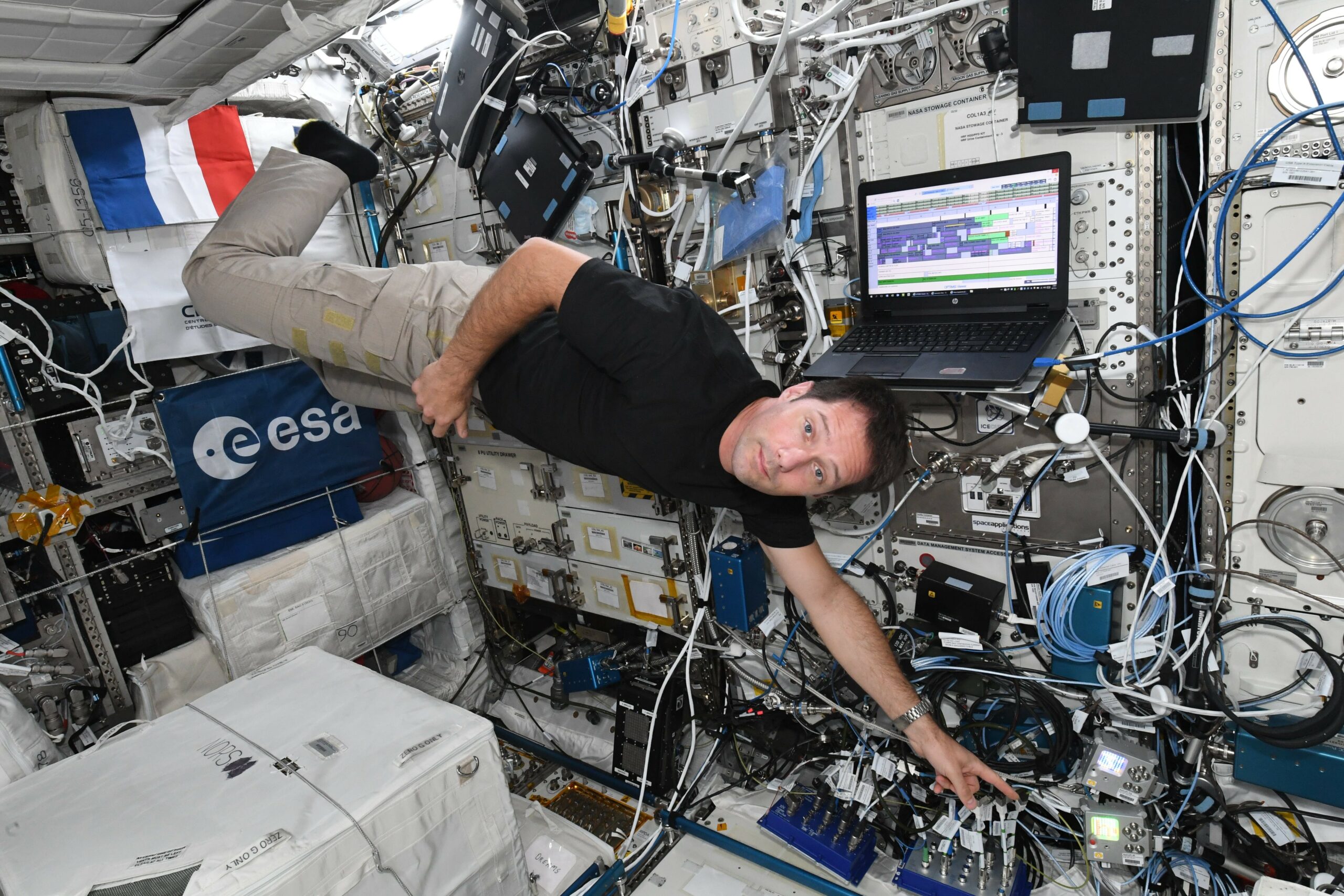
ESA Astronaut Thomas Pesquet floating aboard the International Space Station with the two Astro Pi computers
In Mission Space Lab, teams of young people aged up to 19 create scientific experiments that run on the International Space Station’s two Astro Pi computers — space-hardened Raspberry Pis with cameras and an array of sensors.
In the final phase of Mission Space Lab, teams analyse the data captured during their experiment’s three-hour runtime on the ISS and write a short report describing their experiment’s hypothesis, methods, results, and conclusions.
The Maldives as captured by the Mechabot team
You can read the best reports below! From 154 final reports, the Astro Pi team has now chosen 10 winners and 5 highly commended teams that have each demonstrated great scientific merit and innovative use of the Astro Pi hardware.
Mag-AZ from Escola Secundária Domingos Rebelo in Portugal,who attempted to create an algorithm that could calculate the location of the magnetic poles of any planet or star by using the Astro Pi’s sensors to map Earth’s magnetic fields.
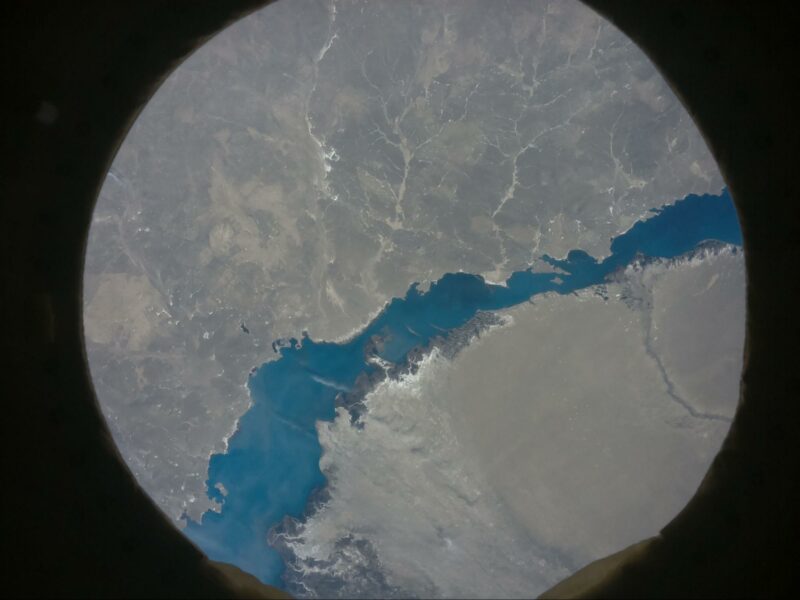
Lake Balkhash in Kazakhstan as captured by the Jupiter team
Mateii from Saint Sava National College in Romania,whoinvestigated the potential growth of Aspergillus and Penicillium mold on the ISS in comparison to on Earth using a simulation model and Astro Pi sensor readings taken inside the Columbus module.
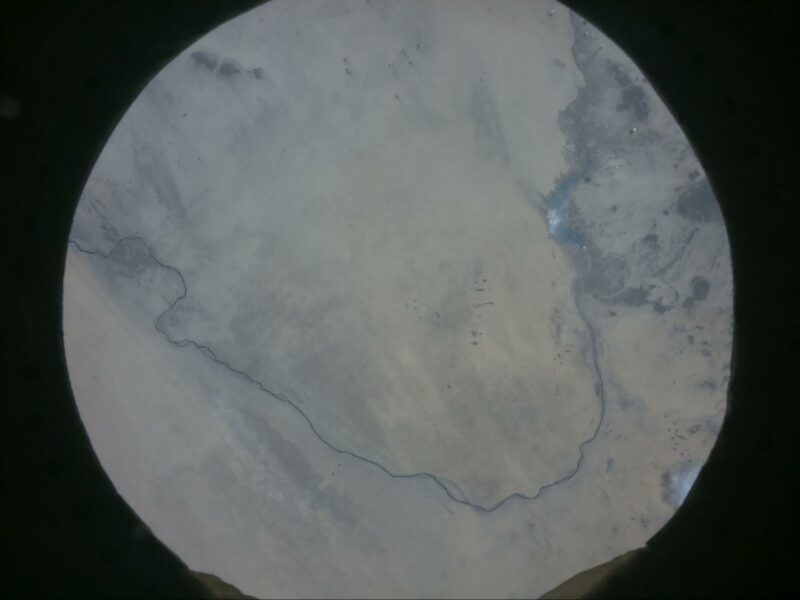
The river Nile in Egypt as captured by the Mechabot team
Juno from Institut d’Altafulla in Spain,who attempted to determine how much heat the astronauts aboard the ISS experience by using temperature, pressure, and humidity data captured by the Astro Pi’s sensors together with psychrometric calculations.
Albedo from Lycée Albert Camus in France,who investigated albedo on Earth, using photos captured by the Astro Pi’s camera to classify cloud, land, and sea coverage, and analysing their corresponding albedo values.
The river Nile in Sudan as captured by the Spacepi2 team
Magtrix from The Leys School in the United Kingdom, who analysed whether geographical features of Earth such as mountains affect the planet’s magnetic field using the Astro Pi’s magnetometer, GPS data, and photos of Earth captured by the Astro Pi’s camera.
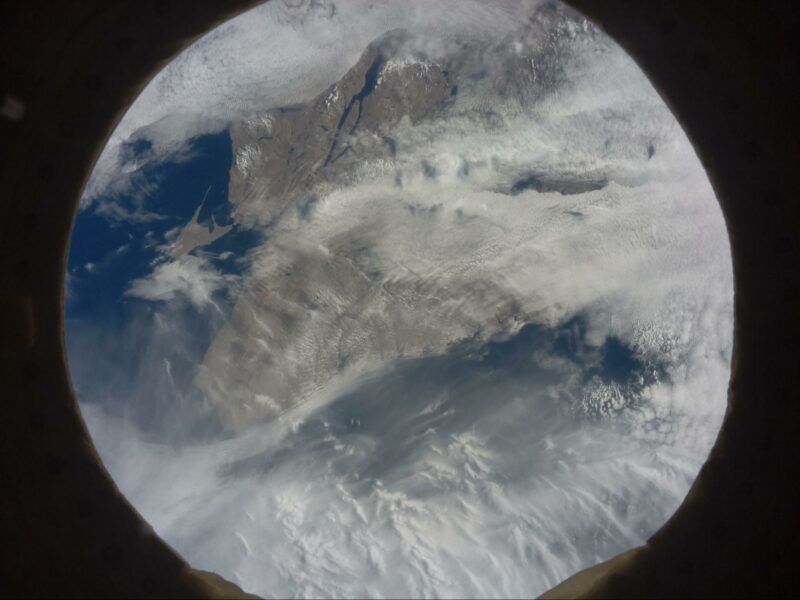
Newfoundland and Labrador as captured by the SpaceRad team
Mechabot from Robone Robotics Club in Germany,who investigated how the Earth’s magnetic field correlates with its climate, and how this affects near-Earth objects’ behaviour in low-Earth orbit.
Spacepi2 from Zanneio Model High School in Greece, whoinvestigated urbanisation on Earth by comparing photos captured by the Astro Pi’s camera with historical data using an automated photo classification program they created and NDVI analysis.
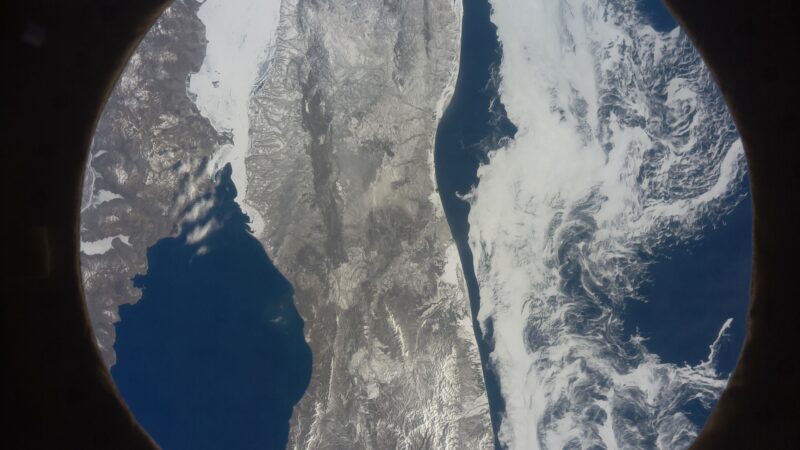
Sakhalin Oblast in Russia as captured by the Liontech team
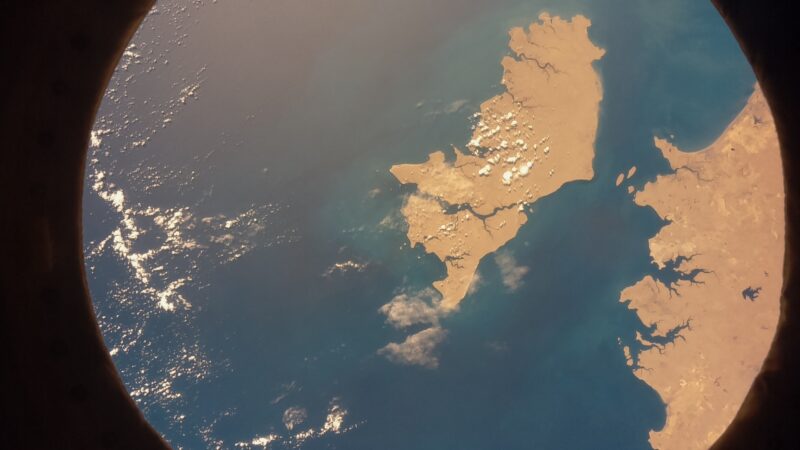
The Tiwi Islands off the coast of Northern Australia as captured by the Magtrix team
LionTech from Mihai Eminescu National College, Oradea in Romania, who attempted to measure the velocity of the ISS in orbit, and also created an algorithm to detect smoke, pollution, and types of cloud coverage in the images they captured using the Astro Pi’s camera.
RosSpace from Ceo Boecillo in Spain,who are the third team in our list to have investigated Earth’s albedo levels in relation to global warming using photo analysis. A popular theme this year!
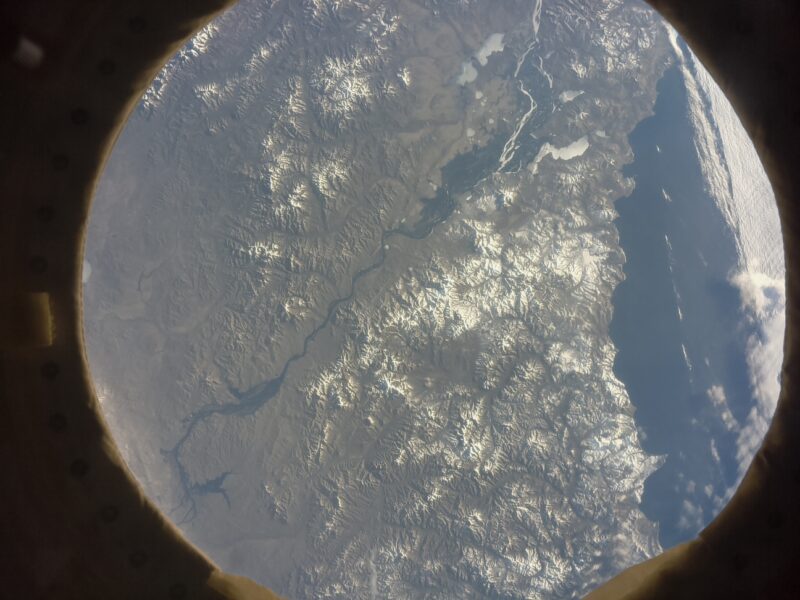
The Amur river and the Sea of Oghotsk (right) in Eastern Russia as captured by the Zeus team
Jupiter from Institut d’Altafulla in Spain,who looked at variations in the current surface area of water bodies on Earth compared to historical records as an indicator of climate change.
And a special mention for:
Ultrafly from Ultrafly Coding Club in Canada, who were the youngest team to make the highly commended list this year, with an average age of 8! Their experiment explored whether the environmental variables on the ISS created allergy-friendly living conditions for the astronauts on board.
The prize? A special webinar with ESA Astronaut Luca Parmitano
Every Astro Pi team that reached Phase 2 of Mission Space Lab by having their experiment idea accepted this year will receive participation certificates recognising their achievement, and the winners and highly commended teams will receive special certificates and an additional prize.
The prize for this year’s winners and highly commended teams is the chance to pose their questions to ESA astronaut Luca Parmitano during a webinar in September! We’ll shortly email the teams’ mentors the instructions for submitting their teams’ questions to Luca.
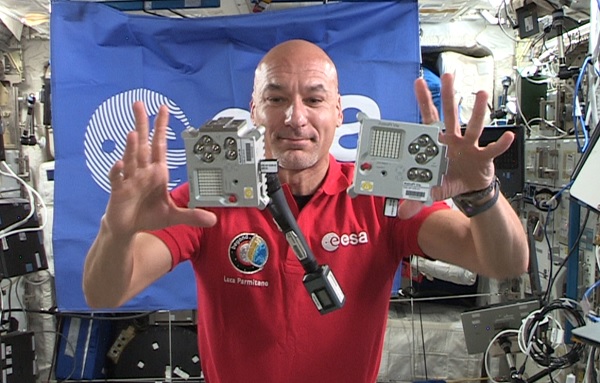
ESA Astronaut Luca Parmitano floating aboard the ISS with the two Astro Pi computers
This Q&A event for the finalists will conclude this year’s European Astro Pi Challenge. It’s been an incredible year for the Challenge, with 15756 young people from 23 countries participating in Mission Zero or Mission Space Lab.
Everyone on the Raspberry Pi and ESA Education teams congratulates this year’s participants for their efforts, especially given the obstacles many teams had to overcome due to the coronavirus pandemic.
Thank you and congratulations to everyone who has taken part — we hope you found it as fun and inspiring as we did!
We can’t wait to welcome you back for the next European Astro Pi Challenge!
While this year’s Challenge is coming to an end, the European Astro Pi Challenge will return with both Mission Zero and Mission Space Lab in September!
We invite all teachers, educators, club leaders, and young people who love coding and space science to follow our updates on astro-pi.org and the Astro Pi Twitter account to make sure you don’t miss any announcements.
Do you know young people who dream of sending something to space? You can help them make that dream a reality!
We’re calling on educators, club leaders, and parents to inspire young people to develop their digital skills by participating in this year’s European Astro Pi Challenge.
The European Astro Pi Challenge, which we run in collaboration with the European Space Agency, gives young people in 26 countries* the opportunity to write their own computer programs and run them on two special Raspberry Pi units — called Astro Pis! — on board the International Space Station (ISS).
This year’s Astro Pi ambassador is ESA astronaut Thomas Pesquet. Thomas will accompany our Astro Pis on the ISS and oversee young people’s programs while they run.
And the young people need your support to take part in the Astro Pi Challenge!
Astro Pi is back big-time!
The Astro Pi Challenge is back and better than ever, with a brand-new website, a cool new look, and the chance for more young people to get involved.
During the last challenge, a record 6558 Astro Pi programs from over 17,000 young people ran on the ISS, and we want even more young people to take part in our new 2020/21 challenge.
British ESA astronaut Tim Peake was the ambassador of the first Astro Pi Challenge in 2015.
So whether your children or learners are complete beginners to programming or have experience of Python coding, we’d love for them to take part!
You and your young people have two Astro Pi missions to choose from: Mission Zero and Mission Space Lab.
Mission Zero — for beginners and younger programmers
In Mission Zero, young people write a simple program to take a humidity reading onboard the ISS and communicate it to the astronauts with a personalised message, which will be displayed for 30 seconds.
Mission Zero is designed for beginners and younger participants up to 14 years old. Young people can complete Mission Zero online in about an hour following a step-by-step guide. Taking part doesn’t require any previous coding experience or specific hardware.
All Mission Zero participants who follow the simple challenge rules are guaranteed to have their programs run aboard the ISS in 2021.
All you need to do is support the young people to submit their programs!
Mission Zero is a perfect activity for beginners to digital making and Python programming, whether they’re young people at home or in coding clubs, or groups of students or club participants.
We have made some exciting changes to this year’s Mission Zero challenge:
Participants will be measuring humidity on the ISS instead of temperature
For the first time, young people can enter individually, as well as in teams of up to 4 people
You have until 19 March 2021 to support your young people to submit their Mission Zero programs!
Mission Space Lab — for young people with programming experience
In Mission Space Lab, teams of young people design and program a scientific experiment to run for 3 hours onboard the ISS.
Mission Space Lab is aimed at more experienced or older participants up to 19 years old, and it takes place in 4 phases over the course of 8 months.
Your role in Mission Space Lab is to mentor a team of participants while they design and write a program for a scientific experiment that increases our understanding of either life on Earth or life in space.
The best experiments will be deployed to the ISS, and teams will have the opportunity to analyse their experimental data and report on their results.
* ESA Member States in 2020: Austria, Belgium, Czech Republic, Denmark, Estonia, Finland, France, Germany, Greece, Hungary, Ireland, Italy, Luxembourg, the Netherlands, Norway, Poland, Portugal, Romania, Spain, Sweden, Switzerland, Latvia, and the United Kingdom. Other participating states: Canada, Latvia, Slovenia, Malta.
To provide the best experiences, we use technologies like cookies to store and/or access device information. Consenting to these technologies will allow us to process data such as browsing behavior or unique IDs on this site. Not consenting or withdrawing consent, may adversely affect certain features and functions.
Functional
Always active
The technical storage or access is strictly necessary for the legitimate purpose of enabling the use of a specific service explicitly requested by the subscriber or user, or for the sole purpose of carrying out the transmission of a communication over an electronic communications network.
Preferences
The technical storage or access is necessary for the legitimate purpose of storing preferences that are not requested by the subscriber or user.
Statistics
The technical storage or access that is used exclusively for statistical purposes.The technical storage or access that is used exclusively for anonymous statistical purposes. Without a subpoena, voluntary compliance on the part of your Internet Service Provider, or additional records from a third party, information stored or retrieved for this purpose alone cannot usually be used to identify you.
Marketing
The technical storage or access is required to create user profiles to send advertising, or to track the user on a website or across several websites for similar marketing purposes.