Andrew ‘bunnie’ Huang provides an update on
his IRIS infrared chip-scanning project as the starting point for a
detailed summary on how chip customers can detect forgeries and
modifications in general.
The technique works because although silicon looks opaque at
visible light, it is transparent starting at near-infrared
wavelengths (roughly 1000 nm and longer). Today’s commodity optics
and CMOS cameras are actually capable of working with lights at
this wavelength; thus, IRIS is a low-cost and effective technique
for confirming the construction of chips down to block level. For
example, IRIS can readily help determine if a chip has the correct
amount of RAM, number of CPU cores, peripherals, bond pads,
etc. This level of verification would be sufficient to deter most
counterfeits or substitutions.
Обичаме си стереотипа, че българите са много гостоприемни, нали? Е, тук-там по някой ловец на бежанци, бой и ограбване на търсещи убежище на границата, но нищо не може да се мери с традиционното българско гостоприемство. Ето, още преди емоциите от официалния празник да са отминали, се разчу за пореден пример за прословутото ни гостоприемство. Храбри жители на родопското село Храбрино геройски извършили граждански… арест на чуждестранни студенти по медицина. Защо? Защото били мургави и с бради. Това според местните означава, че са „избягали от някакъв лагер“ и „крадат всичко“. И защото, за разлика от потърпевшите студенти, будните патриоти, вживели се в ролята на шерифи, очевидно не разбират английски. В противен случай щяха да схванат, че са сгрешили. Но за какво му е на един родолюбец английски – в Англия да не би да говорят български, а?
Такива патриоти развяват като знаме Ботев и Левски, но ги възприемат доста избирателно. Представата им за тях не включва думите на Ботев: „… преди всичко трябва да сме човеци, после вече българи и патриоти“. Нито мечтата на Левски за „чиста и свята република, където ще живеем заедно българи, турци, цигани, евреи, арменци […] без да гледаме вяра и народност“.
Но докато сме потънали във възвишени мисли, сглобката се опитва да се ротира. И скърца. Дали ще се дели 110 на 3, или критична маса хора има шанс да се появи до края на годината, пита Емилия Милчева. 110 са лицата, които предстои да се изберат в регулатори, контролни органи и в съдебната власт. Трима са некоалиционните партньори, ако към ГЕРБ–СДС и ПП–ДБ броим и ДПС, както му се иска на Борисов и както не им се иска на ПП–ДБ. Тези 110 души би следвало да бъдат онази критична маса, която да осъществи дълбоката промяна в държавността. Но според Емилия това е малко вероятно да се случи.
Докато се занимаваме с ротации, сглобки, некоалиции и ненотариуси, войната в Украйна продължава. Тя вероятно нямаше да започне, ако Украйна послушно беше останала в орбитата на Русия и не се беше състоял Майданът. В първа част от статията си „10 години Евромайдан. Политическа икономия на безхаберието“ Иво Илиев ни връща към масовите протести в Украйна от 2014 г., които са пример за комплексно и поляризиращо събитие. Едни виждат в него западна пропаганда, други – проевропейска революция. Но и едните, и другите не са съвсем прави – прелюдията към Майдана е трагикомедия от грешки.
Тази седмица беше Осми март, та в разгара на ротационните страсти се замислих: какво означава, че в лицето на Мария Габриел е възможно скоро да имаме жена начело на държавата? Хубаво е, но не е достатъчно, както при Фандъкова всичко беше хубаво, но не готово. Ако Габриел не се еманципира от Борисов и не спре да бъде просто приемливата му европейска маска, язък. Жените в политиката сами по себе си не са гаранция за напредък в равноправието. Достатъчно е да се сетим за Корнелия Нинова.
Продължаваме женската тема с първата част от статията на Атанас Шиников „Еманципирано мастило: Жени, калиграфия и ислям“. Според него разговорът за арабската калиграфия в България е осъден на липса на интерес, но статията му е в противоречие с това твърдение. Защото определено е интересна. Ако преодолеем втълпяваното ни отрицание на всичко, свързано с исляма, може да придобием известна представа какво е да си жена в арабската калиграфска традиция.
В рубриката „На второ четене“ пък Стефан Иванов ни припомня един нидерландски роман с женско име – „Елине Вере“ от Луи Куперюс. Ако тази книга беше написана на някой голям европейски език, тя щеше да е световна, а не само нидерландска класика, смята той. И отбелязва, че има дълга традиция в историята на литературата книги с женски имена за заглавия да завършват трагично. Тази не е изключение, но си струва. Тя е пример за отдаденост в разговора за чувства и възпитанието им и поставя общуването в полето на въображението.
Ако досега не ви се е случвало да мислите за чревния микробиом, това не означава, че нямате такъв. Всички имаме. От статията на Анастасия Орманджиева научаваме, че микробиомът, който си отглеждаме от раждането, се състои от трилиони микроорганизми. И че промените в състава му могат да доведат до изменения в чревната пропускливост, храносмилането, метаболизма и имунния отговор, а възпалителните процеси – до развитието на стомашно-чревни заболявания, метаболитни и имунологични промени, дори и до невропсихиатрични разстройства. Та затова е добре да го уважаваме и да се грижим за него.
И пак дойде време… разбира се, за препоръки.
Няма да имате късмет с първата ми препоръка, ако не сте в Пловдив и нямате възможност да бъдете там на 12 март от 19 часа. Защото тогава в „Петното на Роршах“ ще имате възможност да се видите с Нева Мичева, която ще влезе в ролята си на автор на „Говори с Нева“. Книгата съдържа текстовете от едноименната ѝ рубрика в „Тоест“, публикувани от 1 февруари 2018 г. до 4 април 2020 г. А Ина Иванова ще бъде модератор. Ако сте зажаднели за смислено човешко общуване, това е вашето събитие.
Пък ако не споделяте националпопулистките и сексистките мейнстрийм клишета, имам идея как да се почувствате нормален човек, в случай че на 15 март вечерта се намирате в София. От 20 часа в The StepsКрасимира Хаджииванова ще изнесе стендъп шоуто си „Една българка“. И ще говори за болестите на истинския българин, за нормалното българско семейство, за българщината в Космоса, а присъстващите ще се заливат от смях.
The plant, which grows to 3 centimetres tall and 2 centimetres wide, emerges to the surface for as little as a week each year. It belongs to a group of plants known as fairy lanterns and has been given the scientific name Relictithismia kimotsukiensis.
Unlike most other plants, fairy lanterns don’t produce the green pigment chlorophyll, which is necessary for photosynthesis. Instead, they get their energy from fungi.
As usual, you can also use this squid post to talk about the security stories in the news that I haven’t covered.
Name collisions aren’t just a problem for software
development—organizations, projects, and software that have the
same or similar names can cause serious confusion. That was certainly
the case on February 28 when the Open Collective
Foundation (OCF) began to notify its hosted projects that it would
be shutting down by the end of 2024. The announcement surprised
projects hosted with OCF, as one might expect. It also worried and
confused users of the Open Collective software platform from Open Collective, Inc. (OCI), as
well as organizations hosted by the Open Source
Collective (OSC) and Open Collective
Europe (OC Europe). There is enough confusion about the names,
relationships between the organizations, and impact on projects like Flatpak, Homebrew, and htop hosted by OCF, that a
deeper look is warranted.
Unsupervised machine learning analytics has emerged as a powerful tool for anomaly detection in today’s data-rich landscape, especially with the growing volume of machine-generated data. In-stream anomaly detection offers real-time insights into data anomalies, enabling proactive response. Amazon OpenSearch Serverless focuses on delivering seamless scalability and management of search workloads; Amazon OpenSearch Ingestion complements this by providing a robust solution for anomaly detection on indexed data.
In this post, we provide a solution using OpenSearch Ingestion that empowers you to perform in-stream anomaly detection within your own AWS environment.
In-stream anomaly detection with OpenSearch Ingestion
OpenSearch Ingestion makes the process of in-stream anomaly detection straightforward and at less cost. In-stream anomaly detection helps you save on indexing and avoids the need for extensive resources to handle big data. It lets organizations apply the appropriate resources at the appropriate time, managing large data efficiently and saving money. Using peer forwarders and aggregate processors can make things more complex and expensive; OpenSearch Ingestion reduces these issues.
Let’s look at a use case showing an OpenSearch Ingestion configuration YAML for in-stream anomaly detection.
Solution overview
In this example, we walk through the setup of OpenSearch Ingestion using a random cut forest anomaly detector for monitoring log counts within a 5-minute period. We also index the raw logs to provide a comprehensive demonstration of the incoming data flow. If your use case requires the analysis of raw logs, you can streamline the process by bypassing the initial pipeline and focus directly on in-stream anomaly detection, indexing only the identified anomalies.
The following diagram illustrates our solution architecture.
The configuration outlines two OpenSearch Ingestion pipelines. The first, non-ad-pipeline, ingests HTTP data, timestamps it, and forwards it to both ad-pipeline and an OpenSearch index, non-ad-index. The second, ad-pipeline, receives this data, performs aggregation based on the ID within a 5-minute window, and conducts anomaly detection. Results are stored in the index ad-anomaly-index. This setup showcases data processing, anomaly detection, and storage within OpenSearch Service, enhancing analysis capabilities.
Implement the solution
Complete the following steps to set up the solution:
The pipeline assumes this role in order to sign requests to the OpenSearch Serverless collection endpoint. Specify the values for the keys within the following pipeline configuration:
For sts_role_arn, specify the Amazon Resource Name (ARN) of the pipeline role that you created.
For hosts, specify the endpoint of the collection that you created.
You are only charged for the number of Ingestion OpenSearch Compute Units (Ingestion OCUs) that are allocated to a pipeline, regardless of whether there’s data flowing through the pipeline. OpenSearch Ingestion immediately accommodates your workloads by scaling pipeline capacity up or down based on usage. For an overview of expenses, refer to Amazon OpenSearch Ingestion.
The following table shows approximate monthly costs based on specified throughputs and compute needs. Let’s assume that operation occurs from 8:00 AM to 8:00 PM on weekdays, with a cost of $0.24 per OCU per hour.
The formula would be: Total Cost/Month = OCU Requirement * OCU Price * Hours/Day * Days/Month.
Throughput
Compute Required (OCUs)
Total Cost/Month (USD)
1 Gbps
10
576
10 Gbps
100
5760
50 Gbps
500
28800
100 Gbps
1000
57600
500 Gbps
5000
288000
Clean up
When you are done using the solution, delete the resources you created, including the pipeline role, pipeline, and collection.
Summary
With OpenSearch Ingestion, you can explore in-stream anomaly detection with OpenSearch Service. The use case in this post demonstrates how OpenSearch Ingestion simplifies the process, achieving more with fewer resources. It showcases the service’s ability to analyze log rates, generate anomaly notifications, and empower proactive response to anomalies. With OpenSearch Ingestion, you can improve operational efficiency and enhance real-time risk management capabilities.
Leave any thoughts and questions in the comments.
About the Authors
Rupesh Tiwari, an AWS Solutions Architect, specializes in modernizing applications with a focus on data analytics, OpenSearch, and generative AI. He’s known for creating scalable, secure solutions that leverage cloud technology for transformative business outcomes, also dedicating time to community engagement and sharing expertise.
Muthu Pitchaimani is a Search Specialist with Amazon OpenSearch Service. He builds large-scale search applications and solutions. Muthu is interested in the topics of networking and security, and is based out of Austin, Texas.
Authors: erruquill and n00bhaxor
Type: Auxiliary
Pull request: #18821 contributed by n00bhaxor
Path: gather/gitlab_tags_rss_feed_email_disclosure
AttackerKB reference: CVE-2023-5612
Description: This adds an auxiliary module that leverages an information disclosure vulnerability (CVE-2023-5612) in Gitlab versions before 16.6.6, 16.7 prior to 16.7.4, and 16.8 prior to 16.8.1 to retrieve user email addresses via tags feed.
BoidCMS Command Injection
Authors: 1337kid and bwatters-r7
Type: Exploit
Pull request: #18827 contributed by bwatters-r7
Path: multi/http/cve_2023_38836_boidcms
AttackerKB reference: CVE-2023-38836
Description: This PR adds an authenticated RCE against BoidCMS versions 2.0.0 and earlier. The underlying issue in the vulnerability CVE-2023-38836 is that the file upload check allows a php file to be uploaded and executes as a media file if the GIF header is present in the PHP file.
Enhancements and features (11)
#18686 from h00die – This updates the existing auxiliary/scanner/ssh/ssh_version module with new checks for supported cryptographic algorithms and version detection capabilities.
#18715 from errorxyz – This adds a Splunk library for use by future modules. It also updates the existing exploit/multi/http/splunk_privilege_escalation_cve_2023_32707 module to use it.
#18796 from errorxyz – This updates the ManageEngine Endpoint Central and ServiceDesk Plus RCE modules for CVE-2022-47966. Particularly, it adds a Java target to be able to use Java-based payloads.
#18862 from sjanusz-r7 – This PR aligns the client’s peerhost and peerport API for the recently added SQL-based sessions (postgres, mssql, mysql).
#18875 from dwelch-r7 – This PR adds conditional validation of options depending on the chosen connection type, so for example if you want to connect via RHOST we also check (where applicable) that RPORT or the USERNAME is set. When a connection is made over an existing SESSION we can still allow the user to only set SESSION and not worry about the missing values only required for a new RHOST connection.
#18887 from cgranleese-r7 – Updates the search command to now search modules that are compatible with a specified session type, for instance: search session_type:meterpreter or search session_type:smb.
#18903 from sjanusz-r7 – This PR improves the UX by correctly handling databases changes by updating the prompt to now get the appropriate database value in the context of a MySQL or MSSQL session.
#18905 from cgranleese-r7 – Improves the pwd command output for SMB sessions.
#18908 from adfoster-r7 – Update SAMR computer and ICPR cert to support SMB sessions.
#18921 from dwelch-r7 – This adds the IP address to the SMB session prompt when there is no selected share.
#18926 from cgranleese-r7 – Update sessions to have a consistent set of local file system commands.
Bugs fixed (5)
#18844 from sfewer-r7 – This fixes a bug in the file dropper mixin that would prevent files from being deleted with a Windows shell session.
#18897 from adfoster-r7 – Updates the smb_login module to support configuring the negotiated SMB protocol versions and whether encryption is negotiated.
#18904 from double16 – Fixes the windows/gather/bloodhound module to no longer incorrectly validate the OutputDirectory option.
#18920 from dwelch-r7 – This PR fixes an issue with the autorunscript module option within an SMB session.
#18928 from dwelch-r7 – This PR fixes an issue when running the auxiliary/gather/windows_secrets_dump module while using the SESSION module option to connect, that caused the client to be disconnected and unable to be reused for subsequent runs/other modules.
Documentation (1)
#18929 from adfoster-r7 – Updates the Metasploit API documentation library to the latest available version to avoid CVE-2024-27285 – an XSS in the default YARD template. Thanks to Aviv Keller for reporting.
You can always find more documentation on our docsite at docs.metasploit.com.
Get it
As always, you can update to the latest Metasploit Framework with msfupdate
and you can get more details on the changes since the last blog post from
GitHub:
It’s easy to open a data center, right? All you have to do is connect a bunch of hard drives to power and the internet, find a building, and you’re off to the races.
Well, not exactly. Building and using one Storage Pod is quite a bit different than managing exabytes of data. As the world has grown more connected, the demand for data centers has grown—and then along comes artificial intelligence (AI), with processing and storage demands that amp up the need even more.
That, of course, has real-world impacts, and we’re here to chat about why. Today we’re going to talk about power, one of the single biggest costs to running a data center, how it has impacts far beyond a simple utility bill, and what role temperature plays in things.
How Much Power Does a Data Center Use?
There’s no “normal” when it comes to the total amount of power a data center will need, as data centers vary in size. Here are a few figures that can help us get us on the same page about scale:
The largest data center market in the world is in Northern Virginia in the United States and it has a 2,552 megawatt capacity. (By the way: 1MW = 1 million watts. For context, one megawatt is enough energy to power about 200 American homes for a year.)
The goal of a data center is to be always online. That means that there are redundant systems of power—so, what comes in from the grid as well as generators and high-tech battery systems like uninterruptible power supplies (UPS)—running 24 hours a day to keep servers storing and processing data and connected to networks. In order to keep all that equipment running well, they need to stay in a healthy temperature (and humidity) range, which sounds much, much simpler than it is.
Measuring Power Usage
One of the most popular metrics for tracking power efficiency in data centers is power usage effectiveness (PUE), which is the ratio of the total amount of energy used by a data center to the energy delivered to computing equipment.
Note that this metric divides power usage into two main categories: what you spend keeping devices online (which we’ll call “IT load” for shorthand purposes), and “overhead”, which is largely comprised of the power dedicated to cooling your data center down.
There are valid criticisms of the metric, including that improvements to IT load will actually make your metric worse: You’re being more efficient about IT power, but your overhead stays the same—so less efficiency even though you’re using less power overall. Still, it gives companies a repeatable way to measure against themselves and others over time, including directly comparing seasons year to year, so it’s a widely adopted metric.
Calculating your IT load is a relatively predictable number. Manufacturers tell you the wattage of your device (or you can calculate it based on your device’s specs), then you take that number and plan for it being always online. The sum of all your devices running 24 hours a day is your IT power spend.
Any time you’re using power, you’re creating heat. So the first thing you consider is always your IT load. You don’t want your servers overtaxed—most folks agree that you want to run at about 80% of capacity to keep things kosher—but you also don’t want to have a bunch of servers sitting around idle when you return to off-peak usage. Even at rest, they’re still consuming power.
So, the methodology around temperature mitigation always starts at power reduction—which means that growth, IT efficiencies, right-sizing for your capacity, and even device provisioning are an inextricable part of the conversation. And, you create more heat when you’re asking an electrical component to work harder—so, more processing for things like AI tasks means more power and more heat.
And, there are a number of other things that can compound or create heat: the types of drives or processors in the servers, the layout of the servers within the data center, people, lights, and the ambient temperature just on the other side of the data center walls.
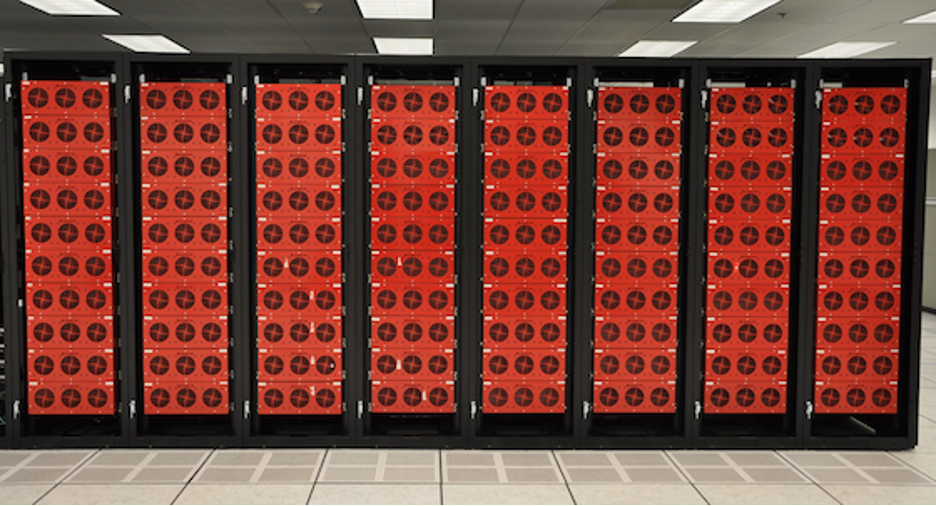
Brief reminder that servers look like this:
Only most of them aren’t as beautifully red as ours.
When you’re building a server, fundamentally what you’re doing is shoving a bunch of electrical components in a box. Yes, there are design choices about those boxes that help mitigate temperature, but just like a smaller room heating up more quickly than a warehouse, you are containing and concentrating a heat source.
We humans generate heat and need lights to see, so the folks who work in data centers have to be taken into account when considering the overall temperature of the data center. Check out these formulas or this nifty calculator for rough numbers (with the caveat that you should always consult an expert and monitor your systems when you’re talking about real data centers):
Heat produced by people = maximum number of people in the facility at one time x 100
Heat output of lighting = 2.0 x floor area in square feet or 21.53 x floor area in square meters
Also, your data center exists in the real world, and we haven’t (yet) learned to control the weather—so you also have to factor in fighting the external temperature when you’re bringing things back to ideal conditions. That’s led to a movement towards building data centers in new locations. It’s important to note that there are other reasons you might not want to move, however, including network infrastructure.
Accounting for people and the real world also means that there will be peak usage times, which is to say that even in a global economy, there are times when more people are asking to use their data (and their dryers, so if you’re reliant on a consumer power grid, you’ll also see the price of power spike). Aside from the cost, more people using their data = more processing = more power.
How Is Temperature Mitigated in Data Centers?
Cooling down your data center with fans, air conditioners, and water also uses power (and generates heat). Different methods of cooling use different amounts of power—water cooling in server doors vs. traditional high-capacity air conditioners, for example.
Talking about real numbers here gets a bit tricky. Data centers aren’t a standard size. As data centers get larger, the environment gets more complex, expanding the potential types of problems, while also increasing the net benefit of changes that might not have a visible impact in smaller data centers. It’s like any economy of scale: The field of “what is possible” is wider; rewards are bigger, and the relationship between change vs. impact is not linear. Studies have shown that creating larger data centers creates all sorts of benefits (which is an article in and of itself), and one of those specific benefits is greater power efficiency.
Most folks talk about the impact of different cooling technologies in a comparative way, i.e., we saw a 30% reduction in heat. And, many of the methods of mitigating temperature are about preventing the need to use power in the first place. For that reason, it’s arguably more useful to think about the total power usage of the system. In that context, it’s useful to know that a single fan takes x amount of power and produces x amount of heat, but it’s more useful to think of them in relation to the net change on the overall temperature bottom line. With that in mind, let’s talk about some tactics data centers use to reduce temperature.
Customizing and Monitoring the Facility
One of the best ways to keep temperature regulated in your data center is to never let it get hotter than it needs to be in the first place, and every choice you make contributes to that overall total. For example, when you’re talking about adding or removing servers from your pool, that reduces your IT power consumption and affects temperature.
There are a whole host of things that come down to data centers being a purpose-built space, and most of them have to do with ensuring healthy airflow based on the system you’ve designed to move hot air out and cold air in.
No matter what tactics you’re using, monitoring your data center environment is essential to keeping your system healthy. Some devices in your environment will come with internal indicators, like SMART stats on drives, and, of course, folks also set up sensors that connect to a central monitoring system. Even if you’ve designed a “perfect” system in theory, things change over time, whether you’re accounting for adding new capacity or just dealing with good old entropy.
Here’s a non-inclusive list of some of ways data centers customize their environments:
Raised Floors: This allows airflow or liquid cooling under the server rack in addition to the top, bottom, and sides.
Containment, or Hot and Cold Rows: The strategy here is to keep the hot side of your servers facing each other and the cold parts facing outward. That means that you can create a cyclical air flow with the exhaust strategically pulling hot air out of hot space, cooling it, then pushing the cold air over the servers.
Calibrated Vector Cooling: Basically, concentrated active cooling measures in areas you know are going to be hotter. This allows you to use fewer resources by cooling at the source of the heat instead of generally cooling the room.
Cable Management: Keeping cords organized isn’t just pretty, it also makes sure you’re not restricting airflow.
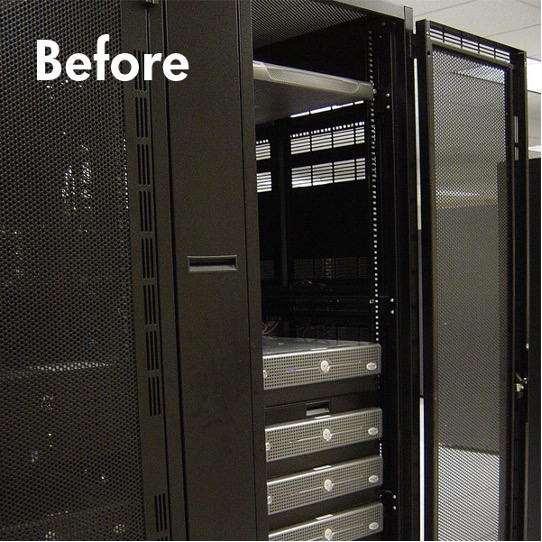
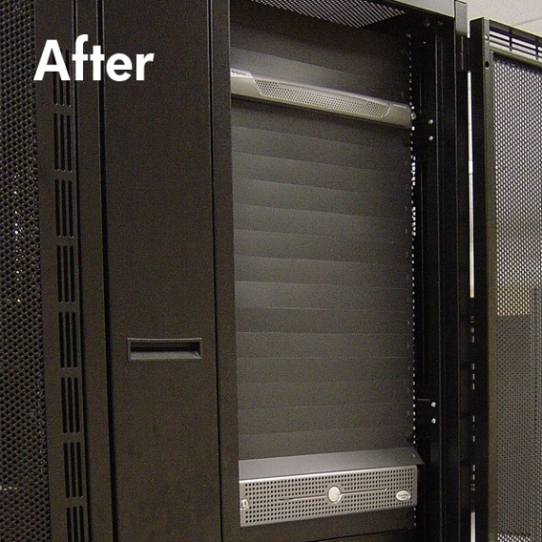
Blanking Panels: This is a fancy way of saying that you should plug up the holes between devices.
Why not both? Most data centers end up using a combination of air and water based cooling at different points in the overall environment. And, other liquids have led to some very exciting innovations. Let’s go into a bit more detail.
Air-Based Cooling
Air based cooling is all about understanding air flow and using that knowledge to extract hot air and move cold air over your servers.
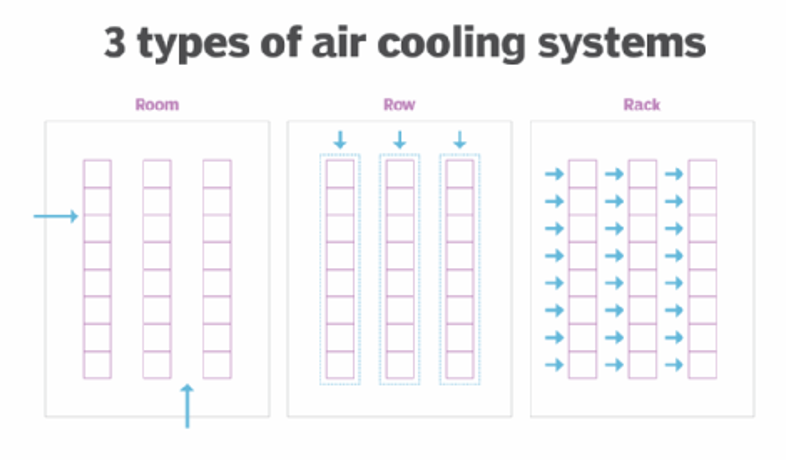
Air-based cooling is good up to a certain temperature threshold—about 20 kilowatts (kW) per rack. Newer hardware can easily reach 30kw or higher, and high processing workloads can take that even higher. That said, air-based cooling has benefitted by becoming more targeted, and people talk about building strategies based on room, row, or rack.
From here, it’s actually a pretty easy jump into water-based cooling. Water and other liquids are much better at transferring heat than air, about 50 to 1,000 times more, depending on the liquid you’re talking about. And, lots of traditional “air” cooling methods run warm air through a compressor (like in an air conditioner), which stores cold water and cools off the air, recirculating it into the data center. So, one fairly direct combination of this is the evaporative cooling tower:
Obviously water and electricity don’t naturally blend well, and one of the main concerns of using this method is leakage. Over time, folks have come up with some good, safe methods, designed around effectively containing the liquid. This increases the up-front cost, but has big payoffs for temperature mitigation. You find this methodology in rear door heat exchangers, which create a heat exchanger in—you guessed it—the rear door of a server, and direct-to-chip cooling, which contains the liquid into a plate, then embeds that plate directly in the hardware component.
So, we’ve got a piece of hardware, a server rack—the next step is the full data center turning itself into a heat exchange, and that’s when you get Nautilus—a data center built over a body of water.
(Other) Liquid-Based Cooling, or Immersion Cooling
With the same sort of daring thought process of the people who said, “I bet we can fly if we jump off this cliff with some wings,” somewhere along the way, someone said, “It would cool down a lot faster if we just dunked it in liquid.” Liquid-based cooling utilizes dielectric liquids, which can safely come in contact with electrical components. Single phase immersion uses fluids that don’t boil or undergo a phase change (think: similar to an oil), while two phase immersion uses liquids that boil at low temperatures, which releases heat by converting to a gas.
You’ll see components being cooled this way either in enclosed chassis, which can be used in rack-style environments, in open baths, which require specialized equipment, or a hybrid approach.
How Necessary Is This?
Let’s bring it back: we’re talking about all those technologies efficiently removing heat from a system because hotter environments break devices, which leads to downtime. And, we want to use efficient methods to remove heat because it means we can ask our devices to work harder without having to spend electricity to do it.
Recently, folks have started to question exactly how cool data centers need to be. Even allowing a few more degrees of tolerance can make a huge difference to how much time and money you spend on cooling. Whether it has longer term effects on the device performance is questionable—manufacturers are fairly opaque about data around how these standards are set, though exceeding recommended temperatures can have other impacts, like voiding device warranties.
Power, Infrastructure, Growth, and Sustainability
But the simple question of “Is it necessary?” is definitely answered “yes,” because power isn’t infinite. And, all this matters because improving power usage has a direct impact on both cost and long-term sustainability. According to a recent MIT article, the data centers now have a greater carbon footprint than the airline industry, and a single data center can consume the same amount of energy as 50,000 homes.
Let’s contextualize that last number, because it’s a tad controversial. The MIT research paper in question was published in 2022, and that last number is cited from “A Prehistory of the Cloud” by Tung-Hui Hu, published in 2006. Beyond just the sheer growth in the industry since 2006, data centers are notoriously reticent about publishing specific numbers when it comes to these metrics—Google didn’t release numbers until 2011, and they were founded in 1998.
Based on our 1MW = 200 homes metric the number from the MIT article number represents 250MW. One of the largest data centers in the world has a 650MW capacity. So, while you can take that MIT number with a grain of salt, you should also pay attention to market reports like this one—the aggregate numbers clearly show that power availability and consumption is one of the biggest concerns for future growth.
So, we have less-than-ideal reporting and numbers, and well-understood environmental impacts of creating electricity, and that brings us to the complicated relationship between the two factors. Costs of power have gone up significantly, and are fairly volatile when you’re talking about non-renewable energy sources. International agencies report that renewable energy sources are now the cheapest form of energy worldwide, but the challenge is integrating renewables into existing grids. While the U.S. power grid is reliable (and the U.S. accounts for half of the world’s hyperscale data center capacity), the Energy Department recently announced that the network of transmission lines may need to expand by more than two-thirds to carry that data nationwide—and invested $1.3 billion to make that happen.
What’s Next?
It’s easy to say, “It’s important that data centers stay online,” as we sort of glossed over above, but the true importance becomes clear when you consider what that data does—it keeps planes in the air, hospitals online, and so many other vital functions. Downtime is not an option, which leads us full circle to our introduction.
We (that is, we, humans) are only going to build more data centers. Incremental savings in power have high impact—just take a look at Google’s demand response initiative, which “shift[s] compute tasks and their associated energy consumption to the times and places where carbon-free energy is available on the grid.”
Which is all to say: this is an exciting time for innovation in the cloud, and many of the opportunities are happening below the surface, so to speak. Understanding how the fundamental principles of physics and compute work—now more than ever—is a great place to start thinking about what the future holds and how it will impact our world, technologically, environmentally, and otherwise. And, data centers sit at the center of that “hot” debate.
Човешкият чревен микробиом се изследва интензивно, в резултат на което познанията на учените за видовете микроорганизми, част от нашата храносмилателна система, се увеличават успоредно с усъвършенстването на метагеномните технологии. Чревният микробиом се състои от трилиони микроорганизми. Размножаването им започва веднага след раждането на човека, а промените в състава на микробиома се дължат на генетични фактори и на околната среда (хранителни навици, екологични фактори и др.). Тези промени водят до изменения в чревната пропускливост, храносмилането, метаболизма и имунния отговор. Възпалителните процеси са причина за развитието на стомашно-чревни заболявания, метаболитни и имунологични промени, дори и до невропсихиатрични разстройства.
Какво е това „микробиом“?
Чревният микробиом представлява популацията от микроорганизми, населяваща храносмилателния тракт на животните. При хората чревният микробиом се състои от хиляди микроорганизми, включително бактерии, бактериофаги (вируси, заразяващи бактериите) и еукариоти. В него има над 1500 вида, част от 50 различни типа микроорганизми. Доминиращите типове, заемащи 90% от чревния микробиом, са Bacteroidetes, Firmicutes, Proteobacteria, Fusobacteria, Tenericutes, Actinobacteria и Verrucomrobia. За разлика от стомаха и тънките черва, дебелото черво е населено от 1012 клетки на всеки грам чревна маса. Освен бактерии, в чревната флора има и гъби, протисти, археи и бактериофаги, но научната информация за тях е сравнително оскъдна. Микроорганизмите живеят в нашия микробиом с цел да ни предпазят от патогени, като произвеждат антимикробни вещества и засилват имунната система. Те имат роля в храносмилането, метаболизма, контролират размножаването и специализирането на епителните клетки, повлияват инсулиновата резистентност, дори и неврологичните функции. Нарушение в популациите, изграждащи чревния микробиом, би могло да доведе до редица заболявания, свързани с други органи в човешкото тяло.
Какво прави чревният микробиом за нашето тяло?
Той разгражда (метаболизира) храната, която приемаме, до биоактивни хранителни елементи. Бактериите разграждат несмилаеми въглехидрати, като целулоза, нишесте, пектин, олигозахариди и лигнин до късоверижни мастни киселини (оцетна, пропионова и бутирова киселина). Тези метаболитни продукти се дължат основно на работата на Firmicutes, Bacteroidetes и някои анаеробни чревни микроорганизми. Чревният микробиом участва и в синтеза на витамини – биотин, тиамин, кобаламин, рибофлавин, витамин B, витамин K и др. Централната нервна система се повлиява от чревния микробиом посредством някои неврохимични вещества, които микроорганизмите произвеждат. Освен това той има роля и при синтезирането на жлъчни киселини, холестерол и конюгирани мастни киселини.
Съществува и връзка между мозъка и чревния микробиом. Късоверижните мастни киселини, които са негов продукт, засягат кръвно-мозъчната бариера (blood-brain barrier – BBB) чрез произвеждането на специфични протеини, които се намират в т.нар. бариера между клетките (tight junction). Циркулиращите късоверижни мастни киселини, произведени от чревния микробиом, засягат целостта на кръвно-мозъчната бариера чрез увеличаване на производството на въпросните протеини. По този начин се увеличава плътността на BBB и се предотвратява навлизането на нежелани метаболити в мозъчната тъкан. Чревният микробиом произвежда и липопротеини и липополизахариди, които стимулират освобождаването на цитокини от клетките на имунната система. Тези цитокини преминават през кръвно-мозъчната бариера и активират неврони, което води до промени в настроението и поведението.
Генетика и вредни навици
Открити са асоциации между микробиома и гените, свързани с вродения имунитет на гостоприемника: определен вид рецептори (pattern recognition receptors) разпознават микроорганизмите в червата и модулират състава на микробиома. Учени са направили изследване на фекален микробиом на индивиди със или без генетична връзка. Еднояйчни близнаци, които живеят разделени от години, имат почти идентични микробиомни профили, а между партньори, живеещи заедно, със сходни хранителни навици, няма значителни прилики.
Балансираният хранителен режим има основна роля в модулирането на чревния микробиом. При поддържане както на полезни, така и на вредни хранителни навици се увеличава или намалява количеството на някои видове микроорганизми. Чревният микробиом продължава своето развитие след детска възраст и начинът на хранене структурира разнообразието на чревните микроорганизми. При вегетарианските диети например доминират Firmicutes и Bacteroidetes. Бариерната функция на чревната лигавица се поддържа чрез консумирането на фибри. Богатата на фибри диета регулира нивата на глюкозата. При хранителен режим, богат на протеини и мазнини, доминантни са Bacteroides, Bilophila и Alistipes, а Firmicutes са потиснати, понижен е имунитетът, а чувствителността към инфекции се повишава, както и рискът от развитие на метаболитни заболявания.
Активният начин на живот (редовните физически упражнения) също влияе на чревния микробиом. Установено е, че спортистите имат по-малко количество Bacteroidetes и по-големи количества Firmicutes в сравнение с хора, които не спортуват. Спортистите имат и по-ниски нива на хронични възпалителни процеси.
Антибиотиците, които унищожават патогените, са нож с две остриета, тъй като убиват и полезните микроорганизми, нарушават чревния микробиом и това води до т.нар. дисбиоза (промяната на микробния състав). Конкретните ефекти от приемането на антибиотици върху чревния микробиом зависят от вида, дозировката и продължителността на приема им. При продължителен прием на клиндамицин например някои видове от рода Bacteroides не се възстановяват. Лечението на Helicobacter pylori със същия антибиотик води до намаляване на актинобактериите. Резултат от приема на ципрофлоксацин е намаляването на Ruminococcus, които се възстановяват половин година след прекратяване на лечението.
Чревният микробиом и някои заболявания
Дисбиозата крие риск от развитие на различни заболявания. Синдромът на раздразненото черво(Irritable bowel syndrome – IBS) се характеризира с коремна болка, метеоризъм, запек или диария. Нарушенията в чревния микробиом, свързани с това заболяване, са количествени и качествени и се отнасят към комуникацията между червата и мозъка. Възпалителното заболяване на червата (Inflammatory bowel disease – IBD) се счита за хетерогенна група от хронични имуномедиирани възпалителни заболявания, засягащи храносмилателната система. Дължи се както на генетични фактори, така и на фактори на околната среда, като стрес, нарушения на съня, прием на антибиотици, диета и тютюнопушене. Двете най-значими заболявания от тази група са улцерозен колит и болест на Крон.
При пациентите с IBD е засегнат слузният слой на храносмилателния тракт, което води до възникването на възпалителни процеси. При IBD е установено намаляването на Bacteroidetes и Firmicutes, Faecalibacterium prausnitzii и Roseburia.
Нарушенията на оста чревен микробиом – мозък предразполагат както към неврологични (аутизъм, болест на Алцхаймер), така и към психиатрични заболявания, като тревожно разстройство и депресия. Дисбиозата, причинена от патогенни бактерии, може да изостри безпокойството. Инфекцията с Campylobacter jejuni повишава тревожността чрез активиране на c-Fos протеини, маркери за невронно активиране, без да повишава нивата на провъзпалителни цитокини. Депресията е свързана с модификацията на чревната мозъчна ос, която причинява възпаление. Когато чревната пропускливост се промени и целостта на бариерата е нарушена, бактерии като Enterobacteriaceae се преместват през бариерата и възпалителният процес се активира.
Пробиотиците и терапевтичните стратегии за възстановяване на баланса
Пробиотиците са живи микроорганизми, които се считат за безопасни и подобряват здравословния живот на хората, когато се приемат в адекватно количество. Въпреки широко разпространената употреба на пробиотици, приложението им трябва да бъде регулирано. Генното инженерство е възможен начин за създаване на ново поколение по-целенасочени пробиотици. Рекомбинантните бактерии, или бактерии, модифицирани с генно инженерство, изпълняват специфични функции в стомашно-чревния тракт, като например откриване на специфични сигнали и производство на някои терапевтични молекули.
Пребиотиците (например целулоза, соя, олигозахариди, сурови овесени ядки, лигнин и корени от цикория) водят до специфични промени в организацията и функциите на чревния микробиом. Те подобряват целостта на чревната мукозна бариера, повишават имунитета на лигавицата, понижават рН и производството на късоверижни мастни киселини и инхибират растежа на патогенни микроорганизми. Синбиотиците са синергични комбинации от про- и пребиотици. Терминът е специално запазен за продукти, в които пребиотичните съединения селективно благоприятстват пробиотичните организми. Тъй като съставът на чревната микробиота е сравним с пръстовия отпечатък и има различни нива и видове дисбиоза, правилното използване на синбиотиците трябва да се обмисли преди избора за лечение на пациента.
При трансплантация на фекален микробиом фекални микроорганизми от здрави хора се трансплантират на пациенти с чревни инфекции, за да се възстановят популацията от микроорганизми и функциите на чревния микробиом. Използва се за лечение на синдром на раздразненото черво, както и на възпалителни заболявания на червата, инсулинова резистентност, затлъстяване, аутизъм, диария, алергични разстройства, метаболитен синдром, рак на дебелото черво, невропсихиатрични състояния и болест на Паркинсон.
В друг терапевтичен подход се използват бактериофагите. Фагите имат голям терапевтичен потенциал. Може да се използват за антимикробни цели или за модулиране на състава на популациите от микроорганизми.
Промяната в състава и функцията на чревния микробиом има пряк ефект върху човешкото здраве и играе важна роля за възникването на заболявания. Очаква се комбинирането на различни изследователски дисциплини и използването на нови технологии за изследването на микробиома да позволят преодоляването на ограниченията, пред които са изправени настоящите стратегии за справяне със здравните проблеми, свързани със съвременния начин на живот.
Before loading a BPF program, the kernel must verify that the program is
safe to run; among other things, that verification includes ensuring that
the program will terminate within a bounded time. That requirement has
long made writing loops in BPF a challenging task. The situation has
improved over the years for some types of loops, but others — including
linked-list traversal — are still awkward in BPF programs. A new set of
BPF primitives aims to make life easier for this use case through the
installation of what can be seen as a sort of circuit breaker.
The collective thoughts of the interwebz
Manage Consent
To provide the best experiences, we use technologies like cookies to store and/or access device information. Consenting to these technologies will allow us to process data such as browsing behavior or unique IDs on this site. Not consenting or withdrawing consent, may adversely affect certain features and functions.
Functional
Always active
The technical storage or access is strictly necessary for the legitimate purpose of enabling the use of a specific service explicitly requested by the subscriber or user, or for the sole purpose of carrying out the transmission of a communication over an electronic communications network.
Preferences
The technical storage or access is necessary for the legitimate purpose of storing preferences that are not requested by the subscriber or user.
Statistics
The technical storage or access that is used exclusively for statistical purposes.The technical storage or access that is used exclusively for anonymous statistical purposes. Without a subpoena, voluntary compliance on the part of your Internet Service Provider, or additional records from a third party, information stored or retrieved for this purpose alone cannot usually be used to identify you.
Marketing
The technical storage or access is required to create user profiles to send advertising, or to track the user on a website or across several websites for similar marketing purposes.


 Rupesh Tiwari, an AWS Solutions Architect, specializes in modernizing applications with a focus on data analytics, OpenSearch, and generative AI. He’s known for creating scalable, secure solutions that leverage cloud technology for transformative business outcomes, also dedicating time to community engagement and sharing expertise.
 Muthu Pitchaimani is a Search Specialist with Amazon OpenSearch Service. He builds large-scale search applications and solutions. Muthu is interested in the topics of networking and security, and is based out of Austin, Texas.