Tag Archives: Cloudflare Zero Trust

Cloudflare partners with Microsoft to protect joint customers with a Global Zero Trust Network

Post Syndicated from Abhi Das original https://blog.cloudflare.com/cloudflare-partners-with-microsoft-to-protect-joint-customers-with-global-zero-trust-network/
Cloudflare partners with Microsoft to protect joint customers with a Global Zero Trust Network

Cloudflare partners with Microsoft to protect joint customers with a Global Zero Trust Network

As a company, we are constantly asking ourselves what we can do to provide more value to our customers, including integrated solutions with our partners. Joint customers benefit from our integrations below with Azure Active Directory by:

First, centralized identity and access management via Azure Active Directory which provides single sign-on, multifactor authentication, and access via conditional authentication.

Second, policy oriented access to specific applications using Cloudflare Access—a VPN replacement service.

Third, an additional layer of security for internal applications by connecting them to Cloudflare global network and not having to open them up to the whole Internet.
Cloudflare partners with Microsoft to protect joint customers with a Global Zero Trust Network

Let’s step back a bit.

Why Zero Trust?

Companies of all sizes are faced with an accelerating digital transformation of their IT stack and an increasingly distributed workforce, changing the definition of the security perimeter. We are moving away from the castle and moat model to the whole Internet, requiring security checks for every user accessing every resource. As a result, all companies, especially those whose use of Azure’s broad cloud portfolio is increasing, are adopting Zero Trust architectures as an essential part of their cloud and SaaS journey.

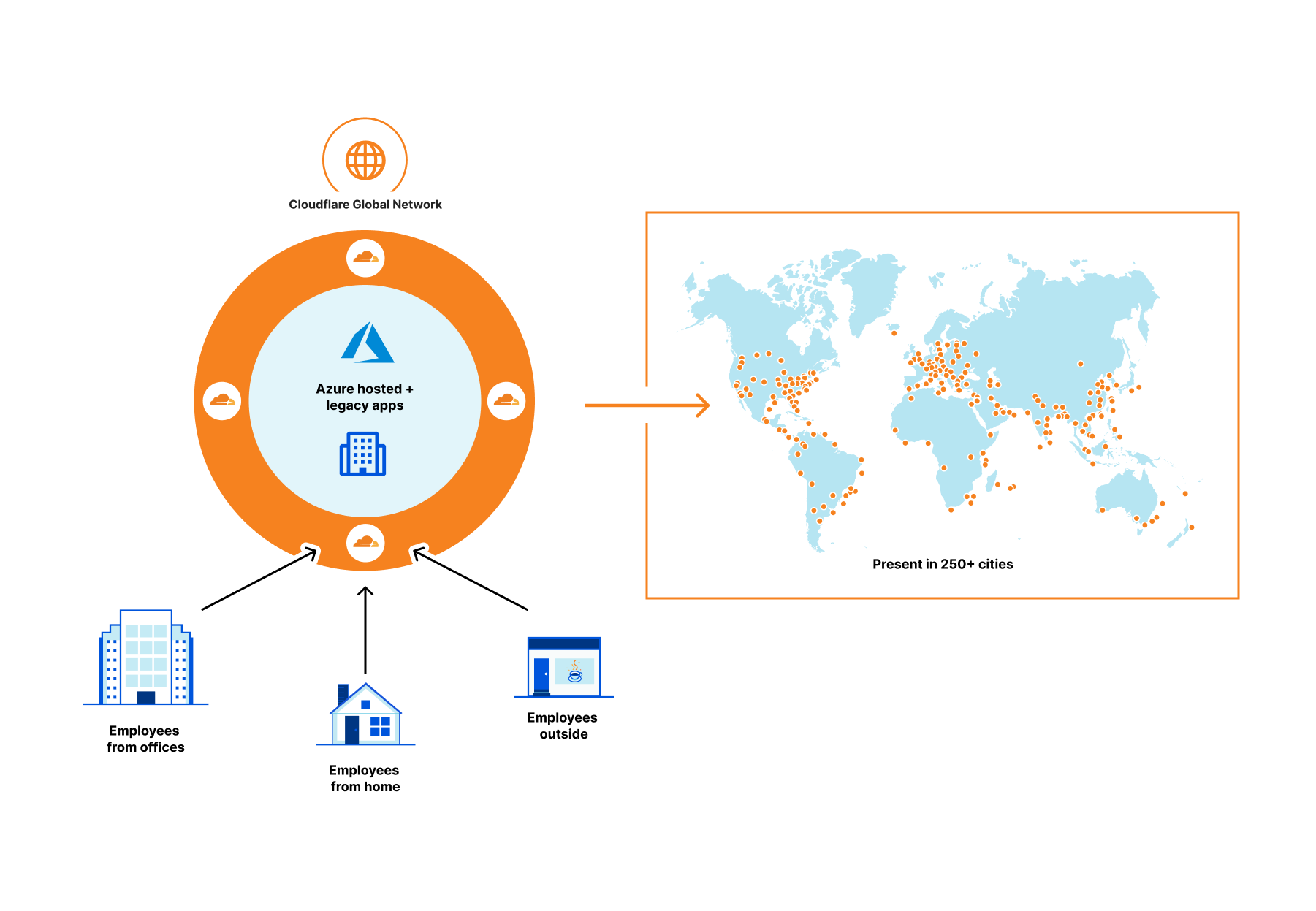
Cloudflare Access provides secure access to Azure hosted applications and on-premise applications. Also, it acts as an on-ramp to the world’s fastest network to Azure and the rest of the Internet. Users connect from their devices or offices via Cloudflare’s network in over 250 cities around the world. You can use Cloudflare Zero Trust on that global network to ensure that every request to every resource is evaluated for security, including user identity. We are excited to bring this secure global network on-ramp to Azure hosted applications and on-premise applications.

Also, performance is one of our key advantages in addition to security. Cloudflare serves over 32 million HTTP requests per second, on average, for the millions of customers who secure their applications on our network. When those applications do not run on our network, we can rely on our own global private backbone and our connectivity with over 10,000 networks globally to connect the user.

We are excited to bring this global security and performance perimeter network as our Cloudflare Zero Trust product for your Azure hosted applications and on-premises applications.

Cloudflare Access: a modern Zero Trust approach

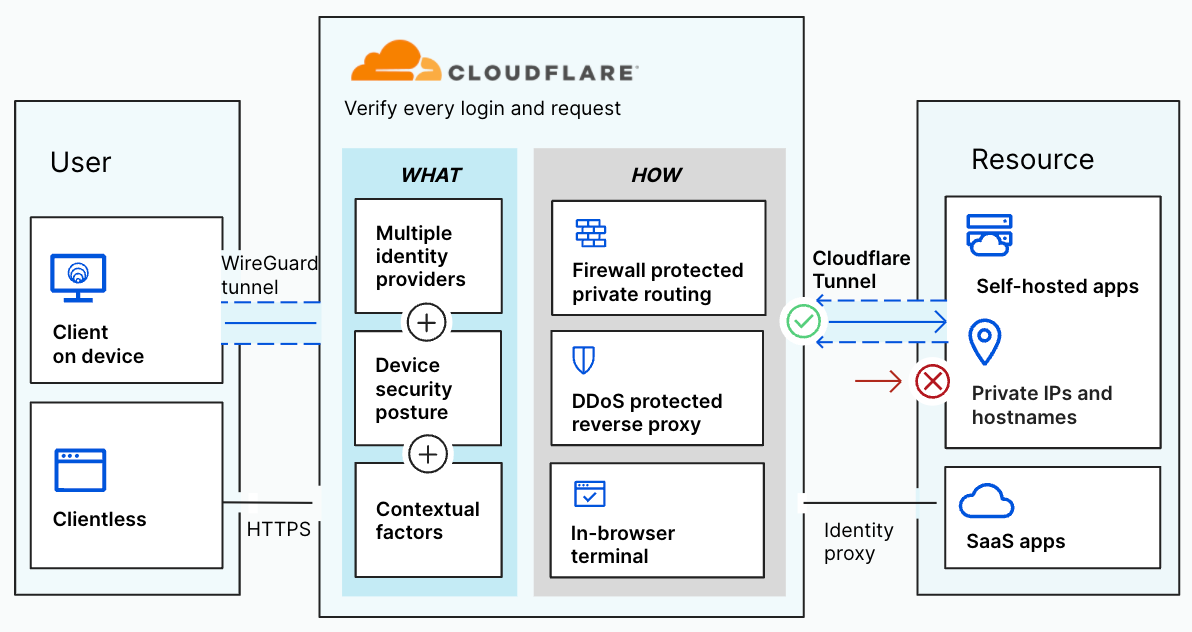
Cloudflare’s Zero Trust solution Cloudflare Access provides a modern approach to authentication for internally managed applications. When corporate applications on Azure or on-premise are protected with Cloudflare Access, they feel like SaaS applications, and employees can log in to them with a simple and consistent flow. Cloudflare Access acts as a unified reverse proxy to enforce access control by making sure every request is authenticated, authorized, and encrypted.

Identity: Cloudflare Access integrates out of the box with all the major identity providers, including Azure Active Directory, allowing use of the policies and users you already created to provide conditional access to your web applications. For example, you can use Cloudflare Access to ensure that only company employees and no contractors can get to your internal kanban board, or you can lock down the SAP finance application hosted on Azure or on-premise.

Devices: You can use TLS with Client Authentication and limit connections only to devices with a unique client certificate. Cloudflare will ensure the connecting device has a valid client certificate signed by the corporate CA, and authenticate user credentials to grant access to an internal application.

Additional security: Want to use Cloudflare Access in front of an internal application but don’t want to open up that application to the whole Internet? For additional security, you can combine Access with Cloudflare Tunnel. Cloudflare Tunnel will connect from your Azure environment directly to Cloudflare’s network, so there is no publicly accessible IP.
Cloudflare partners with Microsoft to protect joint customers with a Global Zero Trust Network

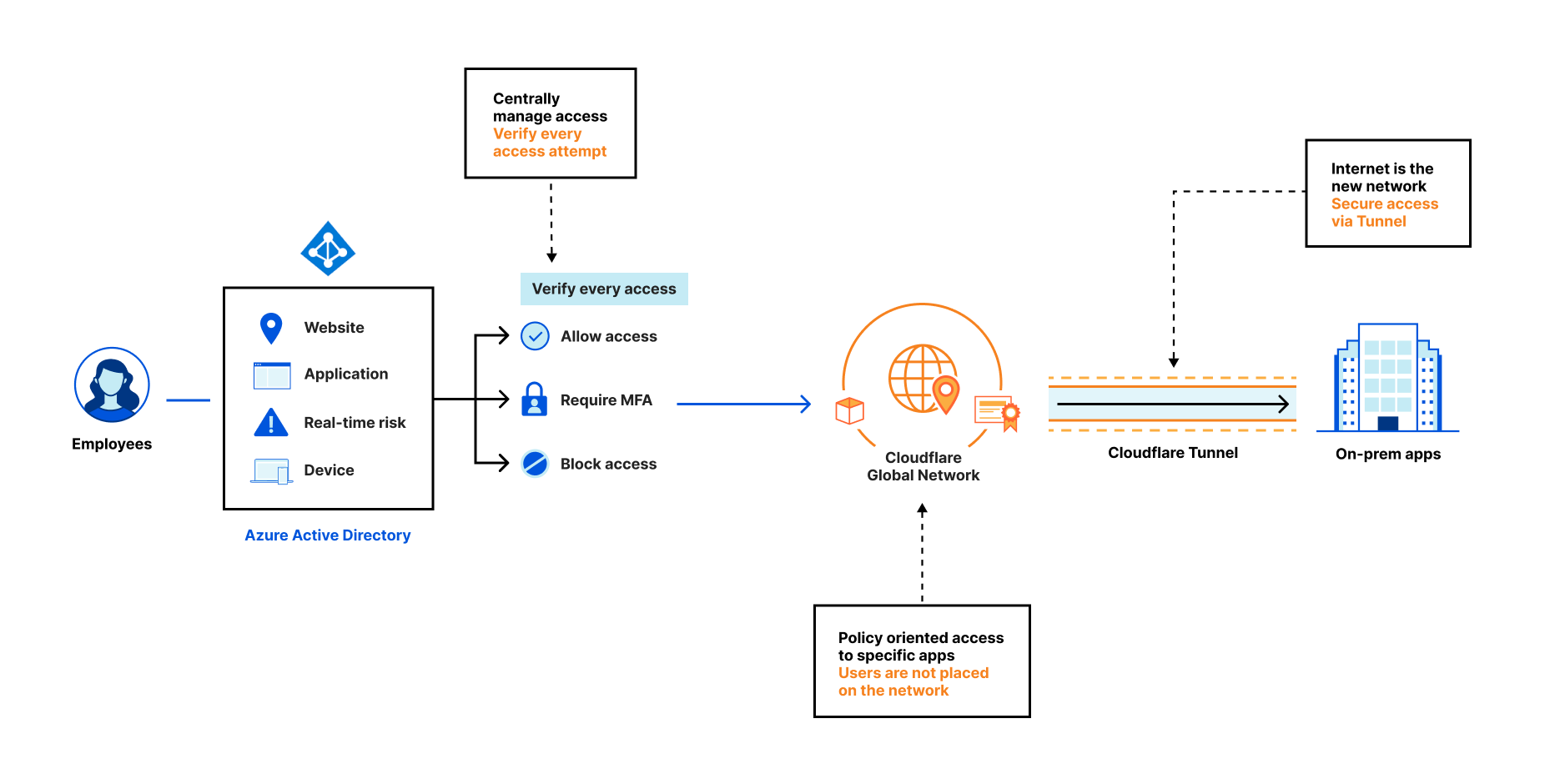
Secure both your legacy applications and Azure hosted applications via Azure AD and Cloudflare Access jointly

For on-premise legacy applications, we are excited to announce that Cloudflare is an Azure Active Directory secure hybrid access partner. Azure AD secure hybrid access enables customers to centrally manage access to their legacy on-premise applications using SSO authentication without incremental development. Starting today, joint customers can easily use Cloudflare Access solution as an additional layer of security with built-in performance, in front of their legacy applications.
Cloudflare partners with Microsoft to protect joint customers with a Global Zero Trust Network

Traditionally for on-premise applications, customers have to change their existing code or add additional layers of code to integrate Azure AD or Cloudflare Access–like capabilities. With the help of Azure Active Directory secure hybrid access, customers can integrate these capabilities seamlessly without much code changes. Once integrated, customers can take advantage of the below Azure AD features and more:

  1. Multi-factor authentication (MFA)
  2. Single sign-on (SSO)
  3. Passwordless authentication
  4. Unified user access management
  5. Azure AD Conditional Access and device trust

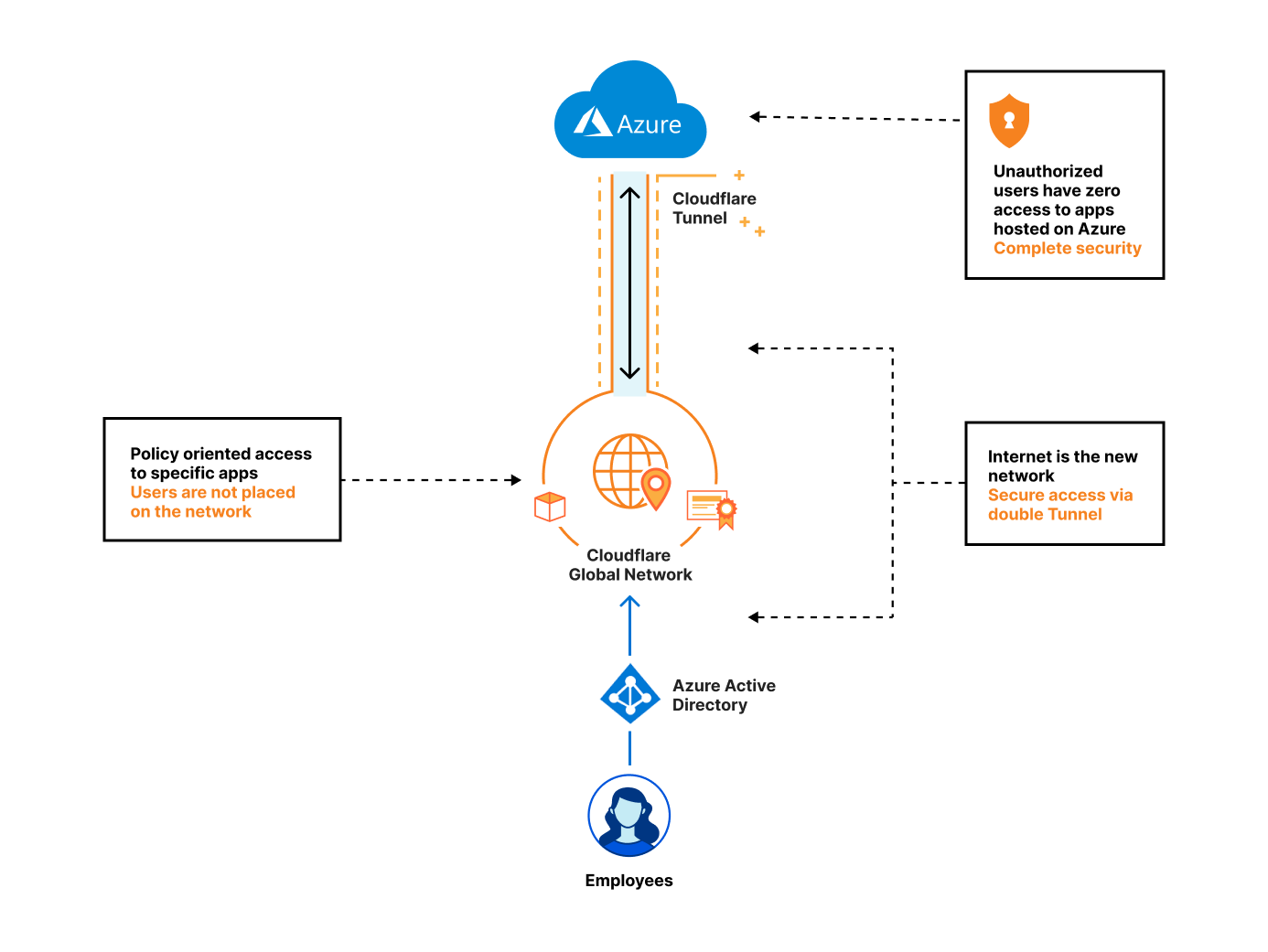
Very similarly, the Azure AD and Cloudflare Access combo can also be used to secure your Azure hosted applications. Cloudflare Access enables secure on-ramp to Azure hosted applications or on-premise applications via the below two integrations:
Cloudflare partners with Microsoft to protect joint customers with a Global Zero Trust Network

1. Cloudflare Access integration with Azure AD:

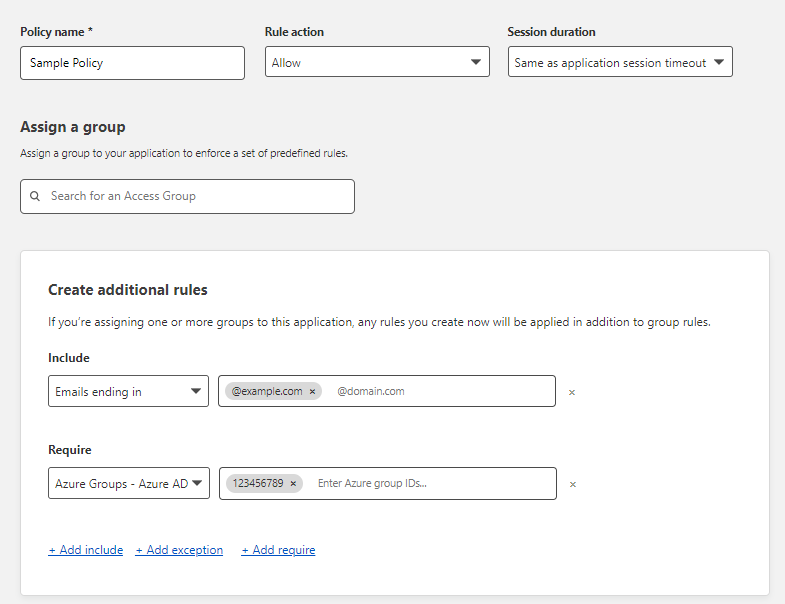
Cloudflare Access is a Zero Trust Network Access (ZTNA) solution that allows you to configure precise access policies across their applications. You can integrate Microsoft Azure Active Directory with Cloudflare Zero Trust and build rules based on user identity, group membership and Azure AD Conditional Access policies. Users will authenticate with their Azure AD credentials and connect to Cloudflare Access. Additional policy controls include Device Posture, Network, Location and more. Setup typically takes less than a few hours!

2. Cloudflare Tunnel integration with Azure:

Cloudflare Tunnel can expose applications running on the Microsoft Azure platform. See guide to install and configure Cloudflare Tunnel. Also, a prebuilt Cloudflare Linux image exists on the Azure Marketplace. To simplify the process of connecting Azure applications to Cloudflare’s network, deploy the prebuilt image to an Azure resource group. Cloudflare Tunnel is now available on Microsoft’s Azure marketplace.

“The hybrid work environment has accelerated the cloud transition and increased the need for CIOs everywhere to provide secure and performant access to applications for their employees. This is especially true for self-hosted applications. Cloudflare’s global network security perimeter via Cloudflare Access provides this additional layer of security together with Azure Active Directory to enable employees to get work done from anywhere securely and performantly.” said David Gregory, Principal Program Manager
– Microsoft Azure Active Directory

Conclusion

Over the last ten years, Cloudflare has built one of the fastest, most reliable, most secure networks in the world. You now have the ability to use that network as a global security and performance perimeter to your Azure hosted applications via the above integrations, and it is easy.

What’s next?

In the coming months, we will be further strengthening our integrations with Microsoft Azure allowing customers to better implement our SASE perimeter.

If you’re using Cloudflare Zero Trust products today and are interested in using this integration with Azure, please visit our above developer documentation to learn about how you can enable it. If you want to learn more or have additional questions, please fill out the form or get in touch with your Cloudflare CSM or AE, and we’ll be happy to help you.
Cloudflare and CrowdStrike partner to give CISOs secure control across devices, applications, and corporate networks

Post Syndicated from Deeksha Lamba original https://blog.cloudflare.com/cloudflare-crowdstrike-partnership/

Cloudflare and CrowdStrike partner to give CISOs secure control across devices, applications, and corporate networks

Today, we are very excited to announce multiple new integrations with CrowdStrike. These integrations combine the power of Cloudflare’s expansive network and Zero Trust suite, with CrowdStrike’s Endpoint Detection and Response (EDR) and incident remediation offerings.

Cloudflare and CrowdStrike partner to give CISOs secure control across devices, applications, and corporate networks

At Cloudflare, we believe in making our solutions easily integrate with the existing technology stack of our customers. Through our partnerships and integrations, we make it easier for our customers to use Cloudflare solutions jointly with that of partners, to further strengthen their security posture and unlock more value. Our partnership with CrowdStrike is an apt example of such efforts.

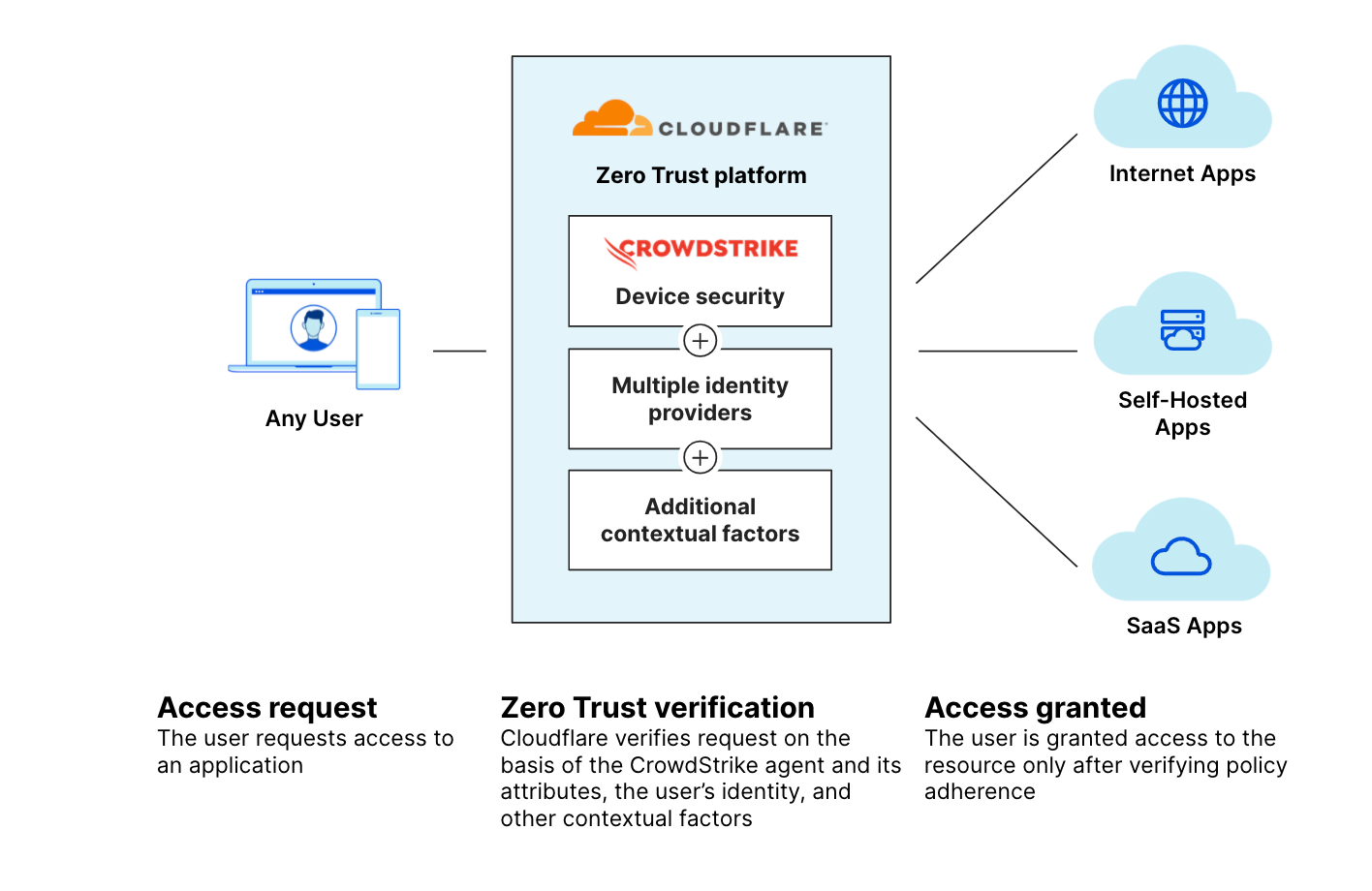
Together, Cloudflare and CrowdStrike are working to simplify the adoption of Zero Trust for IT and security teams. With this expanded partnership, joint customers can identify, investigate, and remediate threats faster through multiple integrations:

First, by integrating Cloudflare’s Zero Trust services with CrowdStrike Falcon Zero Trust Assessment (ZTA), which provides continuous real-time device posture assessments, our customers can verify users’ device posture before granting them access to internal or external applications.

Second, we joined the CrowdXDR Alliance in December 2021 and are partnering with CrowdStrike to share security telemetry and other insights to make it easier for customers to identify and mitigate threats. Cloudflare’s global network spans more than 250 cities in over 100 countries, blocking an average of 76 billion cyber threats each day. This provides customers with unparalleled insights, helping security teams better protect their organization. By joining the CrowdXDR Alliance, we will be able to use security signals from Cloudflare’s global network with CrowdStrike’s leading endpoint protection to help mutual customers stop cyber attacks anywhere in their network.

Third, CrowdStrike is one of Cloudflare’s incident response partners, providing rapid and effective support. CrowdStrike’s incident response team deals with active under attack situations day in, day out — helping customers mitigate the attack and get their web property and network back online. Our partnership with CrowdStrike enables rapid remediation of under attack scenarios to safeguard organizations from adversaries.

“The speed in which a company is able to identify, investigate and remediate a threat heavily determines how it will fare in the end. Our partnership with Cloudflare provides companies the ability to take action rapidly and contain exposure at the time of an attack, enabling them to get back on their feet and return to business as usual as quickly as possible.”
Thomas Etheridge, Senior Vice President, CrowdStrike Services

CrowdStrike’s endpoint security meets Cloudflare’s Zero Trust Services

Cloudflare and CrowdStrike partner to give CISOs secure control across devices, applications, and corporate networks

Before we get deep into how the integration works, let’s first recap Cloudflare’s Zero Trust Services.

Cloudflare Access and Gateway

Cloudflare Access determines if a user should be allowed access to an application or not. It uses our global network to check every request or connection for identity, device posture, location, multifactor method, and many more attributes to do so. Access also logs every request and connection — providing administrators with high-visibility. The upshot of all of this: it enables customers to deprecate their legacy VPNs.

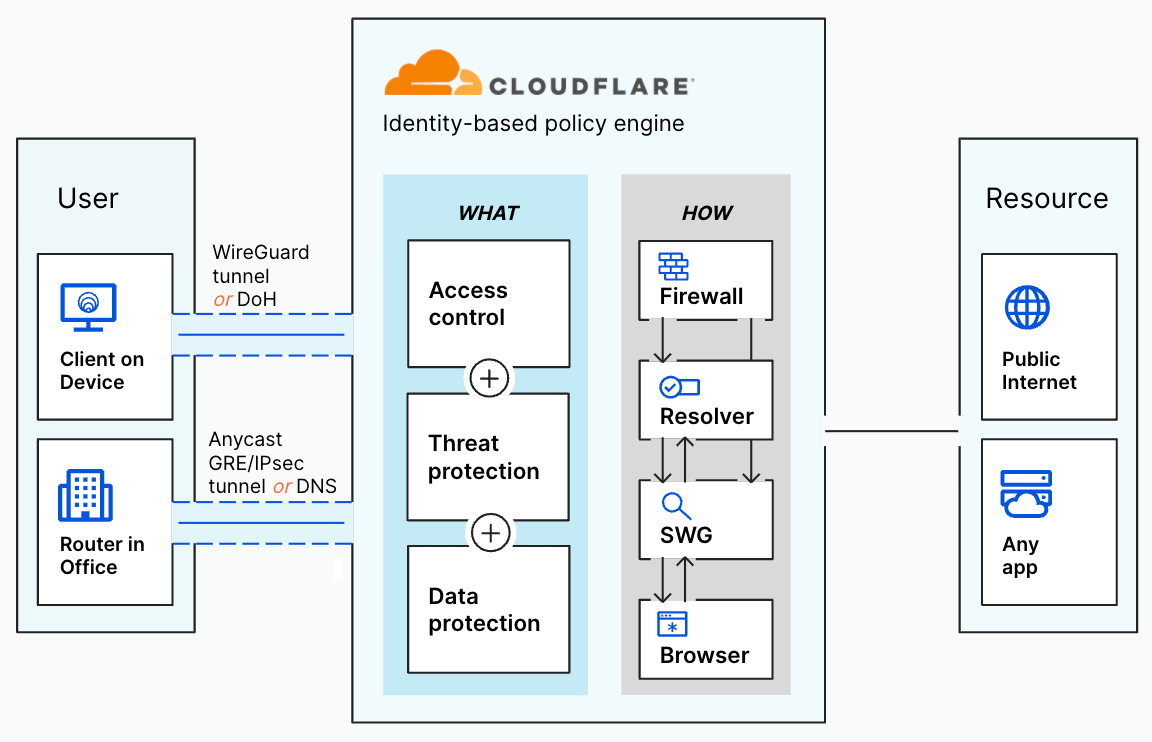
Cloudflare Gateway protects users as they connect to the rest of the Internet. Instead of back hauling traffic to a centralized location, users connect to a nearby Cloudflare data center where we apply one or more layers of security, filtering, and logging, before accelerating their traffic to its final destination.

Zero Trust Integration with CrowdStrike

Cloudflare’s customers can now build Access and Gateway policies based on the presence of a CrowdStrike agent at the endpoint. In conjunction with our Zero Trust client, we are able to leverage the enhanced telemetry that CrowdStrike provides surrounding a user’s device.

CrowdStrike’s Zero Trust Assessment (ZTA) delivers continuous real-time security posture assessments across all endpoints in an organization regardless of the location, network or user. The ZTA scores enable enforcement of conditional policies based on device health and compliance checks to mitigate risks. These policies are evaluated each time a connection request is made, making the conditional access adaptive to the evolving condition of the device.

With this integration, organizations can build on top of their existing Cloudflare Access and Gateway policies ensuring that a minimum ZTA score or version has been met before a user is granted access. Because these policies work across our entire Zero Trust platform, organizations can use these to build powerful rules invoking Browser Isolation, tenant control, antivirus or any part of their Cloudflare deployment.

Cloudflare and CrowdStrike partner to give CISOs secure control across devices, applications, and corporate networks

“The CrowdStrike Falcon platform secures customers through verified access controls, helping customers reduce their attack surface and simplify, empower and accelerate their Zero Trust journey. By expanding our partnership with Cloudflare, we are making it easier for joint customers to strengthen their Zero Trust security posture across all endpoints and their entire corporate network.”
Michael Sentonas, Chief Technology Officer, CrowdStrike

How the integration works

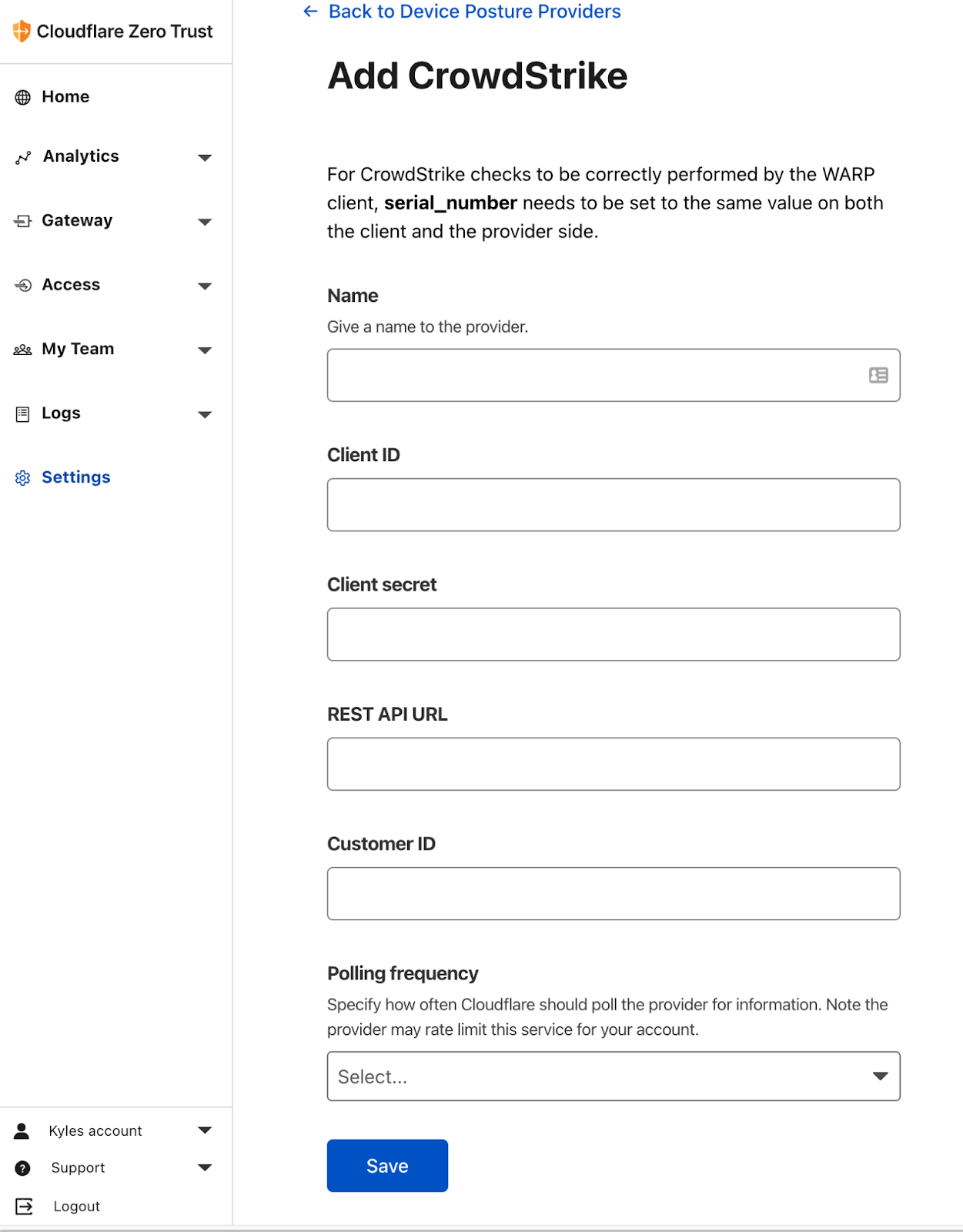
Customers using our Zero Trust suite can add CrowdStrike as a device posture provider in the Cloudflare Zero Trust dashboard under Settings → Devices → Device Posture Providers. The details required from the CrowdStrike dashboard include: ClientID, Client Secret, REST API URL, and Customer ID.

Cloudflare and CrowdStrike partner to give CISOs secure control across devices, applications, and corporate networks

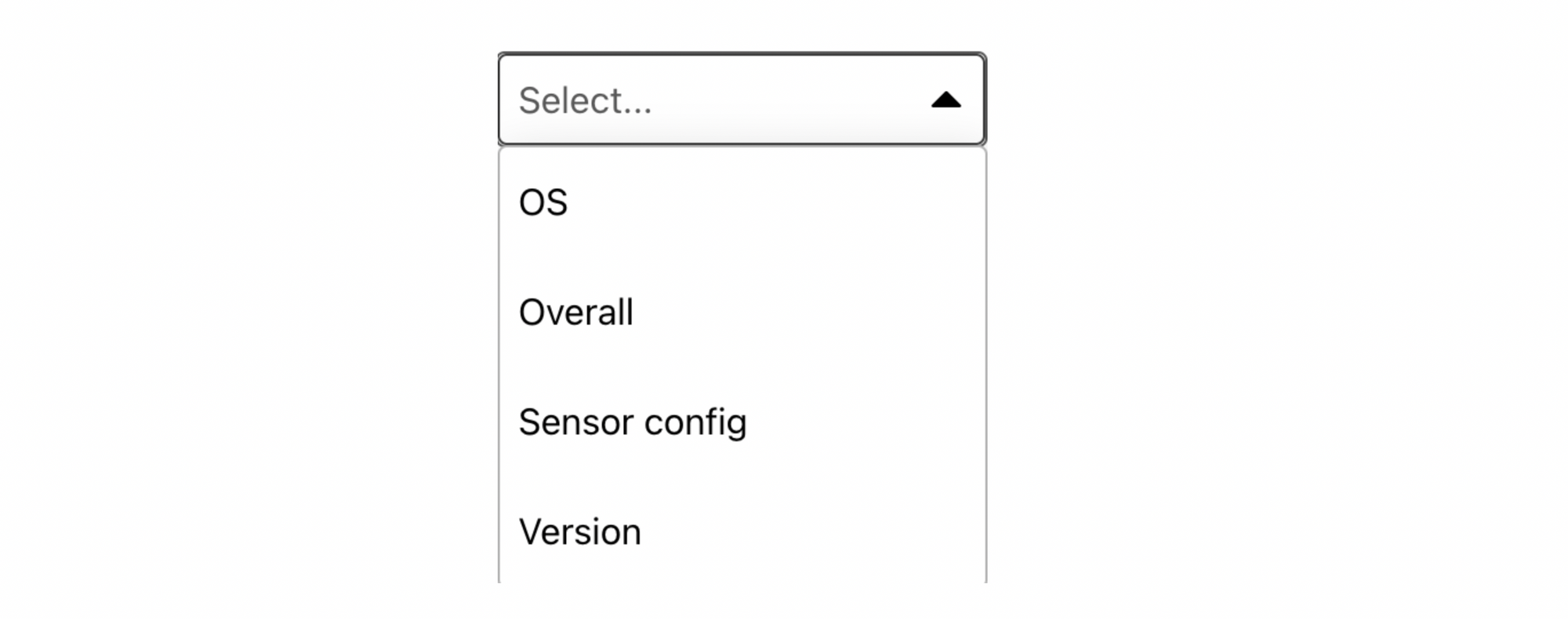
After creating the CrowdStrike Posture Provider, customers can create specific device posture checks requiring users’ devices to meet a certain threshold of ZTA scores.

Cloudflare and CrowdStrike partner to give CISOs secure control across devices, applications, and corporate networks

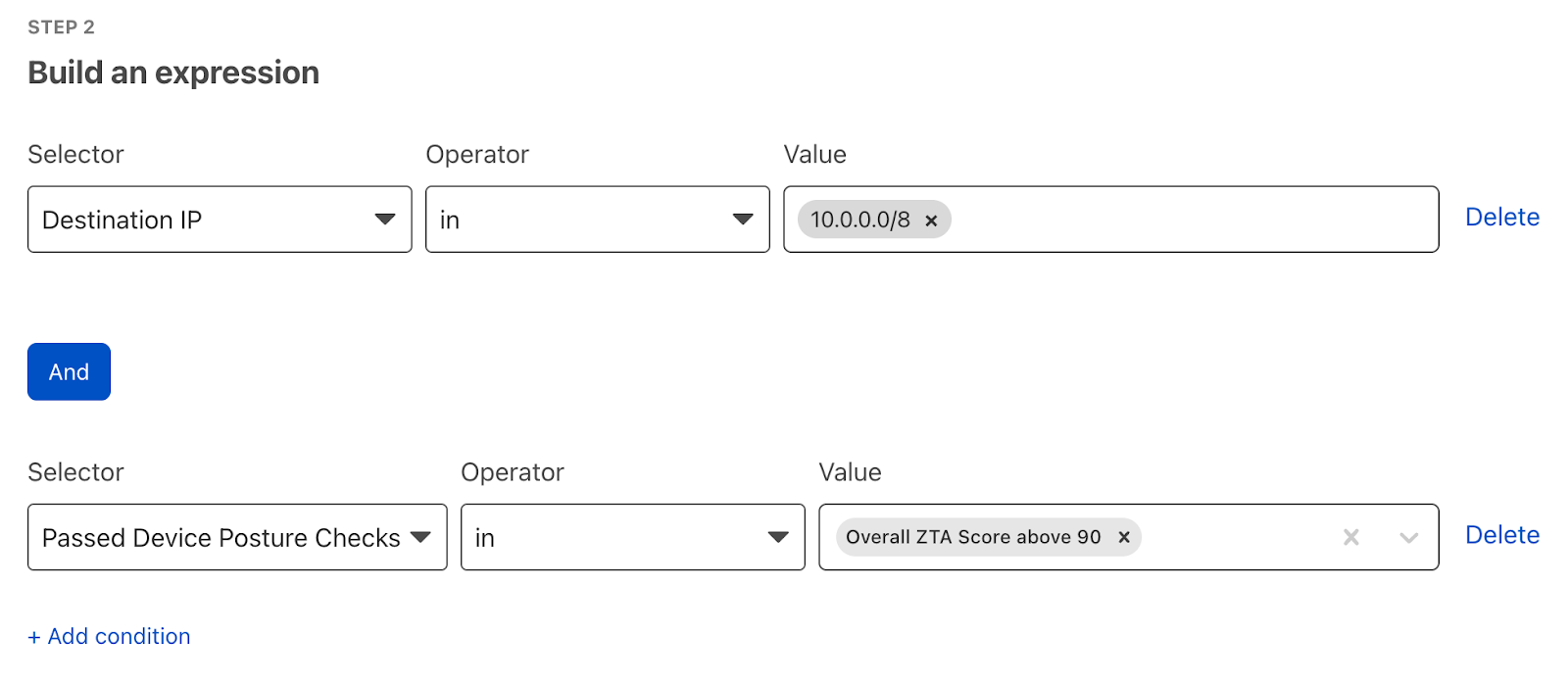
These rules can now be used to create conditional Access and Gateway policies to allow or deny access to applications, networks, or sites. Administrators can choose to block or isolate users or user groups with malicious or insecure devices.

Cloudflare and CrowdStrike partner to give CISOs secure control across devices, applications, and corporate networks

What comes next?

In the coming months, we will be further strengthening our integrations with CrowdStrike by allowing customers to correlate their Cloudflare logs with Falcon telemetry, for timely detection and mitigation of sophisticated threats.
If you’re using Cloudflare Zero Trust products today and are interested in using this integration with CrowdStrike, please visit our documentation to learn about how you can enable it. If you want to learn more or have additional questions, please fill out the form or get in touch with your Cloudflare CSM or AE, and we’ll be happy to help you.
Shields up: free Cloudflare services to improve your cyber readiness

Post Syndicated from James Allworth original https://blog.cloudflare.com/shields-up-free-cloudflare-services-to-improve-your-cyber-readiness/

Shields up: free Cloudflare services to improve your cyber readiness

Since our founding, Cloudflare’s mission has been to “help build a better Internet,” and we take it to heart. It used to be that the services required to adequately secure an online presence were only available to the largest of enterprises — organizations big enough to afford both the technology itself and the teams to manage it.

We’ve worked hard over the years to level the playing field. This has meant making more and more of the essential tools for protecting an online presence available to as many people as possible. Cloudflare offers unmetered DDoS protection — for free. We were the first to introduce SSL at scale — for free. And it’s not just protection for your external-facing infrastructure: we have a free Zero Trust plan that enables teams to protect their internal-facing infrastructure, too.

These types of tools have always been important for the billions of people on the Internet. But perhaps never as important as they’ve become this week.

Concurrent with the Russian invasion of Ukraine, we’ve seen increasing cyberattacks on the Internet, too. Governments around the world are encouraging organizations to go “shields up” — with warnings coming from the United States’ Cybersecurity & Infrastructure Security Agency, the United Kingdom’s National Cyber Security Center, and Japan’s Ministry of Economy, Trade, and Industry, amongst others.

Not surprisingly, we’ve been fielding many questions from our customers about what they should be doing to increase their cyber resilience. But helping to build a better Internet is broader than just helping our customers. We want everyone to be safe and secure online.

So: what should you do?

Whether you’re a seasoned IT professional or a novice website operator, these free Cloudflare resources are available for you today. Beyond these free resources, there are a few simple steps that you can take to help stay protected online.

Free Cloudflare resources to help keep you and your organization safe

These Cloudflare services are available to everyone on the Internet. If you’re a qualified vulnerable public interest group, or an election entity, we have additional free services available to you.

Let’s start with the services that are freely available to everyone.

For your public-facing infrastructure, such as a website, app, or API:

Protect your public-facing infrastructure using the Cloudflare Network

This provides the basics you need to protect public-facing infrastructure: unmetered DDoS mitigation, free SSL, protection from vulnerabilities including Log4J. Furthermore, it includes built-in global CDN and DNS.

For your internal-facing infrastructure, such as cloud apps, self-hosted apps, and devices:

Protect your team with Cloudflare Zero Trust

These essential security controls keep employees and apps protected online by ensuring secure access to the Internet, self-hosted applications and SaaS applications. Free for up to 50 users.

For your personal devices, such as phones, computers, and routers:

Protect your devices with 1.1.1.2

Otherwise known as Cloudflare for Families. This is the same as Cloudflare’s privacy-protecting, superfast 1.1.1.1 DNS resolver. However, 1.1.1.2 has one big added benefit over 1.1.1.1: if you click on a link that’s about to take you to malware, we step in on your behalf, preventing you from ending up on the malicious site. It’s super simple to set up:  you can follow the instructions here, then click the “Protect your home against malware” button; or simply update your DNS settings to use the following:

1.1.1.2
1.0.0.2
2606:4700:4700::1112
2606:4700:4700::1002

And while we’ve called it Cloudflare for Families, we should note: it works equally well for businesses, too.

All the services listed above are available now. They can scale to the most demanding applications and withstand the most determined attacks. And they are made freely available to everyone on the Internet.

Cloudflare provides an additional level of free services to special types of organizations.

Project Galileo: for vulnerable public interest groups

Founded in 2014, Project Galileo is Cloudflare’s response to cyberattacks launched against important yet vulnerable targets like artistic groups, humanitarian organizations, and the voices of political dissent. Perhaps now more than ever, protecting these organizations is crucial to delivering the promise of the Internet. Importantly, it’s not us deciding who qualifies: we work with a range of partner organizations such as the Freedom of the Press Foundation, the Electronic Frontier Foundation, and the Center for Democracy and Technology to help identify qualified organizations.

Over the past week we’ve seen an influx of applications to Project Galileo from civil society and community organizations in Ukraine and the region who are increasingly organizing to provide support and essential information to the people of Ukraine. To the vulnerable organizations that qualify, we offer a range of further Cloudflare services that we usually reserve for our largest enterprise customers. You can visit here to find out more about Project Galileo, or if you think your organization might qualify, we encourage you to apply here.

The Athenian Project: for election entities

As with public interest groups, there are many malicious actors today who try to interfere with free and democratic elections. One very simple way that they can do this is through cyberattacks. Just like every other Internet property, election websites need to be fast, they need to be reliable, and they need to be secure. Yet, scarce budgets often prevent governments from getting the resources needed to prevent attacks and keep these sites online.

Just like with Project Galileo, for election entities that qualify, we offer a range of further Cloudflare services to help keep them safe, fast, and online. We have more information about the Athenian Project here, and if you’re working at an election entity, you can apply at the bottom of that same page.

We’re all dependent on the Internet more than ever. But as that dependency grows, so too does our vulnerability to attack. Cloudflare provides these no cost services in the spirit of helping to build a better Internet. Please take advantage of them, and spread the word to other people and organizations who could benefit from them too.

Basic online security hygiene

Beyond Cloudflare’s free services, there are a range of basic steps that you can take to help protect your online presence. We’re imagining that almost everyone will have heard of these steps before. For those of you who have heard it but have been putting it off, now is the time. Taking these simple steps today can save you a world of cyber heartache tomorrow.

Don’t re-use passwords across accounts. It’s unfortunate, but websites and applications are compromised every day. Sometimes, a compromise will result in a hacker gaining access to all the usernames and passwords on that website or app. One of the first things a hacker will then do is try all those username and password combinations on other popular websites. If you had an account on a compromised website, and your password there is the same as the one you use for (say) your online banking account, well… they’re now in your bank account. Compounding this, compromised credentials are frequently bought and sold in illegal online marketplaces. You can check if your credentials have been compromised on this site. It’s extremely important to ensure that you don’t use the same credentials on multiple sites or apps.

Use multi-factor authentication on your accounts. This adds a second layer of identification beyond just your password. It often takes the form of a confirmation code in a text message or email, or better yet, a randomly generated code from an authentication app, or, best of all, a hardware key that you insert into your computer or wave at your phone. This helps ensure that the person logging into your account is actually you. Internally at Cloudflare, we use hardware keys exclusively because of their high security.

Use a password manager. If you want to compress the two above steps down into one, find and begin using a password manager. A password manager helps you manage passwords across multiple accounts; it automatically creates a random and unique password for each login you have. It can also manage randomly generated multi-factor authentication for you. If you’re in the Apple ecosystem, Apple has one built into iOS and macOS that will sync across your devices. 1Password and LastPass are also very popular examples. We require the use of a password manager at Cloudflare, and recommend their use to everyone.

Keep your software up to date. This applies for all your software — both operating systems and applications, on computers and on your phone. Flaws and potential security holes are being discovered all the time. While vendors are increasingly quick to react, and software can be patched over the Internet in a matter of minutes — this only works if you click the “Install Update Now” button. Or better yet, you can set updates to be automatic, and this can help to guarantee that your systems stay current.

Be extra cautious before clicking on links in emails. According to the CISA, more than 90% of successful cyber-attacks start with a phishing email.  This is when a link or webpage looks legitimate, but it’s actually designed to have you reveal your passwords or other sensitive information. You can double-check the URL of any links you click on. Or better yet, type the URL in yourself, or search for the site you’re looking for from your search engine. Finally, 1.1.1.2 (see above in this post) can help protect you in the event that you do click on one of these phishing links.

Be extra cautious giving credentials to people who have called you. Phishing doesn’t just happen via email. It can happen over the phone, too. It might be a call from someone claiming to work at your bank, telling you there’s strange activity on your account. Or someone claiming to be an IT administrator at your company, asking why you’ve been looking at strange websites. After putting you on the back foot, they’ll ask for something so they “can help you” — possibly a password or a text confirmation code. Don’t give it to them. If you’re at all unsure of anyone who just called you, there’s a simple solution: ask them for their name, their department, and their organization, and then hang up. You can then call them back through a phone number that their organization advertises on their homepage.

Have an offline, or at least a cloud-based, backup of critical or irreplaceable data. Even if you follow every last piece of advice above, there is still the risk that something bad happens. A backup of your critical data — ideally offline, but even one up in the cloud — is your last line of defense. Beyond security resilience, backups also improve your general resilience. Lost devices, natural disasters, and accidents happen. Backups mitigate the impact.

These are simple and immediate actions you can take to help keep your online presence secure.

From everyone at Cloudflare: we hope that you and your loved ones are safe during these unpredictable times.

Why we are acquiring Area 1

Post Syndicated from John Graham-Cumming original https://blog.cloudflare.com/why-we-are-acquiring-area-1/

Why we are acquiring Area 1

This post is also available in Français and Español.

Why we are acquiring Area 1

Cloudflare’s mission is to help build a better Internet. We’ve invested heavily in building the world’s most powerful cloud network to deliver a faster, safer and more reliable Internet for our users. Today, we’re taking a big step towards enhancing our ability to secure our customers.

Earlier today we announced that Cloudflare has agreed to acquire Area 1 Security. Area 1’s team has built exceptional cloud-native technology to protect businesses from email-based security threats. Cloudflare will integrate Area 1’s technology with our global network to give customers the most complete Zero Trust security platform available.

Why Email Security?

Back at the turn of the century I was involved in the fight against email spam. At the time, before the mass use of cloud-based email, spam was a real scourge. Clogging users’ inboxes, taking excruciatingly long to download, and running up people’s Internet bills. The fight against spam involved two things, one technical and one architectural.

Technically, we figured out how to use machine-learning to successfully differentiate between spam and genuine. And fairly quickly email migrated to being largely cloud-based. But together these changes didn’t kill spam, but they relegated to a box filled with junk that rarely needs to get looked at.

What spam didn’t do, although for a while it looked like it might, was kill email. In fact, email remains incredibly important. And because of its importance it’s a massive vector for threats against businesses and individuals.

And whilst individuals largely moved to cloud-based email many companies still have on-premise email servers. And, much like anything else in the cybersecurity world, email needs best-in-class protection, not just what’s built in with the email provider being used.

When Cloudflare was in its infancy we considered dealing with the email-borne threat problem but opted to concentrate on building defences for networks and the web. Over time, we’ve vastly expanded our protection and our customers are using us to protect the entirety of their Internet-facing world.

Whilst we can protect a mail server from DDoS, for example, using Magic Transit, that’s just one potential way in which email gets attacked. And far more insidious are emails sent into organizations containing scams, malware and other threats. Just as Cloudflare protects applications that use HTTP, we need to protect email at the application and content level.

If you read the press, few weeks go by without reading a news story about how an organization had significant data compromised because an employee fell for a phishing email.

Cyberthreats are entering businesses via email. Area 1 estimates that more than 90% of cyber security damages are the result of just one thing: phishing. Let’s be clear, email is the biggest exposure for any business.

Existing email security solutions aren’t quite cutting it. Historically, companies have addressed email threats by layering legacy box-based products. And layering they are, as around 1 in 7 Fortune 1000 companies use two or more email security solutions1. If you know Cloudflare, you know legacy boxes are not our thing. As businesses continue to move to the cloud, so does email. Gartner estimates 71% of companies use cloud or hybrid cloud email, with Google’s G Suite and Microsoft’s Office 365 being the most common solutions2. While these companies offer built-in protection capabilities for their email products, many companies do not believe they adequately protect users (more on our own experience with these shortfalls later).

Why we are acquiring Area 1

Trying before buying  

Email security is something that has been on our mind for some time.

Last year we rolled out Email Security DNS Wizard, our first email security product. It was designed as a tool to tackle email spoofing and phishing and improve the deliverability of millions of emails. This was just the first step on our email security journey. Bringing Area 1 onboard is the next, and much larger, step in that journey.

As a security company, we are constantly being attacked. We have been using Area 1 for some time to protect our employees from these attackers.

In early 2020, our security team saw an uptick in employee-reported phishing attempts. Our cloud-based email provider had strong spam filtering, but fell short at blocking malicious threats and other advanced attacks. Additionally, our provider only offered controls to cover their native web application, and did not provide sufficient controls to protect their iOS app and alternate methods of accessing email. Clearly, we needed to layer an email security solution on top of their built-in protection capabilities (more on layering later…).

The team looked for four main things in a vendor: the ability to scan email attachments, the ability to analyze suspected malicious links, business email compromise protection, and strong APIs into cloud-native email providers. After testing many vendors, Area 1 became the clear choice to protect our employees. We implemented Area 1’s solution in early 2020, and the results have been fantastic. With Area 1, we’ve been able to proactively identify phishing campaigns and take action against them before they cause damage. We saw a significant and prolonged drop in phishing emails. Not only that, the Area 1 service had little to no impact on email productivity, which means there were minimal false positives distracting our security team.

In fact, Area 1’s technology was so effective at launch, that our CEO reached out to our Chief Security Officer to inquire if our email security was broken. Our CEO hadn’t seen any phishing attempts reported by our employees for many weeks, a rare occurrence. It turns out our employees weren’t reporting any phishing attempts, because Area 1 was catching all phishing attempts before they reached our employee’s inboxes.

The reason Area 1 is able to do a better job than other providers out there is twofold. First, they have built a significant data platform that is able to identify patterns in emails. Where does an email come from? What does it look like? What IP does it come from? Area 1 has been in the email security space for nine years, and they have amassed an incredibly valuable trove of threat intelligence data. In addition, they have used this data to train state-of-the-art machine learning models to act preemptively against threats.

Layers (Email Security + Zero Trust)

Offering a cloud-based email security product makes sense on its own, but our vision for joining Area 1’s technology to Cloudflare is much larger. We are convinced that adding email security to our existing Zero Trust security platform will result in the best protection for our customers.

Why we are acquiring Area 1

Just as Cloudflare had put Area 1 in front of our existing email solution, many companies put two or more layered email protection products together. But layering is hard. Different products have different configuration mechanisms (some might use a UI, others an API, others might not support Terraform etc.), different reporting mechanisms, and incompatibilities that have to be worked around.

SMTP, the underlying email protocol, has been around since 1982 and in the intervening 40 years a lot of protocols have grown around SMTP to make it secure, add spoof protection, verify senders, and more. Getting layered email security products to work well with all those add-on protocols is hard.

And email doesn’t stand alone. The user’s email address is often the same thing as their company log in. It makes sense to bring Zero Trust and email security together.

Why we are acquiring Area 1

As we’ve discussed, email is a major vector for attacks, but it is not the only one. Email security is just one layer of an enterprise defense system. Most businesses have multiple layers of security to protect their employees and their assets. These defense layers reduce the risk that a system gets penetrated by an attacker. Now imagine all these layers were purpose-built to work with each other seamlessly, built into the same software stack, offered by a single vendor and available to you in 250+ locations around the world.

Imagine a world where you can turn on email security to protect you against phishing, but if for some reason an attacker were to get through to an employee’s inbox, you can create a rule to open any unrecognized link in an isolated remote browser with no text input allowed and scan all email attachments for known malware. That is the power of what we hope to achieve by adding Area 1’s technology onto Cloudflare’s Zero Trust security platform.

Bringing email and Zero Trust together opens up a world of possibilities in protecting email and the enterprise.

Shared Intelligence

At Cloudflare, we’re fans of closely knit products that deliver more value together than they do apart. We refer to that internally as 1+1=3. Incorporating Area 1 into our Zero Trust platform will deliver significant value to our customers, but protecting email is just the start.

Area 1 has spent years training their machine learning models with email data to deliver world-class security. Joining email threat data and Cloudflare’s threat data from our global network will give us incredible power to deliver improved security capabilities for our customers across our products.

Why we are acquiring Area 1

Shared vision

Together with the Area 1 team, we will continue to help build the world’s most robust cloud network and Zero Trust security platform.

On a final note, what struck us most about Area 1 is their shared vision for building a better (and more secure) Internet. Their team is smart, transparent, and curious, all traits we value tremendously at Cloudflare. We are convinced that together our teams can deliver tremendous value to our customers.

If you are interested in upcoming email security products, please register your interest here. You can learn more about the acquisition here or in Area 1’s blog.

The acquisition is expected to close early in the second quarter of 2022 and is subject to customary closing conditions. Until the transaction closes, Cloudflare and Area 1 Security remain separate and independent companies.

Why we are acquiring Area 1

…..

1Piper Sandler 1Q2021 Email Security Survey: Market Share
2Gartner, Market Guide for Email Security, 8 September 2020

Adding a CASB to Cloudflare Zero Trust

Post Syndicated from Sam Rhea original https://blog.cloudflare.com/cloudflare-zero-trust-casb/

Adding a CASB to Cloudflare Zero Trust

Earlier today, Cloudflare announced that we have acquired Vectrix, a cloud-access security broker (CASB) company focused on solving the problem of control and visibility in the SaaS applications and public cloud providers that your team uses.

We are excited to welcome the Vectrix team and their technology to the Cloudflare Zero Trust product group. We don’t believe a CASB should be a point solution. Instead, the features of a CASB should be one component of a comprehensive Zero Trust deployment. Each piece of technology, CASB included, should work better together than they would as a standalone product.

We know that this migration is a journey for most customers. That’s true for our own team at Cloudflare, too. We’ve built our own Zero Trust platform to solve problems for customers at any stage of that journey.

Start by defending the resources you control

Several years ago, we protected the internal resources that Cloudflare employees needed by creating a private network with hardware appliances. We deployed applications in a data center and made them available to this network. Users inside the San Francisco office connected to a secure Wi-Fi network that placed them on the network.

For everyone else, we punched a hole in that private network and employees pretended they were in the office by using Virtual Private Network (VPN) clients on their device. We had created a castle-and-moat by attempting to extend the walls of the San Francisco office to the rest of the world.

Our Security team hated this. Once authenticated to the VPN client, a user could generally connect to any destination on our private network – the network trusted them by default. We lacked segmentation over who could reach what resource. Just as terrifying, we had almost no visibility into what was happening inside the network.

One option would have been to build out a traditional segmented network with internal firewalls and a configuration nightmare keeping VPN appliances, firewalls and servers synchronized. We knew that there was a better, more flexible, more modern way.

We built the first product in Cloudflare One, Cloudflare Access, to solve these problems. Cloudflare Access uses our global network to check every request or connection for identity, group membership, device posture, multifactor method and more to determine if it should be allowed. Organizations can build rules that are specific to applications or IP addresses on a private network that runs on Cloudflare. Cloudflare Access also logs every request and connection, providing high-visibility with low-effort.

Adding a CASB to Cloudflare Zero Trust

This migration changed our security model at Cloudflare. We also never had to compromise performance thanks to Cloudflare’s global network and Application Performance products. Decisions about who is allowed are made milliseconds away from the user in data centers in over 250+ cities around the world. For web applications, Cloudflare Access runs in-line with our WAF and works out-of-the-box with our load balancers. Cloudflare’s network accelerates requests and packets, connecting users to the tools they need even faster.

Cloudflare Access let us and thousands of other teams deprecate the legacy VPN security model, but the rest of the Internet posed a different kind of challenge—how do we keep our users, and their devices and data, safe from attack?

Next, protect your team from the rest of the Internet

The public Internet allows just about anyone to connect either as a user or a host. That openness is both powerful and terrifying. When employees on corporate devices need to use the rest of the Internet, they run a risk of encountering phishing websites, malware hosts, and other attempts to steal data and compromise businesses.

Historically, organizations relied on a similar castle-and-moat approach. They backhauled user traffic to any destination on the Internet through a centralized data center. Inside that data center, IT departments installed and monitored physical appliances to provide security like network firewalls, proxies, and secure web gateways.

This model worked fine when employees only needed to connect to the public Internet occasionally. Most work was performed on the desktop in front of the user. When companies began moving to SaaS applications hosted by other teams, and employees spent the majority of their day on the Internet, this security framework fell apart.

User experience suffered when all traffic had to first reach a distant security appliance. IT and Security teams had to maintain and patch appliances while struggling to scale up or down. The cost of backhauling traffic over MPLS links erased the financial savings gained by migrating to SaaS applications on the Internet.

Adding a CASB to Cloudflare Zero Trust

Cloudflare Gateway turns Cloudflare’s network in the other direction to protect users as they connect out to the rest of the Internet. Instead of backhauling traffic to a centralized location, users connect to a nearby Cloudflare data center where we apply one or more layers of security filtering and logging before accelerating their traffic to its final destination.

Customers can choose how they want to start this journey. Cloudflare operates the world’s fastest DNS resolver, on top of which we’ve built DNS filtering powered by the intelligence we collect from handling so much of the Internet every day. Other customers decide to begin by ripping out their network firewall appliances and moving that functionality into Cloudflare’s network by connecting roaming users or entire offices and data centers to Cloudflare.

As threats become more advanced, Cloudflare’s Secure Web Gateway inspects HTTPS traffic for malware hiding in file downloads or the accidental loss of data to unapproved SaaS services. Cloudflare’s Browser Isolation service adds another layer of threat protection by running the browser in our network instead of on the user device. With Cloudflare Gateway and Browser Isolation, security teams also can apply granular data loss control to traffic as it flows through our network—from stopping file uploads to blocking copy-and-paste in the web page itself.

Now, control the data and configurations in your SaaS applications

At this point in a Zero Trust journey, your team can control how users access critical resources and how you keep those users and their data safe from external attack. Both of these require control of the network—inspecting traffic as it leaves devices in your organization or as it arrives in your infrastructure. That leaves one piece missing. As more of your data lives in SaaS applications outside your control, how do you maintain a consistent level of filtering, logging, and auditing?

The Cloudflare Zero Trust platform released many features in the last year to help customers solve this problem and the broader range of “CASB” challenges. First, we built a feature that allows your team to force logins to your SaaS applications through Cloudflare’s Secure Web Gateway where you can control rules and visibility. Next, we used the data from the Secure Web Gateway to provide your team with a comprehensive Shadow IT report to discover what applications your team is using and what they should be using.

Customers use the Shadow IT report in particular to begin building rules to block access to unapproved SaaS applications, or to block actions like file uploads to specific unapproved SaaS applications, but the collaboration available in these tools becomes a risk to your organization.

It’s easy to be a single-click away from a data breach. We could share a document with the public Internet instead of our team. We could leave an S3 bucket unprotected. We could invite the wrong users to a private GitHub repository or install a malicious plugin to our email system. The data-at-rest in these SaaS applications is vulnerable to new types of attacks.

Some of these applications have tried to solve this problem in their own space, but the rapid adoption of SaaS applications and the struggle to configure each separately led to thousands of wasted hours in security teams. The Vectrix founders talked with teams who had to dedicate full-time employees just to manually configure and check permission settings and logs. So they built a better answer.

Adding a CASB to Cloudflare Zero Trust

Vectrix scans the SaaS applications that your team uses to detect anomalies in configuration, permissions, and sharing. Each SaaS application is different – the risks vary from a Google Sheet that is made public to leaked secrets in GitHub – and Vectrix gives customers a single place to control and audit those types of events.

Why Vectrix?

To solve this problem for our customers, we evaluated options including building our own API-driven CASB solution and talking to other companies in this space. Vectrix became the best option after evaluating them against the priorities we have for this group of products.

The Vectrix team is customer obsessed

Vectrix mission focuses on giving organizations of any size, including those without a large security team, “simple, straightforward security scans that anyone can use…” By making the solution accessible and easy to use, Vectrix reduces the barrier to security.

We share that same goal. Cloudflare exists to help build a better Internet. That starts with an Internet made safer by making security tools accessible to anyone. From offering SSL certificates at no cost to any customer to making Zero Trust product group available at no cost to teams of up to 50 users, we are obsessed with helping our customers solve problems previously out of their reach.

Their technology delivers value faster

One of the original pitches of Cloudflare’s Application Security and Performance products was set up that could be completed in less than five minutes. We know that the cost to deploy a new service, especially for smaller teams, can mean that organizations delay making security and performance improvements.

We don’t think that customers should have to compromise and neither does Vectrix. The Vectrix product focuses on delivering immediate value in less than five minutes after the two or three clicks required to configure the first scan of a SaaS application. Customers can begin to flag risks in their organization in a matter of minutes without the need for a complex deployment.

1+1=3 in terms of value for our customers when used with our existing Zero Trust products

The Vectrix product will not be inserted as a point solution add-on. We’re making it a core part of our Zero Trust bundle because integrating features from products like our Secure Web Gateway give customers a comprehensive solution that works better together.

What’s next?

We’re excited to welcome Vectrix to the Cloudflare team. You can learn more about why they decided to join Cloudflare in this blog post published today.

We have already started migrating their services to the Cloudflare global network and plan to open sign-ups for a beta in the next couple of months. If you are interested, please sign up here. Don’t let the beta delay the start of your own journey with these products—we’ll be inviting users off of the waitlist based on when they first started deploying Cloudflare’s Zero Trust products.