Tag Archives: Global Accessibility Awareness Day

How we’re building more inclusive and accessible components at GitHub

Post Syndicated from Eric Bailey original https://github.blog/engineering/user-experience/how-were-building-more-inclusive-and-accessible-components-at-github/

One of GitHub’s core values is Diverse and Inclusive. It is a guiding thought for how we operate, reminding us that GitHub serves a developer community that spans a wide range of geography and ability.

Putting diversity and inclusivity into practice means incorporating a wide range of perspectives into our work. To that point, disability and accessibility are an integral part of our efforts.

This consideration has been instrumental in crafting resilient, accessible components at GitHub. These components, in turn, help to guarantee that our experiences work regardless how they are interacted with.

Using GitHub should be efficient and intuitive, regardless of your device, circumstance, or ability. To that point, we have been working on improving the accessibility of our lists of issues and pull requests, as well as our information tables.

Our list of issues and pull requests are some of the most high-traffic experiences we have on GitHub. For many, it is the “homepage” of their open source projects, a jumping off point for conducting and managing work.

Our tables help to communicate, and facilitate taking action with confidence on complicated information relationships. These experiences are workhorses, helping to communicate information about branches, repositories, secrets, attestations, configurations, internal documentation, etc.

Nothing about us without us

Before we discuss the particulars of these updates, I would like to call attention to the most important aspect of the work: direct participation of, and input from daily assistive technology users.

Disabled people’s direct involvement in the inception, design, and development stages is indispensable. It’s crucial for us to go beyond compliance and weave these practices into the core of our organization. Only by doing so can we create genuinely inclusive experiences.

With this context established, we can now talk about how this process manifests in component work.

Improvements we’re making to lists of issues and pull requests

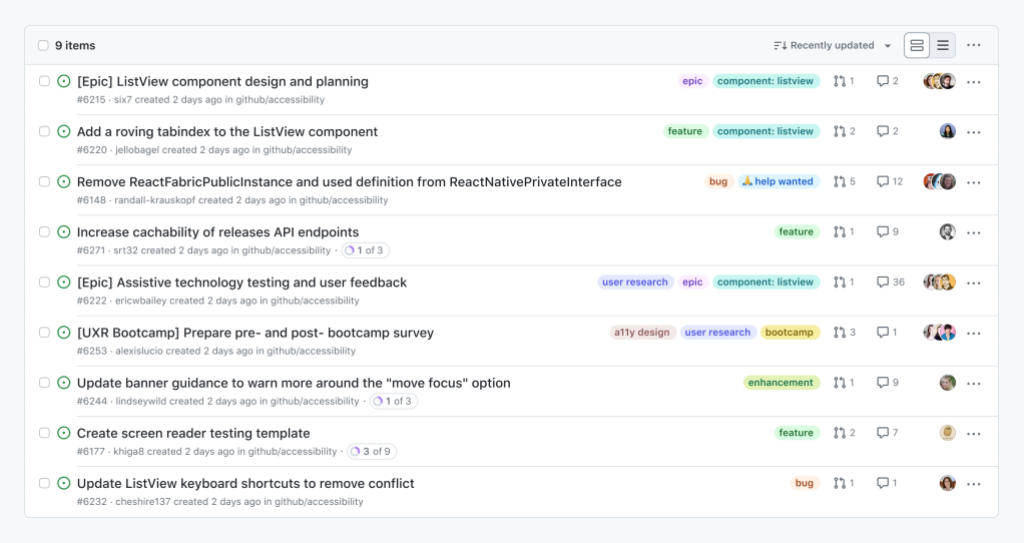
A list of nine GitHub issues. The issues topics are a blend of list component work and general maintenance tasks. Each issue has a checkbox for selecting it, a status icon indicating that it is an open issue, a title, metadata about its issue number, author, creation date, and source repository. These issues also have secondary information including labels, tallies for linked pull requests and comments, avatars for issue assignees, and overflow actions. Additionally, some issues have a small badge that indicates the number of tasks the issue contains, as well as how many of them are completed. Above the list of issues is an area that lists the total number of issues, allows you to select them all, control how they are sorted, change the information display density, and additional overflow actions.

Lists of issues and pull requests will continue to support methods of navigation via assistive technology that you may already be familiar with—making experiences consistent and predictable is a huge and often overlooked aspect of the work.

In addition, these lists will soon be updated to also have:

  • A dedicated subheading for quickly navigating to the list itself.
  • A dedicated subheading per issue or pull request.
  • List and list item screen reader keyboard shortcut support.
  • Arrow keys and Home/End to quickly move through each list item.
  • Focus management that allows using Tab to explore individual list item content.
  • Support for Space keypresses for selecting list items, and Enter for navigating to the issue or pull request the list item links to.

This allows a wide range of assistive technologies to efficiently navigate, and act on these experiences.

Improvements we’re making to tables

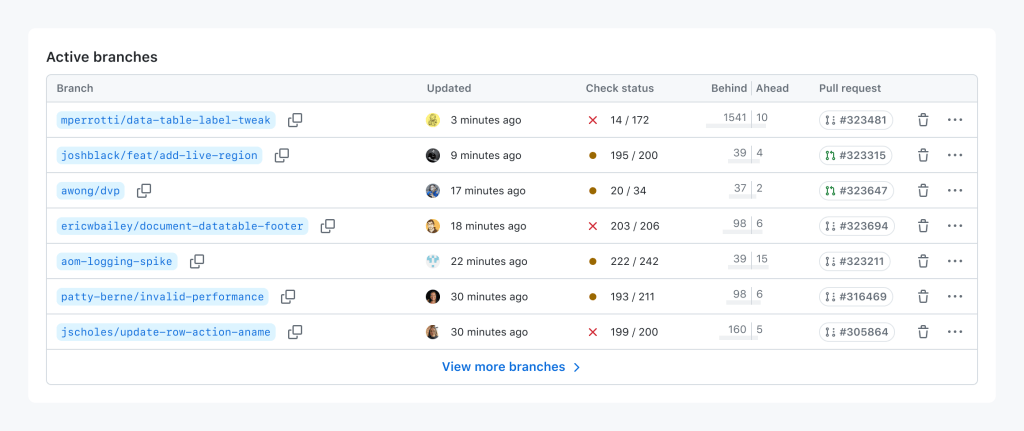
A table titled, ‘Active branches’. It has five columns and 7 rows. The columns are titled ‘branches’, ‘updated’, ‘check status’, ‘behind/ahead’, ‘pull request’, and ‘actions’. Each row lists a branch name and its associated metadata. The branch names use a GitHub user name/feature name pattern. The user names include people who worked on the table component, including Mike Perrotti, Josh Black, Eric Bailey, and James Scholes. They also include couple of subtle references to disability advocates Alice Wong and Patty Berne. The branches are sorted by last updated order, and after the table is a link titled, ‘View more branches’.

We are in the process of replacing one-off table implementations with a dedicated Primer component.

Primer-derived tables help provide consistency and predictability. This is important for expected table navigation, but also applies for other table-related experiences, such as loading content, sorting and pagination requests, and bulk and row-level actions.

At the time of this blog post’s publishing, there are 75 bespoke tables that have been replaced with the Primer component, spread across all of GitHub.

The reason for this quiet success has been due entirely to close collaboration with both our disabled partners and our design system experts. This collaboration helped to ensure:

  1. The new table experiences were seamlessly integrated.
  2. Doing so, improved and enhanced the underlying assistive technology experience.

Progress over perfection

Meryl K. Evans’ Progress Over Perfection philosophy heavily influenced how we approached this work.

Accessibility is never done. Part of our dedication to this work is understanding that it will grow and change to meet the needs of the people who rely on it. This means making positive, iterative change based on feedback from the community GitHub serves.

More to come

Tables will continue to be updated, and the lists should be released publicly soon. Beyond that, we’re excited about the changes we’re making to improve GitHub’s accessibility. This includes both our services and also our internal culture.

We hope that these components, and the process that led to their creation, help you as both part of our developer community and as people who build the world’s software.

Please visit accessibility.github.com to learn more and share feedback on our accessibility community discussion page.

The post How we’re building more inclusive and accessible components at GitHub appeared first on The GitHub Blog.

Empowering accessibility: GitHub’s journey building an in-house Champions program

Post Syndicated from Carie Fisher original https://github.blog/engineering/engineering-principles/empowering-accessibility-githubs-journey-building-an-in-house-champions-program/

For more on this topic, check out Alexis Lucio, Catherine McNally, and Lindsey Wild‘s axe-con 2024 talk, “Establishing a Scalable A11y Education Ecosystem,” which laid the foundation for this blog post. Free registration required.

Laying the foundation

In today’s digital world, accessibility isn’t merely a checkbox—it’s the cornerstone of creating an inclusive experience for all users. At GitHub, we recognize this fundamental truth. That’s why we’ve embarked on a journey to empower developers, including those with disabilities, to participate fully and thrive on our platform. Our commitment to accessibility isn’t a one-time endeavor; it’s an ongoing effort fueled by the desire to remove barriers and make technology accessible to everyone.

As part of GitHub’s dedication to accessibility, we’ve been expanding our internal accessibility program and have scaled up our assessment process to help remove or lower barriers for users with disabilities. Naturally, as the number of assessments increased, so did the issues requiring attention, which strained our centralized accessibility team. Understanding the importance of decentralizing ownership of accessibility across the organization, we took decisive action by launching GitHub’s Accessibility Champions program. This strategic initiative empowers employees from various disciplines to drive accessibility efforts within their teams, fostering a culture where accessibility is deeply ingrained and valued.

The journey to establish GitHub’s Accessibility Champions program began with a comprehensive examination of our existing challenges and opportunities. We understood that for the program to thrive, we needed to consider various factors, including different time zones and work schedules, the expertise levels of our employees, and their ability to dedicate time to accessibility efforts due to competing priorities. By thoroughly assessing these considerations, we aimed to ensure that the program would be effective and adaptable to our team’s evolving needs.

To lay a solid foundation for the program’s success, we established clear goals and defined responsibilities for our champions upon completing their training. By setting measurable objectives and metrics to track the program’s impact on accessibility efforts both within the company and beyond, we provided our champions with a clear roadmap to follow. This proactive approach ensured we were all aligned in our efforts to make GitHub a more inclusive platform.

Starting small

At the heart of the GitHub Accessibility Champions program’s success is the development of a comprehensive and dynamic curriculum. Understanding that people have different learning preferences, GitHub took a tailored approach by assembling different types of educational resources. These resources were carefully curated to cater to various learning styles and delivered asynchronously through videos, articles, and interactive exercises.

Participants in the program received training on digital accessibility fundamentals, including WCAG guidelines, inclusive design principles, testing techniques, and content/interface accessibility best practices. They learned to identify and address accessibility barriers, advocate for accessibility within their teams, and utilize assistive technologies. Participants gained practical experience creating inclusive digital experiences through hands-on exercises and interactive discussions.

The program began with a modest group of 17 engineering champions serving as pioneers in the initiative. This small-scale pilot allowed GitHub to fine-tune the curriculum, gather valuable feedback, and iterate on the program’s structure and content. As the program evolved and gained momentum, it gradually expanded to include 52 champions from a variety of backgrounds, spanning engineering, design, and content teams. Our plan for this year is to reach over 100 internal champions to help support our accessibility goals.

This phased approach to scaling the GitHub Accessibility Champions program has proved invaluable. By starting small and gradually growing the community of champions, we were able to refine the program iteratively, ensuring it met the evolving needs of participants. Moreover, this approach fostered a strong sense of camaraderie among champions, creating a network of advocates dedicated to advancing accessibility across the organization.

Embracing feedback and iteration

Feedback was instrumental in shaping the trajectory of the GitHub Accessibility Champions program, serving as a guiding force in its evolution. As participants engaged with the program, their voices were invaluable in driving improvements and enhancements to meet their needs.

One recurring theme in the feedback was the desire for more interactive experiences and community engagement. Participants expressed a hunger for opportunities to connect with fellow champions, share insights, and collaborate on addressing accessibility challenges. In response, we introduced monthly Champions Connect meetings, providing a platform for champions to come together, exchange ideas, and foster a sense of camaraderie. These gatherings facilitated knowledge sharing and motivated and inspired champions as they navigated their accessibility journeys.

“Being able to ask questions and get answers quickly on simple matters is important to my team’s success. Or, if the questions are too complex to get immediate answers, having a forum to take the time and unpack them to get the answers.”

Participants also emphasized the importance of hands-on experiences in honing their skills and understanding of accessibility principles. Recognizing this need, we organized bug bashes and collaborative events where teams worked together to identify and address accessibility issues in real-time. These sessions provided practical learning opportunities and fostered a culture of teamwork and collective problem-solving.

In addition to enhancing engagement within the champions community, we responded to the demand for more synchronous training sessions. We hosted live sessions tailored to the specific needs of engineers and product managers, providing a platform for interactive discussions, Q&A sessions, and technical deep dives. These sessions offered a valuable opportunity for participants to engage directly with experts, seek clarification on complex topics, and deepen their understanding of accessibility best practices.

“Getting a codespace to identify issues and identify remediations is an excellent way to move from using and understanding assistive technology to taking on the role of an auditor or engineer who is verifying fixes.”

Finally, we initiated roundtable discussions with customers with disabilities, recognizing the importance of incorporating diverse perspectives into the design and development process. These interactions provided invaluable insights into the experiences and needs of users with disabilities, highlighting the critical role of inclusive design practices. By engaging directly with end-users, every champion at GitHub gained a deeper understanding of accessibility challenges and priorities, informing the development of more user-centric and inclusive digital experiences.

“Communicating the value of why we should design and create accessible documentation is key to success on my team. Everyone wants to do the right thing and is willing to do more complex tasks if they understand how it helps people better use our product.”

Overall, feedback catalyzed continuous improvement and innovation within the GitHub Accessibility Champions program. By actively listening to participant input and responding with targeted initiatives, we demonstrate our commitment to fostering a culture of accessibility and inclusion. Through ongoing engagement, collaboration, and user-centered design, GitHub continues to advance accessibility efforts, empowering all users to access and interact with its platform seamlessly.

“I loved that the training was super detailed, to a point where someone with zero information on accessibility can get started with basic concepts all the way to acknowledging problems they didn’t know existed.”

Expanding reach and impact

While we are proud of our progress so far, the GitHub Accessibility Champions program isn’t just about addressing internal challenges and setting an example for the broader tech community. By sharing our experiences and best practices, we hope to inspire other organizations to prioritize accessibility and inclusion in their own initiatives.

As we reflect on the journey of GitHub’s Accessibility Champions program, there are several key takeaways and future directions that can provide valuable insights for other teams and organizations embarking on similar initiatives:

  1. Start where you are. Take stock of your current situation and identify areas where accessibility education can be improved. Understanding your organization’s unique needs and challenges is the first step toward meaningful progress.
  2. Go where you’re wanted. Invest your resources with a clear advocacy for accessibility and a willingness to engage in educational programs. By aligning your efforts with enthusiastic stakeholders, you can maximize the impact of your initiatives.
  3. Pilot with a small group. Begin with a small group to test your programs and gather feedback before scaling up. This phased approach allows for experimentation and refinement, ensuring that your initiatives are effective and sustainable in the long run.
  4. Lean into organic partnerships. Collaborate across teams and titles to create a cohesive ecosystem of accessibility education. By leveraging the expertise and resources available within your organization, you can amplify the impact of your efforts and foster a culture of inclusivity.
  5. Seek out, review, and take action on feedback. Actively solicit feedback from participants and stakeholders and use it to inform program improvements. By listening to the needs and experiences of your audience, you can continuously iterate and enhance the effectiveness of your initiatives.
  6. Collect and re-evaluate metrics. Continuously monitor and evaluate the impact of your educational initiatives to track progress and effectiveness over time. By collecting meaningful metrics and analyzing trends, you can identify areas for improvement and demonstrate the value of your efforts to key stakeholders.

Conclusion

The GitHub Accessibility Champions program demonstrates our dedication to fostering a culture of accessibility and inclusion. By prioritizing feedback, collaboration, and responsiveness, we have created a supportive ecosystem where individuals can learn, grow, and acquire the tools to build more inclusive digital experiences. Our champions are truly a community of passionate accessibility advocates.

Looking ahead, we’re committed to enhancing the GitHub Accessibility Champions program, advancing accessibility efforts across the organization, and sharing our journey with the broader tech community—paving the way for a more inclusive digital future for all.

Please visit accessibility.github.com to learn more and to share feedback on our accessibility community discussion page.

The post Empowering accessibility: GitHub’s journey building an in-house Champions program appeared first on The GitHub Blog.
GitHub celebrates developers with disabilities on Global Accessibility Awareness Day

Post Syndicated from Ed Summers original https://github.blog/2023-05-18-github-celebrates-developers-with-disabilities-on-global-accessibility-awareness-day/

At GitHub, our favorite people are developers. We love to make them happy and productive, and today, on Global Accessibility Awareness Day, we want to celebrate their achievements by sharing some great stories about a few developers with disabilities alongside news of recent accessibility improvements at GitHub that help them do the best work of their lives.

Amplifying the voices of disabled developers

People with disabilities frequently encounter biases that prevent their full and equal participation in all areas of life, including education and employment. That’s why GitHub and The ReadME Project are thrilled to provide a platform for disabled developers to showcase their contributions and counteract bias.

Paul Chiou, a developer who’s paralyzed from the neck down, is breaking new ground in the field of accessibility automation, while pursuing his Ph.D. Paul uses a computer with custom hardware and software he designed and built, and this lived experience gives him a unique insight into the needs of other people with disabilities. The barriers he encounters push him to innovate, both in his daily life and in his academic endeavors. Learn more about Paul and his creative solutions in this featured article and video profile.

Becky Tyler found her way to coding via gaming, but she games completely with her eyes, just like everything else she does on a computer, from painting to livestreaming to writing code. Her desire to play Minecraft led her down the path of open source software and collaboration, and now she’s studying computer science at the University of Dundee. Learn more about Becky in this featured article and video profile.

Dr. Annalu Waller leads the Augmentative and Alternative Communication Research Group at the University of Dundee. She’s also Becky’s professor. Becky calls her a “taskmaster,” but the profile of Annalu’s life shows how her lived experience informed her high expectations for her students—especially those with disabilities—and gave her a unique ability to absorb innovations and use them to benefit people with disabilities.

Anton Mirhorodchenko has difficulty speaking and typing with his hands, and speaks English as a second language. Anton has explored ways to use ChatGPT and GitHub Copilot to not only help him communicate and express his ideas, but also develop software from initial architecture all the way to code creation. Through creative collaboration with his AI teammates, Anton has become a force to be reckoned with, and he recently shared his insights in this guide on how to harness the power of generative AI for software development.

Removing barriers that block disabled developers

Success requires skills. That’s why equal access to education is a fundamental human right. The GitHub Global Campus team agrees. They are working to systematically find and remove barriers that might block future developers with disabilities.

npm is the default package manager for JavaScript and the largest software registry in the world. To empower every developer to contribute to and benefit from this amazing resource, the npm team recently completed an accessibility bug bash and removed hundreds of potential barriers. Way to go, npm team!

The GitHub.com team has also been hard at work on accessibility and they recently shipped several improvements:

Great accessibility starts with design, requiring an in-depth understanding of the needs of users with disabilities and their assistive technologies. The GitHub Design organization has been leaning into accessibility for years, and this blog post explores how it has built a culture of accessibility and shifted accessibility left in the GitHub development process.

When I think about the future of technology, I think about GitHub Copilot—an AI pair programmer that boosts developers’ productivity and breaks down barriers to software development. The GitHub Copilot team recently shipped accessibility improvements for keyboard-only and screen reader users.

GitHub Next, the team behind GitHub Copilot, also recently introduced GitHub Copilot Voice, an experiment currently in technical preview. GitHub Copilot Voice empowers developers to code completely hands-free using only their voice. That’s a huge win for developers who have difficulty typing with their hands. Sign up for the technical preview if you can benefit from this innovation.

Giving back to our community

As we work to empower all developers to build on GitHub, we regularly contribute back to the broader accessibility community that has been so generous to us. For example, all accessibility improvements in Primer are available for direct use by the community.

Our accessibility team includes multiple Hubbers with disabilities—including myself. GitHub continually improves the accessibility and inclusivity of the processes we use to communicate and collaborate. One recent example is the process we use for retrospectives. At the end of our most recent retrospective, I observed that, as a person with blindness, it was the most accessible and inclusive retrospective I have ever attended. That observation prompted the team to share the process we use for inclusive retrospectives so other teams can benefit from our learnings.

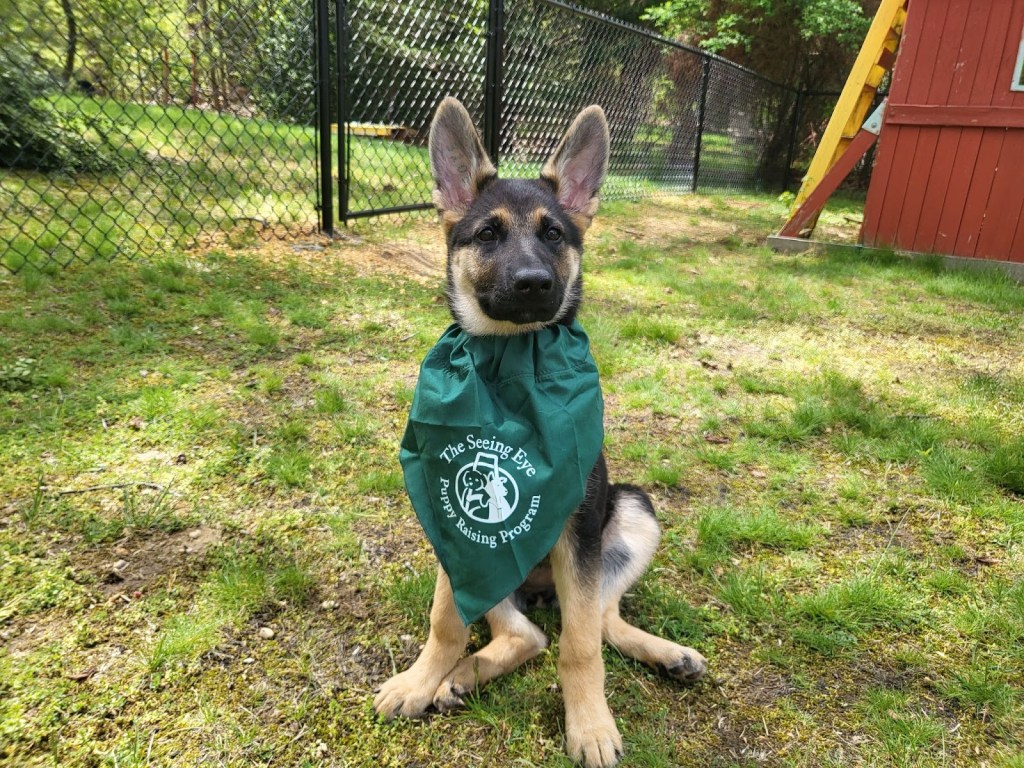
More broadly, Hubbers regularly give back to the causes we care about. During a recent social giving event, I invited Hubbers to support the Seeing Eye because that organization has made such a profound impact in my life as a person with blindness. Our goal was to raise $5,000 so we could name and support a Seeing Eye puppy that will eventually provide independence and self-confidence to a person with blindness. I was overwhelmed by the generosity of my coworkers when they donated more than $15,000! So, we now get to name three puppies and I’m delighted to introduce you to the first one. Meet Octo!

A German Shepard named Octo sits in green grass wearing a green scarf that says “The Seeing Eye Puppy Raising Program.” She is sitting tall in a backyard with a black fence and a red shed behind her.
Photo courtesy of The Seeing Eye

Looking ahead

GitHub CEO, Thomas Dohmke, frequently says, “GitHub thrives on developer happiness.” I would add that the GitHub accessibility program thrives on the happiness of developers with disabilities. Our success is measured by their contributions. Our job is to remove barriers from their path and celebrate their accomplishments. We’re delighted with our progress thus far, but we are just getting warmed up. Stay tuned for more great things to come! In the meantime, learn more about the GitHub accessibility program at accessibility.github.com.