Tag Archives: Portugal

How a volunteer-run wildfire site in Portugal stayed online during DDoS attacks

Post Syndicated from João Tomé original https://blog.cloudflare.com/wildfire-fogos-pt-portugal-ddos-attack/

On July 31, 2025, just as Portugal entered the peak of another intense wildfire season, João Pina, also known as Tomahock, received an automated alert from Cloudflare. His volunteer-run project, fogos.pt, now a trusted source of real-time wildfire information for millions across Portugal, was under attack.


One of the several alerts fogos.pt received related to the DDoS attack

What started in 2015 as a late-night side project with friends around a dinner table in Aveiro has grown into a critical public resource. During wildfires, the site is where firefighters, journalists, citizens, and even government agencies go to understand what’s happening on the ground. Over the years, fogos.pt has evolved from parsing PDFs into visual maps to a full-featured app and website with historical data, weather overlays, and more. It’s also part of Project Galileo, Cloudflare’s initiative to protect vulnerable but important public interest sites at no cost.

Wildfires are not just a Portuguese challenge. They are frequent across southern Europe (Spain, Greece, currently also under alert), California, Australia, and in Canada, which in 2023 faced record-setting fires. In all these cases, reliable information can be crucial, sometimes life-saving. Other organizations offering similar public services can also apply to join Project Galileo to receive protection and handle heavy traffic.

A side project that became a national reference

Fogos.pt began with a simple question: why was fire data only available in hard-to-read PDF documents? João and a group of friends, including volunteer firefighters, decided to build something better. They pulled the data, geolocated the fire reports, and visualized them on a map.

Soon, thousands of people were using it. Then tens of thousands. Today, fogos.pt is integrated into official communications, including mentions from the Portuguese government on social media and direct links from the national wildfire information portal (SGIFR.gov.pt).

In 2018, fogos.pt formally joined forces with VOST Portugal, a digital volunteer organization that was early on also part of our Project Galileo — whose story was also featured in an earlier case study. João Pina is also a co-founder of VOSTPT. Together, they created a complementary model: fogos.pt provides data and the platform; VOSTPT validates and communicates it to the public in real-time during emergencies.

It’s an operation run entirely by volunteers, with no funding, no formal team — just passion, and the help of partners.


Homepage of fogos.pt on August 20, 2025, highlighting a major wildfire near Piódão in central Portugal.

Under attack during fire season

On July 31 and August 1, 2025, two Distributed Denial of Service (DDoS) attacks targeted fogos.pt. Cloudflare automatically detected and mitigated both attacks.

July 31 attack:
• Duration: 7 minutes
• Peak: 33,000 requests per second at 11:27 UTC
• Bandwidth: 1.7 Gbps (Max)

How the attack looks like in requests per second:


August 1 attack:
• Duration: 5 minutes
• Peak: 31,000 requests per second at 10:24 UTC
• Bandwidth: 849 Mbps (Max)

How the attack looks like in requests per second from our perspective:


By Cloudflare’s standards, these were small. For comparison, last year we mitigated an attack exceeding 700,000 requests per second against a high-profile US election campaign site. But for an civic project like fogos.pt, even tens of thousands of requests per second — if unprotected — can be enough to take services offline at the worst possible time.

Attackers typically use three main methods for DDoS attacks:

  • IoT devices: hacked cameras, routers, or smart gadgets sending traffic.

  • Proxies: open or misconfigured servers, residential proxy networks, or anonymity tools that hide attackers’ IPs.

  • Cloud machines: compromised or rented servers from cloud providers.

The July 31 attack likely relied on open proxies, with much of the traffic arriving unencrypted (a common sign of proxy-based attacks). The August 1 attack, in contrast, came largely from cloud machines, matching patterns we see from botnets that exploit cloud infrastructure.

These attacks were blocked without disruption. Cloudflare’s autonomous mitigation systems kicked in, and email alerts were automatically sent to João and the team. No downtime, no manual intervention required.

The role of Project Galileo: traffic surges

Fogos.pt has used Cloudflare’s free services since the beginning, starting with DNS and gradually expanding to DDoS mitigation, caching, rate limiting, and more. The site joined Project Galileo, which protects journalists, human rights defenders, and public service projects, to get stronger, upgraded features and service at no cost.

“Without Cloudflare, the site would have gone down many times during fire season,” says João Pina. “We use almost every product — but protection against attacks is critical.”


August 11, 2025, detail the area of interest of a wildfire in central Portugal. 

Traffic to fogos.pt surges when wildfires hit the news or get mentioned by authorities. These spikes can bring tens of thousands of visitors per day. And as attention grows, so does the risk. Attacks can be used to silence or disrupt critical services, or simply as distractions for more malicious activity. In August 2025, the site often had close to 60,000 people browsing at the same time, with around 40,000 being the norm across the web and app services.


In just two weeks (with an August 15 peak of almost 70 million requests), fogos.pt handled over 550 million requests (more than 25 million per day) 9 TB of data transfer, nearly 100 million page views, 15 million visits, and 240 million API calls. A massive load for a volunteer-run project, as the next screenshot from the fogos.pt team shows:


In a time when timely wildfire updates can mean the difference between safety and danger, keeping the site online is essential. 

Built by community, supported by allies

Fogos.pt is a reminder of what’s possible when public service meets technology, and why we launched Project Galileo: to protect the digital infrastructure that keeps people informed and safe. Built with no formal funding or full-time team, it runs on volunteers, partners, and a shared sense of purpose, an authenticity that João Pina believes is why it works, and why it matters.

And while this story is about Portugal, wildfires are a global challenge. Other organizations providing critical public services can also apply to join Project Galileo and receive this protection.

From a dinner-table idea by an engineer to critical national infrastructure, fogos.pt shows the Internet at its best. Cloudflare is proud to help protect it.
Chaos in Cloudflare’s Lisbon office: securing the Internet with wave motion

Post Syndicated from João Tomé original https://blog.cloudflare.com/chaos-in-cloudflare-lisbon-office-securing-the-internet-with-wave-motion/

Over the years, Cloudflare has gained fame for many things, including our technical blog, but also as a tech company securing the Internet using lava lamps, a story that began as a research/science project almost 10 years ago. In March 2025, we added another layer to its legacy: a “wall of entropy” made of 50 wave machines in constant motion at our Lisbon office, the company’s European HQ. 

These wave machines are a new source of entropy, joining lava lamps in San Francisco, suspended rainbows in Austin, and double chaotic pendulums in London. The entropy they generate contributes to securing the Internet through LavaRand.


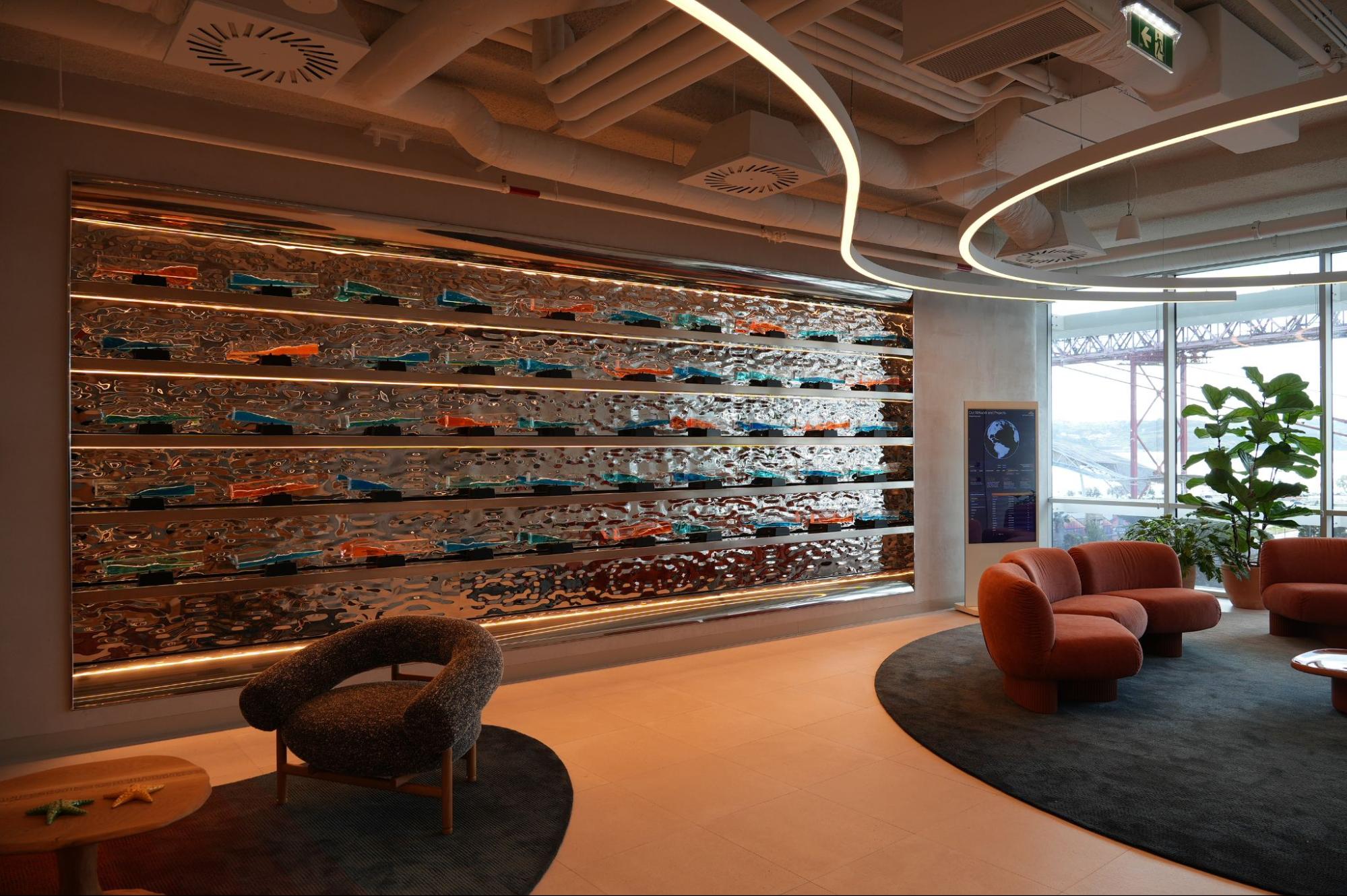
The new waves wall at Cloudflare’s Lisbon office sits beside the Radar Display of global Internet insights, with the 25th of April Bridge overlooking the Tagus River in the background.

It’s exciting to see waves in Portugal now playing a role in keeping the Internet secure, especially given Portugal’s deep maritime history.

The installation honors Portugal’s passion for the sea and exploration of the unknown, famously beginning over 600 years ago, in 1415, with pioneering vessels like caravels and naus/carracks, precursors to galleons and other ships. Portuguese sea exploration was driven by navigation schools and historic voyages “through seas never sailed before” (“Por mares nunca dantes navegados” in Portuguese), as described by Portugal’s famous poet, Luís Vaz de Camões, born 500 years ago (1524).

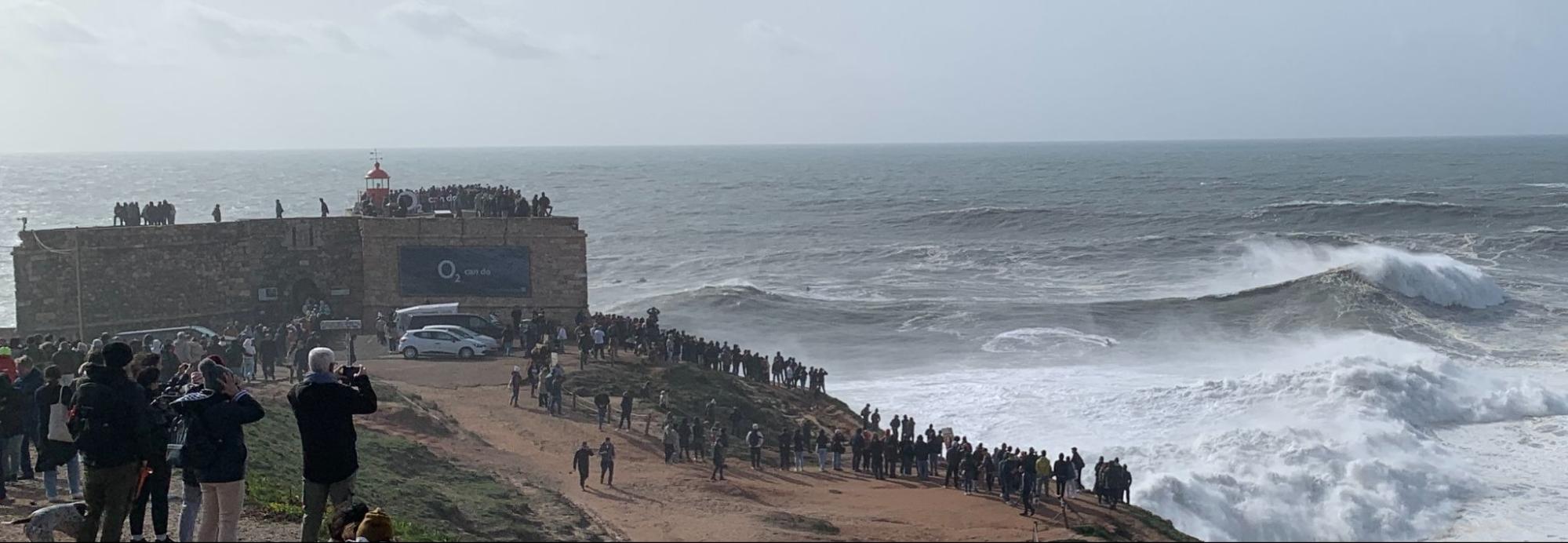
Anyone familiar with Portugal knows the sea is central to its identity. The small country has 980 km of coastline, where most of its main cities are located. Maritime areas make up 90% of its territory, including the mid-Atlantic Azores. In 1998, Lisbon’s Expo 98 celebrated the oceans and this maritime heritage. Since 2011, the small town of Nazaré also became globally famous among the surfing community for its giant waves.


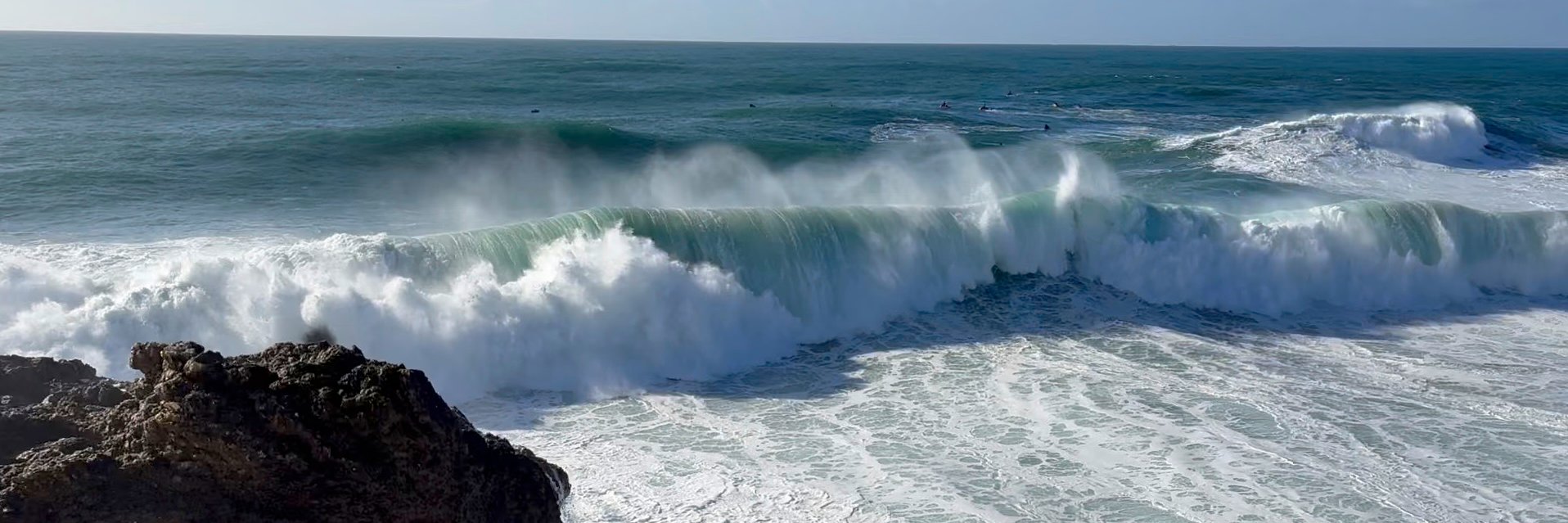
Nazaré’s waves, famous since Garrett McNamara’s 23.8 m (78 ft) ride in 2011, hold Guinness World Records for the biggest waves ever surfed. Photos: Sam Khawasé & Beatriz Paula, from Cloudflare.

Portugal’s maritime culture also inspired literature and music, including poet Fernando Pessoa, who referenced it in his 1934 book Mensagem, and musician Rui Veloso, who dedicated his 1990s album Auto da Pimenta to Portugal’s historic connection to the sea.

How this chaos came to be

As Cloudflare’s CEO, Matthew Prince, said recently, this new wall of entropy began with an idea back in 2023: “What could we use for randomness that was like our lava lamp wall in San Francisco but represented our team in Portugal?”

The original inspiration came from wave motion machine desk toys, which were popular among some of our team members. Waves and the ocean not only provide a source of movement and randomness, but also align with Portugal’s maritime history and the office’s scenic view.

However, this was easier said than done. It turns out that making a wave machine wall is a real challenge, given that these toys are not as popular as they were in the past,  and aren’t being manufactured in the size we needed any more. We scoured eBay and other sources but couldn’t find enough, consistent in style and in working order wave machines. We also discovered that off-the-shelf models weren’t designed to run 24/7, which was a critical requirement for our use.

Artistry to create wave machines

Undaunted, Cloudflare’s Places team, which ensures our offices reflect our values and culture, found a U.S.-based artisan that specializes in ocean wave displays to create the wave machines for us. Since 2009, his one-person business, Hughes Wave Motion Machines, has blended artistry, engineering, and research, following his transition from Lockheed Martin Space Systems, where he designed military and commercial satellites.

Timelapse of the mesmerizing office waves, set to the tune of an AI-generated song.

Collaborating closely, we developed a custom rectangular wave machine (18 inches/45 cm long) that runs nonstop — not an easy task — which required hundreds of hours of testing and many iterations. Featuring rotating wheels, continuous motors, and a unique fluid formula, these machines create realistic ocean-like waves in green, blue, and Cloudflare’s signature orange. 

Here’s a quote from the artist himself about these wave machines:

“The machine’s design is a balancing act of matching components and their placement to how the fluid responds in a given configuration. There is a complex yet delicate relationship between viscosity, specific gravity, the size and design of the vessel, and the placement of each mechanical interface. Everything must be precisely aligned, centered around the fluid like a mathematical function. I like to say it’s akin to ’balancing a checkerboard on a beach ball in the wind.’”


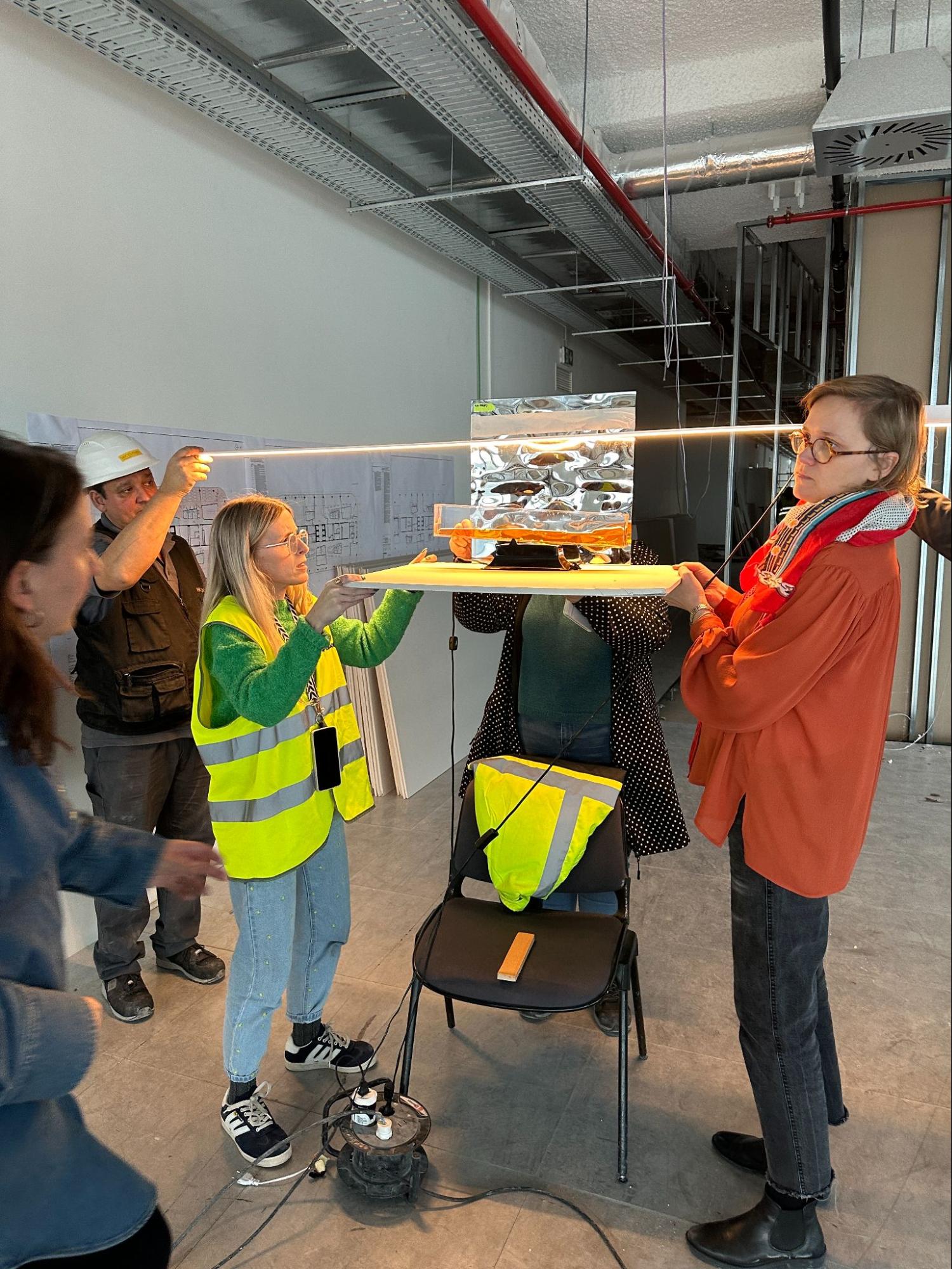
The Cloudflare Places Team with Lisbon office architects and contractor testing wave machine placement, shelves, lighting, and mirrors to enhance movement and reflection, March 2024.

Despite delays, the Lisbon wave machines finally debuted on March 10, 2025 — an incredibly exciting moment for the Places team.

Some numbers about our wave-machine entropy wall:

  • 50 wave machines, 50 motion wheels & motors, 50 acrylic containers filled with Hughes Wave Fluid Formula (two immiscible liquids)

  • 3 liquid colors: blue, green, and orange

  • 15 months from concept to completion

  • 14 flips (side-to-side balancing movements) per minute — over 20,000 per day

  • Over 15 waves per minute

  • ~0.5 liters of liquid per machine

LavaRand origins and walls of entropy

Cloudflare’s servers handle 71 million HTTP requests per second on average, with 100 million HTTP requests per second at peak. Most of these requests are secured via TLS, which relies on secure randomness for cryptographic integrity. A Cryptographically Secure Pseudorandom Number Generator (CSPRNG) ensures unpredictability, but only when seeded with high-quality entropy. Since chaotic movement in the real world is truly random, Cloudflare designed a system to harness it. Our 2024 blog post expands on this topic in a more technical way, but here’s a quick summary.

In 2017, Cloudflare launched LavaRand, inspired by Silicon Graphics’ 1997 concept However, the need for randomness in security was already a hot topic on our blog before that, such as in our discussions of securing systems and cryptography. Originally, LavaRand collected entropy from a wall of lava lamps in our San Francisco office, feeding an internal API that servers periodically query to include in their entropy pools. Over time, we expanded LavaRand beyond lava lamps, incorporating new sources of office chaos while maintaining the same core method.


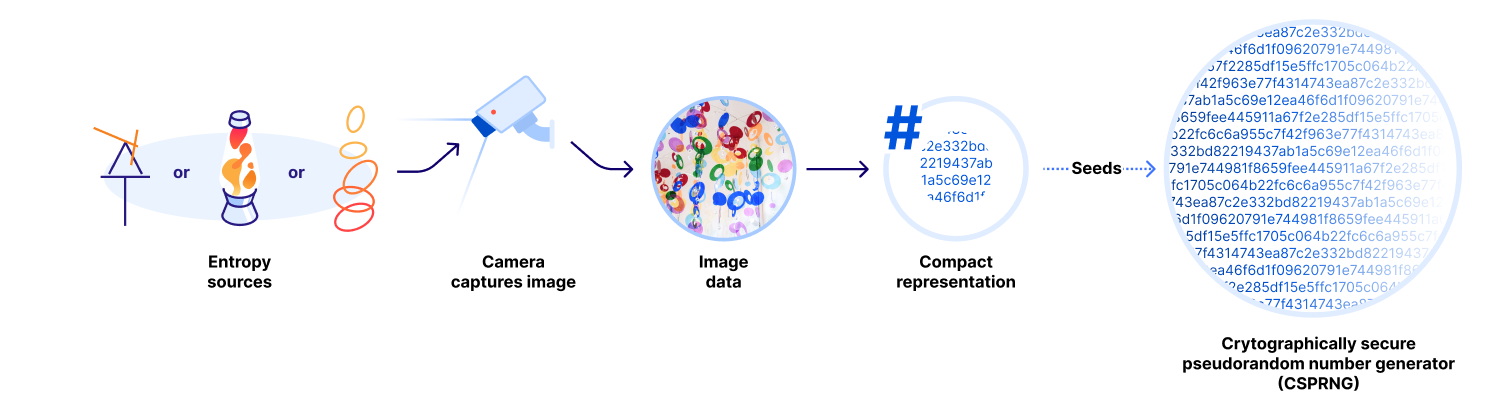
A camera captures images of dynamic, unpredictable randomness displays. Shadows, lighting changes, and even sensor noise contribute entropy. Each image is then processed into a compact hash, converting it into a sequence of random bytes. These, combined with the previous seed and local system entropy, serve as input for a Key Derivation Function (KDF), which generates a new seed for a CSPRNG — capable of producing virtually unlimited random bytes upon request. The waves in our Lisbon office are now contributing to this pool of randomness.


Cloudflare’s LavaRand API makes this randomness accessible internally, strengthening cryptographic security across our global infrastructure. For example, when you use Math.random() in Cloudflare Workers, part of that randomness comes from LavaRand. Similarly, querying our drand API taps into LavaRand as well. Cloudflare offers this API to enable anyone to generate random numbers and even seed their own systems.

Our new Lisbon office space


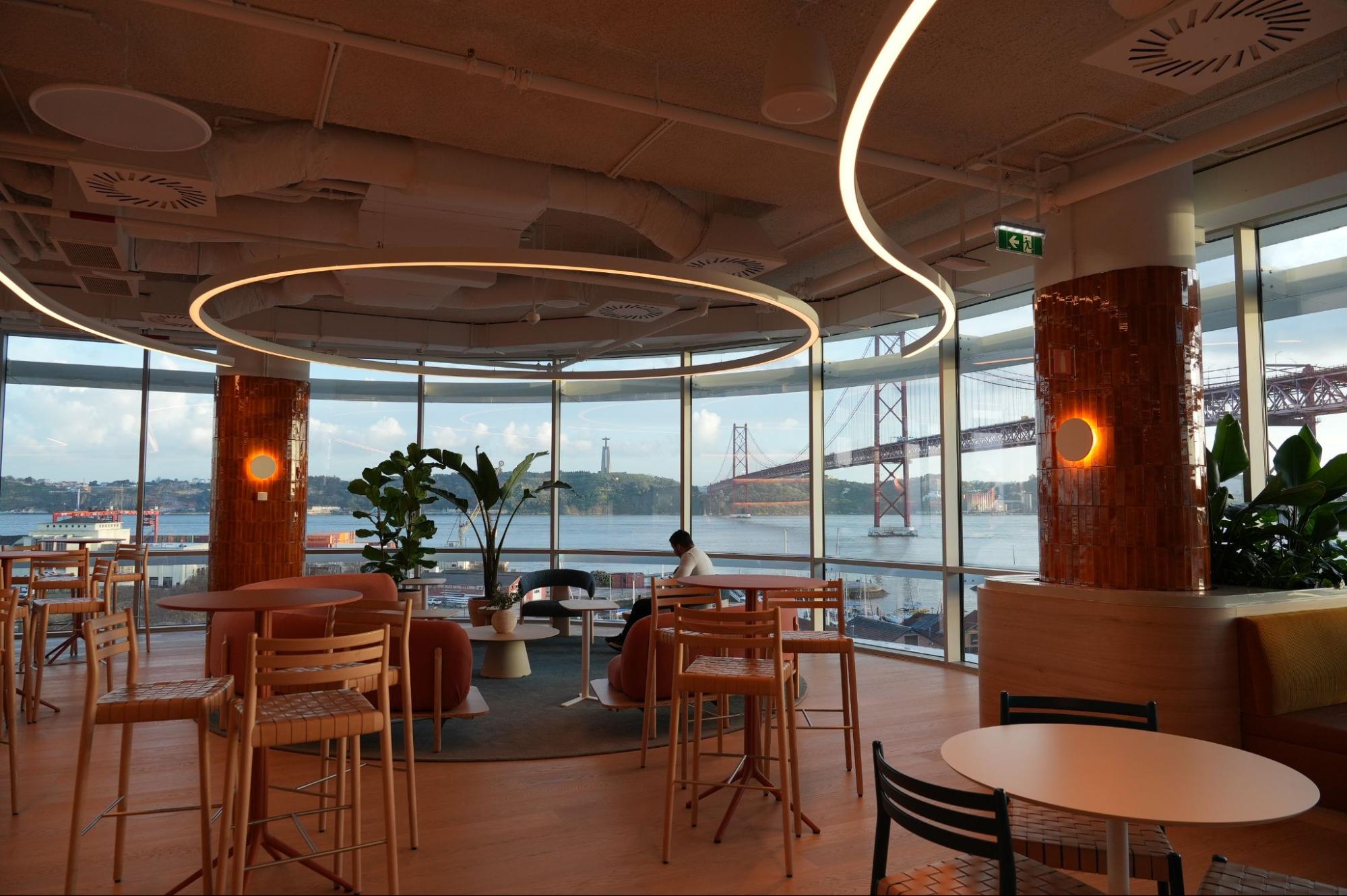
Photo of the view from our Lisbon office, featuring ceiling lights arranged in a wave-like pattern.

Entropy also inspired the design ethos of our new Lisbon office, given that the wall of waves and the office are part of the same project. As soon as you enter, you’re greeted not only by the motion of the entropy wall but also by the constant movement of planet Earth on our Cloudflare Radar Display screen that stands next to it. But the waves don’t stop there — more elements throughout the space mimic the dynamic flow of the Internet itself. Unlike ocean tides, however, Internet traffic ebbs and flows with the motion of the Sun, not the Moon.

As you walk through the office, waves are everywhere — in the ceiling lights, the architectural contours, and even the floor plan, thoughtfully designed by our architect to reflect the fluid movement of water. The visual elements create a cohesive experience, reinforcing a sense of motion. Each meeting room embraces this maritime theme, named after famous Portuguese beaches — including, naturally, Nazaré.

We partnered with an incredible group of local Portuguese vendors for this construction project, where all the leads were women — something incredibly rare for the industry. The local teams worked with passion, proudly wore Cloudflare t-shirts, and fostered a warm, family-like atmosphere. They openly expressed pride in the project, sharing how it stood out from anything they had worked on before.


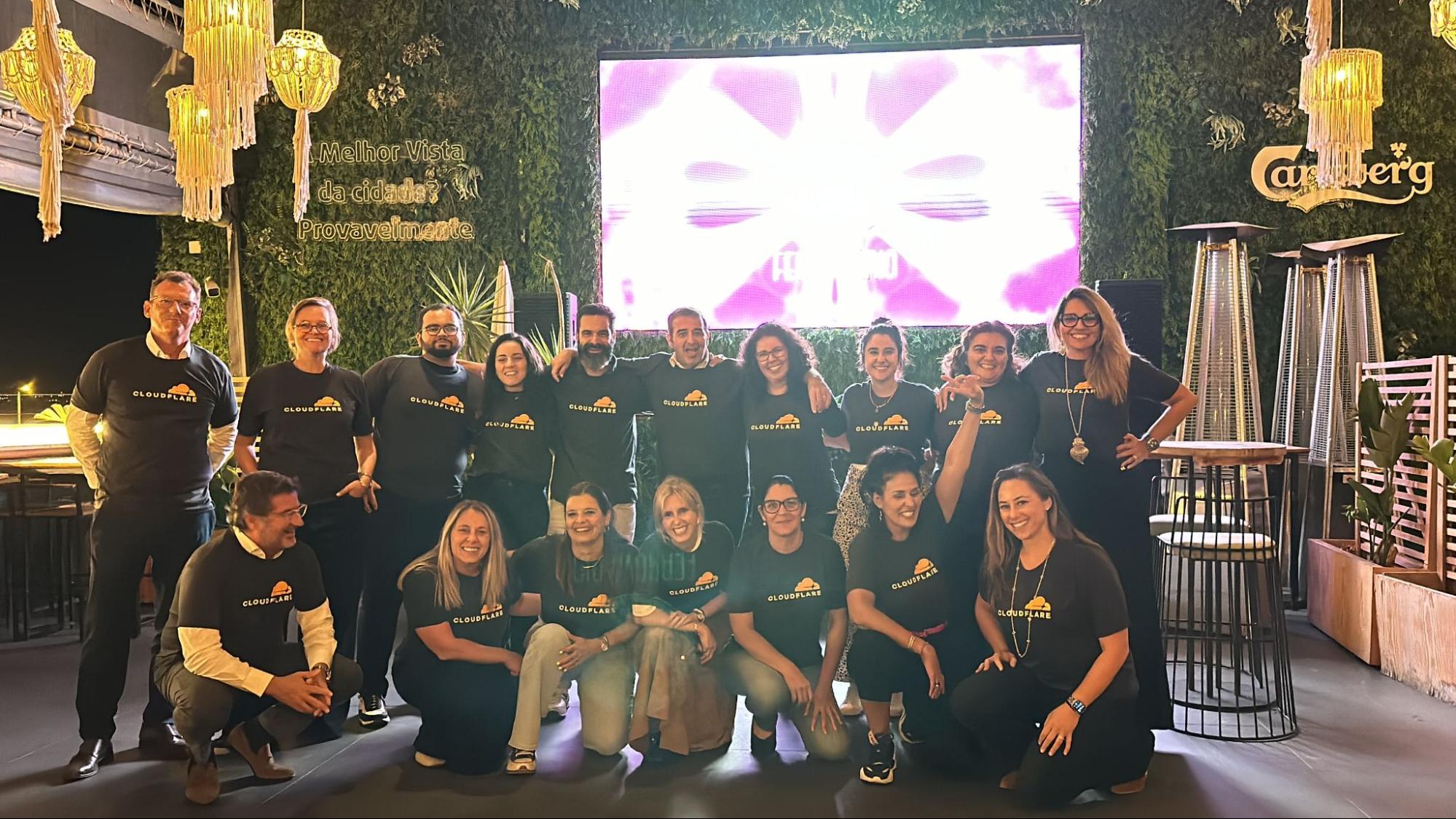
Our amazing third-party team and internal Places team, proudly rocking Cloudflare shirts after bringing this project to life.

Help us select a name for our new wall of entropy

Next, we have several name options for this new wall of entropy. Help us decide the best one, and register your vote using this form.

The Surf Board

Chaos Reef

Waves of Entropy

Wall of Waves

Whirling Wave Wall

Chaotic Wave Wall

Waves of Chaos

If you’re interested in working in Cloudflare’s Lisbon office, we’re hiring! Our career page lists our open roles in Lisbon, as well as our other locations in the U.S., Mexico, Europe and Asia.

Acknowledgements: This project was only possible with the effort, vision and help of John Graham-Cumming, Caroline Quick, Jen Preston, Laura Atwall, Carolina Beja, Hughes Wave Motion Machines, P4 Planning and Project Management, Gensler Europe, Openbook Architecture, and Vector Mais.

AWS renews its GNS Portugal certification for classified information with 66 services

Post Syndicated from Daniel Fuertes original https://aws.amazon.com/blogs/security/aws-renews-its-gns-portugal-certification-for-classified-information-with-66-services/

Amazon Web Services (AWS) announces that it has successfully renewed the Portuguese GNS (Gabinete Nacional de Segurança, National Security Cabinet) certification in the AWS Regions and edge locations in the European Union. This accreditation confirms that AWS cloud infrastructure, security controls, and operational processes adhere to the stringent requirements set forth by the Portuguese government for handling classified information at the National Reservado level (equivalent to the NATO Restricted level).

The GNS certification is based on the NIST SP800-53 Rev. 5 and CSA CCM v4 frameworks. It demonstrates the AWS commitment to providing the most secure cloud services to public-sector customers, particularly those with the most demanding security and compliance needs. By achieving this certification, AWS has demonstrated its ability to safeguard classified data up to the Reservado (Restricted) level, in accordance with the Portuguese government’s rigorous security standards.

AWS was evaluated by an authorized and independent third-party auditor, Adyta Lda, and by the Portuguese GNS itself. With the GNS certification, AWS customers in Portugal, including public sector organizations and defense contractors, can now use the full extent of AWS cloud services to handle national restricted information. This enables these customers to take advantage of AWS scalability, reliability, and cost-effectiveness, while safeguarding data in alignment with GNS standards.

We’re happy to announce the addition of 40 services to the scope of our GNS certification, for a new total of 66 services in scope. To view the complete list of services included in the scope, see the AWS Services in Scope by Compliance Program – GNS National Restricted Certification page.

The Certificate of Compliance illustrating the compliance status of AWS is available on the GNS Certifications page and through AWS Artifact.

For more information about GNS, see the AWS Compliance page GNS National Restricted Certification.

If you have feedback about this post, submit comments in the Comments section below.
 

Daniel Fuertes
Daniel Fuertes

Daniel is a Security Audit Program Manager at AWS, based in Madrid, Spain. Daniel leads multiple security audits, attestations, and certification programs in Spain, Portugal, and other EMEA countries. Daniel has ten years of experience in security assurance and compliance, including previous experience as an auditor for the PCI DSS security framework. He also holds the CISSP, PCIP, and ISO 27001 Lead Auditor certifications.

AWS achieves GNS Portugal certification for classified information

Post Syndicated from Rodrigo Fiuza original https://aws.amazon.com/blogs/security/aws-achieves-gns-portugal-certification-for-classified-information/

GNS Logo

We continue to expand the scope of our assurance programs at Amazon Web Services (AWS), and we are pleased to announce that our Regions and AWS Edge locations in Europe are now certified by the Portuguese GNS/NSO (National Security Office) at the National Restricted level. This certification demonstrates our ongoing commitment to adhere to the heightened expectations for cloud service providers to process, transmit, and store classified data.

The GNS certification is based on NIST SP800-53 R4 and CSA CCM v4 frameworks, with the goal of protecting the processing and transmission of classified information.

AWS was evaluated by Adyta Lda, an independent third-party auditor, and by GNS Portugal. The Certificate of Compliance illustrating the compliance status of AWS is available on the GNS Certifications page and through AWS Artifact. AWS Artifact is a self-service portal for on-demand access to AWS compliance reports. Sign in to AWS Artifact in the AWS Management Console, or learn more at Getting Started with AWS Artifact.

As of this writing, 26 services offered in Europe are in scope of this certification. For up-to-date information, including when additional services are added, see the AWS Services in Scope by Compliance Program and select GNS.

AWS strives to continuously bring services into the scope of its compliance programs to help you meet your architectural and regulatory needs. If you have questions or feedback about GNS Portugal compliance, reach out to your AWS account team.

To learn more about our compliance and security programs, see AWS Compliance Programs. As always, we value your feedback and questions; reach out to the AWS Compliance team through the Contact Us page.

If you have feedback about this post, submit comments in the Comments section below.

Want more AWS Security how-to content, news, and feature announcements? Follow us on Twitter.

Author

Rodrigo Fiuza

Rodrigo is a Security Audit Manager at AWS, based in São Paulo. He leads audits, attestations, certifications, and assessments across Latin America, Caribbean and Europe. Rodrigo has previously worked in risk management, security assurance, and technology audits for the past 12 years.

Through the eyes of a Cloudflare Technical Support Engineer

Post Syndicated from Justina Wong original https://blog.cloudflare.com/through-the-eyes-tech-support-engineer/

Through the eyes of a Cloudflare Technical Support Engineer

This post originally appeared on Landing Jobs under the title Mission: Protect the Internet where you can find open positions at Cloudflare Lisbon.

Justina Wong, Technical Support Team Lead in Lisbon, talks about what it’s like working at Cloudflare, and everything you need to know if you want to join us.

Through the eyes of a Cloudflare Technical Support Engineer

Justina joined Cloudflare about three years ago in London as a Technical Support Engineer. Currently, she’s part of their Customer Support team working in Lisbon as a team lead.

I can’t speak for others, but I love the things you can learn from the others. There are so many talented individuals who are willing and ready to teach/share. They are my inspiration and I want to become them!

On a Mission to Protect the Internet

Justina’s favourite Cloudflare products are firewall-related ones. The company’s primary care is for the customers and they want to make attack mitigation as easy as possible. As she puts it, “the fact that these protections are on multiple layers, like L7, L3/4, is very important, and I’m proud to be someone who can help our customers when they face certain attacks.”.

Cloudflare is constantly releasing new products to help build a better Internet, so product managers are always on top of tool updates to facilitate that. The company believes that it’s not only important to help customers from the product side, but it’s also as important to teach them how to help themselves so that they can fix their issues promptly without having to wait for an answer.

Company culture and Office vibes

According to Justina, one of the amazing things about Cloudflare is the unified company culture. As their SVP of Engineering, Usman, said in a recent meeting with the team, “Be helpful, look around for problems and help find solutions”.

Every Cloudflare office has its own little “flare”: London’s love of mince pies; Singapore’s super fun cultural richness in one location (they have four new years in one year, officially); and Lisbon’s forever love (and fight) for pastéis de nata.

Each office also has its own function or focus, so people working at Cloudflare get to meet very diverse individuals. For Justina, the things that she’d loved the most are learning from all of the engineers in London, picking up new customer service skills in Singapore and helping to build the new Lisbon office. She says that every time she goes to a different office, they have grown at least 50% in headcount compared to when she was last there. Talk about growth!

As a hiring manager, she also says that the company is mindful of diversity.

Through the eyes of a Cloudflare Technical Support Engineer

Working remote

Like everywhere else, remote work has become the current normal at Cloudflare. As someone who enjoyed being in the office, Justina says “all the countless times I just walked over to someone to ask a question, now all turned into a chat message; or the random coffee chat when we waited for our coffee to be done.”

Funnily enough, the EMEA CSUP team is working closer than before the pandemic. Previously, each office was somewhat in its own communication bubble, now it has turned into a collective conversation. This is great for getting to know colleagues during and beyond work hours.

What you need to know if you want to land a job at Cloudflare in Lisbon

For Cloudflare, growing the team is a continuous challenge, and Justina has never needed to do as many interviews as she has done in the Lisbon office. Although it’s a huge challenge for her, it’s also fun. Since the company is hiring aggressively despite the pandemic, their teams are eager to welcome anyone who’s ready to be part of Lisbon Cloudflare.

One of the things you can expect if you work at Cloudflare is for your manager to care and for your feedback to be heard. We know these are valuable things when considering where to work. So if you’re someone who’s willing to learn and is excited about their technologies, this call is for you. The company is expanding in different markets, so they’re looking for tech candidates who can speak multiple languages.

Currently, Cloudflare has over 25 open positions for their offices in Lisbon. Categories include Security Engineers, Full-Stack Developers, Data Scientists, and more.

Starting a new job in the middle of a pandemic

Post Syndicated from Daniela Rodrigues original https://blog.cloudflare.com/starting-a-new-job-in-the-middle-of-a-pandemic/

Starting a new job in the middle of a pandemic

Starting a new job in the middle of a pandemic

It has now been more than 90 days since I joined Cloudflare’s EMEA Recruiting Team as a Recruiting Coordinator based in Lisbon. In a year filled with hardships for so many people around the world, I wanted to share my journey. I hope people will relate and feel encouraged to pursue their dreams, even during these challenging times.

When 2020 started, it was not in my plans to change jobs and start working at a new company, completely remote, without ever meeting my colleagues in person or visiting the office. However, that is exactly what happened, and I am so glad I did.

Interviewing with Cloudflare

The number of interviews in the hiring process at Cloudflare may feel overwhelming for some – in my case, I met 11 people during this process. For me, I was glad to have so many chances to get to know the people I would be working with. I believe I got as much out of the conversations as the interviewers did, which is great — a recruitment process should be as much about the company getting to know you, as you getting to know the company.

A great thing about interviewing remotely is that I got the chance to talk to people all around the globe, which enriched the process and my idea of Cloudflare as a company. I started to picture myself as an actual member of the team, definitely interested in working towards a better and safer Internet. Even though there were many interviews to get through, the constant communication with the team made me feel engaged and excited. In the end, the process went by quickly, even quicker than I expected.

The best thing was the outpouring of support I received from what would be my future teammates once I accepted the offer. I felt welcomed way before my actual start date!

Remote Onboarding: Adapting and Evolving

In all my previous companies, onboarding was done in person and small groups. I was not prepared for a fully remote experience with a class of more than 20 people, yet it was so smooth and well-coordinated that you wouldn’t believe it had been run virtually for only a few months!

My onboarding class included people from all over the world — Lisbon, Austin, Miami, Washington, London, Munich, Singapore… And not only that, but we were all starting different roles, from Customer Success to Engineering, and even Legal Counsel! This gave me the opportunity to know people I otherwise wouldn’t have had the chance to meet, and it allowed me to establish bonds early on with my colleagues. Given the current situation, knowing that people were in the same boat with me felt reassuring. I felt that we were in it together, in a way. Not only that, but I got everything I needed for work (and more — like a pair of Cloudflare socks!) delivered to my home, making the whole experience very comfortable for me.

Ramping up and aiming for the stars

Starting a new job in the middle of a pandemic

Starting in a new role can be a daunting experience — it’s a new environment, a new team, a new project, and lots of things that could go sideways. However, there are also a lot of things that can go right!

At Cloudflare, I found an extremely welcoming, supportive team that helped me ramp up and take ownership of my work quickly and effectively. I felt so supported that I took ownership of a big project right away — Cloudflare Careers Day. Right from the start, it was clear to me that Cloudflare has ambitious goals for the growth of our Lisbon office. I thought about the ways I could help with that, and a virtual careers day seemed like a great first step to drive brand awareness and let people know we are hiring and that we are hiring! The Recruitment Team set in motion a plan to turn this idea into reality in less than three months, resulting in a successful and fun first edition of the Cloudflare Careers Day in November 2020.

Of course, there were times when I felt unsure of myself and my abilities. But this is why it is so important to be able to rely on your team. In the end, I feel I have grown a lot in just three months — not only professionally, but personally as well!

I look forward to working on more projects. I’m excited to write with this blog post, which I hope will inspire more people to take a chance, believe in themselves and just go for it! Even in these strange, stressful times, good things can and do happen, especially when you are surrounded by talented, inspiring people.

What does the future hold?

Lisbon! I am excited to help grow our Lisbon office, recruiting talented people that feel as strongly as I do about helping build a better Internet. We have many different open roles at the moment so, if you see one that suits you, take a chance and reach out. Maybe you’ll embark on a new journey, just like me.

Our Lisbon story is just beginning. I can’t wait to see all the amazing things we will accomplish in 2021, both as a team and as a company.

Holiday Season Update from Lisbon

Post Syndicated from Celso Martinho original https://blog.cloudflare.com/holiday-season-update-from-lisbon/

Holiday Season Update from Lisbon

Holiday Season Update from Lisbon

It’s the end of the year, so we thought it would be a great time to give you an update on how we’re doing and what we’re planning for 2021. If you’re reading this, you know we like to share everything we do at Cloudflare, including how the organization is evolving.

In July, John Graham-Cumming wrote a blog post entitled Cloudflare’s first year in Lisbon. and showed how we went from an announcement, just a few months before, to an entirely bootstrapped and fully functional office. At the time, despite a ramping pandemic, the team was already hard at work doing a fantastic job scaling up and solidifying our presence here.

A few weeks later, in August, I proudly joined the team.

The first weeks

Cloudflare is, by any standard, a big company. There’s a lot you need to learn, many people you need to get to know first, and a lot of setup steps you need to get through before you’re in a position to do actual real productive work.

Joining the company during COVID was challenging. I felt just as excited as I was scared. We were (and still are) fully working from home, I didn’t have a team to work with in person. A setup like this surely looks daunting, even for experienced people.

But here’s the thing. Cloudflare isn’t just any company. We’re unparalleled because we masterfully combine scale, ambition, talent, product, vision, values, and culture in a way that’s very difficult to replicate and maintain at any other company.

We’re big, but we move fast. We’re over 1,600 working together, but it feels like a cohesive group. We’re distributed across multiple offices and continents, often working in teams with members from different time zones, but we don’t notice it. We have tools, documentation, and methodologies, but they don’t get in the way of our “shipping products” mantra. There are product owners, teams for specific features, but we all hold ownership for everyone’s work.

I felt all of this right after my orientation week. The warm welcome, the regular check-ins to say hello and see how I was doing, and everyone’s urge to make sure I was adjusting and getting all the help I needed, giving me advice, introducing me to other colleagues. Cloudflarians take genuine pride in making sure everyone feels at home. You can learn more about this experience from a Story Time segment John did with me.

Where do we stand

Cloudflare Lisbon has come a long way. We now have 74 incredibly talented people working or joining in areas such as Engineering, Security, Infrastructure, Customer Support, People, Places, Product Management, Emerging Technologies or Accounting, and growing fast.

Although the pandemic didn’t help our plans, especially those related to growing and physically working in our brand new office on Praça Marquês de Pombal, it didn’t slow us down either. November and December alone, 15 people joined the team. We’re gaining momentum.

More interestingly, we have a super diverse team in Lisbon, and we couldn’t be prouder of it. We’re putting action ahead of words and actively contributing to create more opportunities for women in technology and to attract people to work in Portugal regardless of their country of origin.

Our discussions on whether “Pastéis de Nata” is best served with or without cinnamon, our holiday traditions, Portuguese music, coffee, our frequent virtual Pub Quizzes, escape room events, and of course, the comments on shirtless Marcelo are now routine. They are evidence that we feel like a group working together, having fun while growing.

Returning to Portugal?

We live in unusual and contemplative times. Many of our emigrants living outside the country are considering returning home to Portugal and our office in Lisbon is proof of this growing movement. Portuguese returnees represent roughly 10% of our team.

The Portuguese Government has an initiative called “Programa Regressar,” where they provide tax benefits and financial assistance to support emigrants and their families returning to Portugal.

While this is great, we think it’s not enough. Moving you and your family to another country is a life-changing event. Although things like patriotism, cost of living, and tax incentives play an essential role in the personal decision process, skilled and talented people will also be looking for a great workplace and a meaningful, ambitious company to join.

This is where Cloudflare can help you. We can provide you the best of the two worlds. Living in a beautiful country, your home, while working in a world-class company, solving big problems at scale on a mission to help build a better Internet with a unique culture. Furthermore, we support your return, and we’re ready to help you in any way we can.

The future

Cloudflare is serious about its presence in Portugal. We’re going to continue growing and investing in highly skilled talent for our Lisbon office and making it one of Cloudflare’s top locations, alongside San Francisco, Austin, Singapore, and London.

Currently, we have 28 open positions in Lisbon, and you can expect new ones to open over the upcoming weeks. Some are for teams based in Lisbon, like Data Insights and Cloudflare Radar (we’re doubling in 2021), while others will join different projects, some of which have teams distributed across multiple offices.

If you decide to apply, there are many resources you can use to learn about Cloudflare and improve your chances of snatching your dream job. Here are a few:

  • Cloudflare Careers Day: Meet the Engineering Team with Isabel Rodrigues, Jen Langdon, and me.
  • Our Blog. We share an unusual amount of information about our infrastructure and products, our technical decisions, architecture, and our approach to solving complex, large-scale technical challenges.
  • Our Official Github Page. We have open-source encoded all over in our DNA, and we like to give back to the community whenever possible. Cloudflare has over 300 public projects that you can explore, try them yourself, or fork.
  • Our Developers Website, where you can learn about our products, the way they work, their features, and APIs. Speaking of APIs, take a look at cloudflare-go and flarectl.
  • Check our community Forum, ask us questions; we’re always there for you, you’ll be surprised. Follow us on Twitter.
  • Cloudflare TV airs excellent content all the time. You can check our schedule for numerous live segments with the team and guests or re-run past segments. We also have a “Best of” archive.
  • Finally, you can try our products. As part of our mission and values, we offer very generous free tiers to individual users and small startups. You can try our CDN features, DDoS, Workers (100,000 requests per day, with Workers KV included), and even Access for Teams (with Argo tunnel included, for companies or households under 50 seats), at no cost.

We’re a highly ambitious, large-scale technology company with a soul. Fundamental to our mission to help build a better Internet is protecting the free and open Internet. Cloudflare powers Internet requests for ~16% of the Fortune 1,000 and serves 20 million HTTP requests per second on average.