Post Syndicated from The Atlantic original https://www.youtube.com/watch?v=CkvfYg2DdIg
Temple of the Serpent Princess
Post Syndicated from Oglaf! -- Comics. Often dirty. original https://www.oglaf.com/serpent-princess/


Atlantic Archives: Emily Dickinson’s Enduring Poetry
Post Syndicated from The Atlantic original https://www.youtube.com/watch?v=LN5mYkpIgqc
NVIDIA RTX Spark N1X Launch Overview: NVIDIA Arms Windows
Post Syndicated from Ryan Smith original https://www.servethehome.com/nvidia-rtx-spark-n1x-launch-overview-nvidia-arms-windows/
This week NVIDIA launched their high-end RTX Spark N1X platform. Bringing their powerful GB10 SoC to Windows for the first time, the company is seeking to remake the Windows laptop market with their powerful, AI-focused SoC
The post NVIDIA RTX Spark N1X Launch Overview: NVIDIA Arms Windows appeared first on ServeTheHome.
How In-Person Friendships Can Counter Online Radicalization
Post Syndicated from The Atlantic original https://www.youtube.com/shorts/c-iYEYcZRv0
Who Profited From Trump’s Plans? | The David Frum Show
Post Syndicated from The Atlantic original https://www.youtube.com/watch?v=wJ2q72Sbv_c
Седмицата (12–17 октомври)
Post Syndicated from Йовко Ламбрев original https://www.toest.bg/sedmitsata-12-17-oktomvri/
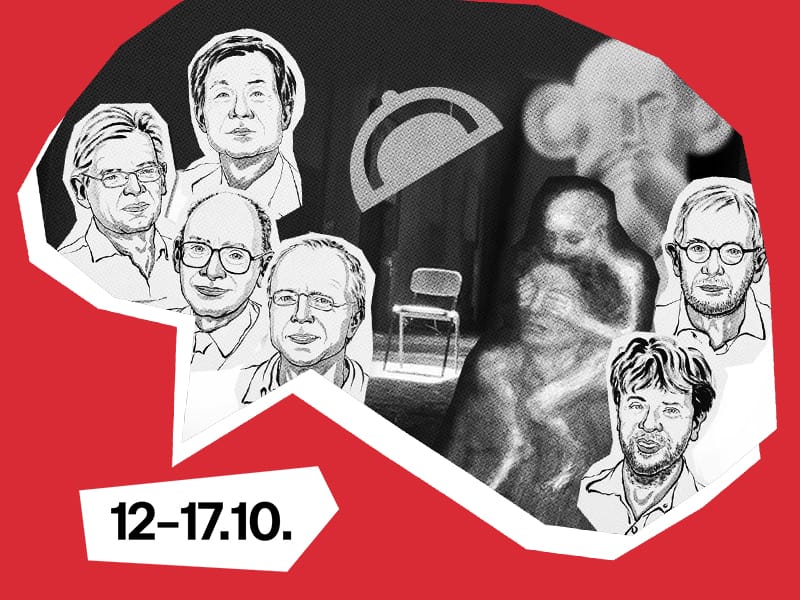
Четири. Трябваше да станат четири ударените от Русия кораби – два в изключителната икономическа зона на България в Черно море и още два в непосредствена близост до териториалните ни води, – за да признае премиерът (и до неотдавна главнокомандващ) генерал Румен Радев, че няма логика Украйна сама да унищожава корабите си. Любопитно ми е как се чувства електоратът му в последните няколко дни на фона на такава демонстрация на малодушие. Дали на гласувалите за него им е уютно и сигурно с такова управление?
В безпощадния си тазседмичен политически коментар „Страдателният залог на генерал-премиера“ Емилия Милчева осветлява парализата на кабинета „Радев“ пред първата му истинска криза за националната сигурност. В тази криза премиер и президентка продължават да се крият зад страдателния залог: ударите са извършени, но извършителят остава безименен, за да не се развали конюнктурният „дует за мира“.
Страдателният залог на генерал-премиера
„Онзи-който-не-бива-да-се-назовава“ продължава да потапя кораби в Черно море. Междувременно Румъния сваля дронове и укрепва отбраната си, а ние търсим доказателства и призоваваме безадресно за мораториуми. Колко струва снишаването, когато войната вече е на брега ни? От Емилия Милчева.
Проблемът е, че когато държавното лидерство капитулира пред граматиката, страхът да назовеш агресора става официална доктрина. Текстът е сурово предупреждение, че държава не се защитава с наведен гръб, а предпазливостта пред Москва не ни купува сигурност, както с единодушие припомниха с отворено писмо четиримата бивши премиери Иван Костов, Бойко Борисов, Кирил Петков и Николай Денков. Междувременно обаче Илияна Йотова има авангардната идея да спасява рибарите и корабите чрез BG ALERT…
Иначе правителството готви чудни изненади за бизнеса и данъкоплатците от догодина, сред които ново повишаване на максималния осигурителен доход и минималните осигурителни прагове, повишаване на цените на винетките, толтаксите и някои акцизи, както и 5% бюджетен дефицит. На този фон някой да е чул нещо за реформи? Някакви? Да си припомним ли, че рядко имаме управление с абсолютно мнозинство, което може да прокара всякакви реформи, стига да пожелае?
Във връзка с това, ако сте изпитвали потребност от инструмент, който във всеки момент да може да предостави и визуализира актуални данни за състоянието на българската икономика – без коментар, само графики и данни… няма нужда да търсите повече. Отскоро в българското интернет пространство работи сайтът Basepoint Doodles. Разгледайте го, полезен и интересен е.
Сега · Basepoint Doodles
Какво става с българската икономика в момента: растеж, цени, работа, жилища, кредит, настроения и външен сектор. Официални данни от НСИ, БНБ, Евростат и Агенцията по вписванията, обновявани автоматично.
Тази седмица дори езиковата ни рубрика дъха на геополитика. С поредната си порция език „Русизми под прикритие“ Павлина Върбанова ни сервира и чаша лингвистична история. Анализът ѝ разкрива, че най-употребяваните русизми днес са всъщност дълбоко прикрити. Думи като „уточнение“, „начало“, „художник“, „трус“ и дори „лев“ носят фонетичните белези на руската езикова редакция, въпреки че корените им са старобългарски.
В статията се обяснява и парадоксът на историческия езиков транзит: как старобългарската книжнина, дала основата на руския книжовен език при покръстването на Киевска Рус, по-късно се връща при нас под формата на църковнославянски и руски заемки. Текстът е елегантно напомняне, че да зачеркнем руското влияние от езика си би означавало и да се откажем от част от собственото си лингвистично наследство, преминало през вековете като културен бумеранг.
Статията на Павлина започва с любопитна анкета, която може да попълните до 21 октомври.
Русизми под прикритие
Разпознавате всички русизми в речта си? Лъжете се. За разлика от руските дронове, русизмите знаят как да се маскират като идеалните двойни и тройни агенти под прикритие. И пак за разлика от дроновете, те са напълно безопасни. Павлина Върбанова ще ви го докаже в две поредни „порции език“.
На Балканите пък мирните, но неглижирани протести от лятото в Тирана ескалираха до безредици и сблъсъци между демонстранти и полиция. Може да си припомните как започна всичко, от великолепната статия на Анета Василева, която беше в Албания през юни.
Напрежението в Тирана е подхранвано от очевидно заслуженото недоверие на гражданите към властта. Затова между хората и управляващите повече прозрачност никога не е излишна, но за жителите на почти всеки град често е трудно да се ориентират дори в решенията на местната власт. Тя пък често говори за прозрачност, но невинаги прави необходимото, за да я осигури.
Ако живеете в Пловдив обаче, може да следите какво се случва, на сайта Prozorets.bg, където обсъжданите теми и взетите решения в Общината са представени по достъпен начин с помощта на технологиите. Нещо повече, може да видите предварително какво предстои да се обсъжда по дадена тема или какво конкретно решение засяга вашия район или квартал, а също така да следите как гласуват общинските съветници.
Всичко това е възможно благодарение на софтуерния архитект, пловдивчанина Иво Стефанов, който търси съмишленици и партньори този инструмент да стане достъпен и в други общини. Проектът му е един от добрите примери за успешно използване на изкуствения интелект в помощ на хората.
Prozorets.bg | Твоят град. Твоят квартал. Нашето бъдеще.
Решенията на Общински съвет Пловдив, обяснени на разбираем език: какво се гласува, кого засяга и кой как гласува.
Отвъд океана недоразумението Доналд Тръмп прави всичко възможно да оцелее след междинните избори на 3 ноември. Традиционно в САЩ е статистическа рядкост управлението да не загуби част от подкрепата си на междинни избори, но този път разочарованието от неспособността на Тръмп да се справи с проблеми като инфлацията и геополитическата стабилност заплашва да помете републиканците по-зле, отколкото през 2018 г.
Същевременно всяка стъпка на Тръмп е грандиозен провал – „малката“ война в Иран е в задънена улица и още повече оплеска геополитическия пейзаж, пазарлъкът с Путин за руски дизел трудно се преглъща дори в собствената му партия, а сделката за връщането на Илон Мъск в орбитата на Белия дом още не е напълно ясна, но няма съмнения, че е обвита в множество конфликти на интереси. И много пари.
Като споменахме Илон Мъск, най-новият филм на документалиста Алекс Гибни е именно за него. Гибни е носител на „Оскар“ и множество награди „Еми“ за заглавия като Taxi to the Dark Side (разследване на практиките за мъчения и разпити, използвани от военните на САЩ в Афганистан и Гуантанамо), Enron: The Smartest Guys in the Room (анализ на срива на корпоративния гигант Enron и финансовите му измами), The Inventor: Out for Blood in Silicon Valley (разказ за измамата на Елизабет Холмс и Theranos) и Going Clear: Scientology and the Prison of Belief (мащабно разкритие за вътрешните механизми и контрола в сциентоложката църква).
Новият мащабен четиричасов документален проект на Алекс Гибни, озаглавен просто „Мъск“, изследва властта и влиянието на милиардера, а режисьорът не крие, че целта му е да провокира дискусията „как да си върнем властта от такива технологични олигарси, които, изглежда, искат да управляват света в свой собствен интерес“.
След премиерата си на кинофестивала във Венеция от тази седмица филмът е по киносалоните в САЩ. Надяваме се скоро да се появи и в някоя от стрийминг платформите.
И като се заговорихме за САЩ… Има ли „хуманен“ начин държавата да убива, или цивилизационният напредък е просто козметичен параван пред варварството? В анализа си „Трябва да поговорим за смъртното наказание“ Светла Енчева тръгва от зловещия прецедент с оцелялата след екзекуция в Тенеси Криста Пайк и скандалното предложение на Пентагона за излъчване на разстрели на живо в интернет, за да деконструира илюзията за „справедлива“ държавна смърт.
Текстът припомня, че овластяването на държавата да отнема живот дехуманизира цялото общество. А разговорът по темата е критично важен точно днес, близо три десетилетия след отмяната на смъртните присъди в България и насред пълзящ консервативен обрат, при който защитата на човешките права лесно може да бъде подложена на ревизия.
Трябва да поговорим за смъртното наказание
Готови ли сте да гледате публични екзекуции? Пийт Хегсет, министърът на войната на САЩ, смята, че една екзекуция чрез разстрел на стрийм в интернет ще ни дойде много освежаващо на цивилизацийката. И по този повод Светла Енчева се пита колко далеч сме стигнали от времената на бесилките по улиците.
Тази седмица Надежда Цекулова и екип на „Тоест“ слагат началото на проекта „Анатомия на пола: Менопауза“, който е своеобразно продължение на рубриката „Анатомия на пола: Жена“.
Началото на новата поредица поставяме със статията „Менопаузата: Упътване за употреба“. Текстът отива отвъд личния разказ, за да покаже как историческото медицинско неглижиране на жените отвъд репродуктивна им функция най-сетне среща научни доказателства, свързващи менопаузалното здраве с дългосрочното качество на живот и с превенцията от сърдечносъдови заболявания и деменция. Надежда сблъсква фактите и с българската реалност: фрагментирано здравеопазване, лекари, които отбиват номера с препоръка за „добавки“, и пълен дефицит на аптечния пазар на медикаментите, смятани за златен стандарт в съвременната терапия.
Менопаузата: Упътване за употреба
Менопаузата е навсякъде, а ние се лутаме между научни знания, клишета и обещания за вечна младост. В първия текст от новата ни поредица Надежда Цекулова тръгва от своя опит, за да потърси какво знаем за този период, защо засяга всички и как да се ориентираме сред съветите, симптомите и маркетинга.
Проектът „Анатомия на пола: Менопауза“ обаче няма да бъде само поредица от статии, а има за цел да отговори на острия недостиг на достъпна, научно базирана информация за перименопаузата и менопаузата на български език, както и да обори съпътстващата обществена стигма. Искаме да предоставим достоверни и проверени знания, чрез които жените да повишат способността си да разпознават симптомите и да вземат информирани решения за здравето си, а обществото да прояви по-голяма чувствителност и да оказва по-добра подкрепа на жените в такъв период на преход.
В рамките на 12 месеца „Тоест“ ще създаде и разпространи десет задълбочени журналистически анализа и десет кратки образователни видеа. Ще организираме видеоразговор между жени с личен опит с перименопаузата и менопаузата и ще организираме полудневна конференция с международни експерти. Ще създадем и специализирана уебстраница, която да бъде полезен централизиран хъб за информация по тази тема. Всичко това ще можем да направим благодарение на финансовата подкрепа на Български фонд за жените и Европейския съюз в рамките на програма „Ценности“ към проекта BIRDS in BG 2 на БФЖ.
Posted by Toest on Thursday, October 15, 2026
От светлината в невронните мрежи и „призрачните частици“ под антарктическия лед до Нобеловия триумф на чистото любопитство. В новия си обзор с научни новини Михаил Ангелов представя най-високите отличия за годината в областите физика, химия, медицина и физиология, разкривайки пътя на три революционни пробива: раждането на оптогенетиката, която превърна гените на едноклетъчните водорасли в инструмент за управление на мозъчни клетки със светлина; полярния детектор IceCube, улавящ космически неутрини от дълбините на Вселената; и разгадаването на молекулната огледалност в органичния синтез.
Текстът на Михаил напомня защо фундаменталната наука няма алтернатива, и проследява десетилетията упорство от първите наблюдения на Луи Пастьор, за да покаже, че значимите скокове в човешкото знание никога не започват от днес.
Научни новини: Нобелови награди 2026
Многократно сме казвали, че научните новини са по-добрите новини. И тази година Михаил Ангелов ни разказва за отличените с Нобелови награди. Включили сме и картинки за най-любознателните. Въобще, наука да искаш!
Какво става, когато естетиката на фашизма и параноята се окажат облечени в най-обаятелния възможен литературен разказ? В рубриката ни „На второ четене“ Стефан Иванов се връща към класиката „Горски цар“ на Мишел Турние по повод новото ѝ издание в превод на Изабела Георгиева.
Стефан обаче превръща втория си прочит в остър социален разрез на днешния ден. От алгоритмичната епоха, в която всеки получава персонален поток от знамения и конспирации, до новите детски лагери и възторга по униформите – сянката на чудовищния разказвач Тифож се оказва твърде разпознаваема и в съвременна България. Напомняне от Стефан Иванов, че от мрачното очарование на този красив, но токсичен роман сме длъжни да се защитаваме със същата интелигентност, с която му се наслаждаваме.
На второ четене: „Горски цар“
Съществуват книги, които четат нас, докато ние ги четем и препрочитаме. „Горски цар“ на Мишел Турние е такава, твърди Стефан Иванов, и ни разказва за разликите между първия и втория си прочит, както и за годините между двата.
И накрая… нещо искрено и лично.
Този бюлетин, списван всяка седмица от дежурен редактор, обобщава не само авторските ни публикации, но и други значими теми. Той достига до няколко хиляди души. Част от тях ни подкрепят редовно с месечно дарение според възможностите си. Някои – от години. Изключително благодарни сме за това!
Времената са трудни за мнозина. Някои от вас се тревожите за бъдещето си, за риска от загуба на доходи и работа. Това е вярно и за екипа на „Тоест“. Въпреки това ние продължаваме да полагаме усилия медията да продължи да съществува, да създава съдържание с безкомпромисно качество и да носи полза на читателите си. Те, за щастие, се увеличават, но даренията и дарителите ни плавно намаляват – от началото на годината с около 15%. Тази тенденция не носи много надежда за бъдещето, а за ежедневната ни журналистическа работа няма проектно финансиране. Не можем да разчитаме на никого за издръжката на редакцията, освен на читателите си.
Затова, ако ни четеш от седмици и месеци, харесваш разнообразието от теми, грижливо прегледаните от редактор и коректор текстове, ясните ни позиции и по-добре от нас знаеш защо продължаваш да ни следиш, но досега не си имал възможност или не си знаел, че е важно и нужно да подкрепиш усилията на екипа ни финансово – не отлагай, направи го сега.
Благодаря ти и приятно четене!
Comic for 2026.10.16 – Waaah Waaah
Post Syndicated from Explosm.net original https://explosm.net/comics/waaah-waaah
New Cyanide and Happiness Comic
Friday Squid Blogging: Squid Before the Chicxulub Meteor Impact
Post Syndicated from Bruce Schneier original https://www.schneier.com/blog/archives/2026/10/friday-squid-blogging-squid-before-the-chicxulub-meteor-impact.html
New research shows that squid lived all around the globe even before the Cretaceous-Paleogene mass extinction event.
As usual, you can also use this squid post to talk about the security stories in the news that I haven’t covered.
Introducing GNOME OS Preview
Post Syndicated from jzb original https://lwn.net/Articles/1101057/
The GNOME Project has provided GNOME OS for some time; until now, the
project only provided a “Nightly” edition that was built from the latest commits
and was aimed solely at GNOME developers. Adrian Vovk has now announced
the release of GNOME OS Preview, which is intended for a non-developer
audience:
GNOME OS Preview is the current GNOME OS Nightly, but without the “nightly”
aspect. Instead, it’s built from the latest stable GNOME release (GNOME 51.1, at
the time of writing). GNOME OS Preview lives in the same branches on GitLab as
the stable org.gnome.Platform Flatpak runtimes.GNOME OS Preview is only a few weeks old, so it has only seen limited
real-life testing so far. We therefore expect people will uncover some issues
initially. That said, Preview is significantly more stable than Nightly, which
dozens of people have been daily driving without major issues for over a
year. Thus, we’re feeling confident that Preview is going to be reliable enough
for daily use by non-developer enthusiasts.
While Preview is meant for non-developers, it is not considered complete or
stable for the broader public. There are a number of features, listed in Vovk’s
post, that need to be implemented before the project is ready to declare
GNOME OS “ready for prime time
“. Adventurous users, who might not
mind having to reinstall the OS once a stable version is declared, can
download and start using GNOME OS Preview today.
[$] Safe self-referential data structures in kernel Rust
Post Syndicated from daroc original https://lwn.net/Articles/1099224/
Self-referential structures that can be used without unsafe code
have posed a problem for Rust for years.
There are many cases where a self-referential data structure is the elegant
algorithmic choice, but implementing it in accordance with Rust’s lifetime rules
is all but impossible. At Kangrejos 2026, Gary Guo presented a clever solution
to the problem in the context of the kernel’s
pin_init crate, which helps with the creation of immovable data structures,
typically for interoperability with C. Guo’s changes could help remove most of
the unsafe code related to lifetimes in the
Nova driver and, eventually, other Rust components.
Kimberly Guilfoyle Broke Trump’s Most Important Rule
Post Syndicated from The Atlantic original https://www.youtube.com/shorts/dxAjx-T7D8E
Microsoft Surface Laptop Ultra Review
Post Syndicated from Ryan Smith original https://www.servethehome.com/microsoft-surface-laptop-ultra-review/
We review the Microsoft Surface Ultra to see how the NVIDIA RTX Spark powered laptop fares and try to answer who the platform is for
The post Microsoft Surface Laptop Ultra Review appeared first on ServeTheHome.
Ontology-Driven Observability: Building an End-to-End Knowledge Graph at Netflix Scale
Post Syndicated from Netflix Technology Blog original https://netflixtechblog.com/ontology-driven-observability-building-an-end-to-end-knowledge-graph-at-netflix-scale-421392cf5adf
Prasanna Vijayanathan, Renzo Sanchez-Silva
When Jake Paul and Mike Tyson stepped into the ring in November 2024, we delivered the fight to roughly 65 million concurrent streams. On an ordinary day our infrastructure takes in more than 2 billion requests and handles upwards of 38 million real-time logging events every second. At that scale, the whole picture doesn’t fit into a single engineering team’s head or onto a single dashboard. With more Live content, Podcasts and real-time streams, our need to understand and update our systems as quickly as possible becomes imperative to provide a good user experience. Understanding the system at this scale and within the time constraints we have, often becomes a daunting exercise in finding a needle in a haystack, in a dark jungle, blindfolded.
This post is about that search for the needle.
The Four hours before a fix
Consider a regression of the kind we see in a given week. The home screen where you see the list of lists of movies, starts taking about 1.5 seconds longer to render. An alert fires. And then we go looking for what caused this issue and how do we fix it?
As it so happens, a regression on the application could be related to anywhere in the system — a client app regression from a new version deployment or A/B test rollout, a load shedding in the infrastructure, a GraphQL query responding with bad data because of a service rollout 6 hops downstream, are all suspects at this point. So, answering “what caused the issue?” needs insights from across the system, and this involves combing through layers of data in a meticulous manner.
The MELT Layer
“What caused the issue?”
Metrics, events, logs and traces, or MELT, in the industry’s shorthand, are the right raw materials for such an investigation, and each of them answers roughly a quarter of the question. We collect observability data across these four pillars, unified into a single observability data layer. This lets us observe our systems in real time, across what our users are experiencing, how our applications are doing and what our backend infrastructure and services are processing and responding to.

The investigation that follows may look like this in each layer:

The timeline of an investigation
So how long does it take to investigate an issue, figure out the root cause and fix it, so our users stop running into this issue again?

In our chosen example, four hours. Very little of it went into computing anything difficult. Most of it went into reconstructing relationships that our observability systems already knew but we had never written down anywhere a human or machine could simply read and discover.
The disagreement underneath
The instinct here could have been, around 2023, to reach for more data or better dashboards, and while both help at the margins, neither addresses what makes these investigations slow.
It’s 2026 now, so we might say, “hey, agents”, but without the right context delivered to the agents, AI systems hallucinate, and especially when teams are on-call and need a fix “now”, we cannot let inaccurate agentic analysis lead us down the wrong path. We need the right needle, not any needle.
Each of our systems is internally coherent and externally isolated. Atlas, our telemetry platform, knows applications and their time series. Radar, our alerting system, knows thresholds and firing history. incident.io knows severities and responders. PagerDuty knows rotations. Spinnaker knows what shipped and when. And our Slack history knows, in a form no query engine can reach, which engineer solved something very similar last quarter and what they found.
The difficulty is that they do not agree on what they are talking about. A thing that is an application in one system is a service in a second and a cluster in a third, with names differing by a suffix, a casing convention, or a rename only a couple of people remember (SMEs, ring a bell?). Joining across them requires a human carrying the mapping in their head, and that person becomes the bottleneck in such cross-domain investigations. The hard part of end-to-end observability is probably better understood as a data modelling problem.
What we lacked was an explicit, machine-readable agreement about the entities in our operational world.
The Ontology
This agreement has a name: an ontology. Ontology is a formal specification of types, the properties they carry, and the relationships they may have. Its unit is the triple, one fact expressed as subject, predicate, object. Consider the following example triples.
api-gateway   rdf:type       ops:Application .
api-gateway   ops:ownedBy    "Team Bedrock" .
api-gateway   ops:deployedIn "us-east-1" .

INC-5377      rdf:type       ops:Incident .
INC-5377      ops:affects    api-gateway .
INC-5377      ops:severity   "SEV 2" .
In the example here, we have already encoded six facts, and can answer in one query, a question that used to span three tools.
“Which incidents affected applications owned by Team Bedrock in us-east-1?” is a single query in place of looking up incidents, Spinnaker and Radar.
We call our ontology layer, The Observability Ontology. It acts as the schema, rule set and shared agreement that standardizes how different systems understand entities like applications, services, incidents, deployments, etc.
We built it on the W3C stack for this: RDF for the data model, OWL for the ontology, SHACL for validation, and SPARQL for querying. These standards are well specified and widely implemented, which keeps the model portable across graph stores.
The data from the ontology itself, is stored as a knowledge graph, persisted to QuipuDB, our homegrown RDF graph database, a distributed quad store based on redb, a Rust-based embedded key value db. Data here is generated by parsing raw telemetry, logs, and incident discussions into triples (subject-predicate-object facts).
Every harvest also produces a full Turtle serialization for archival, making it human-readable and diff-friendly, which has proven more useful for debugging than we expected.
Our ontology is organized into twelve namespaces, each owning one operational domain:

There are two decisions about this ontology that mattered while we built it, so they’re worth sharing.
The first is that we refused a generic Service type. “Service” means four different things across our tooling, so applications resolve to exactly one type, ops:Application, and every one of them is validated against our software catalog of roughly 49,000 entries before the entity is created. Unvalidated strings like usernames, team names, dependency names scraped from network topology, never become applications. We also cap dependency edges in both directions, because one popular service can carry thousands of reverse dependencies and would otherwise dominate the graph.
The second decision concerns what we chose to model. Incident chat carries the reasoning behind an incident. The hypotheses tried and discarded, the mitigation that worked, who knew why, is all context in the incident’s Slack channel and that knowledge evaporates when the channel goes quiet. So a 200-message, 50-person, 15-service incident channel becomes a structure, converting the operational chaos of an incident into ordered triples:

Creating determinism from non-determinism
Building this graph means using tools that are inherently stochastic. LLMs summarize discussions. Fuzzy matching resolves service names. A probabilistic engine proposes causal chains. None of these produce the same output twice with certainty, but what comes out at the end of our system is a deterministic graph that answers a SPARQL query the same way every time.
The ontology is the mechanism that creates this determinism through its pipelined approach. We think of the pipeline as a ladder that drives entropy down, where entropy means the proportion of information still trapped in unstructured form. For example, at the start of this pipeline, an LLM could say anything, but it cannot emit a triple that violates the type system. We constrain the output space tightly enough and a stochastic process yields a deterministic contract:
# The model may produce any prose. Its output MUST fit these predicates:
category  IN ["incident", "question", "discussion", "decision"]
sentiment IN ["positive", "neutral", "negative", "urgent"]

# Result — a deterministic triple:
thread:123  slack:category          "incident" .
thread:123  slack:isIncidentRelated "true"^^xsd:boolean .
There are five layers that get us down this ladder. Any single step of this ladder is non-deterministic. But in aggregate, the chain becomes deterministic. That inversion is the whole trick. We describe them below:

Enrichers: Agents as entropy reducers
We use what we call, enrichers, to reduce entropy across the knowledge graph. Dozens of enrichers run over the graph. Each one of them takes noisy input and emits typed triples, and each reads what earlier enrichers wrote. The contract for an Enricher is deliberately narrow:
class Enricher:
    async def _enrich_async(self, ...):
        raw    = await self.fetch(...)      # 1. read noisy input
        result = self.analyze(raw)          # 2. process (may be stochastic)
        graph.add((uri, RDF.type, OPS.X))   # 3. emit TYPED triples
        graph.add((uri, OPS.pred, Literal(result.value)))
        return EnrichmentResult(success=True, triples_added=count)
Three invariants that are standard across the enrichers:
- every entity carries an rdf:type,
- every URI follows a single naming scheme, and
- the catalog gates every ops:Application.
Two operational choices are worth naming here, as well. The enrichment pipeline runs sequentially — load the graph, add triples, and save.
This sequencing removes an entire category of race conditions at a cost in wall-clock time we are happy to pay. And calls out to external systems like metrics, logs, events and the rest could be best-effort, so a slow downstream API doesn’t block the graph harvest, albeit some degradation. To that end, we are also working to translate these separate systems into the ontology, such as the Metrics Ontology and the Alerts Ontology, so everything could be queried from the Ontology itself.
The Correlation Engine: finding the correlation chains
The correlation engine assimilates the vast number of signals from diverse input sources and condenses them into causal or correlatory chains of events. Today, the engine reads thirteen signal types, including log errors, metric anomalies, slow and failed traces, alerts, incidents, deployments, config changes, experiments, autoscaling, commits, end-to-end bottlenecks, and error patterns. It then searches for paths among them. Some ordered pairs are known to be causal and carry a high prior weight. For example, deployment before log error, config change before metric anomaly, failed trace before incident, and so on. Others, which show high correlation are considered correlation chains. Such chains are scored on temporal proximity and severity, inside a ten-minute window, with anything under 0.6 confidence getting discarded.

The role of the engine here is to propose with evidence, not to make conclusions. Hence, the engine stores its chains along with the graph records that were used to create them.
A 0.87 chain in the above example, is a strong hypothesis for a human or an agent to check, and the graph records the confidence alongside the claim so that consumers can understand why a chain is what it is and weigh their options to make decisions.
The knowledge flywheel
Each harvest cycle turns the same four steps, and each rotation leaves the graph richer for the next. This is the Knowledge Flywheel, leading to continuous enrichment and improvement of the context about our system, stored in the knowledge graph.

Observe collects the signals. Enrich adds typed triples. Infer finds patterns invisible in the raw data. Adapt feeds knowledge back, so that established patterns become detection rules. The compounding result of the four phases leads to a self-improving system. A causal chain discovered in one incident becomes a known pattern for the next, and the ontology gradually stops being a schema and starts being a memory.

Consider the example above. When we first see an incident in api-gateway caused due to a timeout and resolve it, we convert this knowledge into entries to the ontology. This becomes encoded knowledge. As we go through multiple cycles of this encoding, the graph starts learning patterns. After N cycles, patterns become wisdom — “api-gateway deploys cause 40% of SEV-2s” and “30% of deployment issues in api-gateway come from Connection Timeouts”. Surface this as an insight and we proactively start reducing incidents, not just react quickly to new ones.
Putting the graph to work
On top of the graph sits AutoRCA, our internal agentic AI solution, built with a set of specialist agents coordinated around one question. Walking the home page regression from the top of this post, the agentic system’s reasoning chain might look something like this:

Each specialization to the inputs is built by people who understand their respective domain deeply. That division of labour only works if the specialists can pass findings to one another without having to agree on the terms of communication or even have knowledge of each other. The ontology acts as the interface. Each specialist learns one vocabulary — the graph’s. A team writing specialized use cases for how they use traces record their findings as triples about an ops:Application, the logs specialization reads triples about that same ops:Application, and neither needs to know the other exists. A new specialist learns the same vocabulary once and can immediately read everything the other six have written.
Set against the investigation we opened with, the change is narrower than it might sound. The alert still fires at 3:30pm, an engineer still has to weigh the evidence, and the fix still has to be written by someone who understands the code. The hour or two that used to go into assembling context — finding the owning team, reconstructing what shipped, correlating information from different parts of the system, recalling that something similar happened last quarter — all that work is the part the ontology and the graph absorbs. We are early enough that the ranked hypotheses are sometimes wrong, which is why each one carries the evidence that produced it. But when the engineer now starts the investigation, they are already holding the picture that used to take half an afternoon to assemble.
If you want to build one of these
A fair amount of what we have built, we learned by getting it wrong first. Based on this experience, these are the principles we would carry into a second attempt.
- Model identity before anything else. Choose one authoritative catalog per entity kind and validate against it before creating an entity.
- Treat the ontology as code. Version it, review it, test it, and let changes arrive as pull requests. Treating the ontology as code lends itself to agentic development and lets teams scale and contribute to it.
- Separate concepts from instances. Concepts change on a human timescale and instances change continuously, conflating them makes both harder to evolve.
- Build on open standards. RDF, OWL, SHACL and SPARQL are specified, implemented many times over, and portable. A bespoke graph model ties a future consumer to one implementation.
- Constrain stochastic tools with a type system. This is the principle we would defend hardest. Models are useful precisely where determinism is impossible, and a sufficiently narrow output contract converts their output into something a query engine can trust.
- Make enrichment best-effort and ordered. A slow dependency should utmost degrade the graph, never block it. And ordering enrichers so each builds on the last buys more accuracy and that’s worth the tradeoff with parallelism that buys speed.
- Model human reasoning alongside machine telemetry. The most valuable edges in our graph came from discussion. Telemetry records what the system did, discussion records what people understood and interpreted. The reasoning is more valuable to store and serve as wisdom when we need it.
- Keep humans as the approvers. Let agents propose fixes, enrichers, and ontology changes, and route every proposal through a review process with humans in the loop.
What comes next
The graph makes three things possible. First, automatic root cause analysis, where a regression arrives with a ranked set of graph-backed hypotheses attached. Next, automated remediation, where a sufficiently confident diagnosis carries a proposed action like a targeted rollback, a traffic shift, a code change. And eventually infrastructure that heals itself, acting on a predicted failure before members feel it.
Alongside this, we plan to integrate the Observability Ontology with Upper, the domain-modeling language at the heart of Netflix’s Unified Data Architecture (UDA). Upper lets teams describe business and system domains as interconnected, machine-readable models and preserve their meaning and constraints as those models are projected into concrete schemas and systems. This integration would connect operational concepts such as applications, alerts, deployments, and incidents to the broader set of domains modeled across Netflix, giving engineers and agents a shared semantic layer for querying, validation, and reasoning. We will begin with a proof of concept that models incidents in Upper and use what we learn to determine where the two systems should converge.
Acknowledgements
None of this would exist without the teams who share their data, expertise, and patience with an early system. We want to specially acknowledge the efforts of our own team members who made this possible from very early on in this lifecycle, Kaela Marsheck and Aditya Gaur. We are also especially grateful to our collaborators in Netflix’s ontology working group, Peter Royal, Alex Hutter, and to Alexandre Bertails and members of the Unified Data Architecture (UDA)/Knowledge Foundations team for sharing Upper and their domain-modeling expertise, and for helping us explore how the Observability Ontology can become part of a broader semantic foundation at Netflix.

Ontology-Driven Observability: Building an End-to-End Knowledge Graph at Netflix Scale was originally published in Netflix TechBlog on Medium, where people are continuing the conversation by highlighting and responding to this story.
Will the New ‘Grand Theft Auto’ Be a Weapon in the Culture Wars?
Post Syndicated from The Atlantic original https://www.youtube.com/watch?v=mnqns2jkdWw
[$] Recent and future changes to the Linux NFS server
Post Syndicated from corbet original https://lwn.net/Articles/1098611/
The NFS network filesystem protocol has a long history on Unix-like
operating systems (and beyond). NFS is still evolving, though, and
implementations need to keep up. At the 2026 Linux Plumbers Conference, NFS developer
Jeff Layton gave an overview of recent enhancements to the Linux
implementation, along with some hints for what will be coming in the near
future.
Results from the 2026 TAB election
Post Syndicated from corbet original https://lwn.net/Articles/1101020/
The results
from the 2026 election for members of the Linux Foundation Technical
Advisory Board (TAB) have been announced. Kees Cook, Dave Hansen, Miguel
Ojeda, and Shuah Khan have all been re-elected, and Laurent Pinchart will
be joining the board.
Generic Drugs & Overseas Manufacturing #lastweektonight
Post Syndicated from LastWeekTonight original https://www.youtube.com/shorts/xJEOHX5GiO4
Security updates for Friday
Post Syndicated from jzb original https://lwn.net/Articles/1101015/
Security updates have been issued by AlmaLinux (ghostscript, grafana, hplip, libsoup3, lrzsz, rpcbind, and wireshark), Debian (chromium, cifs-utils, expat, gst-plugins-bad1.0, gst-plugins-good1.0, jpeg-xl, mutt, and spip), Mageia (gpsd, libx11, and roundcubemail), Oracle (389-ds-base, compat-libtiff3, environment-modules, ghostscript, grafana, gstreamer1-plugins-bad-free, gstreamer1-plugins-base, gstreamer1-plugins-good, hplip, idm:DL1, kernel, kernel-uek, libsoup, libsoup3, lrzsz, rpcbind, and wireshark), Red Hat (gd), SUSE (alloy, amazon-ecs-init, bind, busybox, chromium, distribution, govulncheck-vulndb, iperf, jackson-annotations, jackson-core, jackson-databind, kernel, libXtst, mutt, openssh, php8, python313-python-multipart, python313-python-rapidjson, python313-python3-saml, python313-pywbem, python313-redis, python313-reportlab, python313-requests, python313-rope, python313-rpyc, python313-rsa, qemu, swtpm, the Java stack, and wpa_supplicant), and Ubuntu (golang-1.23, linux-azure, and rabbitmq-server).
Continuous accountability for Verified bots
Post Syndicated from Chris Tsoukaladelis original https://blog.cloudflare.com/verified-bots-accountability/
A driver’s license tells you who someone is and that they passed a driving test, not whether they’ll drive responsibly in the future. The same is true for bots: verifying who operates it creates accountability, but trust depends on what it does next. A known bot can still ignore website preferences, overwhelm origins, or evade controls. It’s not always malicious — often it’s just a misconfiguration or a bug.
As we described in a previous blog post on bot behavior, we strive to verify two questions: “Are you who you say you are?” and “Can we trust you?” To be a Cloudflare Verified Bot, you broadly need to meet three criteria:
- Identify yourself accurately and securely
- Do only what you say you will do
- Don’t engage in abusive behavior
Bots use Web Bot Auth to sign requests that establish their identity, which BotBase then catalogues in an open format. With identification addressed, our focus shifts to the second cardinal rule of Verified bots: thou shalt do no harm.
Today we introduce a system to evaluate and report when Verified bot behavior starts to deviate from this rule, ensuring that the answer to “Can we trust you?” remains “Yes.”
This is where the distinction between risk and trust becomes important:
- Risk describes the likelihood that a particular request or point-in-time action may be harmful, and it can change from one moment to the next.
- Trust is built over time through repeated and consistent behavior.
For example, we de-listed Perplexity’s bot from our Verified bot list in 2025 when it sought to access resources on websites that opted out of scraping and subsequently attempted to circumvent controls when those requests were blocked.
Do not engage in abusive behavior
This simple requirement sounds like a freebie, but there is a lot of nuance in that statement. When crawlers don’t respect site preferences, that undermines trust. When sites request a crawler to not crawl or to slow down, and the crawler ignores these requests, that undermines trust.
We developed a system to measure how often a crawler respects site preferences. These observations will translate to an explainable trust band: a range showing how consistently a bot respects site preferences and which observed behaviors informed that assessment, rather than a permanent judgment about a bot or its operator. The initial signals we evaluate are:
- Does the bot respect instructions?
- Did it respond to direct feedback?
We consider these to be “common sense” rules, a courtesy to the operators who provide the information bots seek. In the future, we will be sharing these scores publicly on Radar, as well as expanding the ways we measure. This score gives responsible bot operators a way to demonstrate that trust is being upheld over time. Verify, but continuously re-verify.
When in Rome, do as the Romans do
A robots.txt file is the primary way to communicate site owner preferences. Our system considers whether a bot’s observed traffic is consistent with those published preferences over time.
Robots.txt tells all (or specific) bots to only crawl specific parts of a website. Isolated violations and other types of one-offs may not be significant. What we look for instead are repeated patterns of behavior that disregards site preferences. The expectation is simply for responsible bots to consult and honor the preferences that websites publish, in line with RFC 9309.
And just to be clear, a robots.txt sets the minimum rules for what bots and agents should not do. But there is no implication that anything not stated is allowed. For example, a robots.txt does not need to say that a bot must stop when the site can communicate that continued access is unwelcome through other signals.
What you do not wish for yourself, do not impose on others
Bots can remain entirely within allowed paths while still placing substantial load on the websites they visit. One of the clearest ways a website can push back is with an HTTP 429 (“Too Many Requests”) response. A 429 is a directive for the visitor to reduce its request rate, sometimes with guidance about how long to wait before trying again.
Our system considers whether the bot’s traffic adapts after receiving that signal. Does it slow down, pause, or does it continue sending requests at the same pace? We then incorporate that behavior into the bot’s trust band over time: consistently slowing down or pausing increases trust, while repeatedly ignoring the signal lowers it.
Building trust over time
Observing these signals is only a first step toward making verified automation accountable over time. By pairing bot identity with evidence of continuing behavior, we can give site owners more confidence that the bots they choose to allow are respecting their preferences, give bot operators a way to demonstrate they deserve trust, and provide context to website owners about the automated traffic reaching them.
This system, alongside Bot Preference Sync and Bot Management, forms an accountability loop for automated traffic. Bot Preference Sync helps website owners publish their preferences, and observing how bots interact with these preferences shows whether Verified bots consistently honor them over time. Bot Management lets website owners decide how that traffic is handled. Together, they help ensure that trust is earned through transparent, accountable behavior, not assumed from identity alone.
We are already using this system internally to evaluate how consistently Verified bots honor website preferences. Because trust is built over time, we assess sustained patterns rather than isolated events. We are using this initial phase to build that history and refine how those observations become useful guidance. Building on that foundation, we plan to make the system available to all Cloudflare customers, who will be able to choose the trust threshold used to decide how Verified bot traffic is handled. Our goal is straightforward: to keep website preferences meaningful, and ensure trust is earned through sustained behavior.
Want to learn more about how you can handle bots? Cloudflare customers can already use Bot Management to manage automated traffic and Bot Preference Sync to align their published preferences with their configured policies. To explore the ever-growing Verified bot population, see the trends on Radar.
And if you are interested in helping build the future of bot identity and accountability, explore open roles at Cloudflare.