Post Syndicated from digiblurDIY original https://www.youtube.com/watch?v=XBZy2iFoBJA
New Years Sale – 20-80% off!
Post Syndicated from Matt Granger original https://www.youtube.com/watch?v=aDrTQ-FWvnE
Handy Tips #18: Distributed monitoring with a lightweight Zabbix SQLite proxy
Post Syndicated from Arturs Lontons original https://blog.zabbix.com/handy-tips-18-distributed-monitoring-with-a-lightweight-zabbix-sqlite-proxy/18401/
The post Handy Tips #18: Distributed monitoring with a lightweight Zabbix SQLite proxy appeared first on Zabbix Blog.
One More Small Step Toward The Right to Software Repair
Post Syndicated from Bradley M. Kuhn original http://ebb.org/bkuhn/blog/2021/12/28/vizio-gpl-lawsuit-remand.html
[ This is
a crosspost
from my professional blog at Software Freedom Conservancy
(SFC). I encourage you
to use
that copy of the post as the canonical linkage for this essay — I
crossposted here merely for posterity and to reach a wider
audience. ]
Our Motion to Remand in Vizio Lawsuit Shows How the Law Brings Software Freedom to All Users
Yesterday afternoon, we filed a Motion for Remand in our
lawsuit against Vizio for their flagrant GPL & LGPL violations, alleged
with great detail in our complaint in California state
court. Vizio’s response to that complaint was to
“remove” the case to federal
court. Vizio argues that the lawsuit can only be brought by a copyright
holder as a copyright infringement lawsuit in federal court. In response, we
have asked the federal court to return (“remand”) the case to
state court.
While Vizio’s original request to
“remove” the case from state court to federal court is, in
the general sense, a standard litigation tactic and our response is a
relatively standard response (on which we expect to prevail), the
implications of these early procedural maneuvers deserve special attention
for those of you that care deeply about copyleft as a strategy to achieve
software freedom and rights. If you seek a deeper understanding of these
essential issues in copyleft policy, we encourage you to
first read our motion to remand, and then read this
article as supplemental strategic context for that filing.
Many of
our longstanding
Sustainers will recall that we previously have enforced the GPL for
BusyBox in federal court. As part of that large lawsuit against 14
defendants, we learned how the process of copyright-only GPL enforcement
works in US federal court. We still believe that federal litigation
brought by copyright holders is an essential component of copyleft
enforcement.
But many lawyers have advised us that contract law is a useful parallel avenue. This approach has the advantage of
empowering users of the software who are not necessarily copyright holders. The mantra of “the GPL is not a contract” is a
mistruth that has been so often repeated that it became widely accepted and typically unchallenged. (We expect you’ll hear this theory repeated even more loudly now
that the our Vizio lawsuit brought the question to the forefront in a
federal court case.) Yet, prominent legal experts outside of FOSS social circles have long scoffed at the assertion.
Indeed, case law in the USA has held the opposite. In multiple cases,
courts have been convinced, specifically, that the GPL operates as both a contract and a copyright license.
The law appears clear on this, and this is among the reasons why we believe
our motion to remand will succeed. In short, we’ll say it plainly here and now for
everyone: the GPL operates both as a copyright license and as a contract;
litigation can proceed under either of those legal theories. Our
motion to remand in the Vizio case explains the legal
details as to why that’s true.
While this seems a minor matter of legal detail, it stems from the longstanding and fundamental principles
of copyleft itself. Specifically, the point of copyleft was not to further empower
copyright holders. As early as 2001,
I and other copyleft proponents already argued publicly that copyleft was
a method for software authors to unilaterally disarm the inappropriate power held by copyright holders when they created software. Like the Constitutional Bill of Rights in the USA (which exercised government power by guaranteeing each citizen’s rights), the GPL allows software authors to exercise their power in choosing a license to grant rights to all software users. Those
users deserve the right to seek redress when companies impugn their rights.
In short, the GPL was designed as a tool for software authors to exercise their
default power of licensing control to benefit the general public (instead of only themselves).
Accordingly, this legal diversification of claims is not only a
tactical matter. It’s not an esoteric debate; it drives to the very heart of copyleft’s policy goals.
Our Vizio case is landmark GPL litigation because, in addition to seeking the source code for our immediate use to create alternative firmwares, the lawsuit
trailblazes a path for consumers to assert their software right to
repair. If the entire case is ultimately successful, we will have shown
that individual users who purchase a device and wish to repair the
copylefted software in it have a fundamental legal right to take action on their own to
seek redress from the court.
Further, our claim in this lawsuit asks for what lawyers call specific
performance. CCS for a specific product has unique value that cannot be replaced by awarding monetary damages instead. Once ordered to specifically perform, the vendor has no choice but to produce
the CCS for all copylefted software. Our lawsuit focuses on this remedy under contract law because it is the most relevant to the policy aims of the GPL. In short, money is no substitute for CCS, and we plan to explain why to the Court as the case continues.
Nevertheless, copyright litigation under GPL also remains an important tool, and we expect that we’ll work with our lawyers to bring copyright claims again
in the future — when that’s the best tool to do the job that needs to be done. However, we believe a consumer-led enforcement
strategy (which doesn’t require holding copyrights) empowers users in a fundamental way and is consistent with GPL’s original policy goals. As it stands today, we receive regular reports from individuals
who request source code for GPL’d devices, only to have companies ignore
them — unless and until a copyright holder assists them. We provide that
assistance when we can, but realistically we can’t commit to provide such assistance for every copyleft violation in the world. Companies (at
their peril) rely on the false notion that they need only fear a
copyright holders’ accusation of copyleft non-compliance. We seek to change these anti-patterns — starting with our lawsuit against Vizio.
The Vizio lawsuit may take years to complete, but we are
confident that we’ll win this first skirmish. We believe the remedy we seek — that Vizio acknowledge
their obligations under relevant copyleft licenses and release the CCS — is reasonable and achievable. While we pursue that remedy,
we know that not everyone
will have the time or inclination to study every move in this lawsuit. If
you don’t have the time to do that, we thank you now for the trust you’ve
shown by donating to our organization to support this work. We assure you
that we take the public trust of our charitable mission very seriously and
will focus this work, including our litigation, to benefit the general
public. However, if you have the time and inclination, we again commit
ourselves to transparency and updates like this one to explain to you the
nuances and important fundamental issues of strategy that inform our every
decision in our copyleft enforcement work. We believe in the power of
copyleft to bring consumers a meaningful right to software repair, and we believe in
upholding that right under the full scrutiny of that same public.
We thank all of you so much for your support of our work, and the many
encouraging emails that so many of you have sent us about this Vizio
lawsuit. While I always hate to ask for money, I’d be remiss if I didn’t
note that your donations helped us get to this point, and I ask that you
take a moment to become a sustainer during our match donation period, which ends soon.
One More Small Step Toward The Right to Software Repair
Post Syndicated from Bradley M. Kuhn original http://ebb.org/bkuhn/blog/2021/12/28/vizio-gpl-lawsuit-remand.html
[ This is
a crosspost
from my professional blog at Software Freedom Conservancy
(SFC). I encourage you
to use
that copy of the post as the canonical linkage for this essay — I
crossposted here merely for posterity and to reach a wider
audience. ]
Our Motion to Remand in Vizio Lawsuit Shows How the Law Brings Software Freedom to All Users
Yesterday afternoon, we filed a Motion for Remand in our
lawsuit against Vizio for their flagrant GPL & LGPL violations, alleged
with great detail in our complaint in California state
court. Vizio’s response to that complaint was to
“remove” the case to federal
court. Vizio argues that the lawsuit can only be brought by a copyright
holder as a copyright infringement lawsuit in federal court. In response, we
have asked the federal court to return (“remand”) the case to
state court.
While Vizio’s original request to
“remove” the case from state court to federal court is, in
the general sense, a standard litigation tactic and our response is a
relatively standard response (on which we expect to prevail), the
implications of these early procedural maneuvers deserve special attention
for those of you that care deeply about copyleft as a strategy to achieve
software freedom and rights. If you seek a deeper understanding of these
essential issues in copyleft policy, we encourage you to
first read our motion to remand, and then read this
article as supplemental strategic context for that filing.
Many of
our longstanding
Sustainers will recall that we previously have enforced the GPL for
BusyBox in federal court. As part of that large lawsuit against 14
defendants, we learned how the process of copyright-only GPL enforcement
works in US federal court. We still believe that federal litigation
brought by copyright holders is an essential component of copyleft
enforcement.
But many lawyers have advised us that contract law is a useful parallel avenue. This approach has the advantage of
empowering users of the software who are not necessarily copyright holders. The mantra of “the GPL is not a contract” is a
mistruth that has been so often repeated that it became widely accepted and typically unchallenged. (We expect you’ll hear this theory repeated even more loudly now
that the our Vizio lawsuit brought the question to the forefront in a
federal court case.) Yet, prominent legal experts outside of FOSS social circles have long scoffed at the assertion.
Indeed, case law in the USA has held the opposite. In multiple cases,
courts have been convinced, specifically, that the GPL operates as both a contract and a copyright license.
The law appears clear on this, and this is among the reasons why we believe
our motion to remand will succeed. In short, we’ll say it plainly here and now for
everyone: the GPL operates both as a copyright license and as a contract;
litigation can proceed under either of those legal theories. Our
motion to remand in the Vizio case explains the legal
details as to why that’s true.
While this seems a minor matter of legal detail, it stems from the longstanding and fundamental principles
of copyleft itself. Specifically, the point of copyleft was not to further empower
copyright holders. As early as 2001,
I and other copyleft proponents already argued publicly that copyleft was
a method for software authors to unilaterally disarm the inappropriate power held by copyright holders when they created software. Like the Constitutional Bill of Rights in the USA (which exercised government power by guaranteeing each citizen’s rights), the GPL allows software authors to exercise their power in choosing a license to grant rights to all software users. Those
users deserve the right to seek redress when companies impugn their rights.
In short, the GPL was designed as a tool for software authors to exercise their
default power of licensing control to benefit the general public (instead of only themselves).
Accordingly, this legal diversification of claims is not only a
tactical matter. It’s not an esoteric debate; it drives to the very heart of copyleft’s policy goals.
Our Vizio case is landmark GPL litigation because, in addition to seeking the source code for our immediate use to create alternative firmwares, the lawsuit
trailblazes a path for consumers to assert their software right to
repair. If the entire case is ultimately successful, we will have shown
that individual users who purchase a device and wish to repair the
copylefted software in it have a fundamental legal right to take action on their own to
seek redress from the court.
Further, our claim in this lawsuit asks for what lawyers call specific
performance. CCS for a specific product has unique value that cannot be replaced by awarding monetary damages instead. Once ordered to specifically perform, the vendor has no choice but to produce
the CCS for all copylefted software. Our lawsuit focuses on this remedy under contract law because it is the most relevant to the policy aims of the GPL. In short, money is no substitute for CCS, and we plan to explain why to the Court as the case continues.
Nevertheless, copyright litigation under GPL also remains an important tool, and we expect that we’ll work with our lawyers to bring copyright claims again
in the future — when that’s the best tool to do the job that needs to be done. However, we believe a consumer-led enforcement
strategy (which doesn’t require holding copyrights) empowers users in a fundamental way and is consistent with GPL’s original policy goals. As it stands today, we receive regular reports from individuals
who request source code for GPL’d devices, only to have companies ignore
them — unless and until a copyright holder assists them. We provide that
assistance when we can, but realistically we can’t commit to provide such assistance for every copyleft violation in the world. Companies (at
their peril) rely on the false notion that they need only fear a
copyright holders’ accusation of copyleft non-compliance. We seek to change these anti-patterns — starting with our lawsuit against Vizio.
The Vizio lawsuit may take years to complete, but we are
confident that we’ll win this first skirmish. We believe the remedy we seek — that Vizio acknowledge
their obligations under relevant copyleft licenses and release the CCS — is reasonable and achievable. While we pursue that remedy,
we know that not everyone
will have the time or inclination to study every move in this lawsuit. If
you don’t have the time to do that, we thank you now for the trust you’ve
shown by donating to our organization to support this work. We assure you
that we take the public trust of our charitable mission very seriously and
will focus this work, including our litigation, to benefit the general
public. However, if you have the time and inclination, we again commit
ourselves to transparency and updates like this one to explain to you the
nuances and important fundamental issues of strategy that inform our every
decision in our copyleft enforcement work. We believe in the power of
copyleft to bring consumers a meaningful right to software repair, and we believe in
upholding that right under the full scrutiny of that same public.
We thank all of you so much for your support of our work, and the many
encouraging emails that so many of you have sent us about this Vizio
lawsuit. While I always hate to ask for money, I’d be remiss if I didn’t
note that your donations helped us get to this point, and I ask that you
take a moment to become a sustainer during our match donation period, which ends soon.
One More Small Step Toward The Right to Software Repair
Post Syndicated from Bradley M. Kuhn original http://ebb.org/bkuhn/blog/2021/12/28/vizio-gpl-lawsuit-remand.html
[ This is
a crosspost
from my professional blog at Software Freedom Conservancy
(SFC). I encourage you
to use
that copy of the post as the canonical linkage for this essay — I
crossposted here merely for posterity and to reach a wider
audience. ]
Our Motion to Remand in Vizio Lawsuit Shows How the Law Brings Software Freedom to All Users
Yesterday afternoon, we filed a Motion for Remand in our
lawsuit against Vizio for their flagrant GPL & LGPL violations, alleged
with great detail in our complaint in California state
court. Vizio’s response to that complaint was to
“remove” the case to federal
court. Vizio argues that the lawsuit can only be brought by a copyright
holder as a copyright infringement lawsuit in federal court. In response, we
have asked the federal court to return (“remand”) the case to
state court.
While Vizio’s original request to
“remove” the case from state court to federal court is, in
the general sense, a standard litigation tactic and our response is a
relatively standard response (on which we expect to prevail), the
implications of these early procedural maneuvers deserve special attention
for those of you that care deeply about copyleft as a strategy to achieve
software freedom and rights. If you seek a deeper understanding of these
essential issues in copyleft policy, we encourage you to
first read our motion to remand, and then read this
article as supplemental strategic context for that filing.
Many of
our longstanding
Sustainers will recall that we previously have enforced the GPL for
BusyBox in federal court. As part of that large lawsuit against 14
defendants, we learned how the process of copyright-only GPL enforcement
works in US federal court. We still believe that federal litigation
brought by copyright holders is an essential component of copyleft
enforcement.
But many lawyers have advised us that contract law is a useful parallel avenue. This approach has the advantage of
empowering users of the software who are not necessarily copyright holders. The mantra of “the GPL is not a contract” is a
mistruth that has been so often repeated that it became widely accepted and typically unchallenged. (We expect you’ll hear this theory repeated even more loudly now
that the our Vizio lawsuit brought the question to the forefront in a
federal court case.) Yet, prominent legal experts outside of FOSS social circles have long scoffed at the assertion.
Indeed, case law in the USA has held the opposite. In multiple cases,
courts have been convinced, specifically, that the GPL operates as both a contract and a copyright license.
The law appears clear on this, and this is among the reasons why we believe
our motion to remand will succeed. In short, we’ll say it plainly here and now for
everyone: the GPL operates both as a copyright license and as a contract;
litigation can proceed under either of those legal theories. Our
motion to remand in the Vizio case explains the legal
details as to why that’s true.
While this seems a minor matter of legal detail, it stems from the longstanding and fundamental principles
of copyleft itself. Specifically, the point of copyleft was not to further empower
copyright holders. As early as 2001,
I and other copyleft proponents already argued publicly that copyleft was
a method for software authors to unilaterally disarm the inappropriate power held by copyright holders when they created software. Like the Constitutional Bill of Rights in the USA (which exercised government power by guaranteeing each citizen’s rights), the GPL allows software authors to exercise their power in choosing a license to grant rights to all software users. Those
users deserve the right to seek redress when companies impugn their rights.
In short, the GPL was designed as a tool for software authors to exercise their
default power of licensing control to benefit the general public (instead of only themselves).
Accordingly, this legal diversification of claims is not only a
tactical matter. It’s not an esoteric debate; it drives to the very heart of copyleft’s policy goals.
Our Vizio case is landmark GPL litigation because, in addition to seeking the source code for our immediate use to create alternative firmwares, the lawsuit
trailblazes a path for consumers to assert their software right to
repair. If the entire case is ultimately successful, we will have shown
that individual users who purchase a device and wish to repair the
copylefted software in it have a fundamental legal right to take action on their own to
seek redress from the court.
Further, our claim in this lawsuit asks for what lawyers call specific
performance. CCS for a specific product has unique value that cannot be replaced by awarding monetary damages instead. Once ordered to specifically perform, the vendor has no choice but to produce
the CCS for all copylefted software. Our lawsuit focuses on this remedy under contract law because it is the most relevant to the policy aims of the GPL. In short, money is no substitute for CCS, and we plan to explain why to the Court as the case continues.
Nevertheless, copyright litigation under GPL also remains an important tool, and we expect that we’ll work with our lawyers to bring copyright claims again
in the future — when that’s the best tool to do the job that needs to be done. However, we believe a consumer-led enforcement
strategy (which doesn’t require holding copyrights) empowers users in a fundamental way and is consistent with GPL’s original policy goals. As it stands today, we receive regular reports from individuals
who request source code for GPL’d devices, only to have companies ignore
them — unless and until a copyright holder assists them. We provide that
assistance when we can, but realistically we can’t commit to provide such assistance for every copyleft violation in the world. Companies (at
their peril) rely on the false notion that they need only fear a
copyright holders’ accusation of copyleft non-compliance. We seek to change these anti-patterns — starting with our lawsuit against Vizio.
The Vizio lawsuit may take years to complete, but we are
confident that we’ll win this first skirmish. We believe the remedy we seek — that Vizio acknowledge
their obligations under relevant copyleft licenses and release the CCS — is reasonable and achievable. While we pursue that remedy,
we know that not everyone
will have the time or inclination to study every move in this lawsuit. If
you don’t have the time to do that, we thank you now for the trust you’ve
shown by donating to our organization to support this work. We assure you
that we take the public trust of our charitable mission very seriously and
will focus this work, including our litigation, to benefit the general
public. However, if you have the time and inclination, we again commit
ourselves to transparency and updates like this one to explain to you the
nuances and important fundamental issues of strategy that inform our every
decision in our copyleft enforcement work. We believe in the power of
copyleft to bring consumers a meaningful right to software repair, and we believe in
upholding that right under the full scrutiny of that same public.
We thank all of you so much for your support of our work, and the many
encouraging emails that so many of you have sent us about this Vizio
lawsuit. While I always hate to ask for money, I’d be remiss if I didn’t
note that your donations helped us get to this point, and I ask that you
take a moment to become a sustainer during our match donation period, which ends soon.
One More Small Step Toward The Right to Software Repair
Post Syndicated from Bradley M. Kuhn original http://ebb.org/bkuhn/blog/2021/12/28/vizio-gpl-lawsuit-remand.html
[ This is
a crosspost
from my professional blog at Software Freedom Conservancy
(SFC). I encourage you
to use
that copy of the post as the canonical linkage for this essay — I
crossposted here merely for posterity and to reach a wider
audience. ]
Our Motion to Remand in Vizio Lawsuit Shows How the Law Brings Software Freedom to All Users
Yesterday afternoon, we filed a Motion for Remand in our
lawsuit against Vizio for their flagrant GPL & LGPL violations, alleged
with great detail in our complaint in California state
court. Vizio’s response to that complaint was to
“remove” the case to federal
court. Vizio argues that the lawsuit can only be brought by a copyright
holder as a copyright infringement lawsuit in federal court. In response, we
have asked the federal court to return (“remand”) the case to
state court.
While Vizio’s original request to
“remove” the case from state court to federal court is, in
the general sense, a standard litigation tactic and our response is a
relatively standard response (on which we expect to prevail), the
implications of these early procedural maneuvers deserve special attention
for those of you that care deeply about copyleft as a strategy to achieve
software freedom and rights. If you seek a deeper understanding of these
essential issues in copyleft policy, we encourage you to
first read our motion to remand, and then read this
article as supplemental strategic context for that filing.
Many of
our longstanding
Sustainers will recall that we previously have enforced the GPL for
BusyBox in federal court. As part of that large lawsuit against 14
defendants, we learned how the process of copyright-only GPL enforcement
works in US federal court. We still believe that federal litigation
brought by copyright holders is an essential component of copyleft
enforcement.
But many lawyers have advised us that contract law is a useful parallel avenue. This approach has the advantage of
empowering users of the software who are not necessarily copyright holders. The mantra of “the GPL is not a contract” is a
mistruth that has been so often repeated that it became widely accepted and typically unchallenged. (We expect you’ll hear this theory repeated even more loudly now
that the our Vizio lawsuit brought the question to the forefront in a
federal court case.) Yet, prominent legal experts outside of FOSS social circles have long scoffed at the assertion.
Indeed, case law in the USA has held the opposite. In multiple cases,
courts have been convinced, specifically, that the GPL operates as both a contract and a copyright license.
The law appears clear on this, and this is among the reasons why we believe
our motion to remand will succeed. In short, we’ll say it plainly here and now for
everyone: the GPL operates both as a copyright license and as a contract;
litigation can proceed under either of those legal theories. Our
motion to remand in the Vizio case explains the legal
details as to why that’s true.
While this seems a minor matter of legal detail, it stems from the longstanding and fundamental principles
of copyleft itself. Specifically, the point of copyleft was not to further empower
copyright holders. As early as 2001,
I and other copyleft proponents already argued publicly that copyleft was
a method for software authors to unilaterally disarm the inappropriate power held by copyright holders when they created software. Like the Constitutional Bill of Rights in the USA (which exercised government power by guaranteeing each citizen’s rights), the GPL allows software authors to exercise their power in choosing a license to grant rights to all software users. Those
users deserve the right to seek redress when companies impugn their rights.
In short, the GPL was designed as a tool for software authors to exercise their
default power of licensing control to benefit the general public (instead of only themselves).
Accordingly, this legal diversification of claims is not only a
tactical matter. It’s not an esoteric debate; it drives to the very heart of copyleft’s policy goals.
Our Vizio case is landmark GPL litigation because, in addition to seeking the source code for our immediate use to create alternative firmwares, the lawsuit
trailblazes a path for consumers to assert their software right to
repair. If the entire case is ultimately successful, we will have shown
that individual users who purchase a device and wish to repair the
copylefted software in it have a fundamental legal right to take action on their own to
seek redress from the court.
Further, our claim in this lawsuit asks for what lawyers call specific
performance. CCS for a specific product has unique value that cannot be replaced by awarding monetary damages instead. Once ordered to specifically perform, the vendor has no choice but to produce
the CCS for all copylefted software. Our lawsuit focuses on this remedy under contract law because it is the most relevant to the policy aims of the GPL. In short, money is no substitute for CCS, and we plan to explain why to the Court as the case continues.
Nevertheless, copyright litigation under GPL also remains an important tool, and we expect that we’ll work with our lawyers to bring copyright claims again
in the future — when that’s the best tool to do the job that needs to be done. However, we believe a consumer-led enforcement
strategy (which doesn’t require holding copyrights) empowers users in a fundamental way and is consistent with GPL’s original policy goals. As it stands today, we receive regular reports from individuals
who request source code for GPL’d devices, only to have companies ignore
them — unless and until a copyright holder assists them. We provide that
assistance when we can, but realistically we can’t commit to provide such assistance for every copyleft violation in the world. Companies (at
their peril) rely on the false notion that they need only fear a
copyright holders’ accusation of copyleft non-compliance. We seek to change these anti-patterns — starting with our lawsuit against Vizio.
The Vizio lawsuit may take years to complete, but we are
confident that we’ll win this first skirmish. We believe the remedy we seek — that Vizio acknowledge
their obligations under relevant copyleft licenses and release the CCS — is reasonable and achievable. While we pursue that remedy,
we know that not everyone
will have the time or inclination to study every move in this lawsuit. If
you don’t have the time to do that, we thank you now for the trust you’ve
shown by donating to our organization to support this work. We assure you
that we take the public trust of our charitable mission very seriously and
will focus this work, including our litigation, to benefit the general
public. However, if you have the time and inclination, we again commit
ourselves to transparency and updates like this one to explain to you the
nuances and important fundamental issues of strategy that inform our every
decision in our copyleft enforcement work. We believe in the power of
copyleft to bring consumers a meaningful right to software repair, and we believe in
upholding that right under the full scrutiny of that same public.
We thank all of you so much for your support of our work, and the many
encouraging emails that so many of you have sent us about this Vizio
lawsuit. While I always hate to ask for money, I’d be remiss if I didn’t
note that your donations helped us get to this point, and I ask that you
take a moment to become a sustainer during our match donation period, which ends soon.
One More Small Step Toward The Right to Software Repair
Post Syndicated from Bradley M. Kuhn original http://ebb.org/bkuhn/blog/2021/12/28/vizio-gpl-lawsuit-remand.html
[ This is
a crosspost
from my professional blog at Software Freedom Conservancy
(SFC). I encourage you
to use
that copy of the post as the canonical linkage for this essay — I
crossposted here merely for posterity and to reach a wider
audience. ]
Our Motion to Remand in Vizio Lawsuit Shows How the Law Brings Software Freedom to All Users
Yesterday afternoon, we filed a Motion for Remand in our
lawsuit against Vizio for their flagrant GPL & LGPL violations, alleged
with great detail in our complaint in California state
court. Vizio’s response to that complaint was to
“remove” the case to federal
court. Vizio argues that the lawsuit can only be brought by a copyright
holder as a copyright infringement lawsuit in federal court. In response, we
have asked the federal court to return (“remand”) the case to
state court.
While Vizio’s original request to
“remove” the case from state court to federal court is, in
the general sense, a standard litigation tactic and our response is a
relatively standard response (on which we expect to prevail), the
implications of these early procedural maneuvers deserve special attention
for those of you that care deeply about copyleft as a strategy to achieve
software freedom and rights. If you seek a deeper understanding of these
essential issues in copyleft policy, we encourage you to
first read our motion to remand, and then read this
article as supplemental strategic context for that filing.
Many of
our longstanding
Sustainers will recall that we previously have enforced the GPL for
BusyBox in federal court. As part of that large lawsuit against 14
defendants, we learned how the process of copyright-only GPL enforcement
works in US federal court. We still believe that federal litigation
brought by copyright holders is an essential component of copyleft
enforcement.
But many lawyers have advised us that contract law is a useful parallel avenue. This approach has the advantage of
empowering users of the software who are not necessarily copyright holders. The mantra of “the GPL is not a contract” is a
mistruth that has been so often repeated that it became widely accepted and typically unchallenged. (We expect you’ll hear this theory repeated even more loudly now
that the our Vizio lawsuit brought the question to the forefront in a
federal court case.) Yet, prominent legal experts outside of FOSS social circles have long scoffed at the assertion.
Indeed, case law in the USA has held the opposite. In multiple cases,
courts have been convinced, specifically, that the GPL operates as both a contract and a copyright license.
The law appears clear on this, and this is among the reasons why we believe
our motion to remand will succeed. In short, we’ll say it plainly here and now for
everyone: the GPL operates both as a copyright license and as a contract;
litigation can proceed under either of those legal theories. Our
motion to remand in the Vizio case explains the legal
details as to why that’s true.
While this seems a minor matter of legal detail, it stems from the longstanding and fundamental principles
of copyleft itself. Specifically, the point of copyleft was not to further empower
copyright holders. As early as 2001,
I and other copyleft proponents already argued publicly that copyleft was
a method for software authors to unilaterally disarm the inappropriate power held by copyright holders when they created software. Like the Constitutional Bill of Rights in the USA (which exercised government power by guaranteeing each citizen’s rights), the GPL allows software authors to exercise their power in choosing a license to grant rights to all software users. Those
users deserve the right to seek redress when companies impugn their rights.
In short, the GPL was designed as a tool for software authors to exercise their
default power of licensing control to benefit the general public (instead of only themselves).
Accordingly, this legal diversification of claims is not only a
tactical matter. It’s not an esoteric debate; it drives to the very heart of copyleft’s policy goals.
Our Vizio case is landmark GPL litigation because, in addition to seeking the source code for our immediate use to create alternative firmwares, the lawsuit
trailblazes a path for consumers to assert their software right to
repair. If the entire case is ultimately successful, we will have shown
that individual users who purchase a device and wish to repair the
copylefted software in it have a fundamental legal right to take action on their own to
seek redress from the court.
Further, our claim in this lawsuit asks for what lawyers call specific
performance. CCS for a specific product has unique value that cannot be replaced by awarding monetary damages instead. Once ordered to specifically perform, the vendor has no choice but to produce
the CCS for all copylefted software. Our lawsuit focuses on this remedy under contract law because it is the most relevant to the policy aims of the GPL. In short, money is no substitute for CCS, and we plan to explain why to the Court as the case continues.
Nevertheless, copyright litigation under GPL also remains an important tool, and we expect that we’ll work with our lawyers to bring copyright claims again
in the future — when that’s the best tool to do the job that needs to be done. However, we believe a consumer-led enforcement
strategy (which doesn’t require holding copyrights) empowers users in a fundamental way and is consistent with GPL’s original policy goals. As it stands today, we receive regular reports from individuals
who request source code for GPL’d devices, only to have companies ignore
them — unless and until a copyright holder assists them. We provide that
assistance when we can, but realistically we can’t commit to provide such assistance for every copyleft violation in the world. Companies (at
their peril) rely on the false notion that they need only fear a
copyright holders’ accusation of copyleft non-compliance. We seek to change these anti-patterns — starting with our lawsuit against Vizio.
The Vizio lawsuit may take years to complete, but we are
confident that we’ll win this first skirmish. We believe the remedy we seek — that Vizio acknowledge
their obligations under relevant copyleft licenses and release the CCS — is reasonable and achievable. While we pursue that remedy,
we know that not everyone
will have the time or inclination to study every move in this lawsuit. If
you don’t have the time to do that, we thank you now for the trust you’ve
shown by donating to our organization to support this work. We assure you
that we take the public trust of our charitable mission very seriously and
will focus this work, including our litigation, to benefit the general
public. However, if you have the time and inclination, we again commit
ourselves to transparency and updates like this one to explain to you the
nuances and important fundamental issues of strategy that inform our every
decision in our copyleft enforcement work. We believe in the power of
copyleft to bring consumers a meaningful right to software repair, and we believe in
upholding that right under the full scrutiny of that same public.
We thank all of you so much for your support of our work, and the many
encouraging emails that so many of you have sent us about this Vizio
lawsuit. While I always hate to ask for money, I’d be remiss if I didn’t
note that your donations helped us get to this point, and I ask that you
take a moment to become a sustainer during our match donation period, which ends soon.
One More Small Step Toward The Right to Software Repair
Post Syndicated from Bradley M. Kuhn original http://ebb.org/bkuhn/blog/2021/12/28/vizio-gpl-lawsuit-remand.html
[ This is
a crosspost
from my professional blog at Software Freedom Conservancy
(SFC). I encourage you
to use
that copy of the post as the canonical linkage for this essay — I
crossposted here merely for posterity and to reach a wider
audience. ]
Our Motion to Remand in Vizio Lawsuit Shows How the Law Brings Software Freedom to All Users
Yesterday afternoon, we filed a Motion for Remand in our
lawsuit against Vizio for their flagrant GPL & LGPL violations, alleged
with great detail in our complaint in California state
court. Vizio’s response to that complaint was to
“remove” the case to federal
court. Vizio argues that the lawsuit can only be brought by a copyright
holder as a copyright infringement lawsuit in federal court. In response, we
have asked the federal court to return (“remand”) the case to
state court.
While Vizio’s original request to
“remove” the case from state court to federal court is, in
the general sense, a standard litigation tactic and our response is a
relatively standard response (on which we expect to prevail), the
implications of these early procedural maneuvers deserve special attention
for those of you that care deeply about copyleft as a strategy to achieve
software freedom and rights. If you seek a deeper understanding of these
essential issues in copyleft policy, we encourage you to
first read our motion to remand, and then read this
article as supplemental strategic context for that filing.
Many of
our longstanding
Sustainers will recall that we previously have enforced the GPL for
BusyBox in federal court. As part of that large lawsuit against 14
defendants, we learned how the process of copyright-only GPL enforcement
works in US federal court. We still believe that federal litigation
brought by copyright holders is an essential component of copyleft
enforcement.
But many lawyers have advised us that contract law is a useful parallel avenue. This approach has the advantage of
empowering users of the software who are not necessarily copyright holders. The mantra of “the GPL is not a contract” is a
mistruth that has been so often repeated that it became widely accepted and typically unchallenged. (We expect you’ll hear this theory repeated even more loudly now
that the our Vizio lawsuit brought the question to the forefront in a
federal court case.) Yet, prominent legal experts outside of FOSS social circles have long scoffed at the assertion.
Indeed, case law in the USA has held the opposite. In multiple cases,
courts have been convinced, specifically, that the GPL operates as both a contract and a copyright license.
The law appears clear on this, and this is among the reasons why we believe
our motion to remand will succeed. In short, we’ll say it plainly here and now for
everyone: the GPL operates both as a copyright license and as a contract;
litigation can proceed under either of those legal theories. Our
motion to remand in the Vizio case explains the legal
details as to why that’s true.
While this seems a minor matter of legal detail, it stems from the longstanding and fundamental principles
of copyleft itself. Specifically, the point of copyleft was not to further empower
copyright holders. As early as 2001,
I and other copyleft proponents already argued publicly that copyleft was
a method for software authors to unilaterally disarm the inappropriate power held by copyright holders when they created software. Like the Constitutional Bill of Rights in the USA (which exercised government power by guaranteeing each citizen’s rights), the GPL allows software authors to exercise their power in choosing a license to grant rights to all software users. Those
users deserve the right to seek redress when companies impugn their rights.
In short, the GPL was designed as a tool for software authors to exercise their
default power of licensing control to benefit the general public (instead of only themselves).
Accordingly, this legal diversification of claims is not only a
tactical matter. It’s not an esoteric debate; it drives to the very heart of copyleft’s policy goals.
Our Vizio case is landmark GPL litigation because, in addition to seeking the source code for our immediate use to create alternative firmwares, the lawsuit
trailblazes a path for consumers to assert their software right to
repair. If the entire case is ultimately successful, we will have shown
that individual users who purchase a device and wish to repair the
copylefted software in it have a fundamental legal right to take action on their own to
seek redress from the court.
Further, our claim in this lawsuit asks for what lawyers call specific
performance. CCS for a specific product has unique value that cannot be replaced by awarding monetary damages instead. Once ordered to specifically perform, the vendor has no choice but to produce
the CCS for all copylefted software. Our lawsuit focuses on this remedy under contract law because it is the most relevant to the policy aims of the GPL. In short, money is no substitute for CCS, and we plan to explain why to the Court as the case continues.
Nevertheless, copyright litigation under GPL also remains an important tool, and we expect that we’ll work with our lawyers to bring copyright claims again
in the future — when that’s the best tool to do the job that needs to be done. However, we believe a consumer-led enforcement
strategy (which doesn’t require holding copyrights) empowers users in a fundamental way and is consistent with GPL’s original policy goals. As it stands today, we receive regular reports from individuals
who request source code for GPL’d devices, only to have companies ignore
them — unless and until a copyright holder assists them. We provide that
assistance when we can, but realistically we can’t commit to provide such assistance for every copyleft violation in the world. Companies (at
their peril) rely on the false notion that they need only fear a
copyright holders’ accusation of copyleft non-compliance. We seek to change these anti-patterns — starting with our lawsuit against Vizio.
The Vizio lawsuit may take years to complete, but we are
confident that we’ll win this first skirmish. We believe the remedy we seek — that Vizio acknowledge
their obligations under relevant copyleft licenses and release the CCS — is reasonable and achievable. While we pursue that remedy,
we know that not everyone
will have the time or inclination to study every move in this lawsuit. If
you don’t have the time to do that, we thank you now for the trust you’ve
shown by donating to our organization to support this work. We assure you
that we take the public trust of our charitable mission very seriously and
will focus this work, including our litigation, to benefit the general
public. However, if you have the time and inclination, we again commit
ourselves to transparency and updates like this one to explain to you the
nuances and important fundamental issues of strategy that inform our every
decision in our copyleft enforcement work. We believe in the power of
copyleft to bring consumers a meaningful right to software repair, and we believe in
upholding that right under the full scrutiny of that same public.
We thank all of you so much for your support of our work, and the many
encouraging emails that so many of you have sent us about this Vizio
lawsuit. While I always hate to ask for money, I’d be remiss if I didn’t
note that your donations helped us get to this point, and I ask that you
take a moment to become a sustainer during our match donation period, which ends soon.
One More Small Step Toward The Right to Software Repair
Post Syndicated from Bradley M. Kuhn original http://ebb.org/bkuhn/blog/2021/12/28/vizio-gpl-lawsuit-remand.html
[ This is
a crosspost
from my professional blog at Software Freedom Conservancy
(SFC). I encourage you
to use
that copy of the post as the canonical linkage for this essay — I
crossposted here merely for posterity and to reach a wider
audience. ]
Our Motion to Remand in Vizio Lawsuit Shows How the Law Brings Software Freedom to All Users
Yesterday afternoon, we filed a Motion for Remand in our
lawsuit against Vizio for their flagrant GPL & LGPL violations, alleged
with great detail in our complaint in California state
court. Vizio’s response to that complaint was to
“remove” the case to federal
court. Vizio argues that the lawsuit can only be brought by a copyright
holder as a copyright infringement lawsuit in federal court. In response, we
have asked the federal court to return (“remand”) the case to
state court.
While Vizio’s original request to
“remove” the case from state court to federal court is, in
the general sense, a standard litigation tactic and our response is a
relatively standard response (on which we expect to prevail), the
implications of these early procedural maneuvers deserve special attention
for those of you that care deeply about copyleft as a strategy to achieve
software freedom and rights. If you seek a deeper understanding of these
essential issues in copyleft policy, we encourage you to
first read our motion to remand, and then read this
article as supplemental strategic context for that filing.
Many of
our longstanding
Sustainers will recall that we previously have enforced the GPL for
BusyBox in federal court. As part of that large lawsuit against 14
defendants, we learned how the process of copyright-only GPL enforcement
works in US federal court. We still believe that federal litigation
brought by copyright holders is an essential component of copyleft
enforcement.
But many lawyers have advised us that contract law is a useful parallel avenue. This approach has the advantage of
empowering users of the software who are not necessarily copyright holders. The mantra of “the GPL is not a contract” is a
mistruth that has been so often repeated that it became widely accepted and typically unchallenged. (We expect you’ll hear this theory repeated even more loudly now
that the our Vizio lawsuit brought the question to the forefront in a
federal court case.) Yet, prominent legal experts outside of FOSS social circles have long scoffed at the assertion.
Indeed, case law in the USA has held the opposite. In multiple cases,
courts have been convinced, specifically, that the GPL operates as both a contract and a copyright license.
The law appears clear on this, and this is among the reasons why we believe
our motion to remand will succeed. In short, we’ll say it plainly here and now for
everyone: the GPL operates both as a copyright license and as a contract;
litigation can proceed under either of those legal theories. Our
motion to remand in the Vizio case explains the legal
details as to why that’s true.
While this seems a minor matter of legal detail, it stems from the longstanding and fundamental principles
of copyleft itself. Specifically, the point of copyleft was not to further empower
copyright holders. As early as 2001,
I and other copyleft proponents already argued publicly that copyleft was
a method for software authors to unilaterally disarm the inappropriate power held by copyright holders when they created software. Like the Constitutional Bill of Rights in the USA (which exercised government power by guaranteeing each citizen’s rights), the GPL allows software authors to exercise their power in choosing a license to grant rights to all software users. Those
users deserve the right to seek redress when companies impugn their rights.
In short, the GPL was designed as a tool for software authors to exercise their
default power of licensing control to benefit the general public (instead of only themselves).
Accordingly, this legal diversification of claims is not only a
tactical matter. It’s not an esoteric debate; it drives to the very heart of copyleft’s policy goals.
Our Vizio case is landmark GPL litigation because, in addition to seeking the source code for our immediate use to create alternative firmwares, the lawsuit
trailblazes a path for consumers to assert their software right to
repair. If the entire case is ultimately successful, we will have shown
that individual users who purchase a device and wish to repair the
copylefted software in it have a fundamental legal right to take action on their own to
seek redress from the court.
Further, our claim in this lawsuit asks for what lawyers call specific
performance. CCS for a specific product has unique value that cannot be replaced by awarding monetary damages instead. Once ordered to specifically perform, the vendor has no choice but to produce
the CCS for all copylefted software. Our lawsuit focuses on this remedy under contract law because it is the most relevant to the policy aims of the GPL. In short, money is no substitute for CCS, and we plan to explain why to the Court as the case continues.
Nevertheless, copyright litigation under GPL also remains an important tool, and we expect that we’ll work with our lawyers to bring copyright claims again
in the future — when that’s the best tool to do the job that needs to be done. However, we believe a consumer-led enforcement
strategy (which doesn’t require holding copyrights) empowers users in a fundamental way and is consistent with GPL’s original policy goals. As it stands today, we receive regular reports from individuals
who request source code for GPL’d devices, only to have companies ignore
them — unless and until a copyright holder assists them. We provide that
assistance when we can, but realistically we can’t commit to provide such assistance for every copyleft violation in the world. Companies (at
their peril) rely on the false notion that they need only fear a
copyright holders’ accusation of copyleft non-compliance. We seek to change these anti-patterns — starting with our lawsuit against Vizio.
The Vizio lawsuit may take years to complete, but we are
confident that we’ll win this first skirmish. We believe the remedy we seek — that Vizio acknowledge
their obligations under relevant copyleft licenses and release the CCS — is reasonable and achievable. While we pursue that remedy,
we know that not everyone
will have the time or inclination to study every move in this lawsuit. If
you don’t have the time to do that, we thank you now for the trust you’ve
shown by donating to our organization to support this work. We assure you
that we take the public trust of our charitable mission very seriously and
will focus this work, including our litigation, to benefit the general
public. However, if you have the time and inclination, we again commit
ourselves to transparency and updates like this one to explain to you the
nuances and important fundamental issues of strategy that inform our every
decision in our copyleft enforcement work. We believe in the power of
copyleft to bring consumers a meaningful right to software repair, and we believe in
upholding that right under the full scrutiny of that same public.
We thank all of you so much for your support of our work, and the many
encouraging emails that so many of you have sent us about this Vizio
lawsuit. While I always hate to ask for money, I’d be remiss if I didn’t
note that your donations helped us get to this point, and I ask that you
take a moment to become a sustainer during our match donation period, which ends soon.
Kernel prepatch 5.16-rc7
Post Syndicated from original https://lwn.net/Articles/879901/rss
The 5.16-rc7 kernel prepatch is out for
testing. “Obviously the holidays are a big reason it’s all small, so
it’s not like this is a sign of us having found all bugs, and we’ll keep at
this for at least two more weeks“.
Power highly resilient use cases with Amazon Redshift
Post Syndicated from Asser Moustafa original https://aws.amazon.com/blogs/big-data/power-highly-resilient-use-cases-with-amazon-redshift/
Amazon Redshift is the most popular and fastest cloud data warehouse, offering seamless integration with your data lake and other data sources, up to three times faster performance than any other cloud data warehouse, automated maintenance, separation of storage and compute, and up to 75% lower cost than any other cloud data warehouse. This post explores different architectures and use cases that focus on maximizing data availability, using Amazon Redshift as the core data warehouse platform.
In the modern data-driven organization, many data analytics use cases using Amazon Redshift have increasingly evolved to assume a critical business profile. Those use cases are now required to be highly resilient with little to no downtime. For example, analytical use cases that once relied solely on historical data and produced static forecasts are now expected to continuously weave real-time streaming and operational data into their ever-updating analytical forecasts. Machine learning (ML) use cases that relied on overnight batch jobs to extract customer churn predictions from extremely large datasets are now expected to perform those same customer churn predictions on demand using both historical and intraday datasets.
This post is part one of a series discussing high resiliency and availability with Amazon Redshift. In this post, we discuss a diverse set of popular analytical use cases that have traditionally or perhaps more recently assumed a critical business profile. The goal of this post is to show the art of the possible with high resiliency use cases. For each use case, we provide a brief description and explore the reasons for its critical business profile, and provide a reference architecture for implementing the use case following best practices. In the following section, we include a brief mention of some of the complimentary high resiliency features in Amazon Redshift as they apply for each use case.
In the final section of this post, we expand the scope to discuss high resiliency in a data ecosystem that uses Amazon Redshift. In particular, we discuss the Lake House Architecture in the high resiliency context.
Part two of this series (coming soon) provides a deeper look into the individual high resiliency and availability features of Amazon Redshift.
Now let’s explore some of the most popular use cases that have traditionally required high resiliency or have come to require high resiliency in the modern data-driven organization.
Data analytics as a service
Many analytical use cases focus on extracting value from data collected and produced by an organization to serve the organization’s internal business and operational goals. In many cases, however, the data collected and produced by an organization can itself be packaged and offered as a product to other organizations. More specifically, access to the data collected and produced along with analytical capabilities is typically offered as a paid service to other organizations. This is referred to as data analytics as a service (DaaS).
For example, consider a marketing agency that has amassed demographic information for a geographic location such as population by age, income, and family structure. Such demographic information often serves as a vital input for many organizations’ decisions to identify the ideal location for expansion, match their products with likely buyers, product offerings, and many other business needs. The marketing agency can offer access to this demographic information as a paid service to a multitude of retailers, healthcare providers, resorts, and more.
Some of the most critical aspects of DaaS offerings are ease of management, security, cost-efficiency, workload isolation, and high resiliency and availability. For example, the marketing agency offering the DaaS product needs the ability to easily refresh the demographic data on a regular cadence (ease of management), ensure paying customers are able to access only authorized data (security), minimize data duplication to avoid runaway costs and keep the DaaS competitively priced (cost-efficiency), ensure a consistent performance profile for paying customers (workload isolation), and ensure uninterrupted access to the paid service (high availability).
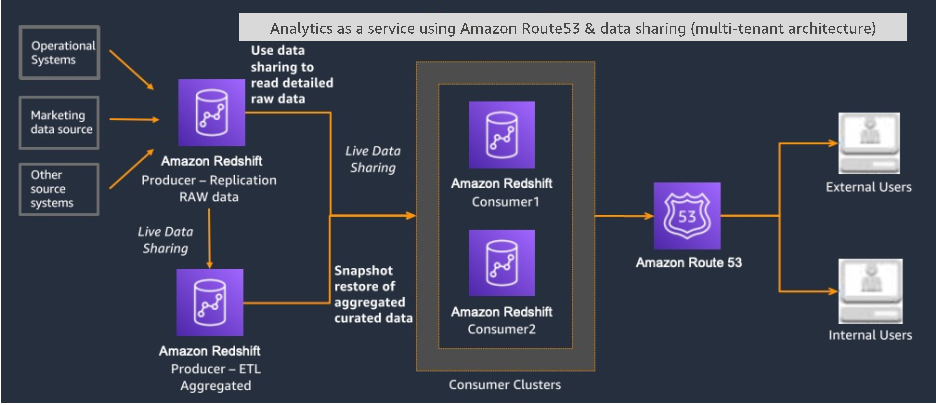
By housing the data in one or more Amazon Redshift clusters, organizations can use the service’s data sharing capabilities to make such DaaS patterns possible in an easily manageable, secure, cost-efficient, and workload-isolated manner. Paying customers are then able to access the data using the powerful search and aggregation capabilities of Amazon Redshift. The following architecture diagram illustrates a commonly used reference architecture for this scenario.

The following diagram illustrates another reference architecture that provides high resiliency and availability for internal and external consumers of the data.
While an in-depth discussion of the data sharing capabilities in Amazon Redshift is beyond the scope of this post, refer to the following resources for more information:
- Implementing multi-tenant patterns in Amazon Redshift using data sharing
- Cross-Account Data Sharing for Amazon Redshift
- Announcing Amazon Redshift data sharing
- Create highly resilient and available architectures with Amazon Redshift (coming soon)
Fresh forecasts
As the power of the modern data ecosystem is unleashed, analytical workloads that traditionally yielded point-in-time reports based solely on historical datasets are evolving to incorporate data in real-time and produce on-demand analysis.
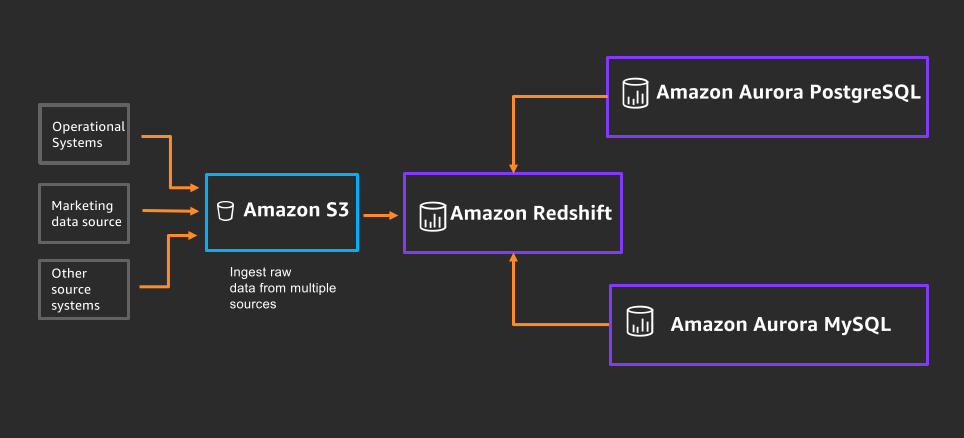
For example, event coordinators that may have had to rely solely on historical datasets to create analytical sales forecasts in business intelligence (BI) dashboards for upcoming events are now able to use Amazon Redshift federated queries to incorporate live ticket sales stored in operational data stores such as Amazon Aurora or Amazon Relational Database Service (Amazon RDS). With federated queries, event coordinators can now have their analytical workloads running on Amazon Redshift query and incorporate operational data such as live ticket sales stored in Aurora on demand so that BI dashboards reflect the most up-to-date ticket sales.
Setting up federated queries is achieved by creating external tables that reference the tables of interest in an RDS instance. The following reference architecture illustrates one straightforward way to achieve federated queries using two different versions of Aurora.
While an in-depth discussion of federated query capabilities in Amazon Redshift is beyond the scope of this post, refer to the following resources for more information:
- Best practices for Amazon Redshift Federated Query
- Build a Simplified ETL and Live Data Query Solution using Redshift Federated Query
- Accelerating Amazon Redshift federated query to Amazon Aurora MySQL with AWS CloudFormation
ML-based predictions
The multitude of ML-based predictive use cases and extensive analytical capabilities offered within the AWS ecosystem has placed ML in an ever-prominent and critical role within data-driven organizations. This could be retailers looking to predict customer churn, healthcare insurers looking to predict the number of claims in the next 30 days, financial services organizations working to detect fraud or managing their market risk and exposure, and more.
Amazon Redshift ML provides seamless integration to Amazon SageMaker for training ML models as often as necessary using data stored in Amazon Redshift. Redshift ML also provides the ability to weave on-demand, ML-based predictions directly into Amazon Redshift analytical workloads. The ease with which ML predictions can now be used in Amazon Redshift has paved the path to analytical workloads or BI dashboards that either use or center around ML-based predictions, and that are relied on heavily by operations teams, business teams, and many other users.
For example, retailers may have traditionally relied on ML models that were trained in a periodic cadence, perhaps weekly or some other lengthy interval, to predict customer churn. A lot can change, however, during those training intervals, rendering the retailer’s ability to predict customer churn less effective. With Redshift ML, retailers are now able to train their ML models using their most recent data within Amazon Redshift and incorporate ML predictions directly in the Amazon Redshift analytical workloads used to power BI dashboards.
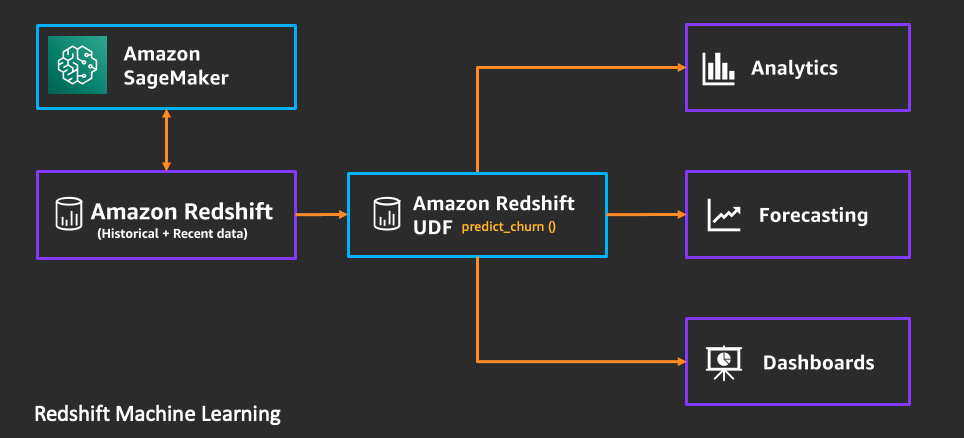
The following reference architecture demonstrates the use of Redshift ML functions in various analytical workloads. With ANSI SQL commands, you can use Amazon Redshift data to create and train an ML model (Amazon Redshift uses SageMaker) that is then made accessible through an Amazon Redshift function. That function can then be used in various analytical workloads.
While an in-depth discussion of Redshift ML is beyond the scope of this post, refer to the following resources for more information:
- Create, train, and deploy machine learning models in Amazon Redshift using SQL with Amazon Redshift ML
- Build regression models with Amazon Redshift ML
Production data for dev environments
Having access to high-quality test data is one of the most common challenges encountered in the development process. To maintain access to high-quality test data, developers must often overcome hurdles such as high administrative overhead for replicating data, increased costs from data duplication, prolonged downtime, and risk of losing development artifacts when refreshing test environments.
The data sharing feature enables Amazon Redshift development clusters to access high-quality production data directly from an Amazon Redshift production or pre-production cluster in a straightforward, secure, and cost-efficient approach that achieves a highly resilient posture.
For example, you can establish a data share on the Amazon Redshift production cluster that securely exposes only the schemas, tables, or views appropriate for development environments. The Amazon Redshift development cluster can then use that data share to query the high-quality production data directly where it is persisted on Amazon Simple Storage Service (Amazon S3), without impacting the Amazon Redshift production cluster’s compute capacity. Because the development cluster uses its own compute capacity, the production cluster’s high resiliency and availability posture is insulated from long-running experimental or development workloads. Likewise, development workloads are insulated from competing for compute resources on the production cluster.
In addition, querying the high-quality production data via the production cluster’s data share avoids unnecessary data duplication that can lead to higher storage costs. As the production data changes, the development cluster automatically gains access to the latest high-quality production data.
Finally, for development features that require schema changes, developers are free to create custom schemas on the development cluster that are based on the high-quality production data. Because the production data is decoupled from the development cluster, the custom schemas are located only on the development cluster, and the production data is not impacted in any way.
Let’s explore two example reference architectures that you can use for this use case.
Production data for dev environments using current-generation Amazon Redshift instance types
With the native Amazon Redshift data sharing available with the current generation of Amazon Redshift instance types (RA3), we can use a relatively straightforward architecture to enable dev environments with the freshest high-quality production data.
In the following architecture diagram, the production cluster takes on the role of a producer cluster, because it’s the cluster producing the data of interest. The development clusters take on the role of the consumer cluster because they’re the clusters interested in accessing the produced data. Note that the producer and consumer roles are merely labels to clarify the different role of each cluster, and not a formal designation within Amazon Redshift.

Production data for dev environments using previous-generation Amazon Redshift instance types
When we discussed this use case, we relied entirely on the native data sharing capability in Amazon Redshift. However, if you’re using the previous generation Amazon Redshift instance types of dense compute (DC) and dense storage (DS) nodes in your production environments, you should employ a slightly different implementation of this use case, because native Amazon Redshift data sharing is available only for the current generation of Amazon Redshift instance types (RA3).
First, we use a snapshot of the dense compute or dense storage production cluster to restore the production environment to a new RA3 cluster that has the latest production data. Let’s call this cluster the dev-read cluster to emphasize that this cluster is only for read-only purposes and doesn’t exhibit any data modifications. In addition, we can stand up a second RA3 cluster that simply serves as a sandbox for developers with data shares established to the dev-read cluster. Let’s call this cluster the dev-write cluster, because its main purpose is to serve as a read/write sandbox for developers and broader development work.
The following diagram illustrates this setup.
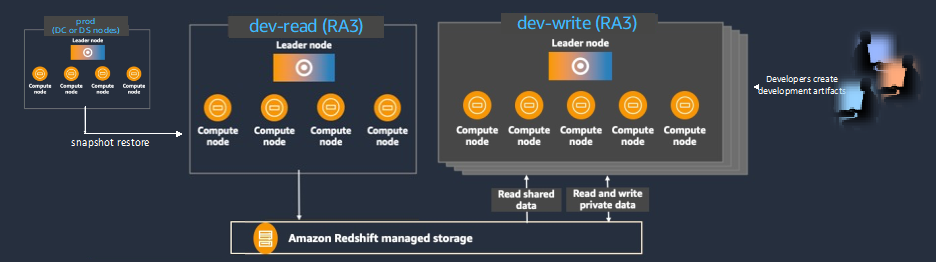
One of the key benefits of having a separate dev-read and dev-write cluster is that the dev-read cluster can be swapped out with a new RA3 cluster containing fresher production data, without wiping out all of the potential development artifacts created by developers (stored procedures for debugging, modified schemas, elevated privileges, and so on). This resiliency is a crucial benefit for many development teams that might otherwise significantly delay refreshing their development data simply because they don’t want to lose their testing and debugging artifacts or broader development settings.
For example, if the development team wants to refresh the production data in the dev-read cluster on the first of every month, then every month you could rename the current dev-read cluster to dev-read-old, and use the latest production snapshot to create a new dev-read RA3 cluster. You also have to reestablish the data share setup between the dev-write and dev-read clusters along with the dev-read cluster swap, but this task can be automated fairly easily and quickly using a number of approaches.
Another key benefit is that the dev-read cluster doesn’t exhibit any load beyond the initial snapshot restoration, so it can be a simple two-node ra3.xlplus cluster to minimize cost, while the dev-write cluster can be more appropriately sized for development workloads. In other words, there is minimal additional cost with this setup vs. using single development cluster.
While an in-depth discussion of Amazon Redshift’s data sharing capabilities is beyond the scope of this post, refer to the following resources for more information:
- Sharing Amazon Redshift data securely across Amazon Redshift clusters for workload isolation
- Announcing Amazon Redshift data sharing
- Create highly resilient and available architectures with Amazon Redshift (coming soon)
Streaming data analytics
With integration between the Amazon Kinesis family of services and Amazon Redshift, you have an easy and reliable way to load streaming data into data lakes as well as analytics services. Amazon Kinesis Data Firehose micro-batches real-time streaming messages and loads those micro-batches into the designated table within Amazon Redshift. With a few clicks on the Kinesis Data Firehose console, you can create a delivery stream that can ingest streaming data from hundreds of sources to multiple destinations, including Amazon Redshift. Should there be any interruptions in publishing streaming messages to Amazon Redshift, Kinesis Data Firehose automatically attempts multiple retries, and you can configure and customize that retry behavior.
You can also configure Amazon Kinesis Data Streams to convert the incoming data to open formats like Apache Parquet and ORC before data is delivered to Amazon Redshift for optimal query performance. You can even dynamically partition your streaming data using well-defined keys like customer_id or transaction_id. Kinesis Data Firehose groups data by these keys and delivers into key-unique S3 prefixes, making it easier for you to perform high-performance, cost-efficient analytics in Amazon S3 using Amazon Redshift and other AWS services.
The following reference architecture shows one of the straightforward approaches to integrating Kinesis Data Firehose and Amazon Redshift.
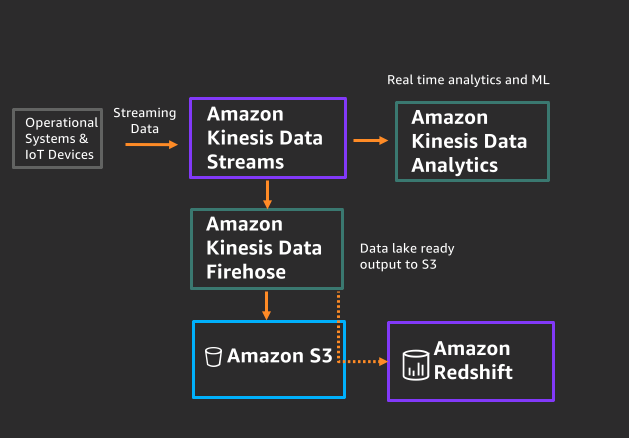
While an in-depth discussion of Kinesis Data Firehose and integration with Amazon Redshift are beyond the scope of this post, refer to the following resources for more information:
Change data capture
While Amazon Redshift federated query enables Amazon Redshift to directly query data stored in an operational data store such as Aurora, there are also times when it helps for some of that operational data to be entirely replicated to Amazon Redshift for a multitude of other analytical use cases, such as data refinement.
After an initial replication from the operational data store to Amazon Redshift, ongoing change data capture (CDC) replications are required to keep Amazon Redshift updated with subsequent changes that occurred on the operational data store.
With AWS Database Migration Service (AWS DMS), you can automatically replicate changes in an operational data store such as Aurora to Amazon Redshift in a straightforward, cost-efficient, secure, and highly resilient and available approach. As data changes on the operational data store, AWS DMS automatically replicates those changes to the designated table on Amazon Redshift.
The following reference architecture illustrates the straightforward use of AWS DMS to replicate changes in an operational data store such as Amazon Aurora, Oracle, SQL Server, etc. to Amazon Redshift and other destinations such as Amazon S3.
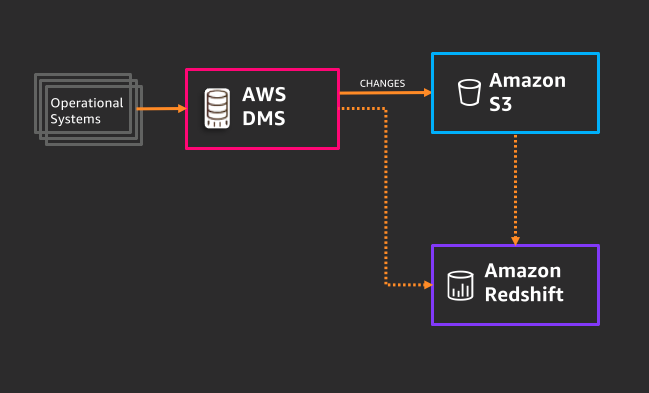
While an in-depth discussion of AWS DMS is beyond the scope of this post, refer to the following resources for more information:
- Converging Data Silos to Amazon Redshift Using AWS DMS
- How can I use Amazon Redshift as the target endpoint for my AWS DMS task?
Workload isolation
Sharing data can improve the agility of your organization by encouraging more connections and fostering collaboration, which allows teams to build upon the work of others rather than repeat already existing processes. Amazon Redshift does this by giving you instant, granular, and high-performance access to data across Amazon Redshift clusters without needing you to manually copy or move your data. You have live access to data so your users can see the most up-to-date and consistent information as it’s updated in Amazon Redshift clusters.
Amazon Redshift parallelizes queries across the different nodes of a cluster, but there may be circumstances when you want to allow more concurrent queries than one cluster can provide or provide workload separation. You can use data sharing to isolate your workloads, thereby minimizing the possibility that a deadlock situation in one workload impacts other workloads running on the same cluster.
The traditional approach to high resiliency and availability is to deploy two or more identical, independent, and parallel Amazon Redshift clusters. However, this design requires that all database updates be performed on all Amazon Redshift clusters. This introduces complexity in your overall architecture. In this section, we demonstrate how to use data sharing to design a highly resilient and available architecture with workload isolation.
The following diagram illustrates the high-level architecture for data sharing in Amazon Redshift.
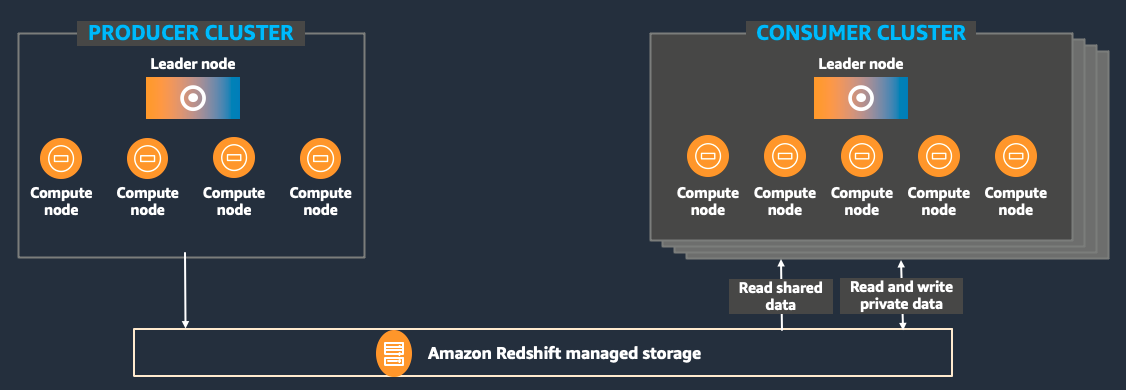
This architecture supports different kinds of business-critical workloads, such as using a central extract, transform, and load (ETL) cluster that shares data with multiple analytic or BI clusters. This approach provides BI workload isolation, so individual BI workloads don’t impact the performance of the ETL workloads and vice-versa. You can scale the individual Amazon Redshift cluster compute resources according to the workload-specific requirements of price and performance.
Amazon Redshift Spectrum is a feature of Amazon Redshift that enables you to run queries against exabytes of unstructured data in Amazon S3, with no loading or ETL required. You can use your producer cluster to process the Amazon S3 data and unload the resulting dataset back to Amazon S3. Then set up as many Amazon Redshift consumer clusters as you need to query your Amazon S3 data lake, thereby providing high resiliency and availability, and limitless concurrency.
Highly available data ecosystem using Amazon Redshift
In this section, we delve a little deeper into the Lake House Architecture, which achieves a wide range of best practices while providing several high resiliency and availability benefits that complement Amazon Redshift.
In the modern data ecosystem, many data-driven organizations have achieved tremendous success employing a Lake House Architecture to process the ever-growing volume, velocity, and variety of data. In addition, the Lake House Architecture has helped those data-driven organizations achieve greater resiliency.
As the following diagram shows, the Lake House Architecture consists of a data lake serving as the single source of truth with different compute layers such as Amazon Redshift sitting atop the data lake (in effect building a house on the lake, hence the term “lake house”).
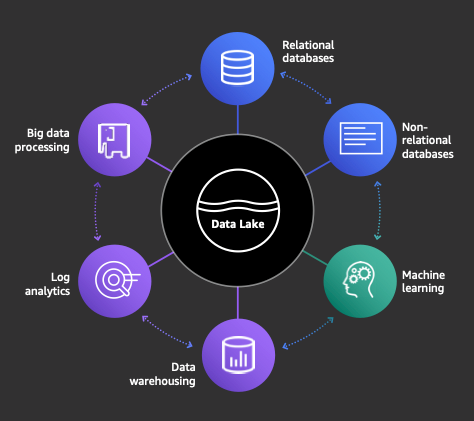
Organizations can use a data lake to maximize data availability by centrally storing the data in the durable Amazon S3 layer but obtain access from multiple AWS products. Separation of compute and storage offers several resiliency and availability advantages. A data lake provides these same advantages but from a heterogeneous set of services that can all access a common data layer. Using Amazon Redshift with a Lake House Architecture reinforces the lake house’s high resiliency and availability. Furthermore, with the seamless integration of Amazon Redshift with the S3 data lake, you can use Redshift Spectrum to run ANSI SQL queries within Amazon Redshift that directly reference external tables in the S3 data lake, as is often done with cold data (data that is infrequently accessed).
In addition, there are a multitude of straightforward services such as AWS Glue, AWS DMS, and AWS Lambda that you can use to load warm data (data that is frequently accessed) from an S3 data lake to Amazon Redshift for greater performance.
Conclusion
In this post, we explored several analytical use cases that require high resiliency and availability and provided an overview of the Amazon Redshift features that help fulfill those requirements. We also presented a few example reference architectures for those use cases as well as a data ecosystem reference architecture that provides a wide range of benefits and reinforces high resiliency and availability postures.
For further information on high resiliency and availability within Amazon Redshift or implementing the aforementioned use cases, we encourage you to reach out to your AWS Solutions Architect—we look forward to helping.
About the Authors
 Asser Moustafa is an Analytics Specialist Solutions Architect at AWS based out of Dallas, TX, USA. He advises customers in the Americas on their Amazon Redshift and data lake architectures and migrations, starting from the POC stage to actual production deployment and maintenance.
 Milind Oke is a Data Warehouse Specialist Solutions Architect based out of New York. He has been building data warehouse solutions for over 15 years and specializes in Amazon Redshift. He is focused on helping customers design and build enterprise-scale well-architected analytics and decision support platforms.
Tru-Tone C9 LED Christmas lights – an overview
Post Syndicated from Technology Connextras original https://www.youtube.com/watch?v=LUTx3uwuQFE
Building a serverless multi-player game that scales: Part 3
Post Syndicated from James Beswick original https://aws.amazon.com/blogs/compute/building-a-serverless-multi-player-game-that-scales-part-3/
This post is written by Tim Bruce, Sr. Solutions Architect, DevAx, Chelsie Delecki, Solutions Architect, DNB, and Brian Krygsman, Solutions Architect, Enterprise.
This blog series discusses building a serverless game that scales, using Simple Trivia Service:
- Part 1 describes the overall architecture, how to deploy to your AWS account, and the different communication methods.
- Part 2 describes adding automation to the game to help your teams scale.
This post discusses how the game scales to support concurrent users (CCU) under a load test. While this post focuses on Simple Trivia Service, you can apply the concepts to any serverless workload.
To set up the example, see the instructions in the Simple Trivia Service GitHub repo and the README.md file. This example uses services beyond AWS Free Tier and incurs charges. To remove the example from your account, see the README.md file.
Overview
Simple Trivia Service is launching at a new trivia conference. There are 200,000 registered attendees who are invited to play the game during the conference. The developers are following AWS Well-Architected best practice and load test before the launch.
Load testing is the practice of simulating user load to validate the system’s ability to scale. The focus of the load test is the game’s microservices, built using AWS Serverless services, including:
- Amazon API Gateway and AWS IoT, which provide serverless endpoints, allowing users to interact with the Simple Trivia Service microservices.
- AWS Lambda, which provides serverless compute services for the microservices.
- Amazon DynamoDB, which provides a serverless NoSQL database for storing game data.
Preparing for load testing
Defining success criteria is one of the first steps in preparing for a load test. You use success criteria to determine how well the game meets the requirements and includes concurrent users, error rates, and response time. These three criteria help to ensure that your users have a good experience when playing your game.
Excluding one can lead to invalid assumptions about the scale of users that the game can support. If you exclude error rate goals, for example, users may encounter more errors, impacting their experience.
The success criteria used for Simple Trivia Service are:
- 200,000 concurrent users split across game types.
- Error rates below 0.05%.
- 95th percentile synchronous responses under 1 second.
With these identified, you can develop dashboards to report on the targets. Dashboards allow you to monitor system metrics over the course of load tests. You can develop dashboards using Amazon CloudWatch dashboards, using custom widgets that organize and display metrics.
Common metrics to monitor include:
- Error rates – total errors / total invocations.
- Throttles – invocations resulting in 429 errors.
- Percentage of quota usage – usage against your game’s Service Quotas.
- Concurrent execution counts – maximum concurrent Lambda invocations.
- Provisioned concurrency invocation rate – provisioned concurrency spillover invocation count / provisioned concurrency invocation count.
- Latency – percentile-based response time, such as 90th and 95th percentiles.
Documentation and other services are also helpful during load testing. Centralized logging via Amazon CloudWatch Logs and AWS CloudTrail provide your team with operational data for the game. This data can help triage issues during testing.
System architecture documents provide key details to help your team focus their work during triage. Amazon DevOps Guru can also provide your team with potential solutions for issues. This uses machine learning to identify operational deviations and deployments and provides recommendations for resolving issues.
A load testing tool simplifies your testing, allowing you to model users playing the game. Popular load testing tools include Apache JMeter, Artillery.io Artillery, and Locust.io Locust. The load testing tool you select can act as your application client and access your endpoints directly.
This example uses Locust to load test Simple Trivia Service based on language and technical requirements. It allows you to accurately model usage and not only generate transactions. In production applications, select a tool that aligns to your team’s skills and meets your technical requirements.
You can place automation around load testing tool to reduce manual effort of running tests. Automation can include allocating environments, deploying and running test scripts, and collecting results. You can include this as part of your continuous integration/continuous delivery (CI/CD) pipeline. You can use the Distributed Load Testing on AWS solution to support Taurus-compatible load testing.
Also, document a plan, working backwards from your goals to help measure your progress. Plans typically use incremental growth of CCU, which can help you to identify constraints in your game. Use your plan while you are in development once portions of your game feature complete.
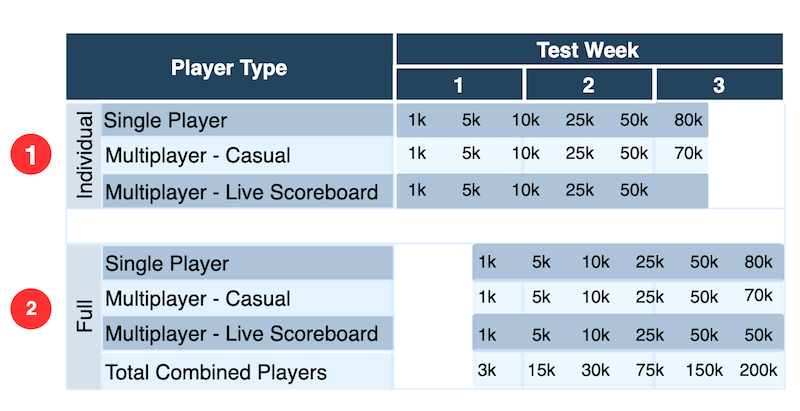
This shows an example plan for load testing Simple Trivia Service:
- Start with individual game testing to validate tests and game modes separately.
- Add in testing of the three game modes together, mirroring expected real world activity.
Finally, evaluate your load test and architecture against your AWS Customer Agreement, AWS Acceptable Use Policy, Amazon EC2 Testing Policy, and the AWS Customer Support Policy for Penetration Testing. These policies are put in place to help you to be successful in your load testing efforts. AWS Support requires you to notify them at least two weeks prior to your load test using the Simulated Events Submission Form with the AWS Management Console. This form can also be used if you have questions before your load test.
Additional help for your load test may be available on the AWS Forums, AWS re:Post, or via your account team.
Testing
After triggering a test, automation scales up your infrastructure and initializes the test users. Depending on the number of users you need and their startup behavior, this ramp-up phase can take several minutes. Similarly, when the test run is complete, your test users should ramp down. Unless you have modeled the ramp-up and ramp-down phases to match real-world behavior, exclude these phases from your measurements. If you include them, you may optimize for unrealistic user behavior.
While tests are running, let metrics normalize before drawing conclusions. Services may report data at different rates. Investigate when you find metrics that cross your acceptable thresholds. You may need to make adjustments like adding Lambda Provisioned Concurrency or changing application code to resolve constraints. You may even need to re-evaluate your requirements based on how the system performs. When you make changes, re-test to verify any changes had the impact you expected before continuing with your plan.
Finally, keep an organized record of the inputs and outputs of tests, including dashboard exports and your own observations. This record is valuable when sharing test outcomes and comparing test runs. Mark your progress against the plan to stay on track.
Analyzing and improving Simple Trivia Service performance
Running the test plan, using observability tools to measure performance, finds opportunities to tune performance bottlenecks.
In this example, during single player individual tests, the dashboards show acceptable latency values. As the test size grows, increasing read capacity for retrieving leaderboards indicates a tuning opportunity:
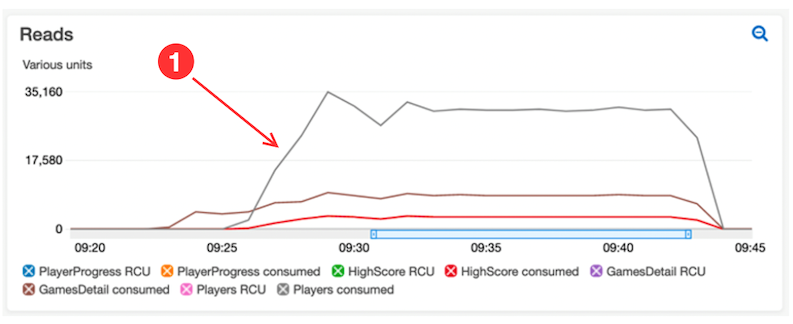
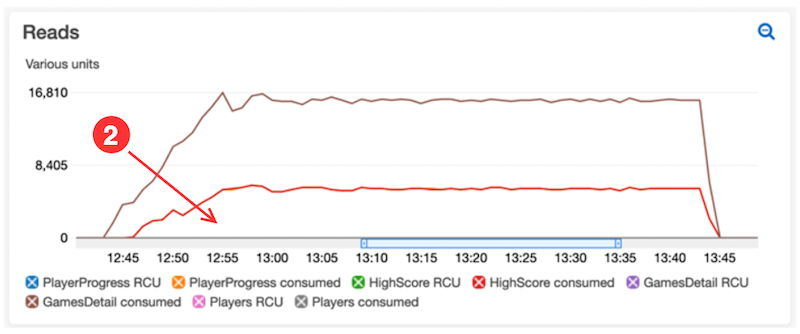
- The CloudWatch dashboard reveals that the LeaderboardGet function is leading to high consumed read capacity for the Players DynamoDB table. A process within the function is querying scores and player records with every call to load avatar URLs
- Standardizing the player avatar URL process within the code reduces reads from the table. The update improves DynamoDB reads.
Moving into the full test phase of the plan with combined game types identified additional areas for performance optimization. In one case, dashboards highlight unexpected error rates for a Lambda function. Consulting function logs and DevOps Guru to triage the behavior, these show a downstream issue with an Amazon Kinesis Data Stream:
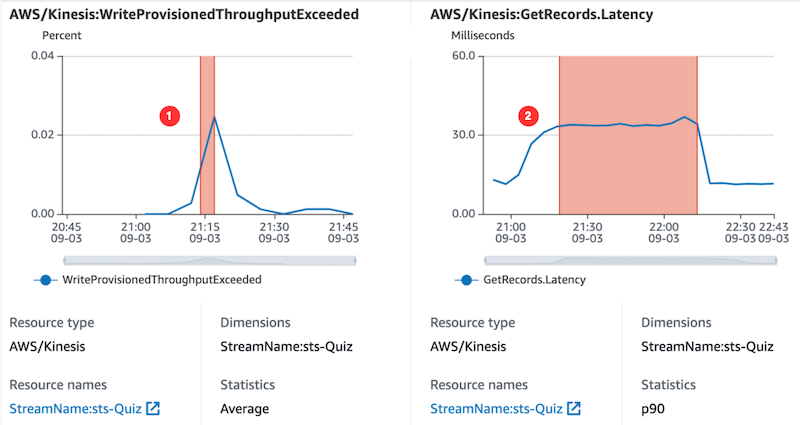
- DevOps Guru, within an insight, highlights the problem of the Kinesis:WriteProvisionedThroughputExceeded metric during our test window
- DevOps Guru also correlates that metric with the Kinesis:GetRecords.Latency metric.
DevOps Guru also links to a recommendation for Kinesis Data Streams to troubleshoot and resolve the incident with the data stream. Following this advice helps to resolve the Lambda error rates during the next test.
Load testing results
By following the plan, making incremental changes as optimizations became apparent, you can reach the goals.

The preceding table is a summary of data from Amazon CloudWatch Lambda Insights and statistics captured from Locust:
- The test exceeded the goal of 200k CCU with a combined total of 236,820 CCU.
- Less than 0.05% error rate with a combined average of 0.010%.
- Performance goals are achieved without needing Provisioned Concurrency in Lambda.
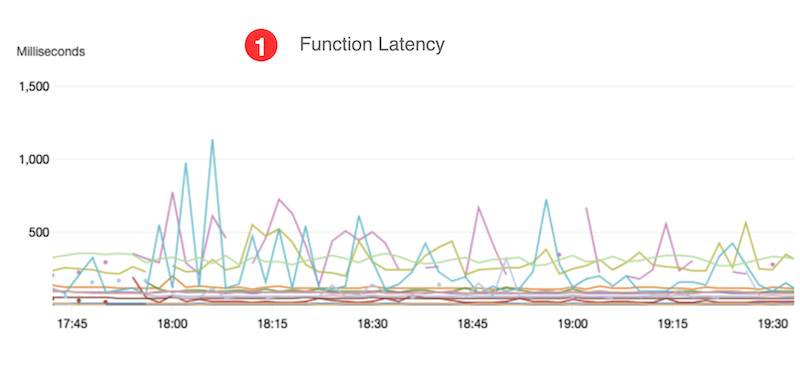
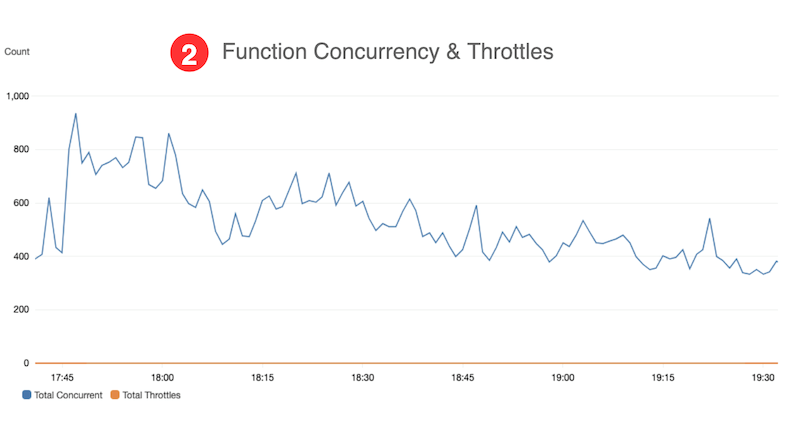
- The function latency goal of < 1 second is met, based on data from CloudWatch Lambda Insights.
- Function concurrency is below Service Quotas for Lambda during the test, based on data from our custom CloudWatch dashboard.
Conclusion
This post discusses how to perform a load test on a serverless workload. The process was used to validate a scale of Simple Trivia Service, a single- and multi-player game built using a serverless-first architecture on AWS. The results show a scale of over 220,000 CCUs while maintaining less than 1-second response time and an error rate under 0.05%.
For more serverless learning resources, visit Serverless Land.
Security updates for Monday
Post Syndicated from original https://lwn.net/Articles/879891/rss
Security updates have been issued by Debian (apache-log4j2, libextractor, libpcap, and wireshark), Fedora (grub2, kernel, libopenmpt, log4j, mingw-binutils, mingw-python-lxml, and seamonkey), Mageia (golang, lapack/openblas, and samba), and openSUSE (go1.16, libaom, log4j12, logback, and runc).
В Харвард тая етикеция за нищо я нямат, значи!
Post Syndicated from original https://bivol.bg/%D0%B2-%D1%85%D0%B0%D1%80%D0%B2%D0%B0%D1%80%D0%B4-%D1%82%D0%B0%D1%8F-%D0%B5%D1%82%D0%B8%D0%BA%D0%B5%D1%86%D0%B8%D1%8F-%D0%B7%D0%B0-%D0%BD%D0%B8%D1%89%D0%BE-%D1%8F-%D0%BD%D1%8F%D0%BC%D0%B0%D1%82.html
понеделник 27 декември 2021

Понеже не искам да ви губя така ценното време по тия светли празници, ще карам направо. Категорично не одобрявам поведението на тоя полуканадец, новоизлюпения премиер. Както и гражданството му, така…
R.I.P. Personal CD – Their demise passed largely unnoticed
Post Syndicated from Techmoan original https://www.youtube.com/watch?v=eiMdpE1Nz5w
Деветата чешма. Един ден на колибите
Post Syndicated from Капка Касабова original https://toest.bg/devetata-cheshma/
Дни преди настъпването на новата 2022 година решихме да изненадаме читателите си с това бавно четиво – по-дълго дори от обичайното за нашите стандарти. Текст, който е на ръба на художествената литература и публицистиката, но достойно заема своето място и в двете полета на словото. Това е най-новият разказ на Капка Касабова, публикуван преди месец в 157-мия брой на британското литературно списаниe Granta. На български език излиза за първи път в „Тоест“ в превод на Мария Змийчарова и на самата авторка.
Капка Касабова ни отвежда на границата между две планини, в една сякаш непроходима бездна от време. Разказва ни за най-обикновени хора, чиято необикновеност е в куража, отдадеността и… съдбата да бъдат пазители на древна традиция. Но и производители на най-чистата храна. И макар да го правят тихо, невидимо и някак напук на всичко, измерението на техния труд е огромно – не само за природата, но и за историята. Нашата обща човешка история. Защото в крачките им са хилядолетните крачки на нашите предци.
Приемете този текст като нашия специален новогодишен подарък за вас, читателите на „Тоест“. За много години и пазете жив огъня на колибите си!
На картата планините от двете страни на Горна Места са обсипани с колиби. Всичките си имат имена: Пиронкови колиби, Мангови, Панови, Лешови, Еврови, Манови, стотици колиби. Колиба – древна дума, древен начин на живот. До колибите на картата има мандри, също носещи имената на стопаните си. Всяка махала, дере, чукар, възвишение и ливада из тези планини е одушевена, кръстена на човек или на цяла етническа група: Юруково, Юрукова могила. Понякога имената са на животни или на растения, на занаяти и емоции, породени от далечни събития: Бикови колиби, Конарско, Нунин гроб, Брѐза, Калята, Мусанов чал, Петков връх, Карамандра, Аврамово, Старина, Райчеви поляни, Валявиците, Налбант, връх Грънчар, Злата усойка. По високото има и много кантони – рилски термин, това са бази за дърводобивни работници. Някои топоними са неясни, изгубени като хората, които са знаели значението им: Лееве, Фанос, Нехтеница, Ро̀палица. Вероятно са останки от изчезналия тракийски език. Някои казват, че старото име на Места е Нехта, „бушуващата река“. Най-старите обитатели на Рило-Родопския масив, за които знаем, са бесите – тракийско планинско племе, известно със съпротивата си срещу римската колонизация и с кастата си от жреци, допринесли за възхода на орфизма.
Във всеки квадратен сантиметър на тези планини са кодирани истории. Погълната от картата, си представих какво би било, ако топонимите още бяха живи, ако планините още ехтяха от крави и овце, кози и хора, млади и стари, коне и водопои, налбанти и разказвачи, седнали край огньовете.
Но по здрач планините мълчаха. Мълчаха и когато зората пукваше златна над синьо-зелените гънки.

Река Места пътува през сърцето на Южните Балкани, на равно разстояние от Адриатическо и Черно море. Притисната между планините, Горна Места е тъмна като родилен канал. Минаваш по разлома, без да виждаш нито края, нито началото.
Места започва 230-километровото си пътешествие под най-високото и най-студено място на Балканите – връх Мусала. Докато го катериш, а и само да го гледаш отдалече, разбираш защо се нарича „мус-Аллах“. „Близо до Господ“ на арабски.
Множество малки притоци пълнят Места, но сега бях близо до двата най-големи, с поетично симетричните имена Бела Места и Черна Места. Според местните имената се дължат на белите камъни в коритото на единия приток и черните – в другия. Ерол каза, че не е виждал изворите им, защото, колкото по-нагоре срещу течението се качваш, толкова по-мрачни стават просеките и по-внезапни инцидентите. Както каза един гъбар, Бела Места не е много за ходене, защото там живее Баба Меца. Хора и животни са били пометени през годините от разбушувалата се Бела Места, в чието стръмно корито няма къде да избягаш.
– Бела Места извира от Джеенем дере. Това вече ти казва достатъчно – каза Ерол. Чувала съм, че на турски „джеенем“ значи „адски“.
Ерол беше първият ми контакт в Якоруда, където не познавах никого. Бях го издирила чрез снимките му. Якоруда е красиво планинско градче, известно със съботния си пазар, джамията и църквата, чиито камбани навремето пеели с човешки гласове. Името му вероятно означава „голяма руда“, защото в тази част на Родопите се е добивала руда още в древността. През 50-те години на ХХ в. геолози откриват в запечатаните тунели непокътнати сечива и дори плетени кошове и дървени стълби отпреди римската колонизация, съхранени благодарение на липсата на кислород. На пазара човек може да си купи ръчно изработена тризъба вила от леска, стоманени ножове с дървени дръжки, шалвари от полиестер, произведени в Китай, килими, килимчета и дантелени пердета от „Хиляда и една нощ“, мехлеми, ядки, меден чан за пръч и стрит на прах тамян за нерви. Якоруда сякаш е възседнала планинския масив: на север пред нея е Рила, на юг зад гърба ѝ – Родопите. Якорудските села са в Родопите, а якорудските езера, реки и пасища са в Рила. „Ние се водим повече родопчани – казваха ми якорудчани, – но като се качваме в балкана, сме в Рила.“
Пътят следва реката. Якоруда е изцяло от южната ѝ страна и в града се влиза по няколко моста, което придава някаква тържественост на всяко пристигане дори когато живееш тук. По залез плитката Места блестеше в укрепеното си корито, пълна с боклуци. Трудно ми беше да си представя, че при последното голямо наводнение притоците я изпълнили толкова, че заляла пътища и къщи. Но следващата зима при един пороен дъжд на юг по течението ѝ с очите си видях как се изправя като разбудена ламя и отнася мост.

Якоруда и цялото поречие на Места са дом на пъстра помашка общност, чиято уникална синкретична култура е капсулирала вековни социални, духовни, екологични и етнографски традиции. Много от жените на Места носят типичните многоцветни шалвари, забрадки с рисувани цветя и ръчно плетени елеци и жилетки, а някои по-възрастни мъже носят малка плетена шапка на темето – или каква да е шапка, понякога и през лятото.
Ерол и семейството му държаха хранителен магазин, но истинската му страст беше пейзажната фотография. По-точно казано, истинската му страст беше Рила. Бе слаб, фин човек и носеше пухено яке, сякаш все му беше студено. Но летните вечери тук наистина са като зимни. Ерол бе израснал през комунизма, десетина години преди мен.
Бях помолила Ерол да ми покаже любимото си място, където ходел, като го стегнела шапката – още от дете. Семейството му е от най-видните в Якоруда. По време на държавния терор срещу българските мюсюлмани, цинично наречен „Възродителен процес“, чийто пик е през 1972–1973 г., родителите му отказали да си сменят имената. Пътят по Места бил черен от военни камиони – срещу мирно, невъоръжено население. От всички страни на Якоруда се разположила войска. Някои от мъжете, сред които бащата на Ерол, се криели нагоре по деретата на Бела Места. Един ден пред къщата им се появили войници и с ритници изкъртили вратата. Единият овесил пушка през рамото на Ерол и го сложил пред себе си като щит, с дулото на пищов в гърба му. „Айде сега, момче, да видим къде е баща ти.“ Накарали го да отвори всички гардероби – ако баща му е въоръжен, да застреля първо него. След това Ерол онемял. Една година отварял уста и нищо не излизало. Чак след като го завели при една жена да му лее куршум за уплах, проговорил. По това време започнал да идва на Окото.
Гувнища
Окото е в местността Гувнища. Пътят се вие през ливади и малки борови гори, издига се и се спуска като планинска песен успоредно на Бела Места и свършва в местността Ропалица. Гувнища е на средата на този път, тучна котловина сред прекрасно оформени хълмчета. За да стигнем до нея, оставихме колата на пътя и тръгнахме по едно гористо хълмче – Райна могила.
– Като деца идвахме да търсим жълтици – каза Ерол. – Сега това го правят иманярите.
Дупки в земята и купчини пръст показваха скорошното им посещение.
– Радвам се, че като деца така и не открихме нищо. Така ми остана поне вярата.
Насреща се разстилаха безкрайните Родопи.
– Виждаме Родопите, но сме в Рила. На мен в Рила ми е най-уютно.
Чувах това от много якорудчани, бабечани, хора от родопските села на Места – гъбари, берачи на билки, планинари: „Обичам Рила, Родопите са ми сухи.“
Пътеката навлезе в тунел от дървета. Точно него Ерол наричаше Окото, защото по няколко пъти на ден – например сега, в късния следобед – човек сякаш се взираше в огромен зелен ирис със зеница като светлинен тунел.

Едро влакнесто куче размахваше опашка срещу нас. Лявото му ухо беше отрязано. Зад кучето вървеше кобила, яздена от изпит мъж с плетена шапка. Опеченото му от слънцето лице се сепна, като на човек, който отдавна не е виждал чужди хора. С Ерол се разпознаха от Якоруда и той ни покани да пием кафе в колибата му.
Тогава за пръв път видях отблизо тези къщи с човешки имена. Някои имаха чардаци. Рушащи се сгради от камък, пръст и дърво с размерите на голяма двуетажна селска къща, но тук приземният етаж е бил за животните. Сега са почти напълно скрити сред избуялата растителност. Неопитното око като нищо можеше да се увлече от пищната зеленина на пейзажа и да не ги забележи.
– Като бяхме деца, беше пълно с народ – каза Ерол. – Това тука бяха обработваеми ниви.
Баба му и дядо му имали пасище наблизо, сега изоставено.
Изкачихме се до единствената колиба, от чийто комин излизаше пушек. Синът и майката на изпития мъж, който се казваше Мехмед, пиеха кафе, седнали на два пъна. Всички в семейството имаха остри, орлови черти. Снахата също беше там, гълчеше овцете и Мехмед отиде да затвори външната кошара. Четири кучета, всичките с отрязани уши, скочиха на крака.
– Тия са лоши – каза синът, името му беше Емин. – Нахапаха жребчето. Не го познаха, че е от наш’те, понеже е още ново.
Кученца с умни очи се гушеха под една уазка. И те бяха с по едно отрязано ухо. На женските – лявото, на мъжките – дясното.
– Колкото по-малки, толко по-добре да се режат – каза Мехмед. – Да забравят бързо.
Такава била традицията – хем кутретата да станат „люти“, хем слухът им да стане по-остър, обясни ми той. И преди го бях чувала това и освен жестока, логиката ми се струваше всъщност нелогична.
„Щото като дойде вълка, к’во правиш“, редовно добавяха към обяснението. Кутретата под уазката изглеждаха травмирани. Практиката все още беше често срещана. Животните нямат права на място, където и хората са били лишени от тях.
Каракачанките са интелигентни, силни, верни и независими, така бях чувала от хората.
– Ти как ще се чувстваш, ако ти отрежат ухото? – не се сдържах.
Мехмед се усмихна и вдигна рамене. Половината му зъби ги нямаше, макар че беше само на 52 години.
– То така е по-добре. По-грозни са с уши.
Гледах осакатените кутрета и ми идеше да си тръгна. Ако не беше пандемията, така щях да направя. Бях планирала да пропътувам цялата Места до Беломорието, но затвориха българо-гръцката граница. Географията на пътешествието ми изведнъж се сви. Така оставах на по-малко места за по-дълго време. Катерех планини, говорех с хора, без да си водя бележки, спях по следобедни ливади и ме хапеха отровни паяци, каквито не знаех, че има.
– Как се живее тук? – попитах малкото семейство.
– Тука вече не се живее – каза Емин с цигара в уста. Беше слаб като баща си, но по-напрегнат. – Нищо не остана̀, било каквото било.
Баба му Баде, дребна жена с каменно лице, не каза нищо, но ми се поусмихна. Мехмед си сви цигара, доволен, че има компания. Леко дръпнати ми се струваха Османови, а отдолу сякаш криеха нещо заровено, неизказано. Попитах може ли да им погостувам за един ден – изненадах и тях, и себе си. Досега не бях се интересувала от пастирския бит. По хълмовете на Шотландия, където живея, този начин на живот отдавна е изчезнал. Животновъдството е прозаичен, механизиран равнинен бизнес, овцете пасат по цяла година без надзор, понеже няма хищници, кравите са зад огради, почти нищо диво не е останало, „свободно отгледано“ е единственото напомнящо на диво, а последните следи от пастирския живот са обраслите пътища, по които някога са карали добитъка на пазара.
На връщане пак минахме през Окото, този път затворено, защото планината се готвеше за сън, и Ерол каза:
– Това семейство го сполетя трагедия, като сменяха имената. Не знам подробности, само, че Емин е кръстен на дядо си.
Каракачанката, която ни беше посрещнала, ни изпрати до колата, а после остана да ни гледа от Райна могила как се спускаме към светлините на Якоруда.
– И на нея ѝ е самотно – каза Ерол.
С това „и“ не знам себе си ли имаше предвид, или семейството овчари, или мен, или общото състояние на човешкия род. Тук, където планинският здрач свежда нещата до очертанията им, самата земя въплъщаваше думите му.
*
В седем сутринта Емин ме взе от града „с джипо“, тоест уазката, която купил, след като се скапал немският му джип, понеже западните джипове не издържат на тия пътища, само руските. Този беше даже съветски и военен, от 70-те години.
Черните пътища бяха изровени като пропасти след дъждовното лято. „Такива дъждове не помня“, каза Емин. Летата тук са сухи. „Много секат гората, става ерозия и от това са така пътищата.“
Емин завършил екология, жена му – право. Те са „смесен брак“ – той е помак, а тя е християнка от друг град. Запознали се в университета в Благоевград. Но в Якоруда не се намерила работа по специалността им. Ето как хора като Емин и жена му са принудени да емигрират или да берат ягоди в Англия през лятото, а есента да режат коледни клонки в Германия. Това правеха много от по-младите в тоя край и се връщаха за по няколко месеца в годината.
– Да, можехме да заминем навън. Обаче ние тука искаме да живеем. Детето да расте с баба си и дядо си и да е сред природата.
Инвестирал в петнайсет овце. После купил още.
– Бащата само това чакаше. А баба тука се е родила, на колибите, така че и тя беше доволна.
В момента имаха 130 овце. Семейството открай време гледало животни, но въпреки това да решиш да се препитаваш от биоживотновъдство е доста смел ход. Още повече че преди това Емин имал добре платена работа, бил дясната ръка на местен предприемач. Ядосан, че Емин го оставя, шефът му го изпратил с думите „Ти с тия о̀вце доникъде нема да стигнеш“. Жената на Емин работеше като администратор в шивашки цех, собственост на гърци, където се прави на ишлеме скъпо бельо за Франция. Понякога идваше да помага за овцете след работа. Шивашките цехове с гръцки собственици започват да никнат като гъби в Южна България в края на 90-те, но условията на труд и заплащането в тях са били „робски“, по думите на местни хора. Сега условията са много по-добри, заплащането – също, но недостатъчно. Ако месецът е добър, в тези анонимни халета жените, които не искат да емигрират и остават да шият дрехи за Hugo Boss, ASOS и други известни марки, взимат по 600 лева – работейки и в събота. През лятото шивачките масово заминават „навън“ да берат плодове и да садят фиданки.
Освен заплатата на жена му в цеха, семейството на Емин, включително баща му и баба му, сега се изхранваше от овцете. Но мляко има само през топлите месеци, през зимата Емин и баща му прибираха стадото от „лювадите“ в по-ниска кошара близо до града и им носеха да хрупат любимата им борѝка – елхови клони.
– Мине ли август, почват сланите – каза Мехмед. Тая година обаче само вали.
От десет литра мляко стават пет килограма сирене. Килограм сирене се продава за 10 лева. В разгара на сезона Емин издоява по четирийсет литра мляко на ден.
– Ай, че мекиците ше изстинат – посрещна ни Баде Османова. Каракачанките ме познаха и размахаха опашки.
– Внимавай с тия кучета, че са понякога боклуци и хапят – предупреди ме Емин. – Не правѝ резки движения.
Събух се и прекрачих прага на колибата. Всичко беше различно от предната вечер. Днес бях гостенка, поканена от наследниците на три стари рилски рода – Османови, Църънкови, Пиронкови. Имената им ги пише на картата. Имената им са самата карта.
– Османови се женели помежду си – Емин се усмихна, дъвчейки. – Да държат имането. То какво имане е било, не знам… До нас нищо не е стигна̀ло!
Седях до горещата чугунена печка и ядях пухкавите мекици на Баде с овче сирене. От три стаи се ползваха две. Уютни, варосани, с легла и килими и даже гоблени и стари плакати по стените; скромен дом, който дебелите стени държат топъл през зимата и хладен през лятото.

Денят тук се движи по разписание. Първо Емин издоява овцете и няколкото козички, които Мехмед вкарва една по една в плевнята. Това отнема около час. На Емин от доенето преди му се схващала ръката, но свикнал. Доенето не беше време за приказки – изтикани в ръцете му, между коленете му, животните внасяха суровата си енергия. Докато ги гледах, започнах да забелязвам разликите в израженията и породите.
– Тая е праменка, румънска порода.
Беше с къдрава козина и с рога.
– Тая е асаф, от Израел. Кръстоска между аваси и източнофризийска.
Имена като полъх от Изтока.
– Тая е маришка.
Порода от коритото на Марица, създадена с кръстоски в Пазарджишкия район.
– Алинка, ела тука, миличка – каза Емин на една от овцете. Любимките му си имаха имена.
– Айде бе, боклук! – викна на друга, която се дърпаше. – Тая е много твърдомъза. Със зор ѝ изкарвам млекото от цицките.
В погледа ѝ наистина имаше упорство. „Да не съм ви машина за мляко!“
Емин търсеше различни породи за стадото си. Намерил трийсетина глави от ценната шарпланинска праменка в Северна Македония, директно от един стар овчар, но заради еврорегулации по границата не успял да ги вкара. Умрял от мъка.
Няколкото останали агнета ги държаха настрана, а доенето почва чак след като те са се набозали. Някои от майките нямат достатъчно мляко – и тях ги оставят на мира.
– Тая е вакла маришка. – Емин се бореше с последната овца, която също му се дърпаше. – И тая е лоша.
Тази сутрин в кофата имаше пет литра. Беше краят на лятото и вечерта не ги бяха доили. Баде и Емин прецедиха млякото през тензух в друга кофа и в стерилизирана пластмасова туба. Тук всичко се изпира, измива и ползва отново. Нищо не се хвърля. После млякото веднага се сваля в града и се продава в мандрата.
Сега Емин и Мехмед трябваше да изведат овцете на паша, за да хванат най-хубавите часове от деня, преди следобедните жеги.
– Ний с тебе ше поодим – каза Баде и си обу гумените ботуши. – Ше ти по̀кажа мойто училище и една убава во̀да. Обувки имаш ли да одиш?
В планината не се ходи със сандали заради трънаците и змиите. Късите панталони и сандалите са за градски туристи и деца. Когато Емин си нави крачола, видях колко е бял прасецът му в сравнение с опечените ръце и лице – като на човек, съшит от различни части.
Баде
– Ей на тава̀ место видях пепелянката – Баде удари тоягата си в земята. – Смаза̀х ѝ главата.
Разказа ми и за други срещи с влечуги – цял живот все намирам змии и гущери, каза, и други нещастия. Като дете стъпила на бръснарско ножче и раната се инфектирала. На колибите е нямало медицинска помощ и родителите ѝ налагали раната с паяжини, лапѝ от сдъвкан тютюн и прясно одрани овчи кожи. Стара народна медицина за спиране на кървене.
Баде намери тояга и за мен. Това е част от ритуала – като тръгнеш по балкана, ако не си носиш тояга, се оглеждаш да си намериш. Тоягата е хем практична, хем символична: тоягата на номада, на пътешественика, на „магешницата“, както казват тук. С нея брулиш дървета, пресичаш реки, сочиш посоката, смазваш змийски глави и се защитаваш от овчарски кучета.
– Не искам да ода на доктор за коляното – каза Баде и си нави крачола на шалварите под пъстрата рокля, за да ми покаже силно подутото си коляно. – Налагам го с оцет.
Болеше я много, ама „ако спра да одя, ше у̀мра о̀вден“. Затова не спираше. И сега крачеше бързо.
Час-два бродихме из високопланинските лювади, току спирахме да берем червен риган, плодчетата на трънливата хвойна, нещо, което ми приличаше на ценния див кимион от Родопите (Не, тава не е чимон, каза Баде) и едно подобно на лайка жълто цвете на име вратига.
– Преди го браа̀ме и препродаваа̀ме – каза Баде, – ама веке никой не доа̀гя да бере. Вратиката гони змейовето.
Въпреки широкото си приложение в народната медицина, вратигата явно не е на мода. Продължихме нататък с пълни джобове с билки.
– Тава тука е кучешки сакъз, за разстройство и гадене.
Синя жлъчка, тя е навсякъде.
Оставихме зад гърба си смесената иглолистна гора и навлязохме в царството на клека. На места клекът е станал инвазивен заради ерозията на почвите, обезлесяването на склоновете и климатичните промени, предизвикани от всичката човешка дейност през последните 70 години. До края на 40-те години на ХХ в., когато държавата започва да експлоатира планината, Рило-Родопският масив е бил недокоснат. Даже днес в някаква степен е запазил прединдустриалния си облик, но каменните кариери в Родопите и безогледното сечене на гори без залесяване заплашват да смалят планината до неузнаваемост.

Въздухът изтъняваше, колкото по-нагоре се изкачвахме. Проследихме стъпки на лисица и видяхме вълчи изпражнения. Вълците открай време са напаст за овчарите – глутниците нападат кошарите, особено нощем или когато е паднала мъгла, и затова овчарите не държат „слаби кучета“. Старата каракачанка на Баде била толкова добра, че „чува 300 о̀вци“. Баде говореше за нея без емоции, както говореше и за себе си.
– Едно време тава сичко беше нива, орнѝче – каза. – Овес, картофи, есеница. Пшеница тука не зрее. А глей ся. Глей тая го̀ра, дамла̀та да я удари дано.
„Дамлата да те удари дано!“ – старо проклятие, пожелаващо чума и болести, свързани с водата, защото „дамла“ е „капка вода“ на турски. Завръщането на природата се смята за нещо хубаво, но за Баде триумфът на дивото над питомното в жилищните лювади на нейното детство и младост, където е имало „живот“, беше тежка загуба – толкова тежка, че нямаше думи да я назове, освен дамла̀. А какво е есеница?
– Ръж – каза Баде. – Оти го сеем есента.
Стигнахме до едно високо плато, из което тук-там се виждаха полуизоставени къщи. През лятото някои още се използваха от наследниците, които сееха овес и картофи и обираха плодовите дръвчета за компоти. Баде забрули клоните на една огромна стара слива с тоягата си и обрахме падналите плодове.
– Я съм голема сливарка – каза. „Голлема“, така се говори на якорудски, с удебелено „л“.
През лятото ги сушала като петмез върху дървени дъски, да има да си дъвче през зимата; това го научила от баба си. Преди няколко седмици, докато била на паша с овцете, точно тук я хванала силна градушка. „Такъв град паднà, да пискаш. Ама и да пискаш, нема кой да те чуе.“
С овцете се свили под сливата, докато отмине.
– Овцете и те обичат сливи. Мащерка и риган не щат. И те кат мен пасат, къде аз паса.
Надгробен камък до едната от къщите бележеше къде почива роднината на име Сабрия, който открил купчината жълтици в Бела Места – част от изчезналото семейно имане. Сабрия е бил мидже на Баде, което значи брат на баща ѝ. Всъщност Сабрия е бил сираче, осиновен от семейството и неочаквано донесъл му късмет. Обичал е да живее тук, в най-високата обитаема част на Южна Рила, затова тук са го погребали.
– Обаче некъде у некой требе да е останал наниз жълтици – подсмихна се Баде.
Спряхме до една чешма – всъщност чучур над стара вана. Как са докарали вана тук изобщо? „На самарь, как“, каза Баде.
– Пийни си – каза Баде.
Водата беше студена и безплътна. Изворите на Рила са безброй и всичките са вкусни.
– Требва ми от девет чѐшми во̀да – продължи Баде. – Я съм зела от шес, остават още три.
– За какво ти е вода от девет чешми? – попитах.
– За уплах – каза и продължи нататък без повече обяснения. – Ей тава е училището.
Двуетажна къща, изоставена. В нея били, освен класните стаи, и стаите на учителите. Баде ги помнеше всичките.
– Сандре от Якоруда. Баба Рада от София, тя много ни переше (биеше), и като рукнеше (викнеше)… И Ленчето от Бачѐво.
Децата идвали на групички от колибите, крачели през снегове и бури, с часове. Баде отиде до една полусъборена пристройка – фурната. Големите глинени тепсии още стояха – една за хляб, друга за баница. Ставаше ли хубав хлябът?
– Ехее. Не беше много бял, ама беше благ.
На един пирон висеше кръгло огледалце, в което се отразяваше стръмната ливада.
Баде нагласи бялата си забрадка за селфито, доближихме лицата си. Тоягата ми беше останала някъде.
– Ела на сенкя – каза. – И аз кат овцете на сенкя одя.
Седнахме на стълбите на някогашното ѝ училище, преди да тръгнем надолу за обяд, а под краката ни се ширна смайващата панорама на Рила и Родопите във всички оттенъци на синьото и зеленото.
Векове наред огромни стада прехвърляли баирите като бели юргани. Богатите семейства гледали по няколко хиляди глави. Тук, в най-високите планини на Южните Балкани, са били големите подвижни градове на животните, чийто часовник е месечината. Животни и хора следвали хода на сезоните, кръговрата на годината, от слънцестоене до равноденствие, от зимна към лятна паша, нагоре и надолу, правели си колиби за през лятото, за през нощта, раздухвали миналогодишната жар, за да стъкнат новия огън.

Пастирството има дълги традиции в тези планини. Сред планинските овчари най-известни и до днес са каракачаните, дали името си на породи коне, магарета и овце, и разбира се, на кучетата. Тук казват „кучета̀та“. Каракачаните говорят гръцки и често български. На турски „кара качан“ значи „черен беглец“ и наистина жените са носели по няколко ката черни вълнени дрехи и шамии. Но това е екзоним, външно название. Самите те се наричат влахи (Βλάχοι). Най-общо казано, влахите са пътуващите пастири на Южните Балкани, които лете се качвали със стадата си на високото, а зимите изкарвали в егейските равнини. Те са и последните номади на Европа. Не притежавали земи, а разменяли висококачествените си животински продукти за други стоки, докато минавали със сезонните си кервани през постоянните селища.
Отделно са власите, които говорят румънски и пазят стара пастирска култура и които се срещат из целите Южни Балкани, но сега са претопени – особено тези в Гърция. Власите на Рила и Родопите са прочути сред местните хора с това, че разбират от коне, лесовъдство и пренасяне на дърва за огрев през техния роден терен, най-труднопроходимия в Европа.
Както подсказват и много от топонимите, тук някога е имало големи общности юруци – на турски yürük значи „който ходи“. Оттам е и изразът „на юруш“. Юруците, тюркски пастирски общности с характерна полуномадска култура и известни с тъканите си черги, са дошли от Азия с османците. От техните общности днес не е останало почти нищо.
Предците на Баде вероятно са наследници на далечните беси и на следващите планински общности. Романизирани, покръстени, ислямизирани, деислямизирани, европеизирани, експлоатирани, емигрирали и по чудо неемигрирали – хора, платили висока цена за това, че са се родили тук. Но същината им си остава – това са хората на планината. Последните колибари, в най-достойния смисъл. Нейният род вероятно открай време е бил от по-уседналите пастири. Качвали животните си в по-тесен периметър – от Якоруда и родопските села до постоянните колиби на Рила и нагоре. Брутално надрасканите на картата граници между България, Гърция, Турция и Югославия преди сто години прекъсват мащабното сезонно скотовъдство в Европа. Пастирският начин на живот е оцелял – но по-близо до дома и в умален вид.
Както бяхме седнали на сянката, нямаше как да не питам Баде за мъжа ѝ Емин.
Била на 25 години, когато останала вдовица. „Метката“ бил на пет, сестра му – на три.
– Ние с него се водихме шест години, на седмата го убѝа.
По време на „Възродителния процес“ Емин отказал да си смени името. Един ден работел на кантон Ропалица и бил зверски пребит. От колеги. Починал в болницата. На Ропалица има чешма с посвещение на загинал лесничей. Но не на Емин. На Нехтеница има чешма, посветена на момче от Якоруда, починало в чужбина. Там пих най-вкусната вода в Рила. „От седем капки е събрана“, пише – но не за Емин.
Семейството никога не е получило компенсация или извинение от държавата.
– Леле, пак съм жива – довърши краткия си разказ Баде. Тя не беше по дългите разкази. – И да ща да у̀мра, не мога.
На връщане пихме от друга чешма.
– Остават още две – каза Баде и ми подаде тоягата ми. Беше я намерила до сливата.
По-късно следобед си говорех с Мехмед пред колибата и забелязах, че Баде я няма. Къде е майка ти?
– За во̀да, от деветото дере. От смъртта му се тавà прави. И кат намери девет чѐшми, почва пак.
В Рила чешми да искаш.
Мехмед
Овцете си почиваха в сенчестата кошара, Емин беше слязъл до града да продаде млякото, Баде я нямаше. Мехмед беше сварил картофи.
– Ще си ги ям довечера студени – каза.
Седяхме на пънчета под сянката на една ябълка и пиехме чай от риган. Лицето на Мехмед беше небръснато, някак стопено – лице на човек, който неведнъж се е взирал в пропастта, но не говори за това. Изглеждаше износен от трудности, но искрата, която гаснеше в тялото му, още блестеше в топлите тъмни очи.
Четвърт век Мехмед работил в якорудския завод за дървообработващи машини. „После дойде демокрацията, руснаците го купѝха и му е*аха майката.“ Като спрели да плащат на работниците, напуснал и станал „измекярин“, наемен работник на хора със стада. И без това все го теглело към балкана. И то не къде да е, а в най-високата част на Рила, на 2500 метра надморска височина.
– Сичко за субсидията. Требе да се кàчат животните на високото, иначе нeма да дадат субсидията.
Което значело да изкарва целия сезон сам – с двеста крави. Тези места са достъпни само пеша и на „самарь“.
– С кобилката и с кучето… нагоре. На самоход.
Изкарал една зима в района на ледниковите Казански езера, над Бела Места, над Джеенем дере.
– Беше насекаде скàли, само скàли. Там има много говеда. Лàни беха 1200. Има тука пасища в Рила.
Един път в снежна виелица излязъл от колибата да събере дърва за огъня, паднала мъгла, загубил се и решил, че е дотук. Обаче кобилата намерила пътя обратно до колибата. Цак-цак, стъпка по стъпка, прибрала го.
За цялата зима единствената му компания били двойка германци, които правели преход, но се изгубили, та трябвало да прекарат нощта в колибата му – за негова изненада „по карта“ се водела туристически заслон.
– Летото и есента имаше други овчари, говедари, ама зимата…
Една зима на Белмекен с месеци не видял жив човек. Един ден тръгнал в снежната виелица за хижа „Христо Смирненски“, където знаел, че има човек.
По-добре да умреш в снега с кобилата, отколкото да откачиш сам в колибата.
– Хижарят и той беше почнàл да откача… Пихме по едно кафе, само двата, и се върнах. Цак-цак, с кобилката… Колко спомени! Веднъж лежах с говедата на Ибър. Шест месеца.
Ибър е суров връх, метаморфна скала източно от Мусала, висок 2666 метра и известен с обширните пасища в подножието си. Ами мечките и вълците?
Вечер дори тук на колибите каракачанките и особено кутретата вият по цяла нощ заради лисиците и вълците. Не можеш да мигнеш, каза ми Емин. Той не можеше да спи тук, но Мехмед и Баде са свикнали със среднощните концерти.
– Я не ме е страх от вълци и мечки. От човека ме е страх. Всичко живо бега от човека.
Спомените се изливаха от него – как се буди, а палатката е затрупана под снега и трябва да прокопае тунел, как се бори с всякакви стихии. Най-критичните мигове в живота му. Ами явно ти харесва да живееш така, викам му.
– Не че ми харесва, ама свикнàх сам. И сега не мога да живея в грàдо. Нагоре си ме тегли.
Под една скала в подножието на връх Ибър имало тетрадка в найлоново пликче – „и който мине, се разписва“. Но не и Мехмед. Той никога не се е разписал в тетрадката.
В Шотландия се говори за покоряване на върхове, за колекциониране на хилядници. Това е, защото в Шотландия вече няма планинци. Хората на планината не ползват грандиозни думи и жестове.
– Планината е много хубава и много лоша. Като е хубаво времето, е хубаво. Като е лошо, нямаш работа там. Нямаш ли заслон – край, отиваш.
Тръгнахме по обраслите пътеки на Гувнища и сякаш вървяхме сред руините на древен град, а Мехмед ми разказваше за всяка къща – кой е живял там и кога си е тръгнал, някои едва преди двайсетина години.
– Във всяка къща – по две семейства. Тука беше село.
Имало е харман, житото се вършеело с коне.
– По-рано сичко се ко̀сеше, а сега вече – го̀ра, борѝка, шипо̀ци…
На една ливада пасяха кобила и жребче – на комшията. Идвал веднъж седмично от Якоруда да ги нагледа.
– Конят е най-умното животно – каза Мехмед. – От всичко ша се откажа, преди да се откажа от кобилката.
Качихме се до Райна могила. В очите му светна весела искра. Сякаш младостта и детството се събуждаха в него. Все повече виждах тази искра, колкото повече ми разказваше и ми показваше.
– В Райна могила уж има златен кон и златна каруца. От римляните. Ама за какво ти е златен кон? Конят жив ти трябва.

В годините на „Възродителния процес“ травмирани якорудски семейства търсели убежище на Гувнища. След убийството на Емин Баде се вдигнала от града и се преместила тук, при родителите си. Всичко, което им трябвало, си го изкарвали сами – от нивите и животните. И така оцелели. Колибата е изхранила децата ѝ. Мехмед не помни баща си.
– Аз тия картофи, като ги сваря сега, до довечера ше изстинат – повтори, по този начин ме канеше да остана за вечеря. – Сам ше си ги ядà.
После седяхме на пънчета̀та и мълчахме заедно с кучета̀та.
– Усеща се, че е краят на лятото. Самата миризма е друга – каза Мехмед.
Поех си дълбоко въздух.
Емин
– Айде! – Емин отвори кошарата.
Беше време за вечерната паша. Отпред вървеше Емин с една каракачанка, Мехмед беше отзад, а останалите кучета вървяха отстрани. Сред тях беше и едно сиво кученце с човешки очи, някак по-пораснало от другите.
– Щото вече много е видяло – каза Емин. – Първо видя как майка му хваща брат му, като се роди, и му прегриза гръкляна, без да иска. После тава с ухото. После ваксините. От малко знае, че животът е ко̀рав.
Извеждането на паша не беше време за разговори. Трая близо два часа и беше неспирно, като преселение. Вървяхме с широки крачки през поляни, локви, не спирахме – чак като стигахме пасище с добра трева, после пак. Емин запали цигара. Носеше галоши и плетени чорапи. От двете му страни вървяха две каракачанки. Зад него слизаше слънцето. Походката за паша го преобрази. От неспокоен младеж стана планинец в стихията си. Имаше цел, знаеше пътя, беше на мястото си. Без стадото си, без каракачанките нямаше да е така. Те му даваха сила. Навремето баща му е крачил така, но сега му бе предал походката заедно с овчарската си тояга и вече само го следваше като сянка.
В крачката на Емин бяха хилядолетните крачки на всичките ни предци. Вечно нагоре, после надолу, по балкана, по баирите, по гората, вика и псува по стадото, пали цигара, до него кучета и зад него кучета, загорялото му лице вече набраздено от грижи, зъбите му вече на път да се развалят, балкански каубой, мълчалив герой от филм, който е смътно познат, но не сме го гледали наскоро – или поне не на живо.
Хората и добитъкът са живели заедно, еволюирали заедно, разчитали едни на други и тази пъпна връв е прерязана едва вчера. Виждах стадата пасящи животни като градове под звездите, виждах мъжете и жените, които ги водят нагоре и още по-нагоре, които изхранват и обличат целия Балкански полуостров и цялата Османска империя с месо, мляко, кожи и вълна. Виждах истината в приказката, че планината ражда хора, а равнината – тикви. И в другата приказка, каракачанската – че тоя, който оре нивата, е превил робски гръб, а този, който крачи със стадата, е прав и свободен.
Колибите днес са руини, но сред тези руини все пак има живот. В походката на Емин видях това, което не можеше да се изрази с думи – той знаеше, че не е само дребен животновъд, а нещо повече. Че пази жив огъня на колибите. Цялото семейство бяха такива – упорити, мълчаливи, горди. Такъв трябва да си, за да живееш сред руините и пак да има искра в очите ти.

Стръмно изкачване по следващия баир, после слизане през ливади до един от притоците на Бела Места. Спирахме, но за кратко. Ходене и спиране се редуваха като мелодии. Овцете също имаха цел. Скубеха бясно тревата с дългите си зъби, като за последно. Знаеха, че им остава малко време до залез.
– Откàчено животно е овцата – каза Емин, очите му блестяха от ходенето. – Яде като ненормална, търчи като ненормална. Покрай тях и аз съм като ненормален. Купувам овце, продавам овце, доя овце, карам овце. Въртя се в някакъв кръг… Връщай се тука, боклук! – викна на една овца, която беше свърнала между дърветата. После: – Опаа, ейеееее, боклуци, тука, тука, мамицата ви да е*а!
Викаше като всички овчари, но не удряше овцете или кучетата с тоягата си. Най-дълго стояхме край притока, защото там тревата беше най-вкусна. Даже за кратко поседнахме.
– Иначе работата не е тежка – Емин плю насред дивите цветчета. На мен ми се виждаше доста тежка. – Само дето за овцете няма почивни дни. Аз обаче искам да докажа, че може така да се живее.
Имаше и изненади. Пролетта заклали една овца и какво да видят – мъртво агне в корема ѝ, носила го два месеца.
– Като не роди, разбрахме, че агнето е умряло. Отслабнà, после се поправѝ и станà много дебела. Като я заклахме, извадихме агнето калцирано, обвито в лой.
Мехмед изчезваше и пак се появяваше из долината, с кобилата и жребчето до нея или с някое куче. Някой ден, когато него вече го няма, редките гости на колибите ще го мяркат с кобилката му, която цак-цака сред мъглата. А Баде ще я виждат по пълнолуние как пие от деветата чешма.
Емин ми даде кило прясно сирене и буркан кисело мляко, най-чистата храна. Гълташ въздуха, водата, тревата и дивите сливи на Рила. Прибрахме се с джипо в града по тъмно, оставихме Мехмед и Баде в стаичката с печката и трите единични легла, и студените картофи. Високо над нас Гувнища се превърна в силует на погребан град, в огромна древна могила. Само една панделка от дим го свързваше с небето. Чух как Рила се затвори зад нас като порта.
Превод от английски: Мария Змийчарова и авторката
Заглавна снимка: © Ерол Ходжов
Confounding Variables
Post Syndicated from original https://xkcd.com/2560/
TSA 2021
Post Syndicated from Oglaf! -- Comics. Often dirty. original https://www.oglaf.com/tsa-2021/
