Post Syndicated from Channy Yun original https://aws.amazon.com/blogs/aws/aws-week-in-review-october-24-2022/
Last week, we announced plans to launch the AWS Asia Pacific (Bangkok) Region, which will become our third AWS Region in Southeast Asia. This Region will have three Availability Zones and will give AWS customers in Thailand the ability to run workloads and store data that must remain in-country.
In the Works – AWS Region in Thailand
With this big news, AWS announced a 190 billion baht (US 5 billion dollars) investment to drive Thailand’s digital future over the next 15 years. It includes capital expenditures on the construction of data centers, operational expenses related to ongoing utilities and facility costs, and the purchase of goods and services from Regional businesses.
Since we first opened an office in Bangkok in 2015, AWS has launched 10 Amazon CloudFront edge locations, a highly secure and programmable content delivery network (CDN) in Bangkok. In 2020, we launched AWS Outposts, a family of fully managed solutions delivering AWS infrastructure and services to virtually any on-premises or edge location for a truly consistent hybrid experience in Thailand. This year, we also plan the upcoming launch of an AWS Local Zone in Bangkok, which will enable customers to deliver applications that require single-digit millisecond latency to end users in Thailand.
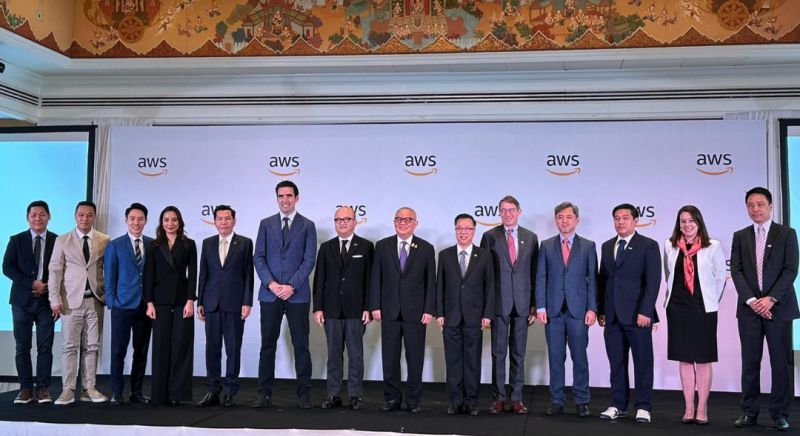
Photo courtesy of Conor McNamara, Managing Director, ASEAN at AWS
The new AWS Region in Thailand is also part of our broader, multifaceted investment in the country, covering our local team, partners, skills, and the localization of services, including Amazon Transcribe, Amazon Translate, and Amazon Connect.
Many Thailand customers have chosen AWS to run their workloads to accelerate innovation, increase agility, and drive cost savings, such as 2C2P, CP All Plc., Digital Economy Promotion Agency, Energy Response Co. Ltd. (ENRES), PTT Global Public Company Limited (PTT), Siam Cement Group (SCG), Sukhothai Thammathirat Open University, The Stock Exchange of Thailand, Papyrus Studio, and more.
For example, Dr. Werner Vogels, CTO of Amazon.com, introduced the story of Papyrus Studio, a large film studio and one of the first customers in Thailand.
“Customer stories like Papyrus Studio inspire us at AWS. The cloud can allow a small company to rapidly scale and compete globally. It also provides new opportunities to create, innovate, and identify business opportunities that just aren’t possible with conventional infrastructure.”
For more information on how to enable AWS and get support in Thailand, contact our AWS Thailand team.
Last Week’s Launches
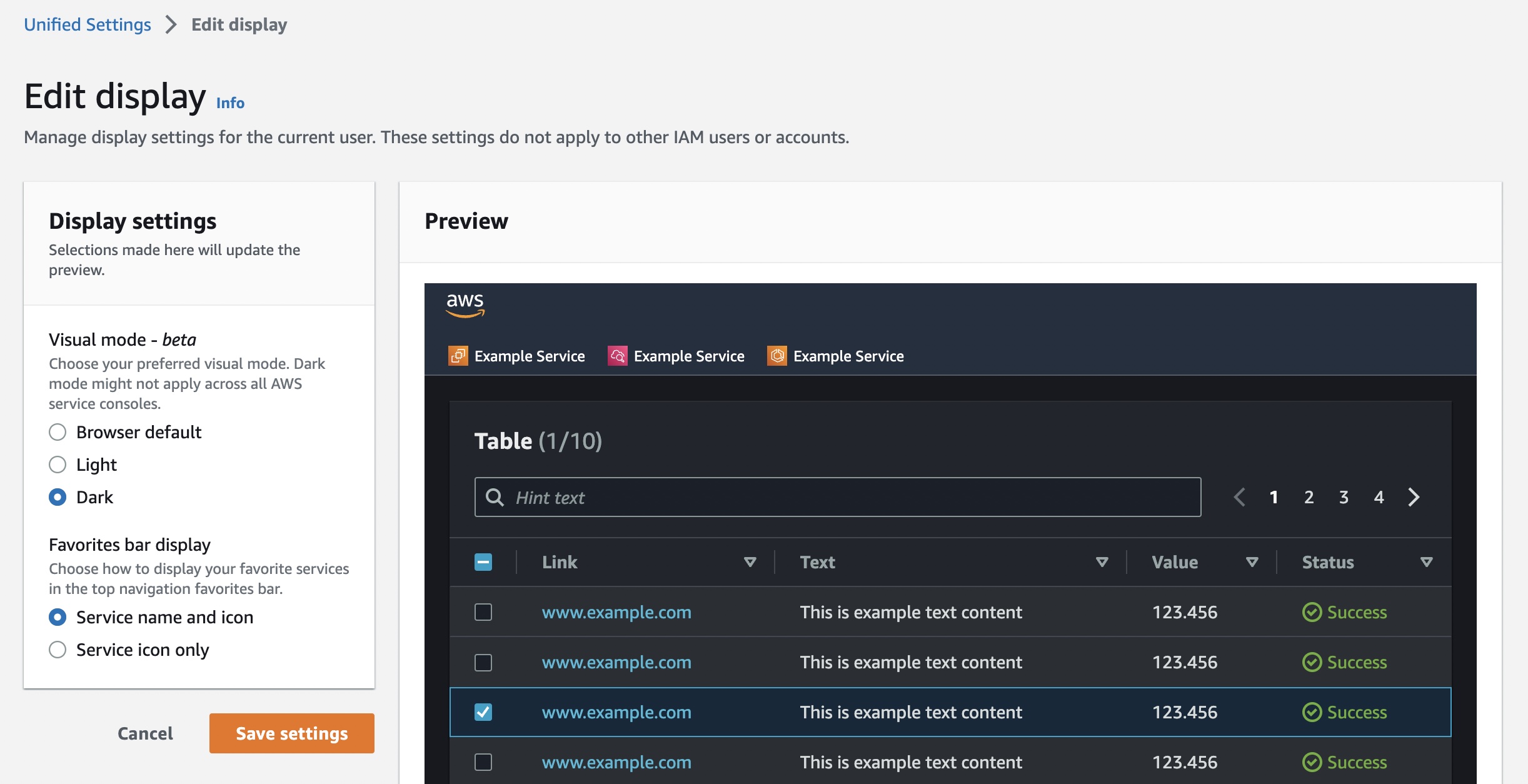
My favorite news of last week was to launch dark mode as a beta feature in the AWS Management Console. In Unified Settings, you can choose between three settings for visual mode: Browser default, Light, and Dark. Browser default applies the default dark or light setting of the browser, dark applies the new built-in dark mode, and light maintains the current look and feel of the AWS console. Choose your favorite!
Here are some launches that caught my eye for web, mobile, and IoT application developers:
New AWS Amplify Library for Swift – We announce the general availability of Amplify Library for Swift (previously Amplify iOS). Developers can use Amplify Library for Swift via the Swift Package Manager to build apps for iOS and macOS (currently in beta) platforms with Auth, Storage, Geo, and more features.
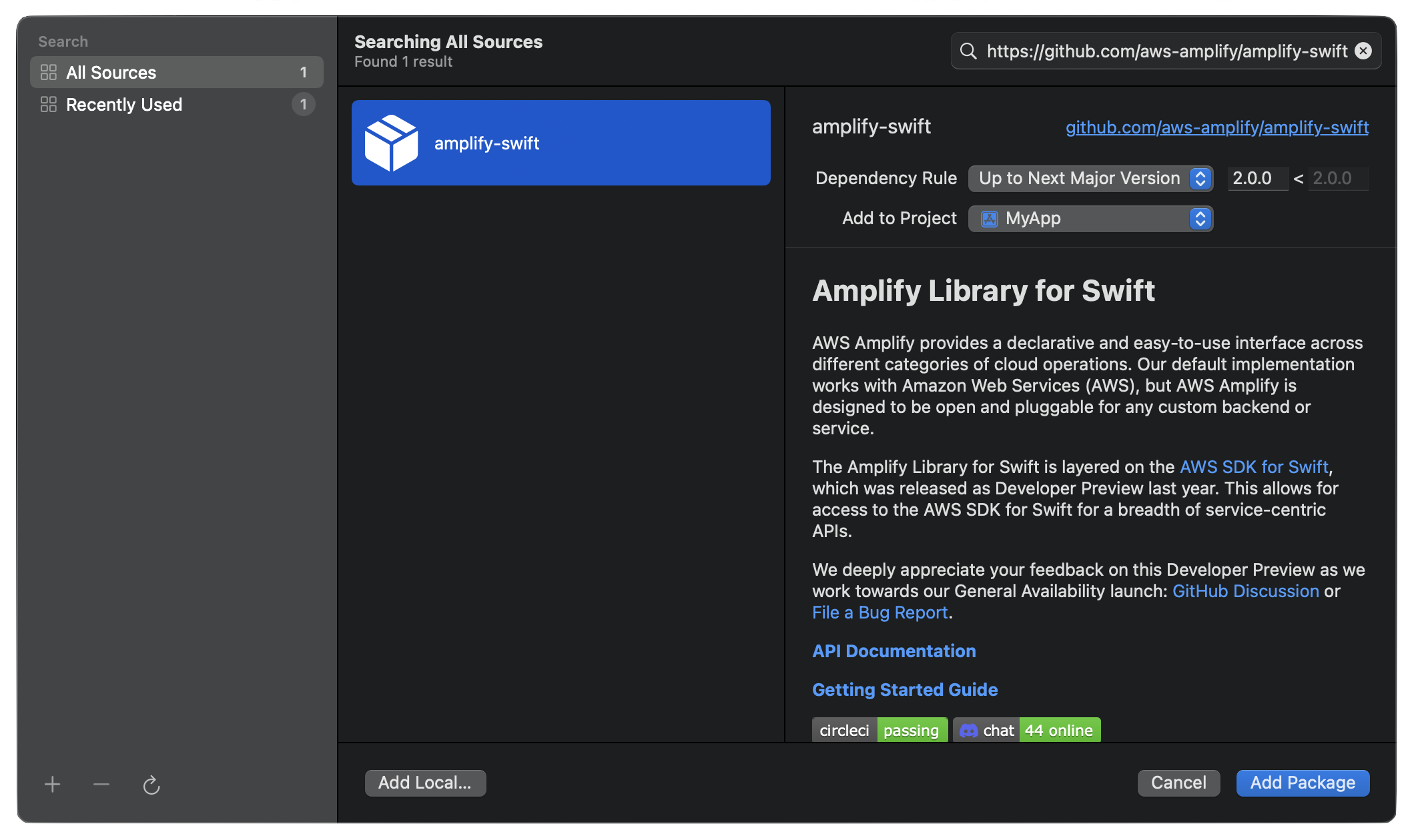
The Amplify Library for Swift is open source on GitHub, and we deeply appreciate the feedback we have gotten from the community. To learn more, see Introducing the AWS Amplify Library for Swift in the AWS Front-End Web & Mobile Blog or Amplify Library for Swift documentation.
New Amazon IVS Chat SDKs – Amazon Interactive Video Service (Amazon IVS) now provides SDKs for stream chat with support for web, Android, and iOS. The Amazon IVS stream chat SDKs support common functions for chat room resource management, sending and receiving messages, and managing chat room participants.
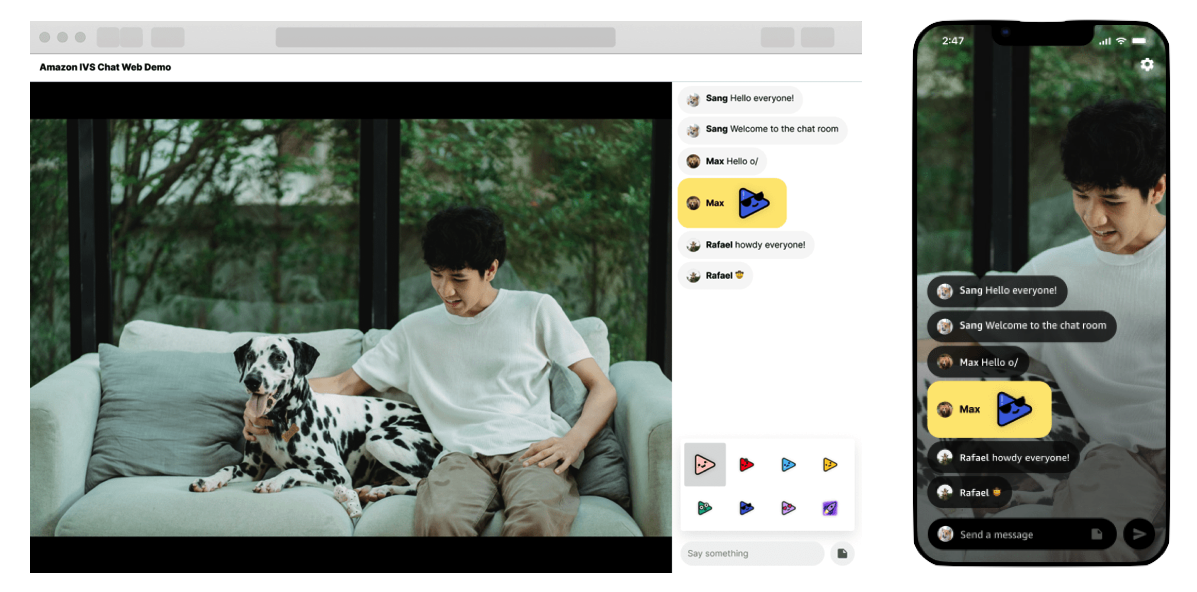
Amazon IVS is a managed, live-video streaming service using the broadcast SDKs or standard streaming software such as Open Broadcaster Software (OBS). The service provides cross-platform player SDKs for playback of Amazon IVS streams you need to make low-latency live video available to any viewer around the world. Also, it offers Chat Client Messaging SDK. For more information, see Getting Started with Amazon IVS Chat in the AWS documentation.
New AWS Parameters and Secrets Lambda Extension – This is new extension for AWS Lambda developers to retrieve parameters from AWS Systems Manager Parameter Store and secrets from AWS Secrets Manager. Lambda function developers can leverage this extension to improve their application performance as it decreases the latency and the cost of retrieving parameters and secrets.
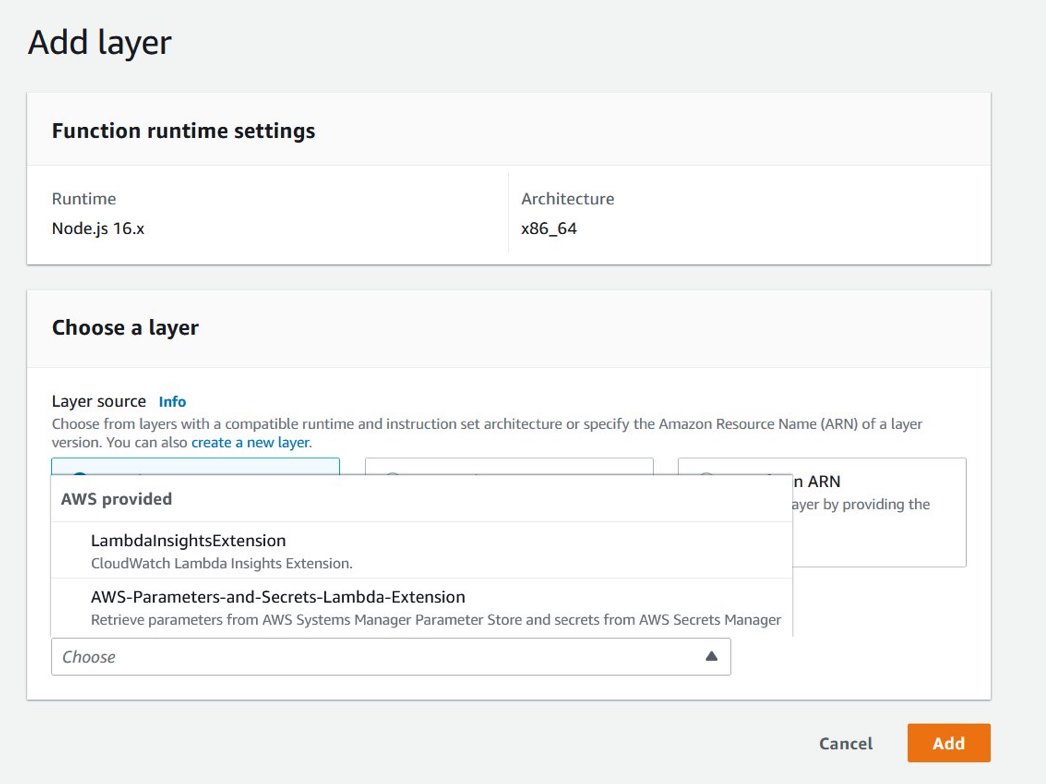
Previously, you had to initialize either the core library of a service or the entire service SDK inside a Lambda function for retrieving secrets and parameters. Now you can simply use the extension. To learn more, see AWS Systems Manager Parameter Store documentation and AWS Secrets Manager documentation.
New FreeRTOS Long Term Support Version – We announce the second release of FreeRTOS Long Term Support (LTS) – FreeRTOS 202210.00 LTS. FreeRTOS LTS offers a more stable foundation than standard releases as manufacturers deploy and later update devices in the field. This release includes new and upgraded libraries such as AWS IoT Fleet Provisioning, Cellular LTE-M Interface, coreMQTT, and FreeRTOS-Plus-TCP.
All libraries included in this FreeRTOS LTS version will receive security and critical bug fixes until October 2024. With an LTS release, you can continue to maintain your existing FreeRTOS code base and avoid any potential disruptions resulting from FreeRTOS version upgrades. To learn more, see the FreeRTOS announcement.
Here is some news on performance improvement and increasing capacity:
Up to 10X Improving Amazon Aurora Snapshot Exporting Speed – Amazon Aurora MySQL-Compatible Edition for MySQL 5.7 and 8.0 now speed up to 10x faster snapshot exports to Amazon S3. The performance improvement is automatically applied to all types of database snapshot exports, including manual snapshots, automated system snapshots, and snapshots created by the AWS Backup service. For more information, see Exporting DB cluster snapshot data to Amazon S3 in the Amazon Aurora documentation.
3X Increasing Amazon RDS Read Capacity – Amazon Relational Database Service (RDS) for MySQL, MariaDB, and PostgreSQL now supports 15 read replicas per instance, including up to 5 cross-Region read replicas, delivering up to 3x the previous read capacity. For more information, see Working with read replicas in the Amazon RDS documentation.
2X Increasing AWS Snowball Edge Compute Capacity – The AWS Snowball Edge Compute Optimized device doubled the compute capacity up to 104 vCPUs, doubled the memory capacity up to 416GB RAM, and is now fully SSD with 28TB NVMe storage. The updated device is ideal when you need dense compute resources to run complex workloads such as machine learning inference or video analytics at the rugged, mobile edge such as trucks, aircraft or ships. You can get started by ordering a Snowball Edge device on the AWS Snow Family console.
2X Increasing Amazon SQS FIFO Default Quota – Amazon Simple Queue Service (SQS) announces the increase of default quota up to 6,000 transactions per second per API action. It is double the previous 3,000 throughput quota for a high throughput mode for FIFO (first in, first out) queues in all AWS Regions where Amazon SQS FIFO queue is available. For a detailed breakdown of default throughput quotas per Region, see Quotas related to messages in the Amazon SQS documentation.
For a full list of AWS announcements, be sure to keep an eye on the What’s New at AWS page.
Other AWS News
Here are some other news items that you may find interesting:
22 New or Updated Open Datasets on AWS – We released 22 new or updated datasets, including Amazonia-1 imagery, Bitcoin and Ethereum data, and elevation data over the Arctic and Antarctica. The full list of publicly available datasets is on the Registry of Open Data on AWS and is now also discoverable on AWS Data Exchange.
Sustainability with AWS Partners (ft. AWS On Air) – This episode covers a broad discipline of environmental, social, and governance (ESG) issues across all regions, organization types, and industries. AWS Sustainability & Climate Tech provides a comprehensive portfolio of AWS Partner solutions built on AWS that address climate change events and the United Nation’s Sustainable Development Goals (SDG).
AWS Open Source News and Updates #131 – This newsletter covers latest open-source projects such as Amazon EMR Toolkit for VS Code, a VS Code Extension to make it easier to develop Spark jobs on EMR and AWS CDK For Discourse, sample codes that demonstrates how to create a full environment for Discourse, etc. Remember to check out the Open source at AWS keep up to date with all our activity in open source by following us on @AWSOpen.
Upcoming AWS Events
Check your calendars and sign up for these AWS events:
AWS re:Invent 2022 Attendee Guide – Browse re:Invent 2022 attendee guides, curated by AWS Heroes, AWS industry teams, and AWS Partners. Each guide contains recommended sessions, tips and tricks for building your agenda, and other useful resources. Also, seat reservations for all sessions are now open for all re:Invent attendees. You can still register for AWS re:Invent either offline or online.
AWS AI/ML Innovation Day on October 25 – Join us for this year’s AWS AI/ML Innovation Day, where you’ll hear from Bratin Saha and other leaders in the field about the great strides AI/ML has made in the past and the promises awaiting us in the future.
AWS Container Day at Kubecon 2022 on October 25–28 – Come join us at KubeCon + CloudNativeCon North America 2022, where we’ll be hosting AWS Container Day Featuring Kubernetes on October 25 and educational sessions at our booth on October 26–28. Throughout the event, our sessions focus on security, cost optimization, GitOps/multi-cluster management, hybrid and edge compute, and more.
You can browse all upcoming in-person, and virtual events.
That’s all for this week. Check back next Monday for another Week in Review!
— Channy
 Before the end of the current LTS period, you will be able to use your AWS account to complete the FreeRTOS EMP registration on the FreeRTOS console, review and agree to the associated terms and conditions, select the LTS version, and buy an annual subscription. You will then gain access to the private repository where you’ll receive .zip files containing a git repo with chosen libraries, patches, and related notifications.