Tag Archives: Odisha

Adapting our computing curriculum resources for Odisha — the journey so far

Post Syndicated from Fiona Coventry original https://www.raspberrypi.org/blog/adapting-our-computing-curriculum-resources-for-odisha-the-journey-so-far/

Today’s blog is the second in a mini-series of three sharing our experiences of adapting computing curriculum resources for different contexts, and off training teachers to use them in schools. Last month we wrote about our collaboration with partners in Kenya. Here we discuss our work in Odisha, India.

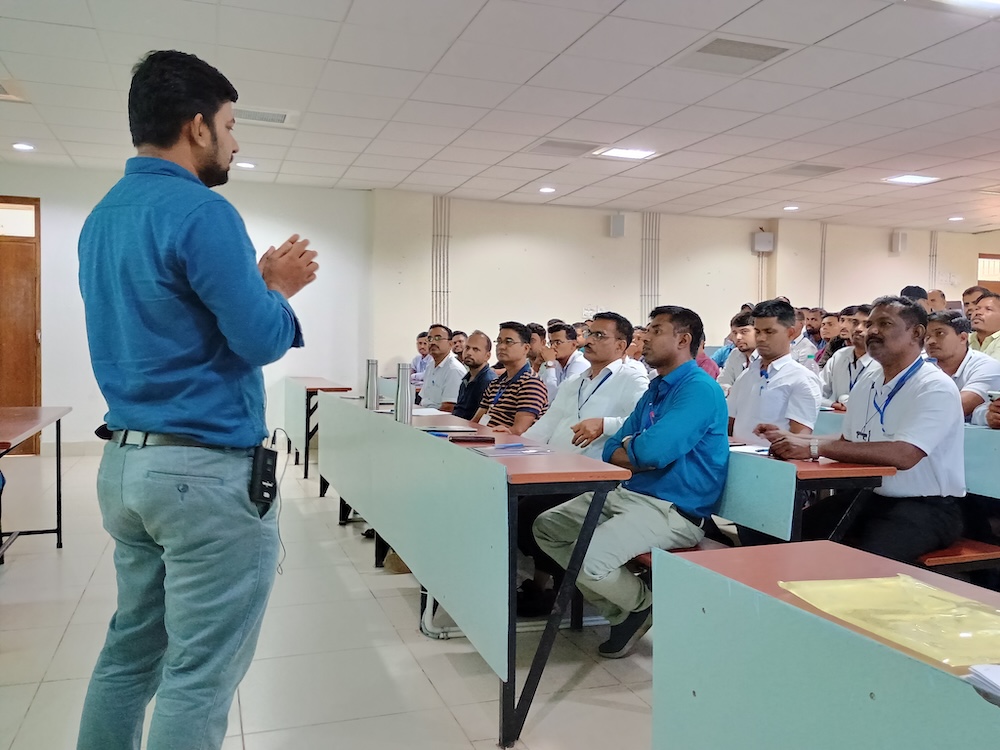
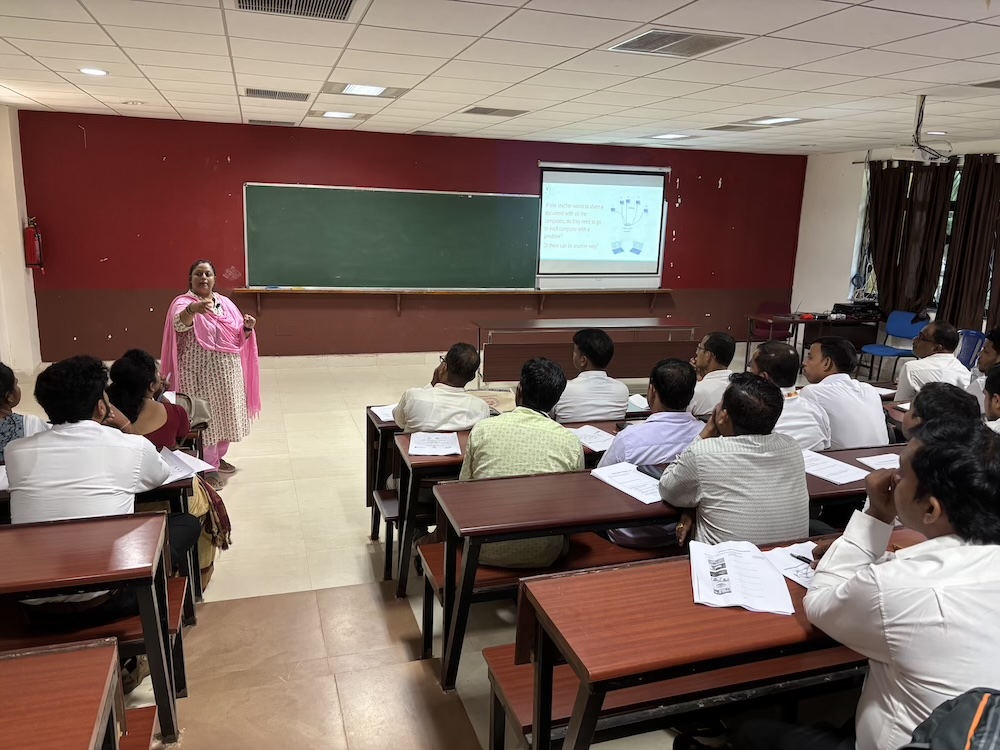
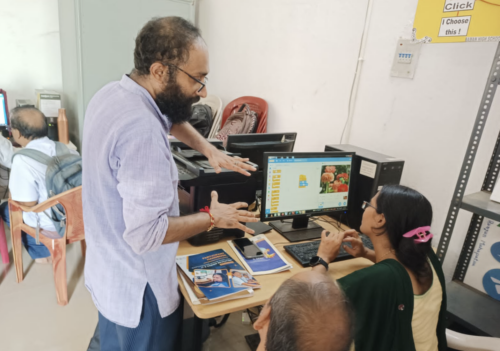
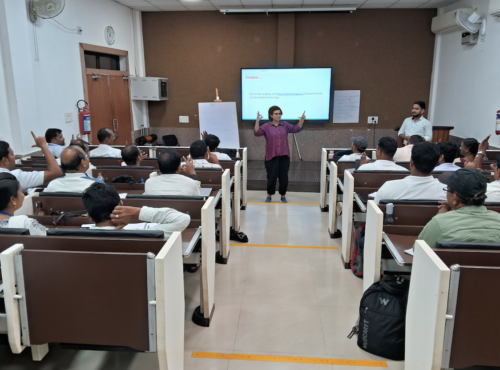
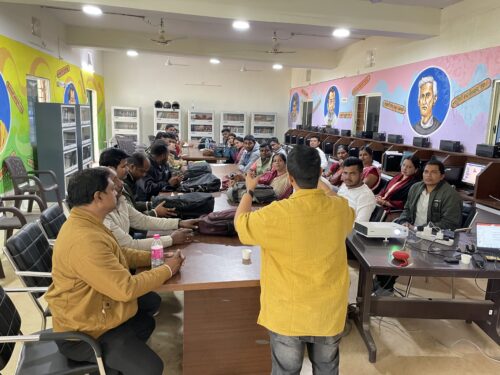
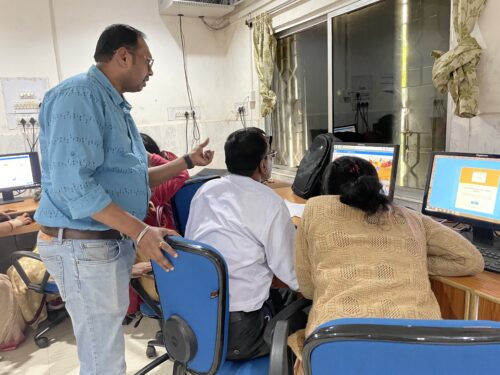
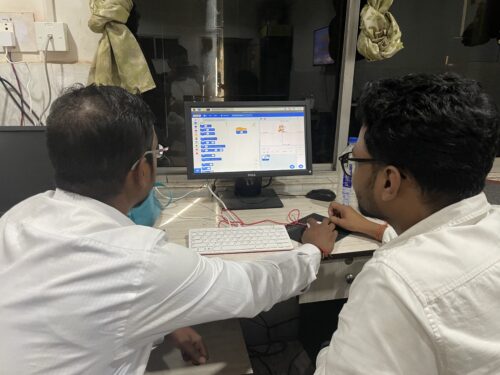
Teachers at a teacher training in Odisha.

This article has been written by Fiona Coventry, Impact Manager, and Mamta Manaktala, Senior Learning Manager.

A long-term partnership in Odisha

We know that building long-term partnerships with organisations that have local expertise is key to making a real impact for young people. This fact was echoed by people involved in education initiatives worldwide who spoke at the What Works Hub for Global Education 2024 annual conference, which Fiona followed online. Our work in Odisha is an example of this.

Teachers at a teacher training in Odisha.

We have now been working with our government partner in Odisha, Panchasakha Shikhya Setu (formerly Mo School Abhiyan), for four years. Our journey began in 2021, when we worked together to establish a network of Code Clubs in government and government-aided schools in the state. In 2023, our focus shifted to developing a formal computing curriculum for students in grades 9 and 10 (known locally as the Kaushali curriculum), in collaboration with two other partners. 

Work in the 2024/2025 academic year

Adaptation is a crucial aspect of how we ensure our computing resources are accessible to as many young people as possible. For our work in Odisha, we adapted content from The Computing Curriculum and then localised it to fit the requirement of the students.

Teachers at a teacher training in Odisha.

In Odisha’s June 2024 to April 2025 academic year, we rolled out adapted computing curriculum content for grade 10 students, for students who had already learned with adapted grade 9 content in 2023/24. We worked with our partners to develop the curriculum content and trained 310 master teachers from across Odisha, along with 30 State Resource Groups (SRGs) to support them. Before the end of 2024, the 310 master teachers subsequently trained 8109 teachers, who would reach an estimated 880,000 students with the grade 9 and 10 curriculum content. We had an ongoing responsibility to support 1846 of these teachers in our allocated districts, with an estimated reach to around 205,000 students.

Impact of the grade 9 and 10 curriculum

In early 2025 we issued a follow-up survey about student learning, content, and training to a sample of teachers in our allocated districts, and 310 teachers responded. (We used a stratified sampling approach designed to ensure the survey results were representative of all teachers.)

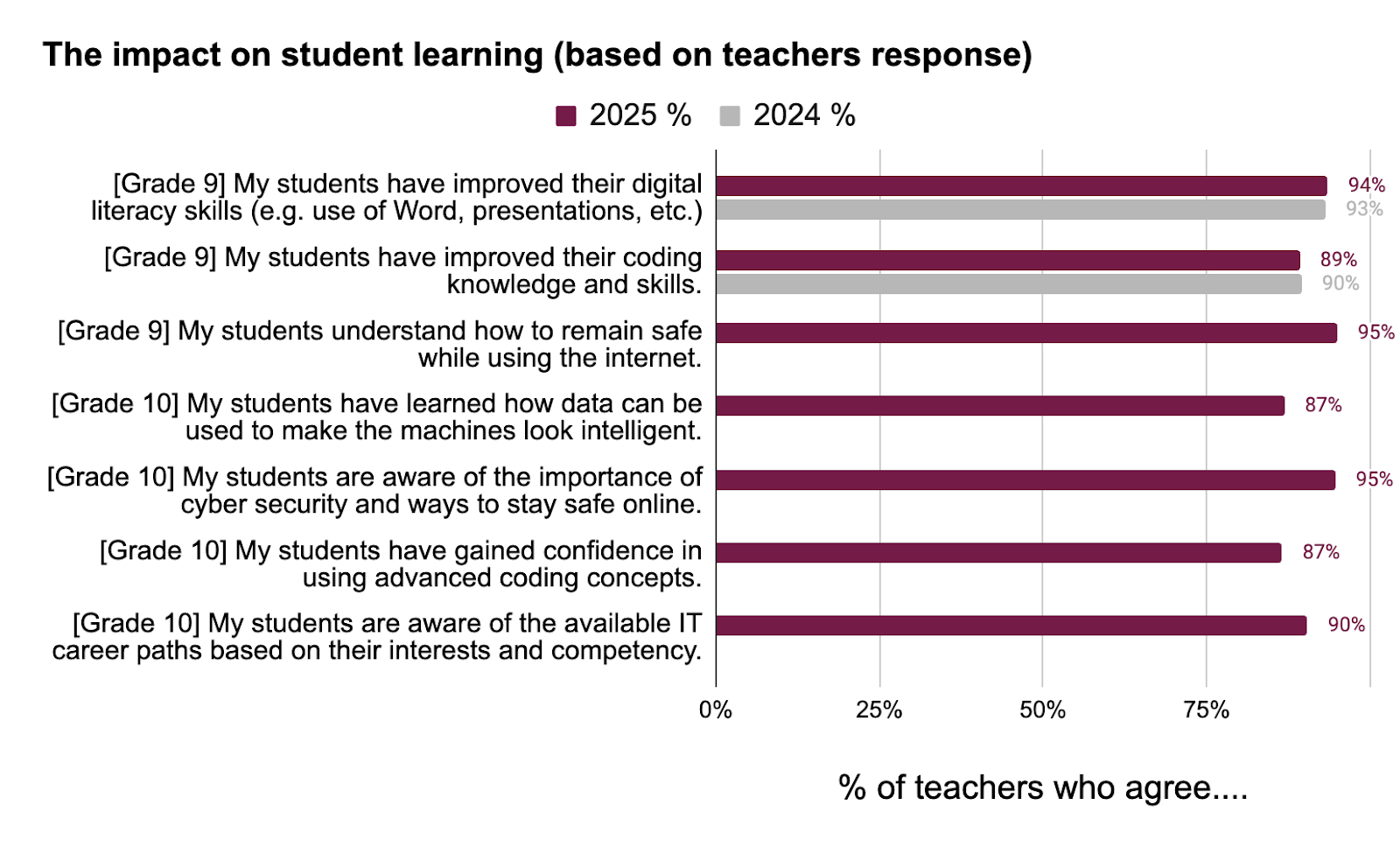
At least 87% of teachers agreed that students achieved the outcomes we asked about, e.g. regarding coding skills, staying safe online, and use of data in machine intelligence. 

Moreover, responses related to our grade 9 curriculum remained similarly high compared to 2024 survey responses.

2025 Odisha teacher survey responses regarding their students' learning.
2025 Odisha teacher survey responses regarding their students’ learning. Click to enlarge.

Teachers also expressed their appreciation for the computing curriculum resources and training in free-text comments and interviews, for example:

“IT and coding is essential nowadays. So a good initiative, adding this to schools’ curriculum.” – Teacher in Odisha

“The training was quite informative, interesting and helpful.” – Teacher in Odisha

“It is very useful training for me. It boosts my knowledge and helps me for classroom transaction.” – Teacher in Odisha

Addressing challenges

An ongoing challenge in Odisha has been supporting those teachers who lack experience with computing and/or with our recommended teaching approaches for computing. We have been working hard to help these teachers develop the knowledge, skills, and confidence to effectively deliver the curriculum content in the limited time they have alongside their other professional commitments.

Teachers at a teacher training in Odisha.

In the 2023/2024 academic year, many teachers had told us they needed further training and support. For this reason, we offered longer training in the 2024/25 academic year. We also adapted our training approach based on learning from earlier phases, such as including activities teachers could complete on their smartphones, enabling more hands-on learning while reducing dependence on available IT equipment. The outcome of this was positive: in the follow-up survey, fewer teachers felt they needed additional training to deliver the lessons, and most teachers we interviewed felt this year’s training was an improvement on the previous year’s.

Our team also ran weekly webinars to support teachers and address their queries. These were very well received by teachers. Of the responses received to feedback form available after each webinar:

  • 97% agreed that the “webinar helped me to understand the topics covered more clearly.”
  • 98% agreed that the “webinar was useful to support my teaching.”

This was supported by comments from teachers, for example:

“All questions were answered. The webinar was good. Gained a lot. Thank you very much.”  – Teacher in Odisha

“I learned many unknown things about Scratch, it will help my classroom teaching.” – Teacher in Odisha

In this year’s follow-up survey, teachers also less frequently indicated they felt they needed “additional content to support students”. They provided useful feedback and suggestions regarding the curriculum content, e.g. further simplifying and localising it, which we will incorporate into future resource development.

Another persistent challenge has been limited access to IT equipment and the internet in schools, and what this means for student-device ratios and how teachers are able to deliver the content. For future resources we are developing, we are therefore adapting the amount of content to be delivered over a series of lessons.

Next steps for our partnership in Odisha

In 2025, we are working with the same partners to implement a curriculum for grades 6 to 8, initially in around 460 schools. We and our partners have developed the curriculum content and are currently in the process of training teachers in preparation for classroom delivery.

We are also continuing to support the teachers previously trained on the grade 9 and 10 curriculum through webinars and school visits.

Want to see our curriculum resources?

You can access our free Computing Curriculum resources on our website — we are currently working to make the materials for India, and for Kenya, downloadable there.

Look out for the final blog in this mini-series next month, which will focus on our computer science curriculum in Telangana, India.

The post Adapting our computing curriculum resources for Odisha — the journey so far appeared first on Raspberry Pi Foundation.
Introducing a computing curriculum in Odisha

Post Syndicated from Author original https://www.raspberrypi.org/blog/introducing-a-computing-curriculum-in-odisha/

We are working with two partner organisations in Odisha, India, to develop and roll out the IT & Coding Curriculum (Kaushali), a computing curriculum for government high schools. Last year we launched the first part of the curriculum and rolled out teacher training. Read on to find out what we have learned from this work.

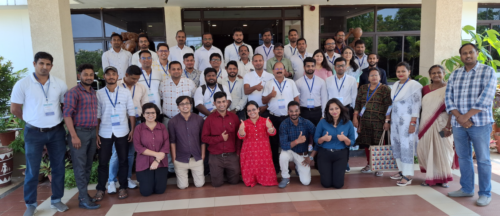
A group of teachers is standing outside a school building.

Supporting government schools in Odisha to teach computing

Previously we shared an insight into how we established Code Clubs in Odisha to bring computing education to young people. Now we are partnering with two Indian civil society organisations to develop high school curriculum resources for computing and support teachers to deliver this content.

With our two partners, we trained 311 master teachers during July and August 2023. The master teachers, most often mathematics or science teachers, were in turn tasked with training teachers from around 8000 government schools. The aim of the training was to enable the 8000 teachers to deliver the curriculum to grades 9 and 10 in the June 2023 – April 2024 academic year.

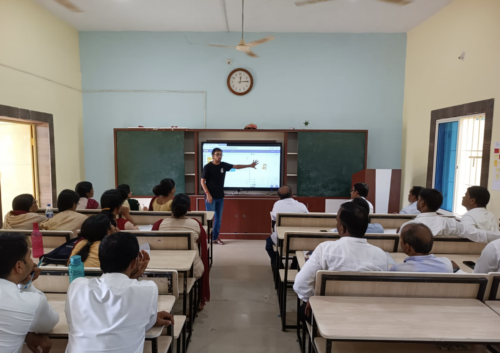
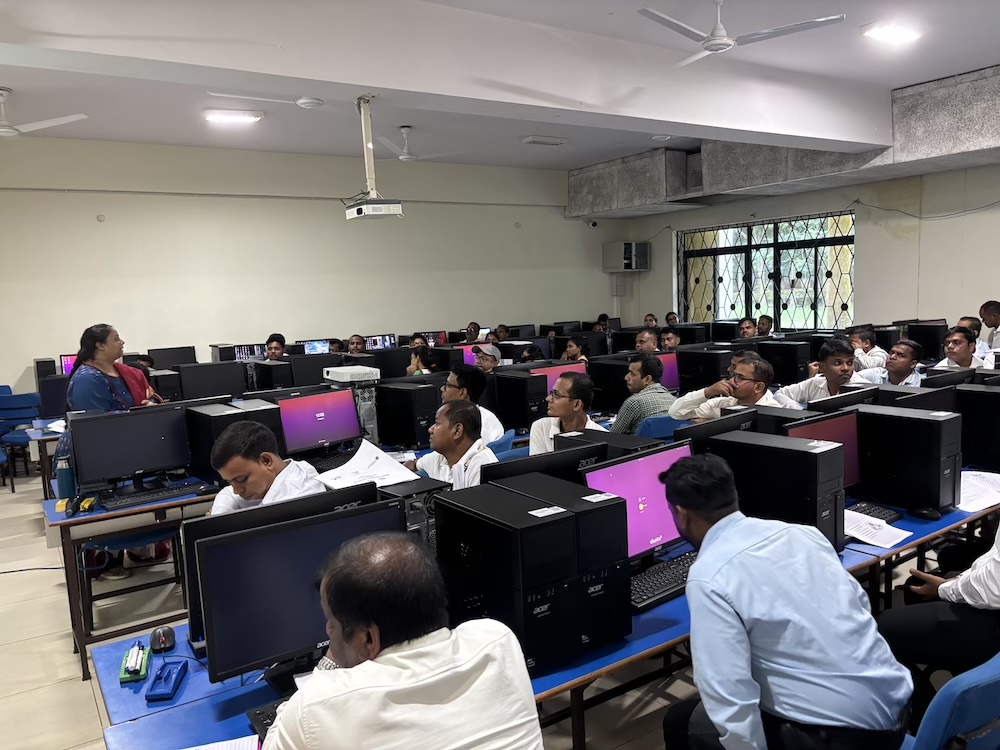
A master teacher is delivering a training session to a group of teachers.

At the Foundation, we have been responsible for providing ongoing support to 1898 teachers from 10 districts throughout the academic year, including through webinars and other online and in-person support.

To evaluate the impact our work in Odisha is having, we gathered data using a mixed-methods approach that included gathering feedback from teachers via surveys and interviews, visiting schools, capturing reflections from our trainers, and reviewing a sample of students’ projects.

Positive impact on teachers and students

In our teacher survey, respondents were generally positive about the curriculum resources:

  • 87% of the 385 respondents agreed that the curriculum resources were both high quality and useful for their teaching
  • 91% agreed that they felt more confident to teach students IT & Coding as a result of the curriculum resources

Teachers also tended to agree that the initial training had helped improve their understanding and confidence, and they appreciated our ongoing support webinars.

“The curriculum resources are very useful for students.” – Teacher in Odisha

“The webinar is very useful to acquire practical knowledge regarding the specific topics.”  – Teacher in Odisha

Teachers who responded to our survey observed a positive impact on students:

  • 93% agreed their students’ digital literacy skills had improved
  • 90% agreed that their students’ coding knowledge had improved

Students’ skills were also demonstrated by the Scratch projects we reviewed. And students from Odisha shared 314 projects in Coolest Projects — our online technology showcase for young people — including the project ‘We’ll build a new Odisha’ and an apple catching game.

A master teacher is delivering a training session to a group of teachers.

Feedback and observations about teacher training

On school visits, our team observed that the teachers adopted and implemented the practical elements of the initial training quite well. However, survey responses and interviews showed that often teachers were not yet using all the elements of the curriculum as intended.

In their feedback, many teachers expressed a need for further regular training and support, and some reported additional challenges, such as other demands on their time and access to equipment.

A master teacher is delivering a training session to a group of teachers.

When we observed training sessions master teachers delivered to teachers, we saw that, in some cases, information was lost within the training cascade (from our trainers, to master teachers, to teachers), including details about the intended pedagogical approach. It can be difficult to introduce experienced teachers to new pedagogical methods within a short training session, and teachers’ lack of computing knowledge also presents a challenge.

We will use all this data to shape how we support teachers going forward. Some teachers didn’t share feedback, and so in our further evaluation work, we will focus on making sure we hear a broad and representative range of teachers’ views and experiences.

What’s new this year?

In the current academic year, we are rolling out more advanced curriculum content for grade 10 students, including AI literacy resources developed at the Foundation. We’re currently training master teachers on this content, and they will pass on their knowledge to other teachers in the coming months. Based on teachers’ feedback, the grade 10 curriculum and the training also include a recap of some key points from the grade 9 curriculum.

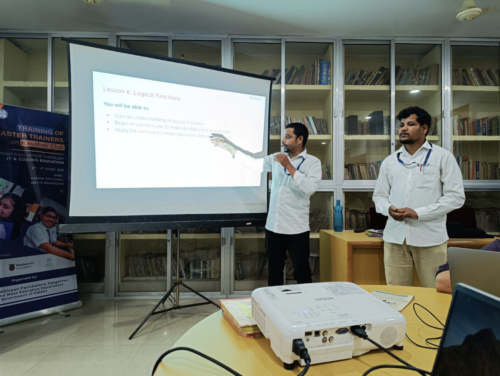
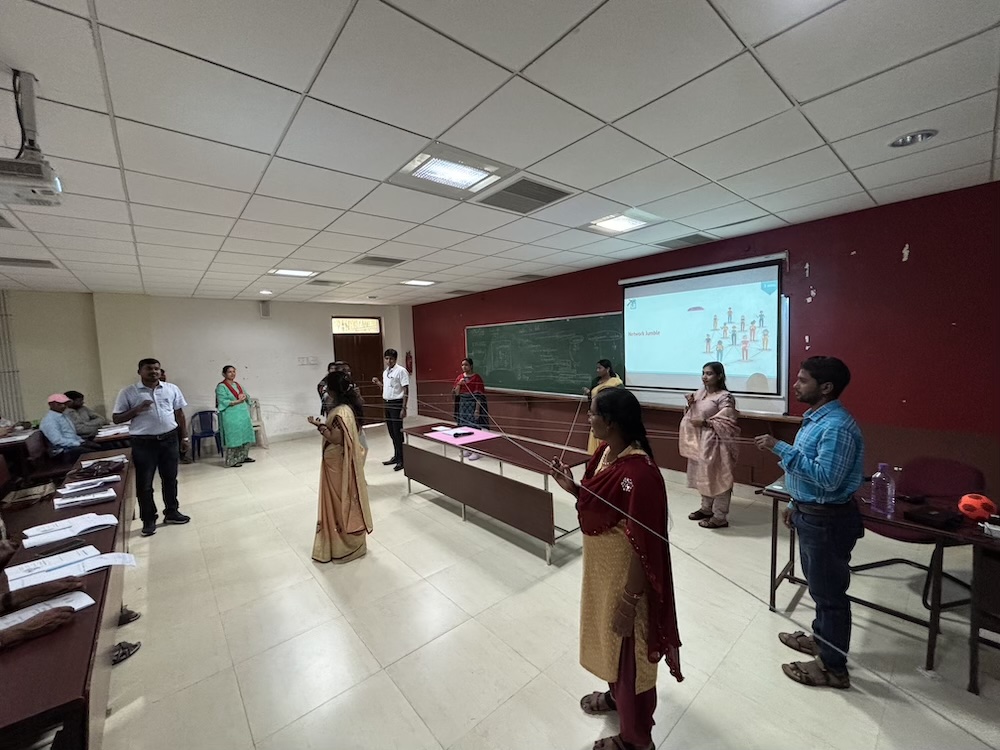
Two master teachers are delivering a presentation to teachers.

A State Resource Group (SRG) has also been set up, consisting of 30 teachers who will support us with planning and providing ongoing support to master teachers and other teachers in Odisha. We have already trained the SRG members on the new curriculum content to enable them to best support teachers across the state. In addition to this, our local team in Odisha plans to conduct more visits and reach out directly to teachers more often. 

Our plans for the future

The long-term vision for our work in India is to enable any school in India to teach students about computing and creating with digital technologies. A critical part of achieving this vision is the development of a comprehensive computing curriculum for grade 6 to 12, specifically tailored for government schools in India. Thanks to our work in Odisha, we are in a better position to understand the unique challenges and limitations of government schools. We’re designing our curriculum to address these challenges and ensure that every Indian student has the opportunity to thrive in the 21st century. If you would like to know more about our work and impact in India, please reach out to us via [email protected].

We take evaluation of our work seriously and are always looking to understand how we can improve and increase the impact we have on the lives of young people. To find out more about our approach to impact, you can read about our recently updated theory of change, which supports how we evaluate what we do.

The post Introducing a computing curriculum in Odisha appeared first on Raspberry Pi Foundation.
Introducing Code Clubs in eastern India: 32,000 more young digital makers

Post Syndicated from Fiona Coventry original https://www.raspberrypi.org/blog/code-club-eastern-india-computer-science-education/

At the Raspberry Pi Foundation, our mission is to enable young people to realise their full potential through the power of computing and digital technologies. One way we achieve this is through supporting a global network of school-based Code Clubs for young people, in partnership with organisations that share our mission.

For the past couple of years we have been working with Mo School Abhiyan, a citizen–government partnership that aims to help people to connect, collaborate, and contribute to revamping the government schools and government-aided schools in the Indian state of Odisha. Together with Mo School Abhiyan we have established many more Code Clubs to increase access to computer science education, which is an important priority in Odisha.

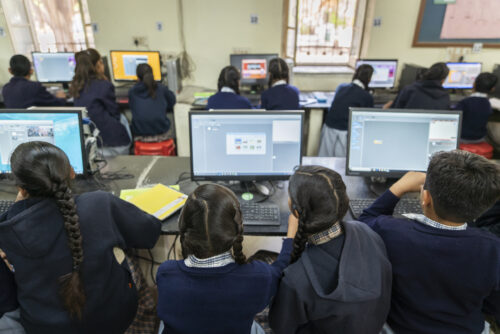
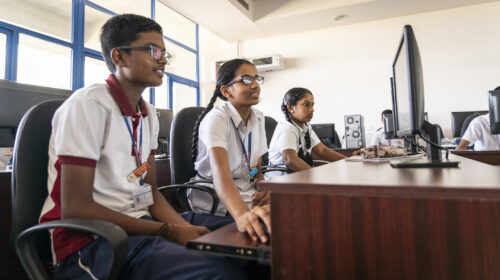
Learners in a computing classroom.

We evaluate all of our projects to understand their impact, and this was no exception. We found that our training improved teachers’ skills, and we learned some valuable lessons — read on to find out more.

Background and aims of the project

After some successful small-scale trials with 5 and then 30 schools, our main project with Mo School Abhiyan began in August 2021. In the first phase, between August 2021 and January 2022, we aimed to train 1000 teachers from 1000 schools.

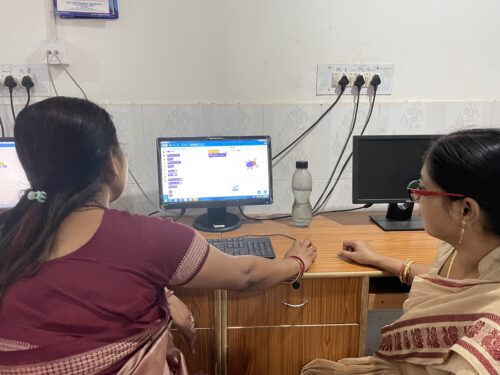
Teachers in Code Club training in Odisha, India.

For a number of reasons, including coronavirus-related school closures, not all teachers were able to complete their training during this phase. Therefore we revised the programme, splitting the teachers in two groups depending on how far they had progressed with their initial training. We also added more teachers, so our overall aim became to support 1075 teachers to complete their training and start running clubs in 2022.

Our training and ongoing support for the teachers

We trained the teachers using a hybrid approach through online courses and in-person training by our team based in India. As we went along and learned more about what worked for the teachers, we adapted the training. This included making some of the content, such as the Prepare to run a Code Club online course, more suitable for an Indian context.

Teachers in Code Club training in Odisha, India.

As most of the teachers were not computing specialists but more often teachers of other STEM subjects, we decided to focus the training on the basics of using Scratch programming in a Code Club.

We continue to provide support to the teachers now that they’ve completed their training. For instance, each Friday we run ‘Coding pe Charcha’ (translating to ‘Discussion on Coding’) sessions online. In these sessions, teachers come together, get answers to their questions about Scratch, take part in codealongs, and find out on how their students can take part in our global technology showcase Coolest Projects.

Measuring the impact of the training

To understand the impact of our partnership with Mo School Abhiyan and learn lessons we can apply in future work, we evaluated the impact of the teacher training using a mixed-methods approach. This included surveys at the start and end of the main training programme, shorter feedback forms after some elements of the training, and follow-up surveys to understand teachers’ progress with establishing clubs. We used Likert-style questions to measure impact quantitatively, and free-text questions for teachers to provide qualitative feedback.

Teachers in Code Club training in Odisha, India.

One key lesson early on was that the teachers were using email infrequently. We adapted by setting up Whatsapp groups to keep in touch with them and send out the evaluation surveys.

Gathering feedback from teachers

Supported by our team in India, teachers progressed well through the training, with nine out of every ten teachers completing each element of the training.

Teachers’ feedback about the training was positive. The teachers who filled in the feedback survey reported increases in knowledge of coding concepts that were statistically significant. Following the training, nine out of every ten teachers agreed that they felt confident to teach children about coding. They appeared to particularly value the in-person training and the approach taken to supporting them: eight out of every ten teachers rated the trainer as “extremely engaging”.

Teachers in Code Club training in Odisha, India.

The teachers’ feedback helped us identify possible future improvements. Some teachers indicated they would have liked more training with opportunities to practise their skills. We also learned how important it is that we tailor Code Club to suit the equipment and internet connectivity available in schools, and that we take into account that Code Clubs need to fit with school timetables and teachers’ other commitments. This feedback will inform our ongoing work.

The project’s impact for young people

In our follow-up surveys, 443 teachers have confirmed they have already started running Code Club sessions, with an estimated reach to at least 32,000 young people. And this reach has the potential to be even greater, as through our partnership with Mo School Abhiyan, teachers have registered more than 950 Code Clubs to date.

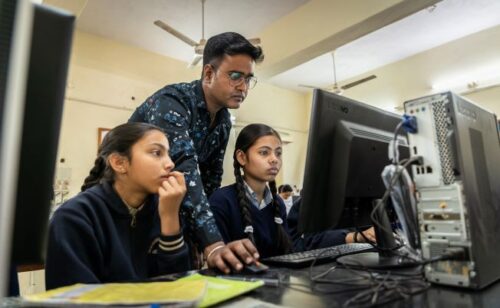
An educator helps two young people at a computer.

Supported by the teachers we’ve trained, each of the young people attending these Code Clubs will get the opportunity to learn to code and create with technology through our digital making projects. The projects enable young people to be creative and to share their creations with each other. Our team in India has started visiting Code Clubs to better understand how the clubs are benefiting young people.

What’s next for our work in India

The experience we’ve gained through the partnership with Mo School Abhiyan and the findings from the evaluation are helping to inform our growing work with communities in India and around the world that lack access to computing education. 

In India we will continue to work with state governments and agencies to build on our experience with Mo School Abhiyan. We are also exploring opportunities to develop a computing education curriculum for governments and schools in India to adopt.

If you would like to know more about our work and impact in India, please reach out to us via [email protected].

The post Introducing Code Clubs in eastern India: 32,000 more young digital makers appeared first on Raspberry Pi Foundation.