Tag Archives: India

Young creators build a bright future at Coolest Projects India 2025

Post Syndicated from Vasu Srivastava original https://www.raspberrypi.org/blog/young-creators-build-a-bright-future-at-coolest-projects-india-2025/

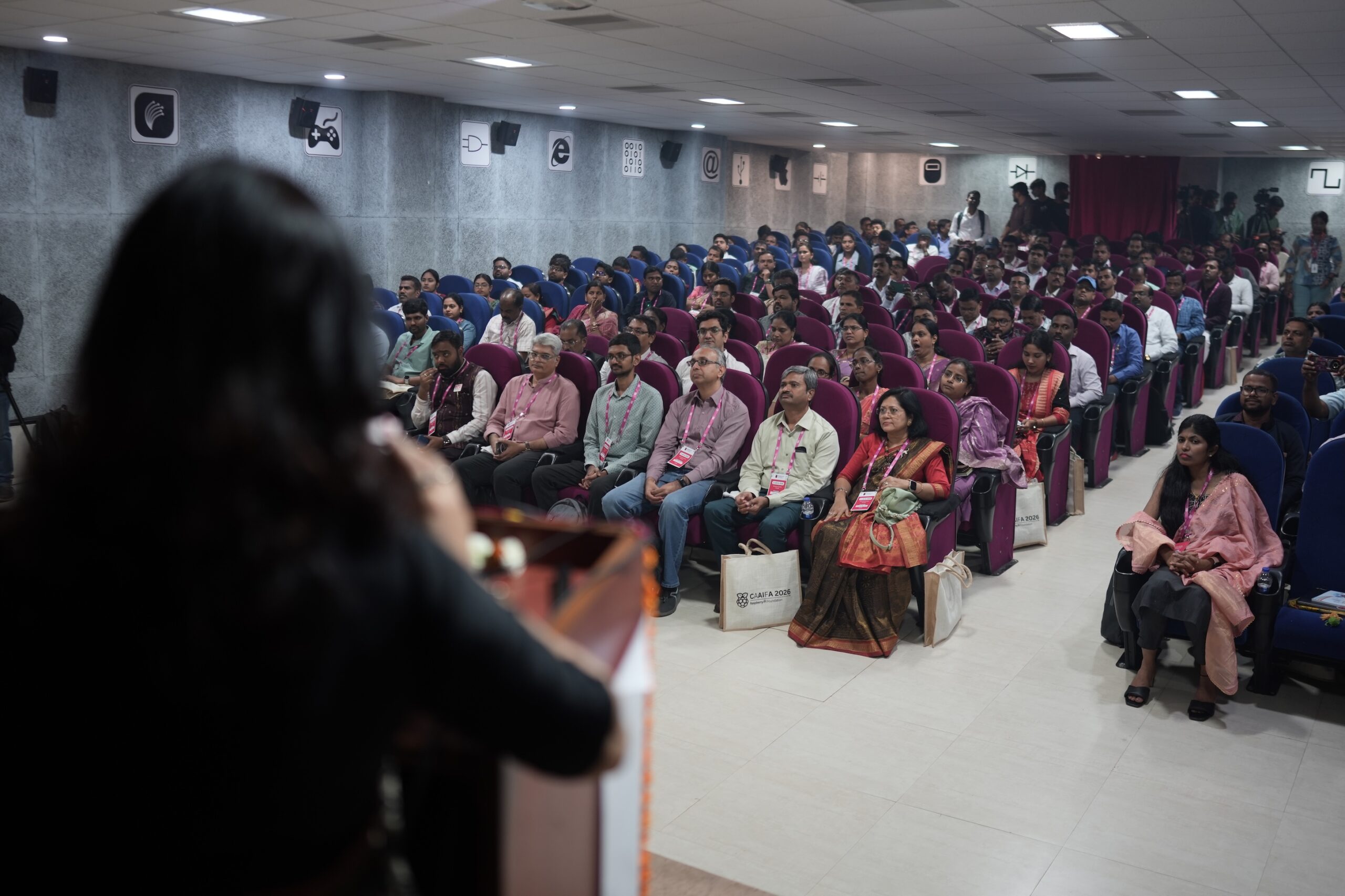
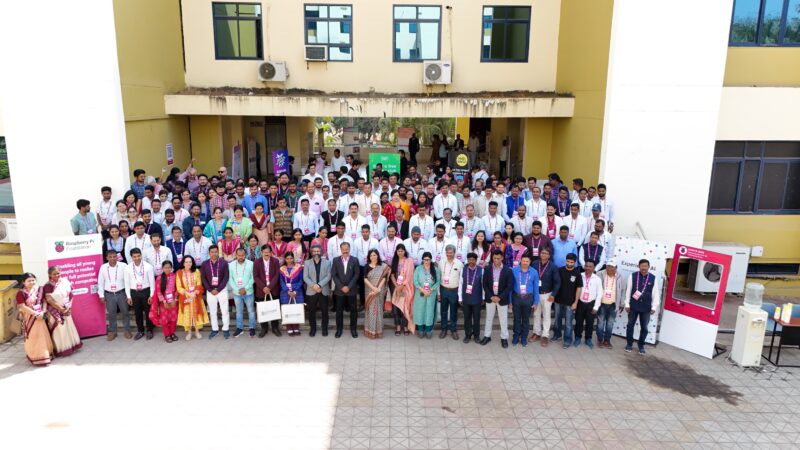
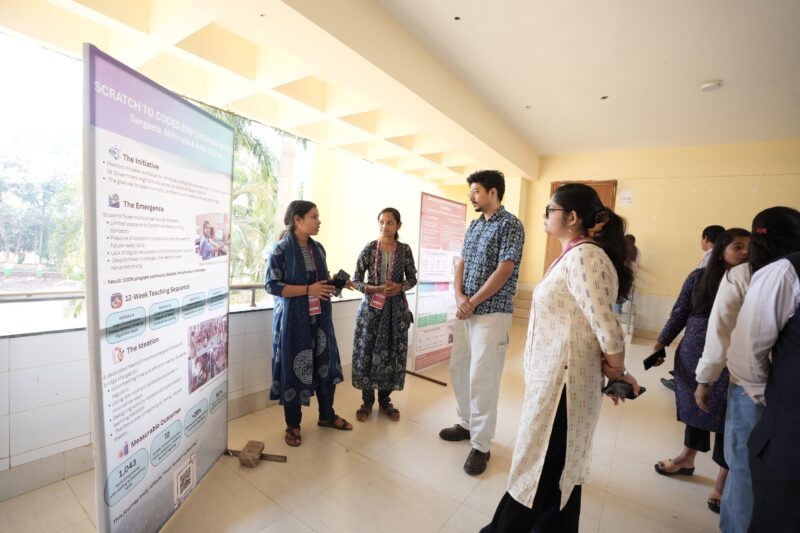
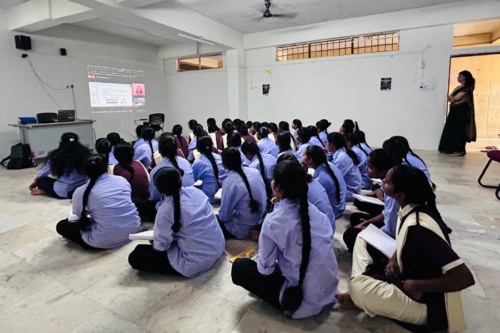
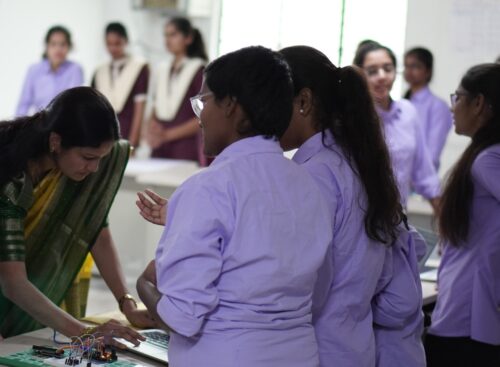
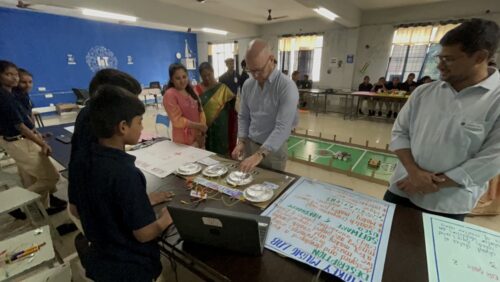
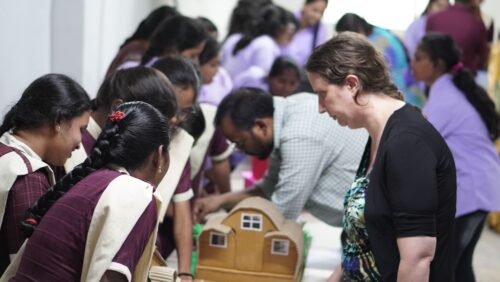
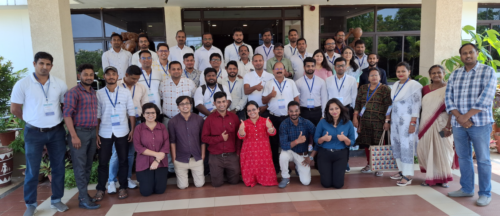
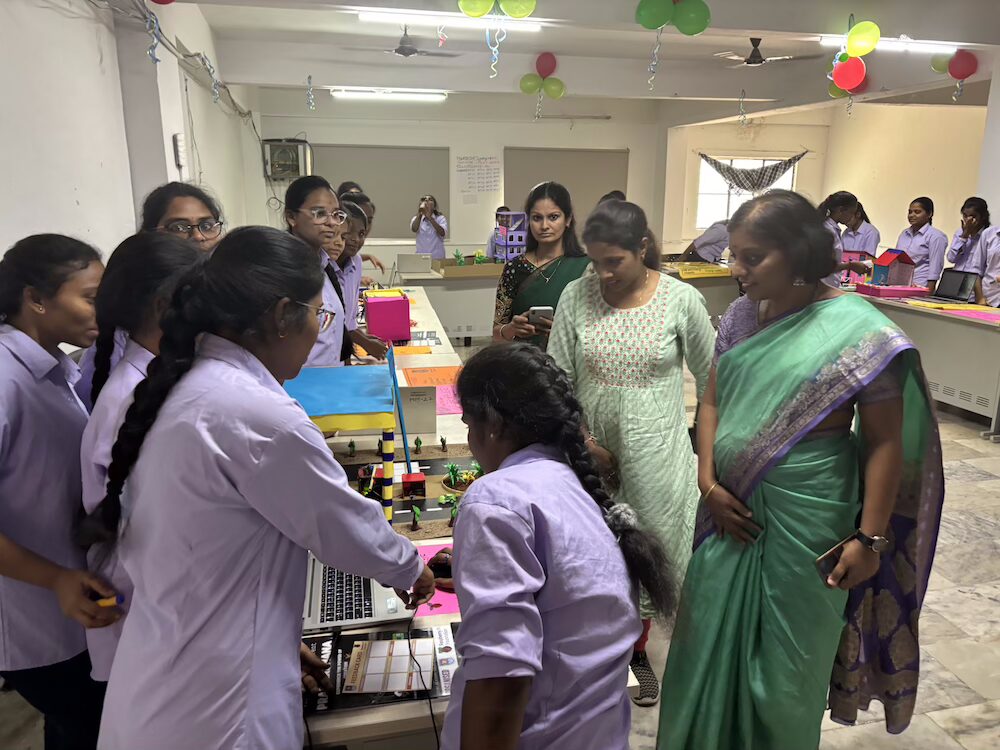
Coolest Projects India is officially a wrap, and we are absolutely thrilled with the results! The event, held on 20 September 2025 in Hyderabad, Telangana, was a fantastic showcase of the incredible talent and passion of young creators. With over 250 participants, young creators showcased 118 projects, demonstrating the thriving digital making community across India.

The projects on display were truly inspirational, tackling important topics such as environmental sustainability and the responsible use of AI. From hardware to Scratch to AI, creators showcased an incredible variety of projects that brought their ideas to life, from simple creations to complex inventions.

Here are just a few of the standout projects from the day.

Young creators at Coolest Projects India.
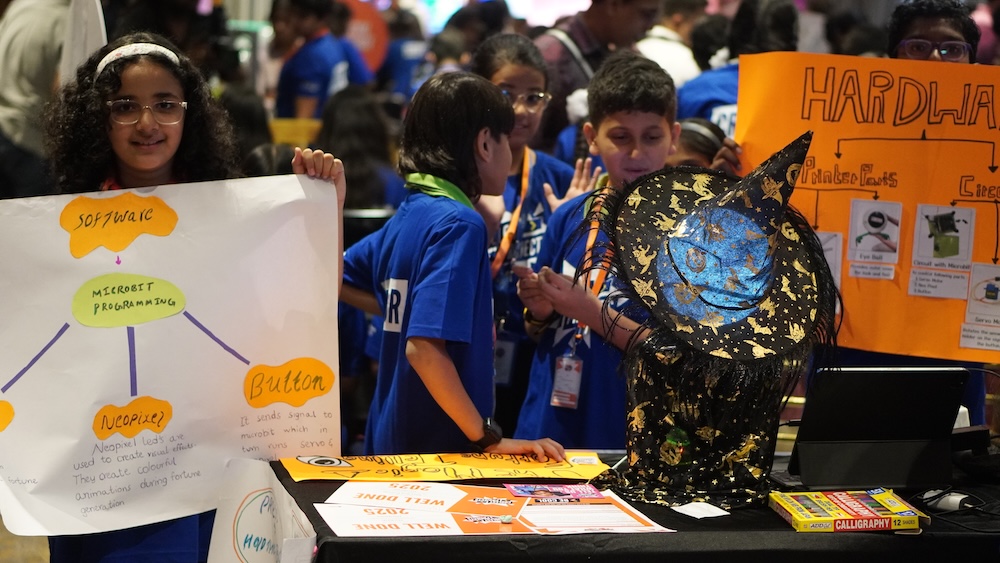
Avyukt, 9 years old | The EchoCharm Spellbox, Hardware category

A truly magical project was The EchoCharm Spellbox, an interactive creation that used a Raspberry Pi computer and a speaker to bring the famous Harry Potter artifact to life. This project was a perfect blend of creativity and coding, showcasing how technology can be used for fun and entertainment.

Young creators at Coolest Projects India.
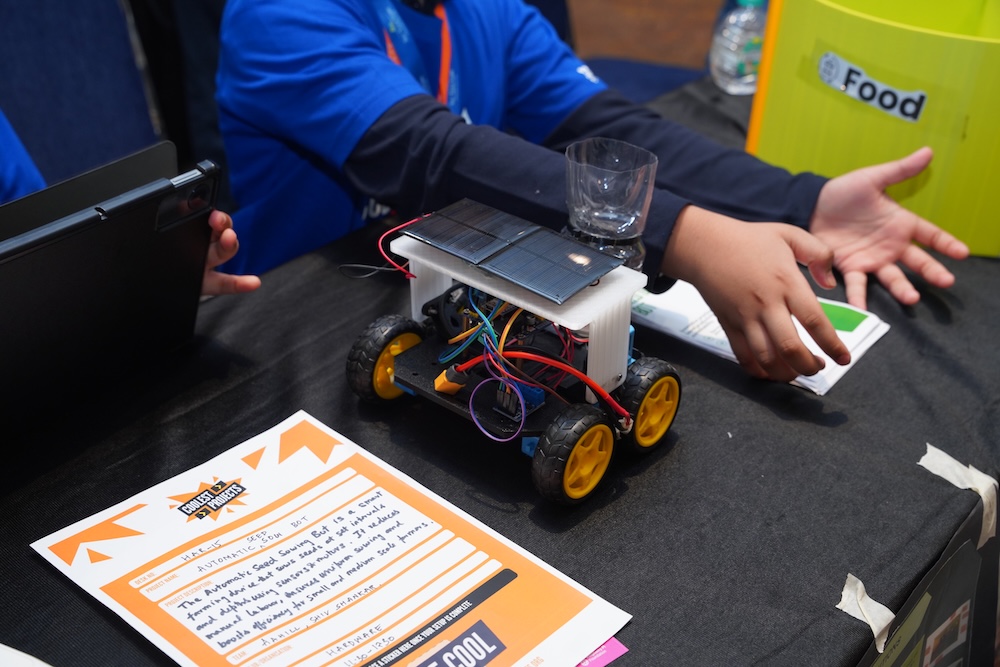
Aahil, 11 | Automatic Seed Sowbot, Hardware category

We were also blown away by the Automatic Seed Sowbot, a practical invention that used a tiny camera and AI to quickly and accurately sort seeds. This clever hardware project tackles a real-world problem and has fantastic applications in agriculture and farming.

Young creators at Coolest Projects India.
Pranamya, Medha, Manvi, Aradhna — these 13-year-old-girls all come from Karnataka state | Unspoken Truths, Mobile apps category

Another brilliant project that we saw was Unspoken Truths, a fun mobile app for interesting conversations to reveal hidden truths and secrets about yourself and your friends. If you’re ever looking to break the ice or deepen your connections, Unspoken Truth provides an entertaining way to start a conversation.

A community of creators

From first-time coders to seasoned programmers, every young person showcasing their work had the chance to celebrate their ideas and feel part of a vibrant community. The event created a unique atmosphere where participants were able to proudly share their projects with family, friends, and the wider coding community. They all received certificates to celebrate their fantastic achievements.

This year’s showcase brought together creators from different parts of the country, highlighting the incredible passion for digital making in India. It was a powerful reminder that when you put technology into the hands of young people with curiosity, there is no limit to what they can create.

A massive thank you to our organisers, volunteers, and the dedicated mentors who made the event possible. And most importantly, thank you to the young creators of India for sharing their ingenuity and creativity with us! We can’t wait to see what you’ll build next.

Thank you to our sponsors, Qube Research and Technologies, for sponsoring the hardware category.

Want to get involved?

Coolest Projects will be back online and with more in-person events in India and around the world in 2026. Sign up to the newsletter to be the first to hear about dates, deadlines, and exciting updates.

The post Young creators build a bright future at Coolest Projects India 2025 appeared first on Raspberry Pi Foundation.
Adapting our computing curriculum resources for Telangana — the journey so far

Post Syndicated from Jaskaran Singh original https://www.raspberrypi.org/blog/adapting-our-computing-curriculum-resources-for-telangana-the-journey-so-far/

This blog is the third and final in our mini-series about the things we’ve learnt from adapting The Computing Curriculum resources, and from training teachers to use them in schools. In the first two blogs, we wrote about our experiences in Kenya and Odisha, India. Here, we focus on our work in Telangana, India. 

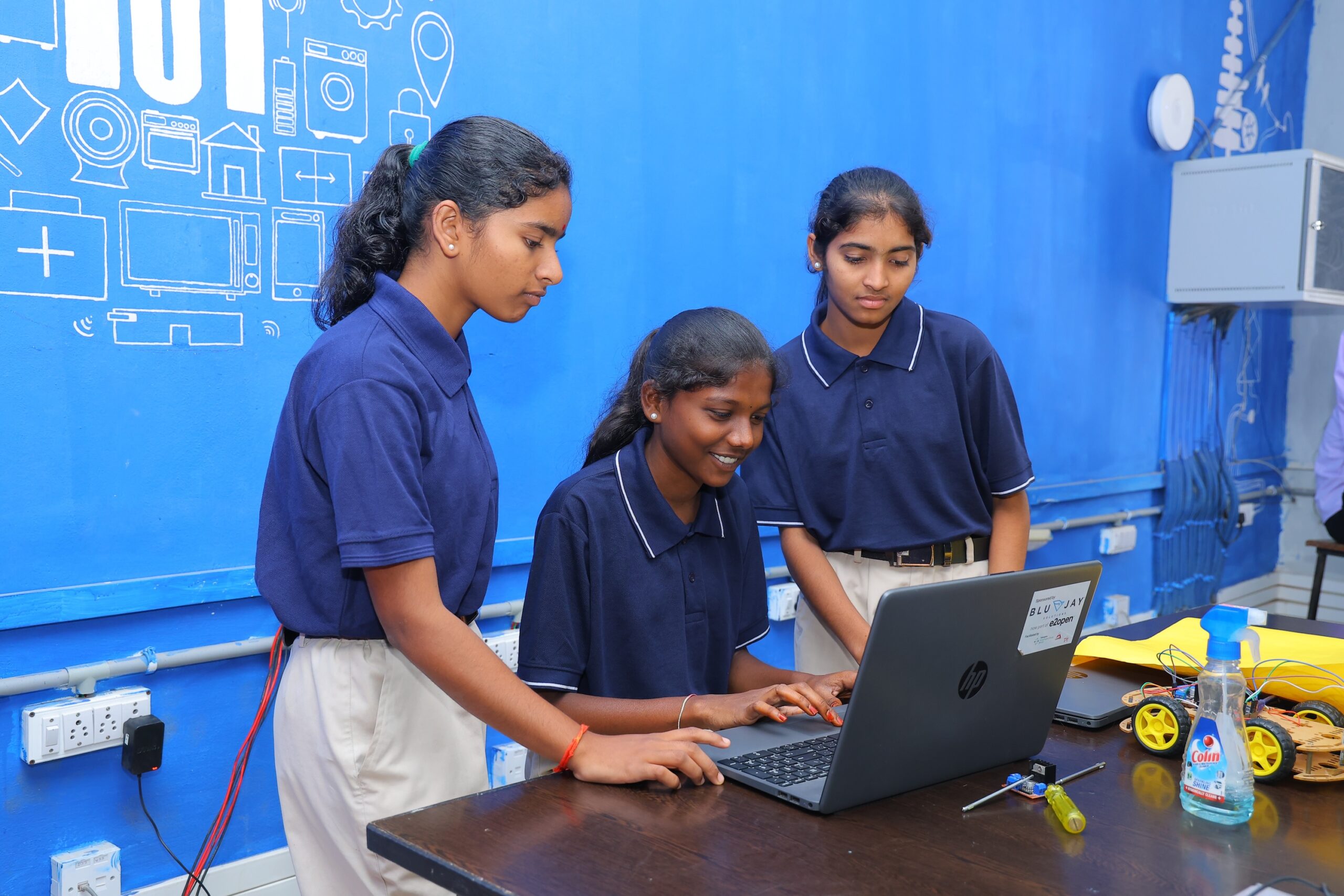
Three female students at the Coding Academy in Telangana.

This blog was written by Jaskaran Singh, Impact Manager, and Mamta Manaktala, Senior Learning Manager.

Adapting for unique needs

Every country and region has unique opportunities, challenges, and needs. In a vast country like India, every state is different — what works in Odisha may not work in other locations. Thus, to meet the needs of students in the state of Telangana, we’ve been working on adapting The Computing Curriculum specifically for them.

A group of female students at the Coding Academy in Telangana.

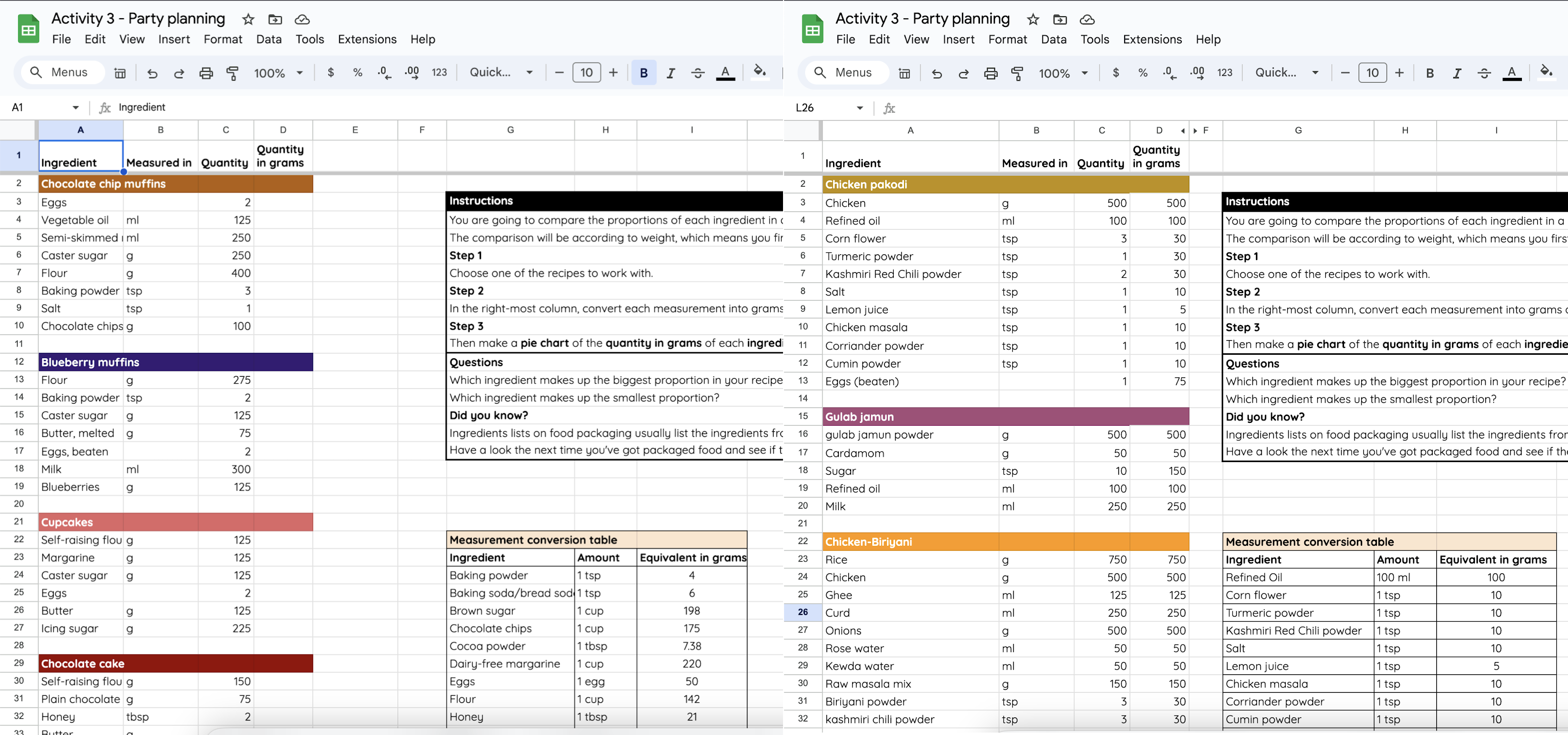
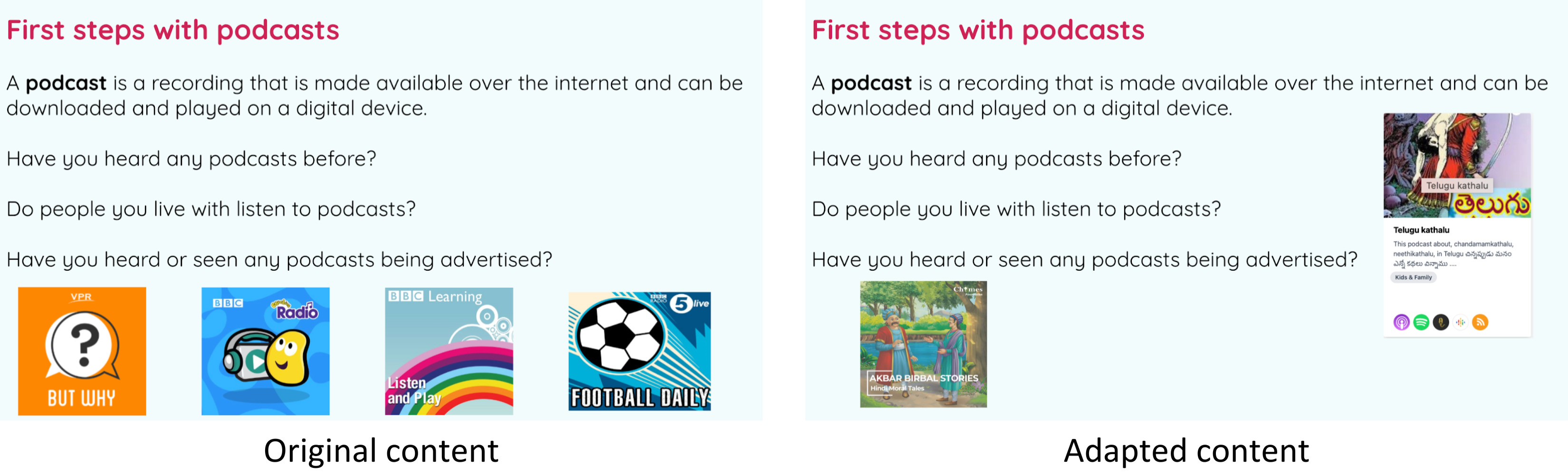
Our work in Telangana began in 2023, when we kickstarted a five-year partnership with the Telangana Social Welfare Residential Educational Institutions Society (TGSWREIS), a society under the Government of Telangana. Through the partnership, we’ve developed an adapted curriculum, along with training for educators working in educational institutions with limited resources. The adapted curriculum includes localised examples and activities, and teaching approaches to make the learning experience feel relevant and meaningful for students in Telangana, while keeping the core learning outcomes aligned with global standards. 

Testing and iterating

Since the start of the partnership, we’ve been testing the curriculum at the Coding Academy School, a co-educational school at Moinabad, and the Coding Academy College, a degree college for women in Shamirpet.

Our work delivering the curriculum in Telangana was our first time using a direct-to-learners model. The Coding Academy School and College gave us unique opportunities to work with students directly and observe first-hand the difference the programme made in their learning journeys. 

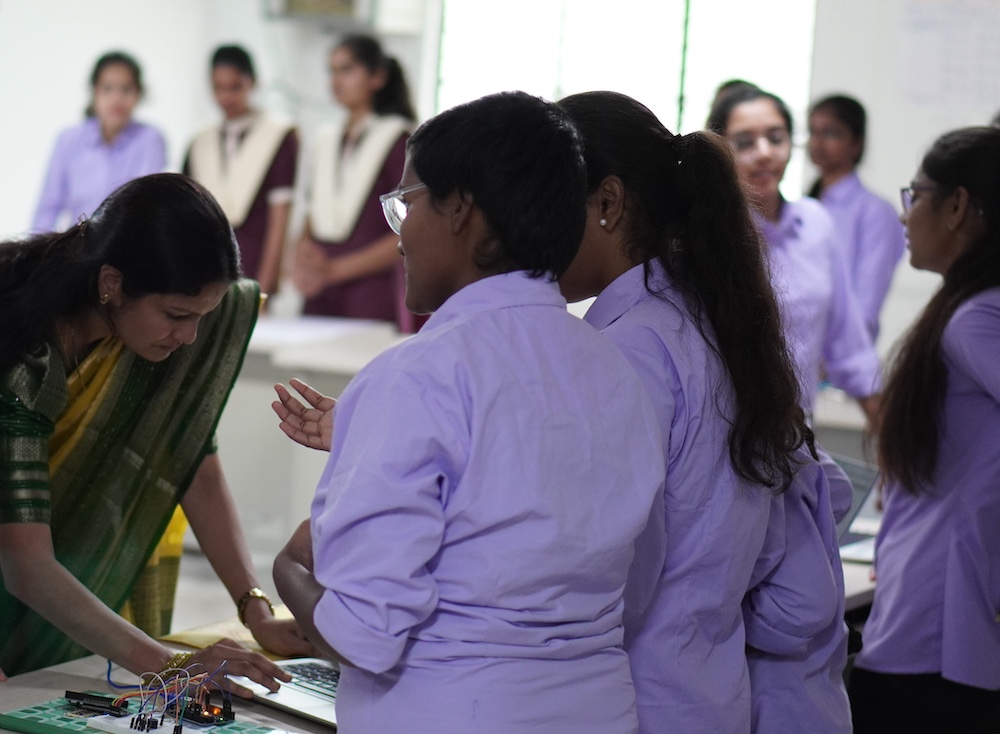
A group of students and a teacher at the Coding Academy in Telangana.

During the first year of implementation, we gathered useful feedback from students and teachers. Check out one of our earlier blogs where we share some of the findings. We used these inputs to further develop the curriculum.

This updated version of the curriculum was implemented in the 2024/25 academic year. At the school, our educators worked with 210 students in grades 7–9, while at the college, our educators worked with 382 undergraduate students. As in the first year, we used data from assessments, lesson observations, educator interviews, student surveys, and student focus groups to understand what’s working well and what could be improved. So what did we learn?

What we learnt over the past year

Our evaluation findings show that the updated curriculum worked well and positive outcomes are being achieved for most students. Educators felt prepared to teach the curriculum in this second year and found the ongoing support and spaces for discussion really useful. Moreover, we found that there are potential positive ripple effects beyond the school as well. 

Learning outcomes are being achieved to a high degree

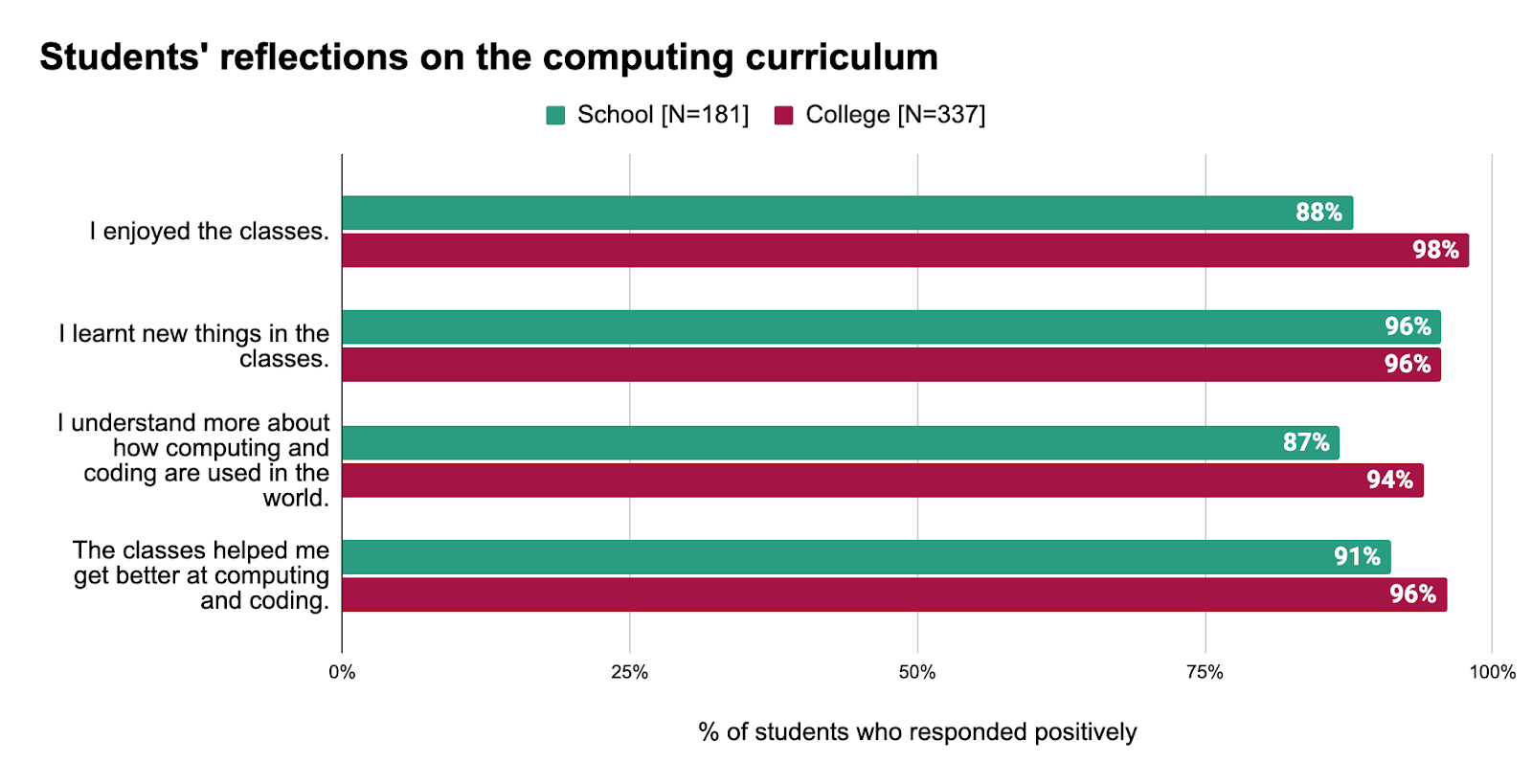
In surveys, 91% of students in the school and 96% of students in the college responded that the lessons helped them get better at computing and coding. Students feel they are not just learning new skills but also finding the content enjoyable: 88% of students in the school and 98% of students in the college responded that they are enjoying their classes. Educators and observers also reported that students were engaged during lessons, and often completed activities without needing any support. 

Students' reflections on the computing curriculum.

Students’ assessment scores further confirmed positive learning outcomes. 4 out of every 5 scores in the school and 9 out of every 10 scores in the college were 60% or above, which was higher than in the first year of the adapted curriculum’s implementation.

The updated curriculum is more aligned to student needs

The changes we made to the curriculum included:

  • Adding more localised examples
  • Simplifying the language 
  • Restructuring the flow of the content

Educators were highly positive about the updates to the curriculum. 

“The students are able to [better] understand the examples because we updated [to] the India context examples.” — Educator, Coding Academy School 

“Students are receiving it very well because we have modified the content this year, and [that includes] the placements of the unit and the connectivity of the lessons and units.” — Educator, Coding Academy School

Additionally, for the college curriculum, we aligned the content more closely with the learning objectives set by Osmania University — with which the college is affiliated. We also included more advanced topics for students specialising in data science. During interviews, educators reported that the content was now much better aligned to student expectations. 

“[The curriculum] we have designed is based as per [the] Osmania University curriculum. [The lessons] are definitely meeting the students’ needs because whatever discussions we are taking in classes, they are [successfully] participating in those discussions and they are doing whatever activities we give them.” — Educator, Coding Academy College

Outside of knowledge and skills in computing, the curriculum is also helping students develop wider life skills. In our survey, college students shared that working on projects gives them a sense of accomplishment and the confidence to solve real-world problems. Many students also reported that through the curriculum they are developing higher-order thinking skills, which will support their future careers. 

“The thrill lies the creativity and problem-solving aspects. I get to turn ideas into reality pieces, and there is something incredible satisfying about debugging code and watching it run flawlessly. It’s like slow, challenging puzzles, frustrating at times but rewarding when everything clicks.” — Student, Coding Academy College

“My favourite thing [about] the computing and coding classes [is the] Scratch programme. I have learnt it [for the] first time. By learning I have enjoyed a lot. During the coding process, it trains our brain to think deeply, identify trouble, and break things up and put pieces together [as] a solution.” — Student, Coding Academy College

Students are inspired to continue engaging 

Students are showing high interest in applying their skills outside of their classes. Almost all students — 100% in the school and 99% in the college — reported that they would like to participate in coding-related competitions. 

A group of female students working on a coding project.

Educators also told us that many students are exploring future job opportunities in the computing and digital technology fields, and are curious about topics outside the curriculum. Interestingly, 93% of the college students who were studying courses not traditionally associated with jobs in computing and digital technology reported that they would like to pursue a job in computing.

The positive benefits go beyond the school

We have also learnt that a high-quality computing education for young people has potentially wider benefits for the community. One educator described how students are helping their families, many of whom have limited experiences, engage more confidently with digital technologies.

“Families don’t know how to use smartphones and laptop computers, but our students know very well so I can say they do teach to their elders how to use these platforms.” — Educator, Coding Academy School

Ongoing support for educators was important

To help educators feel confident and prepared, individualised learning resources were provided throughout the year. These were well received by educators. Educators also found the weekly meetings with our India-based team members useful to discuss ongoing challenges regarding delivery and assessments. 

What could still be improved

There were improvements this year in the availability of equipment, and the use of Wi-Fi dongles addressed internet connectivity issues to some degree. However, educators still faced some challenges. For example, educators in the school faced issues accessing printed worksheets and educators in the college faced issues accessing projectors during their lessons. We are working closely with our delivery partner to address these issues for the new academic year.

A group of male students working on a coding project.

With regard to the content, educators felt the curriculum could benefit from some further amendments. For the school curriculum, these include easing the transition from block-based to text-based coding. For the college curriculum, there were suggestions for more focus on real-world applications of coding and including advanced topics, like machine learning, for undergraduates specialising in computing-related subjects. We have considered all these suggestions and made necessary revisions to the curriculum.

Next steps in Telangana: Scaling up impact

With the success of the pilot, we’re excited to announce that the adapted curriculum will now be implemented at over 350 schools and junior colleges in the state of Telangana. A majority of schools will be with the same partner, TGSWREIS, while some schools and junior colleges will be with other partners. The Coding Academy School will become our hub for trialling new curriculum content and strategies, and conducting research studies and teacher training and support. Additionally, the school will also host inter-school events.

A group of female students working on a coding project.

The progress we’ve seen so far in Telangana is very encouraging. We look forward to continuing these partnerships and helping more young people realise their potential through the power of computing and digital technologies.

What we learnt about adapting curriculum resources for different regions

From our work in Telangana, Odisha, and Kenya, we’ve learnt that a curriculum isn’t a one-size-fits-all product. The local context, culture, and educational provisions are important considerations when adapting learning resources for different regions. We’ve also learnt that building long-term partnerships with organisations who have local expertise is key to understanding these considerations and effectively reaching communities where we can make the biggest difference. Finally, we’ve learnt that adaptation isn’t a one-time activity. It’s a cycle of continuous refinement; listening closely to feedback from the ground is important to ensure that our support for educators and learning experiences for young people have the best possible impact.

Want to learn more about our curriculum resources?

You can access our free Computing Curriculum resources on our website — we are currently working to make the materials for India and Kenya downloadable there.

The post Adapting our computing curriculum resources for Telangana — the journey so far appeared first on Raspberry Pi Foundation.
Adapting our computing curriculum resources for Odisha — the journey so far

Post Syndicated from Fiona Coventry original https://www.raspberrypi.org/blog/adapting-our-computing-curriculum-resources-for-odisha-the-journey-so-far/

Today’s blog is the second in a mini-series of three sharing our experiences of adapting computing curriculum resources for different contexts, and off training teachers to use them in schools. Last month we wrote about our collaboration with partners in Kenya. Here we discuss our work in Odisha, India.

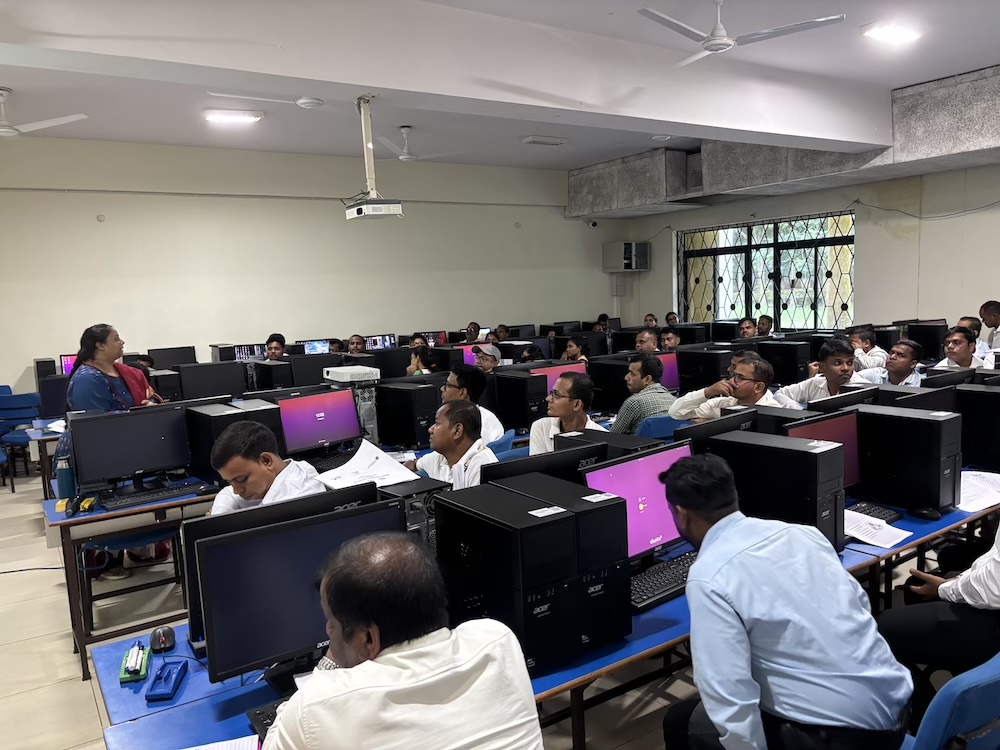
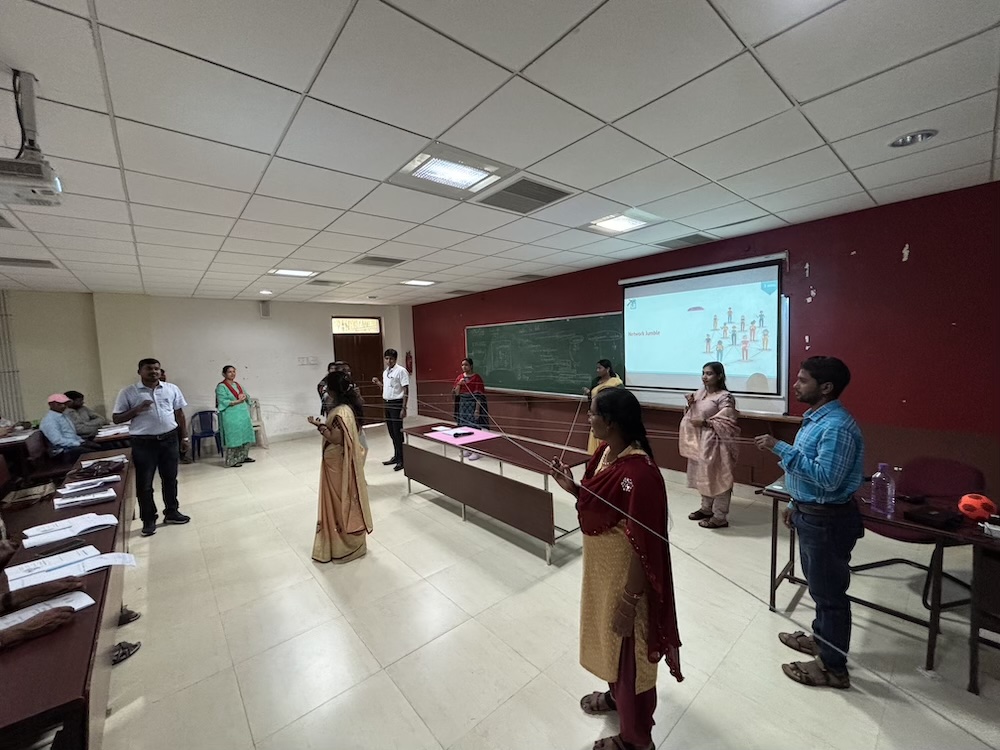
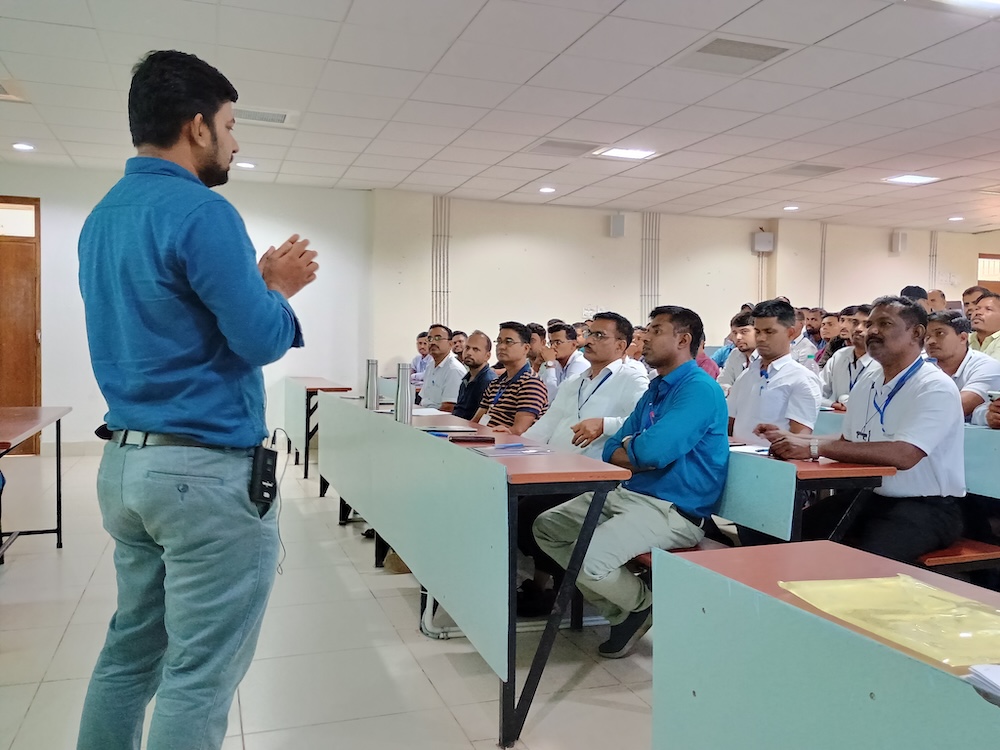
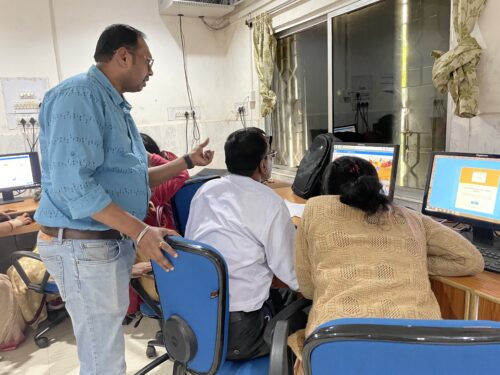
Teachers at a teacher training in Odisha.

This article has been written by Fiona Coventry, Impact Manager, and Mamta Manaktala, Senior Learning Manager.

A long-term partnership in Odisha

We know that building long-term partnerships with organisations that have local expertise is key to making a real impact for young people. This fact was echoed by people involved in education initiatives worldwide who spoke at the What Works Hub for Global Education 2024 annual conference, which Fiona followed online. Our work in Odisha is an example of this.

Teachers at a teacher training in Odisha.

We have now been working with our government partner in Odisha, Panchasakha Shikhya Setu (formerly Mo School Abhiyan), for four years. Our journey began in 2021, when we worked together to establish a network of Code Clubs in government and government-aided schools in the state. In 2023, our focus shifted to developing a formal computing curriculum for students in grades 9 and 10 (known locally as the Kaushali curriculum), in collaboration with two other partners. 

Work in the 2024/2025 academic year

Adaptation is a crucial aspect of how we ensure our computing resources are accessible to as many young people as possible. For our work in Odisha, we adapted content from The Computing Curriculum and then localised it to fit the requirement of the students.

Teachers at a teacher training in Odisha.

In Odisha’s June 2024 to April 2025 academic year, we rolled out adapted computing curriculum content for grade 10 students, for students who had already learned with adapted grade 9 content in 2023/24. We worked with our partners to develop the curriculum content and trained 310 master teachers from across Odisha, along with 30 State Resource Groups (SRGs) to support them. Before the end of 2024, the 310 master teachers subsequently trained 8109 teachers, who would reach an estimated 880,000 students with the grade 9 and 10 curriculum content. We had an ongoing responsibility to support 1846 of these teachers in our allocated districts, with an estimated reach to around 205,000 students.

Impact of the grade 9 and 10 curriculum

In early 2025 we issued a follow-up survey about student learning, content, and training to a sample of teachers in our allocated districts, and 310 teachers responded. (We used a stratified sampling approach designed to ensure the survey results were representative of all teachers.)

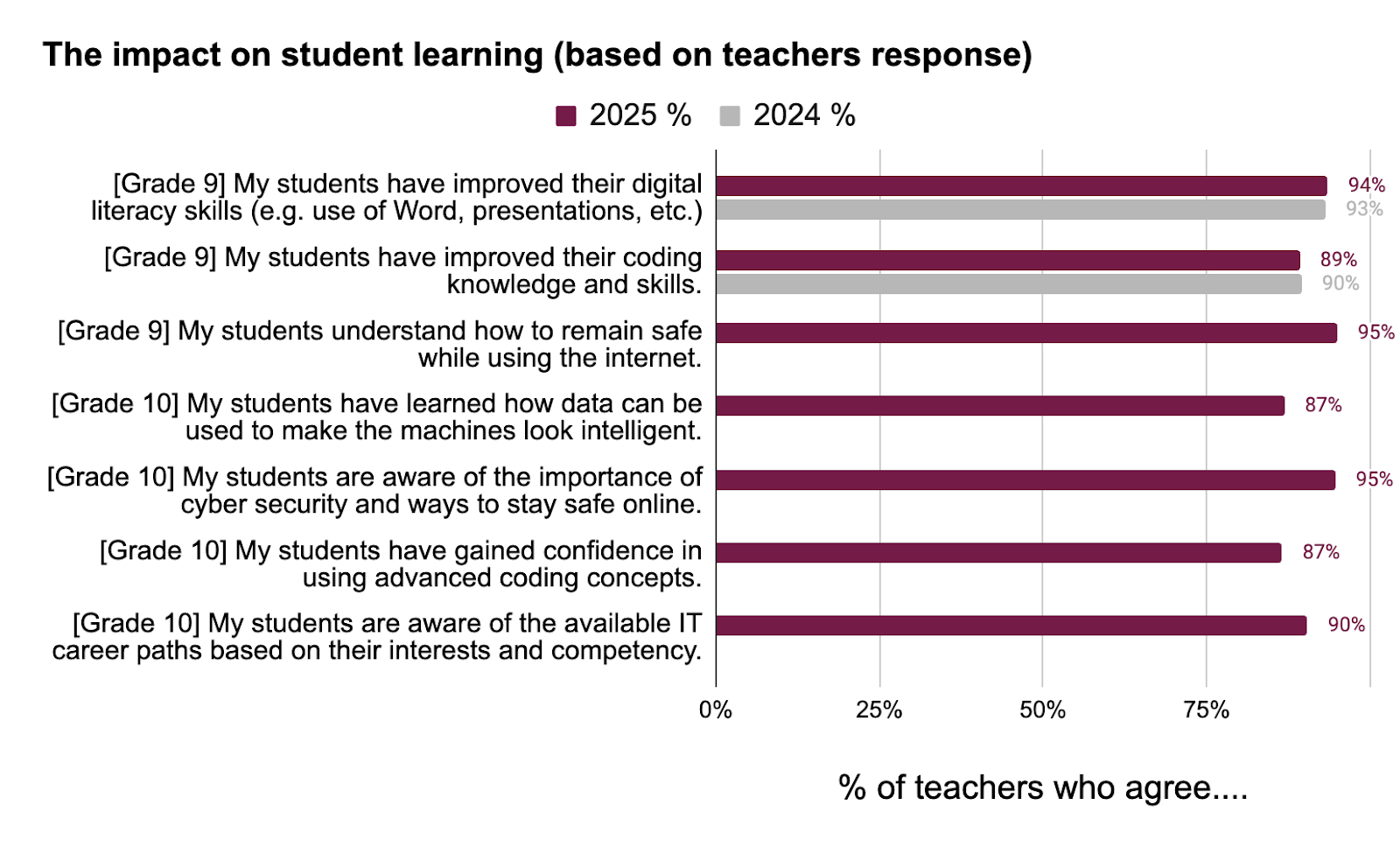
At least 87% of teachers agreed that students achieved the outcomes we asked about, e.g. regarding coding skills, staying safe online, and use of data in machine intelligence. 

Moreover, responses related to our grade 9 curriculum remained similarly high compared to 2024 survey responses.

2025 Odisha teacher survey responses regarding their students' learning.
2025 Odisha teacher survey responses regarding their students’ learning. Click to enlarge.

Teachers also expressed their appreciation for the computing curriculum resources and training in free-text comments and interviews, for example:

“IT and coding is essential nowadays. So a good initiative, adding this to schools’ curriculum.” – Teacher in Odisha

“The training was quite informative, interesting and helpful.” – Teacher in Odisha

“It is very useful training for me. It boosts my knowledge and helps me for classroom transaction.” – Teacher in Odisha

Addressing challenges

An ongoing challenge in Odisha has been supporting those teachers who lack experience with computing and/or with our recommended teaching approaches for computing. We have been working hard to help these teachers develop the knowledge, skills, and confidence to effectively deliver the curriculum content in the limited time they have alongside their other professional commitments.

Teachers at a teacher training in Odisha.

In the 2023/2024 academic year, many teachers had told us they needed further training and support. For this reason, we offered longer training in the 2024/25 academic year. We also adapted our training approach based on learning from earlier phases, such as including activities teachers could complete on their smartphones, enabling more hands-on learning while reducing dependence on available IT equipment. The outcome of this was positive: in the follow-up survey, fewer teachers felt they needed additional training to deliver the lessons, and most teachers we interviewed felt this year’s training was an improvement on the previous year’s.

Our team also ran weekly webinars to support teachers and address their queries. These were very well received by teachers. Of the responses received to feedback form available after each webinar:

  • 97% agreed that the “webinar helped me to understand the topics covered more clearly.”
  • 98% agreed that the “webinar was useful to support my teaching.”

This was supported by comments from teachers, for example:

“All questions were answered. The webinar was good. Gained a lot. Thank you very much.”  – Teacher in Odisha

“I learned many unknown things about Scratch, it will help my classroom teaching.” – Teacher in Odisha

In this year’s follow-up survey, teachers also less frequently indicated they felt they needed “additional content to support students”. They provided useful feedback and suggestions regarding the curriculum content, e.g. further simplifying and localising it, which we will incorporate into future resource development.

Another persistent challenge has been limited access to IT equipment and the internet in schools, and what this means for student-device ratios and how teachers are able to deliver the content. For future resources we are developing, we are therefore adapting the amount of content to be delivered over a series of lessons.

Next steps for our partnership in Odisha

In 2025, we are working with the same partners to implement a curriculum for grades 6 to 8, initially in around 460 schools. We and our partners have developed the curriculum content and are currently in the process of training teachers in preparation for classroom delivery.

We are also continuing to support the teachers previously trained on the grade 9 and 10 curriculum through webinars and school visits.

Want to see our curriculum resources?

You can access our free Computing Curriculum resources on our website — we are currently working to make the materials for India, and for Kenya, downloadable there.

Look out for the final blog in this mini-series next month, which will focus on our computer science curriculum in Telangana, India.

The post Adapting our computing curriculum resources for Odisha — the journey so far appeared first on Raspberry Pi Foundation.
Empowering India’s digital future: Our computing curriculum’s impact

Post Syndicated from Ben Durbin original https://www.raspberrypi.org/blog/empowering-indias-digital-future-our-computing-curriculums-impact/

The Raspberry Pi Foundation has been working in India since 2018 to enable young people to realise their potential through the power of computing and digital technologies. 

We’ve supported Code Clubs, partnered with government organisations, and designed and delivered a complete computing curriculum for students in grades 6 to 12 and at the undergraduate level. Our curriculum is tailored to the Indian context, and we provide extensive support to help teachers deliver it effectively.

Three female students at the Coding Academy in Telangana.

In another recent blog, we shared in detail how we’ve created an impactful curriculum for India. We’re now excited to share our new report evaluating how our curriculum is being taught in Telangana and Odisha. This report demonstrates the impact we’ve had so far, highlighting our successes and the key lessons we have learnt.

Key findings from the evaluation

Our evaluations of how the curriculum is being taught show that teachers are well-equipped to deliver the curriculum and provide high-quality and accessible learning experiences that develop students’ computing knowledge and skills.

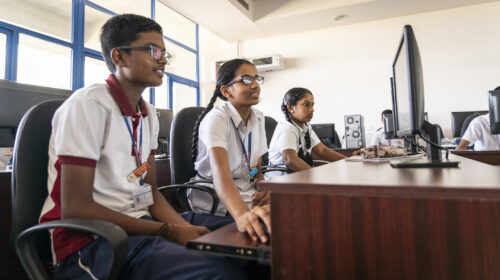
A group of students in a classroom.

In Telangana, we partnered with the Telangana Social Welfare Residential Educational Institutions Society (TGSWREIS) to introduce our curriculum at the Coding Academy School and Coding Academy College. Our report found that all school and college teachers we trained agreed they felt confident teaching students using the resources provided. Students were very positive about the classes, and their assessment scores demonstrated strong learning outcomes: 77% of school students and 70% of college students achieved at least 60% of available marks.

In Odisha, we worked with Learning Links Foundation and Quest Alliance, in partnership with Panchasakha Sikhya Setu (PSS) Abhiyan, to deliver the IT and Coding Curriculum (Kaushali) to students in grades 9 and 10. Our findings were also very positive:

  • 87% of teacher respondents agreed that the curriculum resources were high quality and useful for their teaching
  • 91% felt more confident about teaching IT and coding due to the curriculum resources
  • 93% of teachers agreed that the training helped them understand the curriculum’s structure, content, and objectives
  • 89% felt confident in teaching the curriculum after the training
  • Teachers also reported a positive impact on their students, with almost all agreeing that it improved students’ coding skills, digital literacy, and understanding of responsible digital citizenship

The report also highlights how students better understood how computing and coding are used in the world and developed an increased interest in pursuing careers in these fields.

Key factors for effective implementation

Our evaluations show the importance of several factors when launching a computing curriculum:

  • Aligning content with students’ experience and interests: Content should be tailored to students’ existing knowledge, culturally relevant, and follow industry standards to prepare them for employment
  • Providing extensive support to teachers: This includes careful selection and training of master teachers, comprehensive training for teachers that considers their knowledge and experience, and ongoing support through webinars, calls, and classroom observations
  • Ensuring sufficient quantity and quality of infrastructure: Adequate equipment and internet access are crucial for effective teaching and learning

We are committed to always improving our approach to ensure that all young people in India have the opportunity to learn about computing.

Join us in shaping the future

You can read our new report here. If you are interested in partnering with us or want to learn more about our mission, please contact [email protected].

The post Empowering India’s digital future: Our computing curriculum’s impact appeared first on Raspberry Pi Foundation.
Computing Curriculum Framework: Adapting to India’s diverse landscapes

Post Syndicated from Mamta Manaktala original https://www.raspberrypi.org/blog/computing-curriculum-framework-adapting-to-indias-diverse-landscapes/

The digital revolution has reshaped every facet of our lives, underscoring the need for robust computing education. At the Raspberry Pi Foundation our mission is to enable young people to realise their full potential through the power of computing and digital technologies. Since starting out in 2008 as a UK-based educational charity, we’ve grown into a global leader in advancing computing literacy.

An educator and students working on a coding task.

At the heart of our efforts lies a simple yet powerful vision: to ensure every young person develops the knowledge, skills, and confidence to use digital technologies effectively. This includes understanding societal and ethical issues, using technology for creative problem solving, and fostering a mindset of adaptability that will enable them to thrive amid rapid technological change.

A vision for global computing education

To realise this vision, we developed The Computing Curriculum (TCC). Launched in 2018 as part of the UK’s National Centre for Computing Education, TCC is a comprehensive set of free teaching resources tailored for students aged 5–16. Over the years, the curriculum has evolved through rigorous testing and teacher feedback, which has helped to make it one of the most effective and inclusive computing education tools globally.

A group of students in a classroom.

Contextualising computing education for India

India’s vast diversity — in languages, social and economic contexts, and educational infrastructure — creates unique challenges and opportunities. As a result, we at the Raspberry Pi Foundation have adapted and localised our computing curriculum to meet the needs of Indian students. Collaborations with the Telangana Social Welfare Residential Educational Institutions Society (TGSWREIS) and the Odisha Mo School programme have been pivotal in this endeavour.

Modelling data using a spreadsheet (Grade 9)
Creating media — audio production (Grade 7)

In Telangana, we adapted TCC to create a 70+ hour computing curriculum designed for government schools with limited resources. Similarly, in Odisha, elements of this curriculum have been tailored to develop Kaushali, an IT and coding curriculum for over 8,000 state schools. This localised approach ensures that computing education becomes accessible and relevant for students across India.

A curriculum designed for impact

The computing curriculum for India spans Grades 6 to 10 (age group 11-16) and is structured to ensure progressive learning. Students revisit foundational concepts repeatedly, building on prior knowledge as they advance through the grades. The curriculum emphasises forming a strong understanding of concepts over rote learning and integrates research-informed pedagogical approaches.

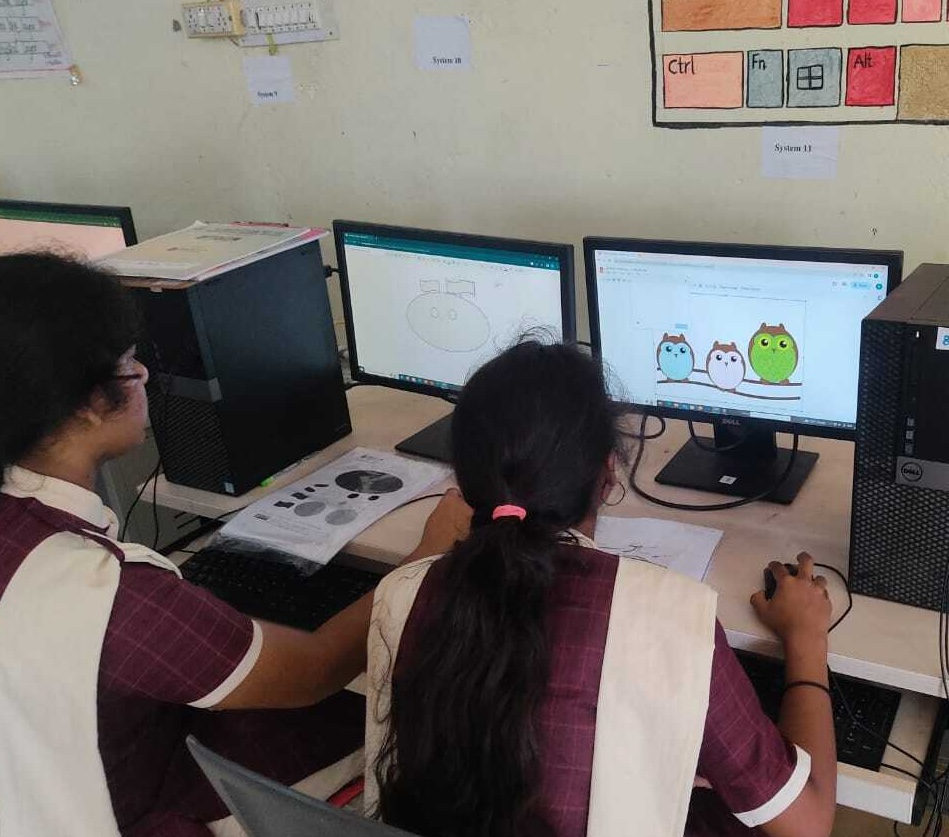
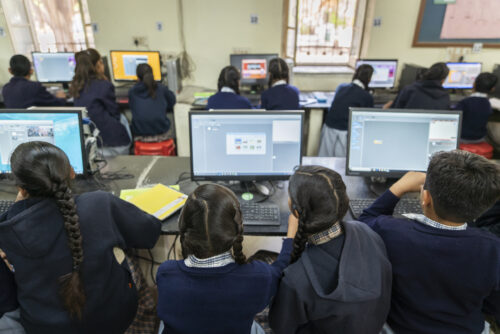
Students using computers in a classroom.

We tested our localised curriculum resources in Telangana Coding Academy, and there was lots of positive feedback from educators and observers. Overall, the educators were happy with the content format, and the observers noted that students enjoyed learning and completing the activities. This was also evident from the student discussion notes and student survey responses.

“[…] this content is more than what we are expecting for the school years[…] this time they [are] having [a] practical session. So they are very happy to do it and whenever they are free[,] they will come and ask us. ‘[C]an you take [an] extra class for us?’” – Educator

“[…] They are very [appreciative of] the content and [t]hey [are] learning very well, and the response is very good.” – Educator

Key features of the curriculum:

  • Tailored content: Materials are customised to align with the proficiency levels and contexts of Indian students, ensuring accessibility
  • Localised examples: By incorporating culturally relevant examples, students find the learning experience relatable and engaging
  • Simplified language: Designed for students who may lack confidence in English, the curriculum employs clear and concise language for better comprehension
  • Hands-on learning: Practical activities, including projects and model creation, solidify understanding and foster creativity
  • Ready-to-use resources: Teachers are equipped with lesson plans, presentations, worksheets, and activity sheets, reducing preparation time and enhancing delivery

Learning objectives:
The curriculum focuses on equipping students with:

  • An understanding of digital systems and their impact on people and society
  • Computational thinking and problem-solving skills for real-world applications
  • Confidence and knowledge to become creators and innovators
  • Awareness of digital citizenship and responsible technology use

Curriculum structure:
Each academic year includes 30–34 sessions, each lasting 45–60 minutes. Lessons are structured into deliverable units comprising detailed plans, presentations, and worksheets. Both plugged (computer-based) and unplugged (activity-based) learning methods are used, with a 60:40 ratio, ensuring balanced and inclusive learning experiences.

Sample progression across grades:

Curriculum highlights

Grade 6: Building a foundation

Students develop foundational computer skills, learn basic text formatting, and explore introductory programming concepts using Scratch. They also begin to understand how to group and describe objects based on their properties.  

Grade 7: Expanding horizons

Students delve into computer networks, the internet, and the World Wide Web. They learn to use loops in Scratch programming and explore data organisation using flat-file databases and spreadsheets.  

Grade 8: Deepening understanding

Students gain a deeper understanding of how computer systems function and use spreadsheets for data analysis. They continue to build their programming skills in Scratch, focusing on sequences, variables, and selection. They are also introduced to HTML and CSS for basic web development.  

Grade 9: Exploring advanced concepts

Students learn about data representation, including binary and character coding schemes. They design and create websites using HTML and CSS, incorporating accessibility and good web design principles. They also explore the layers of computing systems, including hardware, operating systems, and logic circuits.  

Grade 10: Applying knowledge and skills

Students explore advanced data representation, including image and sound representation. They are introduced to cybersecurity concepts and delve deeper into Python programming, focusing on selection and iteration. They also learn about data science and how to create a blog to support a cause.

Assessment framework:
To measure student progress effectively, the curriculum incorporates both formative and summative assessments:

  • Formative assessments: Embedded in lessons to monitor progress and identify misconceptions early.
  • Summative assessments: Provide a holistic overview of learning outcomes through tools like multiple-choice quizzes and rubrics. These assessments focus on understanding concepts and skills, moving beyond mere code writing.

Bridging the digital divide

Our localised computing curriculum is more than a technical education initiative — it is helping to bridge the digital divide. By empowering students with essential digital skills, it fosters innovation, enhances employability, and enables young people to participate actively in the global digital economy.

The road ahead

As technology continues to evolve, so does the need for adaptive and inclusive computing education. We remain committed to supporting governments, educators, and students in this journey. By fostering a generation of digitally literate and empowered individuals, we can create a future where technology serves as a force for good in society.

Through collaborations and localised efforts, the dream of making computing education accessible to every corner of India is steadily becoming a reality. Together, we can equip students with the skills and mindset needed to navigate the complexities of the digital age and shape a brighter, more inclusive future.

The post Computing Curriculum Framework: Adapting to India’s diverse landscapes appeared first on Raspberry Pi Foundation.
Implementing a computing curriculum in Telangana

Post Syndicated from Fiona Coventry original https://www.raspberrypi.org/blog/implementing-a-computing-curriculum-in-telangana/

Last year we launched a partnership with the Government of Telangana Social Welfare Residential Educational Institutions Society (TGSWREIS) in Telangana, India to develop and implement a computing curriculum at their Coding Academy School and Coding Academy College. Our impact team is conducting an evaluation. Read on to find out more about the partnership and what we’ve learned so far.

Aim of the partnership 

The aim of our partnership is to enable students in the school and undergraduate college to learn about coding and computing by providing the best possible curriculum, resources, and training for teachers. 

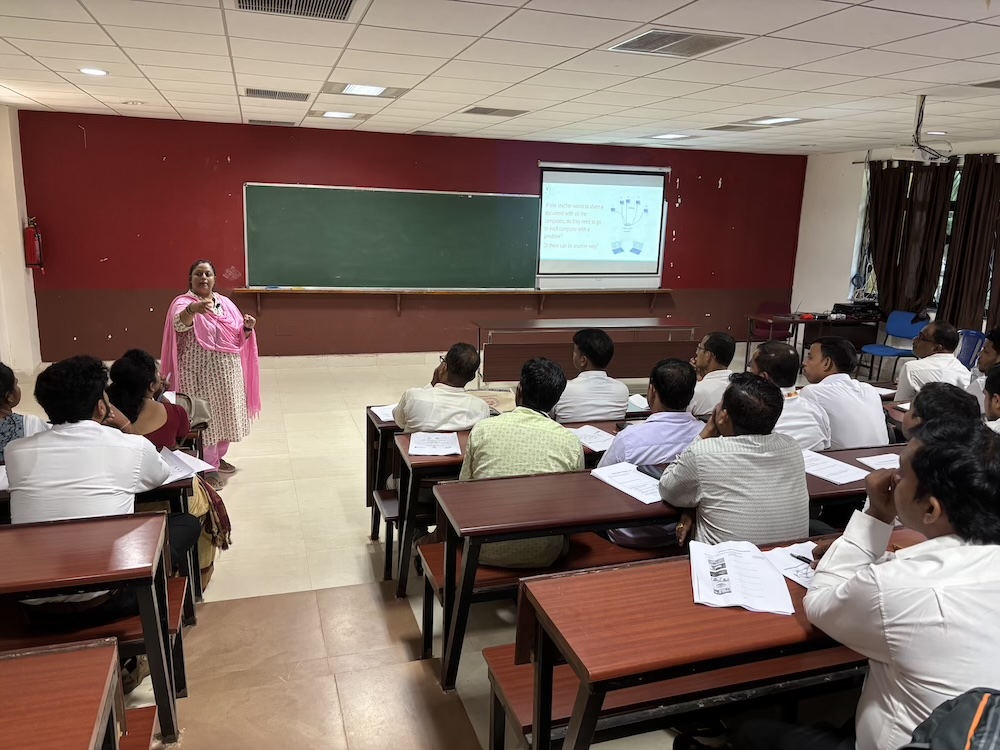
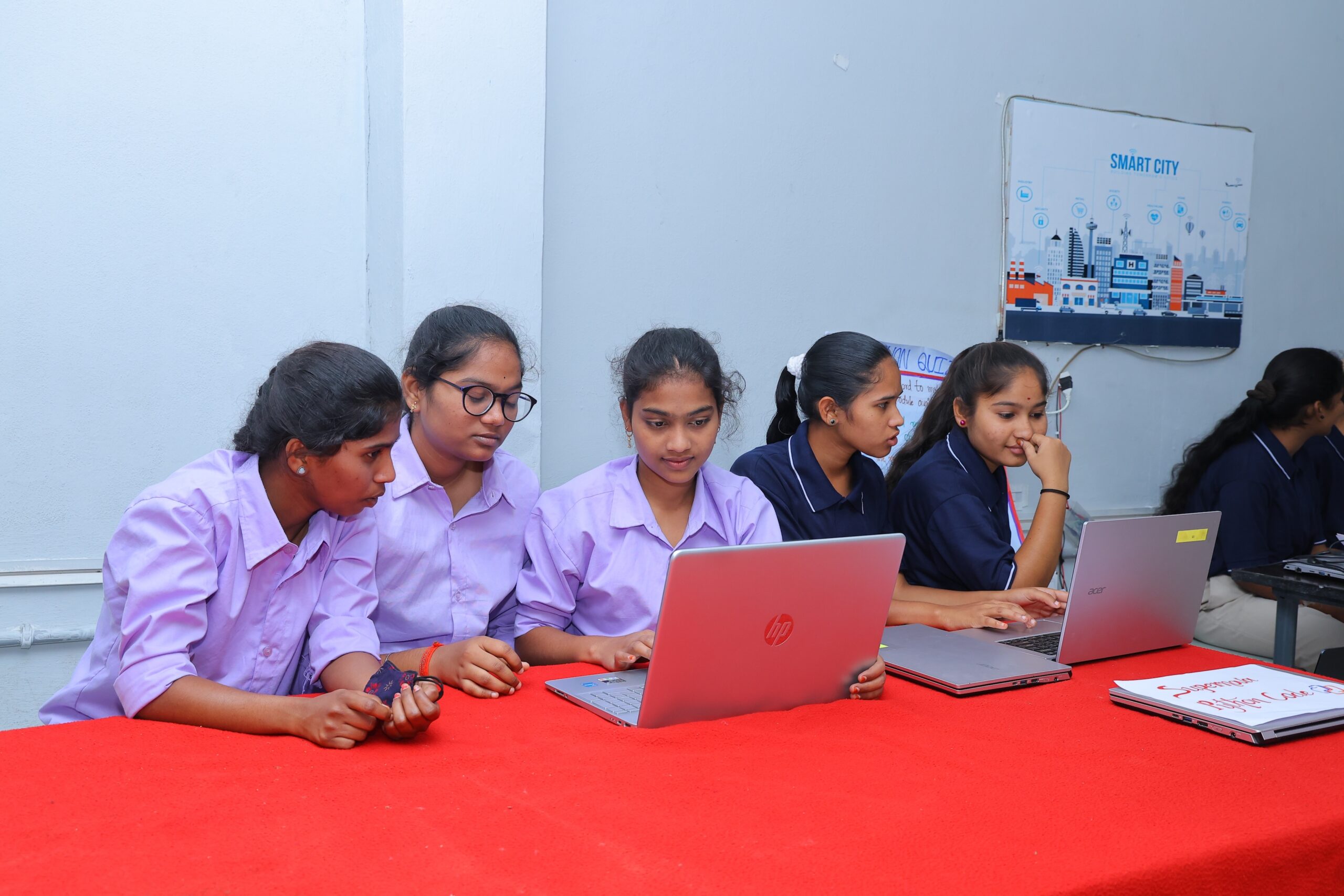
Students sit in a classroom and watch the lecture slides.

As both institutions are government institutions, education is provided for free, with approximately 800 high-performing students from disadvantaged backgrounds currently benefiting. The school is co-educational up to grade 10 and the college is for female undergraduate students only. 

The partnership is strategically important for us at the Raspberry Pi Foundation because it helps us to test curriculum content in an Indian context, and specifically with learners from historically marginalised communities with limited resources.

Adapting our curriculum content for use in Telangana

Since our partnership began, we’ve developed curriculum content for students in grades 6–12 in the school, which is in line with India’s national education policy requiring coding to be introduced from grade 6. We’ve also developed curriculum content for the undergraduate students at the college. 

Students and educators engage in digital making.

In both cases, the content was developed based on an initial needs assessment — we used the assessment to adapt content from our previous work on The Computing Curriculum. Local examples were integrated to make the content relatable and culturally relevant for students in Telangana. Additionally, we tailored the content for different lesson durations and to allow a higher frequency of lessons. We captured impact and learning data through assessments, lesson observations, educator interviews, student surveys, and student focus groups.

Curriculum well received by educators and students

We have found that the partnership is succeeding in meeting many of its objectives. The curriculum resources have received lots of positive feedback from students, educators, and observers.

Students and educators engage in digital making.

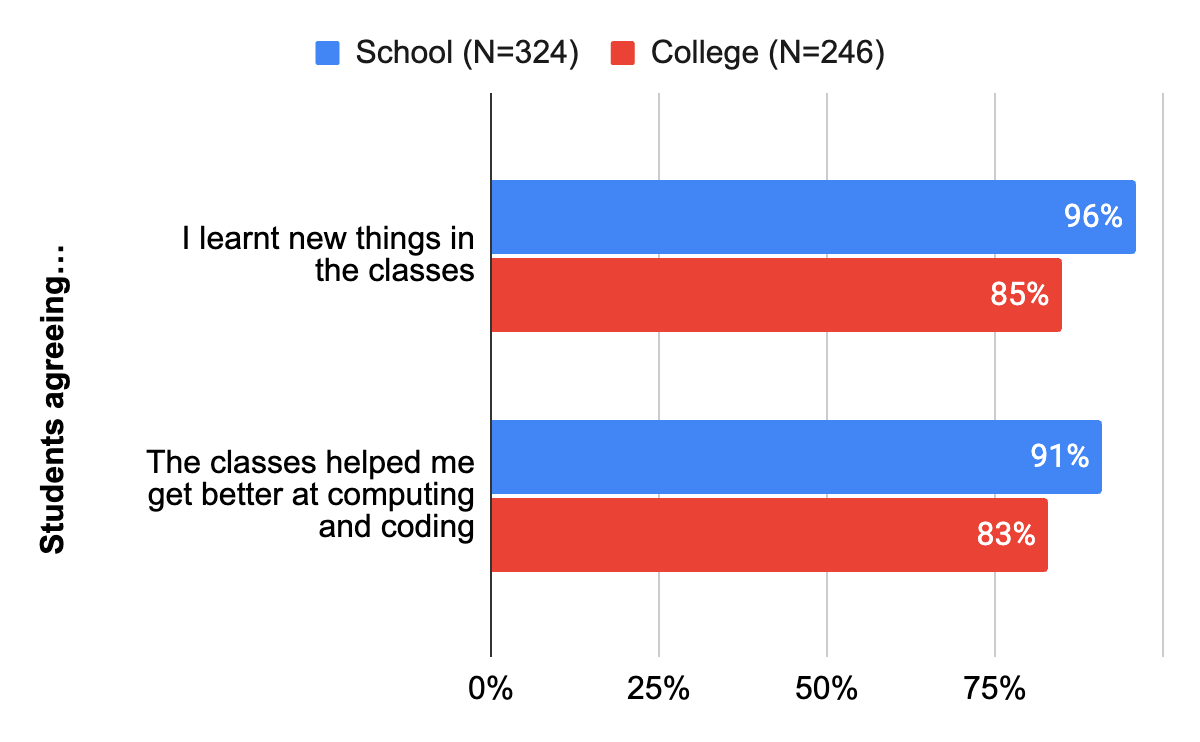
In our recent survey, 96% of school students and 85% of college students reported that they’ve learned new things in their computing classes. This was backed up by assessment marks, with students scoring an average of 70% in the school and 69% in the college for each assessment, compared to a pass mark of 40%. Students were also positive about their experiences of the computing and coding classes, and particularly enjoyed the practical components.

“My favourite thing in this computing classes [sic] is doing practical projects. By doing [things] practically we learnt a lot.” – Third year undergraduate student, Coding Academy College

“Since their last SA [summative assessment] exam, students have learnt spreadsheet [concepts] and have enjoyed applying them in activities. Their favourite part has been example codes, programming, and web-designing activities.” – Student focus group facilitator, grade 9 students, Coding Academy School

However, we also found some variation in outcomes for different groups of students and identified some improvements that are needed to ensure the content is appropriate for all. For example, educators and students felt improvements were needed to the content for undergraduates specialising in data science — there was a wish for the content to be more challenging and to more effectively prepare students for the workplace. Some amendments have been made to this content and we will continue to keep this under review. 

In addition, we faced some challenges with the equipment and infrastructure available. For example, there were instances of power cuts and unstable internet connections. These issues have been addressed as far as possible with Wi-Fi dongles and educators adapting their delivery to work with the equipment available.

Our ambition for India

Our team has already made some improvements to our curriculum content in preparation for the new academic year. We will also make further improvements based on the feedback received. 

Students and educators engage in digital making.

The long-term vision for our work in India is to enable any school in India to teach students about computing and creating with digital technologies. Over our five-year partnership, we plan to work with TGSWREIS to roll out a computing curriculum to other government schools within the state. 

Through our work in Telangana and Odisha, we are learning about the unique challenges faced by government schools. We’re designing our curriculum to address these challenges and ensure that every student in India has the opportunity to thrive in the 21st century. If you would like to know more about our work and impact in India, please reach out to us at [email protected].

We take the evaluation of our work seriously and are always looking to understand how we can improve and increase the impact we have on the lives of young people. To find out more about our approach to impact, you can read about our recently updated theory of change, which supports how we evaluate what we do.

The post Implementing a computing curriculum in Telangana appeared first on Raspberry Pi Foundation.
Introducing a computing curriculum in Odisha

Post Syndicated from Author original https://www.raspberrypi.org/blog/introducing-a-computing-curriculum-in-odisha/

We are working with two partner organisations in Odisha, India, to develop and roll out the IT & Coding Curriculum (Kaushali), a computing curriculum for government high schools. Last year we launched the first part of the curriculum and rolled out teacher training. Read on to find out what we have learned from this work.

A group of teachers is standing outside a school building.

Supporting government schools in Odisha to teach computing

Previously we shared an insight into how we established Code Clubs in Odisha to bring computing education to young people. Now we are partnering with two Indian civil society organisations to develop high school curriculum resources for computing and support teachers to deliver this content.

With our two partners, we trained 311 master teachers during July and August 2023. The master teachers, most often mathematics or science teachers, were in turn tasked with training teachers from around 8000 government schools. The aim of the training was to enable the 8000 teachers to deliver the curriculum to grades 9 and 10 in the June 2023 – April 2024 academic year.

A master teacher is delivering a training session to a group of teachers.

At the Foundation, we have been responsible for providing ongoing support to 1898 teachers from 10 districts throughout the academic year, including through webinars and other online and in-person support.

To evaluate the impact our work in Odisha is having, we gathered data using a mixed-methods approach that included gathering feedback from teachers via surveys and interviews, visiting schools, capturing reflections from our trainers, and reviewing a sample of students’ projects.

Positive impact on teachers and students

In our teacher survey, respondents were generally positive about the curriculum resources:

  • 87% of the 385 respondents agreed that the curriculum resources were both high quality and useful for their teaching
  • 91% agreed that they felt more confident to teach students IT & Coding as a result of the curriculum resources

Teachers also tended to agree that the initial training had helped improve their understanding and confidence, and they appreciated our ongoing support webinars.

“The curriculum resources are very useful for students.” – Teacher in Odisha

“The webinar is very useful to acquire practical knowledge regarding the specific topics.”  – Teacher in Odisha

Teachers who responded to our survey observed a positive impact on students:

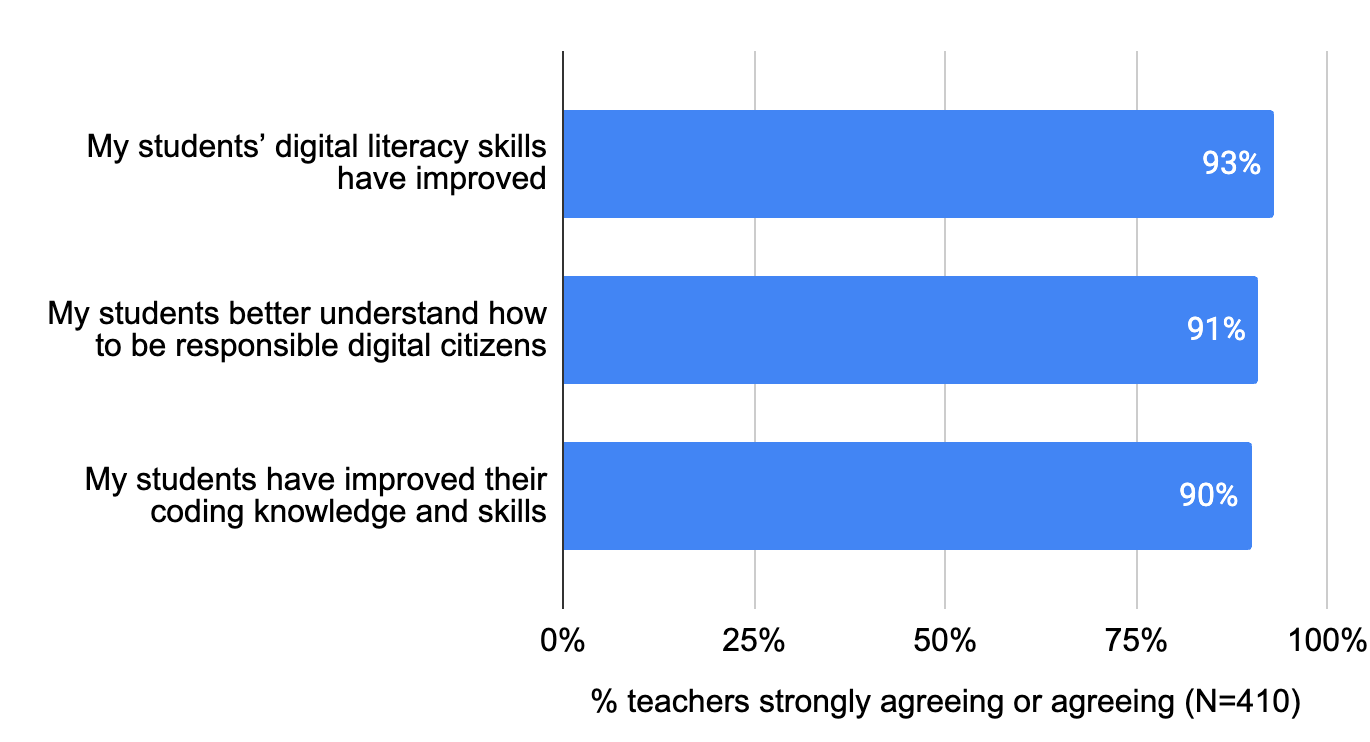
  • 93% agreed their students’ digital literacy skills had improved
  • 90% agreed that their students’ coding knowledge had improved

Students’ skills were also demonstrated by the Scratch projects we reviewed. And students from Odisha shared 314 projects in Coolest Projects — our online technology showcase for young people — including the project ‘We’ll build a new Odisha’ and an apple catching game.

A master teacher is delivering a training session to a group of teachers.

Feedback and observations about teacher training

On school visits, our team observed that the teachers adopted and implemented the practical elements of the initial training quite well. However, survey responses and interviews showed that often teachers were not yet using all the elements of the curriculum as intended.

In their feedback, many teachers expressed a need for further regular training and support, and some reported additional challenges, such as other demands on their time and access to equipment.

A master teacher is delivering a training session to a group of teachers.

When we observed training sessions master teachers delivered to teachers, we saw that, in some cases, information was lost within the training cascade (from our trainers, to master teachers, to teachers), including details about the intended pedagogical approach. It can be difficult to introduce experienced teachers to new pedagogical methods within a short training session, and teachers’ lack of computing knowledge also presents a challenge.

We will use all this data to shape how we support teachers going forward. Some teachers didn’t share feedback, and so in our further evaluation work, we will focus on making sure we hear a broad and representative range of teachers’ views and experiences.

What’s new this year?

In the current academic year, we are rolling out more advanced curriculum content for grade 10 students, including AI literacy resources developed at the Foundation. We’re currently training master teachers on this content, and they will pass on their knowledge to other teachers in the coming months. Based on teachers’ feedback, the grade 10 curriculum and the training also include a recap of some key points from the grade 9 curriculum.

Two master teachers are delivering a presentation to teachers.

A State Resource Group (SRG) has also been set up, consisting of 30 teachers who will support us with planning and providing ongoing support to master teachers and other teachers in Odisha. We have already trained the SRG members on the new curriculum content to enable them to best support teachers across the state. In addition to this, our local team in Odisha plans to conduct more visits and reach out directly to teachers more often. 

Our plans for the future

The long-term vision for our work in India is to enable any school in India to teach students about computing and creating with digital technologies. A critical part of achieving this vision is the development of a comprehensive computing curriculum for grade 6 to 12, specifically tailored for government schools in India. Thanks to our work in Odisha, we are in a better position to understand the unique challenges and limitations of government schools. We’re designing our curriculum to address these challenges and ensure that every Indian student has the opportunity to thrive in the 21st century. If you would like to know more about our work and impact in India, please reach out to us via [email protected].

We take evaluation of our work seriously and are always looking to understand how we can improve and increase the impact we have on the lives of young people. To find out more about our approach to impact, you can read about our recently updated theory of change, which supports how we evaluate what we do.

The post Introducing a computing curriculum in Odisha appeared first on Raspberry Pi Foundation.
AI and the Indian Election

Post Syndicated from Bruce Schneier original https://www.schneier.com/blog/archives/2024/06/ai-and-the-indian-election.html

As India concluded the world’s largest election on June 5, 2024, with over 640 million votes counted, observers could assess how the various parties and factions used artificial intelligence technologies—and what lessons that holds for the rest of the world.

The campaigns made extensive use of AI, including deepfake impersonations of candidates, celebrities and dead politicians. By some estimates, millions of Indian voters viewed deepfakes.

But, despite fears of widespread disinformation, for the most part the campaigns, candidates and activists used AI constructively in the election. They used AI for typical political activities, including mudslinging, but primarily to better connect with voters.

Deepfakes without the deception

Political parties in India spent an estimated US$50 million on authorized AI-generated content for targeted communication with their constituencies this election cycle. And it was largely successful.

Indian political strategists have long recognized the influence of personality and emotion on their constituents, and they started using AI to bolster their messaging. Young and upcoming AI companies like The Indian Deepfaker, which started out serving the entertainment industry, quickly responded to this growing demand for AI-generated campaign material.

In January, Muthuvel Karunanidhi, former chief minister of the southern state of Tamil Nadu for two decades, appeared via video at his party’s youth wing conference. He wore his signature yellow scarf, white shirt, dark glasses and had his familiar stance—head slightly bent sideways. But Karunanidhi died in 2018. His party authorized the deepfake.

In February, the All-India Anna Dravidian Progressive Federation party’s official X account posted an audio clip of Jayaram Jayalalithaa, the iconic superstar of Tamil politics colloquially called “Amma” or “Mother.” Jayalalithaa died in 2016.

Meanwhile, voters received calls from their local representatives to discuss local issues—except the leader on the other end of the phone was an AI impersonation. Bhartiya Janta Party (BJP) workers like Shakti Singh Rathore have been frequenting AI startups to send personalized videos to specific voters about the government benefits they received and asking for their vote over WhatsApp.

Multilingual boost

Deepfakes were not the only manifestation of AI in the Indian elections. Long before the election began, Indian Prime Minister Narendra Modi addressed a tightly packed crowd celebrating links between the state of Tamil Nadu in the south of India and the city of Varanasi in the northern state of Uttar Pradesh. Instructing his audience to put on earphones, Modi proudly announced the launch of his “new AI technology” as his Hindi speech was translated to Tamil in real time.

In a country with 22 official languages and almost 780 unofficial recorded languages, the BJP adopted AI tools to make Modi’s personality accessible to voters in regions where Hindi is not easily understood. Since 2022, Modi and his BJP have been using the AI-powered tool Bhashini, embedded in the NaMo mobile app, to translate Modi’s speeches with voiceovers in Telugu, Tamil, Malayalam, Kannada, Odia, Bengali, Marathi and Punjabi.

As part of their demos, some AI companies circulated their own viral versions of Modi’s famous monthly radio show “Mann Ki Baat,” which loosely translates to “From the Heart,” which they voice cloned to regional languages.

Adversarial uses

Indian political parties doubled down on online trolling, using AI to augment their ongoing meme wars. Early in the election season, the Indian National Congress released a short clip to its 6 million followers on Instagram, taking the title track from a new Hindi music album named “Chor” (thief). The video grafted Modi’s digital likeness onto the lead singer and cloned his voice with reworked lyrics critiquing his close ties to Indian business tycoons.

The BJP retaliated with its own video, on its 7-million-follower Instagram account, featuring a supercut of Modi campaigning on the streets, mixed with clips of his supporters but set to unique music. It was an old patriotic Hindi song sung by famous singer Mahendra Kapoor, who passed away in 2008 but was resurrected with AI voice cloning.

Modi himself quote-tweeted an AI-created video of him dancing—a common meme that alters footage of rapper Lil Yachty on stage—commenting “such creativity in peak poll season is truly a delight.”

In some cases, the violent rhetoric in Modi’s campaign that put Muslims at risk and incited violence was conveyed using generative AI tools, but the harm can be traced back to the hateful rhetoric itself and not necessarily the AI tools used to spread it.

The Indian experience

India is an early adopter, and the country’s experiments with AI serve as an illustration of what the rest of the world can expect in future elections. The technology’s ability to produce nonconsensual deepfakes of anyone can make it harder to tell truth from fiction, but its consensual uses are likely to make democracy more accessible.

The Indian election’s embrace of AI that began with entertainment, political meme wars, emotional appeals to people, resurrected politicians and persuasion through personalized phone calls to voters has opened a pathway for the role of AI in participatory democracy.

The surprise outcome of the election, with the BJP’s failure to win its predicted parliamentary majority, and India’s return to a deeply competitive political system especially highlights the possibility for AI to have a positive role in deliberative democracy and representative governance.

Lessons for the world’s democracies

It’s a goal of any political party or candidate in a democracy to have more targeted touch points with their constituents. The Indian elections have shown a unique attempt at using AI for more individualized communication across linguistically and ethnically diverse constituencies, and making their messages more accessible, especially to rural, low-income populations.

AI and the future of participatory democracy could make constituent communication not just personalized but also a dialogue, so voters can share their demands and experiences directly with their representatives—at speed and scale.

India can be an example of taking its recent fluency in AI-assisted party-to-people communications and moving it beyond politics. The government is already using these platforms to provide government services to citizens in their native languages.

If used safely and ethically, this technology could be an opportunity for a new era in representative governance, especially for the needs and experiences of people in rural areas to reach Parliament.

This essay was written with Vandinika Shukla and previously appeared in The Conversation.

Celebrating the community: Sahibjot

Post Syndicated from Sophie Ashford original https://www.raspberrypi.org/blog/celebrating-the-community-sahibjot/

In our series of community stories, we celebrate some of the wonderful things young people and educators around the world are achieving through the power of technology. 

A young person sits in a classroom.

In our latest story, we’re heading to Vivek High School in Mohali, India, to meet Sahibjot, a 14-year-old coding enthusiast who has taken his hobby to the next level thanks to mentorship, Code Club, and the exciting opportunity to take part in the Coolest Projects 2023 global online showcase.

Introducing Sahibjot

When he was younger, Sahibjot loved playing video games. His interest in gaming led him to discover the world of game development, and he was inspired to find out more and try it out himself. He began to learn to code in his spare time, using tutorials to help him develop his skills.

A young person sits at a table outside and uses a laptop.

Keen to share the joy he had experienced from gaming, Sahibjot set himself the challenge of creating a game for his cousin. This project cemented his enthusiasm for coding and developing games of his own.

“I always felt that I have played so many games in my life, why not make one and others will enjoy the same experience that I had as a child.

For my cousin, I made a personal game for him, and he played it and he liked it very much, so once he played it, I felt that, yes, this is what I want to do with my life.” – Sahibjot

Mentorship and collaboration

While continuing to hone his computing skills at home, Sahibjot heard that his school had started a Code Club. After initially feeling nervous about joining, his enthusiasm was bolstered by the club mentor, Rajan, talking about artificial intelligence and other interesting topics during the session, and he soon settled in. 

A group of students and a teacher at computers in a classroom.

At Code Club, with support and encouragement from Rajan, Sahibjot continued to develop and grow his coding skills. Alongside his technical skills, he also learned about teamwork and working collaboratively. He embraced the opportunity to help his peers, sharing his knowledge with others and becoming a mentor for younger club members. 

Three students chat outside a school building.

“Last year, we joined this coding club together and we became friends. He’s a very friendly person. Whenever we need him, he just quickly helps us. He helps us to troubleshoot, find any bugs, or even fix our codes.” – Akshat, fellow Code Club member

A global opportunity

The next step for Sahibjot came when Rajan introduced him and his fellow Code Club members to Coolest Projects. Coolest Projects is a celebration of young digital creators and the amazing things they make with technology. It offers participants the opportunity to share their tech creations in a global, online showcase, and local in-person events celebrating young creators are also held in several countries.

A group of students in a classroom being guided through their computing projects by a teacher.

Sahibjot was eager to take part and showcase what he had made. He submitted a Python project, a ping-pong game, to the online showcase, and was very excited to then see his creation receive a special shout-out during the Coolest Projects global livestream event. He was delighted to share this achievement with his friends and family, and he felt proud to be representing his school and his country on a global stage.

“I told everyone around me that there was going to be a livestream and I possibly might be featured in that, so that was really exciting. I learned a lot about just not representing my school and myself as an individual, I learned about representing my whole nation.” — Sahibjot

Sahibjot’s passion for computing has helped shape his aspirations and ambitions. Looking to the future, he hopes to use his technology skills to benefit others and make an impact.

“Using code and technology and all of the things like that, I aspire to make effort to do something with the world, like help out people with technology.” — Sahibjot

Inspire young creators like Sahibjot

To find out how you and young creators you know can get involved in Coolest Projects, visit coolestprojects.org. If the young people in your community are just starting out on their computing journey, visit our projects site for free, fun beginner coding projects.

For more information to help you set up a Code Club in your school, visit codeclub.org.

Join us in celebrating Sahibjot’s inspiring journey by sharing his story on X (formerly Twitter), LinkedIn, and Facebook.

The post Celebrating the community: Sahibjot appeared first on Raspberry Pi Foundation.
AWS achieves ISO/IEC 20000-1:2018 certification for AWS Asia Pacific (Mumbai) and (Hyderabad) Regions

Post Syndicated from Airish Mariano original https://aws.amazon.com/blogs/security/aws-achieves-iso-iec-20000-12018-certification-for-aws-asia-pacific-mumbai-and-hyderabad-regions/

Amazon Web Services (AWS) is proud to announce the successful completion of the ISO/IEC 20000-1:2018 certification for the AWS Asia Pacific (Mumbai) and (Hyderabad) Regions in India.

The scope of the ISO/IEC 20000-1:2018 certification is limited to the IT Service Management System (ITSMS) of AWS India Data Center (DC) Operations that supports the delivery of Security Operations Center (SOC) and Network Operation Center (NOC) managed services.

ISO/IEC 20000-1 is a service management system (SMS) standard that specifies requirements for establishing, implementing, maintaining, and continually improving an SMS. An SMS supports the management of the service lifecycle, including the planning, design, transition, delivery, and improvement of services, which meet agreed upon requirements and deliver value for customers, users, and the organization that delivers the services.

The ISO/IEC 20000-1 certification provides an assurance that the AWS Data Center operations in India support the delivery of SOC and NOC managed services, in accordance with the ISO/IEC 20000-1 guidance and in line with the requirements of the Ministry of Electronics and Information Technology (MeitY), government of India.

An independent third-party auditor assessed AWS. Customers can download the latest ISO/IEC 20000-1:2018 certificate on AWS Artifact, a self-service portal for on-demand access to AWS compliance reports. Sign in to AWS Artifact in the AWS Management Console, or learn more at Getting Started with AWS Artifact.

AWS is committed to bringing new services into the scope of its compliance programs to help you meet your architectural, business, and regulatory needs. If you have questions about the ISO/IEC 20000-1:2018 certification, contact your AWS account team.

If you have feedback about this post, submit comments in the Comments section below.

Want more AWS Security how-to content, news, and feature announcements? Follow us on Twitter.

Airish Mariano

Airish Mariano

Airish is an Audit Specialist at AWS based in Singapore. She leads security audit engagements in the Asia-Pacific region. Airish also drives the execution and delivery of compliance programs that provide security assurance for customers to accelerate their cloud adoption.

Introducing Code Clubs in eastern India: 32,000 more young digital makers

Post Syndicated from Fiona Coventry original https://www.raspberrypi.org/blog/code-club-eastern-india-computer-science-education/

At the Raspberry Pi Foundation, our mission is to enable young people to realise their full potential through the power of computing and digital technologies. One way we achieve this is through supporting a global network of school-based Code Clubs for young people, in partnership with organisations that share our mission.

For the past couple of years we have been working with Mo School Abhiyan, a citizen–government partnership that aims to help people to connect, collaborate, and contribute to revamping the government schools and government-aided schools in the Indian state of Odisha. Together with Mo School Abhiyan we have established many more Code Clubs to increase access to computer science education, which is an important priority in Odisha.

Learners in a computing classroom.

We evaluate all of our projects to understand their impact, and this was no exception. We found that our training improved teachers’ skills, and we learned some valuable lessons — read on to find out more.

Background and aims of the project

After some successful small-scale trials with 5 and then 30 schools, our main project with Mo School Abhiyan began in August 2021. In the first phase, between August 2021 and January 2022, we aimed to train 1000 teachers from 1000 schools.

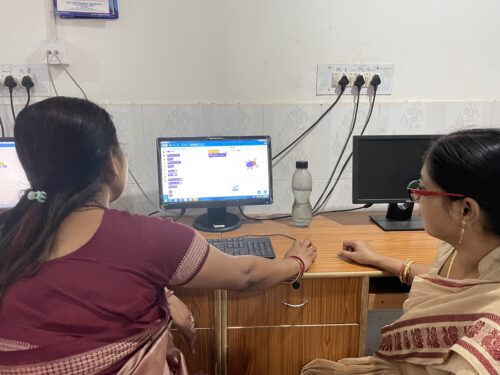
Teachers in Code Club training in Odisha, India.

For a number of reasons, including coronavirus-related school closures, not all teachers were able to complete their training during this phase. Therefore we revised the programme, splitting the teachers in two groups depending on how far they had progressed with their initial training. We also added more teachers, so our overall aim became to support 1075 teachers to complete their training and start running clubs in 2022.

Our training and ongoing support for the teachers

We trained the teachers using a hybrid approach through online courses and in-person training by our team based in India. As we went along and learned more about what worked for the teachers, we adapted the training. This included making some of the content, such as the Prepare to run a Code Club online course, more suitable for an Indian context.

Teachers in Code Club training in Odisha, India.

As most of the teachers were not computing specialists but more often teachers of other STEM subjects, we decided to focus the training on the basics of using Scratch programming in a Code Club.

We continue to provide support to the teachers now that they’ve completed their training. For instance, each Friday we run ‘Coding pe Charcha’ (translating to ‘Discussion on Coding’) sessions online. In these sessions, teachers come together, get answers to their questions about Scratch, take part in codealongs, and find out on how their students can take part in our global technology showcase Coolest Projects.

Measuring the impact of the training

To understand the impact of our partnership with Mo School Abhiyan and learn lessons we can apply in future work, we evaluated the impact of the teacher training using a mixed-methods approach. This included surveys at the start and end of the main training programme, shorter feedback forms after some elements of the training, and follow-up surveys to understand teachers’ progress with establishing clubs. We used Likert-style questions to measure impact quantitatively, and free-text questions for teachers to provide qualitative feedback.

Teachers in Code Club training in Odisha, India.

One key lesson early on was that the teachers were using email infrequently. We adapted by setting up Whatsapp groups to keep in touch with them and send out the evaluation surveys.

Gathering feedback from teachers

Supported by our team in India, teachers progressed well through the training, with nine out of every ten teachers completing each element of the training.

Teachers’ feedback about the training was positive. The teachers who filled in the feedback survey reported increases in knowledge of coding concepts that were statistically significant. Following the training, nine out of every ten teachers agreed that they felt confident to teach children about coding. They appeared to particularly value the in-person training and the approach taken to supporting them: eight out of every ten teachers rated the trainer as “extremely engaging”.

Teachers in Code Club training in Odisha, India.

The teachers’ feedback helped us identify possible future improvements. Some teachers indicated they would have liked more training with opportunities to practise their skills. We also learned how important it is that we tailor Code Club to suit the equipment and internet connectivity available in schools, and that we take into account that Code Clubs need to fit with school timetables and teachers’ other commitments. This feedback will inform our ongoing work.

The project’s impact for young people

In our follow-up surveys, 443 teachers have confirmed they have already started running Code Club sessions, with an estimated reach to at least 32,000 young people. And this reach has the potential to be even greater, as through our partnership with Mo School Abhiyan, teachers have registered more than 950 Code Clubs to date.

An educator helps two young people at a computer.

Supported by the teachers we’ve trained, each of the young people attending these Code Clubs will get the opportunity to learn to code and create with technology through our digital making projects. The projects enable young people to be creative and to share their creations with each other. Our team in India has started visiting Code Clubs to better understand how the clubs are benefiting young people.

What’s next for our work in India

The experience we’ve gained through the partnership with Mo School Abhiyan and the findings from the evaluation are helping to inform our growing work with communities in India and around the world that lack access to computing education. 

In India we will continue to work with state governments and agencies to build on our experience with Mo School Abhiyan. We are also exploring opportunities to develop a computing education curriculum for governments and schools in India to adopt.

If you would like to know more about our work and impact in India, please reach out to us via [email protected].

The post Introducing Code Clubs in eastern India: 32,000 more young digital makers appeared first on Raspberry Pi Foundation.
The Cloudflare network now spans 275 cities

Post Syndicated from Joanne Liew original https://blog.cloudflare.com/new-cities-april-2022-edition/

The Cloudflare network now spans 275 cities

The Cloudflare network now spans 275 cities

It was just last month that we announced our network had grown to over 270 cities globally. Today, we’re announcing that with recent additions we’ve reached 275 cities. With each new city we add, we help make the Internet faster, more reliable, and more secure. In this post, we’ll talk about the cities we added, the performance increase, and look closely at our network expansion in India.

The Cities

Here are the four new cities we added in the last month: Ahmedabad, India; Chandigarh, India; Jeddah, Saudi Arabia; and Yogyakarta, Indonesia.

A closer look at India

India is home to one of the largest and most rapidly growing bases of digital consumers. Recognising this, Cloudflare has increased its footprint in India in order to optimize reachability to users within the country.

Cloudflare’s expansion in India is facilitated through interconnections with several of the largest Internet Service Providers (ISPs), mobile network providers and Internet Exchange points (IXPs). At present, we are directly connected to the major networks that account for more than 95% of the country’s broadband subscribers. We are continuously working to not only expand the interconnection capacity and locations with these networks, but also establish new connections to the networks that we have yet to interconnect with.

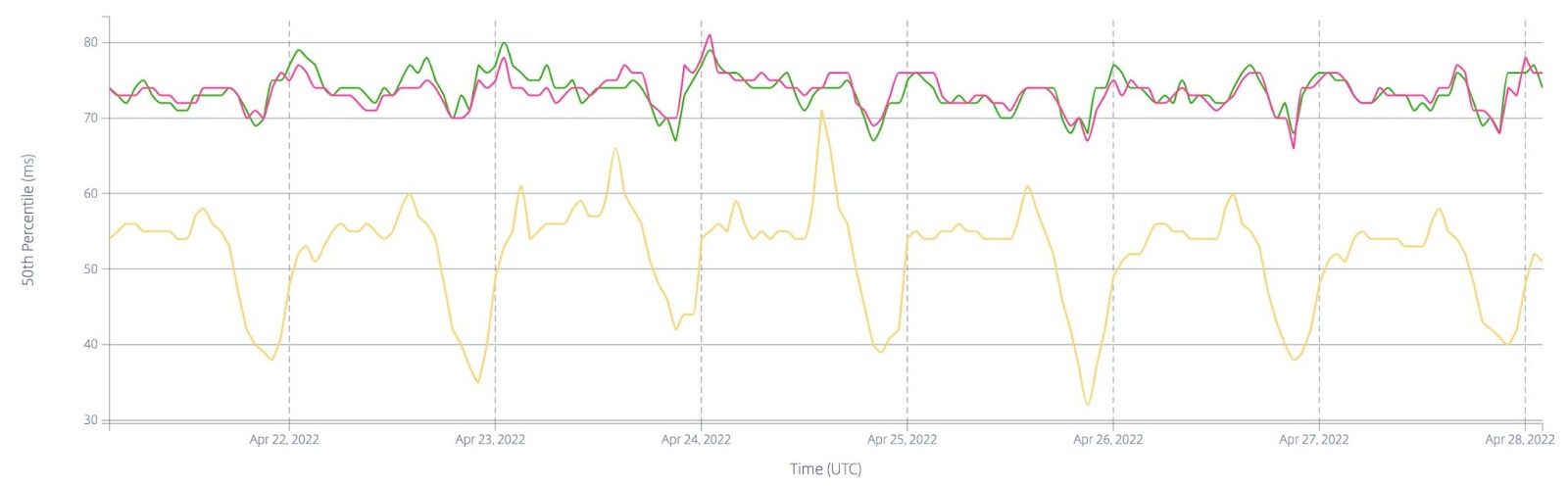
In 2020, we were served through seven cities in the country. Since then, we have added our network presence in another five cities, totaling to 12 cities in India. In the case of one of our biggest partners, with whom we interconnect in these 12 cities, Cloudflare’s latency performance is better in comparison to other major platforms, as shown in the chart below.

The Cloudflare network now spans 275 cities
Response time (in ms) for the top network in India to Cloudflare and other platforms. Source: Cedexis

Helping make the Internet faster

Every time we add a new location, we help make the Internet a little bit faster. The reason is every new location brings our content and services closer to the person (or machine) that requested them. Instead of driving 25 minutes to the grocery story, it’s like one opened in your neighborhood.

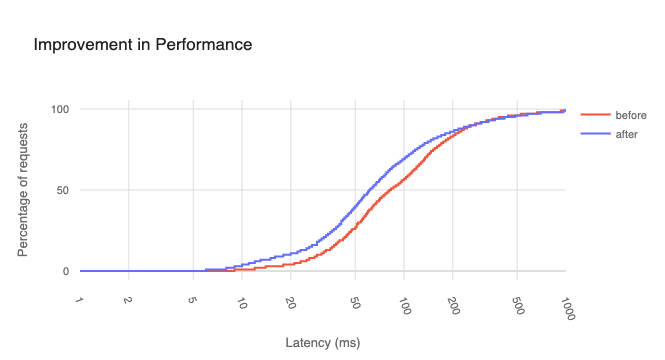
In the case of Jeddah, Saudi Arabia, we already have six other locations in two different cities in Saudi Arabia. Still, by adding this new location, we were able to improve median performance (TCP RTT latency) by 26% from 81ms to 60ms. 20 milliseconds doesn’t sound like a lot, right? But this location is serving almost 10 million requests per day. That’s approximately 55 hours per day that someone (or something) wasn’t waiting for data.

The Cloudflare network now spans 275 cities

As we continue to put dots on the map, we’ll keep putting updates here on how Internet performance is improving. As we like to say, we’re just getting started.

If you’re an ISP that is interested in hosting a Cloudflare cache to improve performance and reduce backhaul, get in touch on our Edge Partnership Program page. And if you’re a software, data, or network engineer – or just the type of person who is curious and wants to help make the Internet better – consider joining our team.

Bringing digital skills to disadvantaged children across India

Post Syndicated from Divya Joseph original https://www.raspberrypi.org/blog/digital-skills-disadvantaged-children-india-digital-divde/

India’s rapidly digitising economy needs people with IT and programming skills, as well as skills such as creativity, unstructured problem solving, teamwork, and communication. Unfortunately, too many children in India currently do not have access to digital technologies, or to opportunities to learn these technical skills.
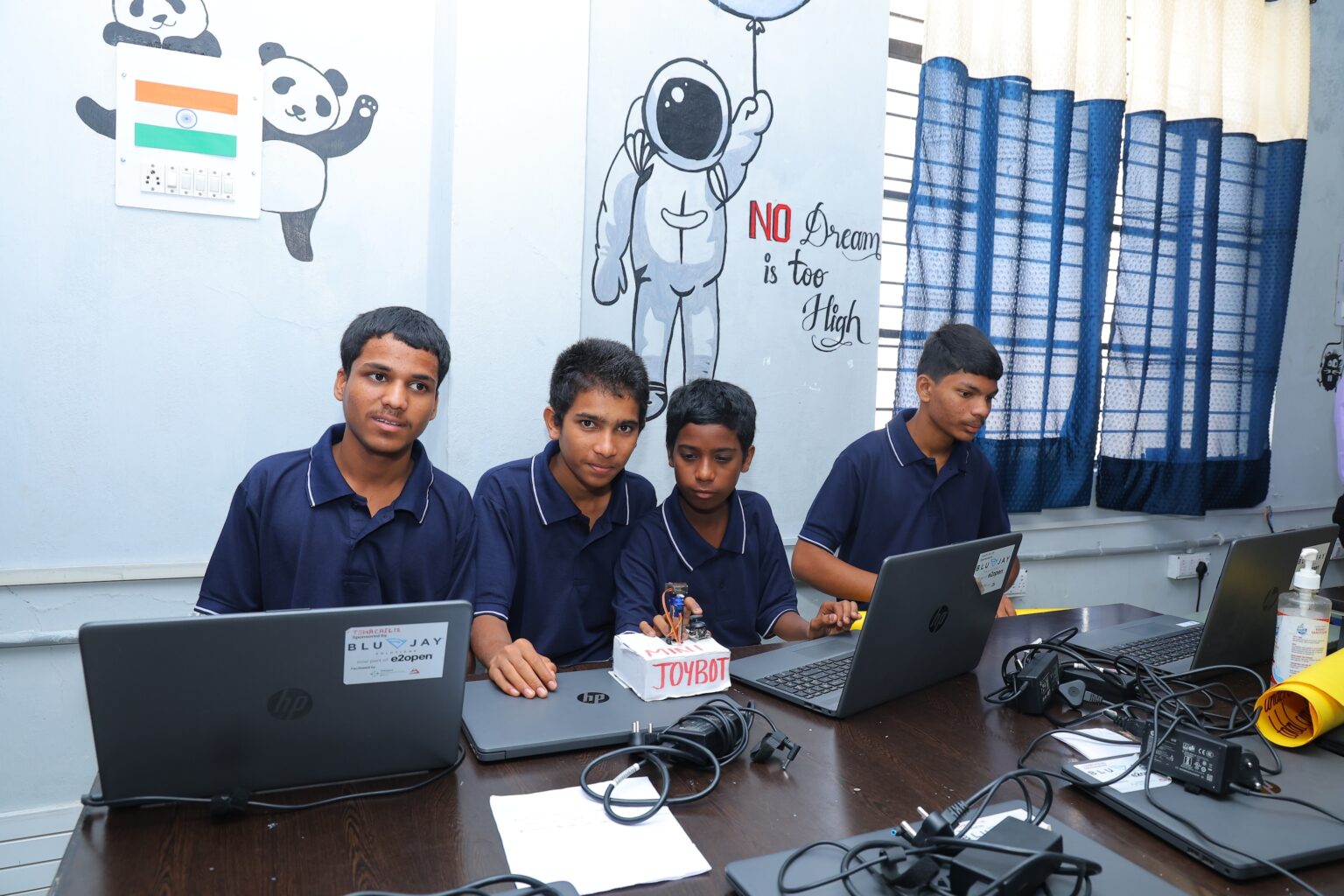
A girl and boy in India learning at a computer

Roadblocks to accessing digital skills

Before children and young people in India can even get a chance to learn digital skills, many of them have to overcome numerous roadblocks. India’s digital divide is entrenched due to a lack of access to electricity, to the internet, and to digital devices. In 2017–18, only 47% of Indian households received electricity for more than 12 hours a day. Moreover, only 24% of households have internet access, with the figure dropping as low as 15% in rural regions. 

In rural India, a group of children cluster around a computer.

During the coronavirus pandemic, when children in India had to plunge head-first into adapting to restrictions, 29 million students around the country did not have access to a digital device. In addition, only 38% of households in India are digitally literate. At the Raspberry Pi Foundation, we define digital literacy as the skills and knowledge required to be an effective, safe, and discerning user of various computer systems. Digital literacy in rural regions stands far lower at 25%.

We partner with organisations in India

We are conscious that we cannot solve these massive access issues. Regardless, we are committed to moving the needle for those young people that need access to digital skills and digital literacy the most.

We partner with organisations around the country that are committed to bringing access to coding and digital skills to the most disadvantaged and digitally excluded young people. Our partnership model includes:

  • Co-designing learning experiences 
  • Providing free, open-source learning resources 
  • Designing bespoke training programmes 
  • Supporting with technology solutions 

The Pratham–Code Club programme for digital skills

Pratham means ‘first’ in Hindi, and rightly so: Pratham Education Foundation, a non-profit established in 1994, has been at the forefront of addressing gaps in the education system in India. In 2018, we joined hands with Pratham Education Foundation to introduce coding to children in hard-to-reach, disadvantaged communities around the country. We co-designed a Pratham–Code Club programme to provide youth in underserved communities with training and access to devices and learning resources. The goal of the training was to build the youth’s programming confidence so that they could go on to teach children in their communities.

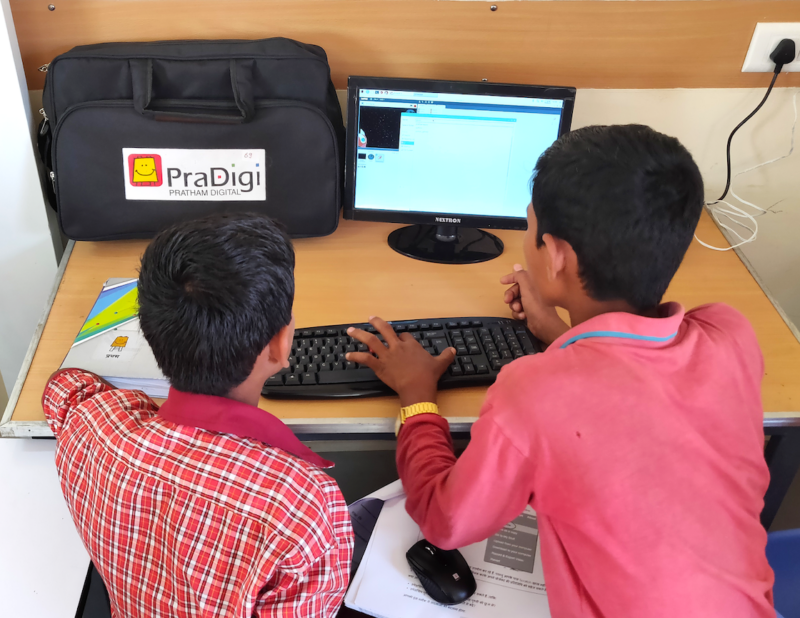
Two boys use a PraDigi computer at a desk.

To be effective, it was crucial that the programme be localised. We made adaptations to our learning resources and training content to make them more relevant to the context of the learners, and we worked with volunteer translators to translate the material into Hindi, Kannada, and Marathi.

We also provided the youth with training to use the PraDigi kit — an innovative, lightweight device, developed by Pratham Education Foundation and based on the Raspberry Pi computer — for teaching children to code.

Adapting the programme during the pandemic

In 2020, when we could no longer implement the programme the same way due to the pandemic and the ensuing disruptions, we made several adaptations: 

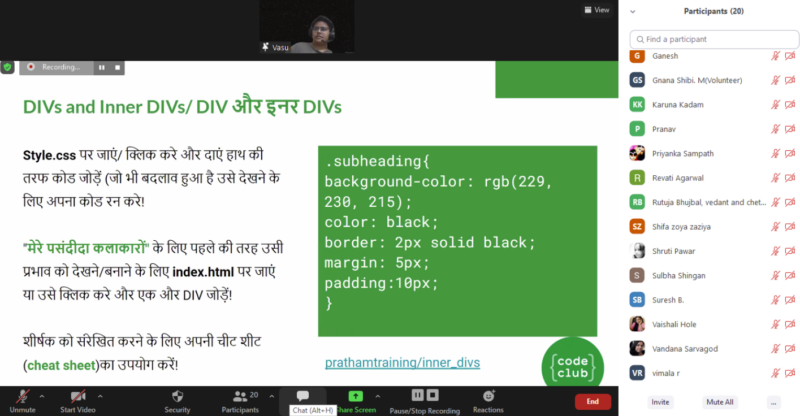
Firstly, instead of the three-hour in-person training we had previously conducted, we hosted multiple 30-minute online sessions over a week, using cloud-based platforms like Zoom. Secondly, we used familiar apps such as WhatsApp and Facebook Workplace to share the training content.

A screenshot from a training webinar about HTML coding.

Finally, since the Pratham staff in the communities could not bring the PraDigi kits to the remote locations during lockdowns, we adapted the training content for smartphones and tablets, using the online Scratch editor and a phone-friendly online code editor called Repl.it. 

Over the course of the pandemic, we trained 300 youth from Pratham’s communities in the basics of programming and digital skills. The impact was:

  • 300 youth trained
  • 432 hours of virtual sessions
  • 350 projects with Scratch and HTML
  • 62% of youth said they were now interested in jobs that included coding skills

We also surveyed the youth for what non-technical skills they had learned during the training:

  • 66% of youth reported that they had improved their problem-solving skills
  • 60% of youth reported that they improved their communication skills

Where we are taking the programme next

Using a train-the-trainer model, we are now scaling our programme with Pratham Education Foundation to train 3000 youth from underserved communities. Once they have completed the training, we will help these 3000 youth pave the way to programming and digital skills for 15,000 young learners around the country.

In rural India, a group of adults and children pose for the photographer.

We look forward to continuing our partnership with Pratham Education Foundation to make digital skills and coding education accessible to children all over India.

The post Bringing digital skills to disadvantaged children across India appeared first on Raspberry Pi.

Cheating on Tests

Post Syndicated from Bruce Schneier original https://www.schneier.com/blog/archives/2021/10/cheating-on-tests.html

Interesting story of test-takers in India using Bluetooth-connected flip-flops to communicate with accomplices while taking a test.

What’s interesting is how this cheating was discovered. It’s not that someone noticed the communication devices. It’s that the proctors noticed that cheating test takers were acting hinky.