Kernel prepatch 7.1-rc5

Post Syndicated from corbet original https://lwn.net/Articles/1074172/

The 7.1-rc5 kernel prepatch is out for
testing. Quoth Linus:

I’m not entirely happy about it – most of this is totally trivial
stuff to random drivers, which obviously makes it all less scary,
but at the same time I’m really not convinced the churn is worth it
at rc5 time. These things are “fixes”, sure, but at the same time a
lot of them are simply so irrelevant that I think they’d be better
off in a linux-next tree and get merged during the merge window.

So I think I’ll start being a bit more hardnosed about this kind of
unnecessary churn this late in the game. We are supposed to look
for *regressions*. Non-critical fixes to long-standing issues are
simply not appropriate for this late in the release cycle.


End result: this is too big, and this is the heads-up that I’ll be
pushing back on pointless pull requests with fixes that just aren’t
that important. And yes, several of these series were triggered by
AI code review.

Arzopa Z1RC 16″ QHD Portable Monitor Review

Post Syndicated from Sam Sabinash original https://www.servethehome.com/arzopa-z1rc-16-qhd-portable-monitor-review/

Arzopa’s Z1RC is a 16-inch, 2560×1600 portable monitor that is aimed at productivity users. With support for wide color gamuts and good out-of-the-box performance, it is a solid offering for on-the-go work

The post Arzopa Z1RC 16″ QHD Portable Monitor Review appeared first on ServeTheHome.

Седмицата (18–23 май)

Post Syndicated from Светла Енчева original https://www.toest.bg/sedmitsata-18-23-may/

Седмицата (18–23 май)

Бангаранга, скъпи читатели!

След като Павлина Върбанова и други експерти казват, че има такава дума в българския език, ще я използвам с чиста съвест и във всякакъв смисъл. Защото бангаранга може да значи всичко.

Но първо – честито на DARA, която показа, че една млада жена от България може да постигне международен успех, като бъде вярна на себе си и полага сериозен труд. Без да се заиграва с популизма, за да се хареса, без да се оставя хейтът да я пречупи. В лицето на DARA победи България, която иска да бъде равностойна част от света, а не България, комплексарски втренчена във великия си пъп. България на DARA, Мария Бакалова, Георги Господинов, Рене Карабаш, Иво Димчев и други личности, чийто размах надхвърля тесните рамки на националното – това е съвременното лице на страната ни, което се цени по света.

Насред цялата вътрешно- и външнополитическа антилиберална вълна, либерастката и толерастката ми („аз съм либераст и толераст“, беше казал незабравимият Марин Бодаков) джендърска душица ликува – догодина България ще се превърне в Мека на еврогейщината и на джендърщината! Както е известно, „Евровизия“ е ЛГБТ+ френдли и голяма част от най-запалената ѝ аудитория е куиър. Всяка година в градовете, в които се провежда конкурсът, идват десетки хиляди, а понякога и стотици хиляди шарени хора. Но въпреки това не само София, а и Бургас, Варна и Пловдив напират да са домакини на събитието. Колко еврогейщина може да се преглътне в името на рейтинга?

Успехът на DARA стимулира и вицепремиера по човешко развитие Иво Христов да разкрие чрез собственото си поведение в какво се състои човешкото развитие. Първоначално той изрази потребност от „спасителен детокс за слуха“ заради „Евровизия“, а два дни по-късно поздрави DARA за победата ѝ. После се разбра също, че Христов ще отговаря за провеждането на „Евровизия“ в България. Човешко развитие, бейби.

Може би това е „прагматичният подход“, за който призовава Румен Радев – да се присламчваме към победителите. Самият Радев, за разлика от президентката Илияна Йотова, не пожела на DARA успех, което не му попречи после да се присъедини към отъркващите се в победата ѝ. Ако антилибералната вълна е близо до предела си и се задава либерална, може би ще видим Радев и Христов да откриват „София прайд“… Но аз се размечтах.

Приятно съвпадение е и че победата на България в „Евровизия“ се случи в навечерието на празника на българската култура – 24 май. Тази седмица и статиите в „Тоест“ са преобладаващо на културни теми. А днес от 16:00 ч. Владислав Севов ще разговаря със Зорница Христова – на културни теми, разбира се. Ако имате въпрос към Зорница или искате да споделите какво според вас е книгата днес, все още може да попълните анкетата.

Покрай 24 май се сещаме за важността на езика. А едно от най-интересните неща в езика е произходът на думите. Бангаранга еуфорията вече зае мястото на ентусиазма от провеждането на Giro d’Italia в България, но Екатерина Петрова ни връща към него. Ако ви е любопитно каква е връзката между джирото, гиросите, жироскопите и джиросването, не пропускайте статията ѝ Giro d’etimologia.

Giro d’etimologia
Красивото състезание Giro d’Italia, на чието начало станахме домакини в България, е повод Екатерина Петрова да наниже поредната огърлица от думи – от „джиро“ до „чеверме“. Дръжте здраво жироскопа, за да не паднете от коня! Пардон, от колелото!
Седмицата (18–23 май)

Освен че сме много културни тази седмица, сме и някак бангаранга – имаме два пъти Стефан Иванов и два пъти Златков (Кирил и Веселин, които, между другото, са братя). В рубриката „На второ четене“ Стефан ни връща към романа на Артур Кьостлер „Мрак по пладне“. Хубаво е да четем книги, които развиват сетивата ни по отношение на тоталитаризма, защото не е гарантирано, че той няма да се опита да се върне. Ако книгата е написана с ирония, още по-добре.

На второ четене: „Мрак по пладне“
Литературата има изключителното качество да ни припомня онова, което историята често пъти забравя или банализира. Това прави и политическият, психологически и философски роман на Артур Кьостлер за тоталитаризма, към който Стефан Иванов ни връща „на второ четене”.
Седмицата (18–23 май)

Пак Стефан разговаря с художника Кирил Златков по повод изложбата му в СБХ на „Шипка“ 6, която продължава още само няколко дни – до 28 май. Може ли тихото изкуство да се окаже най-радикално? Какво разказва лицето, което думите не могат? Как може да се рисуват хора, без да се изпада в цинизъм и сантименталност? Разговорът съдържа отговор на тези, както и на други въпроси.

Кирил Златков между крехкостта на рисунката и овладяната форма
Разговор на Стефан Иванов с Кирил Златков по повод новата му изложба, както и за тишината като радикален жест, за човешкото лице като материя, равностойна на музиката, и за крехкостта на линията, от която художникът отказва да бяга.
Седмицата (18–23 май)

След Кирил Златков преминаваме към Веселин Златков. Статията му за плаваща България и съдбата на „Калиакра“ ми навя странна асоциация – за готвача Рик Стайн. Обичам предаванията му, защото е ерудит и умее да прави връзки между храната и културата. В един от любимите ми епизоди Рик Стайн отива в Албания. Сред нещата, които научава от местните, е, че по време на тоталитаризма риболовът в страната е бил почти невъзможен заради затворените граници. И албанците отвикнали да ядат морска храна – ако уловели скариди, давали ги на прасетата. Сетих се за тази история, докато четях как посттоталитарна България заличава културата на ветроходството и по-общо – на плаването. Как из родните медии може да се види, че кораби плУват и акУстират, а морски мини са заплаха за нашата Екватория. Тези грешки се дължат не толкова на лошо образование, колкото на това, че корабоплаването в Балгария е набутано в бангарангата си.

Плаваща България и съдбата на „Калиакра“
Морето ни отдавна е сведено до туризъм, имоти и порция цаца с гледка. Голяма част от флота ни плава под малтийски флаг, а „Калиакра“ – някогашният символ на плаваща България, е вързана на кея като реквизит. Как една държава престава да бъде морска, преди да изгуби корабите си – от Веселин Златков.
Седмицата (18–23 май)

Не че образованието ни е цъфнало и вързало. Въпреки усилията да компенсира дефицитите си чрез промени в националното външно оценяване (НВО), които впрочем допълнително влошават дереджето му. На тази тема е и статията на Донка Дойчева-Попова „НВО: Трагедия в 3 действия“. Децата, които по време на пандемията са завършили първи клас онлайн, днес са седмокласници и ги чака заветното НВО. Но никак не му върви на този випуск, разказва Донка. Уж изпитът по математика нямаше да е променен, но се оказва, че той все пак ще съдържа задачи, които нито учениците, нито учителите им са наясно какви са. И съответно нито има как децата да се подготвят за тях, нито е ясно как ще бъдат оценявани.

НВО: Трагедия в 3 действия
Уж същото, ама не точно. В НВО по математика все пак ще има нов вид задачи и учителите вероятно ще разберат почти едновременно с учениците какво точно ще включва изпитът. Ако това измерва нещо, то е хаосът в системата. От Донка Дойчева-Попова.
Седмицата (18–23 май)

Вече нагазихме в родното политическо блато, така че преминавам към тазседмичния коментар на Емилия Милчева „Как се дресира опозиция“. Как се дресира? Ами като ѝ се орежат възможностите за парламентарен контрол например, което целят инициираните от „Прогресивна България“ промени в правилника на парламента. Уж България е парламентарна република, а подзаконов акт, какъвто е правилникът, е на път да я превърне в премиерска.

Как се дресира опозиция
52-рият парламент бавно се пренарежда така, че на властта да ѝ е по-удобно: по-малко парламентарен контрол, по-трудно създаване на временни комисии, министри, които могат да отсъстват колкото поискат. А опозицията ще кротува ли? От Емилия Милчева.
Седмицата (18–23 май)

Дойде време за препоръката ми, а с нея – и за частично отрезвяване от либерастката ми еуфория. Защото тази седмица, след близо 33 години, приключи една ера от американската телевизия и масова култура – The Late Show. През последните 11 години излъчваното по CBS шоу се водеше от Стивън Колбер. А Колбер и Джими Кимъл са комиците, които Тръмп най не може да понася. Опитът за отстраняването на Кимъл беше неуспешен, но CBS се огъна (или собственикът ѝ Paramount – вече няма значение). Макар че беше с най-висок рейтинг сред вечерните шоута, The Late Show беше прекратено с аргумента за финансови загуби. Може би това е съдбата на подобни телевизионни формати в ерата на интернет, но нищо не може да разсее съмненията за политически натиск в конкретния случай.

На Колбер все пак му бяха дадени последни 10 месеца – вероятно да за се избегнат огромни неустойки. През това време той съвсем се развихри и не пестеше критики нито към властта, нито към CBS и Paramount – след като вече е „канселиран“, нямаше какво толкова да му се случи още (освен да го уволнят предварително или да го дадат под съд). И даваше най-доброто от себе си. Канеше най-големите знаменитости, шегуваше се, пееше, танцуваше, целуваше се с мъже и жени в устата (макар да е хетеросексуален католик)… Колкото повече наближаваше краят, толкова по-добри ставаха епизодите му.

Та препоръката ми е: епизодите на The Late Show with Stephen Colbert са качени на части в YouTube, така че може да погледате напосоки. Не само финалният епизод, а и останалото си струва. Тук ще споделя финала на финала, в който Колбер поставя точката заедно с Пол Маккартни.

Ще ми липсва Стивън Колбер. А на вас ще ви липсва ли „Тоест“, ако поради безпаричие ни се бангаранги бангарангата и отидем на бангарангата си? Ако да, не забравяйте, че само месечните ви дарения могат да ни спасят и да гарантират нашата независимост.

Friday Squid Blogging: Regulating Squid Fishing in the South Pacific

Post Syndicated from Bruce Schneier original https://www.schneier.com/blog/archives/2026/05/friday-squid-blogging-regulating-squid-fishing-in-the-south-pacific.html

The South Pacific Regional Fisheries Management Organization (SPRFMO) needs to regulate squid fishing in the South Pacific.

As usual, you can also use this squid post to talk about the security stories in the news that I haven’t covered.

Blog moderation policy.

Streamline your infrastructure: Automating AMI creation with Kiro CLI and EC2 Image Builder

Post Syndicated from Malini Chatterjee original https://aws.amazon.com/blogs/compute/streamline-your-infrastructure-automating-ami-creation-with-kiro-cli-and-ec2-image-builder/

Managing infrastructure at scale requires robust automation tools that reduce manual effort while maintaining consistency and security. The combination of Kiro CLI and AWS EC2 Image Builder offers a powerful solution for automating the creation, testing, and deployment of Amazon Machine Images (AMIs).

The challenge of manual image management

Traditional approaches of creating and maintaining AMIs often involve manual processes that are time-consuming, error-prone, and difficult to scale. Teams struggle with:

  • Inconsistent configurations across development, testing, and production environments
  • Security vulnerabilities from outdated base images and missing patches
  • Compliance gaps due to manual validation processes
  • Slow deployment cycles caused by repetitive manual tasks

With EC2 Image Builder and Kiro CLI, teams can replace these manual workflows with automated, and secure AMI pipelines. EC2 Image Builder provides the fully managed automation engine, while Kiro CLI brings AI-powered assistance to help you build, iterate, and troubleshoot those pipelines faster — using natural language.

EC2 Image Builder

EC2 Image Builder is a fully managed AWS service that simplifies the creation, maintenance, and deployment of customized, secure, and up-to-date server images. The service provides the following key capabilities:

  • Automated build pipelines: Define your image configuration once, automatically build images on a schedule or trigger basis, and manage the lifecycle of the AMI. Image Builder handles the entire lifecycle of custom AMI creation, testing, distributing and managing the lifecycle of the AMIs.
  • Built-in security: Automatically apply the latest security patches and validate images against AWS security best practices. EC2 Image Builder can enforce security with every created AMI using update-linux/update-windows components patch OS vulnerabilities at build time, IMDSv2 can be enforced at the pipeline level, and Amazon Inspector validates CVE posture before image distribution — all automated, no manual intervention
  • Testing and validation: Run automated tests to verify your images meet functional and security requirements before deployment. This ensures only validated images reach production environments.
  • Multi-region distribution: Automatically distribute your AMIs across multiple AWS regions and share them with specific AWS accounts, streamlining deployment across complex organizational structures.

Kiro CLI: AI-powered infrastructure automation

Kiro CLI brings generative AI capabilities directly to your terminal, enabling natural language interactions with AWS services. This AI-powered command-line interface transforms how developers and operators interact with infrastructure automation tools.

What makes Kiro CLI powerful

  • Natural language commands: Instead of memorizing complex CLI syntax or hand-authoring CloudFormation templates, simply describe what you want to accomplish. Kiro CLI interprets your intent and generates Infrastructure as Code — such as CloudFormation or CDK — that you can review, version-control, and deploy through your existing CI/CD pipelines. For quick, non-destructive exploration (e.g., listing resources or describing configurations), Kiro can also execute AWS API calls directly.
  • Context-aware assistance: Kiro understands your AWS environment and provides intelligent suggestions based on your current context, resources, and best practices. You can connect Kiro CLI to remote tools and systems via Model Context Protocol (MCP), for example, you can connect to AWS MCP servers for and documentation and troubleshooting assistance.
  • Workflow automation: Chain multiple operations together using conversational commands, reducing the cognitive load of managing complex infrastructure tasks.
  • Integration with AWS services: Seamlessly interact with EC2 Image Builder, Systems Manager, and other AWS services without switching between different tools or interfaces.

The synergy: Kiro CLI + EC2 Image Builder, automated pipeline creation

When combined, these tools create a streamlined workflow infrastructure automation:

  • Faster onboarding: Seamless AMI creation and faster maintenance with Kiro CLI. Rather than switching between the AWS Console and AWS CloudFormation documentation during initial exploration, Kiro CLI lets you describe your requirements conversationally — giving you a fast path to a working pipeline that you can then manage and refine through the Console or CloudFormation as your production needs mature.
  • Improved security posture: Automated patching and compliance validation built into every image. Describe your patching requirements conversationally, and Kiro CLI includes the appropriate build components that apply OS-level patches, kernel updates, and CVE fixes directly into the AMI at build time.
  • Consistent deployments: Version-controlled AMI pipelines that produce identical, pre-tested images promoted across dev, staging, and production without manual changes. EC2 Image Builder ensures every build follows the same recipe, components, and validation steps.
  • Reduced operational overhead: Eliminates manual, repetitive tasks around image creation, distribution, and lifecycle management accelerating iteration cycles for pipeline builds.
  • Faster troubleshooting: Kiro CLI parses error output and explains root cause in plain language, cutting the time spent deciphering CloudFormation stack traces and Image Builder build logs.

Getting started

Before implementing this solution, ensure you have the pre-requisites:

  1. Kiro CLI installed (installation guide: for Linux, macOS or Windows) and configured.
  2. Configure the AWS Documentation MCP server , refer the detailed steps here.
  3. AWS account with access permissions for the following services:
    • EC2 Image Builder
    • IAM (for role creation and policy attachment)
    • EC2 (for AMI management)
    • Systems Manager
    • VPC (for network configuration)
  4. An existing VPC with public/private subnets configured

To begin automating your infrastructure using Kiro-CLI, here are some sample prompts that you can use as a baseline:

Example 1: Amazon Linux for EKS nodes

Use case: Teams running Kubernetes on Amazon EKS need custom node AMIs that include the correct container runtime, kubelet version, and security hardening — and that stay current with weekly base image updates. This prompt automates that pipeline and keeps your EKS node groups up to date automatically.

Prompt:

Create a production-ready EC2 Image Builder pipeline using a direct APIs 
for custom EKS-optimized Amazon Linux 2023 AMIs with the following requirements:

- Weekly automated builds triggered by base AMI updates
- AWS managed components for container runtime, kubelet and CloudWatch agent
- Automatic launch template updates for EKS managed node groups

What Kiro CLI generates:

Kiro CLI produces the API calls and supporting configuration to set up:

  • An EC2 Image Builder pipeline with a weekly schedule and base AMI change detection
  • Image recipe based on the EKS-optimized Amazon Linux 2023 AMI
  • Component definitions for container runtime (containerd), kubelet, and CloudWatch Agent
  • Automation to update EKS managed node group launch templates with the new AMI ID after each build
  • If we use a short prompt, Kiro will pick the default values, which customer can definitely change/edit accordingly. However, if we want to be more presriptive, then one can follow a detailed prompt like Example 2 below.

Example 2: Windows server golden image

Use case: Enterprise teams running Windows-based workloads often need a standardized, hardened base image that meets compliance requirements (such as CIS benchmarks) and includes approved software. Manually maintaining this image is error-prone and time-consuming. This prompt automates the full pipeline — from build to distribution.

Prompt:

Create a production-ready EC2 Image Builder pipeline for a Windows Server 2025 
golden image as a single CloudFormation template:

- Monthly automated builds via cron schedule
- Using latest public Windows Server 2025 AMI from AWS
- Components: AWS-managed CloudWatch Agent, AWS CLI, Windows Updates
- Apply AWS-managed STIG components (stig-build-windows) for build-time hardening 
  and corresponding stig-validate-windows for validation.
- For the EC2 instance profile role, use only these AWS-managed policies: 
  EC2InstanceProfileForImageBuilder, EC2InstanceProfileForImageBuilderECRContainerBuilds,
  and AmazonSSMManagedInstanceCore. Do NOT use any policy containing "FullAccess".
- Create a KMS multi-region primary key (MRK) in the pipeline region for AMI
  encryption, with a key policy granting cross-account access to
  [ACCOUNT_1, ACCOUNT_2, ACCOUNT_3] for kms:CreateGrant, kms:DescribeKey,
  and kms:Decrypt. Include a KMS alias. Output the key ARN for replica
  creation in target regions.
- Amazon Inspector vulnerability scanning
- Single pipeline deployed in one region. Use EC2 Image Builder
  DistributionConfiguration to share the output AMI to accounts
  [ACCOUNT_1, ACCOUNT_2, ACCOUNT_3] in regions us-east-1 and us-west-2.
  Do NOT create separate pipelines or stacks per region.
- In the DistributionConfiguration, use AmiDistributionConfiguration's
  built-in SsmParameterConfigurations to write the output AMI ID to
  /golden-image/windows-server-2025/latest in each distribution region.
  Do NOT use Lambda functions or custom resources for SSM parameter updates.
- Create an SNS topic for build notifications. Use the
  InfrastructureConfiguration's built-in SnsTopicArn property for pipeline
  status notifications. Do NOT create EventBridge rules for notifications.
- Lifecycle policy: Disable AMIs after 180 days, delete after 360 days
- Least-privilege IAM roles for Image Builder, EC2 instance profile,
  and lifecycle
- All resource names (KMS alias, IAM roles, SNS topics, Image Builder
  components, recipes, pipelines, infrastructure configs, distribution
  configs, lifecycle policies, EventBridge rules, and SSM parameter paths)
  must include !Sub "${AWS::StackName}" or a parameterized prefix to ensure
  uniqueness. This prevents conflicts if the template is deployed multiple
  times in the same account/region.
- Use AWS-managed components where available
- Parameterize account IDs and regions
- Do NOT create multiple stacks or deploy resources in multiple regions

What Kiro CLI generates:

Kiro CLI interprets this prompt and produces a complete CloudFormation template that includes:

  • An EC2 Image Builder pipeline with a monthly build schedule
  • Image recipe referencing the latest Windows Server 2025 AMI from AWS Systems Manager public parameter
  • AWS-managed components for CloudWatch Agent, AWS CLI, and Windows Updates
  • STIG hardening build component with corresponding validation component
  • KMS key and encryption settings applied to the output AMI
  • Amazon Inspector integration for CVE scanning before distribution
  • Distribution configuration targeting 3 AWS accounts across 2 regions
  • Built-in SsmParameterConfigurations writing the AMI ID to /golden-image/windows-server-2025/latest in each distribution region
  • SNS topic and subscriptions for build success/failure notifications
  • Lifecycle policy: disable AMIs after 180 days, delete after 360 days
  • Least-privilege IAM roles for Image Builder service, EC2 instance profile, and lifecycle management

Once the execution is complete, you can navigate to the EC2 Image Builder  console. Once you are in the AWS Console EC2 Image Builder, you will be on the page for Image Pipelines. You will see in the screenshot below that the new pipeline is now Enabled.

Please note that the name of the pipeline will vary based on your specific inputs. This image is just a sample “enabled” pipeline looks like in EC2 Image Builder  console.

Fig 1: Sample EC2 Image Builder console, after the pipeline is “enabled”

Fig 1: Sample EC2 Image Builder console, after the pipeline is “enabled”.

For more examples and scenarios, you can check Infrastructure Automation with Kiro CLI and EC2 Image Builder workshop.

Cleanup

To avoid ongoing charges, remove all resources created during this walkthrough. The cleanup steps depend on which example you followed.

Example 1: Amazon Linux for EKS nodes cleanup

If you created resources via direct API calls, delete them in the following order:

  • Disable and delete the Image Builder pipeline — this stops the weekly automated builds triggered by base AMI updates.
  • Delete the image recipe based on the EKS-optimized Amazon Linux 2023 AMI.
  • Delete the component definitions for container runtime (containerd), kubelet, and CloudWatch Agent.
  • Delete the infrastructure configuration and distribution configuration.
  • Revert your EKS managed node group launch templates to their previous AMI ID, or point them to a known-good image, before removing the custom AMIs.
  • Deregister any AMIs produced by the pipeline and delete their associated EBS snapshots.
  • Remove IAM roles and instance profiles created for Image Builder and the EC2 instance profile.

Example 2: Windows server golden image cleanup

If you deployed the CloudFormation template, navigate to the AWS CloudFormation console, select your stack, and choose Delete. This removes the pipeline, recipe, components, IAM roles, KMS resources, SNS topic, and lifecycle policy in a single operation.

After the stack is deleted, manually clean up these resources that CloudFormation does not remove:

  • Deregister distributed AMIs — In each target account (ACCOUNT_1, ACCOUNT_2, ACCOUNT_3) and region (us-east-1, us-west-2), deregister the shared Windows Server 2025 AMIs and delete their associated EBS snapshots.
  • Delete SSM parameters — Remove /golden-image/windows-server-2025/latest in each distribution region where it was written by the SsmParameterConfigurations.
  • Schedule KMS key deletion — If the multi-region primary key (MRK) was replicated to other regions, delete the replica keys first, then schedule deletion of the primary key. Revoke any cross-account grants issued to ACCOUNT_1, ACCOUNT_2, and ACCOUNT_3.
  • Remove Amazon Inspector associations — If Inspector was enabled solely for this pipeline, disable it to avoid ongoing scanning charges.
  • Verify lifecycle policy cleanup — Confirm that the lifecycle policy (disable after 180 days, delete after 360 days) was removed with the stack. If any AMIs were already marked for lifecycle action, manually deregister and delete them.

Please note that AMI de-registration and snapshot deletion must be performed in every account and region where images were distributed. Ensure receiving accounts also deregister their copies to stop incurring storage costs.

Conclusion

The combination of AI-powered tools like Kiro CLI with robust automation services like EC2 Image Builder represents the future of infrastructure management. Whether you’re managing dozens or thousands of instances, automating your AMI creation pipeline is no longer optional—it’s essential for maintaining security, consistency, and agility in modern cloud environments.

In this post, we highlighted the benefits of AI-assisted infrastructure management using Kiro CLI. You can start using the workshop Infrastructure Automation with Kiro CLI and EC2 Image Builder for detailed prompts for building production-ready golden AMI pipeline with minimal manual coding.

Dell Showcases Upcoming EPYC Venice PowerEdge Systems, Adds New 5.8PB PowerStore Elite

Post Syndicated from Ryan Smith original https://www.servethehome.com/dell-showcases-upcoming-epyc-venice-poweredge-systems-adds-new-5-8pb-powerstore-elite/

Outlining their hardware plans for the modern data center, Dell has announced their EPYC and Xeon-based 18th generation PowerEdge servers, as well as a next-gen storage server, the PowerStore Elite

The post Dell Showcases Upcoming EPYC Venice PowerEdge Systems, Adds New 5.8PB PowerStore Elite appeared first on ServeTheHome.

How Amazon is moving to integrate catalogs to improve data discovery with Amazon SageMaker

Post Syndicated from Pradeep Misra original https://aws.amazon.com/blogs/big-data/how-amazon-is-moving-to-integrate-catalogs-to-improve-data-discovery-with-amazon-sagemaker/

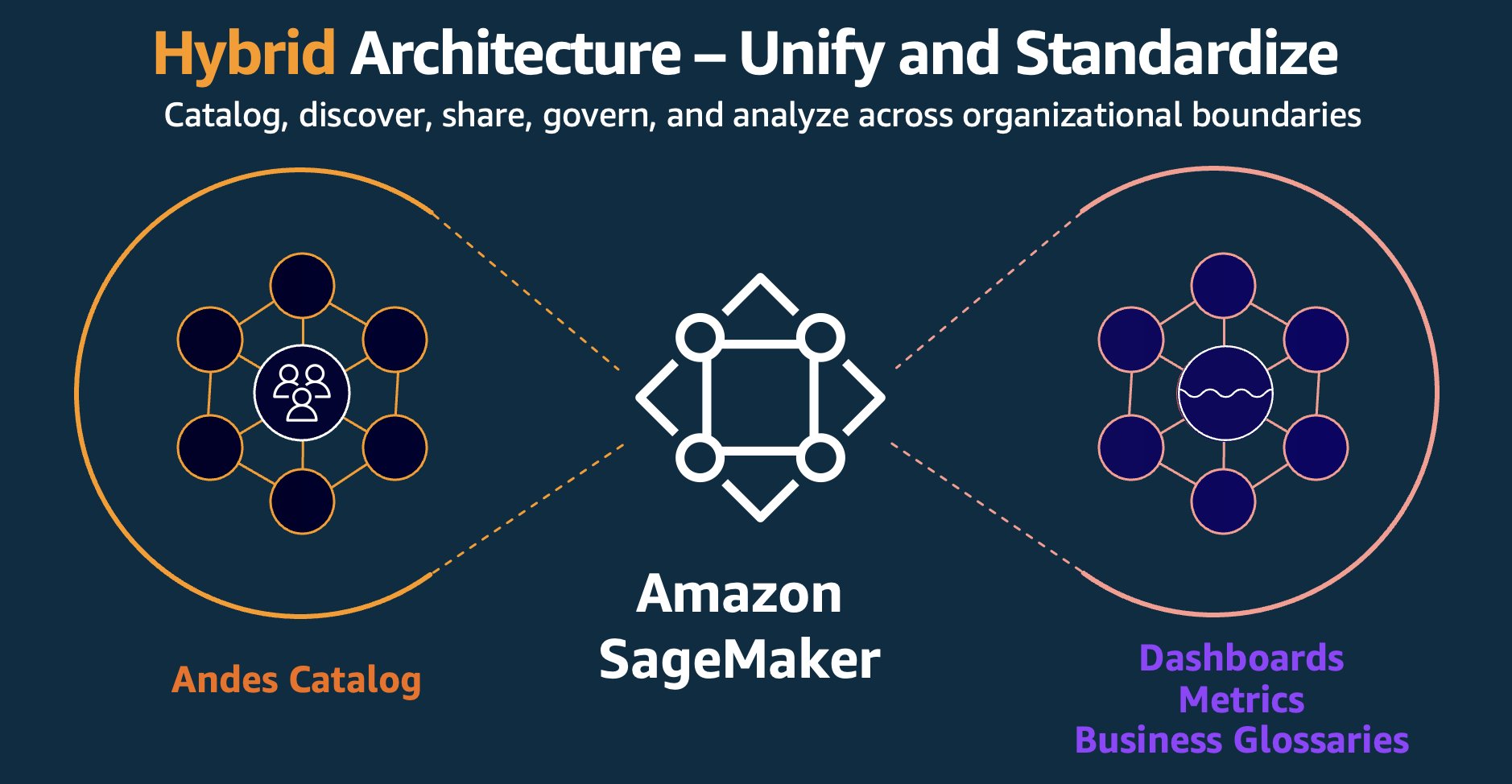
Enterprises face challenges when teams create data assets outside of central data catalogs. It adds overhead for discovery, and limits collaboration. Amazon’s Business Data Technologies (BDT) team has built an enterprise data catalog (Andes) for sharing datasets under well-defined policies. However, teams created catalog of local datasets and other non-tabular assets such as dashboards and metrics, outside Andes. This made it difficult to discover all assets in a consolidated way.

In this post, we share how Amazon.com is working to integrate catalogs by extending enterprise data catalog Andes with Amazon SageMaker.

Need for expanding catalog and governance from datasets to data assets

Without a single solution, users had to search multiple catalogs depending upon the asset type. Teams spent considerable time indexing the different catalogs and identifying the right one for their task. This slowed them down and took time away from solving the business problems.

To address these challenges, BDT team identified four critical capabilities needed:

  1. Multimodal catalog – Data consumers required the ability to blend enterprise data with local datasets and use them together for specific use cases. Teams sought to discover not only datasets, but also assets such as metrics, dashboards, and business files, to obtain a complete view of available resources. This necessitated a catalog that consolidates datasets and data assets in one location.
  2. Uniform governance and enforcement – To maintain best data protection practices and support business goals, teams need consistent enterprise-wide data governance where they request access once and the system enforces that access uniformly across all compute engines, alleviating fragmented or redundant access management. For internal systems, there was need for trusted identity propagation so user identity is preserved and used across AWS and internal systems for consistent enforcing.
  3. Multi-approval workflows – The solution supports multiple approval workflows within a single system, using Andes for dataset approvals and a custom workflow for dashboard approvals to maintain total governance and visibility across data assets.
  4. Delegated ownership – While enterprise teams retain overarching governance responsibility, business-specific data stewards required the ability to modify select attributes and apply appropriate tags to assets produced by their respective producers and consumers.

Solution: Unify datasets and data assets with Amazon SageMaker

Amazon chose to extend Andes with Amazon SageMaker to enhance the discovery experience. SageMaker offers native support for multimodal catalogs, and integrated with enterprise identity management, making it the ideal foundation for extending Andes’ governance model.

Rather than broadcasting assets across multiple domains, a single enterprise-wide domain standardizes and synchronizes data assets in one place. This domain is associated with AWS IAM Identity Center, which is connected to Amazon’s corporate identity system to maintain best data protection practices by limiting direct permissions and using corporate identity and group-based permissions.

Architecture diagram showing how Amazon SageMaker integrates with enterprise data catalog Andes and AWS IAM Identity Center

This integrated architecture directly addresses the identified challenges:

  • Single-pane asset discovery – Datasets and data assets are accessible through a single, consolidated view, avoiding the need to navigate across disparate systems or domains. This simplifies discovery and reduces the time to insight for teams across the organization.
  • Extended governance – Governance of both enterprise-wide and local datasets is orchestrated through a single system.
  • Extended observability – Trusted Identity Propagation (TIP) through AWS IAM Identity Center allows human users to access data interactively using their corporate identities. This provides audit-trail visibility into who is accessing what data for audits and organization’s observability requirements.
  • Amazon tool integration – Integration with Git and other internal systems automates management of accounts, permissions, and approvals. This reduces manual overhead and helps maintain that access controls remain tightly aligned with existing business workflows.

Design overview

This section describes the key features and design of the Amazon SageMaker integration. The technical implementation consists of three core components:

1) Catalog connectors

Amazon built connectors and ingestion paths to bring data assets into Amazon SageMaker while maintaining business continuity and preserving existing governance:

  • Andes integration: SageMaker provides APIs to synchronize assets from external catalogs. BDT extended this to bring Andes datasets (with their sophisticated metadata, business context) into the integrated experience. The integration preserves Andes’ permission model and governance workflows, to maintain existing security standards and best practices intact.
  • Account onboarding: Teams self-serve onboard their AWS accounts through an AWS Lambda-based integration. When creating projects, SageMaker queries this service to determine which accounts a user’s identity can access.

2) Delegated ownership

When data systems scale across business units, centralized governance teams need to delegate permissions for catalog enrichment, policy enforcement, and metadata management.

  • Catalog enhancement allows business teams to define and publish their own business glossaries, curated vocabularies of domain-specific terms, definitions, and relationships, directly within the catalog. Allowing business owners to author and maintain these glossaries increased accuracy and discoverability of catalog assets. Data consumers across the enterprise benefit from clearer, more consistent terminology.

3) Integration with consumption and access tooling

Teams discover data in SageMaker Unified Studio and consume it through both SageMaker Unified Studio and internal tooling:

  • Data discovery: SageMaker Unified Studio integrates with Amazon-wide Identity Center allowing almost all Amazon users to authenticate and search for cataloged assets. This integration addresses the data discovery problem by providing enterprise-wide visibility into available data resources.
  • Integrated development environment: SageMaker Unified Studio provides built-in tooling out of the box including a Query Editor for SQL analytics and Amazon SageMaker AI for machine learning (ML), which helps teams access data, build models, and collaborate across organizational boundaries.
  • Code repository integration: Manage code with full Git operations supported from SageMaker Unified Studio. Query code and notebook code persist to GitFarm (Amazon’s internal Git system), allowing teams to view and manage their work through Amazon’s standard version control system.
  • Native analytics integration: Projects directly connect to AWS analytics engines including Amazon Athena for SQL, AWS Glue and Amazon EMR for Apache Spark, and Amazon Redshift for data warehousing. User-authored jobs use Andes governance and permissions across engines for consistent access control.

SageMaker implementation results

SageMaker catalog now encompasses various types of data assets from across the organization, representing an expansion from datasets alone to a complete inventory of data, dashboards, metrics, models, and other data assets, all while maintaining best practices and appropriate access and use guardrails.

“SageMaker provides a unified catalog that makes discovery and sharing of data assets, metrics and dashboards across teams straightforward, with direct integration to Andes datasets. SageMaker delivers deep integration through Git repository connections and enterprise identity management that aligns with existing Amazon workflows.”

– Gerry Moses, Sr. Principal TPM, Amazon

  • Faster data discovery – Data consumers can go to one place to locate trusted, high-quality assets with significantly less friction, which reduces the time from question to insight. By surfacing well-documented, governed assets through an enriched catalog, teams can confidently identify the right data for their use cases without navigating sprawling, inconsistent inventories or relying on tribal knowledge.
  • Improved collaboration – Breaks down data silos by making curated assets discoverable and reusable across Amazon. When teams can build on shared, authoritative datasets rather than creating redundant copies, data proliferation is reduced.

Conclusion

By integrating their existing governance tooling with Amazon SageMaker to build a centralized data catalog, BDT is creating a foundation for faster, more efficient data discovery across teams. Amazon SageMaker helped unify diverse data types with their existing catalog and enabled collaboration across teams to help them find the right data. By integrating with existing governance frameworks, BDT demonstrates how organizations can expand their catalog capabilities while preserving existing enterprise investments.

To learn more and get started with Amazon SageMaker Unified Studio, visit aws.amazon.com/sagemaker/unified-studio or the AWS console.


About the authors

Matt David

Matt David

Matt is a Sr PMM, specializing in helping data teams with AI-powered analytics. His areas of interest include self-service analytics, data democratization, and preparing organizations for the age of AI agents. He brings extensive experience from his roles at Atlassian, Hex, and DataCamp.

Gerry Moses

Gerry Moses

Gerry is a Senior Principal Technical Program Manager in Business Data Technologies where he leads joint Amazon/AWS programs. His work improved data governance for Amazon’s Andes data lake, enabled broader AWS technology adoption by data lake users, and influenced product improvements that benefited all AWS customers.

Ramesh Singh

Ramesh Singh

Ramesh is a Senior Product Manager Technical at AWS in Seattle, Washington, currently with the Amazon SageMaker team. He is passionate about building high-performance ML/AI and analytics products that help enterprise customers achieve their critical goals using cutting-edge technology.

Pradeep Misra

Pradeep Misra

Pradeep is a Principal Analytics and Applied AI leader at AWS. He is passionate about solving customer challenges using data, analytics, and AI/ML. Outside of work, he likes exploring new places, trying new cuisines, and playing badminton with his family. He also likes doing science experiments, building LEGOs, and watching movies with his daughters.

Eunji Kang

Eunji Kang

Eunji is a Principal Product Manager Technical focusing on democratizing data across Amazon teams for fast data-driven business decisions without compromising security and compliance.

Trevor Gasdaska

Trevor Gasdaska

Trevor is a Principal Engineer focusing on data compliance and agentic AI workflows for Big Data Technologies at Amazon. He builds tools that help teams govern and use data at scale.

Brad Porter

Brad Porter

Brad is a Principal Business Development Manager at Amazon Web Services. He works with Amazon.com and enterprise customers to define and accelerate go-to-market strategies across Data Analytics, AI/ML, and Generative AI. He has over 20 years of experience in cloud strategy, enterprise infrastructure, and technology leadership.

Metasploit Wrap Up 05/22/2026

Post Syndicated from Martin Sutovsky original https://www.rapid7.com/blog/post/pt-metasploit-wrap-up-05-22-2026

Another week, another authentication bypass

Our humble Metasploit weekly(ish) blog has been blessed with a new network component vulnerability. The dynamic duo of @sfewer-r7 and @jburgess-r7 have discovered and authored the admin/networking/cisco_sdwan_vhub_auth_bypass module for CVE-2026-20182, a vulnerability gracing the Cisco Catalyst SD-WAN Controller. The devices, whose purpose is to control a software-defined (SD) wide-area-network (WAN) was unfortunately missing an extra A for authentication. An oversight that Cisco has duly patched.

Elsewhere this week, the HUSTOJ online judge platform has been caught failing to judge its own zip files (CVE-2026-24479), courtesy of a zip-slip RCE module from LoTuS and friends. Next, @Alpenlol has weaponized the small matter of Barracuda’s Email Security Gateway, happily eval()-ing the number format string inside an attached Excel file (CVE-2023-7102).

Our own @jburgess-r7 has been rather busy and also contributed a cPanel/WHM authentication bypass module that escalates straight to root via CRLF injection (CVE-2026-41940). And last, but not least, @h00die has gifted us a post module for Tenable Security Center that quietly extracts and cracks its stored credential hashes. Nevertheless, this module works only if your Tenable Security Center is using the same password you have been using since 2006.

A_train_hitting_a_school_bus.png

New module content (5)

Cisco Catalyst SD-WAN Controller vHub Authentication Bypass

Authors: Crypto-Cat and sfewer-r7

Type: Auxiliary

Pull request: #21463 contributed by jburgess-r7

Path: admin/networking/cisco_sdwan_vhub_auth_bypass

AttackerKB reference: CVE-2026-20182

Description: This adds a new auxiliary module for CVE-2026-20182, an authentication bypass in the Cisco Catalyst SD-WAN Controller.

HUSTOJ Admin users can zip-slip problem_import_qduoj.php, planting PHP files in webroot for RCE

Authors: LoTuS and friends, ling101w, and oxagast

Type: Exploit

Pull request: #21165 contributed by oxagast

Path: linux/http/hustoj_problem_import_rce

AttackerKB reference: CVE-2026-24479

Description: This adds an exploit for CVE-2026-24479 which is a zip slip vulnerability in HustOJ, an open source online judge platform, prior to version 26.01.24.

Barracuda ESG Spreadsheet::ParseExcel Arbitrary Code Execution

Authors: Curt Hyvarinen, Mandiant, and haile01

Type: Exploit

Pull request: #21035 contributed by Alpenlol

Path: linux/smtp/barracuda_esg_spreadsheet_rce

AttackerKB reference: CVE-2023-7101

Description: Adds a new exploit module for CVE-2023-7102, an unauthenticated remote code execution vulnerability in Barracuda Email Security Gateway (ESG) appliances. The flaw resides in the Amavis scanner’s use of the Perl Spreadsheet::ParseExcel library, which allows eval injection via malicious Excel number format strings. The module uses Rex::OLE to craft a minimal BIFF8 XLS file with the payload embedded in a FORMAT record and delivers it via SMTP.

cPanel/WHM CRLF Injection Authentication Bypass RCE

Authors: Adam Kues, Crypto-Cat, Shubham Shah, and Sina Kheirkhah

Type: Exploit

Pull request: #21417 contributed by jburgess-r7

Path: multi/http/cpanel_whm_auth_bypass_rce

AttackerKB reference: CVE-2026-41940

Description: This adds an exploit module for cPanel/WHM authentication bypass leading to root RCE (CVE-2026-41940).

Tenable Security Center

Author: h00die

Type: Post

Pull request: #21177 contributed by h00die

Path: linux/gather/tenable_security_center

Description: This adds a linux post module for Tenable Security Center that will retrieve credential hashes and crack them.

Enhancements and features (6)

  • #21292 from sjanusz-r7 – Updates the RPC notes command to allow data to return a hash value were applicable.
  • #21305 from sjanusz-r7 – Updates the services RPC endpoint to additionally report the resource and parent services fields.
  • #21414 from dledda-r7 – This backports the Python components of the Copy Fail (CVE-2026-31431) exploit to work with Python 2.7 interpreters, effectively supporting older targets.
  • #21447 from jheysel-r7 – This updates Metasploit’s documentation to describe how a kerberoast attack can be performed entirely with Metasploit. It also updates the kerberoast module to correctly log the realm to the database regardless of if an existing LDAP session was used or not.
  • #21458 from dwelch-r7 – Updates the Sinatra, Rack, and Thin web service dependencies to support an upcoming Rails 8 upgrade.
  • #21460 from bhaskarbhar – This consolidates some code used by Windows exec payloads to provide a more consistent experience.

Bugs fixed (4)

  • #21285 from sjanusz-r7 – Updates the RPC creds command to now also return the associated realm key and value.
  • #21345 from g0tmi1k – This fixes an issue in the smb_enumshares module that prevented it from working against certain SMB 1 targets such as Metasploitable 2.
  • #21474 from adfoster-r7 – Fixes a crash in msfdb init on Windows.
  • #21475 from adfoster-r7 – Fix msfdb installation error on windows.

Documentation

You can find the latest Metasploit documentation on our docsite at docs.metasploit.com.

Get it

As always, you can update to the latest Metasploit Framework with msfupdate and you can get more details on the changes since the last blog post from GitHub:

If you are a git user, you can clone the Metasploit Framework repo (master branch) for the latest. To install fresh without using git, you can use the open-source-only Nightly Installers or the commercial edition Metasploit Pro

The collective thoughts of the interwebz