Tag Archives: Clientless

RDP without the risk: Cloudflare’s browser-based solution for secure third-party access

Post Syndicated from Ann Ming Samborski original https://blog.cloudflare.com/browser-based-rdp/

Short-lived SSH access made its debut on Cloudflare’s SASE platform in October 2024. Leveraging the knowledge gained through the BastionZero acquisition, short-lived SSH access enables organizations to apply Zero Trust controls in front of their Linux servers. That was just the beginning, however, as we are thrilled to announce the release of a long-requested feature: clientless, browser-based support for the Remote Desktop Protocol (RDP). Built on top of Cloudflare’s modern proxy architecture, our RDP proxy offers a secure and performant solution that, critically, is also easy to set up, maintain, and use.

Security challenges of RDP 

Remote Desktop Protocol (RDP) was born in 1998 with Windows NT 4.0 Terminal Server Edition. If you have never heard of that Windows version, it’s because, well, there’s been 16 major Windows releases since then. Regardless, RDP is still used across thousands of organizations to enable remote access to Windows servers. It’s a bit of a strange protocol that relies on a graphical user interface to display screen captures taken in very close succession in order to emulate the interactions on the remote Windows server. (There’s more happening here beyond the screen captures, including drawing commands, bitmap updates, and even video streams. Like we said — it’s a bit strange.) Because of this complexity, RDP can be computationally demanding and poses a challenge for running at high performance over traditional VPNs.

Beyond its quirks, RDP has also had a rather unsavory reputation in the security industry due to early vulnerabilities with the protocol. The two main offenders are weak user sign-in credentials and unrestricted port access. Windows servers are commonly protected by passwords, which often have inadequate security to start, and worse still, may be shared across multiple accounts. This leaves these RDP servers open to brute force or credential stuffing attacks. 

Bad actors have abused RDP’s default port, 3389, to carry out on-path attacks. One of the most severe RDP vulnerabilities discovered is called BlueKeep. Officially known as CVE-2019-0708, BlueKeep is a vulnerability that allows remote code execution (RCE) without authentication, as long as the request adheres to a specific format and is sent to a port running RDP. Worse still, it is wormable, meaning that BlueKeep can spread to other machines within the network with no user action. Because bad actors can compromise RDP to gain unauthorized access, attackers can then move laterally within the network, escalating privileges, and installing malware. RDP has also been used to deploy ransomware such as Ryuk, Conti, and DoppelPaymer, earning it the nickname “Ransomware Delivery Protocol.” 

This is a subset of vulnerabilities in RDP’s history, but we don’t mean to be discouraging. Thankfully, due to newer versions of Windows, CVE patches, improved password hygiene, and better awareness of privileged access, many organizations have reduced their attack surface. However, for as many secured Windows servers that exist, there are still countless unpatched or poorly configured systems online, making them easy targets for ransomware and botnets. 

The need for a browser-based RDP solution

Despite its security risks, RDP remains essential for many organizations, particularly those with distributed workforces and third-party contractors. It provides value for compute-intensive tasks that require high-powered Windows servers with CPU/GPU resources greater than users’ machines can offer. For security-focused organizations, RDP grants better visibility into who is accessing Windows servers and what actions are taken during those sessions. 

Because issuing corporate devices to contractors is costly and cumbersome, many organizations adopt a bring-your-own-device (BYOD) policy. This decision instead requires organizations to provide contractors with a means to RDP to a Windows server with the necessary corporate resources to fulfill their role.

Traditional RDP requires client software on user devices, so this is not an appropriate solution for contractors (or any employees) using personal machines or unmanaged devices. Previously, Cloudflare customers had to rely on self-hosted third-party tools like Apache Guacamole or Devolutions Gateway to enable browser-based RDP access. This created several operational pain points:

  • Infrastructure complexity: Deploying and maintaining RDP gateways increases operational overhead.

  • Maintenance burden: Commercial and open-source tools may require frequent updates and patches, sometimes even necessitating custom forks.

  • Compliance challenges: Third-party software requires additional security audits and risk management assessments, particularly for regulated industries.

  • Redundancy, but not the good kind – Customers come to Cloudflare to reduce the complexity of maintaining their infrastructure, not add to it.

We’ve been listening. Cloudflare has architectured a high-performance RDP proxy that leverages the modern security controls already part of our Zero Trust Network Access (ZTNA) service. We feel that the “security/performance tradeoff” the industry commonly touts is a dated mindset. With the right underlying network architecture, we can help mitigate RDP’s most infamous challenges.

Introducing browser-based RDP with Access

Cloudflare’s browser-based RDP solution is the newest addition to Cloudflare Access alongside existing clientless SSH and VNC offerings, enabling secure, remote Windows server access without VPNs or RDP clients. Built natively within Cloudflare’s global network, it requires no additional infrastructure.

Our browser-based RDP access combines the power of self-hosted Access applications with the additional flexibility of targets, introduced with Access for Infrastructure. Administrators can enforce:

  • Authentication: Control how users authenticate to your internal RDP resources with SSO, MFA, and device posture.

  • Authorization: Use policy-based access control to determine who can access what target and when. 

  • Auditing: Provide Access logs to support regulatory compliance and visibility in the event of a security breach.

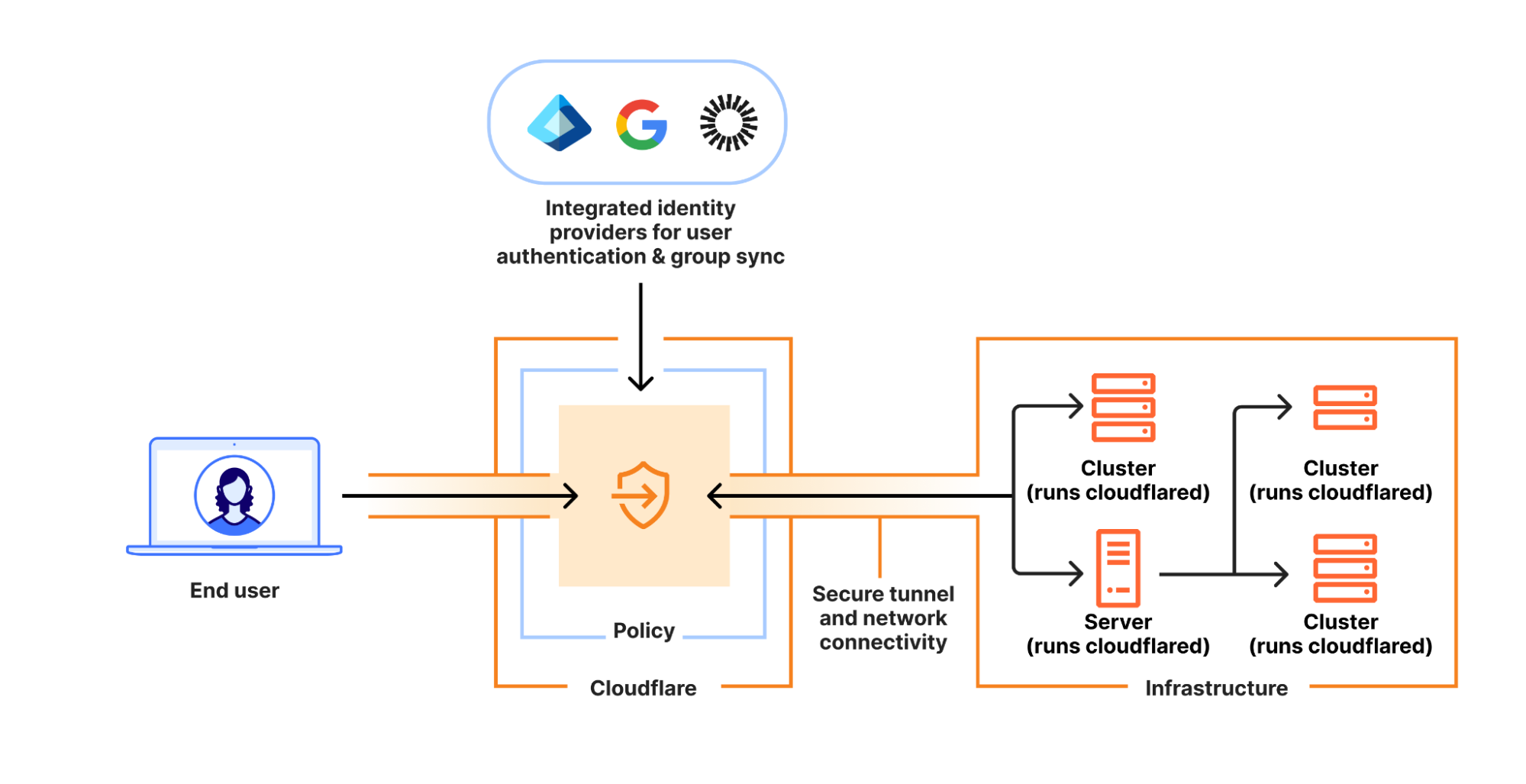
Users only need a web browser — no native RDP client is necessary! RDP servers are accessed through our app connector, Cloudflare Tunnel, using a common deployment model of existing Access customers. There is no need to provision user devices to access particular RDP servers, making for minimal setup to adopt this new functionality.

How it works

The client

Cloudflare’s implementation leverages IronRDP, a high-performance RDP client that runs in the browser. It was selected because it is a modern, well-maintained, RDP client implementation that offers an efficient and responsive experience. Unlike Java-based Apache Guacamole, another popular RDP client implementation, IronRDP is built with Rust and integrates very well with Cloudflare’s development ecosystem.

While selecting the right tools can make all the difference, using a browser to facilitate an RDP session faces some challenges. From a practical perspective, browsers just can’t send RDP messages. RDP relies directly on the Layer 4 Transmission Control Protocol (TCP) for communication, and while browsers can use TCP as the underlying protocol, they do not expose APIs that would let apps build protocol support directly on raw TCP sockets.

Another challenge is rooted in a security consideration: the username and password authentication mechanism that is native to RDP leaves a lot to be desired in the modern world of Zero Trust.

In order to tackle both of these challenges, the IronRDP client encapsulates the RDP session in a WebSocket connection. Wrapping the Layer 4 TCP traffic in HTTPS enables the client to use native browser APIs to communicate with Cloudflare’s RDP proxy. Additionally, it enables Cloudflare Access to secure the entire session using identity-aware policies. By attaching a Cloudflare Access authorization JSON Web Token (JWT) via cookie to the WebSocket connection, every inter-service hop of the RDP session is verified to be coming from the authenticated user.  

A brief aside into how security and performance is optimized: in conventional client-based RDP traffic, the client and server negotiate a TLS connection to secure and verify the session. However, because the browser WebSocket connection is already secured with TLS to Cloudflare, we employ IronRDP’s RDCleanPath protocol extension to eliminate this second encapsulation of traffic. Removing this redundancy avoids unnecessary performance degradation and increased complexity during session handshakes.

The server

The IronRDP client initiates a WebSocket connection to a dedicated WebSocket proxy, which is responsible for authenticating the client, terminating the WebSocket connection, and proxying tunneled RDP traffic deeper into Cloudflare’s infrastructure to facilitate connectivity. The seemingly simple task of determining how this WebSocket proxy should be built turned out to be the most challenging decision in the development process. 

Our initial proposal was to develop a new service that would run on every server within our network. While this was feasible, operating a new service would introduce a non-trivial maintenance burden, which ultimately turned out to be more overhead than value-add in this case. The next proposal was to build it into Front Line (FL), one of Cloudflare’s oldest services that is responsible for handling tens of millions of HTTP requests per second. This approach would have sidestepped the need to expose new IP addresses and benefitted from the existing scaffolding to let the team move quickly. Despite being promising at first, this approach was decided against because FL is undergoing significant investment, and the team didn’t want to build on shifting sands.

Finally, we identified a solution that implements the proxy service using Cloudflare Workers! Fortunately, Workers automatically scales to massive request rates, which eliminates some of the groundwork we’d lay if we had chosen to build a new service. Candidly, this approach was not initially preferred due to some ambiguities around how Workers communicates with internal Cloudflare services, but with support from the Workers team, we found a path forward. 

From the WebSocket proxy Worker, the tunneled RDP connection is sent to the Apollo service, which is responsible for routing traffic between on-ramps and off-ramps for Cloudflare Zero Trust. Apollo centralizes and abstracts these complexities to let other services focus on application-specific functionality. Apollo determines which Cloudflare colo is closest to the target Cloudflare Tunnel and establishes a connection to an identical Apollo instance running in that colo. The egressing Apollo instance can then facilitate the final connection to the Cloudflare Tunnel. By using Cloudflare’s global network to traverse the distance between the ingress colo and the target Cloudflare Tunnel, network disruptions and congestion is managed.

Apollo connects to the RDP server and passes the ingress and egress connections to Oxy-teams, the service responsible for inspecting and proxying the RDP traffic. It functions as a pass-through (strictly enabling traffic connectivity) as the web client authenticates to the RDP server. Our initial release makes use of NT Lan Manager (NTLM) authentication, a challenge-response authentication protocol requiring username and password entry. Once the client has authenticated with the server, Oxy-teams is able to proxy all subsequent RDP traffic!

This may sound like a lot of hops, but every server in our network runs every service. So believe it or not, this complex dance takes place on a single server and by using UNIX domain sockets for communication, we also minimize any performance impact. If any of these servers become overloaded, experience a network fault, or have a hardware problem, the load is automatically shifted to a neighboring server with the help of Unimog, Cloudflare’s L4 load balancer.

Putting it all together

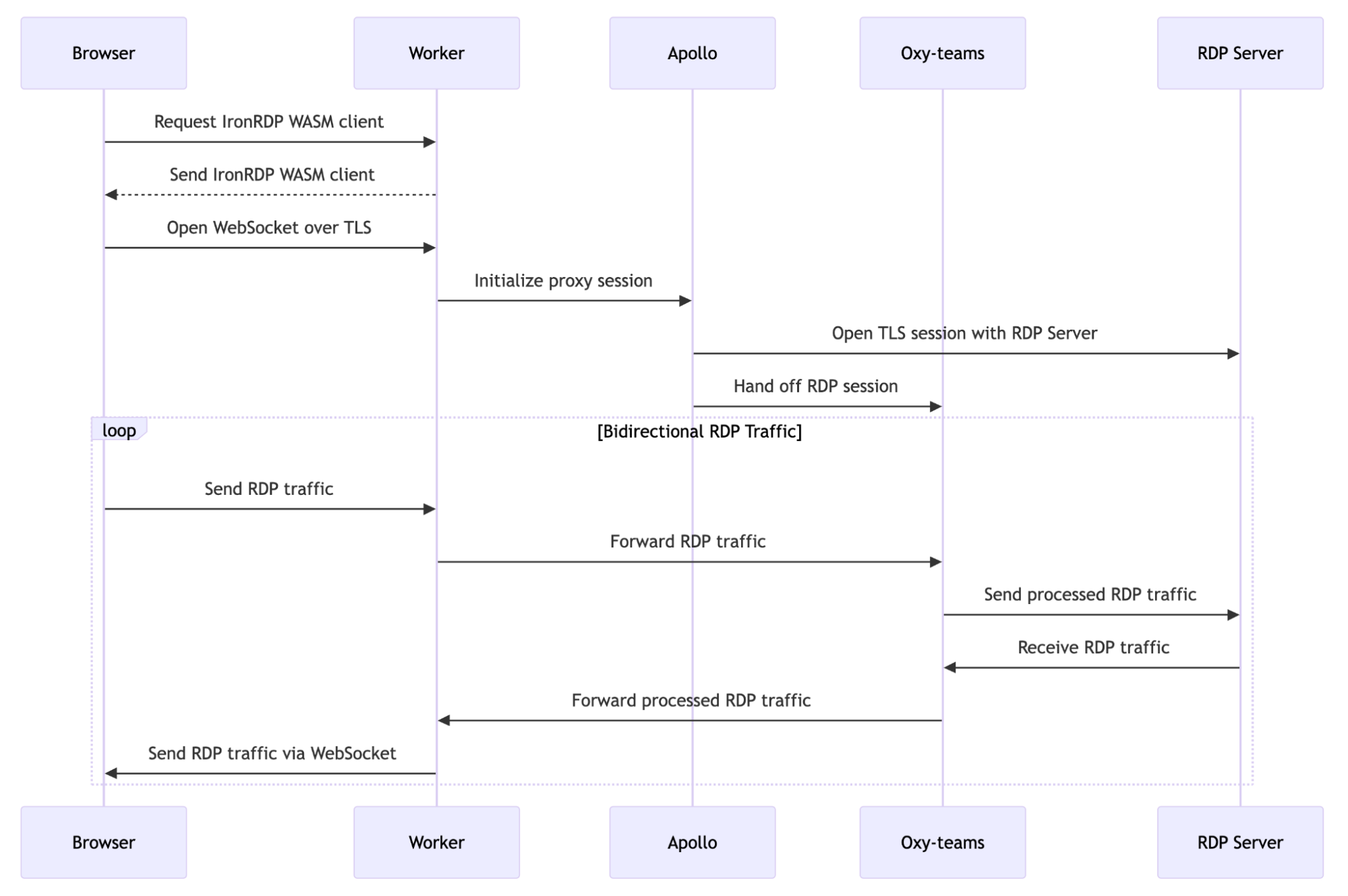
  1. User initiation: The user selects an RDP server from Cloudflare’s App Launcher (or accesses it via a direct URL). Each RDP server is associated with a public hostname secured by Cloudflare. 

  2. Ingress: This request is received by the closest data center within Cloudflare’s network

  3. Authentication: Cloudflare Access authenticates the session by validating that the request contains a valid JWT. This token certifies that the user is authorized to access the selected RDP server through the specified domain.

  4. Web client delivery: Cloudflare Workers serves the IronRDP web client to the user’s browser.

  5. Secure tunneling: The client tunnels RDP traffic from the user’s browser over a TLS-secured WebSocket to another Cloudflare Worker. 

  6. Traffic routing: The Worker that receives the IronRDP connection terminates the WebSocket and initiates a connection to Apollo. From there, Apollo creates a connection to the RDP server.

  7. Authentication relay: With a connection established, Apollo relays RDP authentication messages between the web client and the RDP server. 

  8. Connection establishment: Upon successful authentication, Cloudflare serves as an RDP proxy between the web browser and the RDP server, connecting the user to the RDP server with free-flowing traffic. 

  9. Policy enforcement: Cloudflare’s secure web gateway, Oxy-teams, applies Layer 4 policy enforcement and logging of the RDP traffic.

Key benefits of this architecture:

  • No additional software: Access Windows servers directly from a browser.

  • Low latency: Cloudflare’s global network minimizes performance overhead.

  • Enhanced security: RDP access is protected by Access policies, preventing lateral movement.

  • Integrated logging and monitoring: Administrators can observe and control RDP traffic.

To learn more about Cloudflare’s proxy capabilities, take a look at our related blog post explaining our proxy framework.

Selective, modern RDP authentication

Cloudflare’s browser-based RDP solution exclusively supports modern RDP authentication mechanisms, enforcing best practices for secure access. Our architecture ensures that RDP traffic using outdated or weak legacy security features from older versions of the RDP standard, such as unsecured password-based authentication or RC4 encryption, are never allowed to reach customer endpoints.

Cloudflare supports secure session negotiation using the following principles:

  1. TLS-based WebSocket connection for transport security.

  2. Fine-grained policies that enforce single sign on (SSO), multi-factor authentication (MFA), and dynamic authorization.

  3. Integration with enterprise identity providers via SAML (Security Assertion Markup Language) and OIDC (OpenID Connect).

Every RDP session that passes through Cloudflare’s network is encrypted and authenticated.

What’s next? 

This is only the beginning for our browser-based RDP solution! We have already identified a few areas for continued focus:

  • Enhanced visibility and control for administrators: Because RDP traffic passes through Cloudflare Workers and proxy services, browser-based RDP will expand to include session monitoring. We are also evaluating data loss prevention (DLP) support, such as restricting actions like file transfers and clipboard use, to prevent unauthorized data exfiltration without compromising performance. 

  • Advanced authentication: Long-lived credentials are a thing of the past. Future iterations of browser-based RDP will include passwordless functionality, eliminating the need for end users to remember passwords and administrators from having to manage them. To that end, we are evaluating methods such as client certificate authentication, passkeys and smart cards, and integration with third-party authentication providers via Access.

Compliance and FedRAMP High certification

We plan to include browser-based RDP in our FedRAMP High offering for enterprise and government organizations, a high-priority initiative we announced in early February. This certification will validate that our solution meets the highest standards for:

  • Data protection

  • Identity and access management

  • Continuous monitoring

  • Incident response

Seeking FedRAMP High compliance demonstrates Cloudflare’s commitment to securing sensitive environments, such as those in the federal government, healthcare, and financial sectors.

By enforcing a modern, opinionated, and secure implementation of RDP, Cloudflare provides a secure, scalable, and compliant solution tailored to the needs of organizations with critical security and compliance mandates.

Get started today

At Cloudflare, we are committed to providing the most comprehensive solution for ZTNA, which now also includes privileged access to sensitive infrastructure like Windows servers over browser-based RDP. Cloudflare’s browser-based RDP solution is in closed beta with new customers being onboarded each week. You can request access here to try out this exciting new feature.

In the meantime, check out our Access for Infrastructure documentation to learn more about how Cloudflare protects privileged access to sensitive infrastructure. Access for Infrastructure is currently available free to teams of under 50 users, and at no extra cost to existing pay-as-you-go and Contract plan customers through an Access or Zero Trust subscription. Stay tuned as we continue to natively rebuild BastionZero’s technology into Cloudflare’s Access for Infrastructure service!
Conventional cryptography is under threat. Upgrade to post-quantum cryptography with Cloudflare Zero Trust

Post Syndicated from Sharon Goldberg original https://blog.cloudflare.com/post-quantum-zero-trust/

Quantum computers are actively being developed that will eventually have the ability to break the cryptography we rely on for securing modern communications. Recent breakthroughs in quantum computing have underscored the vulnerability of conventional cryptography to these attacks. Since 2017, Cloudflare has been at the forefront of developing, standardizing, and implementing post-quantum cryptography to withstand attacks by quantum computers. 

Our mission is simple: we want every Cloudflare customer to have a clear path to quantum safety. Cloudflare recognizes the urgency, so we’re committed to managing the complex process of upgrading cryptographic algorithms, so that you don’t have to worry about it. We’re not just talking about doing it. Over 35% of the non-bot HTTPS traffic that touches Cloudflare today is post-quantum secure. 

The National Institute of Standards and Technology (NIST) also recognizes the urgency of this transition. On November 15, 2024, NIST made a landmark announcement by setting a timeline to phase out RSA and Elliptic Curve Cryptography (ECC), the conventional cryptographic algorithms that underpin nearly every part of the Internet today. According to NIST’s announcement, these algorithms will be deprecated by 2030 and completely disallowed by 2035.

At Cloudflare, we aren’t waiting until 2035 or even 2030. We believe privacy is a fundamental human right, and advanced cryptography should be accessible to everyone without compromise. No one should be required to pay extra for post-quantum security. That’s why any visitor accessing a website protected by Cloudflare today benefits from post-quantum cryptography, when using a major browser like Chrome, Edge, or Firefox. (And, we are excited to see a small percentage of (mobile) Safari traffic in our Radar data.) Well over a third of the human traffic passing through Cloudflare today already enjoys this enhanced security, and we expect this share to increase as more browsers and clients are upgraded to support post-quantum cryptography. 

While great strides have been made to protect human web traffic, not every application is a web application. And every organization has internal applications (both web and otherwise) that do not support post-quantum cryptography.  

How should organizations go about upgrading their sensitive corporate network traffic to support post-quantum cryptography?

That’s where today’s announcement comes in. We’re thrilled to announce the first phase of end-to-end quantum readiness of our Zero Trust platform, allowing customers to protect their corporate network traffic with post-quantum cryptography. Organizations can tunnel their corporate network traffic though Cloudflare’s Zero Trust platform, protecting it against quantum adversaries without the hassle of individually upgrading each and every corporate application, system, or network connection. 

More specifically, organizations can use our Zero Trust platform to route communications from end-user devices (via web browser or Cloudflare’s WARP device client) to secure applications connected with Cloudflare Tunnel, to gain end-to-end quantum safety, in the following use cases: 

  • Cloudflare’s clientless Access: Our clientless Zero Trust Network Access (ZTNA) solution verifies user identity and device context for every HTTPS request to corporate applications from a web browser. Clientless Access is now protected end-to-end with post-quantum cryptography.

  • Cloudflare’s WARP device client: By mid-2025, customers using the WARP device client will have all of their traffic (regardless of protocol) tunneled over a connection protected by post-quantum cryptography. The WARP client secures corporate devices by privately routing their traffic to Cloudflare’s global network, where Gateway applies advanced web filtering and Access enforces policies for secure access to applications. 

  • Cloudflare Gateway: Our Secure Web Gateway (SWG) — designed to inspect and filter TLS traffic in order to block threats and unauthorized communications — now supports TLS with post-quantum cryptography. 

In the remaining sections of this post, we’ll explore the threat that quantum computing poses and the challenges organizations face in transitioning to post-quantum cryptography. We’ll also dive into the technical details of how our Zero Trust platform supports post-quantum cryptography today and share some plans for the future.

Why transition to post-quantum cryptography and why now? 

There are two key reasons to adopt post-quantum cryptography now:

1. The challenge of deprecating cryptography

History shows that updating or removing outdated cryptographic algorithms from live systems is extremely difficult. For example, although the MD5 hash function was deemed insecure in 2004 and long since deprecated, it was still in use with the RADIUS enterprise authentication protocol as recently as 2024. In July 2024, Cloudflare contributed to research revealing an attack on RADIUS that exploited its reliance on MD5. This example underscores the enormous challenge of updating legacy systems — this difficulty in achieving crypto-agility — which will be just as demanding when it’s time to transition to post-quantum cryptography. So it makes sense to start this process now.

2. The “harvest now, decrypt later” threat

Even though quantum computers lack enough qubits to break conventional cryptography today, adversaries can harvest and store encrypted communications or steal datasets with the intent of decrypting them once quantum technology matures. If your encrypted data today could become a liability in 10 to 15 years, planning for a post-quantum future is essential. For this reason, we have already started working with some of the most innovative banks, ISPs, and governments around the world as they begin their journeys to quantum safety. 

The U.S. government is already addressing these risks. On January 16, 2025, the White House issued Executive Order 14144 on Strengthening and Promoting Innovation in the Nation’s Cybersecurity. This order requires government agencies to “regularly update a list of product categories in which products that support post-quantum cryptography (PQC) are widely available…. Within 90 days of a product category being placed on the list … agencies shall take steps to include in any solicitations for products in that category a requirement that products support PQC.

At Cloudflare, we’ve been researching, developing, and standardizing post-quantum cryptography since 2017. Our strategy is simple:

Simply tunnel your traffic through Cloudflare’s quantum-safe connections to immediately protect against harvest-now-decrypt-later attacks, without the burden of upgrading every cryptographic library yourself.

Let’s take a closer look at how the migration to post-quantum cryptography is taking shape at Cloudflare.

A two-phase migration to post-quantum cryptography

At Cloudflare, we’ve largely focused on migrating the TLS (Transport Layer Security) 1.3 protocol to post-quantum cryptography.   TLS primarily secures the communications for web applications, but it is also widely used to secure email, messaging, VPN connections, DNS, and many other protocols.  This makes TLS an ideal protocol to focus on when migrating to post-quantum cryptography.

The migration involves updating two critical components of TLS 1.3: digital signatures used in certificates and key agreement mechanisms. We’ve made significant progress on key agreement, but the migration to post-quantum digital signatures is still in its early stages.

Phase 1: Migrating key agreement

Key agreement protocols enable two parties to securely establish a shared secret key that they can use to secure and encrypt their communications. Today, vendors have largely converged on transitioning TLS 1.3 to support a post-quantum key exchange protocol known as ML-KEM (Module-lattice based Key-Encapsulation Mechanism Standard). There are two main reasons for prioritizing migration of key agreement:

  • Performance: ML-KEM performs well with the TLS 1.3 protocol, even for short-lived network connections.

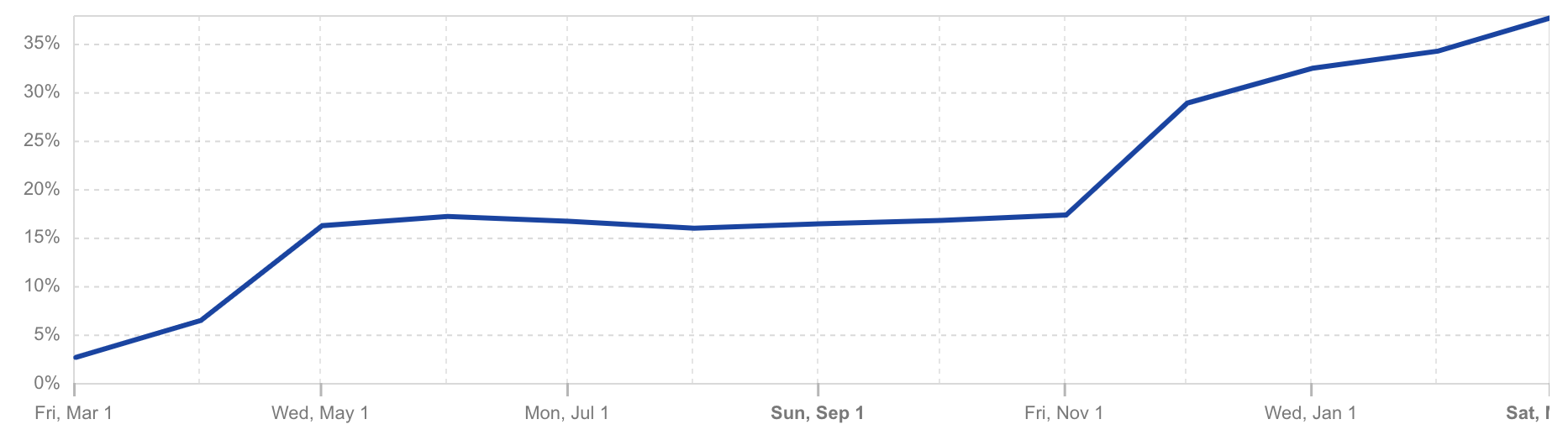
  • Security: Conventional cryptography is vulnerable to “harvest now, decrypt later” attacks. In this threat model, an adversary intercepts and stores encrypted communications today and later (in the future) uses a quantum computer to derive the secret key, compromising the communication. As of March 2025, well over a third of the human web traffic reaching the Cloudflare network is protected against these attacks by TLS 1.3 with hybrid ML-KEM key exchange.


Post-quantum encrypted share of human HTTPS request traffic seen by Cloudflare per Cloudflare Radar from March 1, 2024 to March 1, 2025. (Captured on March 13, 2025.)

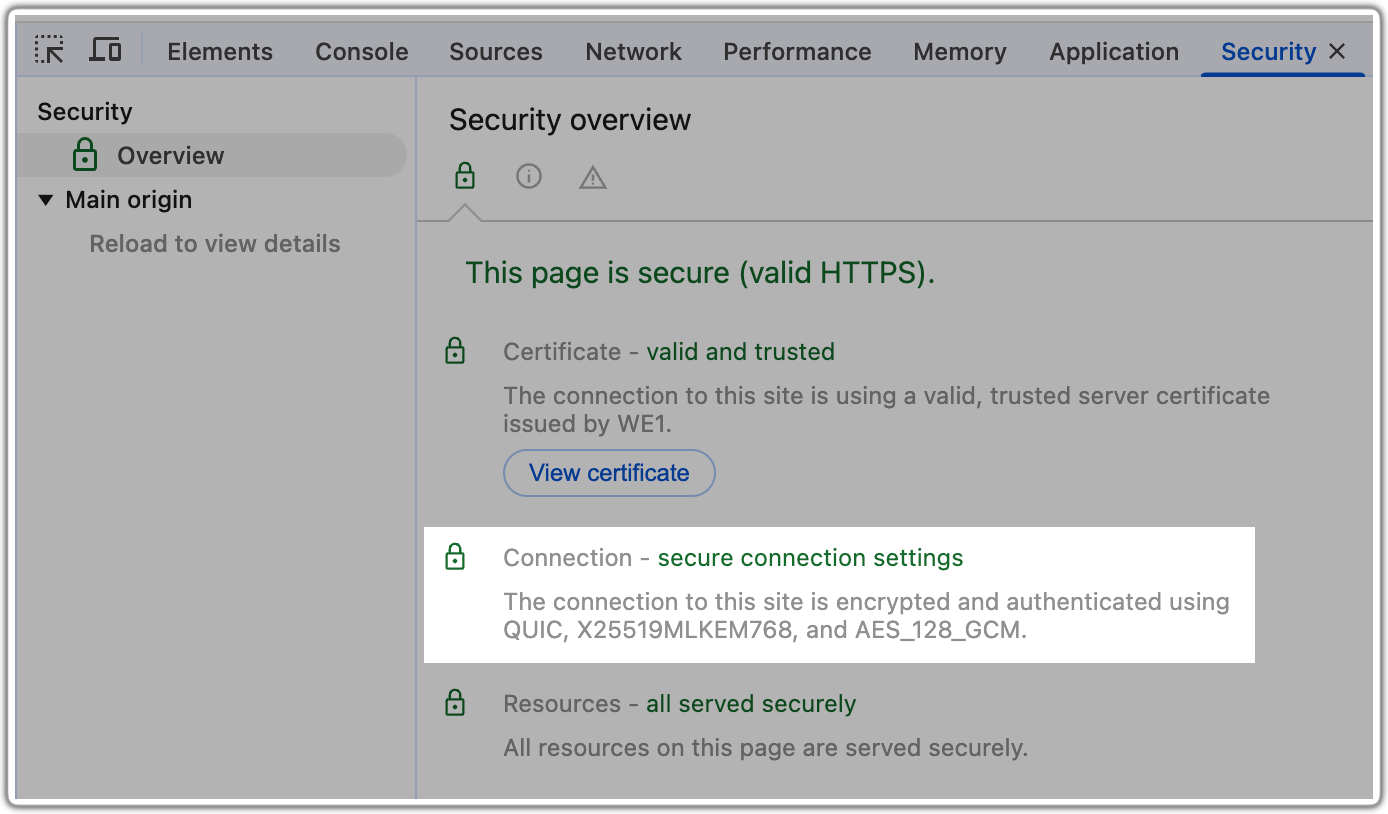
Here’s how to check if your Chrome browser is using ML-KEM for key agreement when visiting a website: First, Inspect the page, then open the Security tab, and finally look for X25519MLKEM768 as shown here:


This indicates that your browser is using key-agreement protocol ML-KEM in combination with conventional elliptic curve cryptography on curve X25519. This provides the protection of the tried-and-true conventional cryptography (X25519) alongside the new post-quantum key agreement (ML-KEM).

Phase 2: Migrating digital signatures

Digital signatures are used in TLS certificates to validate the authenticity of connections — allowing the client to be sure that it is really communicating with the server, and not with an adversary that is impersonating the server. 

Post-quantum digital signatures, however, are significantly larger, and thus slower, than their current counterparts. This performance impact has slowed their adoption, particularly because they slow down short-lived TLS connections. 

Fortunately, post-quantum signatures are not needed to prevent harvest-now-decrypt-later attacks. Instead, they primarily protect against attacks by an adversary that is actively using a quantum computer to tamper with a live TLS connection. We still have some time before quantum computers are able to do this, making the migration of digital signatures a lower priority.

Nevertheless, Cloudflare is actively involved in standardizing post-quantum signatures for TLS certificates. We are also experimenting with their deployment on long-lived TLS connections and exploring new approaches to achieve post-quantum authentication without sacrificing performance. Our goal is to ensure that post-quantum digital signatures are ready for widespread use when quantum computers are able to actively attack live TLS connections.

Cloudflare Zero Trust + PQC: future-proofing security

The Cloudflare Zero Trust platform replaces legacy corporate security perimeters with Cloudflare’s global network, making access to the Internet and to corporate resources faster and safer for teams around the world. Today, we’re thrilled to announce that Cloudflare’s Zero Trust platform protects your data from quantum threats as it travels over the public Internet.  There are three key quantum-safe use cases supported by our Zero Trust platform in this first phase of quantum readiness.

Quantum-safe clientless Access

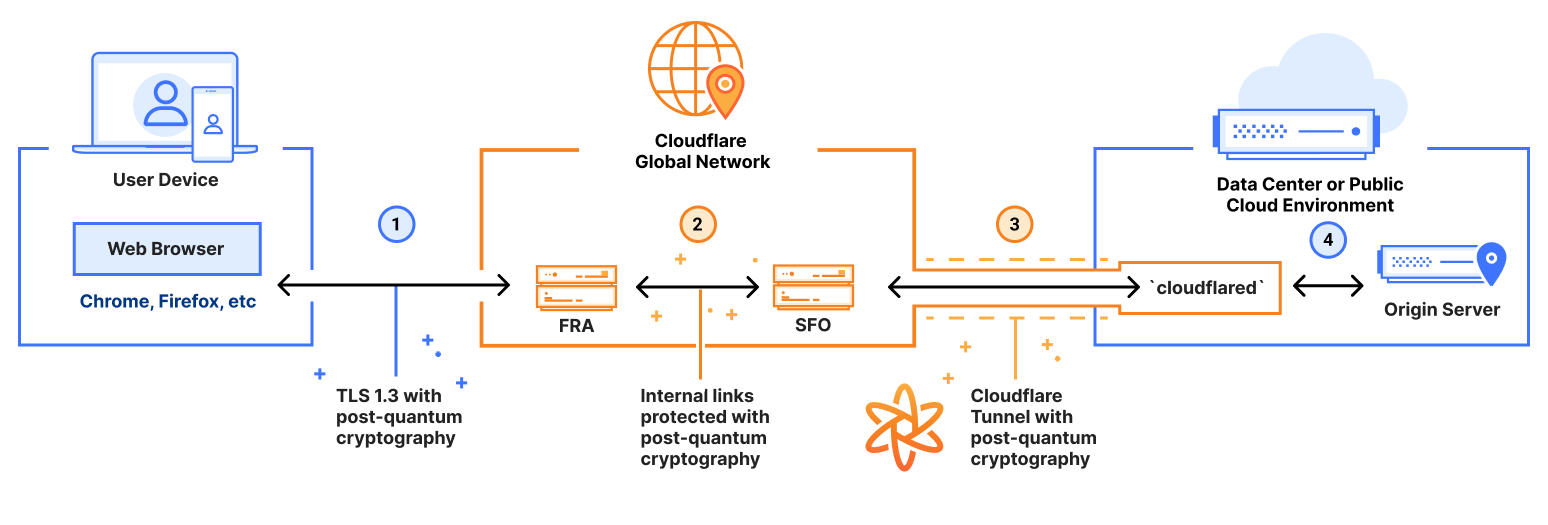
Clientless Cloudflare Access now protects an organization’s Internet traffic to internal web applications against quantum threats, even if the applications themselves have not yet migrated to post-quantum cryptography. (“Clientless access” is a method of accessing network resources without installing a dedicated client application on the user’s device. Instead, users connect and access information through a web browser.)


Here’s how it works today:

  • PQ connection via browser: (Labeled (1) in the figure.)
    As long as the user’s web browser supports post-quantum key agreement, the connection from the device to Cloudflare’s network is secured via TLS 1.3 with post-quantum key agreement.

  • PQ within Cloudflare’s global network: (Labeled (2) in the figure) 
    If the user and origin server are geographically distant, then the user’s traffic will enter Cloudflare’s global network in one geographic location (e.g. Frankfurt), and exit at another (e.g. San Francisco).  As this traffic moves from one datacenter to another inside Cloudflare’s global network, these hops through the network are secured via TLS 1.3 with post-quantum key agreement. 

  • PQ Cloudflare Tunnel: (Labeled (3) in the figure)
    Customers establish a Cloudflare Tunnel from their datacenter or public cloud — where their corporate web application is hosted — to Cloudflare’s network. This tunnel is secured using TLS 1.3 with post-quantum key agreement, safeguarding it from harvest-now-decrypt-later attacks.

Putting it together, clientless Access provides end-to-end quantum safety for accessing corporate HTTPS applications, without requiring customers to upgrade the security of corporate web applications.

Quantum-safe Zero Trust with Cloudflare’s WARP Client-to-Tunnel configuration (as a VPN replacement)

By mid-2025, organizations will be able to protect any protocol, not just HTTPS, by tunneling it through Cloudflare’s Zero Trust platform with post quantum cryptography, thus providing quantum safety as traffic travels across the Internet from the end-user’s device to the corporate office/data center/cloud environment.

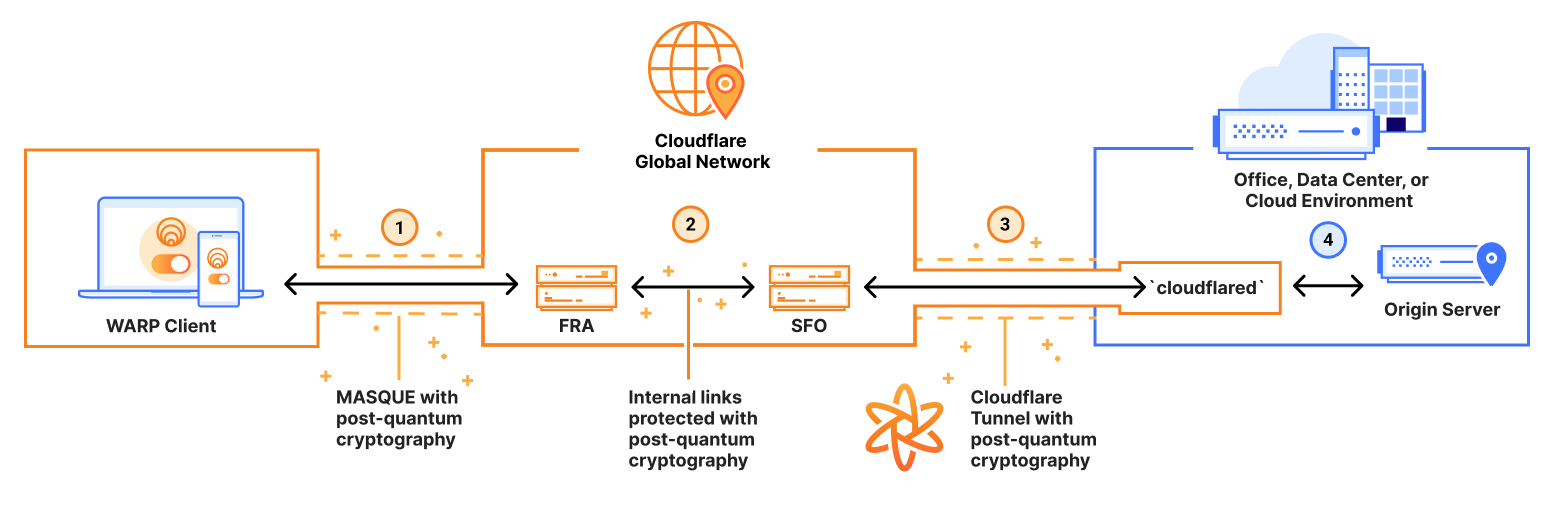
Cloudflare’s Zero Trust platform is ideal for replacing traditional VPNs, and enabling Zero Trust architectures with modern authentication and authorization polices.  Cloudflare’s WARP client-to-tunnel is a popular network configuration for our Zero Trust platform: organizations deploy Cloudflare’s WARP device client on their end users’ devices, and then use Cloudflare Tunnel to connect to their corporate office, cloud, or data center environments.   


 Here are the details:  

  • PQ connection via WARP client (coming in mid-2025): (Labeled (1) in the figure)
    The WARP client uses the MASQUE protocol to connect from the device to Cloudflare’s global network. We are working to add support for establishing this MASQUE connection with TLS 1.3 with post-quantum key agreement, with a target completion date of mid-2025.  

  • PQ within Cloudflare’s global network:  (Labeled (2) in the figure)
    As traffic moves from one datacenter to another inside Cloudflare’s global network, each hop it takes through Cloudflare’s network is already secured with TLS 1.3 with post-quantum key agreement.

  • PQ Cloudflare Tunnel: (Labeled (3) in the figure)
    As mentioned above, Cloudflare Tunnel already supports post-quantum key agreement. 

Once the upcoming post-quantum enhancements to the WARP device client are complete, customers can encapsulate their traffic in quantum-safe tunnels, effectively mitigating the risk of harvest-now-decrypt-later attacks without any heavy lifting to individually upgrade their networks or applications.  And this provides comprehensive protection for any protocol that can be sent through these tunnels, not just for HTTPS!

Quantum-safe SWG (end-to-end PQC for access to third-party web applications)

A Secure Web Gateway (SWG) is used to secure access to third-party websites on the public Internet by intercepting and inspecting TLS traffic. 

Cloudflare Gateway is now a quantum-safe SWG for HTTPS traffic. As long as the third-party website that is being inspected supports post-quantum key agreement, then Cloudflare’s SWG also supports post-quantum key agreement. This holds regardless of the onramp that the customer uses to get to Cloudflare’s network (i.e. web browser, WARP device client, WARP Connector, Magic WAN), and only requires the use of a browser that supports post-quantum key agreement.


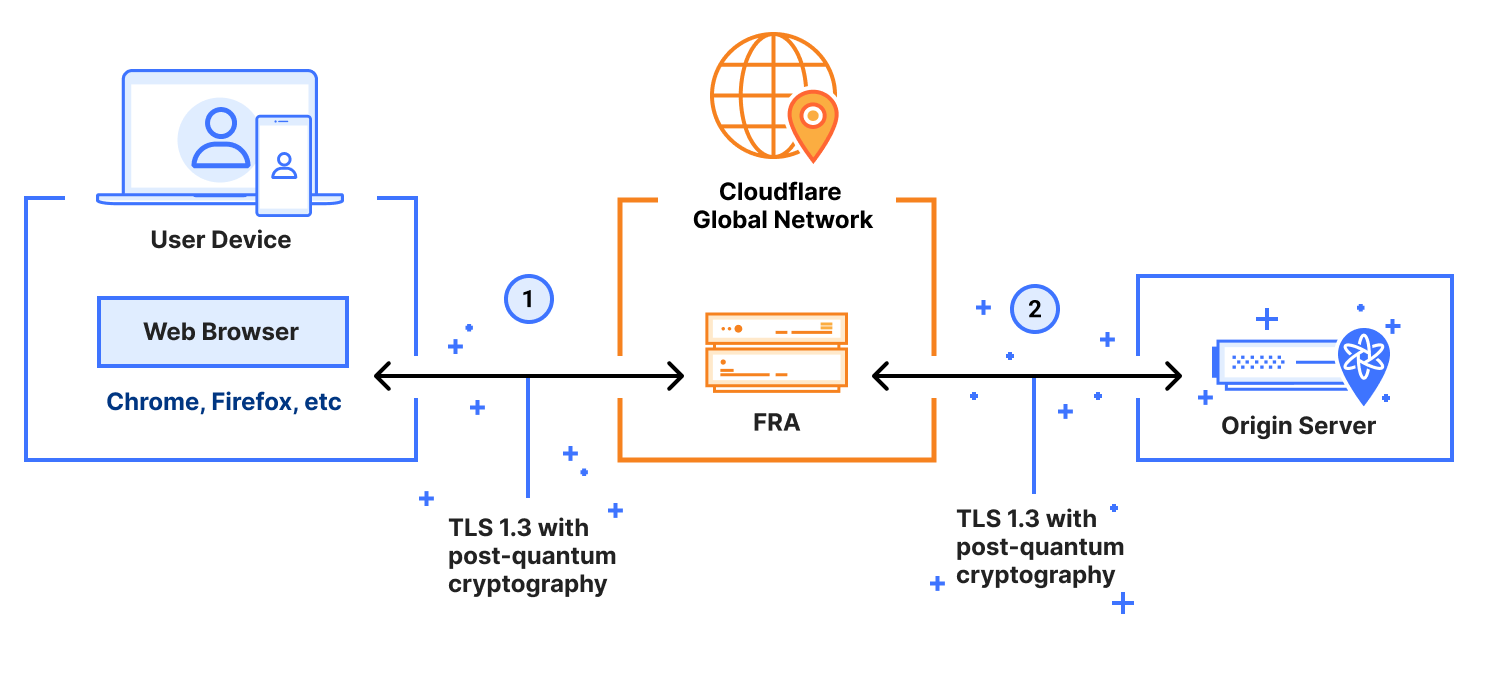
Cloudflare Gateway’s HTTPS SWG feature involves two post-quantum TLS connections, as follows:

  • PQ connection via browser: (Labeled (1) in the figure) 
    A TLS connection is initiated from the user’s browser to a data center in Cloudflare’s network that performs the TLS inspection. As long as the user’s web browser supports post-quantum key agreement, this connection is secured by TLS 1.3 with post-quantum key agreement.  

  • PQ connection to the origin server: (Labeled (2) in the figure) 
    A TLS connection is initiated from a datacenter in Cloudflare’s network to the origin server, which is typically controlled by a third party. The connection from Cloudflare’s SWG currently supports post-quantum key agreement, as long as the third party’s origin server also already supports post-quantum key agreement.  You can test this out today by using https://pq.cloudflareresearch.com/ as your third-party origin server. 

Put together, Cloudflare’s SWG is quantum-ready to support secure access to any third-party website that is quantum ready today or in the future. And this is true regardless of the onramp used to get end users’ traffic into Cloudflare’s global network!

The post-quantum future: Cloudflare’s Zero Trust platform leads the way

Protecting our customers from emerging quantum threats isn’t just a priority — it’s our responsibility. Since 2017, Cloudflare has been pioneering post-quantum cryptography through research, standardization, and strategic implementation across our product ecosystem.

Today marks a milestone: We’re launching the first phase of quantum-safe protection for our Zero Trust platform. Quantum-safe clientless Access and Secure Web Gateway are available immediately, with WARP client-to-tunnel network configurations coming by mid-2025. As we continue to advance the state of the art in post-quantum cryptography, our commitment to continuous innovation ensures that your organization stays ahead of tomorrow’s threats.  Let us worry about crypto-agility so that you don’t have to.

To learn more about how Cloudflare’s built-in crypto-agility can future-proof your business, visit our Post-Quantum Cryptography webpage.

Watch on Cloudflare TV

Clientless Web Isolation is now generally available

Post Syndicated from Tim Obezuk original https://blog.cloudflare.com/clientless-web-isolation-general-availability/

Clientless Web Isolation is now generally available

Clientless Web Isolation is now generally available

Today, we’re excited to announce that Clientless Web Isolation is generally available. A new on-ramp for Browser Isolation that natively integrates Zero Trust Network Access (ZTNA) with the zero-day, phishing and data-loss protection benefits of remote browsing for users on any device browsing any website, internal app or SaaS application. All without needing to install any software or configure any certificates on the endpoint device.

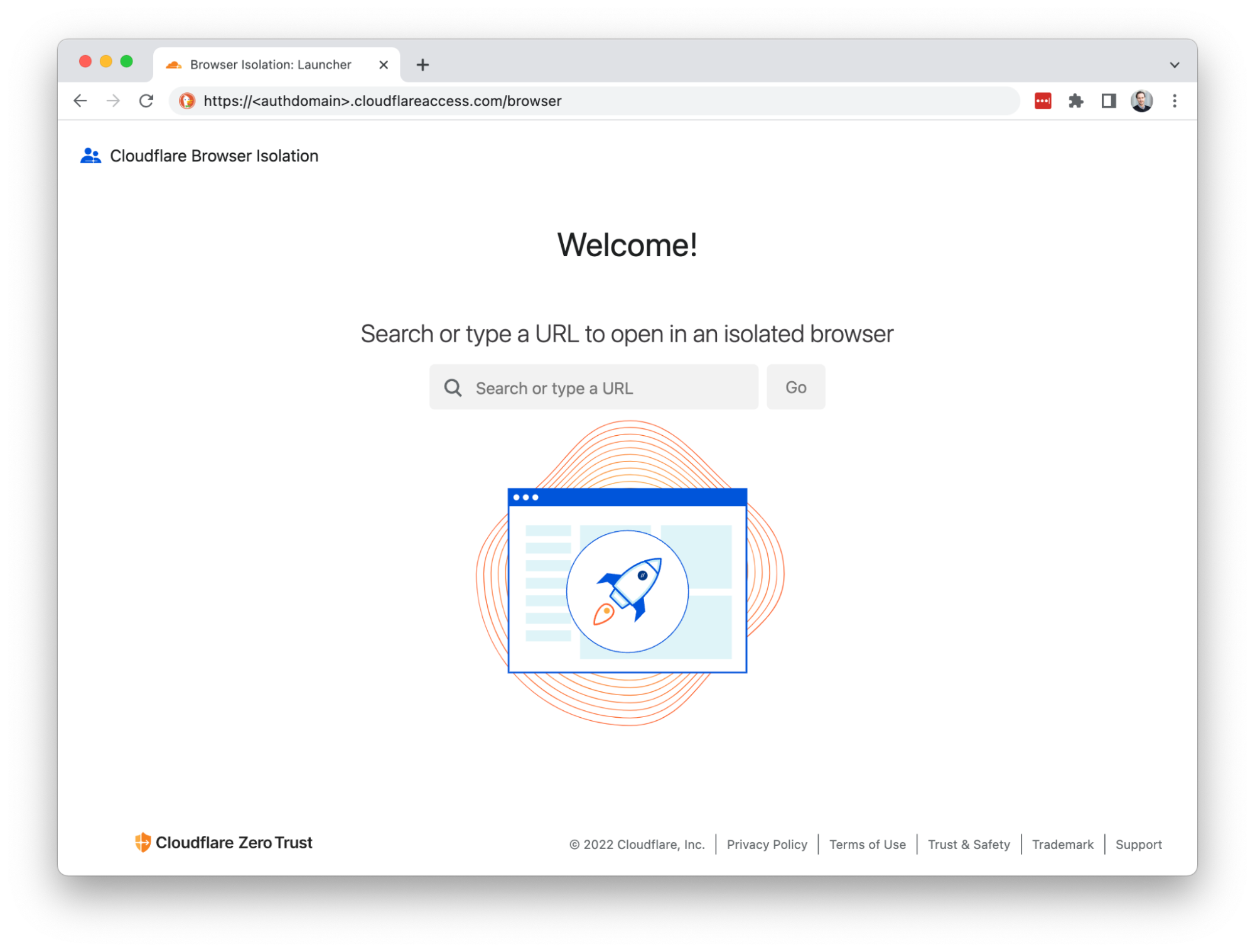
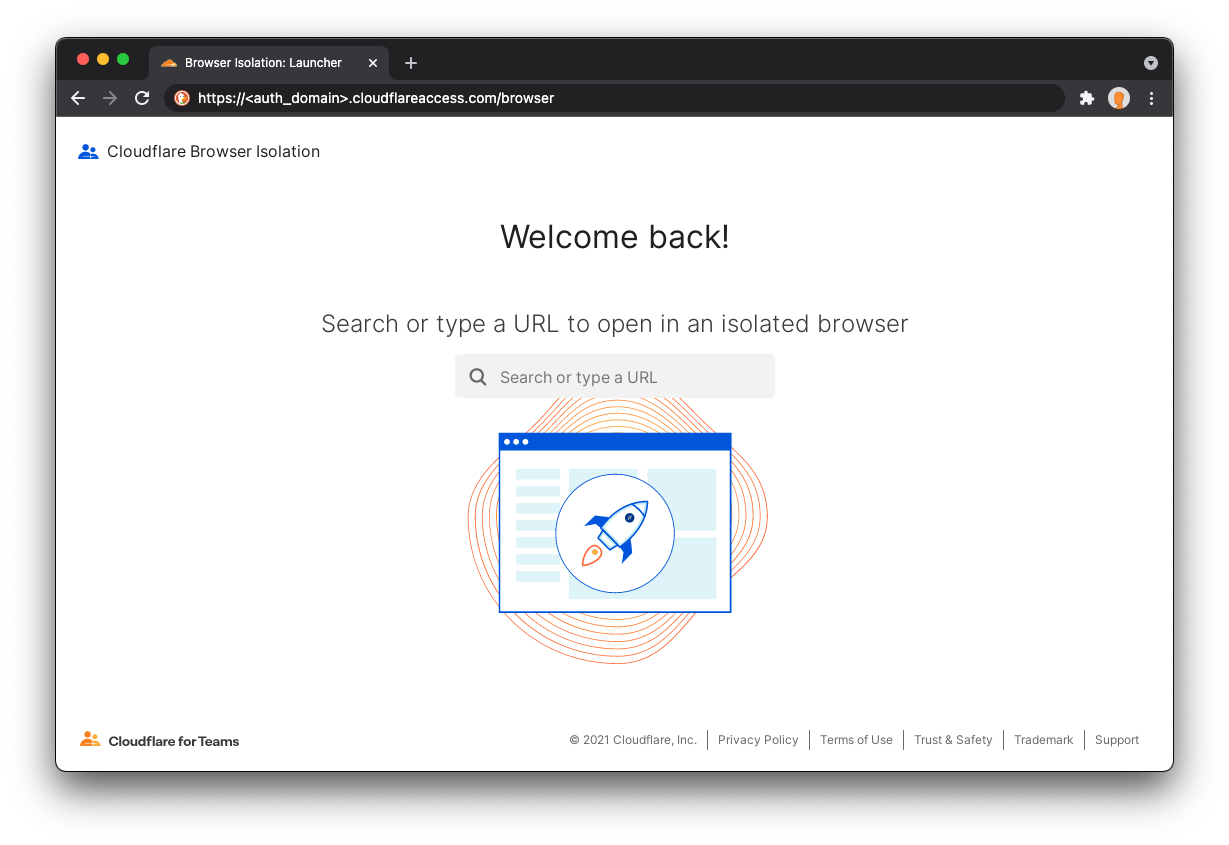
Cloudflare’s clientless web isolation simplifies connections to remote browsers through a hyperlink (e.g.: https://<your-auth-domain>.cloudflareaccess.com/browser). We explored use cases in detail in our beta announcement post, but here’s a quick refresher on the use cases that clientless isolated browsing enables:

Share secure browsing across the entire team on any device

Simply navigating to Clientless Web Isolation will land your user such as an analyst, or researcher in a remote browser, ready to securely conduct their research or investigation without exposing their public IP or device to potentially malicious code on the target website.

Clientless Web Isolation is now generally available

Suspicious hyperlinks and PDF documents from sensitive applications can be opened in a remote browser by rewriting the link with the clientless endpoint. For example:

https://<authdomain>.cloudflareaccess.com/browser/https://www.example.com/suspiciouslink

This is powerful when integrated into a security incident monitoring tool, help desk or any tool where users are clicking unknown or untrusted hyperlinks.

Integrate Browser Isolation with a third-party secure web gateway

Browser Isolation can be integrated with a legacy secure web gateway through the use of a redirecting custom block page. Integrating Browser Isolation with your existing secure web gateway enables safe browsing without the support burden of micromanaging block lists.

See our developer documentation for example block pages.

Securely access sensitive data on BYOD devices endpoints

In an ideal world, users would always access sensitive data from corporate devices. Unfortunately it’s not possible or feasible: contractors, by definition, rely on non-corporate devices. Employees may not be able to take their device home, it is unavailable due to a disaster or travel to high risk areas without their managed machine.

Historically IT departments have worked around this by adopting legacy Virtual Desktop Infrastructure (VDI). This made sense a decade ago when most business applications were desktop applications. Today this architecture makes little sense when most business applications live in the browser. VDI is a tremendously expensive method to deliver BYOD support and still requires complex network administration to connect with DNS filtering and Secure Web Gateways.

All traffic from Browser Isolation to the Internet or an Access protected application is secured and inspected by the Secure Web Gateway out of the box. It only takes a few clicks to require Gateway device posture checks for users connecting over Clientless Web Isolation.

Get started

Clientless web isolation is available as a capability for all Cloudflare Zero Trust subscribers who have added Browser Isolation to their plan. If you are interested in learning more about use cases see the beta announcement post and our developer documentation.

Introducing Clientless Web Isolation

Post Syndicated from Tim Obezuk original https://blog.cloudflare.com/introducing-clientless-web-isolation-beta/

Introducing Clientless Web Isolation

Introducing Clientless Web Isolation

Today, we’re excited to announce the beta for Cloudflare’s clientless web isolation. A new on-ramp for Browser Isolation that natively integrates Zero Trust Network Access (ZTNA) with the zero-day, phishing and data-loss protection benefits of remote browsing for users on any device browsing any website, internal app or SaaS application. All without needing to install any software or configure any certificates on the endpoint device.

Secure access for managed and unmanaged devices

In early 2021, Cloudflare announced the general availability of Browser Isolation, a fast and secure remote browser that natively integrates with Cloudflare’s Zero Trust platform. This platform — also known as Cloudflare for Teams — combines secure Internet access with our Secure Web Gateway solution (Gateway) and secure application access with a ZTNA solution (Access).

Typically, admins deploy Browser Isolation by rolling out Cloudflare’s device client on endpoints, so that Cloudflare can serve as a secure DNS and HTTPS Internet proxy. This model protects users and sensitive applications when the administrator manages their team’s devices. And for end users, the experience feels frictionless like a local browser: they are hardly aware that they are actually browsing on a secure machine running in a Cloudflare data center near them.

The end-to-end integration of Browser Isolation with secure Internet access makes it easy for administrators to deploy Browser Isolation across their teams without users being aware they’re actually browsing on a secure machine in a nearby Cloudflare data center. However, managing endpoint clients can add configuration overhead for users on unmanaged devices, or contractors on devices managed by third-party organizations.

Cloudflare’s clientless web isolation streamlines connections to remote browsers through a hyperlink (e.g.: https://<your-auth-domain>.cloudflareaccess.com/browser). Once users are authenticated through any of Cloudflare Access’s supported identity providers, the user’s browser uses HTML5 to establish a low-latency connection to a remote browser hosted in a nearby Cloudflare data center without installing any software. There are no servers to manage and scale, or regions to configure.

The simple act of clicking a link in an email, or website causes your browser to download and execute payloads of active web content which can exploit unknown zero-day threats and compromise an endpoint.

Cloudflare’s clientless web isolation can be initiated through a prefixed URL (e.g., https://<your-auth-domain>.cloudflareaccess.com/browser/https://www.example.com). Simply configuring your custom block page, email gateway, or ticketing tool to prefix high-risk links with Browser Isolation will automatically send high risk clicks to a remote browser, protecting the endpoint from any malicious code that may be present on the target link.

Introducing Clientless Web Isolation

Here at Cloudflare, we use Cloudflare’s products to protect Cloudflare, and in fact, use this clientless web isolation approach for our own security investigation activities. By prefixing high risk links with our auth domain, our security team is able to safely investigate potentially malicious websites and phishing sites.

No risky code ever reaches an employee device, and at the end of their investigation, the remote browser is terminated and reset to a known clean state for their next investigation.

Integrated Zero Trust access and remote browsing

The time when corporate data was only accessed from managed devices, inside controlled networks has long since passed. Enterprises relying on strict device posture controls to verify that application access only occurs from managed devices have had few tools to support contractor or BYOD workforces. Historically, administrators have worked around the issue by deploying costly, resource intensive Virtual Desktop Infrastructure (VDI) environments.

Moreover, when it comes to securing application access, Cloudflare Access excels in applying least-privilege, default-deny policies to web-based applications, without needing to install any client software on user devices.

Cloudflare’s clientless web isolation augments ZTNA use cases, allowing applications protected by Access and Gateway to leverage Browser Isolation’s data protection controls such as local printing control, clipboard and file upload / download restrictions to prevent sensitive data from transferring onto unmanaged devices.

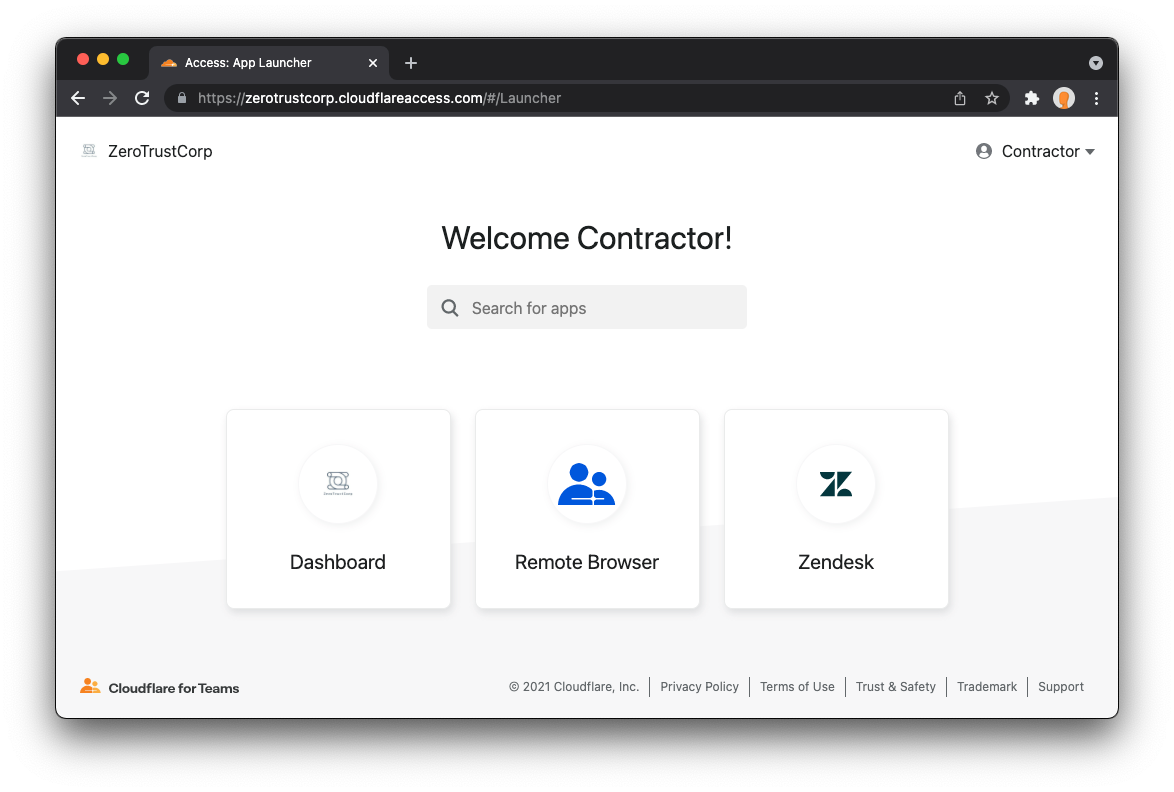
Isolated links can easily be added to the Access app launcher as bookmarks allowing your team and contractors to easily access any site with one click.

Introducing Clientless Web Isolation

Finally, just because a remote browser reduces the impact of a compromise, doesn’t mean it should have unmanaged access to the Internet. All traffic from the remote browser to the target website is secured, inspected and logged by Cloudflare’s SWG solution (Gateway) ensuring that known threats are filtered through HTTP policies and anti-virus scanning.

Join the clientless web isolation beta

Clientless web isolation will be available as a capability to Cloudflare for Teams subscribers who have added Browser Isolation to their plan. We’ll be opening Cloudflare’s clientless web isolation for beta access soon. If you’re interested in participating, sign up here to be the first to hear from us.

We’re excited about the secure browsing and application access use cases for our clientless web isolation model. Now, teams of any size, can deliver seamless Zero Trust connectivity to unmanaged devices anywhere in the world.