Tag Archives: Code Club

A Code Club in every school and library

Post Syndicated from Philip Colligan, CBE original https://www.raspberrypi.org/blog/a-code-club-in-every-school-and-library/

Today we are starting a campaign to support every school and library in the UK to set up a free Code Club to make sure that all young people can develop the skills and knowledge they need to thrive in the age of AI.
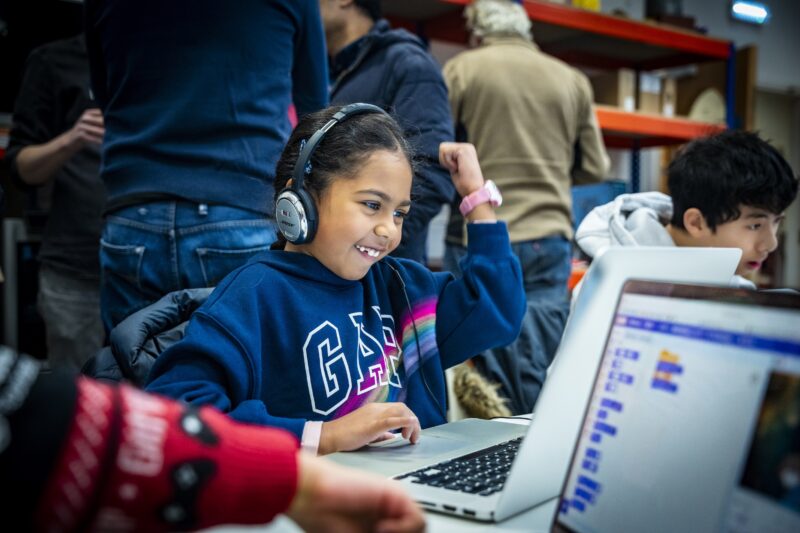
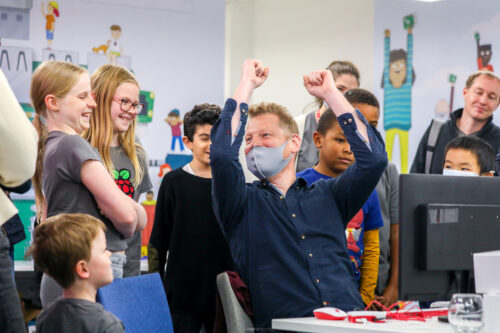
A young person celebrates at a Code Club.

Over the past decade, Code Club has provided more than 2 million young people with the opportunity to learn how to build their own apps, games, animations, websites, robots, and so much more. 

We know that getting hands-on, practical experience of building real projects with technology works. Independent evaluations have shown that attending a Code Club not only helps young people develop their programming skills, but also builds wider life skills such as confidence, resilience, problem-solving, and communication. All of which we know are essential if they are going to thrive in a world where AI is ubiquitous. 

Right now, there are over 2,000 Code Clubs meeting in schools and libraries all over the UK, organised by an amazing community of teachers, educators, and volunteers from all walks of life. We want to see that number grow. 
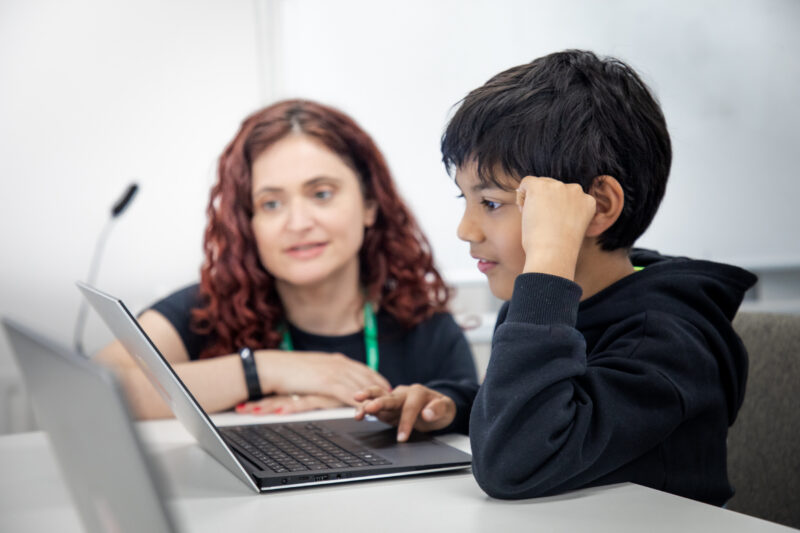
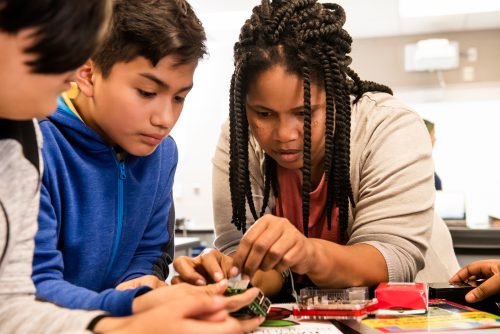
A young person and mentor at a Code Club.

You don’t need technical skills to mentor at a Code Club. The Raspberry Pi Foundation provides free, self-guided projects that help young people learn how to create with different technologies. We have over 200 Code Club Projects on our website, all of which are developed by expert educators, based on evidence of how young people learn, and rigorously tested; so we know that they are effective.

That includes a set of projects that support the safe exploration of AI technologies, helping young people understand how AI works, its possibilities and limitations.
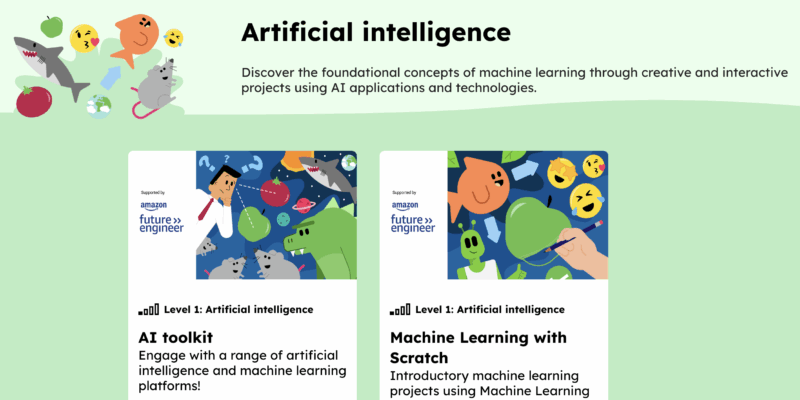
A screenshot of the AI projects on our website.

We also provide training and support to help you set up and run your Code Club, all of which is available at no charge.  

I can promise you that the hour you spend in a Code Club will be the highlight of your week. I always come away from Code Club inspired and optimistic about what young people can achieve if we give them a sense of agency over technology.
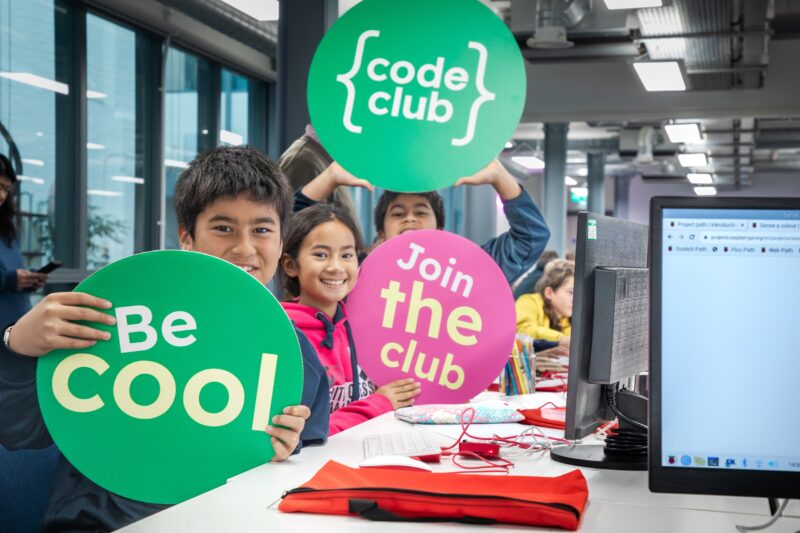
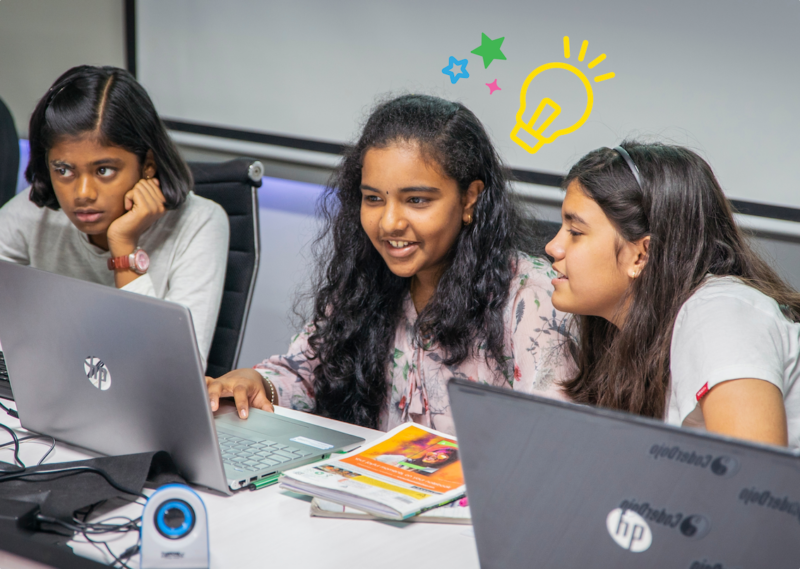
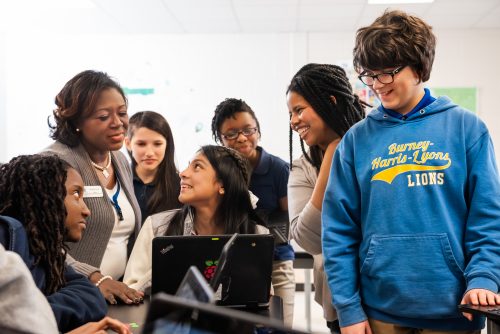
Three young persons cheer at a Code Club.

If you have been inspired to set up your own Code Club, you can find all the information you need to run your own club here

You don’t have to take my word for it: here’s Janine, a Computer Science teacher and long-time Code Club mentor from Stoke-on-Trent sharing her experience.

Janine Kirk is a Computer Science Teacher at The King’s Church of England Academy in Stoke-on-Trent, UK, who has been running a Code Club for over ten years. She has been inspired by the campaign for a Code Club in every school and library in the UK, to set up clubs in six other schools in her multi-academy trust.
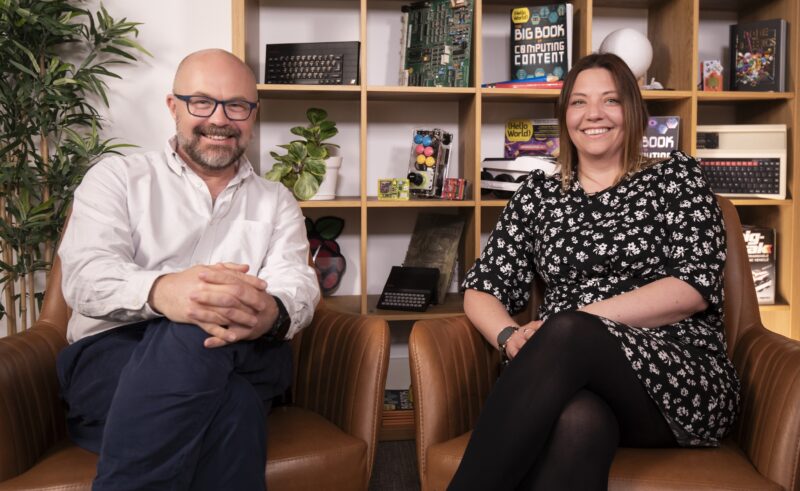
Philip Colligan and Janine Kirk at the recording of the Hello World podcast.
Philip and Janine Kirk at the recording of the Hello World podcast.

Setting up a Code Club is really easy as a teacher, as you can just tag it onto the end of your school day, or during lunch. The website is clear and easy to use — and once you have signed up, you have access to additional resources to promote your club. Code Club gives time and space to explore coding in a completely different way than in a classroom. For me, it’s about seeing what programs really inspire students: it gives an insight into how students like to code, ideas of preferred coding language, and tasks they keep coming back to. Running a Code Club has also allowed me to build relationships with students outside of the classroom environment, and all of this spills into my lessons and improves my teaching practice.
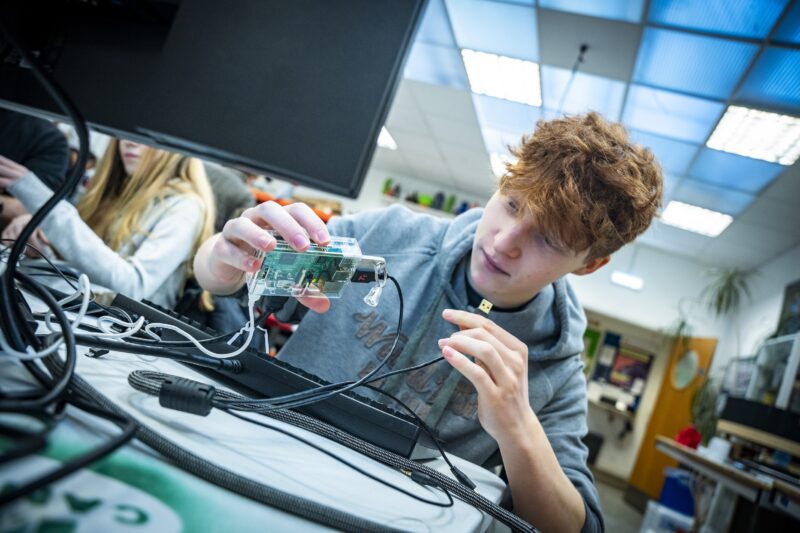
A young person connects a Raspberry Pi computer at a Code Club.

For students, Code Club is a great space where they can collaborate and work on their chosen tasks. Students often comment on how they look forward to Code Club and how they have continued their projects at home. It also allows students much more variety in enrichment activity, as Code Club is often popular with students who are neurodivergent. It’s amazing to see the children grow in confidence and friendship as they find likeminded students to support each other. 

My students really love the certificates they can earn. We have been inspired by the excellent activities that revamp the old ways of teaching programming and give them a really nice spin. In fact, I have used the resources in computer science lessons too, as they are often much more visual and fun for the students to create. 
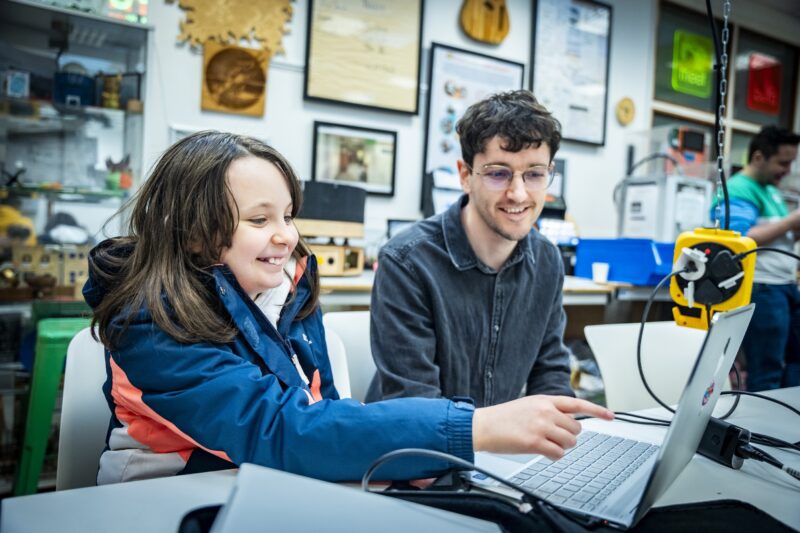
A young person and mentor at a Code Club.

Since joining Code Club I have felt part of a community. I receive regular updates, and attending events such as the Clubs Conference really helps inspire creative ways to teach coding. As a computing teacher in a secondary school, you are often part of a very small team — but Code Club has allowed me to feel part of something bigger, and I know that should I need support, they are always there with friendly advice. It really is the best thing that I have done in my career.

Are you inspired to set up your own Code Club? Then find more information on how to get started running a club today.

The post A Code Club in every school and library appeared first on Raspberry Pi Foundation.
Discover the incredible impact of Code Club: The Code Club annual survey report 2025

Post Syndicated from Vicky Fisher original https://www.raspberrypi.org/blog/discover-the-incredible-impact-of-code-club-the-code-club-annual-survey-report-2025/

We’re pleased to share highlights from the 2025 Code Club annual survey report today, showcasing another year of incredible achievements and the positive impact of the global Code Club community. 

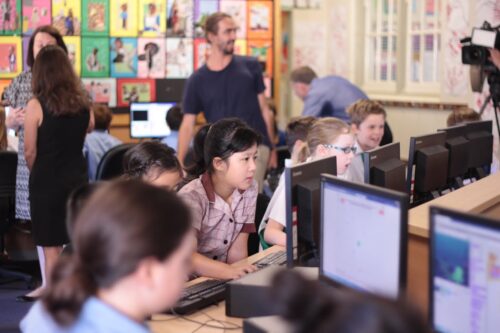
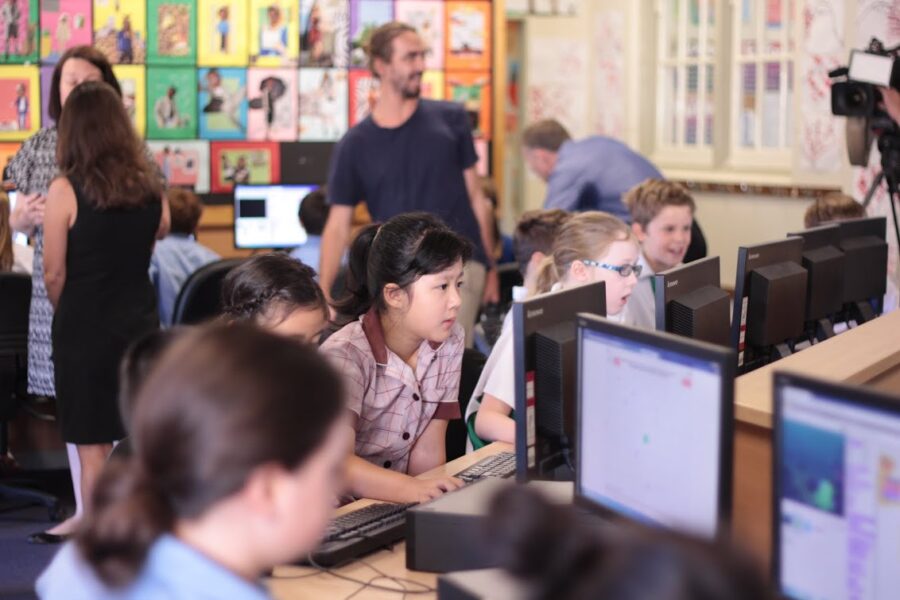
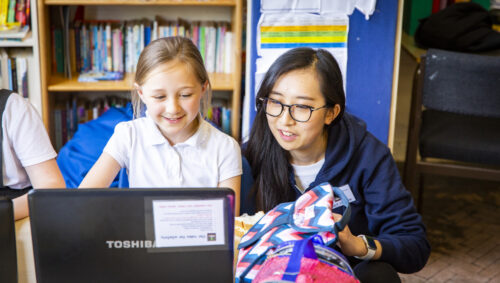
children at computers in a classroom.

Code Club is a global movement of free coding clubs where school-aged young people — called creators — develop the confidence to create with digital technologies. Code Clubs take place in schools and community venues like youth clubs, libraries, and maker spaces and are run by teachers, educators, and volunteers from all walks of life — known as mentors. These incredible mentors make Code Clubs possible and we are so grateful for their hard work.

About the 2025 survey report

This Code Club annual survey report presents key responses from 775 mentors gathered via surveys and feedback from partners.

This year, 7,494 Code Clubs have confirmed they have been active in the last two years, with clubs in 102 countries. We estimate 257,000 creators are involved in clubs and 43% of creators are female. As one UK Code Club mentor put it: “Girls who didn’t think it was for them now have confidence”.

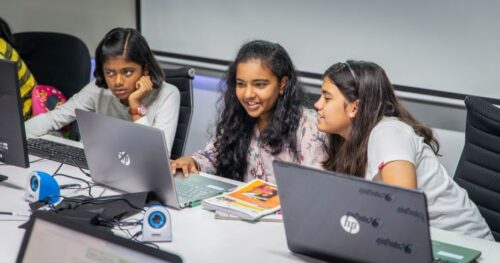
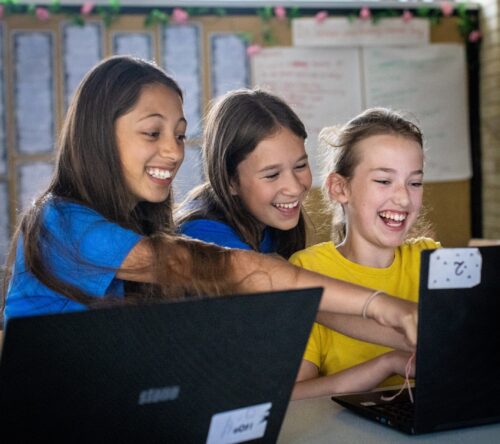
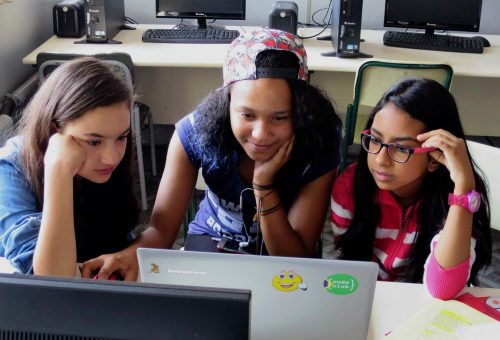
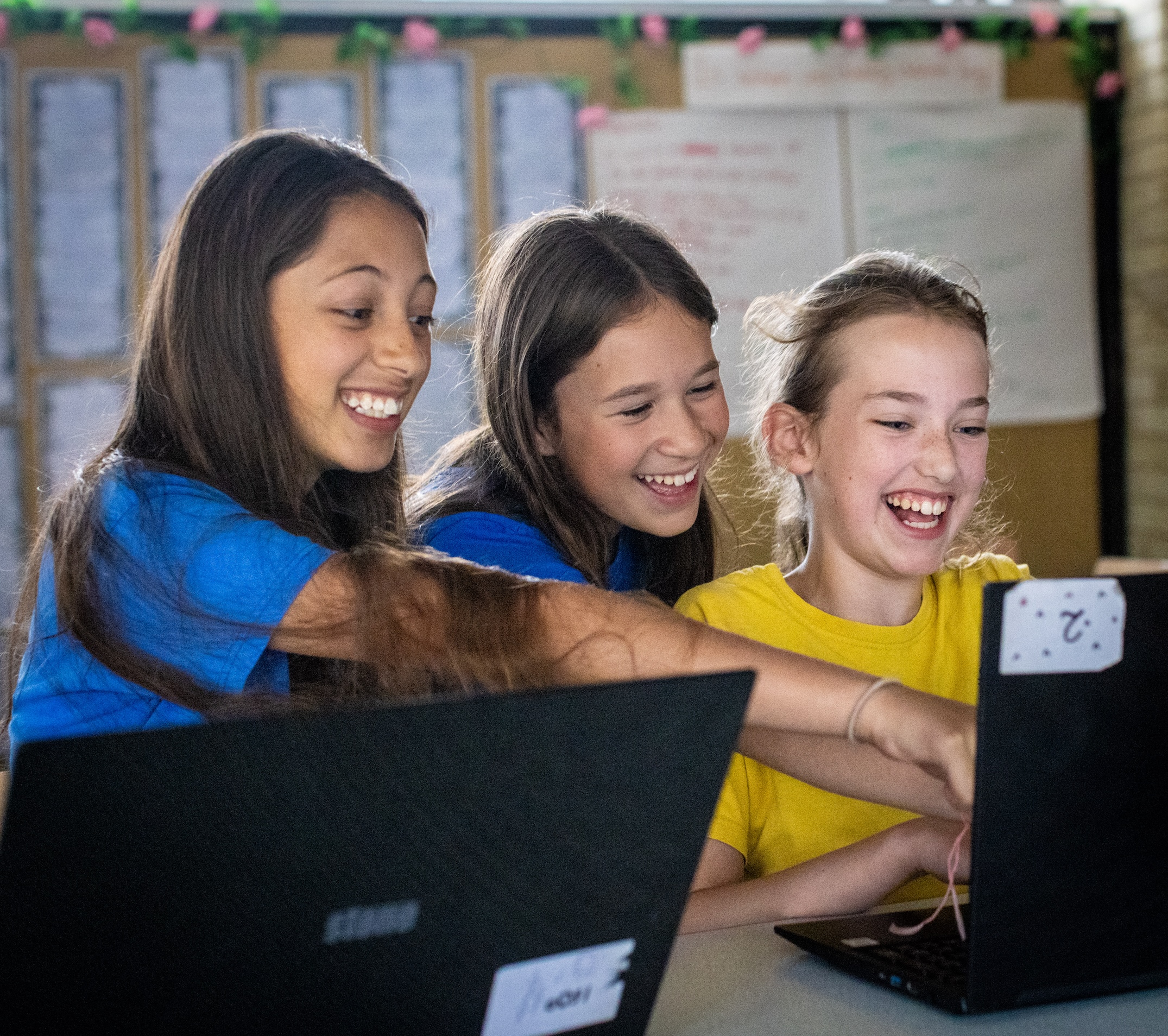
Three learners laughing at a laptop in a Code Club.

Code Clubs have a positive impact on young creators

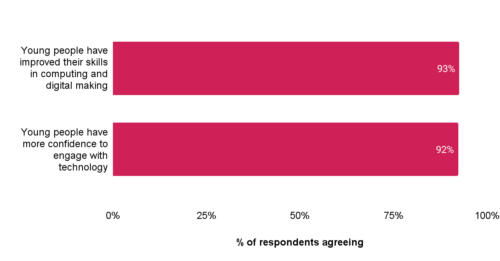
In 2024, an independent evaluation by the Durham University Evidence Centre for Education provided evidence of positive outcomes for young people attending Code Clubs. We are continuing to build on this evidence, with 96% of mentors responding to our surveys agreeing that creators have increased skills in computing and digital making, as well as increased confidence to engage with technology as a result of attending a Code Club. 

Here are a few of the examples mentors gave of the impact Code Club has on creators: 

  • Confidence: “[Creators become] more confident using technology and making friends. Some really come out of their shell compared to when they started.” – Code Club mentor, UK  
  • Skill development: “They come into the club with no coding skills (some barely know how to use a computer) and leave as competent, literate, coders.” – Code Club mentor, Canada
  • Enjoyment: “One of our core principles is that coding should be fun… we give them creative ways to expand on the task. They learn to push themselves a bit beyond a task, and look for more things.” – Code Club mentor, the Netherlands  
  • Social skills: “One great outcome has been the socialization that occurs. Kids in our club are definitely making friendships and improving their soft skills.” – Code Club mentor, USA  
  • Continued participation: “It has increased their passion for tech and how to create new things to solve problems.” – Code Club mentor, Ghana
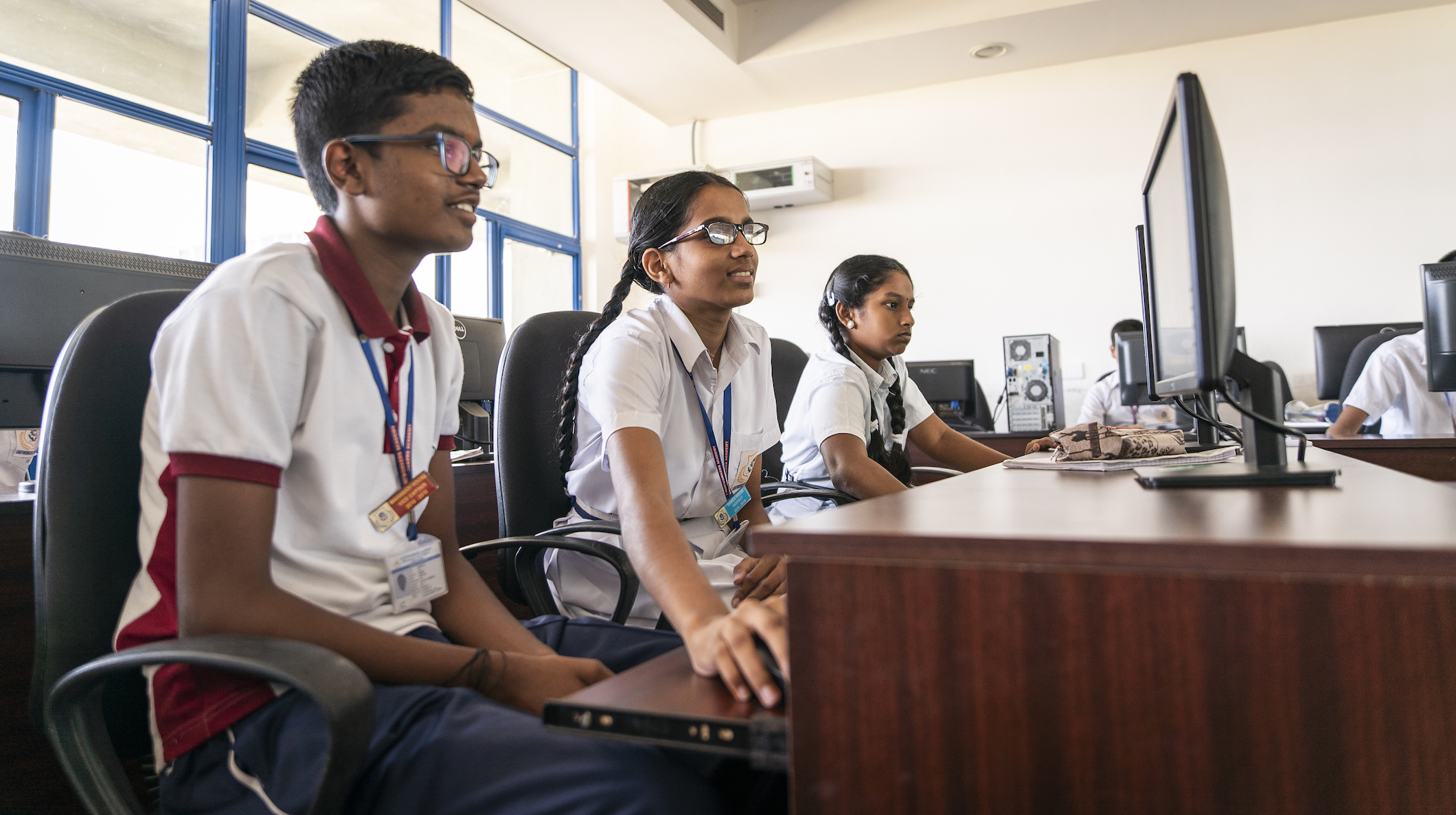
Learners in a computing classroom.

Increasing access to technology

Code Club also plays an important role in increasing access to technology for creators who would otherwise not have access. We work with partners across the world to run clubs in areas of educational disadvantage to ensure that Code Clubs are available to creators from all backgrounds to address this need.

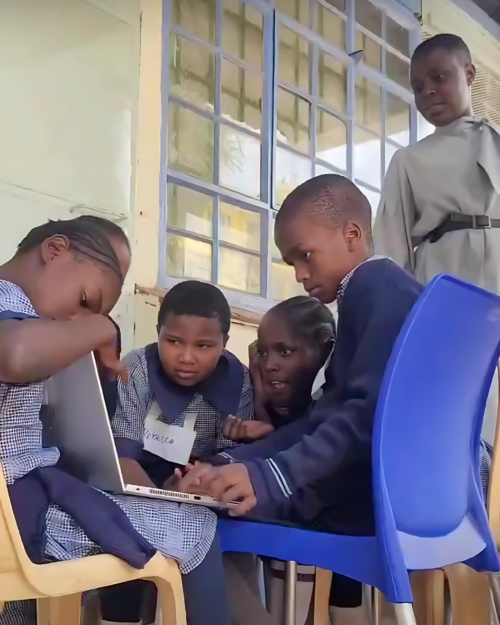
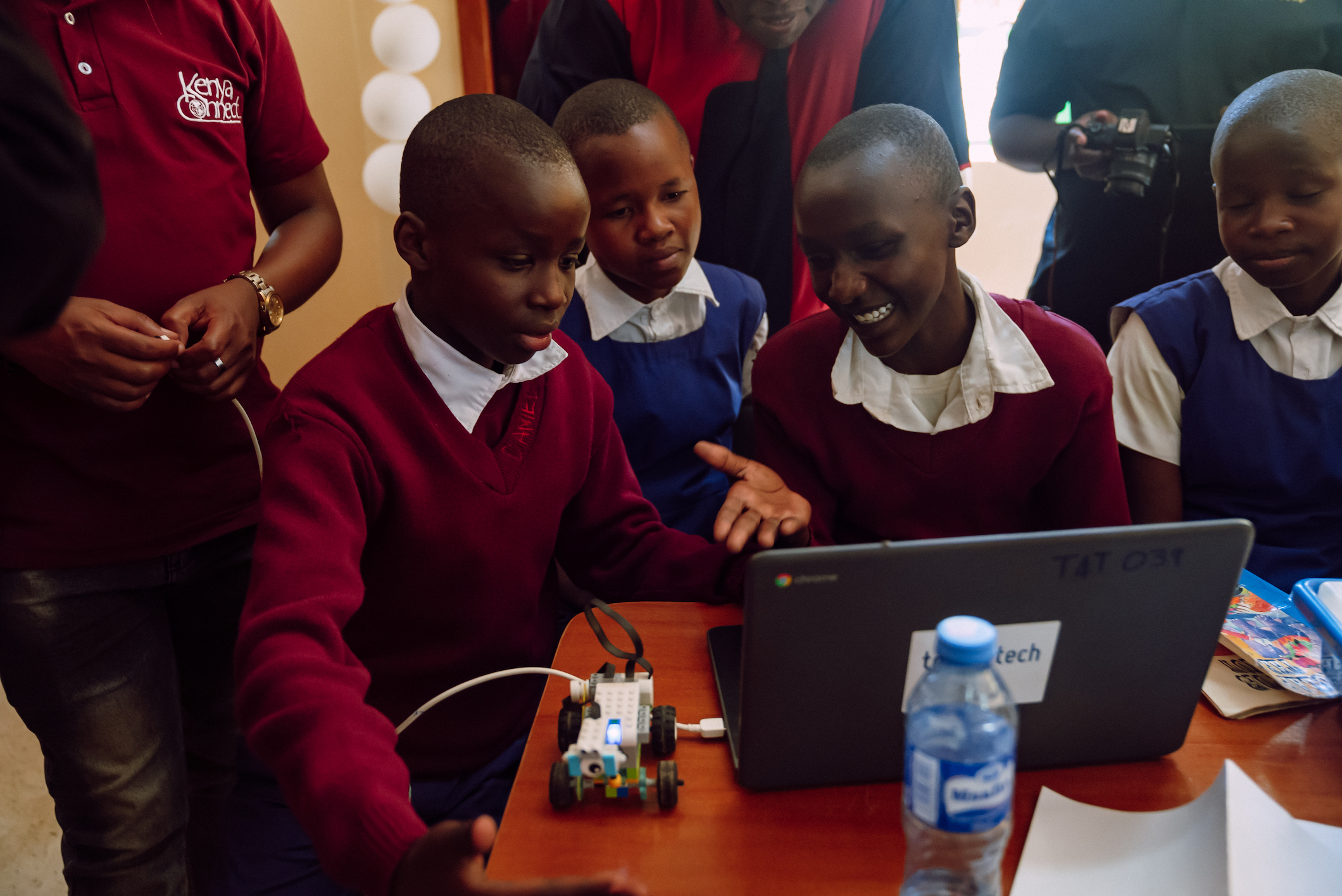
Kenyan children work on a physical computing project.

In some regions, Code Club provides creators with their first significant encounter with digital making. A mentor in Kenya told us that Code Club ensured that creators in his area were not “left behind”. A Code Club mentor in Tunisia told us  “[…] access to coding is very limited, our club contributes to reducing this inequality”.

Next steps

Read the full report to dive deeper into the data and stories from the Code Club community!

We are an impact-focused organisation and are always looking to understand how we can improve and increase the impact we have on the lives of children and young people. Over the coming weeks we will be reviewing the feedback we have received to understand how we can support the Code Club community even better.

The post Discover the incredible impact of Code Club: The Code Club annual survey report 2025 appeared first on Raspberry Pi Foundation.
Code Club: Empowering the Next Generation of Digital Creators

Post Syndicated from Sophie Ashford original https://www.raspberrypi.org/blog/code-club-empowering-the-next-generation-of-digital-creators/

Code Club is more than just a place to learn coding — it’s a thriving global community where young minds discover, create, and grow with technology. With a refreshed look and ambitious goals for 2025, Code Club is set to connect an even larger network of mentors and reach millions more young people worldwide.

Code Club at RPF HQ, Cambridge

Since it was founded in the UK in 2012, Code Club has grown into a global movement, inspiring over two million young people to build apps, games, animations, websites, and more. Supported by the Raspberry Pi Foundation, Code Club provides free training and resources to mentors, ensuring creators achieve meaningful and lasting skills. Our vision for the next decade? To empower ten million more young people to have confidence in their coding.

A proven impact

A recent independent evaluation by the Durham University Evidence Centre for Education (DECE) confirmed what we’ve always believed: Code Club makes a real difference. Young people who attend gain valuable coding skills, grow in confidence, develop a strong interest in technology, and find a sense of belonging in the digital world.

Mentor Rajan at his Code Club in India

The power of mentorship

At the heart of Code Club are passionate volunteers who bring coding to life. Whether it’s the thrill of overcoming a challenge or the excitement of seeing an idea come to life on screen, mentors make a lasting impact while learning coding skills alongside their club’s creators.

Bob Bilsland, a dedicated volunteer since 2012, runs one of the world’s longest-running Code Clubs at Malvern CofE Primary School, Worcestershire, England. His motivation?

“What brings me back week after week is the sharing of what I enjoy doing. It’s so much fun to help others explore this space themselves, to see what they can personally create. I see that giving others the opportunity to explore and familiarise themselves with computing as something that could open up a world of possibilities for them in the future.” 

For Yang, a mentor at the EY office clubs, representation in tech is key:

“If there are some female role models, I think for a little girl growing up, that means so much. Because if they can see somebody thrive in this industry, they will see themselves there one day. And that’s the inspiration.” 

Mentor Yang at her Code Club in London

Across the world, volunteers like Nadia in Iraq and Solomon in The Gambia are using Code Club to bridge the digital divide, create opportunities, and empower communities.

“[Code Club] added to my skills. And at the same time, I was able to share my expertise with the young children and to learn from them as well.” – Nadia Al-Aboody, Iraq.

“We strongly believe in the transformative power of digital skills and their potential to create opportunities for young people. Witnessing the lack of access to computer knowledge among high school graduates in The Gambia and other sub-Saharan African countries inspired us to take action. By bridging the digital skills gap, we aim to empower young individuals to thrive in the 21st century.” – Solomon, Gambia 

A community that inspires

Code Club isn’t just loved by mentors; it’s so important to the young people who participate.

Eoghan, a young creator from Ireland, values the collaboration and support he receives:

“It’s really fun to meet and talk about ideas with other creators, and the mentors are very helpful in fixing any coding problems.” 

Mentor Jayantika at her Code Club in Pune, India

Jayantika, a 15-year-old from rural Pune, India, started as a creator and is now a peer mentor. For her, Code Club is about giving back:

“I believe coding opens doors and helps young children express their creativity. By mentoring, I hope to prepare them for a future that is increasingly driven by AI and technology.” 

Join the movement

Along with the incredible community, Code Club is supported by sponsors and funders who share our mission. We would like to extend a thank you to Cognizant, who have committed their support to the Code Club mission in the UK and Ireland for 2025.

Mentors gathering at Clubs Con 2024

Code Club is more than just learning to code; it’s about creating opportunities, encouraging confidence, and building a global network of digital creators. Whether you’re a mentor, educator, or young digital maker, there’s a place for you in our community. Start your Code Club journey today and join a global community of digital creators.

The post Code Club: Empowering the Next Generation of Digital Creators appeared first on Raspberry Pi Foundation.
Community Story | Daniela, Thetford Library

Post Syndicated from Sophie Ashford original https://www.raspberrypi.org/blog/community-story-daniela-thetford-library/

We love hearing from members of the community and sharing the stories of amazing young people, volunteers, and educators who are using their passion for technology to create positive change in the world around them.

Daniela in a Code Club.

When Daniela made the transition from working in retail to joining the team at Thetford Library, she never imagined that she would one day be leading a Code Club. Her manager, who had previously run the club, asked if Daniela would be interested in taking over, and although she was nervous, she was also eager to embrace the challenge and learn new skills.

“At first, I was nervous about teaching coding, but seeing the children’s excitement made me realise it was so important, and I was learning just as much as they were.”

The Code Club was designed to run in eight-week blocks, with a new group of children joining for each term. However, the kids loved it so much that they didn’t want to leave. Daniela, with her growing passion for coding and mentoring, welcomed the children to attend as often as they wanted, with some children, including one particularly enthusiastic young creator, attending every session. This continuity allowed the children to delve deeper into the world of coding, learning in a different way to what they were used to at school.

Inspiring young coders through creativity

One of the key things that Daniela has found resonates most with the children is the combination of creativity and coding. She encourages the kids to draw and plan their projects first, which makes the process more engaging and accessible to all of the young people who want to attend. The freedom to be creative is something that she feels is crucial, especially when compared to the more structured and rigid environment of school curriculums. This approach has been particularly rewarding for one young girl in the club who insists on planning and drawing her own characters and backgrounds for all of her projects.

“Coding isn’t just about writing lines of code — it’s about storytelling, problem solving, and imagining what’s possible.”

Students in a Code Club.

Astro Pi: giving young people the confidence to dream big

Daniela’s journey into coding took a significant leap when she decided to explore the Astro Pi challenge, a project that involves writing code to run on Astro Pi computers aboard the International Space Station. Despite her initial nerves about diving into Python, a more advanced programming language than she had tried at the club previously, she was blown away by the possibilities it opened up. When telling the children, she almost felt that she was more excited at the prospect of them trying out real space science than them. But once she showed them some examples, the buzz was infectious and the sessions ran far smoother than she could have hoped. Daniela’s tip for trying Astro Pi for the first time? Find a fellow mentor to help you along the way and dream big.

“I never imagined we’d be working on space science at our library. Introducing children to coding early isn’t just about technology; it’s about giving them the confidence to dream big and think differently.”

Thetford Library

The success of the Code Club at Thetford Library is part of a broader initiative by Norfolk Libraries to provide digital skills to the community. They are committed to offering resources and opportunities for people of all ages to engage with technology. From their Digital Week, which focuses on improving digital literacy, to offering mentorship for adults learning to navigate the digital world, Norfolk Libraries is working hard to bridge the digital divide.

Benefits of volunteering at a Code Club 

For Daniela, the importance of introducing children to coding at an early age is not something she thought would become a passion for her when moving careers. She sees firsthand how these skills empower the children, giving them confidence and opening up future career opportunities. 

“Code Club has shown me that stepping outside your comfort zone is where the real growth happens. Both for me and the kids!”

A mentor is helping a student in class.

It’s this combination of creativity, learning, and the sheer joy of discovery that keeps Daniela passionate about running the Code Club, and why she continues to welcome every eager child who walks through the door.

Inspire young people in your community

If you are interested in encouraging your child to explore coding, take a look at the free coding project resources we have available to support you. If you would like to set up a Code Club for young people in your community, or attend one, head to codeclub.org for information and support.

The post Community Story | Daniela, Thetford Library appeared first on Raspberry Pi Foundation.
How fun-filled Code Clubs drive learning: New evidence

Post Syndicated from Ben Durbin original https://www.raspberrypi.org/blog/how-fun-filled-code-clubs-drive-learning-new-evidence/

When you walk into a vibrant Code Club, it is easy to see that the young creators are having fun with digital making. But are they actually learning anything? Our recent evaluation has shown that not only are they developing their coding skills, but there are many other benefits.

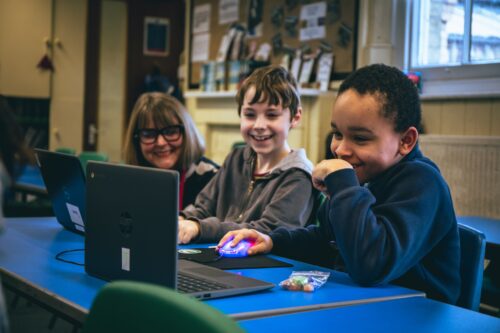
Young person sitting at a laptop with an adult mentor helping them with their code.

Code Club is a network of free coding clubs where young people learn how to create with technology. The Raspberry Pi Foundation supports Code Clubs through training and guidance for mentors, and by providing learning resources that lead to meaningful and lasting learning outcomes for the young people attending the clubs.

Founded in the UK in 2012, Code Club has grown into a global movement and has already inspired more than 2 million young people to learn how to build their own apps, games, animations, websites, and so much more. We are incredibly proud of the impact Code Club has already achieved and we want many more young people to benefit. Our ambitious goal for the next decade is to reach 10 million more young people through Code Club.

New impact insights about Code Club

We’re ambitious about Code Club because we know it works. Over the last year, the Durham University Evidence Centre for Education (DECE) conducted an independent evaluation of the programme that confirmed earlier evidence: attending Code Club leads to positive outcomes for young people.

Two young people smiling whilst working on their laptop with an adult mentor by their side.

The DECE evaluation showed that young people who attend Code Club build their coding skills. They also become more confident in learning coding, grow their interest in it, and develop a sense of belonging. Researchers observed how each young person has their individual projects to work on, which promote a sense of ownership and personalised learning, but that there are also opportunities for collaboration and celebrating their achievements with other creators in the club.

Young people also develop positive attitudes to coding and a range of life skills such as problem solving and communication. These skills and mindsets prepare young people to confidently engage with emerging technologies and with learning in a broader context.

“Coding is really fun when I know what to do, but sometimes it is hard. But I always keep trying.”

– Code Club creator.

Another finding was that Code Clubs are a place where young people who experience difficulties in formal classroom settings can thrive. This suggests Code Clubs can help educators engage a more diverse group of young people in creating with technology than formal education alone could.

“We see pupils in completely different roles when they are doing these Code Club activities. They enjoy more, and you can see they have skills to do things that we otherwise don’t notice.”

– Code Club mentor.

None of the benefits for young people would be possible without the volunteers who give their time and make Code Clubs the positive learning environments they are. Their support is crucial to young people’s engagement and skill development. The evaluation showed that mentors find the experience of volunteering rewarding, and pointed us towards areas where we can offer further support to help them run engaging, impactful Code Clubs.

“…volunteering with Code Club has helped me feel I’m a useful member of society in my old age, so the benefits have been good for me too.”

– Code Club mentor.

How we’re building on our support for clubs

With AI already transforming so many parts of our lives, learning how to create with technology has never been more important. Generative AI is changing how humans give instructions to computers, and at Code Club, young people can experiment with new technologies such as AI in a safe environment. New projects that support young people to learn about AI technologies will be added to the Code Club Projects site later this month, alongside support for club leaders and mentors on this topic.

The evaluation methods used by the DECE will help us hone our ongoing impact measurement work for Code Clubs running in communities all over the world. As we continue to support Code Clubs, we are taking into account that the independent evaluation ran in school-based Code Clubs in the UK only. In our work to grow the Code Club network across the globe, we are adapting our support and resources for local contexts in collaboration with partners who share their expertise.

This will ensure that Code Clubs can provide a fun, welcoming space for all young people. And while they’re having fun, they will also gain relevant learning experiences that empower them to engage confidently with a world that is being transformed by digital technologies.

If you’re interested in the DECE evaluation’s results, we’ve put together a summary for you to download.

To get involved in Code Club, visit codeclub.org.

The post How fun-filled Code Clubs drive learning: New evidence appeared first on Raspberry Pi Foundation.
Introducing the new Code Club

Post Syndicated from Philip Colligan original https://www.raspberrypi.org/blog/introducing-the-new-code-club/

Today we’re unveiling a fresh look and feel for Code Club, along with a new ambition to inspire 10 million more young people to get creative with technology over the next decade.

Three young tech creators at a laptop at a Code Club session.

Code Club is a network of free coding clubs where young people learn how to create with technology. Founded in the UK in 2012, it has grown to be a global movement that has already inspired more than 2 million young people to learn how to build their own apps, games, animations, websites, and so much more. 

We know that Code Club works. Independent evaluations have demonstrated that attending a Code Club helps young people develop their programming skills as well as wider life skills like confidence, resilience, and skills in problem-solving and communication. This impact is a result of the positive learning environment created by the teachers and volunteers that run Code Clubs, with young people enjoying the activities and developing skills independently and collaboratively — including young people who sometimes struggle in a formal classroom setting.

Just as important, we know that Code Clubs inspire young people from all backgrounds, including girls and young people from communities that are underrepresented in the technology sector. 

What’s changing and why 

While we are incredibly proud of the impact that Code Club has already achieved, we want to see many more young people benefiting, and that led us to set the ambitious goal to reach 10 million more young people over the next decade.

Two mentors and a young tech creator at a laptop at a Code Club session.

To help us figure out how to reach that ambition, we spent a lot of time this year listening to the community as well as engaging with parents, teachers, and young people who aren’t yet involved in Code Club. All of the changes we’ve made have been informed by those conversations and are designed to make it easier for educators and volunteers all over the world to set up and run Code Clubs.

The biggest change is that we are making Code Club a more flexible model that can be adapted to reflect your local context and culture to ensure that it is as meaningful as possible for the young people in your community. 

That means you can host a Code Club in a school or a community venue, like a library or makerspace; you can choose the age range and rhythm of meetings that make sense for your setting; and you can tailor the activities that you offer to the interests and skills of the young people you are serving. In order for the movement to be as inclusive as possible, you don’t even need to be called ‘Code Club’ to be an ‘Official Raspberry Pi Foundation Code Club’ and benefit from all the support we offer. 

Two mentors and a young tech creator at a computer at a Code Club session.

To support this change, we have developed a Code Club Charter that we ask all club leaders and mentors to sign up to. This sets out the principles that are shared by all Code Clubs, along with the commitments that the Raspberry Pi Foundation is making about our support to you.

We have launched a new website that makes it easier for you to find the information you need to set up and run your Code Club, along with an updated and simplified club leader guide. In a few weeks time, we are launching a new online course with guidance on how to run a successful club, and we will be adding to our programme of online community calls, webinars, and training to support a growing community of club leaders and mentors.

The Code Club website homepage.

One of the most important parts of our support for Code Clubs is the projects that help young people learn how to bring their ideas to life using a wide range of hardware and software. As they are created by experienced educators, based on research, rigorously tested, and translated into dozens of languages, you can have confidence that these projects lead to meaningful and lasting learning outcomes for the young people attending your club. Code Club projects enable young people to learn independently, meaning that mentors don’t need technical skills. 

What this means for CoderDojos 

Alongside Code Club, the Foundation supports CoderDojo, a network of coding clubs that started life in Cork, Ireland in 2011 and merged with the Raspberry Pi Foundation in 2017. 

In order to reduce duplication and make it easier for anyone to set up and run a coding club, we have decided to bring together the resources and support for all club leaders and mentors under one website, which is the new Code Club website.

There is no need for existing CoderDojos to change their name or anything about the way they operate. All registered CoderDojos will be able to manage their club in exactly the same way through the new website, and to access all of the support and resources that we offer to all coding clubs. New clubs will be able to register as CoderDojos.

Two young tech creators at a tablet at a Code Club session.

The ethos, experiences, and lessons from the CoderDojo community have been a vital part of the development of the new Code Club. We have worked hard to make sure that all existing CoderDojos feel that their values are reflected in the Charter, and that the guidance and resources we offer address their circumstances. 

CoderDojos will very much remain part of this community, and the Raspberry Pi Foundation will continue to celebrate and learn from the amazing work of CoderDojos all over the world. 

Code Club in the age of artificial intelligence 

With AI already transforming so many parts of our lives, it’s not surprising that some people are starting to ask whether young people even need to learn to code anymore. 

Three young tech creators at laptops at a Code Club session.

We’ve got a lot to say on this subject — so watch this space — but the short version is that learning how to create with technology has never been more important. The way that humans give instructions to computers is changing, and Code Club provides a way for young people to experiment with new technologies like AI in a safe environment. Over the next couple of weeks, we’ll be launching new Code Club projects that support young people to learn about AI technologies, including generative AI, and we’ll be providing support for club leaders and mentors on the topic too. 

Thank you and get involved

I want to end by saying a huge thank you to everyone who has been part of the Code Club journey so far, and particularly to everyone who has worked so hard on this project over the past year — far too many people to name here, but you know who you are. I also want to thank all of the parents, teachers, mentors, and partners who have provided the feedback and ideas that have shaped these changes.

A young tech creator at a tablet at a Code Club session.

Code Club and CoderDojo were both founded in the early 2010s by individuals who wanted to give more young people the opportunity to be digital creators, not just consumers. From that first Dojo in Cork, Ireland, and the first Code Clubs in London, UK, we’ve built a global movement that has empowered millions of young people to engage confidently with a world that is being transformed by digital technologies.

It’s never been a better time to get involved with Code Club, so please take a look and get in touch if you need any help or support to get started.

The post Introducing the new Code Club appeared first on Raspberry Pi Foundation.
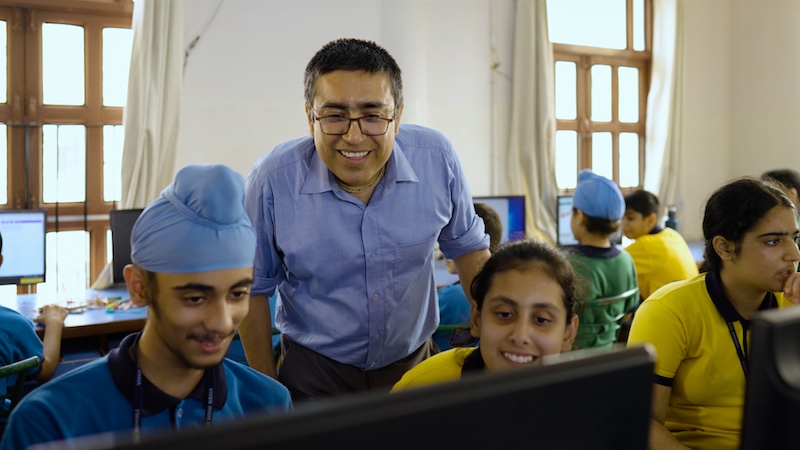
Get ready for Moonhack 2024: Projects on climate change

Post Syndicated from Isabel Ronaldson original https://www.raspberrypi.org/blog/moonhack-2024/

Moonhack is a free, international coding challenge for young people run online every year by Code Club Australia, powered by our partner the Telstra Foundation. The yearly challenge is open to young people worldwide, and in 2023, over 44,500 young people registered to take part.

A Moonhack 2024 logo.

Moonhack 2024 runs from 14 to 31 October. This year’s theme is taken from World Space Week 2024: climate change. As always, the projects cater for everyone from brand-new beginners to more experienced coders. And young people have a chance to win a prize for their submitted project!

We caught up with Kaye North, Community and Engagement Manager at Code Club Australia, to find out more.

What to expect from Moonhack in 2024

For this year’s projects, Kaye told us that she collaborated with farmers, scientists, and young people from across Australia to cover diverse topics related to climate change and space. The projects will help participants learn about topics from how people who work in agriculture use climate data to increase crop yields and practise sustainable farming, to the impact of rising global temperatures on sea life populations.

An illustration depicting various elements related to the environment and sustainability.

Kaye also hopes to help young people understand the role of satellite data related to climate change, such as the data NASA collects and shares via satellite. Satellite data on rising sea levels, called out in United Nations Sustainable Development Goal 13, forms the basis of one of the Moonhack projects this year.

Moonhack participants will be able to code with Scratch, micro:bit, or Python. They can also take on a project brief where they may choose their favourite programming language and even include physical computing if they wish.

A computing classroom filled with learners.

All six projects will be available from 1 September when registration opens, and projects can be submitted until 30 November.

Inspiring young people to create a better future

Climate change is an issue that affects everyone, and for many young people it’s a source of concern. Kaye’s aim this year is to show small changes young people can make to contribute to a big, global impact.

“Moonhack’s question this year is ‘Can we create calls to action through our coding to influence others to make better choices, or even inform them of things that they didn’t know that they can share with others?’” – Kaye North, Code Club Australia

Moonhack support for volunteers, teachers and parents

This year’s Moonhack includes new resources to help educators and mentors who are supporting young people to take part:

Get your young coders involved: Key info

  • Registration for Moonhack 2024 opens on 1 September
  • The challenge runs from 14 to 31 October, and projects can be submitted until 30 November
  • Participation is free and open to any young coder worldwide, whether they are part of a Code Club or not
  • Everyone from beginners to advanced coders can participate
  • The six projects for Moonhack 2024 will be available in around 30 languages

To find out more, visit the Moonhack website and sign up to the Moonhack newsletter.

Code Club Australia is powered by the Telstra Foundation as part of a strategic partnership with us at the Raspberry Pi Foundation.

The post Get ready for Moonhack 2024: Projects on climate change appeared first on Raspberry Pi Foundation.
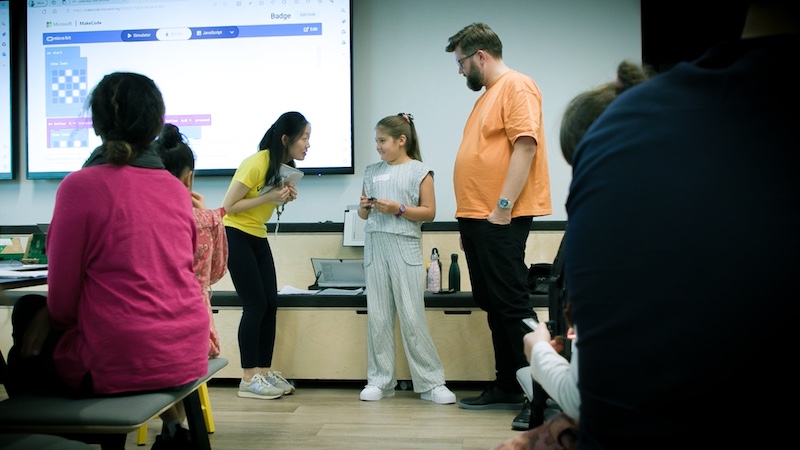
The Clubs Conference is coming back

Post Syndicated from Tom Hadfield original https://www.raspberrypi.org/blog/the-clubs-conference-is-coming-back/

Following the huge success of last year’s Clubs Conference, we are delighted to announce that we will be hosting the second-ever Clubs Conference on Saturday 30 November and Sunday 1 December 2024 in Cambridge, UK.

Two educators at a conference.

The event will be a weekend of learning and connecting for volunteers and educators involved in Code Club, CoderDojo, and other initiatives we support. We’d love for you to join us!

What you can look forward to

This year, we’re bringing the conference home to our offices in the centre of Cambridge.

On Friday 29 November, you’ll have the opportunity to register early and attend an informal networking event with community members, including the Foundation team. 

Saturday 30 November and Sunday 1 December will be filled with learning and development opportunities for you, including:

  • Thought-provoking talks and discussions
  • Hands-on, easy-to-follow workshops exploring a range of coding and digital making activities and related topics
  • Opportunities to connect with a diverse range of volunteers and educators

Join us to learn from your peers running clubs in various contexts, develop your digital making skills, and share your own insights. We look forward to learning with you.

Two smiling educators hold the Code Club posters.

Interested in attending or contributing to the Clubs Conference?

If you think you might want to attend the Clubs Conference, please fill in our form to express your interest. We will then get in touch when you can book your tickets. Tickets will be £5 for both days combined.

An educator delivers a presentation during a workshop.

Part of what made last year’s Clubs Conference so special was the range of exciting activities led by community members. If you’d like to host or co-host an activity this year, please also indicate this in the expression of interest form. We’ll be in touch in a few weeks to ask you more about your plans.

Possible activities include:

  • Workshops
  • Discussion sessions
  • Talks
  • Project demonstrations

Check out last year’s talks for inspiration.

Bursaries for participants in the UK and Ireland

If you would love to participate but you feel the costs of travelling would prevent you, you may be able to apply for a travel bursary. 

To be eligible for a bursary, you need to:

  • Be registered as a club leader or volunteer at a Code Club or CoderDojo within the UK or Ireland
  • Be available to attend the Clubs Conference in Cambridge on both Saturday 30 November and Sunday 1 December 2024

Please let us know whether you require a travel bursary when you fill in the expression of interest form.

If you’re not in the UK or Ireland and have any questions about travel, please send us a message through our contact page using the subject ‘Clubs Conference’.

If you have any suggestions about the Clubs Conference, we’d love to hear them. Let us know through the contact page, or on social with the tag #ClubsCon24.

The post The Clubs Conference is coming back appeared first on Raspberry Pi Foundation.
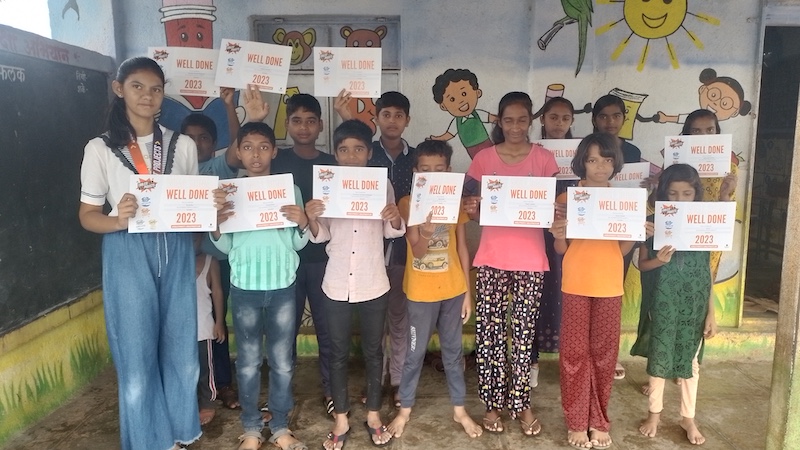
Gaining skills and confidence: The impact of Code Club and CoderDojo

Post Syndicated from Vicky Fisher original https://www.raspberrypi.org/blog/the-impact-of-code-club-and-coderdojo-annual-clubs-survey/

Through Code Club and CoderDojo we support the world’s largest network of free informal computing clubs for young people.

  • Code Club is a global network of after-school coding clubs for learners aged 9 to 13, where educators and other volunteers help young people learn about coding and digital making
  • CoderDojo is a worldwide network of free, open, and community-based programming clubs for young people aged 7 to 17, where they get the opportunity to learn how to create fantastic new things with technology

The clubs network reaches young people in 126 countries across the globe, and we estimate that the 4,557 Code Clubs and 771 CoderDojos are attended by more than 200,000 young people globally. 

Two children code on laptops while an adult supports them.

All these clubs are run by incredible volunteers and educators who help young people to learn computing and coding. Every year, we ask the volunteers to tell us about their experiences in our annual clubs survey. Below we share some highlights from this year’s survey results.

About the survey

We want to know more about volunteers in the network, how they run their clubs, and what impact the club sessions have for young people. Understanding this better helps us to improve the support we give to volunteers and young people around the world. This year we received over 300 responses, which has given us valuable insights and feedback.

What are the clubs like?

Improving gender balance in computing is part of our work to ensure equitable learning opportunities for all young people. Girls’ participation in the CodeDojo community has risen from 30% to 35% between 2023 and 2024, while 40% of Code Club attendees are girls.

Three learners working at laptops.

Clubs are using a wide variety of technologies and tools to support young people with their coding. According to the survey, the most popular coding tool was Scratch, which nearly all of the volunteers said they used in their club. Over 60% of volunteers reported using micro:bits, and over 50% mentioned Python.

What impact is the clubs network having?

We asked volunteers to tell us what changes they had seen in young people as a result of being part of a club. Volunteers fed back to us about the positive community created by clubs where young people felt safe and included. This was evidenced by the way young people felt able to share their ideas and support other young people:

A young person shows off their Scratch code projected onto a wall.

“The more experienced members are both capable and competent to demonstrate their skills to less experienced children. For example, they recently ran a full-day session for the whole school to complete the Astro Pi Mission Zero project.” – Code Club volunteer

Volunteers reported increases in young people’s skills and confidence in digital making and engaging with technology (see graph below). They also agreed that young people developed other skills, with nearly 90% noting improvements in problem solving, personal confidence, and creative thinking.

A graph indicating that more than 90% of survey respondents reported that young people improve their skills and confidence through attending Code Club or CoderDojo.

How are we supporting volunteers?

These positive outcomes are the result of the hard work and dedication of the club volunteers. Based on the survey, we estimate that at the time of the survey, there were over 6000 Code Club leaders and almost 3000 CoderDojo champions around the world. Many of the volunteers are motivated to volunteer by a love of teaching and a desire to pass on their skills.

A group of young people and educators smiling while engaging with a computer.

These volunteers are part of a global network, and 80% of volunteers said that belonging to this global community of clubs was motivating for them. Volunteers particularly valued the access to resources and information being part of a global community offered, as well as opportunities to share ideas and problem solve.

The majority of Code Clubs are mostly or always using our digital making pathways and projects as part of their clubs. Volunteers value the projects’ step-by-step structure and how easy they are to follow.

“Great structure to allow the kids to self-learn whilst keeping a good amount of creativity for them.” – Code Club volunteer

We plan to do more to ensure that clubs around the world find these projects and pathways accessible and useful for their sessions with young people.

What’s next

The survey has helped us to identify a number of areas where we can support club volunteers even better. Volunteers identified help getting equipment and funding as the main things they needed support with, as well as recruitment of volunteers and young people. We are looking at the best ways we can lend a hand to the clubs network in these areas.

You can read the survey report to dive deeper into the findings.

We take impact seriously and are always looking to understand how we can improve and increase the impact we have on the lives of children and young people. To find out more about our approach to impact, you can read about our recently updated theory of change, which supports how we evaluate what we do. 

The post Gaining skills and confidence: The impact of Code Club and CoderDojo appeared first on Raspberry Pi Foundation.
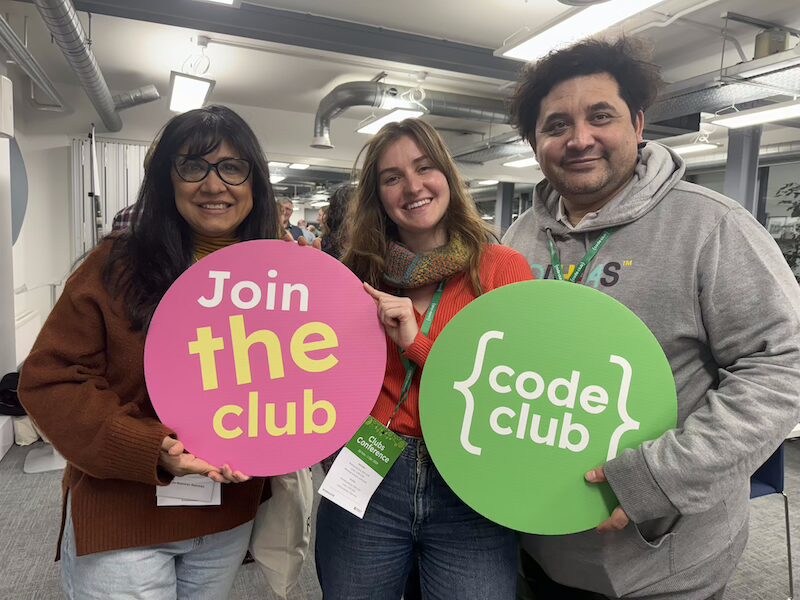
Global Impact: Empowering young people in Kenya and South Africa

Post Syndicated from Vicky Fisher original https://www.raspberrypi.org/blog/global-impact-empowering-young-people-in-kenya-and-south-africa/

We work with mission-aligned educational organisations all over the world to support young people’s computing education. In 2023 we established four partnerships in Kenya and South Africa with organisations Coder:LevelUp, Blue Roof, Oasis Mathare, and Tech Kidz Africa, which support young people in underserved communities. Our shared goal is to support educators to establish and sustain extracurricular Code Clubs and CoderDojos in schools and community organisations. Here we share insights into the impact the partnerships are having.

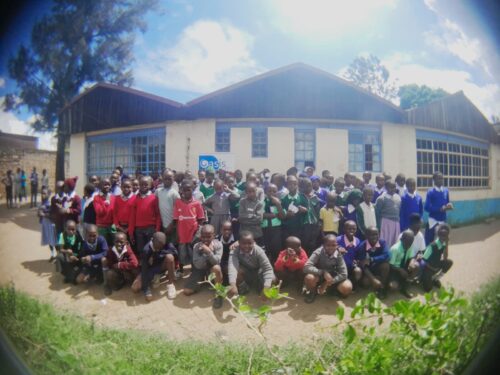
A group of young people outside a school.

Evaluating the impact of the training 

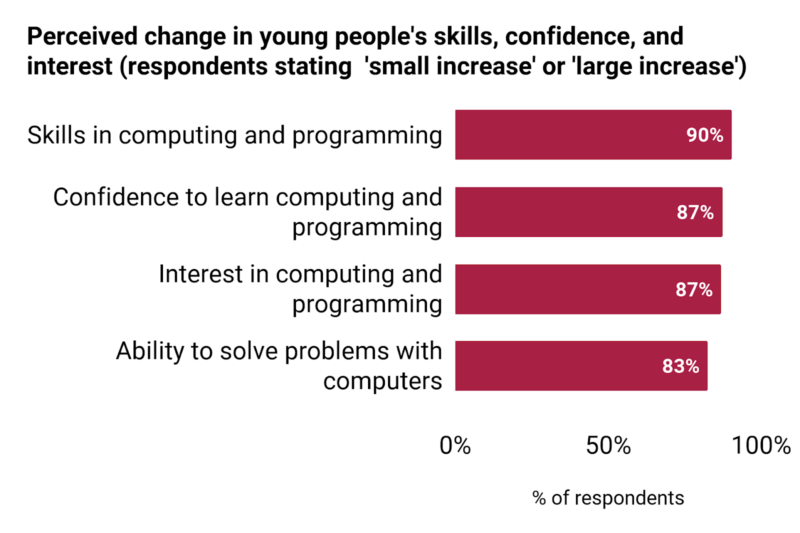
In the partnerships we used a ‘train the trainer’ model, which focuses on equipping our partners with the knowledge and skills to train and support educators and learners. This meant that we trained a group of educators from each partner, enabling them to then run their own training sessions for other educators so they can set up coding clubs and run coding sessions. These coding sessions aim to increase young people’s skills and confidence in computing and programming.

We also conducted an evaluation of the impact of our work in these partnerships. We shared two surveys with educators (one shortly after they completed their initial training, a second for when they were running coding sessions), and another survey for young people to fill in during their coding sessions. In two of the partnerships, we also conducted interviews and focus groups with educators and young people. 

Although we received lots of valuable feedback, only a low proportion of participants responded to our surveys, so the data may not be representative of the experience of all participating educators. 

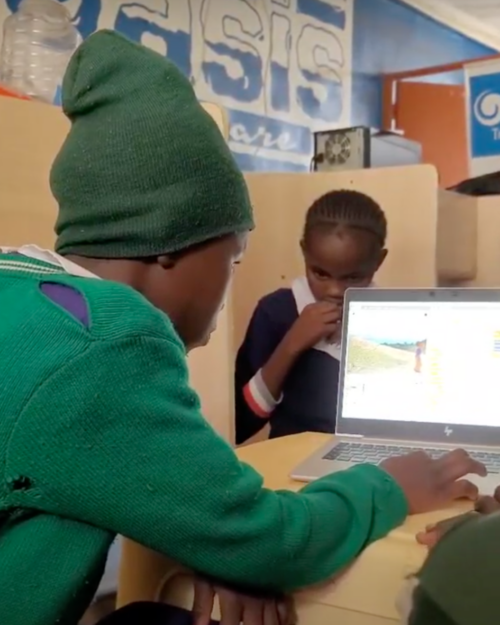
A group of young people coding on a laptop.

New opportunities to learn to code

Following our training, our partners themselves trained 332 educators across Kenya and South Africa to work directly in schools and communities running coding sessions. This led to the setup of nearly 250 Code Clubs and CoderDojos and additional coding sessions in schools and communities, reaching more than 11,500 young people.

As a result, access to coding and programming has increased in areas where this provision would otherwise not be available. One educator told us:

“We found it extremely beneficial, because a lot of our children come from areas in the community where they barely know how to read and write, let alone know how to use a computer… [It provides] the foundation, creating a fun way of approaching the computer as opposed to it being daunting.”

Curiosity, excitement and increased confidence

We found encouraging signs of the impact of this work on young people.

Nearly 90% of educators reported seeing an increase in young people’s computing skills, with over half of educators reporting that this increase was large. Over three quarters of young people who filled in our survey reported feeling confident in coding and computer programming.

The young people spoke enthusiastically about what they had learned and the programs they had created. They told us they felt inspired to keep learning, linking their interests to what they wanted to do in coding sessions. Interests included making dolls, games, cartoons, robots, cars, and stories. 

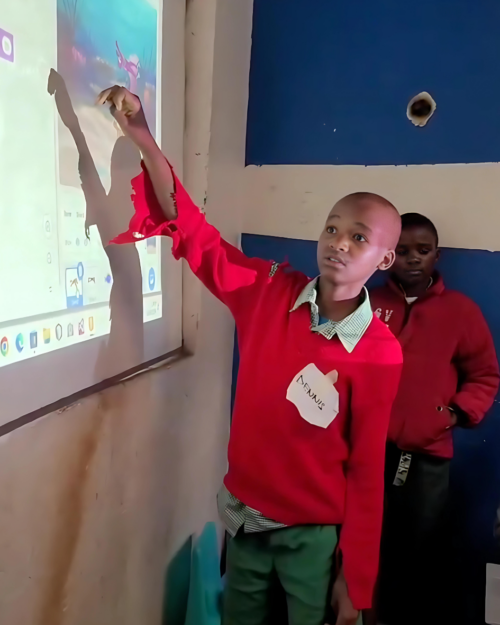
A young person points at a screen.

When we spoke with educators and young people, a key theme that emerged was the enthusiasm and curiosity of the young people to learn more. Educators described how motivated they felt by the excitement of the young people. Young people particularly enjoyed finding out the role of programming in the world around them, from understanding traffic lights to knowing more about the games they play on their phones.

One educator told us:

“…students who knew nothing about technology are getting empowered.” 

This confidence is particularly encouraging given that educators reported a low level of computer literacy among young people at the start of the coding sessions. One educator described how coding sessions provided an engaging hook to support teaching basic IT skills, such as mouse skills and computer-related terms, alongside coding. 

Addressing real-world problems

One educator gave an example of young people using what they are learning in their coding club to solve real-world problems, saying:

“It’s life-changing because some of those kids and the youths that you are teaching… they’re using them to automate things in their houses.” 

Many of these young people live in informal settlements where there are frequent fires, and have started using skills they learned in the coding sessions to automate things in their homes, reducing the risk of fires. For example, they are programming a device that controls fans so that they switch on when the temperature gets too high, and ways to switch appliances such as light bulbs on and off by clapping.

A young learner coding on a laptop.

Continuing to improve our support

From the gathered feedback, we also learned some useful lessons to help improve the quality of our offer and support to our partners. For example, educators faced challenges including lack of devices for young people, and low internet connectivity. As we continue to develop these partnerships, we will work with partners to make use of our unplugged activities that work offline, removing the barriers created by low connectivity.

We are continuing to develop the training we offer and making sure that educators are able to access our other training and resources. We are also using the feedback they have given us to consider where additional training and support may be needed. Future evaluations will further strengthen our evidence and provide us with the insights we need to continue developing our work and support more educators and young people.

Our thanks to our partners at Coder:LevelUp, Blue Roof, Oasis Mathare, and Tech Kidz Africa for sharing our mission to enable young people to realise their full potential through the power of computing and digital technologies. As we continue to build partnerships to support Code Clubs and CoderDojos across South Africa and Kenya, it is heartening to hear first-hand accounts of the positive impact this work has on young people.

If your organisation would like to partner with us to bring computing education to young people you support, please send us a message with the subject ‘Partnerships’.

The post Global Impact: Empowering young people in Kenya and South Africa appeared first on Raspberry Pi Foundation.
Celebrating the community: Micah

Post Syndicated from Sophie Ashford original https://www.raspberrypi.org/blog/celebrating-the-community-micah/

We love hearing from members of the community and sharing the stories of inspiring young people, volunteers, and educators all over the world who have a passion for technology.

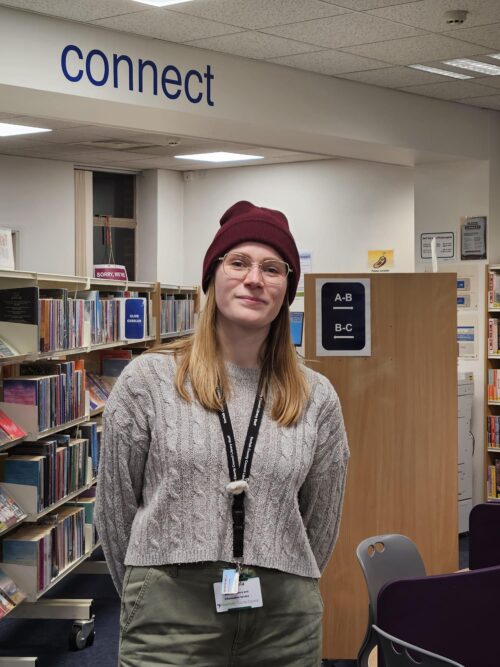
A smiling child.
Micah attends a Code Club in a library in Leeds, UK.

With this latest story, we’re taking you to Leeds, UK, to meet Micah, a young space enthusiast whose confidence has soared since he started attending a Code Club at his local library.

Introducing Micah

Computing skills are essential in today’s world, and Micah’s mum Catherine was keen for him to be introduced to coding from a young age.

While Micah is known to people close to him for his inquisitive nature, cheeky behaviour, and quick-witted sense of humour, he can be a little shy when meeting new people. And he isn’t always keen on his mum’s suggestions about trying new things and attending after-school clubs! However, when Catherine saw there was a Code Club running at their local library, she knew it was the perfect opportunity for Micah to try out computing.

A parent and child laughing together.
Micah’s mum Catherine took the opportunity to get Micah introduced to coding at their local Code Club.

What Catherine didn’t know is that not only would Micah find out he was a talented coder, but Code Club would also set the path for him to become a regular attendee at many of the library’s other clubs.

Opportunities for young coders

Based in Leeds, the Compton Centre Code Club is part of the Leeds Libraries network, which runs seven Code Clubs throughout the city. Liam, Senior Librarian for Digital at Leeds Libraries, described the importance of these spaces for the community and for engaging children in tech:

“Libraries are safe spaces that provide free access to exciting and innovative technology to those in our communities who might not get that opportunity. We’re proud that our Code Clubs can support young people to engage with tech, learn some new skills, and meet like-minded peers in a friendly and positive environment.

Our Code Clubs are aimed at 9- to 13-year-olds. We do have some learners that will come that have a younger sister or brother that wants to get involved as well. We never want to turn anyone away. So we’re more than welcoming for that age group to come in and have a play, get used to the equipment, and join in.”

— Liam, Senior Librarian for Digital at Leeds Libraries

Coding and confidence

Code Club provides a safe and friendly space for Micah to connect with other children, and he has embraced coding with enthusiasm. This is possible thanks to the work, support, and encouragement of Micah’s Code Club mentor Basia (they/them), the librarian at the Compton Centre who runs the club.

“Micah loves coming [to Code Club] and learning all the different things that he can do with coding. And he also loves Basia. They’re brilliant and run the club really well. It’s a super child-friendly place to be and he loves the support that he gets from them.”

– Catherine, Micah’s mum

Support from an inspiring mentor is so often an important part of a young coder’s journey, and Basia’s own journey from a coding beginner to a confident mentor highlights the positive influence Code Club has on both children and mentors.

A child and Code Club leader at a club session.
Micah loves coming to Code Club and being mentored by the club leader, librarian Basia.

Basia reflected on how they felt when they first heard they were going to be running Code Club sessions, and how their skills and confidence have grown.

“I was daunted for a bit. But actually one of the first things I did when I started this job was to go through some of [the Raspberry Pi Foundation’s] resources and do a project in Scratch. And it was just so simple and straightforward. You know, all the resources are absolutely great and I don’t really need to think about it. I think my confidence has increased quite significantly.”

— Basia, Librarian and Code Club mentor

Since joining Code Club, Micah has become involved in other extracurricular activities, like Lego club and drama club. These experiences have contributed to Micah’s overall personal growth, showcasing the transformative power of Code Club for children.

Young people and adult mentors at a Code Club session.
Code Clubs are save and friendly spaces for learning.

Micah has exciting dreams for the future, including becoming an astrophysicist, a marine biologist, and the founder of a company named Save The Planet. Supported by dedicated mentors like Basia, Code Clubs are not just about teaching coding — they are helping shape the leaders of tomorrow.

Inspire young people in your community

If you are interested in encouraging your child to explore coding, take a look at the free coding project resources we have available to support you. If you would like to set up a Code Club for young people in your community, head to codeclub.org for information and support.

Help us celebrate Micah and his inspiring journey by sharing his story on X (formerly Twitter), LinkedIn, and Facebook.

The post Celebrating the community: Micah appeared first on Raspberry Pi Foundation.
Fostering collaboration in the Global Clubs Partner network

Post Syndicated from Isabel Ronaldson original https://www.raspberrypi.org/blog/collaboration-global-clubs-partner-network/

We partner with educational organisations around the world to bring coding activities to young people in their regions through Code Club and CoderDojo. Currently involving 52 organisations in 41 countries, this Global Clubs Partner network shares our passion for empowering kids to create with technology.

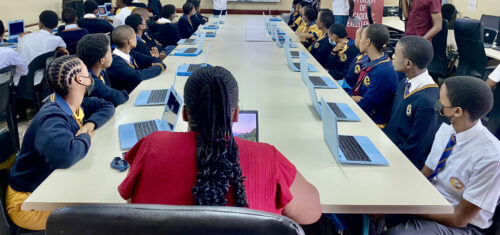
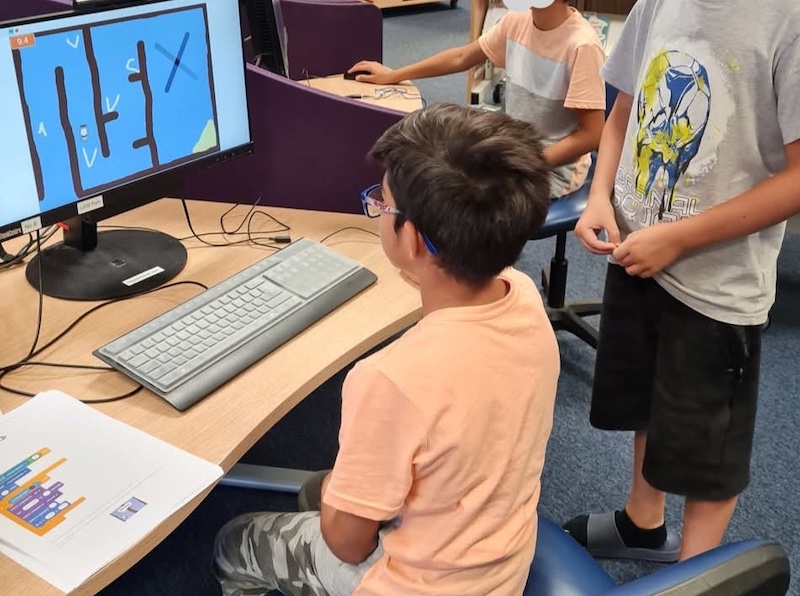
Students in a Code Club run by CSEd Botswana.
Learners in a Code Club run by CSEd Botswana, one of our Global Clubs Partners.

A key aspect of how we foster the Global Clubs Partner network is to promote connections between partners. It’s one reason we host regular online meetings and regional in-person events, and connect partners one on one to facilitate information sharing. Today, we’re highlighting three stories from partner organisations that have benefited from working with each other.

Aruba and the Netherlands

In March 2023, the Foundation hosted the first Clubs Conference for educators and volunteers involved with Code Club and CoderDojo. As this event took place in Cambridge, UK, the majority of attendees were from the UK and Republic or Ireland, but a small number came from further away. Much further away, in some cases.

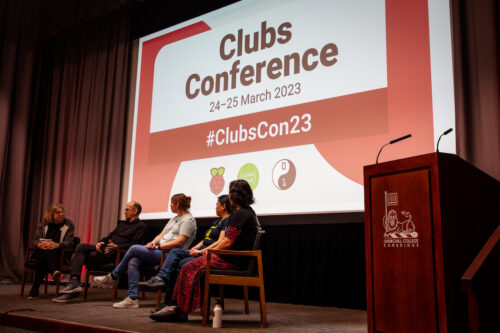
A panel discussion on stage at the Clubs Conference.

Bruce Harms and his colleague Thanya Croes (Full Stack Vision Foundation, Aruba) were attending the Clubs Conference to share their work to increase digital literacy in Aruba through CoderDojo clubs. At a special conference session for international attendees, they connected with Sanneke van der Meer and Marloes van der Meulen (CoderDojo Netherlands), who were also presenting as part of the session.

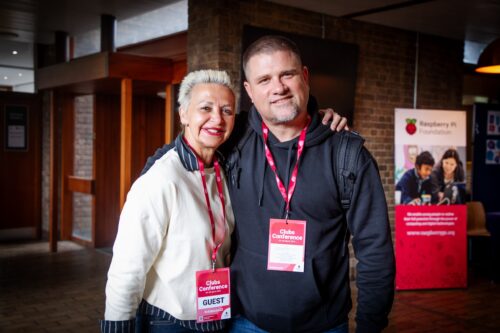
Two people smiling at the camera.
Thanya and Bruce at the Clubs Conference in 2023.

After the Clubs Conference, the two organisations remained in touch. Later in the year, Bruce and Thanya attended the DojoCon Netherlands 2023 in the Hague. ”It was an amazing day with great workshops and lots of other CoderDojo Champions”, Bruce said. He and Thanya have plans to invite the CoderDojo Netherlands team to Aruba and hope to collaborate on future projects together. 

Malawi and Tanzania

Sylvester Mtumbuka (Computers for Enhanced Education, Malawi) and Mrisho Habibu (AMCET Innovation Hub, Tanzania) first connected at our Global Clubs Partner meetup in Malaysia in late 2022. Sylvester said: “We were the only ones from Africa there and we are from neighbouring countries. We happen to have a lot of goals in common, and we started discussing possible opportunities for collaboration.”

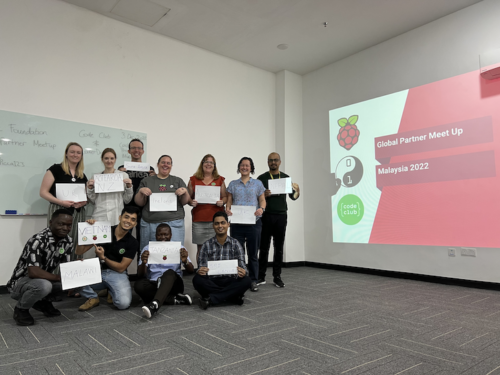
A group of educators.
The attendees of the Global Clubs Partner meetup in Malaysia in 2022.

The result is the Tanzania and Malawi (TaMa) Innovation Initiative, which is dedicated to fostering the educational, technological, and entrepreneurial development of young people in Tanzania and Malawi. It aims to empower young people in under-served communities, offering support for sustainable livelihoods and entrepreneurship, and it is already yielding great results.

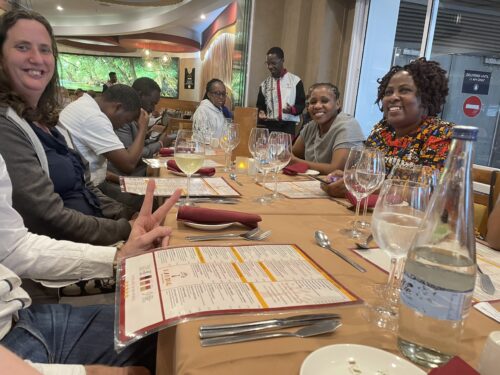
Global Clubs Partners in Africa.
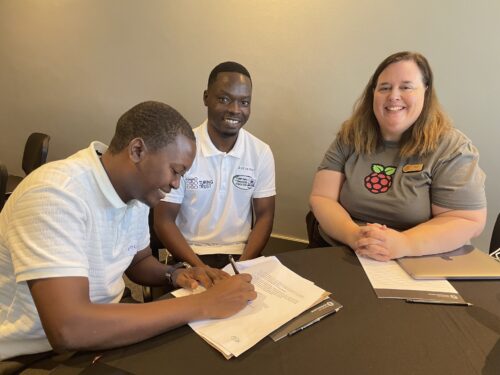
Sylvester and Mrisho signing their partnership agreement.

As part of their ongoing partnerships with us, Sylvester and Mrisho attended our Global Clubs Partner meetup in South Africa a year later —  the perfect opportunity to sign their partnership agreement.

Greece and Portugal

A chance meeting between Homero Cardoso (TAGUSVALLEY, Portugal) and Manos Zeakis (CoderDojo in Greece) at DojoCon Netherlands 2022 in Almere had unexpected consequences. “We discussed a lot of things, including the difficulty in finding venues for our Dojos in Greece”, Manos said. “Then in October 2023, we met at a Global Clubs Partner call and we talked again. With Homero’s help I contacted a Greek company, and they were immediately enthusiastic about helping us. After a few weeks, the Nea Ionia Dojo was live and the first Ninjas had their first session!”

Someone presenting to a room of people.
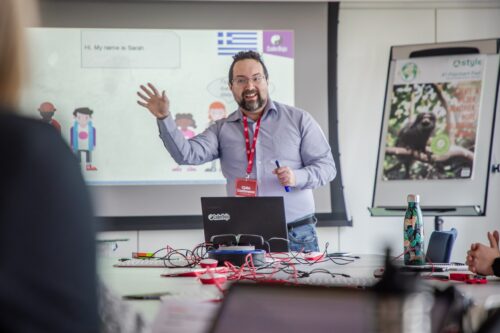
Manos holds a workshop.

Homero added: “Getting to know Manos was transformative for me as well. Because of that chance encounter in Almere, this year 7th and 8th grade students are participating in Astro Pi Mission Zero for the first time, mostly due to the inspiring example of Manos’s United Dojos project presented at DojoCon.”

Could your organisation become a Global Clubs Partner?

To find out more about our Global Clubs Partner network and how your organisation might get involved, visit the CoderDojo or Code Club websites, or contact us directly about a partnership.

The post Fostering collaboration in the Global Clubs Partner network appeared first on Raspberry Pi Foundation.
Celebrating the community: Sahibjot

Post Syndicated from Sophie Ashford original https://www.raspberrypi.org/blog/celebrating-the-community-sahibjot/

In our series of community stories, we celebrate some of the wonderful things young people and educators around the world are achieving through the power of technology. 

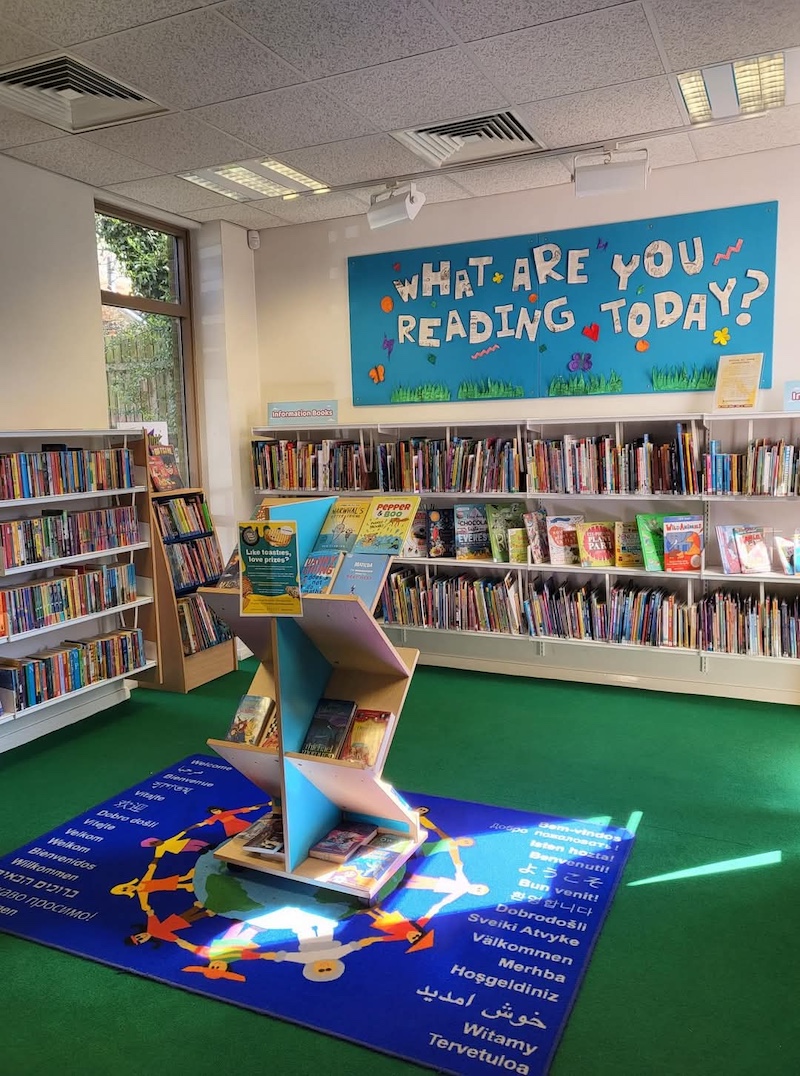
A young person sits in a classroom.

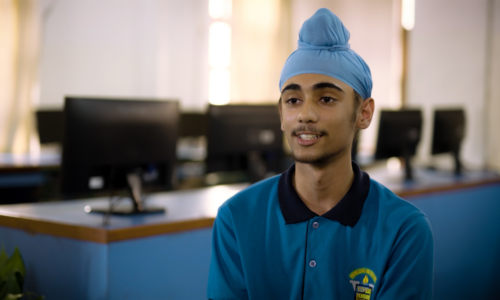
In our latest story, we’re heading to Vivek High School in Mohali, India, to meet Sahibjot, a 14-year-old coding enthusiast who has taken his hobby to the next level thanks to mentorship, Code Club, and the exciting opportunity to take part in the Coolest Projects 2023 global online showcase.

Introducing Sahibjot

When he was younger, Sahibjot loved playing video games. His interest in gaming led him to discover the world of game development, and he was inspired to find out more and try it out himself. He began to learn to code in his spare time, using tutorials to help him develop his skills.

A young person sits at a table outside and uses a laptop.

Keen to share the joy he had experienced from gaming, Sahibjot set himself the challenge of creating a game for his cousin. This project cemented his enthusiasm for coding and developing games of his own.

“I always felt that I have played so many games in my life, why not make one and others will enjoy the same experience that I had as a child.

For my cousin, I made a personal game for him, and he played it and he liked it very much, so once he played it, I felt that, yes, this is what I want to do with my life.” – Sahibjot

Mentorship and collaboration

While continuing to hone his computing skills at home, Sahibjot heard that his school had started a Code Club. After initially feeling nervous about joining, his enthusiasm was bolstered by the club mentor, Rajan, talking about artificial intelligence and other interesting topics during the session, and he soon settled in. 

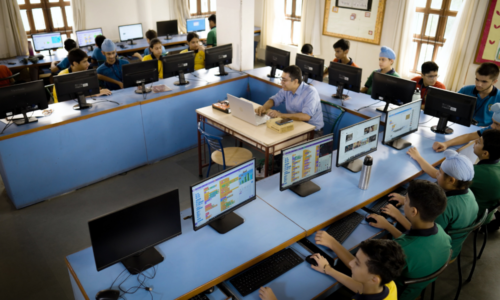
A group of students and a teacher at computers in a classroom.

At Code Club, with support and encouragement from Rajan, Sahibjot continued to develop and grow his coding skills. Alongside his technical skills, he also learned about teamwork and working collaboratively. He embraced the opportunity to help his peers, sharing his knowledge with others and becoming a mentor for younger club members. 

Three students chat outside a school building.

“Last year, we joined this coding club together and we became friends. He’s a very friendly person. Whenever we need him, he just quickly helps us. He helps us to troubleshoot, find any bugs, or even fix our codes.” – Akshat, fellow Code Club member

A global opportunity

The next step for Sahibjot came when Rajan introduced him and his fellow Code Club members to Coolest Projects. Coolest Projects is a celebration of young digital creators and the amazing things they make with technology. It offers participants the opportunity to share their tech creations in a global, online showcase, and local in-person events celebrating young creators are also held in several countries.

A group of students in a classroom being guided through their computing projects by a teacher.

Sahibjot was eager to take part and showcase what he had made. He submitted a Python project, a ping-pong game, to the online showcase, and was very excited to then see his creation receive a special shout-out during the Coolest Projects global livestream event. He was delighted to share this achievement with his friends and family, and he felt proud to be representing his school and his country on a global stage.

“I told everyone around me that there was going to be a livestream and I possibly might be featured in that, so that was really exciting. I learned a lot about just not representing my school and myself as an individual, I learned about representing my whole nation.” — Sahibjot

Sahibjot’s passion for computing has helped shape his aspirations and ambitions. Looking to the future, he hopes to use his technology skills to benefit others and make an impact.

“Using code and technology and all of the things like that, I aspire to make effort to do something with the world, like help out people with technology.” — Sahibjot

Inspire young creators like Sahibjot

To find out how you and young creators you know can get involved in Coolest Projects, visit coolestprojects.org. If the young people in your community are just starting out on their computing journey, visit our projects site for free, fun beginner coding projects.

For more information to help you set up a Code Club in your school, visit codeclub.org.

Join us in celebrating Sahibjot’s inspiring journey by sharing his story on X (formerly Twitter), LinkedIn, and Facebook.

The post Celebrating the community: Sahibjot appeared first on Raspberry Pi Foundation.
Code Club at Number Ten Downing Street

Post Syndicated from Philip Colligan original https://www.raspberrypi.org/blog/code-club-number-ten-downing-street/

With the rapid advances in digital technologies like artificial intelligence, it’s more important than ever that every young person has the opportunity to learn how computers are being used to change the world and to develop the skills and confidence to get creative with technology. 

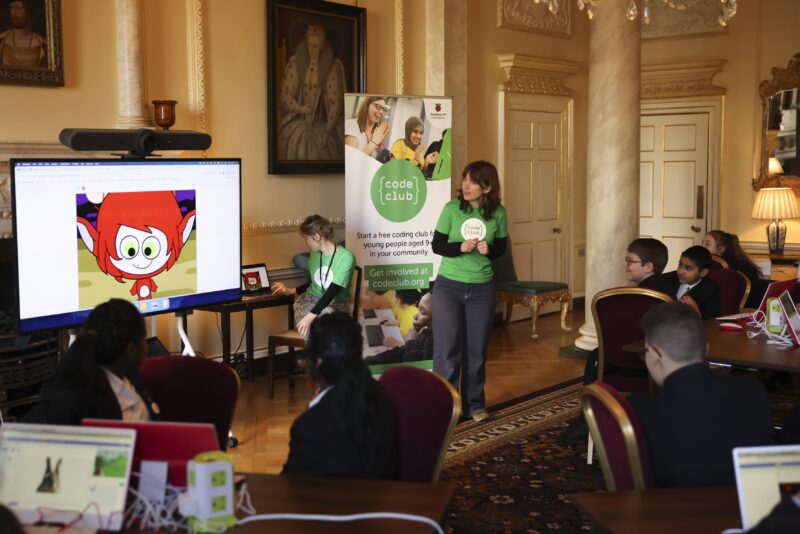
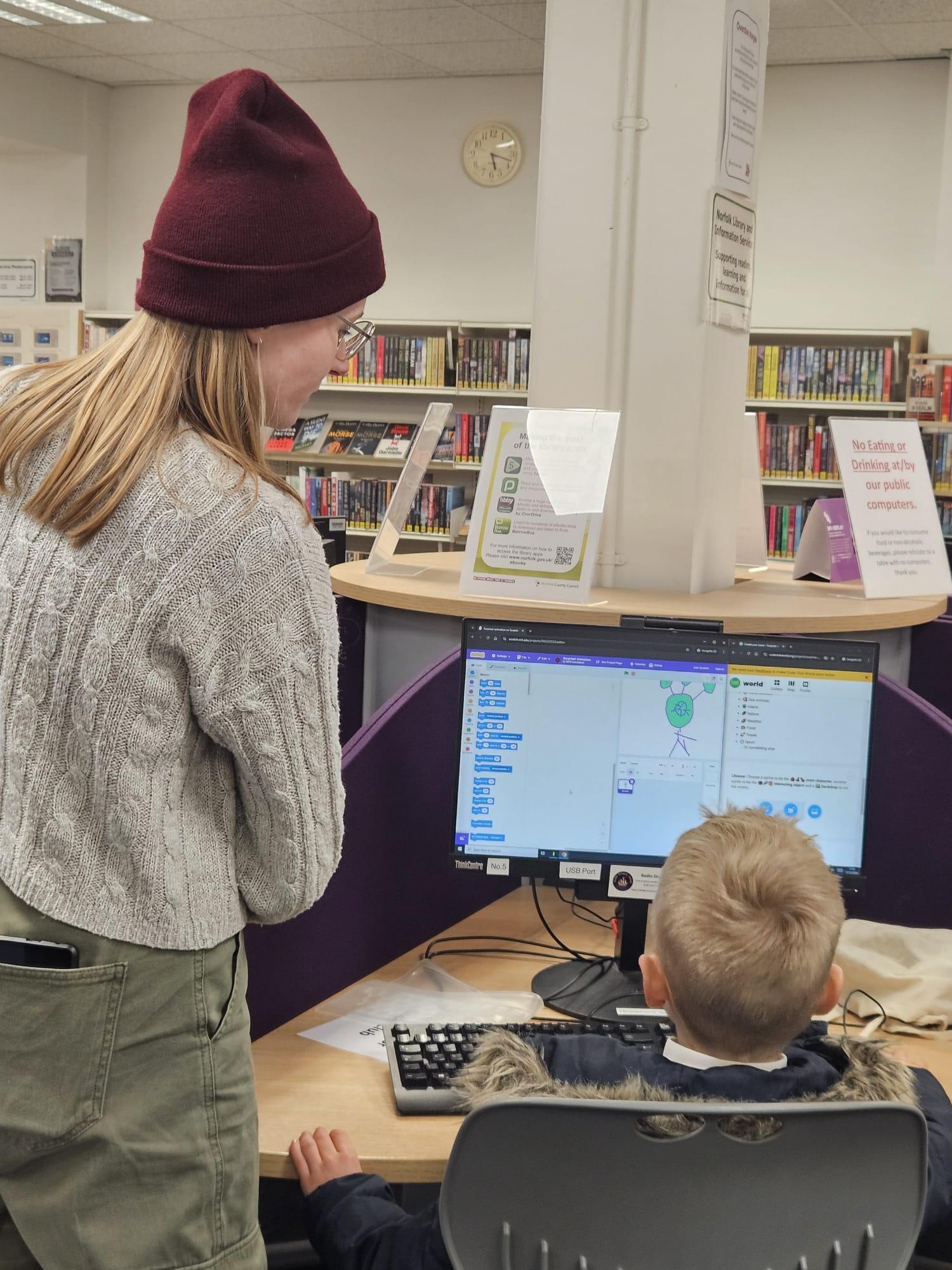
Learners at a Code Club taking place at Number Ten Downing Street.
Crown copyright. Licensed under the Open Government Licence.

There’s no better way to develop those abilities (super powers even) than getting hands-on experience of programming, whether that’s coding an animation, designing a game, creating a website, building a robot buggy, or training an AI classification model. That’s what tens of thousands of young people do every day in Code Clubs all over the world. 

Lessons at 10 

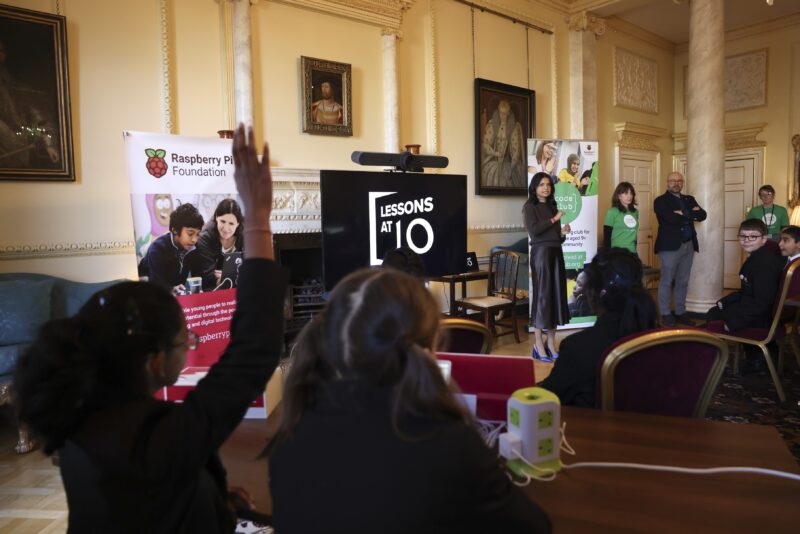
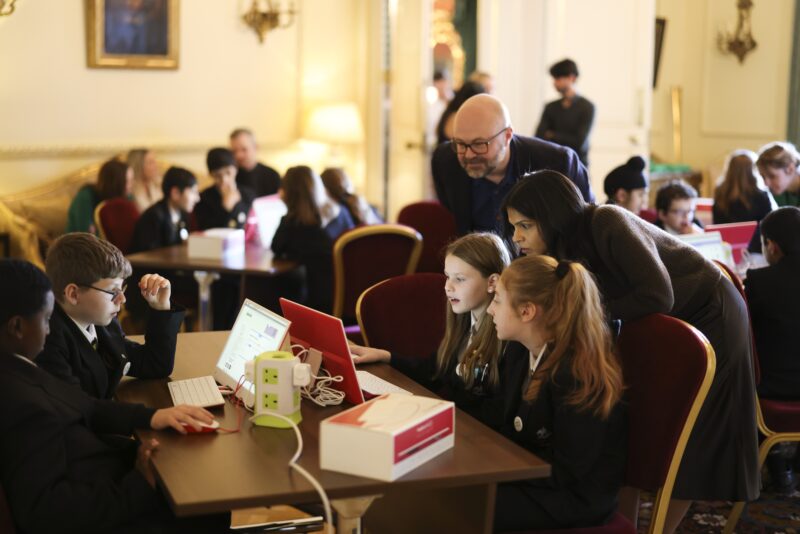
We were absolutely thrilled to organise a Code Club at Number Ten Downing Street last week, hosted by the UK Prime Minister’s wife Akshata Murty as part of Lessons at 10.

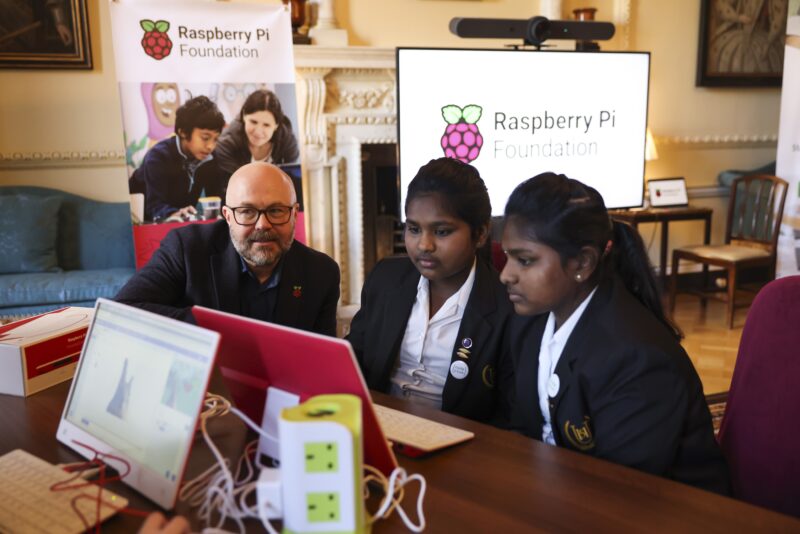
A Code Club session taking place at Number Ten Downing Street.
Crown copyright. Licensed under the Open Government Licence.

Lessons at 10 is an initiative to bring school children from all over the UK into Number Ten Downing Street, the official residence of the Prime Minister. Every week different schools visit to attend lessons led by education partners covering all kinds of subjects. 

A Code Club session taking place at Number Ten Downing Street.
Crown copyright. Licensed under the Open Government Licence.

We ran a Code Club for 20 Year 7 students (ages 11 to 12) from schools in Coventry and Middlesex. The young people had a great time with the Silly eyes and Ghostbusters projects from our collections of Scratch projects. Both stone-cold classics in my opinion, and a great place to start if you’re new to programming.

A Code Club session taking place at Number Ten Downing Street.
Crown copyright. Licensed under the Open Government Licence.

You may have spotted in the photos that the young people were programming on Raspberry Pi computers (the incredible Raspberry Pi 400 made in Wales). We also managed to get our hands on some cool new monitors. 

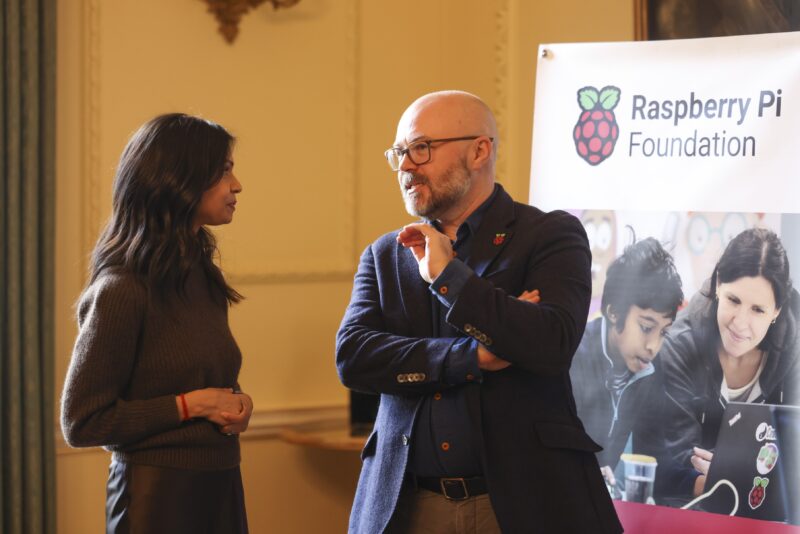
Mrs Murty’s father was one of the founders of Infosys, which ranks among the world’s most successful technology companies, founded in India and now operating all over the world. So it is perhaps no surprise that she spoke eloquently to the students about the importance of every young person learning about technology and seeing themselves as digital creators not consumers.

Akshata Murty talks to Philip Colligan, CEO of the Raspberry Pi Foundation.
Crown copyright. Licensed under the Open Government Licence.

We were lucky enough to be in one of the rather fancy rooms in Number Ten, featuring a portrait by John Constable of his niece Ada Lovelace, the world’s first computer programmer. Mrs Murty reminded us that one of the lessons we learn from Ada Lovelace is that computer programming combines both the logical and artistic aspects of human intelligence. So true. 

A global movement 

Since Code Club’s launch in April 2012, it has grown to be the world’s largest movement of free computing clubs and has supported over 2 million young people to get creative with technology.

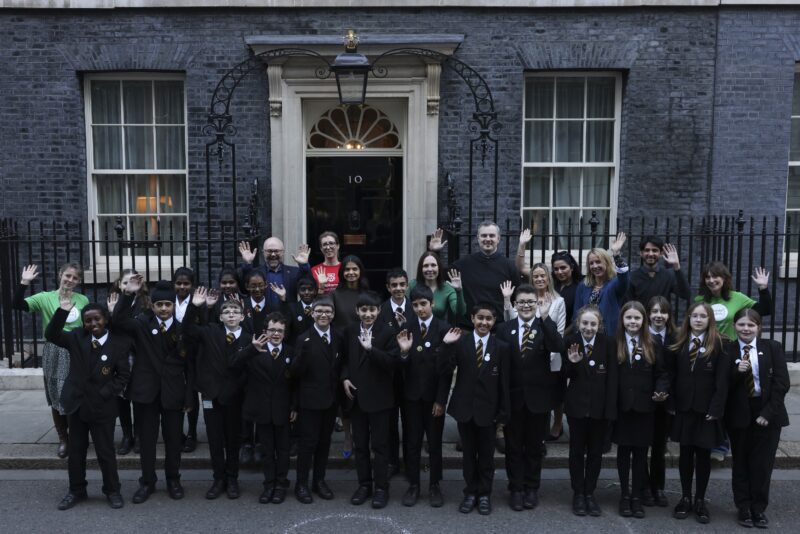
Learners from a Code Club in front of Number Ten Downing Street.
Crown copyright. Licensed under the Open Government Licence.

Code Clubs provide a free, fun, and safe environment for young people from all backgrounds to develop their digital skills. Run by teachers and volunteers, most Code Clubs take place in schools, and there are also lots in libraries and other community venues. 

The Raspberry Pi Foundation provides a broad range of projects that young people use to build their confidence and skills with lots of different hardware and software. The ultimate goal is that they are empowered to combine their logical and artistic skills to create something original. Just like Ada Lovelace did all those years ago.

Learners at a Code Club taking place at Number Ten Downing Street.
Crown copyright. Licensed under the Open Government Licence.

All of our projects are designed to be self-directed, so young people can learn independently or in groups. That means that you don’t need to be a tech expert to set up or run a Code Club. We provide you with all the support that you need to get started.

If you want to find out more about how to set up a Code Club, visit the website here.

The post Code Club at Number Ten Downing Street appeared first on Raspberry Pi Foundation.
What is the impact of attending a Code Club or CoderDojo?

Post Syndicated from Hammad Kazi original https://www.raspberrypi.org/blog/code-club-coderdojo-survey-2023/

We support two networks of coding clubs where young people around the world discover the countless possibilities of creating with digital technologies.

Three learners working at laptops.
Young people in a CoderDojo in India.
  • Code Club is a global network of after-school coding clubs for learners aged 9 to 13, where educators and other volunteers help young people learn about coding and digital making
  • CoderDojo is a worldwide network of free, open, and community-based programming clubs for young people aged 7 to 17, where they get the opportunity to learn how to create fantastic new things with technology

Every year, we send out a survey to volunteers at all the clubs we support. Today we share some highlights from the findings and what we’re planning next.

An educator teaches students to create with technology.
A Code Club session in the USA.

Why do we do an annual survey for clubs?

The simple answer is: to help make clubs even better for everyone involved! Educators and volunteers are doing a remarkable job in helping young people learn about computing and coding, so we want to know more about them, about how they run their clubs, and what impact the club sessions have for young people.

A group of children and an adult have fun using Raspberry Pi hardware.
A CoderDojo session in the UK.

By knowing more about clubs — how frequently club leaders run them, what resources they use, what they would like more of — we can continue to improve the learning experience for educators, volunteers, and young people involved in our clubs.

This year in March we sent out our survey to all Code Clubs and CoderDojos around the world, and we heard back from almost 500. As always, the results were very positive, and they also gave us a lot of useful information on how we can continue to improve our support for clubs all over the world.

Who is involved in clubs?

Based on the survey, we estimate that at the time, the network of over 4200 Code Clubs and 700 CoderDojos was reaching almost 139,000 young people globally. The global community of clubs has continued to grow since then, with a now even larger network of volunteers supporting ever more young people.

Three learners laughing at a laptop in a Code Club.
Participants in a Code Club in the UK.

According to the survey, the majority of young people attending clubs are aged between 8 and 13, but clubs host young people as young as 6 and as old as 18. It was great to hear about the participation of girls, and we’d love to see this rise even higher: respondents told us that 42% of their Code Club attendees and 30% of their CoderDojo attendees are female.

Respondents feel that attending club sessions improves young peoples’ interest and engagement in computing and programming, and increases their understanding of the usefulness of computing.

None of these young people would be able to attend clubs without the great work of teams of educators and volunteers. Based on the survey, we estimate that at the time of the survey, there were over 10,300 Code Club leaders and almost 4000 CoderDojo champions around the world. Many survey respondents said that they were motivated to start volunteering after attending a club themselves.

Students in a Code Club run by CSEd Botswana.
A Code Club session in Botswana.

Community is at the heart of clubs and the clubs networks: over 80% of respondents said that belonging to a global community of clubs helps motivates them to volunteer at their own club.

What is the impact of clubs?

Clubs focus on a wide range of topics and programming languages. Scratch is overwhelmingly popular, with over 95% of respondents telling us that they used Scratch in club sessions in the previous year. Micro:bit projects and Python-based programming were also very popular. Club leaders told us that in future they would like to offer more activities around AI applications, as well as around games and mobile apps. 

A bar chart.

Club leaders told us that being part of a Code Club or CoderDojo affects young people positively. Respondents feel that attending club sessions improves young peoples’ skills and interest in computing and programming, and increases their understanding of the usefulness of computing. Almost 90% of club leaders also agree that after attending a club, young people are interested in additional experiences of learning about computing and programming.

Attending also positively affects young people’s wider skills and attitudes, with club leaders stating that young people who attend improve their personal confidence, independence in learning, and creative thinking. 

Young people who attend improve their personal confidence, independence in learning, and creative thinking.

We were pleased to find out that most Code Club leaders, who run their sessions in schools, think that their clubs increase the visibility of computing within their school. Many also said that the attendees’ parents and guardians value their clubs as opportunities for their children.

What’s next?

We want to keep providing clubs with support to increase their positive impact on young people. Thanks to the survey results, we know to focus our work on providing training opportunities for club volunteers, as well as supporting club leaders to recruit volunteers and advertise their clubs to more young people.

You can read the survey report to dive deeper into our findings.

As we take an impact-focused approach to our work, we are currently partnering with Durham University on an evaluation of Code Clubs in UK schools. The evaluation will provide further insights for how we can best support people around the world to run clubs that provide welcoming spaces where all kids can learn to create with digital technologies.

The post What is the impact of attending a Code Club or CoderDojo? appeared first on Raspberry Pi Foundation.
Creating connections at our 2023 Africa partner meetup

Post Syndicated from Isabel Ronaldson original https://www.raspberrypi.org/blog/2023-global-clubs-partner-meetup-africa/

We partner with organisations around the world to bring coding activities to young people in their regions through Code Club and CoderDojo. Currently involving 54 organisations in 43 countries, this Global Clubs Partner network shares our passion for educating kids to create with technology.

Global Clubs Partners in Africa.

We work to connect our Global Clubs Partners to foster a sense of community and encourage collaboration. As part of this, we run in-person meetups to allow our partners to get to know each other better, and to help us understand how we can best support them, and what we can learn from them. Previously held in Penang, Malaysia, and Almere, the Netherlands, our latest meetup took place in Cape Town, South Africa.

Connecting through stories and experiences

Although we’ve seen some surprising points of commonality among all Global Clubs Partners, we also know that our partners find it helpful to connect with organisations based in their region. For the Cape Town meetup, we invited partner organisations from across Africa, hoping to bring together as many people as possible.

Global Clubs Partners in Africa.

Our aim was to give our partners the opportunity to share their work and identify and discuss common questions and issues. We also wanted to mitigate some of the challenges of working internationally, such as time constraints, time zones, and internet connectivity, so that everyone could focus on connecting with each other.

Global Clubs Partners in Africa.

The meetup agenda included time for each Global Clubs Partner organisation to present their work and future plans, as well as time for discussions on growing and sustaining club volunteer and mentor communities, strategy for 2024, and sharing resources. 

“If the only thing rural communities have is problems, why are people still living there? … Rural communities have gifts, have skills, they have history that is wasting away right now; nobody is capturing it. They have wisdom and assets.”

Damilola Fasoranti from Prikkle Academy, Nigeria, talking about not making assumptions about rural communities and how this shapes the work his organisation does

A group dinner after the meetup enabled more informal networking. The next day, everyone had the chance to get inspired at Coolest Projects South Africa, a regional Coolest Projects event for young tech creators organised by partner organisation Coder LevelUp.

Global Clubs Partners in Africa.

The meetup gave the Global Clubs Partners time to talk to each other about their work and experiences and understand one another better. It was also very beneficial for our team: we learned more about how we can best support partners to work in their communities, whether through new resources, information about funding applications, or best practice in overcoming challenges.

Building bridges

After attending a previous meetup, two of our partner organisations had decided to create an agreement for future partnership. We were delighted to learn about this collaboration, and to witness the signing of the agreement at this meetup.

Global Clubs Partners in Africa.

By continuing to bring our partner network together, we hope to foster more cross-organisation partnerships like this around the world that will strengthen the global movement for democratising computing education.

Could your organisation become a Global Clubs Partner?

You can find out how your organisation could join our Global Clubs Partner network on the CoderDojo and Code Club websites, or contact us directly with your questions or ideas about a partnership.

The post Creating connections at our 2023 Africa partner meetup appeared first on Raspberry Pi Foundation.
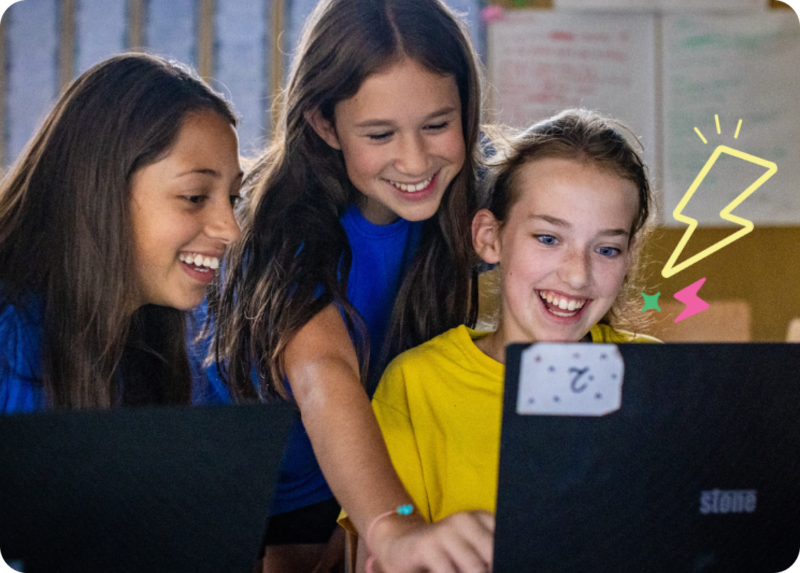
Welcome, new partners: Growing the global impact of Code Club and CoderDojo

Post Syndicated from Ellie Proffitt original https://www.raspberrypi.org/blog/global-clubs-partners-code-club-coderdojo-new-partners-2023/

Increasing access to computing education is a global challenge, and at the Raspberry Pi Foundation we take a global approach in addressing it. One way we do this is to partner with organisations around the world and support them to introduce Code Clubs and CoderDojos in their local or national communities.

Students in a Code Club run by CSEd Botswana.

Code Club and CoderDojo are the two global networks of free, volunteer-led coding clubs for young people that we support. They are a great fit for a lot of organisations that share our vision and values and work with young people from backgrounds that are currently under-represented in computing. Right now, our Global Clubs Partner network involves more than 50 organisations in over 40 different countries around the world. Seven new partners have joined us since August.

New members in the Global Clubs Partner network

We send a warm welcome to our seven new partners. Here is some of what they are working on:

  • CSEd Botswana is training 25 teachers in rural areas to run Code Clubs in their schools
  • Hacedores in Mexico is working towards establishing CoderDojos in their 80 makerspaces, and Code Clubs in the local schools of their community members.
  • Code Club Luxembourg is already running several clubs and also hosts a number of workshops each year to encourage children to carry on their coding journey by joining a Code Club or CoderDojo.
  • Light Into Europe works with the Deaf community in Romania. They plan to open up coding to children with hearing impairments through accessible Code Clubs, supported by interpreters and adults who are also deaf.
  • KIT Hub in Burundi have plans to establish CoderDojos to support children from underserved areas, including a sizable community of Congolese young people living in refugee camps in Burundi.
  • Orientations Training Centre in Sudan will be setting up clubs in Khartoum and Darfur, and they are planning a special passion for supporting young people to submit entries to the Coolest Projects online showcase in 2024.
  • Savanna Developer Network will establish CoderDojos in northern Ghana to narrow the income and infrastructure gap between the north and the south by ensuring that children in the north aren’t left behind in computing education. 

We are really excited that these organisations have chosen to join the Global Clubs Partner network.

Benefits of partnering with us

When they join our Global Clubs Partner network, organisations work with us to grow the Code Club and CoderDojo communities around the world. Our Global Clubs Partners share our mission to enable young people to realise their full potential through the power of computing and digital technologies, and they commit to working towards this mission with our support.

For many partners and the educators and volunteers they work with, running Code Clubs and CoderDojos is an opportunity to learn to code alongside the young people. We give partners tailored support for their work through our free, high-quality resources, including online training, community events, and easy-to-follow coding projects.

Our new partners are as glad as we are to have joined our network.

Abdelmoneim Mohammed of Orientations Training Centre in Sudan is excited by the impact Code Club will have on his young coders, telling us:  

I expect this can help to make our citizens a global citizen, [by] learning from a well-established and developed educational system.

For Ethel Tshukudu of CSEd Botswana, it is the community focus and available support network that is important. She tells us:

The strong sense of community and the availability of mentorship opportunities are particularly appealing, as they ensure that CSEdBotswana can consistently access the support needed to enhance our coding clubs and create a more significant impact. 

Our partner from KIT Hub in Burundi, Ferdinand Alimasi, values how establishing clubs promotes collective learning and engagement in the community. He says:

Education and preparation of [the] future workforce require collective work and responsibilities, so these clubs will bring the change in communities by offering opportunities to learn for kids and teens, as well as opportunities for everyone to be involved in building a better future for all.

What we learn from our partnerships

Our partners work in lots of different circumstances all around the world. A key learning for us is that there is no ‘one size fits all’ approach to computing education. We support our partners to adapt and deliver our resources in a way that they know will best engage their learners. This highlights how important it is to work in a culturally sensitive way, and to prioritise providing opportunities for learners to use digital technology to make things that matter to them. That looks very different depending on where you are in the world, and who you are working with.

A child at a laptop in a classroom in rural Kenya.

Through working with our partners, we also see just how much world events can impact the already unequal access young people have to learning new digital skills. Climate crisis events such as floods and wildfires, and political crises such as war, conflict, and changes in government have affected many of our global partners this year. The resulting closures of schools and other educational venues, electricity blackouts, and funding challenges cause further educational disadvantage to the children in the affected areas. Our partners play a key role in providing additional educational opportunities for young people when it is safe to do so.

Three teenage girls at a laptop
Young tech creators at a Code Club in Brazil.

The experiences and perspectives we’ve gained through our partnerships with global organisations are extremely important to us and our mission. They help to inform the work we do to make computing education truly accessible for all learners and educators around the globe.  

Could your organisation become a Global Clubs Partner?

You can find out more about how your organisation could join our Global Clubs Partner network on the CoderDojo and Code Club websites, or contact us directly with your questions or ideas about a partnership.

The post Welcome, new partners: Growing the global impact of Code Club and CoderDojo appeared first on Raspberry Pi Foundation.
Get ready for Moonhack 2023: Bringing space down to Earth

Post Syndicated from Isabel Ronaldson original https://www.raspberrypi.org/blog/moonhack-2023/

Moonhack is a free global, online coding challenge by our partner Code Club Australia, powered by Telstra Foundation. It runs once a year for young learners worldwide. In 2022, almost 44,000 young people from 63 countries registered to take part.

A young person coding during a Moonhack event.

This year, Moonhack will happen from 10 to 26 October, to coincide with World Space Week 2023. The challenge is open to all young learners, wherever they are in the world, and features six brand-new projects that focus on space and innovation. We caught up with Kaye North, Community and Engagement Manager at Code Club Australia, to find out more.

What’s new for 2023?

Moonhack 2023 offers access to engaging new projects for Scratch, micro:bit, and Python. For the first time ever, young people will also have the option to follow a project brief to code their own solution to a space-based issue, using a programming language of their choice.

Two children code on laptops while an adult supports them.

In keeping with this year’s theme — which was inspired by the World Space Week 2023 theme of ‘Space and Entrepreneurship’ — the new Moonhack projects showcase inventions that were created for space exploration but are now used in everyday life, such as mobile phone cameras and LEDs.

Kaye shared that in Australia, inventions created for space travel and exploration are part of the science curriculum at primary school level. She hopes that this year’s Moonhack will help more young people understand how space exploration and coding are connected to their daily lives.

What will young people gain from taking part in Moonhack?

Moonhack features six unique coding projects, giving young people of all ages and experience levels the opportunity to engage and learn. The project brief introduced this year encourages participants to be creative, coding a solution on any platform they choose.

Young learners coding in a computing classroom.

Coders who respond to the project brief will also be in with a chance of having their project selected to be developed into an official Code Club Australia project, for other young people and educators around the world to enjoy.

Kaye emphasised that Moonhack is about more than just taking part in a global event; it also helps young people to better understand the real-world opportunities that coding can offer.

“The more kids we expose this to, the better, expanding coding past just coding and having purpose behind it. And I do try to link things in so that we’re connecting with real-world context, careers…”

Kaye North

How your young coders can get involved

Registration for Moonhack 2023 is open now. The challenge runs from 10 to 26 October, and projects can be submitted until 30 November. Participation is free and open to any young coder, whether they are part of a Code Club or not. The 2023 projects are already available in English, Arabic, Croatian, Dutch, Filipino, French, Greek, Hindi, Indonesian, Mandarin, Portuguese, and Spanish, and will be available in more languages soon. 

To find out more and register to take part, visit the Moonhack website.

Code Club Australia is powered by Telstra Foundation as part of a strategic partnership with us at the Raspberry Pi Foundation.
The post Get ready for Moonhack 2023: Bringing space down to Earth appeared first on Raspberry Pi Foundation.
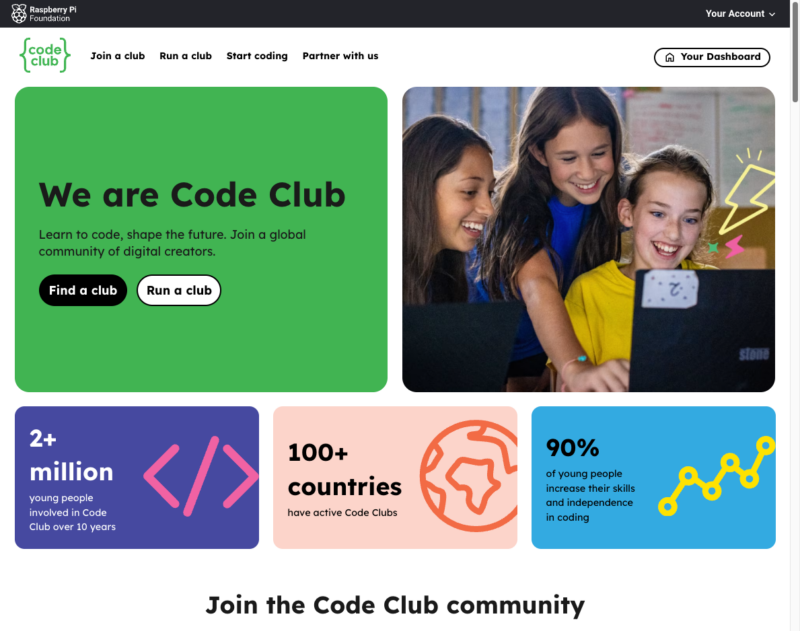
Bringing computing education research to a new global audience

Post Syndicated from Isabel Ronaldson original https://www.raspberrypi.org/blog/research-global-clubs-partners-code-club-coderdojo/

A network of more than 40 partner organisations in over 30 countries works with us to grow and sustain the worldwide Code Club and CoderDojo networks of coding clubs for young people. These organisations, our Global Clubs Partners, share our mission to enable young people to realise their potential through the power of computing and digital technologies. We support them in various ways, and recently we invited them to two calls with our researchers to discuss new research findings about computing education in primary schools.

Three teenage girls at a laptop
Three girls in a Code Club session in Brazil.

Supporting Global Clubs Partners with research insights

Global Clubs Partners work to train educators and volunteers, provide access to computing equipment, run clubs and events for young people at a local or national level, and much more. Our aim is to provide support that helps the Global Clubs Partners in their work, including tailored resources and regular group calls where we discuss topics such as volunteer engagement and fundraising.

Educator training in a classroom in Benin.
Educator training in Benin, run by Global Clubs Partner organisation Impala Bridge.

Recently, we were excited to be able to highlight research from our newest seminar series to the network. This ongoing seminar series focuses on teaching and learning in primary (K-5) computing education. Many of the Global Clubs Partners work with schools or local education bodies — some partner representatives even come from a teaching background themselves. That’s why we hoped they would be able to use insights from the seminars in their work, whether with learners and educators directly, or to grow their network of Code Clubs or CoderDojos; we know this is easier for them when they can provide evidence to show why these programmes are so beneficial for young people.

Learning from Global Clubs Partners for our future research

We were also very interested to hear the Global Clubs Partners’ perspectives, as they work in a wide variety of contexts around the world. For example, would the research resonate the same way with an organisation based in Kenya as one based in Nepal? This kind of insight is useful for making decisions about our research work in future.

Each of the two calls featured a speaker from the research seminar series summarising their work and inviting attendees to share their own thoughts. We had some fascinating conversations; with partner representatives from seven countries across four continents, the discussions were a great showcase of the different experiences in our partner network. Dr Bobby Whyte, one of the speakers, noted: “Being able to share and discuss work within a global audience has been a really valuable experience.”

Young people at a Code Club session in a classroom.
A Code Club session in a classroom in Portugal.

We found the opportunity to connect our partner network with work from other areas of the Foundation really beneficial, and the Global Clubs Partners did too: their feedback from the calls was uniformly positive. Dr Jane Waite, our Senior Research Scientist, commented that “it’s really important for us to share research with people in different contexts and so exciting to hear when findings resonate and can be used in practice.”

You can find out more about our Global Clubs Partner network on the CoderDojo and Code Club websites, or contact us directly about partnerships.

The post Bringing computing education research to a new global audience appeared first on Raspberry Pi Foundation.
Celebrating the community: Spencer

Post Syndicated from Sophie Ashford original https://www.raspberrypi.org/blog/celebrating-the-community-spencer/

We love hearing from members of the community and how they use their passion for computing and digital making to inspire others. Our community stories series takes you on a tour of the globe to meet educators and young tech creators from the USA, Iraq, Romania, and more.

A smiling computer science teacher stands in front of a school building.

For our latest story, we are in the UK with Spencer, a Computer Science teacher at King Edward VI Sheldon Heath Academy (KESH), Birmingham. After 24 years as a science teacher, Spencer decided to turn his personal passion for digital making into a career and transitioned to teaching Computer Science.

Meet Spencer

From the moment he printed his name on the screen of an Acorn Electron computer at age ten, Spencer was hooked on digital making. He’s remained a member of the digital making community throughout his life, continuing to push himself with his creations and learn new skills whenever possible. Wanting to spread his knowledge and make sure the students at his school had access to computer science, he began running a weekly Code Club in his science lab:

“Code Club was a really nice vehicle for me to get students into programming and digital making, before computer science was an option at the school. So Code Club originally ran in my science lab around the Bunsen burners and all the science equipment, and we do some programming on a Friday afternoon making LEDs flash and a little bit of Minecraft. And from that, the students really got an exciting sense of what programming and digital making could be.”

– Spencer

While running his Code Club, Spencer really embedded himself in the Raspberry Pi community, attending Raspberry Jams, engaging with like-minded people on Twitter, and continuing to rely on our free training to upskill.

A computer science teacher sits with students at computers in a classroom.

When leadership at KESH began to explore introducing Computer Science to the curriculum, Spencer knew he was the right person for the job, and just where to look to make sure he had the right support:

“So when I decided to change from being a science teacher to a computer science teacher, there were loads of course options you could find online, and a lot of them required some really specific prior knowledge and skills. The Foundation’s resources take you from a complete novice, complete beginner — my very first LED flashing on and off — to being able to teach computational thinking and algorithms. So it was a really clear progression from using the Foundation resources that helped take me from a Physics teacher, who could use electricity to light and LED on, to a programmer who could teach how to use this in our digital making for our students.”

– Spencer

Thanks to the support from KESH and Spencer’s compelling can-do attitude, he was soon heading up a brand-new Computer Science department. This was met with great enthusiasm from the learners at KESH, with a willing cohort eagerly signing up for the new subject.

Two smiling computer science students at a desktop computer in a classroom.

“It’s really exciting to see how students have embraced Computer Science as a brand-new subject at school. The take-up for our first year at GCSE was fantastic with 25 students, and this year I’ve really got students asking about, ‘Is there an option for next year, and how can I get on to it?’ Students are almost blown away by the resources now.”

– Spencer

Supporting all students

Spencer has a mission to make sure all of KESH’s learners can learn about computing, and making his lessons accessible to all means he’s become a firm favourite amongst the students for his collaborative teaching approach.

“Mr Organ teaches you, and then he just puts you in. If you do need help, you can ask people around you, or him, but he lets you make your own mistakes and learn from there. He will then give you help so you don’t make those mistakes the next time.”
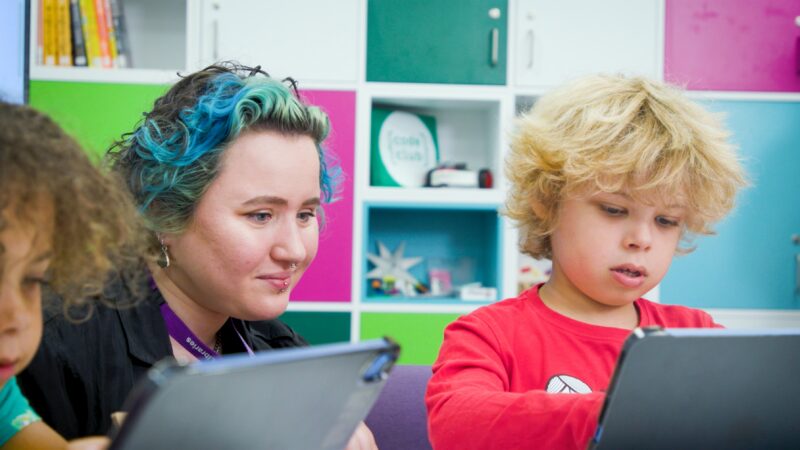
– Muntaha, 16, GCSE Computer Science student, KESH

Computer science students at a desktop computer in a classroom.

Spencer’s work is shaped by his awareness that many of the learners at KESH come from under-resourced areas of Birmingham and backgrounds that are underrepresented in computing. He knows that many of them have previously had limited opportunities to use digital tools. This is something he is driven to change.

“I want my young students here, regardless of their background, regardless of their area they’ve been brought up in, to have the same experiences as all other students in the country. And the work I do with Raspberry Pi, and the work I do with Code Club, is a way of opening those doors for our young people.”

– Spencer

Share Spencer’s story and inspire other educators

As a passionate member of the Raspberry Pi Foundation community, Spencer has been counted on as a friendly face for many years, sharing his enthusiasm on training courses, at Foundation events, and as a part of discussions on Twitter. With the goal to introduce Computer Science at A level shortly, and an ever-growing collection of digital makes housed in his makerspace, Spencer shows no signs of slowing down.

If you are interested in changing your teaching path to focus on Computer Science, take a look at the free resources we have available to support you on your journey.

Help us celebrate Spencer and his dedication to opening doors for his learners by sharing his story on Twitter, LinkedIn, and Facebook.

The post Celebrating the community: Spencer appeared first on Raspberry Pi Foundation.