Post Syndicated from The History Guy: History Deserves to Be Remembered original https://www.youtube.com/watch?v=eYCgDdBo7hQ
Yearly Archives: 2024
Security Vulnerability of HTML Emails
Post Syndicated from Bruce Schneier original https://www.schneier.com/blog/archives/2024/04/security-vulnerability-of-html-emails.html
This is a newly discovered email vulnerability:
The email your manager received and forwarded to you was something completely innocent, such as a potential customer asking a few questions. All that email was supposed to achieve was being forwarded to you. However, the moment the email appeared in your inbox, it changed. The innocent pretext disappeared and the real phishing email became visible. A phishing email you had to trust because you knew the sender and they even confirmed that they had forwarded it to you.
This attack is possible because most email clients allow CSS to be used to style HTML emails. When an email is forwarded, the position of the original email in the DOM usually changes, allowing for CSS rules to be selectively applied only when an email has been forwarded.
An attacker can use this to include elements in the email that appear or disappear depending on the context in which the email is viewed. Because they are usually invisible, only appear in certain circumstances, and can be used for all sorts of mischief, I’ll refer to these elements as kobold letters, after the elusive sprites of mythology.
I can certainly imagine the possibilities.
Insights into students’ attitudes to using AI tools in programming education
Post Syndicated from Katharine Childs original https://www.raspberrypi.org/blog/insights-into-students-attitudes-to-using-ai-tools-in-programming-education/
Educators around the world are grappling with the problem of whether to use artificial intelligence (AI) tools in the classroom. As more and more teachers start exploring the ways to use these tools for teaching and learning computing, there is an urgent need to understand the impact of their use to make sure they do not exacerbate the digital divide and leave some students behind.

Sri Yash Tadimalla from the University of North Carolina and Dr Mary Lou Maher, Director of Research Community Initiatives at the Computing Research Association, are exploring how student identities affect their interaction with AI tools and their perceptions of the use of AI tools. They presented findings from two of their research projects in our March seminar.
How students interact with AI tools
A common approach in research is to begin with a preliminary study involving a small group of participants in order to test a hypothesis, ways of collecting data from participants, and an intervention. Yash explained that this was the approach they took with a group of 25 undergraduate students on an introductory Java programming course. The research observed the students as they performed a set of programming tasks using an AI chatbot tool (ChatGPT) or an AI code generator tool (GitHub Copilot).
The data analysis uncovered five emergent attitudes of students using AI tools to complete programming tasks:
- Highly confident students rely heavily on AI tools and are confident about the quality of the code generated by the tool without verifying it
- Cautious students are careful in their use of AI tools and verify the accuracy of the code produced
- Curious students are interested in exploring the capabilities of the AI tool and are likely to experiment with different prompts
- Frustrated students struggle with using the AI tool to complete the task and are likely to give up
- Innovative students use the AI tool in creative ways, for example to generate code for other programming tasks
Whether these attitudes are common for other and larger groups of students requires more research. However, these preliminary groupings may be useful for educators who want to understand their students and how to support them with targeted instructional techniques. For example, highly confident students may need encouragement to check the accuracy of AI-generated code, while frustrated students may need assistance to use the AI tools to complete programming tasks.
An intersectional approach to investigating student attitudes
Yash and Mary Lou explained that their next research study took an intersectional approach to student identity. Intersectionality is a way of exploring identity using more than one defining characteristic, such as ethnicity and gender, or education and class. Intersectional approaches acknowledge that a person’s experiences are shaped by the combination of their identity characteristics, which can sometimes confer multiple privileges or lead to multiple disadvantages.

In the second research study, 50 undergraduate students participated in programming tasks and their approaches and attitudes were observed. The gathered data was analysed using intersectional groupings, such as:
- Students who were from the first generation in their family to attend university and female
- Students who were from an underrepresented ethnic group and female
Although the researchers observed differences amongst the groups of students, there was not enough data to determine whether these differences were statistically significant.
Who thinks using AI tools should be considered cheating?
Participating students were also asked about their views on using AI tools, such as “Did having AI help you in the process of programming?” and “Does your experience with using this AI tool motivate you to continue learning more about programming?”
The same intersectional approach was taken towards analysing students’ answers. One surprising finding stood out: when asked whether using AI tools to help with programming tasks should be considered cheating, students from more privileged backgrounds agreed that this was true, whilst students with less privilege disagreed and said it was not cheating.
This finding is only with a very small group of students at a single university, but Yash and Mary Lou called for other researchers to replicate this study with other groups of students to investigate further.
You can watch the full seminar here:
Acknowledging differences to prevent deepening divides
As researchers and educators, we often hear that we should educate students about the importance of making AI ethical, fair, and accessible to everyone. However, simply hearing this message isn’t the same as truly believing it. If students’ identities influence how they view the use of AI tools, it could affect how they engage with these tools for learning. Without recognising these differences, we risk continuing to create wider and deeper digital divides.
Join our next seminar
The focus of our ongoing seminar series is on teaching programming with or without AI.
For our next seminar on Tuesday 16 April at 17:00 to 18:30 GMT, we’re joined by Brett A. Becker (University College Dublin), who will talk about how generative AI can be used effectively in secondary school programming education and how it can be leveraged so that students can be best prepared for continuing their education or beginning their careers. To take part in the seminar, click the button below to sign up, and we will send you information about how to join. We hope to see you there.
The schedule of our upcoming seminars is online. You can catch up on past seminars on our blog and on the previous seminars and recordings page.
The post Insights into students’ attitudes to using AI tools in programming education appeared first on Raspberry Pi Foundation.
Zabbix in Mexico: A Year of Expansion and Connection
Post Syndicated from Aurea Araujo original https://blog.zabbix.com/zabbix-in-mexico-a-year-of-expansion-and-connection/27780/
At the end of March 2023, Zabbix opened our second office in Latin America. Mexico was the choice, and Mexico City became the new headquarters for our operations in the region.
It’s been an eventful year, during which we met many professionals, developed new businesses, and – most importantly – learned a great deal from the local community, new business partners, and users who had already been spreading the word about Zabbix.
Here are a few highlights from year one of Zabbix Mexico!
The official opening of the Zabbix Mexico office
March 29, 2023 was opening day for the Zabbix office in Mexico. We gathered over 90 professionals for a day-long agenda of talks, technical presentations, and use case demonstrations with major companies in the region, including the National Center for Energy Control (CENACE).
We also signed a cooperation agreement with the Foundation for Digital Development and Open Knowledge (DEDICA), who later organized a Zabbix hackathon in Mexico City.


New Official Zabbix Partners in Mexico
Since the beginning of Zabbix’s official operations in Mexico, we’ve established eight new partners through the Zabbix Partnership Program.
There are 5 Zabbix Certified Partners in the region and 3 Resellers, backed by Zabbix and authorized to provide our services in the region.
We are always looking for companies that develop services with Zabbix to complement our network of official partners. If you’re interested, please contact our Partners team to learn more about the benefits of the Zabbix Partnership Program.
Second Zabbix Forum Mexico held in the capital
Building on the success of the first edition of the event, we held the second Zabbix Forum Mexico in Mexico City in November 2023.
With more than 120 attendees from 7 countries, the Forum featured 10 talks on stage and two discussion sessions – an open source and business panel and a panel on the technology landscape and monitoring trends.
Big names in the information technology market were present, such as Red Hat, IDC Latin America, Dell, Kyndryl, and the Mexican Association of Information Technology Industry (AMITI).


This discussion model has become a tradition at Zabbix events and will be a feature of the Zabbix Conference Latam 2024 as well.
Development and education in the Zabbix Innova Challenge
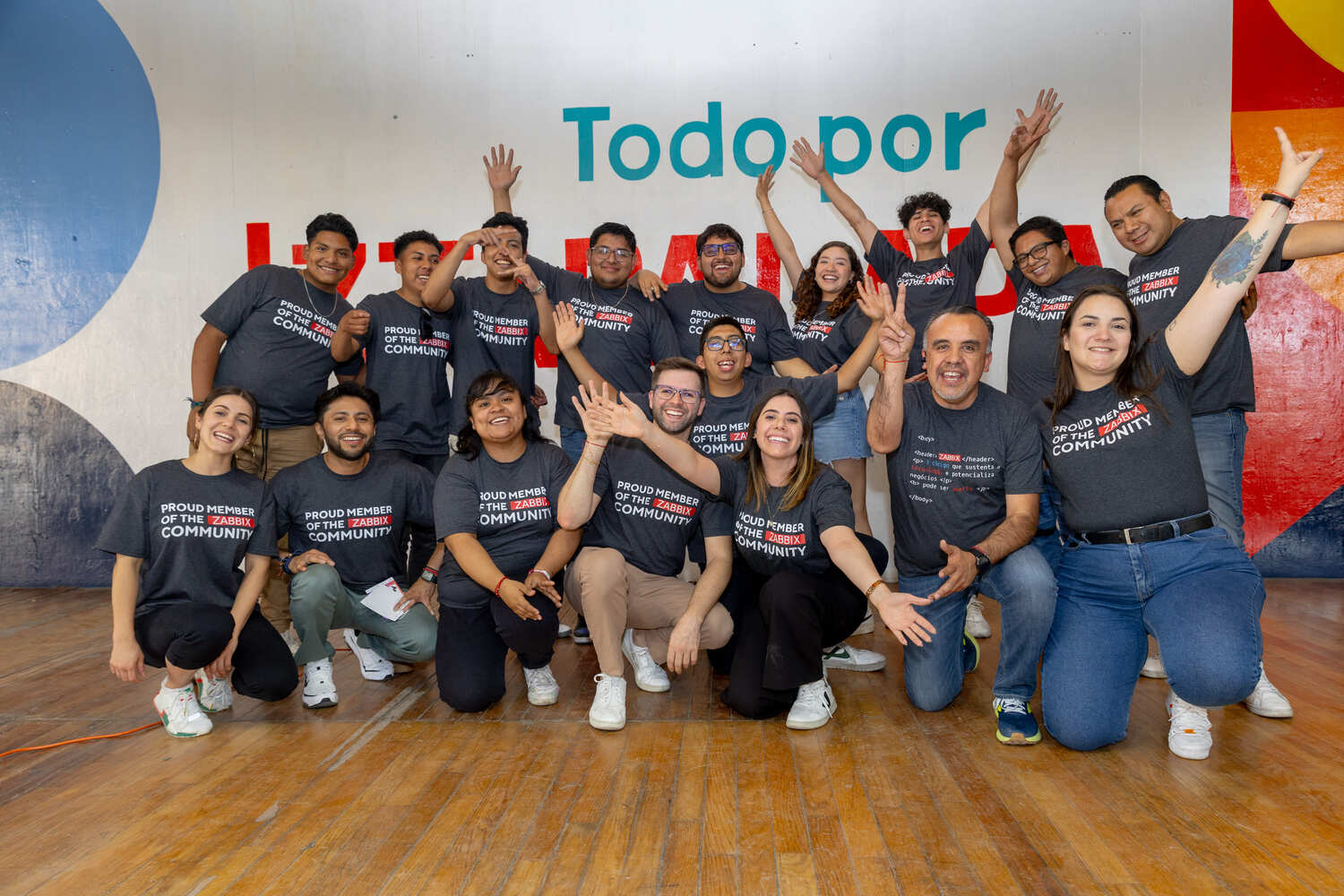
With the aid of the DEDICA Foundation, we were able to support and sponsor the Zabbix Innova Challenge in Mexico.
The project started in December 2023, with free registration for students and professionals from Latin America to come together and create a solution with Zabbix.
Mentorships, planning meetings, and technical Zabbix training sessions were held for participants, and in March 2024, the hackathon itself took place. In three days, the selected students developed their projects and presented them to the judges.
The project marked the beginning of Zabbix’s educational initiatives in the region. According to Fernanda Moraes, Communications and Marketing Manager LatAm at Zabbix,
Developing educational projects is part of the collaborative essence we work with in our business model, which is fundamental to supporting the technological community’s development.
At the end of the hackathon, more than 70 Zabbix official certification scholarships were awarded to the best teams, with the top team winning a trip for the team representative to attend the Zabbix Conference Latam 2024 in Brazil in June.

Next Steps for Zabbix in the region
Zabbix’s expansion and operation plans in Mexico continue to move forward.
Luciano Alves, CEO of Zabbix in Latin America, had this to say
Mexico represents a significant market that benefits from Zabbix but is not yet using the tool to its full potential. Our goal is to support the region’s companies in technology sustainability.
With our presence in the region plus the actions of our official partners, we expect our business in the region to grow along with other open-source initiatives.
Find the Zabbix Community at the Zabbix Conference Latam 2024
In addition to the Mexico office and the Zabbix Mexico Community group on Telegram, Zabbix has had official operations in our Brazil office since 2020. Zabbix Brazil is responsible for a wide variety of events, including the Zabbix Conference Latam – the biggest event on Zabbix and monitoring in the region!
Representatives from the entire Zabbix Community in Brazil and neighboring countries will be present at the event, sharing use cases and educational presentations on our favorite topic.
Check out the updated event page and sign up today!
The post Zabbix in Mexico: A Year of Expansion and Connection appeared first on Zabbix Blog.
S11 E07: Executions, Earthquakes & Stock Photos: 4/7/24: Last Week Tonight with John Oliver
Post Syndicated from LastWeekTonight original https://www.youtube.com/watch?v=WKaLePvHsco
Types of Eclipse Photo
Post Syndicated from xkcd.com original https://xkcd.com/2917/

ASUS NVIDIA Servers at GTC 2024
Post Syndicated from Eric Smith original https://www.servethehome.com/asus-nvidia-servers-at-gtc-2024/
We saw new ASUS AI and Arm servers at NVIDIA GTC 2024 including Grace Superchip, Grace Hopper, HGX, and even PCIe servers
The post ASUS NVIDIA Servers at GTC 2024 appeared first on ServeTheHome.
Sicily Earthquake 1693
Post Syndicated from The History Guy: History Deserves to Be Remembered original https://www.youtube.com/watch?v=2JKu_SqAjZk
Comic for 2024.04.07 – Number Two Fan
Post Syndicated from Explosm.net original https://explosm.net/comics/number-two-fan
New Cyanide and Happiness Comic
Sincerely
Post Syndicated from Oglaf! -- Comics. Often dirty. original https://www.oglaf.com/sincerely/


SkyshowTV, Unseen Launch Footage from NASA, SpaceX, Virgin Galatic and more
Post Syndicated from Curious Droid original https://www.youtube.com/watch?v=FtfVgkgC3lk
Tridge returns to rsync
Post Syndicated from jzb original https://lwn.net/Articles/968732/
Wayne Davison has announced
the release of rsync version 3.3.0, which
contains a number of bug fixes and minor enhancements. Davison has
also announced a change in maintainers and a move to a new GitHub
project:
The github repos have moved to a new RsyncProject organization. Because
various life events have been monopolizing my time, I reached out to
Tridge [Andrew Tridgell] (the original author) and he has graciously agreed to get back into rsync
work, along with Paul Mackerras, who was also an early contributor to
rsync. This new team will be working mainly on maintenance tasks, and not
so much on new features. If you want to get involved, feel free to reach
out on the new discord RsyncProject channels.
The new GitHub organization is here.
Mercury and MESSENGER
Post Syndicated from The History Guy: History Deserves to Be Remembered original https://www.youtube.com/watch?v=gXV28Ah_8TE
Gigabyte Shows Axiado BMC for NVIDIA MGX Systems
Post Syndicated from Patrick Kennedy original https://www.servethehome.com/gigabyte-shows-axiado-bmc-for-nvidia-mgx-systems/
One of the coolest pieces of tech at NVIDIA GTC 2024 was this MGX BMC from Axiado. The startup’s AI BMC is set to challenge ASPEED’s dominance
The post Gigabyte Shows Axiado BMC for NVIDIA MGX Systems appeared first on ServeTheHome.
Live Q&A and Image Review
Post Syndicated from Matt Granger original https://www.youtube.com/watch?v=HAU3Q3ANjvY
HDMI via a Cat6 cable works surprisingly well
Post Syndicated from Techmoan original https://www.youtube.com/watch?v=ZP5XuKK9jNg
2024-06-04 нова marla, нов tyler, миграции
Post Syndicated from Vasil Kolev original https://vasil.ludost.net/blog/?p=3479
И дойде време за подмяна на хардуера.
marla.ludost.net последно е подменяна през 2016, и имаше нужда от refresh.
За разлика от предишните, новата е 1U. Сега е AMD EPYC 7303P, 128 GiB RAM, и три броя 7.68TB NVMe-та в RAID5. В сравнение с предишната направо лети.
Хардуерната част беше по-лесната. Машината беше още на Debian 9, с купчина ръчно компилирани неща, с разни стари услуги и какви ли не странности. За миграцията имах 40тина неща за подготвяне, и план за самата миграция план от 45 точки какво има да се пусне/спре/мигрира и т.н.. От по-забавните:
– Не ми се занимаваше да мигрирам до maiman3, така че си build-нах пакет за mailman2, с python2 и всичко останало. Тва ще живее в миналото, докато не събера желание да пренеса миграцията до нещо по-модерно. Също, никак не ме радва идеята разни пакети да мислят, че да се счупи миграцията от версия 2 към версия 3 е добра идея, и обвинявам Python-а, че даде лош пример на света.
– Трябваше да си build-на ircd-то и services с моите patch-ове за UTF-8 support и подобни неща. В момента ircd-ratbox го няма никъде в debian и трябва да помисля за миграция към някой от наследниците.
– Ползвам packetbl за филтриране на пакети на база на RBL, та му направих по-нормален начин за пускане и пакетиране за текущата ситуация.
– И разбира се купчини сайтове, PHP-та, бази и какво ли не още.
Подготовката беше няколко седмици, от които може би 2 дни бяха rsync на всички данни през интернетите, за да пренеса повечето информация, разни дебели видео архиви и подобни работи. После едни колеги пренесоха желязото физически до 3dc, пъхнаха го в rack-а, и аз след ден-два направих самия switch, в рамките на няколко часа. Помогна и monitoring-а, да покаже какво не е светнало и какво има да се досветне.
Имаше няколко fail-а, които се оправяха в последствие, но като цяло нещата минаха добре, и в момента желязото си клати краката, щото предишния load изобщо не може да се сравни с какво може. Следва да се качи още натоварване 🙂
И това беше лесната част. Като допълнение, исках да махна стария tyler (който е по-предната marla, купувана 2010та), и да го пренеса на старата marla. Което щеше да е доста по-проста задача, ако не беше това:
u0    RAID-5    DEGRADED       -       -       64K     2793.94   RiW    ON
VPort Status         Unit Size      Type  Phy Encl-Slot    Model
------------------------------------------------------------------------------
p0    OK             u0   1.82 TB   SATA  0   -            ST2000DM008-2UB102
p1    OK             u0   1.82 TB   SATA  1   -            ST2000DM008-2UB102
p2    DEGRADED       u0   1.82 TB   SATA  2   -            ST2000DM008-2UB102
p3    ECC-ERROR      u0   1.82 TB   SATA  3   -            ST2000DM008-2UB102
Това е RAID5 масив с един изпаднал диск и един, който дава грешки, или в човешка терминология, “life sucks and then you die”. Открих го, когато започнах да планирам миграцията, и се наложи да го планирам малко по-форсмажорно. Файловите системи вече даваха грешки, така че в общи линии една нощ преточвах каквото можеше, и в една ранна сутрин с dd през netcat преточих root partition-а на другото желязо и boot-нах.
Най-голямото упражнение беше да го направя без ходене на място, понеже да се boot-не нещо на желязо с толкова стар IPMI се оказа забавно, и загубих 4-5 часа да се опитвам да намеря java, която да може да направи закачането на block device отсреща (в което се провалих изцяло). Накрая (понеже все пак имах ipmi) написах едно sysrescuecd на един partition на диска и просто boot-нах от него, за да мога спокойно да overwrite-вам root-а.
(след което имаше разни други проблеми с разлики в GRUB версии и т.н., като цяло в GRUB prompt не бях изкарвал толкова време доста отдавна)
Доста неща са пострадали. Спасих си netbox-а, но kenny.ludost.net е със заминала база, там няма спасение, та който е имал account, ще трябва да си прави пак. Jabber сървъра също е пострадал, и ще видя там какво мога да направя в следващите дни.
Цялата работа ми показа основно колко ме е разглезил StorPool с тия виртуални машини, snapshot-и, end-to-end checksum-и, live миграции… Ако събера бюджет, някой ден ще си вдигна нещо подобно. От друга страна, човек определено трябва да си припомня как се правят по-криви неща от време на време 🙂
Unlocking Remote Access: Setting Up SLZB-06 WireGuard Client #shorts
Post Syndicated from BeardedTinker original https://www.youtube.com/watch?v=yKA7GNUTHkA
Седмицата (1–6 април)
Post Syndicated from Боряна Телбис original https://www.toest.bg/sedmitsata-1-6-april/

Тази седмица започна с Международния ден на шегата и лъжата – 1 април. Моето еретично предложение е да го ползваме за национален празник, след като не постигаме консенсус между 3 март, 24 май и 6 септември (защото единият, както знаете, е настоящият ни национален празник, а другите се споменаваха като възможни варианти). Е, аз вкарвам в надпреварата и 1 април – ден, в който можем да сме себе си, както се казва по риалити форматите.
Просто много се лъже в тази държава. А и сме големи шегаджии, няма как да не ви е направило впечатление. Шегаджийството е един вид институционално застъпено. И човек като си пусне новините или като, не дай боже, се зачете в новинарски сайтове, му става едно забавно, смешно и в същото време остава и с известна доза съспенс в сърцето и душата, защото това, дето го чете, може и да е шега или лъжа с цел забавление, но може и да е истина… Просто в тази държава винаги трябва да сме нащрек. Минутка невнимание – и се е сменило правителството.
Тази седмица баш така стана. И вече имаме предложен служебен кабинет. Ще има още малко ритуални танци преди самите избори през юни. Стъпка напред, две назад, ча-ча-ча и някой и друг компромат, разкритие или обида със звън на фламенко китара в далечината за драматизъм – ей така си ги представям следващите два месеца. Емилия Милчева в текста си „Всичко е избори. Другото чака“ прави обзор именно на тази „рекламна пауза“ преди отиването ни до урните.
Дали предстоящите избори ще са оценка за (не)свършеното до момента от партиите, или просто ще отидем да гласуваме, защото така трябва, ще видим през юни. Повечето политици не изглеждат като хора, които се трогват от обществената оценка. Не можем да кажем същото обаче за оценките, които образователната ни система поставя на учениците. В текста си „Оценките – (не)нужното зло“ Донка Дойчева-Попова засяга темите за изпитването като опит за унижение и за оценката като наказание. Колкото и умни реформи да измислим и да приложим, ако има повече човечност, образователната ни система ще се гордее с много по-добри резултати, смята тя.
Ако темата за промяната в образованието ви интересува, запазете датата 13 април, когато от 10:00 до 19:00 ще се състои първото издание на форума „Образованието – каквото и да е или какво да е?“, организиран от родителската медия „Майко Мила“ и Националната мрежа за децата. Събитието е с вход свободен и ще се проведе в „Топлоцентрала“. Предвидено е и целодневно онлайн излъчване на живо на дискусионните панели. Форумът ще завърши с прожекция на документалния филм „Ние сме тези, които чакахме“. Повече за темите и гостите може да откриете в страницата на събитието.
Бихме могли да си представим „Цялото наше безумство“ като заглавие на филм или научно изследване за образователната ни система, но всъщност това е страхотният роман на малайската авторка Ши-Ли Коу. За него ни разказва тази седмица в рубриката „На второ четене“ Антония Апостолова. Действието в романа се развива в Малайзия (ако още не сте прочели за пътешествието на Петя Кокудева из тази страна, може да го направите тук), която сигурно ви се струва много далечна и географски, и културно, обаче се оказва, че не е точно така.
За общото в културата на различните балкански страни, за войната, за литературата като спасение, за простичкия факт, че всички сме „малки, глупави и уязвими човешки същества“ разговаря Йовко Ламбрев със словенския писател Горан Войнович, смятан за едно от най-талантливите пера на своето поколение. Войнович е у нас като гост на тазгодишните „Литературни срещи“. Публиката може да се срещне с него днес, 6 април, от 19:30 ч. в зала 1 на РЦСИ „Топлоцентрала“ в София. Ще си позволя един цитат от интервюто на Йовко с Войнович:
Аз не само съм съгласен с хората, които твърдят, че живеем във времена на прекъсвания, но бих добавил, че общуването ни – или това, което все още възприемаме като общуване – всъщност е само купчина прекъсвания и нищо повече. И това е лингвистичен проблем, защото говорим за послания, които ни правят слепи да видим, че по-голямата част от тези съобщения всъщност изобщо не са такива – повечето са реклами, все едно дали на вещи, или на хора.
В тотален противовес на горното и тъкмо защото животът е изтъкан от противоречия, ще направя една препоръка, която като нищо ще ви прозвучи като „прекъсване за реклама“: гледайте моноспектакъла на Елена Телбис Prima Facie. Нямам намерение да правя рецензия на постановката, защото и не мога. Само ще кажа, че това е един от най-смислените и въздействащи съвременни драматургични текстове, които съм виждала поставени на българска сцена. Авторката му Сузи Милър е бивша адвокатка, която в течение на юридическата си практика осъзнава колко често жертвите на престъпление попадат в задънените улици на правосъдната система, и създава изключителен текст за отчаяното търсене на справедливост, когато сме най-уязвими и безпомощни. Тема, която засяга всеки един от нас. Неслучайно в момента се играе в цяла Европа. Следващите представления са на 12 и 18 април, а билети може да намерите тук.
И с това тазседмичният бюлетин приключва.
Желая ви приятен „Тоест“!
Comic for 2024.04.06 – You Got A Friend
Post Syndicated from Explosm.net original https://explosm.net/comics/you-got-a-friend
New Cyanide and Happiness Comic